A Tale of Two Women

There’s a well-known saying in the South: The intolerable heat of July and August is God’s reminder you don’t want to go to the bad place some day.  The coping strategies include lots of time indoors or traveling to more temperate places. Thus did my wife & I find ourselves on the California coast for a couple of weeks. Giving up the sweat and bugs for the sun, surf, and sand was an easy trade.  But true to form Cali delivered an experience worth sharing (or at least blogging about).

We all have choices when it comes to shipping our stuff.  Maybe it’s the post office in a small town but for the rest of us it’s a franchise like The UPS Store or PostNet.  My option during this trip was PostalAnnex, conveniently adjacent to a market where my wife could disappear.  So I entered the shipping store alone, phone in hand, fully prepared to get lost in my newsfeed while waiting in a long line.  Only there wasn’t any line – just one woman being helped by another behind the counter.  My lucky day!  I’d be back to the sun and surf in no time.

I’d hardly glanced at PostalAnnex’s impulse buys when I began to pick up on the conversation at the counter.  The woman was sending a vase.  It was fragile.  She wasn’t convinced it would get to its destination intact.  But credit the clerk for her calm, soothing voice, assuring the woman she’d packed countless fragile objects before, and this one would be no exception.  To which the woman literally shouted, “Well, I hope so!  Otherwise my vase will be as broken as my marriage!”

As broken as my marriage?  Okay, that got my attention.

Look, I’m not one to eavesdrop but I was kind of a captive audience here, okay?  And I had no idea this woman was just getting started with her personal soap opera.  “Last name?”, the clerk asked, intending to search the PostalAnnex database.  “Jones… Lisa Jones”, declared the woman, who promptly corrected herself by saying, “No… WAIT!!!  Not Jones!!! That’s who I used to be!!!  Clark!!! It’s Clark now!  And you gotta update my first name too because I changed that as well!  Ari Clark!  Yes I’m… I’m Ari Clark now, thank you very much. New first name and new last name!!! This is me severing every last connection with that no-good loser ex-husband of mine!!!”

Oh my.  And here I thought she was just mailing a vase.

Since I was the only male in the store you can understand why I considered bolting for the door at that very moment.  But since the woman didn’t turn around and say something to the effect of “ALL of you men are scum of the earth“, I maintained my quiet presence.  Quiet, that is, until the clerk looked over at me somewhat helplessly and said, “Sir, are you just dropping off or do you need to set up a shipment?”  Which prompted the woman to look back at me and – thankfully – give nothing more threatening than a what are you looking at? glance.

“I look good, don’t I?”, she continued, clearly posing for the clerk.  “I mean, I’ve made the changes, if you know what I mean.  I’m ready to get out there and start living again.  My ex – man – he totally blew it with that affair of his.  35 years of marriage and he goes and cheats on me?  Over and done with, baby – your loss.”

“Um, your address please?”, the PostalAnnex clerk pleaded.

“58 Charles St., Apartment B.  That’s right, a new address to put into your system because I’m done with that old address.  Like I said, I’m done with everything about the last thirty-five years.”

The clerk then assured this woman she looked great and was doing the right thing by moving on, and in fact, should move on right now so the next customer (me) could be helped.  And bless her heart, that’s exactly what the woman did… that is, after paying with a credit card she assured us had her new first and last name.

When it was my turn at the counter (twenty minutes after walking through the door) the clerk joked with me. “Well, I guess I offer free marital advice along with shipping services.  So let’s chat first; how long have you been married?”

“Thirty-nine years”, I said, a little too proudly.

Thirty-nine years?“, she exclaimed.  “Goodness – no one in California lasts that long!  Tell you what, just for you: the thirty-nine-years-of-marriage shipping discount!”

Did I really get a discount?  Who knows.  I’m just glad I didn’t run into the other woman in the parking lot. I’d put up with enough blistering heat already this summer.

———————————————————–

LEGO Neuschwanstein Castle – Update #3 (read about the start of this project in Fit for a (Fairy Tale) King)

THIS is a castle?

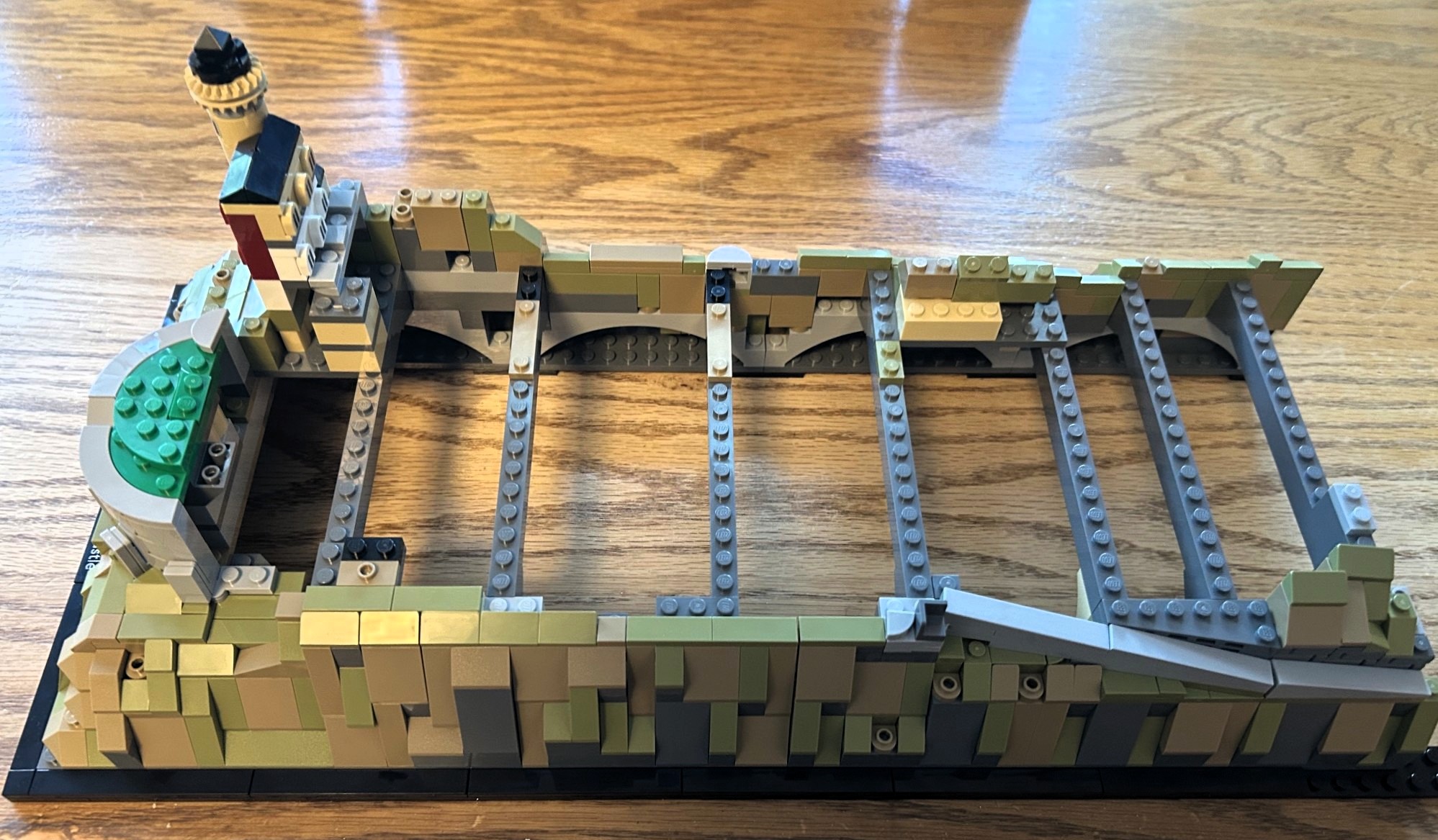
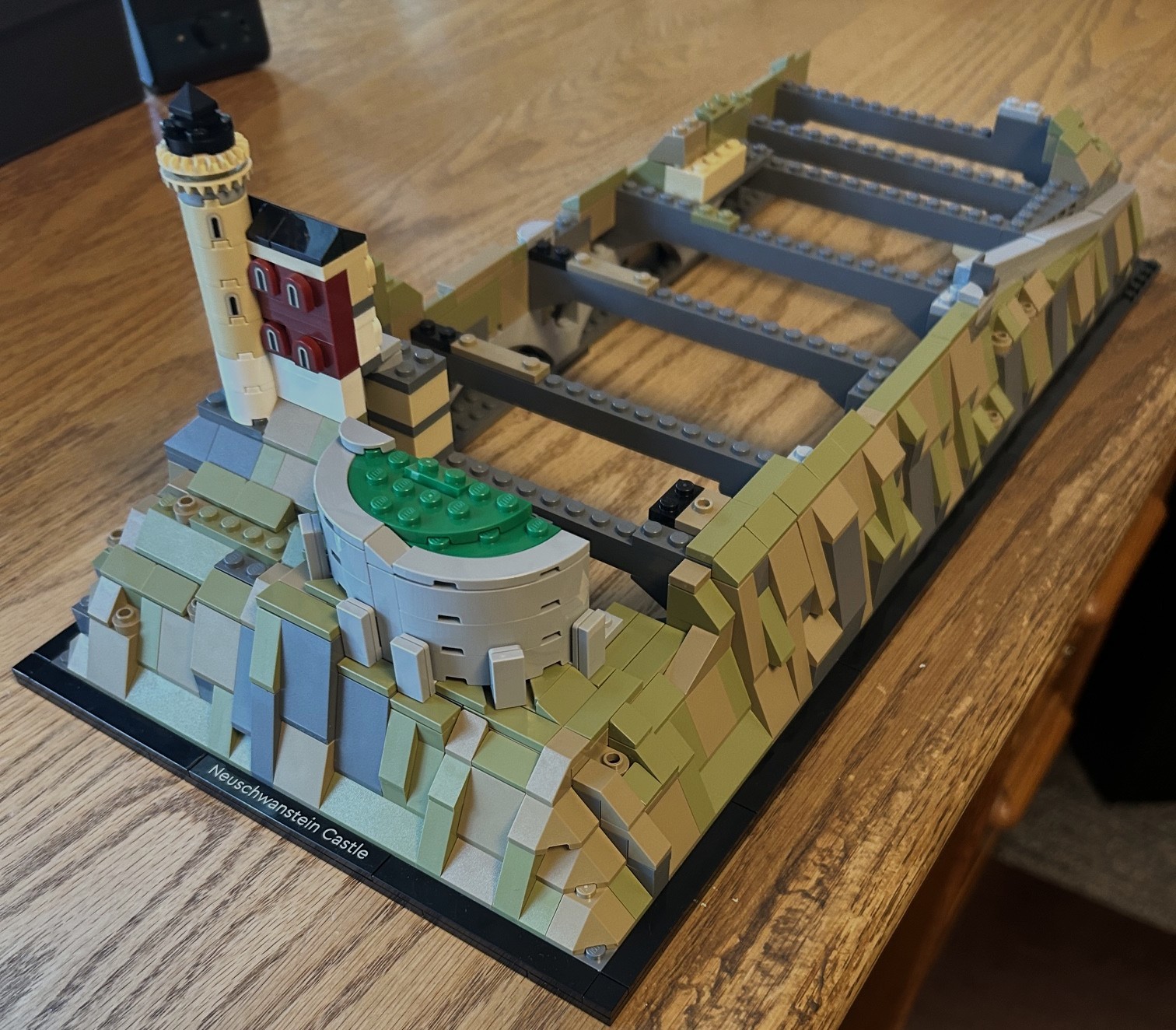
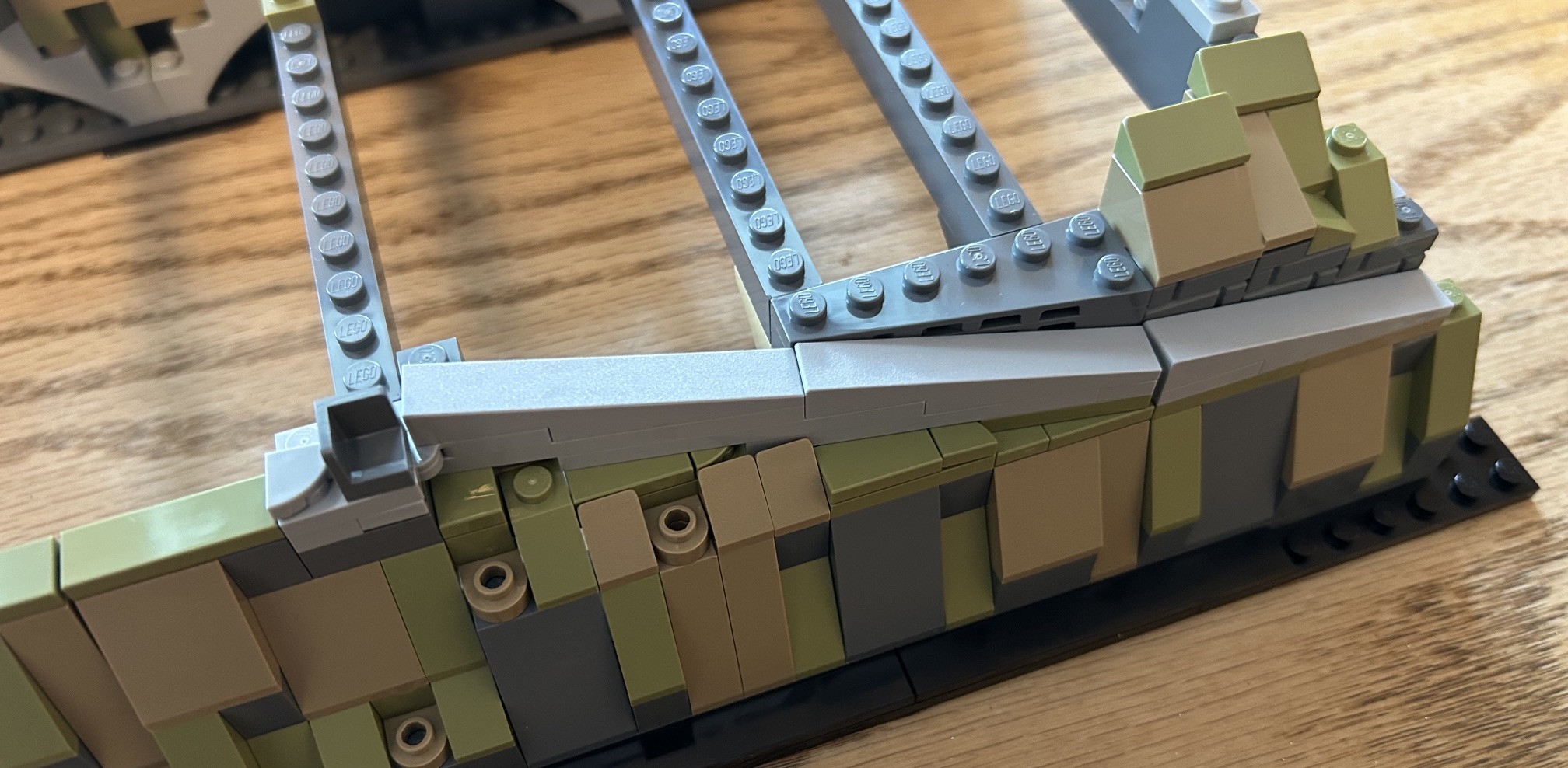
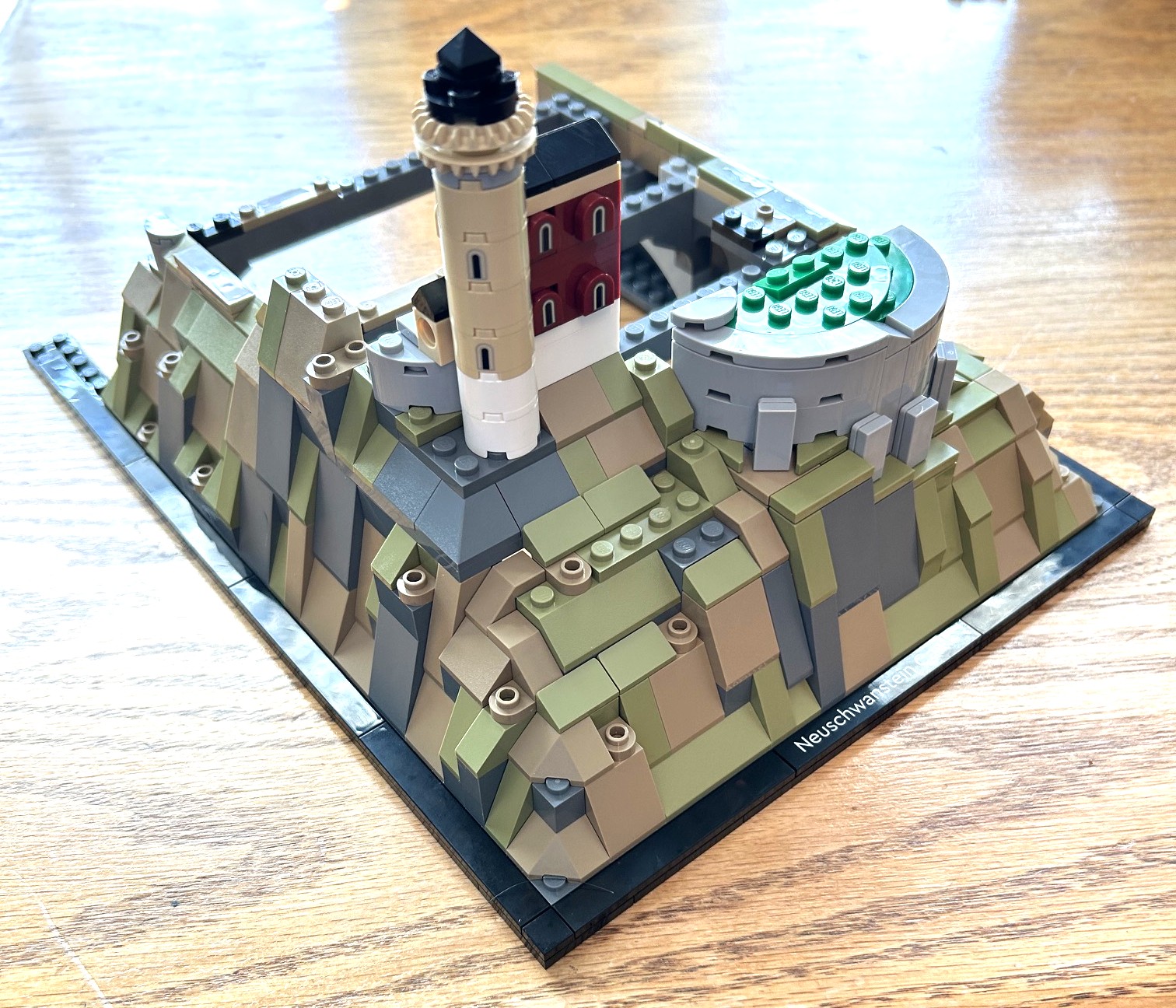
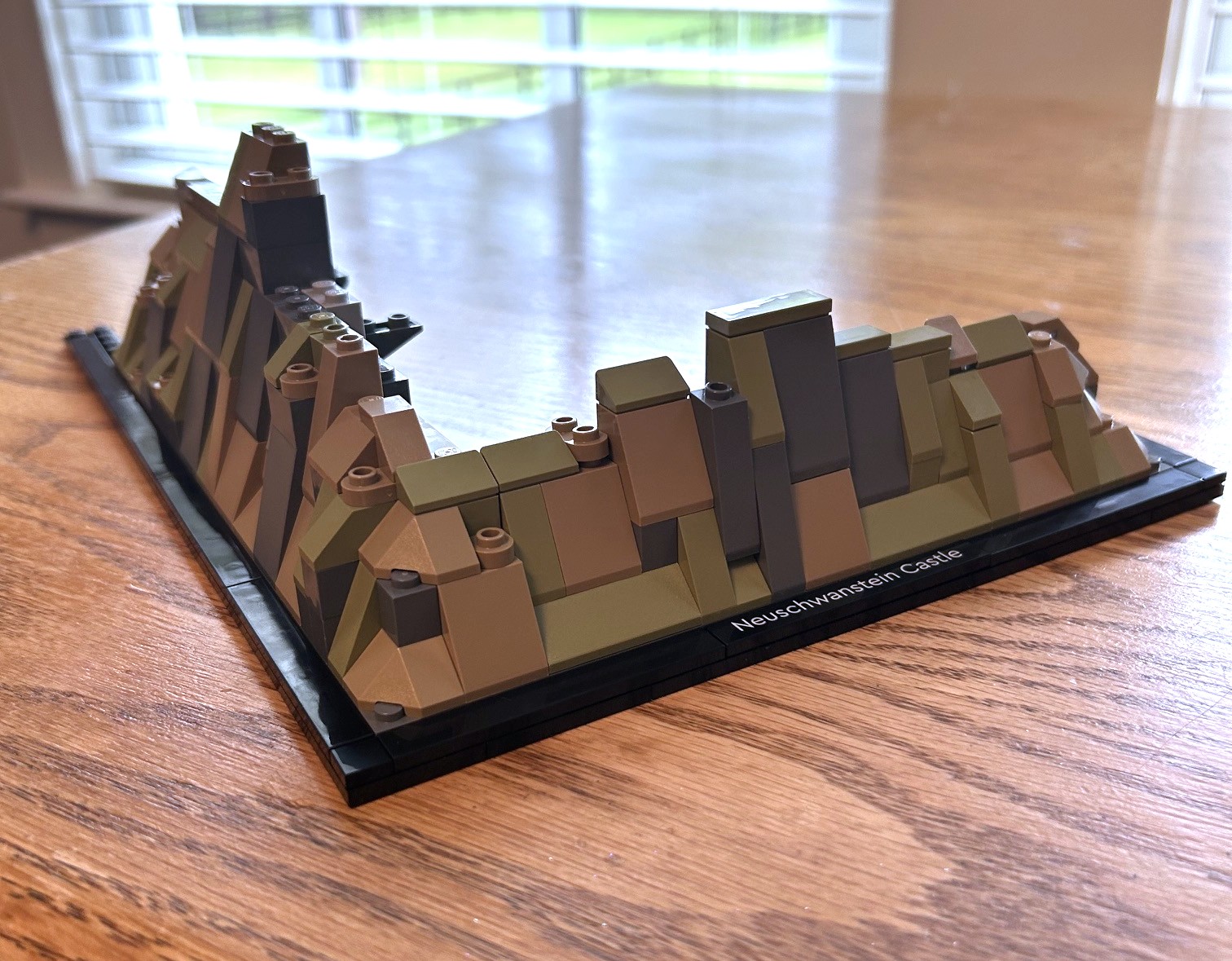
No surprise, we continued to move mountains (er, Bavarian Alps) this week instead of anything brick or stone.  The colors and shapes of the LEGO pieces in Bags 5 and 6 (of 23 bags of pieces) were decidedly “earthy”.  What we have in the photo above looks like some sort of ocean trawler instead of a castle foundation.  But the good news is, we’ve just about reached the far end of the model (on the right), so a little more earth-moving will shift gears into castle construction.
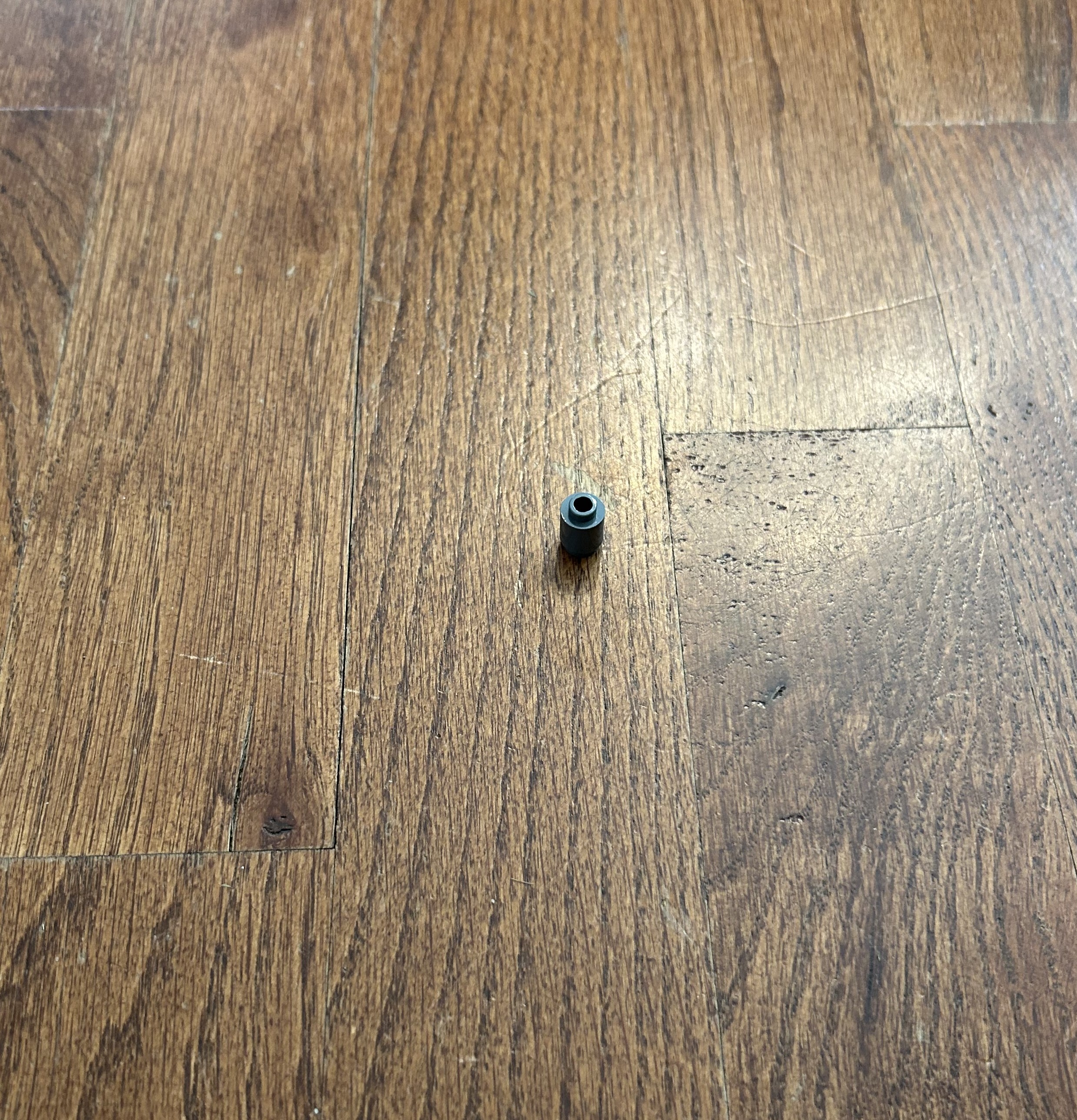
In my haste to move mountains I knocked that single white turret off its footing, which forced me to leaf back several pages in the instruction manual to remember where it was based.  Strange how LEGO chose to tease me with a lone turret (and castle wall) this early in the build.  That little assembly will be utterly dwarfed by the castle once it rises above it.

A footpath outside of the castle walls, perhaps?

Speaking of the LEGO instruction manual (better known as the “Tome of Construction”) this is a good time to dismiss LEGO “Builder”.  For those of you in the know, Builder is a smartphone app that replaces the instruction manual, so you just tap your phone every time you move to a new step.  Nope, not gonna do it.  The Tome of Construction is much bigger than a phone screen, with easy-to-turn, easy-to-read pages.  There’s really no good reason to go electronic with the steps.  After all, Neuschwanstein didn’t have electricity when it was built so why should its construction?

Running build time: 2:37.

Total leftover pieces: 21.

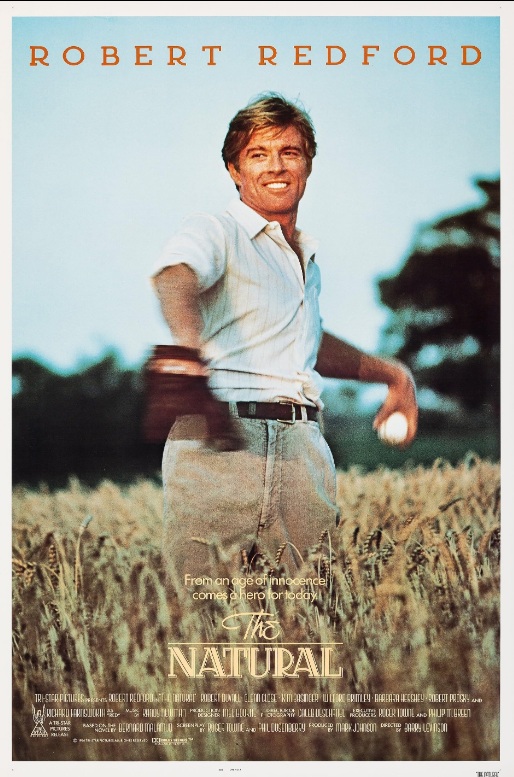
Accompanying movie soundtrack: The Natural (1984).  Here’s an appropriate choice from my favorite soundtracks list, since we’re in the middle of the major league baseball season.  The Natural is a mystical, beautifully filmed story of an aging baseball player.  Robert Redford plays the lead role (with Glenn Close supporting, and looking a lot lovelier than she did in Fatal Attraction).  The movie score is both haunting and majestic.  It taps generously from Aaron Copland’s “Fanfare for the Common Man”.  It also echoes Rudy, a soundtrack I’ll spend a little time with a couple of weeks from now.  Have a listen to The Natural here.

Mighty Fine Print

Whenever a season of sports comes down to the last couple of teams, I pay extra attention whether it’s the Super Bowl, the World Series, or college basketball’s March Madness. A championship is the culmination of an entire season, so the final game puts the stakes at their highest. Just last week I made it to the finals of a competition myself. The thing is, I didn’t even know I was playing.

“I win!”

We’ve all received one of these flyers at one time or another, haven’t we?  A bold, colorful announcement suggesting we’ve won something big.  In this case, a Viking River Cruise (red capital letters, top left) suggests a tapped mailing list because I’ve cruised with Viking twice.  Regardless, this flyer almost went into the trash before I read some all of the fine print.  And I must say, whoever came up with the nuts/bolts of this particular contest deserves the Academy Award for Best Producer.

To begin with, notice the element labeled “Combination Box”.  This little device is ingenious for two reasons.  First, it stretches the envelope the flyer came in beyond a flat piece of paper, tempting the recipient to wonder what’s in there?  And second, the device is “activated” by pulling a tab to reveal the “5-digit VIN number” you see here.  Then you scratch off the gold circle further down the page to reveal another 5-digit number and – “how about that?” – they’re the same number, which makes me a “Grand Prize Winner”.

The flyer also contains utterly random stuff that has no bearing whatsoever on the contest.  I am “cordially invited to ‘The Great America Cruising Expo'” (a fictitious event).  Just below the black box is a “VIP Winning Number 5508738” (also useless).  Finally, when I call the toll-free number at the bottom (which, to be clear, I will never call), I’m supposed to mention “Code AKSC”.  Pretty sure anyone could call the toll-free number, mention the code, and discover they’re also a “Grand Prize Winner”.

Now for the good stuff.  Here’s the lower right corner of the flyer.  Call Within 48 Hours…?  Within 48 hours of what, exactly?  How do they know I’m calling within 48 hours of anything?  More importantly, look at the four “gifts” below; one of which is apparently mine.  Take a guess – which trip do you think I won?

Credit to the contest producers; I guessed wrong.  I would’ve thought the 7-Night Resort Stay at Worldwide Destinations was my prize.  After all, how much vaguer can a trip description be?  If I called the toll-free number they’d probably go, “Yes you won but you can only take the trip on these 7 nights”.  And “worldwide destination” technically means anywhere in the world so maybe I’ve won seven nights in the middle of Iowa.

In fact, the prize I “won” is the Caribbean Cruise for Two for Up to 7 Nights.  The more I think about it, that one makes more sense.  Any ship in Caribbean waters could be considered a “cruise” (even a foreign freighter with an empty cargo hold).  “Up to 7 nights” could mean just two nights or even an overnight.  And however I actually get to this cruise ship is on my own dime.

Mighty fine print

The pièce de résistance is on the back of the flyer: the fine print.  The five hundred words you see above include the odds of winning (which is how I know I won the Caribbean cruise).  Out of every 2,000,000 mailed flyers, 1,999,997 will win the Caribbean cruise, while just three people will win the three trips of any real value.  In other words, one person wins a free Viking River Cruise.  Okay, enough already; now this flyer goes into the trash, where it should’ve gone in the first place.

———————————————————–

LEGO Neuschwanstein Castle – Update #2 (read about the start of this project in Fit for a (Fairy Tale) King)

We continued to move mountains this week (as expected) but I was delighted to see bits of the castle starting to rise up already.  Apparently I need to bring in cranes in addition to my earth-moving equipment.  Bags 3 and 4 (of 23 bags of pieces) contained a lot of tiny, interesting, colorful bits.  I had to be careful those little guys didn’t run down the mountains and try to escape.

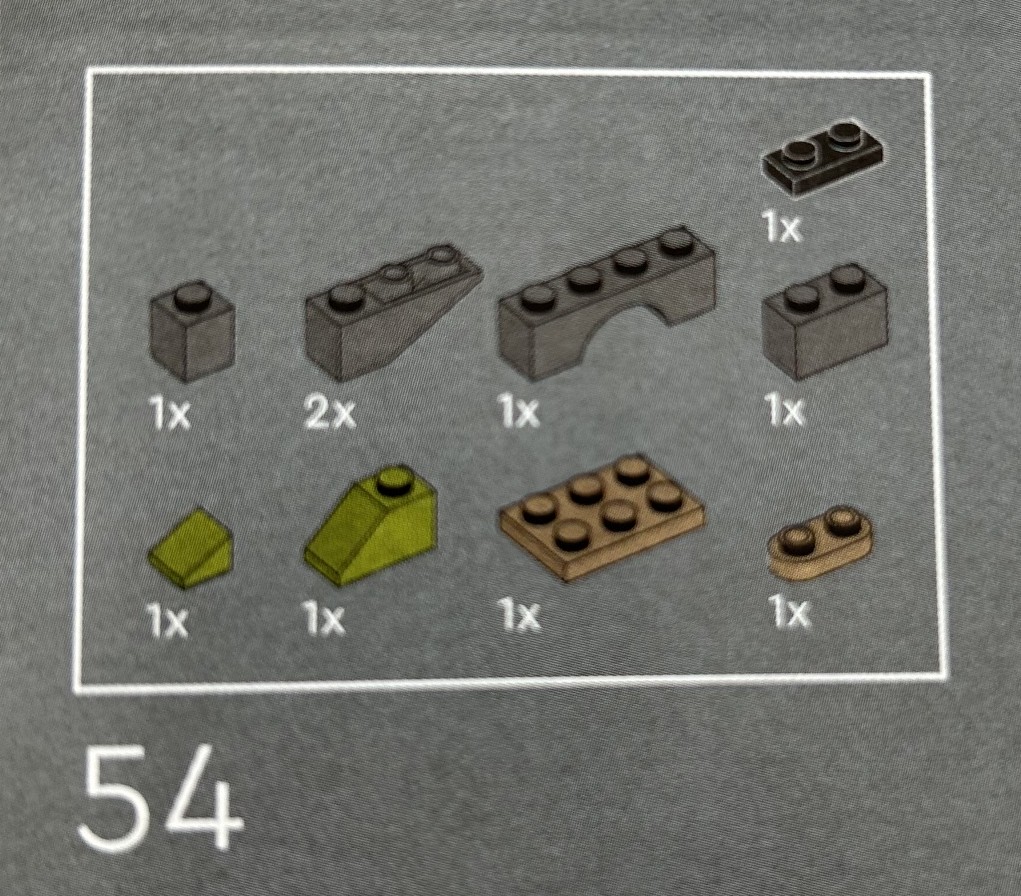
For the first time in a half-dozen models I’m here to tell you… LEGO left out a piece.  They really did.  If you look at this step in the process (and yes, I’m already through 50+ steps), that little two-dot middle-row-right was AWOL.  I checked the bags a dozen times thinking he was still in there.  I scanned the piles of parts another dozen times.  No two-dot.  Maybe he’ll show up in another bag further into the build but by then it’ll be too late.  The good news is, his location is buried inside the mountains and is not structural.  You will never see the small cavity created by his absence.

Tiny, interesting, colorful bits

What you see in the first photo is only about half the size of the completed model.  It will be a full rectangle of Bavarian Alps when it’s done.  Of course, by then you won’t even notice all the earthmoving I’ve accomplished, because Neuschwanstein Castle will utterly lord over the (LEGO) land.

Running build time: 1:52.

Total leftover pieces: 17.

Accompanying movie soundtrack: Leap Year (2010).  I could use the excuse of the lovely Amy Adams to justify this favorite, but this so-so rom-com came out when she was hardly a name.  However, Randy Edelman’s score is wonderful. It’s so much larger than the movie itself.  “Anna’s Theme” – which the score returns to again and again – is a calming tune using a lot of piano and guitar.  Elsewhere traditional Irish instruments make their inevitable appearance.  Maybe the movie is forgettable but the music most definitely is not.  Have a listen here.

Note: Life In A Word will be taking a vacation break for the next few weeks.  Join me for the next chapter of the castle construction on August 20th!

What’s the Score?

Among the televised game shows I remember watching as a kid was one called Name That Tune.  The version I watched wasn’t the original but it was the most successful, running from 1974-1981.  Contestants competed for cash prizes by guessing the name of a song from a sound bite performed by the live band.  The appeal of Name That Tune was the ability to play the game yourself while you watched (like you can with Jeopardy).  But there was one genre of music Name That Tune didn’t tap into very often: film scores.

Here’s my question of the day.  Name the last movie you saw where you also remember the music that accompanied the film.  Titanic?  Okay, but I’m not talking about soundtracks made up of popular songs you’d hear on Spotify (sorry, Celine) but rather instrumental scores where the music is tied to particular scenes of the story.  Here, listen to the following sound bite and see if you can name the movie.  Bonus points if you can picture the scene where the music was played. (scroll to the bottom for the answer)

Maybe your brain doesn’t associate movies with music the way mine does, but to demonstrate this acuity it took me no time at all to come up with a dozen of my favorite film scores; instrumentals so memorable I instantly recall the movie.  Some, like the one I teased above, won Academy Awards (for “Best Original Score”).  Others on my list weren’t even nominated… but maybe should have been.

Speaking of Academy Award winners, perhaps examples will help you “hear that tune”.  The Best Original Score in 1965 was for The Sound of Music, primarily original songs with lyrics but several instrumental turns as well.  The winner in 1973 was for The Sting, in which Scott Joplin’s ragtime piano tunes played the major role.  The winner in 1975 was for Jaws, and I wonder who can’t hear that threatening theme whenever they picture a man-eating shark.  The 1977 winner?  Star Wars, scored by John Williams, who created the music for dozens of blockbuster films. 1990? Dances With Wolves by John Barry, another giant of the world of film scores. The list goes on and on.

As for my own list of favorites you’ll have to be a little more patient.  I’ll include them – one at a time – as I give updates on the construction of my LEGO Neuschwanstein Castle over the next several months.  If you’re wondering what movie soundtracks and a German castle have in common, I refer back to Chitty Chitty Bang Bang of course, with scenes filmed at Neuschwanstein.  The story is a vivid childhood memory start to finish but so is the music.  Trust me, for the number of times I’ve seen the film I can “name that scene” for just about every piece of the score.


LEGO Neuschwanstein Castle – Update #1 (read about the start of this project in Fit for a (Fairy Tale) King)

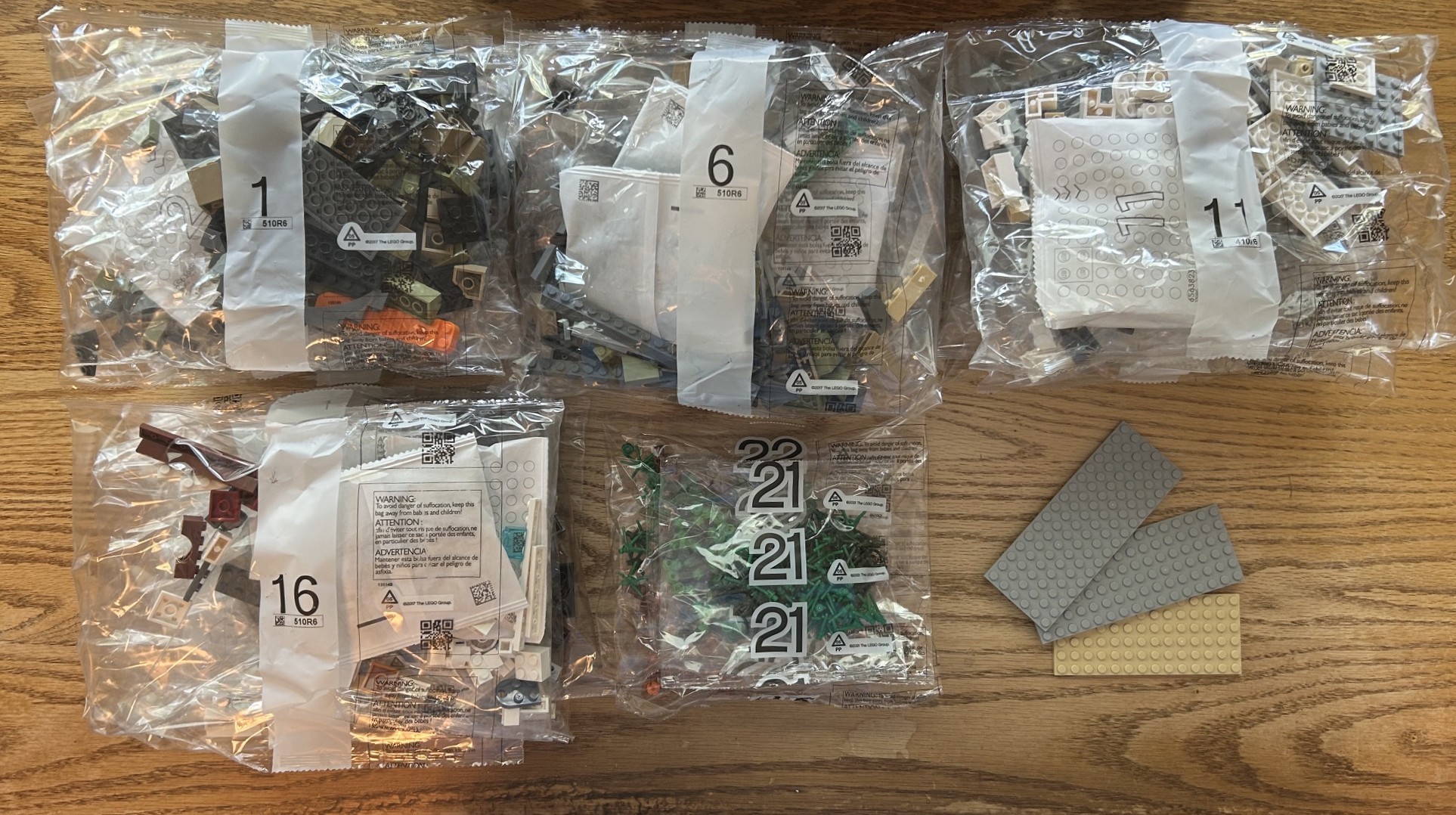
23 bags of pieces + 3 “orphans”

You’d think the construction of a castle would begin with the cornerstone.  With the LEGO model you’d be wrong.  We’re moving mountains instead.  King Ludwig already had the Bavarian Alps at his disposal but we have build them from scratch before they’re crowned with his creation.  Good thing this structure isn’t full-size or I’d be renting some serious earthmoving equipment!

LEGO “Alps”

With Bags 1 and 2 (of 23 bags of pieces) we got our hands dirty piling up dirt, rock, and other rather undefined landscape to create a mountaintop.  Well, one-third of a mountaintop or so.  If the next few bags represent the other two-thirds I’m not gonna an exciting update for you next week. At least the pieces snapped together smoothly.  As with all LEGO models I’ve built, there were moments where I thought LEGO left out a piece, and other moments where I backed up a step or two to correct the construction.  One change I’ve noticed from previous models: LEGO puts the tiniest pieces into paper “baglets”, which I’m not a fan of.  Those little bags aren’t transparent, so you don’t always know when a piece gets stuck way down in the corner.

“Baglet” of the tiniest pieces

The model’s instruction manual – which henceforth shall be called the “tome of construction” – includes a few teasers about the real castle.  Neuschwanstein has secret passageways!  It also has “ingenious” inventions of its time, like modern toilets, central heating, and an electric call system for all of the servants who never spent a moment inside the walls.  If any of these details are worth seeing before I “close in” the castle, you can bet I’ll be snapping a few photos for your viewing pleasure.  Until next week!

Accompanying soundtrack: Mary Poppins .  Did the magical nanny really make my list of favorite film scores?  No she didn’t (not even for a spoonful of sugar), but I couldn’t find Chitty Chitty Bang Bang isn’t on Spotify and had Dick Van Dyke songs on the brain so… I went with Bert the chimney sweep instead.

Running build time: 44 minutes.  Leftover pieces: 4.  

“Name the movie” audio answer: Chariots of Fire (during the scene where several runners clad in white jog barefoot on the beach).

Some content sourced from, IMDb.com, “the Internet Movie Database”, and Wikipedia, “the free encyclopedia”.

A Builder’s Half-Dozen

Considering the decimal system we Americans use for counting, it’s a little curious how many of our purchases come in sets of six. Soda cans and soda bottles comes in sixes. So do paper towels and toilet paper. Cube-like things have six sides. So do hexagons. Strum a guitar and six strings sing. Finally, let’s acknowledge sets of twelve where you only need half of them. A half-dozen eggs. A half-dozen doughnuts. Or for purposes of this post, a half-dozen LEGO models.

Before I lay the cornerstone of the LEGO Neuschwanstein Castle I thought I should revisit the five LEGO models that preceded it; the ones that perch quietly in various places in my home office.  Like Neuschwanstein, these models have sentimental value, which speaks to the primary reason I chose them out of all of the other LEGO possibilities.  I mean, I could’ve built the 10,000-piece Eiffel Tower (for example) but would I have been inspired to do so?  Hardly, since I’ve only seen it from a distance.  Here then, my builder’s half-dozen:

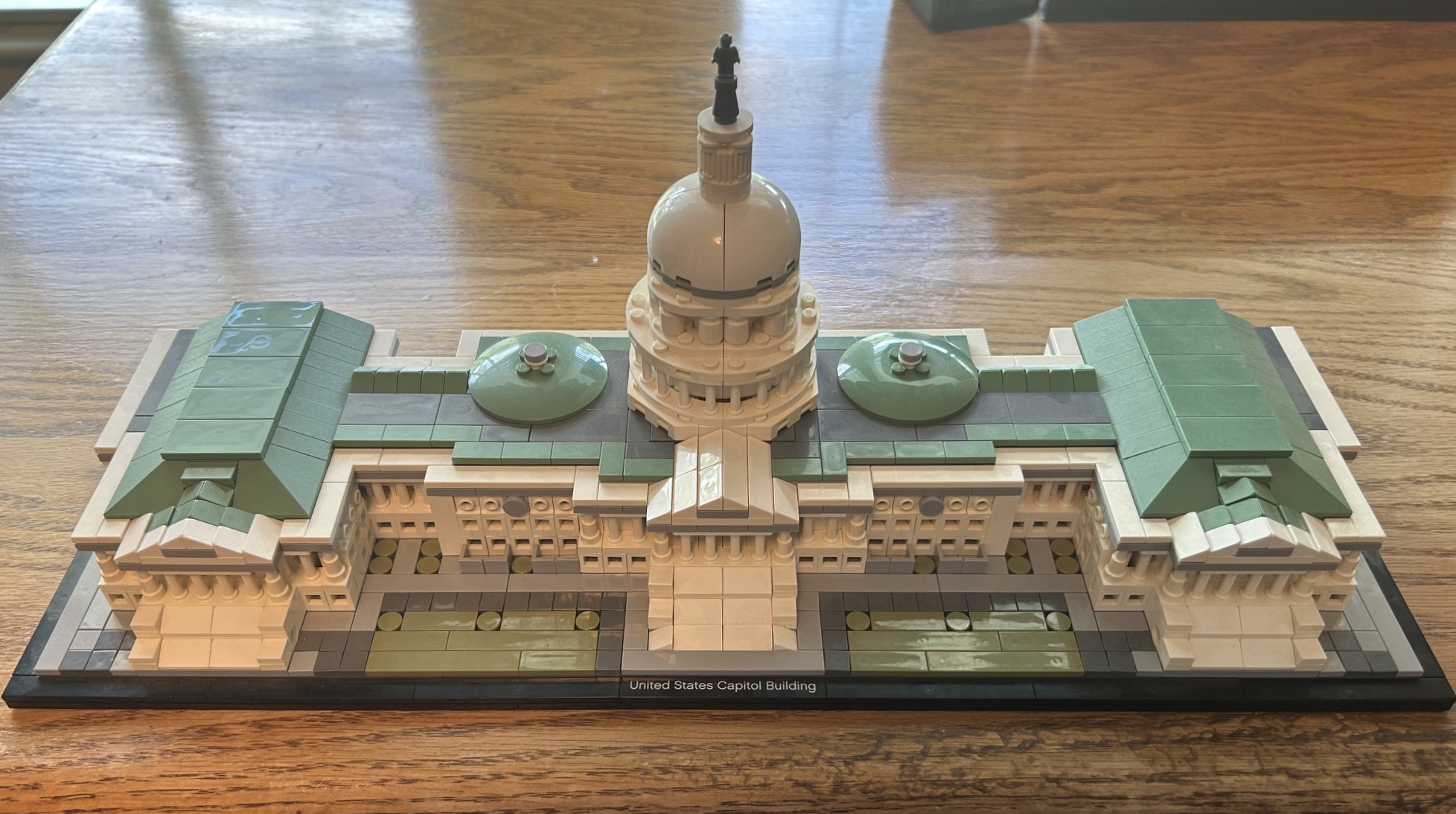
U.S. Capitol Building – I can’t remember what year I purchased this one, my first LEGO build, but it was sometime before this blog even existed.  At over 1,000 pieces, it was one of the more sophisticated models of the budding LEGO Architecture Series back then.  The LEGO U.S. Capitol does have sentimental value.  As a California kid my parents recognized the need to get my brothers and me to the East Coast for a dose of “real” U.S. history.  That month-long driving trip through Colonial America is one of my fondest childhood memories.

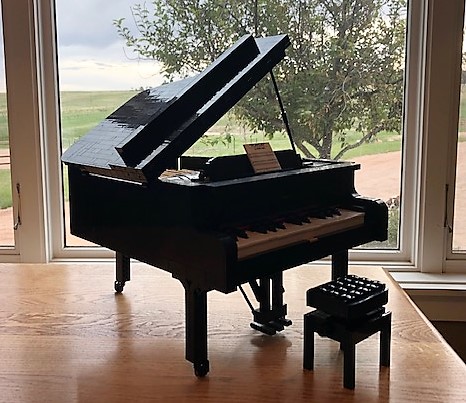
Grand Piano – You can read about this build starting with Let’s Make Music.  It’s my one LEGO model outside of the Architecture Series but also my very favorite.  Snapping together 3,662 LEGO pieces over several months allowed me to blog about my favorite pieces of classical music.  The piano also brought back countless childhood memories of practice, lessons, and recitals at the keyboard.  I may not play as much as I used to, but the LEGO Grand Piano reminds me that classical music will always be a part of my DNA.

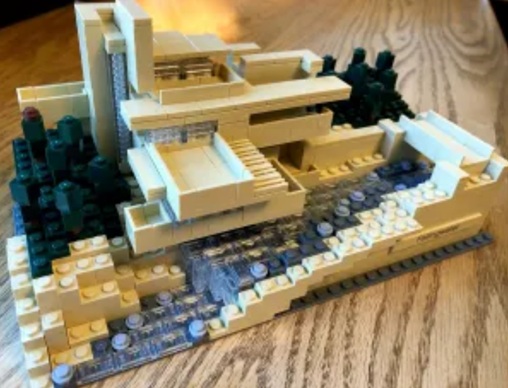
Fallingwater – Frank Lloyd Wright’s signature design is undoubtedly my favorite residential structure, especially the way the house blends seamlessly with the natural surrounds of Western Pennsylvania.  Fallingwater speaks to my college degree in architecture as well.  I built the spartan LEGO Fallingwater model in early 2023 (read about its construction – and my favorite works of architecture – in Perfect Harmony) and then made the long-overdue pilgrimage to Fallingwater itself in the summer of 2024.  The experience was every bit as serene and dramatic as I had hoped.  If you find yourself anywhere near Pittsburgh, take a little time to visit Fallingwater.

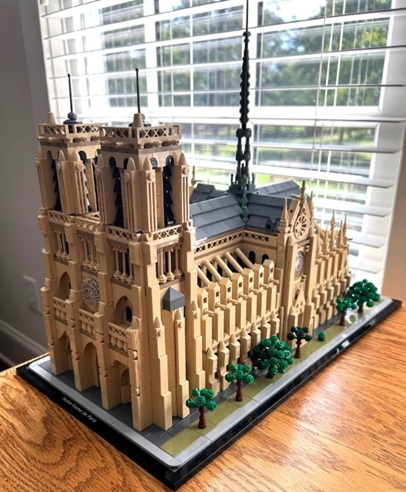
Notre Dame de Paris – The cathedral on the banks of the Seine River in Paris is the first of two LEGO models that harken back to my junior college year in Italy.  During spring break I met my parents in Paris and took a whirlwind tour of the city.  I didn’t climb the Eiffel Tower and I didn’t even visit the Louvre, but at least I spent a few moments inside the glorious sanctuary of Notre Dame.  Forty years later I completed the LEGO version; my biggest build at 4,383 pieces (read about this adventure in Highest Chair).  I still need to add the sophisticated lighting kit, which will give the church the dramatic illumination it deserves.

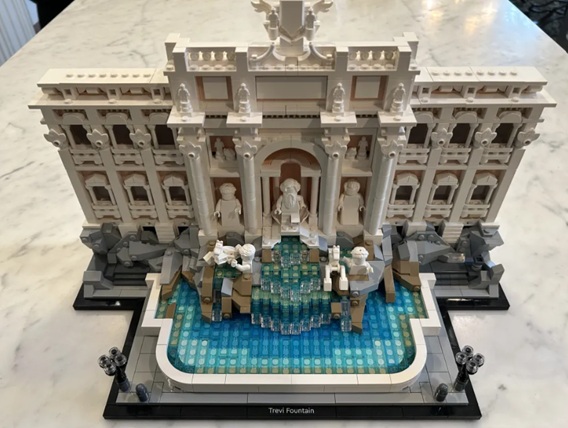
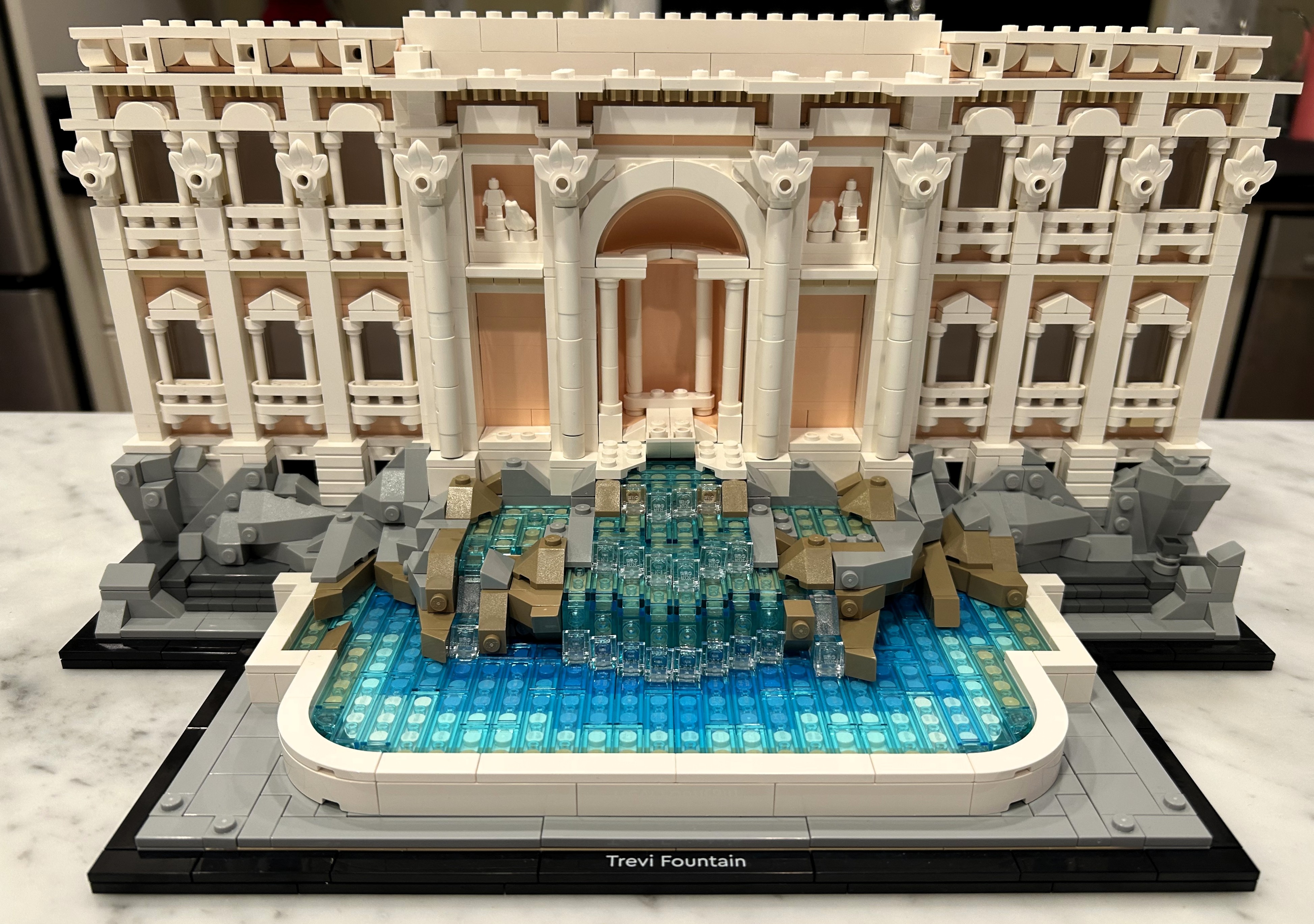
Trevi Fountain – LEGO offers several options to build a structure located in Rome, but the Trevi Fountain spoke loudest to me.  I walked through its piazza many times during that college year, throwing coins over my shoulder with hopes of returning to the Eternal City one day (which still hasn’t happened).  The Trevi is one of the smaller models of my LEGO half-dozen – less than 2,000 pieces – but it’s high on sentimental value.  Read about the build in Brick Wall Waterfall.

Neuschwanstein Castle – I shared a few details about King Ludwig II’s creation in last week’s Fit For a (Fairy Tale) King.  The castle’s LEGO model is 3,455 pieces of stone, brick, turrets, towers, and trees, perched above LEGO’s version of the Bavarian Alps.  I’ve often thought I should be building this one on top of a ladder to simulate the dramatic location.  But the twenty-three bags of pieces and the hefty instruction manual will be challenge enough.  I’ll be sharing the ups (and no doubt the downs) of its construction over the next few months.

If you liken a builder’s half-dozen to that of a baker, we’re actually talking seven LEGO models instead of six. And that, my friends, is the convenient caveat for claiming Neuschwanstein Castle will be my final construct (convenient, caveat, claiming, Castle, construct… NICE Dave!). After all, LEGO will keep adding new models to its Architecture Series. I only have room to display six of them but I’m sure that won’t deter me when the seventh comes a-calling.

Fit For a (Fairy Tale) King

I was sorry to see the Germans bow out of the World Cup early, because I’ve had Deutschland on the brain lately. This month (seven years ago) my wife and I cruised down the Rhine River from the Netherlands to Switzerland, but it was pretty much all Germany in between. This month also signals full-on summer and more time in front of the barbeque.  On our grill you’ll find German bratwurst as often as American burgers. But more than river cruises and brats, I’m thinking about castles.  Not the kind made of sand on beaches, but the real ones made of bricks and stone on mountaintops. Like Germany’s Neuschwanstein Castle.

Neuschwanstein Castle

You’re already familiar with Neuschwanstein; I’m sure you are.  When 1.5 million people tour the castle every year – one of the most popular attractions in Europe – it translates to a lot of photos on Facebook.  Also, Neuschwanstein includes all of the castle elements you remember from childhood fairy tales: towers, turrets, balconies, gatehouses, courtyards, dungeons, and (the intention of) more than 200 lavishly decorated rooms, built up to the highest of heights.  There’s no surrounding moat, but Neuschwanstein gets along fine without one, perched on a hilltop in the middle of the Bavarian Alps.

Painting by Hubert Sattler (1904)

Frankly, all this castle needs to complete its picture is a king and his court.  Alas, Neuschwanstein never had a king – never – not even after its completion in 1892.  Yes, the castle was designed by King Ludwig II of Bavaria, but here’s where the fairy tale falls to pieces.  To begin with, Ludwig built the castle to escape the stresses of his primary palace life in Munich, so more than anything else it was meant to be a vacation home.  Then, Ludwig copied most of Neuschwanstein’s architectural elements from nearby castles, so the design is pretty much a mashup of structures that came beforehand.  Finally, and perhaps the saddest statement of all, Neuschwanstein was never completed – not even close.  With only a throne room, a “Minstrels’ Hall” (a sort of tribute to the entertainment of the time), a drawing room, and a dozen other spaces, Neuschwanstein’s construction fell well short of its intended 200+ rooms.

Neuschwanstein’s “Minstrels’ Hall”

The whole idea of Neuschwanstein feels like a bit of a charade.  Did Ludwig really intend to decorate and staff hundreds of rooms in a castle from which he didn’t care to lord over the surrounding land?  Was he really just frittering away Mom and Dad’s money because he was bored in Munich and had nothing better to spend it on?  And shouldn’t he have been focusing his time and energy on his royal responsibilities instead?  No wonder he was often referred to as “The Mad King”.

Let’s forget about Ludwig.  After all, this post is about a castle, not the king who never occupied it.  For all of its lack of completion, originality, and use, Neuschwanstein is still a model castle.  Most of you should recognize it from the castle designs it inspired: Disneyland’s Sleeping Beauty Castle and Walt Disney World’s Cinderella Castle.  But I prefer another one of its inspirations.

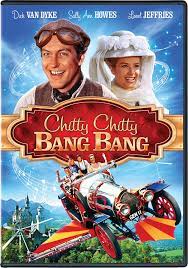
If Neuschwanstein is the ultimate castle, then Chitty Chitty Bang Bang (which I wrote about five years ago in Delicious Clicks) is the ultimate fairy tale.  The story of the magical flying car, its inventor Caractacus Potts, the evil Baron Bomburst, the lovely Truly Scrumptious, and on and on, comes back to me like it was yesterday.  Chitty Chitty Bang Bang was the first Ian Fleming book I ever read, well before anything James Bond.  Yet it never occurred to me until this post that Neuschwanstein served as the story’s castle.  The movie version includes several aerial shots (from the driver’s seat of a flying car, of course), and sweeping views of the surrounding countryside.  Neuschwanstein has always had a familiarity about it.  Now I know why.

Someday I’ll make the journey to see King Ludwig II’s creation in person… but not before I build it myself here at home.  Just when I thought I’d tackled my last LEGO project, along comes another one I simply can’t pass up.  The LEGO Neuschwanstein Castle is 3,455 bricks of towers, turrets, and Bavarian Alps, boxed and bagged along with the usual paperweight instruction manual.  I’m ready to don my crown and get started and as usual I’ll include small updates alongside my usual posts.  When all’s said and built maybe I’ll even suspend a flying car overhead, so the castle looks more like a fairy tale than a mere vacation home for a mad king.

Some content sourced from Wikipedia, “the free encyclopedia”.

Don’t Fence Me In!

Early on in the Christmas classic It’s A Wonderful Life, there’s a scene where George Bailey absentmindedly strolls back and forth on the sidewalk in front of Mary Hatch’s house, dragging a stick along her fence. Mary sees him from an upstairs window, leans out and yells, “What are you doing… picketing? It’s a great line, wordplay on her front yard fence.

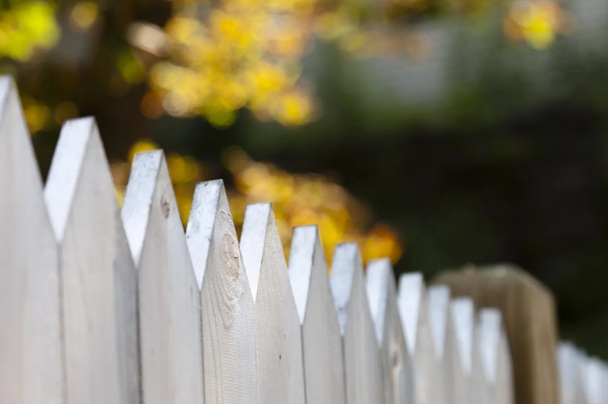
For generations, picket fences have stood hand-in-hand with the American houses immediately behind them. These quaint-looking property markers are considered symbols of middle class prosperity and an idyllic family life. Even the “American Dream” includes a white picket fence.  But maybe no longer. The dream seems to have been updated. Americans no longer want pickets… they want walls.

Privacy with plastic

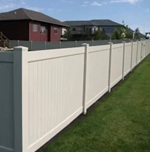
As much as I want to believe a high, solid fence is merely the mark of an eccentric neighbor, facts don’t lie.  Suburbia is abandoning the picket fence in favor of taller, more robust barriers.  A Connecticut fencing company used to fill 40% of its orders with pickets.  How many orders have they had for the low white fences in 2026?  Zero.  Instead they’re filling a demand for panels of plastic (PVC) seven feet on a side, mounted between even higher columns.  The welcoming American cottage is turning into the locked-down American fortress.

One could blame the abandonment of pickets on cost and maintenance.  After all, wood needs to be kept dry and repainted to avoid rot, while PVC is less expensive and lasts a whole lot longer.  Fencing companies tried switching out wooden pickets for plastic ones but apparently the open look isn’t “closed off” enough for today’s preference.  There’s a concerning motive at work here.  People no longer want to know what’s going on beyond their fences (or even more concerning, they don’t want you to know what’s going on behind them.)

To each their own but I’m still a fan of pickets.  They define a property yet don’t remove the “welcome” because they’re short and have gaps.  You can easily chat up your neighbor whether you’re twenty feet removed or right up against the fence.  As for the look, pickets don’t have to be boring, pointy stakes.  They can be crowned with spades, spears, balls, crosses, fleur di lis (for you French-Americans) or whatever else your circular saw can come up with.  

A high, imposing fence is the last thing I’d want surrounding my property.  Having said that, the first house my wife and I bought had one on three sides.  We lived on a California postage-stamp, with both neighboring houses on minimum setbacks.  Without the “privacy fence” we’d be looking from our windows right into theirs.  It takes awhile to forget what you’ve seen when a neighbor doesn’t draw down the bathroom shade.

Three-board fencing

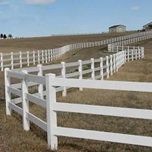
Our next couple of houses had no fences at all.  The properties were bigger so privacy was solved by distance instead of by division.  As for the house we live in now, we’re surrounded by “three-board” fence consistent with the other properties in our community.  Three-board is designed to keep horses in the pastures where they belong, but doesn’t wall you off from your neighbors.  A three-board is anything but a privacy fence and that’s fine with me.  I just wish it was made out of pickets instead.

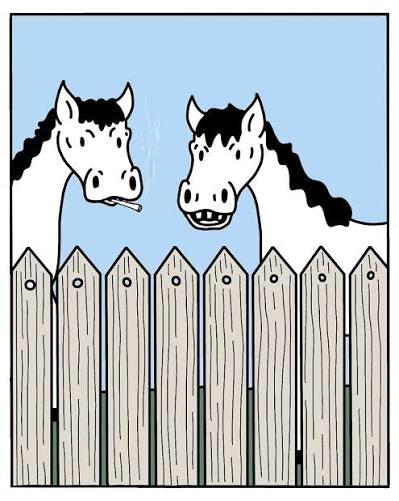
The math on a picket fence to replace my three-board is not what I’d hoped.  Surrounding our five acres would take upwards of 1,000 pickets.  Oof.  There’s a lot “at stake” there, not to mention our horses would happily step over in pursuit of greener pastures.  I’ll just stick with what I’ve got.  There’s a wonderful life on the other side of my fence and I can still see it.

Some content sourced from the Pocono Record article, “Picket fence adds privacy, security with classic style”, and the U.S. Sun article, “Is the white picket fence completely dead?”

Leave Me Alone

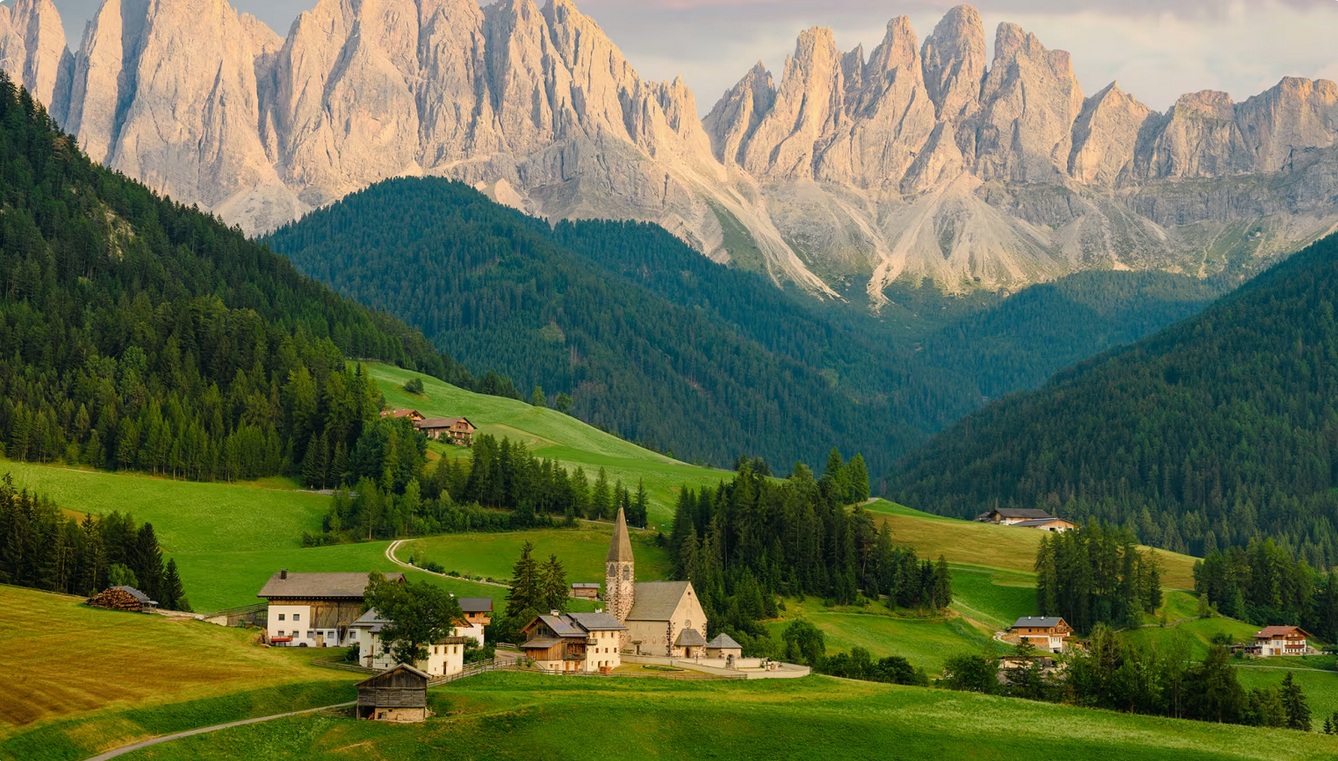
Helen Reddy was an Australian pop singer from the 1970s who would’ve been considered a pioneer of female empowerment (had there been such a term back then). Reddy’s hit I Am Woman leaned on the same pointed lyrics that made Madonna and Katy Perry so popular decades later. Though I Am Woman is Reddy’s most famous anthem, another of her chart-topping hits floats through my brain today: Leave Me Alone. It’s the song the residents of tiny Santa Maddalena di Funes should be singing in the streets of their picturesque mountain village.

Santa Maddalena, Italy (Courtesy of Travel Wild/Stockphoto/Getty Images)

If I asked you to describe a “village” – a term we Americans don’t use very often – what would that image include?  Mine would start with a small cluster of buildings, both residential and commercial, surrounding a cobblestone town square.  The buildings would look quaint and simple, like throwbacks to earlier times.  Narrow roads would lead into the square from the more sparsely populated surrounds.  You’d find a lake or two nearby, and clusters of trees here and there.  In the background, foothills or majestic snow-covered mountaintops.  And right in the middle of it all, a charming church or some other public building rising above the rest.

I’ve just described Santa Maddalena to a tee.  This tiny, picturesque gathering, nestled on the eastern slopes of the Dolomite Mountains in Northern Italy, is the stuff of postcards and jigsaw puzzles.  There’s not much to it but the setting speaks for itself.  And the little church – St. John in Ranui – seems perfectly placed beside the more nondescript buildings.  Santa Maddalena is so attractive it draws 600 visitors a day during the peak travel season.

February is not peak travel season in the Dolomites but the Winter Olympics are taking place just a couple hours from Santa Maddalena.  No doubt some of those sports fans will make there way over for a selfie.  And therein lies the problem.  Tiny Santa Maddalena simply can’t handle hundreds of tourists.  If they keep coming, the photo I led with really will be too good to be true.

Were it not for the Chinese, Santa Maddalena might still be relatively undisturbed.  One of China’s mobile phone companies included an image of the village on its SIM card and suddenly its customers just had to know where to find Santa Maddalena.  A 2013 iPhone iOS update included images of the nearby mountains, adding to the draw.  Now village officials are considering the unthinkable: restrictions.

It’s a move similar to what’s happening for the first time at the Trevi Fountain in Rome.  If you drive to Santa Maddalena you may now be stopped on the outskirts of town, where you’ll leave your car in (gasp!) a parking lot.  If you want to walk through town, you’ll have to purchase a ticket.  One enterprising resident added a turnstile at the edge of his fields so he can charge those who want to cross over.  Suddenly I’m having visions of food trucks and souvenir stands.  How sad.

The plight of Santa Maddalena reminds me of those once-a-year lists you find in publications like U.S. News & World Report, where towns across America are ranked according to so-called “quality of life” criteria.  Whether the schools, the parks, the clean air, or feeling safe in the streets, your own little corner of the world might suddenly be declared a top-five place to live.  And that, my friends, is the kiss of death.  Now you’ve been discovered, and everyone has to see what the fuss is all about (or at least go visit for a selfie).  The masses throng to your backyard and some never leave.  A year or two later – surprise, surprise – you’re no longer “top-five”.

Credit the residents of Santa Maddalena: they’re coming up with creative ways to discourage “over-tourism”.  In a particularly bold move, they’re going to require an overnight stay to be able to walk the streets, so that tourists actually give to the local economy instead of just taking that selfie.  IMHO all they really need to do is continue to be known as “Santa Maddalena” on the web.  You won’t find much if you search with those words.  As for “Santa Magdalena?”  That’ll get you there.  Even if you’ll find a quaint village of people singing Leave Me Alone.

Some content sourced from the CNN Travel article, “Italian village restricts access to its Instagram-famous church”, and  Wikipedia, “the free encyclopedia”. 

A Triumph in Travertine

LEGO Trevi Fountain – Update #8

(Read about the start of this build in Brick Wall Waterfall)

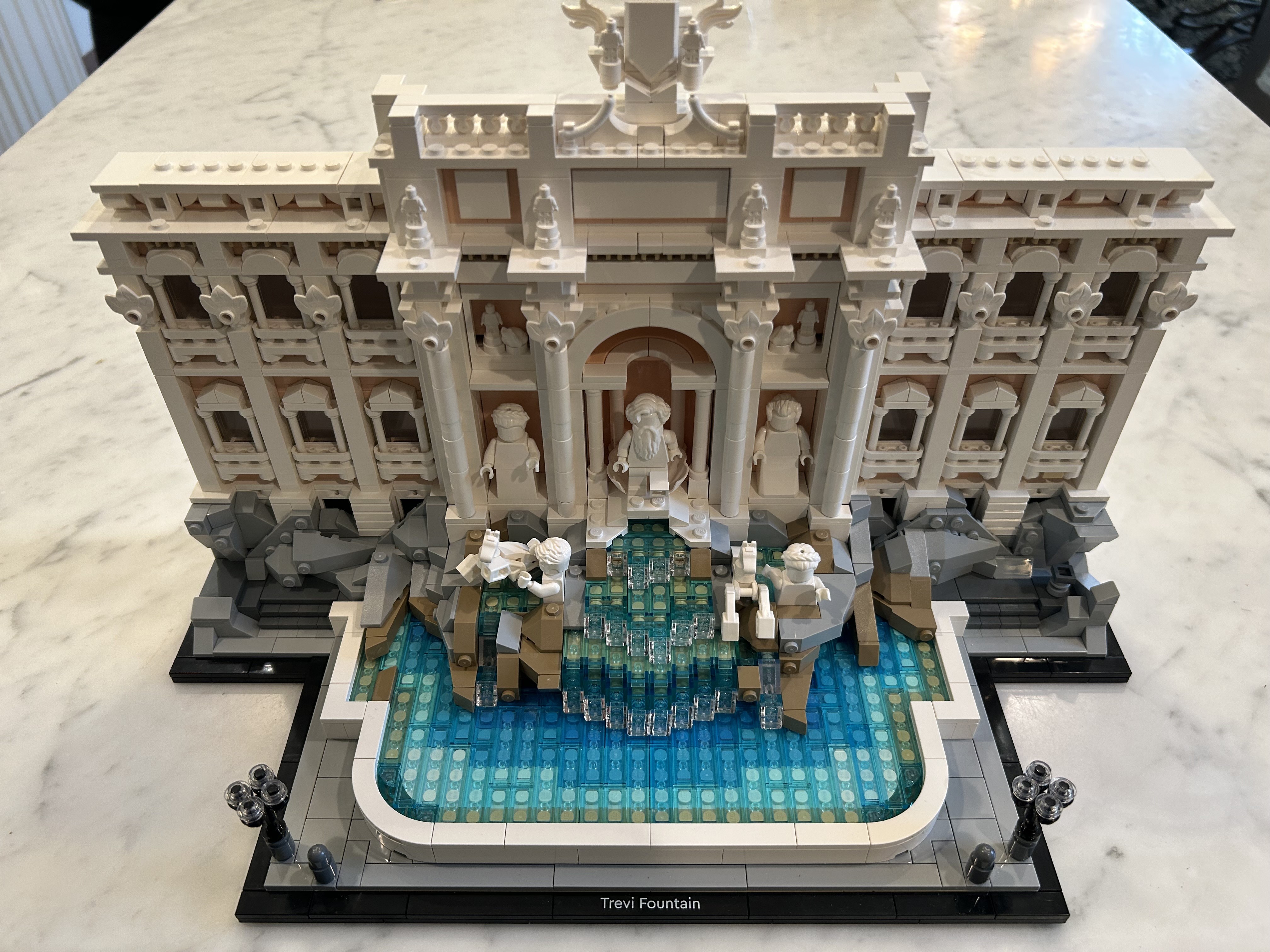
A little over two months ago we set out to do the impossible: construct one of the world’s great fountains in time for Christmas. Today, a day before our self-imposed deadline we put the very last piece of travertine in place.  Okay, so this Trevi Fountain is made of LEGO and we’re nowhere near Rome but still, we’ve had a nice little adventure from start to finish.

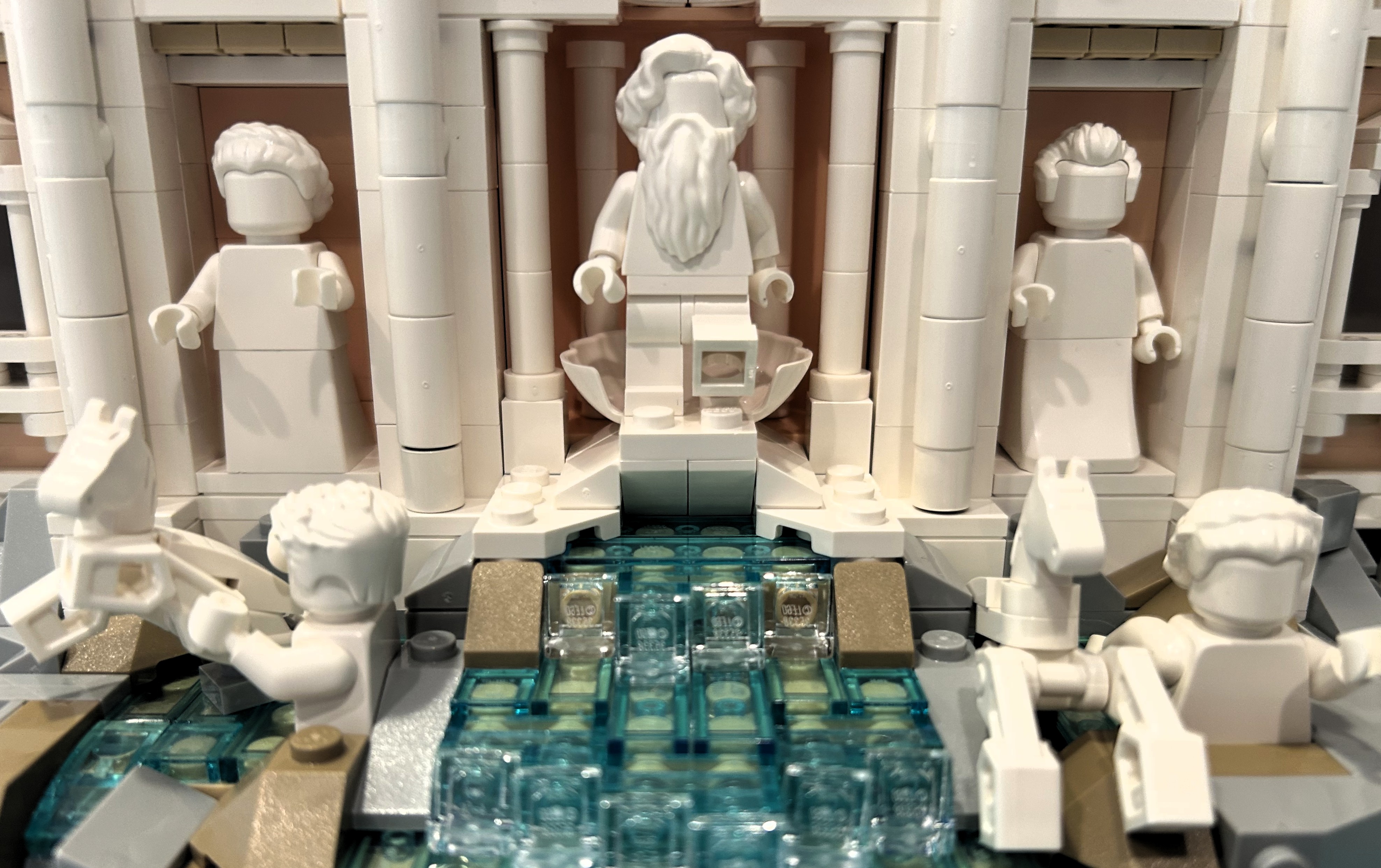
As is the case with many of LEGO’s models, the final pieces are meant for flourishes and ornamentation.  Bag 14 – of 15 bags of pieces – focused entirely on the top center structure you see here.  Everything was completed in a cool 23 minutes, finished off by the careful placement of those four tiny statues.

Today’s musical accompaniment was fitting.  I chose Gabriel’s Oboe, a short but beautiful instrumental some of you may recognize from Amy Grant’s “A Christmas to Remember” album.  It was actually written by Ennio Morricone for the movie The Mission. I listened to it twice.  Then I went with Luigi Boccherini’s Minuet from his String Quintet in E Major, which some of you may also recognize from movie scores.  I listened to it thrice.  Finally, I concluded with Vivaldi’s The Four Seasons (though of course, only with the “Winter” movement).

Gotcha!

Bag 15 – the final bag of Trevi LEGO pieces – was an adventure from the get-go.  Thirty seconds after spilling the pieces onto the counter I heard a tiny “tap tap tap” on the kitchen floor, the exact sound of a LEGO piece skittering away.  Sure enough, way over by the frig, the little guy was standing there looking up at me with a devilish grin.  He’d rolled way, way across my kitchen counter and dropped to the floor before attempting his escape.  Again with the runaway pieces, sigh…

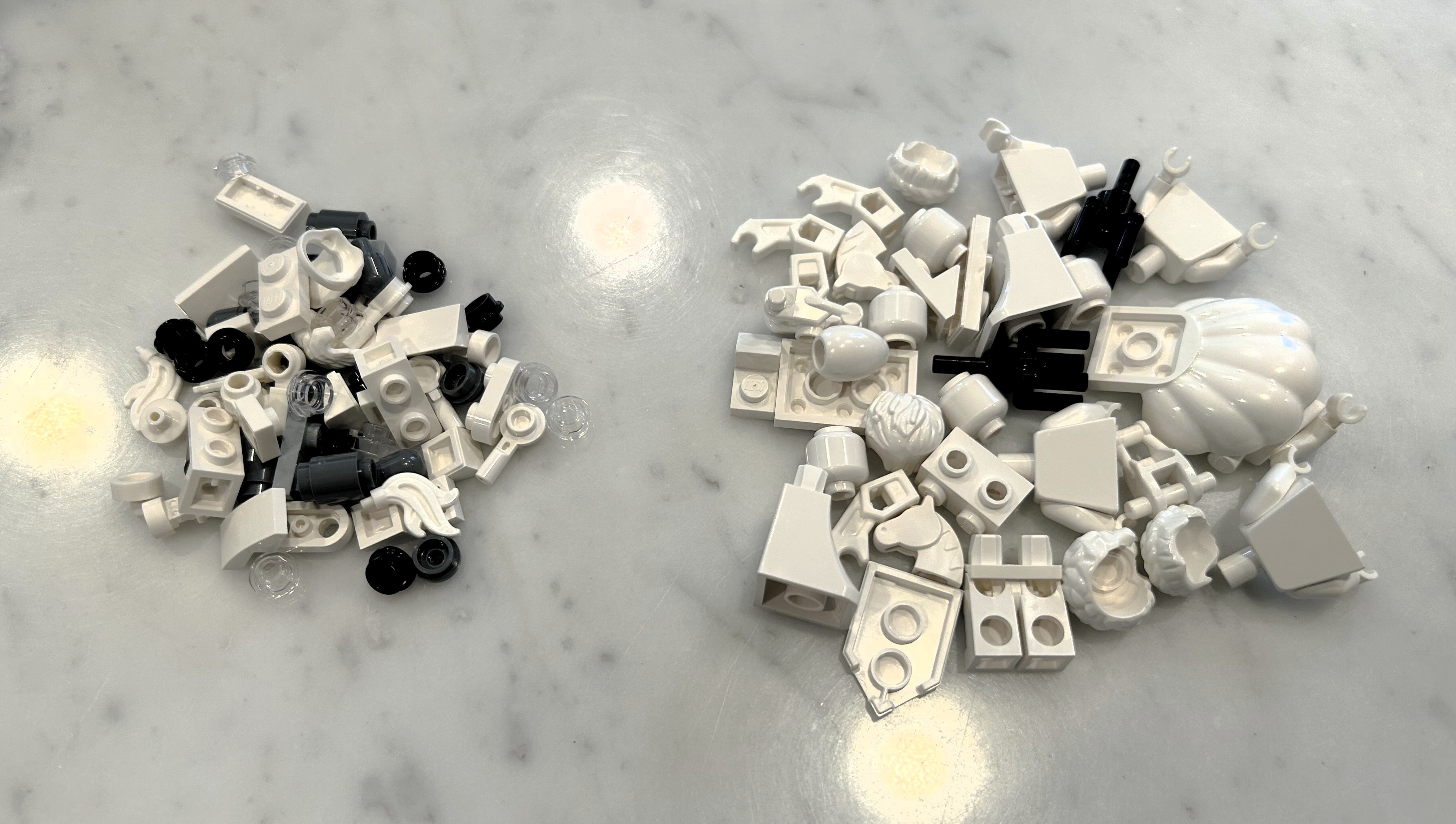
The statuary of the Trevi is impressive and the LEGO equivalent is kind of fun.  If you look carefully in the piles of pieces above you can see hairpieces, torsos, and horse heads.  Fully assembled and installed, it’s quite the collection of humans and animals in and among the rushing waters.

Finally, here’s an interesting coincidence of timing.  In just over a month – for the first time in its history – you’ll have to pay $2 to see the Trevi up close.  The fee is designed to reduce the overwhelming flow of tourists in front of the fountain.  A fee just to see a fountain may sound nit-picky but a trial run showed it works well to reduce the chaos.  Trust me: pay the $2, spend as much time front and center as they’ll allow you, and gaze upon one of the sculptured marvels of Ancient Rome.  I think you’ll agree; the Trevi Fountain is a triumph in travertine.

Click on the photo for more detail!

Running build time: 7 hr. 48 min.

Total leftover pieces: 44

Caffè Companions

My wife made a batch of rolled sugar cookies last week, cut into traditional Christmas shapes like bells, wreaths, and stockings. It’s the first time in a long time for these cookies, inspired by the assistance of our young and attentive granddaughters. Though the cookies never donned their frosted/decorated costumes, they sure tasted great all by themselves. Kind of like the biscotti I’m giving up in 2026.

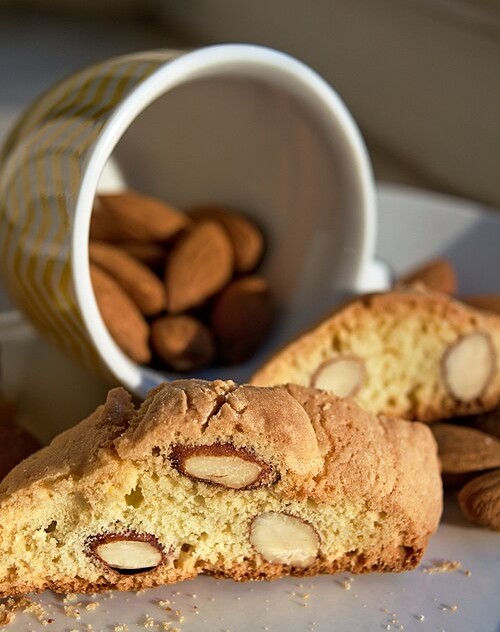
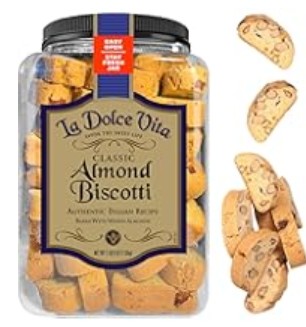
Are you a fan of biscotti?  They’re the small, oblong cookies that resemble tiny slices of sourdough bread.  They’re hard and dry, with just a smattering of almonds or almond extract for extra flavor.  Biscotti are meant to accompany a drink, just as two of them do every morning with my coffee.  Biscotti ward off the nausea I feel when I down my vitamins on nothing but a cup of joe.  Nice excuse for daily cookies, eh?

“Cantucci” (not biscotti)

When the calculator (which doesn’t lie) reveals you ate over seven hundred biscotti over the course of 2025, you quickly come to your senses and declare a resolution for the coming New Year: Shift biscotti from “habit” to “occasional treat”.  Yep, it’s time to cut down on carbs.

Before we seal the lid on the cookie jar however, biscotti deserve a little more attention to set the record straight.  First and foremost, the pint-sized pastries I consume with my morning caffè are not technically biscotti; they’re cantucci.  Cantucci contain ingredients like milk, butter, and flavorings, none of which are found in an authentic Italian recipe for biscotti.

Here’s another distinction.  Biscotti were never meant to be partnered with coffee.  They were (and still are) served alongside a glass of sweet wine as a light Italian dessert.  Americans pair cantucci with cappuccino at upper-crust hotels and coffeehouses.  You’re supposed to dunk to make them softer (and take the edge off the coffee) but I prefer to eat them just the way they are.

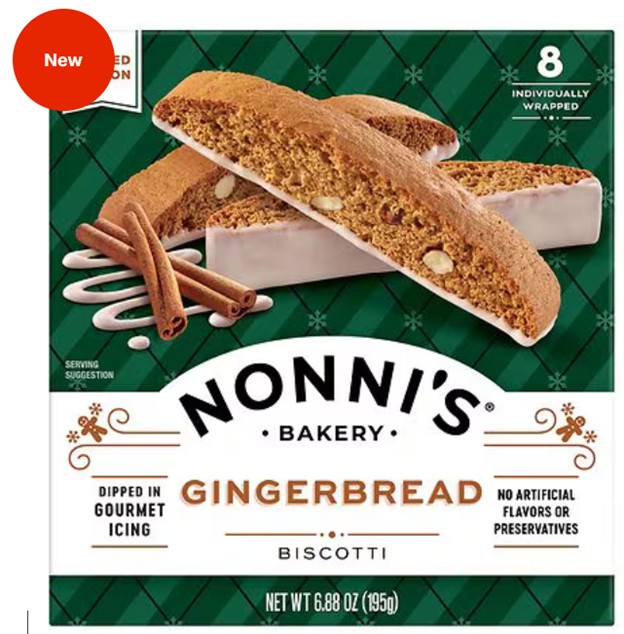
Biscotti translates to… not “biscuits”, but “twice-baked”, which is exactly how they’re made.  First baked as a full loaf; then baked again as individual cookies. Now then, another Italian translation for you: Nonni means “grandmother”.  Nonni’s also means a brand of biscotti (whoops, make that cantucci) you’ll find in your grocery store… and in my pantry.  The Nonni’s version is an unashamed dessert cookie, with a layer of chocolate, caramel, or lemon frosting to add to the appeal.  My advice: Nonni’s need to be put on a hard-to-reach shelf else they’ll become a habit just like the ones with my morning coffee.

In some Western European cultures biscotti are thrown into savory dishes, which I’m not going to get into because I find the idea unappealing.  Biscotti are classy little sweet treats in my book – one of the two items in my “grown-up milk and cookies”.  Alas, in 2026 it’ll just be “grown-up milk” for me… that is, as long as I stay away from my wife’s sugar cookies.

—————-

LEGO Trevi Fountain – Update #7

(Read about the start of this build in Brick Wall Waterfall)

Today we took a mini road trip, as I chose to build the fountain’s Bags 12 and 13 – of 15 bags of pieces – on the kitchen counter (instead of upstairs in the home office).  Kind of fitting considering the counter is topped with white marble.  Kind of annoying considering the laundry machine and dishwasher were running nearby the whole time, interrupting Arcangelo Corelli’s moving “Christmas Concerto” in G Minor.

Trevi statues are TINY!

Maybe it was the change of venue but some strange stuff happened today.  To begin with, I couldn’t find the very first piece in the build at all, until I looked closer at the instruction manual drawing and realized I was after a tiny statue.  Once I found him I was off and running, though I found it sad that one of his companion statues ended up being a leftover piece.

Thought you should know: the back side of the LEGO Trevi is a sheer wall of white.

Now for the strange stuff.  I assembled a flat L-shaped piece on top of another flat L-shaped piece, only to discover they weren’t supposed to go together that way.  No amount of fingernail dexterity could pry those two apart.  Fortunately I found myself in the kitchen.  Sharp knives everywhere!  It took a careful pry without cutting myself but I finally got those two unmarried.  Never let it be said building LEGO models isn’t a dangerous sport.

That little brown round one (nestled top left) was missing from Bag 13!

More strange stuff.  LEGO left a piece out of Bag 13.  Okay, technically they left it out.  “Technically” because in my growing pile of leftover pieces I found its twin.  But considering LEGO never leaves out pieces, I had to wonder:  Did the little guy just wander over to my leftover pile when I wasn’t looking?  Or is he somewhere in the trash right now, along with the cellophane bag of Bag 13?  Maybe he’s resting quietly on the kitchen floor just waiting to stub my toe?  Who knows.  I’m just thankful I had a “replacement” from my leftovers.  And I don’t think I’ll be building LEGO models in the kitchen anymore.

Next week: The Trevi is completed!

Running build time: 6 hrs. 52 min.

Total leftover pieces: 35 (including a lonely little statue)

Some content sourced from Wikipedia, “the free encyclopedia”.

Priceless Hatches

I’m enjoying a couple of soft-boiled eggs right now, my every-other-day breakfast entrée. The timer I use to prepare them sits right in the pot of water, indicating when the eggs are cooked to perfection. I pay a little more than average for my eggs, to producer Vital who advertises “pasture-raised – tended by hand by farmers who care”. On the other hand, if I wanted to pay a lot more than average I’d simply go to a rare goods auction and buy one from Fabergé.

“Gatchina Palace” Egg

You wouldn’t have a Fabergé egg for breakfast, of course.  No one would ever sink their teeth into a priceless work of art (well, maybe a banana), let alone one of only fifty that were ever created.  One of the Fabergés – the “Winter Egg” – went under the auction block last week, with the winning bid confirmed in a mere three minutes.  The buyer’s purchase of a single Fabergé for $30.2 million dollars is a new record; noteworthy considering how many times the eggs have changed hands in the last 140 years.

“Catherine the Great” Egg

I can’t say why we Westerners even know about Fabergé eggs.  Most hide in private collections or in museums you’ve never been to.  The eggs were created in St. Petersburg, Russia in the late 1800s by jeweler House of Fabergé for the reigning tsars of the time.  One or two eggs were produced every year as exquisite Easter gifts, from 1885 through 1917.  Most are jeweled with diamonds and other precious gems, and hinge open to reveal delicate animals or scenes within.

The Winter Egg (1913) is described as “the most spectacular, artistically inventive and unusual” of all fifty Fabergés, which is quite a statement when any one of the eggs deserves the same praise.  The Winter Egg took almost a year to design and create, and the value is evident in the details.  4,500 tiny rose-cut diamonds are married to a platinum snowflake motif to create the impression of a block of ice dusted with frost.

“Winter” Egg

The Winter Egg hinges opens to reveal a hanging basket of wood anemones, made from white quartz and rare green “Tsavorite” garnets.  I can’t imagine working with these expensive materials on such a small scale but maybe that’s because I don’t have the delicate fingers of a woman.  The Winter Egg was designed and created by Alma Pihl, the only female jeweler in the House of Fabergé.

“Imperial Coronation” Egg

On a cruise around the Baltic Sea several years ago, my wife and I were fortunate to spend a couple of days in St. Petersburg, touring Catherine Palace and Peterhof among the city’s other sights.  When we returned to the ship we were greeted by a local jeweler, who offered replicas of the Fabergés (for less than $32M, thank goodness).  We chose the Imperial Coronation Egg (1897), inspired by the color of Tsar Alexander III’s robe.  The Coronation Egg houses a replica of the imperial carriage, made with gold and platinum and detailed with rubies and diamonds (the original egg that is, not ours).

After learning a single egg can set you back $32M, I now look at my breakfast eggs a little differently.  $10.99 a dozen?  That used to be top of the heap.  Now it’s just pocket change.

—————-

LEGO Trevi Fountain – Update #6

(Read about the start of this build in Brick Wall Waterfall)

There’s a moment in every LEGO build where you look at what you’ve constructed and think, Hey, I’m almost done!  That moment was today.  Bags 10 and 11 – of 15 bags of pieces – brought the structure of the Trevi Fountain to new, practically finished heights.  The tiny, tiny pieces I worked through (so many of them I was afraid to count) resulted in the uppermost level of the backdrop you see in the final photo.

Bag 10

From my magic hat of Italian composers I somehow chose Claudio Monteverdi for my musical accompaniment today.  You don’t know Monteverdi and apparently I don’t either.  Had I realized his contribution to classical music was mostly opera (hard pass) I would’ve reached into the hat again.  Alas, I was subjected to Monteverdi’s L’Arianna “lament” – equal parts sorrow, anger, fear, and so on.  Those singers sure didn’t sound happy as I snapped together LEGO pieces, but honestly who knows?  I don’t speak “sung” Italian.

mirrored element

Here’s an expectation with a symmetrical LEGO build.  If you construct an element that goes on one side of the model you’ll be mirroring it on the other side before you know it.  A hundred or more pieces went into the windowed wall you see here, and a hundred more went into its twin soon after.  It’s repetitive yes, but at least you go faster the second time around since you just had practice.

A word about the little devils in this photo.  Because they’re cylindrical they can roll.  Because they roll they can hide under something.  Something like a LEGO instruction manual.  Once again I was fooled into thinking I was missing pieces… until I thought to look under the manual.  Sure enough, there they sat just smirking at me.  So I promptly arrested and cuffed them, hauled them away, and now they’re jailed in the backdrop you see here, without possibility of parole.

We’re just four bags of LEGO pieces from “turning on the water” of the magnificent Trevi.  I’ll admit to peeking into the box at those upcoming bags.  They are small, all four of them.  Perhaps I’ll wrap the fountain construction in a single go next week.  Even if not, conveniently, the final block of travertine would be laid the following week, just in time for Christmas.  Now that’s what I call a gift!

Running build time: 5 hrs. 42 min.

Total leftover pieces: 32 (tiny, tiny pieces)

Some content sourced from the CNN Style article, “Faberge egg fetches record $30.2 million at rare auction”, and Wikipedia, “the free encyclopedia”.