
There’s a well-known saying in the South: The intolerable heat of July and August is God’s reminder you don’t want to go to the bad place some day. The coping strategies include lots of time indoors or traveling to more temperate places. Thus did my wife & I find ourselves on the California coast for a couple of weeks. Giving up the sweat and bugs for the sun, surf, and sand was an easy trade. But true to form Cali delivered an experience worth sharing (or at least blogging about).
 We all have choices when it comes to shipping our stuff. Maybe it’s the post office in a small town but for the rest of us it’s a franchise like The UPS Store or PostNet. My option during this trip was PostalAnnex, conveniently adjacent to a market where my wife could disappear. So I entered the shipping store alone, phone in hand, fully prepared to get lost in my newsfeed while waiting in a long line. Only there wasn’t any line – just one woman being helped by another behind the counter. My lucky day! I’d be back to the sun and surf in no time.
I’d hardly glanced at PostalAnnex’s impulse buys when I began to pick up on the conversation at the counter. The woman was sending a vase. It was fragile. She wasn’t convinced it would get to its destination intact. But credit the clerk for her calm, soothing voice, assuring the woman she’d packed countless fragile objects before, and this one would be no exception. To which the woman literally shouted, “Well, I hope so! Otherwise my vase will be as broken as my marriage!”
As broken as my marriage? Okay, that got my attention.
Look, I’m not one to eavesdrop but I was kind of a captive audience here, okay? And I had no idea this woman was just getting started with her personal soap opera. “Last name?”, the clerk asked, intending to search the PostalAnnex database. “Jones… Lisa Jones”, declared the woman, who promptly corrected herself by saying, “No… WAIT!!! Not Jones!!! That’s who I used to be!!! Clark!!! It’s Clark now! And you gotta update my first name too because I changed that as well! Ari Clark! Yes I’m… I’m Ari Clark now, thank you very much. New first name and new last name!!! This is me severing every last connection with that no-good loser ex-husband of mine!!!”
Oh my. And here I thought she was just mailing a vase.
Since I was the only male in the store you can understand why I considered bolting for the door at that very moment. But since the woman didn’t turn around and say something to the effect of “ALL of you men are scum of the earth“, I maintained my quiet presence. Quiet, that is, until the clerk looked over at me somewhat helplessly and said, “Sir, are you just dropping off or do you need to set up a shipment?” Which prompted the woman to look back at me and – thankfully – give nothing more threatening than a what are you looking at? glance.
“I look good, don’t I?”, she continued, clearly posing for the clerk. “I mean, I’ve made the changes, if you know what I mean. I’m ready to get out there and start living again. My ex – man – he totally blew it with that affair of his. 35 years of marriage and he goes and cheats on me? Over and done with, baby – your loss.”
“Um, your address please?”, the PostalAnnex clerk pleaded.
“58 Charles St., Apartment B. That’s right, a new address to put into your system because I’m done with that old address. Like I said, I’m done with everything about the last thirty-five years.”
The clerk then assured this woman she looked great and was doing the right thing by moving on, and in fact, should move on right now so the next customer (me) could be helped. And bless her heart, that’s exactly what the woman did… that is, after paying with a credit card she assured us had her new first and last name.
When it was my turn at the counter (twenty minutes after walking through the door) the clerk joked with me. “Well, I guess I offer free marital advice along with shipping services. So let’s chat first; how long have you been married?”
“Thirty-nine years”, I said, a little too proudly.
“Thirty-nine years?“, she exclaimed. “Goodness – no one in California lasts that long! Tell you what, just for you: the thirty-nine-years-of-marriage shipping discount!”
Did I really get a discount? Who knows. I’m just glad I didn’t run into the other woman in the parking lot. I’d put up with enough blistering heat already this summer.
———————————————————–

LEGO Neuschwanstein Castle – Update #3 (read about the start of this project in Fit for a (Fairy Tale) King)
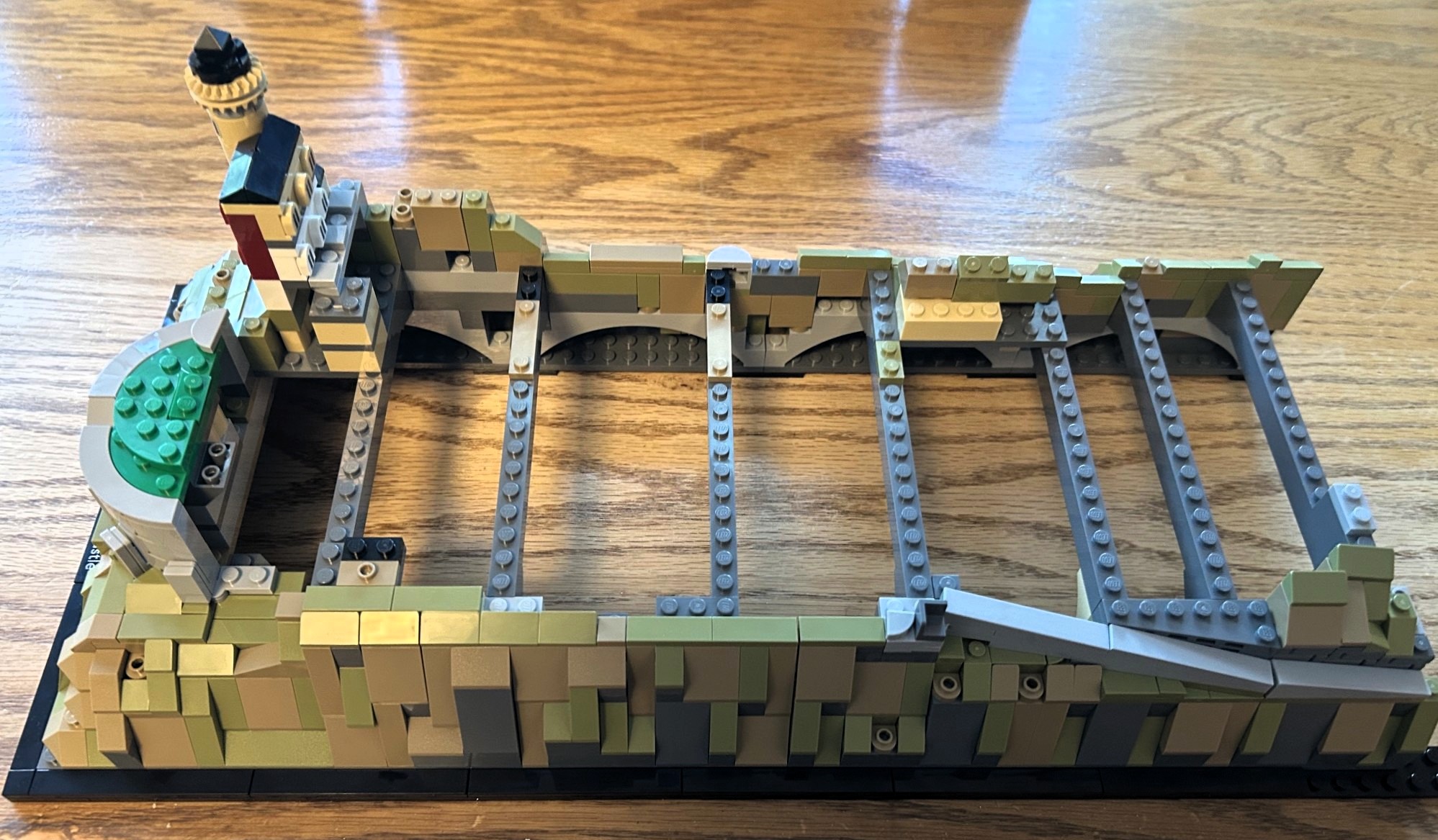
No surprise, we continued to move mountains (er, Bavarian Alps) this week instead of anything brick or stone. The colors and shapes of the LEGO pieces in Bags 5 and 6 (of 23 bags of pieces) were decidedly “earthy”. What we have in the photo above looks like some sort of ocean trawler instead of a castle foundation. But the good news is, we’ve just about reached the far end of the model (on the right), so a little more earth-moving will shift gears into castle construction.
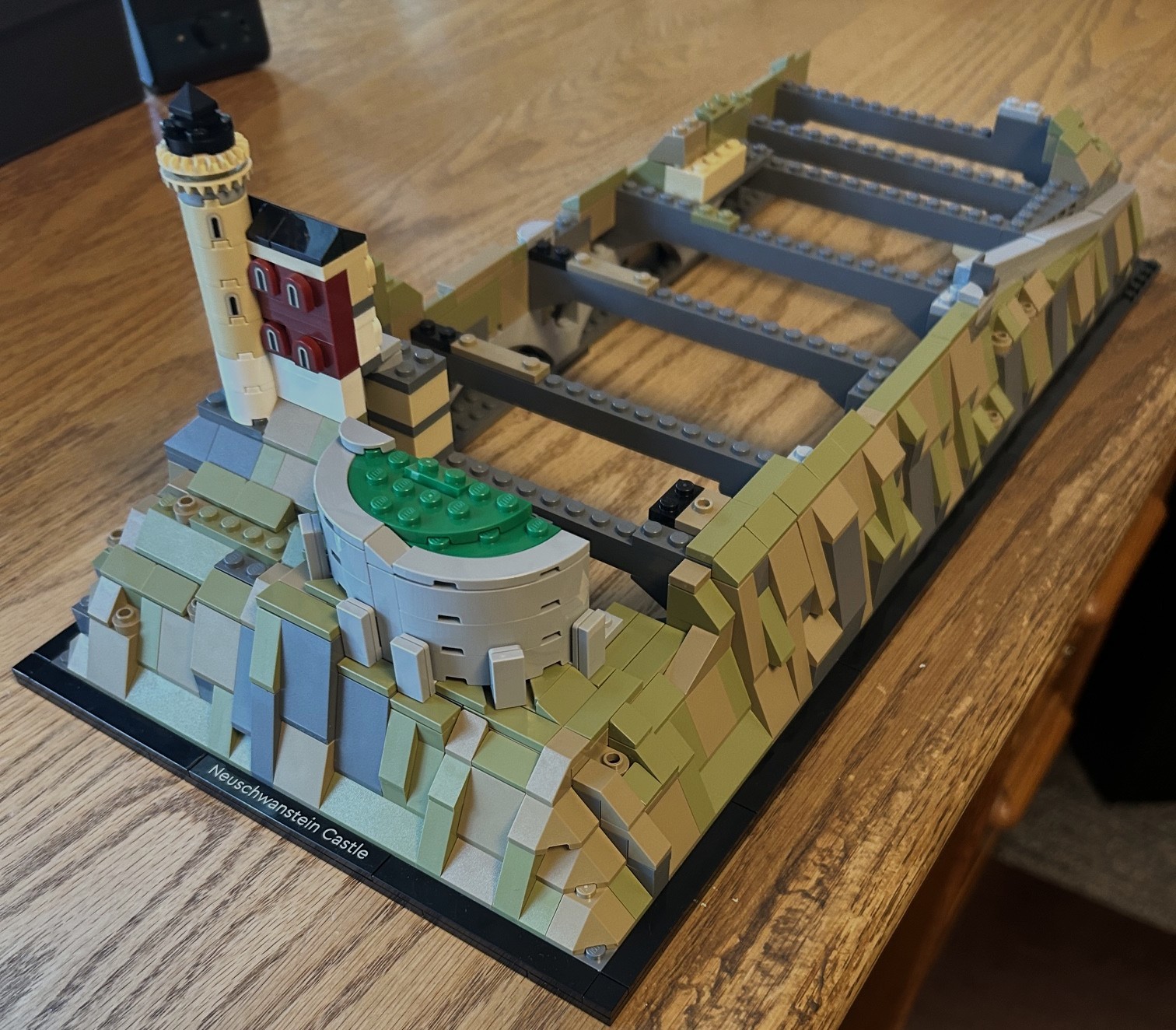 In my haste to move mountains I knocked that single white turret off its footing, which forced me to leaf back several pages in the instruction manual to remember where it was based. Strange how LEGO chose to tease me with a lone turret (and castle wall) this early in the build. That little assembly will be utterly dwarfed by the castle once it rises above it.
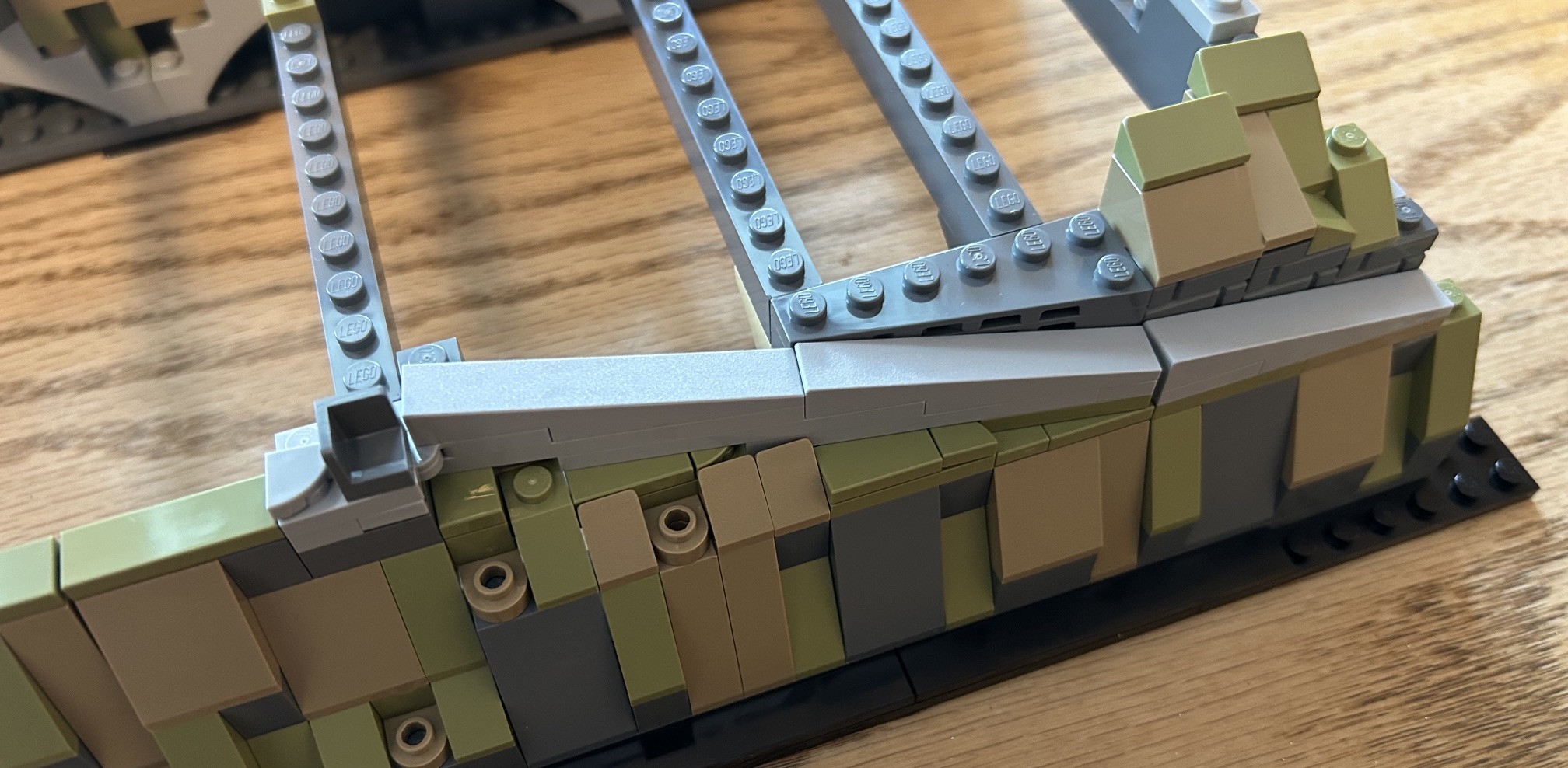
Speaking of the LEGO instruction manual (better known as the “Tome of Construction”) this is a good time to dismiss LEGO “Builder”. For those of you in the know, Builder is a smartphone app that replaces the instruction manual, so you just tap your phone every time you move to a new step. Nope, not gonna do it. The Tome of Construction is much bigger than a phone screen, with easy-to-turn, easy-to-read pages. There’s really no good reason to go electronic with the steps. After all, Neuschwanstein didn’t have electricity when it was built so why should its construction?
Running build time: 2:37.
Total leftover pieces: 21.
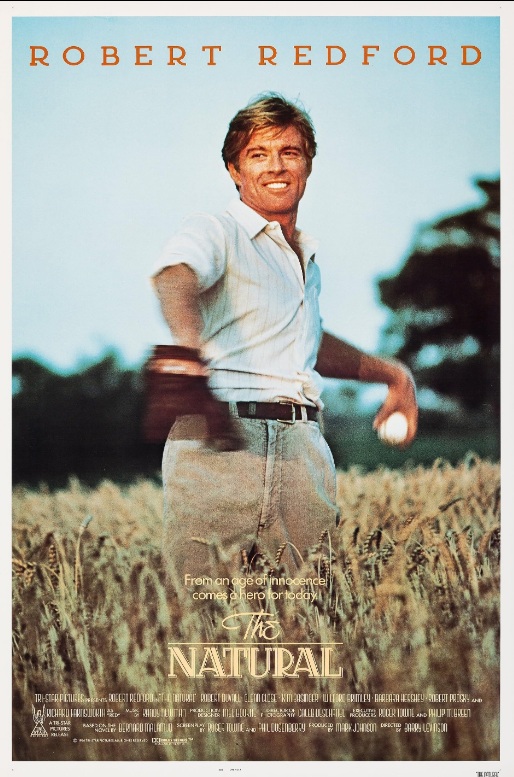 Accompanying movie soundtrack: The Natural (1984). Here’s an appropriate choice from my favorite soundtracks list, since we’re in the middle of the major league baseball season. The Natural is a mystical, beautifully filmed story of an aging baseball player. Robert Redford plays the lead role (with Glenn Close supporting, and looking a lot lovelier than she did in Fatal Attraction). The movie score is both haunting and majestic. It taps generously from Aaron Copland’s “Fanfare for the Common Man”. It also echoes Rudy, a soundtrack I’ll spend a little time with a couple of weeks from now. Have a listen to The Natural here.


