Early on in the Christmas classic It’s A Wonderful Life, there’s a scene where George Bailey absentmindedly strolls back and forth on the sidewalk in front of Mary Hatch’s house, dragging a stick along her fence. Mary sees him from an upstairs window, leans out and yells, “What are you doing… picketing? It’s a great line, wordplay on her front yard fence.
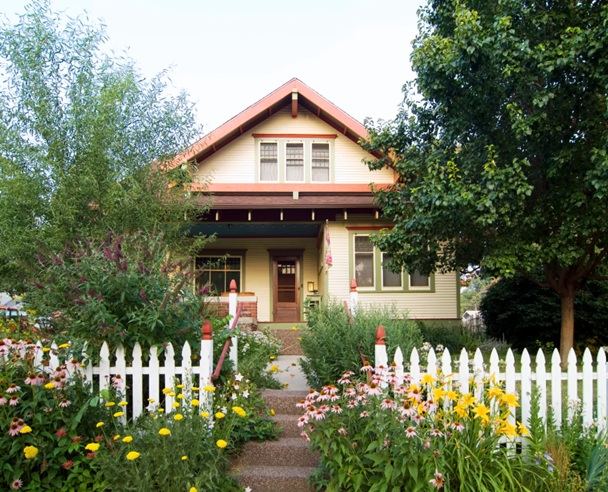 For generations, picket fences have stood hand-in-hand with the American houses immediately behind them. These quaint-looking property markers are considered symbols of middle class prosperity and an idyllic family life. Even the “American Dream” includes a white picket fence. But maybe no longer. The dream seems to have been updated. Americans no longer want pickets… they want walls.
As much as I want to believe a high, solid fence is merely the mark of an eccentric neighbor, facts don’t lie. Suburbia is abandoning the picket fence in favor of taller, more robust barriers. A Connecticut fencing company used to fill 40% of its orders with pickets. How many orders have they had for the low white fences in 2026? Zero. Instead they’re filling a demand for panels of plastic (PVC) seven feet on a side, mounted between even higher columns. The welcoming American cottage is turning into the locked-down American fortress.
One could blame the abandonment of pickets on cost and maintenance. After all, wood needs to be kept dry and repainted to avoid rot, while PVC is less expensive and lasts a whole lot longer. Fencing companies tried switching out wooden pickets for plastic ones but apparently the open look isn’t “closed off” enough for today’s preference. There’s a concerning motive at work here. People no longer want to know what’s going on beyond their fences (or even more concerning, they don’t want you to know what’s going on behind them.)
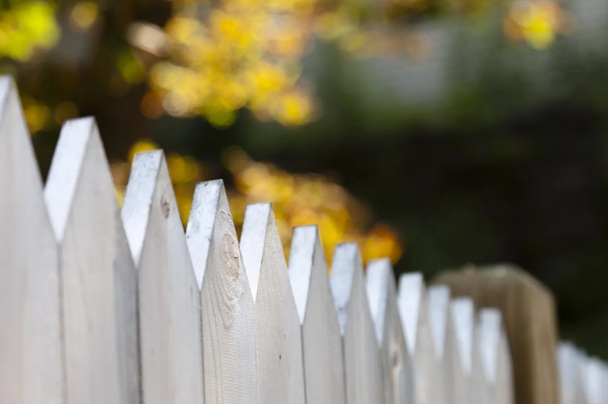 To each their own but I’m still a fan of pickets. They define a property yet don’t remove the “welcome” because they’re short and have gaps. You can easily chat up your neighbor whether you’re twenty feet removed or right up against the fence. As for the look, pickets don’t have to be boring, pointy stakes. They can be crowned with spades, spears, balls, crosses, fleur di lis (for you French-Americans) or whatever else your circular saw can come up with.
A high, imposing fence is the last thing I’d want surrounding my property. Having said that, the first house my wife and I bought had one on three sides. We lived on a California postage-stamp, with both neighboring houses on minimum setbacks. Without the “privacy fence” we’d be looking from our windows right into theirs. It takes awhile to forget what you’ve seen when a neighbor doesn’t draw down the bathroom shade.
Our next couple of houses had no fences at all. The properties were bigger so privacy was solved by distance instead of by division. As for the house we live in now, we’re surrounded by “three-board” fence consistent with the other properties in our community. Three-board is designed to keep horses in the pastures where they belong, but doesn’t wall you off from your neighbors. A three-board is anything but a privacy fence and that’s fine with me. I just wish it was made out of pickets instead.
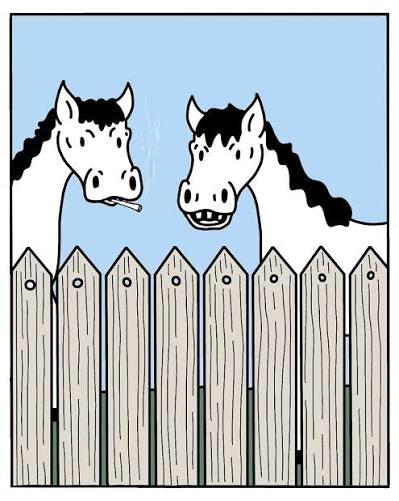 The math on a picket fence to replace my three-board is not what I’d hoped. Surrounding our five acres would take upwards of 1,000 pickets. Oof. There’s a lot “at stake” there, not to mention our horses would happily step over in pursuit of greener pastures. I’ll just stick with what I’ve got. There’s a wonderful life on the other side of my fence and I can still see it.
Some content sourced from the Pocono Record article, “Picket fence adds privacy, security with classic style”, and the U.S. Sun article, “Is the white picket fence completely dead?”