Cruise (out of) Control

Ever since the Ferris wheel debuted (at the 1893 World’s Colombian Exposition in Chicago), there’s been an unofficial competition to design and build a taller version.  The original topped out at 80.4 meters all those years ago, while today’s leader – the “High Roller” in Las Vegas – rotates over twice that high.

The “High Roller” in Las Vegas

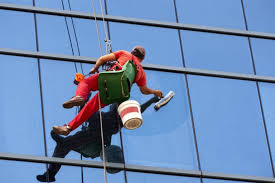
To complicate the matter, there’s great debate about what defines a Ferris wheel.  The tallest wheels for example – including the High Roller and the London Eye – are labeled “observation wheels” because they’re more than just an amusement.  Newer designs eliminate the spokes and hub to give the illusion of a free-wheeling ring.  Whatever.  Thanks to my acrophobia, even a kiddy amusement park Ferris wheel is thrill-ride enough for me.
Go figure – I enjoy the highest, fastest roller coasters anywhere, but I wimp out when it comes to a standard Ferris wheel.  Why?  Because Ferris wheel gondolas are neither enclosed nor replete with safety bars.  You’re just sitting up there in the open air, 250 feet off the ground, realizing nothing is preventing you from falling (a peek into the mind of an “acrophobe” – you’re welcome).  Conversely, when the roller coaster safety bar ratchets down to the waist, almost taking your breath away, there’s a sense of being one with the coaster, like you can’t possibly fall out.  Much better.

I will never be this guy

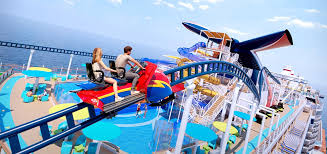
Let’s change the channel and focus on big ships.  If you’ve ever taken a cruise, you should be able to name one or more “amusements” you didn’t expect to find in a floating hotel.  Golf driving ranges.  Skeet-shooting.  Water slides.  Again, it’s an unofficial competition.  But what about a roller-coaster, traveling up to 37 mph, with an elegant sweep out over the ocean?  Yep; coming soon to a Carnival Cruise Line ship near you.

I hereby retract my earlier statement about tolerance for roller coasters.  Riding the rails, plunging down towards the ocean and back up to the sky, two hundred feet above the keel of a moving ship – Carnival’s “Bolt” is too much for me and my acrophobia.  Almost a little too much for the coaster’s engineers, too.  They faced a pile of challenges with the design.  What would be the impact of a moving vessel on the gravitational requirements of a roller coaster?  Will the weight of seven hundred feet of track twenty stories above the water tip the ship?  How will the vessel’s structure tolerate the forces of heavy cars speeding here and there?  And what about all that noise?

Put the cart before the horse – as Carnival did – and things get easier.  First design the coaster; then design the ship.  Make the roller coaster cars self-propelled so they don’t depend on gravity.  Eliminate the chains and sprockets in favor of small booster engines to reduce the noise.  Then design a ship keel three football fields in length.  Reengineer the structural elements – from the water up – to accept the distributed forces of the coaster.  Overweight the whole thing so coaster cars can go almost vertical and still not tip the ship.  Behold Carnival’s Mardi Gras – a virtual floating amusement park – breaking the champagne bottle next winter.

I still think a roller coaster on a ship is nuts, but I seem to be out of touch with the latest amusements.  You can already partake in “Sky Pad” – also on Carnival – a bungee-jumping-trampolining-virtual-reality mash-up.  Or Royal Caribbean’s “RipCord”, a column of air for skydiving simulation.  Or Norwegian’s “Ultimate Abyss”, a four-story sort-of toilet bowl, where you’re flushed in circles and dropped down a 200-foot water slide.

If you’ve ever seen Katy Perry’s music video, “Chained to the Rhythm”, you probably laughed at the outlandish amusement park rides, like the coaster with the heart-shaped loop-the-loop, or the pseudo Ferris wheel catapulting riders out into the air.  But considering Carnival’s “Bolt”, maybe Katy’s got a keen eye on the future after all.  As for me, I’ll stay grounded in my local kiddy amusement park.

The future of amusement?

Some content sourced from the 1/8/2020 Wall Street Journal article, “They’re Putting a Roller Coaster on a Cruise Ship”, and Wikipedia, “the free encyclopedia”.

Smallest and Innermost

Mercury

Last month, I spent an entire post lavishing love and affection on Earth’s beautiful space neighbor, the planet Venus (see here). I was quick to point out – from Earth – you can occasionally see the planets Mars, Jupiter, and Saturn as well. Turns out that list is, ahem, incomplete by at least one planet. Clearly miffed by my post, our solar system’s Mr. Smallest and Innermost – the planet Mercury – decided to speak up this week.

Don’t burn yourself, little one (image courtesy of NASA)

For those of you who missed it, Mercury passed in front of the Sun on Monday.  For five hours or so, Mercury looked like a little black mole on the bright cheek of a much larger creature.  His orbit took him almost directly across the center of the Sun.  You may think Mercury’s show is no big deal; after all, he circles the Sun every 88 Earth days.  However, consider Earth, Mercury, and the Sun must be exactly lined up (put a ruler on it) for humans to witness a Mercury “Sun transit”.  We only get fourteen Mercury transits every Earth century.  The next one won’t happen until 2032.

I missed Monday’s Mercury transit myself, because a) I wasn’t up at sunrise in the Northern Hemisphere (when it happened), and b) I didn’t have the necessary eye protection to give it a direct look.  Instead, I enjoyed the online photos and videos from NASA and the world’s other space agencies (like this one).

Mercury’s the tough little guy on the left

The truth is, you don’t have to wait for a Mercury transit to observe the first rock from the Sun.  On several early mornings last month, you could’ve seen Mercury rising in the east (same as Venus), and you’ll see him again early next year – no telescope required.  Guess I got caught up in the allure of Venus and completely ignored her nearby brother.

If Mercury and Earth were side-by-side

Mercury – like all the planets – has some interesting facts.  He completes three rotations about his axis (days) for his every two orbits of the Sun (years).  Pretty slow for the smallest orbit in the solar system.  He has no moons.  He’s only about a third the size of Earth.  He’s pretty beat up, with the most craters of any planet, and “wrinkles” caused by the cooling and contracting of his iron core.  Only two of Earth’s spacecraft have ever visited Mercury, and even those stayed far away from the surface for obvious reasons (800.6°F on the sunny side; -279.4°F in the shade).

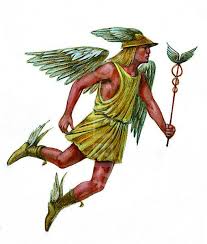
The Roman god for which Mercury is named is a lot “cooler” than the planet itself (ha).  Young Mercury wears a lot of hats, including (god of) financial gain, eloquence, and divination.  (Side note: perhaps Mercury should’ve been my blog mascot.  “Eloquence” was the theme of my very first post).  He also serves as the guide of souls to the underworld. Curiously, all these responsibilities take a back seat to Mercury’s most commonly known role – as speedy messenger to the other gods.  This role explains the naming of the planet, the fastest of the eight to circle the Sun.  Maybe we should also consider Mercury as messenger to the other planets, in case something gets weird with the Sun.  After all, Mercury will be the first to know.

I can’t talk about Mercury without a reference to the late, great Ray Bradbury.  Of all his wonderful science-fiction short stories – and there have been at least a hundred – my Bradbury top five includes “The Golden Apples of the Sun”.  “Apples” followed an exploratory rocket ship heading past Mercury to the Sun.  The crew is tasked with collecting a sample of the Sun’s golden fire.  I can still imagine the ship’s giant scoop as it extends from the hull and grabs a bit of the Sun.  The story’s real drama comes just after the collection, as the ship overheats and the life-support systems begin to shut down.  With respect to Bradbury, I won’t give away the ending.

Well then, enough about Mercury (probably too much).  I’ll conclude with a great tweet from Katie Mack, who was quick to note about Monday’s Mercury transit: “The official song of #TransitOfMercury is, obviously, ‘King of Pain’ by the Police.  But please note that the ‘little black spot on the Sun today’ referenced in the song is a ‘sunspot’, not Mercury, since ‘it’s the same old thing as yesterday,’ and (Mercury) transits only last a few hours.”

Keep on a-circling the Sun, Mercury.  I won’t forget ya next time.

Some content sourced from the BBC.com article, “Planet Mercury passes across the face of the Sun”, the Space-Facts.com article, Mercury Facts – Interesting Facts about Planet Mercury, and Wikipedia, “the free encyclopedia”.

Girl Crush

The Goddess

Last Sunday, our corner of the night sky was graced with a full moon called a “Tiny Hunter”. Tiny, because the moon was at the furthest point in its elliptical orbit. Hunter, because this time of year harvested fields leave few places for animals to hide. (Add a full moon and the hunting’s even easier). When our Tiny Hunter rose in the east that night, it was as if a giant flashlight switched on in the heavens, blotting out a typically starry night. But I know it didn’t blot out everything. Venus, beckoning brightly to the west, was saying hey, this is my party too.

Next to the moon, Venus is the brightest bulb in the night sky. Even if you don’t know where she sits, you can find her by simply scanning the western horizon at dusk or eastern at dawn for the most brilliant pinpoint of light. As if outshining all of the stars isn’t enough, Venus is also the most vivid planet. Mars, Saturn, and Jupiter occasionally make an appearance, but Venus always seems to be there. Even in broad daylight.

“Morning Star” or “Evening Star” – take your pick

I’m not gonna lie; Venus gives me a bit of a girl crush. After all, she’s the Roman goddess of love and beauty. Now consider her other “outstanding” attributes:

  • She’s the only planet in our solar system to identify as female.
  • She’s referred to as our “sister planet”, not only because she’s our closest neighbor, but because she’s virtually the same size.
  • She rotates in the opposite direction of seven of the eight planets (including Earth).
  • She hosts two continents: Ishtar Terra (named after the Babylonian goddess of love), and Aphrodite Terra (named after the Greek goddess of love).
  • Her rotation is so slow, a day in her world is longer than a year in ours. But, a year in her world is shorter than that same day. Say what? You read that right: Venus completes a trip around the sun faster than she completes a rotation on her own axis.
  • Her orbit is closer to the shape of a circle (vs. an ellipse) than all other planets.
  • She has no moons or rings. Naturally, why would the goddess of love and beauty need adornments?

No wonder the Babylonians referred to Venus as “bright queen of the sky”, eh?

Given her allure, it’s a wonder our earthly culture hasn’t done more to embrace her. I went in search of homage to Venus and here’s all I could come up with:

  • Sandro Botticelli’s iconic “The Birth of Venus” (top left), with our girl posed unashamedly naked on a seashell.
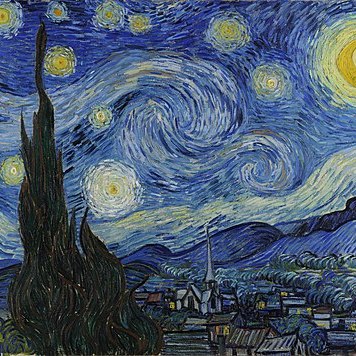
  • Vincent van Gogh’s post-impressionist “The Starry Night” (top center), with Venus as the bright “star” just to the right of the cypress tree.
  • The Bible’s Song of Songs (fitting, if you know the book’s subject matter), Chapter 6, Verse 10.
  • John Gray’s bestselling relationship guide, Men are from Mars, Women are from Venus.
  • Gillette’s “Venus” line of women’s shaving products.
  • The “Venus” women’s clothing line (catalog arrived for my wife just last week).
  • A nasty-looking fly-trapping plant.
  • Frankie Avalon’s adoring anthem “Venus” (Hey, Venus… oh, VENUS…).
  • Shocking Blue’s psychedelic rock hit “Venus” (I’m your Venus… I’m your fire, at your desire…).

If that’s the extent of our tribute to Venus, no wonder we have the phrase “hell hath no fury like a woman scorned”. Venus shows her not-so-lovely side if she wants to. She’s the hottest planet in the solar system (including Mercury), with an average surface temperature of 863 degrees F (462 C). Her atmospheric pressure is 92 times stronger than Earth’s (which is why her surface is beautifully crater-free). She’s covered in a thick layer of sulfuric acid clouds. Her wind speeds are extraordinarily high. And she’s explosive, with a long history of volcanic activity.

The second rock from the Sun… and the brightest of all eight.

Scientists believe – 700 million years ago under drastically different conditions – Venus was temperate enough to host oceans of water and life itself. So…, what in God’s name happened to make her so nasty now? Whatever it was, even our most advanced spacecraft can’t land on her surface today (though we’re working on it).

Considering this brief education on Venus, I suggest you ignore her siren song and simply admire her from afar. Even if you could speed your car along an interstellar highway, you’d need over forty years to get to Earth’s twisted sister. No; stay on her good side lest she show her surface temperatures and atmospheric pressures. That wouldn’t go well for you. I’d rather look Medusa in the eye and be turned to stone.

Some content sourced from the 9/22/19 Phys Org article, “Could Venus have been Habitable?”, “Venus Facts:…” from The Planets website, and Wikipedia, “the free encyclopedia”.

Agony or Ecstasy?

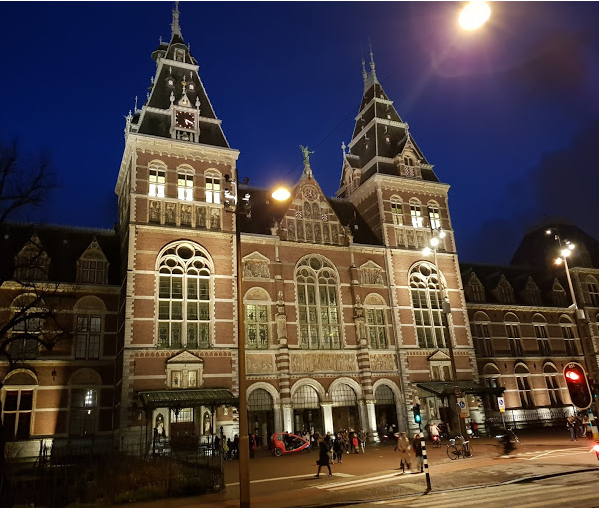
Rijksmuseum, Amsterdam, The Netherlands

On a first visit to The Netherlands earlier this year, our plan was to traverse the quaint canals and bridges of Amsterdam, stand in the shadows of Kinderdjyk’s working windmills, and learn more about the country’s wartime era, perhaps through a stop at the Anne Frank House. I also looked forward to a field of their famous tulips, and Dutch treats like stroopwafels, poffertjes, and bitterballen.  Sure, I ticked the boxes on several of these items, but I was also blindsided by a group-tour-captive stop at Amsterdam’s Rijksmuseum. 8,000 artworks covering 800 years of Dutch history (in what felt like 80 different rooms)?  Not my idea of a delightful morning in Holland.

I’m not what you’d call a “patron of the arts”, though I’m about to contradict myself.  I love a classical performance by a symphony orchestra.  I’m drawn to the theater’s foremost stage productions (Les Miserables comes to mind).  I even enjoy the occasional visit to a museum, provided the subject is specific and of my choosing (ex. Amsterdam’s Dutch Resistance Versetsmuseum).  But endless rooms of paintings on walls and free-standing sculptures behind glass?  As the Dutch would say, nee bedankt ik zal slagen.  No thanks, I’ll pass.

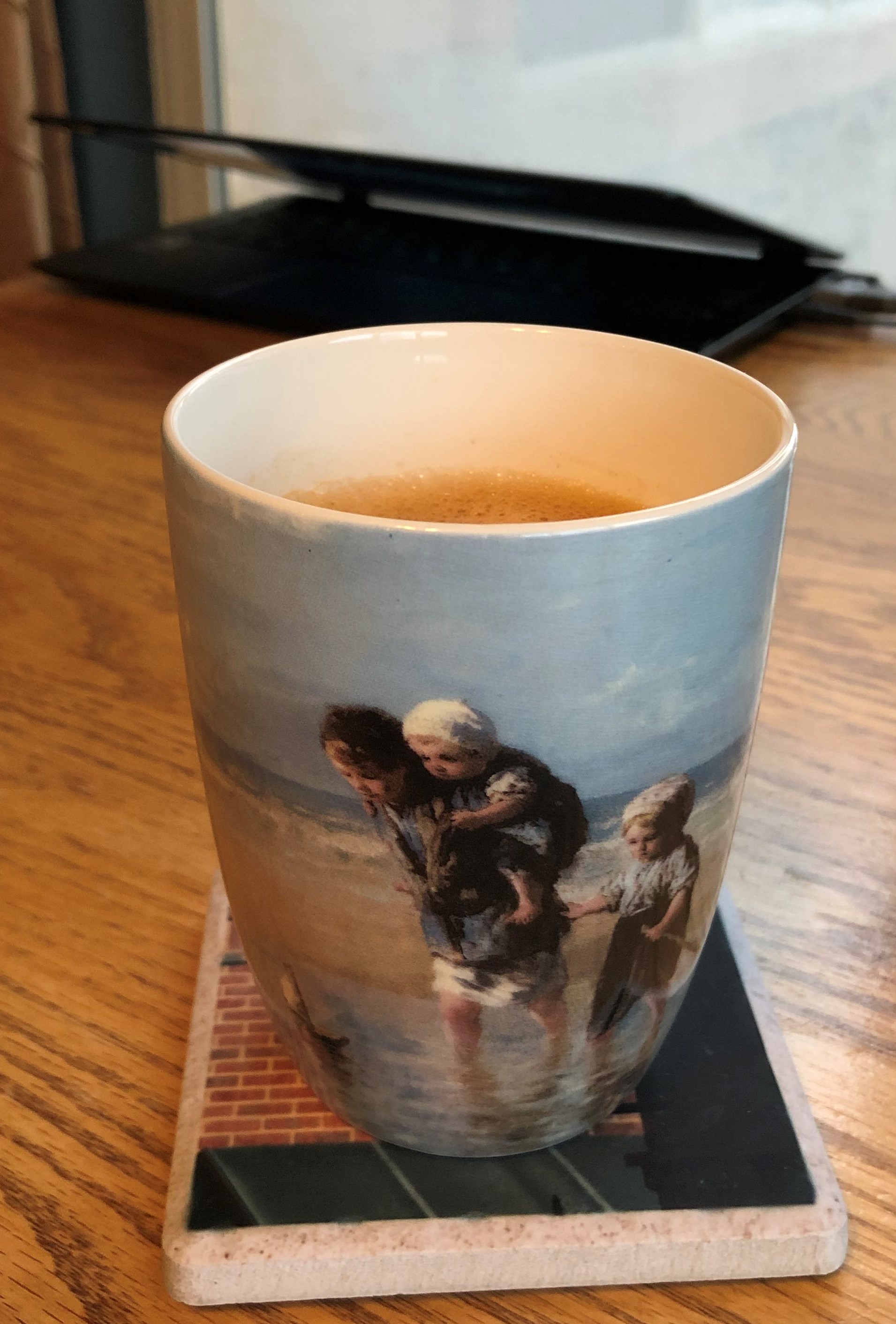
Here’s where I contradict myself a second time.  As I type this post I’m sipping morning coffee from the mug in the photo.  The mug is a souvenir from my “captivating” visit to the Rijksmuseum.  The painting on the mug is called “Children of the Sea” (1872), by Dutch artist Jozef Israels.  Go figure; I was able to blow past the throngs flocking to the Rembrandts and Vermeers and van Goghs; yet a small artwork in the corner of Rijksmuseum Room 118 captivated me enough to take a little piece of it home.  I probably spent as much time in front of that painting as I did the rest of the museum.

Jozef Israels’ “Children of the Sea” (1872), Rijksmuseum, The Netherlands

Naturally I had to learn more about “Children of the Sea”.  When I returned to Colorado, I read up on Jozef Israels.  Not only was he “… a leading member of a group of landscape painters known as the Hague School…”, Israels was “… the most respected Dutch artist of the second half of the nineteen century”.  Do I know how to pick ’em or what?  Maybe I have a little art appreciation in me after all.

“Children of the Sea”, as you might expect, offers a deeper message than a group of kids playing on the beach.  Their simple clothing and toys hint at a life of poverty.  The eldest child is quite literally carrying his family on his shoulders.  The boat suggests the rigors of life at sea.  From that perspective, I find the painting even more enthralling.

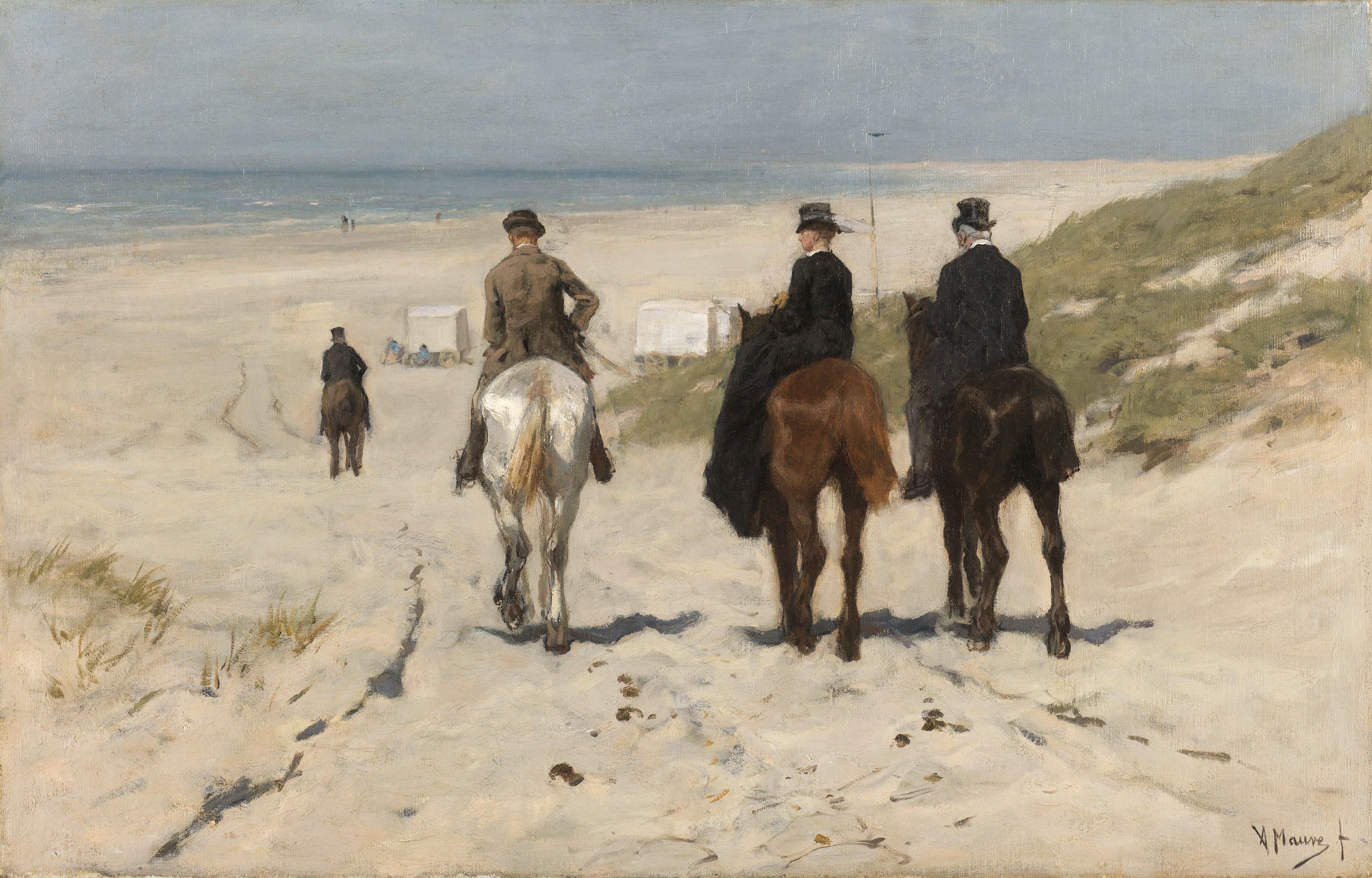
Anton Mauve’s “Morning Ride along the Beach” (1876), Rijksmuseum, The Netherlands

Adjacent to “Children of the Sea” in Rijksmuseum Room 118, I also enjoyed a moment in front of the artwork shown above.  It is called “Morning Ride along the Beach”, and I mistook it for another Jozef Israels masterpiece.  Instead, “Morning…” was painted by Anton Mauve, another Dutch painter of the same era (and Hague School).  “Morning…” provides a contrast to the harsh existence of the poor fishermen of the time, by focusing instead on the “well-to-do bourgeoisie”: horses, elegantly dressed riders, bathing cabins – all on a pastel-colored sunny day.  No souvenir mug with this one, but equally compelling to the eye.

Caravaggio’s “The Calling of Saint Matthew” (1699-1700), Contarelli Chapel, San Luigi dei Francesi, Rome

Admittedly, the Hague School paintings weren’t the first artwork to stop me in my tracks, nor were they the last.  In my college year of architecture studies in Rome, the Renaissance-era paintings and sculptures were as impressive as the cathedrals that housed them (I could write an entire post on the stunning chiaroscuro works of Caravaggio).  Case in point, I was so taken by the life and work of Michelangelo I read all 700 pages of Irving’s Stone’s fictional biography, “The Agony and the Ecstasy”.

John Dowd’s “Provincetown Summer” (1997), Provincetown, MA


As for my latest artwork pause, my wife and I visited Cape Cod last month, all the way out to Provincetown at the tip.  One of Provincetown’s pier-side shops sold tiles of local artists’ paintings.  The tile above (left) – John Dowd’s depiction of a nearby Provincetown Cape house in 1997 – sits on our fireplace mantle now.  The photo above (right) is how the painter’s subject looks today.

Someday I would love to return to The Netherlands for more adventures, but I assure you my itinerary would not include another trip to the Rijksmuseum.  However, I can’t claim I wouldn’t pause on the sidewalk if I walked past the museum’s massive entrance.  After all, in Room 118 there’s a very small painting, utterly captivating to this non-patron of the arts.

Some content sourced from The Netherlands Rijksmuseum website, and Wikipedia, “the free encyclopedia”.

Supply Chain Reaction

My neighbor to the north – the one with a mansion lording over the rest of the hood from the highest point around – hosts equestrian events on weekends. Whether reining or cutting competitions, or “quaint” social gatherings, his barn and surrounds burst with dozens of horses and riders just about every Saturday. His property is large enough we’re pretty far removed from the hubbub, except the convoy of horse trailers and trucks barreling down the street beforehand. The wheels rumbling over the washboardy dirt road and balloons of dust floating high overhead are hard to ignore.

Maybe you don’t have a parade of horse trailers in your neighborhood (or a washboardy road), but guess what?  You do have a procession of vehicles making their way to your driveway, and the list of participants is growing.  Home delivery is the latest block party where everybody seems to have an invite.

In the 1970’s the only vehicles coming up our driveway were the red, white, and blue jeeps of the United States Post Office (USPS) or the brown, boxy trucks of the United Parcel Service (UPS).  Then Federal Express vans (FedEx) joined in with a little purple and green, while DHL (the initials of the three founders’ last names) added a healthy dollop of yellow.  Taste the rainbow!

 That’s a pretty good line-up right there, but in the last decade or so home delivery (or “last mile delivery”, to use the trendier term) picked up several more players.  Amazon (black vans with a blue “swoosh” on the side) and WalMart (several colors) extended their supply chain by adding home delivery trucks.  Your pizza guy has been joined by restaurant delivery of all kinds, like DoorDash, Grubhub, and UberEats.  AmazonFresh is competing with your local grocery store to make sure you consider home delivery of products from Whole Foods.

Here are a few of the more “colorful” entries coming soon to a driveway near you:

  • Postmates – Pizza, prescriptions, shoes, and tech products, just to name a few Postmates delivery favorites.  What makes Postmates unique?  They’re not affiliated with any business or product line.  If you need it, they’ll find it.
  • LuggageForward – Boasts “doorstep pickup”, so all you worry about is transporting you from your home to your travel destination.  LuggageForward guarantees your bags arrive before you do, and their “shipping experts” track your items every step of the way.
  • Piggybee – Just like LuggageForward, except you’re entrusting your luggage or other item to a random person who happens to be traveling to your destination anyway.  Sounds a little dicey, but isn’t the name great?
  • Entrusters – The opposite of Piggybee, but the same concept.  You find something you want to buy in a distant locale, and the random person who happens to be traveling to your city brings it to you.
  • goPuff – A “convenience store caterer”, tempting you with products like that pint of Ben & Jerry’s you don’t really need.  Perfect for college students?  Yes, and the company was started by college students.  “goPuff”?  No clue.
  • Drizly – Not only wine, beer, and liquor to your door inside of an hour, but also all the mixers, garnishes, and supplies you need to make your party tipsy.  Hopefully you’re not the only one at the party.  Hopefully your Drizly driver doesn’t partake in whatever he or she delivers.
  • Stitch Fix – A competitor to Nordstrom’s Trunk Club, Stitch Fix offers a stylist and all the designer clothes you could ever want.  Try them on and keep ’em or return ’em within three days.  Might as well close the doors on your local shopping mall.
  • Washio – Just what you would guess: home-delivery wash, dry, and dry-cleaning of your wardrobe.  Your hamper just moved to the front door!  Washio’s “ninjas” pick up and drop off inside of 24 hours, and even leave a cookie on top of the clean-clothes bag.  Sadly, Washio lasted less than three years; it’s founders claiming, “sometimes you make it, sometimes you don’t”.

As we speak, many of these deliverers are hopping the fence into each other’s domains.  Postmates is test-marketing convenience store items in New York City, sourcing from 150+ Walgreens and Duane Reades.  Doordash is trying out same-day grocery delivery in 22 states.  AmazonFresh distinguishes itself as food delivery with its lime-green (not black) vans.

With so many entrants in the home delivery circus, it’s fair to say the concept is still in its infancy.  We’ll need several years to see who and what will ultimately come out in the wash (clearly, not Washio).  But mark my words, you can always count on someone to rain on the parade.  Amazon is already experimenting with “Prime Air”, a drone-service.  In other words, home delivery may be a little less grounded in the future.

Some content sourced from the 10/2/19 Wall Street Journal article, “Postmates, DoorDash Want to Deliver Your Groceries, Too”.

Window Addressing

My wife and I just returned from a trip to Boston. On the flight home, we took our seats as usual: she at the window and me in the middle. It was a peaceful journey, save for the rather chatty woman across the aisle. But then, as we began our descent into Denver, behold an uncomfortable moment. A glare of sunlight through my wife’s window struck Chatty Woman in the eyes, who immediately turned and snapped, “CLOSE THAT WINDOW!” I just smiled from the middle seat and assured her the glare would move on momentarily (which it did). Chatty Woman gave me a stare and a huff, and turned away. Gee, nice to meet you too.

I’ve touched on the dynamics – er, politics – of airplane passenger seats before, in Flight of the Humble Bee (a taste of first-class), and Center Peace (life in the middle seat), but I always thought window-seat dwellers were far enough to the left or right to escape judgment. No longer. In fact, more than ever the spotlight shifts to them.

Let’s review the powers held by the different seats on the plane. The aisle seat, some would argue, commands the most power because a) the occupant controls the freedom of all others on his/her side of the row, b) the occupant has the easiest access to everyone else and everything else on the plane, and c) the occupant can lean or leg into the aisle as he/she pleases (a power move in itself, albeit a weak one).

This image has an empty alt attribute; its file name is 211-photophobic-6.jpg

The middle seat [or in larger planes, middle seats. To you, the occupant of the middle seat in a row of 5+, you have my utmost sympathy] has powers inversely proportional to the aisle and window seat occupants. That is, the more empathetic your seatmates with your middle-seatedness, the more likely you’ll get perks (i.e. the use of both armrests, requests to the flight attendants, the window shade setting to your preference).

Speaking of the shade, that my friends, is the power-play of the window seat. Whether the shade is up, down, or somewhere in the middle is entirely up to the occupant (or occasionally directed by the flight attendants). Once upon a time the window shade was a minor prop; only down when the shared overhead movie screens (or sleeping passengers) demanded dark. Today? Every mobile phone, tablet, reading device, laptop, and in-seat movie screen is photophobic. Light sensitivity abounds.

Here’s the change in dynamic you’re not aware of. The passenger in the window seat is not the person he/she once was. Before, people chose the window seat to enjoy the high-skies views, or more importantly, to keep their geographic bearings or avoid the claustrophobia of a closed-up cabin. Today, people choose the window seat to control the shade, for optimal lighting of all those handheld devices.

To further complicate the matter we have the Boeing 787 airplane, which replaced the window shade with electrified gel sandwiched between panes of glass. The gel darkens or lightens depending on the amount of applied current. Cool tech, but also a compromise of power for the window seat occupant. The flight attendants (as they deem necessary), can darken all of the windows during sleeping hours or movie time or even hot days. Might want to check the type of aircraft before you board your next flight.

This image has an empty alt attribute; its file name is 211-photophobic-1.jpg

I suspect if “CLOSE THAT WINDOW!” persists, the airlines might jump at another opportunity for profit. Someday you’ll find yourself choosing a seat in the “light” or “dark” section of the plane, with a fee placed on one or both types of seats. Not a fan. Then again, if the airlines would sequester crying babies, cell-phone talkers and other audibles into a soundproofed section, I’ll be the first one on-board.

Some content sourced from the 9/18/19 Wall Street Journal article, “The Showdown at the Window Seat”.

Past Cards

Restaurants tend to leave advertising freebies at the host stand or on your table to remember them by. After paying the bill, you might grab a logo’d toothpick or a couple of plastic-wrapped mints on the way out the door. The fancier establishments offer books of matches (as if smoking remains the chic habit it once was). But every now and then I come across my favorite restaurant takeaway: the plain and simple postcard.

I’m almost afraid to ask a young person what he/she thinks of a postcard.  They’d turn it over and over in their hands and wonder what purpose is served by a laminated photo on card-stock paper (“Just show me the photo on your phone!“)  Then they’d flip the card to the back and realize it has something to do with snail mail (“Just send me a text!“)  Finally, they’d wonder why anyone would go to the trouble of pen/paper just to let another someone know where they were having dinner (“Just add your location on Facebook!“)

Remove smartphone technology and postcards suddenly seem relevant again.  Take a break from the dinner conversation, scribble a few sentences, add a mailing address, affix a stamp, and voila!  A thoughtful bit of correspondence in mere minutes – the precursor to the Post-It Note.  If you’re lucky, the restaurant pays the postage and mails the card.  If you’re even luckier, your recipient still checks their physical mailbox.

A 1908 postcard… of a Chicago postcard factory!

Postcards have more history than a modest rectangle of heavy paper would suggest.  The very first postcard was sent in 1840, in London. (Someone who believed “very first” paid $40,000 for it in 2002.)  In the later 1840’s, postcards began circulating in the United States, as printed advertising.  Soon after, postcards became the Mini Cooper of personal correspondence; a quick letter sans envelope, but without images (because your personal note went on the front of the card back then).  By the 1870’s, manufacturers were producing “picture postcards”, with the divided back you see today.

Risqué front image (at least for 1890) from the popular “seaside postcards” of the United Kingdom

The advent of the picture postcard led to a little controversy in certain parts of the globe.  Images sent from one country were not always deemed “proper” in another (i.e. sexual references in popular UK “seaside postcards”, or images of full or partial nudity from classical statuary or paintings).  Accordingly, some countries refused to handle picture postcards.  Those same images are clearly conservative by today’s standards.

Like baseball cards, postcards have become a collector’s item.  The value of a given card is associated with the image on the front.  Online resources include collector websites and clubs, catalogs, and trading platforms.  When I was a kid in the 1970’s, I collected postcards – one summer – to document the stopping points on a month-long trip my family took to the American states in the northeast.  Pretty sure none of my cards held value, but I still wish I kept them.

My “Northeast States” collection c. 1975

[Trivia pause: collecting postcards makes me a deltiologist.  Aren’t you impressed?]

Postcards have their own terminology, as if to elevate their status among mailed items.  A large letter postcard shows the name of a place in big letters (instead of a picture).  An early postcard is any card issued before the era of divided backs.  An installment card is one of a set, forming a single picture when placed in a grid.  Postcardese is the short-sentence, abbreviated writing style of postcards.  Finally, midget postcards – noticeably smaller than the standard 6″ x 4.5″ version – were issued as souvenirs and bound in sets.  (If you look at my collection photo you’ll see several midgets).

“Large Letter” postcard c. 1940s

The next time you come across a postcard, give the little guy a (first-class) ounce of respect.  He’s been around a long time, and the post office – depending on country – may still send him for less than the cost of an enveloped letter.  Remember, the postcard was the original format of brief long-distance correspondence.  Think about that the next time you text.

Some content sourced from Wikipedia, “the free encyclopedia”.

Vowing To Be Different

When my son and his wife were married five years ago, there was a moment in the planning stages where I realized their wedding day would be anything but “traditional”. Credit their beautiful outdoor venue (no church), the “mixed-up” wedding party (ladies aside the groom; men aside the bride), their Keds canvas sneakers (no formal shoes beneath the tuxes and dresses) or the trays of truffles after dinner (no wedding cake) – they found dozens of details to make their day unique and memorable. But given the most recent wedding trends, perhaps my son and his wife were more old-school than I thought.

Hindsight being what it is, my own wedding to my wife thirty-two years ago now seems downright formulaic.  We were married in a church, accompanied by an organist and harpist.  We exchanged rings and vows before a priest.  We lit a “unity candle” at the altar.  Our reception was in a hotel ballroom, with an open bar and live band.  Dinner was served, wedding cake was cut, and the only time the dancing stopped was to toss the bouquet and garter.  Our one and only off-script detail? We included a contemporary John Denver song in the ceremony (much to our priest’s dismay).  Otherwise ours was a carbon copy of just about every other wedding of the 1980’s.

I’m sure you have examples of just what makes weddings different these days.  Let me guess.  They’re no longer just outdoors; they’re now in backyards or in barns or at faraway “destinations”.  The ceremony is facilitated by an officiant (“basic online ordination package” – $29.99!)  The bride grooves down the aisle to something more like Metallica than Mendelssohn.  The vows – far removed from the dusty “to have and to hold” – could double as songs or poems.  The receptions take place in twinkly-lit tents.  The food is more likely “finger” than “buffet”.  The wedding cake has been replaced by a cupcake tower.

“Non-traditional” should be a non-surprise when it comes to modern-day weddings.  After all, the average age of today’s marrying couples is 29, which typically follows years of living together or even a purchased home.  Four of five couples who marry are millennials, and millennials are all about personalization.  Thus, 44% write their own vows, and only one in four have their ceremony in a religious institution.

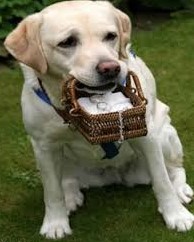
Fido bears the rings?

Let’s dig deeper, shall we?  If you’re not convinced the traditional wedding has gone completely off the altar, check out the Chapel of the Flowers website (“Voted Best Wedding Chapel in Las Vegas!”), particularly their article, “New Wedding Traditions to Trade In for the Classics”.  Perhaps you and your future spouse will consider the following from their list of suggestions (not that I would):

  1. Rings – Skip the jewelry store and head for the tattoo parlor.  Your wedding band tat will never fall off and the ink will remain… “until death do you part”!  For that matter, your tattooist might also be an officiant, so you can have the whole shebang right there in the parlor.  I’m sure the biker dude in the next chair will be happy to witness the signing of your marriage certificate.
  2. Wedding Dress – Skip the white in favor of pastel hues or bright, tropical colors.  After all, the “innocence, purity, and light” of white may not be – ahem – the appropriate statement.
  3. Pocket the Phones – As in, ask guests to refrain from taking their own photos.  Really?  Is the Force with you or something?  Unless you hand out physical restraints as your guests walk through the doors, those phones will keep on a-clickin’.  Moving on…
  4. Smaller Wedding Parties – 1-3 family/friends at most.  This suggestion is either overlooked, ignored, or most likely mocked.  If anything, wedding parties seem to be getting bigger these days.  Moving on again…
  5. Gifts – Out with the wedding registry and in with “donations to a good cause”.  Say what?  I get that modern-day couples live together and already have most everything they need, but what about cash?  Clearly, money dances have fallen by the wayside.  Donations to good causes works for funerals but not for weddings.  Hard pass.
  6. Delayed Honeymoons – Don’t delay… I repeat, don’t delay.  I know several couples who never had a honeymoon because, well, “more important” things got in the way (i.e. real life).  I also know a couple who divorced before they even made it to their honeymoon.  Don’t delay.  Have some fun while you’re still carefree and unconditionally happy.

No matter how you feel about “new traditions” at weddings these days, there’s an underlying positive to be gleanedAt least we still have weddings.  The vows may raise your eyebrows.  The food and festivities may not be your particular glass of champagne.  But those details don’t really matter, do they?  At the end of the day, you still have two “I do’s” and one “I now pronounce you…”, sealed with a kiss.  You still have a marriage.

Some content sourced from the Wall Street Journal article, “They Solemnly Swear Their Wedding Will Ditch Tradition”. (8/6/19)

Ahoy, Matey!

At the Jolly Roger Restaurant in the small Southern California town of Oceanside, you can order an Avocado Blast as a starter (tempura-battered avo stuffed with shrimp and tuna), Orange Coconut Salmon as an entree (panko-crusted with a sweet ginger glaze), and fruit-topped New York Cheesecake as a dessert, all while watching live entertainment on Friday and Saturday nights. The “JR” may be a little fancy for your tastes but let me tell you; it’s a LOT fancy for mine. That’s because the only version of the Jolly Roger I ever knew was my favorite boyhood burger joint.  As pirates like to say, “Aarrr…

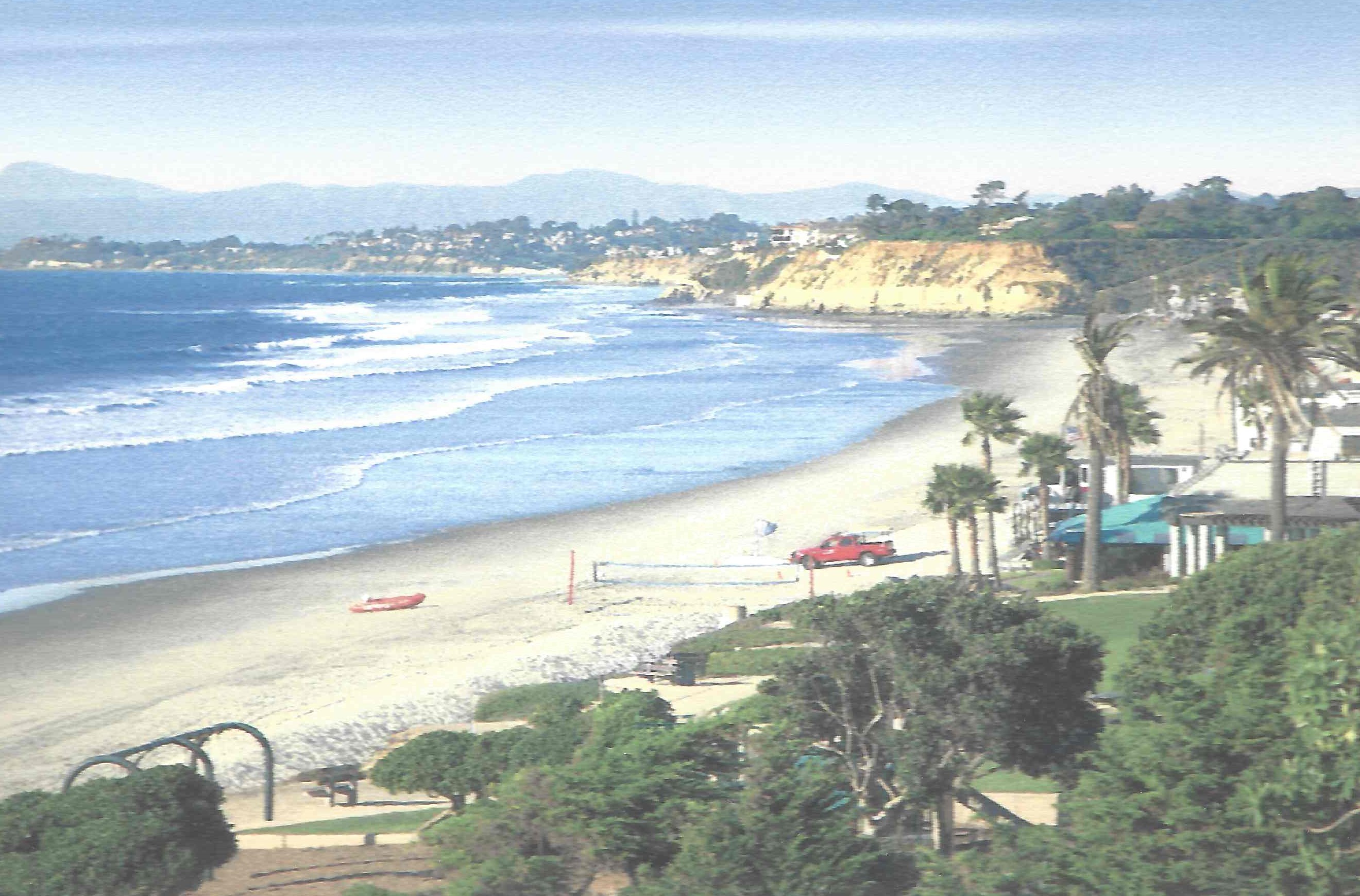
Why blog about a long-ago restaurant?  Because I’ve just returned from several days of vacation in Del Mar (just a few miles south of Oceanside), where my family and I spent my childhood summers.  Del Mar is renowned for its county fair and thoroughbred racetrack (“Where the Turf Meets the Surf”), but for me it was – and still is – a nirvana of sun, sand, and surf; chock-full of happy, carefree memories.  Including the Jolly Roger.

Del Mar beach

The beauty of Del Mar back in the day, besides its seaside location, was the sheer simplicity of the place.  The town was the perfect setup for a kid.  You could walk or bike from the residential areas to the shops in minutes.  You could spend pocket money on Slurpees and pinball at the 7-11.  You could meet/greet frequent passenger trains at Del Mar’s tiny station (while those same trains flattened pennies on the rails).  You could also sneak into the racetrack, collecting discarded betting tickets in hopes of finding an overlooked winner.  And if you were lucky, you had dinner at the Jolly Roger.

Del Mar train crossing

The Jolly Roger got its start as an ice cream parlor in 1945, adjacent to the lake in Big Bear, CA.  But the lake promptly went dry, which led to a lack of landlubbers walking through the doors.  The parlor then relocated to Newport Beach (where the ocean never goes dry).  Patrons soon asked for more than ice cream, so the JR evolved into a coffee shop; then into a chain of restaurants.  At its peak, the JR had forty locations, each adorned with the trademark black flag with skull and crossbones.  But as one article cruelly described its demise in 1985, “…the Jolly Roger pirate has ‘walked the plank’, and the restaurant chain has been consigned to Davey Jones’ locker.”  As far as I know, Oceanside is now the only remaining restaurant.

There’s more to my JR memories than those couple of seaside locations.  The JR also had a restaurant in the heart of Los Angeles, in a shopping center my dad developed back in the 1960’s.  The center is still there but alas, not the JR (now a Mexican restaurant).  No matter; the memories remain.  I never complained when my dad wanted to stop by his center on weekends.  That usually meant a family dinner at the JR, and a lot of yo-ho-ho-ing around the table.

Jolly Roger menu – original cover page

Sadly, the Jolly Roger location where my family and I shared many a dinner – next door to Del Mar in Solana Beach – is also gone (converted into a Starbucks – shiver me timbers!)  And the Oceanside restaurant has evolved into something a whole lot fancier.  No matter again.  My JR will always exist.  I picture the restaurant where the waiters dressed like pirates, the kid’s menus looked like a pirate, and the best options for dinner were burgers & fries, grilled cheese, and milkshakes.  The JR also had quite the dessert menu, including full-boat chocolate sundaes and coconut-cream pie.

Dead men tell no tales, but I sure do.  Thanks for the memories, JR!

Trilling on the Trail

An old friend stopped by to visit the other day. He appeared at my front door without warning, taking me back almost fifty years to the moment we first met. He is still quite the singer. His stride is supremely confident. Most annoyingly, he finds unqualified joy in every blasted thing he sees and hears. My friend is, after all, The Happy Wanderer.

If you’ve encountered The Happy Wanderer at some time in your life, you know exactly who I’m talking about.  He is Mr. “Val-deri, Val-dera”.  Those words alone should revive the sing-song tune fried into most brains since childhood.  “The Happy Wanderer” could’ve been quarantined within Germany were it not for its award-winning performance by the Oberkirchen Children’s Choir (and subsequent radio broadcast by the BBC), in 1953.  Then, Mr. Wanderer went worldwide-viral and there was no turning back ever.

Oberkirchen coat of arms

According to his lyrics, The Happy Wanderer (we’ll just call him “Hap”) takes hikes into the mountains and alongside streams, his hat on his head; his knapsack on his back.  Hap points out blackbirds and skylarks along the way, and his journey brings him unbridled giddy happiness and laughter (as in, “Val-deri, Val-der-ha-ha-ha-ha-ha…”).  Our boy smiles the entire time and boldly invites YOU to join in the singing.  In his final verse, Hap wants to wander (and sing) until the day he dies.  That’s a little extreme for a children’s song, don’t you think?

Speaking of childhood, Hap and I first met way back then.  He entered the “UK Singles Chart” on January 22, 1954, eight-years-to-the-day before I was born.  Eight years after I was born, I henpecked Hap’s tune as I learned to play the piano.  “Chopsticks”, “Twinkle Twinkle Little Star”, and “The Happy Wanderer” were almost assuredly the first three pieces I ever memorized.

Hap wandered into my life again in the Boy Scouts.  I recall a lot of singing on weekend hikes (not sure why – who’d be happy backpacking forty pounds towards some distant campsite?)  Besides “John Jacob Jingleheimer Schmidt” and “The Ants Go Marching…”, we Scouts unabashedly sang “The Happy Wanderer” through mountains and alongside streams.  Hap’s tune even made the official list of “Scout songs” (see here.)

I thought I was done with Hap years ago (it took me decades to forget his slaphappy song), but recently he resurfaced.  First, on a cruise down Germany’s Rhine River, at an outdoor dinner in the little town of Rüdesheim.  I was volunteered by my fellow travelers to play with the band.  I manned a big oom-pah-pah drum while another poor soul clanged the cymbals.  A band member played the clarinet.  And our one and only performance – naturally – was “The Happy Wanderer”.  To add shame to the silliness, we marched between the tables as we played.  I did my best to look “happy”.

Hap’s other revelation may be a little more prolonged.  On the same Rhine River cruise, in Bavaria, my wife and I bought a handmade cuckoo clock.  The clock was shipped and arrived in the States two weeks ago.  Imagine my delight when I wound the clock and the cuckoo bird busted through his little door, the dancers twirled, and the tiny music box played “Edelweiss”.  The “sound of music” every hour on the hour!  Er, every other hour on the hour.  Turns out our cuckoo clock has two songs.  Hello, Happy Wanderer.  If I choose to, I hear his gleeful melody twelve times a day.  Or, If I choose to, I can flip a switch and I don’t hear anything at all.  I expect I’ll be flipping the switch any day now.

If you’d like to add to my hap-aberration, go to 1-800-FLOWERS and have a hardenbergia violacea delivered to my door.  HV is a species of flowering plant from the pea family.  Some call it a lilac vine.  Others give it nicknames like “false sarsasparilla” or “purple coral”.  It’s also lovingly referred to as “The Happy Wanderer”.

Heaven help me.

Some content sourced from Wikipedia, “the free encyclopedia”.