Polishing the Pearls

Twice a day, my toothpaste tube and I do battle.  When I take the tube out of the medicine cabinet and realize there’s only a little bit left, I can see it smirking as if to say, “You’re not getting any more out of ME!”  Yeah, right.  I just flatten it from one end to the other (I recommend a hairbrush here), forcing every last bit of paste to gather at the top, ready to launch.  Then I take off the cap and squeeze like crazy.  It’s a good workout for the hands, and a mindless challenge to extend the life of your toothpaste.

Speaking of toothpaste – yep, that’s my topic today – here’s a really good trivia question.  In the Roald Dahl classic, “Charlie and the Chocolate Factory”, what did Charlie’s dad do for a living?  He screwed the caps onto toothpaste tubes… before machines were invented to do the job for him.  (He also died before the first paragraph and was never part of the story, so it’s a little weird I remember that bit.  But I digress.)

Quick, name the first ingredient you think of in toothpaste.  Flouride?  Not a bad guess, but did you know fluoride makes up only a tenth of a percent of toothpaste?  That’s like a pinprick on the tip of your finger.  Flouride is potent, my friends.  Good for healthy enamel but only in itty-bitty doses.  Keep those chemicals close, but not too close.

Was your first ingredient surfactants?  A surfactant is basically a “foaming agent”, which helps distribute the paste around the inside of your mouth, which translates to better cleaning.  Surfactants remind me of those animated scrubbing bubbles you’d see in TV commercials, whirling around the bathtub surface.  You also find them in shampoos and conditioners.  Without surfactants, most of the hairs on your head would get clean and conditioned, but others would be left high and dry.

“Minty fresh!”

How about flavorants – you know, peppermint, spearmint, wintergreen, or cinnamon?  If flavorants were the first ingredient you thought about with toothpaste, go directly to Jail (i.e. do not pass GO, do not collect $200).  Flavorants do zilch for your teeth.  They just make brushing a more pleasant experience and fool you into thinking you have a fresher mouth when you’re done.  You might as well chew gum.  The sugarless kind, that is.

Okay, let’s cut to the chase.  The primary ingredient in toothpaste is abrasives (and if this was your answer, you win a free dental drill).  Abrasives make up 50% of what’s inside the toothpaste tube.  They’re “designed to help remove plaque” (remember that phrase).  Think of abrasive-laden toothpaste as liquid sandpaper.  Abrasives are the reason you don’t want to swallow toothpaste.  And don’t brush too hard either.  With enough pressure, these bad boys would be happy to remove your enamel.
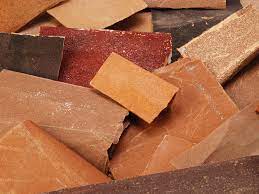
Toothpaste also has grit

I could list even more toothpaste ingredients (ex. antibacterial agents, whiteners, re-mineralizers), but let’s just agree: there’s a big, diverse party going on inside the tube.  Now for the bad news.  Toothpaste has no significant impact on the reduction of plaque – so says certain clinical studies. That’s why abrasives are described as “designed to help remove”.  That’s a sneaky way of saying they just keep things in check until your next appointment with the dentist.  Sorry (Charlie), no amount of brushing can replace those nasty power tools your hygienist has so much fun using.
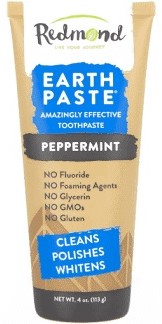
For all my talk about toothpaste ingredients, the brand I use has very few.  Earthpaste (“Amazingly Effective!”) has no fluoride, no foaming agents, and almost no flavor.  In fact, Earthpaste has only four ingredients – water, clay, salt, and essential oils.  It’s like brushing with mud.  Wait, it IS brushing with mud!  Just as effective, without the chemicals (subtle plug).  You’ll find it on Amazon.

So all this talk about toothpaste may be important, but so is getting every last bit out of the tube.  And there may finally be a solution to that battle.  The very smart peeps at Massachusetts Institute of Technology (MIT) have developed an edible product called LiquiGlide.  It’s invisible (which okay, is a little disturbing), and it’s designed to coat the inside of a container so the contents will completely empty with just gravitational pull.  Can you imagine?  No more flattening, squeezing, or hand workouts.  Just upend the tube and 100% of the product comes pouring out.  Get-your-money’s-worth people like me silently rejoice.

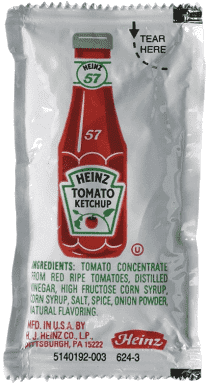
LiquiGlide’s proof is in the pudding, er – ketchup.  No more smacking or shaking the bottle.  No more “An-ti-ci-pay-yay-tion” (for those of you who remember the 1970s Heinz jingle).  Our future ketchup bottles and toothpaste tubes will be transparent – and empty – by the time they head to the recycling bin.

Unfortunately, I’d have to give up my Earthpaste and move to Europe if I want to experience the benefits of LiquiGlide.  (The company has no immediate plans to sell its products in North America).  That’s not gonna happen, so until further notice you’ll find me in the bathroom, doing battle with my toothpaste tube.  It’s not so much about getting my teeth clean.  It’s about getting my money’s worth.

Some content sourced from the CNN.com article, “How MIT could help you pour ketchup”, the CNN.com article, “Colgate’s new toothpaste tube…”, and Wikipedia, “the free encyclopedia”.

Tale of the Little-Dog

When my son and his wife visited with their daughters last week, the consensus for dinner was hamburgers and hot dogs on the grill.  These choices were noteworthy in that I honestly can’t remember the last time I ate a hot dog.  Sweet Italian sausage?  A couple of times a month cut up into a stir-fry of vegetables.  Beer brats?  Also delicious, hot off the grill with a little mustard.  But a hot dog is child’s play by comparison.  Or should I say, a “dachshund sausage”?

It’s true.  The Germans, who by all accounts can take credit for the invention of the hot dog (five hundred years ago!) nicknamed their frankfurters “dachshunds” – or “little-dog” sausages because, well, they looked exactly like the dog breed.  The only history Americans claim is the re-nickname “hot dog”.  Even the hot dog bun – which really took hold at the Chicago World’s Fair in 1893 – points back to the Germans, who always ate their sausages with bread.

Are hot dogs a staple in your diet, or like me are they simply a distant memory?  If they weren’t hot off the grill in the backyard or at a summer picnic, perhaps you had one at a baseball game (but not so much football or basketball, go figure).  You’ve probably also seen hot dogs on the midway at carnivals and county fairs.  Wherever you get your franks today, they’re just not as likely to come from established restaurants.

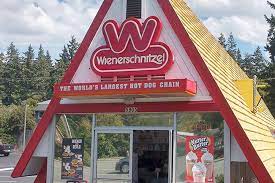
In the 1970s, America seemed to have hot dog stands on every corner.  The most popular of these was the distinctive drive-thru Der Wienerschnitzel’s, but you also had – at least from my California-based memory – Pup ‘N’ Taco, Ben Franks, Tail o’ the Pup, and the walk-up Hot Dog on-a-Stick booths you’d find at amusement parks.  Today’s retail hot dog is at a Sonic Drive-In or the food court at Costco.  If you live anywhere near New York’s Coney Island, you can also include “Nathan’s Famous”, or at least the annual hot dog eating contest of the same name.

A hot dog may be “a cooked sausage eaten in a long, soft piece of bread”, but its secondary meanings are less definitive.  “Hot Dog!” is something you used to say when you were VERY happy about something else (“used to”, meaning sixty or seventy years ago).  A “hot dog” is also a person “who makes fast, skillful movements in skiing, snowboarding, or surfing to make people notice them”.  That last definition still stands.

Speaking of “used to say”, we also used to sing about hot dogs, didn’t we?  Oscar Mayer’s jingle convinced us we should BE hot dogs (so everyone would be in love with us).  But the better song came from Armour, which asked us what kind of kids eat Armour hot dogs?  Per the lyrics, “…fat kids, skinny kids, kids that climb on rocks… tough kids, sissy kids, even kids with chicken pox…”  Today’s version of the Armour jingle would probably be censored just for using the word “kids”.

“I wish I had a million dollars. HOT DOG!” (Courtesy of Paramount Pictures and “It’s A Wonderful Life”)

Hot dogs will always be a childhood memory more than a dietary preference in my book.  My mother, raising five hungry boys, developed several dinner recipes when time and ingredients were in short supply.  These included canned baked beans and weenies (two ingredients = dinner!), and a truly odd creation from the Betty Crocker cookbook made up of hot dogs, mashed potatoes, and cheese (three ingredients!).  Whether it tasted good or not – I honestly can’t remember – dogs, mash, and cheese conveniently covered the protein, carb, and fat categories, all in one broiler-blasted casserole.

The Oscar Mayer “Wienermobile”

My most vivid childhood hot dog memories are not the dinners mentioned above.  Instead, I can’t forget snacking on raw hot dogs from the refrigerator (which sounds awful now, but hey, I was a kid).  My mother was faithful to the Oscar Mayer brand so I ate a lot of their hot dogs raw.   Speaking of Oscar Mayer, here’s the better memory.  They built a motorized advertisement which to this day may be the coolest vehicle on wheels.  The “Wienermobile” cruised the streets of Los Angeles, stopping every now and then in a parking lot so you could view it up close.  The driver handed out tiny plastic replicas of the vehicle, appropriately labeled “Weenie Whistles”.

(Courtesy of Walt Disney Pictures and “The Santa Clause”)

Let me conclude with a solved hot dog mystery.  Your grocery store sells most brands in packages of ten.  They also sell hot dog buns but in packages of eight.  Why?  Because hot dogs weigh about 1.6 ounces, which makes a package of ten a convenient sale of exactly one pound of meat.  On the other hand, hot dog buns are baked in trays of four, which work best with conveyor belts and processing.  An odd number of buns – trays of five – is a model of inefficiency.  So until one or the other manufacturer changes their standard, you’ll always have leftovers for snacks.  Or better yet, for your dog.

The hot dogs I served my granddaughters last week were comically advertised as healthy: no fillers, no preservatives, and so on.  They weren’t very good.  Maybe the worst part of a hot dog is what makes it taste so good?  Or maybe hot dogs have simply lost their appeal to me?  No, wait, that can’t be true.  Anything my granddaughters ask me to eat has instant appeal.

Guess I haven’t eaten my last little-dog sausage just yet.

Some content sourced from the National Hot Dog and Sausage Council (NHDSC) website, and Wikipedia, “the free encyclopedia”.

Ketchup Catch-Up

At the Communion rail in our pre-COVID, in-person church days, my wife and I would sometimes laugh at the size of the hunk of bread they’d tear off the loaf. The pieces were so big I’d often be chewing all the way back to my seat (and think I should’ve asked for seconds). On the other hand, today’s “drive-in church” Communion amounts to hermetically-sealed plastic capsules handed gingerly through the car window. Peel back the plastic to reveal the tasteless wafer and half-swallow of grape juice inside. No, it’s not breakfast by any definition, but at least we’re still achieving the higher purpose.

Communion and ketchup are strange bedfellows but I’m about to explain why they belong in the same sentence.  If you’ve followed the headlines lately, you know – just below the latest details of the Myanmar conflict – we’re all worried about whether there’ll be enough ketchup packets for our next take-out meal.  That’s right, the world is currently lacking in – not ketchup – but ketchup packets.  If we don’t address the situation soon, buildings will burn and looting will run rampant.  Even worse, we might have to top everything with mustard instead.

It’s the pandemic to blame, of course.  As soon as traditional sit-down restaurants shifted to pick-up and delivery, their demand for packeted condiments jumped up to the level of Wendy’s and McDonald’s.  In fact, Wendy’s and McDonald’s removed ketchup packets from their front counters, not because customers were taking too many, but because other restaurants were raiding their supplies.  Yep, it’s gotten that kind of desperate out there in burger land.

Heinz, the undisputed king of ketchup, recently committed to increasing packet production by 25% to fend off potential mayhem in the streets.  125% of Heinz’s typical annual production amounts to, well… let’s just say there’d be enough to place a packet in the hand of every man, woman, and child on the planet.  Dang.  That’s a whole lot of processed tomato spread.

Speaking of processed tomato spread, here’s my favorite ingredient in ketchup: mustard (powder).  It’s true.  Go check the ingredients list on the bottle I know you have in your refrigerator.

Will there be enough to go around?

But I digress.  Let’s get back to the global packet shortage.  Call me highbrow but I’m having a hard time caring, because honestly I can’t remember the last time I used a ketchup packet.  The restaurants of my choosing always bring the bottle to the table when you ask for it.  Furthermore – burgers aside – I don’t have a lot of use for ketchup.  Not on my fries, not on my meatloaf, neither eggs nor hash browns.  And while we’re at it can we all agree: mustard only on a bratwurst or a hot dog?  It should be a cardinal rule.

But I digress… again.  FOCUS!

If I don my eco-friendly hat for a moment (and don’t I look sharp?), the last thing I want to hear about is Heinz upping ketchup packet production to 12 billion a year.  That sounds like enough plastic to Ziploc a small country many times over.  But I get it.  In these times of please-pass-the-virus (or better yet, don’t), we demand individually wrapped one-and-done solutions.  Like ketchup packets.  Like Communion elements.

Handy host

Good things come in small packages, so the saying goes.  Yeah, well, they come in big packages too.  Like ketchup from a bottle instead of a plastic packet.  Like Communion from a loaf of freshly baked bread instead of hole-punched from a sheet of Styrofoam. And seriously, who uses just one ketchup packet?  Picture a baby burger you can balance between your finger and thumb and maybe it’s enough.  Anything larger and you’re grabbing packets by the handful.

Let’s wrap this topic on a personal note.  If ketchup packets disappear, my granddaughters won’t understand a really good bedtime story, the kind where they’ll giggle every time they talk about it.  You know the story, the one where my buddies and I pocket ketchup packets from our school lunch trays, take ’em out to the playground asphalt, and stomp on ’em to give some unsuspecting kid a tomato facewash?  Oh please, drop the mock horror.  You know you were out there on the playground too, doing the very same thing.

Some content sourced from the 4/8/2021 CNN.com article, “America is facing a ketchup packet shortage”.

Hopping on Pop

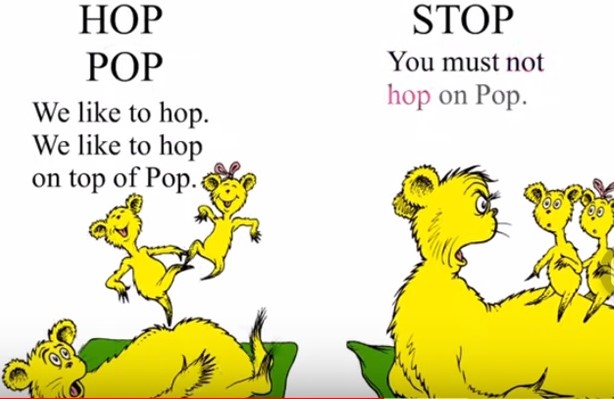
In the Dr. Seuss children’s classic Hop On Pop, readers travel through pages of rhyming word pairs, with the usual whimsical cartoon characters acting out the scenes (ex. “All Ball, we all play ball” and “Day Play, we play all day”). It’s not until about halfway through the book where you see the title pair, “Hop Pop”.  And when I saw “STOP, you must not Hop on Pop”, I decided Dr. Seuss was referring to the latest junk food mashup, “Pepsi x Peeps”.

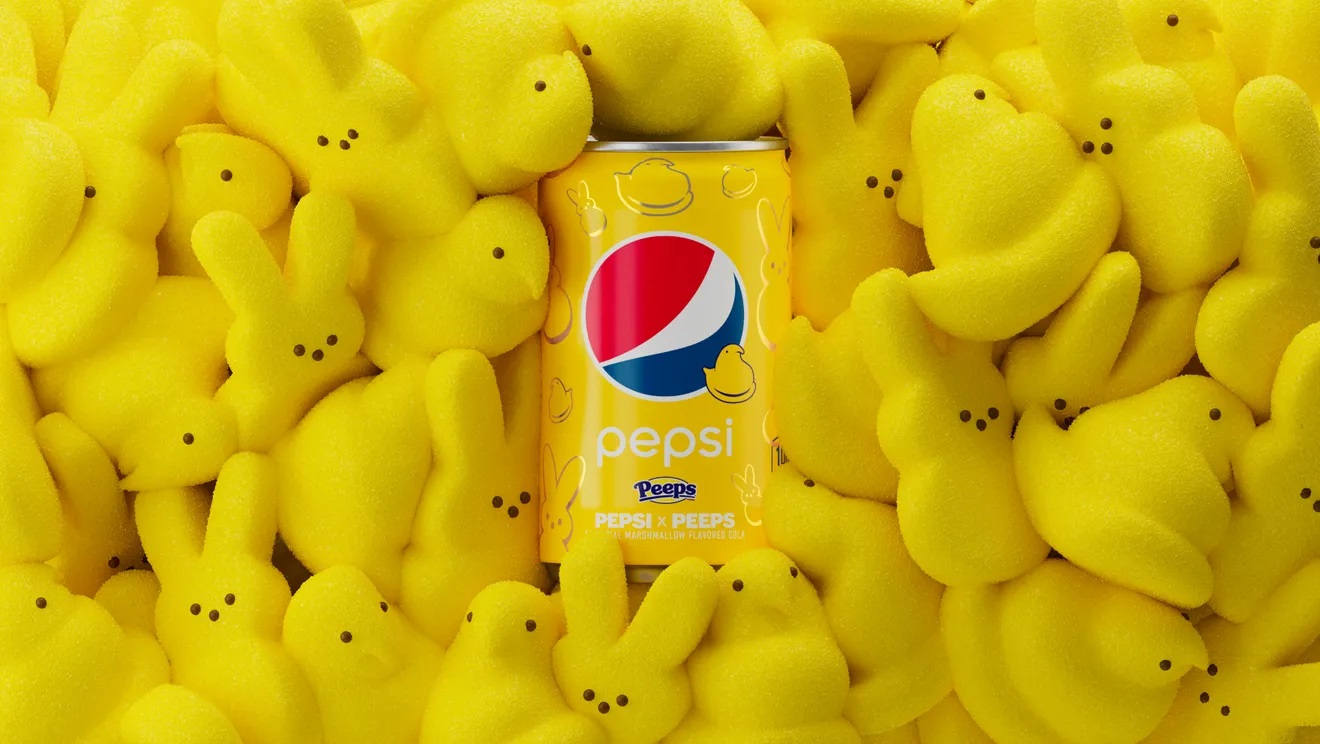
This blog often comments on sweets – so much so I should probably have a category called “sugar”.  I’ve talked about Halloween candy, chocolate, and licorice, and it’s a little unsettling I’ve discussed doughnuts in two of the last ten posts.  Naturally, my literary sugar addiction couldn’t resist a word or two on a truly disturbing concoction.  Just in time for Easter, Pepsi is advertising a Peeps-flavored soft drink.  I’m trying to get my taste-buds imagination around this “pillowy-soft and sweet” marshmallow-flavored cola.  I can’t taste it, can you?  All I come up with is sugar.  Lots and lots of sugar.

You know Peeps.  Of course, you do.  The colorful marshmallow bunnies and chicks are the hot item every Easter in the U.S. and Canada.  Consumer demand for the cute little creatures means Just Born Quality Confections cranks out 2 billion every year.  Naturally, Peeps has moved past Easter to be available year-round, especially for other holidays.  Just Born even expanded the product line beyond candy, most notably with a Peeps-flavored line of lip balms.

Courtesy of PepsiCo.

With off-the-charts (and inexplicable) demand for Peeps, I shouldn’t be surprised Pepsi injected the flavor into its latest hybrid drink.  But here’s what bothers me.  Even if marshmallow-tasting cola is your thing (and you should have your taste buds examined), why does it have to be “Pepsi x Peeps”?  It’s not as if the marshmallow taste of Peeps is unique. (It might as well be “Pepsi x Lucky Charms”.)  The appeal of Peeps is exactly what’s not in the Pepsi product: fluorescent colors, cute little creatures, and sugar-dusted spongy-soft marshmallows.

I consider “Pepsi x Peeps” a disservice to marshmallows everywhere.  Marshmallows deserve their place in more respectable foods.  Oozing out of S’mores around the campfire.  Adorning sweet potato casserole on Thanksgiving.  Buried in Rocky Road ice cream.  Abundant in Rice Krispy treats.  Floating gracefully in a sea of hot chocolate.  But reduced to a mere flavor, wandering aimlessly amidst the carbonation bubbles of a cola?  That’s just harsh.

A more deserving “frankenfood”

No matter.  Consumers love new products, especially combos of tastes that were already good by themselves.  Burger King combined Cheetos and Mac ‘n’ Cheese for a carb-loaded side dish.  Taco Bell combined Doritos and tacos into one of its all-time best-selling entrees.  And Reese’s perfected peanut butter and chocolate as a candy (as did many others as an ice cream).

Courtesy of PepsiCo.

I won’t be buying “Pepsi x Peeps” anytime soon.  But neither will you.  In the ultimate snub, this promotion is not for a product you will find on your grocery store shelves anytime soon.  Instead, you can only “win” the drink by hashtagging #HangingWithMyPeeps on your springtime photos.  3,000 of the most creative Instagram and Twitter promotions will win three-packs of the colorful cans.  I won’t be entering.  Instead, I’ll be expending my limited social media energy elsewhere.

I was raised in a Coke household so maybe it’s natural for me to knock Pepsi down a peg or two.  But they’re kind of asking for it when they’ve already test-marketed products like “Pepsi Holiday Spice” and “Pepsi Salted Caramel”.  They even amped the caffeine level in one of their varieties to promote it as a ‘breakfast drink”.  Pepsi will stop at nothing to get your business.  Including coercing you to provide free advertising on social media.  Suckers.

Stay strong, little one

I hope “Peepsi” amounts to nothing more than an out-of-reach sweepstakes giveaway.  I hope marshmallows soon return to their roles as cute, colorful, edible animals.  C’mon, Pepsi – the Easter Bunny wants you to know: Stop hopping on pop!

Some content sourced from Laura Miller’s YouTube audiobook, “Hop on Pop”,  the People.com article, “Pepsi and Peeps Have Joined Forces to Create Marshmallow Soda”, and Wikipedia, “the free encyclopedia”.

Sugarcoating the Shot

When my childhood sweet tooth took its toll so many years ago, I just about lived in the dentist’s chair getting cavities filled. Anesthetics weren’t as effective as what we have today so those drill sessions were miserable. The only upside was the shelf of free toys my dentist teased beforehand, “dangling the carrot” to get me to sit still. Now, starting Monday, Krispy Kreme is taking the same approach to entice COVID-19 vaccinations.

“Free doughnuts” – who doesn’t like the sound of that?  Even if you’re more of a Dunkin’ fan, the allure of anyone’s free doughnuts is undeniable.  As long as you show proof of a COVID-19 vaccination, you can get a free doughnut at Krispy Kreme every day for the remainder of 2021.  Heck, that’s enough incentive to permanently adjust the morning commute.  But not enough to get the vaccine.

I’m a huge fan of the Krispy Kreme “yeast doughnut”.  The original glazed version is light and airy and goes down so easy you could inhale a dozen in one sitting.  In fact, I’ve almost done just that.  My wife and I were driving to the airport with friends a few years ago, bound for Las Vegas.  We passed a Krispy Kreme store, checked our watches, and mad-dashed a U-turn so we could grab a few doughnuts for breakfast on the run.  “A few” amounted to two dozen and we had no problem finishing all of them on the rest of our drive.  That’s six doughnuts apiece and I didn’t even feel stuffed.

There’s the rub (or marketing genius) of the Krispy Kreme COVID-19 vaccination promotion.  There’s no way – I mean NO WAY you’re gonna walk into Krispy Kreme, get only a free doughnut, and walk out.  Nobody has that in their DNA.  Recall the Lay’s Potato Chip slogan: “Bet you can’t eat just one.”  The same applies to Krispy Kreme doughnuts in spades.  You don’t buy them by the “one” but rather by the dozen.

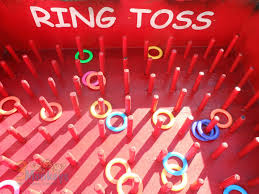
[Random thought: My mind just wandered to the midway at the county fair and those big games of ring toss.  Substitute doughnuts for the rings and syringes for the pegs.  Can you see it?  Yeah, probably not the best image for the Krispy Kreme promotion.]

If this story was about Voodoo Doughnuts or another baker whose creations are more akin to a large, filling dessert, maybe one free doughnut would be enough.  But at Krispy Kreme you’re going to get your free doughnut and promptly buy a dozen more.  It’s because you’re standing in the lobby and the slow-moving conveyor of hot, fresh doughnuts tempts you just beyond the glass.  You reach out for a touch or a taste but you can’t.  It’s how Krispy Kreme cajoles you into buying more of their product.

As for the vaccine enticement, Mary Poppins would certainly approve wouldn’t she?  Krispy Kreme should put her on their television commercials joyfully singing, “Just a spoonful of sugar helps the medicine go down…”.  Mary’d fit nicely into Krispy Kreme’s advertised “Be Sweet” initiative, designed to sell a lot of doughnuts but also, “…to inspire joy and kindness”.  Let’s hope hundreds and thousands of free doughnuts do just that.

Speaking of free doughnuts, whoever created this campaign must know what they’re doing or suffer the most awful form of job termination.  Here in Colorado, our vaccination rate hovers around 15.3% for a state population of 5.7 million people.  That means on Monday, Colorado Krispy Kreme stores could potentially see 872,000 customers demanding their free doughnuts.  And the day after that.  And the day after that.  Oh and – heh – Colorado only has TWO Krispy Kreme retail outlets in the entire state.  Traffic jams of epic proportions.

Now here’s the irony behind this Krispy Kreme headline.  For those who decide not to get the COVID-19 vaccine (and that would be me; don’t judge), we can still get a free glazed doughnut and a medium coffee at their stores on Mondays from March 29th to May 24th.  That’s nine free doughnuts and coffee for someone who didn’t even get the shot.  Does that inspire their intended “joy and kindness”?  You bet it does.

I only wish the nearest Krispy Kreme weren’t forty miles away.  Lucky for me there’s a new one under construction not fifteen minutes from my house.  They’re planning to open their doors at the end of December.  You know, just as their free doughnut promotion comes to a close.

Some content sourced from the CNN.com article, “Krispy Kreme is making vaccinations extra sweet…” and KrispyKreme.com.

Feeding Frenzy

Thanks to a whole lot of snow in Colorado I was pretty much housebound this week.  I was also reminded of the number of mouths I’m expected to feed. That total is nine… if I count the four horses, two cats, and one dog besides my wife & me. Now that I think about it, a horse eats enough for two so let’s bump the number to eleven mouths. And nine of those belong to animals.

A year or so ago I wrote a post called Sign Me Up!, where I marveled at the rapidly growing world of subscription-based services.  Among my own subscriptions I listed a magazine, a newspaper, and digital music, I also included Chewy, the online pet food supplier whose mission is “to be the most trusted and convenient online destination for pet parents (and partners), everywhere.”  At the time I was just trying Chewy out, not willing to go all-in with a subscription.  Today?  I’m fully on board and wondering why I didn’t sign up sooner.

Even the U.S. Post Office celebrates “fur babies”

Every time a Chewy pet food box shows up at my front door my first thought is, “Why didn’t I come up with this idea?”  Chewy’s concept is wonderfully simple… and wildly successful.  First, create a list of the world’s major suppliers of dog and cat food.  Second, negotiate bulk purchases of their products at a discount.  Third, set up a small network of fulfillment centers.  Finally, sell to customers with some of the discount, keeping the rest for your own operation and profit.  It’s a middleman’s recipe for millions.  Er, make that billions.

If you think this post is a plug for Chewy you’re darned tootin’ it is.  Chewy offers over 2,000 brands of pet food to 15 million subscribed customers.  97% say they’re satisfied.  Chewy’s net sales in 2019 were $4.8 billion dollars.  Nosh on that impressive number for a second.  $4.8 billion sounds like the GDP of a small country.  A small country with a lot of pets.

Foresight is everything here.  Ten years ago I wouldn’t have believed there were 200 brands of pet food, let alone 2,000.  If I go back to my childhood (way more than ten years ago) I can name exactly four pet food brands or products of the day: Purina, Friskies, Alpo, and a curious General Mills creation called Gaines Burgers (“The canned dog food… without the can!”)  Well, I also remember a variety box of dog biscuits called “Fives”, but that’s because I snacked on them every now and then when there wasn’t anything else in the pantry.  Fives were fit for human consumption.  At least, I think they were.

The pet food demand of the 1970s wouldn’t have sustained a subscription service like Chewy.  On the other hand, today’s market is a feeding frenzy, especially with more people opting for “fur babies” over children.  And don’t think Chewy hasn’t noticed all the doggy daycare and emotional support.  Now they also deliver food for your fish, your bird, your snake, and all those farm animals grazing on your backyard lawn (alpacas, anyone?)  Chewy even offers a pharmacy of over-the-counter meds when your pet is in some way under the weather.

Hello, “Chewy”!

I was going to wrap up this plug by smugly suggesting Chewy cater to our horses, but of course they already do.  I can’t subscribe to hay bales yet (I’m sure they’re working on that) but I can buy grain, treats, blankets, tack, and fly spray.  So instead, let me speculate it probably won’t be long before Chewy gets into the “human” food delivery business as well, to compete with Amazon, Wal*Mart, and Target.  With Chewy’s millions of subscribed customers, the new offering would take off like a bull in a china shop.  Or better, like a big, furry bad boy in a Star Wars movie.

O-Love

I like a lot of foods people seem to hate. My favorite Thanksgiving pie is mincemeat, not pumpkin. My favorite licorice color is black (red is just a licorice imposter). You can heap any kind of shellfish you want on my plate except oysters. You’ll find blue cheese in my salad and Brussel sprouts cozying up to my steak. But what about “America’s Most Hated Food”? Was I born in the wrong country? Sorry fellow citizens, I must respectfully disagree with the winner of a recent survey on hated foods.  Black or green, stuffed or plain, sliced or diced, there’s nothing quite like the taste of an olive.

Zippia is a job-search engine I’d never heard of, until I came across their just-released survey called The Food Each State Hates the Most.  Zippia’s road to its results is rather unscientific.  First, come up with a list of forty-odd foods where people tend to say, “gross”.  Then, use Google Search Trends to determine which of these foods people look up the least.  Finally, group the search results by state.  After that meandering highway, here’s what you get:

    (Click image to enlarge)

I think Zippia produces these surveys as a clever way to attract customers.  Didn’t work for me – they just insulted my taste buds!  Thirteen of fifty states claim the olive as their most hated food?  Two of those states are California and Georgia, where the lion’s share of America’s olives is grown.  I’m already suspicious.

Not a pile of tires

I’ll grant Zippia’s survey this.  Most people I know don’t care for olives.  They don’t like the look or the smell, and even though they’ll admit to olive oil in their salads and heart-healthy recipes, they’ll still deny any affection for the fruit.  Yes, I said fruit, not vegetable.  Doesn’t that make those little sodium balls a bit more palatable?

The rest of the survey, I can buy.  Anchovies shouldn’t swim anywhere near a pizza (good call, America’s Heartland).  Washington and Oregon residents probably sat next to me in elementary school, overdosing on bologna sandwiches.  Eggplant, ick.  And beets… beets… I’m almost sixty years into this world and have yet to acquire the taste.  Check back with me in the next life.

If the Zippia survey is to be believed, I live in a state where turkey bacon is our most hated food.  Really?  We just bought several pounds of the stuff last weekend at Costco.  It’s not so bad.  On the other hand, olive oil and vinegar stores are trendy around here.  Most markets have an olive bar adjacent to the cheeses.  Meats and breads have been enhanced with bits of olives for years.  And for the really fancy, serve a tapenade with your crackers; a French spread made of finely chopped olives, capers, and anchovies.  Okay, so tapenade’s probably not for everyone.  But I like it.

I developed a taste for olives as a kid because my mother kept tossing them into her casseroles.  Before I knew it I was eating olives as a snack (and what kid hasn’t done the “wave” with one on each finger?)  One regrettable afternoon I downed a whole can of the large black ones before discovering my mother intended them for one of her recipes.  Believe I went to bed with no dinner that night.  At least my belly was full of olives.

[Side note: The only member of my family who likes olives is my daughter.  Maybe I should’ve named her Olivia? I did have a childhood crush on Olivia Newton-John.]

Not “monster eyeballs”

As if you need more proof of my love of olives, you’ll always find several cans in my pantry.  The sliced ones go into my pizzas, salads, and tacos.  The diced ones go into my omelets.  The whole ones sneak onto vegetable trays next to the carrots and celery (when my wife isn’t looking) or I just down ’em by the can.  And their green siblings with the red pimentos jammed down the middle?  They go perfectly with chips ‘n’ dip in front of the TV.

Step aside, America.  Spain produces more olives than any other country.  Italy and Greece aren’t far behind.  It would be appealing enough to live on the sands of the Mediterranean, growing old on their uber-healthy diet.  But also having trees of “America’s Most Hated Food” everywhere you look?  That clinches the deal.  I just might take my O-Love overseas one of these days.

Some content sourced from the Zippia.com article, “The Food Each State Hates The Most”, and Wikipedia, “the free encyclopedia”.

Forty Days and Forty Nights

Tuesday seems like weeks ago.  Some call it “Fat Tuesday” (esp. those pancake-bingers partying hard at Mardi Gras) but to me, it’s just the last day of my food free-for-all.  My wife and I decided to give up “flour” for Lent (more on that in a minute) so Tuesday night we overate at our favorite Mexican restaurant.  Chips and salsa (the chips a hybrid of corn and flour).  Enchiladas and tacos wrapped in big, fluffy flour tortillas.  Sopapillas fried from puffy flour tortillas, drenched in honey.  Big, frosty margaritas to wash it all down.  It was kind of a fiesta final before Lent.

Now it’s Ash Wednesday as I type and I’m already obsessing about my forbidden flour.  This morning’s breakfast was hardly a fiesta – coffee and a protein shake.  Not a tablespoon of flour to be found anywhere.  My upcoming fever dreams will be liberally dusted with flour.  I’ll have fantasies of consuming an entire bakery case (shelves and all), eating my way out of a gigantic loaf of bread, or parking my mouth below the pasta-maker while endlessly turning the crank.  I’m looking at all the snow outside my office window right now.  It looks exactly like white flour.  It probably IS white flour.  Hang on, I’ll be right back…

As of today, we’ve officially started the season of Lent again. The next forty-odd days and nights are gonna be the usual challenge. Did you know the Old English translation of “Lent” is “spring season”?  How that computes with all the flour I’m seeing outside my windows right now is beyond me.  More to today’s point, Ash Wednesday is the deadline to answer the question, “What am I giving up for the next seven weeks?”

Lent = “no mas”

Lent, as even non-Christians know, is the religious season of preparation leading up to Easter.  It’s the time to reflect inward, with more attention to prayer and the Good Book, less attention to “shortcomings” (sins, people), more charitable service to others, and finally, a cruel little something called “self-denial”.  Self-denial is anything you want it to be, but the idea is to subtract from your daily equation: something you don’t need but you’ll struggle to be without.  Consider seven popular choices for 2021:

  1. Chocolate.  Maybe this one’s popular because it’s the easy way out.  Chocolate’s often in my desserts, occasionally in my protein shakes, and every-now-and-then in my mid-afternoon pick-me-ups.  But I can certainly do without the sweet stuff for forty days.  C’mon, people used to give up food for Lent!  A little chocolate’s not really what the Big Guy had in mind.
  2. Meat.  Christians forego meat on Lenten Fridays anyway but some choose to give it up the whole way.  Not me.  If I’m giving up flour, I’ve got to have meat-and-potatoes to soften the blow of all my bread, pasta, and baked goods currently on hiatus.  For Pete’s sake, I can’t even have chicken noodle soup!  What was I thinking?
  3. Smoking or Drinking.  Maybe these are your vices but they’re not mine, so either would be a Lenten cop-out.  I enjoy the occasional glass of wine or a beer, sure, but putting them on the shelf for the next month or so? Hardly a stretch.
  4. Coffee.  Okay, we just shifted from first to fourth gear.  There is nothing – NOTHING – to fill the vast and infinite void left behind by my morning cup of joe.  I understand self-denial but don’t turn me into a raging lunatic.  Force me to give up coffee for Lent and I’ll have a newfound respect for the next option, which is…
  5. Sleeping In.  Normally this would be another cop-out for me because I’m one of those annoying morning people.  But deny me my coffee and I’ll gladly hibernate until early afternoon – every day until Easter.
  6. Social Media.  I dropped Facebook late last year.  I’m only on Instagram a couple of times a week.  I have no Twitter feed.  I get it – it’s 2021 – but this one’s a no-brainer for me.  I mean seriously, just give me a call.
  7. Speaking Poorly about Others.  I asked my sister-in-law what she was giving up for Lent and she said, “I’m going to be nice to others”.  That gave me a good laugh until I found this item on the list.  My sister-in-law has plenty of company.  So, consider: could YOU give up airing dirty laundry for forty days?

One more thing about Lent. Each of the liturgical seasons has a color, and Lent’s is purple.  You’ll see a lot of it in churches, cathedrals, and flower arrangements this month and next.  I like purple enough, but ask me to name purple items and all I come up with is eggplant (the nightmare vegetable of my youth), figs (the nightmare fruit of my youth), grapes (I prefer the green ones), cauliflower (yep, it comes in colors), and lavender and amethysts, both of which I have little use for.  Purple is about as smart a choice for Lent as giving up flour.

In conclusion, I could use your prayers as I endure my forty-day flour fast.  By late March my car tires will look like doughnuts and my paperback novel a nice, thick Pop-Tart.  Toss me a Frisbee and I’ll slather it in syrup and devour it like a pancake.  Put your pasta under lock and key.  Guard your pizza with your life.  I’m coming for your cupcakes.

Some content sourced from the Delish.com article, “7 Things To Give Up For Lent That Go Beyond Food”, and Wikipedia, “the free encyclopedia”.

Fine Print

I’ll never forget the first time I saw the movie, Jurassic Park. I’d read the Michael Crichton novel so I already knew the story, but I still couldn’t wrap my mind around that first dino scene, where a brachiosaurus casually munches on the uppermost leaves of a forty-foot tree.  The gigantic creature was so lifelike I thought, “Where’d Steven Spielberg get a dinosaur?” In my defense, computer-generated imagery (CGI) was brand-spankin’ new back then.  A ferocious T-Rex looking and moving like the real thing was still jaw-dropping in the 1990s. And I’m having the same reaction to the stuff rolling off 3D printers right now.

A “printed” toy tugboat

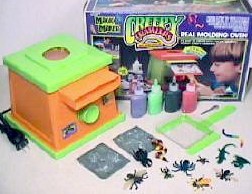
If you’re like me you haven’t paid much attention to 3D printing.  You see some of the items a 3D printer can generate and they seem like child’s play.  In fact, 3D printing reminds me of a 1970s toy called “Creepy Crawlers”.  You had these tubes of colored goop you squeezed into metal molds, and then the molds went into an electric oven.  The goop would grow from flat to 3D with heat, and suddenly the oven was spilling out all kinds of bugs and spiders you could drop on your friends.  (There was also consumable goop called “Incredible Edibles”; products to compete with whatever the girls were making in their Easy-Bake ovens).

But I digress.  Here’s my 3D printing naivete in a nutshell: I still think my 2D printer is the more impressive technology, cranking out high-resolution photos and perfectly addressed envelopes.  I mean, whatever would I need a third dimension for?

Yep, I am seriously naive about 3D printing.  The scope of this topic is mind-boggling if you really take the time to understand its potential. Here’s a good example.  Picture a printer as big as your living room.  Picture a printer cartridge of concrete instead of ink.  Now watch the printer build your living room, one horizontal layer at a time.  The printer can also build the rest of your house.  Just add plumbing and electric when it’s done.

“Printed” storage crates

Without getting too far into the weeds, let’s define 3D printing for what it really is: additive manufacturing (AM).  Here’s an easy way to picture the AM process.  When you build a log cabin you lay out the entire foundation of logs for the house – with breaks for the doors – before you add the next layer of logs.  You work your way up a layer of logs at a time, keeping those breaks for the doors, adding breaks for windows, pipes, and such, completing the structure with a sloping roof on top.  Perhaps you add a fireplace in the process; again, layering bricks on top of bricks until you’ve reached the top of the chimney.

That’s pretty much how a 3D printer works.  It “pictures” an object in horizontal layers and “prints” it from the ground up.  3D printing has been around longer than you think.  3D printers were developed as early as the 1970s (preceding your inkjet 2D printer!).  The early versions just had to be manually programmed.  Once we attached a computer and software, 3D printing really came into its own.

Watch the following video of a 3D printer confidently layering a basket weave – it’s mesmerizing:

https://upload.wikimedia.org/wikipedia/commons/transcoded/5/5d/Hyperboloid_Print.ogv/Hyperboloid_Print.ogv.360p.vp9.webm

The products speak for themselves, of course.  A shortlist of the more cutting-edge printed creations gives you an idea of where our world is heading:

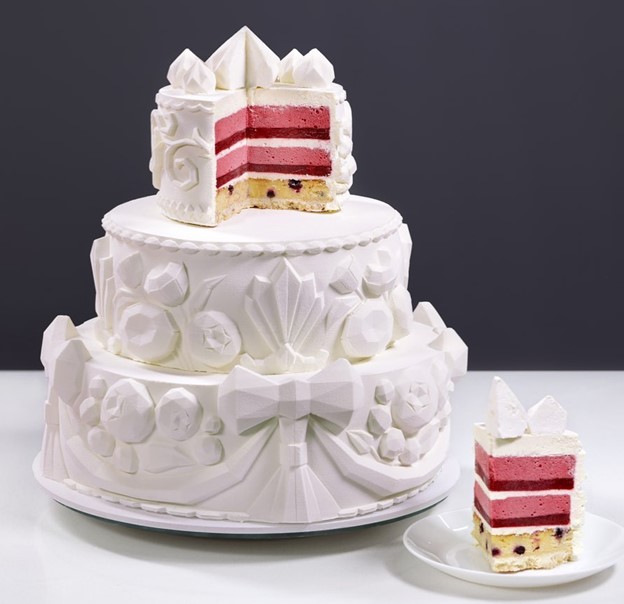
  • Cakes and pastries – The “ink” is baked goods in one nozzle and frosting in another.  Design it on your computer screen and then “print”.  It’s like the Easy-Bake Oven on steroids.  Only you don’t need the oven.
    3D-printed confectionery from Ukrainian chef/architect Dinara Kasko
  • Bones – No, not some plastic or other polymer designed to replicate bones, actual bones.  It’s called bioprinting – the fabrication of natural tissue using cells and other building blocks, and it’s coming soon to a clinic near you.  Don’t worry how long a broken bone will take to heal; just replace it!
  • Buildings – Forget about building that log cabin one layer at a time.  Your 3D printer will do the whole job for you (and it’ll still look like a log cabin).  Your printer can also build sturdier houses out of concrete.  This one’s on the market in Riverhead, New York, for $300K.
  • Vehicles – 3D printers have already created boats, kayaks, and most of the makeup of cars and trucks.  Long ago I was impressed with the robotics of the Ford Motor Company, employed on a long assembly line to build cars one part at a time.  A 3D printer can essentially do the same job standing still, no assembly line required.
  • You – I could speculate on the potential for a full bioprint but let’s avoid that scary future for now and just say, a 3D printer can create a figurine to look exactly like you.  Think of it as printing a 3-D photograph.

If your mind is not blown by what you’ve just read, consider this: 3D is already passe.  That’s right, we’ve already moved on to 4D printing.  4D – at least with printing – refers to materials that can change shape with time, temperature, or some other type of stimulation.  A good example would be a printed window shade, sitting tight and virtually unnoticed at the top of the window in daylight but expanding to full cover as darkness falls.

Don’t know about you but this level of technology makes my head hurt.  When I’m done with this post I’m gonna push “print” and generate a nice 2D copy for my files.  Oh, and maybe watch Jurassic Park again.

Some content sourced from the 7/24/2020 Forbes article, “What Can 3D Printing Be Used For?”, and Wikipedia, “the free encyclopedia”.

Chocolate Cremè de la Cremè

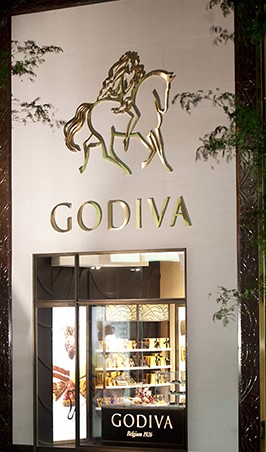
Godiva, the incomparable Belgian chocolate maker, is closing every one of its retail shops in North America.  Maybe you’re blaming the pandemic but Godiva claims foot traffic at shopping malls – where most of its boutiques are located – “plummeted” over the last few years.  I’m sorry to see Godiva go.  Mind you, it’s not that I make a habit of buying $3 truffles.  It’s more the idea that I could if I wanted to.

Godiva is the cremè de la cremè of chocolate.  Their products are born of a family business dating back to 1926.  Their Truffe Originale, “an intense dark chocolate mousse in fine dark chocolate, rolled in pure cocoa powder”, is the standard by which most Belgian truffles are measured.  Godiva’s three chefs are profiled on its website (I discuss one of them in my post Confection Perfection), and endeavor to maintain the very high standards of Godiva while churning out new and different creations.  It’s no wonder Godiva isn’t considered a “candy store” or a “chocolate shop” but rather a chocolatier.  Only the very best get a label like that.

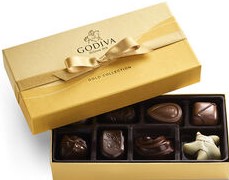
Godiva’s handcrafted “gold box” assortment

To me, Godiva chocolate is a taste of heaven on earth.  But it’s also a taste of a lifestyle – one most of us will never afford.  Godiva has me picturing mansions (not houses), yachts (not boats), private planes (not the middle seat in coach).  Godiva is a brief, delicious dip into the behind-the-gates world of the uber-wealthy.

I’ve stepped into a Godiva chocolatier exactly twice in my life.  The first was in college, after a visit to the Rizzoli bookstore at exclusive Water Tower Place in downtown Chicago.  After spending too much money at Rizzoli I was in the perfect mindset for Godiva (which was right next door).  I still remember selecting a single truffle from the glass display case.  The petit woman behind the counter wrapped up my tiny purchase in box, bow, and bag, as if I’d just purchased a fine piece of jewelry. She bid me a fond farewell.  I walked out of there feeling, well, special.

Would you pay $20 for six truffles?

My only other visit to Godiva was more recently with my wife and daughter, on a Saturday at one of Denver’s nicer shopping malls.  We’d just come out of Starbucks, coffees in hand, and there beckoned Godiva.  After much deliberation, we spent the better part of $10 and walked away with three truffles.  I’m sure they were elegantly wrapped.  I’m also sure they were delicious.  But with Godiva, it’s more about the taste of something beyond your means.  That taste may be more satisfying than Godiva chocolate itself.

Tiffany & Co, NYC

Tiffany is a comparable experience (as I wrote about in my post All That Glitters).  Walk past the front-door security guard into their multi-level department store in downtown Manhattan.  Your first thought will be either, “I don’t belong here”, or, “I’m underdressed”.  Ooh and ahh at their lavish necklaces, bracelets and rings, but don’t expect to see price tags.  Like Godiva, Tiffany’s best is behind glass and you have to ask a staff member about the cost.  My wife and I made it to Tiffany’s fifth floor before we found something we could afford – a pair of ceramic coffee mugs.  At least we also walked away with their signature blue gift boxes.

Think twice before entering!

Then there’s Prada, the Italian fashion house famous for its luxurious leather handbags and shoes.  My twelve-year-old daughter dragged me into their Madison Avenue boutique once (past the requisite security guard) but I realized our mistake as soon as we entered.  Prada displays maybe a dozen items in a single museum-like showroom, each carefully positioned on an individually lit shelf.  You are invited to sit on the central couch and offered a choice of beverage.  Then a person brings you items of your choosing (but don’t touch!).  Once I realized Prada purses start at $1,000, I asked my very disappointed daughter if maybe she’d like to go for ice cream instead.

Godiva’s tiny “biscuits”… $0.75 ea.

Godiva’s North America retail shops will be gone by March, but you’ll still have other options to purchase.  You can find small displays of their products at the cash registers of upscale department stores.  You can order most of their delicacies online (including “Gold Box” assortments, which cost more than you can afford).  You’ll even find Godiva’s “Signature Mini Bars” at lowly retailers like Target and Walgreen’s.  But let’s face it, Godiva is as much about the experience as it is the chocolate, and I’m just not gonna feel uber-rich when I’m at Target.

Some content sourced from the 1/24/2021 CNN.com article, “Godiva is closing or selling all of its stores in the United States”, and Wikipedia, “the free encyclopedia”.