Do YOU Know the Muffin Man?

I have a hodgepodge of baked goods on the kitchen counter right now. A loaf of sourdough sliced and ready for sandwiches. Brioche buns to cradle the bratwurst I barbecued over the weekend. Angel food cake for dessert topped with berries and whipped cream. And tortillas (which, okay, are “fried goods”) by the bagful. But we’re not done here. There’s one more option, one where my starchy carb willpower goes flying out the window. English muffins.

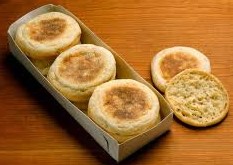
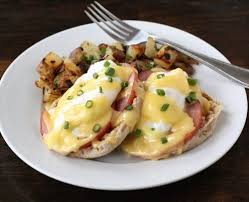
Who among us doesn’t love a warm, toasty English muffin?  The little round breakfast breads give us so many reasons to choose them.  They’re delicious, whether with butter, jam, or as an ingredient in Eggs Benedict.  They’re satisfyingly circular.  They’re usually fork-split so they break apart easy for the toaster.  You feel like you get two-for-one instead of a single piece of boring toast.  And as if to boast of their popularity, McDonald’s bakes millions of them into their Egg McMuffins.

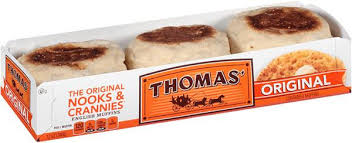
Here’s another appeal of English muffins.  They have all those nooks and crannies to secure the melted butter.  You’re familiar with the term “nooks and crannies” (I know you are).  It’s the primary descriptor in Thomas’ English Muffins advertisements.  But you probably don’t know the backstory.  Thomas – as in Samuel Bath Thomas – created the “American” English muffin in 1880, after moving to the United States from England.  He brought with him a griddle-baking process for the muffins, which results in the signature crunchy outside and soft inside.  140 years later, I’m hard-pressed to come up with another manufacturer of English Muffins.  Okay, maybe Bays.  That’s it.

Ironically, English muffins are a more popular breakfast item in North America, Australia, and New Zealand than in England.  But you can’t just call them “muffins”, at least not in America.  Muffins (coming from the German muffen for “little cake”) refer to blueberry or corn or some other muffin with a more specific taste than the sourdough of English.  Not sure about you, but my consumption of English muffins to blueberry or corn is probably 100:1.

Eggs Benedict

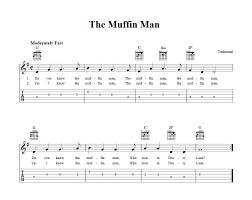
You think you “know the muffin man”, but I’ll bet you’re just singing the children’s song (and you’re welcome for getting it stuck in your head).  There really were muffin men, you see, way back in the mid-1800’s.  They’d walk the streets selling their fresh-baked muffins, ringing bells like an ice cream truck.  In Britain there used to be so many muffin men ring-ring-a-ringing, Parliament passed a law to ban the bells.  But people still bought their fresh-baked muffins (at least until houses started getting this new invention called a “stove”).

When Mr. Thomas first sold his muffins in America he called them toaster crumpets, described as a “more elegant alternative to toast” to appeal to finer hotels.  Over time he changed the description to “English muffins” to better serve the masses.  The company bearing his name has been making them ever since, and the griddle-baking approach is the secret to all those nooks and crannies.

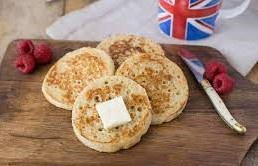
Crumpets, aka “English muffin imposters”

While we’re on the subject, let’s settle the debate on crumpets (and scones, for that matter) vs. English muffins.  Crumpets look like English muffins.  They’re about the same size.  But that’s where the similarities end.  Crumpets are only cooked on one side.  They have a milder taste.  And there’s a good explanation for the popularity of English muffins over crumpets in America.  Muffins go better with coffee, which Americans drink a lot more of than tea.  Can’t tell you when I’ve ever seen someone having a crumpet with their coffee.

“The Muffin Man” song includes the lyric, “… who lives on Drury Lane?”  Turns out, Drury Lane is a real street; a thoroughfare bordering Covent Garden in London.  But I prefer to think the Muffin Man lives right here on my street.  The Muffin Man is me, because not a week goes by where I don’t include the English rounds in my breakfast.

Some content sourced from Wikipedia, “the free encyclopedia”.
Five High

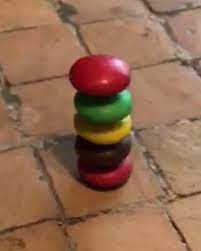
Last Thursday, my brothers and I took an overnight train from Northern California to Northern Oregon as part of an every-other-year reunion. The trip, which would take eleven hours if you drove from San Jose to Portland instead, took twice that long on the Amtrak Coast Starlight. But the meals come with the ride and everyone gets a bed and a hot shower, so it’s a cozy way to watch the world go by. In hindsight, for all the time sitting and staring out the window, we could’ve been stacking M&M’s. Just five of the colorful candies one atop the other would’ve landed my brothers and me in the Guinness Book of World Records.

Sounds easy, doesn’t it?  Buy a bag of plain M&M’s (you’ll have zero chance with the peanut variety), count out five, and let the stacking commence.  You’ll get to a tower of two quickly.  You’ll get three one atop the other with time and patience.  But that’s the proverbial end of the line, my friends.  You won’t make it to four.  If you did, you’d join the two co-holders of the former world record.  Last January, Will Cutbill, a twenty-something British engineer, pushed the record to a stack of five.

The “original” M&M’s

The history of M&M’s suggests it’s only appropriate a Brit broke the stacking record.  M&M’s were copied (and somehow uniquely patented) from British-made Smarties, the first candy where a hard-shelled coating protected the chocolate inside from melting.  Here’s another interesting M&M’s factoid.  The first “M” is for Forrest Mars, Sr., the founder of the Mars candy company.  The second “M”?  Bruce Murrie, the son of the president of Hershey’s Chocolate.  No, the companies didn’t join forces to create M&M’s.  During the wartime years of the 1940’s Hershey had a monopoly on rationed chocolate so Mars was forced to use them as their supplier.  Today, M&M’s have evolved to a “fully Mars” product.

It’s safe to say Will Cutbill wouldn’t have broken the M&M’s stacking record without the pandemic.  He was in the middle of the UK’s third lockdown earlier this year when he pondered a lifelong dream of getting into the Guinness book.  He also had a bag of M&M’s in his hand at the time.  Practice led to more practice, and as you’ll see in the video here, the record-breaking moment came as a happy, unexpected surprise.

Marawa Ibrahim – Most hula hoops spun simultaneously

Maybe you’re thinking what I’m thinking.  Why can’t one of us become a world record holder as well?  As I type, I’m munching on Triscuit wheat crackers.  I just built a stack of five on my desk.  What if I went to the store and bought several more boxes, then stacked all those crackers to the ceiling of my double-height living room?  Wouldn’t I and my Triscuits join the Guinness book as well?

Eliud Kipchoge – Fastest marathon

Not so fast, record-setting wannabes.  As you should expect, Guinness has a tried-and-true process, not only to establish world records but to decide if they’re worth pursuing.  You must submit a formal application (even if attempting to break an existing world record).  Your attempt must be deemed ethical (ex. no killing of animals).  Your attempt mustn’t be harmful to the participant (ex. excessive consumption of alcohol).  Your record must be deemed environmentally friendly.  Finally, Guinness must approve the process by which your record will be adjudicated (which in Cutbill’s case included a video instead of an in-person judge). Oh, and unless you’re willing to contribute several thousand dollars to speed things up, plan on a year or more to complete the process.

Mya-Rose Craig – Most northerly climate protest

Now you know why the Guinness book hasn’t grown to a ridiculous number of pages and entries.  The content is regularly reviewed against cultural, societal, and environmental standards.  Records even slightly in question are removed.  For example, Guinness used to list the “largest fish on record” of a given species.  Then people started overfeeding fish just to break the record.  Guinness realized this kind of manipulation was not only cruel but potentially a source of litigation, so they removed the entries.

This quick dive into the pool of Guinness World Records has me thinking my brothers and I made the right choice in not challenging the M&M’s stacking record.  We’d be better off drinking a Guinness than breaking one of their world records (yes, the beer and the book come from the same family).  Besides, how would we stack five M&M’s on a rocking, rolling passenger train anyway?  Nope, not interested in breaking world records today.  But if you don’t mind, I’ll get back to stacking my Triscuits now.

Some content sourced from CNN Business video, “Good luck breaking this deceptively tough world record”, the Guinness World Records website, and Wikipedia, “the free encyclopedia”.

Shelf Life

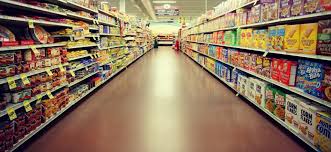
The rural neighborhood I live in hosts a Nextdoor electronic newsletter, allowing residents to post online for all sorts of reasons. (Loose animals are a frequent topic.) Today, however, one thoughtful neighbor said to look beyond first responders and hospital staff for a moment and acknowledge other workers deserving of the spotlight: grocery store employees. Talk about people we take for granted. After all, they’re keeping an eye on 20,000 different products on the shelves of the average U.S. supermarket.

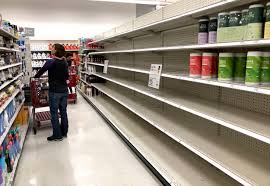
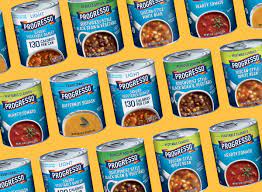
I had to double-check that number to believe what I was reading.  Nielsen, the research and ratings firm not only confirmed the number but said U.S. grocery stores experienced a 4.5% decline in 2020 (so more like 18,000 products).  Shouldn’t surprise us, especially with global supply chain interruptions.  And it’s easy to remember the most popular products missing in action.  Bath tissue, cleaning wipes, and canned soup, for example.  Others however, you probably didn’t notice.  Bumble Bee, the tuna maker, reduced its product count from 300 to 225.  Progresso Soup (a personal favorite), dropped its canned choices from 90 to 50.

Now, guess what?  Bumble Bee is not only back to its 300 products but adding new ones regularly.  Progresso is back to its ninety soups and doing the same thing.  So much for the “death of variety”, huh?  And speaking of variety, did I say ninety soups from a single manufacturer?  I’d be lucky if I could name twenty-five (“tomato”, “chicken noodle”, “clam chowder”, uh, uh…)  No wonder soup gets so much real estate on supermarket shelves.

J.M. Smucker is taking a similar tack.  They make a dozen varieties of peanut butter and two dozen more of jelly but last year you had to go without “Simply Jif”, “Reduced Fat”, and “Omega 3” versions of both.  Today, not only are their PB&J’s back but Smucker has introduced “Jif Natural Squeeze” and a smaller snack version of their popular “Uncrustables” frozen sandwiches.  It’s as if the pandemic was a small speed bump en route to ever-increasing variety.

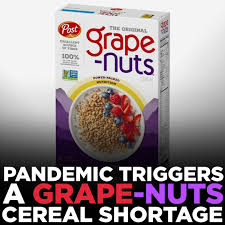
Post Grape-Nuts cereal (which earned solo attention from me in “Ever Eat a Pine Tree?“) disappeared entirely in 2020.  For a while there you couldn’t find any version of the tooth-shattering cereal on the shelves.  But now the gravel is back, and Post is making a bold move to “apologize” for last year’s inconvenience.  If you paid $10 or more for a box of Grape-Nuts from November 2020 to March 2021, Post will issue a partial refund for the “unreasonable” portion of the cost.  You need your receipt, of course.  Clever marketing there.  How many people keep their grocery store receipts from six months ago?

Speaking of bold moves, here’s one I think we should sustain; a sort of pandemic silver lining.  At many hotels “housekeeping” has been reduced to the time between stays instead of every day.  My wife and I recently spent four nights in a Marriott hotel and at no time did housekeeping enter our room.  Instead, we gathered up dirty towels and exchanged for new ones at the front desk.  We emptied our own trash.  We made the mini soap/shampoo/conditioner bottles last.  It was hardly an inconvenience.  It was also nice to know our room was undisturbed the entire time.

Similarly, dropping grocery store product totals from 20,000 to 18,000 was subtly a good thing.  We were forced to simplify our pantries and go more back-to-basics.  We cooked more.  We ate more whole foods (instead of fast foods).  Let’s hope those habits remain, even while consumer goods manufacturers crank out ever-more variety.

There’s a newish bad habit driving grocery store shelf life however; one bound to stay a while.  The percentage of snack/junk foods you’ll find is higher than pre-pandemic days.  Why?  Because working from home drives the demand.  Accordingly, you’ll find 10.9% more salty snacks on the shelves, 11.5% more energy drinks (including PepsiCo’s caffeine-laden Mountain Dew Rise), and 14.8% more pastry items.  And (most disturbingly), you’ll find 79.2% more pre-mixed cocktails.  Whoa now.  Somebody might want to post on Nextdoor for the invention of a web-based sobriety test.  They’ll make a fortune.

Some content sourced from the CNN Business article, “These foods disappeared from grocery stores last year…”, the CNN Business article, “The Grape-Nuts shortage is over…”, and Wikipedia, “the free encyclopedia”.

Bl-ess-ed Island

I’ve always liked Southwest Airlines’ slogan. “Wanna Get Away?” Their first television commercials featured people having bad days – then up pops the Southwest phrase in big, bold letters. It wasn’t so much where you wanted to go, just that you wanted to go.  So today I have Southwest on the brain, not only because I “wanna get away” (and don’t we all?) but because I know precisely where. Take me to the Julian Alps in northwest Slovenia, please.  There you’ll find a tiny fairyland oasis known as Lake Bled.

Let me tease you with a photo.  Here, you’re standing on a steep vista known as Little Osojnica Hill.  Lake Bled’s emerald green waters are a squarish mile of blended glacial melt and hot springs.  And those mountains in the distance?  You’re looking at Austria and its Alps.  The country and its majestic peaks are less than ten miles from Slovenia and Lake Bled.

But forget about the surroundings for a moment because it’s Lake Bled I really want to talk about.  Here’s how you get there.  From Frankfurt, Germany, catch a 75-minute flight (KLM or Lufthansa, not Southwest) to Slovenia’s capital city of Ljubljana.  Instead of spending time trying to pronounce “Ljubljana”, make your way to the city train station.  Travel thirty miles northwest on the rails and step off at the Lesce-Bled station.  Congrats!  You’re only a two-mile walk from Lake Bled.

Now for the best part.  You’re not only going to Lake Bled; you’re going to the island in the middle.  Bled Island may be the most picturesque islet I’ve ever seen.  It’s perfectly surrounded by the lake.  It’s lush with trees.  But best of all, Bled Island hosts a soaring 17th-century pilgrimage church.  It’s like a miniature Mont-Saint-Michel, only it’s not in France and you have to climb a wide stairway to get to the church doors.  Brace yourself; we’re talking ninety-nine steps on that stairway.  But you’re not gonna come all this way and not see the church, right?

Earlier I told you Lake Bled is like something out of a fairy tale.  Here’s another reason why.  The only way to get from the lakeshore to the island is on a pletna.  What’s a pletna? A wooden, flat-bottomed boat, seating a dozen or so and powered by a very-much-in-shape Slovenian oarsman.  He stands in the back like a Venetian gondolier, using his two oars to propel the boat slowly across the pristine waters.  Doesn’t it just add to the image?  Better than muddying up things with something motorized.

Bled Castle

If Lake Bled and its islet aren’t enough to get you booking flights, how about a couple more temptations?  High above the lakeshore stands the oldest medieval castle in all of Slovenia.  Drawbridge, moat, courtyards, towers; Bled Castle has everything you’d expect in an 11th-century fortification.  Must be worth the price of admission because it’s one of the most visited attractions in the entire country.

Yum!

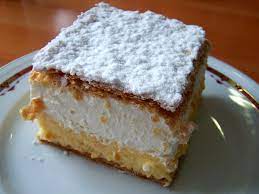
Maybe you’re not into castles.  How about a plate of Chantilly cream pastries instead?  The cremeschnitte is the region’s culinary specialty.  The pastry is so highly regarded, the Slovenian government designated it a “protected dish” in 2016.  An annual festival celebrates nothing but the dessert.  Over the last sixty years, a hotel near Lake Bled has baked over sixty million of them.  That’s what I’d call a recipe refined to perfection.

In a recent post I mentioned my daughter is getting married next year.  For my future son-in-law’s sake, I’m glad she didn’t choose the church on Bled Island.  Local tradition says it’s good luck for the groom to carry the bride up the stone steps before ringing the church bell and making a wish.  Up ninety-nine steps?  The groom better be as strong as a pletna oarsman if he’s going to make that kind of climb.

Photos are nice but videos are the real clincher.  Spend a couple of minutes with the following YouTube tour.  I guarantee you’ll “wanna get away” to Bled Island, and soon.

Some content sourced from Wikipedia, “the free encyclopedia”.
Meet Cute

Every now and then McDonald’s gets it right. In 1973, they introduced the Quarter-Pounder because customers demanded more than a 10 oz. patty inside of a boring bun. In 1987, McDonald’s added “PlayPlace” indoor playgrounds to suburban locations: crawl tubes, slides, and ball pits contributing to countless happy childhoods.  This year, the restaurant chain is stepping it up with its McCafé Bakery offerings. The Apple Fritter, Blueberry Muffin, and Cinnamon Roll will step back to give the spotlight to the newest McDonald’s kid on the block: the adorable Glazed Donut.

Seriously, just look at this little guy.  Isn’t he the cutest donut you’ve ever seen?  The McCafé Glazed Donut looks like a happy gathering of donut holes, all nestled up against each other for warmth and protection.  The Donut is pleasingly symmetrical.  Even the spelling is cute (instead of the more substantial “doughnut”).  And the best part: its “donettes” pull apart the way you would a hot, flaky croissant.  It’s like getting seven for the price of one.  And it’s cute to boot.

I admit I didn’t wake up this morning intending to write about cute donuts.  Even the headline about this doughnut’s upcoming debut didn’t really catch my eye.  But then I saw the photo and I was utterly smitten.  It’s the same way I felt when I first saw a package of those colorful little Plink garbage disposal cleaners.  I just had to have them.

Some would describe this as a “meet cute” moment.  Meet cute is the early-on scene in television or movies where two people connect for the first time and you just know they’re headed for romance.  The Hallmark Channel is all about meet cute.  Any scene where Hallmark movie man meets Hallmark movie woman, combined with something funny or unusual is 99% headed towards future romance.  It’s like you’re ten minutes into the story and you already know how it ends.

Plenty of “meet cute” in this one

And that’s how it’s gonna go with the McCafé Glazed Donut.  We had our meet cute this morning.  Now I have two weeks of anticipation and heart palpitations before I can actually buy one.  But I already see it.  I (almost) already taste it.  And the whole pull-apart thing?  Pure sex(y) appeal.

Meet cutes don’t always lead to predictable endings.  After the meet, the movie leads you to believe the characters are destined for romance.  But sometimes they’ll throw a curve (usually in the form of a third character) and the story goes in another direction.  Could happen with the Glazed Donut too.

Let’s use supermarkets as an example.  You stroll into the store, grab a basket, and think about your shopping list.  But before you even reach the aisles you’re greeted with front-of-store marked-down day-old doughnuts.  They’re just sitting there like little round orphans, begging you to spend another $0.69 to “adopt” one.

They’ll be front-of-store by tomorrow

So you do.  And you make sure the little guy’s placed in your basket as an easy find.  Then you slide behind the steering wheel and polish him off before you even leave the parking lot.  Tastes great, right?  Maybe now.  Later you’ll reflect on the slight, sickly feeling in the pit of your stomach and wonder why you caved.

That’s my thinking with the McCafé Glazed Donut.  I can cruise past the Fritter, Muffin, and Cinnamon Roll without so much as a passing glance.  But mark my words, next month I’ll find any excuse to be near a McDonald’s during McCafé Bakery hours.  I’ll purchase the Glazed Donut and my meet cute will blossom into a full-on romance. When I consider the Protein Shake I have most mornings, I’ll feel like I’m about to cheat on my mainstay.  Heck, this scandal could go viral! I see the headline now: Man Opts for Sweet & Sexy over Cold & Icy.  But can you blame me?  My Protein Shake really IS cold and icy, and there’s nothing satisfyingly pull-apart about it at all.  Meanwhile a small, soft, almost UFO-looking donut beckons.

Forgive me, my beautiful, healthy breakfast-in-a-cup.  Looks like I’m gonna stray.

Some content sourced from the CNN.com article, “McDonald’s is adding a sweet new treat for fall”, and Wikipedia, “the free encyclopedia”.

Sliced With Love

In ten months’ time, my daughter will be getting married. The planning of this event is sure to inspire an occasional post on this blog. My daughter is so laser-focused on the details of her big day it’s as if her hospital crib should’ve been labeled “Wedding Planner” instead of “Kelly”. Let’s pluck one item from her list today.  Or rather, taste one item.  Let’s talk about wedding cake.

Are you a fan of this grandiose dessert?  Do you revel in the wedding ceremony and the reception, but secretly count down the minutes ’til the big white cake is sliced and served?  Twenty years ago you’d be guaranteed a piece of wedding cake.  Today, the after-dinner options run the gamut.  A cupcake from a tower.  A cookie from an endless table.  Strawberries from a chocolate fountain.  Petit fours or truffles.  Cream puffs.

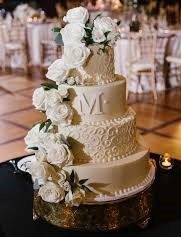
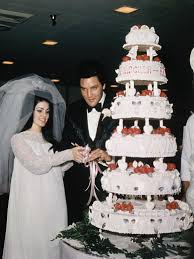
That’s some veil… er, CAKE!

Given all those temptations, I still choose wedding cake.  Why?  Because it’s not just any cake.  Wedding cake is heavy and layered and full of frosting.  It’s sinfully delicious.  Furthermore, wedding cake makes a statement, one much bigger than the generic desserts you find in the supermarket bakery.  Consider, wedding cake is:

  • white.  “Well of course it is, Dave, but so are a lot of other cakes.”  Yes, but in this case, white means pure and refined (as with the bride’s dress).  Makes that bite of cake just a little more special.
  • tiered.  It’s like several cakes in one.  Stacked with columns or not, cake tiers create an elegant display (and serve a lot of people, avoiding a cake the size of the American flag).  Don’t even think about a taste of the uppermost layer.  It’s (supposed to be) reserved for the bride & groom to enjoy on their one-year anniversary.
  • topped.  Sure, a kid’s cake can have a doll or a dump truck, or some other toy on its surface.  Birthday cakes are dotted with candles.  But only wedding cakes have true “toppers”, typically a miniature bride & groom.  These days you don’t see wedding cake toppers so much.  I’m okay with that (even though I liked the little Precious Moments couple atop our own cake).
  • fondant-ed.  Fondant is like edible wallpaper.  It’s a smooth, dense, shiny layer of sugary frosting you can roll out like cookie dough, to perfectly costume the cake, or to create flowers and other three-dimensional objects.  Fondant seems to come out of the closet just for wedding cakes.  My take?  Fondant looks a lot better than it tastes.  In other words, I’m not really “fond” of it.
  • a statement.  Think about it.  At a wedding you’re celebrating what is, at least for now, the most important day in the lives of the bride & groom.  It’s not as if this occasion happens once a year or on holidays.  It happens once.  Sit back and admire your plate for a second.  That’s an important slice of cake you’ve got there.
Gotcha!

Here’s a happy-ending wedding cake story for you.  When my wife & I got married, our hotel not only hosted the reception, but also created the wedding cake.  As we dashed away to our honeymoon they assured us they’d keep the top layer in their refrigerators.  But when we returned, there was no top layer to be found anywhere.  Maybe a waiter got a little hungry one night or something.  Anyway, without skipping a beat, they perfectly recreated our top layer at no extra charge.  One year later we enjoyed our anniversary with cake after all.  How did it taste?  Just like you’d expect a one-year-old piece of cake to taste.  We threw the rest away.

Our cake (w/ fondant latticework!)

Here’s a slice of wedding cake trivia.  It’s technically called “bride’s cake”.  Sometimes you find two cakes at wedding receptions.  The darker, shorter, more modest-looking dessert; he’s called a “groom’s cake”.  He’s meant to acknowledge more manly tastes.  Accordingly, a groom’s cake is often alcohol-infused.  Or covered in chocolate.  Or shaped like a football.  But no matter how you slice it, the bride’s cake wins out with the bigger, bolder statement.  Hmmm… guys, is there an underlying message at work here?

A groom’s cake

Heads up as I close this post.  There’s a reason I chose wedding cake as today’s topic.  This week, you and the $300 you’ve been saving for a rainy day could win a slice of Princess Diana’s wedding cake.  It’s up for auction as we speak.  It’s forty years old, wrapped in plastic and packed into an old cake tin.  One of a kind, right?  Not really.  Charles and Diana had so many guests at their royal celebration they required twenty-three wedding cakes.

No wonder there’s still a slice left.

Some content sourced from the CNN.com article, “A slice of Princess Diana’s wedding cake is going up for auction”, and Wikipedia, “the free encyclopedia”.

Two-Color Tangos

Last week I stopped at a traffic signal and it happened again: I had me a little Christmas moment.  Visions of Santa Claus, sugar plums, and all that. The traffic light is red, you see, but then it changed to green. Combine those colors and presto!  Dave goes all holly/jolly in the head. Can’t really explain it but at least, maybe, a brief bit of Christmas cheer keeps the road rage at bay.

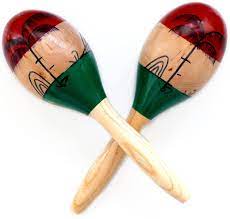
When two colors tango, untold images fill my brain.  Pair up red & green and I’m ready to wrap presents.  Pair up light blue & cream and I’m lounging on a beach in Hawaii, frosty piña colada in hand.  But maybe you’re different.  Maybe you celebrate Hannukah (in which case you should lobby for blue & silver traffic lights).  Or maybe your world of red & green is simply something other than Christmas.  Strawberries.  Tennis courts.  Those colorful maracas you hear a-shake-shakin’ in a Latin band.  A dozen roses.

“Cha-cha-cha!”

If we were talking about single colors we’d be back in elementary school, wouldn’t we?  Green as the grass, red as the fire truck, orange as the pumpkin, and so on.  Not a lot of fun in that.  Not to mention, a single color dancing the tango by itself would be awkward.  But two colors?  Now… now we’re getting closer to a barrel of monkeys.

What do you see here?

Psychologists like their Rorschach inkblots well enough, but two-color tangos would be a more interesting reveal.  Tell the patient to close their eyes and concentrate.  Now hold up a card half-white & half-orange and say, “Okay, open your eyes.  What’s the first thing you think of?” Creamsicles.  Blue & yellow card?  Swedish Flag.  Purple & red? Sunset.  You get the idea.  But that’s just me.  My morally straight brain sprints to morally straight images.

A “black-and-white”

Let’s put a thug in the same psychologist’s chair.  He’s got “better things” to do but somehow we’ve convinced him to take the two-color tango test.  He doesn’t even have to concentrate.  Black & white?  The police car headed his direction.  Black & gray?  His favorite handheld weapon.  Black & red?  Brimstone and fire in the afterlife known as Hell.  Creepy, right?  At least you have him in a chair instead of out on the streets.  Might want to summon more psychologists for further evaluation.

My version of bliss

The irony of my thug friend (foe?) is black & red is my favorite tango; more vivid than my red & green Christmases.  I’m a nut for licorice, you see.  Always have been.  Love the whips, twists, shoestrings, Australian, salty, All-Sorts.  You name it as long as it’s black or red.  I prescribed myself thousands of Good & Plenty “pills” as a kid.  I’ve eaten enough black licorice in my life to risk the consequences of this poor fellow’s habit.

[Author’s note: Any licorice with a color other than black or red does not deserve to be called “licorice”. Green Apple?  Blue Raspberry?  Watermelon?  B-L-E-C-H.  Those colors are fully inferior to the candy.  They’re also trying to tango solo, which we’ve already established as awkward.]

“Go Bucs!”

Despite my overconsumption of black & red licorice, live and breathe I continue to do.  And my two-color tango images are unfailingly consistent.  Play me a game of checkers?  Pass the licorice.  Red bell pepper and black olive added to my salad?  Where’s the licorice?  Tampa Bay Buccaneers on Monday Night Football?  Fill the snack bowl with licorice.  Venomous eastern coral snake?  WHOA… hang on now.  No licorice image there, not at all.  More like get me the hell outta my brain.

Before I get the coral snake outta my brain, let me pass along a PSA.  The coral snake and the harmless scarlet king snake look remarkably similar with their bands of black, red, and yellow.  If you come across one of these bad boys, try to remember this little “nursery rhyme”:

  • Red Touch Yellow – Kills a Fellow
  • Red Touch Black – Venom Lack
  • Yellow Touch Red – Soon You’ll Be Dead
  • Red Touch Black – Friend of Jack

Fun, huh?  Better yet just look at the snake’s head.  If it’s black, run away.  FAST.

I planned to finish this post with three-color tangos and the images I came up with there.  After all, traffic lights just as often go from green to yellow to red.  Bell peppers.  Macaws.  Skittles candies (“Taste the Rainbow!”)  But let’s be honest; I don’t have those images at all.  Instead, I’m fully focused on speeding through the intersection before the signal wants me to stop.

Some content sourced from Wikipedia, “the free encyclopedia”.
Ice Cream Dreams

Before our vacation in South Carolina last week, I took measures to ensure I was fully prepared for the low country’s late-May heat and humidity. I packed a reliable SPF 30 sunscreen. I purchased a couple of bottles of spray-on insect repellant. I added several hats to the wardrobe. I even brought a USB-chargeable mini-fan, which hangs around the neck, operates at three speeds, and adjusts to just the right angle. But guess what? I didn’t need any of these items in South Carolina last week (for the weather gods were merciful). Instead, I should’ve left it all at home and just brought my bed.

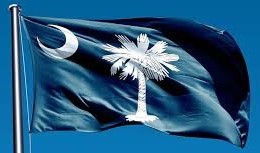
South Carolina is nicknamed “The Palmetto State”

Is it me getting older or can we all agree on the exceptional value of a good night’s sleep?  For me, it’s a day of brain fog if I don’t get a quality 7.5 hours in la-la land the night before.  When I’m up past midnight (which is never my intention), I know I’m going to pay dearly at 7am the next morning.  Because, I wake up without fail (and without alarm clock) every morning at 7am.  Even if I don’t hit the hay until 3am.

 Stay in a hotel – any hotel – and after one night you’re reminded how the circumstances of quality sleep are frustratingly beyond your control.  My wife and I booked a charming historic inn our first night last week, and what-do-you-know, our bed was just as historic.  The seemingly elegant four-poster contained a lumpy mattress with a few squeaky springs, and a decided slope from my side of the bed to my wife’s.  Throw in the two-hour time change and we tossed and turned like a washing machine’s most violent agitation cycle.

The second day we drove over to Charleston (half asleep), where you’d think a Courtyard-by-Marriott room would deliver the Z’s just a little bit better.  No such luck.  Our fifth-floor corner space included two windows with not-so-blackout curtains.  Our first night’s sleep was interrupted by the hotel fire alarm, triggered because one of the elevators malfunctioned.  The rest of our night’s sleeps were interrupted by the several amped-up bachelorettes and wedding parties resident in the hotel.  Finally, we were adjacent to the fire exit stairs, with a bangy access door used constantly… because of the malfunctioning elevator.

Once upon a time, I was happy just to afford a bed to sleep in.  But over the years I’ve developed a respect for the crucial elements of quality sleep.  A comfortable mattress is worth the max you can afford to pay.  A mattress where you can raise/lower the head and foot is even better.  Make the room pitch black (which in our case includes a small piece of cardboard to block the fireplace pilot flame).  Adjust the temp to the high sixties °F.  Invest in a white noise machine.  And table the electronic devices and alcohol several hours before bedtime.

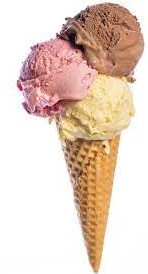
If there was a plus side to my Charleston sleep, it was this.  We discovered a very good ice cream place within walking distance of the hotel.  Don’t know about you but ice cream does wonders for my sleep.  Specifically, my dreams.  Maybe it’s the sugar or maybe it’s just the late-night munchies, but I’m guaranteed all kinds of REM-sleep adventures when I’ve had ice cream.  Some are haunted-house scary, others earn a movie-theater R-rating, and still others are a jumbled hodgepodge of individual memories making no sense when thrown together.  Whatever the subject, my ice cream dreams are a ton of fun.  They also disappear from memory as fast as the ice cream did the night before.  I’m not one of those who greet you at breakfast with, “You’re not gonna believe what I dreamed about last night!”  Because I’ve already forgotten.

Dreams are the topic of an entire post and alas, I’ve already used up my typical word count this time around.  But let me leave you with some dreamy trivia.  The average person enjoys three to five dreams a night.  Like me, most people quickly forget their dreams the moment they wake up.  Dreams last longer as the night progresses.  The older you get, the less you dream.  Finally, for all we know about the brain, we know next to nothing about dreaming.

I can’t fit a bed in my suitcase so I already know the next time I travel means quality sleep stays behind.  But maybe I’ll pack a little ice cream on dry ice.  If I can’t get my usual dose of Z’s, the least I can do is enjoy a forgettable sweet dream or two.

Some content sourced from Wikipedia, “the free encyclopedia”.

Polishing the Pearls

Twice a day, my toothpaste tube and I do battle.  When I take the tube out of the medicine cabinet and realize there’s only a little bit left, I can see it smirking as if to say, “You’re not getting any more out of ME!”  Yeah, right.  I just flatten it from one end to the other (I recommend a hairbrush here), forcing every last bit of paste to gather at the top, ready to launch.  Then I take off the cap and squeeze like crazy.  It’s a good workout for the hands, and a mindless challenge to extend the life of your toothpaste.

Speaking of toothpaste – yep, that’s my topic today – here’s a really good trivia question.  In the Roald Dahl classic, “Charlie and the Chocolate Factory”, what did Charlie’s dad do for a living?  He screwed the caps onto toothpaste tubes… before machines were invented to do the job for him.  (He also died before the first paragraph and was never part of the story, so it’s a little weird I remember that bit.  But I digress.)

Quick, name the first ingredient you think of in toothpaste.  Flouride?  Not a bad guess, but did you know fluoride makes up only a tenth of a percent of toothpaste?  That’s like a pinprick on the tip of your finger.  Flouride is potent, my friends.  Good for healthy enamel but only in itty-bitty doses.  Keep those chemicals close, but not too close.

Was your first ingredient surfactants?  A surfactant is basically a “foaming agent”, which helps distribute the paste around the inside of your mouth, which translates to better cleaning.  Surfactants remind me of those animated scrubbing bubbles you’d see in TV commercials, whirling around the bathtub surface.  You also find them in shampoos and conditioners.  Without surfactants, most of the hairs on your head would get clean and conditioned, but others would be left high and dry.

“Minty fresh!”

How about flavorants – you know, peppermint, spearmint, wintergreen, or cinnamon?  If flavorants were the first ingredient you thought about with toothpaste, go directly to Jail (i.e. do not pass GO, do not collect $200).  Flavorants do zilch for your teeth.  They just make brushing a more pleasant experience and fool you into thinking you have a fresher mouth when you’re done.  You might as well chew gum.  The sugarless kind, that is.

Okay, let’s cut to the chase.  The primary ingredient in toothpaste is abrasives (and if this was your answer, you win a free dental drill).  Abrasives make up 50% of what’s inside the toothpaste tube.  They’re “designed to help remove plaque” (remember that phrase).  Think of abrasive-laden toothpaste as liquid sandpaper.  Abrasives are the reason you don’t want to swallow toothpaste.  And don’t brush too hard either.  With enough pressure, these bad boys would be happy to remove your enamel.

Toothpaste also has grit

I could list even more toothpaste ingredients (ex. antibacterial agents, whiteners, re-mineralizers), but let’s just agree: there’s a big, diverse party going on inside the tube.  Now for the bad news.  Toothpaste has no significant impact on the reduction of plaque – so says certain clinical studies. That’s why abrasives are described as “designed to help remove”.  That’s a sneaky way of saying they just keep things in check until your next appointment with the dentist.  Sorry (Charlie), no amount of brushing can replace those nasty power tools your hygienist has so much fun using.

For all my talk about toothpaste ingredients, the brand I use has very few.  Earthpaste (“Amazingly Effective!”) has no fluoride, no foaming agents, and almost no flavor.  In fact, Earthpaste has only four ingredients – water, clay, salt, and essential oils.  It’s like brushing with mud.  Wait, it IS brushing with mud!  Just as effective, without the chemicals (subtle plug).  You’ll find it on Amazon.

So all this talk about toothpaste may be important, but so is getting every last bit out of the tube.  And there may finally be a solution to that battle.  The very smart peeps at Massachusetts Institute of Technology (MIT) have developed an edible product called LiquiGlide.  It’s invisible (which okay, is a little disturbing), and it’s designed to coat the inside of a container so the contents will completely empty with just gravitational pull.  Can you imagine?  No more flattening, squeezing, or hand workouts.  Just upend the tube and 100% of the product comes pouring out.  Get-your-money’s-worth people like me silently rejoice.

LiquiGlide’s proof is in the pudding, er – ketchup.  No more smacking or shaking the bottle.  No more “An-ti-ci-pay-yay-tion” (for those of you who remember the 1970s Heinz jingle).  Our future ketchup bottles and toothpaste tubes will be transparent – and empty – by the time they head to the recycling bin.

Unfortunately, I’d have to give up my Earthpaste and move to Europe if I want to experience the benefits of LiquiGlide.  (The company has no immediate plans to sell its products in North America).  That’s not gonna happen, so until further notice you’ll find me in the bathroom, doing battle with my toothpaste tube.  It’s not so much about getting my teeth clean.  It’s about getting my money’s worth.

Some content sourced from the CNN.com article, “How MIT could help you pour ketchup”, the CNN.com article, “Colgate’s new toothpaste tube…”, and Wikipedia, “the free encyclopedia”.

Tale of the Little-Dog

When my son and his wife visited with their daughters last week, the consensus for dinner was hamburgers and hot dogs on the grill.  These choices were noteworthy in that I honestly can’t remember the last time I ate a hot dog.  Sweet Italian sausage?  A couple of times a month cut up into a stir-fry of vegetables.  Beer brats?  Also delicious, hot off the grill with a little mustard.  But a hot dog is child’s play by comparison.  Or should I say, a “dachshund sausage”?

It’s true.  The Germans, who by all accounts can take credit for the invention of the hot dog (five hundred years ago!) nicknamed their frankfurters “dachshunds” – or “little-dog” sausages because, well, they looked exactly like the dog breed.  The only history Americans claim is the re-nickname “hot dog”.  Even the hot dog bun – which really took hold at the Chicago World’s Fair in 1893 – points back to the Germans, who always ate their sausages with bread.
Are hot dogs a staple in your diet, or like me are they simply a distant memory?  If they weren’t hot off the grill in the backyard or at a summer picnic, perhaps you had one at a baseball game (but not so much football or basketball, go figure).  You’ve probably also seen hot dogs on the midway at carnivals and county fairs.  Wherever you get your franks today, they’re just not as likely to come from established restaurants.

In the 1970s, America seemed to have hot dog stands on every corner.  The most popular of these was the distinctive drive-thru Der Wienerschnitzel’s, but you also had – at least from my California-based memory – Pup ‘N’ Taco, Ben Franks, Tail o’ the Pup, and the walk-up Hot Dog on-a-Stick booths you’d find at amusement parks.  Today’s retail hot dog is at a Sonic Drive-In or the food court at Costco.  If you live anywhere near New York’s Coney Island, you can also include “Nathan’s Famous”, or at least the annual hot dog eating contest of the same name.

A hot dog may be “a cooked sausage eaten in a long, soft piece of bread”, but its secondary meanings are less definitive.  “Hot Dog!” is something you used to say when you were VERY happy about something else (“used to”, meaning sixty or seventy years ago).  A “hot dog” is also a person “who makes fast, skillful movements in skiing, snowboarding, or surfing to make people notice them”.  That last definition still stands.

Speaking of “used to say”, we also used to sing about hot dogs, didn’t we?  Oscar Mayer’s jingle convinced us we should BE hot dogs (so everyone would be in love with us).  But the better song came from Armour, which asked us what kind of kids eat Armour hot dogs?  Per the lyrics, “…fat kids, skinny kids, kids that climb on rocks… tough kids, sissy kids, even kids with chicken pox…”  Today’s version of the Armour jingle would probably be censored just for using the word “kids”.

“I wish I had a million dollars. HOT DOG!” (Courtesy of Paramount Pictures and “It’s A Wonderful Life”)

Hot dogs will always be a childhood memory more than a dietary preference in my book.  My mother, raising five hungry boys, developed several dinner recipes when time and ingredients were in short supply.  These included canned baked beans and weenies (two ingredients = dinner!), and a truly odd creation from the Betty Crocker cookbook made up of hot dogs, mashed potatoes, and cheese (three ingredients!).  Whether it tasted good or not – I honestly can’t remember – dogs, mash, and cheese conveniently covered the protein, carb, and fat categories, all in one broiler-blasted casserole.

The Oscar Mayer “Wienermobile”

My most vivid childhood hot dog memories are not the dinners mentioned above.  Instead, I can’t forget snacking on raw hot dogs from the refrigerator (which sounds awful now, but hey, I was a kid).  My mother was faithful to the Oscar Mayer brand so I ate a lot of their hot dogs raw.   Speaking of Oscar Mayer, here’s the better memory.  They built a motorized advertisement which to this day may be the coolest vehicle on wheels.  The “Wienermobile” cruised the streets of Los Angeles, stopping every now and then in a parking lot so you could view it up close.  The driver handed out tiny plastic replicas of the vehicle, appropriately labeled “Weenie Whistles”.

(Courtesy of Walt Disney Pictures and “The Santa Clause”)

Let me conclude with a solved hot dog mystery.  Your grocery store sells most brands in packages of ten.  They also sell hot dog buns but in packages of eight.  Why?  Because hot dogs weigh about 1.6 ounces, which makes a package of ten a convenient sale of exactly one pound of meat.  On the other hand, hot dog buns are baked in trays of four, which work best with conveyor belts and processing.  An odd number of buns – trays of five – is a model of inefficiency.  So until one or the other manufacturer changes their standard, you’ll always have leftovers for snacks.  Or better yet, for your dog.

The hot dogs I served my granddaughters last week were comically advertised as healthy: no fillers, no preservatives, and so on.  They weren’t very good.  Maybe the worst part of a hot dog is what makes it taste so good?  Or maybe hot dogs have simply lost their appeal to me?  No, wait, that can’t be true.  Anything my granddaughters ask me to eat has instant appeal.

Guess I haven’t eaten my last little-dog sausage just yet.

Some content sourced from the National Hot Dog and Sausage Council (NHDSC) website, and Wikipedia, “the free encyclopedia”.