Cooler Water Cooler

In tiny Beaver, Utah – aside the I-15 and just south of the I-70 juncture, you’ll find a Chevron gas station (still) offering full-service at the pumps. Well, sort of full-service. You fill your own tank, and as soon as you do, the attendant comes over and cleans your windshield. He also checks under the hood. When all’s said and done, he doesn’t charge you extra nor will he accept a tip. It’s a nice throwback to a time when self-service was the exception. But these days we do just about everything for ourselves, don’t we? Including bottling our own water.

I have to admit; this is a new one on me: filling my own water bottle from a public dispenser. Sure, I already know the drill at the gym (just before I navigate the zoo of torturous cardio equipment). My gym’s water machine beckons me to place my bottle under the spout, auto-fills to within an inch of the top, then magically shuts off before overflowing. There’s even a digital counter tracking how many plastic water bottles we avoid in the process. Last I checked, my gym’s counter was into the several hundred-thousands.

Just this week – the “new one on me” – I noticed the same setup in the airport boarding lounge in Los Angeles.  Two self-service machines are built into the wall adjacent to the restrooms.  In the short time before my flight, at least three dozen people lined up and filled up, as if they’d been doing this for years.  I earn the old-timer label for thinking there should’ve been a drinking fountain on the wall instead.  Or a pay phone.

Like the full-service treatment in Beaver, Utah, self-service water dispensers are free of charge.  But that’s about to change, if you believe a recent Wall Street Journal article.  The water products of Coca-Cola (Dasani, Smartwater, Vitaminwater) or Pepsi (Aquafina, Life Water, Evian) may be your thing, and you’re about to get them – for a price – through self-service water dispensers.  For a little more cost, you can even carbonate your water or add fruit flavoring.  Safe to say, “plain water” (i.e. the brand-less, cost-less, out-of-the-tap option) may soon be hard to find in public places.

Now then, the facts.  Water is consumed by the (plastic) bottle more than any other beverage except soda.  America alone accounts for 42.6 billion bottles a year (the world: 200 billion bottles).  That spills to thirty-two gallons/person/year.  The cost?  $100/person/year.  You forgot that line item in your personal budget.  Put it just below the cost of your Starbucks habit.

Here’s another breakdown of the beverage.  Americans consume 2.2 million bottles of water every day, or 90,000 every hour, or 1,500 every minute.  No wonder proprietary self-service machines are the latest trend in airports (and just about every other place where people gather).  There’s a serious market for brand-name H20, and the manufacturers know today’s eco-friendly consumers prefer to drink from their own bottles.

[Nagging Thought for the Day:  There are more than 125 brands of bottled water across the globe; 125 unique recipes for a drink with essentially two ingredients.  What makes one different or better than the next?  For that matter, with reasonable filtering, what makes one different from the fill you can get from your taps at home?]
I wish I’d thought of self-service water dispensers myself (I also wish I’d “invented” bottled water).  I’d be drinking in the riches. These days, “dispensed” water is psychologically preferable to “tap” water, even though some calculations put it 2,000 times more expensive.  Are we just suckers for brand names?  Hey, maybe I’ll invent brand-name oxygen.  Oh wait – that ship already sailed…

Acqua di Cristallo

Here’s one more stat to quench your data thirst.  The most expensive of those brand-name waters – Acqua di Cristallo – costs $60,000 a bottle. The elixir (“water” doesn’t sound rich enough), is sourced from France and Fiji, comes in a 24-karat solid gold bottle, and contains a small sprinkling of gold dust.  Acqua di Cristallo might as well be advertised as a panacea.

Lucky for you, maybe one day Acqua di Cristallo will be offered through public self-service dispensers.  Might want to call your credit card company and increase your limit.

Some content sourced from the Wall Street Journal article, “Coke and Pepsi Want to Sell You Bottled Water Without The Bottle”, and the CreditDonkey article, “Bottled Water Statistics: 23 Outrageous Facts”.

Snacks, Snooze, Repeat

My wife and I are adjusting our sleep schedules several days ahead of an upcoming trip to Europe. The first night we went to bed an hour earlier than usual, the next night two hours earlier, and so on. Our destination is eight hours ahead of Colorado, so who knows if this fool-the-body ploy pays off when we get there. It’s all about fending off Mr. Jet Lag.

Courtesy of lifehacker.com

Sleep – quality sleep, that is – depends on almost too many factors to count. You’ve heard the guidelines before.  Do you go to bed at the same time every night? Do you get a minimum of seven hours?  Do you have a comfortable mattress? Is the room temperature cool-but-not-too-cool?  Can you “black out” your bedroom, including every light except the little green one on the smoke alarm? And speaking of light, do you wind yourself down well before bedtime, without screens or headphones or anything else to keep the brain humming?

The list goes on, of course. What did you have for dinner; when did you have dinner; did you have alcohol or dessert too close to bedtime; did you take any meds; how and when did you exercise – they all mess with sleep. And if your sleep really is a mess, you have a convenient excuse in any one or more of these factors.  But hang on.  Someone (or some-ones) claims to have a better approach now.  What if your quest for quality sleep hinged on only one factor?

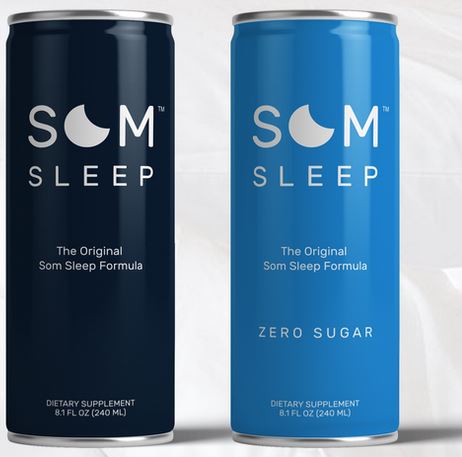
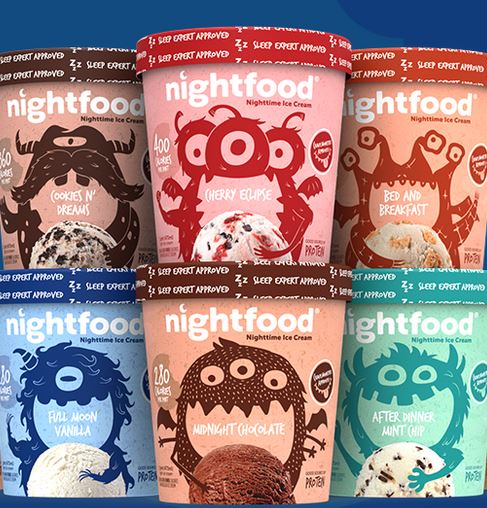
Meet the latest trend in sleep aids: “pre-bedtime” snacks!  Choose from a pint of ice cream, a handful of chocolates, a creamy drink, and others.  They’re all concocted to show you the way to better sleep.  Nightfood’s ice-cream pints are carefully advertised as “sleep-friendly”.  Nestle’s “Goodnight” candies subtly recommend you “enjoy… 30-45 minutes before you’d like to drift off to dreamland”.  Som Sleep’s products innocently ask you to “drink 30 minutes before you are ready to sleep”.

Am I the only one in the room with a terrified look on his face?  I can hear myself already.  “Time to go to bed, honey…. oh wait!  You forgot your delicious pre-bedtime snack.  Don’t you want a good night’s sleep?”  After reading a little about these “foods”, my first thought was not, “how do they taste?”  My first thought was not even, “I wonder if they work?”  NO; my first thought was, “won’t they become psychologically addicting?”  Think about it.  Doesn’t really matter what’s included in the ingredients (i.e. melatonin, magnesium, glycine).  Doesn’t even matter how much you consume.  Rather, if you decide you’re suddenly getting a better night’s sleep, won’t your pre-sleep snacks turn into pre-sleep dependence?  Snacks.  Every night.  For the rest of your life.

For sheer entertainment value, visit the websites and peruse the product claims.  Nightfood says they’ve “removed/minimized stuff that in most other ice creams can be sleep-disruptive” (namely sugar and fat).  Nightfood also says their product “… does not contain sleep-aid substances or drugs.”  Finally, Nightfood does not suggest people eat ice cream as a sleep-aid.  O-kay, anyone else utterly confused?  I can get past an ice cream with no sugar or fat (not that I’d ever eat one), but if Nightfood doesn’t contain sleep-aids and I’m not even supposed to eat Nightfood as a sleep-aid, doesn’t it kinda-sorta lose its purpose in life?

The sad reality is that one-third of us get less than the recommended daily minimum of sleep.  Probably another third is too attached to their handheld devices; brains revving day and night.  The rest of us – save those few quality-sleepers – are getting something else wrong.  But if that’s the truth, instead of snacking on chemicals (er, “food”), why not just adjust a sleep factor or two and see if you can do better?

Despite my soapbox, maybe you’re still looking for the quick fix (to take up pantry space beside your 5-Hour Energy Shots).  Guilty as charged?  Go ahead then; buy into the hype.  As Nightfood jingles, “…turn on TV, grab spoon, do your thing, sweet dreams!”  You can almost see the company’s founders sleeping – er, laughing, all the way to the bank.

Some content sourced from the Wall Street Journal article, “A Late-Night Snack to Help You Snooze?”

Hot Little Numbers

Yesterday, I became reacquainted with “hack” – a harsh bit of a word.  On the one hand, hack is when you take big chops into a tree with your ax.  Nothing wrong with that. Hack is also whether you can cope with a given situation (i.e. “can you hack it?”).  Nothing wrong with that either.  But then again, hack is uncontrollable coughing caused by a bad cold.  Or even worse, hack is breaking into a computer or account, with not-so-nice intentions.

I experienced not-so-nice hack yesterday.  My wife and I are waging war with a cold we’ve had since Easter.  Together we’re coughing up a storm (sounds of thunder).  More to the subject at hand, our bank left a tidy little message on our answering machine last night. “…do we have reason to suspect fraudulent charges on our Visa card?”  So, I logged onto our account and scrolled down to the last couple of days of activity.  There the little devils hid – six small charges, all for the food-delivery service “DoorDash“.

Have I ever used DoorDash? (No.) Do I even know what DoorDash is? (I do now.) I have no use for DoorDash, nor them for me.  We live in the country; wide, open spaces in every direction.  The only way we get pizza delivery is to agree to meet the driver halfway.  The only way we get trash service is to pay “fuel surcharges” on top of the monthly bill.  We’re too far out for DoorDash.  Just for grins, I entered our address into DoorDash’s website and up popped my options.  Cool!  For thirty days I get free service on delivery orders above $10.  Not cool – I have zero nearby restaurants offering DoorDash.  Guess its pizza for dinner again tonight.

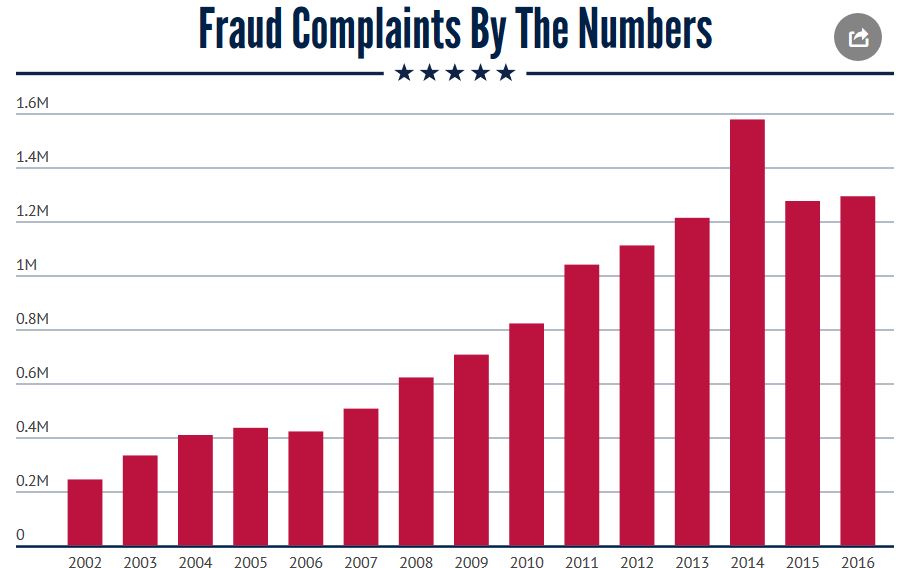
Data Source: FTC Consumer Sentinel Network Data Book 2016

But I digress.  Back to the hack.  To my bank’s “credit”, they handle minor fraud efficiently.  They noticed the hack before I did (bless their computer algorithms).  Once I called back and denied any knowledge of DoorDash, they blocked my card and promptly dropped a new one into the mail.  A few days from now, I’ll be off and charging again, the only real inconvenience being to update my linked accounts.

I wish I could leave it at that.  After all, this incident won’t cost me a penny.  Those who pay annual fees and interest charges unknowingly pay the cost of credit card fraud as well ($40 billion every year).  I just can’t get past the fact someone out there enjoyed six free DoorDash deliveries courtesy of my credit.

The scammers are winning this game hands-down. A physical credit card allows crazy-easy access to its critical information.  Take your pick as you regularly surrender your data: 1) through your phone, 2) through your computer, 3) through self-service devices (i.e. gas pump, ATM), and 4) by simply handing over your card at a place of business.

Left: actual card slot. Right: Skimmer data-collection “cover”.

My DoorDash friend picked up my numbers through one of the last two ways – I’m sure of it.  I never give out my credit card over the phone, and the websites I use have some form of verifiable security.  Alas, self-service devices and handing over cards are no-win situations.  With the former, you encounter skimmers (discrete data-collection devices placed over card readers).  With the latter, you risk the merchant or waitstaff copying your numbers when out of sight.  They probably use a skimmer as well.

The only real solution to credit card fraud – sad to say – is not using the card at all.  Pay for your gas with cash.  Write a check for the cash you would’ve taken out of the ATM.  Technology is improving the situation (i.e. Apple Pay, table-side pay systems), but until these approaches become the norm, you’ll continue to deal with situations where your card goes out-of-sight.

Frankly, I’m not asking for much here.  All I want is my bank to collar my DoorDash friend and let me know he/she faces the consequences of their actions.  But I know my little scammer is not worth their time.  Instead, he/she keeps getting free food, and annual fees and interest rates tick up a little bit more.

My brand new Visa card arrives later in the week.  I’ll activate it and update my linked accounts.  The inconvenience to me amounts to less than thirty minutes.  But the annoyance of it all – well – that feeling lasts a whole lot longer.  I just hope, by the time DoorDash gets to my neighborhood, I’m no longer perturbed and willing to give it a try.

Hope they’ll take cash.

Some content sourced from the March 2019 Upgraded Points article, “The Best Ways to Prevent Credit Card Fraud & Theft”.

Smile for the Camera

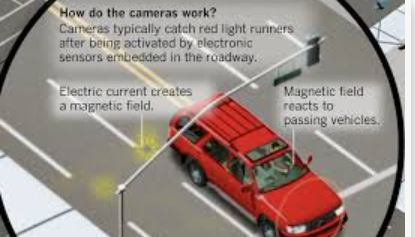
I could dedicate an entire blog to Americans and their deliberately awful driving habits. Think about the last time an impatient driver just about kissed your rear bumper – practically screaming you over to the slow lane (and how you stayed in the lane anyway just to make ’em madder).  Or how about merging onto a rushing interstate highway, only to be denied by drivers who want to “win” the right lane?  Lately, a new habit takes the checkered flag for most-annoying: drivers sneaking through intersections when the light just turns red.  You know these evaders; the car dashing through after the car sneaking through on the yellow.  For these drivers, it’s time to smile.  Colorado Springs has installed red-light cameras.

Red-light cameras have been around for years, but our fair city decided it’s finally time for the photo ops.  At two of our busiest intersections, the city just put the finishing touches on the cameras.  For the next thirty days they’ll kind of test the waters; see how much action they get.  No tickets, just photos.  To that I say: forget the thirty-day trial and begin the citations.  Eleven hours after the cameras started snapping last Tuesday, the city had already recorded sixty-two red-light violations.  Sixty-two!  Do the math and you amass 4,000 violations per month.  Do the math again – at $75 per violation – and you bank $300k.  That’s two cameras and only two intersections.

This photo shoot will get fun in a hurry.  After the thirty-day trial the city adds another two cameras at another two intersections, with another thirty-day trial, and so on and so on.  The entire program is easily funded by all those $75 fines.  I don’t know the cost of a red-light camera, but at the rate we’re going we’ll have the entire city camera’d in no time.

My opinion on red-light cameras is hardly below board.  I think they’re a wonderful use of technology.  Not a day goes by where I don’t witness an “extra” car in the intersection.  When it happens, two thoughts come to mind.  First, it’s a miracle we don’t have an accident.  Second, the violator bought into this opportunity long before it happened.  Think about it.  The light turns red at the same time the cross-light turns green.  There should be an accident.  But the red-light violator banks on the delayed reaction of the driver accelerating on the green.  He/she sneaks through before the opposing car really gets going.  It’s a gamble on human lives – every time.

Speaking of the $75 fine, a moving violation is supposed to set you back $150.  Yet getting caught by a red-light camera doesn’t count as “moving”.  Care to explain that?  Aren’t you “moving” as you deliberately break the law?  Regardless, they’re making this program as friendly as possible.  The police review the infraction and the photos in all cases.  You must enter the intersection after the signal turns red to be cited.  You don’t even get points on your driving record.

A few years ago, my son got a ticket from a red-light camera in another city.  He didn’t realize his infraction (or so he claims) until the citation arrived in the mail.  Conveniently, you get a URL for the photos so you can see exactly what happened.  The technology is remarkable; five or six pics, including the license plate on the vehicle (front and rear), a full shot of the vehicle in the intersection while the signal is red, and that smile-for-the-camera shot of the driver.  With photos from all angles, there’s no arguing the infraction.

As if to underscore the need for this program in Colorado Springs, last Friday a driver blew through a red light, collided with two other cars, and sent several people to the hospital with serious injuries.  Just happened to be one of the two intersections where the city installed the cameras.  I’d say they got this right.  I’d also say this program is long overdue.  No more “colorblind driving”, people. Red is red.

Sham Sandwich

Back in my high-school burger-flipping days at McDonald’s, I worked countless shifts at the “quarter-pounder” grill, which involved a whole lot of beef. McDonald’s standard hamburger was a little brown disc – barely a tenth of a pound – and you could grill fifty at once like a big array of domino dots. The quarter-pounder, on the other hand, was a real burger. Those big boys required higher temperatures and more real estate; hence their own grill. Even the ever-popular Big Mac – a double-decker of the smaller ones – couldn’t tip the scales like the quarter-pounder patty. But no matter the weight, at least we were cooking up beef (and hooking an occasional Filet-O-Fish). On today’s fast-food menus, beef is getting a little scarcer; nudged aside by… well, the “impossible”.

McDonald’s Quarter-Pounder

“Veggie” burgers have been around in one form or another for the past forty years – mostly a quiet nondescript option at the bottom of the menu. Lately however, they’re starting to crowd the stage alongside beef. Maybe they’re just the same ol’ veggie burger, and today’s consumer is more tolerant because he/she is more health-conscious. But that can’t be true, can it, or I wouldn’t bother covering this topic today. Hey, when the New York Times makes a headline out of Burger King’s latest offering, it’s hard not to notice.

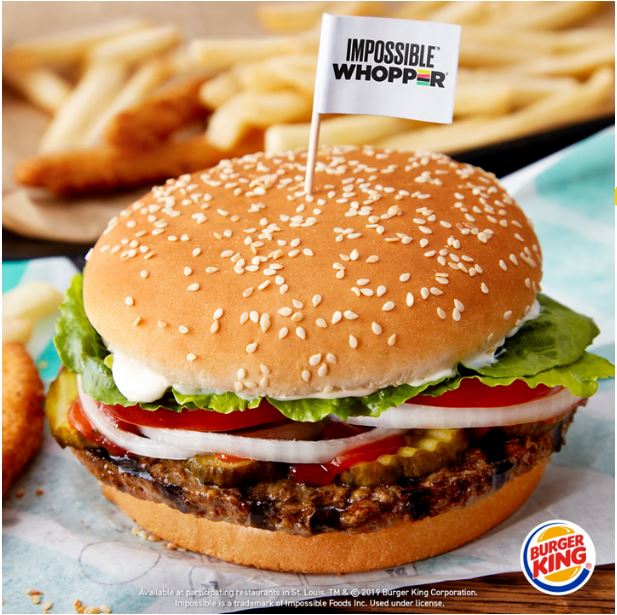
Impossible Foods (IF) is a small but rapidly-growing “burger” maker headquartered in Redwood City, CA. IF’s production takes place in a single factory across the bay in Oakland. After their latest contract, IF executives may be looking for more factory locations. They just signed a deal to add their product to the home of the Whopper. As you should figure by now, the IF burger is anything but meat. Not a “moo” to be heard anywhere in the building.

The Impossible

If we were only talking about Burger King – and only a handful of pilot stores in Missouri and Illinois at that – the “Impossible Whopper” wouldn’t be such a big deal. But here’s what makes me pause. “The Impossible” is also about to appear on every Red Robin restaurant menu in the U.S. (over 500 locations). White Castle already sells an Impossible Slider in all of its restaurants (380). And Carl’s Jr – albeit with a competitor of IF – offers a veggie burger in 1,000 of its restaurants. Every one of these chains prides itself on beef burgers. Yet if the Burger King pilot is a success, we’ll see the Impossible Whopper in over 7,200 locations. What the heck is going on?

A reasonable alternative, and demand from a health/environment-conscious consumer – that’s what’s going on. We finally have a tasty veggie-competitor to the all-beef patty. The Impossible (also a great country song by Joe Nichols, by the way), has the endorsement of not only fast-food chains and the media, but food critics as well. Apparently, one cannot distinguish said imposter from beef. You don’t need so much as a sprig of lettuce on this one, because you’re already getting plenty of “vegetable”.

I could list the ingredients, technology, and environmental benefits of the Impossible, but it’s more fun to watch the company’s informational video. See if you aren’t inspired after spending a couple of minutes with Impossible Foods:

IF puts a lot of science into “beef taste”, and the numbers don’t lie (see below). Less cholesterol and saturated fat. Far fewer calories. And, consuming one Impossible instead of one Whopper saves the equivalent of a ten-minute shower in water. It also saves eighteen combustion-engine miles of greenhouse gases. Look at you, eating fast food with an empathetic nod to Mother Earth.

The Impossible

To play devil’s advocate – despite the healthier ingredients and gentler impact on the environment – the success (or demise) of the Impossible will surely come down to taste. On that topic, I am not yet an expert. In fact, I am a skeptic. On one regrettable visit to Red Robin, I opted for their salmon burger over beef, thinking I was doing my body (and Earth) a favor. Mistake. Is it any wonder Red Robin no longer offers that sandwich?

I can’t use salmon burgers as an excuse not to try the Impossible. We have a couple of Red Robins in the neighborhood, and a local organic foods cafe already has one on the menu. No reason I can’t go down and give it a go. Also, “ground Impossible” will appear in grocery stores later this year (alongside the meats?), so I can even make my own patties. In other words, watch out McDonald’s. This veggie burger is no impossible dream.
Some content sourced from the New York Times article, “Behold the Beefless ‘Impossible Whopper’, and the Impossible Foods website.

Let’s Do the Twist!

My Amazon order history says a lot about my purchasing habits. I am a buyer of needs vs. wants. Pet food. Printer ink. Humidifier filters. But every now and then, a little something nostalgic sneaks into My Shopping Cart. Favorite childhood books for my one-year-old granddaughter.  A balloon-launching catapult to make a Thanksgiving turkey fly (it didn’t).  Italian chocolates from Perugia, also discovered during a year abroad in college.  And just today – on total impulse – a Rubik’s Cube.

Rubik’s Cube – adding a few wrinkles to us baby boomers – celebrates its forty-fifth birthday this year.  Back in 1974 when it was invented (and originally dubbed “Magic Cube”), the 3x3x3 trinket earned our attention for its mechanical magic as well as its almost-impossible-to-memorize solution.

To be precise, there are 43,252,003,274,489,856,000 (that’s “quintillion”) possible positions of Rubik’s colorful squares.  The Cube comes with neither instructions nor answers.  Already solved in its packaging, you can’t help twisting it up into a mess of color.  In our pre-Internet world, Rubik’s Cube required endless gyrations in search of the answer (instead of just, “Hey Alexa”).  But there was something immensely satisfying about the resulting nine squares of single color on each of its six sides.  There was also something tempting about peeling off the colored stickers and rearranging them instead.

Erno Rubik (courtesy of Wikipedia)

Erno Rubik, a Hungarian inventor, was an architect and architecture professor “searching to find a good task for his students” when he completed the Cube’s first working prototype – a mess of wood blocks and rubber bands.  A small plastics company took a chance on its manufacture and the rest is history.  In the first four years alone, two hundred million Cubes were produced and sold.

I was in college (and also an architecture student) when Rubik’s Cube first hit the shelves.  Its perfect symmetry and twisting ability to reinvent its colorful look went hand-in-hand with my interest in building design.  I remember keeping a Cube on my dorm room desk – at first for mindless manipulation; later for successful solving.  Not that I could solve it quickly, mind you.  The world record – an average of five solves – is six seconds.  The world record with one hand (???) is nine seconds.  The world record using only your feet (again, ???) is twenty-two seconds.  My solve is expressed in minutes, if not hours.


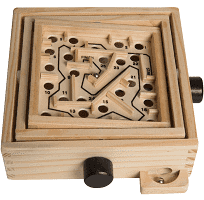
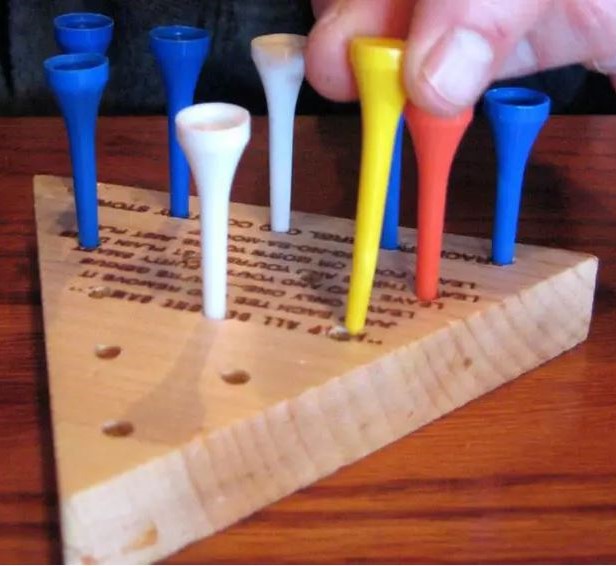
Few puzzles compete with Rubik’s Cube for sheer “can’t put it down”.  But there are a few.  One of my favorites was the wooden double maze, the box-like puzzle with the Etch-A-Sketch dials on the side, maneuvering the steel ball through the walled maze without dropping it through one of several holes.  I devoted hours and hours to that puzzle, always sweating those final tricky turns to the finish.  Another favorite: Marble Solitaire, where you hop-eliminated marbles in search of the perfect solution: a single marble standing proudly in the board’s center divot.  Finally (courtesy of Cracker Barrel restaurants), how about “Triangle Peg Solitaire”, the hop-elimination puzzle with the colored golf tees?  Thanks to that little game, my kids were supremely patient after the dinner order was placed.

With somewhere near four hundred million sold, Rubik’s Cube is considered the best-selling toy of all time.  Its inventive design landed the Cube in the permanent collection of the Museum of Modern Art (MoMA) in 1982.  The Cube also garnered “Toy of the Year” in eight countries, including Germany, France, and the U.S.

GoCube

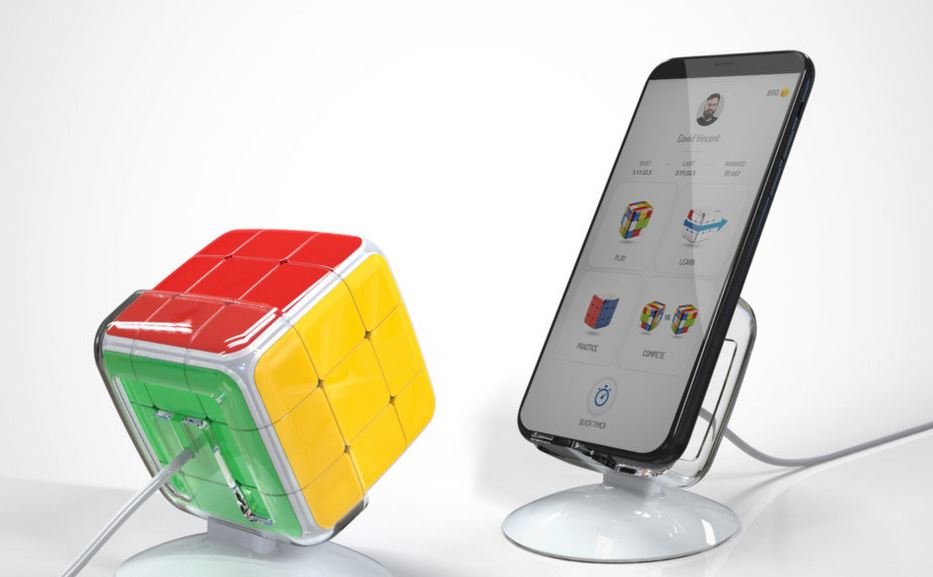
Inevitably, there were attempts to advance Rubik’s design, such as a 4x4x4 version (“Rubik’s Revenge”), or pyramid, dodecahedron, and hexahedron shapes.  But going completely off the rails, look no further than GoCube – a thoroughly high-tech update to Rubik’s.  GoCube is also 3x3x3, but rimmed with LED lights, and contains wireless smart sensors, an embedded gyro, and an accelerometer.  Download the GoCube app to your phone (of course there’s an app), and watch your twists on-screen instead of on the cube itself.  The app guides you to the solution (if you so choose), creates alternative mosaic-looking puzzles, and run reports on solving speed and efficiency.  You can even wage virtual head-to-head competitions.  All for “only” $119.

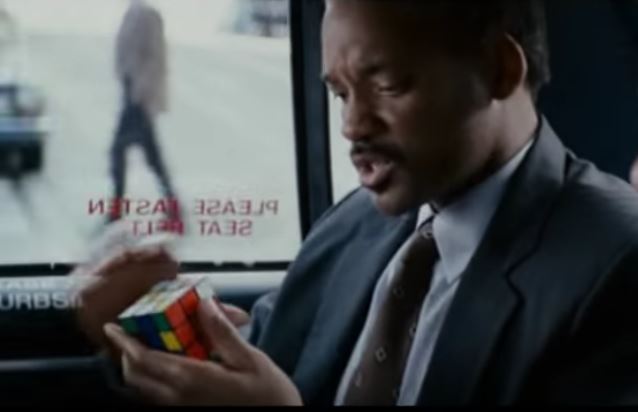
“The Pursuit of Happyness” (courtesy of Warner Brothers)

I’m sure Erno Rubik (and Will Smith) would pooh-pooh GoCube as too much of a good thing.  I would agree.  The app-driven, light-up, hundred-dollar GoCube is over the top, with zero nostalgia to boot.  On the other hand, Rubik’s Cube cost me $4.59 on Amazon.  That’s a sweet deal, and a cheap way to learn how to do the twist all over again.

Some content sourced from Wikipedia, “the free encyclopedia”, and the Wall Street Journal article, “Never Solved the Rubik’s Cube?…”

It’s All in the Cards

Back in the Boy Scouts, my troop-mates and I memorized statements designed to make us better young men. The Boy Scout motto was, “Be Prepared”. The Scout slogan: “Do a Good Turn Daily” (help others). The Scout oath – several sentences stated with a raised right hand (fingers forming the Scout sign) – included obedience to the twelve points of the Scout law. Recently I’ve been thinking about Point #2 of the Scout law, Loyalty; showing care for family, friends, and country.  But what about care for merchants?

Customer loyalty programs – those structured marketing ploys designed to tempt continued shopping at particular businesses – are standard retail procedure these days.  The use of plastic and punch cards, account numbers, or scanned apps is as common as pulling out your Visa.  I get suspicious when a merchant doesn’t have a loyalty program.  It’s all about the points, and the allure of discounts or freebies through accumulated spending.

American Airlines, credited with starting the first full-scale customer loyalty program in modern times (1981), had no idea its “frequent fliers” would become the trendsetters for countless programs to follow.  But the drive for customer loyalty started way before AA.  Anyone who remembers pasting S&H Green Stamps into collection books, clipping Betty Crocker coupons straight from the product box, fishing prizes from Cracker Jack caramel corn, or joining the Columbia House Record Club (“8 CD’s for a penny!”) has dipped their toe into the customer loyalty pool before.

I took a quick inventory of my own customer loyalty and the numbers surprised me.  I carry eight cards in my car.  I have another eleven apps on my phone and another ten on-line accounts.  That’s 29 unique programs, and over 30 if I include the couple of credit cards where my swipes eventually equal cash back.  For someone who rarely shops on impulse, that’s more attention to spending than I’d care to admit.

If I did a little spring cleaning, I’d likely reduce my loyalty programs by one-third.  Many sit gathering dust because I haven’t used the merchant or service in years.  Others accumulate points at a snail’s pace.  Fill my inbox with special sales alerts or saturate my voice mails with pleas to “buy now!”; it won’t matter.  I purchase on my own terms.

Here are two recent loyalty experiences; the reasons I chose this topic today.  Last September we took a weekend trip to Aspen, settling for a Westin hotel in nearby Snowmass (Aspen is over-the-top expensive to us commoners).  When I went to Westin’s website for the booking, I discovered their loyalty program (Starwood) was merging with Marriott Rewards (now Marriott Bonvoy).  Hallelujah – my Aspen getaway gets me points! But not so fast.  Logging into Marriott Rewards, the home page alerted me to the fact the program merge was still in progress, and a Westin stay might not result in Marriott points.  Long story short, I called the hotel, spoke to the front desk, and had them book the reservation for me instead.  Yep, you can still do it the old-fashioned way.  And you still get points.

My other recent loyalty experience involved Nicholas Mosse Pottery (Kilkenny, Ireland).  Mosse makes beautiful handmade plates and bowls and the like, and we’ve been collecting a few pieces at a time since visiting Ireland a few years ago.  Points for me (ha) for joining the Mosse loyalty program from the get-go.  Just this week they alerted me me to my quietly-amassed rewards.  I then purchased a $70 plate for virtually nothing.

My Mosse experience is the perfect example of my casual approach to customer loyalty.  I don’t keep track of points until they equate to something significant.  Sure, I favor certain products and services, but I’d still favor Marriott or Starbucks or Costco without their loyalty programs.  For someone who tracks every penny, there’s something very satisfying in the surprise of unexpected discounts.  That’s how it works best for me.

Here’s my advice.  Don’t let customer loyalty programs drive your spending habits.  If you do, the merchant “wins”, because you’re likely spending more along the way than whatever discount or freebie you end up getting.  Loyalty = showing care; yes, but with retail that should only mean preferring one store over another.  Despite what they’d have you believe, it’s not all in the cards.

Some content sourced from Wikipedia, “the free encyclopedia”, and from the Wall Street Journal article, “Inside the Marriott-Starwood Loyalty Program Turbulence”.

Sleeping with the Fishes

With Chinese New Year and Mardi Gras celebrations going on this month, you can bet the decibel levels around the world are higher than normal.  Orbit the globe and all you’d have to do is step outside your rocket to catch the sounds of fireworks and blasting dance music.  In this “Year of the Pig”, I find it funny my zodiac animal is the ox.  By Chinese definition I’m “hardworking, intelligent, and reliable”.  But forget about my “oxen” qualities for now.  Today I want to explore my alter-identity as a dolphin.

(Work with me a little, okay? Don’t dump me at Sea World or a performance of “The Little Mermaid”; just hear me out.  My dolphin identity has more legs than my ox.)

First, a question.  How’s your sleep these days (er, these nights)?  Getting your 7-8 hours, are you?  Do you hit the pillow at night and next thing you know it’s sunshine and chirping birds?  Do you wake refreshed and ready to tackle the day? If it’s “yes” to every question, you and your body clock are finely tuned.  To spin it with science, you “respect your circadian rhythms”.  But here’s where it gets interesting.  Body clocks aren’t wound the same way person to person, nor are they set to the same time.  One size most definitely does not fit all.  We are Timexes, Seikos, Bulovas, and Rolexes.  So which chronotype are you?

Chrono-what, you say?  If I steered this post towards a biology lesson, you’d start nodding off right about now (not the way to treat your body clock).  Instead, let’s keep it simple.  Chronotype is essentially your preference for waking early or sleeping in.  We all have a degree of one or the other, and we’ve had it since birth.

Let’s find out more about the “animal” within.  Take the following test from Dr. Michael Breus (“America’s Sleep Doctor!”) – thepowerofwhenquiz.com – and less than a minute from now you’ll know your chronotype.  You’ll also understand more about your propensity for sleep.  No question – I hesitated when I came up dolphin (c’mon, Dr. Breus – I could’ve been a lion, a bear, or a wolf!), but admittedly the description is spot-on.  I’m a light sleeper.  Naps don’t help me.  Attention to detail impacts my productivity (and my sleep).  I hit the sack at the same time every night and wake up at the same time every morning.  That’s me.  And that’s the dolphin chronotype.

[Note: the Breus test wants your email to get your animal.  Do it, and then unsubscribe.  Otherwise the good doctor spams your inbox with books, courses, supplements, and other stuff.  You just want your animal.]

To test the validity of chronotypes, I took the Breus test again… posing as my wife.  If my answers for her were correct, she’s a bear (the most common chronotype).  She’s not a light sleeper (Mardi Gras could be booming down the hall and she wouldn’t hear a thing).  She works hard in the day, relaxes at night, and often goes to bed later than I do.  She can sleep later into the morning if she so chooses.  She needs a couple of hours to be fully alert after she rises.  That’s my wife.  And that’s the bear chronotype.

Unfortunately, chronotypes are not as dependable as they sound.  For one, they shift as we age.  For two, they can’t always be respected (i.e. jobs and lifestyle drive us off our body clocks).  Finally, sleep is influenced by myriad factors having nothing to do with chronotypes (i.e. diet and exercise; light levels and sound levels; your dog, who always insists on going out at 3am.)  But chronotypes are built into your DNA, so it behooves you to get to know them a little better.

One last wink of sleep trivia before we part.  You know those nights when you wake up unexpectedly, and you feel completely, utterly out of it?  Like, you can’t even see straight, let alone carry a conscious thought – as if you haven’t slept at all?  That moment is called your circadian nadir; when your drive for wakefulness is at its lowest point.  It happens about two hours before your natural wake-up time.  For me – a dolphin – it’s not as disorienting a moment as most.  But I still feel pretty out of it.  After all, I’ve been sleeping with the fishes.

Some content sourced from the Wall Street Journal article, “Can a Night Owl Become a Morning Person?”

Beyond Repair

Most days, we leave our homes to spend time in other kinds of buildings. We park our cars in the front lot, approach the doors, pass over the threshold, and join the unique subculture within the structure before us. If we work in an office building, we navigate a maze of hallways and elevators before our final destination.  If we traverse an airport, we draw on the stress and frenzy of countless others.  If we worship in church, we assume the quiet reverence of the congregation. And if we enter a hospital for surgery, as I did last Thursday, we expect… we expect… well, we don’t know what to expect in a hospital, do we?

My recent hospital visit deserves a few words.  After all, the only other time I donned the peek-a-boo gown was a-way back in my teens.  This time around (and with medicine advanced another forty years), I was keenly interested in the start-to-finish experience.  My surgery – a routine out-patient procedure – took less than an hour, during which I was entirely unconscious.  You’ll be spared the details since I can’t remember a single one of them.  Let’s just say I’m beyond (the) repair now and recovering nicely.

The hospital experience itself actually began at the doctor’s office, a week prior.  In that “consult”, not only did I learn what I didn’t want to know about my procedure (i.e. worst-case scenarios), I also learned I’d be checking into the hospital at 6am.  Cock-a-doodle-doo, that meant the alarm clock buzzed at 5am.  Remarkably, I wasn’t my surgeon’s first procedure of the morning.  Call me grateful – he warmed up on somebody else instead.

I almost forgot to mention the hospital’s “pre-surgery phone call”, which they calendar between the consult and the surgery.  I thought this conversation was going to be a financial beat-down (as in, “You are able to pay what your insurance doesn’t, yes?”).  Instead the nurse went through a list of do’s and don’t’s in the forty-eight hours leading up to my hospital visit.  Mostly don’t’s.  Don’t use anything in the shower besides antibacterial soap.  Don’t take your vitamins.  No more nightly bottle glass of wine.  No food or water after 10pm the night before.  She might as well have said, “Just come to the hospital now; you can wait in the lobby for the next three days”.

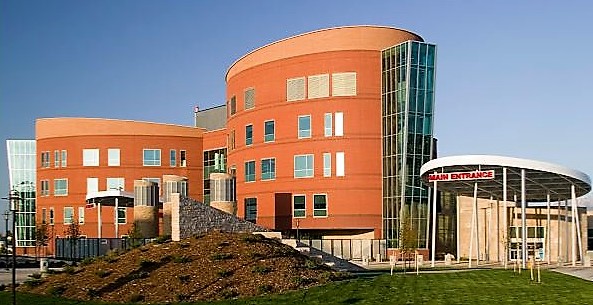
Colorado Springs’ stylish UCHealth Memorial Hospital North

Emergency rooms aside, hospitals are surprisingly low-key at 6am.  My wife and I staggered down the dark sidewalk into the main lobby (after finally locating a parking space not labelled, “For Doctors Only”). The only movement in the vast space was a couple of bleary-eyed attendants at the registration desk and the barista getting the coffee stand warmed up.  Thanks to the “pre” phone call, registration was a breeze.  The guy didn’t even ask for ID (though who would “steal” an out-patient procedure?).  He just confirmed why I was there, slapped on the plastic bracelet, and sent me down the elevator to the “surgery reception area” one floor below.  For the record, I’d like all my future surgeries to be above ground.  The basement is way too close to the morgue.
  

“Surgery reception” is where things get interesting.  After they scan your bracelet (my every move now tracked) they escort you to the pre-op room where you receive the following: 1) A surprisingly comfortable and non-peek-a-boo hospital gown, 2) A stack of six antibacterial wipes each the size of a paper towel, 3) A laminated card with a diagram of the body, 4) A plastic bag for clothes/valuables, 5) A disposable shower cap, 6) A “blanket” (basically a large square of space-age tin foil), and – brace yourself – 7) Two oversized cotton swabs with a generous gob of red goo on each.

The wipes serve as a do-it-yourself bath without the water.  The laminated card points each wipe to a different part of your body.  The shower cap ensures you look your Sunday-best for surgery (photo below).  Finally, the swabs are for your nostrils.  Who knew – your best chance of infection comes from the nose?  The red goo creates a barrier, and… right… too much information.

Dad! You got a tattoo!

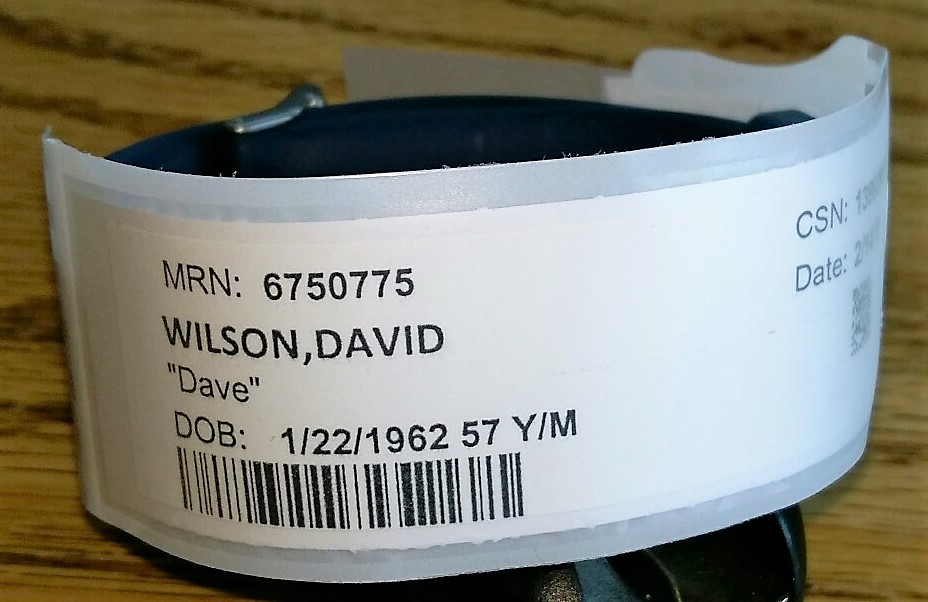
Thanks to a generous dose of the happy gas (a beautiful thing), the remainder of my start-to-finish hospital experience is hazy recollections.  I remember a quick visit from the surgeon, and the tattoo he drew on my arm. (I never thought I’d be thankful for a tattoo.  That check mark and initials remind Doc which side of me he’s cutting into!)  Soon after I was wheeled into surgery and shifted onto the table beneath the white lights.  As for the happy gas, it went into my IV (no mask), so I never saw it coming.  One instant I’m lobbing a few questions at the anesthesiologist, and the next it’s, “nighty-night, Dave”.  I may remember chatting up the nurse in the recovery room.  I may remember fresh coffee and a scone (I love my wife).  I definitely don’t remember getting dressed, heading down the corridor in a nurse-powered wheelchair, and dropping into the passenger seat of my car.  Mission – er, surgery – accomplished.

If this were a Yelp review, I’d give my hospital visit five stars.  I can’t come up with criticisms but then again, the happy gas conveniently dissolved a good chunk of the experience.  Let me just say this instead.  I now have a small, high-tech mesh installed, making me better, stronger, and faster the rest of my days.  The hospital bill won’t be six million dollars, but my new body just might.  In other words, Steve Austin reborn.

Dressed for success

Danger, Will Robinson!

A strategic goal of the Federal Trade Commission (FTC) goes as follows: Protect consumers from unfair and deceptive practices in the marketplace. Unfair and deceptive practices seem to be the strategic goals of several other organizations out there, so I’m glad the FTC seeks to “protect” me. For example, they held a competition called the “Robocall Challenge”, looking for solutions to reduce those pesky and sometimes illegal phone calls we all receive. The competition winners – two software programs designed to intercept and divert – split the $50,000 first prize. The problem? The Challenge was conducted over five years ago, yet robocalls are more rampant than ever today.

courtesy of nbcconnecticut.com

The telemarketing calls of old seem quaint compared to the lifeless computer-generated voices of the last several years. Used to be, you’d answer the phone to a real voice; a sunny greeting in oft-broken English or heavy accent. The caller would say, “Yes, is this David Wilson, please?” or, “Hello Mr. Wilson, how are you doing today?” Who do you know who starts a phone conversation with wording like that? (Even better, when they’re looking for my wife Brigid – pronounced with a soft “g” – they mangle her name in ways I’ve never heard before.)

At least the old telemarketers sold you products or services too good to be true (“Congratulations – you’ve won a seven-day Hawaiian cruise!”), and at least they were human. Today’s robocalls are scams disguised as threats. Pay this tax bill immediately or the IRS will break down your door and haul you off to prison. Upgrade your Microsoft operating system now because your warranty’s about to expire. Buy this health insurance plan because yours doesn’t cover anything. I might listen to these pitches if they came from a real person, but the synthesized voice of a robocall triggers the involuntary reflex “hang up”.

courtesy of cio.com

For me, the most effective solution to robocalls is simply not answering in the first place. If the Caller ID doesn’t convince me it’s a real call, I let it go to voice mail. Sure, my provider offers a call-blocking service, but they charge a fee. Why would I pay good money to manage a situation I didn’t ask for in the first place? The same goes for the better call-blocking applications out there. They’ll make them go away, but it’s gonna cost you.

By the way, not answering in the first place also stops robocall breeding. Just by picking up the receiver or hitting “Answer”, you’ve identified yourself as a number that works, which means the robocall provider sells your number to other providers, and that means more robocalls. Picking up the phone is why Americans received 16.3 billion robocalls in 2018… and that was just January-May.

courtesy of komando.com

Robocalls are a nuisance – sure, but at least they’re not threats to the human race itself. That prospect turns my dreams into nightmares every so often. Whether vast supercomputers, unfeeling combat robots, or microscopic drones, you have to admit – we’re on the precipice of technologies just itching to get beyond our control. Fiction does a great job exploring the possibilities. Read Michael Crichton’s “Prey” (self-replicating nanotechnology), Daniel H. Wilson’s “Robot Uprisings” (just what the title suggests), or simply watch the brilliant 2014 film, “Ex Machina”. The final scene – when Ava walks confidently into the public domain and the credits roll – is perhaps the most chilling moment of the entire movie.

courtesy of IMDB.com

As if to mock this post, my brother-in-law – visiting here at the house as I speak – just received a call on his mobile phone. Another robocall, and probably another scam disguised as a threat. Maybe the call wasn’t by accident, but rather a triggered response from a nanobot keeping an eye on my keystrokes. A subtle message, as if to say: we’re here and we’re watching. Sure, I can plead “no-mo-robo” (which is also the name of a call-blocking company), but I know the robots are only growing in numbers. Better make room then – another highly-intelligent species is quietly joining the party here on Earth.