Identity Crisis

Whenever I go for a workout, I face a choice as I walk through the front doors of my gym. The welcome desk gatekeepers scan the barcode on the back of my membership card to a) make sure I’m really me, and b) keep track of my visits (a motivational data point reported back to me at month-end). Recently, my club gave me the choice to scan my mobile phone instead, using a barcode produced by their app. And there you have it: the emergence of the virtual ID badge.

Please don’t steal this

Given the myriad uses of phones these days, you’d ask why I wouldn’t shred my physical gym card and embrace virtual identity.  Alas, what works at the welcome desk does not work beyond it.  My gym’s lockers still use the physical card as part of their securing mechanism.  Insert card, close door, release key.  Yet I still need my phone to collect heart monitor stats or listen to music.  My identity therefore remains physical and virtual for the foreseeable future.

Workout facilities are a basic example of what’s going on here.  The more sophisticated virtual ID installations reside at the offices of large companies, where hundreds of employees pass through secure doors morning, noon, and night.  Forget “keycards” – how would you prefer to be ID’d in the year 2020? Facial recognition? Iris scan? Fingerprints?  Even those technologies seem dated with what’s being tested in the lab.  How about gait recognition (the way you walk)?  Or microchips – a grain of rice if you will – implanted gently between the thumb and forefinger?  Everyday security is about to advance to a whole new level.

My first couple of office jobs were environments too small to worry about real security.  The front desk attendant could greet every employee who stepped off the elevator by name.  But then I joined Hewlett-Packard (HP) – 50,000 humans worldwide – and even HP’s smallest offices demanded more than a casual glance at those passing through.  In the early years I had a simple name badge, to be clipped on the shirt and worn at all times.  Then I graduated to a photo ID card (w/ lanyard, as dress codes relaxed).  Finally, HP added magnetic stripes to the back of the cards, so we could self check-in the way you now self check-out at grocery stores.

The new identity technologies are rooted in biometrics: your sui generis body measurements and calculations.  With that in mind – and body – your ID is just the tip of the data iceberg.  As long as your heart rate, steps, and movement are measured, wouldn’t your employer want those data points as well?  It’s like having a giant Apple Watch lording over an entire workforce.  In theory your manager could use this information as a gauge of your “wellness” (i.e. stress), but more likely they’ll be interested in how it relates to your productivity.  They’ll also know where you are, when, and for how long, all the day long.

If microchip implants become the norm (something I wouldn’t have fathomed even a decade ago), the benefits are endless.  Swipe your hand at a conference room door for access/reservation.   Swipe your hand in front of the vending machine for a snack.  Check your resting heart rate.  On the other hand (ha), consider; the microchip is always watching, including your taps at the keyboard.  No message – even the one you deleted before sending – is safe from scrutiny.

When my wife and I joined our church last year, we were issued name badges. Wearing them is not so much an expression of membership as it is a convenience to greet fellow parishioners by name. But what if we start using biometrics someday?  Will my pastor know when I’m at church and when I’m not? More importantly, will He know? Ah, let’s be real; the Almighty doesn’t need an ID system.  He already knows when I’m in church and when I’m not.

Some content sourced from the 1/6/2020 Wall Street Journal article, “The Humble Office ID Badge Is About to Be Unrecognizable”.

Heavy Metal

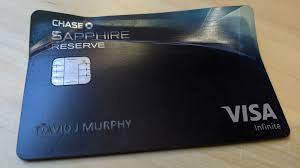
The most appealing aspect of my slim bi-fold wallet is – slipped into my front pocket – I sometimes forget it’s even there. Between the couple of credit cards, insurance cards, driver’s license, and the wallet itself, you’re talking about an item less than a half-inch thick, weighing just a couple ounces. That suits (pants?) me just fine, since I don’t want to be weighed down (or bulged) any more than I have to be. Maybe that’s why I don’t understand the fuss over trendy credit cards made of metal. Then again, my “vanity score” probably wouldn’t qualify me for one anyway.

I guess I missed the memo on metal credit cards. They’re in circulation to the tune of 32 million these days, which sounds impressive until you stack them up against the four billion plastic cards out there. Less than 1% of any total is never impressive, but the forecasters say metal cards will quadruple in the next two years. One reason for the increase: some financial institutions issue metal cards as a replacement for expiring plastic ones. Another reason: consumers are willing to pay an annual fee for the privilege of metal vs. plastic.

The demand for this sort of thing fascinates me. If my financial institution wants to gift me a metal card (whose hefty feel apparently makes me feel special and therefore inclined to spend more), so be it. Just don’t charge me an annual fee. Speaking of annual fees, here’s the extreme example with metal. A by-invitation-only American Express Centurion “Titanium” card will set you back $5,000/year, just so you can carry it in your wallet. You’ll also be tagged with a $10,000 initiation fee. I know several country clubs who’d let me in the door for less than that.

Honestly, I have no problem with holders of metal cards. Those same 32 million people probably pay for vanity license plates and gold-colored trim on their cars. They also pay to avoid standing in line, whether at the airport or at Disneyland. Maybe there should be a website to purchase “vanity fair” in one place. We could call it IFeelSpecial.com

Let’s get the drawbacks of metal cards out of the way up front. They’re high-maintenance. Apple has a titanium credit card, complete with care guide, which advises “… against keeping it in a pocket or bag with loose change… or other potentially abrasive objects”. Metal cards also demand a cleaning solution (like rubbing alcohol), though I suspect that’s more to make them look pretty than keep them charging. Finally, metal cards destroy your shredder if you try to get rid of them when they expire. Buy a pair of tin snips instead.

I’ll own up to having an American Express Platinum card and a Visa Platinum card, but both are plastic, and “Platinum” simply means they have a rewards program. Which brings me to a point of missed opportunity. If issuers are trending towards metal cards, why not make them out of whatever material they’re named for? A platinum card should be made of platinum. A titanium card titanium. Citibank’s Diamond Preferred card? Oooooooo.

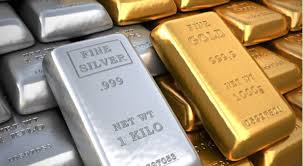
It’s not the craziest idea. Metal cards weigh up to five grams. If Amex issued my Platinum card from five grams of pure platinum, they could charge me $600 (current market value). A Gold card made of gold would be worth almost $1,000. A Silver card made of silver? Okay, that’d only be worth eleven bucks. But think about it. Your card gets declined? No problem. Just surrender it and say, “I’d like the current market value in cash, please”.

[As usual, someone beat me to the punch with my great ideas. If you live in the Middle East, Singapore, or the Czech Republic, you have access to a company called CompoSecure. CompoSecure makes its credit cards out of pure gold.]

Counter to the forecasters, I think metal cards will be challenged by no cards at all. Meaning, pay-thru-phone (i.e. Apple Pay, Google Pay, Venmo) is on the rise, and the security of these transactions – not to mention no need to carry cards and cash – may trump the “special feelings” metal brings. Can you imagine – plunking down your country-club-rate Amex Titanium after dinner, and one of your guests goes, “Really? You still pay with a physical card? How old-school!”

Pretty sure I’m going to miss the metal credit card movement completely (even if they do make better ice-scrapers than plastic). I’ll be jumping straight from my plastic Amex Platinum to digital one of these days.

It would probably help if I set up Apple Pay on my iPhone first.

Some content sourced from the 12/5/2019 Wall Street Journal article, “Once a Tool of the Elite, Metal Credit Cards Now Turn Up Everywhere”.

Media Meltdown

Nope, not that media.

A few weeks ago, I gave Legacybox a try.  Heard of ’em?  Legacy converts old home movies – the ones you may have on VHS or 8mm tapes (or even reel-to-reel) – into clean, digitized formats. I sent Legacy a heaping box of my tapes (reel-to-reel was slightly before my time), and a month later received a single, tiny thumb drive in return. Remarkable really: dozens of hours of precious video memories packed into a bits-n-bytes “box” the size of a fingernail clipper. If I’d chosen a digital download instead of the thumb drive, I wouldn’t have received anything (physical) in return.

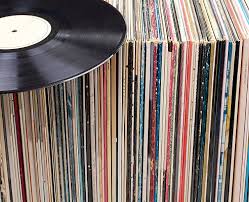
We’ve flash-landed into a digital, live-stream, can’t-hold-it-in-your-hands world of multimedia these days.  Phonograph records, celluloid film, audio and video cassettes, and optical media like CD’s and DVD’s spin firmly in the rear-view mirror; collectables reserved for only the most nostalgic.

[It’s not a stretch to say print media – books, newspapers, magazines, and photographs – aren’t far behind, but that’s another post for another day.]

For those of you born in the last century – literally, not figuratively – let’s eulogize some of these once-upon-a-time physical media formats.

The “8-track”

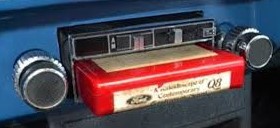
I’m old enough to remember 8-track tapes, are you?  Before I owned my first “LP” or “45” record, I was regularly subjected to my dad’s music choices on his car stereo 8-track player.  In hindsight, there’s something endearing about the bulky, inefficient format of the 8-track tape (except when your only memory is your dad’s music).

The smallish 45 “single”

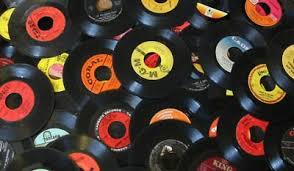
Before the 8-track tape gave way to the compact cassette, I built up a pretty good collection of 1970’s 45 rpm records (“singles”) – 100 or more.  My older brother – who built a sizeable collection of 1970’s 33 rpm records (“LP’s”), understandably disdained my choices in music.  His flavor was “classic” rock (ex. Rick Wakeman, Emerson, Lake & Palmer) while mine was “bubblegum” (ex. Olivia Newton-John, Barry Manilow).  Appropriately, I have Olivia’s “Let’s Get Physical” re-running in my head as I cover today’s topic.

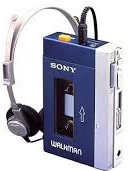
The cool thing about compact cassettes was – of course – you could record things (birthing the concept of the “playlist”).  Just as noteworthy, you could play cassettes in your car’s “deck”.  Your records had to stay home.  It wasn’t long before my 45’s were stashed in the closet and I was all-in on “tape”.  I spent countless hours recording and listening as I hugged my very first tape recorder.  I spent countless weekly allowance dollars on the Columbia House Record and Tape Club.  When the ultra-compact Sony Walkman debuted in 1979, cassette-tape music went everywhere you did.

Right about the same time as the Walkman, JVC (VHS) and Sony (Betamax) figured out how to put video on tape.  My early memories of movie rentals at the video store include renting the video player too.  After all, the price tag on first-generation “VCR’s” ran into the thousands of dollars.  I can still picture myself lugging a bulky VCR down the street to my apartment, with a pile of cables, an instruction booklet, and a stack of videotapes to watch.  Then, twenty-four hours later, I’d pack it all up and lug it back to the store.

The colorful “laserdisc”

Compact discs (CD’s) and digital versatile discs (DVD’s) felt like space-age technology in the ’80’s and ’90’s.  But press the Pause button for a moment.  Did you forget laserdiscs (LD)?  LD’s were the first optical disc storage medium, and man did I buy into the hype of those rainbow Frisbees.  By the time I invested in a (bulky) LD player and loaded up on (pricy) LD’s themselves, DVD’s were beginning to take over the home video market.  Sadly, I still have my LD collection today (along with my no-longer-functioning LD player).  I figure the whole setup isn’t even worth the time to advertise on Craigslist.  In hindsight, laserdiscs were the very definition of unwieldy.

Finally (for physical media), I never graduated from DVD’s to Blu-ray discs, but “cinephiles” claim Blu-ray looks and sounds even better than its digital successors.  Regardless, Blu-ray should be considered the final frontier in a history of physical media dating back to the 1800’s.  Check out Wikipedia’s timeline of audio formats (player-piano rolls!) here.

Thanks to companies like Legacybox, Netflix, and Spotify, digital media is here to stay.  But I must concede, there’s little pride in perusing a collection of utterly un-physical files and folders on my laptop.  Maybe Olivia Newton-John knew what she was singing about after all.

Or maybe that’s why I’m still hanging onto my laserdiscs.

Some content sourced from the 10/11/2019 Wall Street Journal article, “Streaming Is Killing Physical Media.  Here’s Why You Won’t Miss It”, and Wikipedia, “the free encyclopedia”.

Smallest and Innermost

Mercury

Last month, I spent an entire post lavishing love and affection on Earth’s beautiful space neighbor, the planet Venus (see here). I was quick to point out – from Earth – you can occasionally see the planets Mars, Jupiter, and Saturn as well. Turns out that list is, ahem, incomplete by at least one planet. Clearly miffed by my post, our solar system’s Mr. Smallest and Innermost – the planet Mercury – decided to speak up this week.

Don’t burn yourself, little one (image courtesy of NASA)

For those of you who missed it, Mercury passed in front of the Sun on Monday.  For five hours or so, Mercury looked like a little black mole on the bright cheek of a much larger creature.  His orbit took him almost directly across the center of the Sun.  You may think Mercury’s show is no big deal; after all, he circles the Sun every 88 Earth days.  However, consider Earth, Mercury, and the Sun must be exactly lined up (put a ruler on it) for humans to witness a Mercury “Sun transit”.  We only get fourteen Mercury transits every Earth century.  The next one won’t happen until 2032.

I missed Monday’s Mercury transit myself, because a) I wasn’t up at sunrise in the Northern Hemisphere (when it happened), and b) I didn’t have the necessary eye protection to give it a direct look.  Instead, I enjoyed the online photos and videos from NASA and the world’s other space agencies (like this one).

Mercury’s the tough little guy on the left

The truth is, you don’t have to wait for a Mercury transit to observe the first rock from the Sun.  On several early mornings last month, you could’ve seen Mercury rising in the east (same as Venus), and you’ll see him again early next year – no telescope required.  Guess I got caught up in the allure of Venus and completely ignored her nearby brother.

If Mercury and Earth were side-by-side

Mercury – like all the planets – has some interesting facts.  He completes three rotations about his axis (days) for his every two orbits of the Sun (years).  Pretty slow for the smallest orbit in the solar system.  He has no moons.  He’s only about a third the size of Earth.  He’s pretty beat up, with the most craters of any planet, and “wrinkles” caused by the cooling and contracting of his iron core.  Only two of Earth’s spacecraft have ever visited Mercury, and even those stayed far away from the surface for obvious reasons (800.6°F on the sunny side; -279.4°F in the shade).

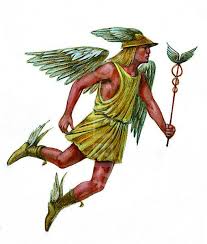
The Roman god for which Mercury is named is a lot “cooler” than the planet itself (ha).  Young Mercury wears a lot of hats, including (god of) financial gain, eloquence, and divination.  (Side note: perhaps Mercury should’ve been my blog mascot.  “Eloquence” was the theme of my very first post).  He also serves as the guide of souls to the underworld. Curiously, all these responsibilities take a back seat to Mercury’s most commonly known role – as speedy messenger to the other gods.  This role explains the naming of the planet, the fastest of the eight to circle the Sun.  Maybe we should also consider Mercury as messenger to the other planets, in case something gets weird with the Sun.  After all, Mercury will be the first to know.

I can’t talk about Mercury without a reference to the late, great Ray Bradbury.  Of all his wonderful science-fiction short stories – and there have been at least a hundred – my Bradbury top five includes “The Golden Apples of the Sun”.  “Apples” followed an exploratory rocket ship heading past Mercury to the Sun.  The crew is tasked with collecting a sample of the Sun’s golden fire.  I can still imagine the ship’s giant scoop as it extends from the hull and grabs a bit of the Sun.  The story’s real drama comes just after the collection, as the ship overheats and the life-support systems begin to shut down.  With respect to Bradbury, I won’t give away the ending.

Well then, enough about Mercury (probably too much).  I’ll conclude with a great tweet from Katie Mack, who was quick to note about Monday’s Mercury transit: “The official song of #TransitOfMercury is, obviously, ‘King of Pain’ by the Police.  But please note that the ‘little black spot on the Sun today’ referenced in the song is a ‘sunspot’, not Mercury, since ‘it’s the same old thing as yesterday,’ and (Mercury) transits only last a few hours.”

Keep on a-circling the Sun, Mercury.  I won’t forget ya next time.

Some content sourced from the BBC.com article, “Planet Mercury passes across the face of the Sun”, the Space-Facts.com article, Mercury Facts – Interesting Facts about Planet Mercury, and Wikipedia, “the free encyclopedia”.

Cardinal Roll

A paper towel, a napkin, and a facial tissue were chatting at a paper goods party one day. The towel spread himself flat and declared, “I’m the biggest one here, not counting the tablecloth under the dessert buffet.” The napkin glared at the towel and said, “Think you’re so important? All you do is clean up messes. I’m part of every place setting at every dinner table in the land!” To which the tissue sniffled, “Sorry boys, but I’m more important than either of you. No bathroom or lady’s purse would be complete without me”. Just then a roll of toilet paper wheeled by. Glancing at his paper pals, he grinned confidently as if to say, “No contest”.

It’s true, isn’t it?  If I dragged you to the same paper goods party and said, “Choose one, but it’s the only one you’re allowed for the next twenty-four hours”, toilet paper wins every time.  Paper towels, napkins, and facial tissue come in plenty of sizes, quantities, and pretty designs, encouraging us to put them on display in our houses.  TP gets no such fanfare and frankly, we’re embarrassed to be seen anywhere with those virgin-white rolls.  When was the last time you proudly displayed your 24-pack of Quilted Northern or Angel Soft as you waited in the grocery store checkout line?  If you’re like me, you jam those rolls into the lower part of the cart.  You want them invisible.

Cute, huh? It’s called “Cloudy Day”

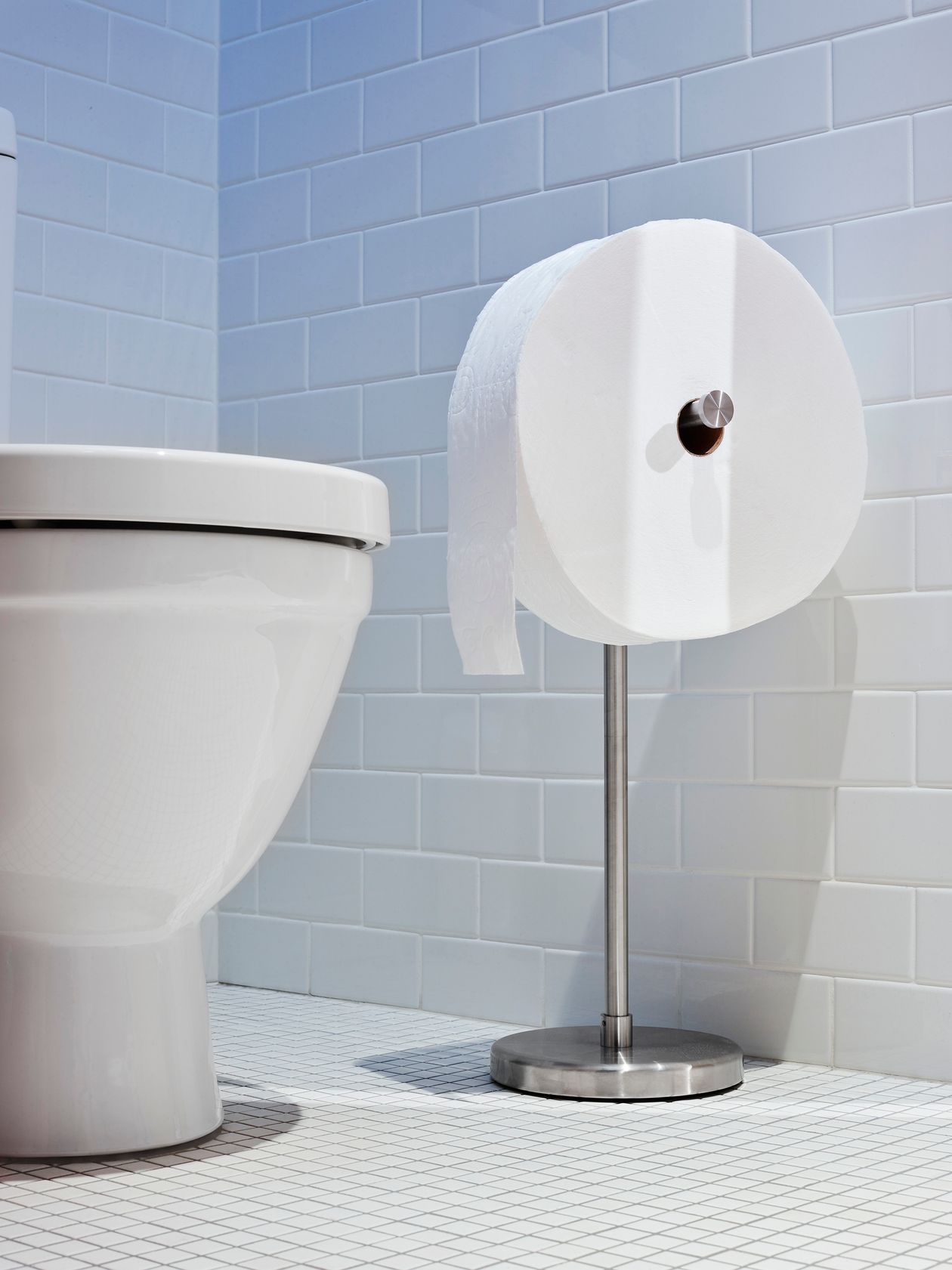
Here’s where you’re probably thinking, “Toilet paper?  He’s writing a blog about toilet paper?”  Damn right I am.  When Procter & Gamble (P&G) comes out with a “bathroom tissue” product called “Charmin Forever Roll”, I’m all over it.  Imagine if you will, a roll of toilet paper one foot in diameter (actually, don’t imagine; just look at the photo below).  This bad boy’s three times bigger than your standard roll.  He’s the equivalent of the 24-pack you were trying to hide in your shopping cart.  It’s like putting a tractor tire next to your toilet.  The “Forever” comes with its own sturdy stand, and the idea is, it never runs out.  Well, almost never.  The Forever lasts twenty-one days on average.  If you told me my job was to change the toilet paper roll only once every three weeks?  I might actually do it!

The “Charmin Forever Roll”

What, you ask, inspired P&G to create a quarter mile of rolled toilet paper the size of an LP vinyl record?  Human nature, that’s what.  No matter how easy the task, people refuse to change the roll (on top of whatever else they’re doing in the bathroom).  In fact, a survey of 2,000 bathroom users – as if the survey-takers had to screen out “non-bathroom users” – found 85% agreed to the phrase, “An empty toilet paper roll is one of the most frustrating bathroom scenarios”.

Don’t you just hate this?

You should’ve seen this coming and beaten P&G to the punch.  Toilet paper has been rolling out in ever-bigger sizes since those 4″ originals hit the shelves.  We’ve graduated to “double”, “triple”, “jumbo”, “mega”, “mega plus”, and “super mega”.  It’s getting grandiose.  Even the Forever isn’t the biggest anymore.  Last month Charmin debuted the “Forever Roll XL”, which gets you 50% more than the Forever.  You can go a whole month without changing the roll.  Not only that, P&G lets you subscribe, so your XL tractor tires show up at the front door all by themselves.  Order a dozen and you’re good for a year!

There’s no end to the madness, if shopping habits tell the truth.  When P&G first offered the Forever, they gave us a choice of an 8.7″ or a 12″ round.  They figured we’d want to ease into the idea of super-sized toilet paper.  Wrong.  Consumers went straight for the 12″, which is why P&G fast-tracked the 13.2″ XL (and promptly dropped the 8.7″).  Just how “XL” is a 13.2″ roll?  3.2 pounds – or 2,550 squares.

Clearly, the sky’s the limit when it comes to a roll of toilet paper.  I can picture it now: a roll the size of a Ferris Wheel.  Laugh all you want – homebuilders are probably already redesigning bathrooms to accommodate one.  And then – maybe then – toilet paper will get more attention than just who was supposed to change the empty roll.

Some content sourced from the 10/16/19 Wall Street Journal article, “The Empty Toilet Paper Roll Torments Families.  Procter & Gamble Has an Answer”.

Girl Crush

The Goddess

Last Sunday, our corner of the night sky was graced with a full moon called a “Tiny Hunter”. Tiny, because the moon was at the furthest point in its elliptical orbit. Hunter, because this time of year harvested fields leave few places for animals to hide. (Add a full moon and the hunting’s even easier). When our Tiny Hunter rose in the east that night, it was as if a giant flashlight switched on in the heavens, blotting out a typically starry night. But I know it didn’t blot out everything. Venus, beckoning brightly to the west, was saying hey, this is my party too.

Next to the moon, Venus is the brightest bulb in the night sky. Even if you don’t know where she sits, you can find her by simply scanning the western horizon at dusk or eastern at dawn for the most brilliant pinpoint of light. As if outshining all of the stars isn’t enough, Venus is also the most vivid planet. Mars, Saturn, and Jupiter occasionally make an appearance, but Venus always seems to be there. Even in broad daylight.

“Morning Star” or “Evening Star” – take your pick

I’m not gonna lie; Venus gives me a bit of a girl crush. After all, she’s the Roman goddess of love and beauty. Now consider her other “outstanding” attributes:

  • She’s the only planet in our solar system to identify as female.
  • She’s referred to as our “sister planet”, not only because she’s our closest neighbor, but because she’s virtually the same size.
  • She rotates in the opposite direction of seven of the eight planets (including Earth).
  • She hosts two continents: Ishtar Terra (named after the Babylonian goddess of love), and Aphrodite Terra (named after the Greek goddess of love).
  • Her rotation is so slow, a day in her world is longer than a year in ours. But, a year in her world is shorter than that same day. Say what? You read that right: Venus completes a trip around the sun faster than she completes a rotation on her own axis.
  • Her orbit is closer to the shape of a circle (vs. an ellipse) than all other planets.
  • She has no moons or rings. Naturally, why would the goddess of love and beauty need adornments?

No wonder the Babylonians referred to Venus as “bright queen of the sky”, eh?

Given her allure, it’s a wonder our earthly culture hasn’t done more to embrace her. I went in search of homage to Venus and here’s all I could come up with:

  • Sandro Botticelli’s iconic “The Birth of Venus” (top left), with our girl posed unashamedly naked on a seashell.
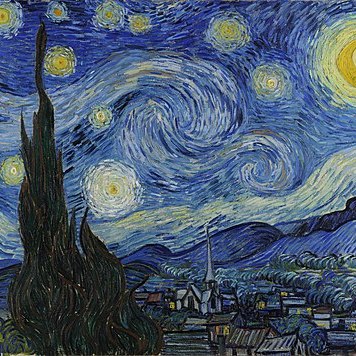
  • Vincent van Gogh’s post-impressionist “The Starry Night” (top center), with Venus as the bright “star” just to the right of the cypress tree.
  • The Bible’s Song of Songs (fitting, if you know the book’s subject matter), Chapter 6, Verse 10.
  • John Gray’s bestselling relationship guide, Men are from Mars, Women are from Venus.
  • Gillette’s “Venus” line of women’s shaving products.
  • The “Venus” women’s clothing line (catalog arrived for my wife just last week).
  • A nasty-looking fly-trapping plant.
  • Frankie Avalon’s adoring anthem “Venus” (Hey, Venus… oh, VENUS…).
  • Shocking Blue’s psychedelic rock hit “Venus” (I’m your Venus… I’m your fire, at your desire…).

If that’s the extent of our tribute to Venus, no wonder we have the phrase “hell hath no fury like a woman scorned”. Venus shows her not-so-lovely side if she wants to. She’s the hottest planet in the solar system (including Mercury), with an average surface temperature of 863 degrees F (462 C). Her atmospheric pressure is 92 times stronger than Earth’s (which is why her surface is beautifully crater-free). She’s covered in a thick layer of sulfuric acid clouds. Her wind speeds are extraordinarily high. And she’s explosive, with a long history of volcanic activity.

The second rock from the Sun… and the brightest of all eight.

Scientists believe – 700 million years ago under drastically different conditions – Venus was temperate enough to host oceans of water and life itself. So…, what in God’s name happened to make her so nasty now? Whatever it was, even our most advanced spacecraft can’t land on her surface today (though we’re working on it).

Considering this brief education on Venus, I suggest you ignore her siren song and simply admire her from afar. Even if you could speed your car along an interstellar highway, you’d need over forty years to get to Earth’s twisted sister. No; stay on her good side lest she show her surface temperatures and atmospheric pressures. That wouldn’t go well for you. I’d rather look Medusa in the eye and be turned to stone.

Some content sourced from the 9/22/19 Phys Org article, “Could Venus have been Habitable?”, “Venus Facts:…” from The Planets website, and Wikipedia, “the free encyclopedia”.

Supply Chain Reaction

My neighbor to the north – the one with a mansion lording over the rest of the hood from the highest point around – hosts equestrian events on weekends. Whether reining or cutting competitions, or “quaint” social gatherings, his barn and surrounds burst with dozens of horses and riders just about every Saturday. His property is large enough we’re pretty far removed from the hubbub, except the convoy of horse trailers and trucks barreling down the street beforehand. The wheels rumbling over the washboardy dirt road and balloons of dust floating high overhead are hard to ignore.

Maybe you don’t have a parade of horse trailers in your neighborhood (or a washboardy road), but guess what?  You do have a procession of vehicles making their way to your driveway, and the list of participants is growing.  Home delivery is the latest block party where everybody seems to have an invite.

In the 1970’s the only vehicles coming up our driveway were the red, white, and blue jeeps of the United States Post Office (USPS) or the brown, boxy trucks of the United Parcel Service (UPS).  Then Federal Express vans (FedEx) joined in with a little purple and green, while DHL (the initials of the three founders’ last names) added a healthy dollop of yellow.  Taste the rainbow!

 That’s a pretty good line-up right there, but in the last decade or so home delivery (or “last mile delivery”, to use the trendier term) picked up several more players.  Amazon (black vans with a blue “swoosh” on the side) and WalMart (several colors) extended their supply chain by adding home delivery trucks.  Your pizza guy has been joined by restaurant delivery of all kinds, like DoorDash, Grubhub, and UberEats.  AmazonFresh is competing with your local grocery store to make sure you consider home delivery of products from Whole Foods.

Here are a few of the more “colorful” entries coming soon to a driveway near you:

  • Postmates – Pizza, prescriptions, shoes, and tech products, just to name a few Postmates delivery favorites.  What makes Postmates unique?  They’re not affiliated with any business or product line.  If you need it, they’ll find it.
  • LuggageForward – Boasts “doorstep pickup”, so all you worry about is transporting you from your home to your travel destination.  LuggageForward guarantees your bags arrive before you do, and their “shipping experts” track your items every step of the way.
  • Piggybee – Just like LuggageForward, except you’re entrusting your luggage or other item to a random person who happens to be traveling to your destination anyway.  Sounds a little dicey, but isn’t the name great?
  • Entrusters – The opposite of Piggybee, but the same concept.  You find something you want to buy in a distant locale, and the random person who happens to be traveling to your city brings it to you.
  • goPuff – A “convenience store caterer”, tempting you with products like that pint of Ben & Jerry’s you don’t really need.  Perfect for college students?  Yes, and the company was started by college students.  “goPuff”?  No clue.
  • Drizly – Not only wine, beer, and liquor to your door inside of an hour, but also all the mixers, garnishes, and supplies you need to make your party tipsy.  Hopefully you’re not the only one at the party.  Hopefully your Drizly driver doesn’t partake in whatever he or she delivers.
  • Stitch Fix – A competitor to Nordstrom’s Trunk Club, Stitch Fix offers a stylist and all the designer clothes you could ever want.  Try them on and keep ’em or return ’em within three days.  Might as well close the doors on your local shopping mall.
  • Washio – Just what you would guess: home-delivery wash, dry, and dry-cleaning of your wardrobe.  Your hamper just moved to the front door!  Washio’s “ninjas” pick up and drop off inside of 24 hours, and even leave a cookie on top of the clean-clothes bag.  Sadly, Washio lasted less than three years; it’s founders claiming, “sometimes you make it, sometimes you don’t”.

As we speak, many of these deliverers are hopping the fence into each other’s domains.  Postmates is test-marketing convenience store items in New York City, sourcing from 150+ Walgreens and Duane Reades.  Doordash is trying out same-day grocery delivery in 22 states.  AmazonFresh distinguishes itself as food delivery with its lime-green (not black) vans.

With so many entrants in the home delivery circus, it’s fair to say the concept is still in its infancy.  We’ll need several years to see who and what will ultimately come out in the wash (clearly, not Washio).  But mark my words, you can always count on someone to rain on the parade.  Amazon is already experimenting with “Prime Air”, a drone-service.  In other words, home delivery may be a little less grounded in the future.

Some content sourced from the 10/2/19 Wall Street Journal article, “Postmates, DoorDash Want to Deliver Your Groceries, Too”.

Window Addressing

My wife and I just returned from a trip to Boston. On the flight home, we took our seats as usual: she at the window and me in the middle. It was a peaceful journey, save for the rather chatty woman across the aisle. But then, as we began our descent into Denver, behold an uncomfortable moment. A glare of sunlight through my wife’s window struck Chatty Woman in the eyes, who immediately turned and snapped, “CLOSE THAT WINDOW!” I just smiled from the middle seat and assured her the glare would move on momentarily (which it did). Chatty Woman gave me a stare and a huff, and turned away. Gee, nice to meet you too.

I’ve touched on the dynamics – er, politics – of airplane passenger seats before, in Flight of the Humble Bee (a taste of first-class), and Center Peace (life in the middle seat), but I always thought window-seat dwellers were far enough to the left or right to escape judgment. No longer. In fact, more than ever the spotlight shifts to them.

Let’s review the powers held by the different seats on the plane. The aisle seat, some would argue, commands the most power because a) the occupant controls the freedom of all others on his/her side of the row, b) the occupant has the easiest access to everyone else and everything else on the plane, and c) the occupant can lean or leg into the aisle as he/she pleases (a power move in itself, albeit a weak one).

This image has an empty alt attribute; its file name is 211-photophobic-6.jpg

The middle seat [or in larger planes, middle seats. To you, the occupant of the middle seat in a row of 5+, you have my utmost sympathy] has powers inversely proportional to the aisle and window seat occupants. That is, the more empathetic your seatmates with your middle-seatedness, the more likely you’ll get perks (i.e. the use of both armrests, requests to the flight attendants, the window shade setting to your preference).

Speaking of the shade, that my friends, is the power-play of the window seat. Whether the shade is up, down, or somewhere in the middle is entirely up to the occupant (or occasionally directed by the flight attendants). Once upon a time the window shade was a minor prop; only down when the shared overhead movie screens (or sleeping passengers) demanded dark. Today? Every mobile phone, tablet, reading device, laptop, and in-seat movie screen is photophobic. Light sensitivity abounds.

Here’s the change in dynamic you’re not aware of. The passenger in the window seat is not the person he/she once was. Before, people chose the window seat to enjoy the high-skies views, or more importantly, to keep their geographic bearings or avoid the claustrophobia of a closed-up cabin. Today, people choose the window seat to control the shade, for optimal lighting of all those handheld devices.

To further complicate the matter we have the Boeing 787 airplane, which replaced the window shade with electrified gel sandwiched between panes of glass. The gel darkens or lightens depending on the amount of applied current. Cool tech, but also a compromise of power for the window seat occupant. The flight attendants (as they deem necessary), can darken all of the windows during sleeping hours or movie time or even hot days. Might want to check the type of aircraft before you board your next flight.

This image has an empty alt attribute; its file name is 211-photophobic-1.jpg

I suspect if “CLOSE THAT WINDOW!” persists, the airlines might jump at another opportunity for profit. Someday you’ll find yourself choosing a seat in the “light” or “dark” section of the plane, with a fee placed on one or both types of seats. Not a fan. Then again, if the airlines would sequester crying babies, cell-phone talkers and other audibles into a soundproofed section, I’ll be the first one on-board.

Some content sourced from the 9/18/19 Wall Street Journal article, “The Showdown at the Window Seat”.

Past Cards

Restaurants tend to leave advertising freebies at the host stand or on your table to remember them by. After paying the bill, you might grab a logo’d toothpick or a couple of plastic-wrapped mints on the way out the door. The fancier establishments offer books of matches (as if smoking remains the chic habit it once was). But every now and then I come across my favorite restaurant takeaway: the plain and simple postcard.

I’m almost afraid to ask a young person what he/she thinks of a postcard.  They’d turn it over and over in their hands and wonder what purpose is served by a laminated photo on card-stock paper (“Just show me the photo on your phone!“)  Then they’d flip the card to the back and realize it has something to do with snail mail (“Just send me a text!“)  Finally, they’d wonder why anyone would go to the trouble of pen/paper just to let another someone know where they were having dinner (“Just add your location on Facebook!“)

Remove smartphone technology and postcards suddenly seem relevant again.  Take a break from the dinner conversation, scribble a few sentences, add a mailing address, affix a stamp, and voila!  A thoughtful bit of correspondence in mere minutes – the precursor to the Post-It Note.  If you’re lucky, the restaurant pays the postage and mails the card.  If you’re even luckier, your recipient still checks their physical mailbox.

A 1908 postcard… of a Chicago postcard factory!

Postcards have more history than a modest rectangle of heavy paper would suggest.  The very first postcard was sent in 1840, in London. (Someone who believed “very first” paid $40,000 for it in 2002.)  In the later 1840’s, postcards began circulating in the United States, as printed advertising.  Soon after, postcards became the Mini Cooper of personal correspondence; a quick letter sans envelope, but without images (because your personal note went on the front of the card back then).  By the 1870’s, manufacturers were producing “picture postcards”, with the divided back you see today.

Risqué front image (at least for 1890) from the popular “seaside postcards” of the United Kingdom

The advent of the picture postcard led to a little controversy in certain parts of the globe.  Images sent from one country were not always deemed “proper” in another (i.e. sexual references in popular UK “seaside postcards”, or images of full or partial nudity from classical statuary or paintings).  Accordingly, some countries refused to handle picture postcards.  Those same images are clearly conservative by today’s standards.

Like baseball cards, postcards have become a collector’s item.  The value of a given card is associated with the image on the front.  Online resources include collector websites and clubs, catalogs, and trading platforms.  When I was a kid in the 1970’s, I collected postcards – one summer – to document the stopping points on a month-long trip my family took to the American states in the northeast.  Pretty sure none of my cards held value, but I still wish I kept them.

My “Northeast States” collection c. 1975

[Trivia pause: collecting postcards makes me a deltiologist.  Aren’t you impressed?]

Postcards have their own terminology, as if to elevate their status among mailed items.  A large letter postcard shows the name of a place in big letters (instead of a picture).  An early postcard is any card issued before the era of divided backs.  An installment card is one of a set, forming a single picture when placed in a grid.  Postcardese is the short-sentence, abbreviated writing style of postcards.  Finally, midget postcards – noticeably smaller than the standard 6″ x 4.5″ version – were issued as souvenirs and bound in sets.  (If you look at my collection photo you’ll see several midgets).

“Large Letter” postcard c. 1940s

The next time you come across a postcard, give the little guy a (first-class) ounce of respect.  He’s been around a long time, and the post office – depending on country – may still send him for less than the cost of an enveloped letter.  Remember, the postcard was the original format of brief long-distance correspondence.  Think about that the next time you text.

Some content sourced from Wikipedia, “the free encyclopedia”.