
Royal Beauty Bright

If I were more organized a couple of weeks ago I could’ve seen the Aurora Borealis. Maybe you’re familiar with this magnificent natural artwork: the waving colorful “northern lights” spreading across the sky like a wind-ruffled pastel blanket. The best seats for the AB are always to the north, like Alaska or the Arctic, but this year we had a similar instance just driving distance from our house in northern Wyoming. I missed it, darn it.  I’ll have to settle for a look at this week’s Christmas Star instead. Er, make that this week’s “Jupiter/Saturn overlap”.

The view from my house (directly above Pikes Peak!)

I’ve always been something of an astronomer wannabe. We have beautifully clear skies where we live and on most nights we can see more stars, constellations, and galaxies than we could possibly count. I’ve even invested in tripod-mounted high-power binoculars to get a better look at all things extraterrestrial. So I certainly didn’t miss the recent headlines about Wyoming’s “southern northern lights”, nor the nighttime blast of this week’s Christmas Star. Any astronomical event visible to the naked eye is worth noting in my iPhone calendar.

Courtesy of CBS News

Jupiter and Saturn aren’t really overlapping, of course (talk about an abundance of gas). They just look like they’re a single celestial object as seen from our Earthling vantage point. They’re still millions of kilometers apart in space, the same way stars in constellations aren’t all the same distance away from us. This blog post is a little late, as the best days to see “Jupiturn” were Sunday, Monday, and Tuesday, just after sunset and looking to the west.

Speaking of a little late, let’s talk about the Real Christmas Star (RCS). Surely you’re familiar with RCS, the singularly bright beacon from biblical times guiding the Magi to the birthplace of the baby Jesus (editor’s note: lots of “b’s” in that sentence, Dave). This star moved in a westerly path – as noted in the third verse of “We Three Kings” – like the oversized laser pointer of an invisible tour guide. This star was purported to have stopped directly over Bethlehem close to the events we celebrate on Christmas Day.  This star “with royal beauty bright” was…, was…, (spoiler alert) – well, this star wasn’t a star either.

Also not a star…

I know, I know.  We’re talking about events from over two thousand years ago.  Outside of the Bible and pure faith, how can we know the true identity of the RCS?  Well, we know because we have astrophysicists.  I’m never one to blend science and religion but I’m about to make an exception.

To keep this simple let’s address the basic questions:

  1. When did the RCS occur?  During the reign of King Herod and Emporer Tiberius.  Roman historians (and the Bible’s Book of Luke) give the approximate timeframe as 8-4 B.C.
  2. Who saw the RCS?  The Magi according to the Bible, but also Chinese astronomers according to their own records… which go back to (gulp) before 1000 B.C.
  3. What did the RCS look like?  A morning star, because it was rising.  Not a comet, not a nova, not even a supernova.  In ancient times those three were seen as indicators of negative events.  The Magi certainly wouldn’t have followed something negative.
  4. What was the RCS?  Ah, now there’s the question for the Powerball jackpot.  And that’s where our astrophysicists come to the rescue.  The RCS – like this year’s Jupiturn – was also the convergence of Jupiter and Saturn, only amplified by light from the sun, moon, and at least three other planets.  That’s putting a lot of “balls” into play, isn’t it?  Celestial alignments happen regularly over time so astrophysicists were able to project backward and offer this likely explanation of the Real Christmas Star.

The RCS alignment from two thousand years ago seems recent compared to its next occurrence.  You won’t get that kind of planet-star-satellite party again until the year 16213.  That’s fourteen thousand years from now.  You won’t be around by then.  Maybe Earth won’t be either.

I did look to the west after sunset to see the convergence of Jupiter and Saturn earlier this week.  It was bright – sure – but not as if looking directly at the sun.  And knowing it wasn’t a “star” took some of the shine off of it (ha).  Meanwhile, the Aurora Borealis is out there a little more often.  At least I’ll be alive to see its next performance.


Some content sourced from the University of Notre Dame article, “Royal Beauty Bright”.

Golden Thrones

Every now and then the local news sneaks in a headline to showcase our local taxes and fees at work. A swanky new visitor center is about to open on the top of nearby Pikes Peak (14,115′) at a cost of $66M. A 250-ft. pedestrian bridge ($18.7M) spans gracefully over downtown railroad tracks, connecting a public park to our new U.S. Olympic museum complex. Increased traffic between Colorado Springs and Denver demands eighteen miles of a new interstate toll lane ($350M).

Colorado Springs must be “flush” with tax dollars

These efforts make sense and I’m happy to write the check, especially with the potential for revenue in return. But another project almost escaped my news feed and Mr. Mayor, I respectfully request a refund. We now have a fully-accessible fully-automated self-cleaning public toilet in a small park on the west side of town. Cost: $415,000.  That’s a lot of loot for a little lavatory, no?

On the surface our golden throne sounds good enough to try out.  It’s a touchless experience once you “ring the doorbell”.  The restroom door opens/closes automatically with a sanitary-sounding hiss.  Circulating air and classical music provide the white noise you need to mask unpleasant sounds.  A bathroom “host” politely pipes in over the loudspeaker to let you know you have ten minutes to do your thing.  After that – reason in itself to just go and watch from a distance – all doors open whether or not you’re buttoned up.  Talk about getting caught with your pants down.

Our city’s posh powder room comes from Exeloo (great name), an Australian company expanding its footprint into North America.  Besides the fancy features mentioned above Exeloo toilets are self-cleaning, which means they spray down and disinfect their surfaces from wall-mounted nozzles every thirty uses or so.  Makes me think the kitchens of Chinese restaurants could use the same treatment.

The (cheaper) Exeloo “Saturn”

Learning more about Exeloo didn’t make me feel better about my tax dollars.  That’s because our city purchased the fanciest model on the website.  Exeloo offers six different “loos”, with names like Jupiter, Saturn, and Orbit.  (Why – because going to the bathroom should be an out-of-this-world experience?)  Our city chose the model simply named “Fully Accessible”.  It looks at least twice as big as any of the others.

Let me contrast our wet-n-wild washroom with a more modest facility.  Just off the coast at Torrey Pines in North San Diego County you’ll find a nondescript public restroom sandwiched between the beach and the parking lot.  It has no doors.  It has no music.  It’s made entirely of cinderblocks and concrete.  A flush requires an “old-fashioned” pull of the handle, emitting just enough water to clear the bowl.  The sinks offer just a trickle of water to rinse your hands.  The mirrors aren’t mirrors at all, but big polished metal panels with just enough of a reflection.  This restroom is bombproof.

Which brings me to my point.  Why does my town need a bathroom good enough for a visit from Queen Elizabeth when cinderblock and concrete will do just as well?  The Torrey Pines toilet probably cost $4,000, not $400,000.  The next headline I’ll be reading is how a homeless person took up residence in our well-to-do water closet and now our tax dollars have to fund a full-time attendant as well.

The first time I experienced a first-class public flush was in Boston Common.  Smack dab in the middle of the grass expanse and softball diamonds we found a restroom similar to an Exeloo, only more like a double-wide RV.  It was a welcome sight after hours exploring the city on foot.  An attendant sat quietly on a nearby park bench, keeping an eye on things.  And the cherry on top of this sanitation sundae: the facility was sponsored by a non-profit called Friends of the Public Garden.  Not a tax dollar to be spent.

Could’ve had this whole house for less than our Exeloo, Mr. Mayor

Since we can’t go out to dinner or see a concert or even go to church this Christmas, I think I’ll take the family to see our sparkling Exeloo public restroom instead.  Maybe they’ve scented the circulating air to smell like Christmas cookies or pine trees.  Maybe they’ve switched out the classical music for holiday favorites.  Hopefully they’ve dressed up the attendant to look like Santa.  It’s the least they can do for my tax dollars.

Some content sourced from the 11/6/2020 Springs Magazine article, “At Least We Have a $300K Bathroom”.

Mixed Messages

My dad called the other day for a chat, but not before letting me know my answering machine was full. Since he couldn’t leave a message he just called over and over ’til I finally picked up. But here’s the thing: I don’t have any messages on my answering machine.  It’s not full at all.  So after the call I said to my wife, “Dad’s almost 92. I’ll forgive him a little confusion now and then. Probably mixed me up with one of my brothers.”

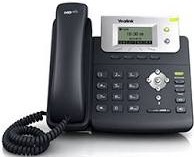
I still have one of these

Do you still have a landline in your house, the one with a bulky handset and built-in answering machine?  If you do, it’s tethered to the wall with wires, which then connect to a march of telephone poles outside (more wires), which eventually route your call to wherever it needs to go.  Imagine – in a world of wireless – a phone call with a physical connection from one end all the way to the other.  It’s positively antique.

[Random thought: once the world is fully wireless what’ll we do with all those telephone poles.  Caber toss, anyone?]

Go ahead and mock my out-land-ish outdated phone – at least I don’t have a party line.  Back in the day, if you lived in the sticks you shared a single physical line with your neighbors.  You were a “party” of subscribers who often found themselves talking over each other (“crosstalk”) or connected to the wrong party at the other end.  Party lines it is said, were the birthplace of gossip.

The reason I stubbornly cling to my landline is probably not the same as yours.  I keep my landline exclusively for those calls with my dad (er, and to divert telemarketers from my smartphone).  My dad can’t hear very well so anything wireless is a challenge, especially when you get the occasional syncing issue in the conversation.  On a landline Dad hears LOUD and CLEAR… even if he doesn’t always acknowledge what I say.  Are his calls worth the monthly subscription fee?  He’s 92!  You bet they are.

Now let me ask you this.  How often do you call your own phone number?  Why would you?  Pick up the phone and you get dial tone – all good.  Set the answering machine to “on” so people can leave messages – even better.  Except when they can’t.  Let’s suppose – “hypothetically” – your phone company redirects your phone number to a random voicemail box.  And that mailbox is already full.  How would you know?  Only if you called your own phone number, right?  Or, only if the one person who calls you (“hypothetically” your dad) insists he can’t leave a message.

Damn.  Dad was right after all.

Here’s the best part.  I can’t even call my phone company to fix the problem.  Why?  Because I “bundled”.  You know, where you combine TV, Internet, wireless, landline, and whatever else you have so they’re all billed and serviced through a single provider? Mis-take. Try calling your satellite TV provider to ask about landline phone service.  After you explain what a landline IS, the young person at the far end transfers you to a “specialist” (someone much older who actually understands landlines).  That person acts as intermediary between you and the phone company.  There’s a lot of, “Can I put you on hold for a sec?” and, “You still there? and, “Hold tight, we’re still working on it” and even the occasional, “You did say this was a landline, right?  Y’know, you really should get rid of your landline…”.

Long story short, it took me the better part of a week but now my dad can leave messages on my answering machine again.  He also says I should listen to my father more often.  (For younger readers, this is an excellent example of “eating crow”.  Look it up.)

Electric Light Orchestra (ELO) – the English band of the ’70’s who somehow fused pop, rock, and classical – had their biggest U.S. hit with Telephone Line.  Its final verse begins, “Okay… so no one’s answering.  Well can’t you just let it ring a little longer, longer, longer?”  No ELO, I can’t let it ring a little longer – the phone company rerouted my number to a full voicemail box.

But hey, thanks for calling.

Watch Your Steps!

The punk rock duo The Proclaimers are Scottish twins Craig and Charlie Reid. Now 58, the Reid’s were born just a month after I was, back in 1962. Even though The Proclaimers produced eleven albums and sold five million copies, I only know them for their 1988 chart-topper, “I’m Gonna Be (500 Miles)”. It’s the song thrumming in my head every time I’m close to getting my 10,000 steps for the day.

5,514.  Good Lord, I’m only halfway to my 10,000 steps today and it’s already two in the afternoon.  I need to get moving.  I even worked out this morning (lifting doesn’t get you many steps).  As usual, I strapped on my (Fitbit) tracker immediately after waking up but I’m usually further along by now.  I’m gonna have to go long with the dog tonight if I have any shot at making the magic number.

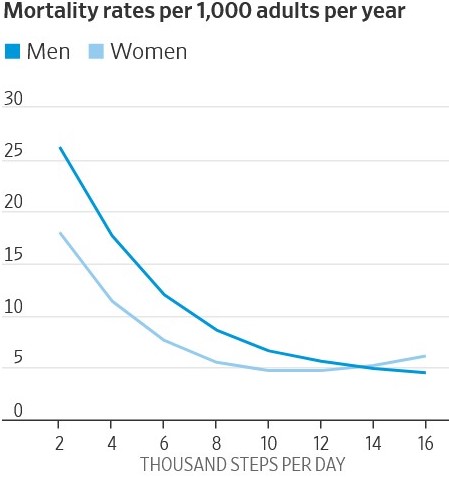
Magic number?  10,000 steps?  Who made this the “minimum for good health”?  A Japanese pedometer company; that’s who.  In 1965, they nicknamed one of their trackers the “10,000 step meter” and the number stuck all these years later.  Not that 10,000 steps has any significance when it comes to health benefits.  It’s all relative to whatever number you normally walk.  For that reason, we Americans can go less than half the 10,000 and still lower our mortality rate in a big way.

If you’re reading this post and you’re Amish, you’re already pooh-poohing 10,000 steps.  You and your people average 14,000-18,000/day just by removing motor vehicles from your world.  If you’re Australian or Swiss, 10,000 is just another day in the outback or the Alps (yodelayheehoo!).  Even the Japanese find a way to average 7,500 steps/day inside a small island nation.  Bringing up the rear?  The Americans, of course (drum roll, please…).  We clock an average of 4,800 steps a day – downright pathetic for residents of the fourth largest land-mass country in the world.  Is it any coincidence the U.S. makes and sells more vehicles than any other country besides China?

Source: Pedro F. Saint-Maurice, National Cancer Institute

Back to the “magical” 10,000 steps.  Let’s diminish the facts, shall we?  A recent collaborative five-year study of 15,000+ participants determined as few as 4,400 steps a day associates to a 40% reduction in mortality rate (when the norm is more like 2,700 steps).  Make it to 7,500 steps and the mortality rate drops by 65%.  In other words, you’re doing your body good well below 10,000 steps.  Unless you’re Amish, Australian, or Swiss.  Sorry, you people have to keep going.

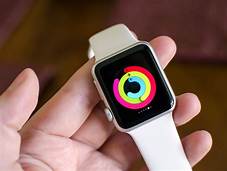
Alas, no collaborative study nor determined blog post is going to change the world’s obsession with 10,000 steps.  The U.S. Department of Health and Human Services instead recommends five hours of moderate exercise a week (or half that much in “vigorous” exercise).  Doctors prefer a rather vague recommendation of “about 2,000 steps more than you normally walk”.  But none of that shuts down tracker production: 33 million devices shipped in the first quarter of this year alone.  You know who you are; doing mindless laps in the kitchen late at night just to “close your rings”.  10,000 steps remains the benchmark no matter the expert advice.

Close those rings!

Speaking for Americans at least, the magic number really is burned into our culture.  We’ve switched out our most glam watches for fitness trackers (because even a Rolex can’t count steps).  We download apps, print out weekly results, and obsess over “rings”, consecutive days, and “personal bests”.  We get cheap thrills when our tracker vibrates 10,000 and those little digital fireworks shower the screen.  Companies offer employees financial incentives if they can demonstrate extended habits of 10,000+/day.  We are beguiled of time and money for this fairly arbitrary number.

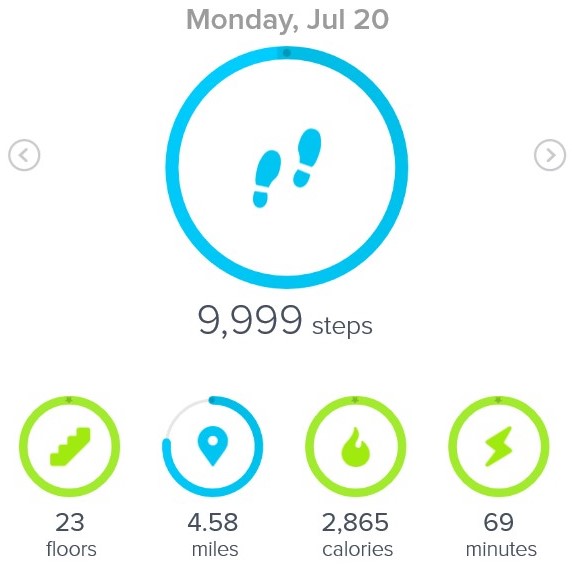
[Side note: The other day I woke up and checked my Fitbit history, only to discover I’d hit 9,999 steps the day before.  Didn’t bum me out; still strapped on the tracker and started a new day.  Kinda proud of that.  On the other hand, one time I strapped my tracker to my ankle to try to get “steps” out of a cycle class.  Didn’t work.  Not so proud of that.]

The pertinent lyrics of The Proclaimers’ “I’m Gonna Be” go like this:  But I would walk 500 miles, And I would walk 500 more, Just to be the man who walks a thousand miles, To fall down at your door.  No wonder I’ve got that song on the brain.  I don’t think I’d walk a thousand miles, even for my girl.  But I would walk five miles (about 10,000 steps) to hit my daily tracker goal.

Some content sourced from the 6/12/2020 Wall Street Journal article, “10,000 Steps a Day Is A Myth.  The Number to Stay Healthy Is Far Lower”, and Wikipedia, “the free encyclopedia”.

True Colors

In the kitchen cabinet convenient to our countertop coffeemaker (I’m on a roll with the letter C today), we keep a couple of large mugs; souvenirs from the San Diego Zoo. Identical in size and shape, both mugs have images of animals on them. More importantly, one mug is light blue while the other is bright red. For this reason and no other, I place the blue mug at the front of the cabinet and the red mug further back. My preference is the blue one.

If these same mugs were in your kitchen cabinet, which would you choose?  What if I added a green mug and a purple mug – would your choice be just as clear?  It should be, since we all have favorite colors.  Unless we’re colorblind we concur when something is blue, or something is red.  We even agree when something blue is “pretty” (say, the summer sky) or something red is not (say, the heart of a forest fire).  But that’s just preference by association.  Favorite colors are part of our DNA.

I’ll take “green”

As far back as I can remember my favorite color is green.  I also like blue and purple, but if I only get a single Skittles make it green.  With board games, I choose the green pieces. With my wardrobe, I own several green shirts (but no red ones).  My wife and I once owned – one after the other – a green van, followed by a green sedan, followed by a green mini-van; even though the more popular vehicle colors are white, silver, black, and dark grey.  It may be no coincidence the colors of my alma mater are blue, gold… and green.

Hello, Marilyn!

Don’t let the numbers influence your choice but 35% of Americans prefer blue while 16% prefer green, 10% purple, and 9% red.  Orange, yellow, and brown sit together at the back of the bus.  Also, gentlemen may prefer blondes, but gentlemen definitely prefer blondes in red.  To heterosexual men at least, women in red draw more romantic attention than any other color.

Infants show a preference for color as early as twelve weeks old.  That’s hardly an age where you associate colors with material things.  Toddlers show a preference for pink and blue regardless of sex (and cool colors over warm), but choose yellow over both of them – perhaps owing to association with the sun, flowers, and other “happy” things.

Here’s where favorite colors get interesting.  At five years of age you begin to associate colors with more than just “things”.  You associate with feelings and states of mind as well.  Consider the table above.  My preference for green suggests a good/bad combination of traits.  Immodestly I like to think I have good taste.  Unquestionably I put a premium on my health.  Envy?  Sure, every now and then.  Eco-friendly?  Nope, not really.

Red and blue make for better arguments.  The “lust”, “power”, and “speed” associated with red explain why it’s the color of choice for sports cars, and why red uniforms statistically improve performance in certain sports (think Tiger Woods).  All five blue traits explain why the color is so prevalent in the American workplace (and primary in the logos of standard brands like Ford, Facebook, and IBM).  Even the traits of violet/purple make sense: the color most associated with royalty.

The Rose of Temperaments

Our desire to interpret the meaning of favorite colors has been around a long time.  The Rose of Temperaments is a wheel-like image from the late eighteenth century, matching colors to character traits and occupations.  See what your color says about you.  If green goes to my very soul, the rose is strikingly accurate.  I can make a case for every trait in the list of phlegmatic. My tendencies are also more introverted than extroverted.  The rose gives me reasons for envying red, yellow, or blue (and reasons for not), but I can’t deny it: I am literally defined by my favorite color.

Speaking of the basic colors, we also favor color names. Mother Nature’s rainbow just doesn’t do it anymore.  In a recent remodel project my wife and I chose the paint color “Cocoa Whip” over “Havana Coffee” and “Wild Truffle”; when in fact we were simply choosing a shade of brown.  In product tests, participants shown swatches of the same color consistently preferred the one with the most elegant name.

Closing comment on my favorite color green.  You do know what they say about green M&M’s, don’t you? The aphrodisiacal effects (urban legend) are explained by the color’s association with fertility.  However, the better story comes from 1976, when the FDA banned the chemical “red dye #2” and red M&M’s temporarily departed the production line.  Rumor had it the reds were the real aphrodisiacs, employees were pocketing them straight from the line, and the whole red dye #2 story was a cover-up.  Red, green, whatever the color; they all taste good to me.  Even the brown ones, which testers swear taste more like chocolate than any other color.

Some content sourced from Wikipedia, “the free encyclopedia”, and Snopes.com.

Whistle Work

Last weekend my wife and I drove north a couple hours to visit our granddaughters.  The last time we saw them was in the pre-pandemic days of yesteryear.  We spent most of Saturday afternoon in the backyard playing little-kid games in the makeshift pool and breaking out a plastic Tee-Ball set.  Later on after a barbeque, it was time to clean up the toys.  My son and his wife promptly requested the “The Clean Up Song” from Alexa, and my granddaughter hopped to it.  Watching her I caught myself thinking, can’t I help with the clean up too?

Google The Clean Up Song and you’ll find several dozen versions to choose from.  Cleaning-to-music for kids has been around a little while now.  I wish we’d used this approach more often when our own children were little.  It’s a song!  It’s a game!  It’s almost whistling while you work.

For me, household chores morphed to something more therapeutic as the kids grew up and out of the house.  Taking out the trash became extra steps towards my ten thousand (we have a long driveway).  Washing dishes became a mini-spa of warm water and soap bubbles.  Making the bed and arranging its pillows channeled my inner Marie Kondo.  Folding clothes was how to avoid lazing on the couch while watching TV.  (On that note, an ironing board should be called a “clothes-folding board”, if you go by my folding minutes (100%) vs. ironing minutes (0%).

Lest you think me compulsive, a recent Wall Street Journal study comes to my rescue.  During these stay-at-home times – locked-down residents find similar stress relief in housework.  Washing windows allows the slow, deliberate wax-on-wax-off zen of “The Karate Kid”.  Cleaning countertops tempts flowing dance, like Julia Stiles in the diner in “The Prince and Me”.  Ironing doubles as light weightlifting. And vacuuming?  Nah, I got nothing there.  Vacuuming’s still just a chore.

The lovely Ms. Stiles and her diner dance

Headspace

Headspace, a software company focused on meditation and better sleep, includes housecleaning exercises on its app.  They recommend “quiet housework in dim lighting” just before bed (but then how do you see what you’re cleaning?) They want you to sweep the floor and wipe the counter in smooth, restorative motions.  Laugh all you want but the use of their “cleaning-related content” is up 20% since mid-March.

Household products are trending the same way.  Swiffer wants you to mop with “a clean home and a clear mind” and suggests a facial treatment while you’re at it.  They switch “clean the counter” to “give your surfaces a little TLC” (as if your surfaces are close friends).  Proctor & Gamble fortifies its “Gain” laundry detergent with essential oils like lavender and eucalyptus, touted for their calming effects. “Clear Your Mind with a Cooling Clean!  A Soothing Scent with a Mindful Twist!”

Call me one-in-five (not compulsive) because P&G research claims 20% of us clean to relax or reduce stress.  Sure, but we also clean to clean.

I never thought about laundry this way but the Journal article likens clothes-cleaning to problem-solving (which we guys are all about).  Sort the clothes, dose the detergent/softener, fold according to best-fit in drawers, and then put everything away.  It’s a process, and it’s a new puzzle every time.

To take it one step more spiritual, household chores are considered seva – a form of selfless-service.  Says one yogi about dirty dishes, “You’re reminding yourself you’re washing for the divine grace that flows through your husband, your wife, your children, or your parents.”  Whoa now.  Me, I’m just washing dishes.

I’ve neglected to mention another household chore: cleaning bathrooms.  It can be “healing” sponging the porcelain to a sparkling-white shine, conducting the bowl brush in large, lazy circles, or returning to nature in the gentle flow of the sink (waterfall) or toilet (whirlpool).  No, no, NO.  I don’t do bathrooms.  Not even if you ask Alexa to play “The Clean Up Song”.

Some content sourced from the 5/27/2020 Wall Street Journal article, “Sick of Cleaning?  Turn It Into Meditation”.

Not-So-Fast Food

If you’re like me, you’re prepping meals at home more often than you used to.  Your grocery lists are electronic or paper instead of in your head.  You may even be meal-planning and on your way to becoming America’s next gourmet chef.  But no matter the approach eventually you succumb to food out instead of food in.  “Taking away” meals these days means navigating an app, a website, a drive-thru, a phone call, or for the really daring, an unscheduled appearance at the front doors.  You never know which approach works until you try a couple.  Sometimes you simply give up.

Case in point.  Last Friday we took my wife’s truck for a service – scheduled just after sun-up. Leaving the house so early meant breakfast would be out instead of in.  My first thought?  McDonald’s.  An Egg McMuffin is still a pretty good on-the-go breakfast, and navigating McDonald’s hasn’t changed (drive thru, pay at the window, drive away, enjoy).  I also admit to a soft spot for the Golden Arches because I worked there in high school.

My wife had other ideas.  Since a breakfast sandwich was the order of the day she wanted Einstein Brothers Bagels, and with good reason.  Einstein’s offers a choice of five “classic” breakfast sandwiches and another seven “signature” specials: twelve different spins on bagels and eggs.  While Egg McMuffins are assembled from just four mass-produced ingredients, Einstein’s creations are made-to-order adventures with options like chorizo, avocado, spinach, and mushrooms.  If the choice is Einstein’s or McDonald’s it’s a no-brainer.  Except now.

“Save time?” I beg to differ.

Not knowing Einstein’s take-away approach during COVID, I parked in front of the restaurant while my wife went inside to place the order.  Nope.  Einstein’s allows two options: DoorDash or order from the app.  Well blast my bagels – DoorDash doesn’t even deliver to our neighborhood so it was either the app or go hungry.  Fine.  A quick download and I went in search of the “Order” button.  Nope.  Einstein’s wants an account first – phone number, email, birthday, credit card, and so on.  Fine.  At last we assembled our on-line order and I went in search of the “Pay” button.  Nope.  Einstein’s makes you bank a minimum balance first (and welcome to “Shmear Society Rewards”).  Really?  A cash reserve for a breakfast sandwich?  Once and for all, nope.  I X’d out of the app, deleted it from my phone, and left a skid mark or two as I accelerated away.

“McDelivery?” Not necessary.

McDonald’s was also on the way home, a couple miles up the road.  We didn’t have their app either but so what?  Order at the drive-thru, pay at the window, drive away with an Egg McMuffin, enjoy.  We even splurged on hash browns (and an order of breakfast sausage for the dog).  A McDonald’s breakfast for two people and a pet costs far less than a similar order at Einstein’s.  Was my Egg McMuffin forgettable?  Yes.  Did I consume my sandwich within minutes of leaving the restaurant?  Yes (today’s Egg McMuffin is smaller than your palm).  Did I wish I’d had a custom-made Einstein’s instead?  Of course.  But not if I must jump through a bunch of electronic hoops to get one.

I want to support restaurants through the COVID pandemic; I really do.  Our favorite Mexican place has nothing electronic, so you just place a phone order and take-away fifteen minutes later.  Our favorite coffeehouse is a converted bank, so it’s drive-thru, pay, and go, lickety-split.  That’s all I’m asking for: simple process, no hoops.

Einstein’s theory of relativity assumes accelerated motion (say, a car pulling away from a restaurant with an order of food).  Einstein’s Bagels requires decelerated motion (say, the unanticipated time to download, setup, and bank-load their app).  Take your pick: Einstein’s approach or Einstein Brothers’ approach?  For me, it’s Albert’s way every time.

Merry-Go-Round Mayhem

The Safari Park’s merry menagerie

In the midway of the wonderful San Diego Zoo Safari Park in California, you’ll find a colorful attraction called the “Conservation Carousel”. Unlike traditional carousels teaming with horses, the Safari Park merry-go-round boasts giraffes, rhinos, zebras, cheetahs, and other “rare and endangered creatures”, just waiting to be taken for a spin. It’s a full-on circle of animals. It’s like riding a zodiac.

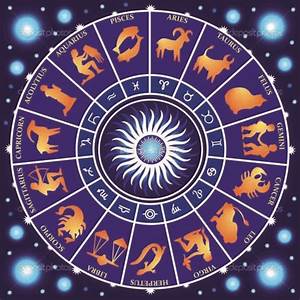
Wheel of Fortune

Speaking of the zodiac, what’s your sign?  I’m an Aquarius (born in late January), which makes me water-bearer to the gods.  As much as I don’t subscribe to horoscopic astrology – a visual representation of the heavens to interpret the inherent meaning of life – I can’t deny water’s played a significant role in my world.  I spent childhood summers in the Pacific Ocean and the backyard pool.  I lazed away hours in Northern California’s Lake Tahoe, swimming and water-skiing.  I enjoy a lively display of water, whether Niagara’s Horseshoe Falls or the fountains of Vegas’s Bellagio Hotel.  A gentle rain is nature’s therapy.

He’s not as great as he looks…

But then there’s the hell-or-high-water side of things.  Literally since our wedding night (when my bride and I awoke to dripping from the bed-and-breakfast room above us), the two of us have endured all manner of water problems.  A fully flooded basement.  A backed-up septic system.  Drinking water with a PH so out-of-whack we had to install a conditioner and a neutralizer.  Our well water quit pumping one time – for days – when a squirrel chewed through the electrical connection.  It’s like those gods have nothing better to do up there than play games with their little water-bearer down here on Earth.  If it were up to me I’d spin the zodiac wheel and land on another space instead.

Turns out my wish may have already been granted.  According to the Wall Street Journal, the earth maintains a wobble in its orbit around the sun, caused by gravitational pull on its not-so-perfectly-round midsection.  That wobble (called “precession”) – projected over the last several thousand years – shifted the alignment of the Earth with the zodiac constellations as the Sun passes through them.  Long story short, everything astrological advances one month on the calendar.  In other words, you rams out there (Aries) are actually fishes (Pisces).  You maidens (Virgo) are now lions (Leo).  And us water-bearers (Aquarius) – mercifully – are now mountain goats (Capricorn).

… but they don’t fall down.

With more passing of time, the earth’s Weeble-wobble will redefine basic astronomy as we know it today.  Take Polaris, the “North Star” at the end of the Little Dipper, and the starting point to locate the more distant constellations.  A few thousand years from now, Polaris will give up its position to Vega, another bright star.  All because our planet is a little fat in the middle.

With talk of a “changed world” after a curbed pandemic, I think it’s high time for me and you to adopt our newfound zodiac signs.  Goodbye Aquarius.  Hello Capricorn.  To preview my new persona, I looked at today’s horoscope in the local paper: A conversation with a female acquaintance will be important to you today. This is a good time to share your hopes and dreams for the future with someone to get his or her feedback.  Bless my lucky stars – I’m to check with my wife before moving one position on the astrological merry-go-round.  Seriously?  What does she know, holding court from under the sign of Cancer?  Whoops – make that under the sign of Gemini instead.  Either way, she can finally refer to me as, “you old goat, you”.

Some content sourced from the 2/21/20 Wall Street Journal article, “You’re a Scorpio?  Why the Earth’s Wobble Means Your Zodiac Sign Isn’t What You Think”, and Wikipedia, “the free encyclopedia”.

Creamer Schemers

A couple weeks ago, my Nespresso coffee maker sprung a leak. As it brewed a cup, it also “espressed” a small river of coffee from the base of the unit. An online chat with the good people at Nespresso determined, a) the maker really was broken, b) the one-year warranty covered the repair (whoo-hoo!), and c) the fix would take up to ten business days. Well beans; ten business days meant regressing a full two weeks on drip coffee instead.  Hold the phone; did I just label myself a coffee snob?

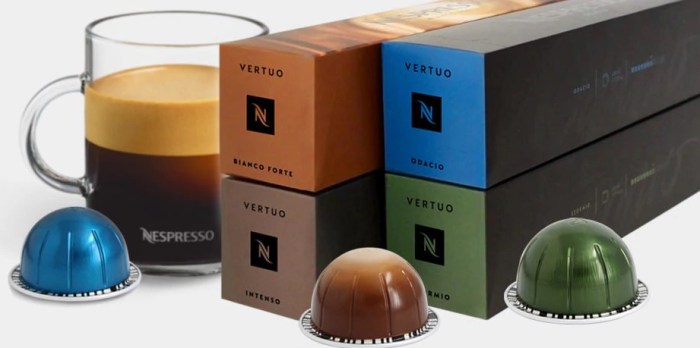
Nespresso

Nespresso – for those of you not familiar – is one of the many capsule coffee systems on the market today. Unlike the Keurig K-Cup, “Nestle-Espresso” capsules spin as the water passes through the grounds (7,000 RPMs – vroom vroom!), adding a light-colored frothy cap of “crema” on top. The crema enhances the aroma, but more importantly delivers the mouth-feel of a latte, as if you stirred something in from the dairy family. But call me fooled; Nespresso’s nothing more than coffee in the cup.

Bunn’s coffee-monster

Coffee snob? Parvenu, perhaps. It wasn’t that long ago I contentedly drank “joe” from one of those big metal Bunn machines, flavor-boosting my Styrofoam cup contents with a sugar cube and powdered Coffee-mate. Then, I spent a year in Rome and my world was forever coffee-rocked. I returned to the States armed with words like cappuccino and espresso and caffe latte. But America didn’t even know the word Starbucks yet. A “coffee shop” was still a greasy spoon diner; forgettable joe in a forgettable cup.

Mind you, not having Starbucks didn’t mean I was gonna crawl back to the Bunn, especially after a year of Italy’s la dolce vita (look it up). Eventually I dropped hard-earned cash on one of those early model home coffee/espresso/steamed milk contraptions – a machine requiring twenty minutes, twenty steps, and a phone-book-sized operations manual to produce a small cappuccino. The birth of the American barista did not start at Starbucks, my friends. It started in the frustration of orchestrating an overly complicated home-brew system in search of pseudo-Italian-style coffee.

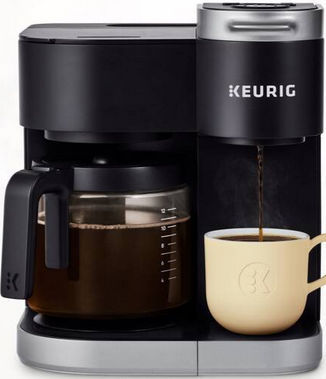
Sometime after Starbucks opened its first doors (but before Nespresso), Keurig developed the K-Cup. The Keurig coffeemaker felt like a huge step up from standard drip (and ushered in the concept of single-serve coffee at home). Keurig opened a seemingly new world of coffee to me – exotic names like Green Mountain or Paul Newman’s or Donut Shop – but let’s be honest. Keurig was basically glorified drip, and I still wasn’t taking my coffee straight, like I did in Italy. And that’s where Nespresso shines. If the K-Cup is a step up from drip, Nespresso is the entire staircase.

Ironically, the same company producing Nespresso markets a line of oil-based creamers sugary enough to make your coffee taste like Easter in a cup. Nestle already offered creamer flavors like Peppermint Mocha or Italian Sweet Creme or Toasted Marshmallow, before recently adding Cinnamon Toast Crunch and Funfetti. Not to be outdone, International Delight augmented its own coffee creamer line – REESE’S Peanut Butter Cup, Cinnabon, and OREO Cookie Flavored, with – no joke – a PEEPS flavor. Better check for bunnies before you take a sip.

For the record (if the Pulptastic website is to be believed), I’m not even close to being a coffee snob. I can choose from any of their twelve defining characteristics and come up short. I don’t read about coffee. I don’t speak the lingo (“Robusta?” “Arabica?”). I don’t know what “cupping” is. I do enjoy a Starbucks coffee every now and then. Finally, I’m half-tempted to check out the PEEPS creamer (maybe I won’t even need the coffee in my cup). See the Pulptastic list for yourself. Maybe you’re the coffee snob instead of me.

I’m still waiting (im)patiently for my repaired Nespresso coffeemaker to come back. I’m barely surviving on my backup K-Cups. But I’m no coffee snob. And I was just kidding about wanting to try PEEPS in a bottle. On the contrary, those creamer schemers can keep their product far, far away from my Nespresso.

Some content sourced from the 2/3/2020 Wall Street Journal article, “Rich Sales Boost Coffee Creamers”.

Cruise (out of) Control

Ever since the Ferris wheel debuted (at the 1893 World’s Colombian Exposition in Chicago), there’s been an unofficial competition to design and build a taller version.  The original topped out at 80.4 meters all those years ago, while today’s leader – the “High Roller” in Las Vegas – rotates over twice that high.

The “High Roller” in Las Vegas

To complicate the matter, there’s great debate about what defines a Ferris wheel.  The tallest wheels for example – including the High Roller and the London Eye – are labeled “observation wheels” because they’re more than just an amusement.  Newer designs eliminate the spokes and hub to give the illusion of a free-wheeling ring.  Whatever.  Thanks to my acrophobia, even a kiddy amusement park Ferris wheel is thrill-ride enough for me.

Go figure – I enjoy the highest, fastest roller coasters anywhere, but I wimp out when it comes to a standard Ferris wheel.  Why?  Because Ferris wheel gondolas are neither enclosed nor replete with safety bars.  You’re just sitting up there in the open air, 250 feet off the ground, realizing nothing is preventing you from falling (a peek into the mind of an “acrophobe” – you’re welcome).  Conversely, when the roller coaster safety bar ratchets down to the waist, almost taking your breath away, there’s a sense of being one with the coaster, like you can’t possibly fall out.  Much better.

I will never be this guy

Let’s change the channel and focus on big ships.  If you’ve ever taken a cruise, you should be able to name one or more “amusements” you didn’t expect to find in a floating hotel.  Golf driving ranges.  Skeet-shooting.  Water slides.  Again, it’s an unofficial competition.  But what about a roller-coaster, traveling up to 37 mph, with an elegant sweep out over the ocean?  Yep; coming soon to a Carnival Cruise Line ship near you.

I hereby retract my earlier statement about tolerance for roller coasters.  Riding the rails, plunging down towards the ocean and back up to the sky, two hundred feet above the keel of a moving ship – Carnival’s “Bolt” is too much for me and my acrophobia.  Almost a little too much for the coaster’s engineers, too.  They faced a pile of challenges with the design.  What would be the impact of a moving vessel on the gravitational requirements of a roller coaster?  Will the weight of seven hundred feet of track twenty stories above the water tip the ship?  How will the vessel’s structure tolerate the forces of heavy cars speeding here and there?  And what about all that noise?

Put the cart before the horse – as Carnival did – and things get easier.  First design the coaster; then design the ship.  Make the roller coaster cars self-propelled so they don’t depend on gravity.  Eliminate the chains and sprockets in favor of small booster engines to reduce the noise.  Then design a ship keel three football fields in length.  Reengineer the structural elements – from the water up – to accept the distributed forces of the coaster.  Overweight the whole thing so coaster cars can go almost vertical and still not tip the ship.  Behold Carnival’s Mardi Gras – a virtual floating amusement park – breaking the champagne bottle next winter.

I still think a roller coaster on a ship is nuts, but I seem to be out of touch with the latest amusements.  You can already partake in “Sky Pad” – also on Carnival – a bungee-jumping-trampolining-virtual-reality mash-up.  Or Royal Caribbean’s “RipCord”, a column of air for skydiving simulation.  Or Norwegian’s “Ultimate Abyss”, a four-story sort-of toilet bowl, where you’re flushed in circles and dropped down a 200-foot water slide.

If you’ve ever seen Katy Perry’s music video, “Chained to the Rhythm”, you probably laughed at the outlandish amusement park rides, like the coaster with the heart-shaped loop-the-loop, or the pseudo Ferris wheel catapulting riders out into the air.  But considering Carnival’s “Bolt”, maybe Katy’s got a keen eye on the future after all.  As for me, I’ll stay grounded in my local kiddy amusement park.

The future of amusement?

Some content sourced from the 1/8/2020 Wall Street Journal article, “They’re Putting a Roller Coaster on a Cruise Ship”, and Wikipedia, “the free encyclopedia”.