Chump Change

This week’s headlines included a downer from the animal kingdom.  The world’s last male northern white rhino passed away, leaving just two females to live out their days before the species goes extinct.  How sad is that?  Especially since the northern white’s demise is the result of the poaching of its horns – questionable behavior from we humans.

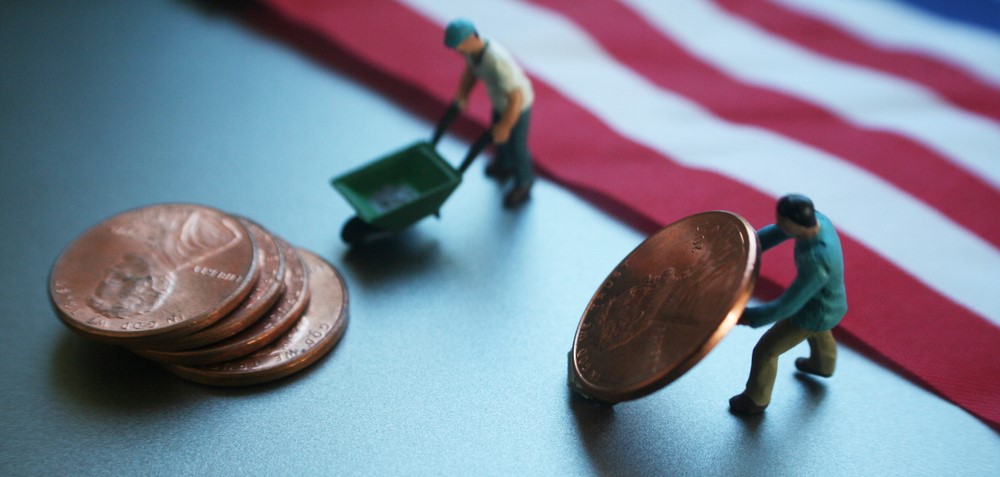
Speaking of questionable behavior, did you know the U.S. penny and nickel are also on the verge of obsolescence?  It’s true, if you believe the arguments of those who say the one-cent and five-cent pieces have outlived their utility.  Consider: 1) both coins cost more to mint than they’re worth; 2) a nickel today buys less than 20% of its worth in 1970 (a penny – less than 10%); 3) merchants routinely adjust pricing to avoid their use; and 4) the metals involved – zinc, copper, and nickel – have perfectly good uses elsewhere.

The prosecutions rests and the defense now takes the stand.  Pennies and nickels should not go the way of the northern white.  Consider: 1) Demand for the little guys is soaring; double what it was a decade ago; 2) The U.S. Mint “makes money” on its production of coins – fully 45 cents for every dollar’s worth (in 2017: a $400 million profit); 3) If zinc becomes too expensive (97.5% of the makeup of today’s pennies), a cheaper metal can be used for filler, and 4) eliminating pennies and nickels could threaten confidence in the U.S. dollar with a forced dependence on higher denominations.

I’ll get behind any of these arguments – pro or con – I just think they’re boring.  Defending our little Mr. Lincoln’s and little Mr. Jefferson’s can be so much more creative.  Take away pennies and nickels; then consider the following:

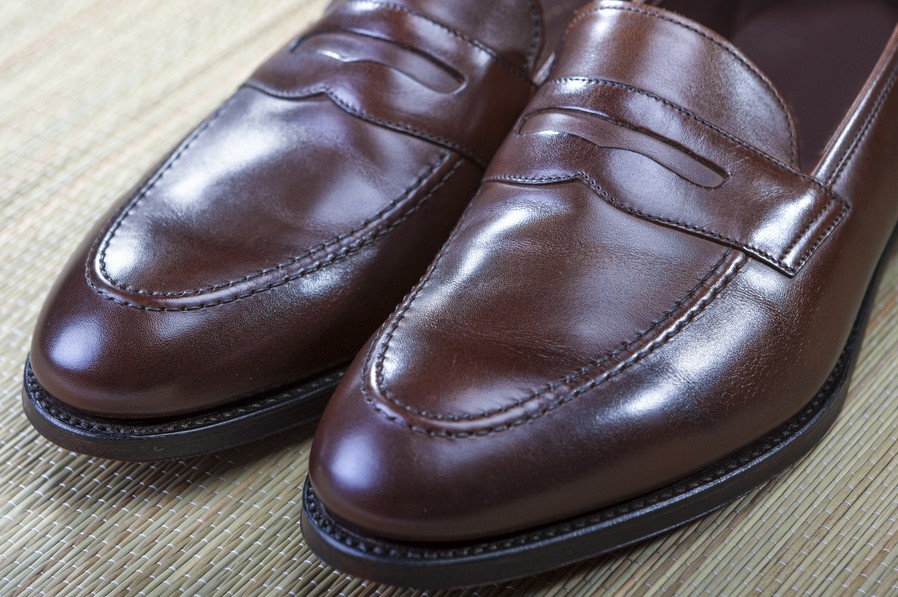
1) Penny loafers.  No longer the classic men’s slip-on shoes with the cool name, including the cross strap and small opening at the center; the perfect size and shape for a penny.  Add those Lincolns and you gave new meaning to the term “shoe shine”.  You also had a built-in conversation starter, when the girl asked why you put coins in your shoes.  You told her you were retro – back in the day a phone call cost a penny, and loafers were a convenient way to carry around the cost.

2) 99 Cent Only Stores.  Fifty years of U.S. retail, with over 400 locations and thousands of products priced at “ninety-nine cents or less”, goes belly-up without the penny.  How would a cashier make change on the dollar?  They’d have to give you a nickel instead, and… oops, the nickel’s gone too.  New math: buy something for $0.99, pay a dollar, and get a dime in change.  Huh?

3) Girls named Penelope.  They could no longer be “Penny” for short (or “Nickel”) because no one would understand what made the nickname so cute.  You say you don’t know anyone named Penelope?  Wait a few years.  In 2008, Penelope was #2,222 on the list of girl’s names.  This year it’s #573.

4) Your thoughts.  They used to be “a penny for…”.  Now you’ll have to pay at least ten times that much.  Keep them to yourself.

5) Beatles hits.  “Penny Lane” drops out of the Fab Four’s impressive list of #1’s.  The quaint little street no longer exists in Liverpool, England.  The barber never shows another photograph (of every customer he’s had the pleasure to have known).  There’s no fireman with an hourglass (nor in his pocket a portrait of the Queen).  You’re no longer there, beneath the blue, suburban skies.

6) Copper (+ zinc) floors.  Okay, I didn’t even realize this was a “thing” until recently.  Who ever said you had to spend a penny to give it value?

7) Your parent’s sayings.  Out the window goes “If I had a nickel for every time I heard that…”, or “we didn’t have two pennies to rub together”, or “that costs a pretty penny”, or “penny-wise, pound-foolish”, and so on.  Nobody would ever “nickel-and-dime” you again.

8) Derailed trains.  Okay, a derailed train was just a childhood power trip, to heighten the suspense of flattening pennies on the tracks.  The train rumbled on.  The pennies sometimes got lost.  Would a train flatten a dime or a quarter?  Never tried it; wouldn’t expect a kid to sacrifice that much pocket change for cheap thrills.

These arguments are solid; not a bad penny in the bunch.  We can’t let a subspecies like the U.S. penny or the U.S. nickel go extinct.  Think twice the next time a cashier takes a penny out of the counter cup just so she can give you change in dimes or quarters.  Think twice the next time you’re humming along with Billie Holiday:

Oh every time it rains
It rains pennies from heaven
Don’t you know each cloud contains
Pennies from heaven
You’ll find your fortune
Fallin’ all over town
Be sure that your umbrella is upside down

Some content sourced from the Wall Street Journal article, “”Should the U.S. Retire the Penny and Nickel?”

Wait For It

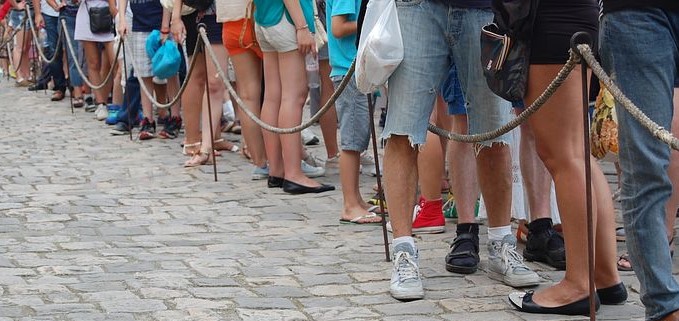
Let’s wager a guess over something that happened to you in the past few days. It probably happened several times in the past few days. It wasn’t by choice, nor were you alone.  It might even be happening right now. What is this recurring, oft-maddening event in your daily world (and mine)? Somewhere, for some good reason, in person or in the car, deliberately or unintentionally, you found yourself waiting in line.

Call it a common courtesy or call it the primary by-product of consumer demand. Waiting in line is a timeless (or time-wasting) necessary evil with no satisfactory alternative.  While the world behaves efficiently with smartphones, computers and even data-consuming “IoT” appliances, those snaking, switch-backing, several-option, several-category lines of humans seem to grow ever longer.  Including traffic on the highways – another version of waiting – you’ll spend one to two years of your life in line.

Consider some of the common reasons why we wait in line:
– store cashiers
– airport security
– phone calls (on hold)
– amusement parks
– voting
– public restrooms

If I wrote this post fifty years ago, I would’ve listed the very same reasons why we wait in line.  We have options now, but let’s face it; those options are waiting-in-line in disguise.  Store cashiers now work side-by-side with an area of self-check-out machines (which draws its own line).  Airports promote pay-for lines like TSA Pre and CLEAR.  Telephone on-hold mechanisms offer callbacks instead of waiting (“for an additional $0.75”).  Disneyland installed “FastPass” lines; again, for a fee.  Voting can be done by mail (forcing your ballot to wait in line instead of you).  And public restrooms?  Okay, there’s no option to waiting for the potty.  Maybe reconsider that second beer.

The Brits refer to a line of people as a queue.  I like that (and not just because we need more words beginning with the letter “q”).  Leave it to those on the far side of the pond to class up the most mundane activity imaginable.  At least we have our phones as distractions when we “queue”.  But the old-fashioned distractions still work.  It’s why they put candy bars by the cashiers, magazines in the waiting room, mirrors by the elevators, and televisions in the airport.  Anything to help you forget you’re waiting in line.

Julio C. Negron

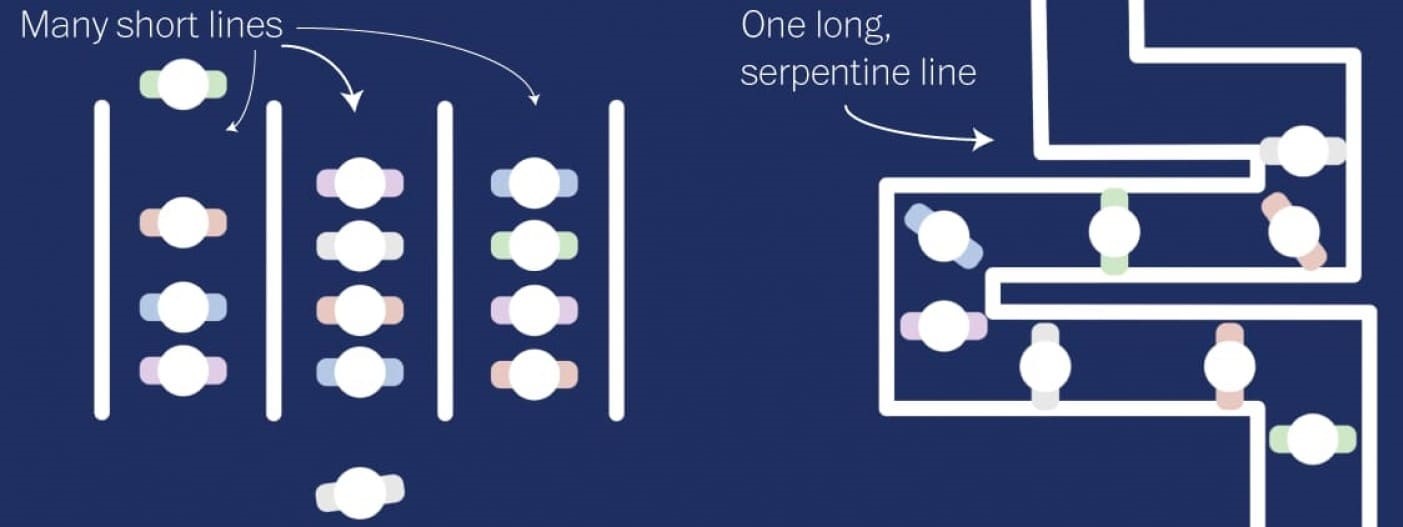
You’d think waiting in line is mindless – no-brainer science really – but I have experienced flaws in the system.  Recently in Lowe’s, waiting patiently in a single, central line at the self-check-out area, I was confronted by the person behind me, who demanded I “choose one side or the other” (as if logic demanded a separate line for each row of self-check-out machines).  My response to him was not one of my finer moments.  Another example – at the airport – my wife and I waited at the curb with a dozen others for the parking lot shuttle, only to discover the “front of the line” was a variable determined by the point on the curb where the driver chooses to stop his vehicle.  If you want to see what not waiting in line looks like, try to catch a parking lot shuttle at the airport.

In today’s world, we have new reasons why we wait in line:
– to purchase the latest iPhone
– at restaurants, with pagers (clever disguise for waiting in line)
on-line (i.e. for concert tickets or sports tickets at a specified time)
– Black Friday sales

Finally, we will always stand in line for our kids, whether to see Santa Claus at the mall or to buy something they simply must have.  Years ago, I remember taking my kids to the local bookstore for the latest “Harry Potter” (which they started and finished before the next sunrise).  It was the only time I’ve stood in line for the right to stand in line again.  The bookstore insisted on selling a limited number of tickets at noon, to be exchanged for the book later that same day, when the publisher allowed its release.

I believe the longest I’ve ever waited in line is five hours – to see the first Star Wars movie in 1977.  With no electronic devices to keep my friends and I company back then, five hours was even longer than it sounds, especially knowing two consecutive showings of the movie would run before I even entered the theater.  Then again, the truly morbid among us believe we are all simply waiting to die.  If that’s the case, let’s hope we’re in a really, really long line.

Love Thee, Notre Dame

I used to love “back-to-school” nights in my elementary school days. My brothers and I would lead my parents through the gates of our asphalt-paved campus on the west side of Los Angeles, eager to show off the classroom projects and displays we prepared for their annual visit.  Mom & Dad would cram into our child-sized desks for talks from our teachers while we’d join friends for playground fun under the lights. Finally, we’d enjoy a KFC picnic dinner at the outdoor tables where we kids would have lunch during the day. Back-to-school night was equal parts adventure and pride, returning to campus at a time when we didn’t have to be students.

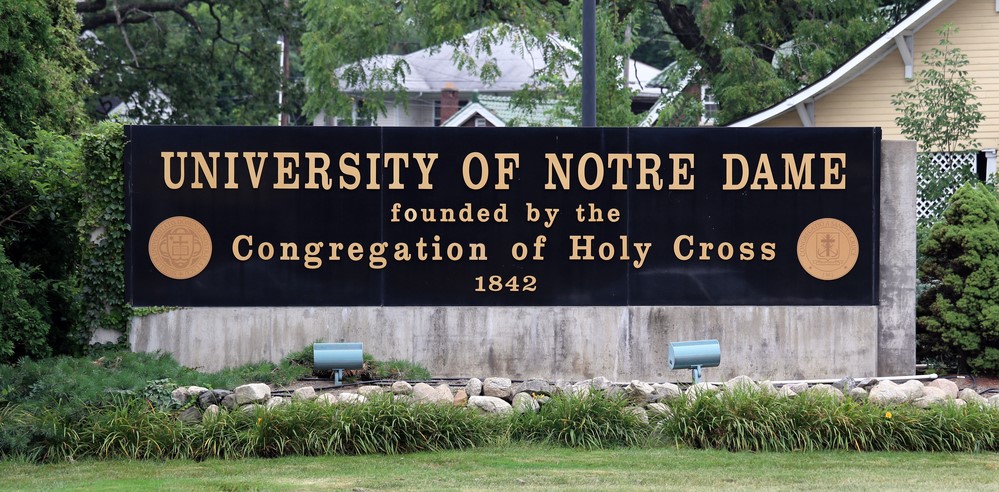
Such was the feeling this past weekend, visiting my alma mater in northern Indiana.  Notre Dame, that most Catholic of universities located near the south bend of the St. Joseph River – founded by Fr. Edward Sorin and his band of Holy Cross brothers in the mid-1800’s – drew me away from more convenient West Coast options like UCLA or Stanford (neither of which accepted me… details). Who was I, a Methodist from California, to attend a smallish Catholic school over 2,000 miles from home? Notre Dame’s admissions counselor did a heckuva sales job. Rather than own up to the humid months of the first semester or the penetratingly-cold months of the second, he focused instead on the promise of an outstanding faith-based education, coupled with small-dorm camaraderie, nationally competitive sports teams, and Midwestern hospitality.  When I graduated in 1985, it’s fair to say Notre Dame delivered on all of those.

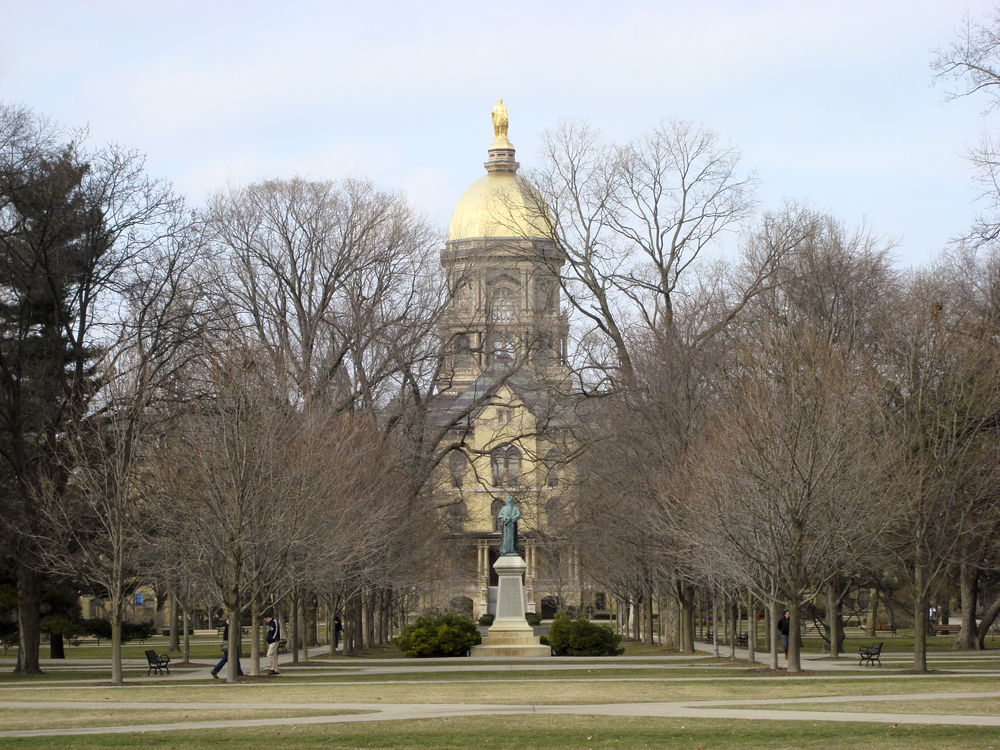
Administration Building aka “The Golden Dome”, Central Quad

Thirty years later – this past weekend – I set foot on campus again, adding to only a handful of visits since my long-ago commencement. I won’t lie – returning to my college roots was a little daunting.  The Notre Dame of my years was by all definitions smaller, more modest, and less prestigious than the globally-renowned multi-campus university of today. My Notre Dame was an intimate cluster of buildings surrounding just three quads, one end of campus seemingly a stone’s throw from the other.  The student union was as small as a cracker box.  Two dining halls offered the modest sort of food – cafeteria style – I recognized from elementary school.  Diplomas were issued in just twenty fields of study. Four percent of the student body claimed a faith other than Catholic.  The clear majority of students came from Midwestern states, and only a handful chose to study abroad.

O’Shaughnessy Hall, South Quad

Thirty years later, my Notre Dame of yesteryear has been consumed by a property twice the size.  New quads and facilities cover the open fields that once hosted tailgaters before football games.  Another one hundred buildings have been added to the eighty or so of my day.  The new student union – opening just weeks ago – is the length of a football field (and in fact, co-located with the football stadium).  Today’s undergraduates choose from countless degree programs, with another fifty masters, doctoral, and professional programs to follow.  Add to the options, fifty foreign study-abroad opportunities in forty countries.

“Only” 80% of students are Catholic now (diverse by Notre Dame’s standards), and – speaking of diverse – almost 20% of the student body comes from outside the U.S.  Visiting one of the dining halls for lunch, it wasn’t the broad choice of foods (organic, ethnic, made-to-order) that impressed me, but rather the students themselves.  I witnessed a pretty good slice of the global pie at the tables around me.

Stairway to The Grotto and St. Mary’s Lake

Notre Dame’s mission statement includes the following: “In all dimensions of the University, Notre Dame pursues its objectives through the formation of a human community graced by the Spirit of Christ.”  Clearly that objective is reflected in the Notre Dame of today.  A school once known for little more than football is now an academic behemoth, built on an unwavering foundation of faith and service to God and fellow man.

“In Celebration of Family”

Notre Dame’s alma mater concludes with the following sentence: “…and our hearts forever, love thee Notre Dame.”  There may be a lot of “new” on campus today, but I still find the pathways of “my” years.  The Golden Dome, the Basilica of the Sacred Heart, and the Grotto will always form the heart of campus.  I maintain ties with only a handful of those who were in school with me, but we’ll always be proud members of the Fighting Irish family.  And every time I set foot on campus, I never fail to sense the memories of old, the encouragement of new, and the presence of the Spirit.  Indeed, Notre Dame is in my heart forever.

Land of Flying Cars

My wife and I live in a rural area of Colorado known as the Black Forest.  The high density of Ponderosa Pines in our small geography gives us our name.  Remarkably, there’s only one other notable place on the planet named “Black Forest”: the region near Bavaria in southwest Germany.  As it turns out, I have personal ties to both places, though I’ve never been to the south of Germany.  Follow along as I connect the Forests.

Fill in the blank, “Best Childhood Movie: ________”.  Most of you would respond with an offering from Disney.  Including “Snow White…”, “Mary Poppins”, and “The Little Mermaid”, you’ve already covered sixty years of film-making, with countless other Disney classics in between.  I don’t think I missed a single Disney growing up in the sixties and seventies, yet – go figure – my favorite childhood movie doesn’t come from the Mouse.  It doesn’t even come from my home country.  My childhood choice?  The UK’s “Chitty Chitty Bang Bang”, based on the 1964 novel by Ian Fleming.

“Chitty Chitty Bang Bang” – the captivating musical about the inventor and his kids who lived in a windmill cottage; about those wonderful-though-not-always-perfect inventions (my favorite: the eggs-toast-sausage breakfast machine); about the candy-maker and the toy-maker and the captivating castle world of Vulgaria; and most importantly about the magical flying motorcar itself – created figments of my imagination like no other movie.  The lyrics to the title song (“…Bang Bang Chitty Chitty Bang Bang, our fine four-fendered friend…”) were burned into my brain.  Someday I vowed to visit the lands of Caractacus Potts and Baron Bomburst.


As it turns out, the Potts’ windmill cottage really does exist (and not on a movie set) – as the “Cobstone Windmill” in Buckinghamshire, England. The mansion where “Truly Scrumptious” lived is in the same area of the country.  And the Scrumptious Sweets Company was a working factory in Middlesex (today a steam-engine museum).  But it was the castle and village in Vulgaria I really wanted to see.  Not long after seeing the movie of course, I learned “Vulgaria” was a fictitious country.  Baron Bomburst didn’t actually lord over the land, nor did he ever keep all those children as slaves beneath his castle. But the castle and the village are based on actual places.  The village is Rothenburg ob der Tauber in Bavaria.  The castle is Castle Neuschwanstein, also in Bavaria.  And how ironic; both locations were inspirations for Disney as well: Rothenburg for the village in “Pinocchio”, and Neuschwanstein for the Cinderella castles in the theme parks.

To bring my journey full-circle, Rothenburg, Castle Neuschwanstein, and Bavaria sit in southwest Germany, adjacent to… the Black Forest.  Germany’s version of the Forest is a mountainous land of picturesque villages, castles, vineyards and spas.  This is the region that brought the world Black Forest Ham and “truly scrumptious” Black Forest Cake.  This is the land of glass-making and cuckoo clocks.  From the photos above, it looks every bit as charming as “Vulgaria”.


Colorado’s Black Forest barely amounts to a dot on Google Maps.  Within our pines, the “town” is a hodge-podge of nondescript businesses clustered around a couple of traffic signals, with nothing more alluring than a Subway, a post office, and a couple of coffee shops.  The terrain is fairly flat, with no windmill cottages or mountaintop castles or cuckoo clocks.  But it’s a great place to live, with its own unique charm.  And every now and then, when I’m deep in the pines, I’ll start humming that forever-familiar Chitty-Chitty tune, as I gaze up to the skies in search of a flying motorcar.

Getting My Juice GONE (p.2)

“Survivor” is reality TV’s longest-running program. “Survivor” is also my new middle name after a vicious three-day juice cleanse last weekend. For my pre-cleanse (sane) state of mind, refer to last week’s Getting My Juice On. For my current (questionable) state of mind, proceed with caution. The words that follow may be the equivalent of the movie scene you wish you never saw; the one still burned into your brain.

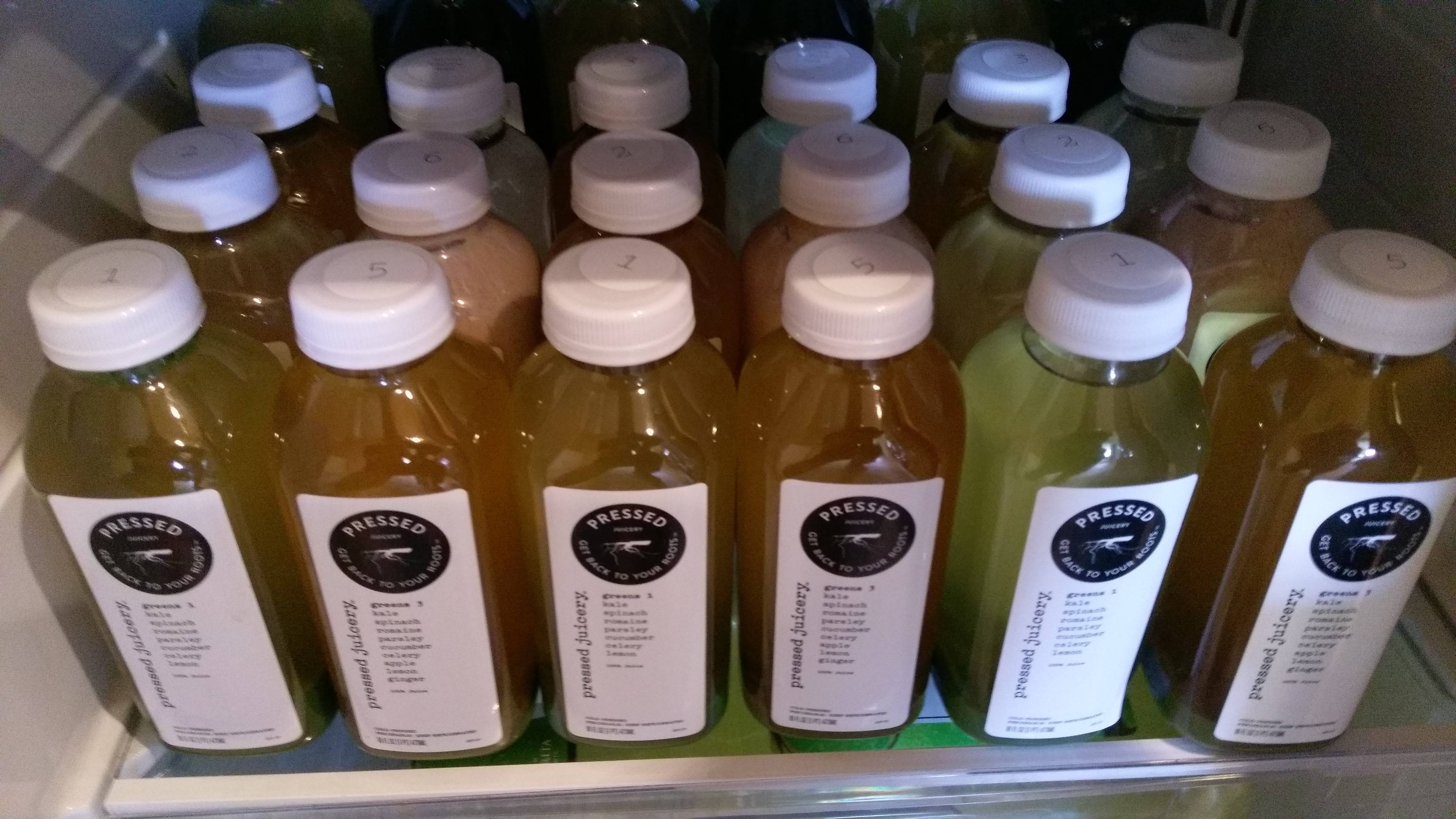
The quick recap: my daughter recently coerced my wife and I into trying Pressed Juicery, a hard-core player in the world of retail cold-pressed juice products. PJ offers gentle confections like coconut water with cinnamon, but for the truly gullible (me), they suggest a “cleanse”, where you down 336 ounces of liquid in three days (assuming you include the recommended twenty-four glasses of water). In those torturous seventy-two hours you get nothing else on the menu – no snacks, no bars; no solid food whatsoever. It’s just bottle after bottle of sickly-green liquefied vegetables (with an occasional fruit thrown in, which might as well be a lamb tossed into a pride of lions).

Considering I knew everything in the above paragraph before I took the first sip labels me as some kind of (raving lunatic)? But add my daughter to the equation and my voice goes rogue with, “sounds great, honey!”. Thus last Friday morning at zero-eight-thirty, I took my first sip of the PJ Kool-Aid. Let’s set the table with the scrumptious ingredients. Kale. Cucumber. Romaine. Spinach. Parsley. Lemon. I’d list the rest but I’m about to toss my cookies just thinking about them again (and believe me I’ve had a few cookies since that last fluid ounce).

In the beginning (this is a tale of biblical proportions), I assumed remarkable confidence staring down Cleanse Bottle #1. I consumed its contents in two or three gulps. Not so bad, I thought. Utterly vegetable with a sickly fungal aftertaste, but nothing a glass of water wouldn’t kill. But two hours later (which is a short 120 minutes on a juice cleanse), Bottle #2 came a-calling. This time I’m not so fast. It takes me a good half-hour to drain the contents. Now I’ve got thirty-two ounces of liquified vegetables in my system, which PJ claims is eight pounds of the real produce. That’s rough(age) on a body, and the body doth protest. After Bottle #3 the burps started. After Bottle #4 I enjoyed the occasional dry heave. By Bottle #5 I was asking for Mommy so I could tell her I didn’t want to do this anymore.

Unbeknownst to me (remember, I am gullible), I had created the perfect storm of stomach acids and vegetable puree deep down in my digestive system. Perhaps that’s why Bottle #6 is all almond milk and vanilla. It’s like dumping two cups of Pepto-Bismol over the whole mess (“Coats!” “Soothes!”). Okay fine, but try sleeping on that stomach. Your dreams are technicolor and downright scary.

Somewhere during Day 2, I looked in the mirror and saw a cucumber with a tomato head and broccoli-stalk arms. I stifled a scream. I put my hands on my hips and tried a “Ho-Ho-Ho” to see if I should audition for those Jolly Green Giant commercials. But there’s no time for auditions when a bottle beckons every two hours. Furthermore, deep into a juice cleanse you stop stop tasting the vegetables. That is, even when you’re not drinking, you’re tasting the green. Every gulp of air is tainted with chlorophyll. No breath mint is strong enough to conquer the stench. It’s like somebody threw your backyard garden into a giant blender, then filled your swimming pool with the resulting green muck, then threw YOU into the deep end. You’re six feet under in vegetable quicksand.

Enough of the madness – let’s cut to the merciful end of my story. Somehow I burped and lurched Day 3 away.  On Day 4, the clouds cleared, the sun rose, and I awoke to the promise of solid food. Bless my soul – a full-course breakfast awaited me. No longer would I spend as much time in the bathroom as I would in the free world. Life was good again. Or so I thought. As PJ smartly warns you, one cannot just return to normal eating/drinking immediately after a juice cleanse. One must slowly reintroduce the finer things in life. Choose carefully. Chew slowly. Limit thy portions. Rome was not built in a day.

Would I recommend a juice cleanse? No. (unless you’re gullible – then you don’t have a prayer anyway). Do I feel healthier after my three days in the garden? No, but I feel different, as if a vegetable alien is growing inside my stomach and may someday rip its way out.  Do I have any advice after the fact?  Yes. Damn, I could’ve had a V-8!

Getting My Juice ON (p.1)

My daughter has a knack for making me do things I wouldn’t choose to do myself. Perhaps it’s because she was unexpected at birth (I came from a family of five boys and already had two sons of my own). Perhaps because as a kid, she could scrunch up her face and use her best sweet-little-girl voice whenever she wanted something. Maybe it really began by relenting to little Girl Scouts and their boxes of cookies at my front door.  Whatever the reason, my daughter still finds a way, even as an adult in her mid-twenties.  And that is why I’m commencing a three-day juice cleanse tomorrow morning.

Cleanse. The word scares me a little. I think of those whirly scrubbing-bubble characters on TV, dashing around the bathtub disinfecting away soap scum.  Or I think about SOS pads and their steel-wool grittiness.  Is this simply a short-term liquid diet, or am I on the verge of a full-on purge?

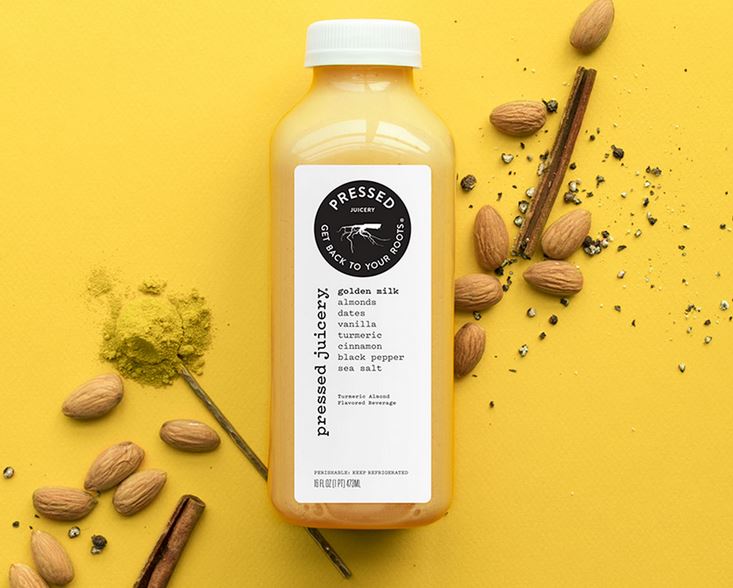
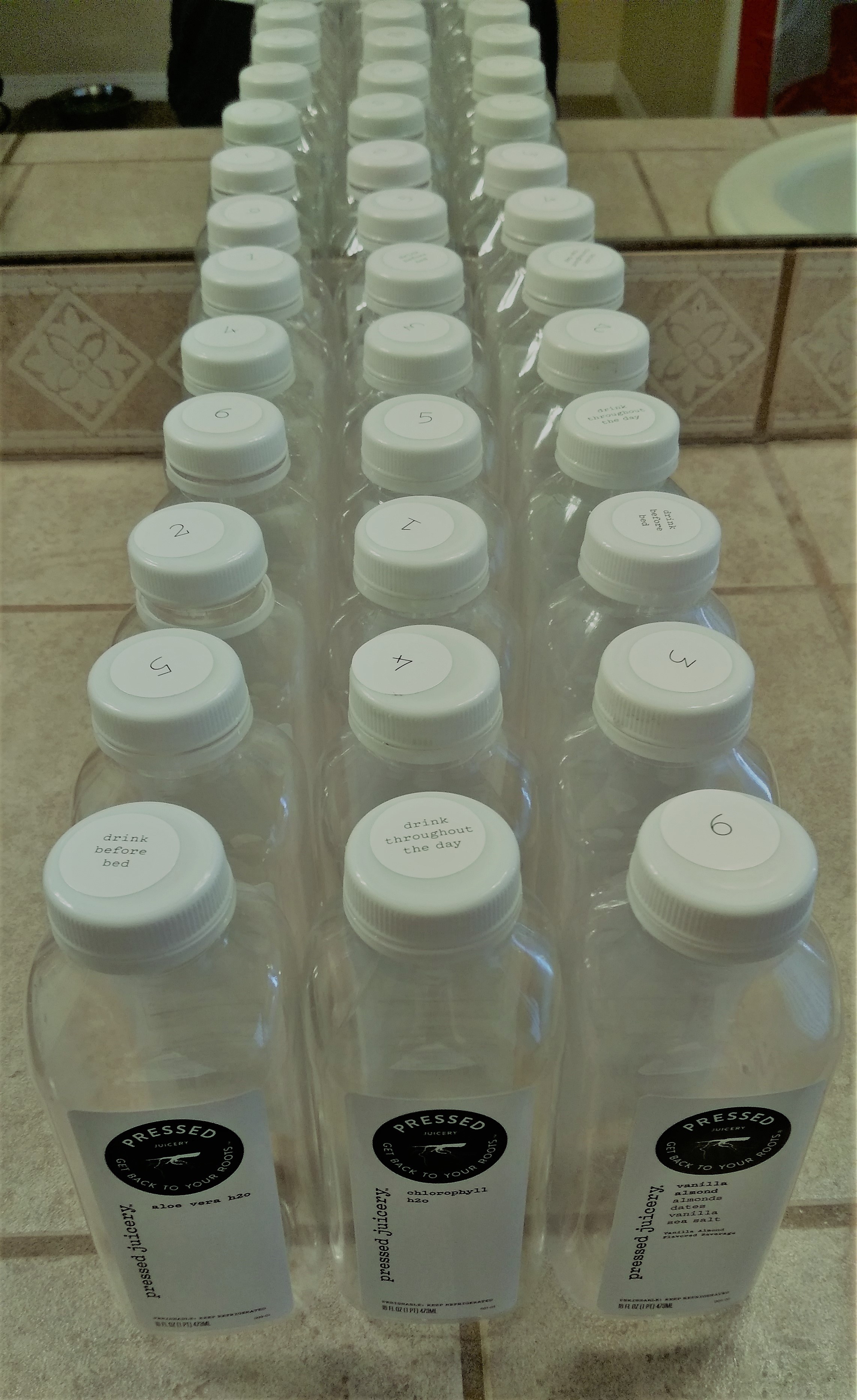
My box-o-cleanse arrived last night; a liquid-brick wrapped carefully inside a foil space blanket. I opened the container to find twenty-four intimidating 16 oz. bottles staring up at me. I swear they were grinning. They looked like they couldn’t wait to get out of their box, sprout their scouring brushes, and commence the cleaning. Each bottle contains a different colored concoction, labeled rather impersonally.  Greens 3.  Roots 1.  Citrus 2.  I’ll drink one of these little guys every two hours in the waking hours of the next three days, chasing their green goop with a similarly-sized bottle of “Chlorophyll” water or “Aloe-Vera” water. Chlorophyll? Aloe Vera?  I feel like a plant already.

I can’t claim to be surprised by the contents of my box-o-cleanse. Just last week I visited one of the labs – er, retail outlets – for a sample of these products. Pressed Juicery, with locations close to the coasts and Hawaii, sells cold-pressed, 100% fruit & vegetable concoctions; all ingredients non-GMO. I tried one of their delicious coconut-cinnamon drinks… and that was my mistake. P.J. lures you in with mild, decent-tasting options like coconut and cinnamon. Then they gently suggest you consider a cleanse.  My daughter wanted to try one, and I was only too happy to foot the bill (these drinks ain’t cheap).  I figured Colorado was a safe distance from the cleansing craze, so my only involvement would be with my wallet. Wrong-o. P.J. is happy to overnight their products to just about anywhere.  Thus my twenty-four cleanse bottles mock at me today, anticipating tomorrow’s cleaning kick-off.

If I stepped back and gave Pressed Juicery a hard look, I might have used my better judgement, turned, and fled.  The retail outlets abound with stark-white surfaces and plate glass.  The employees dress in uniforms intimidating enough to double as lab coats.  The products emerge from a dark, back wall refrigerator, pre-assembled and ready to consume.  For some reason “drinking the Kool-Aid” just came to mind.  Gulp.

P.J. describes their juice cleanses with a selection of unnerving words. Reboot. Fresh Start. Body Do-Over. Cue a bout of mild nausea. Am I going to be more intimidated by a) the taste of “four pounds of fresh produce in every juice” or b) what those four pounds will do to my insides? Will my body a) turn green and sprout shirt-ripping muscles like “The Incredible Hulk”, or b) reduce to a puddle (think “Wicked Witch of the West”) through non-stop visits to the toilet?

My daughter is already halfway through her own three-day P.J. cleanse.  She claims she’s never hungry, feels really healthy, and only misses “the act of chewing”.  But she also admits to gagging trying to get a bottle of “Roots 2” down (she recommends shot-glassfuls).

If I’m still around next week, you can count on a post-cleanse blog report.  If I’m not, Lord help me for never saying no to my daughter’s ideas.

The Euphoria of Joe

Today I’m perched at one of my favorite Colorado coffeehouses, sipping the local version of a cafe latte.  The air is rich with the bitter aroma from the nearby roaster.  I’m surrounded by chatty patrons, each with their own coffee-based delight-in-a-cup.  If I had a handful of the crunchy chocolate-covered espresso beans they sell, I could say coffee’s hitting all five of my senses today (instead, I have a delicious apple fritter).  These days, coffee is as infused into American culture as baseball and Apple (pie).  And how far we’ve come from the cups of Joe former generations would brew with store-bought cans of Folgers.

How far have we come (besides the requisite latte foam-art)?  Consider this: my coffeehouse does not allow to-go orders.  You read that right: if you get your coffee here you’re drinking in-house.  According to the resident “roastmaster”, paper cups alter the flavor of the coffee and thus they won’t sell it to-go.  Hard for me to swallow (the cup thing, not the coffee), as my palate has never been very discerning.  Yet here I am, paying top dollar to drink real-cup coffee “in the house”.

It wasn’t always this way.  Not so long ago all you had on the menu was a “cup of coffee”.  Take it black or take it with sugar/cream, but that’s where your options ended.  And the reference to “Joe”?  That comes from a 1914 ban of alcohol on U.S. Navy ships by then Secretary of the Navy Josephus “Joe” Daniels.  The strongest alternative to a “real” drink on-board was black coffee.

Today’s kids get their first taste of coffee at Starbucks.  My own first taste took place in Italy, during the college year I lived there in the 1980’s.  Italians take their coffee very seriously.  Walk into an Italiano café, belly up to the bar, and order an espresso shot and sweet roll.  That’s your standard-brand Italian breakfast, and you take it standing up.  You’re in, you’re out, and you’re on your way again in less than a minute, sufficiently caffeinated.  Not many are baptized on straight espresso, but that was my experience.

My coffee journey continued after college, but it was quite a stumble.  I graduated from Italian espresso and regressed to the standard-brand Bunn coffeemakers of corporate America.  Starbucks and its kin would not arrive for another 5-10 years.  Office coffee was a mindless, characterless, tasteless experience.  A Styrofoam cup of black nothingness, with a few unbrewed grounds thrown in for texture.  It was like descending from the Golden Age of the Roman Empire to the Dark Ages.

Thankfully, my coffee habits persisted until coffeehouses became an American staple in the late 1980’s.  The houses themselves still aren’t the vision of Starbucks’ Howard Schultz: “comfortable, social gathering places away from home and work”, but at least we’re getting past the Frappuccino-this and macchiato-that, evolving back to straight coffee.

My one dedicated-cash phone app is for coffee.  I literally wake up and smell the coffee thanks to my Keurig; then structure my waking hours with the possibility of a drive-through cup of Joe later on.  To get really serious I could spend $200 on a Ninja’s home coffee bar, which claims to be a coffee system (“Variety of brew types and sizes!” “Built-in frother!” “Tons of delicious coffee recipes!)  Their tagline: “See what all the coffee buzz is about”.

Coffee buzz is no joke, as patrons of America’s 33,000 coffee shops will tell you.  The euphoria we desire – the blissful effects drawn from caffeine – actually has a name: “margaha”.  For that reason, whether your preference is a nitrogen-infused cold brew, a coconut-milk mocha Macchiato, or a take-it-straight cup of Joe, it’s safe to say coffee is here to stay.

Out of Sight

Jake Olson is a student at the University of Southern California. He’s a backup long snapper for the celebrated Trojan football team, and aspires to play golf on the PGA Tour after college. John Bramblitt is a budding artist whose work sells in more than twenty countries. He paints primarily by touch, claiming “different colors have different textures”. Christine Ha is an award-winning chef who never had a minute of formal training, yet developed a popular cooking blog and won the 2012 edition of the television show MasterChef.  Why mention these three achievers in the same paragraph?

They are all legally blind.

Two weeks ago – unbeknownst to just about all of America – we “celebrated” White Cane Safety Day (WCSD).  A national observance since 1963, WCSD was established by the National Federation of the Blind to remind the public about the significance of the white cane.  In 1930, blind people were given the freedom to lawfully move about the U.S. on their own, provided they used the white cane to navigate their way.  The implication is prior to 1930, blind people were either confined to their homes or could not move about without the assistance of another person.  My parents explained the meaning of the white cane the first time I saw a blind person on the street, but it never occurred to me the cane signifies a legal status.

Seeing may be believing (as the saying goes), but blindness takes belief to an entirely different level.  The people I mentioned above are just a few of the countless examples of accomplishments in all walks of life, minus the sense of sight.  Surely you can name a blind person without resorting to Google. Ray Charles. Helen Keller. Andrea Bocelli. Stevie Wonder. Aldous Huxley.  And those are just the famous ones.

Speaking of the famous, I recall – somewhere in the piles of books I read as a teenager – the fictionalized biography of Louis Braille.  Just as Irving Stone did for Michelangelo in “The Agony and the Ecstasy”, the author added fiction to fact to bring the story of the famous French educator/inventor to life.  Braille’s blindness occurred in his youth: the infamous accident with the awl in his father’s workshop (surely inspiring the plea of parents, “Don’t play with that!  You’ll put your eye out!”)  Remarkably, at only fifteen years of age and already blind, Braille took the very same awl and developed a method of reading/writing for his counterparts virtually unchanged to this day.  It reminds me of Beethoven, who lost his hearing in his early twenties yet somehow composed some of the world’s most famous symphonies and piano concertos.  Belief at an entirely different level.

Convenient to my topic, a new movie debuts in theaters this week called “All I See Is You”.  Starring Blake Lively and Jason Clarke, the story concerns a marriage where a blind spouse depends on her partner to see and feel the world around her.  Dependent, that is, until a corneal transplant allows the woman to regain her sight.  As you might expect, bringing vision to the blind is not all it’s touted to be.  A similar story was told in 1999’s “At First Sight” with Val Kilmer and Mira Sorvino.

Christopher Downey is an architect who, shortly after training in the profession, lost his eyesight to a tumor wrapped around his optic nerve.  No problem, apparently.  Downey now produces drawings from a tactile printer – raised lines akin to Braille’s raised lettering system.  As if you needed another example of belief.

I used to yearn for “as far as the eye can see”, considering the eye doctor routinely issues me a prescription far less than 20/20.  Thanks to these inspirational people however, it’s fair to say my vision is actually limited by my sight.

Pan-Pacific Keepsake

A year ago I wrote a piece called Athens of the South, a reference to the city of Nashville and its remarkable full-scale replica of the Greek Parthenon in downtown Centennial Park.  The Nashville Parthenon is a leftover from the 1897 Tennessee Centennial and International Exposition.  If you ever visit the ruins of the real Parthenon, you might want to add Nashville to the itinerary to see how the structure looked in its full splendor.

Shortly after my trip to Nashville, I traveled to San Francisco for my niece’s wedding.  She chose a remarkable venue for her ceremony – outdoors under the dome of the elegant Palace of Fine Arts, near the Golden Gate Bridge in the Marina District.  The Palace, as it turns out, has much in common with the Nashville Parthenon.  Despite more popular attractions, both structures belong on the “must-see” lists of their respective cities.

The Palace of Fine Arts, like the Nashville Parthenon, is one of the few remaining structures from its World’s Fair; in this case San Francisco’s 1915 Pan[ama]-Pacific International Exposition.  Typical of a World’s Fair, the Pan-Pacific showcased products, inventions, and cultures of the day, and remained open to the public for almost a year.  The 600+ acres of San Francisco’s Marina District (where I rented my first post-college apartment) served as the Exposition’s central footprint, with the Palace on the west end and “The Zone” of amusements and concessions on the east (near Fort Mason).  Even though the Pan-Pacific’s structures were designed from plaster and burlap – to literally fall to pieces after a year, a few have been preserved to this day. The Civic (Bill Graham) Auditorium is a Pan-Pacific structure in its original location.  The Japanese Tea House was loaded onto a barge and shipped down the bay to the town of Belmont, where it still stands today as a restaurant.  Two of the Exposition’s state pavilions (Wisconsin, Virginia) were relocated to nearby Marin County.

The Pan-Pacific Exposition – like the Tennessee Centennial – brimmed with remarkable structures, including ten exhibition “palaces” and the 435-ft. tall Tower of Jewels.  Surely none of these were more elegant than the Palace of Fine Arts.  My first visit to the Palace was back in the 1970’s, when it housed the Exploratorium, a kid’s-dream hands-on maze of exhibits showcasing the wonders of mechanics, physics, and chemistry.  The Exploratorium filled the Palace’s Exhibition Hall for 44 years before moving to its current location in the Embarcadero.  The Exhibition Hall was all about art for the Pan-Pacific, but it’s had several creative uses since, including tennis courts, storage of military trucks and jeeps, and a temporary fire department.

Let’s be honest though – the Exhibition Hall is not why you visit the Palace of Fine Arts; at least not anymore.  You’ll be captivated by the glorious Roman/Greek-inspired structure of dome, rotunda, and adjoining pergolas instead.  Take a walk between the colonnades to get a sense of its monumental scale.  Have a picnic on the grassy shores of the lagoon.  The Palace’s best photo opp: on the east side of the water under the Australian eucalyptus trees.  Your view is uninterrupted, and mirrored in the water’s reflection.  It’s a popular spot for wedding photos, as my wife and I discovered thirty years ago:

Personal connections or not, I like to think of the Palace of Fine Arts as a large-scale keepsake; a reminder of those simpler-yet-somehow-more-elegant days and generations gone by.  Perhaps the Palace gazes forlornly to the east, seeking the grandeur and crowds of the 1915 Pan-Pacific International Exhibition.  Perhaps she’s content to just watch over the parade of newlyweds on the far side of the lagoon.  Either way, I’m glad she’s still around.  Like the Nashville Parthenon, the Palace of Fine Arts is fine art.

Some content sourced from Wikipedia, “the free encyclopedia”.
 

Refuge and Reassurance

When the world goes off the rails like it did this week in Las Vegas, the very human reaction is fight or flight. Fight as in help to those who were impacted.  Flight as in shelter; consolation from an incomprehensible tragedy. My own flight, in extreme instances like this one, sometimes takes the form of fond memories of a journey my wife and I made five years ago, to a remote village on the west coast of Ireland called Clifden.

For those who travel to Ireland, Clifden is rarely on the itinerary.  It’s a four-hour cross-country drive from Dublin, and the final ninety minutes meander along a two-lane road through the forested expanse of Connemara National Park.  Clifden has a modest history for all of its two hundred years on the map.  The town evolved from farmers and fishermen who lived in the region, its commerce bolstered by the heir of a nearby castle.  Like most towns in Ireland, Clifden suffered the blight of the potato famine and the onslaughts of rebels from the north.  Its only claim to fame is the location of Marconi’s first wireless telegraphy station to the near south, broadcasting messages across the Atlantic to Nova Scotia in 1905.  Today Clifden has 2,000 inhabitants, still looking the part of “two churches, two hotels, three schools, and 23 pubs” it boasted in the early 1800’s.

As my wife and I discovered, Clifden is the very definition of “off the beaten path”.  We stumbled upon its welcoming neighborhood very much by chance.  Our intended stop was Galway that day, but once in the city-center (and having survived a five-lane roundabout), we yearned for something smaller and less urban.  Heading north along the coast and with dusk turning to dark, we experienced the thrill of the uncertainty of locating our as-yet-unknown destination.

After a middle-of-the-road stop for a funeral procession (popular guy, judging from the dozens of people descending upon the nearby church), and then passing by the dignified Kylemore Abbey, little Clifden emerged from the coastal fog.  We stopped into the first bed-and-breakfast we could find, but there were no rooms at such a late hour.  Instead, we were directed to the larger/older Foyle’s Hotel a couple of streets away.  What a blessing in disguise.  Foyle’s was the perfect introduction to the charms of Clifden.  A turn-of-the-century grand dame with wide hallways, creaking stairs, and no elevator, we felt like we’d stepped back in time a century or more.  Dinner was served in an elegant main-level salon just off the reception area, soft music playing in the background.  Our spacious room looked down on the center of town from one of the second-floor windows you see here.

The next morning, we took to Clifden on foot, wandering its quaint, narrow, up-and-down streets.  We stopped in at Walsh’s Bakery for breakfast, walking away with a few of the more tempting choices from the case. We then stopped in at St. Joseph’s Catholic Church, one of the two spires accenting Clifden’s modest skyline. We climbed to the higher part of town for a look down to the lazy harbor activity along the quay.  More than any sight or sound, we simply embraced Clifden for what it was; a quiet seaside village; is inhabitants contentedly going about their business.  In contrast to bright and busy Dublin, Clifden summoned a much-needed deep breath and a moment of halcyon reflection.

Perhaps our travels will bring us back to Clifden someday.  But the more I consider the idea the less inclined I am to make it happen.  Our idyllic experience was predicated on the chance decisions making our visit happen in the first place, the wandering road leading us to its cobblestone streets, and the saving grace of vacancy at the Foyle’s Hotel.

In Gaelic, Clifden means “stepping stones”.  That’s a nice coincidence, since my fond memories seem to guide me back to a more content frame of mind.  I keep the following illustration in my home office.  With just a glance I can find reassuring refuge once again.

Some content sourced from Wikipedia, “the free encyclopedia”.