Lack’n Keys

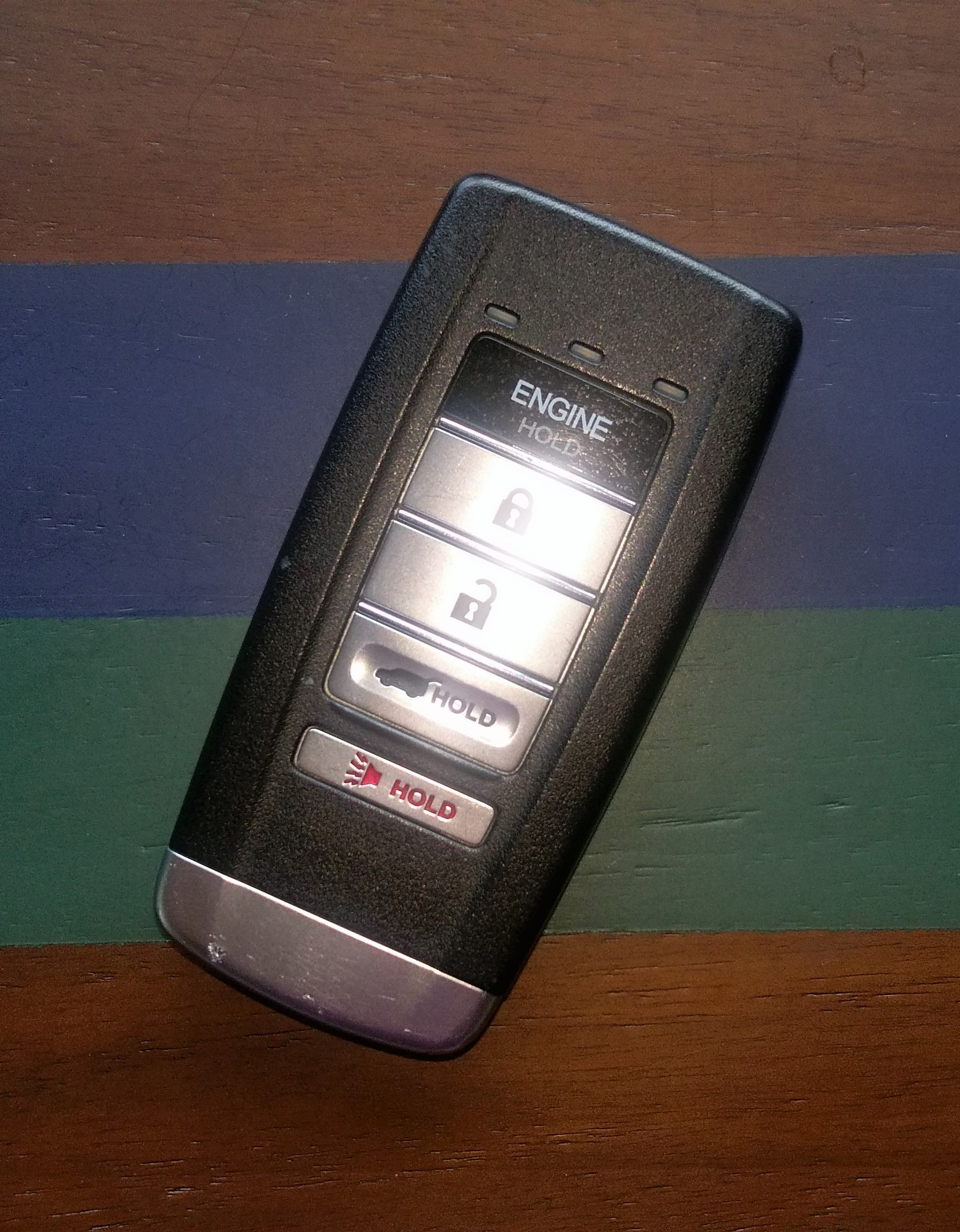
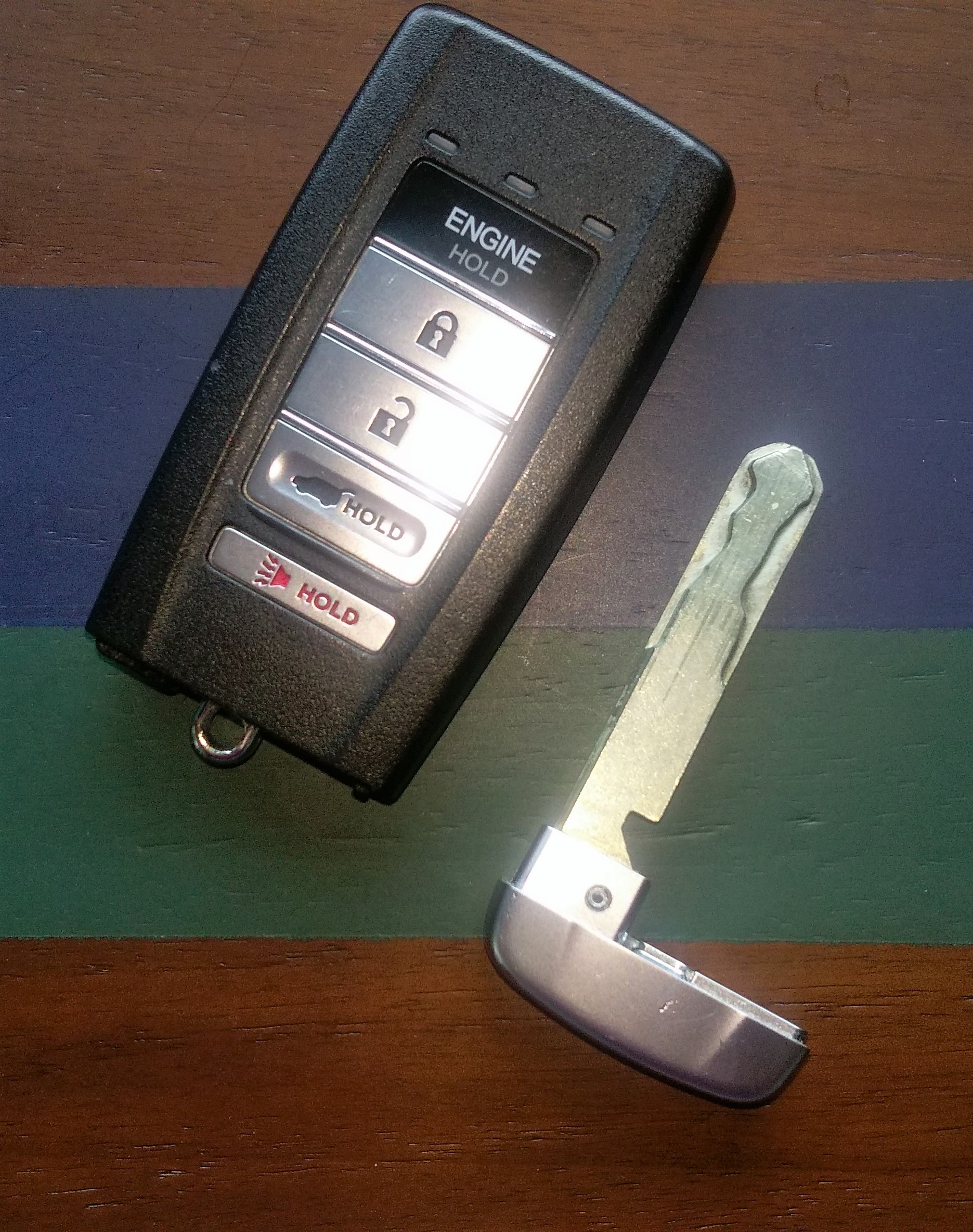
Walking out the front door, I can count on one hand the items I typically carry. I always wear a watch, choosing between a stylish timepiece and a fitness tracker. I pocket a slim leather wallet on my left, containing a minimum of cards and ID. I stash a handkerchief on my right, an acquired habit to handle life’s unexpected messes. My cell phone goes in my back pocket, but really, I’m just shifting it from one location to another (house to car, car to office, etc.)  Finally, I pocket a ring of jingling keys… or should I say “key”… or should I surrender to: “remote transmitter”?

Before
After

Key rings (or chains), still found by the eye-catching dozens at souvenir shops and car washes, used to be a symbol of status.  The more occupants on the ring, the more important the man.  Add on a colorful fob – perhaps boasting of a car brand or a sports team, and your key ring spoke volumes.

At the height of my own “importance”, I carried six keys: two for the cars (mine and my wife’s), and one each for the house door, office door, office file cabinet, and safety deposit box.  Each key had its own character, which made the collection even more interesting.  The house key contained a little light you could shine on the lock when it was dark.  The office cabinet key had a tubular shape.  The safety deposit key was flat and ancient (the senior member of the ring) and required a companion key from a bank teller to open the box.

First toy for our granddaughter

Alas, my key ring is now retired.  In its place is Mr. Remote Transmitter; technology’s answer to key-free cars.  The house door sports a lock with an electronic keypad.  Both office keys went away the day I began working from home.  My wife’s truck key shifted to a drawer in our foyer, in case hers gets lost.  And Mr. Flat-and-Ancient retreated to the home safe; a more prudent location than on a ring in public.

Keys carry a certain mystique in knowing they open something, which is why I miss them.  They also bleed a little nostalgia.  When I was a kid, I carried a tubular key for the lock securing the only vehicle I owned at the time – my bicycle.  When I practiced piano, eighty-eight black-and-white keys beckoned to make music.  When I played basketball, I never went far from the court “key”.  A childhood trip to Baltimore’s Fort McHenry taught me the origin of America’s national anthem…. and therefore about Francis Scott Key.

See why it’s called “the key”?

Keys also appeared in college.  Studying architecture introduced me to the keystone (the central block or other piece at the apex of an arch or vault).  Working architectural drawings always included a table-of-contents “key”, deciphering the symbols and acronyms on the greater page.

(Not-so-random thought: how did I never listen to the soul-filled R&B music of Alicia Keys?)

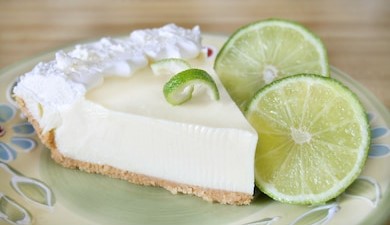
The “real” version requires Florida Key limes.

When I first met my wife, the keys kept coming.  Her family owned a home in the Florida Keys (small, low-elevation, sandy islands formed on the surface of coral reefs).  When she and I moved to Colorado, we flirted with the idea of a ski condo – in Keystone of course.  Our 25th wedding anniversary in Ireland included dinner at Dublin’s “Quays” Restaurant (pronounced, yes… “Keys”).  Also credit my wife for gifting me the most important key of all:

A lifetime of keys makes me a sad I’m “lack’n” them today.  But that’s not quite true, is it?  I spend most days clicking away on my computer keyboard, after all.  Even better, my remote transmitter contains – behind all that technology – a modest little back-up key.  Nice to know I’m still carrying.

Some content sourced from Wikipedia, “the free encyclopedia”.

Teacher of Note(s)

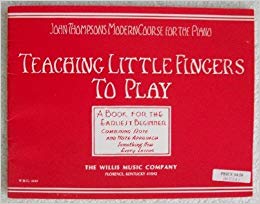
In church last Sunday, early in the service, the congregation was treated to a beautiful rendition of the hymn, “My God and I”.  The young female soloist, introduced with aspirations of the Broadway stage, stood poised behind the microphone, beaming through pitch-perfect singing.  As captivating as she might have been, my attention was drawn to her much older accompanist; a bespectacled white-haired woman at the piano, carefully dividing attention between sheet music and protege.  Wordless communication was exchanged; subtle nods of encouragement; cursory, confident smiles.  And just like that I was no longer in church, but back in second grade, toiling away at the keyboard in anticipation of my weekly piano lesson.

Josephine Siple [Sahy-puhl] – a name and face I’ll remember until my dying day – was my piano teacher from age eight until well into high school.  Why I remember her first name is a mystery (she was always “Mrs. Siple” to me) – perhaps adults said it often enough.  Josephine was the perfect embodiment of a grandmother – the white silvery hair, the abundance of wrinkles, the old-fashioned glasses, the matronly clothes, the wry smiles, and the soothing demeanor to make you feel more like a family member than a piano student.  But make no mistake; Josephine was first and foremost a teacher, educating her students as much about life’s lessons as she did the notes on the page.

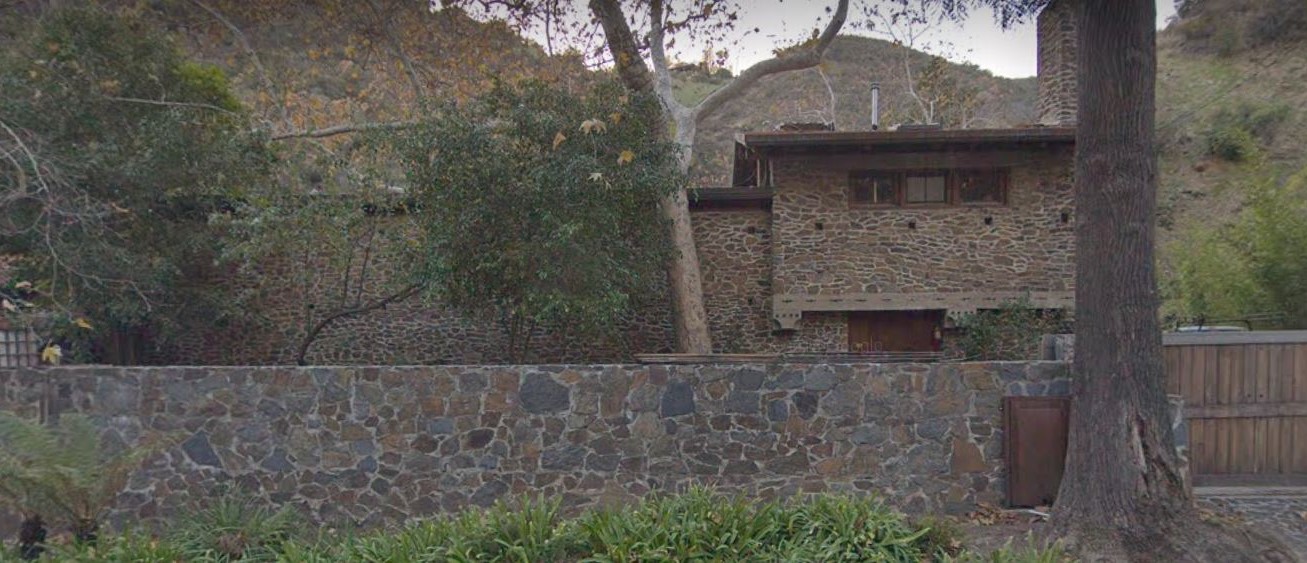
To add to my Norman Rockwell painting (or take away from it), Josephine lived in an unusual house just a few doors up from my own, which I traveled to by bike.  It looked and felt much more like a fortress than a residence.  You passed through an imposing wooden doorway into a stone-floored foyer.  All I remember was the vast living room to the left (the piano lesson room, with a grand and an upright side-by-side), and the rustic kitchen to the right.  A front-and-center staircase disappeared to the second level (where, for all I knew, Mr. Siple dwelled).

Bless you, Google Earth, for I confirmed – fifty years later – Josephine’s house still stands (photo above).  Her place may have been uninviting, but Josephine found a way to make it feel warm and welcoming, even to a timid child.  She would host recitals for parents in the big living room, allowing her students the luxury of a performance at the grand piano.  I can still picture Josephine in the kitchen afterwards, happily serving and chatting behind a big glass punch bowl loaded up with a concoction of 7-Up and lime sherbet, boiling and fizzing like witch’s brew.


A good friend confided in me recently about his granddaughter’s impatience.  He said she’d begun piano lessons – about the same age I was – but simply refused to practice.  Her parents, with utter resignation (and delusions), allowed their daughter to move on to the violin instead.  Why on earth would they endorse an infinitely-more difficult instrument when mere piano practice was already too high a hurdle?

Piano practice was never a problem for me, and I give Josephine all the credit.  She instilled a sense of responsibility which I know translated to a stick-with-it attitude in other aspects of life.  I remember one lesson where I knew I hadn’t practiced enough the week prior.  Josephine sensed it immediately, and though the exact wording escapes me, her comment had just enough, um, wisdom and sting to reevaluate my priorities.  I never showed up unprepared again.

As things are wont to do in childhood, my piano practice and lessons eventually fell by the wayside, in favor of other activities which pale by comparison.  Thanks to Josephine, I entered a few piano competitions. (I was no Van Cliburn contestant but I certainly learned how to perform under pressure.)  Thanks to Josephine, I explored outside of my comfort zone: lessons on the church organ; percussion instruments in the school orchestra; dabbles with flute in college.  None of those instruments consumed me like the piano. Then again, none of those teachers were Josephine.

My piano teacher extraordinaire is long gone, but the memories and lessons she gave me are life-long companions.  I can resurrect Josephine in a heartbeat, as through an accompanist in church.  I can also bring her back in other seemingly-random moments, reminding me her teachings went well beyond the piano.

R-E-S-P-E-C-T

Thanks to another pro football season, America’s allegiance to its flag is once again called into question. My wife and I chatted with our German exchange student recently, asking whether her own country found patriotism so controversial. To this she said, “You Americans are considered very patriotic people. We Germans not so much; perhaps, because of Hitler in our past”. I was a little taken back by that comment. Americans can point to shameful events in our colorful – albeit brief – history, and yet; we still sing the anthem and stand for the flag. Well, most of us.

This week in Colorado, primary and secondary schools begin another year of formal education. The setting is not so different from schools I attended. The classrooms are laid out the same (technology aside). The cafeterias offer up borderline-edible food. And the students – every weekday morning – stand, face the flag, place their right hands over their hearts, and recite the Pledge of Allegiance.  Forty-six of America’s fifty states mandate the practice.  Congress opens its sessions with the Pledge, as do countless other government and private meetings across the land.  Another day begins in America.


The Pledge has a rich history for a phrase spoken (or sometimes sung) in less than fifteen seconds.  It was based on Captain George T. Balch’s Civil War-era pledge: We give our heads and hearts to God and our country; one country, one language, one flag!  The version we use today – reworded by Baptist minister Francis Bellamy, was first published in the children’s magazine The Youth’s Companion in 1892 (albeit with simpler wording).  The Pledge was also first used in public schools on October 12th of that year, coincident with the opening of the Chicago World’s Fair.  The Pledge was designed to generate patriotism in young people, at a time when this kind of energy was on the decline.  Sounds like something we need just as much today.

The original version of the Pledge stated: “...allegiance to my Flag and the Republic for which it stands… ” The change in 1923 to today’s version: “… allegiance to the flag, of the United States of America, and the Republic for which it stands…”, was a nod to America’s immigrants, so as not to deny loyalty to birth countries.  Finally, the phrase “under God” was added in the 1950’s, and formally adopted on Flag Day (June 14th) of 1954.  It was also at this time students began the everyday reciting of, as President Eisenhower referred to it, “…a dedication of our nation and our people to the Almighty.”

Along with saying the Pledge and standing for the flag, America’s students “place their right hands over their hearts”.  This gesture also has a history.  In lieu of a military salute (reserved for those in the Armed Forces), students originally stretched out their right hands towards the flag, palms down, ending the Pledge with palms up.  But the practice was associated with the Nazi salute and quickly abandoned, in favor of the hand-over-heart (or cap over left shoulder) we use today.

To no one’s surprise, America’s Pledge of Allegiance (almost unique among countries) is not without controversy.  Since 1940, there have been at least a dozen high-profile legal challenges.  A few target the practice itself, claiming a violation of the First Amendment.  But most target the use of the words “under God”, in conflict with the First Amendment’s Establishment Clause (freedom of religion).  None of these suits succeeded, with the typical defense, “…the [Pledge’s] words represent a patriotic (not religious) exercise…”, and [to atheists], “…participation in the pledge is voluntary.”

Three years ago, in the most recent defense of the Pledge, New Jersey Judge David F. Bauman declared, “As a matter of historical tradition, the words under God can no more be expunged from the national consciousness than the words In God We Trust from every coin in the land, than the words so help me God from every presidential oath since 1789, or from the prayer that has opened every congressional session of legislative business since 1787.”  Amen to that, David.

Aretha Franklin – America’s indisputable “Queen of Soul” – died last week after a long struggle with pancreatic cancer.  Aretha’s most famous lyric was undoubtedly, “…all I’m askin’ is for a little respect…”.  No coincidence; America’s flag makes the same request.  The Pledge is a voluntary act – sure – but who’s going to argue with, “…liberty and justice for all”?

Some content sourced from Wikipedia, “the free encyclopedia”, and from Erik Larson’s novel, “The Devil in the White City”.

Disc Chalky

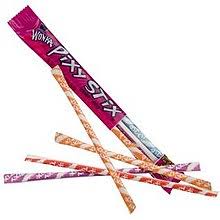
Woodstock Candy (“Let Sweet Flashbacks Sprinkle Down”) assembles collections of vintage candy and sells them on Amazon.  The “nostalgic retro mixes” tailor to the buyer’s age, as in “30th Birthday Box” or “65th Birthday Box”.  For those in my decade, Woodstock tosses in classics like Chuckles, Red Hots, Sugar Daddy’s and Smarties. Also, a few Pixy Stix, a Candy Necklace, and a long strip of those colorful Candy Buttons. Finally, buried quietly in the back of the box: one small roll of Necco wafers.

Four months ago, the Wall Street Journal alerted those of us with nostalgic sweet teeth of the fate of Necco wafers.  More correctly, NECCO – the New England Confectionery Company – would shutter if it didn’t secure a buyer.  Apparently, no one came to the candy counter, because the factory closed its doors late last month.  The consumer reaction was immediate – on the order of the Hostess Twinkies frenzy.  Rolls of Necco wafers flew off the shelves.  Frantic calls to candy stores demanded entire boxes be placed on hold.  One Necco devotee offered his 2003 Honda Accord in exchange for the company’s remaining product.  You might call it “disc(o) fever”.

The Necco wafer/disc is an underappreciated candy of years gone by, though admittedly my affection for the confection is not what it used to be.  Necco’s are packaged in rolls of about thirty, in an assortment of eight flavors, including clove.  Clove.  Even the flavors sound dated.  A Necco wafer looks and tastes like a disc of chalk (drywall?), with a hint of flavoring to make it seem like food.  Eat a dozen wafers and your hands and clothes are covered with edible dust.  Eat a dozen more and the flavors all start to taste the same.  What used to be a satisfying crunch now feels like a threat to my dental work.

Why was I drawn to Necco wafers, when my back-in-the-day 7-Eleven store included an entire aisle of more appealing candy?  Maybe I just like little discs.  My father used to drive my brothers and I to some of his building sites, and I quickly discovered the concrete littered with dozens of metal coins.  These were “slugs” – today called KO’s or “knockouts”; the quarter-sized remains of partially-stamped openings in electrical junction boxes.  I collected hundreds of them – God knows why (but I was a kid, so I didn’t need a reason).

I also collected coins – more specifically quarters, because quarters were big money in my day, and translated into just about everything in that 7-Eleven aisle.  Quarters could also be stacked into paper wrappers; perhaps my precursor to a roll of Necco wafers.

At the same time in life, I had what was probably the coolest toy around.  It was called a “Rapid-Fire Tracer Gun” (if you were really cool you had the Star Trek version).  The Tracer fired little round plastic discs, spinning them out of the barrel so fast they hurt when they hit skin.  They even made a Tracer Rifle for more accurate shots.  The Tracer had a spring-driven magazine, so you could queue up a whole pile of plastic discs.  Or Necco wafers.

Necco wafers aren’t nearly as appealing as some of the stories behind them.  A hundred years ago Necco’s were carried by Arctic explorers and handed out to Eskimo children.  Their “suspiciously long” shelf life (Necco’s are sugar, corn syrup, and not much else) allowed them to be stored for months; then consumed by Union soldiers during America’s Civil War.  And therein lies the significance of the NECCO factory closing: the wafers have been around since 1847.

If I still don’t have your attention, consider this: NECCO also manufactures Sweethearts, the heart-shaped romantic-message-stamped equivalent of the Necco wafer, distributed by the billions on Valentine’s Day.  Think about that: no more candy hearts bearing “Kiss Me” or “Love You” or “Be Mine”.  Instead, just inedible greeting cards and meh grocery-store chocolates.  But don’t despair – I think the factory closing is just a hiatus.  The Hostess Twinkie came back and so will the Necco wafer.  It’s already underway, so join the movement: #SaveNecco.

Caring O’ the Green

My back lawn stretches north to south along the edge of my house, and half again as far to the west. When I look out the window, it’s an expanse of brilliant green in every direction; about 2,000 square feet by my step-off calculations. I could place the Emerald City at its edge and things would look even better than with the field of poppies. I should invite Dorothy & Toto over for a cup of coffee.  Or dress like the Wizard’s guards in one of those head-to-toe outfits while I mow.  Even my lawn tractor is green.

It wasn’t always jade thumbs for me. Growing up, a gardener took care of my parent’s lawn (an even bigger carpet than my backyard Oz). Instead of mowing, trimming, mulching, aerating – all better options in hindsight – my brothers and I commanded weed and leaf patrol. Endless amounts of both packed into endless amounts of extra-large black lawn-n-leaf bags. One summer we helped my dad install a sprinkler system; everything from a rented trencher to miles of PVC pipe. It was a good education in plumbing, but I didn’t learn much about lawn care.  Er – change that up – I didn’t care to learn much about lawn.

When my wife and I bought our first house, caring o’ the green became a proviso, if only to be good neighbors in such close quarters.  We lived on a postage stamp lot in a small neighborhood just south of San Francisco.  (If the lot really was a postage stamp, imagine the size of the front lawn.)  I could mow and edge in a cool fifteen minutes.  Looking back, I get a little nostalgic for my first lawn mower.  It was the simple bare necessities – just a rotating blade and a couple of wheels, connected on up to a pair of hand grips.  The engine was me, and there was neither seat nor steering wheel.  No matter – my “push reel mower” worked just fine when you’re talking postage stamps.

Moving to Colorado, I graduated to a bigger lawn and a gas mower.  A yoga class should include the lunge-like move required to start a gas mower.  Brace with one leg, deep knee bend with the other, arm extended forward (but not locked!), fingers closed lovingly around the cord handle, deep breath, and… PULL!  Sometimes the engine wouldn’t start after several PULLS on an early morning, adding colorful words to my vocabulary.

After that, we moved to the ranch we live on now.  Mr. 2,000-square-feet beckoned out back that first summer, but with my smallish mower I pushed about a five-mile spiral to get him cut (my neighbor still smirks at me today… “city boy”).  Too many years later I graduated to a John Deere ride-on: seat, steering wheel, drink/snack holder – the works.  I even have the matching JD hat so I look like I know what I’m doing.

DO I know what I’m doing?  DO I care enough about my lawn?  Sometimes I wonder, as in a recent Wall Street Journal article, which story-tells lawn care at a whole different level.  Some of my neighbors out there, in what can only be called obsession, take scissors to their grass or pluck the blades by hand.  Others use a vacuum to clean up the scraps.  Still others attach a roller to their mower for a finishing flourish – those light/dark stripes normally reserved for baseball fields.  If I too want to be “extreme” I can purchase the video, “How to Dominate Your Neighbor’s Lawn”.

No, I’m not that guy.  No scissors, no vacuums, no videos.  I’m content to just putt-putt-putt every-other-week spirals around my green, with the occasional hand-rake of the trimmings.  I’ll even admit to using a lawn service to hold back the weeds.  It looks acceptable.  The Wizard of Oz would probably approve and that’s good enough for me.

Which Came First?

When my son wrapped up his undergraduate college years, he gradually reduced the stock in his refrigerator to just about nothing.  Living on a shoestring budget, he wasn’t about to purchase food he didn’t need after graduation.  I’ll never forget the phone call one of those last couple of nights.  He told us – rather proudly – he’d made a meal with two eggs… and a can of processed chicken.  A “chicken scramble” if you will.  To which I replied, “ick“.  If we’d been on FaceTime he’d have seen my face turn a lovely shade of green.

Some foods were just not intended to be consumed in the same bite.  I can’t think of a better example than chicken and eggs.  All chickens hatch from eggs and all chicken eggs are laid by chickens, so why on earth would we eat them together?  Can we skip the biology class and agree – at least by one definition – chickens and eggs are essentially the same “thing”?  And really; how often have you found them side-by-side on your breakfast plate?  Hopefully never.

The memory of my son’s kitchen creation locked itself away in my brain until recently, when Starbucks decided to meddle with their sous vide egg bites menu.  Not content to offer just “Egg White & Pepper” and “Bacon & Gruyere”, Starbucks now offers “Chicken Chorizo Tortilla”, described as “perfectly cooked, cage-free sous vide egg bites, including chicken chorizo, and…” and… and… and I stopped reading right there.  I couldn’t get past eggs and chicken in the same offering, gag reflex included.  I’m not sure I’ll order any egg bites anymore.

To lend credence to my chicken-OR – not chicken-AND – claim, I turned to one of the experts in the field: fast-food icon Chick-Fil-A.  CFA offers an extensive breakfast menu (Starbucks does not) so I figured, a restaurant built entirely on chicken would never offer eggs mixed up with chicken.  Wrong-o.  To my disbelief (and horror), two entrees loom large on CFA’s breakfast menu where you can get plenty of both.  Choose from the Egg White Grill: a breakfast portion of grilled chicken stacked with freshly cooked egg whites on an English muffin; or the Chicken, Egg, and Cheese bagel: a boneless breast of chicken along with a folded egg and American cheese.  Seriously, who buys this stuff?

I’m not sure who said it, but some would assert “the chicken is merely the egg’s way of reproducing itself”. (The same applies to the caterpillar’s “use” of the butterfly.)  I like that, evil as it sounds.  Kind of devalues the chicken, but also kind of proclaims: the egg came first.  And what about that quandary, “which came first”?  There’s not much to discuss if you really think about it.  Make the simple choice – science or religion.  Science votes for the egg, laid by something that wasn’t quite a chicken (but evolved into one once the egg hatched).  Religion votes for the chicken, created by a higher power in those first six days.

Maybe chicken + eggs is the greatest thing never eaten and I just don’t know what I’m missing.  I suppose I could ease into the idea one entree at a time.  Start with corned-beef hash… with fried eggs.  Move to full-on steak… and eggs.  Swallow hard over chicken… and waffles (eggs in the batter).  Then, at long last, order that new sous vide egg bite from Starbucks.  Yeah right, that’ll happen… as soon as we all agree on “which came first”.

Behind Bars

Every now and then I crave a Kellogg’s Frosted Brown Sugar Cinnamon Pop Tart. You can debate the matter and say the fruit Tarts are better – Strawberry, Cherry, and Blueberry – and I’ll give you those, but I stand by my boring-looking Brown Sugar Cinnamon. Maybe that’s because I consumed hundreds of them as a kid, piping hot from the toaster.

Somehow Pop Tarts eluded the otherwise healthy content of my mom’s pantry.  You’d walk in to dozens of those little red boxes of raisins, a pretty good assortment of nuts (which were more meant for recipes than snacking), and the occasional graham cracker.  The fruit and veggie drawers in the frig were loaded and there was always a gallon of milk on hand.  Yet there they were, in foil-wrapped packages of two: Kellogg’s Pop Tarts.  I wish I could see the ingredients list from the 1970’s versions versus those of today’s Tarts.  Surely the former leaned more towards “real food” and less towards chemicals, or my mom would’ve never gone for them.

Pop Tarts now come in twenty-seven varieties, which by any standard is ridiculous. Who wouldn’t be happy with the four I already mentioned? (Okay, let’s add Frosted Chocolate Fudge and call it good).  Do we really need options like “Wildlicious Wild! Cherry”, or “Confetti Cupcake”? Apparently so, because that’s where our demand for choices has taken us. The new approach to snacks: invent one, sell enough to get them into everyday conversation, then evolve to twenty-seven varieties.  Have you seen your options with Oreo’s these days?  I rest my case.

The other day I traveled down the cereal aisle of our grocery store for the first time in a long time (we have house guests). I was shocked to discover the “healthy cereal” section is just as big as the space reserved for regular cereals. Even more interesting, the overhead signs on the aisle first announce “Cereals”, followed by “Granola” a little further down, followed by “Diet and Fitness” a little further than that.  The entire aisle feels like the same kind of food, only you start with boxes, morph to bags, and end up with little bars.  I’d love to know the combined total grams of protein in the products in the “Diet and Fitness” section.  Gotta be ten thousand or more.

Fun facts: Americans now choose from over 400 brands of “healthy” bars, in 4,000 varieties.  At $6 billion in 2012, the healthy bar market was only 17% as big as that of savory snacks ($34 billion) but growing in a hurry.  American children consume almost 500 calories a day in snacks.  The routine starts when we’re young.

Snack bars seem to be almost-entirely carbs or almost-entirely protein. I won’t comment on the first variety because I don’t eat them (I’ve moved on from Pop Tarts), and I don’t even see the carb variety because our store puts them over in the cookie aisle. But protein bars are a challenging enough decision. For starters, are protein bars a “snack” or a “meal”? Many are advertised as “meal-replacements”. Others look small enough to be snacks. Even the ever-present “Nutrition Facts” label doesn’t really lend a hand, except to confirm you’re taking in more calories and sugar than you’d hoped.

I belong to Lifetime Fitness here In Colorado, a gym which stresses “healthy lifestyle” in everything they offer, whether personal training sessions, workout classes, spa treatments, or a cafeteria full of healthy choices. The mantra I hear like a broken record: “carb-up” at least an hour before the workout; “protein-up” within 45 minutes after. I’m sure some would dispute that approach, but regardless, it suggests a “snack” before AND after a workout.  And as I stand in “Diet and Fitness”, I ask myself, “Is that snack half of a “meal-replacement” bar?  Two or three of the “fun-size”?  Scrap the whole aisle and go with fruit and cheese instead?”

For my money, snack bars before and/or after a workout neither benefit the short run nor ease the long run. It’s kind of like my daily multi-vitamins: no clue whether they help me either (but I still take them). This much I know: I need to have a somewhat full stomach before I work out. On that note, maybe I’ll just skip the “Diet and Fitness” aisle from now on and go back to Pop Tarts.

Some content sourced from the Wall Street Journal article, “Our Misplaced Mania for ‘Healthy’ Snacks”.

Cause for Alarms

A headline in this morning’s news feed announced , “Flaming Condoms are the Newest Threat to Southern Israel!” Just wanted you to be aware.

Now that I have your attention, let’s turn to a timelier topic. Big Ben, the iconic clock and tower at the north end of London’s Palace of Westminster, has been silent for almost a year now. In case you missed the news, Ben’s Great Bell and Quarter Chimes no longer toll – for another three years in fact – while much-needed repairs are made to the clock mechanics behind his massive face. At least the damage was simply wear-and-tear, and not the result of flaming condoms.

For Londoners, I have to believe the muting of Big Ben took some getting used to. Imagine, heard on miles of city streets, the Great Bell bonging every hour on the hour, and the Quarter Chimes playing every fifteen minutes (a stuck-in-your-head repeating melody of twenty notes). Now take all that away; replaced by uncomfortable silence. I’m sure city-dwellers subconsciously depended on Ben to remind them they had, say, thirty minutes to get to the office, or fifteen minutes left in the lunch hour, or no minutes before church (better start running). How will these people cope for the next three years?

In the absence of Ben, Londoners surely turn to alarm clocks more than they used to.  Not comfortable relying on their own senses (or the sun’s position in the sky), the English probably carry “Baby Ben’s” if you will – whether mobile phones or other portable devices.  I expect the additional chorus of beeps and chimes and other musical bites make a ride on the Tube even more enjoyable, as you’re left to wonder whether your neighbor’s getting a phone call or simply late for an appointment.

Alarms have come a long way since the basic digital LED box-clocks of old.  I wish those old bedside Ben’s were gone forever, but a visit to any Walmart or Radio Shack proves they’re more prevalent than ever.  My wife used to own one of the more potent models – with an enhhh…enhhh…ENHHH screech capable of levitating me out of a deep sleep, my pulse racing faster than an Indy car.  I’ll hear that murderous alarm even after I’m six feet under.

The colorful Beddi

Today – mercifully – we have several alarm clocks designed not so much to levitate but rather to ameliorate your transition into the conscious world.  Beddi – a “designer smart-clock” – is a sleek enough bedside companion.  Along with charging your phone, Beddi controls the dawning of your bedroom lights or the gradual amplification of your favorite playlist or even the pleasing aroma of your coffeemaker.  You choose how you wish to wake up.

The cute Kello

Kello is the spitting image of a toaster, but it’s really a partner for your body clock, with sleep-training modes to wake you a little earlier each day, or guided breathing exercises to help you nod off faster each night.  Kello also offers music in place of an alarm and can restrict the number of times you can whack the snooze button.

The sadistic Pavlok

Some people demand a little more, uh – torture – to get themselves up and out of bed.  Ruggie is exactly what it sounds like – an innocent-looking rug placed just to the side of the bed.  Ruggie is all about blasting music in louder and louder bursts, and the only way to shut the blessed thing up is to stand – full body-weight – atop of its fleeced surface for at least thirty seconds.  Then there’s Pavlok, a wearable alarm clock programmed via smart phone app.  Pavlok begins with a beep or a vibration (my advice – get up NOW) – but left to its own “devices” matures into a pulsing, zapping electric shock when you still don’t respond.  Pavlok is also happy to electrocute for trivial pursuits like biting your nails, smoking, or too much time on the Web.

Don’t know about you, but I have no interest in meeting Pavlok’s inventor.  Mr. Shock Clock is one messed-up sadistic soul, and probably has a host of other torture devices at the ready.  Like flaming condoms.

Two for the Money

Not so long ago people would say to me – my grandpa included – “a penny for your thoughts”. I always liked that phrase, though I was never paid for whatever was on my mind. Today you don’t hear it so much, because nothing is worth just a penny anymore. You’d be better off giving a dollar. Or two dollars.  Maybe then you’d find out what people think.

The other day I was in the drive-thru lane at my bank, and the teller cashed a twenty, returning a small stack of bills – a $1, a $5, a $10… and two $2-dollar bills.  I’ve seen plenty of the first three, but when was the last time you came across the double-dollar? U.S. currency may be downright boring compared to the colorful equivalents in other countries, but today I say this: the uncommon $2 is a cool bit of cash.

America’s paper money prints in just seven options today, from the $1 on up to the $100-dollar bill.  Fifty years ago you could find several larger denominations ($100,000!), but the big boys were dropped from circulation to deter organized crime.  Even today, the $50 and the $100 get second looks for fear of counterfeits.  The lion’s share of circulating bills is the $1 on up to the $20.  But the one that earns a second look? The $2.

What makes the $2 so tony?  Try finding one.  I asked my bank how many they have in the drawer at any given time.  They said none.  In fact, I didn’t just get my couple of $2’s – I had to ask for them – and the teller had to go back to the vault to find them.  The $2 just isn’t in demand anymore – hasn’t been for a long time.  The U.S. Mint stopped printing $2’s in 1966, but thanks to America’s bicentennial, started the presses again in 1976.  The most recent printing of the $2 was 2016 – almost 200 million – but it’s a drop in the bucket compared to the rest of the U.S. currency clan.  If you could shake the globe over a big basket, you’d find 40 billion U.S. bills in circulation right now.  But the overlooked $2 represents less than 0.5% of the lot.

I like the $2 because of its unique look.  Thomas Jefferson is on the front – oval-framed as in a portrait (only George on the $1 has the same look).  The words “Federal Reserve Note” curve gracefully over TJ’s head; on all other bills those words are in a mundane straight line.  Finally, the $2 is the only bill without a building on the back, like the Lincoln Memorial or the White House.  Instead, you have an edge-to-edge top-to-bottom rendition of the signers of the Declaration of Independence (replacing TJ’s Monticello home from earlier versions).

The two-dollar bill has several chapters of urban legend much more colorful than other denominations.  Apple co-founder Steve Wozniak purchases $2’s in uncut sheets; then has them perforated and glued like a Post-It pad.  He enjoys tearing off several for tipping.  U.S. Air Force pilots of the U-2 spy plane keep a $2 in their flight suit; a sort of badge of distinction. $2’s are often used by gun rights activists to show support for the Second Amendment. The website Where’s George? keeps track of the circulation of over five million registered $2’s.

Despite my enthusiasm for the buck-buck, it’s not without its challenges.  The $2 is not accepted at most vending machines.  The common misconception the $2 is no longer circulating leads to suspicion of counterfeiting.  Two years ago at Christa McAuliffe Middle School in Texas, a 13-year-old was denied lunch privileges for using a $2 at the cafeteria window.  A man in Baltimore was jailed for using $2’s to pay for a purchase at Best Buy.

My couple of $2’s will stay with me a little while, at least until the novelty wears off.  Maybe I’ll spend one of them just to see what happens.  Maybe I’ll return the other to the bank vault for safekeeping.  Today’s lesson; there’s more to American money than fives, tens, and twenties.  $2’s have a place at the U.S. currency table as well, just as they did when first minted in 1862.

Some content sourced from Wikipedia, “the free encyclopedia”.
Tryst With a Twist

I’m leaving my wife for another woman. There, I said it.

I never thought it would come to this; I really didn’t. My wife and I have been together for thirty-one bliss-filled years – as smooth and as satisfying a marriage as one could hope for. And yet, tomorrow afternoon, I’ll catch a ride to the airport, kiss my beloved goodbye, and board a one-way flight to Las Vegas. All my worldly possessions stay behind, save for the overnight bag in my hand and the wad of cash in my pocket. When I get there, I’ll dress up, head over to one of the finer restaurants on the Strip and reunite with a woman over thirty years my junior. We’ll smile at each other and raise our glasses in anticipation. A new adventure will commence.

Now then, let’s shed a little more light on my tryst, shall we? Yes, I’m leaving my wife (but only for a day and half). Yes, I’m going to Sin City on a one-way ticket (but then I’ll turn around and drive back home the next day). And yes, I’m meeting up with a woman thirty years my junior. She also just happens to be my daughter.

Here’s the detail. After a year of living and working in Los Angeles, our youngest has decided to return to Colorado to give Denver a try (the “new adventure” I refer to above). The drive between those cities – if you’ve ever done it – is Las Vegas and a whole lot of nothing else. Imagine a twenty-hour jaunt in a lunar rover on the moon, only somewhere along the way you get thirty minutes in Disneyland. That’s LA to Denver: no people (at least, no sane ones) and a whole lot of cactus, dotted with a single oasis of slot machines and casino-hotels. Come to think of it, I’d wager big money the moon is more interesting than LA-Denver, especially the never-ending portion of the drive known as southern Utah.

Anyhoo, (to use a word from my daughter’s unique vocabulary), I’m sharing the Vegas-to-Denver drive with her – responsible father that I am – fully fourteen of the twenty hours it takes from Los Angeles. Somehow the idea of my daughter and her cat all alone in the desert doesn’t sit well with me.

The more I ponder this little adventure, the more I wonder if I shouldn’t be worried more about my time in Vegas. Think about it. I’ll show up at the hotel, and the front desk will undoubtedly eye my much-younger companion from head-to-toe. “Oh!”, I’ll say with a sheepish grin, “she’s my daughter.” Yeah, right pal, your ‘daughter’. When I arrive at the restaurant for dinner, the maitre d’ will say, “Sir, if you and your – uh – ‘niece’ will follow me, I’ll show you to your table.” Or let’s say I get my daughter to blow on the crap table dice for luck. Stink eyes all the way around. Hey big spender; who’s your prom date?

This is a no-win situation. Short of a blood test and a doctor’s proclamation, “Holy cow, they’re actually related!”, I’m destined to a jackpot’s worth of dirty-old-man looks in the next few days. At least I won’t be mistaken for a gigolo.

What happens in Vegas, stays in Vegas. Sorry, I beg to differ. I’ll be pleased as punch to share the intimate details of my time with my “other woman” in Sin City. Heck, maybe I’ll even make it my next blog post. We checked into the hotel. We went to dinner. Dropped a few quarters into the slots. Went to bed early so we’d be rested up for the long drive head. Riveting reading, huh?