Putting the Kettle On

Kacey Musgraves is a blossoming country music artist whose recent album “Golden Hour” will compete with heavy-hitters at this year’s Grammy Awards for Album of the Year. She’s released only four albums (through major labels), so the nomination is remarkable. And yet – despite the acclaim heaped on “Golden Hour” – my favorite Kacey song remains a track from her second album, “Pageant Material”. In her words, it’s “a little, tiny, music-box-of-a-song” called “Cup of Tea”.

The message in “Cup of Tea” (have a listen here) – is simple: no matter who you are or what you stand for, you’re never going to appeal to everybody.  There will always be haters out there no matter how you present yourself.  My favorite lyrics in “Cup of Tea” are the refrain itself:

You can’t be, everybody’s cup of tea
Some like it bitter, some like it sweet
Nobody’s everybody’s favorite
So you might as well just make it how you please

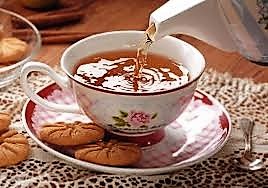
Kacey wouldn’t mind if I told her “Cup of Tea” gets me thinking just as much about tea as about how well I mesh with other people.  Not that I’ll be steeping anytime soon, mind you.  I can’t seem to acquire tea-taste, no matter how many times I put the kettle on.  Go figure – half my DNA originates from England, so you’d think my instincts would have me setting out the fine china and doilies every afternoon.  I’d nibble on the cakes or scones or whatever comes with, but no tea, please.  I much prefer my morning coffee.

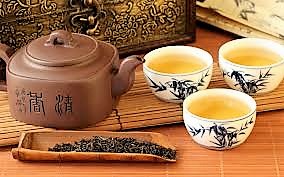
Ironically, tea brews with some of my earliest childhood memories.  My parents used to take my brothers and I downtown in Los Angeles, to restaurants on the streets of Chinatown – probably as much for the cultural experience as for the food. I can still picture those dark, quiet dining rooms, with the strange music and gaudy decor.  The meal always began with a pot of tea, including the little round cups that seemed to have misplaced their handles.  Tea was a cool experience back then. Listen, when all you drank was milk or water (or the occasional soda), tea was pretty sweet no matter how it tasted.  It was like having a “grown-up” drink before being grown up.

Forty-odd years later, I notched another tea-riffic memory.  My wife and I took a cruise on the Baltic Sea a few summers ago (“six countries in eight days”), and chose Oceania, one of the nicer cruise lines.  Good decision.  As much as we enjoyed the excursions off the ship, we enjoyed the return even more, because every day we were treated to “afternoon tea”.  Oceania’s tea was the perfect respite between the early morning touring and the evening dinners/dancing.  “Tea” included tableside service from tuxedoed waitstaff, countless cakes and petit fours, and those little triangle sandwiches with the crusts removed.  “Tea” even included a string quartet; their soft music adding to the ambiance.  I suppose I could’ve asked for coffee instead, but that would’ve tainted the experience.  Not to say I enjoyed the tea itself.  Just “afternoon tea”.

The culture, history, and preparations of tea could generate a week’s worth of posts.  (See the Wikipedia article here).  What I find more interesting is how tea has become the daily routine of several global cultures.  The Chinese and Japanese consume tea in the morning “to heighten calm alertness”.  The Brits serve tea to guests upon arrival (or in the mid-afternoon), for “enjoyment in a refined setting”.  The Russians consider a social gathering “incomplete” without tea.  Not sure about all that, but I can at least agree with the moment of pause tea provides; the respite from the faster pace.  It’s just… my “cup of tea” is coffee.

Nature’s Constant Call

It wasn’t supposed to be this difficult.  Merely tweaking a former New Year’s resolution to create a new one should be the proverbial walk in the park.  But clearly, I wasn’t prepared for the, uh, “inconveniences” of my particular undertaking.  So it goes when you commit to drinking a dozen glasses of water a day instead of ten.

(Hey, give me a sec’… I’ll be right back.)

Are you a New Year’s resolution kinda person?  Do you sit down towards the end of the holidays and pen (or pencil, for you not-so-brave) a list of gonna-do’s for the coming year?  Me, I’m on the fence with the whole promises-promises thing.  Sure, turning the calendar from December to January evokes a fresh start; I’m just not convinced I must be “resolute” in the process.  I prefer casual, undocumented, safe-zone agreements.  Gonna eat better. Gonna get to the gym more. Gonna read a bunch of new books.  Whether I blow them out of the water or just achieve slightly better than last year, I win!

The water thing, though.  Why-oh-why did I read my latest fitness club newsletter and choose to drink their Kool-Aid?  (Wait, hang on… the phone’s ringing… it’s Nature again.)

Can you hear it? Does it make you want to…?

Forget the glittering generality of eight-glasses-per-day.  Not only is the rule passé, it holds no water.  Eight glasses is simply too generic for the myriad human bodies out there.  Ditto downing “half your weight in ounces of water” – too generic.  On the other hand, a pile of research and scientific evidence in my newsletter suggested the following: Men should consume 15.5 cups (3.7 liters) of fluids per day, while women should consume 11.5 cups (2.7 liters).

Now then, “fluids” includes all liquids swallowed in a day, so right away we have an appealing math problem.  Fluids from foods = 20% (just go with it), so my 15.5 cups instantly evaporate to 12.4.  A cup of coffee in the morning and a glass of wine in the evening can also be subtracted (don’t believe the dehydration claims – they don’t hold water).  However – and here we pause the calculator – I can’t escape the negative impacts of a) regular exercise (I sweat like a baby rainstorm), b) environment (Colorado = high altitude = dehydration), and c) breathing.  Those three moisture-robbers elevate me back to 12.4 cups.  Maybe I should stop breathing – that’s worth at least the 0.4 cup.

12 cups = 3/4 gallon

Ten cups a day – now that’s navigable waters in my book.  I start the morning with two (supposedly a good habit) as I wash down my multi-vitamin.  I drink another two mid-morning, another two at lunch, another two or three in the afternoon, and one at dinner.  But twelve cups?  How the heck do I jam another two into my schedule?  More importantly, where to I find the extra time to uh, um… (a little patience here, I need to talk to a man about a horse).

Time to get personal (as if we haven’t been already).  When I morphed from child to teenager to full-grown adult, my body parts grew accordingly, EXCEPT my bladder.  That little balloon remains the same size as when I was born – I’m sure of it.  The bladder is a remarkable organ, “capable of expanding from 2 to 6 inches with a capacity of 16 to 24 ounces”.  MY bladder is capable of expanding to 2 inches (a guess) with a capacity of 16 ounces (another guess).  And here’s the best part.  The urge to urinate comes when the bladder is one-quarter full. Whose idea of a cruel joke is THAT?  Do the math on me and I’m only halfway through cup #1 before I’m scheduling time with the porcelain goddess. Speaking of the goddess, uh… (hold tight while I go water the flowers).

About these down-the-hall interruptions: is it just me or does the sound of running water “accelerate” the process?  In my twelve-cups-a-day world, I continue to brush my teeth, make a cup of coffee, refill the dog bowl, refill the bedroom humidifier, and refill water bottles every time I go to the gym.  You’d better believe every one of those tasks has me wanting to go powder my nose – and I really don’t powder my nose if you know what I mean.  Gee whiz (for God’s sake, don’t say WHIZ!), can’t a guy catch a break that doesn’t have the word “bathroom” in front of it?

My fitness newsletter also claimed, “women who are pregnant or are breast-feeding need additional fluids to stay hydrated”.  Bless my stars, I am not a woman. But seriously, twelve cups?  I’ll be moving my laptop into another “office” in my house before I know it.  There’s more to say on this topic but it’s gonna have to wait because… (I need to make a pit stop).

Lovely Are Thy Branches

Christmas prep – at our house – starts the weekend after Thanksgiving and goes all the way thru December 24th.  I like to think it’s deliberate – taking a month or more to drag out the “getting ready”.  Some years we’re rushed but the house always seems to get decorated, the cookies baked, the presents wrapped, the cards sent, and the food shopped.  There’s always a dinner reservation on Christmas Eve; always room in the pews at the late, late church service.  But what if – some year – we dispensed with all of that prep?  December 25th would still come, of course.  But it wouldn’t be Christmas, unless we had a tree.

I can’t think of a single Christmas in my fifty-plus years when we haven’t had a fully-decorated tree.  Whether the lights or the ornaments or the angel on top, the tree to me is the ultimate expression of the holiday season.  Christmas trees have been standing since the 1500’s (proved by a sculpted image at an estate in France).  In the late 1700’s, Christmas trees hopped the pond to America.

My affection for decorated trees dates to my early childhood in Los Angeles.  Late on a mid-December day, my mother would pack my brothers and I into the station wagon, drive downtown, and meet up with my father after work.  Near his office, hundreds of Christmas trees were being unloaded from boxcars in the train yard; some of them still fresh with snow.  You may prefer the convenience of your neighborhood tree lot, but sorry; nothing beats the childhood nostalgia of picking a tree straight from a boxcar.

Flocked tree

Since we never had snow in Los Angeles, we often had our Christmas tree “flocked” before taking it home.  Flocking means placing a tree on a spinning stand and covering it with a product I can only describe as spray Styrofoam.  As tacky as that sounds, the result is remarkably “snow-like”.  Flocking even comes in colors (but I never understood why anyone would want pink or green snow).

As for tree ornaments, they’ve been around since Christmas trees themselves.  What were once apples, candy canes, and pastries (elegantly simple, if you ask me) have now evolved into everything imaginable.  On my childhood tree, I only remember those delicate, shiny, colored balls and bells; the ones which shattered on the slightest impact.  We also had tinsel; endless garlands of thin strips of colored foil, and tinsel is a great word, don’t you think?

Christmas lights became a staple of tree decor in 1882, when an Edison Electric VP first added them to his family tree.  The lights on my childhood tree – the multi-colored “C9” incandescent standard of the time – were connected to an illuminated star at the very top.  A few strands contained transparent-colored “blinkies”.  In hindsight, blinky lights sound as tacky as flocking but somehow, they worked alongside everything else on the tree.

Here’s a little Christmas tree trivia for you.  The carol, O’ Christmas Tree, is sometimes sung in German, starting with “O’ Tannenbaum, O’ Tannenbaum…”.  Guess what?  You’re actually singing, “O’ Fir Tree, O’ Fir Tree…”.  If you’re looking for the correct translation, go with, “O’ Weihnachtsbaum…” instead.

Christmon tree

One more bit of trivia.  If you find a tree decorated with nothing but white and gold Christian symbols, you’re looking at a Christmon tree.  Blend the sounds and meanings of “Christ” and “monogram” and you come up with the portmanteau “Christmon”.  Sounds (and looks) beautiful to me.

I don’t think I’ll ever have to worry about finding a Christmas tree.  Over 35 million are produced in the U.S. each year; another 60 million in Europe.  The average cost of a live-cut Christmas tree last year was $73, and that includes a lot of really tall ones.  Someday, I won’t be able to erect a nine or ten-foot tree in my living room anymore.  No worries; I’ll just go with a table-top instead (a “Charlie Brown”, if you will).  Her branches will be just as lovely.

Some content sourced from Wikipedia, “the free encyclopedia”.

A Distant Third (cont.)

Last Tuesday in cycle class, pedaling through the five-minute recovery after an hour of torture, our instructor asked if we’d like a Christmas carol or two from her playlist.  The one rider with enough oxygen lashed out vehemently, “NO!  It’s too early!”  Well how about that; score a point for Thanksgiving.  The sun set on Halloween two weeks ago and mighty Christmas is already trying to muscle its way to the forefront.  But Thanksgiving has a thing or two to say first.  If you please, keep the sugar plums out of my turkey and stuffing.

In last week’s post, I compared popular aspects of Halloween, Thanksgiving, and Christmas (i.e. history, music, food).  The final tally: Christmas the clear winner – no surprise – with Halloween solidly in second.  But lest we relegate Thanksgiving to the bronze medal year after year, my blog-intent is to reinvigorate America’s late-November holiday, and remind readers why Turkey Day stands on its own merits.

On that note, we’re starting November with promise.  My wife is getting endless mailbox catalogs, and I was delighted to find Williams-Sonoma’s “Thanksgiving Headquarters” edition: 180 pages of food, linens, kitchenware, and decor specifically designed for the holidays.  They even photo-profiled a barn-based “Friendsgiving” celebration in upstate New York.  Granted, the Thanksgiving section of the catalog ended on p.67, meaning the remaining 100 pages were all about Christmas.  No matter – 67 pages of Thanksgiving is impressive.  Way to go, Williams-Sonoma.

Starbucks also made a statement – albeit more feeble – putting their unique spin on Thanksgiving.  Right now, you can drive-thru and order a Turkey & Stuffing Panini (with cranberries and gravy!), perfectly nicknamed “a handheld turkey dinner”.  Then pair your panini with a Chestnut Praline Latte (“flavors of caramelized chestnuts and spices, topped with whipped cream and spiced praline crumbs”).  That combo speaks more to November than December in my book.  Not bad, Starbucks.

Retail aside, Thanksgiving plays out as more of an extended weekend than a single day.  Consider the before/after events.  Wednesday (“Thanksgiving Eve”) is routinely labeled “the single busiest travel day of the year”.  Well guess what?  It’s not.  Thanksgiving Day is the busiest travel day of the year, considering 90% of us drive our cars to the family gathering that morning.  Thanksgiving Wednesday (and Thanksgiving Sunday) only seem busiest because the chaos at the airports gets so much attention.

Now, on Turkey Day itself, besides the meal and the backyard football, we begin with the “Macy’s Thanksgiving Day Parade”.  My family always seems to miss the broadcast because we’re so busy in the kitchen.  Macy’s is three hours of marching bands, dancing Rockettes, Broadway singers, flying character balloons, and – as far as I can tell – one nod to Thanksgiving (the massive turkey in the photo above).  But hang on ’til the very end of the broadcast, because… here comes Santa Claus, here comes Santa Claus, wrapping up the parade the same way he’s done every year since 1924.  It’s like the Williams-Sonoma catalog – Thanksgiving on the outside but more “holiday season” in disguise.

Thanksgiving Friday is “Black”, of course – the so-called beginning of the Christmas shopping season.  We Americans spend over $50 billion that day (putting retailers “back in the black” with profits – hence the name).  It’s safe to say this bonanza of spending isn’t going away anytime soon.  By its very nature, Black Friday extinguishes Thanksgiving – almost before the pumpkin pie is served.  Black Friday sales begin as early as 5pm on Thursday evening (making the name obsolete, don’t you think?)  And if Thanksgiving isn’t early enough for you, some stores begin sales a week before Black Friday, with the teaser, “avoid the chaos of Black Friday – shop now!”  Uh, what’s the real meaning of Christmas again?

So there you have it – Christmas putting the squeeze on Thanksgiving like the Grinch on Whoville. Santa concludes the Macy’s parade at 12:00pm ET.  Christmas shopping begins five hours later.  In between, throw a meal on the table, mumble a blessing, and don’t forget to say thanks.  If we’re not careful, Thanksgiving Day will be reduced to Thanksgiving Hour.  It’s a phenomenon known as “holiday compression depression” (okay, I just made that up), but hey; it’s happened before.  In 1971, George and Abe got their standalone birthday celebrations mashed into a single holiday.  Even they feel Thanksgiving’s pain.

Candy-Crunching the Numbers

If you sift through your kids’ trick-or-treat bags today, you may be in for a surprise. When it comes to Halloween candy, we Americans are a fickle bunch. “Best” and “Worst” lists kick into high gear this time of year – with fierce debate – and the results are likely reflected in what gets handed out at the front door. Would you agree – Reese’s Peanut Butter Cups are hands-down America’s most popular Halloween candy?  By the same analytics, would you agree Circus Peanuts are the worst?  Do you even know what Circus Peanuts are?

CandyStore.com recently assembled the candy list of lists – the current bests and worsts. Check out the details in their blog post here (and buy some candy while you’re at it).  CandyStore combed the Web for best/worst candy lists from a dozen publications, then mixed in the opinions of 40,000 of their own shoppers. How they sifted all that data into a single list is a worthy advertisement for Excel.  Here are the results:

BEST Halloween Candy
10. Hershey Bars
9. Skittles
8. Sour Patch Kids
7. Butterfinger
6. Nerds
5. M&M’s
4. Kit-Kat
3. Twix
2. Snickers
1. Reese’s Peanut Butter Cups

WORST Halloween Candy
10. Mary Jane
9. Good & Plenty
8. Licorice
7. Smarties
6. Tootsie Rolls
5. Peanut Butter Kisses
4. NECCO Wafers
3. Wax Coke Bottles
2. Candy Corn
1. Circus Peanuts

Some comments (er, opinions) about the BEST list.  I can’t argue with Reese’s in the #1 spot, since I adore peanut-butter-and-chocolate, and a Reese’s cup is a convenient size somewhere between “full-size” and “fun-size” for the trick-or-treat bag.  Reese’s also happen to have an orange wrapper, so no adjustment needed for Halloween. The top five on the BEST list are solid choices, though I wonder where Snickers has the edge over Milky Way, Mars, or Almond Joy.  Three of the remaining five reflect candies joining the party well after I was a kid.  To this day, I’ve never had a “Sour Patch Kid”.

The WORST list is a little more interesting.  I’m surprised some of these earned a spot (even on a “worst” list), considering they were popular way back in the 1960’s.  But Smarties, Wax Coke Bottles, and Candy Corn bring a smile to my face, as each of them screams “Halloween” to me.  They seem to appear in October, then disappear for the next eleven months.  Wax Coke Bottles were the thought-we-were-cool 2-in-1 candy.  Bite off the bottle top for the drink, then put the wax in your mouth for a chewing-gum sensation.  In hindsight, ewwwww.

Candy corn, no surprise, is a polarizing confection.  You either love the little kernels or you simply can’t stand them.  They’re essentially corn syrup + sugar doused with a little food coloring.  Jelly Bean Candy Company has been making candy corn for over a century and sells hundreds of thousands of pounds of kernels each year, most in October.  Yet candy corn almost snagged the top spot on the WORST list.  Go figure.

On the other hand, Circus Peanuts deserve the WORST trophy.  I’m old enough to remember enjoying a real bag of peanuts at the circus, so why go and “candi-fy” my memory?  CP’s are peanut-shaped orange marshmallows (orange I suppose, because brown would not be an appetizing look for marshmallows).  Remarkably, CP’s have been around as long as candy corn, and you can still find them on your supermarket shelves.  Careful – some of those bags may have been manufactured in the late 1800’s.

Here’s another angle on the BEST list.  CandyStore took their analysis one step further and figured out, based on purchases August through October, which candy is most popular by state.  The methodology is not quite as scientific but the results are amusing.  You’ll find most of the BEST list represented, but you’ll also find a few head-scratchers.  Kentucky’s “favorite candy” is Swedish Fish.  Montana and Oklahoma prefer Double Bubble Gum.  West Virginians prefer Blow Pops.  As for my own state of Colorado?  Twix.  I can live with that.

CandyStore may take pride in its BEST/WORST lists, but let’s all just agree to disagree, shall we?  IMHO, licorice (of any kind) belongs nowhere near a WORST list – and that includes Good & Plenty, while 3 Musketeers is embarrassingly absent from the BEST list.  Not a fan of chocolate-covered, fluffy, whipped nougat?  Pick one up sometime and reconsider.  3 Musketeers almost feels lighter-than-air, a clever ruse to offset the guilt as I add one to my shopping cart.

Some content sourced from the Wall Street Journal article,”Americans are Divided – About Candy Corn”.

The Sweets Life

“Pagina Non Trovata” has the look of an elegant Italian phrase (or an opera title), until translation and context reveal its harsh reality. The phrase means “page not found”, which in my instance referred to a (former) on-line job posting for Italian candy company Ferrero. My punishment for seeking the advertisement two months after the fact? Ferrero, the second largest chocolate/confectionery company in the world, is (was) looking for sixty taste-testers – “sensory judges” if you will – to offer opinions on its products. O.M.Gee I wish I’d seen this sooner.  Instead, I won’t be one of the chosen few because, well, “page not found”.

Let’s ponder this (past) job opportunity for a paragraph, shall we?  Ferrero is (was) searching the world for several “average consumers”, who would (will now) get paid to eat chocolate.  “No experience necessary”, they claimed (otherwise by definition you aren’t an average consumer).  The only real requirement, absent food allergies, is (was) a willingness to move to northwest Italy, which darn-it-all means France and Switzerland are just as easy to visit.  Ferrero gives (gave) three months of paid training, followed by an offer to join the company as a part-time taster. “Part-time” in Italy translates to maybe a) second job, or probably b) la dolce vita (“the sweet life”, which definitely does not include a job).  Ferrero’s job is akin to unwrapping a bar of chocolate and finding a Wonka golden ticket.
If Ferrero created run-of-the-mill chocolates, searching late on their job opp wouldn’t be such a tragedy.  But Ferrero makes Ferrero Rocher (of course they do), those gold-foiled balls of decadent chocolate and hazelnuts.  They also make Mon Cheri, those pink-foiled chocolate cubes filled with cherries and sweet liqueur.  They even make Tic-Tac’s for gosh sakes, the boxed pill-like mints all-the-rage when I was a kid.  And finally, their pièce de résistance (or in Italy, “piu degno de nota”), on which the entire company was founded over sixty years ago, Ferrero makes Nutella.

Maybe it was half-hearted reading up to now, but mention Nutella and most people really sit up and listen.  I’m convinced Ferrero puts a secret something into Nutella to make consumers crave hazelnut chocolate spread all the more (bolstering the theory Starbucks does the same with its coffee drinks).  Why else would shoppers storm a small store – and engage in a brawl – when the Nutella stock was discounted 50% (see video here)?  Which leads to an even nuttier question: why have I never tried Nutella myself?

Nuts+chocolate equals killer-combination – I get that.  Give me a basket of Halloween candy and I’ll fish out all the Reese’s Peanut Butter Cups.  Offer me thirty-one flavors at Baskin-Robbins and I’ll easily short-list peanut-butter-and-chocolate.  Sell me M&M’s at the movie theater and I’ll always choose peanut over plain.  But in all my examples, I’m talking peanuts, not hazelnuts.  Nutella spread is new territory for me, which means I’m the perfect candidate for Ferrero’s job. I have no experience with hazelnuts.

The more I read about my future employer, the more I’m impressed with their credentials.  Ferrero buys 25% of the world’s hazelnut production (and fittingly, acquired the world’s largest hazelnut producer four years ago).  They employ 40,000 candy-men and women in a network of 38 trading companies and 18 factories.  Ferrero keeps its recipes under lock-and-key, never letting the press into its facilities nor hosting a press conference, and always engineering its own production equipment.  A recent survey labeled Ferrero “the most reputable company in the world“.

As if I need a clincher to make this decision, last January Ferrero acquired the Nestle’s company’s candy division.  Holy cowbells.  On top of Nutella, I get to taste-test Sweetarts and Butterfingers and Laffy Taffy and the decadent Nestle’s Crunch (silver-foiled chocolate with a generous helping of crisped rice)?  Why even pay me?
I could do this job.  The more I think about it the more I’m convinced Ferrero needs 61 sensory judges.  I’m just (fashionably) late to the party.  All I need to do is brush up on my college Italian (no joke; I spent a year in Rome back then), convince my wife that our dogs, cats, and horses would be next to heaven in northwest Italy, and promptly board the next Alitalia flight.  Sweet life – er, dolce vita – here I come!

Some content sourced from Wikipedia, “the free encyclopedia”, and the USA Today article, “Dream Job: Italy’s Nutella maker seeks 60 taste-testers…”

Loose Lips Sink Sips

Twenty years from now, my granddaughter will wander into my home office as a young adult, just for a look around.  She won’t find much of interest on the desk or the cabinets (if we still need desks or cabinets twenty years from now), so she’ll direct her attention to the things on my shelves.  Besides photos and books, she’ll find mementos from times and places past: greeting cards, concert programs, sports tickets, autographed items, and so on.  She’ll also find items no longer necessary in her world, like a newspaper (from the day I was born), a paperweight (will anything be on paper anymore?), and a few music CD’s I can’t seem to part with.  To this last group of items, perhaps I should add a drinking straw.

“Grandpa?”, she’ll say when she spies it, “What’s the narrow little tube with the colored stripes?”  “Oh”, I’ll smile and say, “That’s a straw. People used them back in the old days to suck drinks out of their glasses.”  She’ll ponder that for a bit and then ask, “Why wouldn’t they just drink straight from the glass like we do today?” Good question, granddaughter.  Then I’d pull up a chair, and explain the tragic tale of the drinking straw – the humble roots as a durable replacement for rye grass; the evolution into kid-friendly varieties like bendy, Crazy, candy, and spoon-ended (for slush drinks); the proliferation into seemingly-essential varieties like miniature (cocktails), “extend-o” (juice boxes), extra-wide (bubble-tea), and trendy doubles-as-a-stirrer (Starbucks).  Finally, I’d talk about the straw’s fade into obsolescence – the promoted shame over “one-time-use” products, the YouTube-sensationalized horrors of polypropylene impacts to the environment, and the headlines and bans and laws which would ultimately exterminate the little suckers.

Perhaps my granddaughter would pose another question: “Why the fuss over a little piece of plastic, when so much else in the world deserved equal-if-not-more attention?”  Exactly.  I asked myself the same question when I sat down to write this piece.

No matter where you stand on the drinking straw debate, it’s a great example of the power of social media to elevate a topic to a level of importance beyond what it might deserve.  According to those in the know, straws account for a tiny portion of the plastic waste in landfills and oceans.  But they have our attention, don’t they?  As Plastic Pollution Coalition CEO Dianna Cohen puts it, “We look at straws as one of the gateway issues to help people start thinking about the global plastic pollution problem.”  “Gateway issue” – I like that.  The straw is simply the catalyst, easing people into an awareness of a much more significant problem.
As for the demise of drinking straws, we’ve moved from opinion to discussion to debate, and finally to laws and bans to discourage their use, yet we’ve hardly reached a resolution.  An effective replacement for the plastic straw simply doesn’t exist.  Paper straws durable enough to last the life of the drink don’t decompose much faster than plastic.  Paper straws cost five times as much, so the restaurant industry will have to swallow hard.  Reusable straws have their merits (ex. metal, glass), but unless restaurants budget them to the bottom line, we’re facing a massive change in behavior.  You’re already leaving the house with your car keys and your phone, but hey, don’t forget that reusable straw.

More likely, straws will simply disappear altogether.  As we speak, we’re in that awkward middle-ground where straws are still an option in restaurants, but more and more establishments (and entire states) mandate the customer must ask for one. From there, you can make the easy leap to guilt-by-association – as in, sure you can have a straw, but do you really want to be seen using one?  The only resolution in my mind is to do without, like we do hot coffee, beer, and wine.  Time to drink everything straight from the glass.

Some content sourced from Wikipedia, “the free encyclopedia”, and articles from Business Insider, Eater, and Sprudge.

Almond Joy

Think about the last time you invited friends to your place, for dinner or some other get-together. Did they bring a little something – a gesture of their gratitude – or did they show up empty-handed?  The gesture, whether a bottle of wine or baked goods, is especially thoughtful because it was never really expected, right?  You invited your guests after all, presumably with no strings attached.

When my wife and I hosted friends from Germany a few months ago, they arrived with a plethora of German candies (an embarrassing amount, really). From their suitcases emerged boxes of chocolates and all kinds of licorice. There were German cookies and tempting little cakes. Finally, they placed a curious-looking black round metal tin on the counter.  The label proclaimed, “Mann Des Jahres”, or “Man of the Year” (???)  The tin looked more like an award than candy.  Later, I discovered it was filled with marzipan.

Marzipan translates to “March bread” by some and “a seated king” by others, but to me it is quite literally almond joy.  Sweetened with sugar or honey, marzipan derives its distinctive flavor from the paste, meal, or oil extract of almonds.  Marzipan is more popular in Europe than in the United States.  It is typically shaped into edible fruits, vegetables, or little animals – popular around Christmas and Easter.  Marzipan is also used in thin sheets as glazing for cakes.  The marzipan from my German friends was one big delightful chocolate-covered disc of almond cake.  In hindsight, I wish they’d brought a dozen “Man of the Year’s” and left everything else at home.

Marzipan was not my first introduction to the joy of almonds.  I fell for them back when chocolate bars like Almond Joy and Mounds were kings of the candy aisle (no Kit-Kat or Twix in my day).  Almond Joy was confection perfection: chocolate and coconut topped with whole almonds.  Then I discovered chocolate-covered almonds and realized I didn’t need the coconut.  Then I learned to appreciate almonds all by themselves – roasted and seasoned with sea salt – and realized I didn’t need the chocolate covering.  Today, I keep a bag of Marcona almonds in my car, to fend off less-healthy temptations.

No discussion of almonds would be complete without a glass of amaretto.  In my junior year of college, studying abroad in Rome and not quite of drinking age, I was introduced to copious amounts of table wine, but also to Amaretto Disaronno, the elegant liquor from the northern part of Italy. The (supposed) origin of Disaronno is as colorful as the drink itself:

In 1525, a Saronno church commissioned artist Bernardino Luini, one of Leonardo da Vinci’s pupils, to paint its sanctuary with frescoes.  As the church was dedicated to the Virgin Mary, Luini needed to depict the Madonna, but was in need of a model.  He found his inspiration in a young widowed innkeeper, who became his model (and lover).  Out of gratitude and affection, the woman wished to give him a gift.  Her simple means did not permit much, so she steeped apricot kernels in brandy and presented the resulting concoction to a touched Luini. (from “A Brief History of Amaretto” – Shaw Media)

Saronno, Italy

Apricots still play a role in the making of amaretto, but its distinctive flavor comes from bitter almonds (amaretto translates to “bitter”).  Yet it’s still syrupy sweet – too sweet for me to drink straight.  Like most I “sour” mine with a shot or two of lemon juice.

Now that I think about it, we have almonds everywhere in our house.  Almond milk in the refrigerator.  Almond flour in the pantry.  Almond extract in the spice drawer.  Almond butter for our protein shakes and slivered almonds for our salads.  Amaretto in the liquor cabinet.

Still not enough.  I need to go find me some more marzipan.

Some content sourced from Wikipedia, “the free encyclopedia”.

Purple Mountain Majesties

Aspen – the upper-crust alpine village high up in the Colorado Rockies – is a beautiful place to visit. Make that a stunning place to visit, if you wipe away everything you find on the surface. Aspen is for the obviously-wealthy, whether a night at a hotel ($350 and up, just about anywhere), dinner for two ($250 and up – the finer restaurants), a slope-side condo rental ($2,000/night), or any purchase in any of the village shops; the kind of retail you only find in London-Paris-Rome-New York.  You won’t see any of Aspen’s residents (probably because they don’t care to see you).  Drive past the nearby airport and you’ll see an impressive line of commercial planes… er, make that private planes.  Aspen is made of money – no different than its silver-mining days of old.

Aspen, Colorado (photo courtesy of blog.whatahotel.com)

Now, as instructed, take the chalkboard eraser and wipe, wipe, wipe away all of that excess.  Dust off your hands and stand back.  What remains of Aspen is its incomparable natural beauty, whether the towering Rocky Mountains on all sides, the rushing Roaring Fork river through town, or the stately aspen and bristlecone pine trees forming an umbrella over most of the residential area.  Speaking of Mother Nature, let’s talk about her most majestic contribution, just on the outskirts of town.  No visit to Aspen is complete without a trek to Maroon Bells.

Maroon Bells

The Maroon Bells – common knowledge to us Coloradans – are twin peaks in the Elk Mountain range, fifteen miles to the west of Aspen.  They get their name from their mudstone composition (a bright purple when the light is right) and from their broad profiles.  The Bells are “fourteeners” – two of the fifty-three mountains in Colorado with elevations +14,000 feet.  The approach to the Bells, through the Maroon Creek Valley with Maroon Lake in the foreground, lays claim to one of the most photographed locations in North America; no matter which direction you look.

Maroon Creek Valley

Remarkably (or maybe not – we all do this), we’ve lived in Colorado twenty-five years and never been to nearby Maroon Bells – until this past weekend.  Despite the must-see endorsement of many friends, I was immediately suspicious when I learned we had to buy “tickets” for the place.  Why tickets?  Because the U.S. Forest Service (bless them) won’t allow cars – and their harmful exhaust – into Maroon Creek Valley.  Instead, $8 gets you a twenty-minute propane-fueled bus ride from Aspen to the valley.  The bus ride adds to the experience for two reasons.  One, your driver gives an overview of the place, with just the right amount of history and sightseeing to keep your interest.  Two, you don’t see the Bells – not even a passing glimpse of them – until just before you’re dropped off at Maroon Lake.


Photographs don’t do the Maroon Creek Valley justice, let alone words.  Breathtaking, jaw-dropping, heart-stirring – take your pick. Everywhere you turn looks like a doctored picture postcard.  Everything looks undisturbed and peaceful – almost a sanctuary where you don’t belong.  I lost count how many times I just stopped and stared.  Add to that the brief late-summer window when aspen tree leaves change from green to a fiery shade of yellow, orange, and red, and the whole scene becomes surreal.  The stuff of dreams.

Kudos to the Forest Service for getting this experience right (score one for the U.S. Government!)  As I was reflecting on the Bells, I couldn’t help but think of the very different approach to Mount Rushmore National Memorial in South Dakota.  As majestic as the carved-in-stone presidents may be, they’re compromised by the several “sights” on the highway up the mountain (“Reptile Gardens”!  “Very Berry Winery”!  “Big Thunder Gold Mine”!).  You won’t find any of those traps on the way to the Maroon Bells.  Only Mother Nature at her most impressive.

Someday you’ll visit Aspen, bypass all of her excesses (or at least most of them) and ride the bus through the White River National Forest and on up to the majestic Maroon Bells.  You’ll hike around the lake, pause on the bridge over the stream, stare up at the mountains in every direction, and take a gillion photos – every one of them worthy of a jigsaw puzzle on your coffee table back home.  Then you’ll climb back on the bus, poised to add a check mark to your bucket list.  But you won’t make that mark.  Instead, you’ll be thinking, “When can I come back?

Some content sourced from Wikipedia, “the free encyclopedia”.

When the World Stopped Turning

I was an infant when President Kennedy faced the threat of communism through the Cuban Missile Crisis. I was a kid when the Vietnam conflict dominated newspaper headlines. I was a young adult during the Persian Gulf War, when my only memory was Lee Greenwood’s God Bless the USA, the lyrics interspersed with tearful exclamations from family members. However, I was fully grown, married with children, alive and aware, on September 11, 2001. 9/11 stays with me; every anniversary observed with reverence.

Reminders weren’t necessary when Tuesday arrived this year (now dubbed Patriot Day), but I still got two. The first – from a fellow blogger – talked about Empty Sky, New Jersey’s memorial to its 700+ victims of the 9/11 attacks, in Liberty State Park directly across from Manhattan. The second – from my Windows lock screen – the day and date in a large font on my monitor: Tuesday, September 11. In 2001, September 11th also fell on a Tuesday.

“Empty Sky” – Liberty State Park, NJ

Lyric: “Where were you when the world stopped turning, that September day?” Alan Jackson

Anyone twenty or older in 2001 should remember exactly where they were “that September day”. I think a book of such accounts would lend meaningful perspective. Me, I was in Texas for a week at my company’s Houston offices. That Tuesday morning, I was listening mindlessly to the radio as I navigated my rental car from hotel to office. The local news was laughing about “some nut-job crashing his single-engine plane into one of New York’s World Trade Center towers”. By the time I got to work, there was no more laughing.

The rest of that week in Houston was a blur. Work pretty much came to a halt as people processed the horrific aftermath of the attacks. That Friday, it was apparent my return flight to Colorado wasn’t going to happen. With the blessing of my rental car agency, I pointed my car to the northwest and faced 1,000 miles of highway. Midway through my journey, in the middle of the West Texas desert, I picked up the broadcast of the memorial service from the National Cathedral in Washington D.C. I’ll never forget the words of President Bush (“We are here in the middle hour of our grief…”), and the choir’s rendition of “America the Beautiful”, bringing uncontrollable tears.

Fact: 25% of Americans living today were born after September 11, 2001.

Add in Americans who were ten or younger back then (including two of my children), and four in ten Americans have no real memory of 9/11. Thus, we have the memorials, which laud and honor the departed. On Tuesday, President Trump spoke from Shanksville, PA, site of one of the plane crashes. The Flight 93 National Memorial includes a visitor’s center, a white marble “wall of names”, and a “Tower of Voices” – dedicated just this week – with 40 chimes; one for each man and woman killed in the crash.

Flight 93 National Memorial (photo courtesy of C-SPAN)

In Washington D.C., those 184 victims are commemorated with the Pentagon Memorial, outdoors and just southwest of the massive building. The memorial is park-like: an illuminated bench for each victim, arranged in a grid according to age (the youngest was 3, the oldest 71), and interspersed with trees. When you’re reading the name of a victim from the Pentagon, the bench is oriented so you face the south facade of the building. For a victim of the airplane crash itself, the bench is oriented so you face the flight path.

Pentagon Memorial

Question: Why did fate place me in our Houston offices that day, instead of high up in the World Trade Center alongside co-workers from my company?

Finally, the National September 11 Memorial & Museum opened ten years to the day after the attacks, on the site of the former World Trade Center towers. Perhaps I shouldn’t say “finally”. At last count, there were 700 9/11 memorials across the United States.

National September 11 Memorial & Museum

Tuesday night, my daughter and I took in a Colorado Rockies game in downtown Denver. The baseball was exciting, but the pregame ceremony took my breath away. 1) A color guard in a slow, solemn march, the flags borne by representatives of each military branch. 2) A trio of elementary-school choirs singing the national anthem. 3) The Stars-and-Stripes, gracefully unfurled by firefighters from across the state; a flag seemingly larger than the stadium itself. 4) The scoreboard, with it’s red-white-and-blue message of affirmation: “WE WILL NEVER FORGET.”

Some content sourced from Wikipedia, “the free encyclopedia”.