Not So Fast, Mr. March!

In 2010, New York City premiered a wee little romantic comedy called Leap Year. The movie starred Amy Adams and Matthew Goode, and spun a creative love story around a Leap Day tradition of marriage proposals. In Ireland (and Britain), the tradition held if a woman proposed to a man on February 29th, the man must accept her offer or face significant penalty. Leap Year begins in Boston with the intent of ending in a Dublin marriage proposal, but the coastal Irish town of Dingle (and Matthew Goode) gets in the way. That’s where the real story begins.

If you haven’t seen Leap Year, you’ll have to search elsewhere for the complete plot summary. Just avoid the movie reviews. Leap Year earned a not-even-modest 23% approval rating on Rotten Tomatoes, and a not-even-one-third 33 out of 100 on Metacritic. My favorite assessment comes from reviewer Nathan Rabin, who concluded, “The film functions as the cinematic equivalent of a (McDonald’s) Shamrock Shake: sickeningly, artificially sweet, formulaic, and about as authentically Gaelic as an Irish Spring commercial”.

Yeah, I get it. Mr. Rabin refers to the several “overly-Irish” details in Leap Year, which seek to pay homage to the country’s culture but instead come off as cliched (with a capital C). But do viewers really care? Leap Year‘s underlying story is fun, and even if rom-com isn’t your bowl of Irish Stew, at least you have Amy Adams and Matthew Goode. I repeat, Amy Adams and Matthew Goode, two of the most appealing actors in the movie industry today.

I’ve been hooked on the lovely Ms. Adams ever since she took her Oscar-nominated spin as Giselle in Enchanted (2007). It doesn’t hurt she grew up just a few minutes north of where I live here in Colorado. My wife’s been hooked on Matthew Goode ever since he stole scenes from Mandy Moore in Chasing Liberty (2004). It doesn’t hurt he added a passable Irish accent in Leap Year. Both actors have been nominated for awards in far better films, but put them on the big screen together and a little chemistry goes a long way.

Speaking of leap year, my preference for order and logic takes a serious hit whenever the short month of February rolls around. A month of twenty-eight days when the other eleven have thirty or thirty-one? Why not just reduce two or three other months from thirty-one to thirty days and make February “full”? The only credible historical explanation I can find is this: Caesar Augustus stole a few days from February to make his month (August) as long as Caesar Julius’ (July).  We future generations are left to deal with the anomaly. Gee, thanks Gus.

In a rather odd example of redemption, February gets extra attention by boasting an extra day every four years. We need the quadrennial Leap Day to put the calendar, the seasons, and the universe back into sync. Not so fast, Mr. March. And yet, pity the poor souls born on Leap Day. Must’ve been pretty traumatic as a kid, trying to understand why your special day doesn’t show up on the calendar like the other kids. Or consider a “leaper’s” 21st year (or whatever year one earns drinking privileges). How do you convince the barkeep you’ve reached your drinking birthday in a year without a February 29th?

Perhaps you’ll “celebrate” Leap Year 2020 by seeing the movie of the same name. We’ll watch Leap Year for the zillionth time. My wife will remind me Matthew Goode’s character and her own Irish Draught horse share the same name (Declan). I’ll remind her several Leap Year scenes take place in Connemara and County Wicklow, two of our favorite places in Ireland.

Matthew Goode recently admitted, “I just know there are a lot of people who say (Leap Year) was the worst film of 2020″. But Goode also admitted to signing on so he could work closer to home and to see his girlfriend and newborn daughter more often. Doesn’t that make the (English)man even more likable?  Maybe.  At least Amy’s doing a sequel to Enchanted.

(Author’s Note: Just noticed this is my 229th post on Life In A Word. 229 as in 2-29 as in February 29th as in Leap Day. WHOA.)

Some content sourced from Wikipedia, “the free encyclopedia”, and the 2/28/2020 Wall Street Journal article, “Leap-Year Babies Fight a Lonely, Quadrennial Fight for Recognition”.

Creamer Schemers

A couple weeks ago, my Nespresso coffee maker sprung a leak. As it brewed a cup, it also “espressed” a small river of coffee from the base of the unit. An online chat with the good people at Nespresso determined, a) the maker really was broken, b) the one-year warranty covered the repair (whoo-hoo!), and c) the fix would take up to ten business days. Well beans; ten business days meant regressing a full two weeks on drip coffee instead.  Hold the phone; did I just label myself a coffee snob?

Nespresso

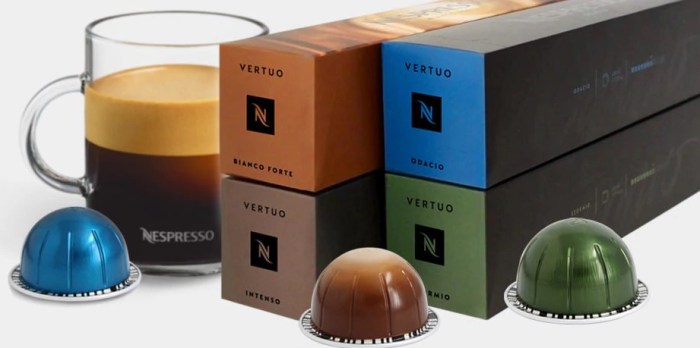
Nespresso – for those of you not familiar – is one of the many capsule coffee systems on the market today. Unlike the Keurig K-Cup, “Nestle-Espresso” capsules spin as the water passes through the grounds (7,000 RPMs – vroom vroom!), adding a light-colored frothy cap of “crema” on top. The crema enhances the aroma, but more importantly delivers the mouth-feel of a latte, as if you stirred something in from the dairy family. But call me fooled; Nespresso’s nothing more than coffee in the cup.

Bunn’s coffee-monster

Coffee snob? Parvenu, perhaps. It wasn’t that long ago I contentedly drank “joe” from one of those big metal Bunn machines, flavor-boosting my Styrofoam cup contents with a sugar cube and powdered Coffee-mate. Then, I spent a year in Rome and my world was forever coffee-rocked. I returned to the States armed with words like cappuccino and espresso and caffe latte. But America didn’t even know the word Starbucks yet. A “coffee shop” was still a greasy spoon diner; forgettable joe in a forgettable cup.

Mind you, not having Starbucks didn’t mean I was gonna crawl back to the Bunn, especially after a year of Italy’s la dolce vita (look it up). Eventually I dropped hard-earned cash on one of those early model home coffee/espresso/steamed milk contraptions – a machine requiring twenty minutes, twenty steps, and a phone-book-sized operations manual to produce a small cappuccino. The birth of the American barista did not start at Starbucks, my friends. It started in the frustration of orchestrating an overly complicated home-brew system in search of pseudo-Italian-style coffee.

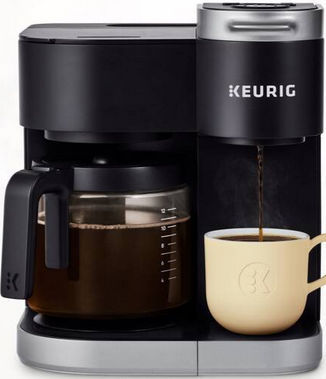
Sometime after Starbucks opened its first doors (but before Nespresso), Keurig developed the K-Cup. The Keurig coffeemaker felt like a huge step up from standard drip (and ushered in the concept of single-serve coffee at home). Keurig opened a seemingly new world of coffee to me – exotic names like Green Mountain or Paul Newman’s or Donut Shop – but let’s be honest. Keurig was basically glorified drip, and I still wasn’t taking my coffee straight, like I did in Italy. And that’s where Nespresso shines. If the K-Cup is a step up from drip, Nespresso is the entire staircase.

Ironically, the same company producing Nespresso markets a line of oil-based creamers sugary enough to make your coffee taste like Easter in a cup. Nestle already offered creamer flavors like Peppermint Mocha or Italian Sweet Creme or Toasted Marshmallow, before recently adding Cinnamon Toast Crunch and Funfetti. Not to be outdone, International Delight augmented its own coffee creamer line – REESE’S Peanut Butter Cup, Cinnabon, and OREO Cookie Flavored, with – no joke – a PEEPS flavor. Better check for bunnies before you take a sip.

For the record (if the Pulptastic website is to be believed), I’m not even close to being a coffee snob. I can choose from any of their twelve defining characteristics and come up short. I don’t read about coffee. I don’t speak the lingo (“Robusta?” “Arabica?”). I don’t know what “cupping” is. I do enjoy a Starbucks coffee every now and then. Finally, I’m half-tempted to check out the PEEPS creamer (maybe I won’t even need the coffee in my cup). See the Pulptastic list for yourself. Maybe you’re the coffee snob instead of me.

I’m still waiting (im)patiently for my repaired Nespresso coffeemaker to come back. I’m barely surviving on my backup K-Cups. But I’m no coffee snob. And I was just kidding about wanting to try PEEPS in a bottle. On the contrary, those creamer schemers can keep their product far, far away from my Nespresso.

Some content sourced from the 2/3/2020 Wall Street Journal article, “Rich Sales Boost Coffee Creamers”.

A Baker’s Half-Dozen

If you’ve ever been to an IKEA home furnishings store, you know the shopping experience is more about navigating a vast warehouse than a cozy “store”.  IKEA retail covers several football fields worth of showrooms and merchandise, with clever navigation arrows projected onto the floor so you don’t lose yourself in the maze.  Before or after your purchases, IKEA offers a spacious sit-down cafeteria, so you can fuel or restore your energy levels as needed.  And it is here – in the IKEA cafeteria – where I can’t help but picture the Swedish Chef from the The Muppet Show.

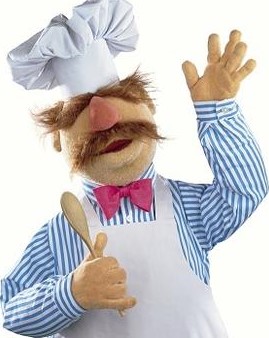
You remember Swedish Chef, don’t you?  Even if you only occasionally glanced over the shoulders of your children as they watched The Muppet Show, Swedish Chef left an indelible impression.  Chef had those big, bushy brows completely covering his eyes.  He always had a handful of utensils, inevitably launched into the air of his kitchen as his gibberish songs ended with “… BORK, BORK, BORK!”  Chef sported a colorful bow tie, a white apron, and the distinctive toque blanche (white hat) on his head.  Swedish Chef was always my favorite Muppet.

Chef could be working behind the counter of the IKEA cafeteria, because naturally; IKEA serves Swedish food.  My favorite entree (as if I dine at IKEA regularly) is the Swedish meatballs in brown sauce (köttbullar), served with a side of the crepe-like potato pancakes (raggmunkar) and a dollop of lingonberry jam (Sweden’s famous “food freshener”).

There’s another fellow in the States who reminds me of Swedish Chef, and he doesn’t work in the IKEA cafeteria.  Ever heard of Mimal, “the Man in the Middle of the USA”?  Mimal lives in the Midwestern states, and he’s a big boy.  In fact, Mimal’s so big he barely fits between Canada’s border to the north and Mexico’s to the south.

Have a look at the map.  Mimal (sometimes called “the Elf”) is a silhouette of a chef, represented by the outlines of seven American states.  MIMAL is quite literally (M)innesota, (I)owa, (M)issouri, (A)rkansas, and (L)ouisiana.  He holds a pan (Tennessee) of fried chicken (perfectly represented by Kentucky).  Mimal can thank the west bank of the Mississippi River for the shape of his five-state body.  He also looks like he’s about to march his chicken right off the map, over the Atlantic Ocean, and on into Europe.  Maybe he’s headed to Sweden?

Whoever discovered Mimal hiding in America came up with a clever way for children to memorize a handful of states.  Appropriately, Mimal the chef is made up of a baker’s half-dozen of them.  A baker’s dozen (13) began in the 11th century, when an extra loaf was added to the bread basket to guarantee the minimum sales weight.  A baker’s half-dozen then – rounded-up – is seven loaves.  Or seven American states.

Leave it to Americans to deny Mimal his innocence.  Based on one or more unsolved mysteries in the MIMAL states, the elf-chef was once connected with a real-life kidnapper/murderer.  The legend claimed if you drove straight from Minnesota to Louisiana – through each of Mimal’s five “body” states, you’d be abducted (never to be seen again) once you crossed Louisiana’s northern border.  My logical brain asks how said abductor knows you made it through all five states?  But this is legend we’re talking about, much like the monster in Scotland’s Loch Ness.  Tabloid fodder at best.

Educators expanded on Mimal’s seven-state profile, including all fifty American states in a story designed to help students memorize names and locations (would’ve been helpful back in my school days, when I’d confuse Wyoming with Colorado).  Still, I prefer to limit the game to Mimal’s baker’s half-dozen.  I can’t help but see a big chef every time I look at a map of the United States.  I also can’t help hearing him sing, “…BORK, BORK, BORK!”

Some content sourced from Wikipedia, “the free encyclopedia”, and the Laughing Squid blog.

Check-Out Champ

We had a good drop of snow the other night; the best we’ve had since the new year began. The flakes fell quickly, adding inches to the front porch and everything in the yard beyond. As I surveyed the vast, white blanket before me, my mind wandered to snow angels and snowmen, to pulling the sled out of the garage. I pictured wandering lines of deep footprints, far as the eye could see, or snowballs piled up and ready, waiting for a battle with the neighborhood kids. Without knowing it, I was effectively ticking the list of images from Ezra Jack Keats’ 1962 children’s classic, “The Snowy Day”.

Confession time. I didn’t remember the story of “The Snowy Day” until I stopped by my local bookstore the other day for a copy (destined to my granddaughter’s bookshelf). It’s a simple book: the snow-filled adventures of a little boy on a winter’s day, captured in less than two hundred words. The images tell the story as well as the words, including the boy’s disappointment when he realizes a snowball carefully packed into his coat pocket melted moments after entering the warmth of his house.

Why all the fuss over a short children’s story, authored almost sixty years ago? Consider this: “The Snowy Day” is the most checked-out book in the 125-year history of the New York Public Library (NYPL). That’s 485,583 individual borrows, putting the book comfortably ahead of hundreds of thousands of others. (Safe to say the “Jeopardy” writers jotted down that bit of trivia for future use.)

You’d think I’d have checked out “The Snowy Day” when I was little. After all, the library was a weekly – if not bi-weekly destination as a kid. My older brothers took music lessons right across the street, leaving the library as a convenient “babysitter” while Mom went to the grocery store. I’ll always be grateful to her for that strategy, which generated countless check-outs and a lifetime love of reading.

I find it remarkable the NYPL maintains complete records – most of them on paper – backing up its check-out claim for “The Snowy Day”. The book topped several other bestsellers I would’ve chosen instead. Take “Fahrenheit 451” (#7 all-time checked-out), or “Harry Potter and the Sorcerer’s Stone” (#9). How about other children’s titles like “The Cat in the Hat” (#2) and “Where the Wild Things Are” (#4)? “The Snowy Day” sits atop the list with fewer words and fewer pages (except perhaps #10, “The Very Hungry Caterpillar”) Good on you, Ezra Jack Keats.

Dale Carnegie’s “How to Win Friends and Influence People” seems out of place in the NYPL top-ten (#8) – the only non-fiction read on the list. I’ve never checked out a Carnegie self-help book, let alone bought one (not that I couldn’t use the help). For that matter, I’ve never checked out any of the NYPL top-ten. Maybe #6 Charlotte’s Web, but that was a long time ago.

“The Snowy Day” brought to mind storybooks from my own childhood, I took a few minutes to recall the following favorites (sans Google search):

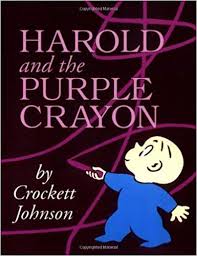
  • Harold and the Purple Crayon
  • Clifford the Big Red Dog
  • The Red Balloon
  • Make Way for Ducklings
  • Blueberries for Sal
  • Mike Mulligan’s Steam Shovel
  • Are You My Mother?
  • Sparky’s Magic Piano
  • Caps for Sale

The brain is remarkable. I can give you a complete synopsis of each of the above stories, fifty years after I first read them. Furthermore, “Harold and the Purple Crayon” and “The Red Balloon” manage to tell their stories without a single word. Nothing but photos and illustrations. They make “The Snowy Day” look like a novel.

I can’t tell you the last time I set foot in a library, but I know it’s been years. I’d say I’m “overdue” and should “check out” one of the nearby branches. After all, the stories of my childhood have endured the test of time, waiting patiently on the shelves; perfect reads for the next “snowy day”.

Some content sourced from the 1/13/2020 Wall Street Journal article, “These Are the Most Frequently Checked-Out Books in the History of the New York Public Library“.

Ever Eat a Pine Tree?

If I ask you to recall a catchphrase – a word or statement you heard repeatedly and probably won’t forget – you could come up with several examples. Movie quotes, for instance. (“I’m the king of the world!”)  Song lyrics. (“I get by with a little help from my friends.”)  And television commercials; where the product or “jingle” yields a branded catchphrase. Just this week I learned a new one: bindle stiff, which describes a homeless person through the bag of personal items (bindle) on the end of his/her stick. I’m no hobo, but Euell Gibbons once was. And Gibbons once uttered one of the most famous catchphrases ever.

Who the heck is Euell Gibbons?  Any American kid growing up in the 1970’s would know.  Gibbons was the spokesperson for Post Grape-Nuts cereal, made instantly famous by a single television commercial where he uttered, “Ever eat a pine tree?  Many parts are edible.”  That statement was so bizarre – and laugh-out-loud to us kids – it spread like wildfire (and sold a ton of Grape-Nuts cereal). But it was only recently I learned Gibbons wasn’t just a hired bindle stiff, but a man ahead of his time.  He had a lifelong interest in foods foraged from “nutritious-but-oft-neglected plants” (surely learned from an impoverished and transient childhood).  He wrote several successful whole-foods cookbooks, including “Stalking the Wild Asparagus” (1964) and “A Wild Way to Eat” (1967).  In his later years, Gibbons and his wife joined a community of Quakers in Philadelphia, where he cooked the daily shared breakfast (of course he did).

“Many parts are edible.”

I love Grape-Nuts cereal, back to when I was a kid.  I’m not sure if Gibbons gets the credit, or because Grape-Nuts just tastes good (“…reminds me of wild hickory nuts…”, as Gibbons also said).  Admittedly, Grape-Nuts was a little off the beaten path of children’s cereals.  Very low in fat and sugar, Grape-Nuts looked and crunched like a bowl of light brown gravel.  Add in milk as a softener and sugar as a sweetener however, and something about the cereal just clicked with me.  After college I forced myself to give up Grape-Nuts, because I developed jaw pain from too many hard foods.  Maybe that’s why Post developed Grape-Nuts “Flakes” cereal, or Grape-Nuts “Trail Mix Crunch Cranberry Vanilla”.

GORP

Speaking of trail mix (convenient segue), Euell Gibbons comes back to the conversation.  Trail mix was introduced about the time Gibbons was born (1910), as a combination of dried fruit and nuts.  Trail mix was lightweight and therefore easy to carry on long hikes.  The carbs and fat created a quick energy source and an ideal snack food, and the mix became immensely popular to outdoors-people, especially sugared up with a few M&M’s or yogurt coverings (which Gibbons never would’ve approved of).  Yet it wasn’t always called “trail mix”.  In another word familiar to 1970’s kids, Gibbons coined the acronym GORP, which either meant “good ol’-fashioned raisins and peanuts”, or “granola, oats, raisins, and peanuts”.  Yep, I ate a lot of GORP in my childhood.  Might’ve even had my first taste at Hadley Fruit Orchards, a place in the California desert my parents like to frequent.  Hadley – alongside others – claims to be the “inventor” of trail mix.

Euell T. Gibbons

As if “Euell Gibbons” is not unique enough for an American, his middle name was “Theophilus”.  The only Theophilus I’m aware of lived in biblical times, when Luke wrote his Gospel (and the book of Acts) as letters to an individual by the same name.  Perhaps Gibbons should’ve lived in biblical times.  As God’s people sought the Holy Land he could’ve helped them with his foraging skills.  Or at least introduced them to Grape-Nuts.

Some content sourced from Wikipedia, “the free encyclopedia”.

Cruise (out of) Control

Ever since the Ferris wheel debuted (at the 1893 World’s Colombian Exposition in Chicago), there’s been an unofficial competition to design and build a taller version.  The original topped out at 80.4 meters all those years ago, while today’s leader – the “High Roller” in Las Vegas – rotates over twice that high.

The “High Roller” in Las Vegas

To complicate the matter, there’s great debate about what defines a Ferris wheel.  The tallest wheels for example – including the High Roller and the London Eye – are labeled “observation wheels” because they’re more than just an amusement.  Newer designs eliminate the spokes and hub to give the illusion of a free-wheeling ring.  Whatever.  Thanks to my acrophobia, even a kiddy amusement park Ferris wheel is thrill-ride enough for me.

Go figure – I enjoy the highest, fastest roller coasters anywhere, but I wimp out when it comes to a standard Ferris wheel.  Why?  Because Ferris wheel gondolas are neither enclosed nor replete with safety bars.  You’re just sitting up there in the open air, 250 feet off the ground, realizing nothing is preventing you from falling (a peek into the mind of an “acrophobe” – you’re welcome).  Conversely, when the roller coaster safety bar ratchets down to the waist, almost taking your breath away, there’s a sense of being one with the coaster, like you can’t possibly fall out.  Much better.

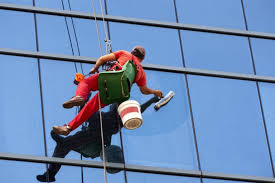
I will never be this guy

Let’s change the channel and focus on big ships.  If you’ve ever taken a cruise, you should be able to name one or more “amusements” you didn’t expect to find in a floating hotel.  Golf driving ranges.  Skeet-shooting.  Water slides.  Again, it’s an unofficial competition.  But what about a roller-coaster, traveling up to 37 mph, with an elegant sweep out over the ocean?  Yep; coming soon to a Carnival Cruise Line ship near you.

I hereby retract my earlier statement about tolerance for roller coasters.  Riding the rails, plunging down towards the ocean and back up to the sky, two hundred feet above the keel of a moving ship – Carnival’s “Bolt” is too much for me and my acrophobia.  Almost a little too much for the coaster’s engineers, too.  They faced a pile of challenges with the design.  What would be the impact of a moving vessel on the gravitational requirements of a roller coaster?  Will the weight of seven hundred feet of track twenty stories above the water tip the ship?  How will the vessel’s structure tolerate the forces of heavy cars speeding here and there?  And what about all that noise?

Put the cart before the horse – as Carnival did – and things get easier.  First design the coaster; then design the ship.  Make the roller coaster cars self-propelled so they don’t depend on gravity.  Eliminate the chains and sprockets in favor of small booster engines to reduce the noise.  Then design a ship keel three football fields in length.  Reengineer the structural elements – from the water up – to accept the distributed forces of the coaster.  Overweight the whole thing so coaster cars can go almost vertical and still not tip the ship.  Behold Carnival’s Mardi Gras – a virtual floating amusement park – breaking the champagne bottle next winter.

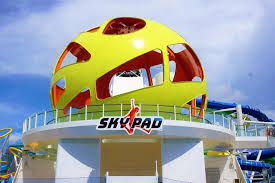
I still think a roller coaster on a ship is nuts, but I seem to be out of touch with the latest amusements.  You can already partake in “Sky Pad” – also on Carnival – a bungee-jumping-trampolining-virtual-reality mash-up.  Or Royal Caribbean’s “RipCord”, a column of air for skydiving simulation.  Or Norwegian’s “Ultimate Abyss”, a four-story sort-of toilet bowl, where you’re flushed in circles and dropped down a 200-foot water slide.

If you’ve ever seen Katy Perry’s music video, “Chained to the Rhythm”, you probably laughed at the outlandish amusement park rides, like the coaster with the heart-shaped loop-the-loop, or the pseudo Ferris wheel catapulting riders out into the air.  But considering Carnival’s “Bolt”, maybe Katy’s got a keen eye on the future after all.  As for me, I’ll stay grounded in my local kiddy amusement park.

The future of amusement?

Some content sourced from the 1/8/2020 Wall Street Journal article, “They’re Putting a Roller Coaster on a Cruise Ship”, and Wikipedia, “the free encyclopedia”.

Ribbons and Bows

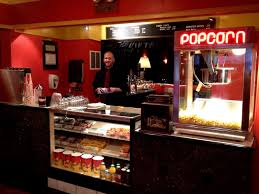
My wife and I went to the movies the day after Christmas. The theater lobby looked a little forlorn after the holiday rush. There weren’t many patrons besides the two of us. The employees wandered here and there without seemingly much to do. The concessions were woefully under-stocked. In fact, as we stood at the counter, we realized there were no nachos, no hot dogs, and not a single bottle of water to be found. Did all those “Star Wars” groupies buy up everything before us?  Did a link go missing in the supply chain? Can we blame the aliens?  Ah, but popcorn.  At least they had popcorn.

I can’t see a movie without cradling a big ol’ tub of theater popcorn.  Don’t ask me what chains the two together, but popcorn and movies are a heaven-on-earth marriage.  It’s like that Kacey Musgraves Christmas song about a ribbon without a bow.  The movie might be Oscar-worthy but there’s a big something missing without popcorn.  The next time you watch “Field of Dreams”, consider the ball field is surrounded by acres and acres of corn.  As if you need a metaphor.

Popcorn wasn’t always an option at the movies.  In the early 1900’s, the theater-going experience was different.  The auditoriums were much smaller.  The carpets and seats were lush and expensive.  The patrons tended towards upper-crust.  And the movies themselves… had no sound.  Any one of those reasons made popcorn a poor concession choice.  Theaters didn’t want kernels ground into their pricey floor coverings.  Patrons didn’t want a snack associated with the lower-class circuses and sporting events of the time.  Most importantly, no one wanted to hear crunching and munching while trying to read the subtitles of a silent movie.

The Great Depression – and “talkies” – ushered in the union of popcorn and movies.  A broader cross-section of patrons sought the theater for an inexpensive distraction to the hard times.  Popcorn was easy to mass-produce, and the smell and pop created an effective lure for the concession stand.  Crunching and munching was no longer a concern up against soundtracks.  And popcorn was affordable, even to those who could barely scrape together enough for the movie itself.

Do you prefer “mushroom” or “butterfly”?

There’s a little science behind popcorn to get it from husk to Hollywood.  Growers developed the appealing “butterfly bud”, with several “ears” to trap the butter and salt.  Growers also worked to shape popcorn to take up as much room in the bag as possible (less air), giving a more satisfying feel to the overall weight.  They coined terms like “expansion rate” and “mouth feel” and “finger control” – anything to make you buy more of the fluffy stuff.

All this talk of popcorn reminds me of a children’s book about a farmer who grew acres and acres of corn.  He’d store his corn in giant metal silos next to his field.  One summer day, the silos got so hot the corn inside started to pop.  The farmer heard the sound and climbed on the roof of one of the silos to see what was going on.  Suddenly the silo burst open, and the roof started rising above all that popcorn.  Up, up, up went the farmer.  When the popping finally stopped, the farmer was high up in the sky with no way to get down.  His neighbors came from miles around to try to help him.  The fire department’s ladders weren’t long enough.  The town had no helicopter.  Finally, the people talked it over and realized all they had to do was start eating the popcorn straight from the silo.  Down, down, down came the farmer until he was safe.

As much as I love popcorn, I only seem to eat it at the movies.  When my son was in college, he admitted to going to the theater, buying popcorn at the concession stand, and… leaving the building.  Who does that?  Then again, there’s nothing wrong with the idea (high price aside).  It’s like having turkey when it’s not Thanksgiving.  Or dessert before dinner.  Seems a little off, but really, why not?

As for me, I’ll continue to enjoy my popcorn with my movie.  I’ll pay the ridiculous price for the shrinking bag, and still eat too much.  The only problem with this scenario?  Finding decent movies anymore.  They seem to be fewer and further, at least on the big screen.  Thank goodness for Netflix and my air popper.

Some content sourced from the Wall Street Journal article, “How AMC Gets Its Popcorn From Stalk to ‘Star Wars'”, and from the Smithsonian Magazine article, “Why Do We Eat Popcorn at the Movies?”

Untying the Knot

A once-popular saying – now sprinkled with dust – goes, “there’s nothing like the feel of a well-tailored suit”. It’s been awhile since I bought a tailored suit (off-the-rack seems to do it these days), but there’s something to be said for “feeling as good as you look”. If the shirt, belt, socks, shoes, and even pocket square aren’t carefully coordinated however, the suit falls short. And what about the necktie? Once upon a time the tie question was, “which knot should I use?” Now the better question might be, “should I even bother”?

Neckties seem to be more of a fashion statement than staple these days.  Once an indicator of labor (vs. leisure), ties are now disappearing altogether, in favor of the open collar (if there even is a collar).  The irony of today’s neckties is you’re more likely to see them on a security guard or restaurant waiter than you are a CEO or bank manager.  Today’s fashionistas likely dismiss ties as a passing fad akin to the sweater vest or leg warmers.  Yet in their current post-cravat form, ties have been around over two centuries.

Neckties didn’t mark labor (vs. leisure) so much for me.  Rather, they marked California vs. Colorado.  In my early years in the workforce in California, as an architect and then airport planner, I unfailingly wore a tie to work.  I also wore a suit, or at least a sport coat.  The nature of the work however – hovering over a drafting board with pencils and other instruments of design – demanded the coat be relegated to the closet for most of the day.  As for the tie, we architects developed a habit of throwing the tail over the shoulder, much the way the superstitious toss a pinch of salt.  As a result, I have more memories of the back of a tie than of the front.

Once I moved to Colorado in the 1990’s, and my job moved to the technology sector, ties retreated to my bedroom closet for good.  Twenty-five years on, my need for them equates to weddings, funerals, and a handful of restaurants with dress codes.  Quite a contrast from my childhood, when ties were worn not only every Sunday in church, but also on every trip on an airplane.  Thank goodness my parents bought me the “clip-on” variety.  As a kid, I had no clue how to tie the knot.  I didn’t a care for a “noose” around my neck either.

Neckties carry more history than today’s post allows.  They evolved from costumes of war, with the cravat becoming the first formal statement.  Several variations followed, but it was the “Langsdorf” – or “long tie” – which eventually took hold.  Along the way, ties morphed from short to long (and back to short again), and from wide to narrow (and back to wide again).  Neckties changed from white to black, from solid-colored to striped, paisley, and geometric.  Ties even went through a phase where the designs were more free-form and specific; vertical artwork if you will.  Picture a big fish, head down.

Made in Britain

Here’s an interesting bit of tie trivia (assuming the topic comes up at your next party).  In Britain and its Commonwealth countries, diagonal stripes on ties run from the left shoulder down to the right side, as a nod to the regimental dress of the military.  In the United States, it’s the opposite – right shoulder down to left side.  Don’t believe me?  Go check the closet or your local department store.  (I’ll wait.)  Furthermore, those stripes aren’t really on the diagonal.  If you unstitch the tie into the single piece of cloth it started with, you’ll see those stripes run horizontal.

The “Atlantic” backwards knot

Neckties birthed some elegant terminology, like Steinkirk, Solitaire, Ascot, Langsdorf, and a handful of words just for the knots (four-in-hand, Pratt, Shelby, Windsor).  Speaking of knots, guess how many ways you can tie a necktie?  Eighty-five – although only thirteen are recognized as symmetrical and balanced.  One of those, the Atlantic, boasts a knot tied backwards, but on a forward-facing tie.  I like it.

Pillow design and photo courtesy of Randi Zubin

Someday I’ll donate my ties to Goodwill (or sell them on Etsy – the makers out there are doing cool things).  Now however, they’ll serve as a reminder of the way things used to be: in some ways good; in other ways a little tight around the collar.

Some content sourced from the 12/2/2019 Wall Street Journal article, “The Knottiest Problem: What to Do With a Closet Full of Old Ties?”, and Wikipedia, “the free encyclopedia”.

Media Meltdown

Nope, not that media.

A few weeks ago, I gave Legacybox a try.  Heard of ’em?  Legacy converts old home movies – the ones you may have on VHS or 8mm tapes (or even reel-to-reel) – into clean, digitized formats. I sent Legacy a heaping box of my tapes (reel-to-reel was slightly before my time), and a month later received a single, tiny thumb drive in return. Remarkable really: dozens of hours of precious video memories packed into a bits-n-bytes “box” the size of a fingernail clipper. If I’d chosen a digital download instead of the thumb drive, I wouldn’t have received anything (physical) in return.

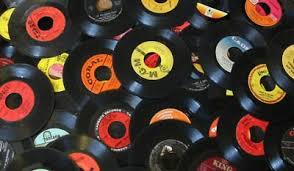
We’ve flash-landed into a digital, live-stream, can’t-hold-it-in-your-hands world of multimedia these days.  Phonograph records, celluloid film, audio and video cassettes, and optical media like CD’s and DVD’s spin firmly in the rear-view mirror; collectables reserved for only the most nostalgic.

[It’s not a stretch to say print media – books, newspapers, magazines, and photographs – aren’t far behind, but that’s another post for another day.]

For those of you born in the last century – literally, not figuratively – let’s eulogize some of these once-upon-a-time physical media formats.

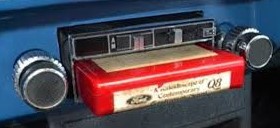
The “8-track”

I’m old enough to remember 8-track tapes, are you?  Before I owned my first “LP” or “45” record, I was regularly subjected to my dad’s music choices on his car stereo 8-track player.  In hindsight, there’s something endearing about the bulky, inefficient format of the 8-track tape (except when your only memory is your dad’s music).

The smallish 45 “single”

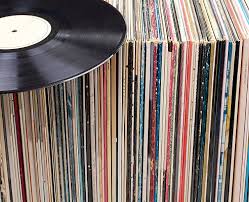
Before the 8-track tape gave way to the compact cassette, I built up a pretty good collection of 1970’s 45 rpm records (“singles”) – 100 or more.  My older brother – who built a sizeable collection of 1970’s 33 rpm records (“LP’s”), understandably disdained my choices in music.  His flavor was “classic” rock (ex. Rick Wakeman, Emerson, Lake & Palmer) while mine was “bubblegum” (ex. Olivia Newton-John, Barry Manilow).  Appropriately, I have Olivia’s “Let’s Get Physical” re-running in my head as I cover today’s topic.

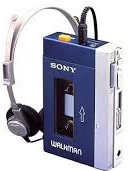
The cool thing about compact cassettes was – of course – you could record things (birthing the concept of the “playlist”).  Just as noteworthy, you could play cassettes in your car’s “deck”.  Your records had to stay home.  It wasn’t long before my 45’s were stashed in the closet and I was all-in on “tape”.  I spent countless hours recording and listening as I hugged my very first tape recorder.  I spent countless weekly allowance dollars on the Columbia House Record and Tape Club.  When the ultra-compact Sony Walkman debuted in 1979, cassette-tape music went everywhere you did.

Right about the same time as the Walkman, JVC (VHS) and Sony (Betamax) figured out how to put video on tape.  My early memories of movie rentals at the video store include renting the video player too.  After all, the price tag on first-generation “VCR’s” ran into the thousands of dollars.  I can still picture myself lugging a bulky VCR down the street to my apartment, with a pile of cables, an instruction booklet, and a stack of videotapes to watch.  Then, twenty-four hours later, I’d pack it all up and lug it back to the store.

The colorful “laserdisc”

Compact discs (CD’s) and digital versatile discs (DVD’s) felt like space-age technology in the ’80’s and ’90’s.  But press the Pause button for a moment.  Did you forget laserdiscs (LD)?  LD’s were the first optical disc storage medium, and man did I buy into the hype of those rainbow Frisbees.  By the time I invested in a (bulky) LD player and loaded up on (pricy) LD’s themselves, DVD’s were beginning to take over the home video market.  Sadly, I still have my LD collection today (along with my no-longer-functioning LD player).  I figure the whole setup isn’t even worth the time to advertise on Craigslist.  In hindsight, laserdiscs were the very definition of unwieldy.

Finally (for physical media), I never graduated from DVD’s to Blu-ray discs, but “cinephiles” claim Blu-ray looks and sounds even better than its digital successors.  Regardless, Blu-ray should be considered the final frontier in a history of physical media dating back to the 1800’s.  Check out Wikipedia’s timeline of audio formats (player-piano rolls!) here.

Thanks to companies like Legacybox, Netflix, and Spotify, digital media is here to stay.  But I must concede, there’s little pride in perusing a collection of utterly un-physical files and folders on my laptop.  Maybe Olivia Newton-John knew what she was singing about after all.

Or maybe that’s why I’m still hanging onto my laserdiscs.

Some content sourced from the 10/11/2019 Wall Street Journal article, “Streaming Is Killing Physical Media.  Here’s Why You Won’t Miss It”, and Wikipedia, “the free encyclopedia”.

Past Cards

Restaurants tend to leave advertising freebies at the host stand or on your table to remember them by. After paying the bill, you might grab a logo’d toothpick or a couple of plastic-wrapped mints on the way out the door. The fancier establishments offer books of matches (as if smoking remains the chic habit it once was). But every now and then I come across my favorite restaurant takeaway: the plain and simple postcard.

I’m almost afraid to ask a young person what he/she thinks of a postcard.  They’d turn it over and over in their hands and wonder what purpose is served by a laminated photo on card-stock paper (“Just show me the photo on your phone!“)  Then they’d flip the card to the back and realize it has something to do with snail mail (“Just send me a text!“)  Finally, they’d wonder why anyone would go to the trouble of pen/paper just to let another someone know where they were having dinner (“Just add your location on Facebook!“)

Remove smartphone technology and postcards suddenly seem relevant again.  Take a break from the dinner conversation, scribble a few sentences, add a mailing address, affix a stamp, and voila!  A thoughtful bit of correspondence in mere minutes – the precursor to the Post-It Note.  If you’re lucky, the restaurant pays the postage and mails the card.  If you’re even luckier, your recipient still checks their physical mailbox.

A 1908 postcard… of a Chicago postcard factory!

Postcards have more history than a modest rectangle of heavy paper would suggest.  The very first postcard was sent in 1840, in London. (Someone who believed “very first” paid $40,000 for it in 2002.)  In the later 1840’s, postcards began circulating in the United States, as printed advertising.  Soon after, postcards became the Mini Cooper of personal correspondence; a quick letter sans envelope, but without images (because your personal note went on the front of the card back then).  By the 1870’s, manufacturers were producing “picture postcards”, with the divided back you see today.

Risqué front image (at least for 1890) from the popular “seaside postcards” of the United Kingdom

The advent of the picture postcard led to a little controversy in certain parts of the globe.  Images sent from one country were not always deemed “proper” in another (i.e. sexual references in popular UK “seaside postcards”, or images of full or partial nudity from classical statuary or paintings).  Accordingly, some countries refused to handle picture postcards.  Those same images are clearly conservative by today’s standards.

Like baseball cards, postcards have become a collector’s item.  The value of a given card is associated with the image on the front.  Online resources include collector websites and clubs, catalogs, and trading platforms.  When I was a kid in the 1970’s, I collected postcards – one summer – to document the stopping points on a month-long trip my family took to the American states in the northeast.  Pretty sure none of my cards held value, but I still wish I kept them.

My “Northeast States” collection c. 1975

[Trivia pause: collecting postcards makes me a deltiologist.  Aren’t you impressed?]

Postcards have their own terminology, as if to elevate their status among mailed items.  A large letter postcard shows the name of a place in big letters (instead of a picture).  An early postcard is any card issued before the era of divided backs.  An installment card is one of a set, forming a single picture when placed in a grid.  Postcardese is the short-sentence, abbreviated writing style of postcards.  Finally, midget postcards – noticeably smaller than the standard 6″ x 4.5″ version – were issued as souvenirs and bound in sets.  (If you look at my collection photo you’ll see several midgets).

“Large Letter” postcard c. 1940s

The next time you come across a postcard, give the little guy a (first-class) ounce of respect.  He’s been around a long time, and the post office – depending on country – may still send him for less than the cost of an enveloped letter.  Remember, the postcard was the original format of brief long-distance correspondence.  Think about that the next time you text.

Some content sourced from Wikipedia, “the free encyclopedia”.