Caffè Companions

My wife made a batch of rolled sugar cookies last week, cut into traditional Christmas shapes like bells, wreaths, and stockings. It’s the first time in a long time for these cookies, inspired by the assistance of our young and attentive granddaughters. Though the cookies never donned their frosted/decorated costumes, they sure tasted great all by themselves. Kind of like the biscotti I’m giving up in 2026.
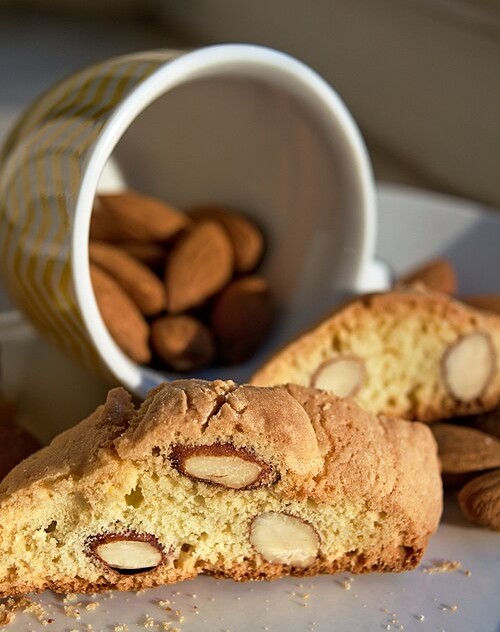
Are you a fan of biscotti?  They’re the small, oblong cookies that resemble tiny slices of sourdough bread.  They’re hard and dry, with just a smattering of almonds or almond extract for extra flavor.  Biscotti are meant to accompany a drink, just as two of them do every morning with my coffee.  Biscotti ward off the nausea I feel when I down my vitamins on nothing but a cup of joe.  Nice excuse for daily cookies, eh?
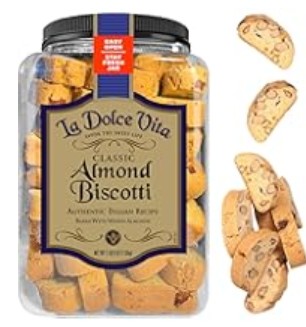
“Cantucci” (not biscotti)

When the calculator (which doesn’t lie) reveals you ate over seven hundred biscotti over the course of 2025, you quickly come to your senses and declare a resolution for the coming New Year: Shift biscotti from “habit” to “occasional treat”.  Yep, it’s time to cut down on carbs.

Before we seal the lid on the cookie jar however, biscotti deserve a little more attention to set the record straight.  First and foremost, the pint-sized pastries I consume with my morning caffè are not technically biscotti; they’re cantucci.  Cantucci contain ingredients like milk, butter, and flavorings, none of which are found in an authentic Italian recipe for biscotti.
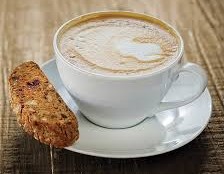
Here’s another distinction.  Biscotti were never meant to be partnered with coffee.  They were (and still are) served alongside a glass of sweet wine as a light Italian dessert.  Americans pair cantucci with cappuccino at upper-crust hotels and coffeehouses.  You’re supposed to dunk to make them softer (and take the edge off the coffee) but I prefer to eat them just the way they are.
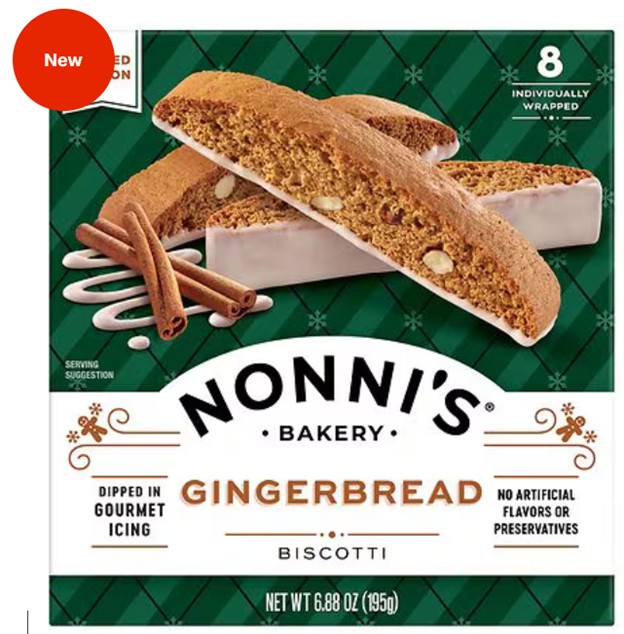
Biscotti translates to… not “biscuits”, but “twice-baked”, which is exactly how they’re made.  First baked as a full loaf; then baked again as individual cookies. Now then, another Italian translation for you: Nonni means “grandmother”.  Nonni’s also means a brand of biscotti (whoops, make that cantucci) you’ll find in your grocery store… and in my pantry.  The Nonni’s version is an unashamed dessert cookie, with a layer of chocolate, caramel, or lemon frosting to add to the appeal.  My advice: Nonni’s need to be put on a hard-to-reach shelf else they’ll become a habit just like the ones with my morning coffee.

In some Western European cultures biscotti are thrown into savory dishes, which I’m not going to get into because I find the idea unappealing.  Biscotti are classy little sweet treats in my book – one of the two items in my “grown-up milk and cookies”.  Alas, in 2026 it’ll just be “grown-up milk” for me… that is, as long as I stay away from my wife’s sugar cookies.

—————-

LEGO Trevi Fountain – Update #7

(Read about the start of this build in Brick Wall Waterfall)

Today we took a mini road trip, as I chose to build the fountain’s Bags 12 and 13 – of 15 bags of pieces – on the kitchen counter (instead of upstairs in the home office).  Kind of fitting considering the counter is topped with white marble.  Kind of annoying considering the laundry machine and dishwasher were running nearby the whole time, interrupting Arcangelo Corelli’s moving “Christmas Concerto” in G Minor.

Trevi statues are TINY!

Maybe it was the change of venue but some strange stuff happened today.  To begin with, I couldn’t find the very first piece in the build at all, until I looked closer at the instruction manual drawing and realized I was after a tiny statue.  Once I found him I was off and running, though I found it sad that one of his companion statues ended up being a leftover piece.

Thought you should know: the back side of the LEGO Trevi is a sheer wall of white.

Now for the strange stuff.  I assembled a flat L-shaped piece on top of another flat L-shaped piece, only to discover they weren’t supposed to go together that way.  No amount of fingernail dexterity could pry those two apart.  Fortunately I found myself in the kitchen.  Sharp knives everywhere!  It took a careful pry without cutting myself but I finally got those two unmarried.  Never let it be said building LEGO models isn’t a dangerous sport.
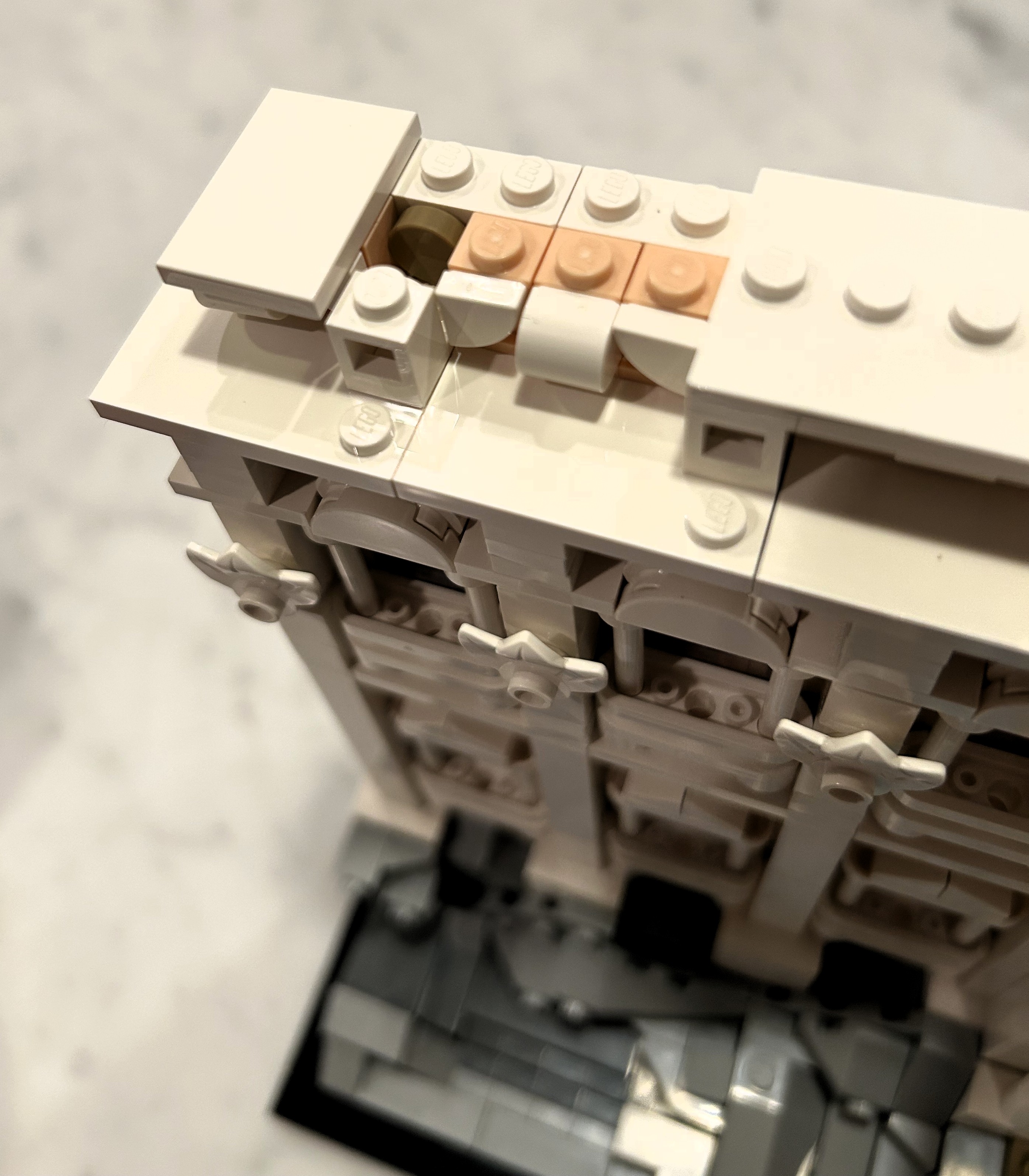
That little brown round one (nestled top left) was missing from Bag 13!

More strange stuff.  LEGO left a piece out of Bag 13.  Okay, technically they left it out.  “Technically” because in my growing pile of leftover pieces I found its twin.  But considering LEGO never leaves out pieces, I had to wonder:  Did the little guy just wander over to my leftover pile when I wasn’t looking?  Or is he somewhere in the trash right now, along with the cellophane bag of Bag 13?  Maybe he’s resting quietly on the kitchen floor just waiting to stub my toe?  Who knows.  I’m just thankful I had a “replacement” from my leftovers.  And I don’t think I’ll be building LEGO models in the kitchen anymore.

Next week: The Trevi is completed!
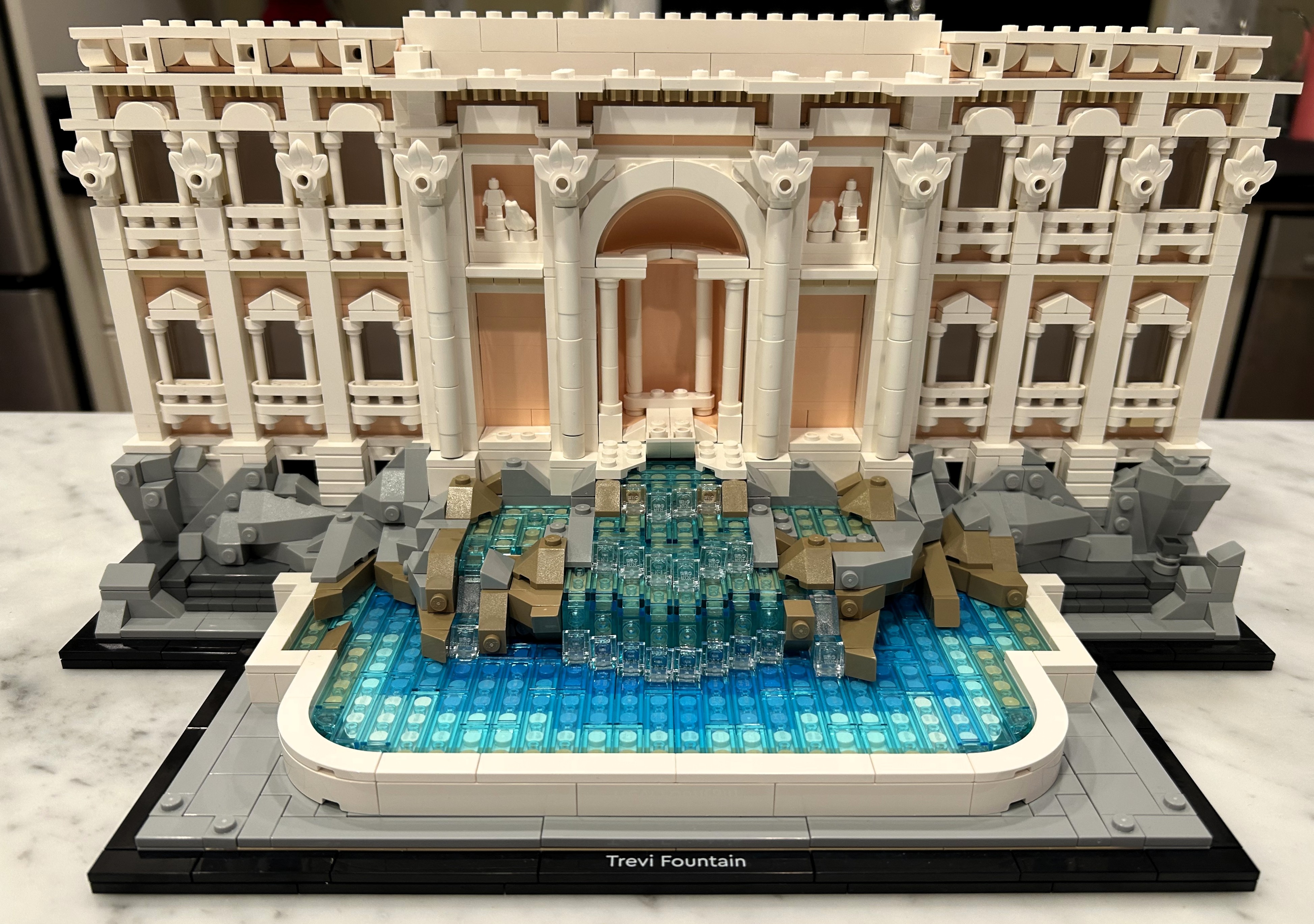
Running build time: 6 hrs. 52 min.

Total leftover pieces: 35 (including a lonely little statue)

Some content sourced from Wikipedia, “the free encyclopedia”.
Cold Brew

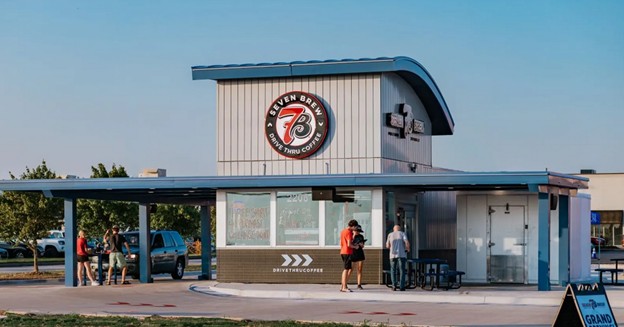
Seemingly overnight, a new drive-thru named 7 Brew showed up next door to our local supermarket.  A quick glance as I drove by suggested their slogan: “Come for the coffee, come again for the people” is on the mark, with more employees dancing around the drive-thru lanes than making drinks in the petite building itself.  7 Brew advertises an “experience” as much as it does a menu of coffee and energy drinks.  It’s just the latest concept to steal market share from Starbucks.

7 Brew

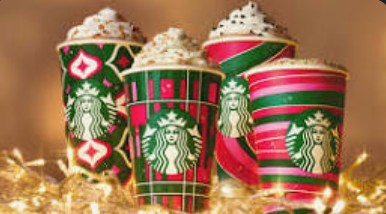
Did you know today is “Red Cup Day” at Starbucks?  Red Cup Day is the coffeemaker’s nod to the beginning of the holiday season.  Buy a Starbucks “holiday” drink and you’ll also receive a festive reusable cup – more distinctive than the usual white ones.  The red cups suggest Christmas comes early this year, and encourage the purchase of peppermint mochas, eggnnog lattes, and iced gingerbread chais.  Somewhere in all that there might even be coffee.

I admit, the Starbucks Chestnut Praline Latte really is Christmas in a cup.  The drink tastes of the same spices you’ll use with Grandma’s cookie recipes this season.  And on a recent trip through Chicago O’Hare, my wife and I caved to a couple of Starbucks’ ever-popular Pumpkin Spice Lattes.  But here’s my point.  Starbucks is no longer my go-to for coffee drinks.  It never was my go-to either, but there were plenty of morning commutes when I couldn’t pass up a Flat White and a couple of egg bites.  Now I drive by without pause, the same way I’ve done so with McDonald’s for decades.  It begs the question: has Starbucks become passé?

There are signs suggesting we’ve already put Starbucks in the rear-view mirror, even if 38,000 locations still dot the globe.  Like 7 Brew, Starbucks has always tried to deliver an experience as much a drink.  Come on in.  Hang out for awhile.  Even if you don’t, peruse all the “merch” while you’re standing in line.  Chances are pretty good you’ll spend more on logo items and baked goods than coffee.

This year, Starbucks features a 20-oz. “Bearista” cup.  It’s a refillable glass ontainer with a straw and it’s being marketed as a collectible.  You’ll find these bears at your nearest Starbucks for $29.95.  Or maybe you won’t, because they seem to be disappearing as fast as they’re put on the shelves.  If you’re a little desperate, find one on eBay for $500 or more (coffee not included).

To me that’s a good way to describe Starbucks these days… a little desperate.  They’re closing stores without drive-thru lanes, which suggests they’re trying to reduce the money they spend on leases.  They’re laying off retail and non-retail employees, the typical corporate strategy to try to do more with less.  And they’re coming up with bear-shaped cups the size of a Starbucks “Venti”, so you’ll purchase their largest coffee when you wouldn’t have done so with a regular cup.

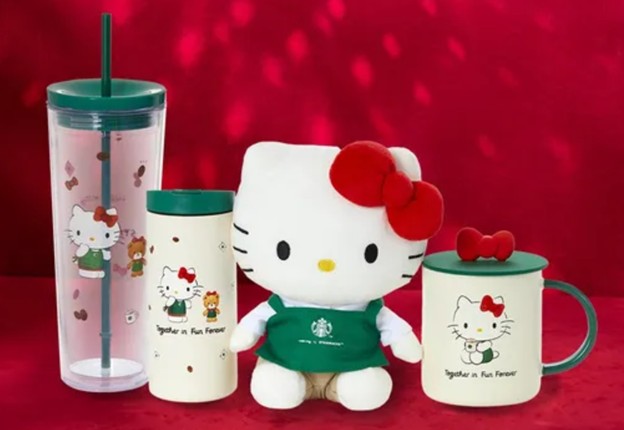
If you think the “bearista” is cute – and would pay $29.95 for it – how about “Hello Kitty” products?  Coming soon, you can buy a “plush” wearing a Starbucks green apron, and any one of five Hello Kitty containers, from water bottles to ceramic mugs.  Each of these runs you $30 or more (again, without the coffee).  Cats and coffee?  It’s a desperate strange marketing strategy, perhaps aimed at a generation of consumer that seeks something more trendy than coffee in a red cup.

This year, the Pumpkin Spice Latte showed up on the Starbucks menu on August 26th; hardly what I’d call “fall”.  Their Christmas-y drinks debut today, fully two weeks before Thanksgiving.  That’s stretching the seasons a little.  But let’s say I still splurge for a Grande Flat White, a couple of Egg Bites, and a slice of Iced Lemon Loaf.  I’ll pay $20 before I even consider the purchase of a “bearista” or a kitty.  It may be time to move on from the red cups.  Maybe I’ll give 7 Brew a try instead.  $7 gets you their smallest size… even pricier than Starbucks.  No guarantee you’ll find any coffee in that cup either.

(Coming next week: more updates on the LEGO Trevi Fountain!)

Beyond Quenching

Last week on Thanksgiving, I drank the following beverages in a start-to-finish order I may or may not recall correctly: water, coffee, more water, eggnog, water again, wine, and just before bed, a final gulp of water. Eggnog aside (and wine only occasionally) it was a typical day of liquid consumption. But on the list of reasons why I drink anything at all, I find it interesting “quenching thirst” settles to the bottom of the pool.  Closer to the surface are the more interesting intentions.  Collectively you might refer to these habits as my daily fluid dynamics (DFDs).

When I wake up, the first thing I do (make that the second thing I do, after walking the dog) is to down a glass of water; a full sixteen ounces.  I used to knock back just enough to chase my daily vitamins but then I read how you should drink water first thing in the morning, because technically you’ve been dehydrating for the last eight hours.  So I started filling ‘er up to the top of the glass, a two-cup habit I’ve maintained for a long time now.  Let’s list that habit as DFD #1: To help swallow things (like vitamins).

My top-o’-the-mornin’ water stands in the way of the one drink that truly matters in life: coffee (or tea for the rest of you).  My daily dose of caffeine is always the same: twelve ounces of the rich and robust stuff, with just a splash of cream to take the edge off.  Coffee takes me from foggy to functioning in a matter of sips.  Post-coffee Dave is alert and ready to conquer the day.  Call it a chemical dependency?  Hardly.  I can skip my “daily grind” here or there and be none the worse for wear.  But morning brew is undeniably one of life’s simple pleasures.  DFD #2: To deliver a morning wake-me-up. 

Let’s make a brief rest stop on our tour of daily fluid dynamics… literally.  My morning coffee comes with one utterly inconvenient side effect: the recurring “call of nature”.  Something about caffeine seeks to clear out every available drop of moisture from my body, until I might as well be dust.  It’s like one of those juice presses, only press down uncomfortably on the fruit every, oh, twenty minutes.  If I could down an entire liter of cold brew, not only would I be bouncing off the walls but I’d also lose at least ten pounds in water weight over the next hour.  Maybe I’ve discovered America’s next diet craze.

Okay, we’re back from our visit to the “powder room”.  I’m chugging water several more times during the day (indeed, high/dry Colorado made my faithful companion a water bottle, wherever I go).  But is all this water because I’m thirsty or because I can’t get the old saw out of my head, the one that recommends “eight to ten cups a day”?  A similar water saw says to consume half your body weight in ounces, but let’s be real: I never get to that number (nor do I believe in one-rule-applies-to-all).  Yet getting enough H2O still rattles around in my brain.  So, DFD #3: To hydrate the body.

Eggnog done right (meaning it’s often done wrong) is my favorite drink of the holiday season.  Conveniently, the creamy concoction also serves as a throat-soother when you’re sick.  It’s cold, with a thicker-than-milk consistency that settles on your throat for a fair amount of time.  Reminds me of the old Pepto-Bismol jingle (“the pink stuff”), how it “coats, soothes”.  Eggnog might be as effective as a cough drop and it tastes a whole lot better.  DFD #4: To ease a sore throat or cough.

Wine makes my fluids list regularly, and it would even if I had no argument for a DFD.  But I do.  Like today’s college “pre-game” drinking (or tomorrow’s holiday party you’re dreading), sips of wine dull the senses, warm the insides, and melt away stress.  Loose lips are a common side effect, but wine in moderation typically makes the conversation flow.  Plus, the right vintage simply tastes great, time and again.  DFD #5 then: To act as a “social lubricant”.

Last (and least), water is not only my top o’ the mornin’ but also my close o’ the evenin’ drink.  After the toothpaste, the floss, and the oral rinse, the water goes in and comes right back out.  Swishing, gargling, rinsing, and spitting – it’s all an effort to restore order beyond the lips, so you head to bed without the breath of the dead.  The only more effective approach would be a fire hose on full blast. So, DFD #6: To cleanse the mouth.

Maybe you’re a little more introspective about your consumption of beverages now (and you’re welcome).  Like I said, quenching thirst is somewhere near the bottom of the pool.  So the next time you’re taking a sip, and someone notices you being particularly thoughtful about it, just tell them you’d like to explain a little something called daily fluid dynamics.

Pulling the Plug

Thirty years ago, the S. C. Johnson Company introduced a new member of their Glade line of fragrance products called the “PlugIn”. Maybe you have one in your bathroom. The PlugIn uses a small amount of electricity to warm up scented oil, which slowly diffuses into the nearby air. You can even get one that lights up. Ironically, the Glade PlugIn was my first thought when I read about this week’s National Day of Unplugging.

So this is what we’ve come to in the year 2021.  As a counter to our undying affection for our electronic devices, a portion of the next couple of days has been designated “National Day of Unplugging” (NDoU) by a non-profit organization called Unplug Collaborative.  The Collaborative started its membership early last year and is determined to “spread awareness about how to maintain a healthy life/tech balance”.  Theirs is a noble, if not impossible effort.

Should you choose to participate in the NDoU “24-hour respite from technology from sundown to sundown, March 5-6”, I ask, will your life necessarily change for the better?

It’s just an awareness campaign, I get it.  Unplugging phones, tablets, laptops, and whatever else you consider “tech” for one whole day is essentially raising the white flag on what each of us already admit: we spend too much time with our screens.  But let’s be honest – what exactly defines “healthy life/tech balance”?  I think the answer is highly personal, depending on your job, disposable income, place of residence, and the ways you choose to spend your downtime.

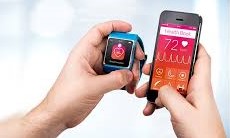
My wife is a wonderful example of “wired” (er, “wireless”); someone who twenty years ago tentatively navigated texting, apps, and what little else her basic cell phone had to offer.  Today, she sports the latest model Apple Watch, two iPads, and a MacBook, all of which seamlessly share information with each other and then with her.  She even sports a protective wristband to reduce her exposure to electromagnetic radiation.

I can’t imagine my wife “unplugging” for four hours, let alone twenty-four.  My conversation with her would go something like this:

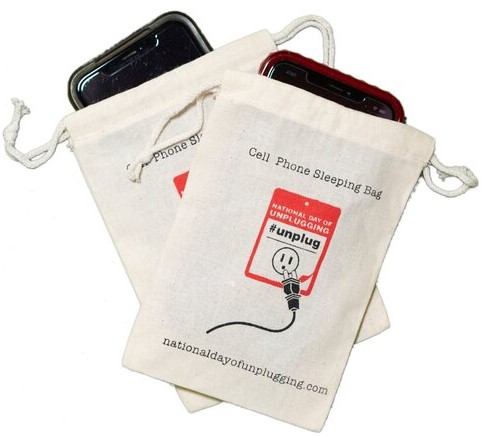
NDoU wants you to put your cell phone to bed – literally.

“Hey honey, so there’s this thing called ‘National Day of Unplugging’ where we get to shut down all of our electronic devices and work on making our life/tech balance better.  Just give me your watch and your tablets and your laptop and I’ll lock them in the closet until tomorrow night.  Sound good?” 

The response I’d get (if I did get a response from her) would be something like,

“Wait, WHAT???  National Day of WHAT?  Are you freaking kidding me?  Hahahahahahaha, good one, honey.  Yeah, let me think on that for just a second… um, NO WAY.  And keep your hands off my screens!”

I get it.  Not only does my wife fiercely track her 10,000 steps and her circles on her watch, she monitors a dozen or more daily feeds on her tablets, and countless emails and websites on her laptop.  It would be just as soul-sucking as taking my Amazon Kindle e-reader away from me (and let’s not even discuss that possibility).

This NDoU supporter doesn’t need screens… ever.

Unplug our gadgets and then what do we do… watch TV?  Sorry, if I’m really gonna play this game the TV also has to go.  The point of NDoU no doubt, is to reestablish face-to-face communication, prepare meals together, get outdoors, read books (what’s a “book”?), and so on.  Unplug Collaborative’s website lists fully one hundred ways to spend your time devoid of tech.  You can’t unlock the full list without signing up for their membership so I’m just speculating on examples.  [Hey, if you join, let me know if one of the hundred is “fool around in the bedroom”.  That one doesn’t take anything plugged in.  At least, nothing I have any experience with.]

If the NDoU campaign really gets momentum, I could see the unplugging moving beyond tech.  Perhaps next year we’ll give the washer and dryer a day’s rest too, as well as the home exercise equipment, the stereo speakers, and the kitchen appliances.  Now there’s a frightening image.  Imagine twenty-four hours in dirty clothes, with no workout, singing just to make a little music, and sandwiches and pretzels for dinner.  Okay, skipping the workout wouldn’t be so bad.

For the record, I’m a proponent of a healthy life/tech balance.  Taking away my screens for a day isn’t such a bad thing.  After all, we could be talking about my coffeemaker here.  Now don’t be talking about unplugging my coffeemaker.  You’re gonna have a fight on your hands and you don’t want to see me without my morning coffee.  Do that and I might have to think about unplugging you.

Iced Coffee

Place Dauphine

In the airy but over-aired romantic comedy Me Before You (2016), the dashing but damaged Will Traynor (Sam Claflin) laments bygone times when he refers to, “Paris. Place Dauphine, right by the Pont Neuf. Sitting outside the cafe with a strong coffee, a warm croissant with unsalted butter and strawberry jam.” Place Dauphine is not just a scene in Me Before You; it’s a real square in the heart of Paris.  And it probably has Will’s cafe, thanks to the nearby river and central views of the city.  Yet French cafes are growing scarcer every year.  In fact, these quaint little gathering places are disappearing in droves.

Painting by Vickie Wade

If someone asked me to paint a scene from a French country village, I’d surely highlight a charming cafe on a cobbled central space, bursting with patrons.  In the cafe, the proprietor would serve incomparable pastries alongside fine, pressed coffee.  The room would swell with music and chatter; the locals swapping their work-day adventures before heading home to supper.  The evening stopover in the cafe seems to me a staple of French culture.

So it pains me to read about closed doors on France’s rural cafes, according to a recent report of the Wall Street Journal.  Sixty years ago, you would find over 200,000 of them liberally dotting the country.  Today, there are less than 40,000.  “Progress” – in its various forms – has forced the rural worker out of traditional French industries and into the big cities.  Time once spent in the cafe is now given over to the workday commute.  Adds a village mayor, “Without a cafe, a village is pretty much dead”.

A “French cafe” in Ireland

Even though I’ve been to Paris, I can’t claim to have spent time in any of its cafes, not even the famed Les Deux Magots, where writers like Hemingway and Joyce were said to have gathered.  And yet, I’ve still experienced authentic “cafe culture” (and I don’t mean Starbucks).  On a trip to Ireland several years ago, my wife and I concluded our first day of sightseeing by ducking into what we thought was a small pub in downtown Dublin.  Turns out the place was more “French cafe”, complete with black-and-white prints on the walls, candle-lights on the tables, and coffee, tea, and pastries to beat the band.  We were so taken by the place we stopped in every afternoon for the better part of a week.  Perhaps the most showstopping memory of all: we never saw a phone, tablet, or laptop.  Patrons were there to gather and chat, or at least – in the case of a few loners – to lose themselves in a good book.

van Gogh’s “The Starry Night”

The French cafe is made all the more romantic thanks to the artist Vincent van Gogh.  In 1888 in the southern town of Arles, van Gogh observed the play of a cafe’s lights against the nighttime sky, which inspired his painting Cafe Terrace at Night, the precursor to his unequaled The Starry Night

“Yellow vest” protestors

Perhaps you recall France’s “yellow vest movement” a year or so ago, when protestors took to the streets to battle aggressive economic policies.  Turns out the French cafes played a part in the melee.  The government sought to impose an increased fuel tax to reduce the number of cars on the road.  The protesters interpreted the tax as an impolite shove, to get more people to move to the big cities.  In other words, less people in French country villages.  And no people in French country cafes.  Remarkably, one of the government’s concessions following the yellow-vest protests was subsidies towards small businesses.  Perhaps the French country cafe is not dead after all.

Had I written this post two weeks ago, I wouldn’t have come up with much positive spin on this topic.  But let’s face it, those of us “sheltered in place” right now yearn for social interaction (not social distancing).  We want face-to-face again, not Facetime.  We want the congregation, not just the church service.  So perhaps there’s a silver lining to the current pandemic after all.  When we return to “new normal”, my hope is we’ll have a newfound appreciation for gathering, instead of hiding behind our electronic devices.  As well, my hope is my next visit to France will find the doors of French country cafes wide open again, just beckoning me inside for “strong coffee and warm croissant”.

Creamer Schemers

A couple weeks ago, my Nespresso coffee maker sprung a leak. As it brewed a cup, it also “espressed” a small river of coffee from the base of the unit. An online chat with the good people at Nespresso determined, a) the maker really was broken, b) the one-year warranty covered the repair (whoo-hoo!), and c) the fix would take up to ten business days. Well beans; ten business days meant regressing a full two weeks on drip coffee instead.  Hold the phone; did I just label myself a coffee snob?

Nespresso

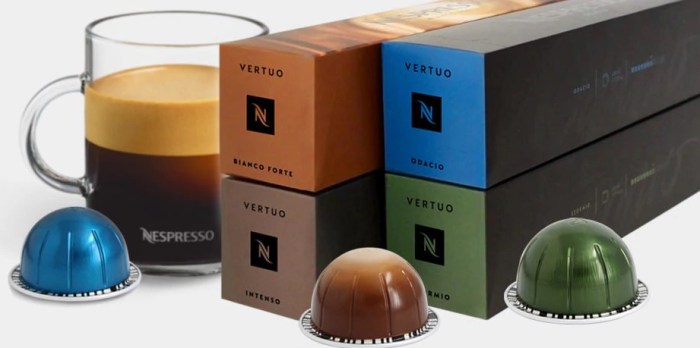
Nespresso – for those of you not familiar – is one of the many capsule coffee systems on the market today. Unlike the Keurig K-Cup, “Nestle-Espresso” capsules spin as the water passes through the grounds (7,000 RPMs – vroom vroom!), adding a light-colored frothy cap of “crema” on top. The crema enhances the aroma, but more importantly delivers the mouth-feel of a latte, as if you stirred something in from the dairy family. But call me fooled; Nespresso’s nothing more than coffee in the cup.

Bunn’s coffee-monster

Coffee snob? Parvenu, perhaps. It wasn’t that long ago I contentedly drank “joe” from one of those big metal Bunn machines, flavor-boosting my Styrofoam cup contents with a sugar cube and powdered Coffee-mate. Then, I spent a year in Rome and my world was forever coffee-rocked. I returned to the States armed with words like cappuccino and espresso and caffe latte. But America didn’t even know the word Starbucks yet. A “coffee shop” was still a greasy spoon diner; forgettable joe in a forgettable cup.

Mind you, not having Starbucks didn’t mean I was gonna crawl back to the Bunn, especially after a year of Italy’s la dolce vita (look it up). Eventually I dropped hard-earned cash on one of those early model home coffee/espresso/steamed milk contraptions – a machine requiring twenty minutes, twenty steps, and a phone-book-sized operations manual to produce a small cappuccino. The birth of the American barista did not start at Starbucks, my friends. It started in the frustration of orchestrating an overly complicated home-brew system in search of pseudo-Italian-style coffee.

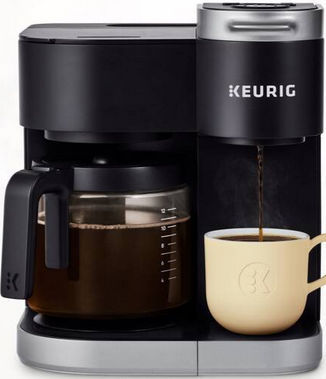
Sometime after Starbucks opened its first doors (but before Nespresso), Keurig developed the K-Cup. The Keurig coffeemaker felt like a huge step up from standard drip (and ushered in the concept of single-serve coffee at home). Keurig opened a seemingly new world of coffee to me – exotic names like Green Mountain or Paul Newman’s or Donut Shop – but let’s be honest. Keurig was basically glorified drip, and I still wasn’t taking my coffee straight, like I did in Italy. And that’s where Nespresso shines. If the K-Cup is a step up from drip, Nespresso is the entire staircase.

Ironically, the same company producing Nespresso markets a line of oil-based creamers sugary enough to make your coffee taste like Easter in a cup. Nestle already offered creamer flavors like Peppermint Mocha or Italian Sweet Creme or Toasted Marshmallow, before recently adding Cinnamon Toast Crunch and Funfetti. Not to be outdone, International Delight augmented its own coffee creamer line – REESE’S Peanut Butter Cup, Cinnabon, and OREO Cookie Flavored, with – no joke – a PEEPS flavor. Better check for bunnies before you take a sip.

For the record (if the Pulptastic website is to be believed), I’m not even close to being a coffee snob. I can choose from any of their twelve defining characteristics and come up short. I don’t read about coffee. I don’t speak the lingo (“Robusta?” “Arabica?”). I don’t know what “cupping” is. I do enjoy a Starbucks coffee every now and then. Finally, I’m half-tempted to check out the PEEPS creamer (maybe I won’t even need the coffee in my cup). See the Pulptastic list for yourself. Maybe you’re the coffee snob instead of me.

I’m still waiting (im)patiently for my repaired Nespresso coffeemaker to come back. I’m barely surviving on my backup K-Cups. But I’m no coffee snob. And I was just kidding about wanting to try PEEPS in a bottle. On the contrary, those creamer schemers can keep their product far, far away from my Nespresso.

Some content sourced from the 2/3/2020 Wall Street Journal article, “Rich Sales Boost Coffee Creamers”.

Coffee Breakers

Every now and then I take this blogging habit out onto the road, so to speak.  Instead of typing paragraphs from the home office, I’ll liberate my laptop from its cables, hop in the car, and head over to the local coffee house.  Working in a caffeinated environment – especially one buzzing with grouplets of chatty patrons – brings out the creative juices in me (if not the ability to concentrate).  Lately however, I’ve decided my little laptop show pales in comparison to some of the real road warriors out there.  Apparently, I need to show up with more toys in hand.  It’s time to go “Venti” instead of “Tall” and become one of the true coffee-breakers.

Perhaps you’re familiar with the patron I’m talking about here.  Coffee-breakers recreate their home office (or “office office”) on a table in the middle of Starbucks.  They consume more than their fair share of coffee house real estate (but not their fair share of coffee relative to their extended stay).  They arrange face-to-face meetings with colleagues, and interviews with prospective employees.  They hold Bluetooth conversations as they stare at nothing in particular.  Or FaceTime conversations as they have one-on-one’s with their phones.

I’ve come across several breakers in my coffee house stays.  They demonstrate distinct behaviors to separate themselves from those of us who simply want laptop time with our lattes.  First, breakers set up their workspaces, with enough time and attention to detail to announce, “Notice me!”  Then they go to the counter to place their coffee orders, deliberately leaving their setups unattended (as if to say, “This space is reserved!”).  Finally, they begin their “work”, which doesn’t really seem like work.  I can’t help thinking coffee-breakers are more often show than substance.

A few weeks ago at the local Starbucks, I left my laptop and Flat White to take a quick phone call outside the store doors (the polite thing to do).  When I returned, I found I’d been joined by a coffee-breaker.  She was carefully positioning two Bluetooth speakers on the table in front of her; then fiddling with her phone and a few other components from her oversized backpack.  As soon as her speakers gushed music (clashing with the Starbucks music playing overhead), she put in her AirPods and simultaneously took a phone call.  She operated as if she was in her own little world (i.e. I didn’t exist).  Therein lies another distinct coffee-breaker behavior: virtual walls.

On another visit, I was party to a conversation between a commercial real estate broker and a prospective tenant.  He sat his client (deliberately) adjacent to the counter queue, which (conveniently) put him in the center of the store.  The broker was hawking lease space in the adjacent soon-to-be-opened retail center.  No wonder he raised his voice as he spoke.  This coffee-breaker’s sales pitch was as much for me and my fellow patrons as for the captive soul sitting right in front of him.

The Wall Street Journal (WSJ) recently published a dozen rules for coffee-breakers; rules that should be laminated to every Starbucks building in the land.  Examples: Work only where and when you’re wanted (i.e. ask first).  Buy first, sit second.  Buy more than one small black coffee during the day.  Don’t take work calls – ever.  And so on.  Perhaps more enlightening was the reader comments in response to the rules.  I perused four pages’ worth (30+ comments) and not one came to the defense of coffee-breakers.  In fact, several comments added more rules to the list.

To my earlier comment about going “Venti”, I talk – of course – tongue-in-cheek.  A little attention is a good thing, but my hope is most of us would not deliberately choose to be a coffee-breaker (else this is the end of Western civilization as we know it).  Nope, I think I’ll take my road show to the library instead.

Some content sourced from the 8/27/19 Wall Street Journal article, “How to Act Like a Human When Working From a Coffee Shop”.

Putting the Kettle On

Kacey Musgraves is a blossoming country music artist whose recent album “Golden Hour” will compete with heavy-hitters at this year’s Grammy Awards for Album of the Year. She’s released only four albums (through major labels), so the nomination is remarkable. And yet – despite the acclaim heaped on “Golden Hour” – my favorite Kacey song remains a track from her second album, “Pageant Material”. In her words, it’s “a little, tiny, music-box-of-a-song” called “Cup of Tea”.
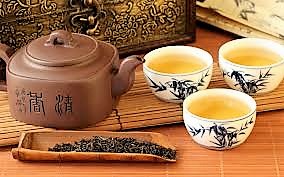
The message in “Cup of Tea” (have a listen here) – is simple: no matter who you are or what you stand for, you’re never going to appeal to everybody.  There will always be haters out there no matter how you present yourself.  My favorite lyrics in “Cup of Tea” are the refrain itself:

You can’t be, everybody’s cup of tea
Some like it bitter, some like it sweet
Nobody’s everybody’s favorite
So you might as well just make it how you please

Kacey wouldn’t mind if I told her “Cup of Tea” gets me thinking just as much about tea as about how well I mesh with other people.  Not that I’ll be steeping anytime soon, mind you.  I can’t seem to acquire tea-taste, no matter how many times I put the kettle on.  Go figure – half my DNA originates from England, so you’d think my instincts would have me setting out the fine china and doilies every afternoon.  I’d nibble on the cakes or scones or whatever comes with, but no tea, please.  I much prefer my morning coffee.

Ironically, tea brews with some of my earliest childhood memories.  My parents used to take my brothers and I downtown in Los Angeles, to restaurants on the streets of Chinatown – probably as much for the cultural experience as for the food. I can still picture those dark, quiet dining rooms, with the strange music and gaudy decor.  The meal always began with a pot of tea, including the little round cups that seemed to have misplaced their handles.  Tea was a cool experience back then. Listen, when all you drank was milk or water (or the occasional soda), tea was pretty sweet no matter how it tasted.  It was like having a “grown-up” drink before being grown up.

Forty-odd years later, I notched another tea-riffic memory.  My wife and I took a cruise on the Baltic Sea a few summers ago (“six countries in eight days”), and chose Oceania, one of the nicer cruise lines.  Good decision.  As much as we enjoyed the excursions off the ship, we enjoyed the return even more, because every day we were treated to “afternoon tea”.  Oceania’s tea was the perfect respite between the early morning touring and the evening dinners/dancing.  “Tea” included tableside service from tuxedoed waitstaff, countless cakes and petit fours, and those little triangle sandwiches with the crusts removed.  “Tea” even included a string quartet; their soft music adding to the ambiance.  I suppose I could’ve asked for coffee instead, but that would’ve tainted the experience.  Not to say I enjoyed the tea itself.  Just “afternoon tea”.

The culture, history, and preparations of tea could generate a week’s worth of posts.  (See the Wikipedia article here).  What I find more interesting is how tea has become the daily routine of several global cultures.  The Chinese and Japanese consume tea in the morning “to heighten calm alertness”.  The Brits serve tea to guests upon arrival (or in the mid-afternoon), for “enjoyment in a refined setting”.  The Russians consider a social gathering “incomplete” without tea.  Not sure about all that, but I can at least agree with the moment of pause tea provides; the respite from the faster pace.  It’s just… my “cup of tea” is coffee.

Buzz + Booze = 90

In the last day or two, an article surfaced in my newsfeed suggesting coffee and alcohol better your chances of living past 90.  Hello.  Now that’s a little something worth reading!  VinePair’s version of the report (“VinePair is the fastest growing media company delivering accessible, entertaining, and inspiring content about drinks and the experiences you have with a glass in hand.”) covers the critical details in a pleasantly short read.

Bless the research grants bestowed upon the University of California at Irvine (Go Anteaters!).  The Ants have been studying “oldest-old” humans for the past fifteen years and have come up with the following buzz + booze conclusion: those who consumed moderate amounts of coffee and alcohol lived longer than those who did not.  “Those who did not” were labeled as “having abstained“.  Nasty word, abstained.

U.C. Irvine’s study is music to my favorite appliances: the coffeemaker and the wine cooler.  No doubt my habits are mirrored by millions of others – start the day with a cup of coffee and end the day with a glass of wine.  And because I do, Irvine says I up my chances of living past 90?  Bacchus must be smiling down on me (and is there a god of coffee to keep him company?)  I think I’ll celebrate by hiring a personal barista and sommelier.

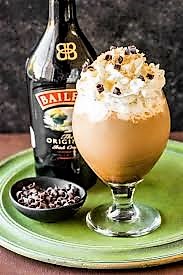
In the spirit of VinePair’s efficient reporting (150 words!), let’s cut to the chase.  Why have coffee early and alcohol late when you can have both in the same cup at the same time?  What a perfect excuse to start the morning with, say, a Bailey’s Irish Cream Coffee! (coffee, 1.5 shots of Bailey’s, whipped cream, and cinnamon).  Or even better, a Mexican Coffee! (0.75 shot Kahlua and 0.75 shot Tequila).  Or best, a Millionaire’s Coffee! (equal parts Bailey’s, Kahlua, and Frangelico – you decide how strong).  The coffee-alcohol combos are endless.

By vicious coincidence, the same day I read the VinePair article I received a newsletter from my health club.  To kick off the New Year on the right foot, my club chose to “debunk” common nutrition advice.  First, they recommended an 80/20 approach to radical diets instead of “all-in”.  Second, they said weighing myself every day puts too much emphasis on what is likely the wrong indicator of better health.  Third, I shouldn’t pretend I don’t need vitamins no matter how healthy I eat.  Fourth, I shouldn’t toil endlessly at the gym as if I can outwork a bad diet.  (Wait, so my health club is telling me to work out less?)  Finally, they said I need to make nice with carbs again, favoring the complex over the simple.  That’s a list of only five items, but it reads like it’s built on a significant amount of research, while studying the habits of countless people.  Way too complicated for my taste.  “My taste” would rather focus on coffee and alcohol.

To add a little cream and sugar to the study, U.C. Irvine reached another conclusion with the “oldest-old”.  The overweight lived longer than the underweight.  Wait, what?  If I want to live well into my 90’s, I should drink and eat in excess?  Well tickle me pink – and pass the whipped cream while you’re at it.

In the meantime, I’ve converted this welcome research into a superb business idea.  Save the trip to the patent office because I beat you to it.  Coming soon to a store near you: liqueur-infused espresso beans.  And yet, as soon as I come up with the idea, I find out it’s already out there (has been for years).

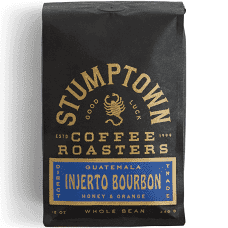
I’m guessing Stumptown Coffee Roasters doesn’t have a retirement plan.  Their employees probably live forever.

Loose Lips Sink Sips

Twenty years from now, my granddaughter will wander into my home office as a young adult, just for a look around.  She won’t find much of interest on the desk or the cabinets (if we still need desks or cabinets twenty years from now), so she’ll direct her attention to the things on my shelves.  Besides photos and books, she’ll find mementos from times and places past: greeting cards, concert programs, sports tickets, autographed items, and so on.  She’ll also find items no longer necessary in her world, like a newspaper (from the day I was born), a paperweight (will anything be on paper anymore?), and a few music CD’s I can’t seem to part with.  To this last group of items, perhaps I should add a drinking straw.

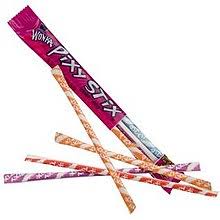
“Grandpa?”, she’ll say when she spies it, “What’s the narrow little tube with the colored stripes?”  “Oh”, I’ll smile and say, “That’s a straw. People used them back in the old days to suck drinks out of their glasses.”  She’ll ponder that for a bit and then ask, “Why wouldn’t they just drink straight from the glass like we do today?” Good question, granddaughter.  Then I’d pull up a chair, and explain the tragic tale of the drinking straw – the humble roots as a durable replacement for rye grass; the evolution into kid-friendly varieties like bendy, Crazy, candy, and spoon-ended (for slush drinks); the proliferation into seemingly-essential varieties like miniature (cocktails), “extend-o” (juice boxes), extra-wide (bubble-tea), and trendy doubles-as-a-stirrer (Starbucks).  Finally, I’d talk about the straw’s fade into obsolescence – the promoted shame over “one-time-use” products, the YouTube-sensationalized horrors of polypropylene impacts to the environment, and the headlines and bans and laws which would ultimately exterminate the little suckers.

Perhaps my granddaughter would pose another question: “Why the fuss over a little piece of plastic, when so much else in the world deserved equal-if-not-more attention?”  Exactly.  I asked myself the same question when I sat down to write this piece.

No matter where you stand on the drinking straw debate, it’s a great example of the power of social media to elevate a topic to a level of importance beyond what it might deserve.  According to those in the know, straws account for a tiny portion of the plastic waste in landfills and oceans.  But they have our attention, don’t they?  As Plastic Pollution Coalition CEO Dianna Cohen puts it, “We look at straws as one of the gateway issues to help people start thinking about the global plastic pollution problem.”  “Gateway issue” – I like that.  The straw is simply the catalyst, easing people into an awareness of a much more significant problem.

As for the demise of drinking straws, we’ve moved from opinion to discussion to debate, and finally to laws and bans to discourage their use, yet we’ve hardly reached a resolution.  An effective replacement for the plastic straw simply doesn’t exist.  Paper straws durable enough to last the life of the drink don’t decompose much faster than plastic.  Paper straws cost five times as much, so the restaurant industry will have to swallow hard.  Reusable straws have their merits (ex. metal, glass), but unless restaurants budget them to the bottom line, we’re facing a massive change in behavior.  You’re already leaving the house with your car keys and your phone, but hey, don’t forget that reusable straw.

More likely, straws will simply disappear altogether.  As we speak, we’re in that awkward middle-ground where straws are still an option in restaurants, but more and more establishments (and entire states) mandate the customer must ask for one. From there, you can make the easy leap to guilt-by-association – as in, sure you can have a straw, but do you really want to be seen using one?  The only resolution in my mind is to do without, like we do hot coffee, beer, and wine.  Time to drink everything straight from the glass.

Some content sourced from Wikipedia, “the free encyclopedia”, and articles from Business Insider, Eater, and Sprudge.