Wheels of Fortune

Late last year, Belgium found itself at the center of a culinary controversy. A local company was producing and selling a bottled version of “carbonara sauce”, much to the dismay of Italy. The Italians are fiercely protective of the recipe for spaghetti carbonara they invented a hundred years ago. Anyone familiar with the dish understands there is no such thing as carbonara sauce, because the food is the result of a slow, methodical process using fresh ingredients (including eggs and cheese), where everything melds together perfectly. You can’t just bottle it and call it the same thing.
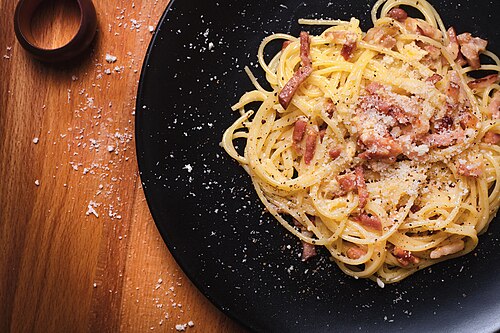
Spaghetti Carbonara

Carbonara is a good example of a product invented in Italy and dumbed down for mass consumption.  Imagine how the Italians feel about Starbucks.  Somewhere on the menu you can order a shot of pure espresso but it’s the drinks with the added flavors, sugar, and milk that generate the profits.  Similarly, you’ll find a dozen packages of biscotti on America’s cookie aisles, but most aren’t twice-baked like the originals nor infused with real almond liquor.

Maybe you’ve already added pizza to this list of imposters.  The transformation of pizza from the Italian original to the endless varieties offered in today’s restaurants could be the subject of its own blog post (and a long one at that).  Suffice it to say, the Italians are justified in turning up their noses to any product we Americans call “pizza”.  Unless you’ve had a pie made with authentic Italian ingredients and prepared the same way they made it centuries ago, you really don’t know pizza.
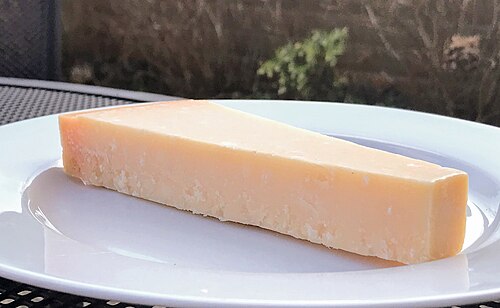
Parmigiano Reggiano

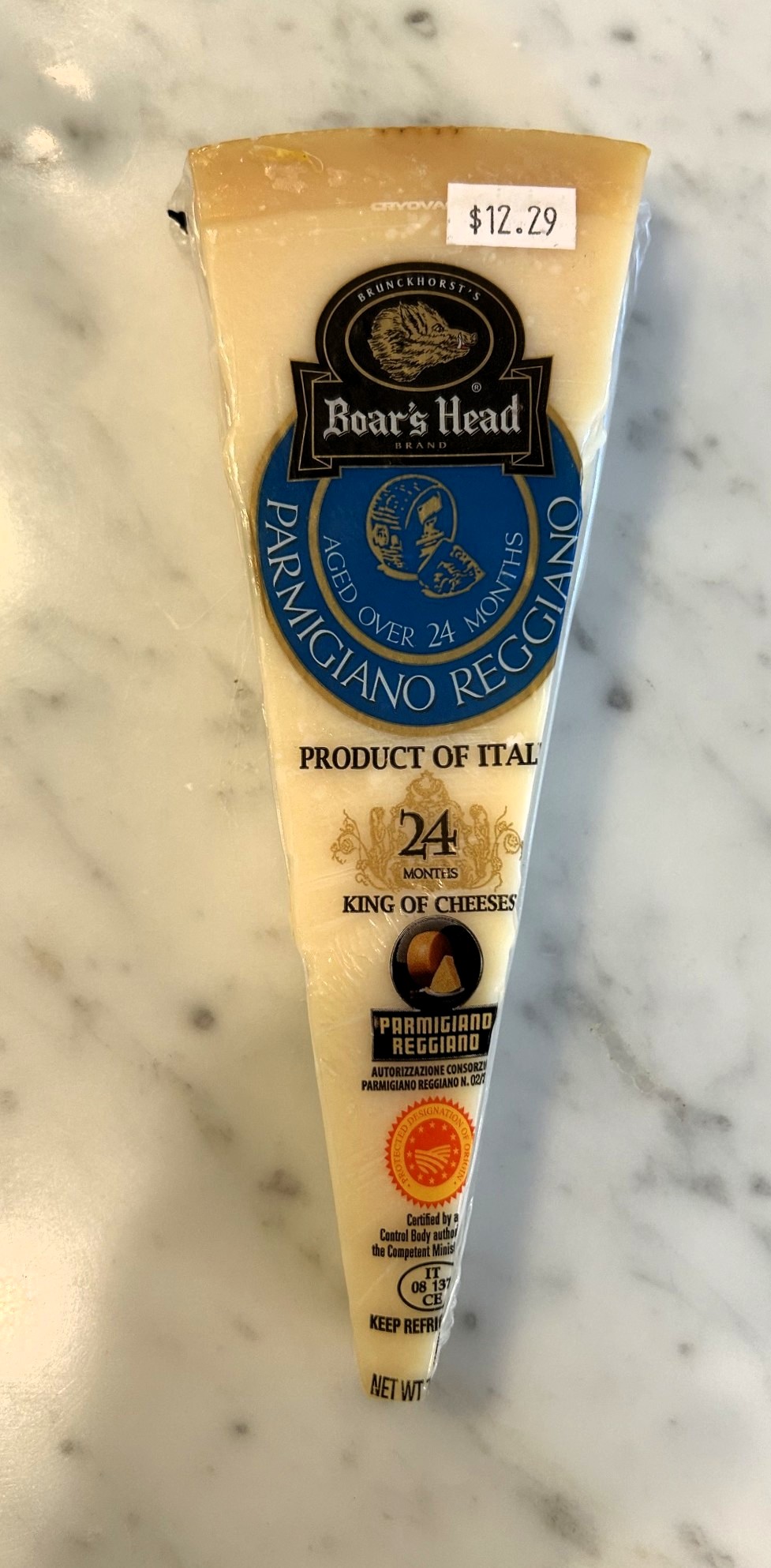
But let’s talk about cheese, because it’s the real subject of today’s post.  Parmesan cheese is another Italian original, dating back to the Middle Ages.  It’s made with just three ingredients: milk, salt, and rennet (enzymes).  Today you can choose from a variety of parmesan cheeses in your supermarket deli or just cheat with the big green Kraft can from the pasta aisle (which includes several added ingredients you wouldn’t be happy about).  But whether from the deli or from a can, you’re not purchasing the Italian original… unless, the package includes the official logo of Parmigiano Reggiano.  That, my friends, indicates the real deal.  Or, if you prefer, the “big cheese”.
It’s a fake if it doesn’t have this logo

Parmigiano Reggiano (shall we call it “PR” from here on out?  Yes, let’s do that.) is one of the most tightly regulated foods in the world.  Maybe the Italians got tired of losing control of their original recipes and declared, “Uh-uh, not this one”.  PR is made from milk, salt, and rennet just like the other wannabes, but with two important differences.  The cows that provide two of those three ingredients graze on the pristine grass of pastures in a single tiny region of central Italy.  The cows, the grass, and the milk they produce are regulated in a way that would make Fort Knox proud.  It’s a small, tight supply chain of cheese production with the same quality of centuries ago.
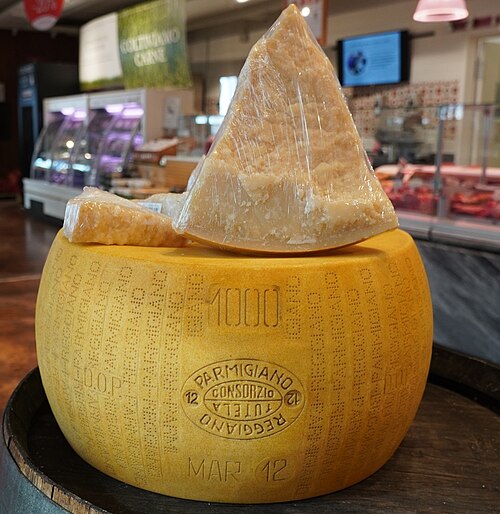
Here’s the other important distinction between PR and the others.  It must be aged at least a year (and it’s typically more like two or three) before it can be sold.  That requirement gets the cheese to stand alone even more than its carefully-produced ingredients.  Why?  Because most companies can’t sit around for a year or more waiting for cheese to generate profits while suppliers are demanding payment on the spot.  So how do the makers of PR do it?  They bank their cheese.  Literally.
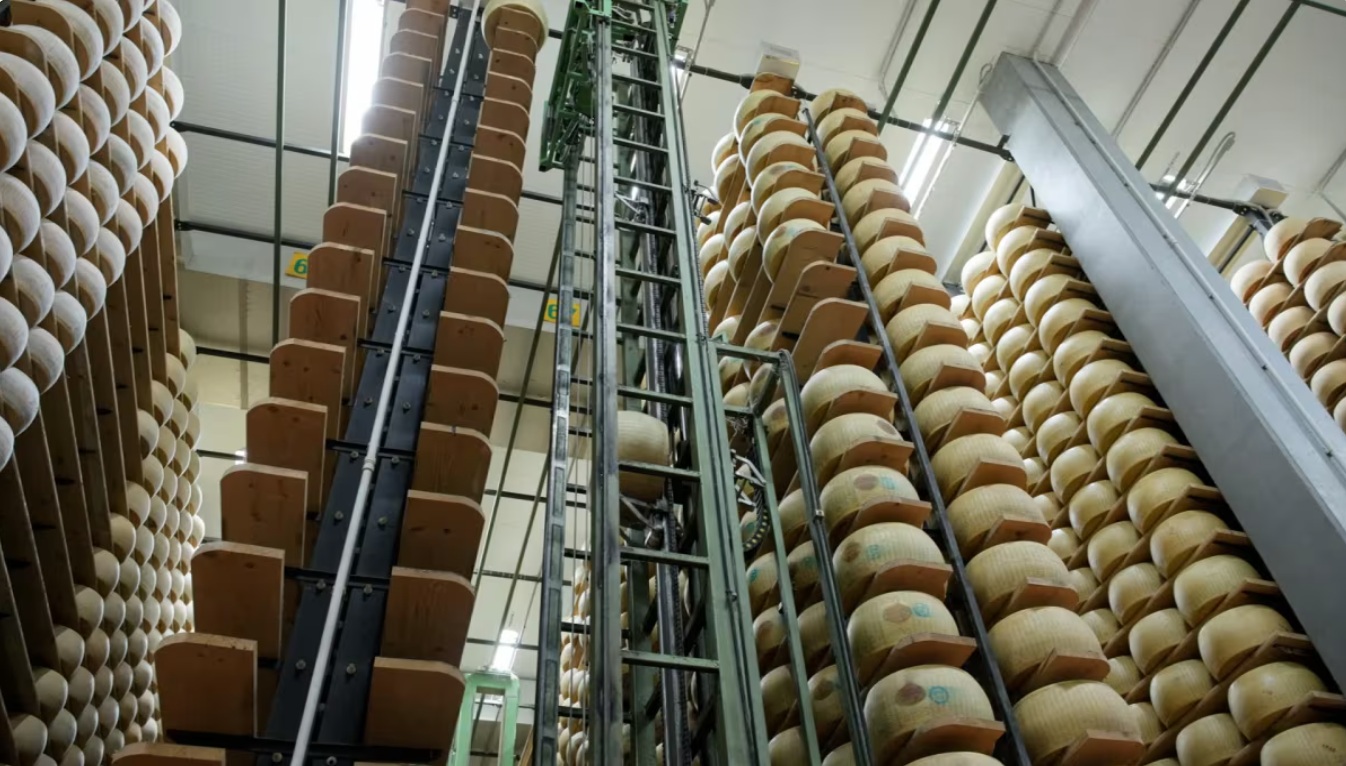
Italy’s “Cheese Bank”

You know you have a really good cheese when your bank is willing to take it as collateral.  Here are the staggering numbers.  Italy produces four million wheels of PR a year, distributed throughout the country and the world for sale. (Fact: America is the largest consumer of Parmigiano Reggiano outside of Italy.) But 500,000 of those wheels are held back and “deposited” into a local bank to age, in exchange for the cash necessary to pay the suppliers.  PR is of such high quality and so carefully regulated that the banks have agreed to this unique arrangement for generations.  Of course, the combined value of those wheels probably helps (well north of $300 million).
If you’d care to know more about this whole cheese-for-money thing, read the article I reference below.  More importantly, if you ever come across Italy’s “Cheese Bank”, you’ll probably find the usual ATM’s, tellers, and offices, but at least you’ll know what that big warehouse next door is all about.

Some content sourced from the CNN Business article, “Inside Italy’s secret ‘Cheese Bank’…”, and Wikipedia, “the free encyclopedia”.


You Can Say That Again

When I was a kid, I remember (or was told) I used creative pronunciations for common words. Instead of cinnamon I’d say cimm-anin. Instead of spaghetti it was bis-ketti. The library was the lie-berry. Maybe back then my excuse was in just learning to talk but I can’t play that card as an adult. So when someone says Feb-YOU-air-ee instead of Feb-ROO-air-ee, or Shur-BERT instead of Shur-BET, I tend to wince.

We’ve made it to the time of year where we reflect on the previous one, and we do so in year-in-review lists. “Most Influential People of 2024”. “Best Television Shows of 2024”.  “Significant World Events of 2024”.  And how about this one?  Most Mispronounced Words of 2024.  Thanks to Babbel, maker of language-learning platforms, the hard audio evidence doesn’t lie.  Babbel came up with ten words people mispronounced over and over last year.

I could print Babbel’s list here, but it’d be a waste of your time so I’ll just hyperlink it instead.  Eight of the words I never ever used in 2024 (and never will), and the only reason I spoke the other two was because they’re the last names of politicians featured in 2024 headlines.  To be honest, the list made me question Babbel’s approach to learning languages.  Are these the words promoting a budding English speaker’s proficiency?

Babbel also listed mispronounced words from other languages, including one of my favorites: espresso.  Not sure how we Americans get that one wrong time after time, but we do.  Maybe the myriad “ex-” words in the English language have us saying EX-presso but the concentrated coffee drink sounds exactly as it reads: ES-presso.  Keep that in mind and your next Italian barista will be happy to serve you.

As long as we’re speaking Italiano let’s get another one right – al dente.  When you want your pasta cooked just right; “not too soft but firm to the bite”, you describe it as ALL den-tay, not ALLA dawn-tay.  I only know this because I learned Italian when I was in college.  If I didn’t know better myself I’d probably go with AL dent.

Notre-Dame de Paris

As long as we’re talking foreign language mispronunciation, let’s correct another one.  Notre-Dame de Paris, the medieval Catholic cathedral in the middle of Paris (and the middle of the River Seine), can be mispronounced so many ways it’s almost as devastating as the fire from which it was resurrected.  On the surface it sounds something like NOH-tur daym day PEAR-iss, which is “English-French” at its absolute worst.  In actual French it sounds like this: NOH-tr dam due PAH-ree, where the two “r”s almost sound like “l”s.

You never saw it coming but today’s language lesson is a segue to the topic I’ll be covering for the next several weeks and months.  Notre-Dame de Paris is a magnificent structure and a renowned work of architecture.  It’s also a new model created by the good people at LEGO.  And speaking of good people (great, actually), my wife put that LEGO model under the Christmas tree for me this year.

For those who enjoyed the long journey of my building the LEGO Grand Piano (which I chronicled in Let’s Make Music!), and the shorter journey of the LEGO Fallingwater House (Perfect Harmony), I’ll be at it again as I attempt to rise Notre-Dame de Paris from the “ashes” of 4,383 plastic pieces.  Won’t you join me on this foray into all things FRON-says?  (That’s “French” for those of you who mispronounce it.)  You’ll learn about the world’s cathedrals along the way, many of which took hundreds of years to construct.  Let’s hope my own build of Notre-Dame de Paris is a whole lot shorter than that.

Some content sourced from the CNN World article, “These are the most mispronounced words of 2024”, and Wikipedia, “the free encyclopedia”.

Buzz + Booze = 90

In the last day or two, an article surfaced in my newsfeed suggesting coffee and alcohol better your chances of living past 90.  Hello.  Now that’s a little something worth reading!  VinePair’s version of the report (“VinePair is the fastest growing media company delivering accessible, entertaining, and inspiring content about drinks and the experiences you have with a glass in hand.”) covers the critical details in a pleasantly short read.

Bless the research grants bestowed upon the University of California at Irvine (Go Anteaters!).  The Ants have been studying “oldest-old” humans for the past fifteen years and have come up with the following buzz + booze conclusion: those who consumed moderate amounts of coffee and alcohol lived longer than those who did not.  “Those who did not” were labeled as “having abstained“.  Nasty word, abstained.

U.C. Irvine’s study is music to my favorite appliances: the coffeemaker and the wine cooler.  No doubt my habits are mirrored by millions of others – start the day with a cup of coffee and end the day with a glass of wine.  And because I do, Irvine says I up my chances of living past 90?  Bacchus must be smiling down on me (and is there a god of coffee to keep him company?)  I think I’ll celebrate by hiring a personal barista and sommelier.

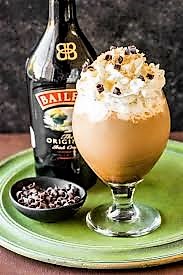
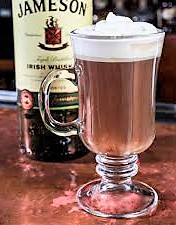
In the spirit of VinePair’s efficient reporting (150 words!), let’s cut to the chase.  Why have coffee early and alcohol late when you can have both in the same cup at the same time?  What a perfect excuse to start the morning with, say, a Bailey’s Irish Cream Coffee! (coffee, 1.5 shots of Bailey’s, whipped cream, and cinnamon).  Or even better, a Mexican Coffee! (0.75 shot Kahlua and 0.75 shot Tequila).  Or best, a Millionaire’s Coffee! (equal parts Bailey’s, Kahlua, and Frangelico – you decide how strong).  The coffee-alcohol combos are endless.

By vicious coincidence, the same day I read the VinePair article I received a newsletter from my health club.  To kick off the New Year on the right foot, my club chose to “debunk” common nutrition advice.  First, they recommended an 80/20 approach to radical diets instead of “all-in”.  Second, they said weighing myself every day puts too much emphasis on what is likely the wrong indicator of better health.  Third, I shouldn’t pretend I don’t need vitamins no matter how healthy I eat.  Fourth, I shouldn’t toil endlessly at the gym as if I can outwork a bad diet.  (Wait, so my health club is telling me to work out less?)  Finally, they said I need to make nice with carbs again, favoring the complex over the simple.  That’s a list of only five items, but it reads like it’s built on a significant amount of research, while studying the habits of countless people.  Way too complicated for my taste.  “My taste” would rather focus on coffee and alcohol.

To add a little cream and sugar to the study, U.C. Irvine reached another conclusion with the “oldest-old”.  The overweight lived longer than the underweight.  Wait, what?  If I want to live well into my 90’s, I should drink and eat in excess?  Well tickle me pink – and pass the whipped cream while you’re at it.

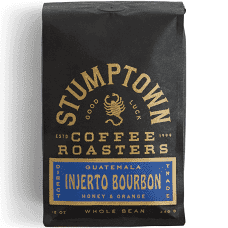
In the meantime, I’ve converted this welcome research into a superb business idea.  Save the trip to the patent office because I beat you to it.  Coming soon to a store near you: liqueur-infused espresso beans.  And yet, as soon as I come up with the idea, I find out it’s already out there (has been for years).

I’m guessing Stumptown Coffee Roasters doesn’t have a retirement plan.  Their employees probably live forever.