Wheels of Fortune

Late last year, Belgium found itself at the center of a culinary controversy. A local company was producing and selling a bottled version of “carbonara sauce”, much to the dismay of Italy. The Italians are fiercely protective of the recipe for spaghetti carbonara they invented a hundred years ago. Anyone familiar with the dish understands there is no such thing as carbonara sauce, because the food is the result of a slow, methodical process using fresh ingredients (including eggs and cheese), where everything melds together perfectly. You can’t just bottle it and call it the same thing.
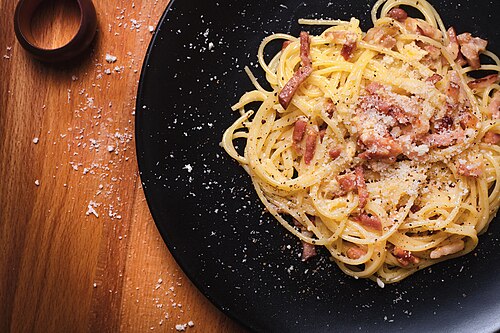
Spaghetti Carbonara

Carbonara is a good example of a product invented in Italy and dumbed down for mass consumption.  Imagine how the Italians feel about Starbucks.  Somewhere on the menu you can order a shot of pure espresso but it’s the drinks with the added flavors, sugar, and milk that generate the profits.  Similarly, you’ll find a dozen packages of biscotti on America’s cookie aisles, but most aren’t twice-baked like the originals nor infused with real almond liquor.

Maybe you’ve already added pizza to this list of imposters.  The transformation of pizza from the Italian original to the endless varieties offered in today’s restaurants could be the subject of its own blog post (and a long one at that).  Suffice it to say, the Italians are justified in turning up their noses to any product we Americans call “pizza”.  Unless you’ve had a pie made with authentic Italian ingredients and prepared the same way they made it centuries ago, you really don’t know pizza.
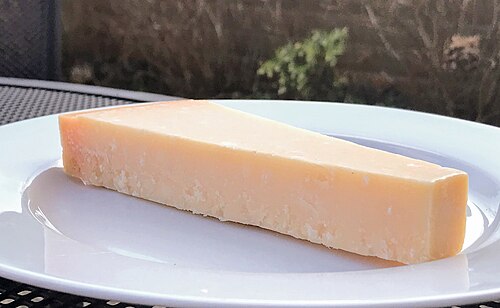
Parmigiano Reggiano

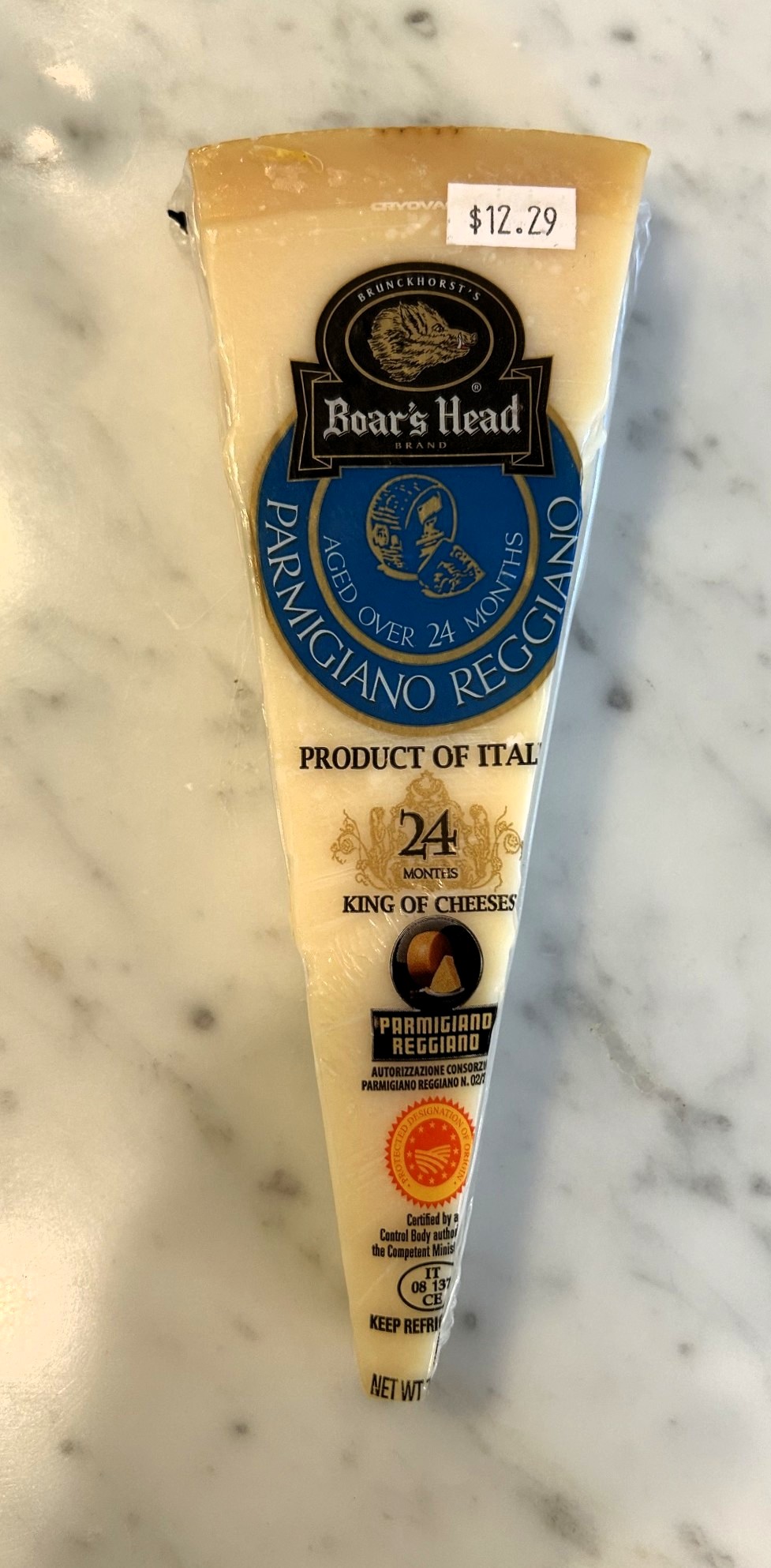
But let’s talk about cheese, because it’s the real subject of today’s post.  Parmesan cheese is another Italian original, dating back to the Middle Ages.  It’s made with just three ingredients: milk, salt, and rennet (enzymes).  Today you can choose from a variety of parmesan cheeses in your supermarket deli or just cheat with the big green Kraft can from the pasta aisle (which includes several added ingredients you wouldn’t be happy about).  But whether from the deli or from a can, you’re not purchasing the Italian original… unless, the package includes the official logo of Parmigiano Reggiano.  That, my friends, indicates the real deal.  Or, if you prefer, the “big cheese”.
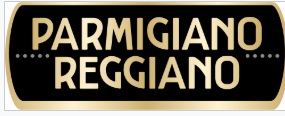
It’s fake if it doesn’t have this logo!

Parmigiano Reggiano (shall we call it “PR” from here on out?  Yes, let’s do that.) is one of the most tightly regulated foods in the world.  Maybe the Italians got tired of losing control of their original recipes and declared, “Uh-uh, not this one”.  PR is made from milk, salt, and rennet just like the other wannabes, but with two important differences.  The cows that provide two of those three ingredients graze on the pristine grass of pastures in a single tiny region of central Italy.  The cows, the grass, and the milk they produce are regulated in a way that would make Fort Knox proud.  It’s a small, tight supply chain of cheese production with the same quality of centuries ago.
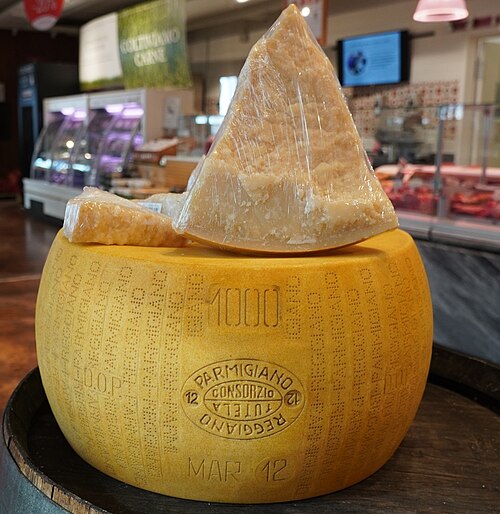
Stamped as certified

Here’s the other important distinction between PR and the others.  It must be aged at least a year (and it’s typically more like two or three) before it can be sold.  That requirement gets the cheese to stand alone even more than its carefully-produced ingredients.  Why?  Because most companies can’t sit around for a year or more waiting for cheese to generate profits while suppliers are demanding payment on the spot.  So how do the makers of PR do it?  They bank their cheese.  Literally.
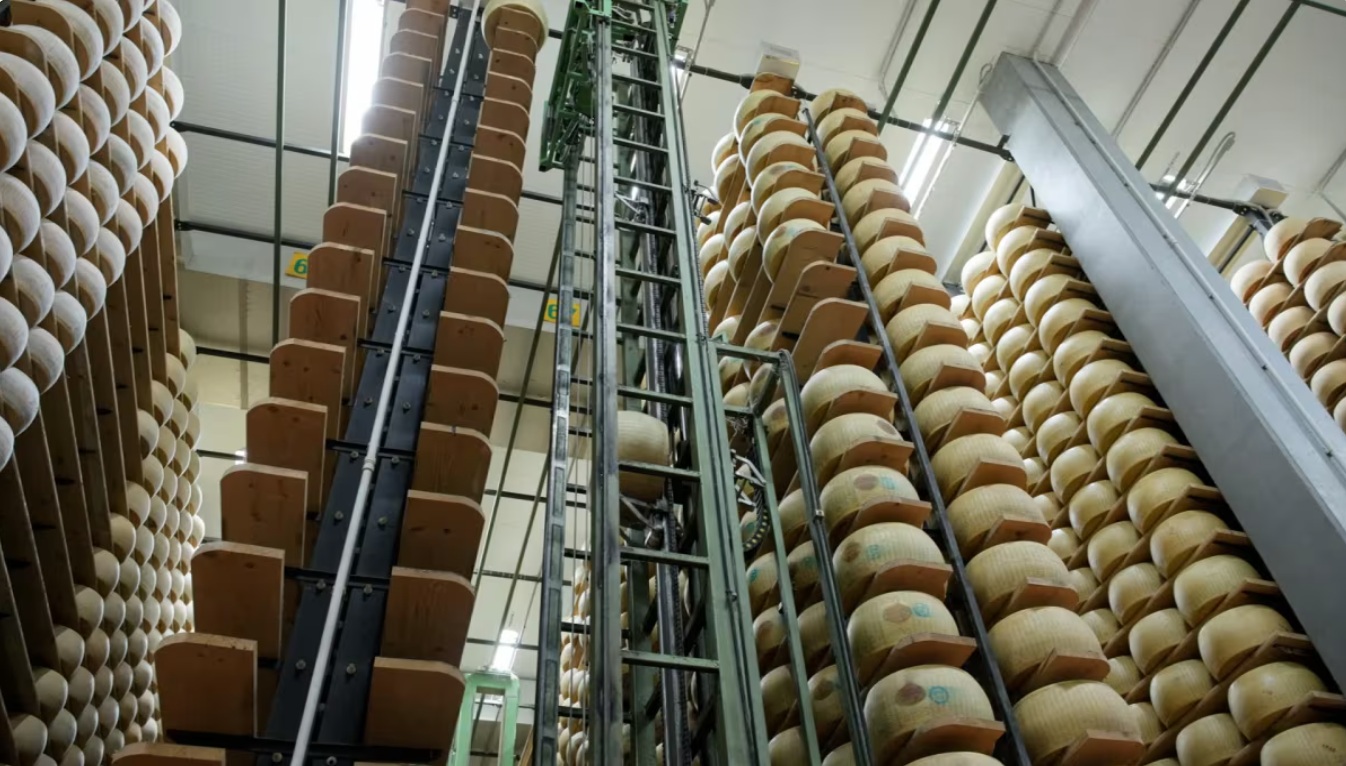
Italy’s “Cheese Bank”

You know you have a really good cheese when your bank is willing to take it as collateral.  Here are the staggering numbers.  Italy produces four million wheels of PR a year, distributed throughout the country and the world for sale. (Fact: America is the largest consumer of Parmigiano Reggiano outside of Italy.) But 500,000 of those wheels are held back and “deposited” into a local bank to age, in exchange for the cash necessary to pay the suppliers.  PR is of such high quality and so carefully regulated that the banks have agreed to this unique arrangement for generations.  Of course, the combined value of those wheels probably helps (well north of $300 million).
If you’d care to know more about this whole cheese-for-money thing, read the article I reference below.  More importantly, if you ever come across Italy’s “Cheese Bank”, you’ll probably find the usual ATM’s, tellers, and offices, but at least you’ll know what that big warehouse next door is all about.

Some content sourced from the CNN Business article, “Inside Italy’s secret ‘Cheese Bank’…”, and Wikipedia, “the free encyclopedia”.
Caffè Companions

My wife made a batch of rolled sugar cookies last week, cut into traditional Christmas shapes like bells, wreaths, and stockings. It’s the first time in a long time for these cookies, inspired by the assistance of our young and attentive granddaughters. Though the cookies never donned their frosted/decorated costumes, they sure tasted great all by themselves. Kind of like the biscotti I’m giving up in 2026.

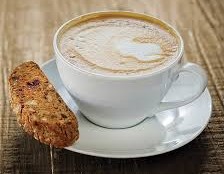
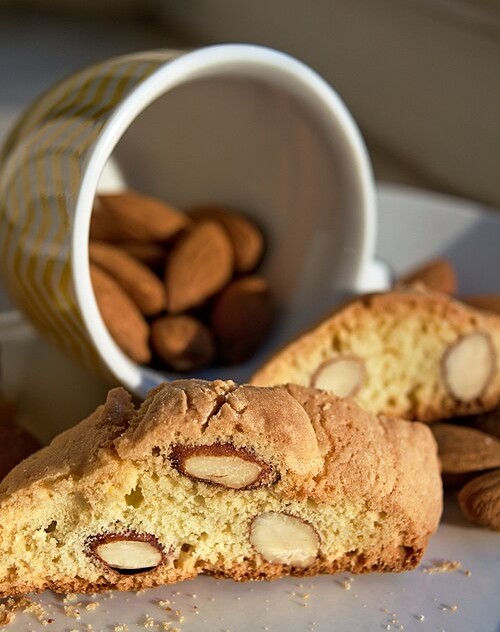
Are you a fan of biscotti?  They’re the small, oblong cookies that resemble tiny slices of sourdough bread.  They’re hard and dry, with just a smattering of almonds or almond extract for extra flavor.  Biscotti are meant to accompany a drink, just as two of them do every morning with my coffee.  Biscotti ward off the nausea I feel when I down my vitamins on nothing but a cup of joe.  Nice excuse for daily cookies, eh?

“Cantucci” (not biscotti)

When the calculator (which doesn’t lie) reveals you ate over seven hundred biscotti over the course of 2025, you quickly come to your senses and declare a resolution for the coming New Year: Shift biscotti from “habit” to “occasional treat”.  Yep, it’s time to cut down on carbs.

Before we seal the lid on the cookie jar however, biscotti deserve a little more attention to set the record straight.  First and foremost, the pint-sized pastries I consume with my morning caffè are not technically biscotti; they’re cantucci.  Cantucci contain ingredients like milk, butter, and flavorings, none of which are found in an authentic Italian recipe for biscotti.

Here’s another distinction.  Biscotti were never meant to be partnered with coffee.  They were (and still are) served alongside a glass of sweet wine as a light Italian dessert.  Americans pair cantucci with cappuccino at upper-crust hotels and coffeehouses.  You’re supposed to dunk to make them softer (and take the edge off the coffee) but I prefer to eat them just the way they are.

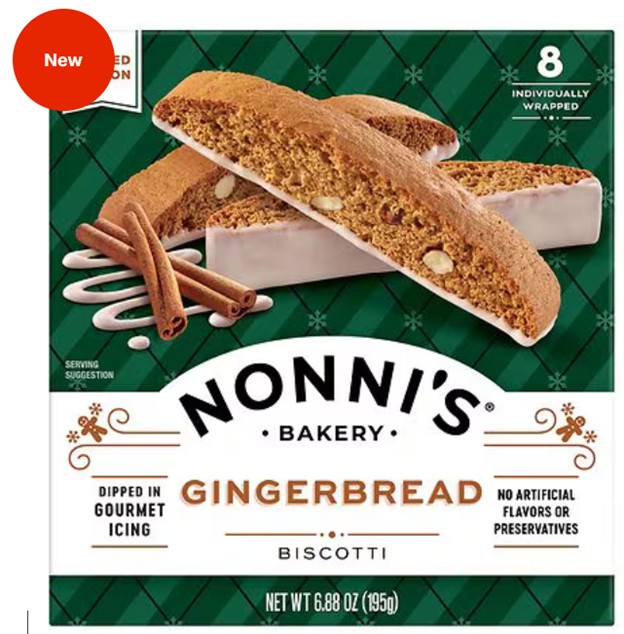
Biscotti translates to… not “biscuits”, but “twice-baked”, which is exactly how they’re made.  First baked as a full loaf; then baked again as individual cookies. Now then, another Italian translation for you: Nonni means “grandmother”.  Nonni’s also means a brand of biscotti (whoops, make that cantucci) you’ll find in your grocery store… and in my pantry.  The Nonni’s version is an unashamed dessert cookie, with a layer of chocolate, caramel, or lemon frosting to add to the appeal.  My advice: Nonni’s need to be put on a hard-to-reach shelf else they’ll become a habit just like the ones with my morning coffee.

In some Western European cultures biscotti are thrown into savory dishes, which I’m not going to get into because I find the idea unappealing.  Biscotti are classy little sweet treats in my book – one of the two items in my “grown-up milk and cookies”.  Alas, in 2026 it’ll just be “grown-up milk” for me… that is, as long as I stay away from my wife’s sugar cookies.

—————-

LEGO Trevi Fountain – Update #7

(Read about the start of this build in Brick Wall Waterfall)

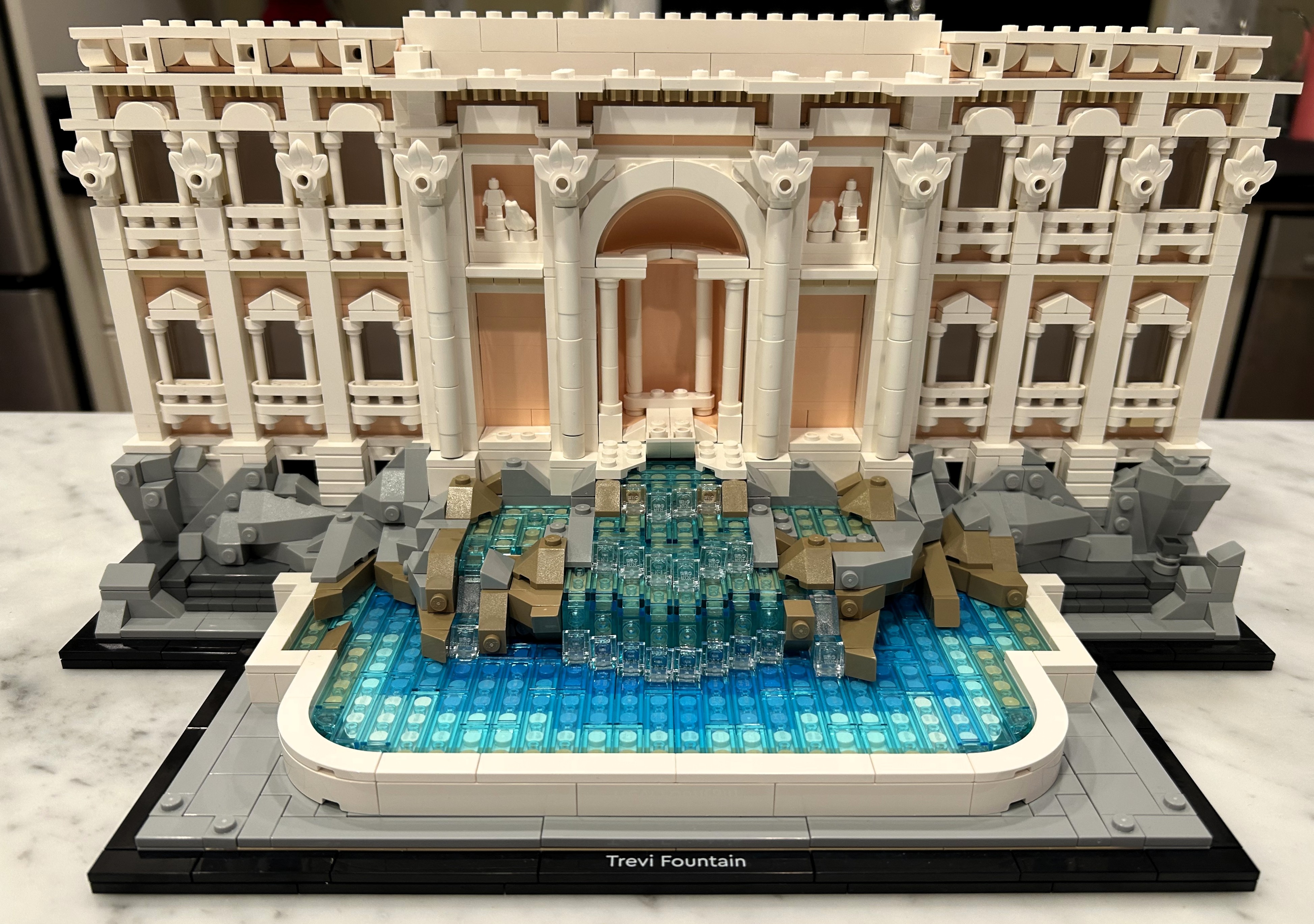
Today we took a mini road trip, as I chose to build the fountain’s Bags 12 and 13 – of 15 bags of pieces – on the kitchen counter (instead of upstairs in the home office).  Kind of fitting considering the counter is topped with white marble.  Kind of annoying considering the laundry machine and dishwasher were running nearby the whole time, interrupting Arcangelo Corelli’s moving “Christmas Concerto” in G Minor.

Trevi statues are TINY!

Maybe it was the change of venue but some strange stuff happened today.  To begin with, I couldn’t find the very first piece in the build at all, until I looked closer at the instruction manual drawing and realized I was after a tiny statue.  Once I found him I was off and running, though I found it sad that one of his companion statues ended up being a leftover piece.

Thought you should know: the back side of the LEGO Trevi is a sheer wall of white.

Now for the strange stuff.  I assembled a flat L-shaped piece on top of another flat L-shaped piece, only to discover they weren’t supposed to go together that way.  No amount of fingernail dexterity could pry those two apart.  Fortunately I found myself in the kitchen.  Sharp knives everywhere!  It took a careful pry without cutting myself but I finally got those two unmarried.  Never let it be said building LEGO models isn’t a dangerous sport.

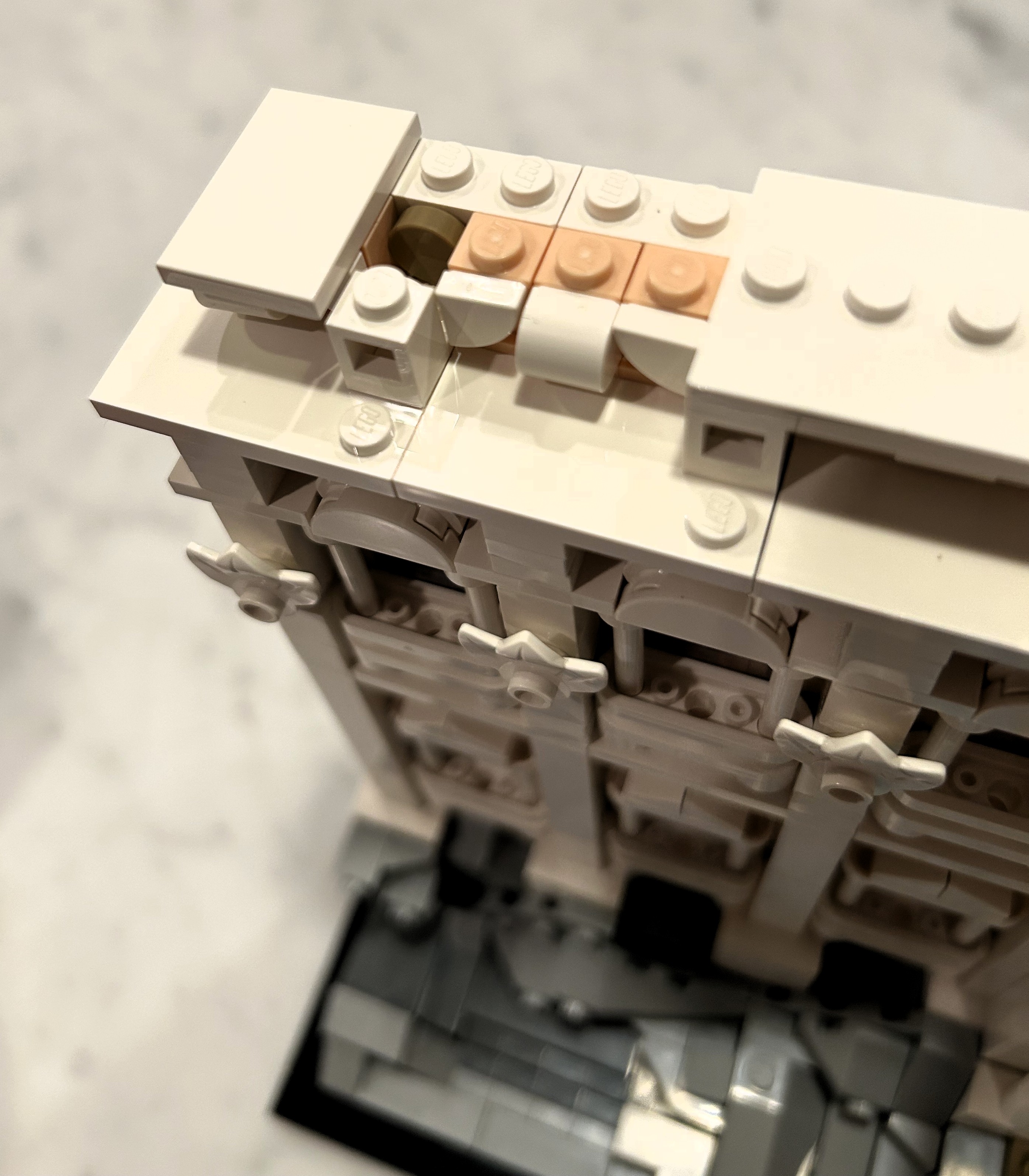
That little brown round one (nestled top left) was missing from Bag 13!

More strange stuff.  LEGO left a piece out of Bag 13.  Okay, technically they left it out.  “Technically” because in my growing pile of leftover pieces I found its twin.  But considering LEGO never leaves out pieces, I had to wonder:  Did the little guy just wander over to my leftover pile when I wasn’t looking?  Or is he somewhere in the trash right now, along with the cellophane bag of Bag 13?  Maybe he’s resting quietly on the kitchen floor just waiting to stub my toe?  Who knows.  I’m just thankful I had a “replacement” from my leftovers.  And I don’t think I’ll be building LEGO models in the kitchen anymore.

Next week: The Trevi is completed!

Running build time: 6 hrs. 52 min.

Total leftover pieces: 35 (including a lonely little statue)

Some content sourced from Wikipedia, “the free encyclopedia”.