Emerald Greens

In the final lines of our national anthem, Americans sing, “O’er the land of the free, and the home of the brave”.  Those labels are a little dicey today.  Are we really free?  Are we really brave?  It’s a debate best left to more intellectual bloggers. I’m simply looking for less controversial words to describe the United States.  Take Ireland, for example.  The little republic is nicknamed “The Emerald Isle”.  Of this, there can be no doubt.  Before your flight even touches down, the window seat view is nothing but endless rolling green hills.  And not just any green.

See what I did there?  Inside of a single paragraph I distanced myself from heavy topics like freedom and bravery, and now I’m focused on the color green.  Bravo, Dave! Now then, let’s continue.

“The Emerald Isle”

Emeralds have always been my favorite of the precious gems.  In the jewelry shop it’s hard to ignore diamonds (because they’re everywhere), yet somewhere in the glass cases you’ll find the more colorful stones. Blood-red rubies. Royal blue sapphires. Modest little garnets (my birthstone).  And green, green emeralds.  I’m drawn to emeralds because green is my favorite color.  On that note, do you realize your favorite color never changes?  Nobody says, “Well, I used to like purple but now my favorite color is orange”.  You can move to another country, switch up your career, or overhaul your wardrobe, but your favorite color is a constant.

I digress (sorry). I have emeralds on the brain for good reason.  My wife & I just celebrated thirty-five years of marriage (thank you very much), and she hinted emeralds might be a nice gift.  So I paid a visit to my jeweler.  I told her I was looking for something understated, maybe earrings and a necklace.  She showed me a pretty set, where I thought my only decision was the shape of the stones (Round? Square? Pear?).  But then she threw me a curve when she said, “Would you prefer natural or lab-created?” Huh? Why would I buy my wife anything other than the real thing?

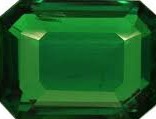
“Natural”
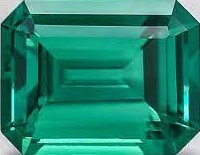
“Lab-created”

Here’s the rub of the green.  Lab-created gems are the real thing.  They’re “chemically, physically, and optically identical to their natural counterparts.” So why choose one over the other?  Cost. Lab-created gems can be significantly less expensive, especially as the number of carats grows.  In other words, easy choice, right?  Wrong.  The lab-created gems – at least in my jewelry shop – were small enough to be the same price as the naturals.  Instead, my decision came down to color.

Was I tempted by the blue-green clarity of the lab-created?  Absolutely.  Did I choose them?  Absolutely not.  I kept coming back to the emeralds in my brain.  Call it natural green, kelly green, or Irish green, but I prefer the green on the left.  And I think my wife did too.

Liz is wearing $6.5M worth of emeralds and diamonds

I’d like to share some trivia on today’s topic but – warning – it’s a little pedestrian.  Emeralds are one of the twelve birthstones (conveniently, the month of May).  Emeralds come from the mineral Beryl (as do aquamarines).  Their rarity makes them “precious”, alongside diamonds, rubies, and sapphires.  They’re delicate, susceptible to chipping.  Finally, emeralds are considered, among other things, a symbol of rebirth.

A section of the Florida Panhandle is called the Emerald Coast for the area’s clear, green water.  The Wizard of Oz lived in the Emerald City for reasons only Oz fanatics can explain.  And little Ireland, deservedly, earns its nickname for those rolling green hills, as well as Irish jewelry, made primarily from green gems (if not all emeralds).

Florida’s Emerald Coast

I saved one more fact for last, mostly to make points with my wife.  After I bought her the earrings and necklace, I said to my jeweler, “By the way, it’s silver for the 25th anniversary and gold for the 50th, but what about the 35th?” She replied, “Emerald” (even though several Google searches suggest jade).  Whoa. I didn’t plan on that coincidence but I’ll certainly take the credit.  After all, my wife is one-quarter Irish. My daughter’s name is Kelly. And my favorite color is green. How could it be anything but emeralds?

Some content sourced from Wikipedia, “the free encyclopedia”.

——————–

Lego Grand Piano – Update #17

(Read about how this project got started in Let’s Make Music!)

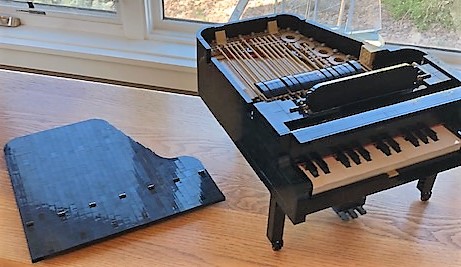
Today’s build demanded more of an overhead view so you can see the difference between last week and this week. Bag #17 – of 21 bags of pieces – earned me the row of seventeen black caps you see in the second photo (on top of the piano wires), as well as the wide stand for sheet music, just behind the keyboard cover.

Last week

The piano is a remarkable instrument.  When you press down on a key, you’re actually pushing a “hammer” up against the underside of a piano wire, creating a musical sound (or “note”).  When you release the key, a black “damper” (one of the seventeen I just built) drops down on the top of the wire, silencing the sound.  Add in the functions of the three pedals at the base and you should consider the piano a musical mechanical marvel.

Running Build Time: 12.5 hours.  Musical accompaniment: Rimsky-Korsakov’s Flight of the Bumblebee. Leftover pieces: 2

This week

Conductor’s Note: The Bumblebee is a brief orchestral interlude of an opera, composed well over a hundred years ago. Nikolai Rimsky-Korsakov’s furious little piece, when played on the violin, really does sound like a buzzing bee.  It’s only 84 seconds in length, but you find yourself catching your breath after you’ve heard it.  It’s even more remarkable when played on the piano, the fingers almost a blur.  Have a listen to the audio file here. I’m sure you’ll recognize the tune from some of today’s movies and cartoons.

Hold (the) Music!

This morning as I brushed my teeth, I could hear soft music while my wife surfed on her iPad nearby. It was a catchy keyboard instrumental, the kind of tune to put a bounce in your step. Not twenty seconds later however, there was a bit of silence followed by the same melody all over again. By the time I flossed I’d heard this “song” five or six times through and it was getting annoy-oy-oy-ing.  Then it hit me.  My wife was on her iPad – yes – but she was also on hold.

Elevator Music. Lift Music. Piped Music. Muzak. Call it what you want, but my unofficial survey says hold music is not the satisfying little concert it was designed to be.  How many times have you heard, “Thank you for your patience… one of our representatives will be with you shortly…” followed by the same cloying music over and over and OVER again?  You pull out your teeth (I mean, your hair) because “the representative” will NEVER be with you (let alone “shortly”).  More to today’s point, the persistent music-on-hold (MOH) doesn’t lighten your mood, and, it’s an insult to technology.

MOH had the best of intentions when it debuted in 1962.  Like many products MOH was invented by accident, when the phone lines of a small factory accidentally picked up the music of the radio station next door.  MOH appealed to businesses because customers stayed on the line longer if offered music over nothing at all.  Hold music also found an audience in places where people tended to gather, like elevators, waiting rooms at doctors’ offices, and airport boarding lounges.  You should agree; music beats silence any day (in other words, something is better than nothing).  It’s just, the “something” should be a whole lot easier on the ears.

I have a personal connection with hold music.  Years ago, it was a part of my responsibilities as the switch programmer for a long-distance phone company.  If you call customer service today – any customer service – oftentimes “events” happen before you’re connected to a real person.  How many times does the phone ring before someone (or something) answers?  Are you offered a menu of choices to route your call to a specific department?  Would you prefer a callback instead of waiting on hold?  A behind-the-curtain person programs these little events and that person was me.  I also chose when to offer you hold music.

Mercifully, my long-distance company subscribed to a professional hold music product, which meant calls to our customer service were offered pleasant, non-repeating tunes.  You might have to wait fifteen or twenty minutes but at least you wouldn’t get a mindless tune, slowly eating away at your brain cells.  Unfortunately, my company was the exception.  Professional hold music isn’t cheap (thanks to copyright law) and most companies don’t care enough about their customers to pony up.  So, you get “catchy” keyboard instrumentals instead.  Even worse, you get the endless loop of tape-recorded music (a tape recording!), including the hiss and pop of too many plays.  Like I said, an insult to today’s technology.

You might disagree about the loss of brain cells. “Not ME, Dave; I don’t get hold music stuck in my head“.  Okay, but listen to the following YouTube audio and then reconsider.  This ditty may be the most famous music-on-hold specimen of them all; the so-called “Opus Number One”, composed by Tim Carleton and Darrick Deel and incorporated into every single Cisco phone system.

The days of hold music are numbered (and thank heavens they are) because the days of live customer service are numbered too.  Today’s customer service has you self-diagnosing through torturous “interactive voice response” (IVR) menus or by scrolling online through endless lists of FAQ’s.  But MOH still has its place at other tables.  The sophisticated InBody body composition scale at my fitness club offers MOH while you stand there getting your vitals measured.  Our Samsung washer and dryer play the same happy [irritating] little tune after every load is done.  And elevators aren’t going anywhere (except up and down).  You’ll still hear plenty of Muzak on elevators.  At least today’s smartphones help riders escape their awkward proximity to strangers.

The next time my wife is subjected to hold music, I may have to move to another room to brush my teeth.  Then again, maybe it’s not so bad.  You can now buy toothbrushes with built-in hold music while you brush (lasting exactly two minutes). This would be detrimental to my dental hygiene. I might tear my teeth out before I even get to the flossing.

Some content sourced from Wikipedia, “the free encyclopedia”.
——————–

Lego Grand Piano – Update #15

(Read about how this project got started in Let’s Make Music!)

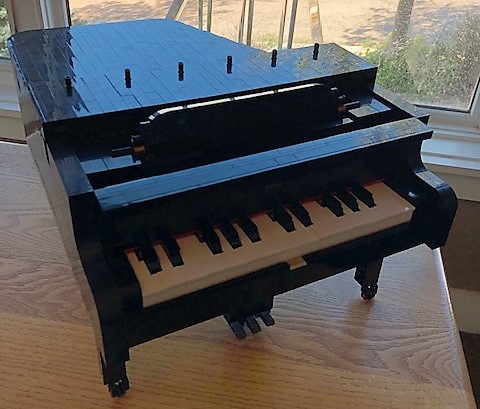
At long last, our piano has a keyboard! Bag #15 – of 21 bags of pieces – added the final key to the right side of the board for a “grand” total of twenty-five.  Then the whole assembly slid into the piano frame smoothly, as if closing the drawer to your bedroom dresser. The piece of the black frame running the length of the board just below the keys secures everything into place.

As a part-time perfectionist, I’m a little bothered by the fact the piano keys don’t rest at a uniform height across the board.  You can see one to the far left sitting a little higher than his neighbors while one to the far right sits a little lower.  Removing the keyboard at this stage in the performance is easy, so I might see if I can level things out.  Or, I’ll just make peace with being a little “off-key”.  Maybe.

Running Build Time: 11.6 hours.  Musical accompaniment: Ives’ The Unanswered Question. Leftover pieces: 1 tiny green square.

Conductor’s Note: Charles Ives’ The Unanswered Question is one of the most creative classical pieces you’ll ever hear.  It’s a “dialogue” between a trumpet and four flutes.  The trumpet asks the question, “What is the meaning of life?“, and the flutes try in vain to answer, a total of six times.  The flutes get more and more frustrated (and the music more disjointed) every time the trumpet repeats the question.  The Unanswered Question concludes with the trumpet asking its question one last time.  Now that you know the story, listen to the short piece through the following video.  It’s only six minutes.  The Unanswered Question was the perfect choice for today’s topic.  After all, how many times do you call customer service only to come away with… an unanswered question?

In-Spired Music

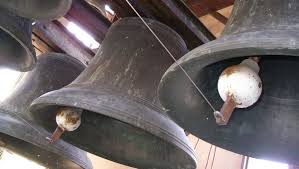
Last Friday, I walked out of the downtown salon where I get my monthly haircut to the makings of a beautiful late winter afternoon. A few cars motored by on the street, yet nobody blared the horn or blasted the radio. Pedestrians kept their conversations to a low tone.  Songbirds made melody, willing the next season to an early debut.  Above all (literally), the nearby Methodist church bells rang out the hour of the day from the steeple, followed by a cheerful rendition of… “The First Noel”?

Found the culprit on Google Street View!

Last time I checked Christmas was well over two months ago.  Decorations are boxed and returned to the closet, lights are taken down, and Starbucks no longer offers my seasonal favorite Chestnut Praline Latte.  Yet here I was, a block from a downtown church in March, with happy steeple bells daring me to burst into Christmas song. 

Talk about a case of bats in the belfry.  You think I’d pause for such a strange moment.  Instead, I simply took in this carol of the bells with a smile, got behind the wheel, and went on my “merry” way.

So it is with church bells, especially the ones in steeples big enough to broadcast their melodies for miles around.  I find church bells comforting, so much so they can play anything they choose and I’ll be happy to listen.  Even a tune that sounds so three-months-ago.

The church I grew up in, on the far west side of Los Angeles, had a tall steeple with bells.  If you pulled up to the parking lot within ten minutes of the start of the service, the bells were making music.  More importantly, they were telling you (as they’ve done for centuries in older churches) it’s time to get yourself inside for worship, buddy.  I didn’t watch every episode of Little House on the Prarie but I watched enough to remember the steeple bells summoning the people of the small town to church.  Believe me, you didn’t want to be the last parishioner in Walnut Grove to pass through the sanctuary doors, earning a steely-eyed stare-down from Rev. Alden.

Here’s another memory from childhood church.  In “Sunday School” they taught us how to lace our fingers together, tips pointing down, palms face-to-face below, and thumbs side-by-side in front.

Church! Steeple! Doors! PEOPLE!

[Go ahead, I’ll wait while you make your little “church”.]

Then you’d look at your hands and say, “Here’s the church…” (now raise your two index fingers into a point), “Here’s the steeple…”, (now separate your thumbs a bit), “Open the doors…”, (now flip your hands over and wiggle your fingertips), “… and see all the people!”  That little ditty was clever enough to recollect all these years later, the moment I heard “The First Noel” from the downtown steeple.

At least in America, the appeal – ha – of steeple bells is probably because you don’t hear them all that often (unless your neighbor is a church).  Most modern churches can only afford the structure of the steeple, not the complicated mechanism of the bells within.  Just like train crossings, today’s “bells” are often an electronic equivalent, and so realistic you can’t tell the difference.  But you can with steeples.  If the church was built in the last fifty years, the steeple bells probably don’t ring true (ha again).

Charleston, South Carolina is known as the Holy City because you’ll find over four hundred churches in its rather compact downtown streets.  You can’t look in any direction in Charleston without seeing a steeple, and many of them are hundreds of years old.  That means bells; hundreds and hundreds of bells.  Take a walk in Charleston on a Sunday morning and you’ll be “treated” to the overlapping competition of steeple bells.  They’re summoning you to church, of course (but which one, exactly?)

The Sound of Music has a brief but charming steeple scene in the movie, just before or after Maria weds Captain von Trapp at Mondsee Abbey.  The camera points to the very top of a steeple, where the abbey bells are visible just below the cupola.  In the era of the story, steeple bells were rung by hand.  In this scene, the “ringer-boy” is shown holding on for dear life as he clings to a rope, the weight of the bell dragging him up and down like a pogo stick.  The moment always makes me laugh.

One of these days you’ll be walking down the streets of your own town and church bells will ring.  Stop for a second and give them a listen.  You’ll probably hear a melodic hymn.  You might even be gifted with an “unseasonal” Christmas carol.  Doesn’t really matter.  Those big, happy bells make beautiful music no matter the tune.

——————–

Lego Grand Piano – Update #9

(Read about how this project got started in Let’s Make Music!)

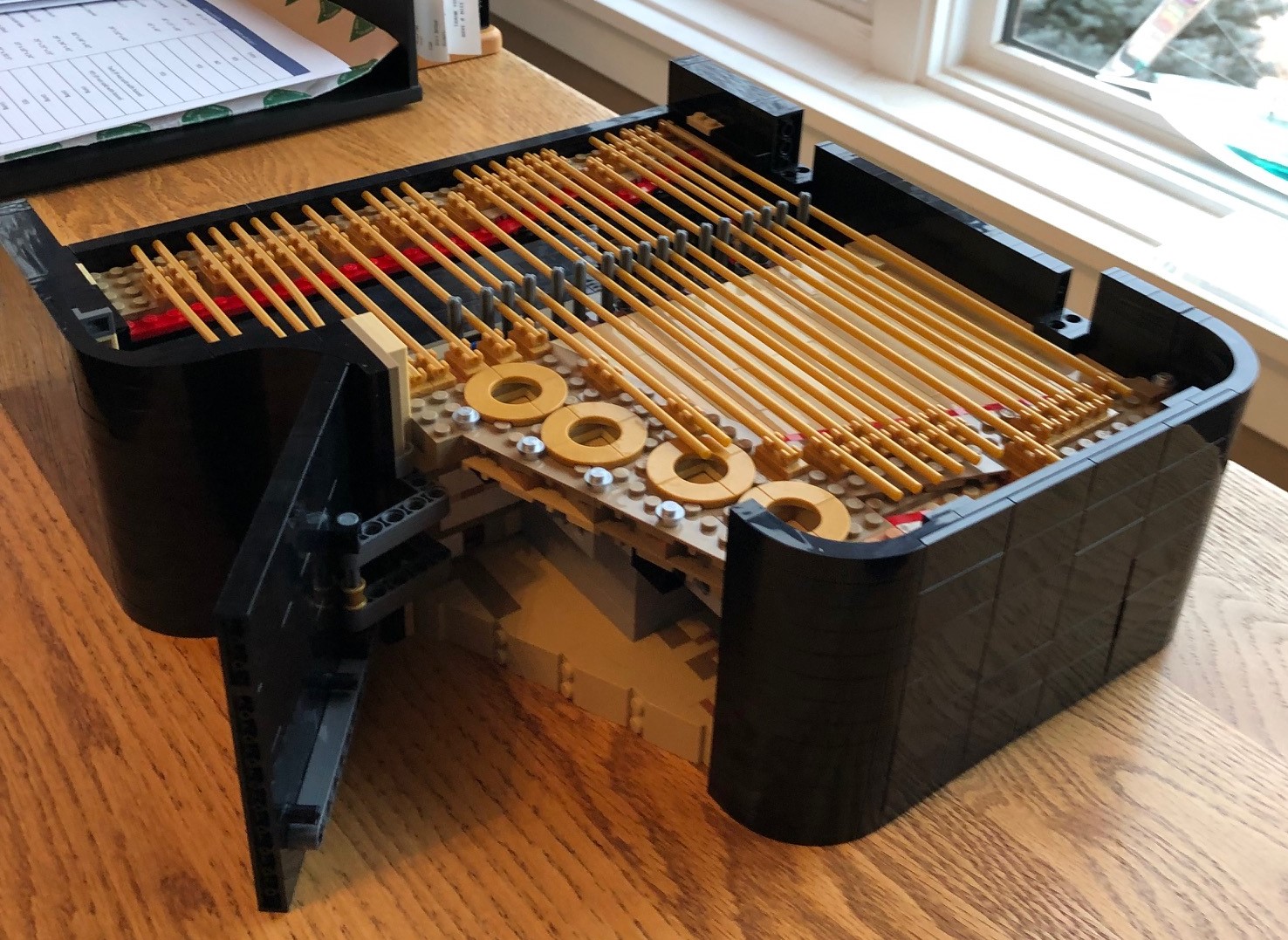
We are closing in the piano’s insides now, as you can see by the almost complete black frame in both photos. Bag #9 – of 21 bags of pieces – contained a good chunk of the frame curves, including the graceful “S” you can see just beyond the right side of the (future) keyboard.

Mendelssohn’s Piano Concerto No. 1 was just about the perfect length for today’s build, with a couple of hold-your-breath moments where pieces from previous builds snapped off and skittered away. They’re back where they belong now,

Running Build Time: 7.5 hours.  Musical accompaniment: Mendelssohn’s Piano Concerto No. 1 in G-Minor. Leftover pieces: 2 (tiny unnecessary extras for the frame).

Conductor’s Note: We have a hinged trap door built into the frame now, for access to the battery pack and on/off switch.  When it’s closed, the frame is seamless and you’d never know the door was there.  They have clever people at Lego.

Let’s Make Music!

At the request of several readers, I’ve decided to bring you along on the adventure of building the Lego Grand Piano my wife gave me for Christmas. I’m hoping this music-making journey amounts to a pleasing “concert” instead of an arduous one.  More akin to Beethoven’s Ode to Joy than Korsakov’s Flight of the Bumblebee. No matter how difficult this “piece” ends up “playing”, I can assure you of one thing.  It’s gonna take me a while; likely beyond when the snow stops flying in Colorado. 3,662 Lego pieces won’t snap together by my next blog post, nor the next one.  I’ll give brief updates at the bottom of my other topics as I progress. Movements if you will, instead of the entire piano concerto all at once.

And with a tap-tap-tap of the conductor’s baton, the performance begins!

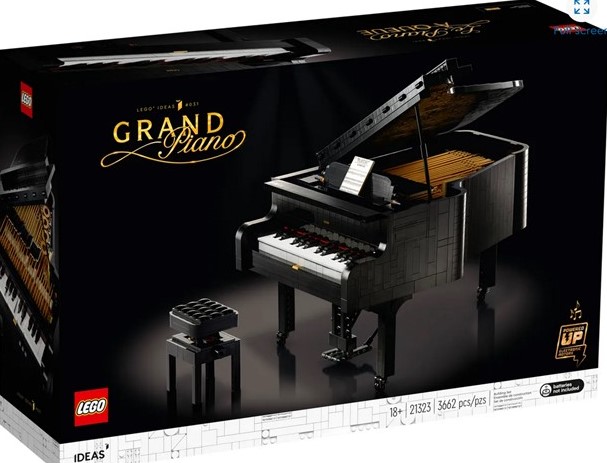
To start, we have an elegant 23″ x 15″ x 6″ cardboard box containing our unassembled piano.  The box advertises the piano in three languages: English (Grand Piano), French (Le Piano a Queue), and Spanish (Piano de Cola).  The box cautions I should be over the age of 18 and batteries aren’t included. Batteries? In a grand piano?  But I digress…

The photos on the sides of the box tease the finished product.  First and foremost, the piano really plays once I assemble the several thousand pieces.  I don’t mean “play” as in a hidden music box with a digital soundtrack but “play” as in pressing the piano keys.  And speaking of piano keys, Lego provides only 25.  A real piano has 88.  In other words, the beautiful music my grand piano plays will be more Chopsticks than Chopin.  Makes sense because my Lego Grand Piano is only 12″ wide and 14″ deep.  Suddenly my fingers feel fat.

When I remove that elegant box top, here’s what I see inside:

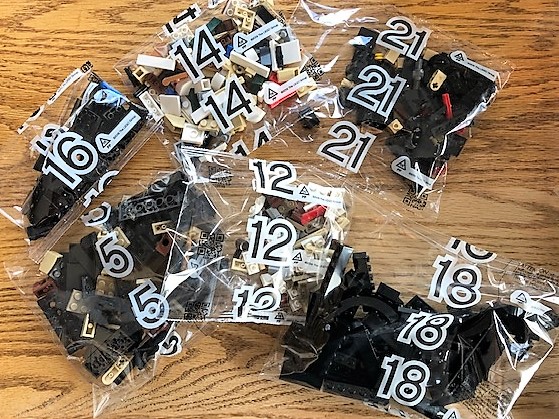
As expected, the Lego pieces are divided into small plastic bags. (On the left, that is. The right is a smaller box-within-the-box looking like a square piano. We’ll get to that in a minute.)

If I organize the bags so you can see them better, I come up with this:


The audience gasps, in awe of the complexity of the performance unfolding before them.

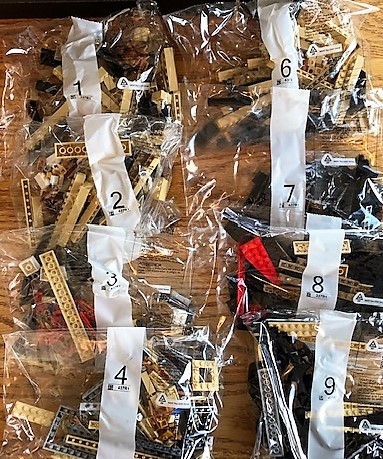
Okay, NOW I have concerns.  First, the bag numbers start with “10”.  Hey Lego, what happened to 1-9?  Second, Bag 5 showed up among the double-digits like an orphan looking for a family.  Pretty sure Bag 5 belongs securely in that black box to the right.  Maybe Bag 5 was trying to escape.

At this point in the show, the phrase “missing pieces” tickles the pianist’s brain (but not the ivories).

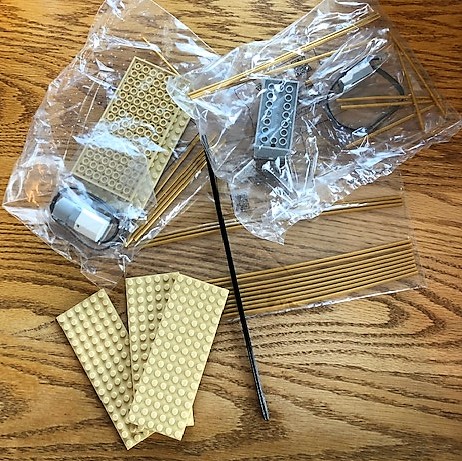
I also find the set of bags in the photo to the right.  I assume they pair with their partner-numbered bags when I get to that part of the concerto.  But maybe they don’t.  Maybe each of them is a little project unto itself.

Little beads of sweat populate the pianist’s forehead.

Yes, I’m nervous. I hastily put the bags back into the box (which suggests I’m already going backward with this project).  But I do want to see what’s inside that black piano-wannabe box to the right.  Have a look:


Well hello Bags 1-9! I also found a few more of those partner-numbered bags.  But check out the disarray in the photo on the right.  Here we have three more orphan bags and, shockingly, a few pieces that escaped their bags.  What’s going on here?

The audience shifts uncomfortably in their seats as the pianist hesitates.

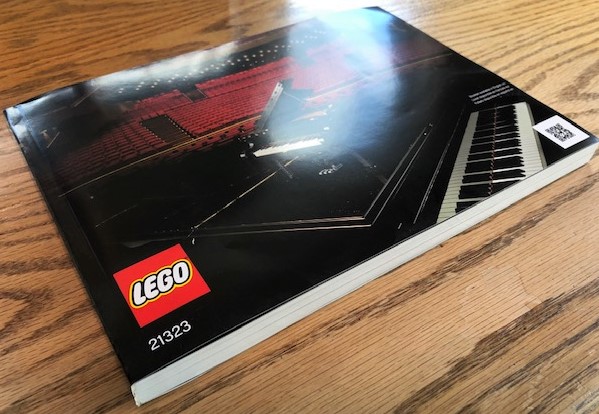
Finally, way at the bottom of the box, we have the pièce de résistance (Spanish: plato fuerte; English: main dish). Well hello, Mr. Instruction Manual.  Weighing in at a hefty 2.2 pounds and boasting 532 pages of mind-numbing steps, Mr. Instruction Manual is easily the heaviest item in the box.  He’s the equivalent of the phone book of a mid-sized city.  Furthermore, the plastic bag he came in included a little slip of paper shouting, “WARNING: To avoid danger of suffocation keep this bag away from babies and children.” Listen Lego, I’m not worried about babies and children; I’m worried about me.  I might be tempted to use that plastic bag to suffocate myself if I can’t complete my Grand Piano.

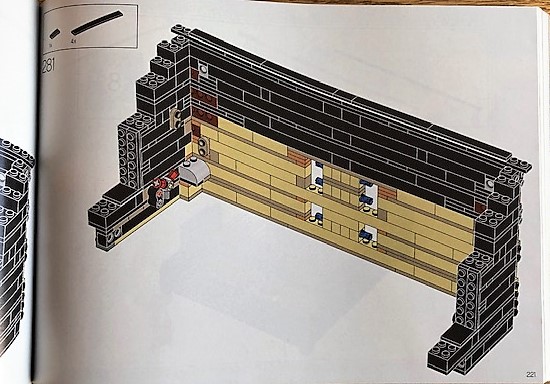
The pianist makes it this far into the performance without any faux pas’s (English: significant mistakes), but then I choose to open Mr. Instruction Manual to a random page. Terrible decision! Have a look:

Is this not an intimidating drawing? (Why yes, Dave, it is.) Does it look anything like a grand piano? (Why no, Dave, it does not.) Furthermore, you’re looking at Page 221, so we’re not even halfway through the build here.  I’m edging towards terrified, Lego.  Those pieces look small.  Those pieces look many.  And who’s to say the numbered bags make the one piece I’m looking for (amongst 3,361 of its plastic pals) any easier to find?

The pianist still hesitates, his hands shaking noticeably held just above the keyboard.

I wanted to finish this post with a photo of the first couple of pieces snapped together… I really did.  I wanted you to believe my music-making was officially underway.  But let’s be honest, my peek into the box where all those bags, orphans, and escaping pieces live, and the sheer size of Mr. Instruction Manual have me backing away from the keyboard (figuratively, followed by literally).  Sorry folks, tonight’s performance isn’t quite ready for prime time.  This pianist needs to change out of his sweat-drenched tuxedo into more comfortable clothing for now.  Let’s take an intermission, shall we?

The audience heads to the lobby.

Fantastic Plastic

On Christmas Day, any parent of small children will stifle a yawn, having built bicycles, dollhouses, and train sets the night before. After all, Santa doesn’t deliver unassembled toys. But hang in there a few years, Mom & Dad, because the building shifts from the giver to the receiver. Older kids want to create. In my generation it was Hot Wheels, Erector Sets, and Lincoln Logs. And one other toy surpassed all others for its ease of use and versatility. Lego.

This piano even plays!

My Christmas gift from my wife this year was a grand piano. Can you top that? Okay, so it wasn’t the kind worth five figures or special movers to get it across the threshold.  My piano measures a mere 12″ x 14″ and comes from the Lego “Ideas” collection.  When it’s finished it will have been built from 3,662 individual pieces.  I can’t wait to get started.

A grand piano made of Legos means the simple interlocking blocks I had as a kid have come a long, long way.  Lego Ideas sets are “products inspired by and voted for by Lego fans”.  The collection includes a typewriter, a ship in a bottle, the house from the Home Alone movies, and the apartment from the Seinfeld sitcom.  Every Ideas product involves thousands of Lego pieces to assemble.  Every Ideas product was also completely sold out for Christmas on the Lego website.

Fifty years ago, Lego was blessedly innocent.  All you had were small bricks in primary colors and if you were lucky, a paper set of instructions to create a simple house or a vehicle.  Otherwise, you just built whatever your imagination could come up with.  When my own kids were kids, Lego moved to product-specific sets like a T. Rex from Jurassic World or an X-wing Starfighter from Star Wars.  Sure, they looked cool when they were built, but I was always skeptical because the sets removed creativity from the experience.  You’d just follow the step-by-steps in the little booklet and voila – a T. Rex.  But call me a hypocrite because this sixty-year-old can’t wait to build his step-by-thousand-steps Lego Grand Piano.

Lego has an interesting history – too many chapters to cover here.  The numbers tell the story in a nutshell.  The Denmark-based company is considered the largest toy company in the world.  Their bricks have inspired movies, video games, building competitions, and eight amusement parks.  Their factories have been churning out little plastic pieces for almost 75 years.  And at last count, that pile of pieces surpassed 600 billion (or 75 Legos for every man, woman, and child on earth).

I didn’t expect to be a Lego fan as an adult but then came the Architecture series in 2008, cool buildings like the Taj Mahal, Eiffel Tower, and Empire State Building.  I just had to have one, so last Christmas my wife gifted me the 1,032-piece United States Capitol Building.  I didn’t clock how long it took to complete but I must’ve looked awfully confident in the assembly because now I’m staring down the more daunting Grand Piano.  Maybe my wife wants me locked down in my home office for the next several months?

To underscore the popularity of Lego these days, the Architecture series alone includes 50 buildings and cityscapes, with more coming out each year (the Taj Mahal was released just last summer).  These sets run anywhere from $50 to $250, with the discontinued ones setting you back three times as much.  Sure, I’d love a Lego version of Frank Lloyd Wright’s “Fallingwater” house, but I’m not going to pay $800 to a collector just to have one.

Lego “Church of Christ”

No discussion of Lego would be complete without a nod to custom creations.  Our local Scheels department store has a larger-than-life Denver Broncos football player made of Legos, posing front and center in the toy department.  The Church of Christ creation in the photo here didn’t forget seating for an 80-member choir (below the big yellow crosses).  And the biggest custom creation of them all?  A full-scale Lego replica of the previously-mentioned X-wing Starfighter, first displayed outdoors in New York’s Times Square.  Try to picture 5.3 million Lego pieces and 23 tons of “toy” in the shape of a fighter jet.  Or just check out the photos here.

Now that I’m done writing it’s time to break open the first bag of pieces to begin my Lego Grand Piano (and time for you to watch the ingenious stop-motion video below).  I’ll use the stopwatch on my iPhone to capture the hours I consume to complete it.  Er, days? Weeks?  I mean, Rome wasn’t built in a day.  Neither is a grand piano.  You might want to check in with me next summer to make sure I haven’t gone bats.

Some content sourced from Wikipedia, “the free encyclopedia” and the Lego.com website.

Christmas-Colored Glasses

The twenty-minute drive from my house to the gym is fairly nondescript. The streets are two-lane straight with a few turns and traffic lights along the way. Not much to look at on a winter’s morning. But the month of December brings about a miraculous change. With the car stereo belting out songs of the season there’s suddenly a lot to see through the windshield.  It’s as if I’m viewing the world through Christmas-colored glasses.

Maybe you’re like me when you’re on the morning drive.  You’re half-asleep, a little bit late, and the slightest miscue by another driver puts you in a bad mood.  I try to blank out the world around me by toggling my radio presets between news and sports.  It’s a wonder my lack of focus gets me to the right destination.  But Christmas music changes all that.  The happy tunes bring everything back to the crystal and clear.  They’re like a gift for the spirit.


Two radio stations in this part of Colorado switch over to Christmas music in December.  An adult contemporary station runs an endless loop of about thirty “holiday favorites” from Thanksgiving to New Years Day.  I’ll bet they play the Boston Pops’ version of “Sleigh Ride” and Mariah Carey’s “All I Want for Christmas” four or five times a day.  It gets old.  But they also play the best of Nat King Cole, Frank Sinatra, and Andy Williams so I forgive them. Then we have our Christian contemporary station.  Their round-the-clock Christmas playlist keeps it fresh, with more carols than pop songs.  They’re a little more in tune with the reason for the season.

Earlier this week I absentmindedly tuned back to one of my regular music stations.  Mistake. Their version of celebrating the season had people calling in to say why they deserved to be on “Santa’s naughty list”.  One caller said she babysat recently and told the misbehaving child Santa died of COVID.  Another said he slept with his ex’s sister and a week later slept with the sister’s best friend.  Seriously?  This is the spirit of the season?


Spotify plays its part on my drive, especially when radio stations bend to the inevitable commercials.  But not playlists.  Albums.  Spotify Christmas playlists just don’t cut it for me.  I have yet to find the perfect mix – you know, not too much of this, not too little of that.  I think Christmas albums by individual artists or groups do a better job of a “just right” playlist, which is why I’m peppering this post with three of my favorites.


Now then, let’s get back to those Christmas-colored glasses.  Exactly what did I see on my twenty-minute drive?  A lot more than I did before I tuned in to the season’s songs…

  • Children headed to school, laughing and singing as they walked.  I think we can agree; Christmas is all about children.  Or at least, one child.
  • Signs in front of churches advertising Christmas Eve services.  Most offer a 5pm, 7pm, and 9pm option, meaning lots of people are heading to church on Christmas Eve.  As we should be this year.
  • A lone tree at the end of a driveway decorated with just two ornaments.  What to make of it?  Maybe a senior citizen lives here, and two ornaments are all he or she can manage.  A reminder to gift to our local “Christmas for Seniors” program.
  • A third-story apartment and its tiny balcony decorated with garlands, wreaths, and lights.  Yes, all walks of life celebrate Christmas no matter the look of their “house”.
  • The sign at the gas station advertising today’s fuel prices.  Unleaded is advertised in red numbers, diesel in green.  How’s that for impromptu Christmas decor?
  • Our little town’s myriad Christmas decorations, covering trees, buildings, and lampposts, I may not always agree with the spending of our tax dollars but with this investment, they get it right year after year.

This is my personal mandate for the 2021 holiday season.  Take the rest of the month and listen to nothing but carols whenever you’re in the car.  You’ll don a pair of Christmas-colored glasses and be amazed at what you’ve been missing around you.  Believe it or not, the world looks pretty good right now.

Some content sourced from Wikipedia, “the free encyclopedia”.
Going Home

Last Friday, my family and I hosted – at long last – an in-person service of thanksgiving for my mother, who passed away in late 2020 at the age of 92. Travel restrictions denied us the opportunity to gather sooner but this year’s Thanksgiving weekend seemed most appropriate. The service program included hymns, Bible readings, a biographical homily, and reflections from my four brothers and me. But it was another element – a solo of “Going Home” – which brought a flood of tears and took my breath away, all at once.

As if the singing of “How Great Thou Art” or the reading of Psalm 23 wasn’t moving enough, “Going Home” brought my emotions to an entirely new level.  Sure, the song’s lyrics speak beautifully – to the peaceful transition from a life well-lived to what lies beyond – but it was the music that made my heart skip a beat.  “Going Home”, you see, borrows its instrumentals from the Largo movement of Antonin Dvorák’s “New World Symphony”.  And Dvorák’s symphony is one of my very favorite pieces of classical music.

I alluded to classical music when I spoke at my mother’s service.  I took piano lessons for several years as a child, and it was my mother who pushed me to practice when I would’ve much rather been playing outdoors.  It was my mother who faithfully attended my many recitals and competitions.  And it was my mother, as a result, who I credit for my lifelong love of classical music.

The New World Symphony’s (NWS) Largo movement is instantly recognizable to anyone who knows classical music (listen to the first two minutes above if you don’t believe me).  It may be the most beautiful solo ever written for the English horn; a short, meandering melody backed by soft strings.  I can’t think of a more appropriate instrument for the Largo, even though the English horn is an orchestra oddball with its distinctive wail.  Now layer the “Going Home” lyrics on top, as with the crystalline voice of Sissel Kyrkjebo above, and you wonder if music can get any better.

Following the English horn solo, the NWS Largo shifts to a minor chord passage which “evokes a nostalgic and desolate mood”, sometimes perceived as a funeral march.  But let’s be clear; my mother’s service was no funeral.  Rather, it was a blessed celebration attended by those who loved and admired her.  I think Dvorák knew this because the NWS Largo leaves the funeral march behind and concludes with another round of the peaceful English horn solo.  For me, this music brings a cleansing sigh, and a feeling of calm and content.  Just as my mother would want it to be.

I’ve saved the best for last here.  After my brothers and I finished our remembrances, my father spoke.  He said – to my utter amazement – my mother had effectively written her own service, picking the hymns, readings, and solos.  In other words, “Going Home” was no random choice; it was my mother’s preference.  Just as the New World Symphony Largo movement is my own preference.  Maybe she was aware of the connection?  Maybe not but it doesn’t really matter.  What matters is I’ll always remember her, especially when I hear the English horn.

I miss you, Mom.

Some content sourced from Wikipedia, “the free encyclopedia”.

Coup de Grâce

On my green and pristine back lawn, a solitary fallen leaf lies captive among the blades, a sure sign of the coming fall. A summer lengthened by oppressive heat is mercifully at its end. Fellow bloggers eagerly write about crisp mornings, cool nights, and college football games. But here’s a better nod to the upcoming season, a beckoning more sublime than anything “pumpkin spice”. Have a listen to Antonio Vivaldi’s violin concerto “Autumn”, from his best-known work, “The Four Seasons”.

Sure, I could bore you with the details of a classical composition written over four hundred years ago. “The Four Seasons” was cutting edge for its time because the music reflected real-life events: singing birds (“Spring”), soft breezes (“Summer”), and icy paths (“Winter”).  But today’s post is not really about “Autumn” and its drunken dancers.  It’s about the performance of the piece by Frederieke Saeijs.

Ms. Saeijs

I’d never heard of Frederieke Saeijs before I watched the eleven minutes of her violin solo in the video above but I must confess, I’m absolutely smitten.  Frederieke (pronounced exactly like it reads, unlike her last name), is Dutch by birth but worldly in every other respect, including her education, performances, and teaching.  Her list of accomplishments and awards suggests there is nothing further she can achieve with her instrument… and she’s only forty-two.

But I digress (and can you blame me after seeing her photo?)  Let’s get back to this performance of “Autumn”.  Here is what I found so captivating.  First, Frederieke’s eyes and her movements with her violin are unabashedly expressive as she plays, clearly one with the music.  She is a picture of grace with her slender frame, elegant hairstyle, and striking purple gown.  In other words, you could watch this video on mute and still be impressed.  But please don’t.  You need to hear the music, even just a few minutes of it.  I admit to distraction by some other things on my computer screen yet I kept coming back to this performance until I’d completed all eleven minutes.

If I haven’t yet persuaded you to spend a few minutes with Frederieke, consider this.  She plays the entire piece from memory (which, in ‘Autumn’s more furious moments, is mind-boggling).  Also, her performance – as well as those of the smallish orchestra around her – is captured from a dozen different angles.  This was a busy production, both in front of and behind the camera.

I kept waiting for something – anything – to bring this performance back to earth so I could describe it as less than perfect.  Except for a cough in the audience minutes from the end, I don’t see how the concerto could’ve been purer.  Seriously, have you ever wondered how a soloist of this caliber avoids a sneeze or a cough, or even slips a little on her high heels?  Perhaps this explains why Frederieke is a world-class violinist and I am not.

Finally, if you made it to the end of this performance like I did, you’ll find it interesting the video concluded before the audience applause (and standing ovation, no doubt).  I say “good call” to whoever posted the video.  The silent fade-to-black conclusion only makes the performance more powerful.

Mr. Vivaldi

A coup de grâce is defined as “a decisive blow”, and further, “one delivered mercifully to end suffering”.  I love the double meaning here.  The season of autumn delivers a merciful end to the suffering of a hot summer.  More to today’s topic, Ms. Saeijs’ violin performance speaks of force and grace as one.  In other words, she offers you a most sublime welcome to fall.

The poem which inspired Vivaldi’s “Autumn” concerto includes the line, “… And (by) the season that invites so many, many…”  After watching today’s video I feel very much invited.  I suggest you raise a glass of hot cider to the calm of fall.  While you’re at it, give thanks for the breathtaking talent of Frederieke Saeijs.

Some content sourced from Wikipedia, “the free encyclopedia”.

Do YOU Know the Muffin Man?

I have a hodgepodge of baked goods on the kitchen counter right now. A loaf of sourdough sliced and ready for sandwiches. Brioche buns to cradle the bratwurst I barbecued over the weekend. Angel food cake for dessert topped with berries and whipped cream. And tortillas (which, okay, are “fried goods”) by the bagful. But we’re not done here. There’s one more option, one where my starchy carb willpower goes flying out the window. English muffins.

Who among us doesn’t love a warm, toasty English muffin?  The little round breakfast breads give us so many reasons to choose them.  They’re delicious, whether with butter, jam, or as an ingredient in Eggs Benedict.  They’re satisfyingly circular.  They’re usually fork-split so they break apart easy for the toaster.  You feel like you get two-for-one instead of a single piece of boring toast.  And as if to boast of their popularity, McDonald’s bakes millions of them into their Egg McMuffins.

Here’s another appeal of English muffins.  They have all those nooks and crannies to secure the melted butter.  You’re familiar with the term “nooks and crannies” (I know you are).  It’s the primary descriptor in Thomas’ English Muffins advertisements.  But you probably don’t know the backstory.  Thomas – as in Samuel Bath Thomas – created the “American” English muffin in 1880, after moving to the United States from England.  He brought with him a griddle-baking process for the muffins, which results in the signature crunchy outside and soft inside.  140 years later, I’m hard-pressed to come up with another manufacturer of English Muffins.  Okay, maybe Bays.  That’s it.

Ironically, English muffins are a more popular breakfast item in North America, Australia, and New Zealand than in England.  But you can’t just call them “muffins”, at least not in America.  Muffins (coming from the German muffen for “little cake”) refer to blueberry or corn or some other muffin with a more specific taste than the sourdough of English.  Not sure about you, but my consumption of English muffins to blueberry or corn is probably 100:1.

Eggs Benedict

You think you “know the muffin man”, but I’ll bet you’re just singing the children’s song (and you’re welcome for getting it stuck in your head).  There really were muffin men, you see, way back in the mid-1800’s.  They’d walk the streets selling their fresh-baked muffins, ringing bells like an ice cream truck.  In Britain there used to be so many muffin men ring-ring-a-ringing, Parliament passed a law to ban the bells.  But people still bought their fresh-baked muffins (at least until houses started getting this new invention called a “stove”).

When Mr. Thomas first sold his muffins in America he called them toaster crumpets, described as a “more elegant alternative to toast” to appeal to finer hotels.  Over time he changed the description to “English muffins” to better serve the masses.  The company bearing his name has been making them ever since, and the griddle-baking approach is the secret to all those nooks and crannies.

Crumpets, aka “English muffin imposters”

While we’re on the subject, let’s settle the debate on crumpets (and scones, for that matter) vs. English muffins.  Crumpets look like English muffins.  They’re about the same size.  But that’s where the similarities end.  Crumpets are only cooked on one side.  They have a milder taste.  And there’s a good explanation for the popularity of English muffins over crumpets in America.  Muffins go better with coffee, which Americans drink a lot more of than tea.  Can’t tell you when I’ve ever seen someone having a crumpet with their coffee.

“The Muffin Man” song includes the lyric, “… who lives on Drury Lane?”  Turns out, Drury Lane is a real street; a thoroughfare bordering Covent Garden in London.  But I prefer to think the Muffin Man lives right here on my street.  The Muffin Man is me, because not a week goes by where I don’t include the English rounds in my breakfast.

Some content sourced from Wikipedia, “the free encyclopedia”.

Gadgets… Be Gone!

The defining elements of the 1970s included disco music, bell-bottom pants, and really big sunglasses. You had block-long lines at gas stations thanks to the “Energy Crisis”, President Nixon’s resignation because of Watergate, and the long-overdue wrap of the Vietnam War. People preferred their clothes and cars in bright colors, their hair shaggy. I don’t remember much of this stuff, since I was only a budding teenager. But I’ll never forget my very first audio cassette tape deck.

90 minutes of songs in your pocket

You’re seeing obituaries in the news these days for noteworthy people of the 1970s.  Fifty years ago these people were generally in their thirties or forties; a reasonable age to invent something.  So it didn’t surprise me to read about Lou Ottens, who died in March at the age of 94.  Ottens was an engineer for the Philips Corporation.  Never knew him, never heard of him, but I’m forever grateful he invented the compact cassette audiotape.

[Millennials, roll back the clock on music media.  From your digital subscriptions, pass through Blu-Ray and DVD, then compact disc (CDs), until you finally land in the 1970s and the compact cassette audiotape.  If you made it to long-play (LP) vinyl records you went a little too far.]

Cassette tapes were a sensation in the 1970s because not only were they pants-pocket-portable, they were recordable.  Me and my cassette deck spent many an afternoon capturing Top-40 hits off the local FM radio station (Barry Manilow!  Helen Reddy!)  Then I’d store my precious cassettes in their little suitcase, which could hold twenty or thirty inside plastic cases.  Add in the invention of the Sony Walkman at the end of the decade (the first handheld cassette player) and you’ve got a broad overview of 1970s music media.

1970s chic

I did have a Walkman somewhere along the way, but the better memories come with my tabletop cassette deck (like the one shown here).  It lived on the desk in my bedroom, with its square speaker and giant pushbuttons, a precursor to today’s boom box.  It ate the occasional cassette tape with relish, and background noise always accompanied recordings off the radio, but my tape deck was still fairly state-of-the-art for the 1970s.  It only weighed a couple of pounds including the four C batteries.  The pop-out handle made for easy carry.

Lou Otten’s passing speaks to how many inventions, no matter how novel or cutting-edge, are sooner or later kaput.  Like the wax occupants of Madame Tussauds, you know your useful life has passed when you’d be better off in a museum.  So how about a few more inventions from my childhood years – once useful but now “almost gone”?

1960s

  • magnetic stripe card (smartphones are saying, “move over”)
  • plasma display panel (PDP)
  • handheld calculator (just ask Siri now)
  • 8-track cartridge (whoa, that’s ancient history)
  • Liquid Paper
Soon to be kaput

1970s

  • Pong (one of the earliest arcade video games)
  • floppy disk (removable computer file storage)
  • portable GPS device
  • cell phone (audio calls, nothing else)
  • videocassette recorder/player (VCRs)
“Floppy” file storage

I was just as curious to check out the decades of my parents’ childhood.  What inventions from their formative years are no longer?

1930s

  • Polaroid photography (in its original form)
  • IBM electric typewriter
  • coin-operated parking meter (now accepts credit cards)
  • drive-in movie theater (making a COVID-era comeback, perhaps?)
  • twist-tie (now built into your kitchen trash bag)

1940s

  • aerosol spray can (can we at least agree, these need to go?)
  • Slinky and Silly Putty (not today’s child’s toy of choice)
  • atomic bomb (let’s just pretend these are obsolete, shall we?)
  • lp phonograph record
  • jukebox
Early-model boombox

Last summer I went through a few neglected boxes in the garage and found a few of my old audiocassette tapes.  I keep a still-kicking boombox in the garage (for AM radio baseball games), with a dusty cassette tape player in the middle.  One afternoon I popped in one of those old tapes, pressed PLAY, and behold: John Denver was alive and singing again.  The music was as crisp and clear as 1970.

So give it up for Lou Ottens.  Not only did he design audiocassette tapes, he designed those little guys to last!

Some content sourced from the Hackaday.com article, “RIP Lou Ottens, Developer of the Compact Cassette and More”, and Wikipedia, “the free encyclopedia”.