Hooked on Classics

If I am to believe certain lists, there are over forty different genres of music in the world today. The more common ones come to mind quickly: “Rock”, “Pop”, “Hip-Hop”. But now we have “Industrial” and “Tex-Mex” as well.  Indeed, definitions of music are becoming as diverse as the cultures from which they took flight.

Among music genres – the list of which inflates to hundreds if you include sub-categories – “Classical” looks a little lost. Classical music’s definition is broad and complicated, but most of us would acknowledge its “golden age” as the time frame between the lives of Bach and Beethoven (effectively, the 18th century). The volume of symphonies and concertos and sonatas created in that period is so vast, even those with no interest cannot deny a familiarity with the genre’s most famous compositions.

67-genre-1

The absence of orchestras (or music programs altogether) in today’s schools and universities is a tragedy.  Attendance at classical music concerts is down.  Even classical radio stations lack the advertising revenue to survive, depending instead on the generosity of their donors.  But here’s the good news: the genre still finds its outlets.

Consider the movies.  Year after year Hollywood produces fairly forgettable films, yet certain scenes are worth the watch if only to hear the accompanying classical music.  Some examples:

1) Ocean’s Eleven (2001). Danny Ocean’s gang of thieves finally completes the heist at the Bellagio Hotel, and gathers outside at the fountains for a moment of reflection.  The enchantment of that scene is as much about the fountains as it is in the soaring strings of Claude Debussy’s mesmerizing “Clair De Lune”.  Watch and listen here.

2) If I Stay (2014). Chloe Moretz’s character Mia performs “The Swan” (from Camille Saint-Saens’ “Carnival of the Animals”) on solo cello at a community concert, and the music continues through several more scenes.  “The Swan” is elegant and lullaby-soft.  Listen here (performance by Yo-Yo Ma).

3) Somewhere in Time (1980).  Christopher Reeves’ character’s obsession with the lovely Jane Seymour leads to a desperate time-travel effort to find her in her youth.  When the couple is finally reunited (in his dreams, of course),  we are treated to Sergei Rachmaninov’s powerful “Rhapsody on a Theme of Paganini”.  This scene would be nothing without Rachmaninov.  Listen here.

67-genre-2

Hollywood once created an entire movie about classical music.  The Competition (1980) – an early film in the careers of Richard Dreyfuss and Amy Irving – explored the rigors of the real-life Van Cliburn International Piano Competition.  Watch the movie and you’ll hear excerpts of Beethoven’s Piano Concerto No. 5 and Sergey Prokofiev’s Piano Concerto No. 3.  Listen to the glorious Prokfiev piece from start to furious finish and you’ll wonder how anyone can play the piano with that kind of speed and dexterity.

Even a child’s story can be uplifted by classical music.  In the stage production of “You’re A Good Man, Charlie Brown” Schroeder plays Beethoven’s “Moonlight Sonata” on his toy piano while Lucy accompanies him in song.  The lyrics are creative and work surprisingly well for a sonata created over 200 years ago.  Watch and listen here.

This post would not be complete without a begrudging nod to the album “Hooked on Classics”, created and performed in the 1980’s by Louis Clark and the Royal Philharmonic Orchestra.  “Hooked” is a mash-up of familiar classical pieces, attached to an annoyingly robotic drum track.  It’s a ten-minute audio nightmare for anyone who truly respects the genre.  Remarkably, the title track made it to #10 on the Billboard Hot 100 in 1982 (alongside Joan Jett’s “I Love Rock ‘n Roll” and Journey’s “Don’t Stop Believin'”).  If you must listen, go here.

67-genre-3

My campaign for the survival of classical music stems from years of childhood piano lessons, including a teacher who demanded strict adherence to the genre.  Thus I didn’t practice “Twinkle Twinkle Little Star” or “Frere Jacques”, but rather Bach’s “Solfeggietto”, Beethoven’s “Ecossaises”, and Albert Ellmenreich’s “The Spinning Song”.

Listen carefully the next time you’re at the movies.  Lend an ear to the classical strains of an orchestra or philharmonic.  Flip the radio dial to something instrumental every now and then.  Classical music lives, and still deserves a prominent place among the music genres.

Humble and Kind

This week’s list of “Hot Country Songs” – according to Billboard – includes Tim McGraw’s Humble and Kind; an easy waltz with timeless lyrics. A glance at other songs on the list finds the more typical topics of country music: fishing, hunting, lost love, found love, even t-shirts.  But Humble and Kind digs a whole lot deeper.  It’s a virtuous dose of substance in a music genre that often settles for less.

43 - virtuous 1

Humble and Kind sings about several examples of doing the right thing, like holding doors for others and minding your manners.  But the following verses are more insightful and are my favorites:

When the dreams you’re dreamin’ come to you,                                                                  When the work you put in is realized,                                                                                        Let yourself feel the pride but,                                                                                              Always stay humble and kind.

Don’t take for granted the love this life gives you,                                                              When you get where you’re goin’ don’t forget turn back around,                                       And help the next one in line,                                                                                                Always stay humble and kind.

Humility and kindness are virtues by definition.  If you time-traveled back to 400 AD, you’d meet the Roman Christian poet Aurelius Prudentius (great name).  “Aury” came up with the “Seven Heavenly Virtues” and the list remains unchanged to this day.  The first five are Chastity, Temperance, Charity, Diligence, and Patience.  The last two are Humility and Kindness.  If you lived your life according to the list, the pearly gates would swing wide when you arrive.  But let’s be real – how many of us can check the boxes next to all seven virtues by the time we climb that final staircase?

43 - virtuous 2

Humility (Latin: humilitas) is not thinking less of yourself; it is thinking of yourself less.  Kindness (Latin: benevolentia) is charity, compassion, and friendship for its own sake.

Ponder the final words of those definitions for a second.  It’s not so much what you do (or don’t do) but more what your intentions are.  Don’t show me things you’ve done that qualify as “humble” and “kind”.  Instead, consider whether you had a hidden agenda with your actions.  And that’s the kicker with the virtues game – it’s not only how others judge you but also how you judge yourself.  Still think you can check the boxes?

Humble and Kind inspired a pay-it-forward movement you can learn more about at http://stayhumbleandkind.com .  You’ll find all kinds of inspiring entries on the website – over eighty in the four months since the song was released.  Click on any of the photos and you’ll get the story behind the good intentions.  You can even request small printed cards that say #StayHumbleAndKind – meant to be left behind after you complete your acts of anonymous goodwill.

Ironically, some of Tim McGraw’s biggest country hits are about fishing (“Don’t Take the Girl” – 1994), love (“Just to See You Smile – 1997) and t-shirts (“Something Like That – 1999).  But like our virtuous Roman Christian Aury, Tim and his writers step it up to poetry every now and then.  Humble and Kind made it to #1 on Billboard’s “Hot Country Songs” last month.  This week’s list has it at #4.  Frankly, I hope it hangs on for awhile and gets a ton of airplay.  The world can learn a lot from its seemingly simple words.

Some content sourced from Wikipedia, “the free encyclopedia”.

Practice-Makes-Perfect Memories

Classical music has been one of my constant companions since childhood. Piano lessons initially mandated by my parents (but ultimately demanded by me) cemented a love for the timeless sonatas and symphonies of the master composers.  I built up a stock of memorized pieces – my very own repertoire.  I was “hooked on classics” at an early age.

people-316500

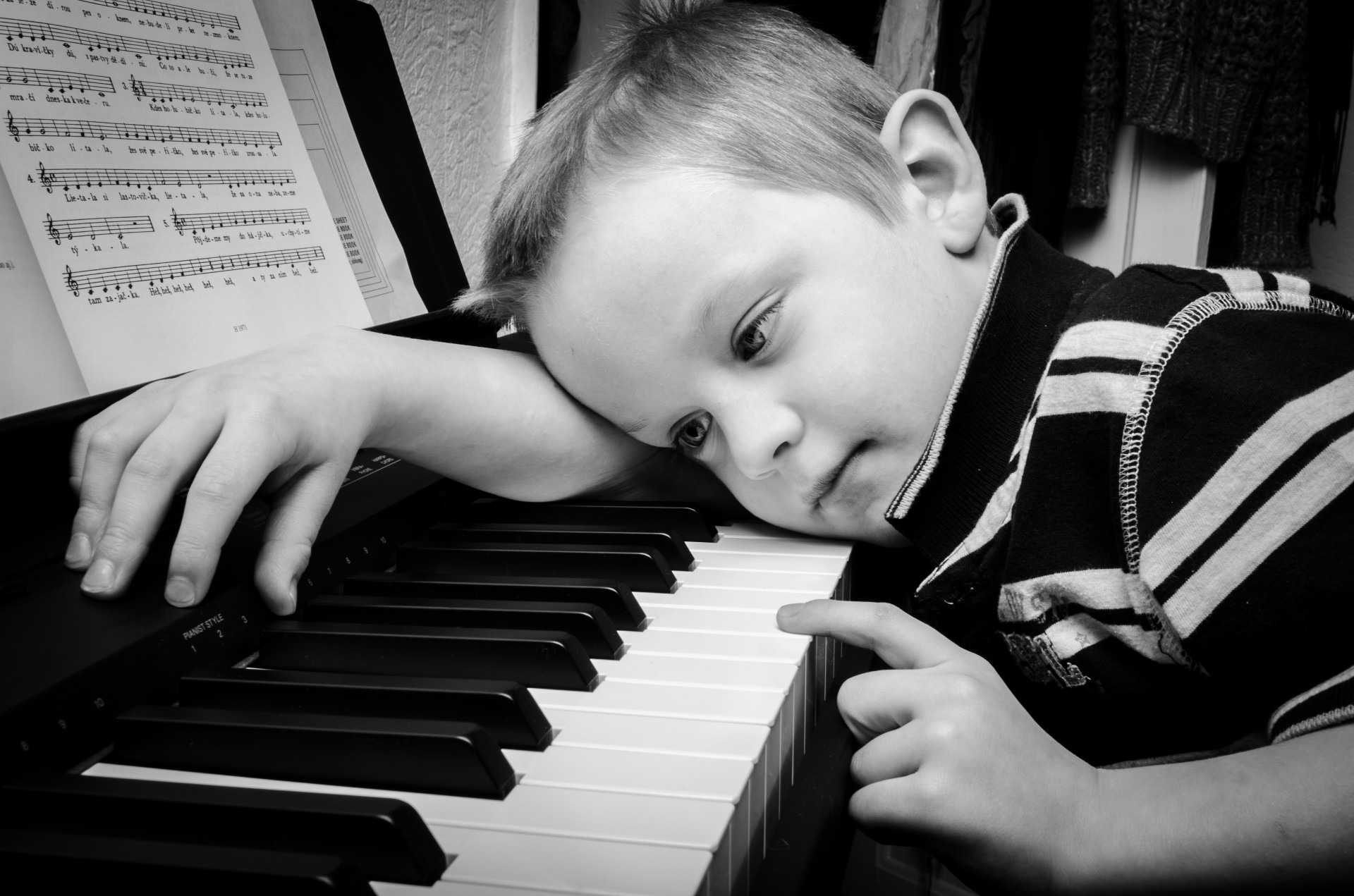
In 1947, a children’s audio story was created for Capitol Records called “Sparky’s Magic Piano”.  Sparky was a little boy who hated to practice the piano but benefited from an active imagination.  One day Sparky’s piano starts talking to him, and declares if he simply runs his hands across the keyboard he will make beautiful music.  Instantly Sparky is playing with the accomplished skills of a concert pianist, effortlessly churning out Rimsky-Korsakov’s “The Flight of the Bumblebee”, Beethoven’s “Moonlight Sonata”, and Mendelssohn’s “The Spinning Song”.  Sparky’s piano teacher and parents want to show the world this wonder, so they book a series of concerts across the country.  But in one of those performances, Sparky suddenly loses his abilities and can’t play a single note.  He demands the music from his magic piano but nothing comes.  He looks out to his waiting audience in horror… and wakes up from a dream.

Virtually the entire story of “Sparky’s Magic Piano” is in his imagination, but the moral-of-the-story ending has Sparky practicing with renewed focus and hopes of some day becoming a great pianist.  Also, the story aged well, as I first heard it twenty-five years after it was created and still loved it.

“Sparky’s Magic Piano” resonates for several reasons.  It inspired me with wonderful piano compositions at an age when I wanted to play outside instead of practice.  My piano teacher helped me learn “The Spinning Song” and the first movement of the “Moonlight Sonata” (alas, the “Bumblebee” is reserved for only the most accomplished of pianists.  Watch this performance as proof: http://www.wimp.com/fastgirl/ )

Also, whenever I hear the classical music from Sparky’s story I’m instantly transported back in time to my grandparents’ house.  Besides the children’s stories and toys (enjoyed decades earlier by my own father), my grandparents owned a few audio stories.  Their copy of “Sparky’s Magic Piano” was on “45’s”: those 7-inch records that contained a single song on each side.  Sparky’s story required six or seven 45’s (both sides), which meant you had to flip or change the discs every 3-4 minutes to hear the entire story.

Thanks to Sparky I will always remember childhood time with my grandparents.  I can picture myself sitting cross-legged on their floor in front of the living-room “hi-fi” (the size of a small refrigerator back then), listening to Sparky’s story with a focus broken only by the need to flip the discs.  Fittingly, that living room also contained an old, out-of-tune, upright piano, which I was allowed to play every now and then.

Remarkably, “Sparky’s Magic Piano” is still available today.  You can buy a copy for a couple dollars on Amazon Music or iTunes.  Have a listen to a story that was created almost seventy years ago.  Thanks to your iPod you won’t even have to get up to change the discs.  And if you can endure the corny dialogue, you may find yourself captivated by the repertoire of wonderful piano music – truly “classical”.

abstruse

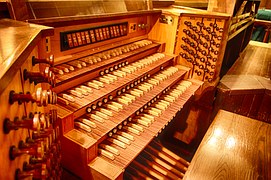
You’re probably typing on your keyboard as you read this.  But imagine you have a handwritten document sitting upright in front of you and you’re simply copying the words one keystroke at a time.  Now imagine you have several keyboards at your disposal, each on top of the next like stair steps. Your hands move up and down the stairs, finding just the right key for each letter.  Finally, imagine one more keyboard beneath your feet, which you occasionally depress like the gas pedal of a car.  This my friends, is but a hint of what it takes to play a church organ.  It’s a complex, hard-to-grasp skill requiring an absurd amount of focus.  It’s abstruse.

24 - abstruse

The Basilica of the Sacred Heart at the University of Notre Dame is scheduled to receive a brand new organ; the first note to be played during the Christmas holidays in December 2016. This is the fifth organ in the 165-year history of the Basilica and as you would expect, the most impressive. The instrument will boast four keyboards (five if you count the one beneath the feet) and almost 5,200 pipes.  The pipe diameters are as small as a pencil and as large as a ship’s smokestack.  Listen for the shrill tone of a tin whistle or the booming alert of a departing cruise liner – this organ can duplicate both.  It can even duplicate the soprano, alto, tenor, baritone and bass sounds of the singing human voice.

An organ of this complexity and size – it will soar to almost four stories in height – is taking several years to construct.  But most remarkably, it is being assembled in the modest workshop of Paul Fritts & Company, in the outskirts of Seattle, by a grand total of six craftsmen.  The University chose this group because its founders were trained back through several generations, dating to those who built the most prominent cathedral organs in Western Europe.

Next spring Fritts & Company will host an open house in their workshop, to show off the nearly completed Notre Dame organ.  Then next summer when the University’s campus is relatively quiet, the organ will be shipped from the West Coast to Northern Indiana to be assembled in time for that first performance a few months later.  Can you imagine the responsibility of the drivers of those several flat-beds, trucking so many handmade components over the mountains and across the plains to their final destination?  They should have a police escort to clear the highways.

When I was in middle school I took organ lessons for a brief time, learning on a modest instrument in the loft of the small chapel of our Methodist church.  There were only two keyboards for the hands and a small keyboard for the feet.  I found it overwhelming to play with hands and feet at the same time.  To further complicate the skill – and this is true of most organs – there are a few milliseconds of delay between the time a key is pressed and the sound is issued (thanks to the mechanics of opening and closing the organ pipes).  So you’re playing the music a moment before you actually hear it.

I did perform in public once.  Every year our Methodist leaders would allow the church youth group to conduct the Sunday services – from the sermon to the bible readings to the music.  Our organist “rigged” the sanctuary organ for me so it felt more like playing that small chapel organ.  A little less abstruse, if you will.  Regardless, that was the end of my career as an organist.  Two hands on the single keyboard of a piano (with little else for the feet and brain to worry about) is more than enough for me.