Five Gold Rings

So… if it really was the fifth day of Christmas you wouldn’t be singing Christmas carols anymore, now would you? I mean, how many of us do Christmas anything after December 25th?  Not many.  Accordingly this post is an early Christmas present to you: five carols worthy of the coveted Gold Ring award. “It’s impossible”, you say. “Select only five Christmas carols?”  Yes, I get you, but today’s challenge isn’t fruit(cake)-less. We just need a few rules to refine the recipients:

  1. You can’t choose more than one from the same singer (which eliminates about five hundred from Amy Grant).
  2. You can’t choose more than one version of the same song (in other words, please dream of only one “White Christmas”).
  3. Your choices should dance into your head like sugar plums, instead of having to consult your several Spotify holiday playlists.
  4. (and perhaps the most difficult): Your choices should qualify as “carols” and not just “songs”.  I mean, c’mon people, if we’re giving out gold rings the music better convey the spirit of Christmas, right?

Here then, my five gold rings; the ones adorning my hand every Christmas for as long as I can remember (or at least, for as long as Carrie Underwood’s been alive).  They’re probably not the same as your five gold rings but that’s okay, because you wouldn’t give me the same presents I give you, would you?  Would you?

Sissel Kyrkjebo/Mormon Tabernacle Choir“In The Bleak Mid-Winter”.  The Methodist church I grew up in always reserved a spot for this 1906 carol in its Christmas Eve services, so it blooms with nostalgia for me.  Sissel’s angelic voice – backed by The Choir – captivates me every time, especially on the introspective lyrics of the final verse.  I think you’ll agree; Sissel is as graceful as one of those seven swans a-swimming.

Amy Grant“Breath of Heaven”.  I love everything Amy Grant sings about Christmas (until her 2016 album “Tennessee Christmas” came along, which was as bad as curdled eggnog).  I thought it would be difficult to choose just one of her carols, but “Breath of Heaven” is Amy’s unparalleled signature to Christmas.  The lyrics “Help me be strong… help me be… help me…” always get to me, and are as successive as three french hens, one after another.

Laura Story“I Lift My Eyes”.  Laura Story is a pastor, songwriter, and singer (better known for her contemporary Christian hit “Blessings”).  She sings from the heart.  Of the ten carols a-leaping on her Christmas album “God With Us”, “I Lift My Eyes” leaps the highest.  Frankly, it soars.

Michael W. Smith“Almost There”.  Bit of a cheat here because Amy Grant shares in the singing, but I still consider this one a standout Michael W. Smith carol.  The lyrics speak to Mary’s journey to Bethlehem, her journey to the birth itself, and anyone’s journey through Advent to Christmas.  You could also say it’s a carol about the partridge pursuing the pear tree, but not quite to the branches yet.

Carrie Underwood“All Is Well”.  Michael W. Smith also gets the credit for this one, which was recorded by two other artists before this latest rendition.  The lyrics are simple and repetitive, but with Carrie’s ridiculous range you’ve got something more powerful than eleven pipers piping.  Carrie draws out the final (all is) “well” for so long, you’ll wonder if it isn’t New Years Day when the carol is done.

So there you have them, and now it’s time for your own gold rings.  Remember, five off the top of your head, only one per singer, only one version of any choice, and music that speaks reverently to the season.  Gift your rings back to me in the comments and we’ll feel as cozy as two turtle doves.  Whatever those are.

It’s Thanksgiving Season (#1)

Listen carefully… hear the clock a-tick-tick-ticking?  Better hurry up!  You’re already a day (or more) into the Thanksgiving season and you have so much to do!  “No Dave”, you correct me, “Thanksgiving’s just one day (or at most a long weekend) way-ay-ay at the end of the month… I still have plenty of time to prepare!”  No you don’t.  Junk that perception, online friends, because the times they are a-changin’.  I, blogger Dave, hereby decree Thanksgiving to be three weeks… and the season’s already underway.  So c’mon – get grateful already!

It’s fitting I’m writing this post on Halloween, “… the conclusion of spooky season…” as Lyssy in the City referred to it.  And isn’t it true?  Just like Christmas, the air goes out of the holiday balloon the very next day.  Cinderella’s carriage turns back into a pumpkin at midnight (ironically).  There is no “residual” spooky season on November 1st.  Halloween died the night before.

Retailers are determined to steamroll Halloween and Thanksgiving with the Christmas season, of course.  The artificial trees and decorations were available for purchase at Costco and Lowes this year before the Halloween candy even colored the shelves.  As I said in Third-Wheel Meal two years ago, Thanksgiving is fighting an uphill battle between the ever-expanding seasons before and after.  It’s like a sandwich with two massive pieces of bread but not much in between.

Thanksgiving is not just another holiday in my book; it’s a uniquely American holiday.  It’s the one we’ve been celebrating in the U.S. for 160 years thanks to the persistence of one Sarah Josepha Hale (who also wrote “Mary Had a Little Lamb”). Hale, along with Abraham Lincoln’s stroke of the presidential pen, made sure the holiday was “permanent… an American custom and institution”.  Gives this juncture in the holiday season a little more respect, wouldn’t you say?

Day-by-day gratitude

Like an Advent calendar, I propose we take twenty-three days to be grateful for what we have.  Open the little cardboard door on any given morning of November and the question will always be the same: What are you thankful for today?  Surely you can come up with twenty-three things.  Or how about twenty-three people?  Wouldn’t it be something if you told one person how grateful you are to have them in your life… every day until Thanksgiving Day?

Already on the shelves, sigh…

As with Christmas, it’s not the wrapping; it’s the gift inside.  Thanksgiving goes way deeper than turkey and football.  If you’re planning a trip to America and don’t know much about Thanksgiving, VisitTheUsa.com is not helping my cause.  The website reduces Thanksgiving into turkey and pie, Turkey Trots, parades, football, the pardoning of a single turkey, “shop ’til you drop”, and the travel challenges of a four-day weekend.  Really?  That’s the meaning of America’s Thanksgiving?

It’s not about this…

Maybe it would help if moviemakers and songwriters joined my cause.  I mean, think about it.  Halloween movies come to mind without much thought (with some, like A Nightmare on Elm Street, approaching ten sequels).  Hallmark churns out Christmas movies faster than you churn out Christmas cookies.  But are there any movies about Thanksgiving?  Well, yes actually, just this year we have Thanksgiving (the movie).  But please, don’t seek out the trailer.  This garbage has nothing to do with gratitude and everything to do with gratuitous violence.

or this…

I was going to make the same case for music. Halloween has you dancing to “Thriller” and “Monster Mash”.  Christmas has you “Rockin’ Around the Christmas Tree”.  There is no “Thanksgiving carol”.  But then I remembered Amy Grant’s “‘Til the Season Comes ‘Round Again” (my wife’s favorite).  It’s a song about Christmas, make no mistake, but you could argue there’s a little Thanksgiving dressing mixed into the first verse:

Come and gather around at the table
In the spirit of family and friends
And we’ll all join hands and remember this moment
‘Til the season comes ’round again

Get what I’m saying?  Take the next three weeks and find the true meaning of Thanksgiving.  Like Halloween, the treats will still be there on November 23rd.  Like Christmas, you’ll still have the stress of travel and getting things done.  Those holidays are about finding your inner child.  This one’s about finding your inner adult.  So c’mon – get grateful already!

Some content sourced from Wikipedia, “the free encyclopedia”.

Mom-and-Pop Music

Flip through the chapters of my life and you’ll find a bookmark at 1975. It was the year I became a teenager. It was the year I started middle school. But most importantly, 1975 was my first foray into Top 40 music. In those days, punk, funk, disco, and metal were just getting started; all too progressive for a kid taking his first dip into the pool of radio rock. Instead, my preference was to chew on something a little sweeter. Like bubble gum.

In the 1970s, I was way too young to witness the birth of rock and roll.  I also missed the advent of pop music.  But I was right on time for a musical genre known as bubblegum.  Bubblegum siphoned off pop music’s more catchy, upbeat tunes and marketed them to children and adolescents.  And what better way to market theses songs than kid TV?  Anyone who ever watched The Partridge Family, The Monkees, or the cartoon rock of The Archies on Saturday mornings enjoyed bubblegum music.

As for 1970s Top 40, it’s easy to look back on those weekly lists and find bubblegum.  “Love Will Keep Us Together” (Captain & Tennille), “Laughter In The Rain” (Neil Sedaka), and “He Don’t Love You, Like I Love You” (Tony Orlando and Dawn) are just a few examples from fifty years ago.  Like most things back then, music was more innocent.

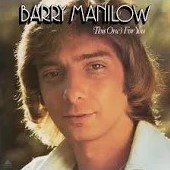
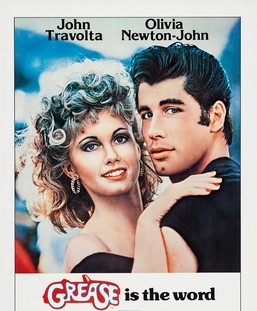
Having said that, bubblegum wasn’t even specific enough to define my own tastes.  The industry standard Billboard Magazine generates a Hot 100 list at the end of every year based on sales and radio plays.  It’s fun to go through the 1975 list and recognize just about every song.  But I was looking for three names in particular and – no surprise – all of them made the list with multiple entries.  Hello again, John, Olivia, and Barry.

John Denver was only 53 when he was tragically killed piloting a single-engine plane above California’s Monterey Bay, yet he managed to create over twenty-five years of gentle hits before that.  When I first heard his voice he’d already landed top-ten’s like “Leaving on a Jet Plane” (from the movie Armageddon for you younger readers), “Take Me Home, Country Roads”, and “Rocky Mountain High”.  One of Denver’s biggest hits, “Annie’s Song”, was a love song to his first wife.  Another, “Calypso”, paid tribute to the late ocean explorer Jacques Cousteau.  I purchased most of Denver’s albums (cassette tapes!) with a good chunk of my meager teenage savings.

I was an Olivia Newton-John fan well before 1978’s Grease became a Hollywood phenomenon.  Newton-John and her sweet Australian accent were an instant teenage crush, with songs like “If You Love Me, Let Me Know”, “Have You Never Been Mellow”, and “I Honestly Love You”.  Then Grease came along and good-girl-turned-bad Olivia turned my teenage heat up several notches.  A testament to Newton-John’s popularity came in the form of 100 million records sold, fifteen top-ten singles, and four Grammy awards.  To this day, the soundtrack to Grease remains one of the world’s best-selling albums.

Barry Manilow and his music are more of a confession than the two we’ve already visited with.  It wasn’t at all cool to admit to liking Manilow’s “adult contemporary” music back then.  His hits were better suited for your parents, like “Mandy”, “This One’s For You”, and “Even Now”.  “Copacabana” was a dance number you couldn’t get out of your head.  “I Write the Songs” spoke to my inner-musician wannabe.  Manilow’s talents on the keyboard certainly captured my attention as I pursued the piano myself.  Unlike Denver and Newton-John, I purchased every Barry Manilow album as soon as it hit the shelves.  Somewhere in my attic I still have a boxed CD collection of his best work.

Like him or not, what is remarkable about Manilow is his enduring popularity.  He has been ensconced in Las Vegas for years now.  He just completed his 600th performance at Westgate’s Resort & Casino (an achievement which prompted this post), breaking a record held by Elvis Presley.  The one time I saw him in concert – at an outdoor venue in the Bay Area – I knew every song he performed.  Sure, almost all of his audience members are now graying at the temples, and his popular music is from five decades ago (!) but you still have to give him props.  The man has staying power.

Do I still listen to John, Olivia, or Barry?  No, but I can sing entire songs from memory.  There’s nothing like the music of those three to take me back to my teenage years.  Call it adult contemporary if you want, but this guy will always think of it as “Pop” music.

Some content sourced from The Atlantic article, “It’s Okay to Like Barry Manilow”, and Wikipedia, “the free encyclopedia”.

Solitary Singles

A recent study of lifestyles determined the eight healthy habits that can add the most years to a human life. It’s a list of what to do (four) and what not to do (another four) to live longer. All eight are fairly commonsense, but one in particular stood out to me: Surround yourself with positive social relationships.  You’ll increase your chances of a longer life by five percent, and you won’t be able to claim COVID-y words like “lonely” and “isolated”.

Let’s not make this a sad blog post, okay?  I could spend the rest of my paragraphs talking about loneliness and isolation, but why bother when so many musicians have already done so before me?  “Lonely” songs go back decades.  In 1960, one of the biggest solitary singles was Roy Orbison’s Only The Lonely.  The same year, Elvis released Are You Lonesome Tonight?  And anybody who remembers the Beatles’ Eleanor Rigby (1966) knows Eleanor’s story is all about loneliness.

The 1960s is a little too far back for my purposes.  I’d rather focus on two more recent songs you know (from popular re-recordings) and another one you might know.  One thing’s for sure; all three play in my brain now and again, but especially when I’m “Alone” or “All by Myself”.

Alone

The power ballad made famous by Heart (and then Celine Dion) is not so much about being alone but about wanting to be with a particular someone else… but not being able to.  “Alone’s” lyrics voice the frustration of a romantic longing.  It’s more about how do I get you alone than actually being alone.  There’s even this suggestion of before versus after: Till now I always got by on my own.  But the song’s final lines – nothing but repeating, wailing, unsatisfied “alones” – gets me every time.  Heart’s version of “Alone” spent three weeks at #1 on the U.S. Billboard Hot 100 and still makes an occasional appearance on the radio.

All by Myself

Even though this was another Celine Dion’s hit (what’s with all the loneliness, Celine?), no one who lived through the 1970s would ever take “All by Myself” away from Eric Carmen.  The song hit #2 on Billboard’s Top 100 and sold more than a million copies (back when listeners actually purchased music).  “All by Myself” is also categorized as a power ballad; “a style of music that often deals with romantic or intimate relationships… usually in a solemn but poignant manner”.  The second verse is a good example:

Livin’ alone
I think of all the friends I’ve known
But when I dial the telephone
Nobody’s home

Like “Alone”, there’s no happy ending to “All by Myself”. In fact, the lyrics are disconsolate from start to finish (yet somehow they work).  Also, trivia buffs, you’ll hear the song’s melody in the second movement of Sergei Rachmaninoff’s classical Piano Concerto No. 2 in C minor, which is odd but intentional.

Alone Again (Naturally)

I find it fascinating when a song sounds happy but really isn’t.  Maybe that’s why Gilbert O’Sullivan’s “Alone Again (Naturally)” has stayed with me all these years.  It’s easily the “loneliest” song of the three I cover today, and seems to take pride in being so from start to finish.  “Alone Again” manages to pack suicide, being left at the altar, wondering if there’s a God, and losing one’s parents into a single set of lyrics, layered on top of a merry duet of piano and guitar.  The song spent six weeks at #1 on the U.S. Billboard Top 100 and was re-recorded by several others, including two American Neils (Diamond and Sedaka).  But it’s Irishman O’Sullivan’s rendition I’ll always hear in my head.

Regarding those healthy habits I mentioned earlier, I think my report card’s looking pretty good.  So good in fact, I can enjoy these chart-topping “lonely” songs without getting down.  I hope you can do the same.

Some content sourced from the CNN article, “These 8 habits could add up to 24 years to your life, study says”, and Wikipedia, “the free encyclopedia”.

Sphere Delight

My wife’s sister and her husband just wrapped up a visit here in South Carolina. On the drive down from Colorado they made several sightseeing detours, but the trip back was pedal-to-the-metal… with the exception of one stop: the Moon Marble Company in Bonner Springs, Kansas. Moon Marbles stocks beautiful handmade wooden games and toys but c’mon, who braves the barren wastelands of Kansas for those? Marbles on the other hand, would draw me in like a bee to nectar.

A marble is the perfect example of a sphere, isn’t it?  I love spheres (including the word itself; much more elegant than “ball” or “orb”).  Take a semicircle, revolve it a full loop around its diameter and voila! – a sphere.  Calculating the volume of a sphere involves cubing its radius but let’s stop right there with the math lesson.  Cubes and spheres just don’t belong in the same conversation.

Lemons can be oblate spheroids

Most of you readers are tuned in from the Northern Hemisphere, the half of our planet above the Equator.  I find it cool to think of Earth as a sphere (with “big blue marble” a close second).  It’s the biggest sphere we humans know (or have you been to Jupiter?)  At your next party, wow your friends by telling them Earth is actually an oblate spheroid: flattened at both poles and bulging at the Equator.  Ewwwww.  Not a very pretty sphere, now is it?

Here’s the paragraph where I cop out and simply list a bunch of spheres, like oranges, Christmas ornaments, eyeballs, pearls, and the moon, but that’s just so three-hundred-blog-posts ago.  Spheres can be much cooler.  For instance, picture an atom (I’ll pause for those who need a microscope).  An atom is a spherical cluster of neutrons and protons (which are also spheres) encircled by whizzing electrons (more spheres).  Did you know your body is made up of over 7 octillion atoms?  That’s a lot of spheres.  You might want to lose a little weight.

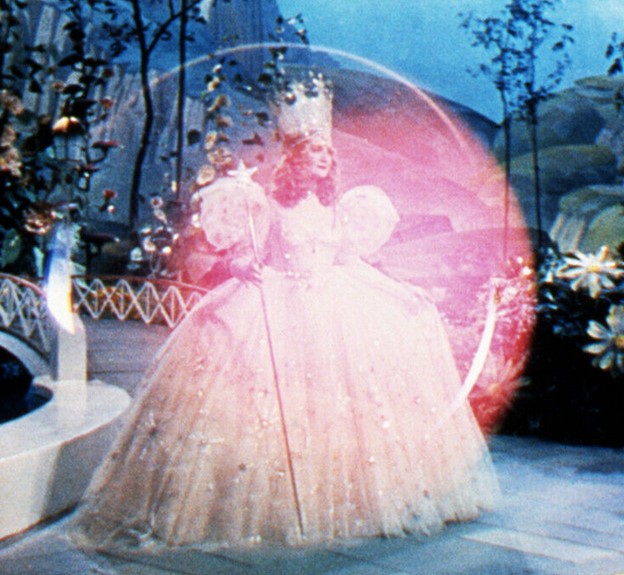
Glinda traveled to Oz in a sphere (photo courtesy of MGM)

Soap bubbles are spheres.  Sure, you aim to create those giant wibbly-wobbly monsters but for the most part you generate a cloud of perfectly spherical transparent globes, born on a whisper of air and extinguished seconds later.  I’m guessing soap bubbles have the shortest lifespans of all spheres.

When a college buddy visited several years ago, he brought a paperweight made by an artist near his hometown in New Jersey.  It’s a glass sphere with just the slightest bit of the bottom lopped off so it doesn’t roll off my desk.  I’ve picked up a lot of tchochkes over the years but I’m not letting this one go.  Did I mention spheres are cool?

Three years before he wrote Jurassic Park, Michael Crichton authored a novel called Sphere.  It’s about a group of scientists exploring a giant spacecraft sunk to the bottom of the Pacific Ocean.  In the spacecraft’s cargo hold: a mysterious sphere, determined to be extraterrestrial and literally mind-blowing.  Mark my words; spheres can be as terrifying as dinosaurs.  Read it.

Dimples can be cute.  Not this one.

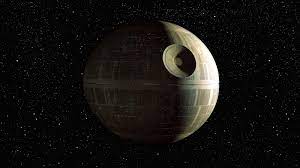
Star Wars focused on a giant spherical colony – the Empire’s “Death Star” – but the air went out of my perfectly round balloon as soon as I saw the giant divot on its side, not to mention all those channels and openings pierced by the X-wing starfighters.  In other words, the Death Star was a decidedly less-than-perfect orb.  So I applauded alongside everybody else when Luke Skywalker blew this sphere to kingdom come.

Here’s a place you wouldn’t expect to find a sphere: a Christian hymn.  In the first verse of This Is My Father’s World we have, “All nature sings and round me rings, the music of the spheres”.  The plural throws me off, because more than one sphere suggests more than just Earth (the entire solar system?)  Or maybe we aren’t singing about the planets at all.  A quote from August Rush seems relevant; the final line in the movie: “The music is all around us… all you have to do, is listen.”

Coming soon to Sin City

We’re starting to go round and round here (heh) so let’s conclude with the world’s largest sphere.  The Guinness Book writers will deem it so once the “MSG Sphere” opens in Las Vegas in a few months.  At 300 feet tall and 500 feet wide, the Sphere will dramatically change a skyline that’s already pretty dramatic, especially with 1.2 million LEDs on its surface generating all sorts of images and animation.  For concerts, sports, and the like, the Sphere can seat up to 18,000 spectators.  I plan to be one of them…  just as soon as I make it to Moon Marbles in Kansas.

Some content sourced from the CNN Travel article, “This futuristic entertainment venue is the world’s largest spherical structure”, and Wikipedia, “the free encyclopedia”.

Phantom Farewell

Tonight, hours after this post goes public, my wife and I will attend a local stage production called Lovesong.  It’s our first foray into the offerings of our community theater so we’re really looking forward to it.  Lovesong has a run of five evening performances and one Sunday matinee while it’s in town.  A check of the theater website indicates about 20% of Thursday’s seats have been sold.  By my calculation, that’s about 80% less than any Broadway performance of Phantom of the Opera.

Maybe you heard.  After 35 years and 14,000 performances, last Sunday the curtain dropped for good on Phantom of the Opera.  Its creator, Andrew Lloyd Weber, was on hand at New York City’s Majestic Theater to offer the cast and crew a personal farewell.  He claimed their final performance as the best he’d ever seen.  You’ll forgive Andrew for being a little sentimental after all these years.

Theater District, Midtown Manhattan, NYC

Whether the stage production, the 2004 movie, the glorious soundtrack, or even the books on which it was based, you’re familiar with Phantom.  It’s a captivating story; part haunting and part romantic, with a lead character who has you wondering, “Is he real or imagined?”.  Reading Phantom’s synopsis (which you can do here), I realize I overlooked some details of the story the one and only time I saw the show. No matter.  The sets and the songs will stay with me for life.

Phantom took my admiration of stage performances to an entirely new level.  The one time my wife and I saw the show, in San Francisco in 1997, it literally took our breaths away.  The only shows we’d seen prior were the “off-off-off Broadway” offerings; the kind where they recruit locals just to fill out the cast.  Phantom left us yearning for more of the best, including seeing something on Broadway (which we did years later with Les Miserables, deserving of its own blog post).

Phantom was also a technical marvel.  What other show boasted a giant chandelier swinging out over the audience and threatening to fall?  Or a staircase giving the optical illusion of descending several levels as the Phantom dragged Christine downward?  Or the subterranean lake the Phantom rowed across, where you swore you were looking at a giant body of water right there on the stage?

Every Broadway production seems to have three or four unforgettable songs.  Phantom was no exception.  The show kicks off with an orchestral version of “Phantom of the Opera”, turns sweet with Christine’s solo “Think of Me”, and overwhelms with the duet All I Ask of You and especially The Music of the Night.  The latter includes one of the most powerful notes I’ve ever heard, when the Phantom sings, “Close your eyes… and let music set you… FREE-E-E-E-E-E-E-E-E…!”

Deservedly, Phantom won the “Laurence Olivier Award” for Best New Musical in 1986, the Tony Award for Best Musical in 1988, and pretty much everything else it was nominated for.  Besides the London and Broadway productions, Phantom enjoyed nine worldwide tours and one revival.  Over its 35 years, Phantom employed 6,500 people and played to over twenty million theater-goers.  Phantom even had a short-lived sequel, Love Never Dies, debuting in London but never making it to Broadway.

Sadly, Phantom’s closing can be considered a casualty of the pandemic.  The show was suspended from March 2020 to October 2021 (when all Broadway productions ceased).  After reopening, attendance was sporadic because patrons were still hesitant.  Meanwhile, Phantom’s production costs continued at a staggering $1M/week, which eventually became unsustainable.

Phantom was originally slated to close in February but once theatergoers found out, the show experienced a brief resurgence and lasted another two months.  I don’t expect Lovesong to extend its little run at our community theater.  Thanks to Phantom of the Opera however, I’m simply excited for the potential of a wondrous stage performance.

Some content sourced from the CNN.com article, “Final curtain comes down on ‘Phantom of the Opera'”, and Wikipedia, “the free encyclopedia”.

Trees We’ll Never See

A few weeks ago my wife requested a landscaper’s estimate to remove six or seven trees from the back of our property. They’ll have to knock down a few lengths of perimeter fencing so they can get their big equipment through, and they’ll make several trips to the dump with all of the branches and stumps they’ll pile up.

It’s time for some of these to go

But when all’s said and done my wife will have the blank canvas she wants for a future riding arena for her horses.  Minus a few trees, of course.

The neighbor lady won’t be happy because she’s all about keeping the trees,  She drops hints here and there about “leaving things the way God intended”.  She also doesn’t seem to mind the endless waste the trees generate, whether falling leaves from the oaks or cones and needles from the pines. But here’s what I want to say to her. First, we have over forty trees on our property (and thousands in the community) so losing six is just a needle in the haystack. Second, we’ll replace those trees over time, in other areas of the property. We’re already making plans to switch out the rose bushes in our driveway circle for a Flowering dogwood.

Future Dogwood

I can still hear the neighbor lady pleading, “Dave, do you know how long those trees have been standing back there?”  Why yes, good neighbor, I’m sure some of them have been around a hundred years.  But just like the ones that came down so our house could be built, it’s time to get rid of a few more.  You sort of make an agreement with the forest when you live in it.  Let me take down a few of your trees and in return I’ll care for the ones that remain.

Amy Grant

Amy Grant, the well-known Christian singer (and most recent recipient of the Kennedy Center Honors), just released her latest single.  It’s perfect for the start of spring.  Trees We’ll Never See is a gentle, lilting ballad about the brevity of human life.  The song covers a lot of ground in its few verses: the things we learn from our parents, the challenges we face, the value of hard work, and leaving a legacy.  Amy also reminds us about the importance of faith and prayer (as she usually does).  But it’s the song’s title that sticks with me.  We’re all planting trees we’ll never see.

I remember talking to one of my cousins years ago, and hearing about a locked-down project he was a part of for America’s Space Administration.  I can’t recall the what, where, or why of it all, but I do remember the time frame to get it done.  Generations.  Meaning, my cousin (and his kids, and maybe even their kids) will be long gone before the work is finished.  My cousin is planting a tree he’ll never see.

Here’s my favorite lyric in the Amy Grant song:

Statues fall and glory fades but a hundred-year-old oak tree still gives shade. 

That’s powerful stuff in my book.  You can be somebody big or you can do something big, but what can you be or do to make the world a better place after you’re gone?  I’m still working on my answer to that question.

I first covered Amy Grant a few years ago, blogging about her single I Need A Silent Night.  It’s a frank anthem about seeking the Christmas spirit amidst the inevitable chaos.  I’m not always struck by Amy’s lyrics but I was then and I am again now.

This one stays

Here’s my final take on Amy’s song.  If you’re familiar with her music you know she’s been around a long time.  She released her first album in 1977, meaning almost fifty years and hundreds of songs.  And in that time Amy’s style moved a little towards pop and a little towards country, but never far from Christian themes.  Trees We’ll Never See could be straight out of Amy’s early years.  It’s like she tapped the roots of a tree she planted decades ago, just to create a brand new one for future generations.  I’ll keep that in mind whenever we plant our Dogwood.

Some content sourced from IMDB, “the Internet Movie Database”, and Wikipedia, “the free encyclopedia”.

Lost in a Dense Fog

When I first learned to play the piano, it was a challenge to master the weight of the keys. Weighted keys allow the piano’s sound to be louder or softer depending on how hard you press them down. Since fingers vary in size and shape it takes practice before the index and ring fingers (for example) generate the same volume on the keyboard. In hindsight, if I’d chosen the theremin over the piano I could’ve developed the technique much faster because this instrument makes its music without weighted keys. In fact, the theremin makes music without any touch at all.

I should’ve posted about the theremin closer to Halloween because it produces one of the eeriest sounds you’ll ever hear.  Click the red preview button on this list of Theramin Sound Effects and tell me if you disagree. Doesn’t your mind conjure up a ghostly apparition floating in the darkness of a haunted house?  The theremin provides the perfect soundtrack for all things scary. New York Times critic Harold C. Schonberg once described the theremin’s wail as “a cello lost in a dense fog, crying because it does not know how to get home.”  I like that (and it’s much classier than “pig squeal”).

How the theremin creates its unique sound involves too much science to keep your attention today (and more words than I want to type).  Suffice it to say, the instrument has two antennae; a looped one to control volume and an upright one to delineate pitch.  The player’s darting hand/finger movements – touching nothing but the air in between – create its spooky music. 

Now watch the following performance.  Seeing the theremin played is almost as jaw-dropping as listening to it.

I find the theremin to be a fish out of water next to traditional orchestra instruments, yet there are several other weirdos out there.  The bassoon features a tiny mouthpiece attached to a massive piece of black pipe and requires a deliberate overbite to create its nasal tones.  The glockenspiel (which gets points for a fancy name) is really nothing more than a metal xylophone.  The tam-tam is a giant gong, lucky to be struck more than once in a performance.  And the hand saw doubles as a musical instrument when you warp and release the blade (and sounds pretty darned close to the theremin).  But each of these outliers requires physical touch to make their sounds.  The theremin sings with mere jabs of the air.

[Author’s aside:  Every time I write theremin my brain wants to override with Theraflu, the over-the-counter cold and flu medicine (“Discover the Powerful Relief!”)  You don’t find many thera- words in the English language – therapy being the only other one I can come up with.  I’m happy to announce I need neither Theraflu nor therapy at the moment.]

The theremin was invented in the 1920s by Russian physicist Leon Theremin (whose life story involved a lot more than science).  RCA picked up the commercial production rights but the musical instrument never really developed a following.  Instead, its soprano voice showed up randomly in music and movies.  If you recall the Beach Boys’ hit, “Good Vibrations” you should also recall the theramin solo at the end of the song.  You’ll also hear its moan in the opening bars of Fleetwood Mac’s “Little Lies”.  But the theramin seems a more logical fit in the soundtracks of horror and science fiction movies like The Spiral Staircase, The Day the Earth Stood Still, The Thing from Another World, and more recently, Monster House.

My favorite account of the theremin (and with this I close) is a collection of melodies recorded and blasted into outer space back in 2001.  The effort was an attempt to communicate with other worlds, including Gershwin’s Summertime and Vivaldi’s The Four Seasons.  The name of this collection? First Theremin Concert for Extraterrestrials.  Seriously?  We chose the theremin?  Wouldn’t these classics have sounded a whole lot smarter on the instruments they were originally written for?  No wonder the (more intelligent) races out there haven’t stopped by our little planet to say hello.

Some content sourced from Wikipedia, “the free encyclopedia”.

Child’s Play

When I dove into piano lessons at the tender age of six, I learned the piano is “foundational”; a good place to start if your future destination is another musical instrument. The piano teaches concepts like keys, chords, and “Do Re Mi” in a straightforward way. My son learned about foundational instruments when he started the sax – it’s best to spend time on the clarinet first (the fingering is easier). But today I want to talk about real foundational instruments; the ones I dabbled in even before the piano. I can think of at least six (and one honorable mention).

My granddaughters – ages 2 and 4 – already attend weekly music classes (which brings me no small amount of joy).  They’re learning to sing and play simple rhythm instruments like drums and tambourines.  So I shouldn’t have been surprised this past weekend when the older one pulled out a kazoo and began “playing” for me.  Not a formal song or even a melody; just a handful of notes from what is technically a wind instrument.

Let’s call the kazoo Child’s Play (CP) #1.  The kazoo starts my list of six because it’s undoubtedly the easiest to play.  You simply hum into the mouthpiece and the kazoo takes care of the rest.  The kazoo’s buzzing sound is utterly annoying and after a few seconds you wish it would just stop (unless your granddaughter’s playing, of course).  The kazoo rides a fine line of the definition of a musical instrument.  To be honest, I’d rather just hear a person hum.

CP #2 – Triangle.  The triangle has often been described as “having no musical function and requiring no skill to play”.  A brutal (and fair) description to be sure, but consider this: the triangle is the only instrument on this list to earn a spot in a formal orchestra.  You’ll find the little guy in the orchestra’s percussion section (alongside the drums and other rhythm instruments).  The triangle also outclasses the kazoo since it’s cast from fancy metals (ex. beryllium copper, brass, bronze).

CP #3 – Xylophone.  The xylophone tops the triangle because it’s a percussion instrument that can also carry a tune.  There’s nothing more inviting to a small child than a set of colorful bars you can whack with mallets, and they make music!  Sure, you can hum “Twinkle Twinkle, Little Star” on the kazoo but it’s much more fun banging it out on the xylophone.  The xylophone gave birth to the vibraphone (an electronic version) and the marimba (a wooden version), both of which generate rich, warm, beautiful-sounding notes.

CP #4 – Recorder.  The recorder ranks a close second to the kazoo on the annoyance meter.  A child can pick up this woodwind instrument (the cheap plastic kind, not the fancy wooden one), blow into it, and instantly produce a note.  The same child then realizes he can change the note by covering/uncovering the recorder’s holes.  Now he can produce many notes.  And what’s wrong with many notes?  It just sounds like so much wailing.  Watch the video (if you can stand it) and tell me if you don’t agree.

CP #5 – Harmonica. The harmonica, another wind instrument, is also known as the “French Harp” or “mouth organ” (I prefer the former) and it comes in all shapes and sizes.  A child will find his first harmonica in the same section of the toy store as the kazoos and recorders – where you find anything made of cheap, colored plastic for less than a dollar.  Here’s what a child learns about the harmonica very quickly: he can fake it.  If you hum into the harmonica instead of just blowing, you’ll create a pretty good imitation of what it’s supposed to sound like.  You won’t fool anyone who really knows the harmonica but as a kid (that would be me), you thought it was pretty cool to whip out your harmonica and pretend you could play it.

CP #6 – Autoharp.  The autoharp made its first appearance at my elementary school choir classes.  It was the coolest instrument I’d ever seen.  It’s like playing the guitar (pick and all), only you press down bars to create the chords instead of using your fingers.  One kid would be chosen from the choir to strum the autoharp while the rest sang.  Playing the autoharp wasn’t cool, but being chosen to play it?  That was pretty special.

CP Honorable Mention – Hand Flute.  The hand flute is a fancy name for whistling through two fingers or through the hands.  I can’t remember when I learned to whistle (with just the lips) but I was certainly inspired by my dad, who gave the family a distinctive two-note greeting every time he walked through the door after work.  But I never learned to whistle through my hands.  The hand flute not only sounds cool (a lower note than a mouth whistle, like the cry of a nightingale) but it looks like you have a built-in musical instrument when you “play”.

Wrapping up this topic suggests I pick a favorite instrument from the list above, but the choice is impossible.  Each one is bonded to special memories from a long time ago.  If I had more space here I’d add others to the list (like the tricky piano horn).  Instead, let’s just agree the foundation of my piano play is a team of smaller, less-appreciated musical instruments.  Child’s play?  Hardly.

Some content sourced from Wikipedia, “the free encyclopedia”.

Curtains for Calls

Denver’s getting a new area code next month!

No, I’m not short on blog topics – stay with me here.

“983” will be added to 303 and 720 because Denver’s rapid growth means they’re running out of new phone numbers. But it’s not our state’s fifth area code itself that has my attention (by comparison, California blows us away with 36). It’s the 25 years “983” is expected to last before Colorado needs a sixth area code. Seriously? Will we even have phones in 25 years?

“719” reaches my corner of Colorado

“Area code” feels like an old-fashioned term. I associate area codes with the physical act of “dialing” (also an old-fashioned term). Sure, we need area codes to establish new numbers the first time we get smartphones (as preschoolers?) but then they become more labels than three-digit numbers, don’t they?  Think about it.  If you need to call someone these days, forget about their area code because you already have it in their profile.  You either tell your phone to call the person or you pull them up in “Contacts” and simply touch the number on the screen.  In other words, your phone dials the area code but you do not. Not anymore.

How to call someone in D.C.

Before smartphones, area codes had more prestige.  They were required to make “long-distance” phone calls, which meant you had to dial an extra three digits.  Outside of toll-free numbers, area codes conjured up exotic destinations, as if dialing halfway around the world instead of somewhere else in your state.  Area codes made you feel like you were calling someone important.  Today, they’re just labels.

If I really wanted to date myself, I could be talking about telephone exchange numbers instead of area codes.  KLondike, WRigley, and TEmpleton all referred to the central offices of telephone exchanges, with every phone number in an exchange starting with the first two letters of the central office.  PEnnsylvania 6-5000 was a memorable example because it connected you with the famous Hotel Pennsylvania in New York City, and Glenn Miller made the number into a popular swing jazz tune in the 1940s.  I wasn’t around in the 1940s (or even the 1950s), so enough with this topic.

Let’s flush “dialing” out of conversations about phones, shall we? Nobody “dials” anymore.  Dialing (for you preschoolers) hearkens back to a time when phones were phones.  You picked up the corded “handset” from the “cradle” on the “base”, nestled it against your jaw so the “receiver” lined up with the ear and the “microphone” with the mouth, toggled the “switchhook” for “dial tone”, and placed a call by spinning the rotary dial once for each digit in the phone number (got all that, kids?)  The dial would rotate back to its original position after each digit so you could dial the next one.  The whole process took 30-45 seconds, followed by a long pause, and then the “ringer” sounded on the receiving phone.  With that in mind, do you take the ease of your smartphone touchscreen for granted?  Of course you do.

[Author’s Note: The mechanics of rotary phones (base, dial, ringer, handset) made them HEAVY.  You can find movies from the 1940s or 1950s where a character uses a rotary phone as a weapon simply by clocking someone over the head with it.]

Dialing eventually gave way to “touch-tones” (thanks to the invention of the transistor).  The rotary dial was replaced with a grid of plastic pushbuttons, one for each digit.  Yes, we still “dialed” area codes but with buttons instead.  The buttons then migrated from the phone base to the handset.  The handset then went cordless.  Finally, the base disappeared altogether, and voila! – you had the first “mobile” phone.

Area codes make me nostalgic because I associate them with actual phone calls, one voice talking to another.  Today we’d sooner text than talk.  Delivered mail to your box on the street isn’t long for this world.  One of these days it’ll be curtains for phone calls as well.  Which re-begs the question about Denver’s latest area code.  Do we really need bright and shiny-new “983”?

The Jetsons don’t know “phones”

Phone calls of the future may simply be mind games where we’re able to “ring” each other brain-to-brain. A little far-fetched, you say?  Probably, and the idea of thought control makes me squeamish anyway.  Call it old-fashioned, but I hope we’re still talking about area codes in 25 years after all.

Some content sourced from Wikipedia, “the free encyclopedia”.

——————–

Lego Grand Piano – Update #19

(Read about how this project got started in Let’s Make Music!)

Today’s section of the symphony was short and entirely predictable.  Bag #19 – of 21 bags of pieces – assembled the rest of the piano’s top lid, shown completed in the photos below.  I simply picked up where I left off from last week’s Bag #18, continuing to build up the “wall” of the lid until it was complete.  It’s a repetitive process using pieces of similar sizes and shapes.  Now, all we are left with – my patient audience members – is the support structure of the piano lid (so it can be raised to its very elegant angle when open), and the free-standing pianist’s bench.

  Today’s build took less than twenty minutes. (I could’ve built Bag #20 as well, but why change my weekly pace this late in the game?)  As I was finishing the piano lid it occurred to me using Mr. Instruction Manual is a lot like using sheet music.  You shift your eyes between the manual and the piano itself constantly as you work, step-by-step-by-step.  Just as you would when playing the piano from a sheet of music.

Running Build Time: 13.3 hours.  Musical accompaniment: Brahams’ Violin Concerto in D. Leftover pieces: None again!

Conductor’s Note: Johannes Brahms had to be included in the list of musical accompaniments for my Lego Grand Piano build because, well, he’s one of the “bigs” in classical music. His Violin Concerto in D Major sits on Germany’s Mount Rushmore of violin concertos, beside Beethoven’s, Mendelssohn’s, and Max Bruch’s.  You, however, know Brahms best for his beloved lullaby “Cradle Song”, which starts “Lullaby, and goodnight, with roses bedight…”