Forty Days and Forty Nights

Tuesday seems like weeks ago.  Some call it “Fat Tuesday” (esp. those pancake-bingers partying hard at Mardi Gras) but to me, it’s just the last day of my food free-for-all.  My wife and I decided to give up “flour” for Lent (more on that in a minute) so Tuesday night we overate at our favorite Mexican restaurant.  Chips and salsa (the chips a hybrid of corn and flour).  Enchiladas and tacos wrapped in big, fluffy flour tortillas.  Sopapillas fried from puffy flour tortillas, drenched in honey.  Big, frosty margaritas to wash it all down.  It was kind of a fiesta final before Lent.

Now it’s Ash Wednesday as I type and I’m already obsessing about my forbidden flour.  This morning’s breakfast was hardly a fiesta – coffee and a protein shake.  Not a tablespoon of flour to be found anywhere.  My upcoming fever dreams will be liberally dusted with flour.  I’ll have fantasies of consuming an entire bakery case (shelves and all), eating my way out of a gigantic loaf of bread, or parking my mouth below the pasta-maker while endlessly turning the crank.  I’m looking at all the snow outside my office window right now.  It looks exactly like white flour.  It probably IS white flour.  Hang on, I’ll be right back…

As of today, we’ve officially started the season of Lent again. The next forty-odd days and nights are gonna be the usual challenge. Did you know the Old English translation of “Lent” is “spring season”?  How that computes with all the flour I’m seeing outside my windows right now is beyond me.  More to today’s point, Ash Wednesday is the deadline to answer the question, “What am I giving up for the next seven weeks?”

Lent = “no mas”

Lent, as even non-Christians know, is the religious season of preparation leading up to Easter.  It’s the time to reflect inward, with more attention to prayer and the Good Book, less attention to “shortcomings” (sins, people), more charitable service to others, and finally, a cruel little something called “self-denial”.  Self-denial is anything you want it to be, but the idea is to subtract from your daily equation: something you don’t need but you’ll struggle to be without.  Consider seven popular choices for 2021:

  1. Chocolate.  Maybe this one’s popular because it’s the easy way out.  Chocolate’s often in my desserts, occasionally in my protein shakes, and every-now-and-then in my mid-afternoon pick-me-ups.  But I can certainly do without the sweet stuff for forty days.  C’mon, people used to give up food for Lent!  A little chocolate’s not really what the Big Guy had in mind.
  2. Meat.  Christians forego meat on Lenten Fridays anyway but some choose to give it up the whole way.  Not me.  If I’m giving up flour, I’ve got to have meat-and-potatoes to soften the blow of all my bread, pasta, and baked goods currently on hiatus.  For Pete’s sake, I can’t even have chicken noodle soup!  What was I thinking?
  3. Smoking or Drinking.  Maybe these are your vices but they’re not mine, so either would be a Lenten cop-out.  I enjoy the occasional glass of wine or a beer, sure, but putting them on the shelf for the next month or so? Hardly a stretch.
  4. Coffee.  Okay, we just shifted from first to fourth gear.  There is nothing – NOTHING – to fill the vast and infinite void left behind by my morning cup of joe.  I understand self-denial but don’t turn me into a raging lunatic.  Force me to give up coffee for Lent and I’ll have a newfound respect for the next option, which is…
  5. Sleeping In.  Normally this would be another cop-out for me because I’m one of those annoying morning people.  But deny me my coffee and I’ll gladly hibernate until early afternoon – every day until Easter.
  6. Social Media.  I dropped Facebook late last year.  I’m only on Instagram a couple of times a week.  I have no Twitter feed.  I get it – it’s 2021 – but this one’s a no-brainer for me.  I mean seriously, just give me a call.
  7. Speaking Poorly about Others.  I asked my sister-in-law what she was giving up for Lent and she said, “I’m going to be nice to others”.  That gave me a good laugh until I found this item on the list.  My sister-in-law has plenty of company.  So, consider: could YOU give up airing dirty laundry for forty days?

One more thing about Lent. Each of the liturgical seasons has a color, and Lent’s is purple.  You’ll see a lot of it in churches, cathedrals, and flower arrangements this month and next.  I like purple enough, but ask me to name purple items and all I come up with is eggplant (the nightmare vegetable of my youth), figs (the nightmare fruit of my youth), grapes (I prefer the green ones), cauliflower (yep, it comes in colors), and lavender and amethysts, both of which I have little use for.  Purple is about as smart a choice for Lent as giving up flour.

In conclusion, I could use your prayers as I endure my forty-day flour fast.  By late March my car tires will look like doughnuts and my paperback novel a nice, thick Pop-Tart.  Toss me a Frisbee and I’ll slather it in syrup and devour it like a pancake.  Put your pasta under lock and key.  Guard your pizza with your life.  I’m coming for your cupcakes.

Some content sourced from the Delish.com article, “7 Things To Give Up For Lent That Go Beyond Food”, and Wikipedia, “the free encyclopedia”.

Fine Print

I’ll never forget the first time I saw the movie, Jurassic Park. I’d read the Michael Crichton novel so I already knew the story, but I still couldn’t wrap my mind around that first dino scene, where a brachiosaurus casually munches on the uppermost leaves of a forty-foot tree.  The gigantic creature was so lifelike I thought, “Where’d Steven Spielberg get a dinosaur?” In my defense, computer-generated imagery (CGI) was brand-spankin’ new back then.  A ferocious T-Rex looking and moving like the real thing was still jaw-dropping in the 1990s. And I’m having the same reaction to the stuff rolling off 3D printers right now.

A “printed” toy tugboat

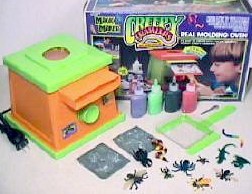
If you’re like me you haven’t paid much attention to 3D printing.  You see some of the items a 3D printer can generate and they seem like child’s play.  In fact, 3D printing reminds me of a 1970s toy called “Creepy Crawlers”.  You had these tubes of colored goop you squeezed into metal molds, and then the molds went into an electric oven.  The goop would grow from flat to 3D with heat, and suddenly the oven was spilling out all kinds of bugs and spiders you could drop on your friends.  (There was also consumable goop called “Incredible Edibles”; products to compete with whatever the girls were making in their Easy-Bake ovens).

But I digress.  Here’s my 3D printing naivete in a nutshell: I still think my 2D printer is the more impressive technology, cranking out high-resolution photos and perfectly addressed envelopes.  I mean, whatever would I need a third dimension for?

Yep, I am seriously naive about 3D printing.  The scope of this topic is mind-boggling if you really take the time to understand its potential. Here’s a good example.  Picture a printer as big as your living room.  Picture a printer cartridge of concrete instead of ink.  Now watch the printer build your living room, one horizontal layer at a time.  The printer can also build the rest of your house.  Just add plumbing and electric when it’s done.

“Printed” storage crates

Without getting too far into the weeds, let’s define 3D printing for what it really is: additive manufacturing (AM).  Here’s an easy way to picture the AM process.  When you build a log cabin you lay out the entire foundation of logs for the house – with breaks for the doors – before you add the next layer of logs.  You work your way up a layer of logs at a time, keeping those breaks for the doors, adding breaks for windows, pipes, and such, completing the structure with a sloping roof on top.  Perhaps you add a fireplace in the process; again, layering bricks on top of bricks until you’ve reached the top of the chimney.

That’s pretty much how a 3D printer works.  It “pictures” an object in horizontal layers and “prints” it from the ground up.  3D printing has been around longer than you think.  3D printers were developed as early as the 1970s (preceding your inkjet 2D printer!).  The early versions just had to be manually programmed.  Once we attached a computer and software, 3D printing really came into its own.

Watch the following video of a 3D printer confidently layering a basket weave – it’s mesmerizing:

https://upload.wikimedia.org/wikipedia/commons/transcoded/5/5d/Hyperboloid_Print.ogv/Hyperboloid_Print.ogv.360p.vp9.webm

The products speak for themselves, of course.  A shortlist of the more cutting-edge printed creations gives you an idea of where our world is heading:

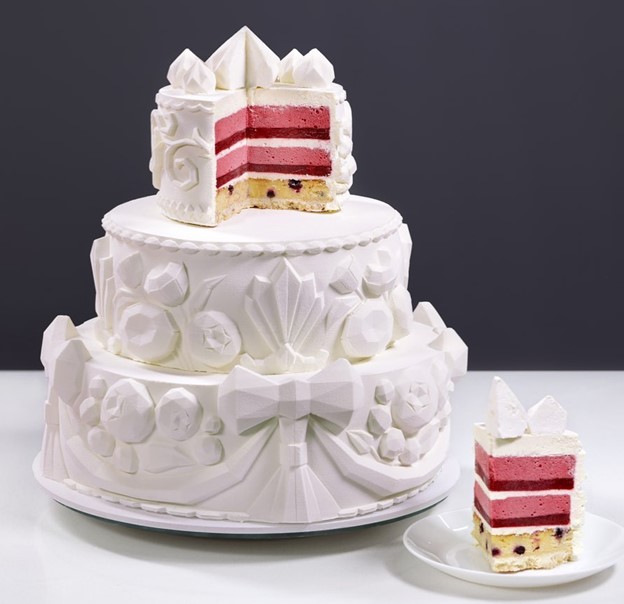
  • Cakes and pastries – The “ink” is baked goods in one nozzle and frosting in another.  Design it on your computer screen and then “print”.  It’s like the Easy-Bake Oven on steroids.  Only you don’t need the oven.
    3D-printed confectionery from Ukrainian chef/architect Dinara Kasko
  • Bones – No, not some plastic or other polymer designed to replicate bones, actual bones.  It’s called bioprinting – the fabrication of natural tissue using cells and other building blocks, and it’s coming soon to a clinic near you.  Don’t worry how long a broken bone will take to heal; just replace it!
  • Buildings – Forget about building that log cabin one layer at a time.  Your 3D printer will do the whole job for you (and it’ll still look like a log cabin).  Your printer can also build sturdier houses out of concrete.  This one’s on the market in Riverhead, New York, for $300K.
  • Vehicles – 3D printers have already created boats, kayaks, and most of the makeup of cars and trucks.  Long ago I was impressed with the robotics of the Ford Motor Company, employed on a long assembly line to build cars one part at a time.  A 3D printer can essentially do the same job standing still, no assembly line required.
  • You – I could speculate on the potential for a full bioprint but let’s avoid that scary future for now and just say, a 3D printer can create a figurine to look exactly like you.  Think of it as printing a 3-D photograph.

If your mind is not blown by what you’ve just read, consider this: 3D is already passe.  That’s right, we’ve already moved on to 4D printing.  4D – at least with printing – refers to materials that can change shape with time, temperature, or some other type of stimulation.  A good example would be a printed window shade, sitting tight and virtually unnoticed at the top of the window in daylight but expanding to full cover as darkness falls.

Don’t know about you but this level of technology makes my head hurt.  When I’m done with this post I’m gonna push “print” and generate a nice 2D copy for my files.  Oh, and maybe watch Jurassic Park again.

Some content sourced from the 7/24/2020 Forbes article, “What Can 3D Printing Be Used For?”, and Wikipedia, “the free encyclopedia”.

Chocolate Cremè de la Cremè

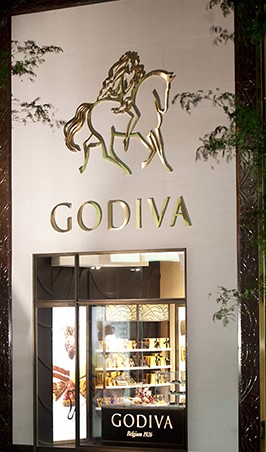
Godiva, the incomparable Belgian chocolate maker, is closing every one of its retail shops in North America.  Maybe you’re blaming the pandemic but Godiva claims foot traffic at shopping malls – where most of its boutiques are located – “plummeted” over the last few years.  I’m sorry to see Godiva go.  Mind you, it’s not that I make a habit of buying $3 truffles.  It’s more the idea that I could if I wanted to.

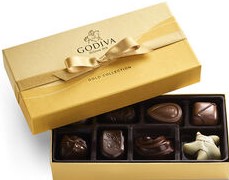
Godiva is the cremè de la cremè of chocolate.  Their products are born of a family business dating back to 1926.  Their Truffe Originale, “an intense dark chocolate mousse in fine dark chocolate, rolled in pure cocoa powder”, is the standard by which most Belgian truffles are measured.  Godiva’s three chefs are profiled on its website (I discuss one of them in my post Confection Perfection), and endeavor to maintain the very high standards of Godiva while churning out new and different creations.  It’s no wonder Godiva isn’t considered a “candy store” or a “chocolate shop” but rather a chocolatier.  Only the very best get a label like that.

Godiva’s handcrafted “gold box” assortment

To me, Godiva chocolate is a taste of heaven on earth.  But it’s also a taste of a lifestyle – one most of us will never afford.  Godiva has me picturing mansions (not houses), yachts (not boats), private planes (not the middle seat in coach).  Godiva is a brief, delicious dip into the behind-the-gates world of the uber-wealthy.

I’ve stepped into a Godiva chocolatier exactly twice in my life.  The first was in college, after a visit to the Rizzoli bookstore at exclusive Water Tower Place in downtown Chicago.  After spending too much money at Rizzoli I was in the perfect mindset for Godiva (which was right next door).  I still remember selecting a single truffle from the glass display case.  The petit woman behind the counter wrapped up my tiny purchase in box, bow, and bag, as if I’d just purchased a fine piece of jewelry. She bid me a fond farewell.  I walked out of there feeling, well, special.

Would you pay $20 for six truffles?

My only other visit to Godiva was more recently with my wife and daughter, on a Saturday at one of Denver’s nicer shopping malls.  We’d just come out of Starbucks, coffees in hand, and there beckoned Godiva.  After much deliberation, we spent the better part of $10 and walked away with three truffles.  I’m sure they were elegantly wrapped.  I’m also sure they were delicious.  But with Godiva, it’s more about the taste of something beyond your means.  That taste may be more satisfying than Godiva chocolate itself.

Tiffany & Co, NYC

Tiffany is a comparable experience (as I wrote about in my post All That Glitters).  Walk past the front-door security guard into their multi-level department store in downtown Manhattan.  Your first thought will be either, “I don’t belong here”, or, “I’m underdressed”.  Ooh and ahh at their lavish necklaces, bracelets and rings, but don’t expect to see price tags.  Like Godiva, Tiffany’s best is behind glass and you have to ask a staff member about the cost.  My wife and I made it to Tiffany’s fifth floor before we found something we could afford – a pair of ceramic coffee mugs.  At least we also walked away with their signature blue gift boxes.

Think twice before entering!

Then there’s Prada, the Italian fashion house famous for its luxurious leather handbags and shoes.  My twelve-year-old daughter dragged me into their Madison Avenue boutique once (past the requisite security guard) but I realized our mistake as soon as we entered.  Prada displays maybe a dozen items in a single museum-like showroom, each carefully positioned on an individually lit shelf.  You are invited to sit on the central couch and offered a choice of beverage.  Then a person brings you items of your choosing (but don’t touch!).  Once I realized Prada purses start at $1,000, I asked my very disappointed daughter if maybe she’d like to go for ice cream instead.

Godiva’s tiny “biscuits”… $0.75 ea.

Godiva’s North America retail shops will be gone by March, but you’ll still have other options to purchase.  You can find small displays of their products at the cash registers of upscale department stores.  You can order most of their delicacies online (including “Gold Box” assortments, which cost more than you can afford).  You’ll even find Godiva’s “Signature Mini Bars” at lowly retailers like Target and Walgreen’s.  But let’s face it, Godiva is as much about the experience as it is the chocolate, and I’m just not gonna feel uber-rich when I’m at Target.

Some content sourced from the 1/24/2021 CNN.com article, “Godiva is closing or selling all of its stores in the United States”, and Wikipedia, “the free encyclopedia”.
It’s Raining DONUTS!

Pikes Peak, the majestic 14,000′ mountain nestled in the Colorado Rockies west of Colorado Springs, is getting a major makeover.  Okay, maybe not the mountain itself.  Her nine-mile Cog Railway reopens in 2021 with new train cars and tracks to carry visitors to the summit.  Her Manitou Incline, the one-mile ladder-like hiking trail up her eastern flank, has been improved for safer climbing.  Finally, her Summit House visitor center is being replaced – sixty years after the original – with a state-of-the-art glass jewel.

“America’s Mountain” in the Colorado Rockies

Local folks like me only have one concern with all this Pikes Peak activity: the donuts.  What’re they gonna do about the donuts?

You can drive, hike, or take the Cog Railway to the top of Pikes Peak, but you’ll always stop in at the visitor center once you get there.  It’s the only thing you’ll find on the tiny summit beside the stunning views of the world below.  Maybe you’ll purchase a supremely tacky, overpriced souvenir while you’re there.  Maybe you’ll need a bathroom break.  Whatever you do, you will buy a donut.  Pikes Peak’s “World Famous” treats are sort of a reward for making it to 14,000 feet.  Okay, so they’re not Krispy Kreme but they’re not terrible either.  Just eat them at altitude.  Once you begin your trek down the mountain they collapse into a mushy mess and they’re awful.

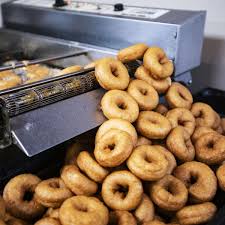
When I first realized the Summit House was getting demolished instead of remodeled my thoughts went straight to the donut machine.  What are they gonna do with the donut machine?  The “Belshaw Mark VI Donut Robot” delivered its final batch last week before someone pulled its plug.  The Mark VI is a mechanical marvel.  It can produce 700 donuts an hour (the summertime demand for Pikes Peak).  The Mark VI endlessly dispenses the raw dough, four rings in a row, and creates donuts through a conveyer system of automated frying, rotating, and dispensing.  Leave it on for twenty-four hours and it’ll pile up 17,000 of the little buggers.

Meanwhile, the new visitor center is getting a new donut machine.  Maybe it’s the latest model of Belshaw’s Donut Robot and makes 1,000 donuts an hour.  Maybe the donuts taste more like Krispy Kreme.  Whatever it can do, this machine is a beast.  It’s so big they had to use a crane to lift it into the building before they even closed up the walls.

If I’m the old Mark VI Donut Robot I’m not happy about being replaced, not at all.  I mean, c’mon! I faithfully produced thousands of donuts day in and day out for decades!  I’m not yesterday’s news just yet!  Why not let me keep my job instead of giving all the love to a newer model? No siree Bob, I’m not gonna take it.  I need to make some sort of statementY’know, demonstrate the extent of my discontent.

OH MAN, can’t you just picture it?  Standing down on the streets of Colorado Springs one morning you suddenly hear this massive BAH-BOOM from the direction of Pikes Peak.  Sidewalks start shaking and people start pointing.  You look up to the mountain and there’s a freaking volcano blowing its top.  A huge column of fire rises to the heavens.  The sky is instantly air-brushed with white smoke.  There’s ash raining down in every direction.  Except, wait, it’s not ash it’s…. it’s…. it’s donuts.

The rain of donuts, of course, is the Mark VI Donut Robot run amok.  In its desperate attempt not to be overlooked it starts making donuts like crazy.  Four at a time, plop-plop-plop-plop, fry, rotate, dispense.  Faster and faster and faster, until its conveyor builds up a big head of steam and starts to break apart.  Then the whole thing just blows up.  Boom

Down and further down come the donuts.  Rolling by the hundreds along the hiking trails.  Bobbing down the rivers and creeks like mini inner tubes.  Ricocheting off the pine trees as they come back to earth until they just go poof! in a cloud of powdered-sugar smithereens.  Decorating the rocks and trees with a cream-filling look of snow.  Piling up in the low spots like generous helpings of oversized Cheerios.  Clogging up the cog railway so the only way the train gets to the summit is for the riders to get off the train and start eating.

The Mark VI may have imploded but man what a way to get noticed, right?

Truth be told, there’s an aftermarket for Belshaw’s Mark VI Donut Robot.  Do the Google search if you don’t believe me.  A used one runs $15,899 plus $600 for shipping, and don’t look now; they take credit cards and toss in a limited warranty!  Just think what you could do with 700 donuts an hour. All you have to do is click the “Buy It Now” button on the website.  But one more thing before you do.  Ask the seller if their Mark VI has given them attitude lately.  Like it used to be on a majestic mountaintop or something wacky like that.

Note: This post would not even be a whisper of a thought were it not for Robert McCloskey and his wonderful children’s book, Homer Price.  In Homer’s short story “The Doughnuts”, a restaurant donut machine goes bonkers and starts dispensing hundreds upon hundreds.  How the town resolves this donut deluge makes for a great story.  Thanks, Robert.

Some content sourced from the KKTV 11 News story, “Final Batch of Pikes Peak Donuts…”, and the Thrillist.com article, “You Can Only Get These Incredible Donuts at the Top of a Mountain in Colorado”.

Is It Live or Is It Memorex?

It’s the wood chipper for you, buddy.

New Year’s Day has come and gone (and a warm welcome to you, 2021), which means it’s time my wife and I take down the Christmas tree. For some, taking down the tree means disconnecting the branches from the trunk, the trunk from the base, and packing the whole thing into a cardboard box to be used again next year. For us, taking down the tree means lifting it off the stand, hauling it outside to the truck, driving it over to the drop-off lot, and donating $5 to fund the recycling. Yes, this year – as with all of my years – the Christmas tree is real, not artificial.

I’m not here today to debate real vs. artificial Christmas trees.  They both have pros and cons and your choice rests on where you live, your budget, and assorted other reasons.  For me, a real tree is simply a tradition I refuse to give up.  Picking out a tree with my family was a big deal when I was young.  There was something magical about living in sunny Los Angeles and watching dozens of pine-scented snow-dusted trees being unloaded from Canadian railcars.  Never mind we paid a little extra to have our tree “flocked” (adding a touch of spray-painted artificial snow).  It was still a real tree.

Memorex: Sound that “blows you away”.

Real vs. artificial goes way beyond Christmas trees.  When I consider one next to the other, I always think of Memorex.  In the 1970s and ’80s the Memorex Corporation produced audio cassettes, the precursor to the compact disc.  In their TV commercials Memorex included singer Ella Fitzgerald belting out a note powerful enough to shatter a wine glass.  Then they’d play a recording of Ella’s performance and the wine glass would still shatter, begging the question, “Is it live, or is it Memorex?”

Real vs. artificial also recalls Milli Vanilli, the R&B duo from the late ’80’s.  Milli Vanilli made it big with the album “Girl You Know It’s True”, then won the Grammy Award for Best New Artist.  But years later the world would find out Milli Vanilli never sang anything.  Instead they lip-synced their way to fame; their albums the voices of studio performers.  Milli Vanilli returned the Best New Artist Grammy shortly after that.

Let’s visit real vs. artificial a little closer to home; say, the kitchen.  As much as my wife and I seek whole, organic, locally produced foods, we can’t help including a few outliers.  I just went through our pantry and came up with a few good examples:

  1. Aunt Jemima syrup.  This pancake topper – destined for rebranding in the name of racial equality – is nothing but high fructose corn syrup, water, and a whole lot of chemicals.  The “Natural Butter Flavor” variety blatantly advertises “contains no butter”.  You’ll find all the pure maple syrup you want in Vermont but you won’t find a drop in a bottle of Aunt Jemima.
  2. Kellogg’s Pop-Tarts.  A long time ago Pop-Tarts contained real ingredients (else my mother wouldn’t have put ’em on the pantry shelf as kid snacks).  Today’s Pop-Tarts are enriched flour and a bunch of scary-sounding ingredients developed in a lab.  It takes half the height of the box to list everything that goes into a Pop-Tart.
  3. Kraft Mac & Cheese.  Make a bowl of pasta, top it with melted cheddar, and Voila! you have macaroni & cheese in two ingredients.  Kraft Mac & Cheese needs twenty-one to accomplish the same dish.  But man, don’t it taste great?
  4. Ritz Crackers.  More enriched flour plus lab ingredients.  (Maybe every food can be made from enriched flour?)  The Ritz Crackers box includes a warning, “Contains wheat, soy”.  Ha, if only that was all it contained.
  5. “Real” Bacon Bits.  My mother-in-law left this bottle of horror behind when she brought a salad for Christmas dinner.  But guess what?  It really is made of bacon (okay, and chemicals).  I must’ve been thinking of other brands, where the bits are actually “flavored textured soy flour”.  Oh ick.

Back to our real Christmas tree.  After the gifts were passed around and opened, we discovered one more, looking a little embarrassed behind the branches.  It was a brightly colored basket, the kind all dressed up with a cute wooden box and Christmas bow, overflowing with food items and protected in plastic wrap.

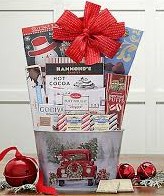
But here’s the rub.  We opened the basket and found a whole lot of nothing.  Generic cookies, coffee, candy, and a couple of cheap Christmas mugs, arranged carefully so as to suggest the basket contained much more.  To add insult to injury, none of the food items were name-brand (except for a handful of Lindor truffles).  The cookies and candy were made with a ton of artificial ingredients.  The coffee was so generically packaged it had me wondering if it was even coffee.  The whole basket made me think “Memorex”.

This is where I jump to a discussion about artificial intelligence, but your real brain needs a rest so that’s a topic for another day.  Meanwhile, my wife and I will keep heading out every Christmas to tree lots (or the woods) to find the perfect one.  “Artificial” may sneak into other parts of our lives now and again but at Christmas, we’ll always be keeping it real.

Some content sourced from Wikipedia, “the free encyclopedia”.

The Original “Black Friday”

The first two weeks of November were jammed with “un-often” events this year.  For starters the bright light of Halloween’s blue moon spilled into the wee hours of November 1st.  During those same wee hours most of us lost Daylight Savings Time.  The very next day (Monday) marked the official arrival of Hurricane Eta to our shores. The day after that we voted in a presidential election. A week later we staged the Masters golf tournament (it’s supposed to be in April, people).  Then we had another hurricane (Iota), the first time we’ve had two in November.  Finally, we spiked positive COVID-19 tests in record numbers after months of declines.

That’s a pile of rarities in a short amount of time.  So why not add one more to the heap?  Friday the 13th.  I missed it completely.  Maybe you missed it too (and you’d be forgiven with all those other distractions).  Last Friday – the 13th – came and went without an ounce of bad luck to blog about.  Ironically, the only story I can share brought good luck.  I placed a carry-out dinner order last Thursday night and the restaurant gave me someone else’s food.  When I went back for the right order they told me to keep both.  As a result my Friday the 13th dinner was unexpectedly “on the house”.

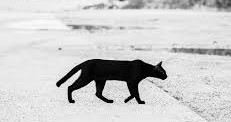
Are you superstitious?  I’m not – not in the least.  I have no problems with sidewalk cracks, leaning ladders, or black cats. I don’t lose sleep anticipating the third occurrence of a bad thing.  I gladly pick up a penny (it’s free money after all) but with no expectations of luck.  I’ve broken mirrors (deliberately, in remodel projects) and wishbones (on a whim, in turkeys).  I’ve even knocked on lots of wood (mostly doors) but hey, my life goes on as usual.

Leonardo da Vinci’s masterpiece

As for Friday the 13th’s “un-luck”, its long-ago origins are suspiciously weak.  The most common comes from the story of Jesus in the Bible: thirteen individuals at the Last Supper (Thursday) followed by Jesus’ foretold crucifixion the following day.  Other theories point to fighting gods in mythology and fighting knights in the Middle Ages.  None of these carry water in my book.  Seriously, how did misfortune come to be associated with the collision of a particular day and date?

I read up on calendar averages, thinking the 13th falling on a Friday was as uncommon as a blue moon.  Maybe the 13th favors the other days of the week instead?  Nope, try the reverse.  Over a significant number of years the 13th falls on Friday more than Saturday, Sunday, or any other day of the week.

To add a helping of confusion, look no further than Spain or Greece.  These countries have an irrational fear of Tuesday the 13th.  Italy?  Friday the 17th.  Imagine watching America’s famous horror movie franchise in any of these places and wondering, “so… why do they call it ‘Friday the 13th'”?

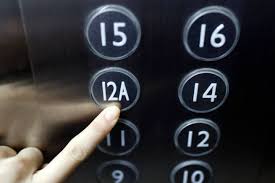
No matter my efforts to undermine this superstition, the effects are real.  Over 17 million Americans admit to a dread of Friday the 13th.  Some avoid airplane travel and others won’t even get out of bed.  Buildings remove the thirteenth floor from the stack (which is a lot of demolition for a superstition, isn’t it?)  Elevators conspicuously delete the “13” button.  Numbered seats in stadiums go 10, 11, 12… 14, 15, 16.

For some of you, Black Friday means bargains.  For others, Black Friday means “13”. If nothing else, I’ll give you a couple of words to describe the circumstance of the latter’s irrational fear.  If you’re afraid of the number 13 you have triskaidekaphobia.  If you’re afraid of just Friday the 13th you have paraskevidekatriaphobia.  (Me, I only have acrophobia.  At least your phobias sound more sophisticated.)

Fact check.  This post was published close to the midpoint between Black Friday (the 13th) and Black Friday (the retail binge).  Okay-y-y-y.  This post also contains exactly 666 words.  WHOO boy.

Let me repeat… I am NOT superstitious.

Some content sourced from Wikipedia, “the free encyclopedia”.

Halloween’s Element of Surprise

Same ol’, same ol’… sigh…

Our grocer dedicates an entire aisle to Halloween this time of year.  It’s a pile-on of kid costumes, yard decor, plastic jack-o’-lanterns, and party supplies.  You’ll also find massive bags of assorted small candies, enough to load up your front door bowl with a single pour.  These treats are individually wrapped and brand-familiar to carefully conform to the holiday’s “safe standards”.  In other words, there’s no element of surprise in all that sugar.

When was the last time you were treated to a little something you didn’t expect?  Here’s a good example.  My wife and I traveled to Texas last weekend to visit our son.  As we settled into the hotel room we noticed a tray on the table with two bottles of water and a couple of wrapped candies.  Not so unusual.  But then we read the little card next to the tray.  Not only was the water free of charge (hotels typically stick it to you with bottled water) but the candies were handmade salted caramels from a local culinary kitchen.  Suddenly I’m thinking, “What a nice hotel!”

Perhaps you know a few other hotels with the same gesture, as Doubletree does with its chocolate-chip cookies (see Calories of Contentment for more on that).  But unlike our Texas hotel, Doubletree always goes with the chocolate-chip cookies.  Stay there enough and you come to expect them.  No surprise.

That, in a nutshell, is what’s wrong with Halloween today.  You still get the occasional trick (TP in the trees?  Shaving cream in the pumpkins?) but the “or-treat” routine has been reduced to just that – routine.  Think about a child’s anticipation for the big night.  Hours spent making sure their costume stands out in a crowd.  Miles spent covering sidewalks and front walks.  Fingers spent on doorbells and knockers, all so they can get, what… another fun-size Hershey bar?  Where-oh-where is the element of surprise?

Mom’s Halloween treats

Back in the “ol’ days” (because I’m feeling old today) a lot of front-door Halloween treats were homemade.  People handed out family-recipe popcorn balls and caramel apples.  My mother made the frosted ginger pumpkin cookies you see here.  A guy down the street dressed as Dracula and manned a little round grill in his driveway, handing out barbecued hot dog bites on toothpicks.  You never knew what you’d walk away with until you made it to the next house.

A mini pumpkin has zero HTV

Creative treats only boosted the night’s excitement back then.  I remember catching up with friends in the darkened streets to compare the collective efforts in our bags.  More importantly, the wide variety of treats upped the ante on what one candy-ranking opinion piece referred to as “HTV” or Halloween Trade Value.  After all, the most important event of the night was the post trick-or-treat trade, right?  You’d spill the contents of your pillowcase into a big pile on the floor and the back-n-forth would begin.  “I’ll give you three rolls of Smarties and a Baby Ruth for your Charleston Chew”.  Yes, friends, those were the days.

Everything changed when Halloween lost its young-and-innocent status.  Parents inspected treat bags to filter out anything remotely suspicious.  Homemade items only made it as far as the next-door neighbor’s kids or backyard Halloween parties.  Suddenly a treat didn’t pass muster if it wasn’t recognizable and wrapped.  The creative license of trick-or-treating has expired.

But hold on now.  What about the other 364 days of the year?  Can’t the element of surprise show up on one or more of those?  Can’t we still be caught off guard… in a good way?

Here’s an attempt.  At least two companies offer monthly treats by subscription and you have no idea what’s coming.  SnackCrate describes its product as “a world of snack surprises – monthly”.  TryTreats advertises “each month’s box will feature snacks from a different country in the world.  The country you’ll receive is a secret until you receive the box!”  Kind of a spin on my ol’-days Halloween nights, don’t you think?

Speaking of treats I think the dog got wind of this topic.  The other night I prepped his dinner with the usual two cups of kibble topped with a few bits of lunch meat.  He ate the bits but left the kibble.  He’s never done that before.  Maybe he’s bored with it?  I need to shake things up.  Throw in a few doggie treats.  Add the ol’ Halloween element of surprise and get his tail wagging again.

Standing on Tacos

Red’s Giant Hamburg – Springfield, MO – may be America’s first drive-thru restaurant. Red’s opened in 1947 from a converted gas station, closed in 1984, then opened again last year. In the United States it’s not really “fast food” without the drive-thru, is it?  McDonald’s certainly agrees, as does Burger King.  But Taco Bell, they think outside the tortilla.  Just last year the Bell opened a taco-themed hotel and resort in Palm Springs, CA.

A taco-themed hotel and resort – really, you ask?  Yes but more on that in a minute.  It helps to cover some of Taco Bell’s earlier adventures first.  Founder Glen Bell started his restaurant in the 1960s as the copycat of a local Los Angeles walk-up taco stand.  The concept of “American-Mexican fast food” quickly franchised to 100 locations in less than five years.  Today you’ll count 7,000+ Taco Bell locations in two dozen countries.  Two billion customers frequented the Bell in 2019.

I’ve always admired Taco Bell… er, from afar.  I can’t tell you the last time I navigated TB’s drive-thru (probably my kids’ high school days).  Don’t get me wrong, I love Mexican food.  But eating at Taco Bell is like supplanting an Italian artisan pizza with a Little Caesars.  In other words, I prefer my Mexican at authentic Mexican restaurants.

But there’s no denying Taco Bell’s success.  They chose six or seven essential ingredients and spun an entire low-cost menu out of them.  Take the $1.49 soft taco.  Four components: seasoned beef, lettuce, and cheese, inside a soft tortilla.  Add sour cream, tomatoes, or other options, but you’ll pay $0.40 or more for each.  The only freebies are the hot sauce packets at the pick-up window.

From the Taco Bell soft taco evolved an entire zoo of animales.  You have the Taco Supreme, Chalupa Supreme, Cheesy Gordita Crunch, and (for the really adventurous) the Nachos Cheese Doritos Locos Taco Supreme.  From the Taco Bell burrito you get the Burrito Supreme, Grilled Cheese Burrito, Beefy 5-Layer Burrito, Quesarito, and Crunchwrap Supreme.  Again, all of these wild animales come from pretty much the same small set of ingredients.

Taco Bell’s successful run endures at a time when foodies lean more towards farm-to-table organic.  So why does it still work?  Marketing.  Taco Bell’s all about creative thinking.  Some examples:

  1. Taco Bell branded their hot sauce, taco shells, chips, and shredded cheese, and you can find them on your supermarket shelves.  No drive-thru necessary.
  2. TB teamed up with several pro sports franchises to offer free food based on individual performances (i.e. steal a base, score so many points, score so many runs = free tacos).
  3. In 2001, when the Mir Space Station re-entered the earth’s atmosphere, Taco Bell floated a giant target in the Pacific Ocean and promised a free taco to every American if a bit of the space station (designed to break up) hit the target.  (No such luck.)
  4. In 2013, Taco Bell designed a waffle taco, filled it with scrambled eggs and sausage, added a side of syrup, and called it breakfast.  The waffle taco is no longer on the menu but breakfast still is (if you consider a Hash Brown Toasted Burrito “breakfast”).
  5. In 2016, Taco Bell test-marketed a Cheetos Burrito.  That’s all you really need to know, right?
  6. In 2017, Taco Bell partnered with Lyft to offer “Taco Mode”.  Rides from 9pm-2am included a stop at Taco Bell.

Which brings us to the Taco Bell hotel.  In the summer of 2019, TB converted an existing Palm Springs resort into a live-in advertisement, “the biggest expression of the Taco Bell lifestyle to date”, according to its Chief Global Brand Officer. 

Not only did they slap the TB brand all over the resort, but they also offered the full Taco Bell menu, poolside cocktails “infused with a Taco Bell twist”, a “not-to-miss gift shop” (including a Forever 21 fashion line of Taco Bell apparel), and a salon where nail art and hairstyles were decidedly “Bell”.  The resort was a pop-up, only intended to operate for a few days, but reservations sold out within two minutes of being offered.

“Gidget the Chihuahua”

Taco Bell has one more menu item I didn’t mention above: the Spicy Potato Soft Taco.  Er, had.  The Bell discontinued it but not before Bryant Hoban (of O’Fallon, MO – not far from Red’s Giant Hamburg) purchased and froze three of them.  A few weeks later Hoban sold the “mint condition soft tacos” through Facebook.  For $70.  Each.  With that kind of endorsement, it’s safe to say the Bell will be ringing for many years to come.

Some content sourced from Wikipedia, “the free encyclopedia”, and the Fox News article, “Taco Bell is opening a taco-themed hotel and resort”.

Loony Binge

I know very little about Oscar Wilde, except he was a 19th-century Irish playwright famous for “The Picture of Dorian Gray”. Wilde lived to be just 46, producing his best works in the last ten years of his life. He was often quoted, lacing words of wisdom with pretty good wit. Here’s one of Wilde’s best: “Everything in moderation, including moderation”.

Poisonous snakes?

Perhaps you caught this story from last week’s headlines: “Man Dies from Eating More Than A Bag of Licorice a Day”.  (I mean, who wouldn’t catch a story like that, right?)  It seems a Massachusetts construction worker with a daily candy habit switched from red to black licorice, and a few weeks later he went into cardiac arrest.

After futile attempts to revive our candy man, medics discovered he was experiencing ventricular fibrillation, meaning the lower chambers of his heart stopped pumping blood.  So he died.  From licorice.  You’ve heard of death by chocolate, but seriously, death by candy?

The New England Journal of Medicine says black licorice contains glycyrrhizic acid, which in ample amounts tanks the body’s potassium levels.  Low potassium levels contribute to heart arrhythmia (and heart arrhythmia is never a good thing).  Can’t say I’ve heard of glycyrrhizic acid until now (bet you haven’t either) but it doesn’t matter.  All I took from this story was: black licorice = death.  That’s disturbing because I love black licorice.

Check out my previous post connoisseur for a “taste” of my licorice obsession.

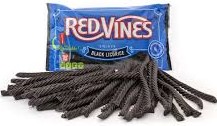
Whips, twists, nibs, wheels, shoelaces – licorice comes in all shapes and sizes.

Not gonna lie; the moment I read this not-so-dandy candy story I pulled open my desk drawer (left side, second one down) and grabbed the bag of black licorice sitting innocently in front.  Then I reviewed the ingredients very slowly and very carefully.  “Corn syrup, sugar, modified potato starch, caramel color, carnauba wax…” (and several other ingredients I really shouldn’t be eating).  But nowhere did I find “licorice root extract”, the bearer of that nasty acid.  Whew.

Let’s be honest – the real message here isn’t “don’t eat black licorice”.  Rather, it’s Oscar Wilde and his “everything in moderation”.  Our poor construction worker, according to family members, consumed “one to two large bags of black licorice every day for three weeks”.  If it wasn’t the glycyrrhizic acid, something else in the candy would’ve done him in.  Or maybe the gallons of water he drank to wash it all down.

Yep, that’s a real thing too (water intoxication).  Drink too much and you can succumb to an “imbalance of electrolytes” and die.  Then again, 99% of us avoid stupid dares or sustained exercise where you lose track of how much water you take in.  But then there’s the other 1%.  Stay away from those people.

Nine of ten of you don’t like black licorice (easy guess) so you’re not breathing a sigh of relief alongside me.  But you may not be innocent of other binge-worthy foods.  Take your pick: popcorn, potato chips, nuts, trail mix, or peanut butter (especially those little PB-filled pretzel-bite thingies – oooooo).  “You can’t eat just one”, am I right?  You probably can’t even put the container down.  And don’t get me started on Chinese food, where I seem to get hungrier the more I eat of it.

The good news is, you’re not heading for potassium deficiencies or cardiac arrest with these binge foods, but it’s fair to say they contribute to the downward spiral of unhealthy eating.  One day you wake up and find yourself sprawled atop a mountain of junk food asking, “how did I get here?”

Since we’re talking about killer (or diet-killing) foods, let me throw another one out there: coconuts.  Yes, you think coconut oil, milk, and extract are all the healthy rage these days, and you’d be… right.  But I’m talking about tropical islands and swaying palm trees.  There lies (er, hangs) the reason coconuts are called “the killer fruit”.

Urban legend perhaps, but they say falling coconuts kill several people every year.  At least ten cases have been documented since the early 2000s.  In Queensland, Australia they remove coconut palms from their beaches for this reason.  Don’t say I didn’t warn you.  Coconuts kill.

Then there’s death by chocolate.  (Chocolate kills too, you ask?)  Okay, so maybe I’m referring to a sinful dessert instead, minimally described as “chocolate with chocolate on top of chocolate”.  The American pub “Bennigan’s” offers the undisputed king of Death by Chocolate: a chocolate crumb-crusted chocolate cake, paired with two scoops of (chocolate) ice cream, topped with two Twix bars and covered with chocolate sauce, accompanied by a side dish of heated chocolate topping.  Woof.  Maybe chocolate kills after all.

How about a smile, Oscar?

Here’s one more ingredient in my desk drawer licorice: anise oil.  Anise gives you the same flavor as licorice root extract but without the occasionally fatal side effects.  Maybe it’s a cheaper or easier-to-come-by substitute?  Unfortunately, anise oil can cause pulmonary edema (also never a good thing).  Maybe I need to reevaluate my licorice habit after all.

I’ll leave you with another Oscar Wilde quote: “Life is too important to be taken seriously”.  With all due respect to our Massachusetts licorice-aholic, I couldn’t agree more.  So I will continue to eat black licorice, and I will continue to enjoy black licorice.  In moderation, of course.

Some content sourced from the 10/13/2014 ShortList article, “20 Pieces of Wisdom From Oscar Wilde, the 9/25/2020 Ars Technica article, “Rare case of black licorice poisoning kills man in Massachusetts”, and Wikipedia, “the free encyclopedia”.
Brand Spankin’

Years before Haagen-Dazs, Klondike, and Dove Bars competed for your freezer space, you had a revolutionary creation known as the Eskimo Pie.  Foil-covered, with a thin coat of chocolate magically adhered to a small bar of ice cream, the Eskimo Pie was the first of its kind: a two-desserts-in-one sensation brought to market almost a hundred years ago.  The version I remember (from the 1960s) was a hockey puck – a little larger, a little flatter – with mint ice cream in the middle.  Today, the (Dreyer’s) Eskimo Pie looks no different than any other ice cream bar.  Someday soon it won’t even be called an “Eskimo Pie”.

You know what I’m talking about, of course.  Eskimo Pie lands on the list of brand names considered negative racial stereotypes.  Before you know it, Eskimo Pie will be rebranded into something more socially acceptable.  News to me, “Eskimo” is considered derogatory by the Inuit and Yupik people of Alaska.  An “Inuit Pie” doesn’t sound quite as tasty but maybe Dreyer’s should adopt the name anyway.  At least they could retain the cute little fur-lined character they already have on the box.

America: land of stereotypes

I get it; I really do.  As much as the Caucasian and the male in me make it virtually impossible to stand in another’s shoes, I still empathize.  Brands get spanked because their names, images, or associations are knowingly insensitive – even harmful – to groups of people.  That needs to change, even if it means renaming a product that’s been around a century or more.

My mother may have been a woman ahead of her time.  When I consider the brands I was raised with, I remember Minute Rice (not Uncle Ben’s), Log Cabin Syrup (not Aunt Jemima or Mrs. Butterworth’s), and Challenge Butter (not Land O’Lakes, whose logo centered around the image of a Native American woman).  Nothing controversial about my childhood brands (thanks Mom!)  The only character who might’ve caused a stir was the leprechaun on the Lucky Charms box, but I don’t think the Irish made a fuss about him (yet).

While you’re wondering about the new names for Aunt Jemima and Uncle Ben (the latter announced just yesterday as Ben’s Original), broaden your perspective a little as these other products/people/places step up to the home plate of scrutiny:

  • Dixie (i.e. Cups, Beer, Chicks).  “Dixie” originated in (black) minstrel shows and denotes the former Confederate States of the Southern U.S.  Either association doesn’t bode well for this Americana word.
  • Mutual of Omaha.  Nothing wrong with the name, but the logo is effectively a Native American in full headdress.  What say a cornucopia instead (get it?)
  • Nestle Candies.  Overseas brands include “Red Skins”, “Chicos”, and “Beso de Negra” (Kiss of the Black Woman).  Maybe just drop these products entirely for now.
  • Squaw Valley Alpine Meadows.  Whoops.  At least they can just go with “Alpine Meadows”.
  • Disney’s “Splash Mountain”.  To me it’s just a theme-park water flume ride with hollowed-out logs, but others see the connection to Disney’s 1946 stereotypic animation “Song of the South”.  Look for less controversial ties to “The Princess and the Frog” soon.
  • L’Oréal.  Products claiming to make the skin “fair”, “light”, and towards “whitening” are going to need different words.  Way different words.

Then you have businesses like ManpowerGroup Global, Five Guys Burgers and Fries, and Two Men and a Truck.  There’s just no winning with these (unless you label 50% of the company/restaurants/ fleet as the female equivalent?)

I found it funny the (former) Washington Redskins couldn’t come up with a socially acceptable team name in time for the 2020 NFL season, so they’re simply known as “Washington Football Team” today.  That’s so generic I picture every player on the roster identical: same height, same weight, same hair color, same number on the jersey.  With that in mind, here’s some advice for the Edmonton Eskimos of the Canadian Football League.  Come up with a new name pronto.  Not the “Edmonton Inuits” or “Edmonton Yupiks”, neither of which roll off the tongue.  Just something, else you’ll be known as “Edmonton American Football Team”.  Uh, come again?

Some content sourced from the 6/19/2020 USA Today article, “Are the Washington Redskins Next?…”, the ONGIG article, “20+ Top Brands Changing Their Name to Avoid Racial Bias”, and Wikipedia, “the free encyclopedia”.