True Colors

In the kitchen cabinet convenient to our countertop coffeemaker (I’m on a roll with the letter C today), we keep a couple of large mugs; souvenirs from the San Diego Zoo. Identical in size and shape, both mugs have images of animals on them. More importantly, one mug is light blue while the other is bright red. For this reason and no other, I place the blue mug at the front of the cabinet and the red mug further back. My preference is the blue one.

If these same mugs were in your kitchen cabinet, which would you choose?  What if I added a green mug and a purple mug – would your choice be just as clear?  It should be, since we all have favorite colors.  Unless we’re colorblind we concur when something is blue, or something is red.  We even agree when something blue is “pretty” (say, the summer sky) or something red is not (say, the heart of a forest fire).  But that’s just preference by association.  Favorite colors are part of our DNA.

I’ll take “green”

As far back as I can remember my favorite color is green.  I also like blue and purple, but if I only get a single Skittles make it green.  With board games, I choose the green pieces. With my wardrobe, I own several green shirts (but no red ones).  My wife and I once owned – one after the other – a green van, followed by a green sedan, followed by a green mini-van; even though the more popular vehicle colors are white, silver, black, and dark grey.  It may be no coincidence the colors of my alma mater are blue, gold… and green.

Hello, Marilyn!

Don’t let the numbers influence your choice but 35% of Americans prefer blue while 16% prefer green, 10% purple, and 9% red.  Orange, yellow, and brown sit together at the back of the bus.  Also, gentlemen may prefer blondes, but gentlemen definitely prefer blondes in red.  To heterosexual men at least, women in red draw more romantic attention than any other color.

Infants show a preference for color as early as twelve weeks old.  That’s hardly an age where you associate colors with material things.  Toddlers show a preference for pink and blue regardless of sex (and cool colors over warm), but choose yellow over both of them – perhaps owing to association with the sun, flowers, and other “happy” things.

Here’s where favorite colors get interesting.  At five years of age you begin to associate colors with more than just “things”.  You associate with feelings and states of mind as well.  Consider the table above.  My preference for green suggests a good/bad combination of traits.  Immodestly I like to think I have good taste.  Unquestionably I put a premium on my health.  Envy?  Sure, every now and then.  Eco-friendly?  Nope, not really.

Red and blue make for better arguments.  The “lust”, “power”, and “speed” associated with red explain why it’s the color of choice for sports cars, and why red uniforms statistically improve performance in certain sports (think Tiger Woods).  All five blue traits explain why the color is so prevalent in the American workplace (and primary in the logos of standard brands like Ford, Facebook, and IBM).  Even the traits of violet/purple make sense: the color most associated with royalty.

The Rose of Temperaments

Our desire to interpret the meaning of favorite colors has been around a long time.  The Rose of Temperaments is a wheel-like image from the late eighteenth century, matching colors to character traits and occupations.  See what your color says about you.  If green goes to my very soul, the rose is strikingly accurate.  I can make a case for every trait in the list of phlegmatic. My tendencies are also more introverted than extroverted.  The rose gives me reasons for envying red, yellow, or blue (and reasons for not), but I can’t deny it: I am literally defined by my favorite color.

Speaking of the basic colors, we also favor color names. Mother Nature’s rainbow just doesn’t do it anymore.  In a recent remodel project my wife and I chose the paint color “Cocoa Whip” over “Havana Coffee” and “Wild Truffle”; when in fact we were simply choosing a shade of brown.  In product tests, participants shown swatches of the same color consistently preferred the one with the most elegant name.

Closing comment on my favorite color green.  You do know what they say about green M&M’s, don’t you? The aphrodisiacal effects (urban legend) are explained by the color’s association with fertility.  However, the better story comes from 1976, when the FDA banned the chemical “red dye #2” and red M&M’s temporarily departed the production line.  Rumor had it the reds were the real aphrodisiacs, employees were pocketing them straight from the line, and the whole red dye #2 story was a cover-up.  Red, green, whatever the color; they all taste good to me.  Even the brown ones, which testers swear taste more like chocolate than any other color.

Some content sourced from Wikipedia, “the free encyclopedia”, and Snopes.com.

Whistle Work

Last weekend my wife and I drove north a couple hours to visit our granddaughters.  The last time we saw them was in the pre-pandemic days of yesteryear.  We spent most of Saturday afternoon in the backyard playing little-kid games in the makeshift pool and breaking out a plastic Tee-Ball set.  Later on after a barbeque, it was time to clean up the toys.  My son and his wife promptly requested the “The Clean Up Song” from Alexa, and my granddaughter hopped to it.  Watching her I caught myself thinking, can’t I help with the clean up too?

Google The Clean Up Song and you’ll find several dozen versions to choose from.  Cleaning-to-music for kids has been around a little while now.  I wish we’d used this approach more often when our own children were little.  It’s a song!  It’s a game!  It’s almost whistling while you work.

For me, household chores morphed to something more therapeutic as the kids grew up and out of the house.  Taking out the trash became extra steps towards my ten thousand (we have a long driveway).  Washing dishes became a mini-spa of warm water and soap bubbles.  Making the bed and arranging its pillows channeled my inner Marie Kondo.  Folding clothes was how to avoid lazing on the couch while watching TV.  (On that note, an ironing board should be called a “clothes-folding board”, if you go by my folding minutes (100%) vs. ironing minutes (0%).

Lest you think me compulsive, a recent Wall Street Journal study comes to my rescue.  During these stay-at-home times – locked-down residents find similar stress relief in housework.  Washing windows allows the slow, deliberate wax-on-wax-off zen of “The Karate Kid”.  Cleaning countertops tempts flowing dance, like Julia Stiles in the diner in “The Prince and Me”.  Ironing doubles as light weightlifting. And vacuuming?  Nah, I got nothing there.  Vacuuming’s still just a chore.

The lovely Ms. Stiles and her diner dance

Headspace

Headspace, a software company focused on meditation and better sleep, includes housecleaning exercises on its app.  They recommend “quiet housework in dim lighting” just before bed (but then how do you see what you’re cleaning?) They want you to sweep the floor and wipe the counter in smooth, restorative motions.  Laugh all you want but the use of their “cleaning-related content” is up 20% since mid-March.

Household products are trending the same way.  Swiffer wants you to mop with “a clean home and a clear mind” and suggests a facial treatment while you’re at it.  They switch “clean the counter” to “give your surfaces a little TLC” (as if your surfaces are close friends).  Proctor & Gamble fortifies its “Gain” laundry detergent with essential oils like lavender and eucalyptus, touted for their calming effects. “Clear Your Mind with a Cooling Clean!  A Soothing Scent with a Mindful Twist!”

Call me one-in-five (not compulsive) because P&G research claims 20% of us clean to relax or reduce stress.  Sure, but we also clean to clean.

I never thought about laundry this way but the Journal article likens clothes-cleaning to problem-solving (which we guys are all about).  Sort the clothes, dose the detergent/softener, fold according to best-fit in drawers, and then put everything away.  It’s a process, and it’s a new puzzle every time.

To take it one step more spiritual, household chores are considered seva – a form of selfless-service.  Says one yogi about dirty dishes, “You’re reminding yourself you’re washing for the divine grace that flows through your husband, your wife, your children, or your parents.”  Whoa now.  Me, I’m just washing dishes.

I’ve neglected to mention another household chore: cleaning bathrooms.  It can be “healing” sponging the porcelain to a sparkling-white shine, conducting the bowl brush in large, lazy circles, or returning to nature in the gentle flow of the sink (waterfall) or toilet (whirlpool).  No, no, NO.  I don’t do bathrooms.  Not even if you ask Alexa to play “The Clean Up Song”.

Some content sourced from the 5/27/2020 Wall Street Journal article, “Sick of Cleaning?  Turn It Into Meditation”.

Not-So-Fast Food

If you’re like me, you’re prepping meals at home more often than you used to.  Your grocery lists are electronic or paper instead of in your head.  You may even be meal-planning and on your way to becoming America’s next gourmet chef.  But no matter the approach eventually you succumb to food out instead of food in.  “Taking away” meals these days means navigating an app, a website, a drive-thru, a phone call, or for the really daring, an unscheduled appearance at the front doors.  You never know which approach works until you try a couple.  Sometimes you simply give up.

Case in point.  Last Friday we took my wife’s truck for a service – scheduled just after sun-up. Leaving the house so early meant breakfast would be out instead of in.  My first thought?  McDonald’s.  An Egg McMuffin is still a pretty good on-the-go breakfast, and navigating McDonald’s hasn’t changed (drive thru, pay at the window, drive away, enjoy).  I also admit to a soft spot for the Golden Arches because I worked there in high school.

My wife had other ideas.  Since a breakfast sandwich was the order of the day she wanted Einstein Brothers Bagels, and with good reason.  Einstein’s offers a choice of five “classic” breakfast sandwiches and another seven “signature” specials: twelve different spins on bagels and eggs.  While Egg McMuffins are assembled from just four mass-produced ingredients, Einstein’s creations are made-to-order adventures with options like chorizo, avocado, spinach, and mushrooms.  If the choice is Einstein’s or McDonald’s it’s a no-brainer.  Except now.

“Save time?” I beg to differ.

Not knowing Einstein’s take-away approach during COVID, I parked in front of the restaurant while my wife went inside to place the order.  Nope.  Einstein’s allows two options: DoorDash or order from the app.  Well blast my bagels – DoorDash doesn’t even deliver to our neighborhood so it was either the app or go hungry.  Fine.  A quick download and I went in search of the “Order” button.  Nope.  Einstein’s wants an account first – phone number, email, birthday, credit card, and so on.  Fine.  At last we assembled our on-line order and I went in search of the “Pay” button.  Nope.  Einstein’s makes you bank a minimum balance first (and welcome to “Shmear Society Rewards”).  Really?  A cash reserve for a breakfast sandwich?  Once and for all, nope.  I X’d out of the app, deleted it from my phone, and left a skid mark or two as I accelerated away.

“McDelivery?” Not necessary.

McDonald’s was also on the way home, a couple miles up the road.  We didn’t have their app either but so what?  Order at the drive-thru, pay at the window, drive away with an Egg McMuffin, enjoy.  We even splurged on hash browns (and an order of breakfast sausage for the dog).  A McDonald’s breakfast for two people and a pet costs far less than a similar order at Einstein’s.  Was my Egg McMuffin forgettable?  Yes.  Did I consume my sandwich within minutes of leaving the restaurant?  Yes (today’s Egg McMuffin is smaller than your palm).  Did I wish I’d had a custom-made Einstein’s instead?  Of course.  But not if I must jump through a bunch of electronic hoops to get one.

I want to support restaurants through the COVID pandemic; I really do.  Our favorite Mexican place has nothing electronic, so you just place a phone order and take-away fifteen minutes later.  Our favorite coffeehouse is a converted bank, so it’s drive-thru, pay, and go, lickety-split.  That’s all I’m asking for: simple process, no hoops.

Einstein’s theory of relativity assumes accelerated motion (say, a car pulling away from a restaurant with an order of food).  Einstein’s Bagels requires decelerated motion (say, the unanticipated time to download, setup, and bank-load their app).  Take your pick: Einstein’s approach or Einstein Brothers’ approach?  For me, it’s Albert’s way every time.

(Not) Paying the Piper

One player, many pipes

Our church is weighing creative approaches to conducting in-person services next month. Pastor Bob sent out a survey recently asking we-the-congregation to consider options like outdoor church, weekday church, and evening church – all in the name of social distancing.  We’ll also be shaking up the service “touchpoints”, like sharing the peace, passing the (offering) plate, and partaking in communion. The Big Guy doesn’t care about the where’s, when’s, and how’s, of course – just that we have church.  On the other hand, He (She?) might have something to say about the music. After all, how does a church organ sound after a three-month absence from tuning?

It’s bad enough our congregation is gloriously inharmonious when we bellow out the hymns (no choir of angels are we), but add in a fully discordant church organ and you have a complete mess. Organs need tuning like the human back needs a chiropractor: maintenance is key. When dust accumulates and seasons change, organ pipes sound noticeably different than they’re supposed to (hence the term “off-key”).  Imagine the pitch-perfect tones of a bass saxophone, but instead you get more of a sour wail.  That’s an organ pipe sans “tune-up”.

Every one needs tuning

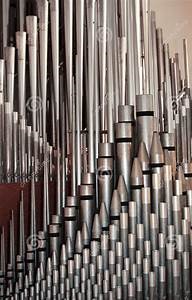
Tuning organ pipes is serious business and can run thousands of dollars per visit.  Consider, the biggest organs have as many as 25,000 pipes.  The booming bass pipes can be thirty feet long and two feet in diameter, while the little pixie sopranos look more like metal soda straws. Each pipe must be individually tested and tuned no matter how big or small.  Tuner A presses a key on the (up to four) keyboards down below, while Tuner B adjusts the pitch of the pipe up above (sometimes on a ladder, sometimes on a suspended platform).  It’s hours and hours of monotonous – and in the case of cathedrals, death-defying work, one demanding pipe at a time.  Better love what you do.

Here’s another reason organ tuners deserve hazard pay.  Imagine you’re suspended hundreds of feet above the sanctuary floor on a swaying rope-suspended platform (I’m already saying “no”), virtually floating like the angels, and as you reach over to adjust the pitch of a mid-sized pipe, bats fly out.  Yep, that’s the kind of critters tuners encounter when an organ wants for too long (or a single pipe sounds suspiciously out-of-tune).  Squirrels even make their homes in the pipes – though don’t ask me how they don’t go plummeting to their death the moment a note is blasted from the keyboard.  Maybe they’re flying squirrels?

The view from above

In the land of COVID-19 there are no organ tuners (or very few).  Those Peter Pipers are being denied access to their church-bound “patients” because a) COVID may reside on a surface like, say, a keyboard, and b) no congregation means no offering plate means precious few payments to the Piper.  So what do stay-at-home tuners do instead?  Why, they tune their pianos of course!  Then they play those pianos hours on end.  We may come out of COVID with a whole new genre of classical music called “tuner tunes”.

Talk about a sprint from feast to famine.  An organ tuner’s busiest weeks are those leading up to Easter, often requiring extra staff and longer hours.  COVID downpoured on that parade.  Demand for pre-Easter tuning disappeared faster than Mr. Bunny himself.  In the case of one tuner – profiled in the Wall Street Journal – 100 contracts withered to less than a dozen inside of two weeks.  He furloughed his entire workforce, worried instead over simply paying the rent on his shop.

One day soon, we faithful will walk away from our laptops and wander back into church sanctuaries instead.  We’ll spread out over more services.  We’ll wave hands instead of shake hands.  We’ll drop the offering into the plate from a “safe height”.  We’ll bypass communion servers and help ourselves to the bread and wine instead.  The organist will play and the congregation will sing; both noticeably off-key.  And when that happens give a nod to the organ tuners, who will someday get the pipes pitch-perfect again. 

Just hope they don’t need an exterminator as well.

Some content sourced from the 3/25/2020 Wall Street Journal article, “As Coronavirus Shutters Churches, an Organ Whisperer Changes Key”, and Wikipedia, “the free encyclopedia”.
Merry-Go-Round Mayhem

The Safari Park’s merry menagerie

In the midway of the wonderful San Diego Zoo Safari Park in California, you’ll find a colorful attraction called the “Conservation Carousel”. Unlike traditional carousels teaming with horses, the Safari Park merry-go-round boasts giraffes, rhinos, zebras, cheetahs, and other “rare and endangered creatures”, just waiting to be taken for a spin. It’s a full-on circle of animals. It’s like riding a zodiac.

Wheel of Fortune

Speaking of the zodiac, what’s your sign?  I’m an Aquarius (born in late January), which makes me water-bearer to the gods.  As much as I don’t subscribe to horoscopic astrology – a visual representation of the heavens to interpret the inherent meaning of life – I can’t deny water’s played a significant role in my world.  I spent childhood summers in the Pacific Ocean and the backyard pool.  I lazed away hours in Northern California’s Lake Tahoe, swimming and water-skiing.  I enjoy a lively display of water, whether Niagara’s Horseshoe Falls or the fountains of Vegas’s Bellagio Hotel.  A gentle rain is nature’s therapy.

He’s not as great as he looks…

But then there’s the hell-or-high-water side of things.  Literally since our wedding night (when my bride and I awoke to dripping from the bed-and-breakfast room above us), the two of us have endured all manner of water problems.  A fully flooded basement.  A backed-up septic system.  Drinking water with a PH so out-of-whack we had to install a conditioner and a neutralizer.  Our well water quit pumping one time – for days – when a squirrel chewed through the electrical connection.  It’s like those gods have nothing better to do up there than play games with their little water-bearer down here on Earth.  If it were up to me I’d spin the zodiac wheel and land on another space instead.

Turns out my wish may have already been granted.  According to the Wall Street Journal, the earth maintains a wobble in its orbit around the sun, caused by gravitational pull on its not-so-perfectly-round midsection.  That wobble (called “precession”) – projected over the last several thousand years – shifted the alignment of the Earth with the zodiac constellations as the Sun passes through them.  Long story short, everything astrological advances one month on the calendar.  In other words, you rams out there (Aries) are actually fishes (Pisces).  You maidens (Virgo) are now lions (Leo).  And us water-bearers (Aquarius) – mercifully – are now mountain goats (Capricorn).

… but they don’t fall down.

With more passing of time, the earth’s Weeble-wobble will redefine basic astronomy as we know it today.  Take Polaris, the “North Star” at the end of the Little Dipper, and the starting point to locate the more distant constellations.  A few thousand years from now, Polaris will give up its position to Vega, another bright star.  All because our planet is a little fat in the middle.

With talk of a “changed world” after a curbed pandemic, I think it’s high time for me and you to adopt our newfound zodiac signs.  Goodbye Aquarius.  Hello Capricorn.  To preview my new persona, I looked at today’s horoscope in the local paper: A conversation with a female acquaintance will be important to you today. This is a good time to share your hopes and dreams for the future with someone to get his or her feedback.  Bless my lucky stars – I’m to check with my wife before moving one position on the astrological merry-go-round.  Seriously?  What does she know, holding court from under the sign of Cancer?  Whoops – make that under the sign of Gemini instead.  Either way, she can finally refer to me as, “you old goat, you”.

Some content sourced from the 2/21/20 Wall Street Journal article, “You’re a Scorpio?  Why the Earth’s Wobble Means Your Zodiac Sign Isn’t What You Think”, and Wikipedia, “the free encyclopedia”.
Iced Coffee

Place Dauphine

In the airy but over-aired romantic comedy Me Before You (2016), the dashing but damaged Will Traynor (Sam Claflin) laments bygone times when he refers to, “Paris. Place Dauphine, right by the Pont Neuf. Sitting outside the cafe with a strong coffee, a warm croissant with unsalted butter and strawberry jam.” Place Dauphine is not just a scene in Me Before You; it’s a real square in the heart of Paris.  And it probably has Will’s cafe, thanks to the nearby river and central views of the city.  Yet French cafes are growing scarcer every year.  In fact, these quaint little gathering places are disappearing in droves.

Painting by Vickie Wade

If someone asked me to paint a scene from a French country village, I’d surely highlight a charming cafe on a cobbled central space, bursting with patrons.  In the cafe, the proprietor would serve incomparable pastries alongside fine, pressed coffee.  The room would swell with music and chatter; the locals swapping their work-day adventures before heading home to supper.  The evening stopover in the cafe seems to me a staple of French culture.

So it pains me to read about closed doors on France’s rural cafes, according to a recent report of the Wall Street Journal.  Sixty years ago, you would find over 200,000 of them liberally dotting the country.  Today, there are less than 40,000.  “Progress” – in its various forms – has forced the rural worker out of traditional French industries and into the big cities.  Time once spent in the cafe is now given over to the workday commute.  Adds a village mayor, “Without a cafe, a village is pretty much dead”.

A “French cafe” in Ireland

Even though I’ve been to Paris, I can’t claim to have spent time in any of its cafes, not even the famed Les Deux Magots, where writers like Hemingway and Joyce were said to have gathered.  And yet, I’ve still experienced authentic “cafe culture” (and I don’t mean Starbucks).  On a trip to Ireland several years ago, my wife and I concluded our first day of sightseeing by ducking into what we thought was a small pub in downtown Dublin.  Turns out the place was more “French cafe”, complete with black-and-white prints on the walls, candle-lights on the tables, and coffee, tea, and pastries to beat the band.  We were so taken by the place we stopped in every afternoon for the better part of a week.  Perhaps the most showstopping memory of all: we never saw a phone, tablet, or laptop.  Patrons were there to gather and chat, or at least – in the case of a few loners – to lose themselves in a good book.

van Gogh’s “The Starry Night”

The French cafe is made all the more romantic thanks to the artist Vincent van Gogh.  In 1888 in the southern town of Arles, van Gogh observed the play of a cafe’s lights against the nighttime sky, which inspired his painting Cafe Terrace at Night, the precursor to his unequaled The Starry Night

“Yellow vest” protestors

Perhaps you recall France’s “yellow vest movement” a year or so ago, when protestors took to the streets to battle aggressive economic policies.  Turns out the French cafes played a part in the melee.  The government sought to impose an increased fuel tax to reduce the number of cars on the road.  The protesters interpreted the tax as an impolite shove, to get more people to move to the big cities.  In other words, less people in French country villages.  And no people in French country cafes.  Remarkably, one of the government’s concessions following the yellow-vest protests was subsidies towards small businesses.  Perhaps the French country cafe is not dead after all.

Had I written this post two weeks ago, I wouldn’t have come up with much positive spin on this topic.  But let’s face it, those of us “sheltered in place” right now yearn for social interaction (not social distancing).  We want face-to-face again, not Facetime.  We want the congregation, not just the church service.  So perhaps there’s a silver lining to the current pandemic after all.  When we return to “new normal”, my hope is we’ll have a newfound appreciation for gathering, instead of hiding behind our electronic devices.  As well, my hope is my next visit to France will find the doors of French country cafes wide open again, just beckoning me inside for “strong coffee and warm croissant”.

Not So Fast, Mr. March!

In 2010, New York City premiered a wee little romantic comedy called Leap Year. The movie starred Amy Adams and Matthew Goode, and spun a creative love story around a Leap Day tradition of marriage proposals. In Ireland (and Britain), the tradition held if a woman proposed to a man on February 29th, the man must accept her offer or face significant penalty. Leap Year begins in Boston with the intent of ending in a Dublin marriage proposal, but the coastal Irish town of Dingle (and Matthew Goode) gets in the way. That’s where the real story begins.

If you haven’t seen Leap Year, you’ll have to search elsewhere for the complete plot summary. Just avoid the movie reviews. Leap Year earned a not-even-modest 23% approval rating on Rotten Tomatoes, and a not-even-one-third 33 out of 100 on Metacritic. My favorite assessment comes from reviewer Nathan Rabin, who concluded, “The film functions as the cinematic equivalent of a (McDonald’s) Shamrock Shake: sickeningly, artificially sweet, formulaic, and about as authentically Gaelic as an Irish Spring commercial”.

Yeah, I get it. Mr. Rabin refers to the several “overly-Irish” details in Leap Year, which seek to pay homage to the country’s culture but instead come off as cliched (with a capital C). But do viewers really care? Leap Year‘s underlying story is fun, and even if rom-com isn’t your bowl of Irish Stew, at least you have Amy Adams and Matthew Goode. I repeat, Amy Adams and Matthew Goode, two of the most appealing actors in the movie industry today.

I’ve been hooked on the lovely Ms. Adams ever since she took her Oscar-nominated spin as Giselle in Enchanted (2007). It doesn’t hurt she grew up just a few minutes north of where I live here in Colorado. My wife’s been hooked on Matthew Goode ever since he stole scenes from Mandy Moore in Chasing Liberty (2004). It doesn’t hurt he added a passable Irish accent in Leap Year. Both actors have been nominated for awards in far better films, but put them on the big screen together and a little chemistry goes a long way.

Speaking of leap year, my preference for order and logic takes a serious hit whenever the short month of February rolls around. A month of twenty-eight days when the other eleven have thirty or thirty-one? Why not just reduce two or three other months from thirty-one to thirty days and make February “full”? The only credible historical explanation I can find is this: Caesar Augustus stole a few days from February to make his month (August) as long as Caesar Julius’ (July).  We future generations are left to deal with the anomaly. Gee, thanks Gus.

In a rather odd example of redemption, February gets extra attention by boasting an extra day every four years. We need the quadrennial Leap Day to put the calendar, the seasons, and the universe back into sync. Not so fast, Mr. March. And yet, pity the poor souls born on Leap Day. Must’ve been pretty traumatic as a kid, trying to understand why your special day doesn’t show up on the calendar like the other kids. Or consider a “leaper’s” 21st year (or whatever year one earns drinking privileges). How do you convince the barkeep you’ve reached your drinking birthday in a year without a February 29th?

Perhaps you’ll “celebrate” Leap Year 2020 by seeing the movie of the same name. We’ll watch Leap Year for the zillionth time. My wife will remind me Matthew Goode’s character and her own Irish Draught horse share the same name (Declan). I’ll remind her several Leap Year scenes take place in Connemara and County Wicklow, two of our favorite places in Ireland.

Matthew Goode recently admitted, “I just know there are a lot of people who say (Leap Year) was the worst film of 2020″. But Goode also admitted to signing on so he could work closer to home and to see his girlfriend and newborn daughter more often. Doesn’t that make the (English)man even more likable?  Maybe.  At least Amy’s doing a sequel to Enchanted.

(Author’s Note: Just noticed this is my 229th post on Life In A Word. 229 as in 2-29 as in February 29th as in Leap Day. WHOA.)

Some content sourced from Wikipedia, “the free encyclopedia”, and the 2/28/2020 Wall Street Journal article, “Leap-Year Babies Fight a Lonely, Quadrennial Fight for Recognition”.

Bathroom Sync

During our town’s annual “Parade of (new) Homes” last summer, my wife and I came across a master bathroom with two showerheads in the same space. The fixtures were mounted on a single wall, almost beckoning the future owners to a side-by-side shower date. Several other couples gave pause alongside us. Shower at the same time? Nope.  We’re not among the 77% who love the idea. On the other hand, my wife and I would never give up our side-by-side sinks.

In a recent Wall Street Journal article, “My Biggest Remodeling Regret…”, the author bemoans the lost space consumed by her dual master bathroom sinks.  She says, in hindsight, she would’ve exchanged the space of one sink for a linen closet.  Remarkably, in the seven years since the remodel, she claims she and her husband never used their side-by-side sinks simultaneously.  In a nutshell, she’d prefer to spend her bathroom time alone.

We’re in the midst of a remodel ourselves, which displaces my wife and I to the upstairs for several months.  As a result, we’re sharing a bathroom with one small sink.  It doesn’t work very well for us.  Why?  Because we like our own sink real estate.  We like the freedom of our respective bathroom routines whether or not we’re both in there.

Too “cozy”!

Bathroom habits speak to our individuality, don’t they?  What works for my wife, what works for me, and what works for our juxtaposition may be a far cry from your own preference.  Consider this scenario: would it bother you if your connecting bathroom were open to your bedroom (that is, no door)?  I’ve seen several layouts where the bathroom counter is the first thing you see when you prop yourself up in bed.  Ugh.  Our bathroom demands a door.  Having said that, I have no problem barging through said door, even if my wife is in the middle of getting ready.  Why?  Because a) we’re comfortable sharing our bathroom routines, and b) the toilet has its own little room; a “water closet” with a door.

But why side-by-side sinks specifically?  Because we often get ready for the day (or the night) at the same time.  Sure, we’re pretty good about weaving and bobbing around each other with a single sink (like we’re doing right now), but I much prefer grooming in my own space.  Then there’s the chatter.  We routinely ask each other’s mirrored reflections “how does your day look?” or “how does tomorrow look?” while we’re in bathroom sync.  We’ve done this for so long I can even understand my wife’s responses through her teeth-brushing.

The Journal article spends several paragraphs lauding the opportunity for privacy in the bathroom – not because habits are embarrassing, but because the bathroom can be a therapeutic escape from the chaos beyond its doors.  The bathroom is cozy-small.  The bathroom is typically simple and without clutter.  The Journal suggests magazines or iPad time or even singing (singing?) to promote rejuvenation.  I’m not here to dispute the notion.  I’m simply saying the bathroom’s not where I’d choose to rediscover my mojo.  Pretty sure my wife feels the same way, else I’d lose my barge-through-the-door privileges.

I’ll concede one point to the Journal.   The author brings up (and promptly tears down) another recent side-by-side trend: toilets.  Really?  “Going” at the same time?  Then again, I see more and more men un-self-consciously on their phones while “taking care of business” in public restrooms.  Maybe they’d be okay with a bowl-by-bowl conversation.  Seriously, how would you feel about receiving a call from a public restroom?  I’d reach for the hand sanitizer. I’d also demand the caller focus instead on his/her business and call back later.  Much later.

Check-Out Champ

We had a good drop of snow the other night; the best we’ve had since the new year began. The flakes fell quickly, adding inches to the front porch and everything in the yard beyond. As I surveyed the vast, white blanket before me, my mind wandered to snow angels and snowmen, to pulling the sled out of the garage. I pictured wandering lines of deep footprints, far as the eye could see, or snowballs piled up and ready, waiting for a battle with the neighborhood kids. Without knowing it, I was effectively ticking the list of images from Ezra Jack Keats’ 1962 children’s classic, “The Snowy Day”.

Confession time. I didn’t remember the story of “The Snowy Day” until I stopped by my local bookstore the other day for a copy (destined to my granddaughter’s bookshelf). It’s a simple book: the snow-filled adventures of a little boy on a winter’s day, captured in less than two hundred words. The images tell the story as well as the words, including the boy’s disappointment when he realizes a snowball carefully packed into his coat pocket melted moments after entering the warmth of his house.

Why all the fuss over a short children’s story, authored almost sixty years ago? Consider this: “The Snowy Day” is the most checked-out book in the 125-year history of the New York Public Library (NYPL). That’s 485,583 individual borrows, putting the book comfortably ahead of hundreds of thousands of others. (Safe to say the “Jeopardy” writers jotted down that bit of trivia for future use.)

You’d think I’d have checked out “The Snowy Day” when I was little. After all, the library was a weekly – if not bi-weekly destination as a kid. My older brothers took music lessons right across the street, leaving the library as a convenient “babysitter” while Mom went to the grocery store. I’ll always be grateful to her for that strategy, which generated countless check-outs and a lifetime love of reading.

I find it remarkable the NYPL maintains complete records – most of them on paper – backing up its check-out claim for “The Snowy Day”. The book topped several other bestsellers I would’ve chosen instead. Take “Fahrenheit 451” (#7 all-time checked-out), or “Harry Potter and the Sorcerer’s Stone” (#9). How about other children’s titles like “The Cat in the Hat” (#2) and “Where the Wild Things Are” (#4)? “The Snowy Day” sits atop the list with fewer words and fewer pages (except perhaps #10, “The Very Hungry Caterpillar”) Good on you, Ezra Jack Keats.

Dale Carnegie’s “How to Win Friends and Influence People” seems out of place in the NYPL top-ten (#8) – the only non-fiction read on the list. I’ve never checked out a Carnegie self-help book, let alone bought one (not that I couldn’t use the help). For that matter, I’ve never checked out any of the NYPL top-ten. Maybe #6 Charlotte’s Web, but that was a long time ago.

“The Snowy Day” brought to mind storybooks from my own childhood, I took a few minutes to recall the following favorites (sans Google search):

  • Harold and the Purple Crayon
  • Clifford the Big Red Dog
  • The Red Balloon
  • Make Way for Ducklings
  • Blueberries for Sal
  • Mike Mulligan’s Steam Shovel
  • Are You My Mother?
  • Sparky’s Magic Piano
  • Caps for Sale

The brain is remarkable. I can give you a complete synopsis of each of the above stories, fifty years after I first read them. Furthermore, “Harold and the Purple Crayon” and “The Red Balloon” manage to tell their stories without a single word. Nothing but photos and illustrations. They make “The Snowy Day” look like a novel.

I can’t tell you the last time I set foot in a library, but I know it’s been years. I’d say I’m “overdue” and should “check out” one of the nearby branches. After all, the stories of my childhood have endured the test of time, waiting patiently on the shelves; perfect reads for the next “snowy day”.

Some content sourced from the 1/13/2020 Wall Street Journal article, “These Are the Most Frequently Checked-Out Books in the History of the New York Public Library“.

Identity Crisis

Whenever I go for a workout, I face a choice as I walk through the front doors of my gym. The welcome desk gatekeepers scan the barcode on the back of my membership card to a) make sure I’m really me, and b) keep track of my visits (a motivational data point reported back to me at month-end). Recently, my club gave me the choice to scan my mobile phone instead, using a barcode produced by their app. And there you have it: the emergence of the virtual ID badge.

Please don’t steal this

Given the myriad uses of phones these days, you’d ask why I wouldn’t shred my physical gym card and embrace virtual identity.  Alas, what works at the welcome desk does not work beyond it.  My gym’s lockers still use the physical card as part of their securing mechanism.  Insert card, close door, release key.  Yet I still need my phone to collect heart monitor stats or listen to music.  My identity therefore remains physical and virtual for the foreseeable future.

Workout facilities are a basic example of what’s going on here.  The more sophisticated virtual ID installations reside at the offices of large companies, where hundreds of employees pass through secure doors morning, noon, and night.  Forget “keycards” – how would you prefer to be ID’d in the year 2020? Facial recognition? Iris scan? Fingerprints?  Even those technologies seem dated with what’s being tested in the lab.  How about gait recognition (the way you walk)?  Or microchips – a grain of rice if you will – implanted gently between the thumb and forefinger?  Everyday security is about to advance to a whole new level.

My first couple of office jobs were environments too small to worry about real security.  The front desk attendant could greet every employee who stepped off the elevator by name.  But then I joined Hewlett-Packard (HP) – 50,000 humans worldwide – and even HP’s smallest offices demanded more than a casual glance at those passing through.  In the early years I had a simple name badge, to be clipped on the shirt and worn at all times.  Then I graduated to a photo ID card (w/ lanyard, as dress codes relaxed).  Finally, HP added magnetic stripes to the back of the cards, so we could self check-in the way you now self check-out at grocery stores.

The new identity technologies are rooted in biometrics: your sui generis body measurements and calculations.  With that in mind – and body – your ID is just the tip of the data iceberg.  As long as your heart rate, steps, and movement are measured, wouldn’t your employer want those data points as well?  It’s like having a giant Apple Watch lording over an entire workforce.  In theory your manager could use this information as a gauge of your “wellness” (i.e. stress), but more likely they’ll be interested in how it relates to your productivity.  They’ll also know where you are, when, and for how long, all the day long.

If microchip implants become the norm (something I wouldn’t have fathomed even a decade ago), the benefits are endless.  Swipe your hand at a conference room door for access/reservation.   Swipe your hand in front of the vending machine for a snack.  Check your resting heart rate.  On the other hand (ha), consider; the microchip is always watching, including your taps at the keyboard.  No message – even the one you deleted before sending – is safe from scrutiny.

When my wife and I joined our church last year, we were issued name badges. Wearing them is not so much an expression of membership as it is a convenience to greet fellow parishioners by name. But what if we start using biometrics someday?  Will my pastor know when I’m at church and when I’m not? More importantly, will He know? Ah, let’s be real; the Almighty doesn’t need an ID system.  He already knows when I’m in church and when I’m not.

Some content sourced from the 1/6/2020 Wall Street Journal article, “The Humble Office ID Badge Is About to Be Unrecognizable”.