Feeding Frenzy

Thanks to a whole lot of snow in Colorado I was pretty much housebound this week.  I was also reminded of the number of mouths I’m expected to feed. That total is nine… if I count the four horses, two cats, and one dog besides my wife & me. Now that I think about it, a horse eats enough for two so let’s bump the number to eleven mouths. And nine of those belong to animals.

A year or so ago I wrote a post called Sign Me Up!, where I marveled at the rapidly growing world of subscription-based services.  Among my own subscriptions I listed a magazine, a newspaper, and digital music, I also included Chewy, the online pet food supplier whose mission is “to be the most trusted and convenient online destination for pet parents (and partners), everywhere.”  At the time I was just trying Chewy out, not willing to go all-in with a subscription.  Today?  I’m fully on board and wondering why I didn’t sign up sooner.

Even the U.S. Post Office celebrates “fur babies”

Every time a Chewy pet food box shows up at my front door my first thought is, “Why didn’t I come up with this idea?”  Chewy’s concept is wonderfully simple… and wildly successful.  First, create a list of the world’s major suppliers of dog and cat food.  Second, negotiate bulk purchases of their products at a discount.  Third, set up a small network of fulfillment centers.  Finally, sell to customers with some of the discount, keeping the rest for your own operation and profit.  It’s a middleman’s recipe for millions.  Er, make that billions.

If you think this post is a plug for Chewy you’re darned tootin’ it is.  Chewy offers over 2,000 brands of pet food to 15 million subscribed customers.  97% say they’re satisfied.  Chewy’s net sales in 2019 were $4.8 billion dollars.  Nosh on that impressive number for a second.  $4.8 billion sounds like the GDP of a small country.  A small country with a lot of pets.

Foresight is everything here.  Ten years ago I wouldn’t have believed there were 200 brands of pet food, let alone 2,000.  If I go back to my childhood (way more than ten years ago) I can name exactly four pet food brands or products of the day: Purina, Friskies, Alpo, and a curious General Mills creation called Gaines Burgers (“The canned dog food… without the can!”)  Well, I also remember a variety box of dog biscuits called “Fives”, but that’s because I snacked on them every now and then when there wasn’t anything else in the pantry.  Fives were fit for human consumption.  At least, I think they were.

The pet food demand of the 1970s wouldn’t have sustained a subscription service like Chewy.  On the other hand, today’s market is a feeding frenzy, especially with more people opting for “fur babies” over children.  And don’t think Chewy hasn’t noticed all the doggy daycare and emotional support.  Now they also deliver food for your fish, your bird, your snake, and all those farm animals grazing on your backyard lawn (alpacas, anyone?)  Chewy even offers a pharmacy of over-the-counter meds when your pet is in some way under the weather.

Hello, “Chewy”!

I was going to wrap up this plug by smugly suggesting Chewy cater to our horses, but of course they already do.  I can’t subscribe to hay bales yet (I’m sure they’re working on that) but I can buy grain, treats, blankets, tack, and fly spray.  So instead, let me speculate it probably won’t be long before Chewy gets into the “human” food delivery business as well, to compete with Amazon, Wal*Mart, and Target.  With Chewy’s millions of subscribed customers, the new offering would take off like a bull in a china shop.  Or better, like a big, furry bad boy in a Star Wars movie.

Her Majesty’s Persistent Presence

America is a vast melting pot, her contents stirred for generations in a dogged effort to blend peoples and cultures into a cohesive whole. It’s the classic chemistry experiment, where the glass beaker is filled with all manner of substances and then shaken, only to watch the inevitable separation back to individual weights and colors.  The shake-up brings moments of drama though; the storm before the calm if you will.  It’s also an apt description of the British Monarchy.

Despite my best efforts to filter my newsfeed, I still got the announcement about Oprah Winfrey’s televised interview with Prince Harry and Meghan Markle last week.  I don’t know much about either former royal (or Oprah, for that matter) so I dismissed the headline and moved on.  But I was alerted to the interview again the following day.  And again the next day.  Finally, in a move that can only be described as can’t-help-myself, I got out of my chair, grabbed the remote, and programmed the DVR to record.  Something deep-rooted was telling me Sunday night’s interview was must-watch TV.

No it wasn’t.  The questions and answers were predictable.  The topics just begged for a response from Buckingham Palace (mission accomplished).  After two hours of back-and-forth (and too much time in a chicken coop) my take on this couple hadn’t changed.  Meghan shouldn’t have dabbled in the royals in the first place.  Meghan eventually orchestrated her way out of the palace (and the country).  Harry followed.  Now they’re barely surviving… in an 18,000 square foot house in Montecito, California worth $14 million.  Oprah is their neighbor.

Waste of two hours?  There’s no denying it.  Still, I chose to watch.

Americans don’t have royals, but we have a lot of movies about royals.

Why do I care about Harry and Meghan?  I don’t, yet somehow I do.  Maybe I should blame The Crown, the excellent Netflix series about the British monarchy.  By total coincidence, my wife and I started watching Season Four this week, which is all about Harry’s mother Diana.  Then my newsfeed tells me the Duke of Edinburgh (Prince Philip) suffered a heart condition last week, rough enough to land him in the hospital.  Add to that regular photos of Queen Elizabeth looking ever-regal at the ripe old age of 94 and the royals are all over the place.  They make themselves kind of hard to ignore.

The Queen (will live forever)

The episodes of The Crown are a revelation, especially for those of us in “New England”.  Each show kind of ungilds the lily of America’s perception of British royalty.  There’s more drama, politics, and in-fighting than we Yanks would’ve ever believed of fair princes and princesses.  Yet through it all stands the queen – at the epicenter of the shaken beaker – somehow maintaining poise and presence.  All of the events in The Crown take place within Elizabeth’s lifetime, yet it feels like we’re going several generations back. 

Despite The Crown and my newfound respect for Elizabeth, there’s no question it was the late Diana, Princess of Wales who first piqued my interest in the British royals.  Who could blame me, right?  Lady Di was beautiful and supremely innocent, a veritable Disney princess in the flesh.  She was born just a few months before I was.  Her wedding to Prince Charles in 1981 – the grandest of ceremonies watched by hundreds of millions of people across the world – was the stuff of fairy tales (Charles himself, not so much).  Diana embodied all that was good and somehow magical about life as a royal.

Lady Di belongs in this club

But then we have Diana’s shocking death not sixteen years after her marriage.  Talk about shaking the beaker.  My wife and I were at a party in California at the time and returned to our hotel late, staying up hours past midnight to watch the funeral on television.  Like the Oprah interview this week, I can’t explain why I gave up half a night’s sleep to watch.  I just felt compelled to.

Thanks to The Crown, the royals aren’t looking quite as regal as they used to.  Diana effectively sacrificed her life to be a royal.  The agendas of Elizabeth and her several prime ministers were in constant conflict.  Season Four has a poignant episode where Elizabeth arranges an individual lunch with each of her four children.  She needs a valet to prepare a brief of information on each child so she can have meaningful discussions with them.  Elizabeth may be “Queen Mother” but the title rates a distant second to “Queen”.

(photo courtesy of Fox News)

Harry and Meghan seem determined to move on from the monarchy.  They’ll never achieve “normal”, and whether their marriage is the real deal is TBD, but good on them for making a show of it.  Me, I’m moving on too.  The next season of The Crown isn’t until next year so it looks like I finally get a break from the royals.  Er, unless William and Kate are up to anything interesting.  Are they up to anything interesting?  Hm.  I’d better go check.

Some content sourced from Wikipedia, “the free encyclopedia”.

Pulling the Plug

Thirty years ago, the S. C. Johnson Company introduced a new member of their Glade line of fragrance products called the “PlugIn”. Maybe you have one in your bathroom. The PlugIn uses a small amount of electricity to warm up scented oil, which slowly diffuses into the nearby air. You can even get one that lights up. Ironically, the Glade PlugIn was my first thought when I read about this week’s National Day of Unplugging.

So this is what we’ve come to in the year 2021.  As a counter to our undying affection for our electronic devices, a portion of the next couple of days has been designated “National Day of Unplugging” (NDoU) by a non-profit organization called Unplug Collaborative.  The Collaborative started its membership early last year and is determined to “spread awareness about how to maintain a healthy life/tech balance”.  Theirs is a noble, if not impossible effort.

Should you choose to participate in the NDoU “24-hour respite from technology from sundown to sundown, March 5-6”, I ask, will your life necessarily change for the better?

It’s just an awareness campaign, I get it.  Unplugging phones, tablets, laptops, and whatever else you consider “tech” for one whole day is essentially raising the white flag on what each of us already admit: we spend too much time with our screens.  But let’s be honest – what exactly defines “healthy life/tech balance”?  I think the answer is highly personal, depending on your job, disposable income, place of residence, and the ways you choose to spend your downtime.

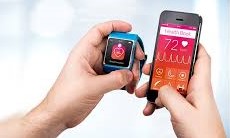
My wife is a wonderful example of “wired” (er, “wireless”); someone who twenty years ago tentatively navigated texting, apps, and what little else her basic cell phone had to offer.  Today, she sports the latest model Apple Watch, two iPads, and a MacBook, all of which seamlessly share information with each other and then with her.  She even sports a protective wristband to reduce her exposure to electromagnetic radiation.

I can’t imagine my wife “unplugging” for four hours, let alone twenty-four.  My conversation with her would go something like this:

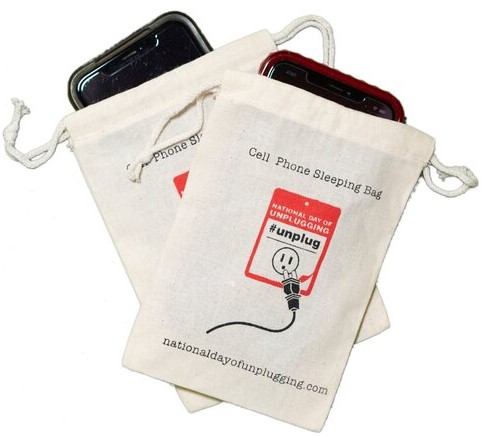
NDoU wants you to put your cell phone to bed – literally.

“Hey honey, so there’s this thing called ‘National Day of Unplugging’ where we get to shut down all of our electronic devices and work on making our life/tech balance better.  Just give me your watch and your tablets and your laptop and I’ll lock them in the closet until tomorrow night.  Sound good?” 

The response I’d get (if I did get a response from her) would be something like,

“Wait, WHAT???  National Day of WHAT?  Are you freaking kidding me?  Hahahahahahaha, good one, honey.  Yeah, let me think on that for just a second… um, NO WAY.  And keep your hands off my screens!”

I get it.  Not only does my wife fiercely track her 10,000 steps and her circles on her watch, she monitors a dozen or more daily feeds on her tablets, and countless emails and websites on her laptop.  It would be just as soul-sucking as taking my Amazon Kindle e-reader away from me (and let’s not even discuss that possibility).

This NDoU supporter doesn’t need screens… ever.

Unplug our gadgets and then what do we do… watch TV?  Sorry, if I’m really gonna play this game the TV also has to go.  The point of NDoU no doubt, is to reestablish face-to-face communication, prepare meals together, get outdoors, read books (what’s a “book”?), and so on.  Unplug Collaborative’s website lists fully one hundred ways to spend your time devoid of tech.  You can’t unlock the full list without signing up for their membership so I’m just speculating on examples.  [Hey, if you join, let me know if one of the hundred is “fool around in the bedroom”.  That one doesn’t take anything plugged in.  At least, nothing I have any experience with.]

If the NDoU campaign really gets momentum, I could see the unplugging moving beyond tech.  Perhaps next year we’ll give the washer and dryer a day’s rest too, as well as the home exercise equipment, the stereo speakers, and the kitchen appliances.  Now there’s a frightening image.  Imagine twenty-four hours in dirty clothes, with no workout, singing just to make a little music, and sandwiches and pretzels for dinner.  Okay, skipping the workout wouldn’t be so bad.

For the record, I’m a proponent of a healthy life/tech balance.  Taking away my screens for a day isn’t such a bad thing.  After all, we could be talking about my coffeemaker here.  Now don’t be talking about unplugging my coffeemaker.  You’re gonna have a fight on your hands and you don’t want to see me without my morning coffee.  Do that and I might have to think about unplugging you.

O-Love

I like a lot of foods people seem to hate. My favorite Thanksgiving pie is mincemeat, not pumpkin. My favorite licorice color is black (red is just a licorice imposter). You can heap any kind of shellfish you want on my plate except oysters. You’ll find blue cheese in my salad and Brussel sprouts cozying up to my steak. But what about “America’s Most Hated Food”? Was I born in the wrong country? Sorry fellow citizens, I must respectfully disagree with the winner of a recent survey on hated foods.  Black or green, stuffed or plain, sliced or diced, there’s nothing quite like the taste of an olive.

Zippia is a job-search engine I’d never heard of, until I came across their just-released survey called The Food Each State Hates the Most.  Zippia’s road to its results is rather unscientific.  First, come up with a list of forty-odd foods where people tend to say, “gross”.  Then, use Google Search Trends to determine which of these foods people look up the least.  Finally, group the search results by state.  After that meandering highway, here’s what you get:

    (Click image to enlarge)

I think Zippia produces these surveys as a clever way to attract customers.  Didn’t work for me – they just insulted my taste buds!  Thirteen of fifty states claim the olive as their most hated food?  Two of those states are California and Georgia, where the lion’s share of America’s olives is grown.  I’m already suspicious.

Not a pile of tires

I’ll grant Zippia’s survey this.  Most people I know don’t care for olives.  They don’t like the look or the smell, and even though they’ll admit to olive oil in their salads and heart-healthy recipes, they’ll still deny any affection for the fruit.  Yes, I said fruit, not vegetable.  Doesn’t that make those little sodium balls a bit more palatable?

The rest of the survey, I can buy.  Anchovies shouldn’t swim anywhere near a pizza (good call, America’s Heartland).  Washington and Oregon residents probably sat next to me in elementary school, overdosing on bologna sandwiches.  Eggplant, ick.  And beets… beets… I’m almost sixty years into this world and have yet to acquire the taste.  Check back with me in the next life.

If the Zippia survey is to be believed, I live in a state where turkey bacon is our most hated food.  Really?  We just bought several pounds of the stuff last weekend at Costco.  It’s not so bad.  On the other hand, olive oil and vinegar stores are trendy around here.  Most markets have an olive bar adjacent to the cheeses.  Meats and breads have been enhanced with bits of olives for years.  And for the really fancy, serve a tapenade with your crackers; a French spread made of finely chopped olives, capers, and anchovies.  Okay, so tapenade’s probably not for everyone.  But I like it.

I developed a taste for olives as a kid because my mother kept tossing them into her casseroles.  Before I knew it I was eating olives as a snack (and what kid hasn’t done the “wave” with one on each finger?)  One regrettable afternoon I downed a whole can of the large black ones before discovering my mother intended them for one of her recipes.  Believe I went to bed with no dinner that night.  At least my belly was full of olives.

[Side note: The only member of my family who likes olives is my daughter.  Maybe I should’ve named her Olivia? I did have a childhood crush on Olivia Newton-John.]

Not “monster eyeballs”

As if you need more proof of my love of olives, you’ll always find several cans in my pantry.  The sliced ones go into my pizzas, salads, and tacos.  The diced ones go into my omelets.  The whole ones sneak onto vegetable trays next to the carrots and celery (when my wife isn’t looking) or I just down ’em by the can.  And their green siblings with the red pimentos jammed down the middle?  They go perfectly with chips ‘n’ dip in front of the TV.

Step aside, America.  Spain produces more olives than any other country.  Italy and Greece aren’t far behind.  It would be appealing enough to live on the sands of the Mediterranean, growing old on their uber-healthy diet.  But also having trees of “America’s Most Hated Food” everywhere you look?  That clinches the deal.  I just might take my O-Love overseas one of these days.

Some content sourced from the Zippia.com article, “The Food Each State Hates The Most”, and Wikipedia, “the free encyclopedia”.

Forty Days and Forty Nights

Tuesday seems like weeks ago.  Some call it “Fat Tuesday” (esp. those pancake-bingers partying hard at Mardi Gras) but to me, it’s just the last day of my food free-for-all.  My wife and I decided to give up “flour” for Lent (more on that in a minute) so Tuesday night we overate at our favorite Mexican restaurant.  Chips and salsa (the chips a hybrid of corn and flour).  Enchiladas and tacos wrapped in big, fluffy flour tortillas.  Sopapillas fried from puffy flour tortillas, drenched in honey.  Big, frosty margaritas to wash it all down.  It was kind of a fiesta final before Lent.

Now it’s Ash Wednesday as I type and I’m already obsessing about my forbidden flour.  This morning’s breakfast was hardly a fiesta – coffee and a protein shake.  Not a tablespoon of flour to be found anywhere.  My upcoming fever dreams will be liberally dusted with flour.  I’ll have fantasies of consuming an entire bakery case (shelves and all), eating my way out of a gigantic loaf of bread, or parking my mouth below the pasta-maker while endlessly turning the crank.  I’m looking at all the snow outside my office window right now.  It looks exactly like white flour.  It probably IS white flour.  Hang on, I’ll be right back…

As of today, we’ve officially started the season of Lent again. The next forty-odd days and nights are gonna be the usual challenge. Did you know the Old English translation of “Lent” is “spring season”?  How that computes with all the flour I’m seeing outside my windows right now is beyond me.  More to today’s point, Ash Wednesday is the deadline to answer the question, “What am I giving up for the next seven weeks?”

Lent = “no mas”

Lent, as even non-Christians know, is the religious season of preparation leading up to Easter.  It’s the time to reflect inward, with more attention to prayer and the Good Book, less attention to “shortcomings” (sins, people), more charitable service to others, and finally, a cruel little something called “self-denial”.  Self-denial is anything you want it to be, but the idea is to subtract from your daily equation: something you don’t need but you’ll struggle to be without.  Consider seven popular choices for 2021:

  1. Chocolate.  Maybe this one’s popular because it’s the easy way out.  Chocolate’s often in my desserts, occasionally in my protein shakes, and every-now-and-then in my mid-afternoon pick-me-ups.  But I can certainly do without the sweet stuff for forty days.  C’mon, people used to give up food for Lent!  A little chocolate’s not really what the Big Guy had in mind.
  2. Meat.  Christians forego meat on Lenten Fridays anyway but some choose to give it up the whole way.  Not me.  If I’m giving up flour, I’ve got to have meat-and-potatoes to soften the blow of all my bread, pasta, and baked goods currently on hiatus.  For Pete’s sake, I can’t even have chicken noodle soup!  What was I thinking?
  3. Smoking or Drinking.  Maybe these are your vices but they’re not mine, so either would be a Lenten cop-out.  I enjoy the occasional glass of wine or a beer, sure, but putting them on the shelf for the next month or so? Hardly a stretch.
  4. Coffee.  Okay, we just shifted from first to fourth gear.  There is nothing – NOTHING – to fill the vast and infinite void left behind by my morning cup of joe.  I understand self-denial but don’t turn me into a raging lunatic.  Force me to give up coffee for Lent and I’ll have a newfound respect for the next option, which is…
  5. Sleeping In.  Normally this would be another cop-out for me because I’m one of those annoying morning people.  But deny me my coffee and I’ll gladly hibernate until early afternoon – every day until Easter.
  6. Social Media.  I dropped Facebook late last year.  I’m only on Instagram a couple of times a week.  I have no Twitter feed.  I get it – it’s 2021 – but this one’s a no-brainer for me.  I mean seriously, just give me a call.
  7. Speaking Poorly about Others.  I asked my sister-in-law what she was giving up for Lent and she said, “I’m going to be nice to others”.  That gave me a good laugh until I found this item on the list.  My sister-in-law has plenty of company.  So, consider: could YOU give up airing dirty laundry for forty days?

One more thing about Lent. Each of the liturgical seasons has a color, and Lent’s is purple.  You’ll see a lot of it in churches, cathedrals, and flower arrangements this month and next.  I like purple enough, but ask me to name purple items and all I come up with is eggplant (the nightmare vegetable of my youth), figs (the nightmare fruit of my youth), grapes (I prefer the green ones), cauliflower (yep, it comes in colors), and lavender and amethysts, both of which I have little use for.  Purple is about as smart a choice for Lent as giving up flour.

In conclusion, I could use your prayers as I endure my forty-day flour fast.  By late March my car tires will look like doughnuts and my paperback novel a nice, thick Pop-Tart.  Toss me a Frisbee and I’ll slather it in syrup and devour it like a pancake.  Put your pasta under lock and key.  Guard your pizza with your life.  I’m coming for your cupcakes.

Some content sourced from the Delish.com article, “7 Things To Give Up For Lent That Go Beyond Food”, and Wikipedia, “the free encyclopedia”.

Chocolate Cremè de la Cremè

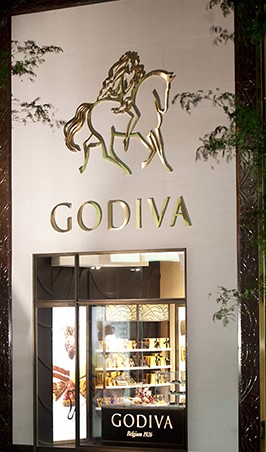
Godiva, the incomparable Belgian chocolate maker, is closing every one of its retail shops in North America.  Maybe you’re blaming the pandemic but Godiva claims foot traffic at shopping malls – where most of its boutiques are located – “plummeted” over the last few years.  I’m sorry to see Godiva go.  Mind you, it’s not that I make a habit of buying $3 truffles.  It’s more the idea that I could if I wanted to.

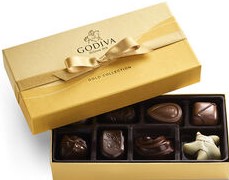
Godiva is the cremè de la cremè of chocolate.  Their products are born of a family business dating back to 1926.  Their Truffe Originale, “an intense dark chocolate mousse in fine dark chocolate, rolled in pure cocoa powder”, is the standard by which most Belgian truffles are measured.  Godiva’s three chefs are profiled on its website (I discuss one of them in my post Confection Perfection), and endeavor to maintain the very high standards of Godiva while churning out new and different creations.  It’s no wonder Godiva isn’t considered a “candy store” or a “chocolate shop” but rather a chocolatier.  Only the very best get a label like that.

Godiva’s handcrafted “gold box” assortment

To me, Godiva chocolate is a taste of heaven on earth.  But it’s also a taste of a lifestyle – one most of us will never afford.  Godiva has me picturing mansions (not houses), yachts (not boats), private planes (not the middle seat in coach).  Godiva is a brief, delicious dip into the behind-the-gates world of the uber-wealthy.

I’ve stepped into a Godiva chocolatier exactly twice in my life.  The first was in college, after a visit to the Rizzoli bookstore at exclusive Water Tower Place in downtown Chicago.  After spending too much money at Rizzoli I was in the perfect mindset for Godiva (which was right next door).  I still remember selecting a single truffle from the glass display case.  The petit woman behind the counter wrapped up my tiny purchase in box, bow, and bag, as if I’d just purchased a fine piece of jewelry. She bid me a fond farewell.  I walked out of there feeling, well, special.

Would you pay $20 for six truffles?

My only other visit to Godiva was more recently with my wife and daughter, on a Saturday at one of Denver’s nicer shopping malls.  We’d just come out of Starbucks, coffees in hand, and there beckoned Godiva.  After much deliberation, we spent the better part of $10 and walked away with three truffles.  I’m sure they were elegantly wrapped.  I’m also sure they were delicious.  But with Godiva, it’s more about the taste of something beyond your means.  That taste may be more satisfying than Godiva chocolate itself.

Tiffany & Co, NYC

Tiffany is a comparable experience (as I wrote about in my post All That Glitters).  Walk past the front-door security guard into their multi-level department store in downtown Manhattan.  Your first thought will be either, “I don’t belong here”, or, “I’m underdressed”.  Ooh and ahh at their lavish necklaces, bracelets and rings, but don’t expect to see price tags.  Like Godiva, Tiffany’s best is behind glass and you have to ask a staff member about the cost.  My wife and I made it to Tiffany’s fifth floor before we found something we could afford – a pair of ceramic coffee mugs.  At least we also walked away with their signature blue gift boxes.

Think twice before entering!

Then there’s Prada, the Italian fashion house famous for its luxurious leather handbags and shoes.  My twelve-year-old daughter dragged me into their Madison Avenue boutique once (past the requisite security guard) but I realized our mistake as soon as we entered.  Prada displays maybe a dozen items in a single museum-like showroom, each carefully positioned on an individually lit shelf.  You are invited to sit on the central couch and offered a choice of beverage.  Then a person brings you items of your choosing (but don’t touch!).  Once I realized Prada purses start at $1,000, I asked my very disappointed daughter if maybe she’d like to go for ice cream instead.

Godiva’s tiny “biscuits”… $0.75 ea.

Godiva’s North America retail shops will be gone by March, but you’ll still have other options to purchase.  You can find small displays of their products at the cash registers of upscale department stores.  You can order most of their delicacies online (including “Gold Box” assortments, which cost more than you can afford).  You’ll even find Godiva’s “Signature Mini Bars” at lowly retailers like Target and Walgreen’s.  But let’s face it, Godiva is as much about the experience as it is the chocolate, and I’m just not gonna feel uber-rich when I’m at Target.

Some content sourced from the 1/24/2021 CNN.com article, “Godiva is closing or selling all of its stores in the United States”, and Wikipedia, “the free encyclopedia”.

Soft Spots

ESPN broadcast college football’s national championship Monday night. As the game moved to lopsided late in the second quarter my mind drifted to details besides the football itself. Hard Rock Stadium in Miami Gardens, FL is a striking facility, especially at night from the vantage point of the Goodyear Blimp. 15,000 football fans spaced randomly into 65,000 seats (thanks, COVID) looks awfully sparse. And speaking of awful(ly), the television commercials… well, let’s just agree college football ain’t the same thing as the Super Bowl, folks.

Home of the NFL’s Miami Dolphins

Super Bowl commercials are more entertaining than the game itself, unlike the advertisement drivel I saw Monday night.  Super Bowl plugs cost $5 million for thirty seconds while Monday night’s spots were six figures at best.  Finally, Super Bowl ads are desperate to be memorable (even if you can’t remember the product itself), which is why you have office pools for “best commercial”.  You’re not gonna have an office pool for what I watched on Monday night.  This was the reverse of the Super Bowl: great football, lousy commercials.

To say Monday night’s commercials paled in comparison to Super Bowl ads is like saying Sprite’s a little clearer than Coke.  These product pushes were awful.  For starters, you had what seemed like five advertisers over a four-hour broadcast.  Dos Equis showed up every fifteen minutes.  Their beer (excuse me, their lager) ads included a closeup of a glassful, with a commentator calling the movement of the bubbles as if they were players on a football field.  Really?  I hope his was a big paycheck.

Then you had AT&T, who seems to be promoting the lovely Milana Vayntrub (as salesperson “Lily”) as much as their products.  Perhaps they’ve watched too many Progressive Insurance ads with Stephanie Courtney (as salesperson “Flo”)?

Don’t recognize Milana? You will soon…

Finally, ESPN promoted itself.  Normally I’d harp on the host network for advertising some of its own programs even though they paid millions to broadcast the game.  But part of me thinks ESPN really does need the promos.  COVID took a big bite out of sports over the last year, as well as a big bite out of ESPN’s workforce.  When the network brought us Korean baseball and American cornhole competitions I thought, “Okay, the end is near”.

But forget ESPN because I need to be a Davey-downer (i.e., slam) on one more commercial.  I’ve been building to this moment since the first paragraph.  Gatorade just launched it’s first new beverage in twenty years: “Bolt24”.  It’s low-cal and loaded with electrolytes, so naturally the target audience is athletes.  And Gatorade also selected athletes to push its product.  Enter Serena Williams.  She’s one of those athletes I’m on the fence about.  Her athletic skills and accomplishments on the tennis court are unquestionable.  She’s garnered enough championships to earn her place in the tennis player “GOAT” discussion (greatest of all time).

But Serena also has her not-so-role-model moments.  She does not take losing well.  She does not welcome constructive criticism.  Countless broken rackets, lectures (threats?) to chair umpires, and disqualifications would have you wondering if there isn’t a permanent child lurking within the adult.  Wah wah wah.  But the Bolt24 ad was the last straw in my Serena drink.  Why?  Because the tagline goes, “you know you’ve made it when the whole world knows you by one name”.  Oh, so when I say just “Serena advertises Bolt 24”, you knowingly say in response, “oh, her?”

Yeah, I get the pitch.  Bolt24 is a one-word drink.  Serena Williams is almost the only Serena I can think of (besides Serena van der Woodsen, the entitled main character of the TV series Gossip Girl).  But I just can’t buy into the loftiness of the catchphrase.  Get the world to recognize you by first name only and “you’ve made it”?  Sting. Madonna. Cher. Bono. Enya.  See the pattern?  It’s an actor/singer thing.  Also, an athlete thing.  Lebron. Tiger. O.J. (Maybe that last one should just be “Juice”?)

Okay then, shutting down my rant now.  Holier-than-thou personas don’t deserve any more press.  I like to keep “Life in a Word” positive; simple; modest.  Like me.  You know… Dave.

Some content sourced from Wikipedia, “the free encyclopedia”.

Busy Buzzwords

Our local news wraps its nightly broadcast by pushing little surveys you can take online. Earlier this week was, “Should the U.S. Senate vote to increase stimulus checks to $2,000?” (88% said yes). The night before, “What was your favorite holiday food this year?” (pie narrowly edged ham). What I find laughable is the participation rate – maybe 25 responses on average – yet the results are announced the following night like headline news.  25 is a minuscule sampling for a basis, like surveying a few of your neighbors and calling it good.  Yet other companies take the exact same approach.  Example: Merriam-Webster just announced its 2020 “Word of the Year”.

Merriam-Webster’s fitting “Word of the Year”

You’ll find almost 200,000 words in the English language (with more added every year).  Should pandemic take the trophy for 2020?  Well, yes, it’s hard to argue with Merriam on that one.  Not only did the COVID-19 pandemic dominate headlines and conversations, the word created the single largest spike in dictionary traffic.  On March 11th, when the World Health Organization declared COVID-19 a pandemic, the lookup of pandemic increased over 100,000% over 2019.  I can’t convert 100,000% to a quantity but I know it’s a big number.

Merriam isn’t content with just “word of the year”, however.  They also list the top ten words according to increased dictionary traffic over the previous year.  Accordingly, 2020 self-branded with coronavirus, quarantine, and asymptomatic.  I wouldn’t think any of these words – pandemic included – induces peace of mind, but in dire situations our brains have a relentless need to know more.

With the mental fatigue brought on by too much COVID talk, perhaps you’ll find Merriam’s other top-ten words more refreshing.  Antebellum made the list because the long-popular country music trio Lady Antebellum changed its name to “Lady A”; also because the movie “Antebellum” was released in September.  Mamba was a top-ten for the passing of basketball legend Kobe Bryant, his nickname in reference to his killer play.  Kraken is the newest franchise in the National Hockey League, the mascot a mythological Scandinavian sea monster.

Seattle-ites will learn to chant, “GO KRAKEN!”

But none of these are my favorite.  How about #7, schadenfreudeSHAH-dun-froy-duh means “enjoyment obtained from the troubles of others”.  In March, schadenfreude pointed to the college admissions scandal, particularly the outing of the guilty A-list celebrities.  Schadenfreude also colored the daily coverage of President Trump by the so-called “fake news media”.

For the record, schadenfreude is German (of course it is) so let’s give it bonus points for sneaking onto a top-ten list of English words.

You may not agree with Merriam-Webster but at least its choices are based on real data – lookups that imply support from the masses.  Other organizations are much vaguer with their selection criteria.  Consider Time Magazine’s “Person of the Year”.  Time’s stated criteria is, “for better or for worse… has done the most to influence the events of the year.”  By that definition it should come as no surprise to see Adolf Hitler selected in 1938, Martin Luther King, Jr. in 1963, and Mark Zuckerberg in 2010.  However, you’ll also find almost every U.S. President on the list, as if simply inhabiting the Oval Office makes you more influential than all other persons.  President-elect Joe Biden and Vice President-elect Kamala Harris are 2020’s “Person of the Year”.  Uh, shouldn’t we at least get them inaugurated before evaluating influence?

Deserving of more “Timely” recognition…

[Note: Time’s “Person of the Year” recognition owes a debt to aviator Charles Lindbergh, who completed the first solo transatlantic flight in May of 1927.  The magazine overlooked Lindbergh’s accomplishment by never featuring him on its cover.  To make up for it, Lindbergh became Time’s inaugural “Person of the Year”.  Makes you wonder if someone else was more deserving in 1927, doesn’t it?]

One more “of-the-year” example for you.  Pantone, the “color company” best known for its Pantone Matching System (or PMS, a rather unfortunate acronym), chooses a color of the year to put the last twelve months in review.  For 2020?  Like Time Magazine, Pantone broke its own rules and went with two choices: Ultimate Gray, which suggests solid shadows cast on a wall; and Illuminating, a lemony shade hinting at “the light at the end of the tunnel”.  Illuminating might be a little premature for 2020.  Let’s go glass-half-full and call it next year’s color instead.

Is this light “Illuminating” to you?

If Merriam-Webster could choose its busy buzzwords in hindsight, 2020’s winner might not be pandemic but rather, malarkeyMalarkey came in at #11 in the top ten (come again?) because it’s a favorite of President-elect Biden.  Rather than saying, “C’mon man, you’re making that up.” (okay, he says that too) Biden prefers, “Give me a break; that’s a bunch of malarkey”.

“Malarkey” my words; you’re gonna hear the Biden favorite a lot over the next four years.

Some content sourced from The Cut article, “Pantone’s Color of the Year is ‘The Yellow Wallpaper’”, Merriam-Webster.com, and Wikipedia, “the free encyclopedia”.

Mixed Messages

My dad called the other day for a chat, but not before letting me know my answering machine was full. Since he couldn’t leave a message he just called over and over ’til I finally picked up. But here’s the thing: I don’t have any messages on my answering machine.  It’s not full at all.  So after the call I said to my wife, “Dad’s almost 92. I’ll forgive him a little confusion now and then. Probably mixed me up with one of my brothers.”

I still have one of these

Do you still have a landline in your house, the one with a bulky handset and built-in answering machine?  If you do, it’s tethered to the wall with wires, which then connect to a march of telephone poles outside (more wires), which eventually route your call to wherever it needs to go.  Imagine – in a world of wireless – a phone call with a physical connection from one end all the way to the other.  It’s positively antique.

[Random thought: once the world is fully wireless what’ll we do with all those telephone poles.  Caber toss, anyone?]

Go ahead and mock my out-land-ish outdated phone – at least I don’t have a party line.  Back in the day, if you lived in the sticks you shared a single physical line with your neighbors.  You were a “party” of subscribers who often found themselves talking over each other (“crosstalk”) or connected to the wrong party at the other end.  Party lines it is said, were the birthplace of gossip.

The reason I stubbornly cling to my landline is probably not the same as yours.  I keep my landline exclusively for those calls with my dad (er, and to divert telemarketers from my smartphone).  My dad can’t hear very well so anything wireless is a challenge, especially when you get the occasional syncing issue in the conversation.  On a landline Dad hears LOUD and CLEAR… even if he doesn’t always acknowledge what I say.  Are his calls worth the monthly subscription fee?  He’s 92!  You bet they are.

Now let me ask you this.  How often do you call your own phone number?  Why would you?  Pick up the phone and you get dial tone – all good.  Set the answering machine to “on” so people can leave messages – even better.  Except when they can’t.  Let’s suppose – “hypothetically” – your phone company redirects your phone number to a random voicemail box.  And that mailbox is already full.  How would you know?  Only if you called your own phone number, right?  Or, only if the one person who calls you (“hypothetically” your dad) insists he can’t leave a message.

Damn.  Dad was right after all.

Here’s the best part.  I can’t even call my phone company to fix the problem.  Why?  Because I “bundled”.  You know, where you combine TV, Internet, wireless, landline, and whatever else you have so they’re all billed and serviced through a single provider? Mis-take. Try calling your satellite TV provider to ask about landline phone service.  After you explain what a landline IS, the young person at the far end transfers you to a “specialist” (someone much older who actually understands landlines).  That person acts as intermediary between you and the phone company.  There’s a lot of, “Can I put you on hold for a sec?” and, “You still there? and, “Hold tight, we’re still working on it” and even the occasional, “You did say this was a landline, right?  Y’know, you really should get rid of your landline…”.

Long story short, it took me the better part of a week but now my dad can leave messages on my answering machine again.  He also says I should listen to my father more often.  (For younger readers, this is an excellent example of “eating crow”.  Look it up.)

Electric Light Orchestra (ELO) – the English band of the ’70’s who somehow fused pop, rock, and classical – had their biggest U.S. hit with Telephone Line.  Its final verse begins, “Okay… so no one’s answering.  Well can’t you just let it ring a little longer, longer, longer?”  No ELO, I can’t let it ring a little longer – the phone company rerouted my number to a full voicemail box.

But hey, thanks for calling.

The Original “Black Friday”

The first two weeks of November were jammed with “un-often” events this year.  For starters the bright light of Halloween’s blue moon spilled into the wee hours of November 1st.  During those same wee hours most of us lost Daylight Savings Time.  The very next day (Monday) marked the official arrival of Hurricane Eta to our shores. The day after that we voted in a presidential election. A week later we staged the Masters golf tournament (it’s supposed to be in April, people).  Then we had another hurricane (Iota), the first time we’ve had two in November.  Finally, we spiked positive COVID-19 tests in record numbers after months of declines.

That’s a pile of rarities in a short amount of time.  So why not add one more to the heap?  Friday the 13th.  I missed it completely.  Maybe you missed it too (and you’d be forgiven with all those other distractions).  Last Friday – the 13th – came and went without an ounce of bad luck to blog about.  Ironically, the only story I can share brought good luck.  I placed a carry-out dinner order last Thursday night and the restaurant gave me someone else’s food.  When I went back for the right order they told me to keep both.  As a result my Friday the 13th dinner was unexpectedly “on the house”.

Are you superstitious?  I’m not – not in the least.  I have no problems with sidewalk cracks, leaning ladders, or black cats. I don’t lose sleep anticipating the third occurrence of a bad thing.  I gladly pick up a penny (it’s free money after all) but with no expectations of luck.  I’ve broken mirrors (deliberately, in remodel projects) and wishbones (on a whim, in turkeys).  I’ve even knocked on lots of wood (mostly doors) but hey, my life goes on as usual.

Leonardo da Vinci’s masterpiece

As for Friday the 13th’s “un-luck”, its long-ago origins are suspiciously weak.  The most common comes from the story of Jesus in the Bible: thirteen individuals at the Last Supper (Thursday) followed by Jesus’ foretold crucifixion the following day.  Other theories point to fighting gods in mythology and fighting knights in the Middle Ages.  None of these carry water in my book.  Seriously, how did misfortune come to be associated with the collision of a particular day and date?

I read up on calendar averages, thinking the 13th falling on a Friday was as uncommon as a blue moon.  Maybe the 13th favors the other days of the week instead?  Nope, try the reverse.  Over a significant number of years the 13th falls on Friday more than Saturday, Sunday, or any other day of the week.

To add a helping of confusion, look no further than Spain or Greece.  These countries have an irrational fear of Tuesday the 13th.  Italy?  Friday the 17th.  Imagine watching America’s famous horror movie franchise in any of these places and wondering, “so… why do they call it ‘Friday the 13th'”?

No matter my efforts to undermine this superstition, the effects are real.  Over 17 million Americans admit to a dread of Friday the 13th.  Some avoid airplane travel and others won’t even get out of bed.  Buildings remove the thirteenth floor from the stack (which is a lot of demolition for a superstition, isn’t it?)  Elevators conspicuously delete the “13” button.  Numbered seats in stadiums go 10, 11, 12… 14, 15, 16.

For some of you, Black Friday means bargains.  For others, Black Friday means “13”. If nothing else, I’ll give you a couple of words to describe the circumstance of the latter’s irrational fear.  If you’re afraid of the number 13 you have triskaidekaphobia.  If you’re afraid of just Friday the 13th you have paraskevidekatriaphobia.  (Me, I only have acrophobia.  At least your phobias sound more sophisticated.)

Fact check.  This post was published close to the midpoint between Black Friday (the 13th) and Black Friday (the retail binge).  Okay-y-y-y.  This post also contains exactly 666 words.  WHOO boy.

Let me repeat… I am NOT superstitious.

Some content sourced from Wikipedia, “the free encyclopedia”.