Fa-La-La Land Down Under

I have two nieces who, along with their families, call islands their homes. One lives on Hawaii’s Oahu, her house perched on the cliffs above Honolulu with sweeping ocean views to the west. The other lives in Brisbane, on the east coast of Australia. Sure, Australia isn’t really an island, though it is surrounded by water. By definition its landmass makes it a continent instead. But Australia does lay claim to a few islands off its shores.  Including one named “Christmas”.

Christmas Island’s picture-perfect “Flying Fish Cove”

Imagine living in a world so small you can walk from one end to the other in less than two hours.  Your fellow islanders are so few, your entire social life is like living in a college dorm.  Your diet consists of fruits, nuts, and crab.  Lots and lots of crab.  And the single contribution you and your island-mates make to the outside world is phosphorous from your underground mines.  That, in a crab shell, is life on Christmas Island.

The first time someone told me there was a “Christmas Island”, I was young enough to be watching Rudolph the Red-Nosed Reindeer every December on TV.  My favorite part of Rudolph’s story was the “Island of Misfit Toys”.  You remember, don’t you?  Rudolph was the reindeer-a non grata, mocked by the others because of his shiny nose.  Along with a couple other outcasts (Hermie, Santa’s elf who’d rather be a dentist, and Yukon Cornelius, the prospector who can never find silver or gold), Rudolph discovers the Island of Misfit Toys.  The island is a repository for unwanted toys.  As sad as that sounds, Rudolph’s island brings Christmas to mind much more than the little landmass I’m talking about today.

Palm trees (not pines) on Christmas Island

If you wonder why you’d ever visit Christmas Island, consider almost 65% of the island is a national park of unspoiled rainforest, with walking paths past 25 species of trees and 135 species of plants.  The only animals you’ll spy in the forest include the “flying fox” fruit bat, the recently introduced Javan deer, and the golden bosun (the island’s “official” bird).  Outside of the forest however, it’s impossible to miss the crabs.  Coconut crabs.  Red crabs.  Thirteen different species of land crabs, let alone those who prefer the ocean.  And here’s the best part.  Every year, one hundred million of them migrate from solid ground to water (to spawn), a sight mind-blowing enough to be called “one of the wonders of the natural world”.

Watch the following short video on the chaotic Christmas Island crab migration.  Makes you wonder how you can walk anywhere without getting “crabs”.  If this is something you simply must see in person, find your way to Perth on Australia’s western mainland, and book one of two weekly flights to Christmas Island courtesy of Virgin Airlines.  Your 3+ hours in the air will take you over nothing but the vast Indian Ocean.

It’s high time we addressed the most burning question about our little fa-la-la land down under.  Why is it named Christmas Island?  Here are popular theories.  One, “The rainforest is made up of nothing but evergreen (Christmas) trees.”  Two (for the geographically challenged), “The island is the closest landmass to the North Pole.”  And three “Christmas Island was the origin of the species diospyros virginiana, more commonly known as the sugar plum tree.”  The correct answer?  None of the above.  In the 1600s, European explorer Richard Rowe first set foot on the island, doing so on December 25th.  With no more creativity than a glance at the calendar, his discovery was dubbed Christmas Island.

Norfolk Island pine

I’ve got a much better “Christmas Island” for you.  Flip over to just off the east coast of Australia and you’ll find an even tinier landmass called Norfolk Island.  It’s about a quarter the size of Christmas, with the same number of inhabitants.  But Norfolk Island’s primary export is much more “Christmas” than phosphorous.  It is the evergreen Norfolk Island pine, a popular ornamental tree in Australia.  My wife and I found one at Home Depot a few years ago and bought it for her mother.  For small spaces, Norfolk Island pines make great Christmas trees.

“Christmas” looks a little like an Aussie Shepherd!

In defense of Christmas Island, there’s more going on within its shores than phosphorous and crabs.  Most of the residents live in the northern area of the island surrounding a coastal region known as Flying Fish Cove.  They speak one or more of five different languages.  There’s a high school and a public library.  There’s even a cricket club, which just celebrated sixty years in the game.  And most fitting to this time of year, twenty percent of the population call themselves Christians.  In other words, despite the uninspiring reason for its name, Christmas really does come to Christmas Island.

Some content sourced from Wikipedia, “the free encyclopedia”.

Christmas-Colored Glasses

The twenty-minute drive from my house to the gym is fairly nondescript. The streets are two-lane straight with a few turns and traffic lights along the way. Not much to look at on a winter’s morning. But the month of December brings about a miraculous change. With the car stereo belting out songs of the season there’s suddenly a lot to see through the windshield.  It’s as if I’m viewing the world through Christmas-colored glasses.

Maybe you’re like me when you’re on the morning drive.  You’re half-asleep, a little bit late, and the slightest miscue by another driver puts you in a bad mood.  I try to blank out the world around me by toggling my radio presets between news and sports.  It’s a wonder my lack of focus gets me to the right destination.  But Christmas music changes all that.  The happy tunes bring everything back to the crystal and clear.  They’re like a gift for the spirit.


Two radio stations in this part of Colorado switch over to Christmas music in December.  An adult contemporary station runs an endless loop of about thirty “holiday favorites” from Thanksgiving to New Years Day.  I’ll bet they play the Boston Pops’ version of “Sleigh Ride” and Mariah Carey’s “All I Want for Christmas” four or five times a day.  It gets old.  But they also play the best of Nat King Cole, Frank Sinatra, and Andy Williams so I forgive them. Then we have our Christian contemporary station.  Their round-the-clock Christmas playlist keeps it fresh, with more carols than pop songs.  They’re a little more in tune with the reason for the season.

Earlier this week I absentmindedly tuned back to one of my regular music stations.  Mistake. Their version of celebrating the season had people calling in to say why they deserved to be on “Santa’s naughty list”.  One caller said she babysat recently and told the misbehaving child Santa died of COVID.  Another said he slept with his ex’s sister and a week later slept with the sister’s best friend.  Seriously?  This is the spirit of the season?


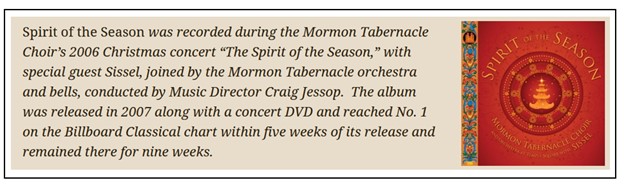
Spotify plays its part on my drive, especially when radio stations bend to the inevitable commercials.  But not playlists.  Albums.  Spotify Christmas playlists just don’t cut it for me.  I have yet to find the perfect mix – you know, not too much of this, not too little of that.  I think Christmas albums by individual artists or groups do a better job of a “just right” playlist, which is why I’m peppering this post with three of my favorites.


Now then, let’s get back to those Christmas-colored glasses.  Exactly what did I see on my twenty-minute drive?  A lot more than I did before I tuned in to the season’s songs…

  • Children headed to school, laughing and singing as they walked.  I think we can agree; Christmas is all about children.  Or at least, one child.
  • Signs in front of churches advertising Christmas Eve services.  Most offer a 5pm, 7pm, and 9pm option, meaning lots of people are heading to church on Christmas Eve.  As we should be this year.
  • A lone tree at the end of a driveway decorated with just two ornaments.  What to make of it?  Maybe a senior citizen lives here, and two ornaments are all he or she can manage.  A reminder to gift to our local “Christmas for Seniors” program.
  • A third-story apartment and its tiny balcony decorated with garlands, wreaths, and lights.  Yes, all walks of life celebrate Christmas no matter the look of their “house”.
  • The sign at the gas station advertising today’s fuel prices.  Unleaded is advertised in red numbers, diesel in green.  How’s that for impromptu Christmas decor?
  • Our little town’s myriad Christmas decorations, covering trees, buildings, and lampposts, I may not always agree with the spending of our tax dollars but with this investment, they get it right year after year.

This is my personal mandate for the 2021 holiday season.  Take the rest of the month and listen to nothing but carols whenever you’re in the car.  You’ll don a pair of Christmas-colored glasses and be amazed at what you’ve been missing around you.  Believe it or not, the world looks pretty good right now.

Some content sourced from Wikipedia, “the free encyclopedia”.

O’ Come Let Us Adorn

There’s an older fellow in Egypt who wakes up every morning, throws on a flannel shirt and well-worn pants, and goes to his workshop behind the corrugated roll-up door of a small, industrial warehouse. Using ancient tools and techniques, he churns out hundreds of colorful, ornate, square cement tiles. He’s a true artisan, our tilemaker, carrying on his craft from many generations before him.  His product endures amid countless mass-produced ceramic and porcelain alternatives. Perhaps our tilemaker would feel more at home in Lauscha, Germany.  Lauscha is home to dozens of glassblowers, who still create colorful, ornate, Christmas ornaments by hand.

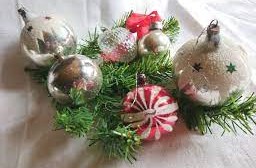
Lauscha “baubles”

Every December about this time, my wife & I bring home our Christmas tree (real, not artificial – see Is It Live or Is It Memorex? for that debate).  We take our tree through the same steps from start to adorned.  First, fresh-cut the trunk, set the tree into the stand, and fill with warm water (and one baby aspirin!).  Next, let gravity bring the branches down for a few days.  Then, bring out the ladder, top the tree with the angel, and string the lights generously down all sides.  Finally, adorn with ornaments.  Our collection is larger than the real estate of any Christmas tree we buy, so there’s always debate on which ornaments make the tree and which are re-relegated to the closet for another year of waiting.  In the end, we stand back and admire a pleasing mix of homemade, school-made, photo-framed, and collectibles.

You can never have enough ornaments, and the glassblowers in Lauscha would agree.  The process they use to create the simplest of glass balls is already beyond my artistic abilities.  For one, you must work fast because the molten glass cools in a hurry.  For two, you must have steady hands as you add color and detail.  Have a look at the following short video and you’ll learn a thing or two you never knew about making Christmas ornaments.  My favorite part of the process? “Silvering”.  Who knew the mirror-like aspect of a Christmas ball is painted on the inside of the glass?

Germans (and more people than I’d probably guess) refer to Christmas ornaments as baubles, which is ironic because Americans define a bauble as a “showy cheap trinket”.  Nothing produced in Lauscha, Germany is a showy cheap trinket.  Then again, Americans figured out how to mass-produce Christmas ornaments and the result is a generic, sometimes-plastic alternative to the real thing.  “Bauble” indeed.

The very first Christmas ornaments were anything but glass-blown baubles.  You had fruit, candy canes, pastries, strings of popcorn, and whatever else you could find around the house.  The Lauscha baubles then came along in the mid-1600s.  Short of the post-WWII years (when the German government used the glass factories for more important products) they’ve been making them ever since.

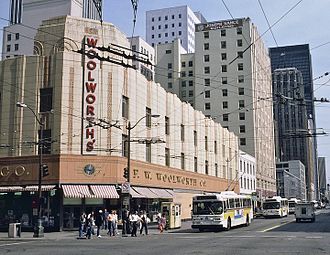
Credit Woolworth’s once-popular department stores for the proliferation of Christmas ornaments in America.  In the late 1800s, Woolworth’s started carrying the Lauscha baubles.  Soon after, they stocked mass-produced American-made versions, taking tree-decorating to a whole new level.  By the mid-20th-century, Woolworth’s was banking $25 million on Christmas decoration sales alone.

Hallmark “Keepsake Ornament”

Hallmark jumped on the bauble bandwagon in the 1970s.  Clever folks, those people at Hallmark.  Their original ornament collection was made available only for the current year, followed by a new collection the following year, and so on.  Today, Hallmark Keepsake Ornaments are so popular you have to join a club (just $49.95!) if you want to own their newest limited-edition ornaments.

As much as I’d like to add a Lauscha bauble or two to my tree, I prefer the more personal ornaments we hang instead.  A dozen or more of them were designed around primary-school photos of our kids (“art projects”, they called them).  Souvenir ornaments from favorite trips we’ve taken over the years.  Several more with imprinted dates, to remind us of special occasions like weddings, births, or passings.

Five years ago, I wrote my one and only work of fiction on this blog, a post about a Christmas ornament.  It seems fitting to include a link to The Best Branch on the Tree, assuming you haven’t followed me that long.  Because, you know, ornaments – er, baubles – have feelings too.

Some content sourced from Wikipedia, “the free encyclopedia”.

Third-Wheel Meal

In last week’s ’tis the Seasonings post, I wondered why “ginger” and “red hair” were synonymous. Paula from Monday Morning Rail replied with the answer which probably trumps all others (thanks, Paula!).  Ginger Grant, the glam character from the sixties sitcom Gilligan’s Island had a healthy head of red hair.  Sometime after the sixties a “ginger” became a person with red hair.  I’m satisfied, so let’s move to a question more appropriate for this week.  Why is (America’s) Thanksgiving celebrated on a Thursday?

Yes, it’s time for my annual Thanksgiving rant.  Rather, my everything-steps-all-over-Thanksgiving rant.  It’s not really an annual rant but perhaps it should be.  Three years ago I had so much to vent about Thanksgiving’s due, it took me two blog posts to let off the steam (see A Distant Third).  This year I realized, zero progress has been made since then.  In fact, the situation is snowballing.  Thanksgiving is finding less and less air as it gasps between the behemoths known as Halloween and Christmas.

Poor choice of word, “snowballing”.  It’ll make readers think about Christmas and I need you to stay focused.  My campaign is to keep each of the year-end holidays corralled into its respective month.  In other words, November equals Thanksgiving. (Repeat ten times, please).  Turkeys and pumpkin pie, not Santas and plum pudding.

There, I said it.  Apologies to those of you who’ve already shopped and wrapped presents.  Apologies to the rest of you who’ve already decorated your houses.  I’m just trying to give Thanksgiving its rightful place among the “big three” instead of its laggard position as “third wheel”.

You can name a dozen things associated with Halloween, and two dozen more with Christmas.  But with Thanksgiving?  Three (at least here in America).  We have the meal itself, the parades, and football.  That’s pretty much it.

Let’s dig a little deeper into the American Thanksgiving trifecta.  The meal is hanging in there despite efforts to make it healthier.  Turkey, stuffing, and pumpkin pie are still Thanksgiving staples (while “tofurky” is not).  I sometimes wonder why I don’t enjoy these foods on other days of the year as well.  Also, more people make the Thanksgiving meal at home than order online or go to a restaurant. (Do I have the data to back this up?  No, I do not.)  But I must acknowledge Friendsgiving, which has become common enough to remove the quotation marks.  Not only is Friendsgiving celebrated on any day but Thursday, the table spread can be decidedly different. Watch out.  There may come a November when – GASP! – more people celebrate the “friends” version than the “family”.

Parades remain more about Thanksgiving than the other two holidays.  You’ll find the Macy’s Thanksgiving Day Parade on television this week and at the same time, Chicago, New Orleans, Philadelphia, and Plymouth, MA host large-scale parades.  But here’s my Davey-downer factoid.  The Macy’s Parade may be the world’s largest (as well as the second-oldest in America) but it’s also an imposter.  It began as the “Macy’s Christmas Parade” in 1924, designed to launch a longer retail season at the end of the year.  So you see, the name may have changed but the parade is still decidedly “holly-jolly”.

Football brings out the smirk in sports fans again this Thanksgiving.  As they have every year since 1934 (save the WWII years) the NFL’s Detroit Lions will be playing on Thanksgiving Day.  As they have been every year (seemingly), the Detroit Lions are a truly awful football team.  In the last twenty years the Lions have amassed exactly four winning seasons.  This year?  The Lions are the only team in the NFL without a win.  The Lions are so bad in fact, the NFL has added two other games to your Thanksgiving Day lineup so you have options.

We’re almost done here, but don’t panic; I haven’t forgotten the original question.  Why is Thanksgiving celebrated on a Thursday?  Here’s the easy answer.  President Lincoln made it so back in 1863, as the final Thursday in November.  President Roosevelt also made it so back in 1941, more specifically the fourth Thursday in November.  Yeah, but… why a Thursday?

Here’s the real answer (or at least my answer).  Thanksgiving is on a Thursday.  Thursday is named for the Norse God Thor.  Thor is the God of Thunder.  See the pattern?  Thanksgiving-Thursday-Thor-Thunder.  It’s the whole “Th” thing.  Thanksgiving doesn’t really fit on a Friday (but maybe Friendsgiving does).  Besides, by Friday we’ve forgotten all about turkey and stuffing as we turn to computers and shopping malls.

Now then, banish all that “Th” nonsense from memory.  The real intent here is to give Thanksgiving its proper time and space mid-holiday season.  Let’s move Turkey Day from “third wheel” to “equal wheel” by finding more Thanksgiving stakes to claim in the month of November.  Maybe we should all dress up as pilgrims.  Maybe we should also have our kids “trade” instead of “trick-or-treat”.

With that, I wish you a Happy Thanksgiving.  And next week, I might even wish you a Merry Christmas.  You know, in December.

Some content sourced from Wikipedia, “the free encyclopedia”.

’tis the Seasonings

When I baked a batch of molasses cookies for Halloween last month, I pulled ground ginger, cinnamon, and cloves off the spice shelf without so much as a glance at the labels. I recognized the spices by their colors and textures. Had I taken two seconds more to peruse the other spices nearby, I would’ve noticed the thin layer of dust on their bottle tops. Yep, my life needs a change of season-ings.

Here’s the count, at least in my kitchen.  On the spice shelf, I have fifty-two bottled or bagged inhabitants.  In the spice drawer (essentially an overflow of the shelf) I have another twenty-six.  No-calculator math brings my total to seventy-eight unique flavorings, yet how many do I use regularly?  Maybe a dozen.  I ask the same of you. How many spices live in your rack/drawer/shelf?  Of those, how many do you use week-in and week-out?

We’re missing out on adventure, you and me.  My recipes are bland enough to demand little more than garlic salt or oregano (on the savory side), and cinnamon or ginger (on the sweet).  I could spice things up if I’d just explore more exotic recipes… or simply brighten the ones I already make.  My mantra should be “Spice is the variety of life” (not the other way around).

For inspiration, I could take a trip to Indonesia’s Maluku Islands.  Once upon a time, nutmeg, cloves and mace could be found only on the Malukus, earning their nickname “The Spice Islands”.  I have this vision of a pungent-smelling tropical oasis of colorful trees, plants, and bushes, everything edible and delicious.  I’m running around sampling this and that like a kid in a candy store.  Kind of like (you remember the scene) the Chocolate Room in Charlie and the Chocolate Factory.

Spices have tons of trivial facts and here are some of my favorites:

  • Allspice tastes like cinnamon, nutmeg, and cloves all rolled into one.  Keep that in mind the next time you bake.
  • Saffron is one of the most expensive spices in the world.  Some varieties ring in at $400 for a few ounces.  Maybe because it takes a hundred hand-harvested flowers to produce a single gram of the spice?
  • If you find a blend called Chinese Five Spice, you can season your food to be sour, bitter, salty, sweet, and pungent all in one shake of the bottle.
  • “Masala” means “spice”… and nothing more.  In other words, be wary of that next dish of chicken masala; the seasoning could be a blend of anything.
  • Spice blends are often associated with countries, as with Harissa (North Africa) and Jerk (Jamaica).  The United States?  Pumpkin pie spice, of course.  We Americans obsess over anything pumpkin spice.
“If You Wannabe My ‘Clove-r’?”

Because the musically inclined want to know, I took this opportunity to read up on The Spice Girls, the British girl group from the 1990s.  I was disappointed to learn the name has nothing at all to do with spices.  Each of the five women took on a nickname to include the word “spice” but only Geri Halliwell’s (“Ginger Spice”) made any reference to a real spice… and that reference was only to her red hair.

[On that note, can anyone explain ANY connection between “ginger” and “red hair”?  My bottle of ground ginger is decidedly yellow…]

Diaspora Co. Spices gift box

Here’s the real crime with my spice shelf.  Almost all occupants are standard brands, like McCormick or Spice Islands, uniformly bottled in identical quantities.  Neither brand is organic (let alone an advertised proponent of fair trade).  Furthermore, their spices are processed and packaged in a factory, while I have zero excuses not to be shopping at a local store like Penzeys.  You only buy as much as you need at spice stores, and you can be assured of fewer steps in the journey from source to you.  Of course, you can also shop spices online at places like Diaspora and Burlap & Barrel.

Speaking of “as much as you need”, I can say with certainty most of my spices are past desired shelf life.  No, they’re not expired; more like “faded”.  They won’t pack as much punch as they did in their prime.  Here’s the rule of thumb with spices: if whole (i.e., cloves) best used for 2-3 years; if ground (i.e., cinnamon) best for 1-2.

If I took a poll of “favorite spice” I’d get a different answer every time (including a few men who’d choose a Spice Girl).  My favorite spice?  Red pepper flakes.  I use them liberally in a lot of dishes, including pasta and soups.  I describe them as a convenient after-thought, a final flourish as I’m about to sit down at the table.  Fire on top of my food.

Maybe if I invested in one of these spinning countertop racks, the mere visibility of so many options would spice up my life.  I’d be more in line with Simon & Garfunkel’s “… parsley, sage, rosemary & thyme”.  But if I’m limited to a shelf (and a drawer) my spices are out-of-sight, out-of-mind.  Just a shake of red pepper flakes and call it good.

Some content sourced from the Relish blog article, “15 Spice Facts You Never Knew”, and Wikipedia, “the free encyclopedia”.

Scour Power Bars

I like to calculate trivial quantities for my own entertainment. For instance, in the timeframe of my years in grade school, my mother made me over 2,000 sack lunches (thanks, Mom!)  Or how about, in the sixteen years my wife & I have lived at our current address, I’ve driven up and down our street over 12,000 times. Trivial or not, these numbers lend perspective to things we don’t think a lot about.  Like soap.  And my soap number is +650.  That is, the number of bars I’ve consumed over the years in a daily effort to keep clean.

Seriously, when was the last time you gave a bar of soap more than a passing glance?  The poor little 3″ x 2″ x 1″ pastel-colored brick spends its month-long life sitting somewhere in your shower or bath, 23.75 out of 24 hours a day.  In those remaining fifteen minutes (probably less) he gets his one moment of adventure, traveling all over your body while he works to return you to fresh ‘n’ clean.  But with each passing day, Mr. Soap gets smaller and smaller until the dreaded moment of deliberation.  Is his remaining sliver too little for effective scour power?  You’d never know it with all the water, but maybe Mr. Soap sweats as he shrinks, anticipating the moment he gets demoted from the shower to the trash bin.

In the spirit of don’t try this at home (because it’s already been determined), a bar of soap really does last about a month, assuming a daily shower.  And that’s me.  I take a morning shower every day whether I need it or not.  Even if there’s nothing to “get ready” for I still want to face my day like there is.  So, Mr. Soap matters to me. You can understand why I’m getting into a bit of a lather on this topic.

In the chemistry lab, soap equals a surfactant derived from the chemical compound of a fatty acid.  In the supermarket, soap is simply a waxy, floral-smelling substance you purchase in solid or liquid form.  Behold some of the more common brands in America (as advertised online by Wal*Mart):

  • Caress
  • Coast
  • Degree
  • Dial
  • Dove
  • Irish Spring
  • Ivory
  • Jergens
  • Lever
  • Olay
  • Safeguard
  • Yardley
  • Zest

Admit it, as unimportant as soap may be to you, there’s a favorite brand out there, probably from the list above.  Mine is a little more exotic.  I go with Dr. Bronner’s All-One Hemp Lavender Pure-Castile (and how’s that for a mouthful of soap?)  Dr. Bronner’s is harder to find and more expensive than the commoners above, but I sure like it.  Maybe it’s the hemp; you know, maybe I’m getting a little “high ‘n’ clean”?  You could claim I’m “soap-stoned” when I shower.

My wife & I stream most of our entertainment these days so we miss a lot of commercials.  But ads for soap – at least those of several decades ago – took scrubbing bubbles to ridiculous claims.  Coast convinced you its product would “awaken your senses” and “bring you back to life” in the mere minutes of a shower.   Irish Spring advertised itself as “springtime in a bar” as a towel-clad Irishman cut into the soap with a knife he just happened to be carrying, uh… where, exactly?  And Zest had you thinking “you’re not fully clean until you’re Zest-fully clean”.  As if Zest was somehow noticeably better than other options.

Even though my Dr. Bronner’s might label me a soap snob, I want to give a shoutout to Ivory.  The simple white bars claim to be 99.44% pure soap.  The other 0.56% includes the sharp tang of fresh ginger root, a smell I will always associate with my grandparent’s house.  I can’t come up with another smell so “cleanly” connected to my distant past, so Ivory gets my nod of gratitude.

Some of you reading this far dismiss the entire topic since your preference is liquid soap.  I say, good on you!  Liquid soap has all of the cleansing benefits of bar soap and is typically a better moisturizer for the skin.  Liquid soap is also less likely to gather germs than Mr. Soap since he sits fully exposed in the shower all day every day.  But bar soap contains fewer ingredients and more natural ingredients than liquid – better for you and for the environment.  As they say, tom-ay-to, tom-ah-to. 

This opera of soap is just about done, but not before I leave you with one final trivial number: 4,800.  That’s how many years soap’s been a thing, invented by those brilliant but ancient Egyptians.  Think about it the next time you unearth a mummy.  You’ll never know who’s under the wrappings, but at least you can be pretty sure he or she was left fresh ‘n’ clean.

Some content sourced from the RompaGroup article, “17 facts about soap, the most popular hygiene product in the world”, the Healthy Group article, “Is Liquid Soap Better than Bar Soap?”, and Wikipedia, “the free encyclopedia”.

Once-A-Year Cake-and-Cheer

I caught a radio show last week where a caller mentioned her birthday fell on December 25th. She lamented how, as a kid, she received presents for Christmas and others for her birthday, not knowing which were meant for which. Without missing a beat the radio host goes, “Hey! At least you get to share your birthday with Jesus! I have to share mine with Madonna!”

I decided to play the game myself (and you can too, at the Famous Birthdays website).  Type your special day into the box at the top of the screen and up pop all these, uh, interesting people you share something of a kinship with.  You’ll see names, ages, and occupations under big, colorful photos.  People the website deems famous.  But don’t get too excited now.  I had to scroll through seventeen before I recognized anyone.  Maybe that’s because their occupations are Rapper, YouTube Star, and TikTok Star?  For Pete’s sake, can’t they have real jobs?

Mercifully, I find “real” birthday buddies among the self-proclaimed famous.  Steve Perry – lead singer for the band Journey – shares my birthday, born eleven years before I was.  So does Sam Cooke, whose soulful voice captured hearts in the 1960s.  But one birthday buddy stands gracefully above the rest.  Diane Lane, exactly three years my younger, is one of my favorite actresses.  When Diane turned 14 in 1979, she debuted as the adorable lead in the France/Italy adventure A Little Romance.  I’ve been smitten ever since.

Ms. Lane

Birthdays represent a variety of celebrations as we pass through life, don’t they?  As babies, our parents celebrate for us since we have no clue what the fuss is all about.  As young children, the celebrations become the most colorful: parties with friends of the same age and activities from amusement parks to backyard bouncy houses.  As young adults, birthdays tend to be celebrated at restaurants and bars, with plenty of alcohol flowing.  In the decades following we seem to favor SURPRISE! parties.

Now, as my sixtieth birthday looms like the next interstate exit, I’m all about more subdued celebrations.  A quiet dinner out with my wife.  A trio of phone calls from my kids.  A single piece of birthday cake instead of something big enough to hold five dozen candles.  Wouldn’t want the day to pass without acknowledgment but the simpler the gesture the better.

Speaking of birthday cake, it’s perhaps the single tie that binds as we celebrate our years young and old.  I picture a baby’s birthday cake as small and round, with a big #1 candle on top.  Cover your kid in plastic and put the cake close enough so he or she can dig in with both hands.  We have these priceless and messy pictures for each one of our kids.

Young children have the most adventurous cakes.  I picture a blank rectangle just waiting to be populated with frosting, decorations, and little toys, like an artist’s canvas.  Dump trucks working on a cake-top construction site.  Animals living in a cake-top jungle.  Ballerinas dancing across a cake-top stage.  The possibilities are endless.

After childhood, cake designs evolve to the age itself.  Whether big wax numbers or individual candles, the focus of the cake becomes the number.  After enough of those years, we try to be more subtle (ex. spell out the age with candles) so we don’t set the house on fire.  Later in life, we save the biggest celebrations (and cakes) for the round numbers because ages 80, 90, and 100 are achievements in themselves, aren’t they?

There’s evidence to suggest birthdays and cakes have been a combo as far back as ancient Roman times but for me, birthday cake is simply a nod to happy childhood memories.  Birthday-cake-flavored ice cream, cookies, and even protein bars are all the rage for this reason.  We just want to be kids again, breathlessly anticipating the celebration of our special day.

Some content sourced from IMDb, the Internet Movie Database, and Wikipedia, “the free encyclopedia”.

Peanuts and Pumpkins

Three years ago, New York Magazine’s website Vulture ranked all forty-five Peanuts animated television specials from worst to best, including a paragraph on each one to justify its ranking. I wouldn’t have guessed Charlie Brown, Linus, and Lucy appeared in fifteen television specials let alone forty-five. But let’s be honest; only two Peanuts adventures have had any staying power: It’s the Great Pumpkin, Charlie Brown (#2 on Vulture’s list), and A Charlie Brown Christmas (#1).

Maybe I’ll weigh in on the Christmas special in a couple of months, but with Halloween on the horizon I need to speak to the runner-up. It’s the Great Pumpkin, Charlie Brown first aired on television in 1966, so those who were alive back then (me) have the chance to see it for the 56th time this year. But maybe not? The networks stopped showing Great Pumpkin two years ago.  Other than PBS in select locations, you’ll have to buy the DVD or subscribe to Apple TV+ to watch Charlie Brown get another rock in his trick-or-treat bag.

Writing about a Peanuts special dates me – there’s no question.  But it’s still worth the words.  The Peanuts gang was the comic strip of my youth.  I remember the anticipation of the Sunday morning newspaper and the “funnies” pages.  Charles M. Schulz and his Peanuts characters always got the first slot.  When the specials debuted in the mid-60s, it was a big deal.  It’s the Great Pumpkin, Charlie Brown only showed up once a year, in mid-October.  We didn’t have DVRs (let alone streaming) back then, so watch it live or you’d miss it.  Peanuts specials were always the hot topic of conversation at grade school the next day.

After so many watches, Great Pumpkin becomes an interesting study.  You pick up on the little things, the ones which would implode under the weight of today’s social media scrutiny.  Right out of the credits, Linus & Lucy head to a patch to pick out a pumpkin.  On the way, Linus picks up an apple among the fallen leaves, takes a single bite, and tosses it into a trash can. (Unnecessary waste!).  In another scene, Lucy stabs a pumpkin with a giant knife as she begins carving (Children with weapons!).  Then Linus looks on in horror and says, “I didn’t realize you were going to kill it!” (Violence!)

Great Pumpkin touches on other themes to sink today’s children’s shows, including bullying, teasing, and casual use of words like “stupid” and “blockhead”.  Charlie Brown is the butt of several jokes, including Lucy pulling the football away just as he tries to kick, and the girls using the back of his head to draw a pumpkin carving design.  Yes, I laughed at these scenes when I was a kid, but only because I wasn’t that kid (and because it was the 1960s humor).

Here’s an oddity with Great Pumpkin.  You’d think a short animation would be a continuous story.  Not so.  Great Pumpkin jumps awkwardly between disconnected scenes, from carving pumpkins to trick-or-treating to a Halloween Party.  The middle minutes shift randomly to Snoopy acting out his costumed “World War I Flying Ace” in the middle of France.  It’s as if Great Pumpkin didn’t have enough Halloween material to fill a half-hour, or at least needed an excuse to include Snoopy in the story.

Finally, “the Great Pumpkin” itself is completely akin to Santa Claus, but for a different holiday.  Linus writes a letter to the Great Pumpkin to say he’s looking forward to the arrival on Halloween night and hoping for lots of presents.  The Great Pumpkin visits pumpkin patches the way Santa Claus visits houses.  There’s even a mention of “pumpkin carols”.  You’re left wondering why this figment of Linus’ imagination wasn’t a little more unique.

If you haven’t watched It’s the Great Pumpkin, Charlie Brown, I probably haven’t given you reasons to rush to your television.  It’s simple and disjointed, and the animation doesn’t win the show any awards (even in the 1960s).  But just like A Charlie Brown Christmas, the characters are endearing, and the story has a pretty good message.  I’ll probably find myself looking for it again next year.

Some content sourced from Wikipedia, “the free encyclopedia”.

Sweet Nothing

Cleveland, Ohio sits proudly on the south shore of Lake Erie but has long been considered one of the least desirable locales in America. Shuttered steel mills, miserable weather, and a floundering economy don’t paint a pretty picture. But Cleveland does have an upside. It hosts the iconic Rock and Roll Hall of Fame. Hundreds of thousands flock to its international film festival. And the Cleveland Browns – long the doormat of professional football – just completed their first winning season in over a decade.  Alas, music, movies, and sports don’t erase mistakes… not when a city lays claim to a “holiday” called Sweetest Day.

Tape a big round target to my computer monitor and hand me a bazooka, because I’m about to blow the Sweetest Day bullseye into bits you’ll need a microscope to see.  The redeeming qualities of this celebration amount to little more than sweet nothings. I mean, how bad is it when your holiday is not only labeled a “Hallmark”, but popular opinion says it’s the worst of that lot?

A Hallmark Holiday.  By definition it’s a celebration with no more substance than a push to buy a greeting card.  Boss’s Day (Oct. 16th).  Administrative Professionals’ Day (April 27th).  Teacher Appreciation Day (May 3rd).  There’s even Clergy Appreciation Day (Oct. 10th).  Sweetest Day lands at the very bottom of this feathery-light pile.  Please, can we just leave it buried there?

“Hallmark Holiday”

It wasn’t always this way with Sweetest Day.  Wait… YES IT WAS.  Did you know we celebrated the 100th anniversary of the original Sweetest Day last Saturday?  But I’m getting ahead of myself.  The better question I should ask: Do you even know why we celebrate Sweetest Day?

No, I don’t celebrate Sweetest Day, but many of you in the “Great Lakes Region” do (eight midwestern U.S. states plus the Canadian province of Ontario).  For the rest of us, here’s the debatably sincere back story.  In 1921, twelve Cleveland candy company executives pooled their surplus product and gave away 20,000 boxes of candy “to newsboys, orphans, old folks, and the poor”, and literally manufactured a holiday in the process.  In the hundred years since, Sweetest Day has morphed from free candy for strangers to “… a day to share romantic deeds or expressions and acts of charity or kindness.”  With all due respect Cleveland, why do we need a “holiday” for romance or charity?

This is all your fault, Cleveland

When I first learned about Sweetest Day all I could come up with was Valentine’s Day 2.0.  I mean, how convenient, right?  We have the big day of romance in February so why not a little one (a really little one) in October?  Defenders of Sweetest Day say the two celebrations aren’t anything alike.  I agree.  Valentine’s Day was a Christian feast day designated over 2,500 years ago and celebrated throughout the world today.  Sweetest Day was a gimmick designed to sell candy (and cards) exactly 100 years ago and celebrated throughout… the Great Lakes Region.

Several failed attempts were made over the years to solidify Sweetest Day on the October calendar.  In 1922 the name was changed to “Candy Day” to see if it would generate more buzz (nope).  In 1927 they tried to make it Sweetest Week (nope again).  And in 1937, to make it more nationally accepted, they tried to advertise Sweetest Day on par with Mother’s, Father’s, and Valentine’s Day (this effort sponsored by, drum roll please… the National Confectioner’s Association).

None of this spinning of wheels stood in Hallmark’s way.  The greeting card company produces over 150 designs for Sweetest Day.  American Greetings joined the card party to make another 180.  Can you blame them when so many Great Lakes Region people are willing to buy?

All of my bazooka-blasting brings me to a fitting conclusion concerning Wikipedia (where I often find reference material).  Every Wikipedia article gets a rating of “quality” and another of “importance”, using a scale not so different from the one you had in grade school.  Wikipedia’s article on Sweetest Day – published seventeen years ago – gets a quality rating of, uh… has not yet received, and an importance rating of, uh… has not yet received.  In other words, nobody at Wikipedia cares enough to even rate the article.

Here’s an idea.  How about we just delete the Wikipedia article? (as one employee proposed two years after it was published).  For that matter, how about we just delete Sweetest Day?  I have my bazooka at the ready.

Some content sourced from Wikipedia, “the free encyclopedia”.

Coup de Grâce

On my green and pristine back lawn, a solitary fallen leaf lies captive among the blades, a sure sign of the coming fall. A summer lengthened by oppressive heat is mercifully at its end. Fellow bloggers eagerly write about crisp mornings, cool nights, and college football games. But here’s a better nod to the upcoming season, a beckoning more sublime than anything “pumpkin spice”. Have a listen to Antonio Vivaldi’s violin concerto “Autumn”, from his best-known work, “The Four Seasons”.

Sure, I could bore you with the details of a classical composition written over four hundred years ago. “The Four Seasons” was cutting edge for its time because the music reflected real-life events: singing birds (“Spring”), soft breezes (“Summer”), and icy paths (“Winter”).  But today’s post is not really about “Autumn” and its drunken dancers.  It’s about the performance of the piece by Frederieke Saeijs.

Ms. Saeijs

I’d never heard of Frederieke Saeijs before I watched the eleven minutes of her violin solo in the video above but I must confess, I’m absolutely smitten.  Frederieke (pronounced exactly like it reads, unlike her last name), is Dutch by birth but worldly in every other respect, including her education, performances, and teaching.  Her list of accomplishments and awards suggests there is nothing further she can achieve with her instrument… and she’s only forty-two.

But I digress (and can you blame me after seeing her photo?)  Let’s get back to this performance of “Autumn”.  Here is what I found so captivating.  First, Frederieke’s eyes and her movements with her violin are unabashedly expressive as she plays, clearly one with the music.  She is a picture of grace with her slender frame, elegant hairstyle, and striking purple gown.  In other words, you could watch this video on mute and still be impressed.  But please don’t.  You need to hear the music, even just a few minutes of it.  I admit to distraction by some other things on my computer screen yet I kept coming back to this performance until I’d completed all eleven minutes.

If I haven’t yet persuaded you to spend a few minutes with Frederieke, consider this.  She plays the entire piece from memory (which, in ‘Autumn’s more furious moments, is mind-boggling).  Also, her performance – as well as those of the smallish orchestra around her – is captured from a dozen different angles.  This was a busy production, both in front of and behind the camera.

I kept waiting for something – anything – to bring this performance back to earth so I could describe it as less than perfect.  Except for a cough in the audience minutes from the end, I don’t see how the concerto could’ve been purer.  Seriously, have you ever wondered how a soloist of this caliber avoids a sneeze or a cough, or even slips a little on her high heels?  Perhaps this explains why Frederieke is a world-class violinist and I am not.

Finally, if you made it to the end of this performance like I did, you’ll find it interesting the video concluded before the audience applause (and standing ovation, no doubt).  I say “good call” to whoever posted the video.  The silent fade-to-black conclusion only makes the performance more powerful.

Mr. Vivaldi

A coup de grâce is defined as “a decisive blow”, and further, “one delivered mercifully to end suffering”.  I love the double meaning here.  The season of autumn delivers a merciful end to the suffering of a hot summer.  More to today’s topic, Ms. Saeijs’ violin performance speaks of force and grace as one.  In other words, she offers you a most sublime welcome to fall.

The poem which inspired Vivaldi’s “Autumn” concerto includes the line, “… And (by) the season that invites so many, many…”  After watching today’s video I feel very much invited.  I suggest you raise a glass of hot cider to the calm of fall.  While you’re at it, give thanks for the breathtaking talent of Frederieke Saeijs.

Some content sourced from Wikipedia, “the free encyclopedia”.