Refining Buy-Products

Let’s chat about your last visit to the gas station (assuming you don’t own a “plug-n-play” vehicle).  Chances are you hit the pumps in the last week or so.  If you’re like me you drove in and drove out, mindlessly fueling to be on your way again as fast as possible.  But lately I’ve learned there’s more than meets the eye as you fill-er-up.  We’re all unknowingly playing the great retail chess game known as dynamic pricing.

Here’s the drill.  My local Shell station asks me a lot of questions before I get my first drop of unleaded (which makes me crazy but what choice do I have?)  Cash or credit?  Rewards Program number?  Zip Code?  Car Wash?  Paper Receipt?  All that info is “pumped” out of me (ha) up front.  Even then I must choose the octane before I finally get what I came for.

Now here’s the rub.  Every one of those data points feeds a Watson-like computer somewhere far removed from the gas station.  Watson brews a big customer-transaction stew, mixing in time-of-day, day-of-week, gallons purchased, and even weather conditions.  The result?  The “optimal” price point, delicately balanced between a) what you the consumer are willing to pay and b) what the supplier wants to net.  It’s a price-per-gallon computation that changes as many as ten times a day.
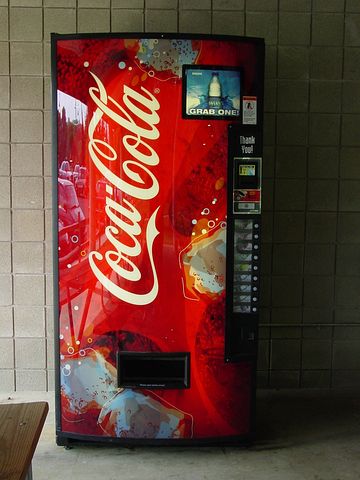
Coca-Cola may get the credit for the advent of dynamic pricing – with soft-drink vending (almost 20 years ago now).  Coke added a heat sensor and a computer chip to their machines, and as the outside temperature increased so did the cost of a soda.  Bad taste, and bad decision.  Consumers figured out the game and raised a big stink.  The running joke at the time – maybe not so funny today – was Coke would next install a camera to determine how much change was in your pocket.  Pepsi seized the opportunity to lure the unhappy customers and Coke quickly dropped the techno-gimmick.  But dynamic pricing took hold and never looked back.

Dynamic pricing is easier to digest when it targets times or situations where customers don’t notice or don’t even care.  The better example is school supplies.  Towards the end of summer your local Wal*Mart or Target will deep-discount pencils and paper and the like, often as much as 50%.  Kids will flock to the sale and load up on everything they need.  Parents will give their receipts an approving smile.  But guess what?  The store still wins.  That’s because “impulse purchases” bagged up with the school supplies are priced slightly higher than usual, more than offsetting any loss from the sale.

Dynamic pricing is hardest at work in hotels (what rate makes sense to fill that empty room?), utilities (do you really need the air conditioning right now?), and outdoor sporting events (are you willing to watch your baseball team during that unexpected rainstorm?).  And of course, any time you shop Amazon or Uber, dynamic pricing is asking the question, “how much do you really want that product or ride?”

Let’s pull up to the pumps again.  If you use “GasBuddy” or some other app designed to locate the lowest price-per-gallon, you’re winning the battle – but not the war.  I wish I had GasBuddy the first time I filled up as a teenager.  I crunched the numbers: forty years of driving; a tank of gas per week; eighteen gallons or so per tank.  If I purchased at $0.03/gallon less each time I filled up, I’d have an extra $1,000 in my pocket by now.

Thanks to Watson and his endless algorithms however, GasBuddy isn’t much more than instant gratification.  The suppliers are always one step ahead.  Unless you keep an eye on prices (and a few gallons in your tank), you’ll inevitably purchase when your demand takes priority.  Did you know gas is less expensive in the early hours of the day?  That’s because commuters are more likely to fill up at the end of the day, when they unknowingly drive up demand.  The computer is only too happy to adjust the price.

Maybe now you’ll leave the house a little earlier in the morning.  Fill up on your way to work instead of on your way home later in the day.  You will save a couple of cents per gallon if you do that.  And good for you – you’re beating the dynamic-pricing game.

Just don’t buy a cup of coffee while you’re at it.


Down Goes The Flag

Lately it seems the American flag is more often at half-staff than not. When the flag is at full-staff I get lost in the surrounding scenery, with just a passing glance at the Stars & Stripes. But at half-staff the flag is an effigy of its prouder self.  It might as well be illuminated with several of those Hollywood-style searchlights, as if to say, “something’s wrong with this picture.”

There is something wrong with this picture: I don’t immediately know the reason the flag goes to half-staff. There’s no accompanying billboard to tell me who or what we’re commemorating with this gesture. In fact, it wasn’t until I wrote this piece that I navigated to halfstaff.org (of course there’s a website), where you can learn why and when the red, white, and blue becomes more than just the unfurled symbol of America’s freedom.

Let’s get two misconceptions out of the way. One, the flag is not considered “half-mast” but rather “half-staff”. If the flag is “half-mast” you’re probably rocking and rolling on a ship at sea instead of standing on dry land (but the significance remains the same – respect, mourning, distress, or a salute).  Two, the flag is not “raised to half-staff”.  First it is raised to full-staff, paused, and then lowered to half-staff for the rest of the day. But unless you’re there at sunrise you’ll probably miss that little detail.

“Half-staff” dates to the century before America’s founding fathers.  Today the President issues the request through executive order, and all government facilities (including schools and military bases) are expected to comply.  Typically, we’re commemorating the death of a prominent government official, whether on the day of passing or the day of remembrance.  And speaking of passing, the gesture of lowering the flag is said to make room for an “invisible flag of death” flying above.  I kind of like that.

As if to play copycat, state, city, and other flags and pennants are expected to follow suit whenever the American flag goes half-mast.  But state flags can go half-mast by their own right.  Here in Colorado our state flag has been lowered more than twenty times in the past five years.  Just yesterday our governor ordered half-mast, to honor the passing of Ray Kogovsek, a former Colorado lawmaker and U.S. Congressman.

The American flag is also flown at half-mast to acknowledge days or events in U.S. history.  Thus, you can expect the raise-then-lower on Memorial Day, Pearl Harbor Remembrance Day (12/7), and what is now called Patriot Day (9/11).  Also since 2001, the flag is flown at half-mast in conjunction with the annual National Fallen Firefighters Memorial Service.

Several similar gestures to half-staff – especially since the advent of social media – have emerged to enlighten us to those who suffer.  Think about all those “Awareness Ribbons” (or bracelets), displayed on clothing and cars.  Their meaning is linked to their color, as in the following examples: Blue – Drunk-driving intolerance; Pink – Breast Cancer awareness; Rainbow – Gay Pride and support of the LGBT community; White – Victims of terrorism or violence against women; Yellow – Support of U.S. troops (among a dozen other designations), but generally a symbol of hope.

Recently I’ve noticed houses in our neighborhoods with a single green light brightly illuminated next to the front door at night.  As I discovered here, I’m seeing the “Greenlight A Vet” program, meant to “show America’s veterans the appreciation they deserve when, back home and out of uniform, they’re more camouflaged than ever.”  You can even purchase and/or register your green light on the website as a show of solidarity.  9.3 million people have done just that.  Four are right here in my zip code.

The green lights do catch my attention.  As a civilian I don’t think our veterans get nearly the appreciation or respect they deserve, so “bravo” to the program.  But the American flag doesn’t get the appreciation or respect it deserves either (a topic for another post).  Thankfully, it’s hard to ignore the right-but-somehow-wrong image of the Stars and Stripes at “half-staff”.

Perfunctory Perception

The Washington Post began a recent front-page article with the headline “Why President Trump is Probably Right…”, and I was immediately suspicious. The Times is an outwardly liberal rag. I can’t recall one article – let alone a headline – where they’ve waxed positive about the current administration. Curiosity piqued, I read Kristine Phillips’ well-written article and discovered it was not so much about President Trump himself as it was about the “first 100 days”.  You’re going to read a lot about that this weekend.  And history tells us one hundred days – no matter the successes and failures contained within – rarely define the legacy of a U.S. president.

We have Franklin D. Roosevelt (32nd U.S. President – 1933-1945) to thank for setting the bar of “first 100 days”.  Four months into his first term Roosevelt delivered a noteworthy “fireside chat” to the people, including a plan to pull the country out of the Great Depression.  Roosevelt also had a congressional majority squarely aligned with his administration.  As a result fifteen major bills were passed in his first hundred days, including the most critical; to stabilize the nation’s banking system.  It was a virtual sink-or-swim chapter in American history.

No president since the days of the Great Depression has faced a more daunting economic crisis, which is why none of their “first 100 days” measure up to Roosevelt’s.  Our last two presidents make for interesting examples.  George W. Bush entered his term intent on cutting taxes and reforming education, and he did sign the No Child Left Behind Act within the first year of his administration.  But more likely Bush will be remembered for the unforeseen events on and after September 11th, 2001.  Barack Obama sought economic stimulus by signing the American Recovery and Reinvestment Act in the first few months of his administration.  But more likely Obama will be remembered for the Affordable Care Act, signed towards the end of his first year.

Since Roosevelt’s administration, seven of nine presidents have been elected to a second term (not including Kennedy and Nixon).  Accordingly one hundred days is usually the prelude of an eight-year tenure, representing less than 3% of the total time frame.  I’d venture to say a president’s legacy is more the product of what happens during the other 97%.

To draw personal parallels, I thought about what it would be like to be judged as a son or a husband or a father; a student in school or a manager in the workplace – based on “first 100 days”.  No thanks; I can say with confidence I needed “the other 97%” to establish my legacy in each of those roles.

So where was President Trump “right”, according to The Washington Post?  The full headline read, “Why President Trump is probably right about the ‘ridiculous standard” of the first 100 days”.  Assuming two terms, Trump’s administration has another 2,820 days.  I’ll go with “probably right” too.  After 100 days, you’re still circling the ring trying to land a punch.  You’ve still got your fifteen rounds.

Again, the media will be all over this topic in the next couple of days so enjoy their rush to judgment.  The conservatives will make a best effort to spin Trump’s first 100 days positive; the liberals not so much.  The New York Times is quick to point out not one of Trump’s campaign-promised pieces of legislation has been passed, while The Hill prefers to recognize his “five key moments”.  Even Trump himself – who I voted for – recognizes the significance of perception.  One hundred days may be a perfunctory time frame but there’s no escaping the report cards.  Hence we have a bold tax plan – which could amount to Trump’s most defining legislation – released just days before the end of “the first 100”.

The most thought-provoking quote I found on this topic came from author Doris Kearns Goodwin.  “Less important than a scorecard of accomplishments,” she said, “is the leadership style demonstrated during the early days.”  In other words, our commander-in-chief himself – not just his policies – is a work-in-progress well beyond this weekend.  Keep your eye on the remaining 97%.


Manipulation Games

In April of last year Starbucks modified its customer loyalty program, linking reward “stars” to dollars spent instead of store visits. Where previously you nabbed a free coffee for twelve trips to the cash register, you now need a total purchase value exceeding $63 .  According to CNN, “…customers were furious with the new program.”  Maybe so but those customers didn’t stay away either.  Starbucks’ 2016 gross sales were $21.3B, up 10% from its previous fiscal year.

Once upon a time I resisted customer rewards programs but over the years I’ve made peace with them.  I keep a couple dozen loyalty cards in the car or on my phone, ready to play whenever I visit this store or that restaurant.  I still control where, what, and how much I purchase.  Since I don’t keep a close eye on my rewards, I’m pleasantly surprised whenever I qualify for a freebie or a discount.

But here’s what I don’t like about rewards programs.  They’re designed to manipulate your spending habits.  That’s where Starbucks – like so many other merchants – gets a “fail” on my customer satisfaction test.  In addition to their stars program Starbucks sends emails every other day (which I unsubscribe from but always seem to return).  Those emails encourage me to purchase in certain ways or quantities or timeframes with the allure of “bonus” stars.  It’s a ruse; plain and simple and obvious.  No amount of “free” will ever tempt me to buy three breakfast sandwiches in five days.  Or three Frappuccino’s in three days.  (I don’ t even buy one breakfast sandwich or one Frappuccino.  Just coffee.)

Starbucks may annoy me with their sales tactics but I still buy their products.  The same cannot be said for credit card companies.  The newest Visa and MasterCard programs include sophisticated reward programs where spending is literally the only path out of debt.  Take Chase Bank’s Sapphire Reserve Visa card.  As trendy as this elegantly thin metal card appears to be, it’s utterly manipulative.  For starters, just holding the card in your hand sets you back $450 a year.  Then you’re encouraged to spend $4,000 in the first three months to qualify for 100,000 reward points (recently sliced to 50,000).  You’re also tempted by an instant $300 travel credit – which can only be used through Chase’s partners – as well as credits towards Global Entry, TSA Pre, and airline lounge fees.

No matter how you justify the rewards of Chase Sapphire Reserve you’re still spend-spend-a-spending to recoup the costs.  Consider Sapphire points are valued at 2.1 cents each.  The best-case scenario therefore – spending on travel or dining – still needs to add up to $15,000 before you’ve paid off the $450 annual fee.  Too rich for me.

Las Vegas is getting in on the rewards game too.  Sin City’s legendary “free drink” is about to enter the history books.  Slot machines now include small colored lights, easy to spot by the passing cocktail waitress.  If you’re “red” she’ll walk right past you without so much as a smile.  If you’re “green” you’ve fed your machine enough to earn a “free” drink.  The same goes for casino parking lots; spend enough inside the building and you’ll earn a voucher for outside.  Is it any wonder gambling is no longer the biggest source of revenue in Las Vegas (in favor of hotel, restaurant, and bar purchases)?

Despite these trends, I’ll keep playing the rewards game and very occasionally cashing in on anything “free”.  But I’ll also be wary of the subtle manipulations.  Just yesterday I received my umpteenth Southwest Airlines’ Visa card offer.  All I must do is spend $2,000 in three months for 50,000 points and no annual fee.  That application goes straight to the shredder every time.  My one and only Visa card with its no-frills-no-cost rewards program suits me just fine.


Survivor: Siberia

Very few shows capture my attention like CBS’s Survivor.  What started as a fairly contrived reality television competition has evolved over many years to a fascinating cat-and-mouse game of wits.  Survival of the environmental extremes pales in comparison to the mental madness brought on by deliberate deceit, misunderstood conversation, and naked errors in judgment.  The lack of sleep by itself (on some nights strategic, on others unavoidable) would have me stepping out of the game well before the final day.

Like most reality shows Survivor is edited to manipulate the viewing experience to be as entertaining as possible.  You only see what the producers want you to see.  Given hundreds of hidden cameras, I can only imagine how much film ends up on the “cutting room floor”.  Regardless, Survivor is undeniably popular in America (with similar competitions in fifty other countries).  The current season – the thirty-fourth – is watched by over ten million viewers.  There have been over five hundred episodes.  And the format of the game is relatively unchanged from the first competition seventeen years ago.

When “The Hunger Games” movies came out in 2012, I remember how I couldn’t help drawing several parallels to Survivor.  In both cases you have contestants battling until only one remains; the recipient of untold riches.  In both cases the contestants have but a few items of comfort and are forced to endure the harsh conditions of their surroundings.  Also in both cases, you have a game manipulated behind the scenes by the powers that be, to maximize the entertainment value for its viewers (even at the “expense” of contestants).

So now let’s talk about Game2: Winter, the latest spin on reality TV competition from Russia.  Brace yourself.

Game2: Winter (G2W) is a hybrid of Survivor and “The Hunger Games”.  Take fifteen men and fifteen women, drop them into a remote location in Siberia (which is anywhere in Siberia come to think of it), wait nine months and see who survives.  Each entrant must be declared “mentally sane” to qualify (kind of an oxymoron for a G2W player, don’t you think?) and chooses up to 100kg of equipment from a warehouse en route to Siberia.  Clothing.  Tools.  Weapons.  Whatever they feel they need to survive.  Each entrant also gets a satellite-linked panic button.  That comes in handy when they encounter the hungry wolves and bears in the region – assuming the production crew can get to them fast enough.

With a particular nod to “The Hunger Games”, G2W will be televised 24/7.  Oh, and the contestants can do anything they feel is necessary to win the game.  Anything.  The Russian government has gone on record to say players will be prosecuted for crimes (i.e. murder, rape, physical violence), and the producers say they won’t interrupt such activities.  2,000 cameras have been strategically located to capture the “entertainment”.

Games2: Winter premieres this July.  The extremes of Siberia (100 degrees in the summer, -40 in the winter), the lack of adequate food/shelter, and the resident wildlife make you wonder if anyone will survive, let alone commit a crime along the way.  But apparently the $1.6 million prize is worth the risk in Russia.  G2W has a lengthy waiting list for its thirty contestants.  To them I say: I hope one of you will outwit, outplay, and ultimately outlast the others.  I certainly hope it doesn’t take nine months, nor something worthy of prison time.  May the odds be ever in your favor, even if I know they won’t be in Siberia.

Some content sourced from Wikipedia, “the free encyclopedia”.

Running for Roses

On the treadmill this week, surrounded by dozens of others tackling their workouts, an idea formed in my head. Whether it’s running, sprinting, or even dancing on the treadmill (the new trend these days), there’s a subconscious sense of competition with those around you.  Someone wants to leave the room believing they “won” their workout.

Flash back to state fair or neighborhood carnival memories for a second. Those light-bright terror-filled rides drew me in as a kid, but how about the midway games?  That’s where I dropped some serious cash. Ring toss. Shooting galleries. Fishing pond. Skee ball.

In my book, the most memorable of the midway games was the Roll-A-Ball horse race. A larger-than-average booth with a dozen open stools invited you to have a seat. Along the back was a massive tote-board with horses lined up top to bottom. You had a brief sense of mounting a thoroughbred and trotting into the starting gate. The game began (with an obnoxious bell), and each “jockey” rolled a ball up a small wooden board and into holes.  The further away the hole the faster your horse galloped across the board.  The closer the hole the less the gallop but also the quicker the ball came back to you.  First horse across the finish line won (another obnoxious bell).  Some versions of the game had you shoot targets with water guns instead of Roll-A-Ball.

Here’s a video of the Roll-A-Ball horse race in action.

There’s a ton of frantic energy with Roll-A-Ball.  You play while nervously glancing at the tote-board to see how your horse is coming along. Whenever someone hits a high-score hole their horse surges to the lead. Towards the end you’re aiming for the further holes in a desperate attempt to make up furlongs.  As if the distraction of carnival sounds isn’t enough, thundering hoof beats blare every time a horse makes a move.

With Roll-A-Ball in mind, let’s go back to the gym.  I propose we combine the horse-race concept with the treadmill workout.  Place a big tote board at the front of the room. Assign each treadmill to a runner on the board.  Then create several competitions as everyone works out simultaneously. Who has been running the longest? Who is running the fastest? Who is covering the most distance?  The runners advance across the tote-board according to the individual efforts on the treadmills.  Tote-board results change constantly as runners join or leave the game.

Would people “play”?  You bet they would.  Runners are competitive by nature as they vie to “medal” or win their age category or even just improve their “personal best”.  Runners are entering 5K’s and 10K’s, half-marathons and marathons in record numbers.

Me?  I run because it makes me feel good.  But don’t think I don’t notice the results of my workout spelled out in big, bold numbers on the treadmill display. Total Time. Total Miles. Average Speed. Calories Burned.  Sometimes I race against my former self.  Sometimes I increase my pace to match the faster runner three treadmills over. Sometimes I run longer to outlast the creeper who chose the treadmill right next to me when several others were open.

Competition leads to better workouts so the racing element is a slam-dunk.  Add a “join” option to the treadmill display and you instantly pop up on the tote-board.  Quit whenever your workout is done.  Even if you don’t “win” I’d bet dollars to doughnuts you’d get a better workout than if you were running in isolation.

Mark my words, someone more innovative than me will take this idea and “run with it”.  Gyms will cough up the purchase price because racing games would attract more memberships.  And maybe, just for a moment, runners will feel like they’ve stepped off the treadmill and back into the carnival of their childhood.

Happy Days Aren’t Here Again

Last week included a holiday and you probably didn’t know it. On March 20th the world celebrated “International Day of Happiness” for the fifth consecutive year. The United Nations adopted a resolution in 2012 to establish the holiday, seeking “a more holistic approach to development” and recognizing “the pursuit of happiness is a fundamental human goal”.  Ladies and gentlemen, the UN is trying to bring more joy to the world.


I’ll admit, the first time I read about a holiday for happy I had to wonder what really goes on behind closed doors.  Maybe the UN reps spend their days on Facebook liking/loving posts like the rest of us.  Maybe they’re happy and they know it and clapping their hands.  Maybe they ask each other “aren’t you glad you use Dial and don’t you wish everyone did?” Then 0ne day someone decided a celebration of all that happiness was in order.

On the other hand, maybe the UN’s daily agenda is so depressing someone insisted 1 out of every 365 days should be set aside just to feel better. A don’t-worry-be-happy moment.


To go together with March 20th, the UN also publishes the “World Happiness Report” (WHR), an annual measure of happy in each of 155 countries.  The recipe: the combined measures of income, healthy life expectancy, having someone to count on in times of trouble, generosity, freedom and trust (trust defined as absence of corruption in business and government).  The WHR then crunches the numbers and tells you how close you are to the happiest place on earth.

Again I had to ask myself – is the UN for real?  I mean, I’m usually as merry as the day is long, and I assumed the same was true of my fellow Americans.  “Not so fast”, says the WHR.

The 2017 top ten: 1) Norway, 2) Denmark, 3) Iceland, 4) Switzerland, 5) Finland, 6) Netherlands, 7) Canada, 8) New Zealand, 9) Australia, 10) Sweden.

Look at that list again.  See any patterns?  Five of the ten are the Nordic countries.  Another two are in close proximity.  Another two are side-by-side way down in the Southern Hemisphere.  And finally you have Canada (which feels like a party-crasher).  But the ingredients don’t lie – everything’s coming up roses in all ten.   The Nords, the Swiss, the Dutch, the Canucks, the Kiwis, and the Aussies are walking on sunshine.

If the happiness formula is to believed, Norway has it all figured out.  Consider the following excerpt from the WHR Executive Summary (p. 1): Norway moves to the top of the ranking despite weaker oil prices.  It is sometimes said that Norway achieves and maintains its high happiness not because of its oil wealth, but in spite of it.  By choosing to produce its oil slowly, and investing the proceeds for the future rather than spending them in the present, Norway has insulated itself from the boom and bust cycle of many other resource-rich economies.  To do this successfully requires high levels of mutual trust, shared purpose, generosity, and good governance, all factors that help to keep Norway and other top countries where they are in the happiness rankings.

And how about the Americans?  We come in at #14.  That’s happy-happy-joy-joy compared to most others, but consider this: we’ve never hit the top ten and we’ve been dropping since the first year the WHR was published.  The U.S. gets high marks for income and life expectancy but falls short in the other four categories.  To add an exclamation point: this year’s WHR includes a chapter by Jeffrey D. Sachs titled “Restoring American Happiness”.  As Sachs puts it:

The predominant political discourse in the United States is aimed at raising economic growth, with the goal of restoring the American Dream and the happiness that is supposed to accompany it. But the data show conclusively that this is the wrong approach. The United States can and should raise happiness by addressing America’s multi-faceted social crisis— rising inequality, corruption, isolation, and distrust—rather than focusing exclusively or even mainly on economic growth, especially since the concrete proposals along these lines would exacerbate rather than ameliorate the deepening social crisis. (WHR, p. 179)

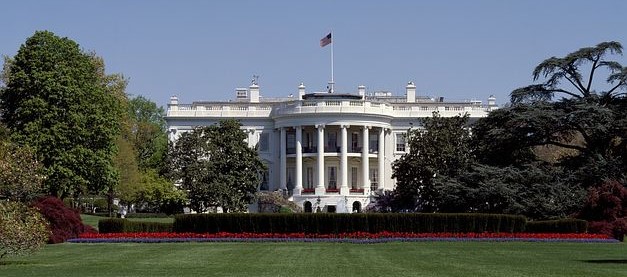
Take note, Washington D.C.

The World Happiness Report is a 5MB, 188 pg. report available here, if you want all the details on where everything’s coming up roses (or not so much).  For me, the message was clear enough from the top ten.  If Americans want to live happily ever after, we need to study our neighbors to the north (as do our counterparts in Europe) or delve deeper into life “down under”.  Extreme temperatures be damned, all of these people are as happy as clams (at high water) and whistling while they work.

Cheer up, Yanks; it’s not the end of the world (as perhaps it is in #155 Central African Republic).  At least the U.S. claims a spot in the top ten percent of the WHR.  That’s happy landings on my runway.

Famous Dave’s

In church a few weeks back, the congregation sang “A Mighty Fortress Is Our God”, the popular Methodist hymn with such confident, faith-building lyrics. I’ve heard “A Mighty Fortress…” a hundred times over, yet try as I might to focus on the words I only ever seem to think: “Davey and Goliath”.

Davey and Goliath was an American clay-animated children’s television series produced by the Lutheran Church in the early 1960’s.  The show was created by Art Clokey (better known for his characters on Gumby and Friends), and focused on childhood life lessons born out of Davey’s experiences alongside his dog Goliath.  Davey always found himself in conscience-testing situations and Goliath brought the wisdom to steer him the right direction.  Davey and Goliath aired on Sunday morning television for the better part of five years and I didn’t miss many episodes.  So why the connection to “A Mighty Fortress…?”  Because the hymn trumpeted behind the closing credits of every Davey episode.  I can’t get that association out of my head.

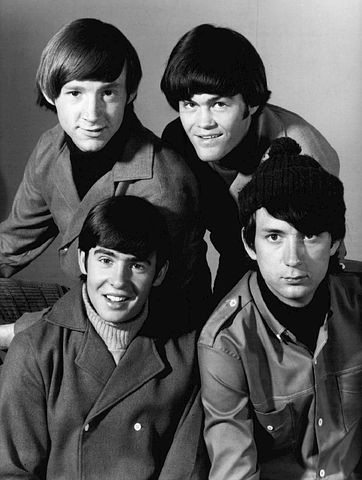
Memory association is a strange bird, as if there are kindred thoughts floating around out there just waiting to be connected.  I associate a Methodist hymn with an old children’s television show, whereas your association might go down a wholly different path.  Take it a step further for example.  With Davey and Goliath on the brain what comes to mind next?  You might think of the Bible story – the young and future king David bringing down the Philistine warrior Goliath with one pull of the slingshot.  Me, I think of The Monkees – the manufactured American rock band of the 1960’s.  The Monkees had the only other Davey I can think of – singer Davey Jones (lower left in the photo below).

Now that I think about it (memory association at work again), I do have another Davey in mind, which you see in the below photo (not me – the shop).  Davey Davey is a “top hair salon” smack dab in the middle of Dublin, Ireland.  The owners – presumably brothers – have the surname Davey.  That’s a rare find: a surname more commonly used as a given name.

The Monkees always make me think of The Beatles, and just this week The Beatles associate to “sensational” (intentional) misspelling: “Beatles” vs. “Beetles”.  I never thought about it until my son brought it up but the “Beetles” became the “Beatles”, changing their name early on to associate more with musical beats than insects.  How’s that for useless trivia?

The Monkees are also a memory-association “cul-de-sac” for me; that is, I came back to Davey Jones shortly after I left him.  Davey Jones then memory-associates to several other David’s who made small but significant appearances in my life, as follows:

  • David Cassidy – Alongside the Partridge Family (and The Brady Bunch), Cassidy occupied several years of my Friday night childhood television.  Not one of my better life choices.
  • David Lee Roth – Alongside Van Halen, helped develop my appreciation for American rock in the 1970’s (if not the current fashion trends).  As Roth would say, “might as well jump!”
  • David Robinson – Alongside his Navy teammates, helped develop my appreciation for the best in college basketball post players.  Imagine, a class athlete and a class act.  That was “The Admiral” in a nutshell.
  • David Letterman – Reinvented late-night talk show for me and my fellow baby-boomers.  In college I didn’t miss a single Letterman opening monologue (or Top Ten list).
  • “David” – Michelangelo’s most famous sculpture, on display in Florence’s Galleria dell’Accademia near the Piazza della Signoria.  (How “the David” came to be is a remarkable story – read Irving Stone’s biographical novel “The Agony and the Ecstasy”.)
  • David Koresh – Alongside his Branch Davidian cult followers, showed me the horrors of brainwashing amidst the famous 1993 standoff with government officials in Waco, TX.  (There had to be at least one “shame-the-name” on this list.)
  • David Copperfield – Elevated magic to jaw-dropping larger-than-the-stage performances.  My family and I saw him perform in Colorado Springs in the 1990’s.  Copperfield was unquestionably one of the legends of his profession.
  • David Schwimmer – Still can’t get “I’ll Be There For You” (or Rachel) out of my head.

The list goes on and on – dozens of David’s making their mark out there.  Incidentally, the literal association of “David” is “beloved”, which also dates back to the Bible.  Nice.  But that’s not how my mind works.  I just keep coming up with famous Dave’s instead.

Some content sourced from Wikipedia, “the free encyclopedia”.


Reinstating the “Swoosh-Curl”

The Associated Press (AP) recently posted an article: “Cursive Writing Makes a Comeback in U.S. Schools”. That caught my eye, because I didn’t know cursive writing went anywhere in the first place. I assumed most everyone – regardless of age – can sign their name in cursive. Turns out the broad adoption of Common Core curriculum standards in 2010 removed “handwriting” as an essential skill.  The teaching time once used for cursive now goes to learning the keyboard.  Ask today’s student for a signature and you’ll probably get block letters instead of “continuous flow”.

I still remember my grade-school days spending hours on paper, forming my upper and lower-case letters.  Then I graduated to cursive, and the “swoosh-curl” of the loops as I progressed across the page without lifting the pencil.  Cursive evolved from block-letter writing as a way to speed up handwriting.  If speed were the only criteria, no wonder today’s generation prefers the keyboard.  In the race between my cursive on paper and my daughter’s thumbs on the smartphone, she wins by a landslide.

Speaking of cursive, here’s an example of my very own.  Hopefully you can read it.

That’s right:  The quick brown fox jumps over the lazy dog – a sentence I wrote over and over in cursive practice.  It’s a pangram – a sentence using all the letters of the alphabet.  The quick brown fox… is the most famous pangram but there are several others, including: Pack my box with six dozen liquor jugs!

The shortcoming of my own cursive writing is my speed – or lack thereof.  It took me almost sixty seconds to write the sentence above.  You could probably write the same sentence in half the time.  But I have a couple of challenges working against me.  One, I’m left-handed, which means I’ve developed a curious writing style where I curl my hand around the point where pen meets paper.  This forces my hand to stay higher on the page and avoids ink smears, but I can’t go very fast.  Two, I have essential tremor, where my hands shake slightly when held in certain ways (like writing).  If I don’t go s-l-o-w, my cursive is downright illegible.

If cursive writing was born of block letters, then block letters were born of calligraphy.  Calligraphy is writing elevated to a visual art, where the lettering is created with wide and narrow strokes and requires the use of a special pen.  Today’s computer fonts try very hard to simulate calligraphy but there’s nothing quite like the handcrafted version.  The finest examples – using the Latin script – are found in early copies of the Bible; the so-called “illuminated manuscripts” created before the advent of the printing press.  Today you’re more likely to find calligraphy on wedding invitations, college diplomas, and other formal documents.  I have an aunt who mastered calligraphy and I wish I’d kept some of her letters and thank-you notes.  That kind of penmanship suggests a certain level of elegance and refinement noticeably absent in today’s writing.

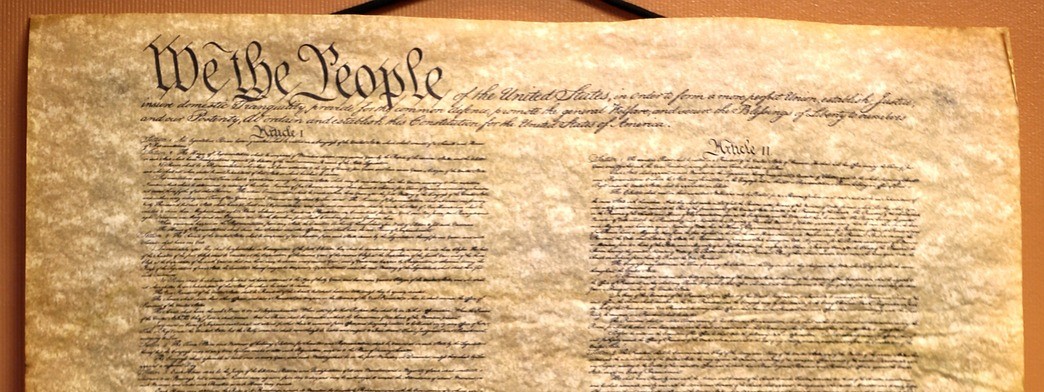
The AP news article claims fourteen states have reinstated cursive writing into their grade-school curriculum, so here’s hoping for more continuous flow signatures.  But there’s still plenty of debate about the “usefulness” of the swooshes and curls when keyboarding is clearly king.  To those who don’t see the value, consider this: our nation’s most important documents were written in cursive.  If you can’t write the U.S. Constitution in cursive you probably can’t read it in cursive either.  That would be a shame if you were ever lucky enough to see the original in the National Archives.

Some content sourced from Wikipedia, “the free encyclopedia”.

Bon Voyage!

Every now and then I come up with a topic for my blog, and then the topic somehow surfaces in the natural course of conversation later the same week. It’s a little unnerving – perhaps divine intervention – to watch someone bring up something you hadn’t thought about in years, or at least until a few days earlier.

85-bon-voyage-1

Such was the case this week when I opted for a (virtual) visit to Mont Saint-Michel, the majestic island commune and fortified abbey just off the coast of Normandy, France. Mont Saint-Michel came to mind because I received a mailer from my alma mater advertising a ten-day trip to the region next summer. The itinerary includes a stopover in Paris, a base hotel in the historic seaport village of Honfleur, extensive tours of Normandy focusing on the events of World War II, and finally, a full day exploring the island of “St. Michael’s Mount.” Mon dieu, what an adventure!

Mont Saint-Michel has a remarkable history on top of its dramatic architectural elements (which you can read about here).  Its buildings date to the 8th century, with the Romanesque abbey and monastery at the very top (“closest to God”), literally supported by a vast network of halls for stores and housing, and finished elegantly at the bottom – outside the walls – with individual houses for the handful of fishermen and farmers who live there.  The church inside the abbey is partnered with an open-air cloister (a square covered walkway for reflection).  A statue of the archangel Michael watches over the land from the very top of the church spire.  Magnifique, no?

85-bon-voyage-2      85-bon-voyage-3

Here’s an interesting bit of trivia about Mont Saint-Michel.  You may think the following photo is a distant view of the island.  Au contraire.  The Mont has a “sister” across the channel near Cornwall.  England’s island of “St. Michael’s Mount” is much smaller, but it still shares the characteristics of Mont Saint-Michel, including the significant rise/fall of the surrounding tides, the conical shape of the island, and a chapel at the top.

85-bon-voyage-5

In today’s world Mont Saint-Michel is a little touristy for my tastes, so perhaps it’s just as well I’ve never made the pilgrimage.  2.5 million visitors descend upon the island every year, hosted by only 25 full-time inhabitants (monks, nuns, and shopkeepers).  Tourism is literally the only source of income.  Besides a walk through the abbey and the spiraling streets, you’re channeled into the requisite shopping area, for food (including the famous to-go omelettes), and for purchases that can only be labelled as “tacky”. I actually have one of these souvenirs (below photo). Sacre’ bleu!  Maybe if they’d left off the sailboat…

85-bon-voyage-4

To further detract from the mystique of the Mont Saint-Michel, a permanent walking bridge was built three years ago, allowing round-the-clock access from the mainland car-park.  Once upon a time you had to wait until low tide and then quickly walk across the natural spit of land before the water returned.  Now you just cross whenever you want.  Too bad, but apparently the channel was filling in with silt and a bridge was the only way to keep the island an island.  C’est la vie.

My first introduction to Mont Saint-Michel was forty-odd years ago on the shores of California, not France.  San Diego County hosts elaborate sand-castle building competitions on its beaches, and one year I snapped the following photo of the winner.

86-bon-voyage-6

To visit Mont Saint-Michel, you’ll need to drive four hours to the west of Paris, all the way to the coast of the English Channel.  Unless you have a hankering for WWII history, there isn’t much else to draw you to the region.  Which brings me back to the start, and my comment about topics resurfacing later in the week.  Three days after I wrote this post, I was having a beer with some older friends and we got talking about the movie “Saving Private Ryan”.  One of the guys said his dad served in WWII and he’d taken him back to the beaches of Normandy, where he’d spent part of his time as a medic.  “Normandy?”, I said.  “Yes”, he said. “You know, in the northwest of France near Mont Saint-Michel?” To which I almost said, “excusez-moi?”

Some content sourced from Wikipedia, “the free encyclopedia”.