Banana Rant

Let’s start with a song today; or at least a verse from a song.  See if you remember this little number:

Jack, Jack bo-back, Banana-fana fo-fack. Fee-fi-mo-mack, Jack!

The song? It’s “The Name Game”, that annoying rhyming chant that should stick in your brain for the next several hours.  Here’s another one:

Day-O! Day-O! Daylight come and me wan’ go home!

The song?  It’s the “Banana Boat Song”, made popular by Harry Belafonte.
65-expunge-1

I mention these songs because they’re happy on bananas.  And I hate bananas. Let me rephrase: there is no fruit, vegetable, or otherwise consumable item on God’s green earth more singularly unappetizing to me than bananas.  I only have to think about the taste of a banana and I consider tossing my cookies.  Bad news for me though – supermarkets, songs, commercials, movies and desserts ensure my world is constantly bombarded with the yellow fruit.  Bananas are as prevalent in the urban jungle as they are in the real one.

I blame my growing-up years, now that I think about it.  My first bike was a 1968 Schwinn “Lemon-Peeler”- the one with the “banana” seat.  What in God’s name was I thinking?  I could’ve had Schwinn’s “Pea-Picker” (green) or Schwinn’s “Cherry-Picker” (red) but no; I had to opt for a “Banana-Peeler” (as it came to be known).  It horrifies me to realize I sat on a banana for a good chunk of my childhood.

My Saturday mornings included “The Banana Splits Adventure Hour”; that silly animal rock band I somehow found entertaining.  Disney crushed me with “The Jungle Book”: King Louie eating bananas every time he was on-screen and even singing about them.  (I will never sing about bananas.)  Finally, I can’t shake those Chiquita banana commercials, the ones with Miss Chiquita dancing and singing: I’m Chiquita banana and I’m here to say… catchy little jingle.  It’s like the media was conspiring to force me to like bananas.

65-expunge-2

Fruit was a requisite item in my school lunches back then.  Oftentimes my mom would put a banana in my school lunch instead of an apple or an orange or grapes.  My protests went unacknowledged at home so I gave bananas away at school, to anyone who showed interest.  Not that I got anything worthwhile in return.  Bananas have little value in the American high school.

All of the above pales in comparison with one ghastly horror-film-worthy banana-filled-memory.  Coming into the kitchen one morning before school, I found my mom busily frying bananas on the stove.  I rubbed my eyes in disbelief but the image didn’t go away – banana slices sizzling and popping in an oil-filled pan.  Seriously?  Aren’t bananas bad enough the way nature made them?  Couldn’t I opt for a bowl of sliced bananas and oranges instead, where enough shredded coconut on top blocks out the banana taste?  Apparently not.  Mom just had to be adventurous.  I can still picture that plate of thin, dark, hot, greasy banana slices next to my more redeeming breakfast items.  Gag.  It’s a forever-imprint on my brain.

65-expunge-4

Even the concept of “acquired taste” failed me with bananas.  For example, I used to hate tomatoes (and yogurt repulsed me even more), but somewhere in my food journey I actually learned to enjoy them.  Now they are staples in my diet.  Not so bananas.  Bananas are as choke-worthy today as they were in that frying pan forty years ago.

If I must eat bananas there’s only one way they’re going down the hatch – in banana bread.  I actually like banana bread.  That’s probably because the dozen other ingredients win the battle and effectively expunge the banana taste.  It’s like Fig Newtons if you hate figs.  Or Oysters Rockefeller, with enough broiled cheese and spinach to effectively kill the oyster.

Opinion: bananas foster, banana splits, banana cream pies, and banana pudding are all outstanding dessert choices as long as you leave off the bananas.

65-expunge-4

Facts: 100 billion bananas are consumed every year across the globe.  Americans alone account for 27 pounds/person/year, which equates to 108 bananas!  You’ll find bananas on the list of the “World’s Healthiest Foods”.  The Latin word for banana translates to “Fruit of the Wise Men”.  California even has a Banana Museum for crying out loud. (17,000 items!)

None of that moves me.  Gwen Stefani may sing B-A-N-A-N-A-S on “Hollaback Girl” and shirts or sweaters may tempt me at Banana Republic, but I will never put “like” and “bananas” into the same sentence (er, except this one).  But hey, call me if you’re hungry.  My 108 bananas are all yours.
65-expunge-5


Foods are Something Else!

Let’s talk about hamburgers. Depending on your druthers a carefully-proportioned build of the bread, meat, vegetables and condiments makes for an American classic that – despite trendy variations – hasn’t changed in over a century. But here’s a curiosity for you: Why does every ingredient in a burger also serve an entirely different purpose in the English language? Let’s disassemble, shall we?  Top to bottom, I now give you the eleven essential ingredients.

64-druthers

The bun comes first of course; the capstone to lock all other burger components into place. But a bun is also an element of a hairstyle, is it not? You have that coil of hair on top of the head or at the nape of the neck and you call it a bun.  We even have the man-bun.  Er, not me.  The only bun I identify with is on my burger.

Below the bun we find a very small vegetable garden.  For today’s purposes we include onions, tomatoes, lettuce and pickles.  But did you know, if you know all there is to know about a topic, you “know your onions“?  Did you also know a tomato is old-world slang for a woman or a girl?  Lettuce is today’s language for cash – dollar bills if you will.  And a pickle, well that’s one of those predicaments where you say, “how did I get into this?”

Here’s a favorite ingredient.  I like bacon on my burger.  But not only are we all trying to bring home the bacon (i.e. make a living), but we’re also occasionally trying to save someone’s bacon (i.e. they desperately need our help).

Time for condiments.  In no particular order, squeeze on a little mustard, relish and ketchup.  Now, if I approve of your hamburger I tell you it “cuts the mustard“.  And when you sit down to enjoy your burger I assume you relish the taste.

(Confession timeout: ketchup exists for the one and only purpose of serving as king of the condiments.  Call it ketchup or catsup; all I know is the Chinese claim its invention.  So opportunity knocks; let’s get ketchup out of the bottle and into an alternative use in the English language!)

Now add a slice of cheese.  Think about that ingredient for a moment.  Where else do you use cheese outside of the food world?  Why, in front of the camera of course!  And when you “say cheese” let’s also agree it has nothing to do with the food, but rather the way the word forces your mouth into the requisite smile for the photographer.

We’re almost there.  The beef (patty) that is the essential ingredient of the hamburger is so much more than ground round.  It’s a reference to muscle or brawn (but not to be confused with “beefcake” as this blog is rated “G”).  Having a beef is about a complaint or an argument.  Building something in size or amount means beefing it up.

Let’s not forget about the bottom bun.  If we combine it with the top bun we have the plural, and that of course refers to a certain part of the human anatomy.  Pursue your “buns of steel” if you must; I will settle for my buns on burgers.

That’s all for today’s enlightenment on the vocabulary of the hamburger.  For extra credit check out the spice rack (“salt”, “pepper”, and so many more) or the bakery case (“cookies”, “rolls”), Foods are chomping to be more than just something to eat!

Thirst (for) Knowledge

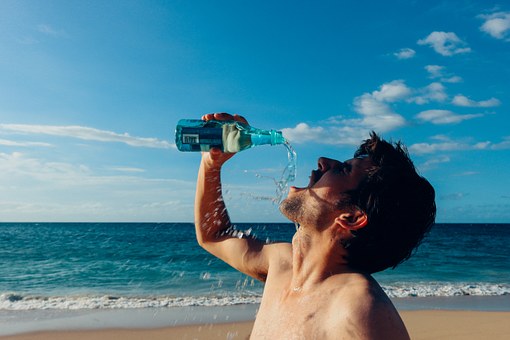
Water.

Two parts hydrogen compounded with one part oxygen.  Transparent, odorless, and tasteless, yet we can’t survive more than a few days without it.  If not for oceans, lakes, ponds; rivers, streams, and creeks; and a whole lot of underground aquifers, we humans would be in a heap of trouble.  With due respect to Harry Potter, water is the elixir of life.

63-elixir

It’s fair to say most of us don’t drink enough water for optimal health. The long-held belief that eight glasses a day is sufficient has been replaced by the following formula: your body weight in pounds, divided by two, expressed in ounces. For most of us that means even more than eight glasses.  Gulp.

Somewhere along the way of several years of working out, I developed the habit of drinking small amounts of water during exercise, instead of chugging just before or just after.  On the treadmill for instance, I take a slug every time I complete a kilometer.  In the cycle class I drink every time the instructor says to pick up the bottle.  In a road race I never pass up the tables of water cups.  No question; the body works better with a regular intake of water.  Or at least a splash to the face.

Whenever I know I’m not drinking enough water I recall two vivid memories where I reached full-on dehydration status.  The first occurred as a child, when I was driving in the desert with my family.  I let the day go by way too long without taking a drink, and before I knew it my throat was so parched I could barely speak.  The heat of the day surely made it worse.  I pleaded to my grandparents to stop at a gas station (or anywhere with a halfway sanitary drinking fountain), which we eventually did, and I’m sure I took in a quart or more to quench my thirst.  Here’s a little irony: my desert dehydration is a fond memory because I can still hear my grandfather’s distinctive voice, saying, “need to wet your whistle, do ya?”  That was over forty years ago.

My second “parchment” occurred just short of the summit of Pikes Peak here in Colorado Springs – the first time I climbed it.  Pikes Peak is the highest mountain in the southern Front Range of the Rockies, at just over 14,000 feet.  Using the popular Barr trail it’ll take you five or six hours to get to the top.  Despite recommendations to carry a lot of water I only brought one 12-oz. bottle in my pack, which I refilled at a campsite halfway up the mountain.  I was getting by okay until the very last mile, when I ran out of water and my body literally began to shut down.  The combination of the effects of dehydration and altitude was devastating.  I could only walk a hundred yards at a pop, taking a seat on the rocks each time to recover for several minutes.  Mercifully I was close enough to the summit that I finished the hike, but not before realizing I’d been woefully unprepared.  In extreme circumstances the body demands a lot of water.  Certainly more than half your body weight in ounces.

If an elixir is defined as “a magical or medicinal potion”, then water qualifies in my book, and especially here in the high altitude of the Rocky Mountains.  It took a few years for me to gain a little thirst knowledge, but now my water bottle is my constant companion.  On that note, I think I need a drink!

Sphere Elegance

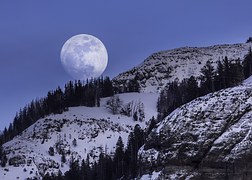
I love full moons.  They look a little too perfect to be one of nature’s essential elements and too large for the vast universe that surrounds them.  Yet there they are, perched silently above the horizon every month or so, beckoning to be plucked out of the night sky.

62-astronomic-1

We had a full moon last Friday and the next will be in mid-October.  But September’s stands alone, as it is rises closest on the calendar to the “Autumnal Equinox”.  It signals the end of the longer summer days, earning the nickname “Harvest Moon”.

The Autumnal Equinox (AE) takes place on September 22nd.  In fact, I timed the publishing of this post to the exact minute of the AE: 8:21am MDT.  The AE is the instance the earth’s axis is exactly perpendicular to its rotational axis around the sun.  When the axis is straight up and down you have equal amounts of “day” and “night” in that twenty-four hours.  That’s a pretty cool slice of astronomy.

As long as we’re in the classroom, the AE also signals the transition from summer to fall in this part of the world.  Yet anywhere in the earth’s Southern Hemisphere the AE signals the transition from winter to spring.  That fact brings a moment of confusion when you consider the Summer Olympics were just hosted in Brazil, doesn’t it?  At least they had a full moon last Friday, same as everywhere else.

Growing up in a narrow winding canyon, a full moon was a rare sight.  Back then I should’ve thought to wake up in the middle of the night, stand out on the lawn, and stare straight up into the sky to see one.  Maybe I saw a few fulls when I was camping in the Boy Scouts.  Or maybe I just remember them from several of the animated Peanuts specials.  (Charles Schultz was a fan of full moons.  Just watch “It’s the Great Pumpkin, Charlie Brown” next month on TV; or “Snoopy, Come Home” on NetFlix).

62-astronomic-2

As much as I enjoyed our Harvest Moon, it turns out I have an even bigger lunar event around the corner.  On November 14th we get a “Super Full Moon”.  A Super is the one full moon each year where the orbit of the moon is closest to the center of the earth.  So the Harvest may be big but the Super should be astronomic!

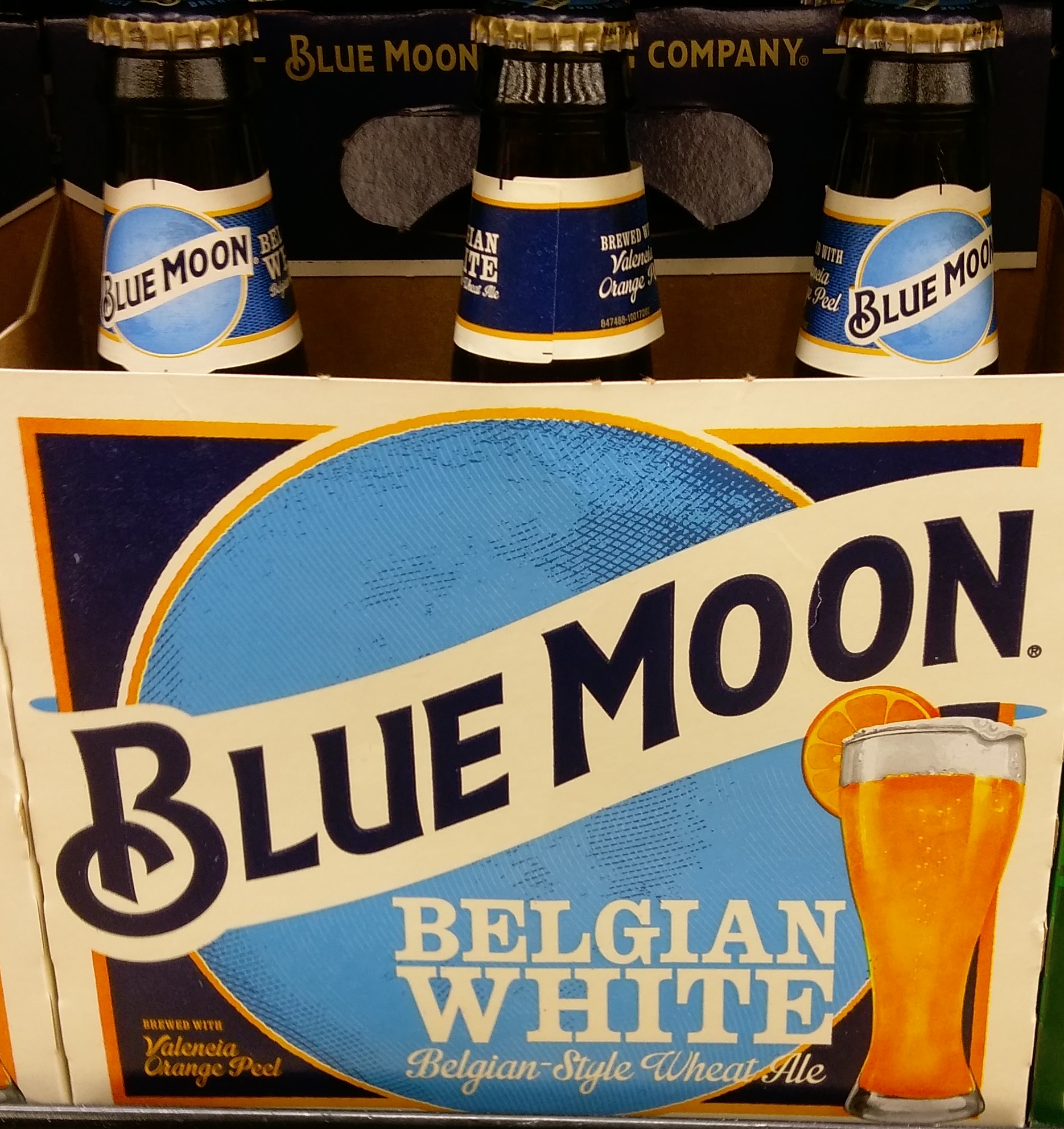
No discussion of full moons would be complete without a nod to the “Blue Moon”.  They say, “once in a blue moon”, and that means not very often.  A Blue is a second instance of a full moon in a calendar month.  There were no Blue Moons in 2016 (except the several I purchased for my own consumption of course).

62-astronomic-3

Thankfully I no longer live in a narrow winding canyon but instead in wide open spaces.  No fulls can slip by me anymore.  And I assure you, on that Tuesday in November the week before Thanksgiving, I’ll be hanging out in my family room window at dusk gazing east into the sky.  My Super will be on the rise.

Note: Portions of this post are credited to the research found at timeanddate.com.

Sentimental Utensil

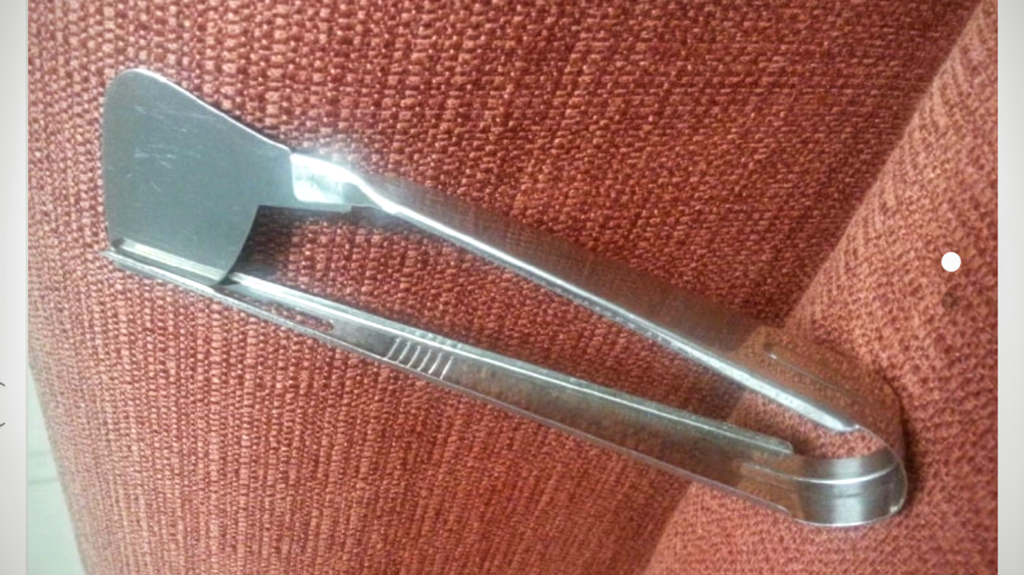
My wife and I were cleaning out the kitchen a few weeks ago when we came across a rather strange-looking device. It could be described as a combination between a small pair of metal tongs and some kind of slicer. We racked our brains trying to figure out what it was for.  Eggs?  Nuts?  Ice?  Bewildered, we wondered if it even belonged in the kitchen.

I showed our gadget to a couple of friends but they were as confounded as I was.  Then I turned it over to my ever-resourceful sister-in-law. She took it to a a couple of kitchen stores and asked several friends, all to no avail. Finally she showed the device to her hair stylist – who sent a phone video to his girlfriend – and voila! – mystery solved.  Turns out our little mechanical metal friend is a butter cutter.

I don’t blame you if you’re still confused.  Not only did I wonder why (as in, why do you need a butter cutter?) or how (as in, how do you use the darned thing?), but also when (as in, when did people ever use one of these?).

I’ll get to the why in a minute.  As for the how, a butter cutter is used by holding the blade perpendicular to a stick of butter, pressing the base down into the stick, then pushing down on the blade.  The push down and spring back of the blade produces the “pat” of butter you sometimes get with a dinner roll at restaurants.  Move on down the stick and you can churn out butter pats to your heart’s content.

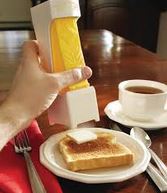
As for the when, it turns out our butter cutter is vintage.  It was popular back in the 1950’s.  If you simply must have one for your kitchen, go here.  But my research also led me to ask which, as in which one?  It turns out there are several butter cutters for your consideration:

61-vintage-2Here’s another vintage model – a bunch of pats all at once!

     61-vintage-3        An updated model – regurgitates pats one at a time.

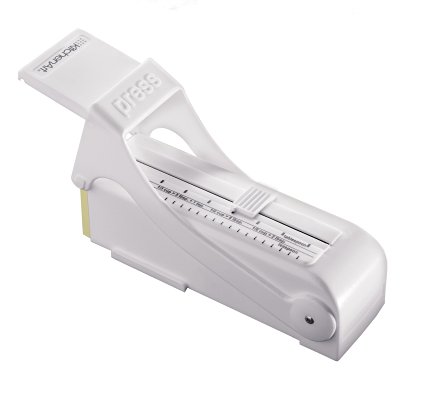
61-vintage-4The Rolls-Royce of cutters.  How thick do you like your pats?

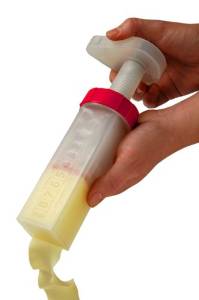
   61-vintage-5      No comment.  This one is simply disgusting.

Remarkably, there are lots of butter cutters out there if you search long enough.  Some claim to also work on rolls of cookie dough.  Others claim to also cut potatoes into chips.  But the more models you find, the more you’re inclined to ask why?  Why go to so much trouble to cut butter when a perfectly ordinary kitchen knife will do just fine (and with far less mess?).  That earth-shattering question is actually covered at unclutterer.com, a blog about “getting and staying organized”.  Check out the hot debate and the wealth of reader comments here (from people who clearly have too much time on their hands).

My own take on why is more satisfying.  The more I thought about our butter cutter, the more I realized I probably inherited it from my mother.  Along with other kitchen items, she probably tossed it into a box as I was heading off to my first apartment so many years ago.  And thinking about it even more, I can picture my mother using her butter cutter when I was a kid, leaving a perfect little pat beside the crescent roll that was positioned carefully on the bread plate beside each place setting at the dinner table.  Because that was my mother.  She was all about the dinner table.  Everything had its place, even the pats of butter.  And there’s an element of grace that comes with the butter cutter that would not be found in simply using a knife.

Laugh at the pointlessness of a butter cutter if you must.  But I will cherish mine instead, as well as the vintage memories that spring back every time I use it.

American Pastime

Over the next three months, on any given Saturday, the spotlight of college athletics will shine brightly on football. Millions of fans will flock to stadiums (or in one instance, a motor speedway) to witness this most American of sports. Tailgate parties will crop up hours before kickoff.  Team-branded merchandise will fly off shelves to the tune of millions of dollars.  Broadcasters will endlessly debate one team’s merits versus another’s shortcomings.  It’s fair to say college football will be a more consuming topic than the presidential election.

60-indelible

Last weekend my family and I experienced the unique opportunity to attend two college football games in Texas on consecutive days. UCLA played Texas A&M in College Station on Saturday, where A&M’s Aggies won in thrilling fashion in overtime. Then Notre Dame played Texas in Austin on Sunday, where UT’s Longhorns also won in thrilling fashion in double overtime. On Friday we could’ve added yet another game, passing through Waco as Baylor opened its season against Northwestern State.

Here are a few college football statistics for your consideration:

  • There are well over 100 NCAA Division 1 college football teams competing on any given Saturday of the season.
  • The combined attendance to last weekend’s games involving at least one team in the Associated Press (AP) Top 25 was over 1.5 million fans. That included UCLA-Texas A&M (100,443) and Notre Dame-Texas (102,315 – an all-time record for a Texas home game).
  • The face value of a major college football game ticket is around $100 this year.  Accordingly last Saturday’s AP Top 25 games alone generated $150 million (not counting merchandise, concessions, and parking).
  • There are eight college football stadiums in the U.S. with more than 100,000 seats, and another twenty-two stadiums with more than 75,000 seats.  The largest NFL football stadium has 82,500 seats.
  • Next Saturday’s college football game between Tennessee and Virginia Tech will be held at Bristol Motor Speedway (TN).  The 150,000 fans expected in the grandstands will shatter the all-time record for college football single-game attendance.

Sure, college football has some impressive numbers.  The game will only get more popular.  Yet last weekend also reminded me there are more indelible memories than the game or the venue itself.  Consider:

  • The heart-warming spirit of hometown Texas A&M.  As a fan of the opposing team, the reception in College Station is akin to a stranger inviting you into his living room for sweet tea and cookies.  I lost track of how many Aggies welcomed us to campus, wished our team well, or simply thanked us for making the trip.  Their politeness is downright 1950’s-sitcom.  With that in mind, add See a football game in College Station to your bucket list.
  • A&M’s Fightin’ Texas Aggie Band.  Also known as the Corps of Cadets, the four hundred musicians comprise the largest military marching band in the world.  Their movements are so coordinated and precise you’d swear you were looking at a computer-generated equivalent.  One Aggie actually apologized to me for the “old-fashioned” feel of the Corp.  On the contrary; it was one of the most impressive halftime shows I’ve ever seen.
  • The Littlest Fans.  Texas A&M and Texas alike draw a healthy number of families to their games.  My favorites are the little ones: those fans between the ages of 5 and 15.  They’re decked out in their team colors and face paint, with shiny hair ribbons and pom-poms.  We had several of them sitting right in front of us at the Notre Dame-Texas game.  Their innocence and unabashed enthusiasm were priceless.

My advice after my mega-weekend of college football?  Ditch the television.  GO to a game and see what you’re missing.  There happens to be one this Saturday, and not far from where you live.

Benevolence at the Ballpark

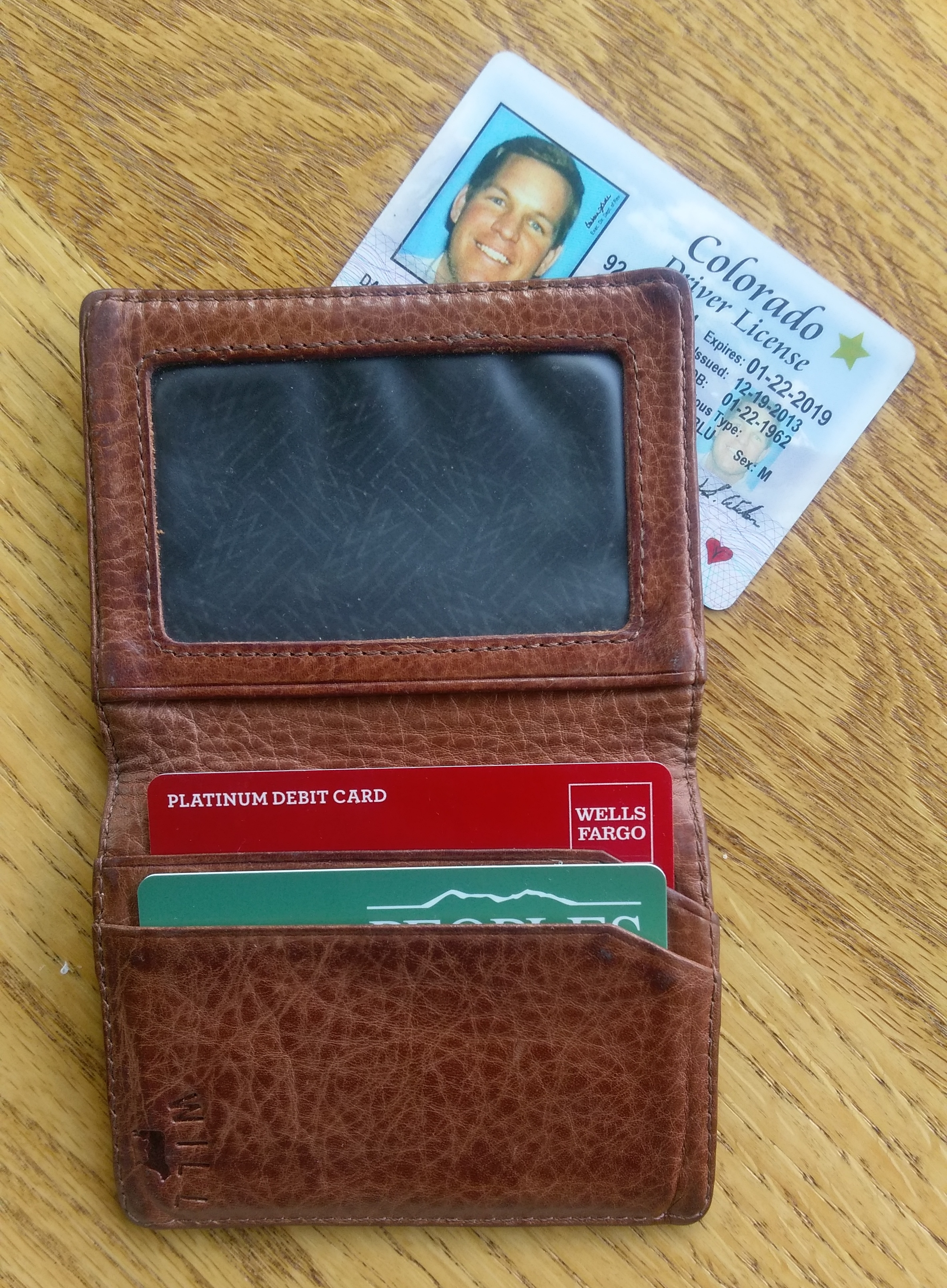
A man losing his wallet is akin to a woman having her purse stolen, even though a wallet is typically so much smaller.  The same level of angst and helplessness ensues when you realize this most personal of belongings is gone.  I should know, since I lost my wallet last Sunday at a baseball game in Denver.  But it was returned to me sooner than I expected, and that simple act of charity will leave an imprint far deeper than the carelessness of my actions.

59 - angst 1

Ironically, I made a deliberate effort to protect my wallet from the game-day crowds.  I put my cell phone in the same front pocket, making my wallet more difficult to “lift”.  It would take some real effort to bring one or the other item out into the open.

But that’s exactly what I did.  Unbeknownst to me, when I took out my phone after the game my wallet was pulled along with it, dropping unnoticed onto the gravel of the parking lot.  And off we sped for home, none the wiser.  Three or four blocks later that moment of angst kicked in when my hand grazed my now empty front pocket.  A frantic glance around the driver’s seat revealed the obvious: my wallet was really, truly gone.  Even though we were back to the parking lot minutes later (where we wondered whether this was a “loss” or a “lift”), our search through the gravel was fruitless.

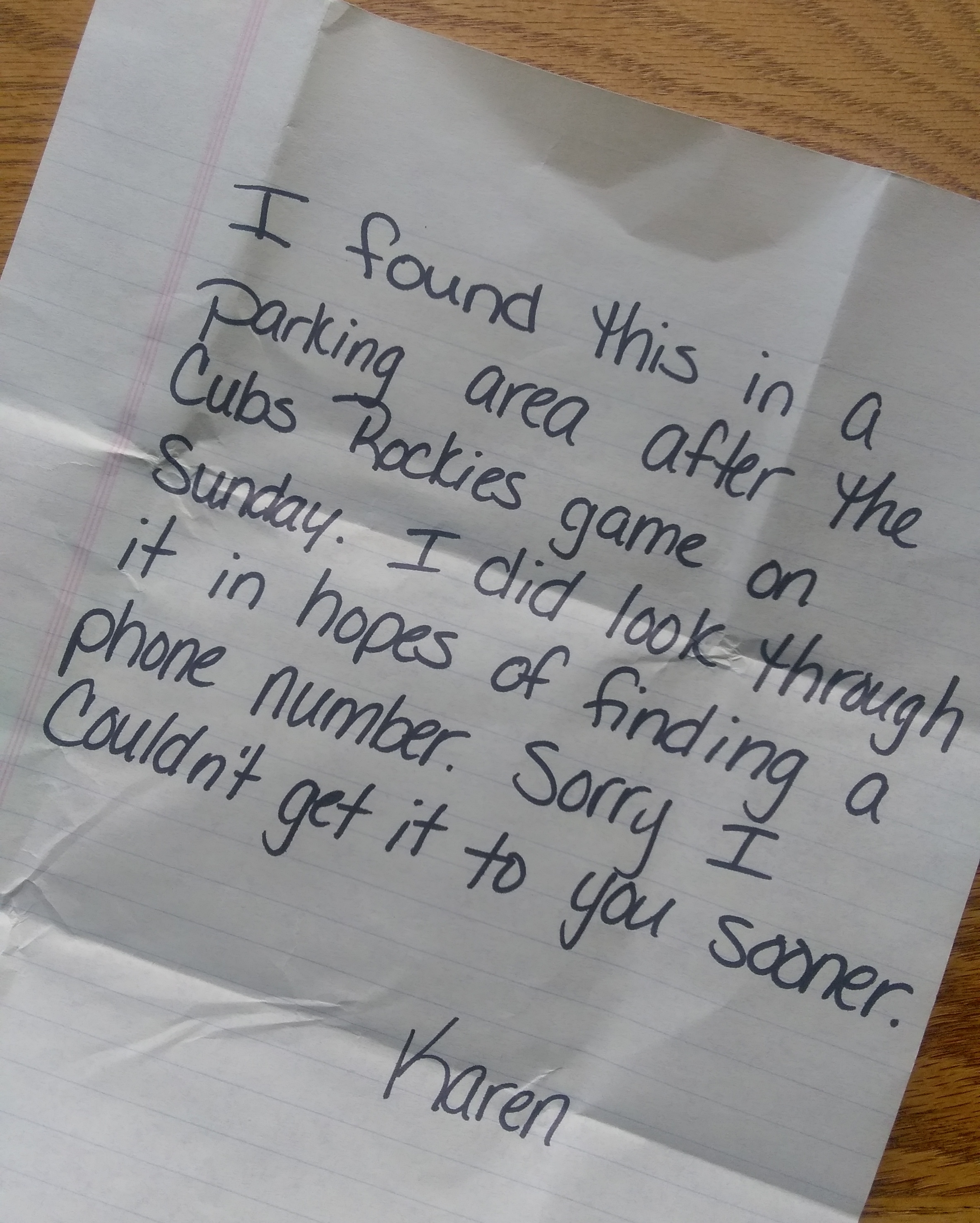
Now I’d like you to meet Karen, my new friend. Karen lives here in Colorado Springs, maybe on the south side of town. She enjoys going to baseball games on Sunday afternoons. That’s all I know about her (and may ever know), but let’s add one more thing. Like the fellow from the Bible parable, Karen is a good Samaritan.

59 - angst 2

My wallet showed up in my mailbox last Thursday – intact and virtually untouched – wrapped in the note you see above.  What struck me immediately about Karen’s actions was the following: 1) she spent $2.50 or more for the envelope and postage; 2) she apologized for not getting my wallet back to me sooner; and 3) she chose to remain anonymous.  There was no return address on the envelope and the USPS tracking number protected Karen’s contact information.  In this day and age I am somewhat in awe of her decent, anonymous gesture.  My wallet may have fallen to the parking lot but it also fell into the right hands.

The same day my wallet showed up in my mailbox our local newspaper reported a nearby incident involving a stolen wallet from an unlocked car.  The thief is still at-large, and he/she attempted a purchase with one of the credit cards immediately after the steal.  I can’t help but think this is more than just a coincidence of events.

So thank you Karen – whoever and wherever you are.  I may not be able to repay your actions but I can certainly follow your lead.  After all, the world needs more good Samaritans like you.

What’s ‘appening with Dining Out?

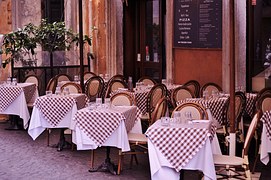
After moving our daughter into her college apartment last Saturday, we offered to take a group of her friends out to a local restaurant to celebrate the beginning of the school year.  The place we chose did not allow for table reservations but did offer call-ahead seating.  Thus did our party of ten arrive during the busy dinner hour and was seated less than ten minutes later.  It’s fair to say this call-ahead experience was entirely pleasing to the palate.

58 - palate

Call-ahead seating is an interesting concept to me.  It’s somewhere between a full-on reservation and simply showing up for dinner.  The restaurant puts you on a list when you call ahead, and then you’re given the next available table after you arrive.  In essence, call-ahead mitigates the restaurant’s risk of the no-show reservation.

Call-ahead feels entirely dated if you use OpenTable, of course  With OT you’re limited to the restaurants supported by the app, but you’re also given the convenience of choosing cuisine, location, menu, and time; right up to the moment you walk through the door.  OT’s website boasts “seating more than 20 million diners per month… across more than 38,000 restaurants”.  Clearly the new-age approach to restaurant reservations has arrived.

But is OpenTable also dated?  With a little research I was amazed to discover several other companies changing our approach to dining out.  Consider the following:

NoWait allows you to add yourself to the wait list of a restaurant that doesn’t take reservations.  NoWait is like having someone stand in line for you, with the convenience of knowing when that person gets to the front of the line.  Hence you can shop or have a drink nearby instead enduring the crowding and impatience of the restaurant’s waiting area.

Rezhound and TableSweep are boosters for OpenTable.  They scan OT for newly-released (cancelled) reservations, then notify you by text or email with what they find.  You have to jump over to OT to actually book the reservation (be quick!), but it’s a great concept if you’re in the habit of waiting for last-minute seats at popular restaurants.

Table8 is designed for the more upscale dining experience.  Table8’s restaurants set aside a fixed number of peak-time tables every night.  You can reserve any available table at a Table8’s restaurant for free, or reserve one of the “set-aside” tables for a fee if there are no other tables.  Again, last-minute seats at popular restaurants, as long as you’re willing to pay a little extra.

Settle allows you to book a table, pre-order your food, and pay for your meal on your phone.  I’m not a fan of Settle’s time-saving tactics.  I think the moments perusing and discussing the menu is part of the fun of dining out, not to mention the brief relationship with your waiter.  If saving time is your objective, just get your food to-go.

Shout borders on the absurd.  Shout is the ticket-scalper’s approach to restaurant reservations.  For a fee negotiated with the “seller”, you the “buyer” can purchase a hard-to-get restaurant reservation, or pay the seller to wait at a given restaurant until your name is called.  Really?  Is the restaurant that good and your time that important?

To end on a humorous or horrifying note (take your pick), Happy is marketed as the do-it-yourself happy-hour app.  Walk into a bar, cue the Happy app, and a timer starts a 60-minute countdown: to enjoy whatever 2-for-1’s or other specials the bar has to offer.  So now you can get extra drinks any time of day.  Just remember, you only have an hour.  On your marks… get set… DRINK!

Just Beyond the Spotlight

34.9 million people (including most of Jamaica) watched on Monday night as Usain Bolt claimed track and field legend at the Olympics by winning the Men’s 100m.  It was Bolt’s third straight gold medal in the event; remarkable considering he is eight years older now than when he won it the first time.  Like Michael Phelps and swimming, the hype leading up to Bolt’s latest victory was justified.  NBC covered every one of Bolt’s qualifying heats in prime-time, and delivered a good twenty minutes of back story before the final.  Bolt will be a household name if he is not already.

runner-311737__340_edited

The 100m run is one of several Olympic events I never miss.  It is a wondrous display of athletic power, and I’m always on edge to see who will become the “world’s fastest human”.  However, the prime-time Olympic spotlight need also shine on lesser known events and athletes.  Herein lies the oft-overlooked beauty of the Olympics: it is these “others” that emerge with the most inspiring stories.  They are not so much superstars, yet are still among the best at what they do.  A few examples for your consideration:

57 - wondrous 1

Charlotte Dujardin of Great Britain rode to a gold-medal performance in Individual Dressage.  Show Jumping may be the more popular Olympic equestrian event but Dressage is the more difficult (and defined as “the highest expression of horse training).  Dujardin and her Dutch Warmblood horse “Valegro” floated through an almost magical routine, completing one spectacular movement after another.  Dujardin and her mount were graceful, elegant, and significantly better – at least on points – than the silver medalist.  And her story became even more poignant when I learned Dujardin was engaged to be married shortly after receiving the gold medal, while Valegro has earned his last championship (of many) and will be retired from the sport.

57 - wondrous 2

Sanne Wevers of the Netherlands leaped to a gold-medal win on the balance beam in Women’s Gymnastics.  It was the first women’s gymnastics medal of any kind in her country’s history.  Wevers’ routine featured several jaw-dropping maneuvers I’d never seen before, including several spins while balanced precariously on one foot.  The judges were won over by Wever’s creativity and skill.  American television tried desperately to keep the spotlight on our own athletes (who were favored to win), but Wevers was clearly the humble star this night.  And her story was made even more poignant when the cameras turned to her twin sister Leika in the stands – also a member of the Dutch gymnastics team – as she reacted to Sanne’s upset win with tears of disbelief.

57 - wondrous 3

Molly Huddle of the United States ran what should have been a gold-medal performance in the Women’s 10,000m run.  Except she didn’t win the gold medal.  When a group of eight women broke away from the pack after several laps – most of them Kenyans and Ethiopians – Huddle broke away with them.  After twenty-five laps Huddle crossed the finish line in sixth place, breaking the American record for the event by almost nine seconds.  And her story was made even more poignant when I learned Huddle’s finishing time would have been good enough for the gold medal in three of the last four Olympics.

The Games continue for several more days.  More superstars will be at their best on prime-time television.  Just remember to look around and see what else is going on.  There are wonderful stories just beyond the spotlight.

Beckons the Printed Word

I have a reading problem. Perhaps you can help me with it. I blame my mother of course. She was a voracious reader (feasting on those 700+ page romance novels) and raised my brothers and I to be readers too. Thus newspapers and magazines; hard-covered tomes and soft-covered easy reads; coffee-table books and cookbooks; news feeds, emails, texts; my ever-present Kindle e-reader; even instruction manuals for God’s sake – vie for my reading time and attention. Books reach out to me with invisible hands, fluttering their crisp pages and silently screaming “READ ME!!!”.

56 - voracious

Once upon a time I had this under control.  You see, in those first childhood visits to the school library you could only check out one book at a time.  Read and return.  Read and return.  Eventually you earned the right to check out several at once.  Small piles of books began to accompany me home.

Newspapers already lived in my house.  My dad read the newspaper and nothing else, but in his day you had the morning paper and the evening paper.  Then one day I noticed Time and Sports Illustrated arrived every week in our mailbox.  More reading.  And the ever-present World Book Encyclopedia (WBE) flew off the shelf for the many school assignments that demanded it.  Here’s an early warning sign: sometimes I found myself leafing through the WBE for no reason at all.

Those innocent resources of yesteryear cemented the multi-tentacled reading monster that dwells in my house today.  Our family room is loaded with coffee table books and the complete works of Dickens (which I really need to finish someday).  Our kitchen cabinets are weighted down with ten cookbooks for every one that we actually use.  Our bedroom has a wall full of books we simply can’t bear to part with – kind of like the clothes you swear will come back into fashion someday.  Our nightstands have several put-you-to-sleep choices in their top drawers.  And our home office is so loaded I’ve resorted to “stack” instead of “display”.

It’s a delicate balance, this fanaticism for reading.  You have to limit your resources and then limit the time you give them.  Thus do I only subscribe to one magazine and one newspaper.  I follow 10-12 blogs and only those that publish weekly or less.  At any given time I’m only reading one book of fiction and another of non-fiction.  But beware that book of fiction.  If it’s really good, all other reading is kept at bay until I’ve consumed the very last page.  And then I have to scramble to catch up.

Amazon has created the ultimate temptation.  Not only can you purchase unlimited free “sample reads”, but you can subscribe to a dozen newsletters advertising new authors or popular reads or “we think you might like this” options.  It can turn into a feeding frenzy.

If there’s a rehab program to harness too much reading, I suggest the following as the first step.  Stay out of bookstores.  Keep battling the monster that has taken over your house instead.