Saving (the) Daisy

“Daisy” the St. Bernard (photo courtesy of Wasdale Mountain Rescue Team)

Let’s visit the dog days of summer; specifically, a day in the middle of last week. In England, on the highest mountaintop in the land, a group of sixteen rescuers carried an ailing dog down to safety – a rescue operation of more than five hours. These heroes didn’t rescue just any dog; they rescued a full-grown St. Bernard.  Put that image in your head for a moment. People coming to the rescue of a St. Bernard.  That’s “Role Reversal” with capital R’s.

(photo courtesy of Wasdale Mountain Rescue Team)

“Daisy” – the St. Bernard in our story – was descending England’s Scafell Pike last week (owners in tow, presumably) when she experienced pain in her rear legs and refused to go any further.  Rescuers consulted a veterinarian before administering meds, food, water, and treats (lots of treats).  Then they loaded the 121-lb. doggie onto a stretcher and eased their way down the mountain, navigating several steep stretches, rocks, and a waterfall.  Daisy was the model patient the whole way down and it turns out this was her second rescue.  Her first was by her owners, from a relatively “hard life” into a better one just a few months ago.

“Remy” in idle gear

Saving Daisy strikes a chord with me not just because she’s a feel-good story (and we need plenty of those these days), but also because my wife and I own a St. Bernard ourselves.  “Remy” is six years old and lives with us on our ranch, alongside horses, cats, and occasional wildlife.  Remy came from a breeder in Nebraska about six hours to the east.  He joined our family when he was only eight weeks old.  Look at him now!

When I read about Daisy’s rescue my first thought was, “how the heck did a St. Bernard get to the top of a mountain?  To explain, St. Bernards have typical dog gears like sprint, walk, and idle.  The difference: Daisy and Remy spend 95% of their time in “idle” lying down.  Yes, they can “sprint”, but only for about thirty seconds (followed by “collapse”).  They can also walk short distances – say, to the mailbox – but like Daisy, when they choose to “idle” you’re not gonna get ’em to move an inch.  Daisy is a svelte 121 lbs. so maybe she has more gas in the tank than most.  Remy is 160 lbs.  Our first St. Bernard “Sebastian” was well over 200.  They don’t call ’em “gentle giants” for nothing.
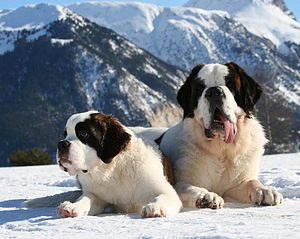
A St. Bernard and a mountaintop isn’t an unusual combination, of course.  These big boys were originally bred to be Alpine rescue dogs by monks on the Great St. Bernard Pass between Switzerland and Italy (hence the name).  It is said St. Bernards rescued 2,000 people over a span of 200 years from Alpine snowstorms.  I’d say they’ve earned their reputation as rescuers (and working-class dogs).

Nope, they don’t carry a barrel of brandy

We named our dog “Remy” after Remy Martin, the cognac variety of brandy.  Perhaps you’ve seen images of St. Bernards with barrels of brandy around their necks.  As romantic as it sounds – a big furry rescue dog bringing stiff drinks to avalanche survivors for warmth – the whole idea is just folklore.  Even the Great St. Bernard Pass monks say they’ve never put a barrel on a Bernard.

St. Bernards weigh fifty pounds at twelve weeks

If Daisy’s anything like Remy, her owners make accommodations atypical of most dog owners.  A water bowl isn’t big enough for a Bernard; better go with a bucket.  Add a large waterproof mat under the bucket because it seems one-third of every slurp ends up on fur or floor.  For those (very short) walks, forget the leash and go with a heavy rope instead (we use a horse’s lead line).  Also, you’ll need a doggie ramp for the car because Bernards aren’t so agile.  While you’re at it, trade the car in for one with a high ceiling clearance.  And be sure to crank the AC so all the panting doesn’t fog the windows.

St. Bernards are classified as “working dogs”; a tribute to their rescue skills.  They compete in dog shows like other breeds, but less in agility and more in carting and weight-pulling.  St. Bernards have starred on the silver screen, as the good (“Beethoven”), the bad (“Cujo”), and the animated (“Nana” in the Disney version of Peter Pan).  I think Daisy’s story might be an even better “Incredible Journey” script, don’t you?  After all, St. Bernards have been rescuing people for thousands of years.  Now we finally get one asking for our help. It’s about time the shoe was on the other foot (er, paw).  Glad you’re okay, Daisy!

Some content sourced from Wikipedia, “the free encyclopedia”.

R.I.P. Restaurants

The next time you dine out, take a good look at the menu options. You may find a few favorites missing thanks to COVID-19. Whether gaps in the supply chain or trims in the workforce, the virus-born experiment of modified operations has restaurants scrutinizing menus for what makes (fiscal) sense and what does not.

Examples: McDonald’s “all-day breakfast” – implemented in 2015 and an immediate success – retreated to morning hours shortly after the virus exploded. Drive-thru wait times promptly decreased – by an average of 25 seconds – so the change may be permanent. Outback Steakhouse axed its wedge salad and French onion soup, favoring fewer appetizers with faster production.  Before you know it Outback may offer steaks, potatoes, and nothing else.

Subtle menu changes like these got me thinking about restaurants closing their doors for good.  At some point all of them go to their graves.  Maybe this is the beginning of the end for McDonald’s and Outback.  Maybe ten years from now we’ll look back and wonder what brought on their respective demises.  I know I would, which brings me to the real topic of this post: what happened to the eateries of my youth and why are most of them now defunct?  Here then, a eulogy of my more memorable ones:

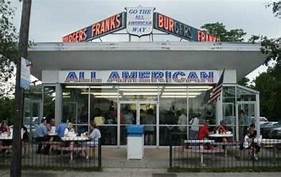
  • The All-American Burger – We had one of these red-white-and-blues in my hometown just a few blocks south of the church where I went to Sunday night youth group.  Mom supplied the cash while All-American supplied the fast-food dinner on those Sundays.  Not sure why AAB closed but they did have their fifteen minutes of fame in the 1982 classic, Fast Times at Ridgemont High.
  • Chi-Chi’s – A super-size Mexican restaurant and one of the first dates for my wife and me in college.  Great food, but Chi-Chi’s U.S. downfall was a grand-scale outbreak of hepatitis-A in one of its Pennsylvania restaurants, in 2003.  You can still find them in Europe and the Middle East.
  • Farrell’s – An ice cream parlor and a great place for parties, since the birthday kid got a free sundae.  Farrell’s had an early-1900’s theme: straw-hatted waitstaff, player-pianos, and menus printed on newspaper.  My favorite Farrell’s memory: “The Zoo” – a giant bowl of ice cream intended for ten or more topped with a menagerie of colored plastic animals.
  • Hamburger Hamlet – “The Hamlet” also had a location in my hometown, and for a burger joint the menu and decor were decidedly upscale.  It was known as a Hollywood celeb hangout.  Curiously, I associate Hamburger Hamlet with O.J. Simpson more than other celebrities.  Simpson’s wife Nicole and friend Ronald Goldman were murdered at the Simpson house, in the residential neighborhood nearby our Hamlet.  Nicole Simpson had just been dining at Mezzaluna (the restaurant where Goldman worked), also just a couple of blocks up from The Hamlet.
  • Lyon’s – The quintessential 1980’s smoke-filled greasy-spoon diner.  There was nothing memorable about Lyon’s (nor healthy on the menu) except the rip-the-boss conversations my coworkers and I had over lunch.  Lyon’s filed for bankruptcy in 1998 and never recovered.  No surprise; none at all.
  • Naugles – My go-to choice in college, Naugles never skimped on their portions of Mexican food (so who cared about the taste?)  Whether it was the massive “Macho Burrito”, the messy “Naugleburger”, or the trash-can sized sodas, Naugles was my all-nighter study buddy. Del Taco took over most of the chain in the 1990’s.
  • Pup ‘N’ Taco – Hot dogs, Mexican food, and – pastrami sandwiches?  I remember Pup ‘N’ Taco more for the buildings than the food; obnoxious red, white, and yellow structures with steep-sloped roofs, similar to the look of the Der Wienerschnitzels of the time.  Taco Bell bought out Pup ‘N’ Taco in 1984, more for the locations than for the menu. Obviously.
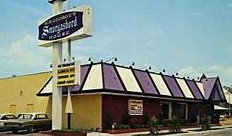
  • Sambo’s – I can’t tell you why I remember Sambo’s; I just know my family and I had several meals here.  At its peak Sambo’s had over 1,000 locations in 47 states.  Fittingly the only remaining location changed its name this year, to disassociate with the children’s story The Little Black Sambo.  George Floyd and all, you know.
  • Victoria Station – Chain together several boxcars and a caboose, add kitchen, tables, and steak-and-shrimp menu, and you have a heckuva unique restaurant. Victoria Station ballooned to almost a hundred locations at its peak.  The railcar restaurant concept evolved from a joint graduate project at Cornell University’s School of Hotel Administration. Victoria’s seemed like an upscale meal but maybe it was just the train car dining that made me feel upscale.

Someday soon (soon) we’ll be able to say we’re “post-pandemic” but by then it’s predicted thirty percent of our restaurants will have closed.  I’ll pray for those restaurants to R.I.P. as well, but not without another deserving eulogy.

Some content sourced from the 6/27/20 Wall Street Journal article, “Why the American Consumer Has Fewer Choices – Maybe for Good”, and Wikipedia, “the free encyclopedia”.

In Defense of Breakfast

I wish I could remember the first time I watched “The Wizard of Oz”. I was probably six or seven, and so many scenes in the movie would’ve been magical at that age.  Black-and-white turning to brilliant color as Dorothy opens the door post-tornado. Glinda the Good Witch descending in a giant soap bubble. The Emerald City gleaming green beyond endless poppies. But one scene disappoints at any age: when (The Great and Powerful) Oz is exposed as a mere mortal (“Pay no attention to that man behind the curtain!”)  It’s the same disappointment I have with Mehmet Oz right now.

If you know Oprah Winfrey you probably know Dr. Oz.  A cardiothoracic surgeon and Columbia University professor, Oz added “television personality” to his resume when he appeared on Oprah’s show more than sixty times.  Later he launched the daily “Dr. Oz Show”, addressing medical issues and personal health in front of a studio audience.  He also authored the best-selling YOU: On A Diet series of books.

I’ve listened to Dr. Oz a handful of times and his medicine seems credible enough, especially with his attention to homeopathy and alternatives.  But earlier this year he made a statement I simply couldn’t digest.  Oz said (and I quote): “Breakfast should be banned”.  WOOF.  To me and a whole lot of other aficionados, that’s a truly harsh statement.

I’ve written about breakfast before, and my unabashed affection for its foods (ex. see Dream Puffs and The Meal of Champions).  For me, “it’s the most important meal of the day”.  However, those in the know – Dr. Oz included – say I’m victim to a powerful long-ago marketing campaign.  In the 1940’s General Foods decreed breakfast as “most important” based on the claims of anonymous nutritionists, when in fact GF simply wanted to sell more of its breakfast cereal.  Seventy years later many of us still buy into the idea of most important.  We just don’t have the data to back it up.

Now, let’s clarify a couple of points here, especially for those of you who are take-it-or-leave-it about the morning meal.  First, breakfast on my table is usually healthy and/or whole-food.  I like steel-cut oats with fruit, soft-boiled eggs with pepper, and yogurt with granola.  I adore traditional unhealthy breakfast champs like pancakes and waffles, omelets with the works, and bacon/ham/sausage, but those are for occasional Sundays after church or special occasions with family.  My weekday breakfasts are simple and small, designed as much to fuel as to fill.

Second, I have to cut Dr. Oz a little slack with his breakfast ban.  To add context, Oz goes on to say, “instead of eating breakfast first thing every morning, eat your first meal of the day when you are really hungry”.  In other words, Oz isn’t attacking breakfast so much as the timing of breakfast.  Have breakfast for lunch, for all he cares.  In fact Oz says, “Have brunch every day of the week!”

Intermittent fasting (IF) is a popular approach to diet these days, where meals are timed to create periods of fasting and non-fasting.  If you subscribe to IF it’s difficult to have an early-morning breakfast, else you’ll have dinner for lunch and nothing for the remainder of the day.  I like the concept of IF; I just don’t have the discipline (nor the inclination).  Morning breakfast works best for me – every day at the same time.  I look forward to the foods and I like the fact I’m fueling my mind and body before putting either through its paces.  But you may be different.  You may wake up and not be hungry.  You may venture several hours into the day before even thinking about food.  Your travel mug of coffee may be “breakfast” all by itself.  Different strokes for different folks.

Even if the entire camp isn’t eating breakfast first thing in the morning (or at all), I must stand fast on this: Breakfast is a morning meal. 4am, 7am, 11am – I don’t care, as long as it’s before noon.  None of this “breakfast for dinner” nonsense.  Wait, let me grant one exception: Sunday brunch (where I never partake of the “lunch” items).  Otherwise, I think even Dr. Oz would agree with the old adage, “Breakfast like a king, lunch like a prince, dinner like a pauper”.  If we could all learn to eat like that, we’d be “great and powerful” every waking hour of the day.

Some content sourced from Somag News, and Wikipedia, “the free encyclopedia”.

No News is Good News

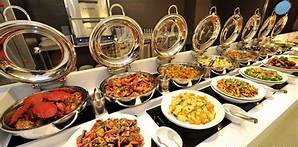
As a kid, my parents would sometimes take my brothers and me to a restaurant called Sir George’s Smorgasbord.  Sir George’s was one of those all-you-can-eat places, and in the 1960’s it cost you a mere $1.69 a plate!  I don’t remember the “royal buffet” being so kid-friendly (except for the fried dough balls for dessert) but that didn’t matter so much.  The idea you could assemble your own dinner from dozens of selections was a dream compared to some of mom’s mandated meals.

Sir George’s closed its doors in the late 1970’s, but I thought about the place the other night.  For years my wife and I used to watch a half-hour of local news on television – our before-bed catch-up on the happenings of the day.  I was always impressed with how many stories the newscasters crammed into thirty minutes; an almost breathless smorgasbord of headlines and reports.  Alas, the real-time information of mobile devices removed much of the appeal of the late-night news (except the weather – always an important topic here in Colorado).  But maybe the loss of appeal should be blamed on something else.  Something more troubling.

With the pandemic and protests of late, my wife and I tune into the news again.  We seek an encouraging stat or bit of research we’ve missed, or we yearn for a better angle on the justification of our country’s continuing unrest.  Whatever the reason, we find we’re tuning out the news almost as fast.  What used to be a buffet of international, national, and local news has changed into something else entirely: essentially a waste of our time.

I’m guessing news broadcasts look about the same in every American locale right now.  The lead story is an incident-based piece on racial injustice (i.e. Seattle’s CHOP), followed by something similar at the local level (i.e. a peaceful protest).  These stories are followed by a statistical update on COVID-19 (global, national, local), which leads to the latest state/city mandates and recommendations.

Click the stopwatch.  Fifteen minutes have already been consumed by protests and pandemic, leaving the other fifteen minutes for weather, sports, and everything else a viewer “needs to know”.  Actually, make that ten minutes.  Our news takes a break halfway through for commercials, then again just before wrapping things up.  Weather is only newsworthy if you live in a place where it changes daily.  Sports isn’t newsworthy at all, at least not right now.

You see where I’m going with this.  The late-night news is simply not “news” anymore.  Without taking anything away from the seriousness of the pandemic and the issues behind the myriad protests, neither topic is end-of-day compelling when you’ve already consumed a healthy dose of both from your phone and newsfeed.  You seek something else entirely late at night, at least to avoid EGO (eyes glazing over).  You seek something newsworthy.

The news lineup won’t change, of course.  Networks broadcast what they think you want to see and hear.  Or more accurately, they broadcast what they want you to see and hear.  Daily pandemic coverage is designed to elevate fear and maybe drive safer practices.  Daily protest coverage is designed to elevate the significance of the issues and maybe drive actual change.  But sorry; these topics are not the most newsworthy day-in and day-out.  They’re not “breaking news”.  Here’s breaking news: the other day we had a large brush fire just to the north of us, threatening our very homes and lives.  By my stopwatch, the news got to that story seventeen minutes after the hour.  Should’ve been the lead.

If the networks retitle these broadcasts something like “Pandemic and Protests Daily” at least I know what to expect.  I could set my DVR to record the show once a week and that’d be all the tuning-in I’d need.  Kind of like daytime soaps, where you can skip a whole week and then watch the next Monday’s episode to get caught up on all you missed.

Mark my words, the nightly news will soon lumber off like the dinosaurs, never to be seen again.  You might ask yourself: will its demise be attributed to the real-time pings of your mobile phone, or because the networks didn’t choose to acknowledge the vast buffet of topics right in front of them?

I say bring back Sir George’s.

Late Night Racquet Sports

My newsfeed nets a lot of headlines, but I almost missed the one about the Saharan sandstorm last week, blowing its way across the southern United States. Our son lives in Austin and said you can’t miss it: eerie dusty brownish fog center-stage in an otherwise hot and humid Texas day. (The silver lining: the sunsets are spectacular.)  I can’t spin a sandstorm positive.  Instead, I picture every granule as a moth and every moth descending on my house like Japanese Zeroes, somehow finding entry and making my life a living hell.

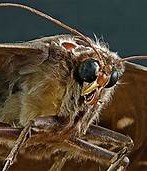
They’re at it again, Mr. & Mrs. Miller and their countless compadres. The million (billion?) miller moth march made its way across the Midwest (today’s letter is “M”), destined for an oasis called Colorado and a house called mine. The little winged beasties arrived unannounced and in droves (awful word: drove). One night I noticed one or two of the millers performing their spastic dance around the outside lights and I thought, “Oh no… scouts“.  The next night one of them sounded a tiny bugle at dusk and the swarming commenced.  I’m convinced miller moths have air traffic controllers, letting them know “Roger that Moth 259 – you’re cleared for landing on any ceiling or wall in Dave’s house”.

Light is a moth’s drug of choice

From the minimal research I’ve conducted (like, I don’t want to know moths have 8,000 eyes or whatever), the high country of the Rocky Mountains is a miller moth’s summer resort.  Picture Colorado as their Motel 6 for the night (just don’t “leave the light on”), feeding on backyard flowers and storing up oxygen for the next day’s flight to altitude.  They seem to be headed towards Utah in particular.  Maybe the flowers are better over there.  Maybe moths are Mormon and the Utah state line feels like the pearly gates of heaven.  Here’s what I say: if Utah really is “The Beehive State”, train those yellow-jacketed armies to take down the miller moths as soon as they arrive.  The massacre would be an event worth pay-per-view prices.

I thought I’d developed a sound battle plan for Mr. & Mrs. Miller this year.  Turn out ALL the lights and live in hermit darkness for several nights (like Halloween, when you don’t want any trick-or-treaters at your door).  Then maybe they’d fly over to my neighbor’s place instead.  Wrong.  They see your glowing phones.  They see the little LED’s you can’t cover up on your electronic devices.  They just park in the dark in discreet places around the house, waiting for you to wake up the next morning so they can announce, “WE’RE HERE!!!”

There was no avoiding battle with this year’s crop of “Army cutworms” (an image even worse than “miller moth”).  At first I was a mercenary, developing a cupping technique with my hands where I could catch-and-release (moths are the devil’s mess if you squash ’em).  But I rapidly tired of saving their little one-inch lives one at a time.  Try getting ready for bed at night brushing your teeth while a half-dozen bombers circle your head.  Or reaching for the water glass only to find a miller has staged a glorious dramatic death at the bottom.

Armed with a fly swatter, I thought to myself time for a little badminton (actually, I just thought “kill”). But here’s the reality: moths have half a brain, wings, ears (or at least a sense of hearing), and endless energy.  They know you’re coming almost before you do.  They hover close to the ceiling, frustratingly out of reach just beckoning you to climb to unsafe heights.

Our bathtub’s too small to accommodate a ladder so I was forced to balance precariously on the porcelain edge while swinging the swatter skyward.  The best analogy I can give you is this: picture King Kong on the top of the Empire State Building, gripping with his feet and flailing with his arms, only in men’s pajamas.  Little buzzing machines dart about him.  He knocks down one or two (with an instant and satisfying plummet back to earth), but most of the time he just swings at the air while trying not to die in a bathtub.  It’s part-cardio, part-yoga (only you’re more stressed when you’re done).

Let’s visit the Army cutworm’s half-brain again. I believe moths are designed by Mom Nature to taunt their predators.  One of mine made it into the refrigerator and probably enjoyed a helping of leftovers.  Another survived a tumble of laundry dryer clothes and still came out intact (though it was hard to tell if he was dizzy or just flitting as normal).  Yet another spent the night in the soaking water of our dirty dishes, popped up the next morning when I approached the sink, and said, “Have a nice day!” as he darted away. Trust me; these mini-monsters don’t die easy.  Even a spirited swipe of the racquet (er, swatter) – picture enough force to explode a shuttlecock – doesn’t always kill a moth.  Bless their pitter-patter hearts – they sometimes need three or four good whacks before raising the white flag.

Enough about Mr. & Mrs. Miller, right?  To swat this topic once and for all, most of you know the movie monster Godzilla but what about his nemesis Mothra?  Back in the 1960’s, (sick) Japanese filmmakers created a “good-girl” winged creature; an awkward-looking mega-insect who defies the laws of physics by flying.  Mothra’s just what you picture in my worst nightmares: a moth the size of a jumbo jet.  She was labeled “the protector of island culture, the Earth, and Japan” and revered among the Japanese film-going public (especially women).  Mothra sold a lot of movie tickets.

Mothra

So, the Japanese think a moth is damn near a heroine, eh?  Well then, they should come to Colorado next summer for a visit.  I’ll leave the light on for ’em.

Some content sourced from Wikipedia, “the free encyclopedia”.

True Colors

In the kitchen cabinet convenient to our countertop coffeemaker (I’m on a roll with the letter C today), we keep a couple of large mugs; souvenirs from the San Diego Zoo. Identical in size and shape, both mugs have images of animals on them. More importantly, one mug is light blue while the other is bright red. For this reason and no other, I place the blue mug at the front of the cabinet and the red mug further back. My preference is the blue one.

If these same mugs were in your kitchen cabinet, which would you choose?  What if I added a green mug and a purple mug – would your choice be just as clear?  It should be, since we all have favorite colors.  Unless we’re colorblind we concur when something is blue, or something is red.  We even agree when something blue is “pretty” (say, the summer sky) or something red is not (say, the heart of a forest fire).  But that’s just preference by association.  Favorite colors are part of our DNA.

I’ll take “green”

As far back as I can remember my favorite color is green.  I also like blue and purple, but if I only get a single Skittles make it green.  With board games, I choose the green pieces. With my wardrobe, I own several green shirts (but no red ones).  My wife and I once owned – one after the other – a green van, followed by a green sedan, followed by a green mini-van; even though the more popular vehicle colors are white, silver, black, and dark grey.  It may be no coincidence the colors of my alma mater are blue, gold… and green.

Hello, Marilyn!

Don’t let the numbers influence your choice but 35% of Americans prefer blue while 16% prefer green, 10% purple, and 9% red.  Orange, yellow, and brown sit together at the back of the bus.  Also, gentlemen may prefer blondes, but gentlemen definitely prefer blondes in red.  To heterosexual men at least, women in red draw more romantic attention than any other color.

Infants show a preference for color as early as twelve weeks old.  That’s hardly an age where you associate colors with material things.  Toddlers show a preference for pink and blue regardless of sex (and cool colors over warm), but choose yellow over both of them – perhaps owing to association with the sun, flowers, and other “happy” things.

Here’s where favorite colors get interesting.  At five years of age you begin to associate colors with more than just “things”.  You associate with feelings and states of mind as well.  Consider the table above.  My preference for green suggests a good/bad combination of traits.  Immodestly I like to think I have good taste.  Unquestionably I put a premium on my health.  Envy?  Sure, every now and then.  Eco-friendly?  Nope, not really.

Red and blue make for better arguments.  The “lust”, “power”, and “speed” associated with red explain why it’s the color of choice for sports cars, and why red uniforms statistically improve performance in certain sports (think Tiger Woods).  All five blue traits explain why the color is so prevalent in the American workplace (and primary in the logos of standard brands like Ford, Facebook, and IBM).  Even the traits of violet/purple make sense: the color most associated with royalty.

The Rose of Temperaments

Our desire to interpret the meaning of favorite colors has been around a long time.  The Rose of Temperaments is a wheel-like image from the late eighteenth century, matching colors to character traits and occupations.  See what your color says about you.  If green goes to my very soul, the rose is strikingly accurate.  I can make a case for every trait in the list of phlegmatic. My tendencies are also more introverted than extroverted.  The rose gives me reasons for envying red, yellow, or blue (and reasons for not), but I can’t deny it: I am literally defined by my favorite color.

Speaking of the basic colors, we also favor color names. Mother Nature’s rainbow just doesn’t do it anymore.  In a recent remodel project my wife and I chose the paint color “Cocoa Whip” over “Havana Coffee” and “Wild Truffle”; when in fact we were simply choosing a shade of brown.  In product tests, participants shown swatches of the same color consistently preferred the one with the most elegant name.

Closing comment on my favorite color green.  You do know what they say about green M&M’s, don’t you? The aphrodisiacal effects (urban legend) are explained by the color’s association with fertility.  However, the better story comes from 1976, when the FDA banned the chemical “red dye #2” and red M&M’s temporarily departed the production line.  Rumor had it the reds were the real aphrodisiacs, employees were pocketing them straight from the line, and the whole red dye #2 story was a cover-up.  Red, green, whatever the color; they all taste good to me.  Even the brown ones, which testers swear taste more like chocolate than any other color.

Some content sourced from Wikipedia, “the free encyclopedia”, and Snopes.com.

Hex Marks the Spot

In the opening scenes of the 1981 classic, “Raiders of the Lost Ark”, intrepid explorer Indiana Jones navigates a deep jungle, a river, the betrayal of his fellow adventurers, and the lethal booby-traps inside a mountainside cave to capture a priceless statue of gold.  Indy’s return to civilization includes more death-defying maneuvers, yet he still completes the entire escapade in the first ten minutes of the film.  That’s far less time than it took another thrill-seeker to find the real-life hidden treasure of Forrest Fenn.

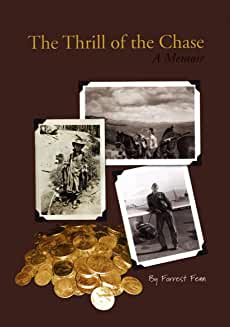
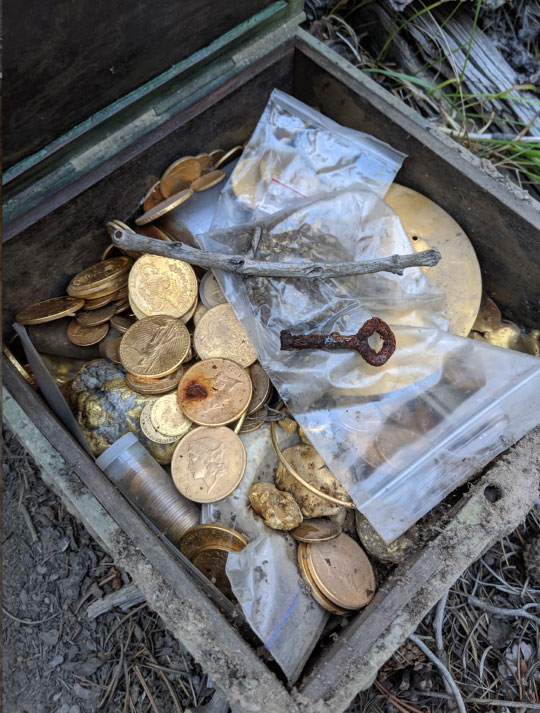
Perhaps you’re not familiar with Forrest Fenn.  Hardly anybody would be, were it not for Fenn’s decision back in 1988 to set aside $2 million of his amassed fortune as a reward for an ambitious treasure hunt through the vast Rocky Mountains.  Gold nuggets, rare coins, jewelry, and gemstones; all piled up together inside a twelfth-century bronze box and cached in a region of over 500,000 square miles.  Treasure hunt indeed… but no treasure map!  Instead, Fenn documented clues in the stories and poems contained in his self-published book, The Thrill of the Chase: A Memoir.

Remarkably, Fenn’s treasure appears to have been claimed.  The whole story found its way back into national headlines just ten days ago, when Fenn himself declared, “I do not know the person who found it but… the search is over.  Look for more information and photos in the coming days.”  Conveniently, the one snap of the treasure chest in its hidden location does not indicate when it was taken.  Just as convenient, the finder has yet to be identified; only labeled “anonymous searcher from the East Coast”.

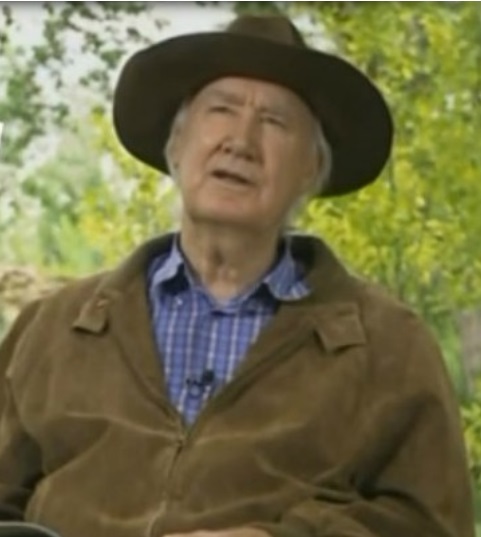
Forrest Fenn

Forgive my skepticism, but I’d say Forrest just raised the first red flag on this whole adventure.  It sounds good on paper but the more I read the more I sense fairy tale instead of actual tale.  To repeat, Mr. or Mrs. East Coast has yet to come forward.  The single photo of the treasure could’ve been taken by Fenn himself.  Do the homework and you’ll soon start to wonder, does the treasure really exist?  For that matter, does Forrest Fenn himself exist?  Even his name sounds make-believe.

Body-double aside, Fenn appears to be very much alive, but the case can be made for calling the man eccentric.  Consider, Fenn’s initial intent for the treasure was kind of an “X marks the spot” for his final resting place.  In 1988, diagnosed with cancer (likely terminal) Fenn was motivated to set up the treasure hunt before his demise.  But somewhere in the next 22 years, Fenn recovered from his illness and then penned the memoir, complete with treasure-hunt clues.  This sequence of events alone is suspect.  What was Fenn’s original intent: secret burial in the Rockies and whoever stumbled upon his grave (and thought to dig it up) wins the prize?

courtesy of oldsantafetradingcompany.com

Undeterred, thousands pursued Fenn’s treasure after the memoir was published.  Five died in the search.  Of those five, only one cause of death was confirmed – a fall down a steep slope in Yellowstone National Park.  The bodies of the other four, at first identified as “missing persons”, were found later (at different times and places) along the supposed route to Fenn’s treasure. No cause of death determined with any of them.  Add to that a dozen or more arrests, detainments, citations, and lawsuits with other hunters and you start to get a real mess on your hands.  Sounds more like a “hex marks the spot” doesn’t it? Fenn considered the request of authorities to suspend the hunt, but public opinion swayed him to keep things going.

Ten days ago, Fenn acknowledged the (apparent) hunt winner and he/she possesses the (supposed) treasure.  No doubt this isn’t the last of the eccentric tale of Forrest Fenn.  I hope we tune into the news one of these nights and see our latest Indiana Jones, posing in front of the heaping bronze chest like a lottery winner with a giant check (please also, with fedora and bullwhip).  I hope Forrest Fenn is posing right there alongside him/her, and prepared to detail this crazy adventure from start to finish.  Then we’ll know whether the inevitable production from Hollywood will be fact or fiction.

Some content sourced from the Fenn’s Treasure website, Westword, and  Wikipedia, “the free encyclopedia”.

Banana Ranting (again)

Take a good look at this photo.  My wife and I have this weird assortment of foods on our kitchen counter right now.  Store-brand hamburger buns.  A half-loaf of “artisan-style” marble rye against the backsplash.  Below both, a package of ready-to-use French-style crepes.  To the right, a spaghetti squash and a handful of wrapped Lindor truffles.  To the further right, an oft-visited plastic container of peanut butter pretzels, fronted by a watermelon just itching to join a fruit salad.

These foods are not “still life” waiting to become paint on canvas.  They’re not even past-due items from the back-of-store sale rack.  They’re just random samplings from trips to the grocery store; items kicked to the kitchen curb instead of the pantry or frig.  Two questions, then.  If you were given this lot on “Top Chef” could you whip up something appetizing?  Would you even care to try?

artwork courtesy of Alexi Talimonov

More importantly, I made it to the third paragraph before mentioning the pair of bananas taking up prime real estate front and center in the photo.  I HATE bananas, be it look, feel, texture, or taste.  Bananas need to go back to the primeval jungle from which they escaped.  In my world, bananas should be called “no-passion fruit”.  If I were starving on a desert island, shadowed under the gently waving fronds of a banana palm, I’d nosh on the fronds, then the tree bark, then the tree itself before tossing its worthless bananas into the ocean.  Hell, I’d choke down sand before eating bananas.  Put a gun to my head (or a banana); I still wouldn’t eat one.

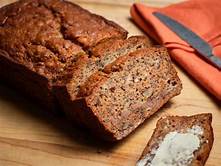
For Pete’s sake though; no matter the magnitude of my banana hate, the yellow curvies still find a way to remain relevant.  Take this pandemic for instance.  Stuck at home means more time in the kitchen.  More time in the kitchen means comfort food, and comfort food includes baking bread. Sourdough. Pizza dough. Baguettes. Challah. Naan. Sadly, we rookie bakers discover the ingredients in our pantry are as past due as our bills.  Way past due.  Flour tastes sour.  Honey ≠ sugar.  Past-its-prime yeast does not make the loaf say, “All rise!”  Even with fresh ingredients we butcher the recipe by feeding, kneading, and reading too much into every step.  Instead of baking bread we’re breaking bread.  We need a no-brainer no-spoiler kinda baked good.  Banana bread to the rescue!

Banana bread is easy; it really is.  Call yourself a breadmaker with as few as five items – none of them “yeast” or “starter”.  Sift together flour and baking soda.  Whisk together eggs, butter, and mashed bananas (mashed bananas?  Isn’t that what I threw up regularly as a kid?)  Combine in a loaf pan, bake, and voila – banana bread.  You’ll find the first four ingredients in your pantry already and if you also have bananas, they’re probably overripe (i.e. perfect for banana bread).  Just like the bananas on my kitchen counter.  I made the mistake of picking them up when I took the above photo.  They’re so ripe they feel like half-filled water balloons.  Or half-filled hot dogs.  Or Twinkies submerged in water for a few hours.  You get the idea.  Ewwwwwww.

Now for the irony/paradox/contradiction/twist/flourish of today’s post (take your pick).  I like banana bread.  I’m on the fence of almost loving banana bread.  Slice a thick piece, warm it in the oven, slather with butter, and it’s pretty damned good.  As I admitted almost four years ago in my post Banana Rant, bananas work inside of bread like figs work inside a package of Newtons.  As a standalone they’re a horror-filled rubbery package disguised as one of Mother Nature’s edibles.  Downgraded to an ingredient they stand on the fringes of the vast arena known as “food”. 

Enough with the spotlight on bananas already.  Trust me, I had better topics to blog about this week.  My pandemic-born obsession with Netflix.  A lamentation to Major League Baseball for a season that’s never gonna start.  A keyboard pounding to the heavens for dumping several inches of snow on our neighborhood this week (for God’s sake, it’s June!)  But no, I chose to discuss the best use of “water-logged Twinkies” instead, keeping bananas a front and center topic.  Kind of like walking into the grocery store and the very… first… thing… in your field of view is an acre of bananas grinning their pathetic yellowy smiles.  They should go back to the jungle where they belong.  I’ll make do with soury-dough bread instead.

Some content inspired by the 4/20/20 Wall Street Journal article, “Forget the Sourdough.  Everybody’s Baking Banana Bread”.

Whistle Work

Last weekend my wife and I drove north a couple hours to visit our granddaughters.  The last time we saw them was in the pre-pandemic days of yesteryear.  We spent most of Saturday afternoon in the backyard playing little-kid games in the makeshift pool and breaking out a plastic Tee-Ball set.  Later on after a barbeque, it was time to clean up the toys.  My son and his wife promptly requested the “The Clean Up Song” from Alexa, and my granddaughter hopped to it.  Watching her I caught myself thinking, can’t I help with the clean up too?

Google The Clean Up Song and you’ll find several dozen versions to choose from.  Cleaning-to-music for kids has been around a little while now.  I wish we’d used this approach more often when our own children were little.  It’s a song!  It’s a game!  It’s almost whistling while you work.

For me, household chores morphed to something more therapeutic as the kids grew up and out of the house.  Taking out the trash became extra steps towards my ten thousand (we have a long driveway).  Washing dishes became a mini-spa of warm water and soap bubbles.  Making the bed and arranging its pillows channeled my inner Marie Kondo.  Folding clothes was how to avoid lazing on the couch while watching TV.  (On that note, an ironing board should be called a “clothes-folding board”, if you go by my folding minutes (100%) vs. ironing minutes (0%).

Lest you think me compulsive, a recent Wall Street Journal study comes to my rescue.  During these stay-at-home times – locked-down residents find similar stress relief in housework.  Washing windows allows the slow, deliberate wax-on-wax-off zen of “The Karate Kid”.  Cleaning countertops tempts flowing dance, like Julia Stiles in the diner in “The Prince and Me”.  Ironing doubles as light weightlifting. And vacuuming?  Nah, I got nothing there.  Vacuuming’s still just a chore.

The lovely Ms. Stiles and her diner dance

Headspace

Headspace, a software company focused on meditation and better sleep, includes housecleaning exercises on its app.  They recommend “quiet housework in dim lighting” just before bed (but then how do you see what you’re cleaning?) They want you to sweep the floor and wipe the counter in smooth, restorative motions.  Laugh all you want but the use of their “cleaning-related content” is up 20% since mid-March.

Household products are trending the same way.  Swiffer wants you to mop with “a clean home and a clear mind” and suggests a facial treatment while you’re at it.  They switch “clean the counter” to “give your surfaces a little TLC” (as if your surfaces are close friends).  Proctor & Gamble fortifies its “Gain” laundry detergent with essential oils like lavender and eucalyptus, touted for their calming effects. “Clear Your Mind with a Cooling Clean!  A Soothing Scent with a Mindful Twist!”

Call me one-in-five (not compulsive) because P&G research claims 20% of us clean to relax or reduce stress.  Sure, but we also clean to clean.

I never thought about laundry this way but the Journal article likens clothes-cleaning to problem-solving (which we guys are all about).  Sort the clothes, dose the detergent/softener, fold according to best-fit in drawers, and then put everything away.  It’s a process, and it’s a new puzzle every time.

To take it one step more spiritual, household chores are considered seva – a form of selfless-service.  Says one yogi about dirty dishes, “You’re reminding yourself you’re washing for the divine grace that flows through your husband, your wife, your children, or your parents.”  Whoa now.  Me, I’m just washing dishes.

I’ve neglected to mention another household chore: cleaning bathrooms.  It can be “healing” sponging the porcelain to a sparkling-white shine, conducting the bowl brush in large, lazy circles, or returning to nature in the gentle flow of the sink (waterfall) or toilet (whirlpool).  No, no, NO.  I don’t do bathrooms.  Not even if you ask Alexa to play “The Clean Up Song”.

Some content sourced from the 5/27/2020 Wall Street Journal article, “Sick of Cleaning?  Turn It Into Meditation”.

Going Against the Grains

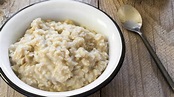
When I was a kid – many moons ago – my mother made breakfast almost every morning; a service I full-on took for granted. She made eggs or pancakes a lot, but on days she ran late (or just didn’t feel like it) she’d put out big boxes of brightly colored breakfast cereal. Lord how my brothers and I heaped our bowls with those chemical-laden nuggets. Lucky Charms. Cap’n Crunch. Frosted Flakes. Sure beat the horrid porridges my mother also chose to make. So, forgive my double-take when I sat down to a delicious helping of steel-cut oats the other day, deliberately passing up a beckoning box of Golden Grahams.

bo-r-r-r-r-ing…

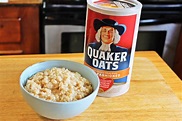
Like tomatoes, avocados, and yogurt, I have zero fond memories of hot cereal in my childhood.  I recall coming downstairs for breakfast, and before even reaching the kitchen I’d smell the distinct nastiness of cooked grains.  Quaker Oats.  Cream of Rice.  Cream of Wheat.  Wheatena (the worst of them all).  My mother had more choices for hot cereal than she had sons (and she had a lot of sons).  It’s like she wanted us to vote for “blandest breakfast”.  Mercifully, she allowed small amounts of brown sugar and/or raisins to sweeten things up.  And milk.  Lots and lots of milk.

I should’ve figured this out decades ago.  Hot cereal’s a whole lot better with fresh fruit (raisins are a poor excuse for fruit).  Strawberries, blueberries, apples – they all turn “mush” into an appealing “meal”.  And the learning curve continues.  Rolled oats are better than instant oats.  Steel-cut oats are way better than instant oats.  And lest you’ve forgotten: anything is better than Wheatena (even tomatoes and avocados).

Tell me this: when was the last time you used “porridge” in a sentence (Brits aside)?  What an utterly dated word.  The last time – the only time I uttered “porridge” was reading “Goldilocks and The Three Bears” or jigging to “Peas Porridge Hot” (“…peas porridge cold, peas porridge in the pot nine days old…”).  My nursery-rhyme days.  Porridge doesn’t have a modern ring to it (did it ever?) and yet that’s exactly what we’re talking about today by definition: hot breakfast cereal made by boiling grains in water (or milk).  Wikipedia counted ’em – all grain types included – and came up with seventy-five distinctly different porridges.  Doesn’t matter.  If I’m a kid I still opt for Froot Loops.

You need porridge trivia for your next socially-distant gathering and I’m happy to oblige.  Consider the following:

  • Whole-grain oats date back to 7,000 BC, which sounds like dinosaur times to me (even though it isn’t).  The Chinese and the Greeks made claim to the first versions of porridge back then.
  • Lisa Williams and “The Golden Spurtle”
    If you’re supremely proud of your cooking, there’s a World Porridge-Making Championship in Scotland every October.  The list of winners looks suspiciously Scottish (i.e. “Duncan Hilditch”, “Ian Cruickshank”, “Addy Daggert”) but last year’s champ was England’s Lisa Williams.  She earned “The Golden Spurtle“, which begs a most excellent trivia question: What do you call a stick for stirring porridge?
  • In 1755 it was documented oats were horse food in England but people food in Scotland.  Not exactly a boost to Scottish pride (although to be fair the people’s version was cleaned, toasted, hulled, and cooked).
  • In Portland, OR you used to be able to buy hot cereal from an oatmeal-only food cart.  “Bloop” – with made-to-order mush like “Peanut Butter Banana Dreams” and “Good For You Goodness” – shuttered its wheels in 2011 after a single year in business.  I get it: oatmeal’s no passing fad but it’s also no passing food truck.
  • Your standard can of oats (18 oz.) contains over 26,000 grains.  Don’t count; just trust.
  • The oat capital of America is (drum roll…) Cedar Rapids, Iowa, home of most-popular-brand Quaker Oats.  Small town, big factory.
  • Once upon a time, Quaker Oats included coupons in its oatmeal boxes redeemable for legal deeds to property in Milford, CT.  Granted, the lots were only 10’x10′ but you could still be a landowner with a modest purchase of oatmeal.  The whole scheme became a property tax collector’s nightmare and the lots were eventually condemned.

Speaking of the Quaker Oats Company, in the 1970’s they came out with flavored instant versions of their hot cereals.  “Apples & Cinnamon” and “Maple & Brown Sugar” come to mind (“Ready in Just 90 Seconds!”).  God answered my prayers to distance myself from Wheatena.  Also deserving kudos, Quaker Oats used to own Fisher-Price Toys.  Can’t you just picture the marketing division, trying to develop an “oatmeal plush” doll?

I’m devoted to my steel-cut oats these days but I’m not gonna pretend I’m not tempted by alternatives.  Cheerios (especially the “Honey-Nut” variety) is the ultimate oat cereal.  Life (especially the “Cinnamon” variety) is another delicious Quaker Oats product.  And I’ll never get my childhood love for Lucky Charms out of my DNA.  They’ll always be a little more “magically delicious” than porridge.

Some content sourced from fabFood, One Green Planet, and Wikipedia, “the free encyclopedia”.