Blues Choose

When our daughter gets married this June, she’ll include the tradition of “something old, something new, something borrowed, something blue”; all items meant to bring good luck.  “Old” is a ring from her grandmother; “New” a necklace.  “Borrowed” is still to be determined while “Blue” is the garter her husband-to-be tosses at the reception.  Now, if the “blue choose” were mine to make, I’d go with a handful of juicy berries instead.

This week I learned a few things about blueberries, my favorite fruit in any orchard, grove, or patch on earth.  Just outside the tiny town of Whiting, Maine (pop. 482) you’ll find Josh Pond, a farm known for its “organic hand-raked wild” blueberries.  Josh Pond is harvesting into its fourth generation and its 150 acres include a herd of Oberhasli goats and a giant field of strawberries.  In other words, shop on the JP website and you’ll find a variety of cheeses, jams, and jellies alongside the blues.

You already know a thing or two about organic produce but perhaps you’ve never heard the term “hand-raked”.  Check out the following video (which beats any description in words).  It’s a soothing process to watch and a bountiful harvesting technique.  Josh Pond can hand-rake up to 2,000 pounds of blueberries a day.  They’re then quick-frozen, packed into 5-pound boxes, and shipped directly to you…at $100 USD a pop.  Do the math.  Josh Pond grosses $40,000/day on its blueberries alone.

$20 for a pound of blueberries is way steep for my purchasing power.  I’m reluctant to pay half as much, and even then I drop them sparingly into my yogurt/granola breakfast.  But I may be stingier than I think.  JP customer Chelsea Balboni gushes in her online review, “My wild organic blueberry subscription has changed my life.  Every month a 5-pound case is overnighted to me…”  Every month?  Who spends $1,200/year on blueberries (besides Ms. Balboni)?  For the record, I’m not knocking Josh Pond.  If you want the best blues North America has to offer, JP is your go-to.  Just be ready to pay.

Maybe I still spend more on blueberries than you do, but I find it interesting my blues choose – when it comes to food in general – is very limited.  Quick – name a blue food (besides Josh Pond blueberries).  All I could come up with was Blue Curacao, which isn’t food so much as a liqueur served as a cordial or in tropical drinks.  Blue Curacao, ironically, comes from the dried peel of bitter orange and is then dyed blue. (Why blue? No idea, but we’re getting off-topic here).

A consult of a blue food list comes up with just a few worthy entries.  Blue crab.  Blue corn (tortillas).  Blue (or bleu) cheese.  And Brilliant blue FCF, a synthetic “safe and non-toxic” dye for ice cream, cotton candy, medications, and cosmetics.  I half-expected to find Kellogg’s Pop-Tarts on the list but then I remembered: the wholly chemical toaster pastries contain no blueberries whatsoever. (Okay, maybe a dried trace of them, way-y-y-y down on the ingredients list.)

Hello, Violet!

No post on blueberries would be complete without a mention of Violet Beauregarde.  Violet who?  C’mon now, channel your inner Charlie and the Chocolate Factory.  Violet was the obnoxious, gum-loving rich kid who sampled a chew of Willy Wonka’s four-course dinner gum, including the blueberry pie dessert that “wasn’t quite perfected yet”.  In a wonderful scene (from the classic 1971 version), Violet turns deep blue as she chews, and inflates into a giant blueberry.  The last we see of Violet, the Oompa-Loompas are rolling her away to the juice press to be squeezed back to normal size again.

Hello, Sal!

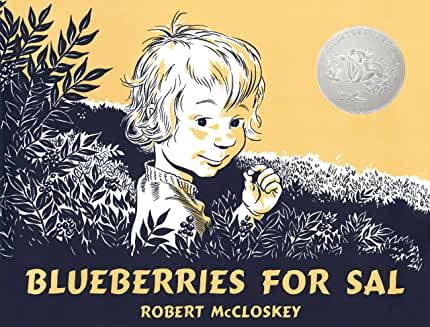
All of this blues talk reminds me I need to read my granddaughters Blueberries For Sal, one of my favorite childhood stories.  Also, I’ll probably cave to one of the giant blueberry muffins my wife brought home from Costco the other day.  As for the tempting bounty from Josh Pond?  Ah, if only I could purchase just a handful for my daughter on her wedding day.  Instead, I’ll leave those hand-raked beauties to blues-choosers with a little more discretionary income. 

Some content sourced from the Josh Pond website, the Prepared Cooks article, “18 Foods that are Blue”, and Wikipedia, “the free encyclopedia”.

——————–

Lego Grand Piano – Update #14

(Read about how this project got started in Let’s Make Music!)

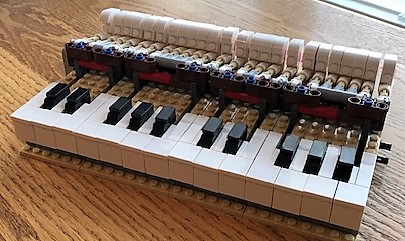
You’ve seen this before, as we cruise past the 2/3 DOWN, 1/3 TO GO road sign.  Bag #14 – of 21 bags of pieces – added another seven keys to the board for a total of twenty-four.  There’s a lone key remaining to the far right; then the whole assembly goes into the body of the piano (and heaven help me on that maneuver).

Piano keys are getting repetitive so let’s talk about Sergei Rachmaninoff.  His name is intimidating but his music has an interesting connection with pop.  If you remember Eric Carmen, you already know a little Rachmaninoff.  All By Myself is based on Sergei’s Piano Concerto No. 2Never Gonna Fall in Love Again is based on Sergei’s Symphony No. 2.  Both Carmen songs were huge hits but they’re also depressing.  Did Eric seek comfort in classical music when his personal relationships weren’t going his way?  Maybe, but it wasn’t without expense.  The Rachmaninoff estate brought “copyright” to Carmen’s attention, and promptly helped themselves to 12% of the royalties on both songs. 

Running Build Time: 11.0 hours.  Musical accompaniment: Rachmaninoff’s Piano Concerto No. 2 in C minor, Symphony No. 2 in E minor, and Rhapsody on a Theme of Paganini. Leftover pieces: 6.

Conductor’s Note: Forget Eric Carmen.  Rachmaninoff’s Rhapsody… is one of the most moving classical compositions you’ll ever hear.  The piece starts ever so simply on the piano, then brings in the orchestra to dramatic, sweeping interpretations.  My wife isn’t a classical music fan yet she loves Rachmaninoff’s Rhapsody… especially since it’s the theme of the romantic time-travel movie Somewhere in Time.  Have a listen here.

Strange Bedfellows

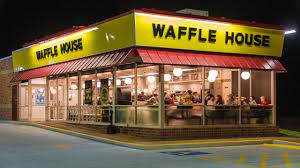
Welcome to Masters Week, sports fans! Even if you don’t know the first thing about professional golf, you’ve probably heard of The Masters.  The tournament begins again this Thursday (for the eighty-sixth time) at Augusta National Golf Club in Georgia. If you have nothing better to do this weekend, you can watch a dozen mind-numbing hours of the television coverage. While you’re at it you’ll discover the Masters traditions, like the champion’s green jacket, the clubhouse top-story “Crow’s Nest” (where the amateur golfers reside), the famous pimento cheese sandwiches, and of course, Waffle House. Wait, Waffle House?

Question: When do waffles and golf belong in the same sentence?  Answer: When it’s April at The Masters. Why?  Because alongside the golf hats, shirts, and commemorative this-and-that for purchase at the souvenir shop, you can buy a limited-edition pair of Adidas golf shoes for your long walk along the course.  The shoes will set you back $200 – a little pricier than most – but hey, they’re limited-edition.  You’ll be among the select few advertising Waffle House on their heels.

Before you think waffles and golf shoes are the most random “pairing” (ha) in the history of merchandising, remember; The Masters is in Georgia.  So is Waffle House.  Their headquarters is right down the road in Atlanta and they have over 400 restaurants across the Peach State (way more than any other state).  In other words, a pair of Waffle House Adidas at The Masters may earn as many thumbs-up as strange looks.

Speaking of strange, Adidas took the breakfast look of its limited-edition shoe to an extreme.  Besides the rear-facing logo, a square-after-square print runs along the side, in a muted tone meant to represent waffles and syrup.  Adidas calls it “batter-like colorway” (a phrase you’ll never hear again, ever).  Including syrup in the design and labeling it “batter-like” might be how Adidas keeps distance (and lawsuits) from competitor Nike, which famously created its first shoe using a waffle iron. Whatever. Shoes and waffles still make strange bedfellows.  I mean, look at the marketing photos spaced throughout this post.  Clever yes, but isn’t your first thought, “Get your dirty sneakers off my dining table!

[Props to Adidas, if you have buyer’s remorse with your breakfast kicks, at least you also get a shoebox looking exactly like a teeny, tiny Waffle House.]

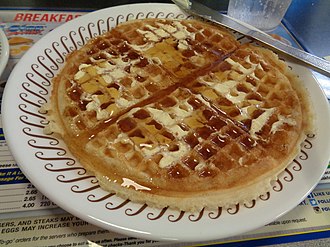
I’m not on my soapbox to knock Waffle House; quite the opposite.  Any restaurant keeping the doors open sixty years after the very first plate deserves my respect.  So does a restaurant where waffles are the main event because I love waffles.  If they’re on the menu, I’ll order waffles whether at Waffle House, Belgian-style, or made-to-order at the finest champagne brunch.  I’ve even been known to eat an Eggo or two.  Ideally, top your grids with strawberries and Chantilly cream, with syrup on the side for dipping.  Heaven on earth.

I’ve only been to Waffle House twice in my life.  Was it a memorable experience?  NO.  Both times I perched on a backless stool at the counter.  Both times I sat next to characters I’d never, ever choose to dine with.  Finally, the Waffle House kitchen is right there in the wide-open so you can watch your breakfast being prepared.  Wouldn’t say it was the most sanitary process I ever saw.

Waffle House does have its charms, however.  The original menu had just sixteen items; today, well over a hundred.  Each location is open all-day-all-night, which has some customers believing Waffle House doors don’t lock.  Each location also has a jukebox, including favorites from the “Waffle Records” label (Ex. They’re Cooking Up My Order by Alfreda Gerald, released in 2006).  Finally, two percent of all restaurant eggs in America are cracked at Waffle House.  Two percent is rarely a big number but in this case, it’s got a lot of zeroes.

Waffle House did make a famous mistake once.  In the 1960s, the chain was approached by one S. Truett Cathy, looking for an outlet for his proprietary chicken sandwich.  The sandwich was added to the menu for a short time, but sales were so strong Waffle House worried its waffles would lose the spotlight.  So Cathy moved on, and of course, Chick-fil-A soon became an even more popular place to eat.

Note the Waffle House shoebox

To be fair, the Adidas shoe isn’t the first time waffles and golf crossed paths. In 1996, Kevin Costner starred as a down-on-his-luck golfer in Tin Cup, which included a memorable scene at a Waffle House just before the U.S. Open.  Somehow this worked better than waffle-golf shoes.

According to its website, Waffle House has 10 locations in my home state of Colorado versus 439 locations in Georgia.  Do the math.  If a hundred Georgians order two waffles a day in each of those restaurants, Waffle House is cooking up over 600,000 Peach State waffles every week. WHOA. Now there’s my excuse to go to The Masters!

Some content sourced from the ESPN.com article, “Waffle House and Adidas team up for waffle-themed golf shoes”, and Wikipedia, “the free encyclopedia”.

——————–

Lego Grand Piano – Update #12

(Read about how this project got started in Let’s Make Music!)

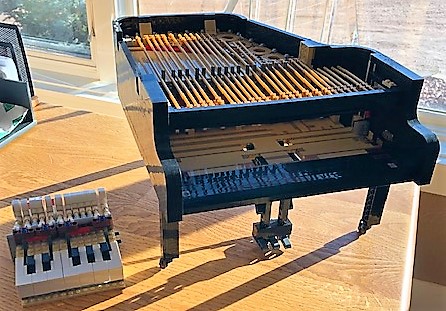
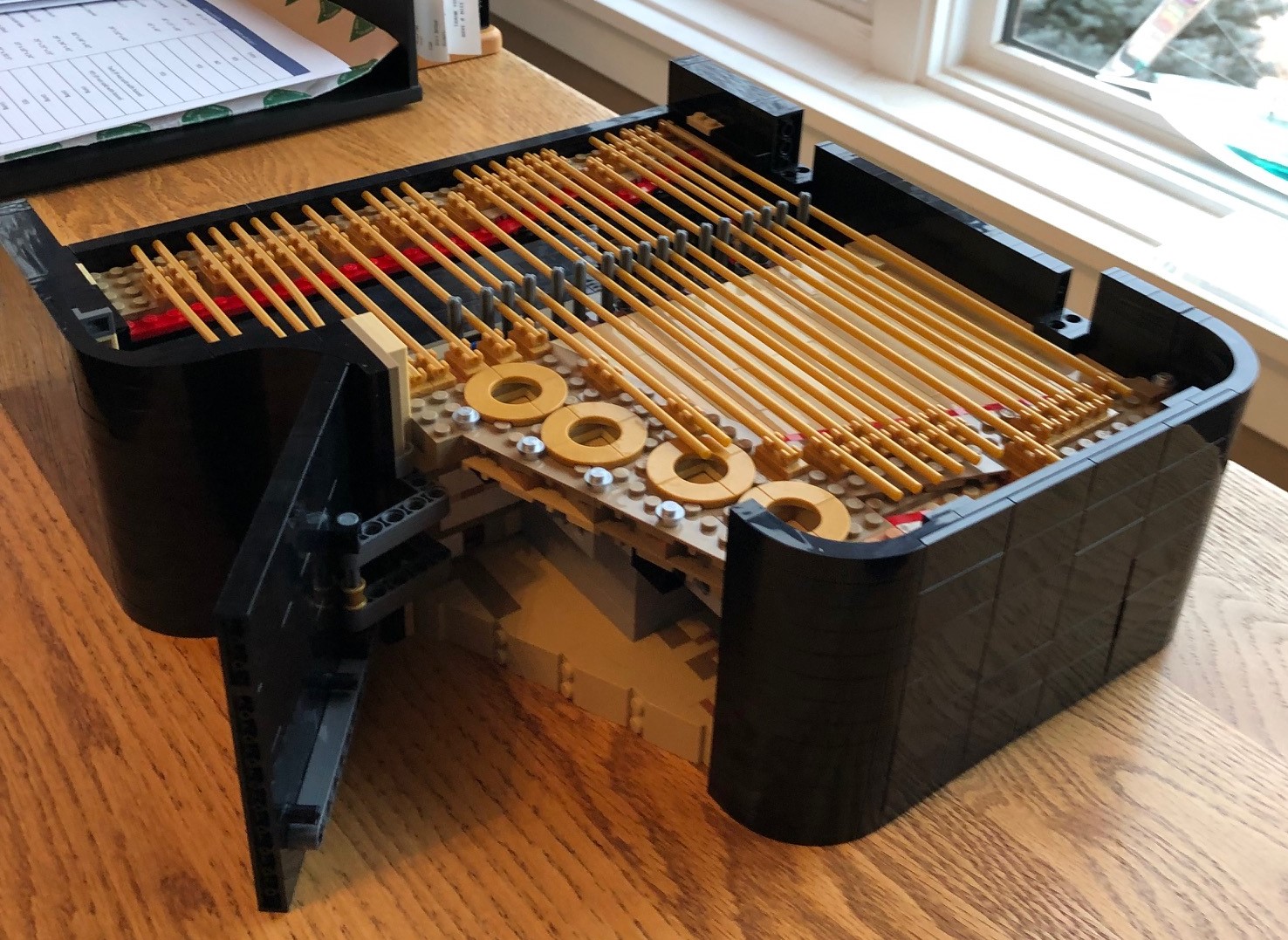
We’ll be “playing” the keyboard for the next few weeks. Bag #12 – of 21 bags of pieces – added another seven keys to the five I constructed last week, which puts us not quite halfway across the board.  I’m showing the complicated mechanical action in the photo because once the keys are installed it’ll be hard to see.  Notice how pressing the piano key down makes the rounded counterweight to the left go up.  The weight strikes the piano string above it (once inside the piano), and Voila! Music.

When you work on one of these Lego projects for almost ten hours you notice things. Little things. Today I realized, for the first time ever, Lego imprints its logo on every one of the thousands of raised “bumps” on its pieces (like the beige bumps just to the left of the black piano keys here).  A perfectionist would have all of those logos facing the same direction. Nope, not gonna happen; we’re on a one-way street here.

Running Build Time: 9.6 hours.  Musical accompaniment: Handel’s Water Music. Leftover pieces: 3

Conductor’s Note: Water Music is a collection of short pieces for a large orchestra.  Because Handel wrote the set of suites for King George I for a concert on the River Thames, Water Music is often performed outdoors.  Next to his choral work Messiah (“HA…lle-LU-jah!”), Water Music is Handel’s best-known composition.

This is Dough-NUTS!

Earlier this week, Krispy Kreme held the grand opening of its newest store just a few miles from my house. You’d have thought the first customers through the doors won the state lottery. I’ve never seen such an amped-up bunch of doughnut-lovers, at least the ones who stepped up to the television cameras. Even the news anchors caught the fever, practically giddy with their coverage, which in turn had me thinking, “Hello? Isn’t there anything more important going on in Colorado Springs?” Welcome to America, where the opening of a fast-food restaurant makes headline news.

Full disclosure: I’ve had a Krispy Kreme doughnut and they’re positively scrumptious.  Put a box of the original glazed in front of me and I’ll polish off at least half of ’em.  But that was years ago, back when Krispy Kreme was new and novel.  Today?  I take ’em or leave ’em, and apparently I leave ’em because I can’t tell you the last time I ate any brand of doughnut.  Regardless, doughnuts aren’t really my topic today; doughnut customers are.  Specifically, the ones who would get up at oh-dark-hundred just to say they’re among the first through Krispy Kreme’s doors on opening day.

Why?

Maybe these nuts for doughnuts are the same people who purchase tickets to the opening of a feature film; the ones who wait hours in line, watch the sold-out midnight show, then fall into bed bleary-eyed at 3am.  I want to get down on my knees and plead with them, “Hey you, the movie will be shown a hundred more times and will be just as good as the first showing”.  Why give up a good night’s sleep to say you saw it first?  Krispy Kreme will sell their doughnuts for years and they’ll taste just as good next year (and the year after that) as they do on “Grand Opening Day”.  Why the rush?

Here’s something else I don’t understand.  This same fast-food frenzy applied to Chick-fil-A, In-N-Out Burger, and two weeks ago, Whataburger when they opened their first stores in town.  The local news gave us updates for months until their “big days”, then cars backed up by the dozens through the drive-thru, then all you’d hear from neighbors was, “Did you hear what just opened?” like it was the juiciest bit of gossip ever. I can think of a dozen local, family-owned restaurants opening in the past several years, and not one of them earned the same hype as these national-chain fast-food commoners.  It’s like we Americans are addicted to fast food.  Which of course, we are.

Why again?

If I’d kept the local news on all day Tuesday, I would’ve seen the same on-the-spot reporter at Krispy Kreme, giving updates every two or three hours on the progress of the grand opening.  Instead, I just pulled up the news channel website and watched her short videos, one after the other after the other.  This reporter was at Krispy Kreme the entire day (that’s 5:30am-10:00pm for those who are counting).  She managed to look as fresh and bubbly with the first interview as with the last.  Probably hyped up on doughnut sugar.

At least she was getting paid.  Those first customers chose to be there voluntarily, which leads me to this question: what does the rest of your day feel like when you’ve been up since 3:00am?  One customer thought to pack pillows and blankets into her car for her three (pajama-clad) kids, so they could sleep while her husband waited in a line so long, the camera couldn’t find the end of it.  Another customer looked and talked like he’d just received his U.S. citizenship from a very faraway land, espousing the merits of the Krispy Kreme over the lesser doughnuts of his homeland.  A third customer, several dozen-doughnut boxes stacked carefully in her hands, boasted how popular she was going to be when she showed up at work (and between you and me, she looked like she’d had plenty of Krispy Kremes already).

Here’s my favorite part of this “news story”.  This isn’t the first Krispy Kreme to open in Colorado Springs.  Years ago, when KK doughnuts were a new rage, Colorado Springs got its first store.  A few years later it closed.  After that, you could only get pre-boxed Krispy Kremes at a few convenience stores around town.  After that you couldn’t get them at all.  Then several years pass.  Now we’re doing it all over again, with the same amount of hype.  To which I conclude: What does it say about your city when headline news that doesn’t deserve to be headline news becomes headline news all over again?

Now there’s a sentence I never thought I’d write.

Some content sourced from the Krispy Kreme website.

——————–

Lego Grand Piano – Update #11

(Read about how this project got started in Let’s Make Music!)

Today’s build stepped away from the body of the piano (again). Bag #11 – of 21 bags of pieces – started out as a bit of a mystery.  If I’d looked closer at Mr. Instruction Manual, I’d have known what was coming.  At some point in the thirty-five-minute assembly it became obvious.  Keys, Francis Scott.  Piano keys.

I put the Bag #11 keys side-by-side with the piano in the second photo so you can get a sense of scale.  They’re kind of a “module”, which should insert comfortably into the front of the piano later.  My next several builds may be more of the same.  Remarkably, the keys are weighted just like a real piano.  Press one down and the red-tipped weight way at the other end brings it back up.  Think see-saw.  Lest this photo has you thinking “easy build”, Bag #11 contained well over 200 pieces.

Running Build Time: 8.7 hours.  Musical accompaniment: Ravel’s Boléro (twice through). Leftover pieces: 2

Conductor’s Note: Boléro is one of my favorite classical pieces and Ravel’s most famous work.  Listeners either love it or hate it.  It’s a fifteen-minute variation on two themes, with the orchestra building slowly to its crash-bang finale.  The repeating themes are so simple I could probably play them with just the few piano keys I built today.  Ravel composed Boléro as a ballet (it does sound like a dance or a march) and predicted most orchestras would refuse to play it.  He was wrong.  Boléro also gained considerable notoriety as the theme music for the 1970s movie 10, starring Bo Derek and Dudley Moore.

Some content sourced from Wikipedia, “the free encyclopedia”.

In-Spired Music

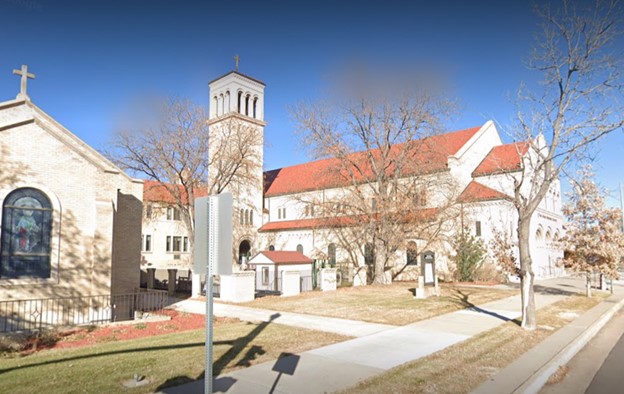
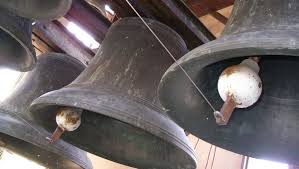
Last Friday, I walked out of the downtown salon where I get my monthly haircut to the makings of a beautiful late winter afternoon. A few cars motored by on the street, yet nobody blared the horn or blasted the radio. Pedestrians kept their conversations to a low tone.  Songbirds made melody, willing the next season to an early debut.  Above all (literally), the nearby Methodist church bells rang out the hour of the day from the steeple, followed by a cheerful rendition of… “The First Noel”?

Found the culprit on Google Street View!

Last time I checked Christmas was well over two months ago.  Decorations are boxed and returned to the closet, lights are taken down, and Starbucks no longer offers my seasonal favorite Chestnut Praline Latte.  Yet here I was, a block from a downtown church in March, with happy steeple bells daring me to burst into Christmas song. 

Talk about a case of bats in the belfry.  You think I’d pause for such a strange moment.  Instead, I simply took in this carol of the bells with a smile, got behind the wheel, and went on my “merry” way.

So it is with church bells, especially the ones in steeples big enough to broadcast their melodies for miles around.  I find church bells comforting, so much so they can play anything they choose and I’ll be happy to listen.  Even a tune that sounds so three-months-ago.

The church I grew up in, on the far west side of Los Angeles, had a tall steeple with bells.  If you pulled up to the parking lot within ten minutes of the start of the service, the bells were making music.  More importantly, they were telling you (as they’ve done for centuries in older churches) it’s time to get yourself inside for worship, buddy.  I didn’t watch every episode of Little House on the Prarie but I watched enough to remember the steeple bells summoning the people of the small town to church.  Believe me, you didn’t want to be the last parishioner in Walnut Grove to pass through the sanctuary doors, earning a steely-eyed stare-down from Rev. Alden.

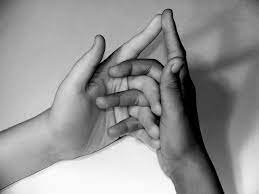
Here’s another memory from childhood church.  In “Sunday School” they taught us how to lace our fingers together, tips pointing down, palms face-to-face below, and thumbs side-by-side in front.

Church! Steeple! Doors! PEOPLE!

[Go ahead, I’ll wait while you make your little “church”.]

Then you’d look at your hands and say, “Here’s the church…” (now raise your two index fingers into a point), “Here’s the steeple…”, (now separate your thumbs a bit), “Open the doors…”, (now flip your hands over and wiggle your fingertips), “… and see all the people!”  That little ditty was clever enough to recollect all these years later, the moment I heard “The First Noel” from the downtown steeple.

At least in America, the appeal – ha – of steeple bells is probably because you don’t hear them all that often (unless your neighbor is a church).  Most modern churches can only afford the structure of the steeple, not the complicated mechanism of the bells within.  Just like train crossings, today’s “bells” are often an electronic equivalent, and so realistic you can’t tell the difference.  But you can with steeples.  If the church was built in the last fifty years, the steeple bells probably don’t ring true (ha again).

Charleston, South Carolina is known as the Holy City because you’ll find over four hundred churches in its rather compact downtown streets.  You can’t look in any direction in Charleston without seeing a steeple, and many of them are hundreds of years old.  That means bells; hundreds and hundreds of bells.  Take a walk in Charleston on a Sunday morning and you’ll be “treated” to the overlapping competition of steeple bells.  They’re summoning you to church, of course (but which one, exactly?)

The Sound of Music has a brief but charming steeple scene in the movie, just before or after Maria weds Captain von Trapp at Mondsee Abbey.  The camera points to the very top of a steeple, where the abbey bells are visible just below the cupola.  In the era of the story, steeple bells were rung by hand.  In this scene, the “ringer-boy” is shown holding on for dear life as he clings to a rope, the weight of the bell dragging him up and down like a pogo stick.  The moment always makes me laugh.

One of these days you’ll be walking down the streets of your own town and church bells will ring.  Stop for a second and give them a listen.  You’ll probably hear a melodic hymn.  You might even be gifted with an “unseasonal” Christmas carol.  Doesn’t really matter.  Those big, happy bells make beautiful music no matter the tune.

——————–

Lego Grand Piano – Update #9

(Read about how this project got started in Let’s Make Music!)

We are closing in the piano’s insides now, as you can see by the almost complete black frame in both photos. Bag #9 – of 21 bags of pieces – contained a good chunk of the frame curves, including the graceful “S” you can see just beyond the right side of the (future) keyboard.

Mendelssohn’s Piano Concerto No. 1 was just about the perfect length for today’s build, with a couple of hold-your-breath moments where pieces from previous builds snapped off and skittered away. They’re back where they belong now,

Running Build Time: 7.5 hours.  Musical accompaniment: Mendelssohn’s Piano Concerto No. 1 in G-Minor. Leftover pieces: 2 (tiny unnecessary extras for the frame).

Conductor’s Note: We have a hinged trap door built into the frame now, for access to the battery pack and on/off switch.  When it’s closed, the frame is seamless and you’d never know the door was there.  They have clever people at Lego.

Fantastic Plastic

On Christmas Day, any parent of small children will stifle a yawn, having built bicycles, dollhouses, and train sets the night before. After all, Santa doesn’t deliver unassembled toys. But hang in there a few years, Mom & Dad, because the building shifts from the giver to the receiver. Older kids want to create. In my generation it was Hot Wheels, Erector Sets, and Lincoln Logs. And one other toy surpassed all others for its ease of use and versatility. Lego.

This piano even plays!

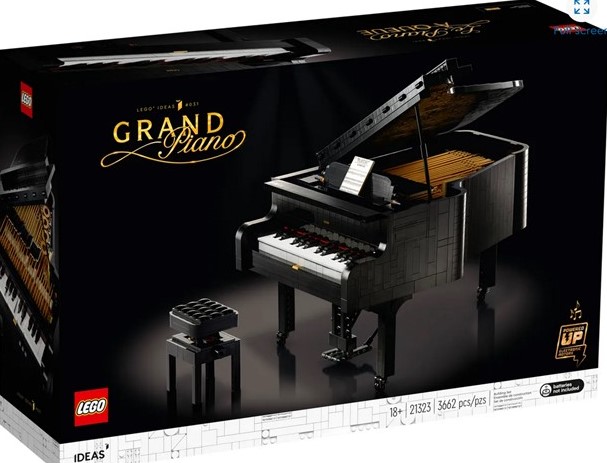
My Christmas gift from my wife this year was a grand piano. Can you top that? Okay, so it wasn’t the kind worth five figures or special movers to get it across the threshold.  My piano measures a mere 12″ x 14″ and comes from the Lego “Ideas” collection.  When it’s finished it will have been built from 3,662 individual pieces.  I can’t wait to get started.

A grand piano made of Legos means the simple interlocking blocks I had as a kid have come a long, long way.  Lego Ideas sets are “products inspired by and voted for by Lego fans”.  The collection includes a typewriter, a ship in a bottle, the house from the Home Alone movies, and the apartment from the Seinfeld sitcom.  Every Ideas product involves thousands of Lego pieces to assemble.  Every Ideas product was also completely sold out for Christmas on the Lego website.

Fifty years ago, Lego was blessedly innocent.  All you had were small bricks in primary colors and if you were lucky, a paper set of instructions to create a simple house or a vehicle.  Otherwise, you just built whatever your imagination could come up with.  When my own kids were kids, Lego moved to product-specific sets like a T. Rex from Jurassic World or an X-wing Starfighter from Star Wars.  Sure, they looked cool when they were built, but I was always skeptical because the sets removed creativity from the experience.  You’d just follow the step-by-steps in the little booklet and voila – a T. Rex.  But call me a hypocrite because this sixty-year-old can’t wait to build his step-by-thousand-steps Lego Grand Piano.

Lego has an interesting history – too many chapters to cover here.  The numbers tell the story in a nutshell.  The Denmark-based company is considered the largest toy company in the world.  Their bricks have inspired movies, video games, building competitions, and eight amusement parks.  Their factories have been churning out little plastic pieces for almost 75 years.  And at last count, that pile of pieces surpassed 600 billion (or 75 Legos for every man, woman, and child on earth).

I didn’t expect to be a Lego fan as an adult but then came the Architecture series in 2008, cool buildings like the Taj Mahal, Eiffel Tower, and Empire State Building.  I just had to have one, so last Christmas my wife gifted me the 1,032-piece United States Capitol Building.  I didn’t clock how long it took to complete but I must’ve looked awfully confident in the assembly because now I’m staring down the more daunting Grand Piano.  Maybe my wife wants me locked down in my home office for the next several months?

To underscore the popularity of Lego these days, the Architecture series alone includes 50 buildings and cityscapes, with more coming out each year (the Taj Mahal was released just last summer).  These sets run anywhere from $50 to $250, with the discontinued ones setting you back three times as much.  Sure, I’d love a Lego version of Frank Lloyd Wright’s “Fallingwater” house, but I’m not going to pay $800 to a collector just to have one.

Lego “Church of Christ”

No discussion of Lego would be complete without a nod to custom creations.  Our local Scheels department store has a larger-than-life Denver Broncos football player made of Legos, posing front and center in the toy department.  The Church of Christ creation in the photo here didn’t forget seating for an 80-member choir (below the big yellow crosses).  And the biggest custom creation of them all?  A full-scale Lego replica of the previously-mentioned X-wing Starfighter, first displayed outdoors in New York’s Times Square.  Try to picture 5.3 million Lego pieces and 23 tons of “toy” in the shape of a fighter jet.  Or just check out the photos here.

Now that I’m done writing it’s time to break open the first bag of pieces to begin my Lego Grand Piano (and time for you to watch the ingenious stop-motion video below).  I’ll use the stopwatch on my iPhone to capture the hours I consume to complete it.  Er, days? Weeks?  I mean, Rome wasn’t built in a day.  Neither is a grand piano.  You might want to check in with me next summer to make sure I haven’t gone bats.

Some content sourced from Wikipedia, “the free encyclopedia” and the Lego.com website.

Once-A-Year Cake-and-Cheer

I caught a radio show last week where a caller mentioned her birthday fell on December 25th. She lamented how, as a kid, she received presents for Christmas and others for her birthday, not knowing which were meant for which. Without missing a beat the radio host goes, “Hey! At least you get to share your birthday with Jesus! I have to share mine with Madonna!”

I decided to play the game myself (and you can too, at the Famous Birthdays website).  Type your special day into the box at the top of the screen and up pop all these, uh, interesting people you share something of a kinship with.  You’ll see names, ages, and occupations under big, colorful photos.  People the website deems famous.  But don’t get too excited now.  I had to scroll through seventeen before I recognized anyone.  Maybe that’s because their occupations are Rapper, YouTube Star, and TikTok Star?  For Pete’s sake, can’t they have real jobs?

Mercifully, I find “real” birthday buddies among the self-proclaimed famous.  Steve Perry – lead singer for the band Journey – shares my birthday, born eleven years before I was.  So does Sam Cooke, whose soulful voice captured hearts in the 1960s.  But one birthday buddy stands gracefully above the rest.  Diane Lane, exactly three years my younger, is one of my favorite actresses.  When Diane turned 14 in 1979, she debuted as the adorable lead in the France/Italy adventure A Little Romance.  I’ve been smitten ever since.

Ms. Lane

Birthdays represent a variety of celebrations as we pass through life, don’t they?  As babies, our parents celebrate for us since we have no clue what the fuss is all about.  As young children, the celebrations become the most colorful: parties with friends of the same age and activities from amusement parks to backyard bouncy houses.  As young adults, birthdays tend to be celebrated at restaurants and bars, with plenty of alcohol flowing.  In the decades following we seem to favor SURPRISE! parties.

Now, as my sixtieth birthday looms like the next interstate exit, I’m all about more subdued celebrations.  A quiet dinner out with my wife.  A trio of phone calls from my kids.  A single piece of birthday cake instead of something big enough to hold five dozen candles.  Wouldn’t want the day to pass without acknowledgment but the simpler the gesture the better.

Speaking of birthday cake, it’s perhaps the single tie that binds as we celebrate our years young and old.  I picture a baby’s birthday cake as small and round, with a big #1 candle on top.  Cover your kid in plastic and put the cake close enough so he or she can dig in with both hands.  We have these priceless and messy pictures for each one of our kids.

Young children have the most adventurous cakes.  I picture a blank rectangle just waiting to be populated with frosting, decorations, and little toys, like an artist’s canvas.  Dump trucks working on a cake-top construction site.  Animals living in a cake-top jungle.  Ballerinas dancing across a cake-top stage.  The possibilities are endless.

After childhood, cake designs evolve to the age itself.  Whether big wax numbers or individual candles, the focus of the cake becomes the number.  After enough of those years, we try to be more subtle (ex. spell out the age with candles) so we don’t set the house on fire.  Later in life, we save the biggest celebrations (and cakes) for the round numbers because ages 80, 90, and 100 are achievements in themselves, aren’t they?

There’s evidence to suggest birthdays and cakes have been a combo as far back as ancient Roman times but for me, birthday cake is simply a nod to happy childhood memories.  Birthday-cake-flavored ice cream, cookies, and even protein bars are all the rage for this reason.  We just want to be kids again, breathlessly anticipating the celebration of our special day.

Some content sourced from IMDb, the Internet Movie Database, and Wikipedia, “the free encyclopedia”.

Lucky Strikes

Have you checked your basement lately? (uh, Dave, I don’t have a basement). How about the crawl space (nope, don’t have one of those either). Maybe a deep closet, the kind with empty space behind the hanging clothes? If I haven’t pegged you yet, just lift up your area rugs (assuming your floors have been around a while). Why? You might find something interesting down there! Loose change. Old love letters. Bowling balls.

Bowling balls?

A small part of Dave’s “bowl” collection

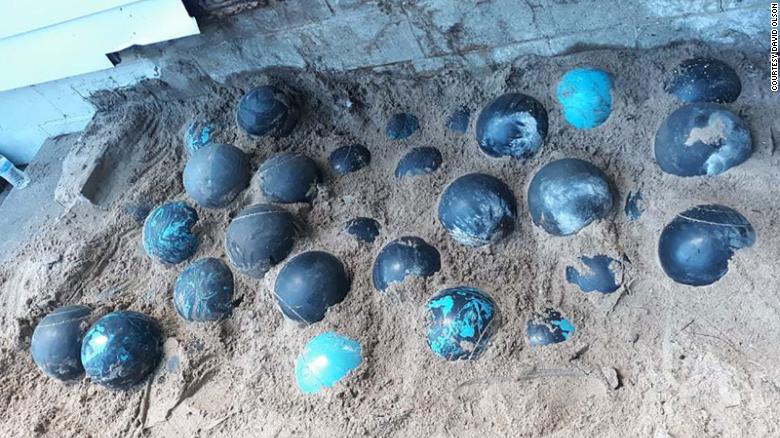
Talk about a lucky strike.  Another Dave in my country (he of Norton Shores, MI) recently began a DIY house renovation when he unearthed a bowling ball from behind the crumbling concrete of his back porch.  So he pawed the sand some more and found another ball.  And another.  Pretty soon he had fifteen.  By the time our industrious friend cleaned out his subterranean bowling alley – er, crawl space, he’d amassed 150 balls – some black, most blue, and all designed to knock down pins.  I’m sure Dave would agree with this Dave when I say, “What the HECK?

Seriously, how would you react if you found hundreds of bowling balls under your house?  Me, I’d wonder if they weren’t part of the structural foundation (Don’t laugh; a 1940’s house we used to live in had glued-together schoolroom yardsticks in the walls.)  My next thought would go to an abandoned underground city, with my house right on top of the bowling alley.  And my final thought?  Aliens.  Aliens put those hundreds of bowling balls down there.

Did THIS used to be under Dave’s house?

Norton Shores Dave was more rational than my own thinking.  After finding the first fifteen balls he stopped digging and picked up the phone to Brunswick Bowling.  Some of the balls had date stamps back to the 1950s and Dave was concerned about toxicity. (Good thinking there, Dave.) But Brunswick glanced at a few of the photos he sent and said the balls were fine.  So it’s official: bowling balls last forever.

Hidden rooms – and the hidden treasures they contain – have always captured my imagination.  In the movie National Treasure, Nicolas Cage sorts through clue after clue on the hunt for a hidden fortune.  The final scene where the underground room reveals itself in bursting firelight is jaw-dropping.  Or how about any movie scene where a sliding bookcase protects a passage to the secret space beyond?  Wouldn’t that be a great feature in your house?

I designed a house with a sliding bookcase once (true story), back in my days as an architect.  The hidden room was accessed from the landing halfway up an open staircase, behind innocent-looking shelves of books.  The hidden room was meant to be a home office, with a small balcony overlooking the backyard.  I pictured the owner’s guests, standing on the lawn and looking up, saying, “Wait a sec’, how come I haven’t seen that room?

Admittedly, bowling balls aren’t a sexy find (even 150 of them).  It’s not like you’d go, “Perfect… just what I’d been hoping for!”  That’s not stopping Norton Shores Dave, however.  He thinks there may be even more balls down there, but – letdown ending to the story – he’ll probably just turn them into decorative pavers in the yard.

Plant orange trees… find a church instead!

Other hidden-space stories yield more satisfying treasures.  Last year a gardener in England – simply pulling weeds – unearthed sixty-three gold coins from the era of Henry VIII (now that’s what you call “paydirt”).  Another gardener – this one in Turkey – found an entire 6th-century church under the ten acres of land where he was about to plant orange trees.  Old rolled-up movie posters under the floorboards of a house were so pristine they brought $600,000 USD at auction.  Finally, in 2009, an English doctor passed away and left his house to his relatives.  What they overlooked for many months? The dusty, vintage 1937 Bugatti in the garage.  Selling price: $4.2 million.

Maybe the best finds are up in the attic.  In 2013 a family found a Van Gogh in the rafters of the house of deceased relatives.  The painting had been gathering dust for over a century because the original owner thought it was a fake.  Not so.  It turned out to be a priceless example from Van Gogh’s most prolific years.  Okay, not quite “priceless”, but how about $90.6 million?

It’s only fitting – as Halloween approaches – I ask you to crack the seal on your hidden spaces.  You’ll probably need a flashlight.  You’ll brush aside spiderwebs or put the boot on a creepy crawler or two.  But c’mon, you know you’re curious.  There could be something valuable right there underneath your feet.  A stash of cash.  A famous painting.  Or 150 bowling balls!

Some content sourced from the CNN.com article, “Home renovation leads to the discovery of over 150 bowling balls under a family’s porch”, and the lovemoney.com article, “People who bought homes and found treasure”.

Meet Cute

Every now and then McDonald’s gets it right. In 1973, they introduced the Quarter-Pounder because customers demanded more than a 10 oz. patty inside of a boring bun. In 1987, McDonald’s added “PlayPlace” indoor playgrounds to suburban locations: crawl tubes, slides, and ball pits contributing to countless happy childhoods.  This year, the restaurant chain is stepping it up with its McCafé Bakery offerings. The Apple Fritter, Blueberry Muffin, and Cinnamon Roll will step back to give the spotlight to the newest McDonald’s kid on the block: the adorable Glazed Donut.

Seriously, just look at this little guy.  Isn’t he the cutest donut you’ve ever seen?  The McCafé Glazed Donut looks like a happy gathering of donut holes, all nestled up against each other for warmth and protection.  The Donut is pleasingly symmetrical.  Even the spelling is cute (instead of the more substantial “doughnut”).  And the best part: its “donettes” pull apart the way you would a hot, flaky croissant.  It’s like getting seven for the price of one.  And it’s cute to boot.

I admit I didn’t wake up this morning intending to write about cute donuts.  Even the headline about this doughnut’s upcoming debut didn’t really catch my eye.  But then I saw the photo and I was utterly smitten.  It’s the same way I felt when I first saw a package of those colorful little Plink garbage disposal cleaners.  I just had to have them.

Some would describe this as a “meet cute” moment.  Meet cute is the early-on scene in television or movies where two people connect for the first time and you just know they’re headed for romance.  The Hallmark Channel is all about meet cute.  Any scene where Hallmark movie man meets Hallmark movie woman, combined with something funny or unusual is 99% headed towards future romance.  It’s like you’re ten minutes into the story and you already know how it ends.

Plenty of “meet cute” in this one

And that’s how it’s gonna go with the McCafé Glazed Donut.  We had our meet cute this morning.  Now I have two weeks of anticipation and heart palpitations before I can actually buy one.  But I already see it.  I (almost) already taste it.  And the whole pull-apart thing?  Pure sex(y) appeal.

Meet cutes don’t always lead to predictable endings.  After the meet, the movie leads you to believe the characters are destined for romance.  But sometimes they’ll throw a curve (usually in the form of a third character) and the story goes in another direction.  Could happen with the Glazed Donut too.

Let’s use supermarkets as an example.  You stroll into the store, grab a basket, and think about your shopping list.  But before you even reach the aisles you’re greeted with front-of-store marked-down day-old doughnuts.  They’re just sitting there like little round orphans, begging you to spend another $0.69 to “adopt” one.

They’ll be front-of-store by tomorrow

So you do.  And you make sure the little guy’s placed in your basket as an easy find.  Then you slide behind the steering wheel and polish him off before you even leave the parking lot.  Tastes great, right?  Maybe now.  Later you’ll reflect on the slight, sickly feeling in the pit of your stomach and wonder why you caved.

That’s my thinking with the McCafé Glazed Donut.  I can cruise past the Fritter, Muffin, and Cinnamon Roll without so much as a passing glance.  But mark my words, next month I’ll find any excuse to be near a McDonald’s during McCafé Bakery hours.  I’ll purchase the Glazed Donut and my meet cute will blossom into a full-on romance. When I consider the Protein Shake I have most mornings, I’ll feel like I’m about to cheat on my mainstay.  Heck, this scandal could go viral! I see the headline now: Man Opts for Sweet & Sexy over Cold & Icy.  But can you blame me?  My Protein Shake really IS cold and icy, and there’s nothing satisfyingly pull-apart about it at all.  Meanwhile a small, soft, almost UFO-looking donut beckons.

Forgive me, my beautiful, healthy breakfast-in-a-cup.  Looks like I’m gonna stray.

Some content sourced from the CNN.com article, “McDonald’s is adding a sweet new treat for fall”, and Wikipedia, “the free encyclopedia”.

Behind the Wheels

Every summer when my wife and I head to the West Coast for a little sunshine and sand, the only intentional exercise we get is a walk on the beach or a dip in the ocean. So this year we decided our vacation equation needed to get behind the wheels. We skipped the flight, racked the bikes onto the back of the SUV, and drove 1,100 Utah/Arizona/Nevada desert miles to bridge the gap between Colorado and California. Now the Pacific Coast sun shines above, the Pacific Ocean waves crash below, and the bikes… well, the bikes just beckon to be ridden every day.

It’s already happened, as I suspected it would.  When we took our first pedal tour around this little seaside town, I saw him for a few fleeting moments.  He was a younger, thinner, blonder version of me.  He was seated confidently behind the drop handlebars of a white Nishiki Regal ten-speed, focused solely on the road in front of him.  He was dressed in Converse tennis shoes, ballcap in place of a bike helmet, white socks halfway to the knees.  When this kid wasn’t body surfing, playing basketball, or working the evening shift at McDonald’s, he was logging mile after mile on his bicycle, in search of driver’s license freedoms, even if he wasn’t old enough to have one.

My fleeting companion is the “me” of forty-five years ago.  In most respects it’s a long period of time.  In others we could be talking about last week.  Bicycling was serious thread in the fabric of my childhood.  It was a way to leave the familiar behind, to pursue esoteric wonders beyond the streets I grew up on.  Bicycling asked the questions, “Where would you like to go?” “Why?”  “And how far?”  At fifteen years old, the answers were limitless.

The Schwinn “Lemon Peeler”

My love of cycling began at a young age (and continues today in weekly spin classes at the gym).  I still remember the very first hand-me-down bike my brothers and I shared – a small blue two-wheeler with no gears, the kind you had to pedal backward to brake.  From there I graduated to a glam Schwinn Lemon Peeler Sting Ray, the all-yellow beauty with the fenders above fat tires, sporting the signature banana seat.

But my Nishiki Regal ten-speed brought bicycling to a whole new level.  I bought it myself: months of hard-earned allowance and odd-jobs cash plunked down for the biggest purchase of my young life.  The Nishiki granted me access to the more sophisticated language of bicycling; terms like “chain stay”, “saddle”, and “derailleur”, even if I couldn’t afford the Raleigh or Motobecane imports more deserving of those words.

Also, the Nishiki meant bike maintenance became a labor of love instead of a chore; a bonding afternoon with friends.  The shade of my dad’s carport colored our “workshop”, where we dismantled, fine-tuned, and reassembled over and over; my friends and I exchanging tools and advice for each other’s spare parts.  I still remember the final touch when the Nishiki was all back together: the pristine white finishing tape wrapped carefully around those drop handlebars, signifying it was finally time to ride.

I was never far behind…

One story of me and my Nishiki will always stand out.  It was all about beating the school bus home.  When the bell rang after my final class, I’d sprint to the rack, jump on my bike, and launch into the six-mile trek back to my house.  The bus meanwhile, needed several minutes to load its passengers, not to mention dozens of stops before it would’ve dropped me.  It was always a neck-and-neck battle as I’d pass the bus and then it’d pass me.  Most times I’d lose the race by mere seconds, easing up on the pedals in exhausted frustration.  But every now and then I’d get the victory.  Did some of my friends deliberately take their time exiting the bus, knowing I was in hot pursuit?  Maybe.

In 1979, a few months after I turned seventeen, a wonderful little film called Breaking Away won the Academy Award for Best Picture.  The movie centered around four friends, bicycling, and Bloomington, Indiana’s “Little 500” bike race, but it was mostly about coming of age.  Learning life’s lessons while putting the miles on the pedals.

Little wonder Breaking Away‘s lead character was named Dave.

[Note: If anything about this post resonates with you, be sure to read Steve Rushin’s Sting-Ray Afternoons.  The author’s childhood is set in Minnesota, but the growing-up memories are remarkably similar to my own.  Even the kid on the cover looks a little like me.  Steve and I could’ve been brothers.]

Some content sourced from Wikipedia, “the free encyclopedia”.

As the Wind Blows

Pagosa Springs, a small town in Colorado’s San Juan Mountains, lies 7,100′ above sea level. It is locally known for its therapeutic hot springs. Pagosa also boasts a 35-year business called Rocky Mountain Balloon Adventures, which takes you an additional 3,000′ above sea level for “360° views of the beautiful valley [of Pagosa] below”. Maybe you’ll climb aboard their basket and go for a float someday.  If you do, my apologies for not joining you.  I’d rather spend my time in the terra firma of Pagosa’s hot springs than the “terror for-sure-a” of a balloon ride above.

Getting high, above Pagosa Springs

Logic says my fear of heights denies me the thrill of soaring up, up, and away.  Not true.  It’s more about the “gone with the wind” part (sorry for that, Scarlett).  Once the balloon reaches cruising altitude, the pilot extinguishes the fire and Mother Nature silently takes over.  Then your high-rise ride gets a little dicey unpredictable.  It’s the whole not-knowing-where-you’re-gonna-end-up moment that gets me.

Possible outcomes as follows.  You descend gracefully into a farmer’s field with the “chase vehicle” just minutes away.  You zip hundreds of feet up and then hundreds more down, depending on which fickle air stream you encounter.  Or, you float all the way to nearby New Mexico on the strong winds we have here in Colorado.  All while literally hanging by threads.

Albuquerque’s big balloon bash

Speaking of New Mexico, it wouldn’t be the worst destination for one of Pagosa’s rogue hot air balloons.  After all, the International Balloon Fiesta – the largest gathering of balloonists in the country – takes place every October in Albuquerque.  At least you’d have professionals on the ground eager to reel you in.  Also in Pagosa’s favor: small town = few power lines.  Hot air ballooning and power lines do not mix.  See here for what happens when they do (coincidentally, just weeks ago in Albuquerque).

Despite the occasional crash landing, ballooning fatalities are rare.  In fact, hot air ballooning has been designated “safest air sport in aviation” according to years of statistics, and a Swiss aeronautics organization whose name I can’t pronounce.  So maybe it’s not so bad if you never have a neatly paved runway to greet your touchdown.  Heck, Pagosa locals love it when a hot air balloon ends up in their backyard.  They come running out of their houses to greet you with coffee and cinnamon rolls.  Breakfast?  Hmmm.  Maybe I can do this ballooning thing after all.

I may not be a balloon flyboy but that doesn’t mean I’d rain on a parade of those big colorful inflatables.  After all, hot air balloons first appeared to me in favorite childhood stories, like L. Frank Baum’s The Wonderful Wizard of Oz, William Pène du Bois’s The Twenty-One Balloons, or Albert Lamorisse’s priceless (and wordless) The Red Balloon.  They show up as flying animals every Thanksgiving Day at the Macy’s parade in New York City.  As well, right here in my hometown we have an impressive showing of hot-air balloons every Labor Day weekend, including a “balloon glow” in the evenings.  Now that I think about it, there’s probably more ballooning going on in this part of the country than anywhere else.

Colorado Springs’ beautiful balloon glow

It’s not as if hot air ballooning is some new-fangled sport (hoverboarding, anyone?)  The first untethered hot-air balloon flight took place back in the eighteenth century.  Hundreds of commercial operators offer hot-air balloon rides in the United States, and hundreds more are private owners.  Add a little perspective and 3000′ above Pagosa Springs is nothing.  The world record for the flight height of a hot-air balloon is 64,980′ (like a Mt. Everest on top of a Mt. Everest).

Up, up, and seriously away

Strict definitions aside, the altitude record for hot air ballooning is about to topple, in a big way.  A company called Space Perspective is now taking reservations for its giant hot air balloon, launching in early 2024.  You, seven other passengers, and your pilot astronaut will take a six-hour ride in a pressurized capsule under a giant balloon… to the edge of the Earth’s atmosphere.  A seat on “Spaceship Neptune” costs $125,000.  Operators are standing by to take your payment…. for 2025, that is.  The 300 seats offered in 2024 are long gone.

Maybe 3000′ above Pagosa Springs doesn’t sound so bad after all.

Some content sourced from the CNN Travel article, “On sale: $125,000 balloon trips to the edge of space”, and Wikipedia, “the free encyclopedia”.