Setting Little Booklets Free

In Breaking Away, the charming little movie about bicycling and broken dreams, there’s a scene where Barbara Barrie talks with her son about her passport. She’ll never really use it, she says, but she carries her passport all the time so she can present it proudly if ever asked. With newfound hindsight, I should’ve held onto my wife’s passport as tightly as Barbara Barrie held on to hers.

If you have a passport, you know the drill.  Every ten years you have to renew the little book.  The process is cumbersome, even online, because the authorities ask for almost as much information as they did the first time around.  Everything goes into the (re)application except a copy of your birth certificate.  Three pages of personal information later, you print, date, and sign, attach an unflattering black-and-white selfie (no smiling!) and mail it in together with your expiring passport.

So far so good with the hindsight.  But as soon as I went to the post office last October I made a big boo-boo; the so-called fatal error.  The desk clerk convinced me to send the application through regular mail.  “Save your pennies”, I remember him saying. “After all, you’re sending through one government entity to another government entity.  What could possibly go wrong?”  So I saved my pennies… and that’s the last I ever saw of my wife’s passport.

Did this machine eat my wife’s passport?

Okay, maybe not ever.  Perhaps the little booklet eventually finds its way home after completing whatever misguided tour it’s been taking.  Or maybe, as our travel agent was quick to suggest, it was mangled and shredded by the sorting machine of an automated postal facility.  Or maybe #3 – the one that has me staring at the ceiling into the wee hours of the night – it’s the latest identity of the head of an international drug cartel.

Laugh or feign horror at my expense, but you can’t blame me for wandering to the worst case scenario these days.  The outside of the mailing envelope said “National Passport Processing Center” while the inside contained what obviously feels like a passport.  Easy pickings, especially for an enterprising minimum-wage postal worker.  My recurring thought: why didn’t I fork over the fifteen bucks for a secure, insured, overnight envelope?  Because I’m cheap, that’s why.  Ah hindsight, thee be a cruel character.

Where o’ where did you go, little book?

Not that you’ll ever need it (because you’re learning from me) but there’s an easy process to report a “lost or stolen” passport.  You provide as much information as you can and if you’re lucky the authorities identify and “decommission” the missing booklet, reducing it to mere paper and plastic in the hands of another.  But that still left my wife with no passport, which meant filing a new (not “re”) application.  Dig out the birth certificate, take another photo, make an in-person appointment with the local post office, and pay another application fee.  Mercifully, I watched that application get sealed into one of those secure/insured mailers before disappearing down the conveyor belt.

My first inkling of identity theft hit when our credit card company informed us of a $500 charge from a merchant in Germany, a company I didn’t recognize (and couldn’t begin to pronounce).  My second inkling hit when our travel agent tried to make charges for the trip we needed the passports for, and our other credit card was rejected.  One inkling makes you pause, but two inklings?  That pushes the big ol’ panic button.  But the god of credit cards must’ve been looking down on me favorably because the first charge was cancelled while the second charge was only denied because our travel agent had an old card on file.  In other words – to my knowledge – we’re talking random events instead of identity theft.

There’s a happy ending to this story. (Actually, it’s more like an intermission since the authorities sent me a letter saying my wife’s passport is still lost or stolen until it’s not.)  We have new passports now, which means no renewal process for another ten years.  Our compromised credit card was cancelled and replaced.  And we froze our credit in case a “new wife” out there tries to open accounts.  I’m not convinced that’ll ever happen but I’m breathing easier as the months pass by.  And rest assured, I’m keeping our little booklets secure so nobody can, you know, “break away” with them.

Christmas Customs Crisis?

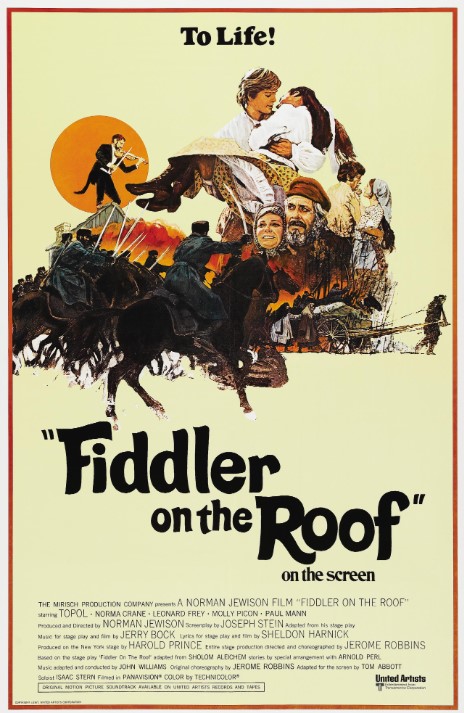
In the 1971 movie Fiddler on the Roof, the musical numbers are familiar even fifty years after the fact. Songs like “Matchmaker, Matchmaker” and “Sunrise, Sunset” play in my head in the voices of those long-ago performers. But it’s the opening number – “Tradition” – I hear most clearly, in the robust voice of actor Topol. The lyrics, covering the expected roles of father, mother, son, and daughter, speak to maintaining things as they always were. Which brings me to Christmas, and my family’s somewhat threatened traditions.

The easy way out here would be to list mine and ask you for yours.  We’d probably have some traditions in common and others we’d be hearing about for the first time.  Instead let me ask, are any of them robust enough to make it through the long haul?  As fast as the world is changing, you have to wonder what Christmas celebrations will look like ten and twenty years from now.  Seriously, do you expect hard-copy Christmas cards in the 2030s?  (Will you even have a mailbox?)

The Christmas tree is a good place to start.  As I’ve blogged about before, our tree is always real (versus artificial), purchased from a nearby lot after choosing the best fit for the house and budget.  This year however, I admit to a pause when I saw the price tags on the branches.  I swear the cost of Christmas trees doubled from 2022.  Economics says it’s a case of supply and demand, but in this case both are declining.  Tree farms surrender to developers.  The preference for artificial trees has risen steadily over the past fifteen years (to 77% of us now).  So less trees and less demand.  My 2030 Christmas may include an artificial tree whether I like it or not.

Christmas dinner faces a similar challenge.  The beef tenderloin we prefer for our celebration is a once-a-year luxury but it’s about to become a never-a-year purchase.  Even at a big box like Costco a trimmed tenderloin sets you back $40 a serving.  You start to wonder if burgers wouldn’t be just as satisfying simply for the money saved.  Even better – snacking throughout the day, and then your Christmas dinner appetite will be satisfied by a few side dishes and dessert?

Christmas (Eve) church already faced its toughest test (COVID) but did it really survive?  I remember the service we attended in 2020… from the “comfort” of our car with the preacher and the choir at the edge of the church parking lot.  The next two Christmases brought parishioners back indoors… but in far fewer numbers.  I admit to getting comfortable with “laptop church” every now and then, but Christmas Eve will be in person as long as there are sanctuaries and services.

Christmas carols may be the one tradition where serious change is in order.  Maybe you heard; Brenda Lee’s 1958 version of “Rockin’ Around the Christmas Tree” hit #1 on the Billboard Hot 100 this year .  That’s “staying power” (maybe staying a little too long) but it also suggests we’re not creating enough new music.  And how many versions of “Baby It’s Cold Outside” are we going to make before we decide not to change the lyrics but rather to ditch the song once and for all?  Bing Crosby, Nat King Cole, and Karen Carpenter will always have a place on Christmas playlists. The rest are getting old and it’s time for more “new”.

Christmas lights don’t leave much room for debate.  Not only will they be shining brighter than ever in the 2030s, they’ll be holographic, animatronic, and experiential.  Instead of a drive-thru Christmas display, the display will probably drive through you.  You’ll also have the option of enjoying your neighbors’ displays from the comfort of your living room (using the “mixed reality” headset you got for Christmas).

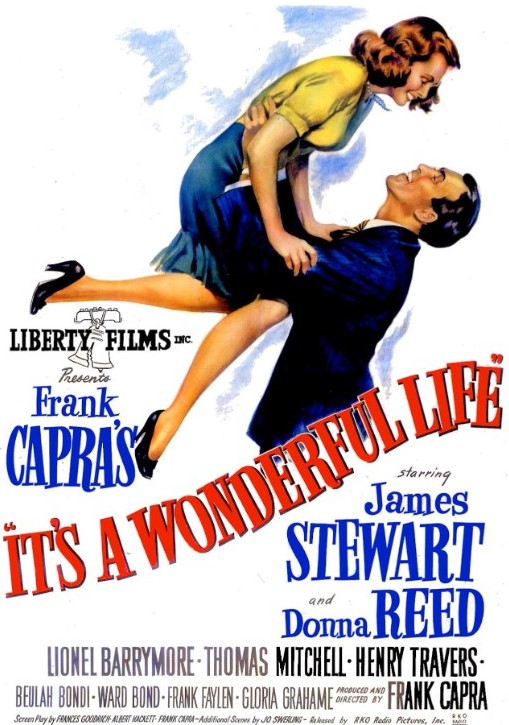
Finally, Christmas movies have pretty much run their course because you can only spin so many stories around the holiday (and anything on the Hallmark Channel doesn’t qualify as a movie).  Having said that, I’ll go to my grave watching It’s A Wonderful Life every December.  Even if there are no Christmas cards, tree, or dinner, and I’m tortured with yet another version of “Baby It’s Cold Outside”, I know I can always find tradition and the true meaning of Christmas alongside Jimmy Stewart, in a little town called Bedford Falls.

Merry Christmas!

Some content sourced from Wikipedia, “the free encyclopedia”.

It’s Thanksgiving Season (#1)

Listen carefully… hear the clock a-tick-tick-ticking?  Better hurry up!  You’re already a day (or more) into the Thanksgiving season and you have so much to do!  “No Dave”, you correct me, “Thanksgiving’s just one day (or at most a long weekend) way-ay-ay at the end of the month… I still have plenty of time to prepare!”  No you don’t.  Junk that perception, online friends, because the times they are a-changin’.  I, blogger Dave, hereby decree Thanksgiving to be three weeks… and the season’s already underway.  So c’mon – get grateful already!

It’s fitting I’m writing this post on Halloween, “… the conclusion of spooky season…” as Lyssy in the City referred to it.  And isn’t it true?  Just like Christmas, the air goes out of the holiday balloon the very next day.  Cinderella’s carriage turns back into a pumpkin at midnight (ironically).  There is no “residual” spooky season on November 1st.  Halloween died the night before.

Retailers are determined to steamroll Halloween and Thanksgiving with the Christmas season, of course.  The artificial trees and decorations were available for purchase at Costco and Lowes this year before the Halloween candy even colored the shelves.  As I said in Third-Wheel Meal two years ago, Thanksgiving is fighting an uphill battle between the ever-expanding seasons before and after.  It’s like a sandwich with two massive pieces of bread but not much in between.

Thanksgiving is not just another holiday in my book; it’s a uniquely American holiday.  It’s the one we’ve been celebrating in the U.S. for 160 years thanks to the persistence of one Sarah Josepha Hale (who also wrote “Mary Had a Little Lamb”). Hale, along with Abraham Lincoln’s stroke of the presidential pen, made sure the holiday was “permanent… an American custom and institution”.  Gives this juncture in the holiday season a little more respect, wouldn’t you say?

Day-by-day gratitude

Like an Advent calendar, I propose we take twenty-three days to be grateful for what we have.  Open the little cardboard door on any given morning of November and the question will always be the same: What are you thankful for today?  Surely you can come up with twenty-three things.  Or how about twenty-three people?  Wouldn’t it be something if you told one person how grateful you are to have them in your life… every day until Thanksgiving Day?

Already on the shelves, sigh…

As with Christmas, it’s not the wrapping; it’s the gift inside.  Thanksgiving goes way deeper than turkey and football.  If you’re planning a trip to America and don’t know much about Thanksgiving, VisitTheUsa.com is not helping my cause.  The website reduces Thanksgiving into turkey and pie, Turkey Trots, parades, football, the pardoning of a single turkey, “shop ’til you drop”, and the travel challenges of a four-day weekend.  Really?  That’s the meaning of America’s Thanksgiving?

It’s not about this…

Maybe it would help if moviemakers and songwriters joined my cause.  I mean, think about it.  Halloween movies come to mind without much thought (with some, like A Nightmare on Elm Street, approaching ten sequels).  Hallmark churns out Christmas movies faster than you churn out Christmas cookies.  But are there any movies about Thanksgiving?  Well, yes actually, just this year we have Thanksgiving (the movie).  But please, don’t seek out the trailer.  This garbage has nothing to do with gratitude and everything to do with gratuitous violence.

or this…

I was going to make the same case for music. Halloween has you dancing to “Thriller” and “Monster Mash”.  Christmas has you “Rockin’ Around the Christmas Tree”.  There is no “Thanksgiving carol”.  But then I remembered Amy Grant’s “‘Til the Season Comes ‘Round Again” (my wife’s favorite).  It’s a song about Christmas, make no mistake, but you could argue there’s a little Thanksgiving dressing mixed into the first verse:

Come and gather around at the table
In the spirit of family and friends
And we’ll all join hands and remember this moment
‘Til the season comes ’round again

Get what I’m saying?  Take the next three weeks and find the true meaning of Thanksgiving.  Like Halloween, the treats will still be there on November 23rd.  Like Christmas, you’ll still have the stress of travel and getting things done.  Those holidays are about finding your inner child.  This one’s about finding your inner adult.  So c’mon – get grateful already!

Some content sourced from Wikipedia, “the free encyclopedia”.

Not-So-Thruways

We live on a long, straight-run residential street, with the option to exit at either end to access the outside world.  Close by, a cluster of our neighbors live on a short, stubby lane, where you won’t get very far before having to turn around and go back the way you came.  A sign posted at their street’s entrance declares, “Not A Through Street”.  It’s what the French – and we Americans – call a cul-de-sac.

In a rather desperate effort to come up with something Halloween-related this week, I landed weakly on “dead-end streets”.  Of course, these tiny avenues are often very much alive.  Cul-de-sac’s host a quaint gathering of houses, with a few on the straight run and even fewer around the end circle.  The setup allows these neighbors to get to know each other easier.  And with so little traffic, the end circle encourages kids to do what their parents normally nix: play in the street.

But maybe I shouldn’t paint/assume such a rosy picture (especially with Halloween right around the corner).  What if your neighbor living right next door on that little end circle is someone you’d sooner see in a horror movie?  Or what if the statistics are true: even more people are struck by cars on a cul-de-sac because of the assumed safety of a quiet street?  Finally, consider the double-hyphenated phrase staring you right in the face.  Cul-de-sac – French translation – “bottom of bag”.  Suddenly your house feels like one of those throwaway candies you find deep down in your trick-or-treat sack.

I didn’t know “cul-de-sac” had such a negative connotation.  I found it rather quaint because it’s double-hyphenated (and French).  Curious, I went in search of other double-hyphenated words to see if I could find something more positive.  Know-it-allWord-of-mouth (which is often gossip).  Son-in-law.  Okay, that last one has potential.  I mean, he’s only been married to my daughter for year now, so…

Here’s a really nasty double-hyphenated for you.  Fer-de-lance.  It means “head of spear”, which isn’t so nasty until you realize it’s the name of a snake; an extremely poisonous viper who lives in the tropics.  The fer-de-lance was the killer (literally) in a 1974 movie by the same name.  A movie I never should’ve watched at the fairly innocent age of twelve.  Fer-De-Lance was the original Snakes on a Plane, only the plane was a submarine carrying a crate full of deadly creepy-crawlies.  How’s that for Halloween-scary?

Like Fer-De-Lance, Cul-De-Sac was also a movie (1966), about “a hermit living with his wife in a large dank castle on an island… terrorized by two escaped prisoners.”  Not exactly a romantic comedy, and no explanation of the film’s title, other than maybe this couple finding themselves at their ultimate dead-end.

Let’s circle back to the suburban version of the cul-de-sac (please!)  Two addresses ago we actually lived on one.  There were two houses on each side of the straight-run and four houses on the end-circle.  We lived on the circle.  Were we tight with our neighbors?  No!  Each of our driveways were long and steep so our houses were actually pretty far apart.  I still remember how we’d greet our neighbors faithfully only one day out of the year.  What day?  Halloween, when we’d accompany our kids to their front doors.

We need to end this more-Halloween-than-I thought post on a positive note, so I don’t have you thinking about poisonous snakes and escaped prisoners.  Cul-de-Sac is a locale on the beautiful Caribbean island of Saint Martin.  It was also the name of a 1990s alternative rock band.  And Cul-de-Sac was the title of “a light-hearted comic strip centered around a four-year-old and her suburban life experiences.”  Okay, now we’re talking.

Some advice before I close.  If you live on a cul-de-sac, I suggest you double-stock the candy this Halloween.  After all, trick-or-treaters who make it to your dead-end street may find themselves going round and round the end circle without realizing what they’re doing.  Keep an eye out for repeat customers.

Some content sourced from Wikipedia, “the free encyclopedia”.

Mom-and-Pop Music

Flip through the chapters of my life and you’ll find a bookmark at 1975. It was the year I became a teenager. It was the year I started middle school. But most importantly, 1975 was my first foray into Top 40 music. In those days, punk, funk, disco, and metal were just getting started; all too progressive for a kid taking his first dip into the pool of radio rock. Instead, my preference was to chew on something a little sweeter. Like bubble gum.

In the 1970s, I was way too young to witness the birth of rock and roll.  I also missed the advent of pop music.  But I was right on time for a musical genre known as bubblegum.  Bubblegum siphoned off pop music’s more catchy, upbeat tunes and marketed them to children and adolescents.  And what better way to market theses songs than kid TV?  Anyone who ever watched The Partridge Family, The Monkees, or the cartoon rock of The Archies on Saturday mornings enjoyed bubblegum music.

As for 1970s Top 40, it’s easy to look back on those weekly lists and find bubblegum.  “Love Will Keep Us Together” (Captain & Tennille), “Laughter In The Rain” (Neil Sedaka), and “He Don’t Love You, Like I Love You” (Tony Orlando and Dawn) are just a few examples from fifty years ago.  Like most things back then, music was more innocent.

Having said that, bubblegum wasn’t even specific enough to define my own tastes.  The industry standard Billboard Magazine generates a Hot 100 list at the end of every year based on sales and radio plays.  It’s fun to go through the 1975 list and recognize just about every song.  But I was looking for three names in particular and – no surprise – all of them made the list with multiple entries.  Hello again, John, Olivia, and Barry.

John Denver was only 53 when he was tragically killed piloting a single-engine plane above California’s Monterey Bay, yet he managed to create over twenty-five years of gentle hits before that.  When I first heard his voice he’d already landed top-ten’s like “Leaving on a Jet Plane” (from the movie Armageddon for you younger readers), “Take Me Home, Country Roads”, and “Rocky Mountain High”.  One of Denver’s biggest hits, “Annie’s Song”, was a love song to his first wife.  Another, “Calypso”, paid tribute to the late ocean explorer Jacques Cousteau.  I purchased most of Denver’s albums (cassette tapes!) with a good chunk of my meager teenage savings.

I was an Olivia Newton-John fan well before 1978’s Grease became a Hollywood phenomenon.  Newton-John and her sweet Australian accent were an instant teenage crush, with songs like “If You Love Me, Let Me Know”, “Have You Never Been Mellow”, and “I Honestly Love You”.  Then Grease came along and good-girl-turned-bad Olivia turned my teenage heat up several notches.  A testament to Newton-John’s popularity came in the form of 100 million records sold, fifteen top-ten singles, and four Grammy awards.  To this day, the soundtrack to Grease remains one of the world’s best-selling albums.

Barry Manilow and his music are more of a confession than the two we’ve already visited with.  It wasn’t at all cool to admit to liking Manilow’s “adult contemporary” music back then.  His hits were better suited for your parents, like “Mandy”, “This One’s For You”, and “Even Now”.  “Copacabana” was a dance number you couldn’t get out of your head.  “I Write the Songs” spoke to my inner-musician wannabe.  Manilow’s talents on the keyboard certainly captured my attention as I pursued the piano myself.  Unlike Denver and Newton-John, I purchased every Barry Manilow album as soon as it hit the shelves.  Somewhere in my attic I still have a boxed CD collection of his best work.

Like him or not, what is remarkable about Manilow is his enduring popularity.  He has been ensconced in Las Vegas for years now.  He just completed his 600th performance at Westgate’s Resort & Casino (an achievement which prompted this post), breaking a record held by Elvis Presley.  The one time I saw him in concert – at an outdoor venue in the Bay Area – I knew every song he performed.  Sure, almost all of his audience members are now graying at the temples, and his popular music is from five decades ago (!) but you still have to give him props.  The man has staying power.

Do I still listen to John, Olivia, or Barry?  No, but I can sing entire songs from memory.  There’s nothing like the music of those three to take me back to my teenage years.  Call it adult contemporary if you want, but this guy will always think of it as “Pop” music.

Some content sourced from The Atlantic article, “It’s Okay to Like Barry Manilow”, and Wikipedia, “the free encyclopedia”.

Map-Sap Goodness

A few months ago, authorities in New Zealand wrapped up a five-month sting where they confiscated the largest import of methamphetamine in the country’s history. Millions of dollars of the liquid stimulant were discovered in, of all places, a shipment of maple syrup jugs. Agents swapped out the drugs with water and let the jugs continue to Australia, where the recipients were quickly apprehended. Did this story captivate me?  Why yes it did, but not because of a million-dollar drug bust. I pretty much stopped reading at jugs of maple syrup.

With all due respect to fruit, I think maple syrup is the better example of “nature’s candy”.  After all, it’s essentially organic liquid sugar.  If you have the tree, the tools and the time (a lot of time), you can tap your own supply.  Simply drill a hole into the trunk of your sugar maple tree, hang a bucket below the opening, and let the goodness s-l-o-w-l-y flow.  After you’ve collected what you need, boil off the water, filter off the crystallized sugar, and your pancakes or waffles are set to be topped.

Sugar maple

If you prefer a more solid sweet, make snow candy like Little House on the Prairie’s Laura Ingalls did back in the day.  Pour boiling maple syrup into short lines on a fresh bed of snow.  Press Popsicle sticks into the lines.  Then roll the cooling syrup around the sticks and voila! – a sweet handheld-treat.  Last Saturday’s arrival of the fall season makes this confection seem extra appealing.

My very favorite doughnuts are maple bars

In the U.S., “real” maple syrup is not so common anymore.  Years ago at my childhood breakfasts I was already consuming imitators like Log Cabin, Mrs. Butterworth’s, or Aunt Jemima (more recently known as “Pearl Milling Company”).  These brands and countless others are known as “table syrups”, made from corn syrup and chemicals instead of anything found in a tree.  They can’t even use the word “maple” in their names because of a consumer protection law known as the Pure Food and Drug Act.

Maple sugar

Enough about the impersonators.  Maple syrup’s rich flavor and density should be the preference to table syrup’s as long as a) Your taste buds can be reeducated, and b) you’re willing to spend a few more pennies.  And maple syrup is just a step removed from some distinctive treats.  Maple sugar candy is compacted maple sugar formed into small squares or maple leaves (delicious!)  Maple taffy is what you get if you boil maple syrup past its liquid form.  And for the truly obsessed (me), you’ll also find maple versions of toffee, butter, and liqueurs.

Treacle tart

Let’s take a paragraph for a confection of honorable mention.  Ever heard of a treacle tart?  Yes you have, if you know the timeless children’s classic Chitty Chitty Bang Bang.  In the story, the evil Child Catcher in the fictional village of Vulgaria tempts young Jeremy and Jemima Potts with ice cream, candy, and treacle tarts (“and all for free!”)  Those tarts are small pastries filled with maple syrup, breadcrumbs, and a splash of lemon juice, served warm with a cream topping.  Yum.  Catch me if you can, Child Catcher.

If you know your flags, you can guess which country produces most of the world’s maple syrup.  Canada accounts for fully 80%, with most of the sweet stuff coming from the province of Quebec.  Vermont’s production is similarly dominant compared to other U.S. states.  Both locales are northern climates, where sugar maple trees thrive in the cold winters.  So as much as I’d like to channel my inner L.L. Bean by planting a maple tree and drilling a hole, donned in flannel shirt and snow boots, it’s never going to happen here in hot-and-humid South Carolina.  Guess I’ll have to settle for a store-bought jug of nature’s candy instead.

Some content sourced from the Deutsche Welle (DW) article, “Authorities find drugs worth millions hidden in maple syrup”, and Wikipedia, “the free encyclopedia”.

Sphere Delight

My wife’s sister and her husband just wrapped up a visit here in South Carolina. On the drive down from Colorado they made several sightseeing detours, but the trip back was pedal-to-the-metal… with the exception of one stop: the Moon Marble Company in Bonner Springs, Kansas. Moon Marbles stocks beautiful handmade wooden games and toys but c’mon, who braves the barren wastelands of Kansas for those? Marbles on the other hand, would draw me in like a bee to nectar.

A marble is the perfect example of a sphere, isn’t it?  I love spheres (including the word itself; much more elegant than “ball” or “orb”).  Take a semicircle, revolve it a full loop around its diameter and voila! – a sphere.  Calculating the volume of a sphere involves cubing its radius but let’s stop right there with the math lesson.  Cubes and spheres just don’t belong in the same conversation.

Lemons can be oblate spheroids

Most of you readers are tuned in from the Northern Hemisphere, the half of our planet above the Equator.  I find it cool to think of Earth as a sphere (with “big blue marble” a close second).  It’s the biggest sphere we humans know (or have you been to Jupiter?)  At your next party, wow your friends by telling them Earth is actually an oblate spheroid: flattened at both poles and bulging at the Equator.  Ewwwww.  Not a very pretty sphere, now is it?

Here’s the paragraph where I cop out and simply list a bunch of spheres, like oranges, Christmas ornaments, eyeballs, pearls, and the moon, but that’s just so three-hundred-blog-posts ago.  Spheres can be much cooler.  For instance, picture an atom (I’ll pause for those who need a microscope).  An atom is a spherical cluster of neutrons and protons (which are also spheres) encircled by whizzing electrons (more spheres).  Did you know your body is made up of over 7 octillion atoms?  That’s a lot of spheres.  You might want to lose a little weight.

Glinda traveled to Oz in a sphere (photo courtesy of MGM)

Soap bubbles are spheres.  Sure, you aim to create those giant wibbly-wobbly monsters but for the most part you generate a cloud of perfectly spherical transparent globes, born on a whisper of air and extinguished seconds later.  I’m guessing soap bubbles have the shortest lifespans of all spheres.

When a college buddy visited several years ago, he brought a paperweight made by an artist near his hometown in New Jersey.  It’s a glass sphere with just the slightest bit of the bottom lopped off so it doesn’t roll off my desk.  I’ve picked up a lot of tchochkes over the years but I’m not letting this one go.  Did I mention spheres are cool?

Three years before he wrote Jurassic Park, Michael Crichton authored a novel called Sphere.  It’s about a group of scientists exploring a giant spacecraft sunk to the bottom of the Pacific Ocean.  In the spacecraft’s cargo hold: a mysterious sphere, determined to be extraterrestrial and literally mind-blowing.  Mark my words; spheres can be as terrifying as dinosaurs.  Read it.

Dimples can be cute.  Not this one.

Star Wars focused on a giant spherical colony – the Empire’s “Death Star” – but the air went out of my perfectly round balloon as soon as I saw the giant divot on its side, not to mention all those channels and openings pierced by the X-wing starfighters.  In other words, the Death Star was a decidedly less-than-perfect orb.  So I applauded alongside everybody else when Luke Skywalker blew this sphere to kingdom come.

Here’s a place you wouldn’t expect to find a sphere: a Christian hymn.  In the first verse of This Is My Father’s World we have, “All nature sings and round me rings, the music of the spheres”.  The plural throws me off, because more than one sphere suggests more than just Earth (the entire solar system?)  Or maybe we aren’t singing about the planets at all.  A quote from August Rush seems relevant; the final line in the movie: “The music is all around us… all you have to do, is listen.”

Coming soon to Sin City

We’re starting to go round and round here (heh) so let’s conclude with the world’s largest sphere.  The Guinness Book writers will deem it so once the “MSG Sphere” opens in Las Vegas in a few months.  At 300 feet tall and 500 feet wide, the Sphere will dramatically change a skyline that’s already pretty dramatic, especially with 1.2 million LEDs on its surface generating all sorts of images and animation.  For concerts, sports, and the like, the Sphere can seat up to 18,000 spectators.  I plan to be one of them…  just as soon as I make it to Moon Marbles in Kansas.

Some content sourced from the CNN Travel article, “This futuristic entertainment venue is the world’s largest spherical structure”, and Wikipedia, “the free encyclopedia”.

Once in a Red Moon

I try to keep my blog topics timely, inspired by the come-hither headlines of my news feed, shouting, Click me! or No, click ME!  But it’s not often – once in a blue moon, in fact – where I talk about what happened last week and what happens next week inside of the same topic. The calendar positions us perfectly today to do just that. So let’s talk rubies.

My first introduction to the four “precious gems” was probably when I started going to the movies.  Diamonds Are Forever was as much about the title jewels as it was about James Bond.  Romancing the Stone – the first movie my wife and I ever saw together – was a swashbuckling pursuit of a giant emerald in South America.  The “Heart of the Ocean” pendant from Titanic was the biggest sapphire I’d ever seen (until someone reminded me it was actually a blue diamond).  And rubies, of course, became something magical through Dorothy’s red slippers in The Wizard of Oz.

The “Star of Fura” ruby

Last week, the largest ruby ever mined – 55.22 carats – came to the auction block at Sotheby’s.  For a cool $35 million it could’ve been yours.  Named the Estrela de Fura – Portuguese for the Mozambique mine where it was discovered – the “Star of Fura” was twice as big in its native form a year ago, then cut down and polished to the glistening red rock you see here.

Rubies aren’t made to be broken but world records are, and this one was shattered.  The previous largest ruby, known as  The Sunrise, was “only” half as big (25.59 carats).  To me, The Sunrise looks about as big as a red M&M.  The Estrela de Fura looks like a strawberry.  The most expensive strawberry in the world, that is.

Green?  Make that red!

If rubies are your thing, keep an eye on Mozambique.  Ruby mining is relatively new to this country in the south of Africa, with the first significant discovery of the gems made in 2009.  Less than fifteen years later we have the record-setting Estrela de Fura.  Surely an even bigger ruby can’t be far behind.

Moving on.  This week begins the month of July (and the second half of 2023) which means we have several reasons to see red.  America’s Independence Day includes a lot of red, whether the flag or the fireworks.  Sunbathers will see the color on their skin more often than they’d care to.  Strawberries are ripe and in abundance.  The month’s zodiac sign is cancer (the crab) and crabs are often red.  And July’s birthstone is, of course, the ruby.

Now’s a good time for some ruby trivia, the fun facts you most likely don’t already know.  The first one is my favorite for your next social gathering:

  1. Rubies are actually sapphires by definition (all mined from  the same crystalline form of aluminum oxide known as “corundum”).  In other words, rubies are simply rarer, red-colored sapphires.
    Don’t touch!
  2. Rubies have symbolized power and protection throughout human history, as with decorated warriors in battle (or slippered Dorothy in the Land of Oz).
    “The Hope”
  3. You’ve heard of the (blue) Hope Diamond but how about the (red) Hope Ruby?  The Hope is 32 carats, cradled in a ring and highlighted with just a few diamonds.  Same name, yes, but different gem, color, and setting.
  4. The most desirable (read: costly) rubies have a hint of blue in them, which contributes to the rich deep color known as “pigeon’s blood” red.
  5. A 10-carat ruby is typically more expensive than a comparably sized diamond.  Why?  Supply (and demand).  You just don’t find as many large rubies as you do diamonds.
Red sapphires, aka “rubies”

So there you have it: everything you need to know about rubies just in time for the month we celebrate them.  I’d be remiss (translation: “in trouble”) if I didn’t mention my wife’s birthday, which is next week as well.  Yes, her birthstone is the ruby, and “darn it all” I had the perfect gift idea if I’d only known about last week’s Estrela de Fura auction sooner.  These opportunities come along but once in a red moon.  Sorry honey, I need to be a little more on the ball.  Guess I’ll hang onto our $35M for next year’s birthday present.

Some content sourced from the CNN.com article, “Largest ruby ever to come to auction sells…”, and Wikipedia, “the free encyclopedia”.
Rolling in the Isles

With the world “opening up” again, my wife and I often talk about places we’d like to visit. Some of them are more accessible now that we live near the East Coast. One in particular is further away. But coincidence or not, the five locales tempting the travel bug in me have one thing in common.  Every one of them is an island.

#16 at The Masters in Augusta, GA

Let’s get my first choice out of the conversation straight away, because it kind of stretches the definition of “destination” and “island”.  I want to go see a round of The Masters golf tournament in Augusta, Georgia.  If you’re not into golf you won’t understand the fuss, but trust me, when you’ve watched this competition on television every April since you were a kid, the place becomes a shrine of sorts.  The Masters never played into our decision to move to South Carolina, but the course is suddenly only forty-five minutes from my new front door.  So why is it an “island”?  Have you been to Augusta?  The Masters is like finding a bright green emerald in a bowl of gravel.  Let’s just say it would be complimentary to describe the rest of Augusta as “plain vanilla”.

There are no bad photos of Hawaii

Now for the real islands.  The first two fall on a lot of must-see lists: Hawaii and Ireland.  Hawaii is no less appealing even though South Carolina makes it three hours further than from where I used to live.  I’ve only seen “The Islands” on my honeymoon and on family trips (decades ago) so I know this time around would be decidedly more adventurous.  Not that I want to bungee-jump into a volcano or anything; rather just take a closer look at all Hawaii has to offer.

Ho-hum… just another town in Ireland

As for Ireland, it feels a lot closer when you live up against the East Coast.  If I had x-ray vision I might see the Blarney Stone from these parts.  My wife and I celebrated our 25th wedding anniversary with our first trip to the Emerald Isle, where we saw a lot of Dublin and only a wee bit of everything else.  We tossed a coin into the Trevi Fountain to be sure we’d go back, and… oh wait, right… that’s Rome.  Anyway, something we did in Ireland back then – whatever it was – instilled the yearning to go back someday.  And we will.

Mackinac Island’s Grand Hotel

Island #4 – Mackinac – sits neatly between the two peninsulas of the state of Michigan. The “Crown Jewel of the Great Lakes” has been on my must-see list ever since I watched Somewhere in Time in college in the 1980s.  Yeah the movie’s a little corny, but it’s utterly romantic and it stars Jane Seymour, so cut me some slack.  More importantly, Somewhere in Time shows off Mackinac’s Grand Hotel in all of its past/present glory.  No, I can’t afford the stay at the Grand (rooms start at $500/night) but I’ll settle for one of the B&B’s on the island and spend my money on other stuff instead.  Like a horse-drawn carriage tour with my wife (Mackinac has no cars).  Or a round of golf on the only course in the country where the trek between the front nine and the back is, again, by horse-drawn carriage.  Or a brick of Mackinac’s famous fudge.  Whatever the draw, I’ll endure two connecting flights, a couple hours of driving, and a quick ferry ride, just to experience Mackinac’s throwback delights.

I’ve saved the best for last (well, at least, I think it’s the best).  If I ever make it to France, I’m heading straight to Mont-Saint-Michel.  “St. Michael’s Mountain”, which I’ve blogged about here, first captured my imagination when professional sandcastle builders (yes, there are such people) built a replica on the beach where I grew up, and again when I studied architecture in college. 

Mont-Saint-Michel
The beach-sand version

The whole island setup is just so remarkable: nothing but a walled village of shops, restaurants, and other structures, connected by cobblestone streets ascending up, up, up to the Romanesque church and abbey at the pinnacle.  Only 29 residents at last count.  The surrounding tides ebb and flow, so at times Mont-Saint Michel is an island and at other times not so much.  And about that abbey on top.  The first cornerstone was laid in 1023, making Le Mont 1,000 years old this year.  All that time and I’ve never ever seen it?  Mon dieu.

One of Ireland’s many Aran Islands

If I make it to my five “islands”, I might have to add just one more.  Ireland is paying people almost $100k for the “gift” of an island off the western coast of the country.  There are twenty such islands.  The catch: you have to refurbish whatever structures you find and you have to live there.  Shelter yes, but food, water, power, and fellow humans are maybe’s.  Yeah, I won’t be rolling with any of those isles.  Let’s just start with that golf course down the street from me, shall we?

Some content sourced from the CNN Travel article, “Ireland will pay you $90,000 to move to a beautiful island home”

Lifeless Buds

I have a Venus flytrap named Frankie. He lives alone in a plastic cup on the patio table, happy in the humid air as he nabs the occasional bug. My wife’s nearby garden is boasting fruit, vegetables, and colorful blooms but I’m content to just watch my little tabletop carnivore do his thing. I’ll get to why I named my bud “Frankie” in a minute but let me just say this: At least he’s a live little bud. That’s more than a lot of people can say about their more imaginary friends.

“Frankie”

Here’s a morsel of self-discovery for you, extracted from my several years of blog posts.  I have a habit of referring to inanimate objects with terms of endearment.  My most recent example: two weeks ago when I discovered the SpaceX satellites launching into outer space.  I referred to those technological marvels as “little guys who talk to one another”, and, “when their time is done they’ll return home for a proper burial”.  Whether this is just cheap entertainment or an effort to elicit empathy from you readers, I regularly inject life into the lifeless (or in this case, a soul into the metal and mechanical).


“Little Caesar”

I didn’t have to scroll back very far to find other examples.  My post a week before the satellites, Hail, Caesium, endeared of all things, a lost capsule of nuclear waste.  First, I nicknamed the capsule “Little Caesar”.  Then I re-nicknamed it “LC” and noted how detection equipment ultimately “…led the search team right to our little friend”.  Were you more relieved to know the waste had been contained or that our little lost friend had finally been found?

Pine cone “sororities”

Conifer Confetti, a post from last fall, lamented the hours I sacrifice to contain the untold number of pine cones on our property.  I referred to the cones as “females” (because biologically, they really are) and in one frustrated burst of endearment, said “It’s like having the world’s biggest sorority row above my backyard, and every house is about to disgorge its girls for a giant party on the ground”.  So which is it Dave, a whole lot of “yard waste” or thousands of “little ladies”?

The “poor” leftover pieces from the LEGO Grand Piano

Finally, my series of posts on building the LEGO Grand Piano and LEGO Fallingwater were rife with terms of endearment.  All those plastic pieces were like little families bagged up in a single box; couples waiting to be married.  At times I thought I lost “one of the little guys”, and I felt sorry for the leftovers who’d never realize their destiny of being a part of the completed model.

“Cassini” (image courtesy of NASA/JPL)

This topic was inspired by an article in The Atlantic about the spacecraft Cassini.  Six years ago, Cassini completed a 13-year data-gathering cruise around Saturn and its moons.  Utterly alone and running out of fuel, Cassini turned towards the planet, eventually burning up in the atmosphere.  As NASA described the final moments, Cassini “fought to keep its antenna pointed at Earth as it transmitted its farewell”.  An entire room of scientists at Pasadena’s Jet Propulsion Laboratory fell into tears.  Cassini is the perfect example of – big word here  – anthropomorphism.  In simpler terms, the more “alive” a machine appears to be, the more empathetic the response from humans.  Some robots are deliberately anthropomorphic, a subtopic we just don’t have enough words for today.

As I watch Frankie ingest another insect, it’s time to reveal the genesis of his name.  Maybe you don’t remember Frankie Avalon in his prime but you do remember the 1970s movie Grease.  Avalon showed up in a memorable scene, descending a staircase dressed in white while singing “Beauty School Dropout” to Didi Conn’s “Frenchy”.  Guess what?  Avalon had an even bigger hit: VenusThat song is a plea to the goddess of love to bring him romance; someone pretty and very much alive.  Okay, so my Frankie isn’t pretty, but at least he’s alive.  That’s more than I can say about all those other little buds who keep showing up in my blog posts.

Some content sourced from The Atlantic article, “How to Mourn a Space Robot”, and Wikipedia, “the free encyclopedia”.