Almond Joy

Think about the last time you invited friends to your place, for dinner or some other get-together. Did they bring a little something – a gesture of their gratitude – or did they show up empty-handed?  The gesture, whether a bottle of wine or baked goods, is especially thoughtful because it was never really expected, right?  You invited your guests after all, presumably with no strings attached.

When my wife and I hosted friends from Germany a few months ago, they arrived with a plethora of German candies (an embarrassing amount, really). From their suitcases emerged boxes of chocolates and all kinds of licorice. There were German cookies and tempting little cakes. Finally, they placed a curious-looking black round metal tin on the counter.  The label proclaimed, “Mann Des Jahres”, or “Man of the Year” (???)  The tin looked more like an award than candy.  Later, I discovered it was filled with marzipan.

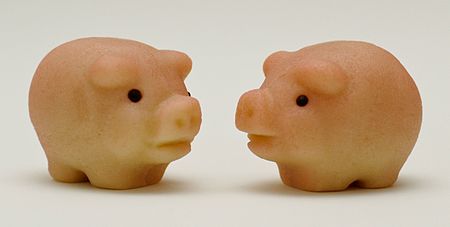
Marzipan translates to “March bread” by some and “a seated king” by others, but to me it is quite literally almond joy.  Sweetened with sugar or honey, marzipan derives its distinctive flavor from the paste, meal, or oil extract of almonds.  Marzipan is more popular in Europe than in the United States.  It is typically shaped into edible fruits, vegetables, or little animals – popular around Christmas and Easter.  Marzipan is also used in thin sheets as glazing for cakes.  The marzipan from my German friends was one big delightful chocolate-covered disc of almond cake.  In hindsight, I wish they’d brought a dozen “Man of the Year’s” and left everything else at home.

Marzipan was not my first introduction to the joy of almonds.  I fell for them back when chocolate bars like Almond Joy and Mounds were kings of the candy aisle (no Kit-Kat or Twix in my day).  Almond Joy was confection perfection: chocolate and coconut topped with whole almonds.  Then I discovered chocolate-covered almonds and realized I didn’t need the coconut.  Then I learned to appreciate almonds all by themselves – roasted and seasoned with sea salt – and realized I didn’t need the chocolate covering.  Today, I keep a bag of Marcona almonds in my car, to fend off less-healthy temptations.

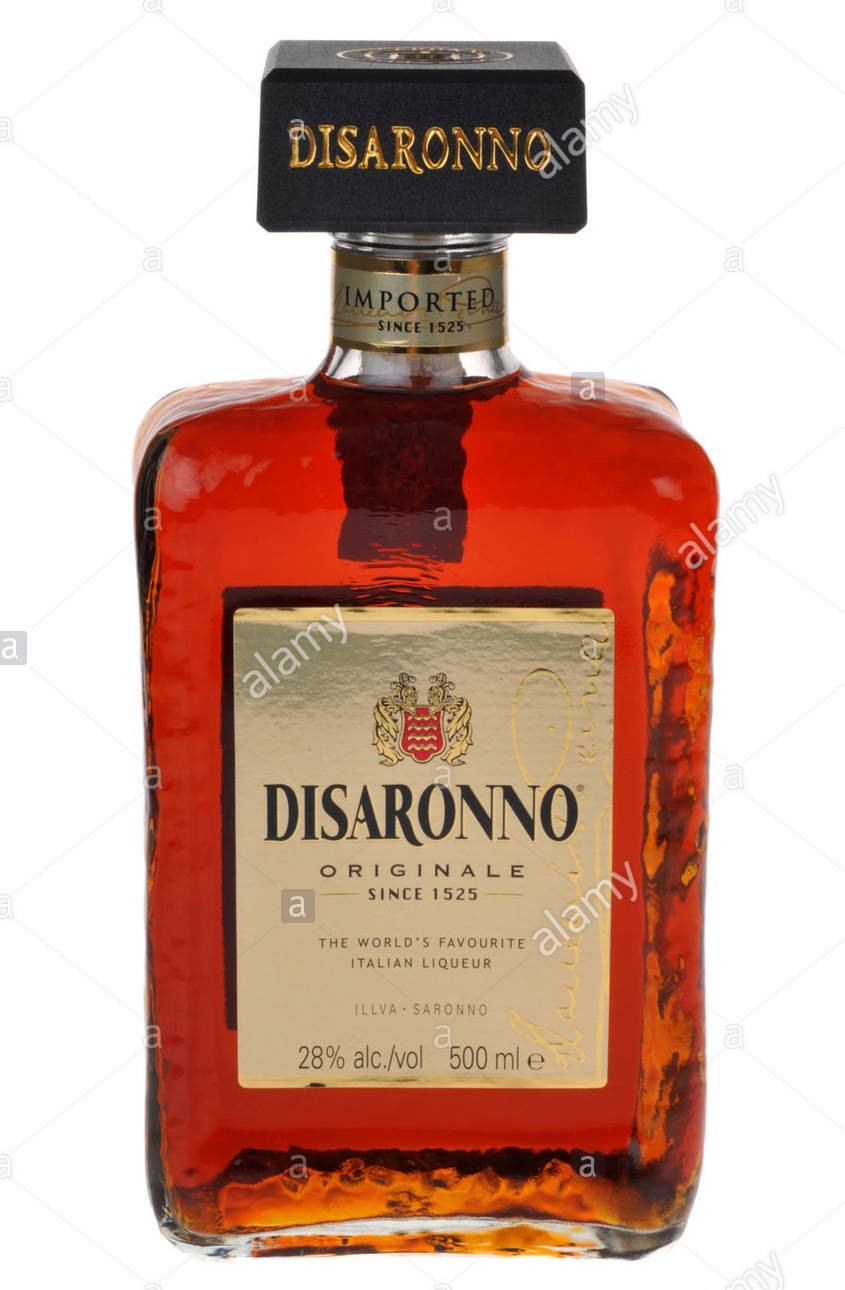
No discussion of almonds would be complete without a glass of amaretto.  In my junior year of college, studying abroad in Rome and not quite of drinking age, I was introduced to copious amounts of table wine, but also to Amaretto Disaronno, the elegant liquor from the northern part of Italy. The (supposed) origin of Disaronno is as colorful as the drink itself:

In 1525, a Saronno church commissioned artist Bernardino Luini, one of Leonardo da Vinci’s pupils, to paint its sanctuary with frescoes.  As the church was dedicated to the Virgin Mary, Luini needed to depict the Madonna, but was in need of a model.  He found his inspiration in a young widowed innkeeper, who became his model (and lover).  Out of gratitude and affection, the woman wished to give him a gift.  Her simple means did not permit much, so she steeped apricot kernels in brandy and presented the resulting concoction to a touched Luini. (from “A Brief History of Amaretto” – Shaw Media)

Saronno, Italy

Apricots still play a role in the making of amaretto, but its distinctive flavor comes from bitter almonds (amaretto translates to “bitter”).  Yet it’s still syrupy sweet – too sweet for me to drink straight.  Like most I “sour” mine with a shot or two of lemon juice.

Now that I think about it, we have almonds everywhere in our house.  Almond milk in the refrigerator.  Almond flour in the pantry.  Almond extract in the spice drawer.  Almond butter for our protein shakes and slivered almonds for our salads.  Amaretto in the liquor cabinet.

Still not enough.  I need to go find me some more marzipan.

Some content sourced from Wikipedia, “the free encyclopedia”.

Foul Mouth

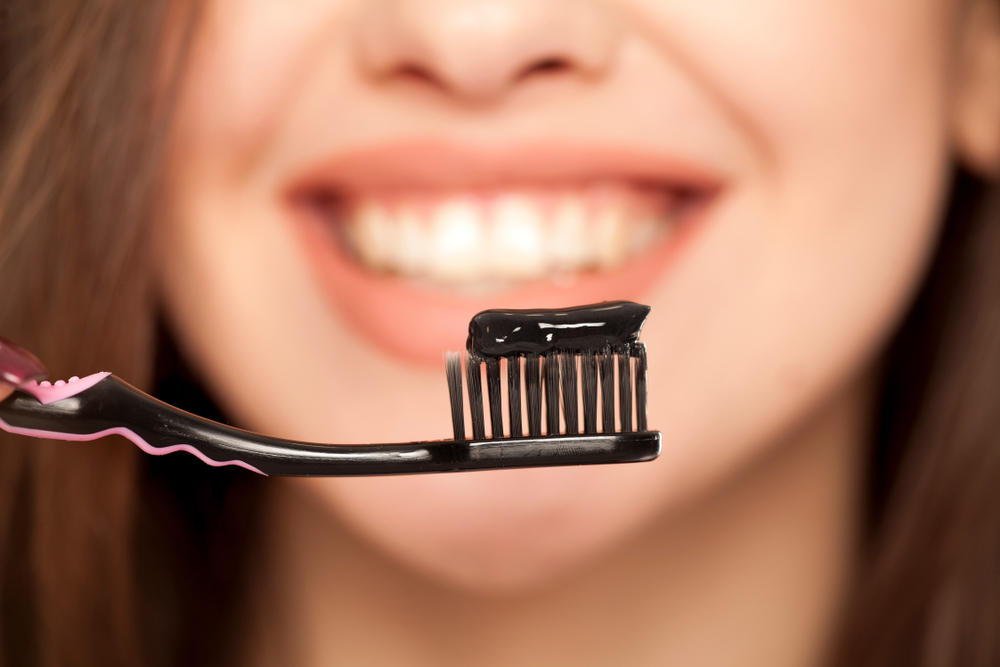
Search the Guinness World Records website using the word “mouth”, and you’ll get pages and pages of results – over 250 mouthy records. Most seedless grapes stuffed into the mouth: 94. Most lit candles: 37. Most tennis balls: 5 (by a dog). Most drinking straws: 459. We’ll put just about anything into our mouths these days.  Now add to the list baking soda for brushing, coconut oil for “pulling”, and charcoal for whitening.  That last one; it makes me pause. Charcoal?

Charcoal is the mound of briquettes in your barbecue.  Charcoal is the sooty remains of a smoldering campfire.  Charcoal is “lightweight black carbon and ash residue produced from animal and vegetation substances”.  Yet we choose to put this substance into our mouths?  Apparently “Sensodyne”, “Pearl Drops”, and all those other white-whiteners didn’t do the trick.  Checkmate.  Black wins.

If hygiene headlines speak the truth, black is the new white (or something like that).  Charcoal powders and pastes are the trend-setters these days, turning the mouth solid black before – allegedly – turning the teeth a whiter shade of white.  The color cycle of toothpastes is now complete, starting with the classic whites from days gone by, moving through the entire rainbow (including the blues and reds of Colgate; the green gels of several), and concluding with a shade the darker side of midnight.  But is blacker really better? Some fan-quotes are a little vague: “I’m using this [to show] I’m in the know,” says one, and “Everyone wants to try something new, but it has to be something that looks cool,” says another, and “I’m doing it to encourage dialogue.” Sounds like charcoal is more about image and less about whiter teeth.

Rather than post an in-progress and visually-disgusting photo, check out Hannah Hart’s brief demonstration of charcoal whitening here.  She dips her brush into what can only be described as a tin of shoe polish, morphs her mouth/lips/teeth from clean-and-white to blacker-than-black, destroys her sink (honestly; it’ll never be the same again), and finally, shows off her stained tongue; a regrettable side effect of thirty days of carbon consumption.

Watching Hannah’s video, I can’t help picture something entirely inedible dripping from her mouth.  Looks like black paint, used motor oil, or the sap of some deep forest tree you wouldn’t take big money to consume.  No matter how effective charcoal powder is for your pearlies, I can’t stomach the idea. Maybe I should try it without a mirror.

Now let me admit to a little hypocrisy:

1) I relish black foods, so I have no problem putting “black” into my mouth.  Among my favorites: olives, licorice, coffee, and black beans.  I also don’t shy away from blackberries, black bread (made with bamboo charcoal!), black rice, and the black of mushrooms.  I’m told I should try squid ink pasta.

2) I brush my teeth with a product called “Earthpaste”.  Earthpaste (“amazingly natural”) is exactly what it sounds like.  Mix together dirt (well, clay actually), a little salt, sweetener, and oil, and brush, brush, brush.  It’s not sweet – though flavors include peppermint, lemon twist, cinnamon – and the dry, gritty feel takes some getting used to.  But Earthpaste sold me for what it doesn’t contain: glycerin, fluoride, foaming agents, and artificial colorings.

It stands to reason if a) I have no problem putting black things into my mouth, and b) I’m willing to brush with dirt, I should be willing to c) brush with charcoal (A+B=C or something like that).  But Hannah’s video ruined it for me.  So did the facts behind the teeth-whitening.  Yes, bleaching gels abound, but for the most part “whitening” means abrasives.  Over time, you’re removing the top layer of your teeth to expose something whiter underneath.  Goodbye enamel; goodbye tooth strength.  Charcoal, as it turns out, does the same thing, only in black.  Short-term: whiter teeth.  Long-term: digging into the dentin.

My recommendation? Skip the charcoal.  Maintain your inner child.  Eat dirt instead.

Some content sourced from Wikipedia, “the free encyclopedia”.  Also, from the Wall Street Journal article, “The Latest Fad in Tooth Whitening Is to Turn Them Black”.

Disc Chalky

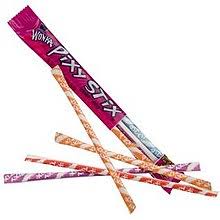
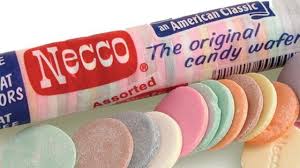
Woodstock Candy (“Let Sweet Flashbacks Sprinkle Down”) assembles collections of vintage candy and sells them on Amazon.  The “nostalgic retro mixes” tailor to the buyer’s age, as in “30th Birthday Box” or “65th Birthday Box”.  For those in my decade, Woodstock tosses in classics like Chuckles, Red Hots, Sugar Daddy’s and Smarties. Also, a few Pixy Stix, a Candy Necklace, and a long strip of those colorful Candy Buttons. Finally, buried quietly in the back of the box: one small roll of Necco wafers.

Four months ago, the Wall Street Journal alerted those of us with nostalgic sweet teeth of the fate of Necco wafers.  More correctly, NECCO – the New England Confectionery Company – would shutter if it didn’t secure a buyer.  Apparently, no one came to the candy counter, because the factory closed its doors late last month.  The consumer reaction was immediate – on the order of the Hostess Twinkies frenzy.  Rolls of Necco wafers flew off the shelves.  Frantic calls to candy stores demanded entire boxes be placed on hold.  One Necco devotee offered his 2003 Honda Accord in exchange for the company’s remaining product.  You might call it “disc(o) fever”.

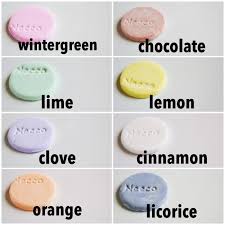
The Necco wafer/disc is an underappreciated candy of years gone by, though admittedly my affection for the confection is not what it used to be.  Necco’s are packaged in rolls of about thirty, in an assortment of eight flavors, including clove.  Clove.  Even the flavors sound dated.  A Necco wafer looks and tastes like a disc of chalk (drywall?), with a hint of flavoring to make it seem like food.  Eat a dozen wafers and your hands and clothes are covered with edible dust.  Eat a dozen more and the flavors all start to taste the same.  What used to be a satisfying crunch now feels like a threat to my dental work.

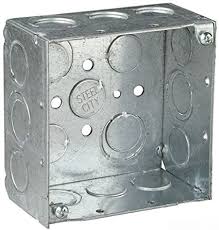
Why was I drawn to Necco wafers, when my back-in-the-day 7-Eleven store included an entire aisle of more appealing candy?  Maybe I just like little discs.  My father used to drive my brothers and I to some of his building sites, and I quickly discovered the concrete littered with dozens of metal coins.  These were “slugs” – today called KO’s or “knockouts”; the quarter-sized remains of partially-stamped openings in electrical junction boxes.  I collected hundreds of them – God knows why (but I was a kid, so I didn’t need a reason).

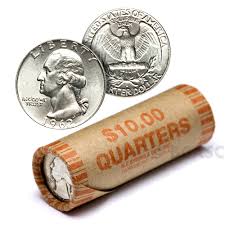
I also collected coins – more specifically quarters, because quarters were big money in my day, and translated into just about everything in that 7-Eleven aisle.  Quarters could also be stacked into paper wrappers; perhaps my precursor to a roll of Necco wafers.

At the same time in life, I had what was probably the coolest toy around.  It was called a “Rapid-Fire Tracer Gun” (if you were really cool you had the Star Trek version).  The Tracer fired little round plastic discs, spinning them out of the barrel so fast they hurt when they hit skin.  They even made a Tracer Rifle for more accurate shots.  The Tracer had a spring-driven magazine, so you could queue up a whole pile of plastic discs.  Or Necco wafers.

Necco wafers aren’t nearly as appealing as some of the stories behind them.  A hundred years ago Necco’s were carried by Arctic explorers and handed out to Eskimo children.  Their “suspiciously long” shelf life (Necco’s are sugar, corn syrup, and not much else) allowed them to be stored for months; then consumed by Union soldiers during America’s Civil War.  And therein lies the significance of the NECCO factory closing: the wafers have been around since 1847.

If I still don’t have your attention, consider this: NECCO also manufactures Sweethearts, the heart-shaped romantic-message-stamped equivalent of the Necco wafer, distributed by the billions on Valentine’s Day.  Think about that: no more candy hearts bearing “Kiss Me” or “Love You” or “Be Mine”.  Instead, just inedible greeting cards and meh grocery-store chocolates.  But don’t despair – I think the factory closing is just a hiatus.  The Hostess Twinkie came back and so will the Necco wafer.  It’s already underway, so join the movement: #SaveNecco.

Kindling the Fire

Last Sunday, in the midst of a sleep-in/no-alarm kind of vacation, my dad dragged my wife and I to early church. That meant falling out of bed by 7 and leaving the house by 8:15. Not my idea of a relaxed schedule, to be sure. On the drive to church and all through the service, I found myself in a fog and close to nodding off (the meh sermon didn’t help). Even at brunch afterwards – stoked with a double-dose of mimosas – I couldn’t seem to shake the cobwebs. It wasn’t until much later in the day I realized something significant went missing from my daily routine. I hadn’t had my morning coffee.

Morning coffee is more a habit than an addiction for me.  Or so I thought.  It wasn’t so long ago I occasionally substituted juice or water, and the day proceeded as normal.  Sunday’s drowsiness made me pause.  Maybe the impact of caffeine is more significant as you age.  Maybe drinking a hundred cups (or more) in a hundred days creates a dependency.  As they say, caffeine is “the world’s most widely consumed psychoactive drug”.
While I debate the impact of no caffeine today, I can absolutely attest to the impact of lots of caffeine, with two examples of inconvenience.  For me, caffeine sends a loud-and-clear, pulsing, Times-Square-sized announcement to my bladder saying, “IT’S TIME TO PEE.”  Not in fifteen minutes.  Not in fifteen seconds.  Now; as in – get up and go NOW.  I better have my path to the bathroom mapped out, and that door better be open.  It’s like clockwork biology, forty-five minutes after that first coffee sip.  Remarkably, the experts still question whether caffeine is a diuretic AND they wonder whether the amount of liquid expelled is equivalent to the amount consumed.  I emphatically answer “yes” and “MORE”.  With all the expelling, it’s a wonder my body doesn’t dry out and disintegrate.  No matter; it’s a small price to pay for my daily drug.

Here’s the second impact of caffeine.  Beware the cup of coffee (or any choice from Starbucks) after three in the afternoon.  Let that late-day caffeine hit take hold and you’re in for a long night.  I can very dependably fall asleep within five minutes of hitting the pillow except when my coffee intake is late-day (and on that note, why is upscale after-dinner restaurant coffee so good?).  I toss and turn like laundry in the wash cycle, staring at the ceiling and ruing my beverage mistake.  Then I stare at the bedside clock.  What a pretty clock it is.  Such colorful numbers.  It’s fun to watch the numbers change every minute.  Every hour.

Let’s review.  Assuming I plan my bathroom trips and lay off the coffee by mid-day, I can safely embrace my caffeine habit.  And if “habit” concerns me at all – its synonyms include “addiction” after all – here’s some good news.  Four cups a day is ideal for heart health, according to recent research by the Germans (my new favorite people).  Not up to four cups, but exactly four cups, netting you about 300 mg of caffeine.  Four cups is also the equivalent of a Starbucks “Venti” (the Nitro cold brew somehow packs in 469 mg of caffeine) but I steer clear of the big cups.  Wouldn’t want to get “addicted”.

We’ve only been talking about coffee here, but thankfully caffeine is found in only a handful of other foods and drinks.  What starts as a naturally-occurring compound in plants finds its way to teas, cocoa, cola soft drinks, energy drinks, and over-the-counter meds (i.e. cough syrup).  The only one I touch is cocoa (my chocolate habit justifies its own blog post).  So, unless I exceed my daily two-square ration of a Lindt 70% Cocoa Excellence Bar, my caffeine intake is all about coffee.

If you count milligrams the way you count calories, know that 300 of caffeine is the threshold to avoid anxiety and panic attacks.  A warning sign might as well pop up after 300 saying, “STOP!  Proceed with caution”.  It’s like there’s this sweet spot with coffee – an oasis between falling asleep in church and earning the jitters – that kindles my fire.  Gives me justification to start every day with a cup of coffee.  Or four.

Which Came First?

When my son wrapped up his undergraduate college years, he gradually reduced the stock in his refrigerator to just about nothing.  Living on a shoestring budget, he wasn’t about to purchase food he didn’t need after graduation.  I’ll never forget the phone call one of those last couple of nights.  He told us – rather proudly – he’d made a meal with two eggs… and a can of processed chicken.  A “chicken scramble” if you will.  To which I replied, “ick“.  If we’d been on FaceTime he’d have seen my face turn a lovely shade of green.

Some foods were just not intended to be consumed in the same bite.  I can’t think of a better example than chicken and eggs.  All chickens hatch from eggs and all chicken eggs are laid by chickens, so why on earth would we eat them together?  Can we skip the biology class and agree – at least by one definition – chickens and eggs are essentially the same “thing”?  And really; how often have you found them side-by-side on your breakfast plate?  Hopefully never.

The memory of my son’s kitchen creation locked itself away in my brain until recently, when Starbucks decided to meddle with their sous vide egg bites menu.  Not content to offer just “Egg White & Pepper” and “Bacon & Gruyere”, Starbucks now offers “Chicken Chorizo Tortilla”, described as “perfectly cooked, cage-free sous vide egg bites, including chicken chorizo, and…” and… and… and I stopped reading right there.  I couldn’t get past eggs and chicken in the same offering, gag reflex included.  I’m not sure I’ll order any egg bites anymore.

To lend credence to my chicken-OR – not chicken-AND – claim, I turned to one of the experts in the field: fast-food icon Chick-Fil-A.  CFA offers an extensive breakfast menu (Starbucks does not) so I figured, a restaurant built entirely on chicken would never offer eggs mixed up with chicken.  Wrong-o.  To my disbelief (and horror), two entrees loom large on CFA’s breakfast menu where you can get plenty of both.  Choose from the Egg White Grill: a breakfast portion of grilled chicken stacked with freshly cooked egg whites on an English muffin; or the Chicken, Egg, and Cheese bagel: a boneless breast of chicken along with a folded egg and American cheese.  Seriously, who buys this stuff?

I’m not sure who said it, but some would assert “the chicken is merely the egg’s way of reproducing itself”. (The same applies to the caterpillar’s “use” of the butterfly.)  I like that, evil as it sounds.  Kind of devalues the chicken, but also kind of proclaims: the egg came first.  And what about that quandary, “which came first”?  There’s not much to discuss if you really think about it.  Make the simple choice – science or religion.  Science votes for the egg, laid by something that wasn’t quite a chicken (but evolved into one once the egg hatched).  Religion votes for the chicken, created by a higher power in those first six days.

Maybe chicken + eggs is the greatest thing never eaten and I just don’t know what I’m missing.  I suppose I could ease into the idea one entree at a time.  Start with corned-beef hash… with fried eggs.  Move to full-on steak… and eggs.  Swallow hard over chicken… and waffles (eggs in the batter).  Then, at long last, order that new sous vide egg bite from Starbucks.  Yeah right, that’ll happen… as soon as we all agree on “which came first”.

Behind Bars

Every now and then I crave a Kellogg’s Frosted Brown Sugar Cinnamon Pop Tart. You can debate the matter and say the fruit Tarts are better – Strawberry, Cherry, and Blueberry – and I’ll give you those, but I stand by my boring-looking Brown Sugar Cinnamon. Maybe that’s because I consumed hundreds of them as a kid, piping hot from the toaster.

Somehow Pop Tarts eluded the otherwise healthy content of my mom’s pantry.  You’d walk in to dozens of those little red boxes of raisins, a pretty good assortment of nuts (which were more meant for recipes than snacking), and the occasional graham cracker.  The fruit and veggie drawers in the frig were loaded and there was always a gallon of milk on hand.  Yet there they were, in foil-wrapped packages of two: Kellogg’s Pop Tarts.  I wish I could see the ingredients list from the 1970’s versions versus those of today’s Tarts.  Surely the former leaned more towards “real food” and less towards chemicals, or my mom would’ve never gone for them.

Pop Tarts now come in twenty-seven varieties, which by any standard is ridiculous. Who wouldn’t be happy with the four I already mentioned? (Okay, let’s add Frosted Chocolate Fudge and call it good).  Do we really need options like “Wildlicious Wild! Cherry”, or “Confetti Cupcake”? Apparently so, because that’s where our demand for choices has taken us. The new approach to snacks: invent one, sell enough to get them into everyday conversation, then evolve to twenty-seven varieties.  Have you seen your options with Oreo’s these days?  I rest my case.

The other day I traveled down the cereal aisle of our grocery store for the first time in a long time (we have house guests). I was shocked to discover the “healthy cereal” section is just as big as the space reserved for regular cereals. Even more interesting, the overhead signs on the aisle first announce “Cereals”, followed by “Granola” a little further down, followed by “Diet and Fitness” a little further than that.  The entire aisle feels like the same kind of food, only you start with boxes, morph to bags, and end up with little bars.  I’d love to know the combined total grams of protein in the products in the “Diet and Fitness” section.  Gotta be ten thousand or more.

Fun facts: Americans now choose from over 400 brands of “healthy” bars, in 4,000 varieties.  At $6 billion in 2012, the healthy bar market was only 17% as big as that of savory snacks ($34 billion) but growing in a hurry.  American children consume almost 500 calories a day in snacks.  The routine starts when we’re young.

Snack bars seem to be almost-entirely carbs or almost-entirely protein. I won’t comment on the first variety because I don’t eat them (I’ve moved on from Pop Tarts), and I don’t even see the carb variety because our store puts them over in the cookie aisle. But protein bars are a challenging enough decision. For starters, are protein bars a “snack” or a “meal”? Many are advertised as “meal-replacements”. Others look small enough to be snacks. Even the ever-present “Nutrition Facts” label doesn’t really lend a hand, except to confirm you’re taking in more calories and sugar than you’d hoped.

I belong to Lifetime Fitness here In Colorado, a gym which stresses “healthy lifestyle” in everything they offer, whether personal training sessions, workout classes, spa treatments, or a cafeteria full of healthy choices. The mantra I hear like a broken record: “carb-up” at least an hour before the workout; “protein-up” within 45 minutes after. I’m sure some would dispute that approach, but regardless, it suggests a “snack” before AND after a workout.  And as I stand in “Diet and Fitness”, I ask myself, “Is that snack half of a “meal-replacement” bar?  Two or three of the “fun-size”?  Scrap the whole aisle and go with fruit and cheese instead?”

For my money, snack bars before and/or after a workout neither benefit the short run nor ease the long run. It’s kind of like my daily multi-vitamins: no clue whether they help me either (but I still take them). This much I know: I need to have a somewhat full stomach before I work out. On that note, maybe I’ll just skip the “Diet and Fitness” aisle from now on and go back to Pop Tarts.

Some content sourced from the Wall Street Journal article, “Our Misplaced Mania for ‘Healthy’ Snacks”.

Creatures of Habit

WHAT IF Starbucks decided to close its stores for a whole day? Imagine, you’re driving to work with early-morning brain fog, you pass by the most convenient Starbucks, and from the street you see a big “CLOSED” sign behind the glass.  Not to be denied, you head for the drive-thru, but your access is blocked by green cones (everything matches at Starbucks).  You’re still in denial, so you pull into a parking space, get out of the car, and peer through the darkened windows. Horrors. Your 7×24 caffeine-addiction fixer-upper (well, almost 7×24, but who craves coffee at 3am?) has taken the day off.  Are you getting a case of the jitters just reading this paragraph? Is this a Catch-22, because you can’t think up another coffee option until you’ve actually had your morning coffee?

We had a little “sip” of this scenario earlier this week, didn’t we?  For reasons that were relevant-today gone-tomorrow (maybe), Starbucks took the high road and delivered several hours of anti-bias training to its employees, closing 8,000 locations in the process.  For one interminably-long afternoon and evening on Tuesday, you had to search a lot harder to find your grande no-whip Caramel Macchiato.  When Starbucks’ announcement lit up the front-page headlines last week, my first thought wasn’t, “the lines are about to get longer at the bathrooms” (though admittedly, it’s a legitimate concern since I’m a man of frequent visits), nor was my first thought, “we’re about to see a lot of, uh, interesting people at Starbucks now” (because we already do, don’t we?)  Rather, my thought was, “how the heck are we gonna cope with several hours of no-Starbucks, when 100 million patrons – you read that right – frequent their stores every week?”

In a related headline, an economist claimed this one-time Starbucks shutdown would cost the company $12 million and be a boon for “coffee competitors” like McDonald’s and Dunkin’ Donuts.  Laughable.  I know those restaurants have their fair share of coffee allegiance these days – if you consider “fair share” less than 1%.  No, the world didn’t rotate off its axis on Tuesday, but I also won’t promise patrons didn’t line up at the Starbucks drive-thru hours before the open on Wednesday morning.  Our Starbucks habit was ingrained at an early age, well before the competition stepped up.  Howard Schultz is a genius.

More likely, the impact of Tuesday’s shutdown is what I refer to as the “Chick-fil-A effect”.  If you’re a fan of CFA, you’ve known from the get-go their stores close on Sundays.  It’s a simple building block of the founder’s philosophy: CFA employees should spend their Sundays resting and at worship, with family and friends.  Now, you might pass Chick-fil-A on a Sunday and think, “Closed.  What a nice gesture – more companies should do that.” But I’m pretty sure you’re actually thinking, “Damn – I was really craving a #1 meal, hold the pickle, w/ lemonade”.  And that thought will stay with you until Monday. And Tuesday, And Wednesday, or whatever day you next pass by Chick-fil-A.  Maybe their alt-slogan should be, “Closure Makes the Heart Grow Fonder” or something like that.  It’s as much a business strategy as a thoughtful benefit for CFA employees.  On that note – trust me – Starbucks will make up Tuesday’s lost business by the time I hit the “publish” button on this post.

Nothing Bundt Cakes (“Home of the Most Delicious Bundt Cakes Ever!”) is kinda sorta the same animal as Chick-fil-A.  For reasons suspiciously vague, NBC allows its franchisees the option to close on Sundays.  Google your NBC’s hours before you head over for a white chocolate raspberry bundt or a lemon bundtlet.  The next time you find their doors unexpectedly locked, I predict your dreams will be relentlessly invaded by dozens of little flying bundtinis – at least until you satisfy your craving with a purchase.  Don’t say I didn’t warn you.

Here’s the irony about today’s musing: I’m typing my post from a Starbucks.  I’m sitting quietly at a table, enjoying a grande cold brew with a touch of cream.  The baristas are unusually perky (surely a side effect of their recent training).  The restaurant feels quiet and “inclusive”.  In other words, I didn’t cry over spilt coffee on Tuesday. Instead, I just proved my theory.  a) Tuesday afternoon I couldn’t go to Starbucks.  b) I wasn’t even planning to go.  c) The store closures were in the headlines, which inserted “caffeine denial” into my brain.  d) Here I am, just two days later, getting my Starbucks on again.

Touché, Mr. Schultz.

The Life of Spice

“Mikey’s Late Night Slice” in Columbus, Ohio, offers a pizza called “Fiery Death with Hate Sausage”, topped with three of the world’s hottest peppers: Carolina Reapers, Trinidad Moruga Scorpions, and Bhut Jolokias.  You must sign a waiver before Mikey’s serves you a slice of Death, acknowledging, “you’re an idiot”, and absolving the restaurant of any responsibility for the unpredictable aftereffects.  According to one taster, “It was pretty miserable.  My eyes welled up, my nose ran, and no drink could wash away the pain.”  Sounds like my kind of heat.

Photo by “Mikey’s Late Night Slice”

It all started with the tabletop pepper shaker. Salt’s brother-of-another-color stood quietly to the side in my childhood, hoping for the same constant attention given to his savory companion. If pepper was used at all in my day, it was nothing more than an obligatory shake; a decoration of the food versus a yearning of the taste buds.

Forty-odd years later, the pepper mill has become the king of the spice rack – my go-to final flourish before deeming a meal ready-to-eat. My pepper mill is always cranked to the furthest setting to the left, so the dozens of corns fall out of the bottom virtually intact. When I refill my pepper mill and spill a few of the little guys onto the counter, I scoop them up and pop ’em into my mouth like candy.  My family has learned to pass the pepper before I even ask for it.

I blame my parents, of course (something I seem to do with increasing frequency these days). My dad peppered everything on his plate – still does – and kept shaking away until his food literally disappeared under a blanket of black. My dad was the guy at restaurants who mercilessly trapped the poor fellow who politely asked, “would anyone like ground pepper”? My dad would always add, “you can be generous…”, and several minutes of grinding ensued.  My dad also had violent (but apparently enjoyable) fits of sneezing, sometimes seven or eight in a row.  I never made the association with pepper, but now I wonder.  I can still hear him concluding a sneezing session with the word “marvelous“.

My mom, who graduated from the Emily Post School of Etiquette with honors, commanded a family dining table to rival the tightest ships.  Every placemat, utensil, plate and bowl were in perfect symmetry.  The meal began with a table grace, and concluded with “please may I be excused?” In her world, “please pass the salt” meant passing the salt along with the pepper shaker, and with two hands instead of one so you couldn’t eat at the same time. Thus, the pepper arrived at my plate whether I wanted it to or not.

Sometimes I think my hankering for pepper is borderline-addictive.  Eventually the “shaker” no longer sufficed, as the pepper only came out in little bits.  Once I discovered the “mill”, there was no going back.  A handful of turns became ten, then fifteen; my food turning as dark as my father’s.  As it turns out, pepper was my gateway spice.  In the last several years I’ve discovered “red pepper flakes”; a significant leap in heat from peppercorns.  I used to shy away from those little plastic vials they include with pizzas.  Now I ask for two or three more.

Lucky for me, pepper (and all things spicy) appears to be a healthy habit.  According to an article by Dr. Joseph Mercola – an osteopath and proponent of alternative medicine – a full ounce of pepper provides most of the manganese, Vitamin K, and potassium we need in a given day, and even a good dose of iron or fiber.  Mercola then missteps when he acknowledges “…it’s true one would not have that much pepper in a day…”  Apparently, he hasn’t met me.

Pepper is described as a “stealth antioxidant”, discourages intestinal gas from forming (no wonder my wife peppers my food), and somehow aids in the breakdown of fat cells.  Finally, black pepper has much in common with cannabis, with aroma molecules functioning as “cannabinoids”.  To be clear, we’re talking about the therapeutic benefits of cannabinoids here.  Pepper isn’t playing with my brain cells (I don’t think), but it does help to reduce inflammation.

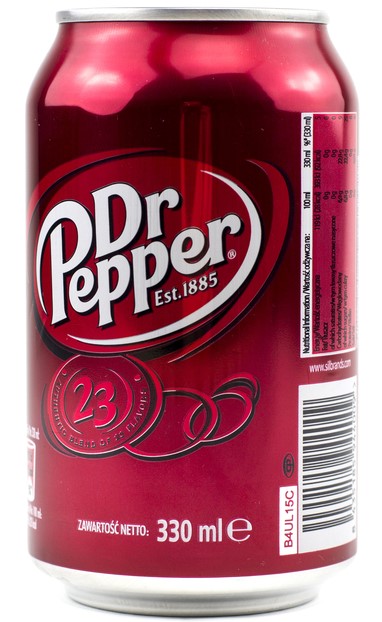
My children are destined to a life of pepper – I’m sure of it – and not because I turn my food black like my father or pass the shakers as a pair like my mother.  In high school, my daughter prepped for her team’s volleyball matches by “peppering” with another player (hitting the ball back and forth to warm the hands).  Now, she carries pepper spray in her purse.  One of my sons went to college in Waco, TX, where Dr. Pepper was invented in 1885 and vended on campus without a Coke or Pepsi in sight.  More recently, I’ve seen my children reach for the hot sauce (instead of the mild) at Mexican restaurants.  You see, it creeps up on you quietly.  Next thing you know they’ll be asking me to take them to Mikey’s Late Night Slice.

Dream Puffs

Last year, Starbucks surpassed Subway as America’s #2 restaurant, measured by gross sales (McDonald’s is still top dog).  I don’t consider Starbucks a place to “dine”, so second-place is impressive.  Then again, Starbucks’ bakery case has matured since its initial offerings.  There are temptations-a-plenty now, en route to the barista.  The traditional breakfast items share space with yogurt parfaits, fruit-and-cheese boxes, “fold-over” sandwiches, and entree-size salads.  But it’s the smaller offerings I want to talk about today.  Look closely through the glass – you’ll see sous vide egg bites and Bantam’s bite-sized bagels.  Those little guys could be the future of fast food.

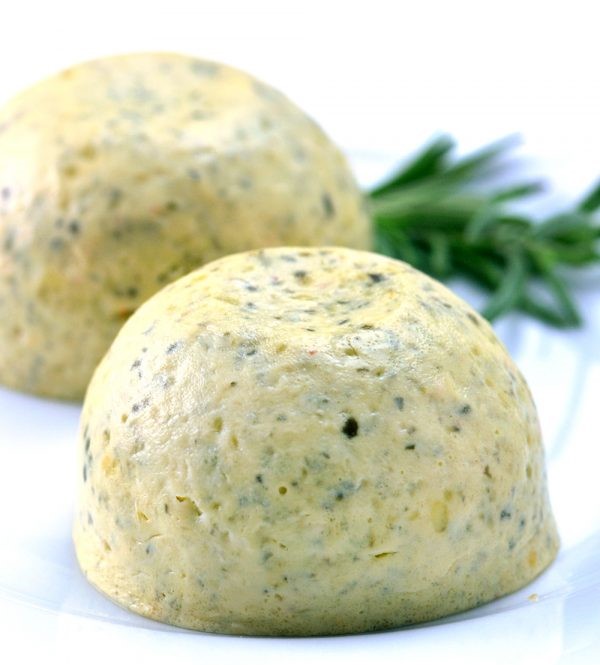
egg bites

I haven’t tried the mini bagels, but Starbucks wins me over with its egg bites.  The first time I gave them a whirl, my wife and I were in the middle of Lent, trying to find alternatives to the foods we gave up.  Egg bites to the rescue.  The sous vide prep means cooked in water, with nothing but a bit of spinach, red pepper, and cheese mixed in for flavor.  Simply elegant (elegantly simple?), and the light, fluffy texture makes them as delicious as they are convenient.

Three Little Griddles
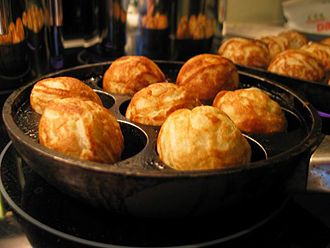
Æbleskiver

Now let’s talk about real breakfast foods.  Last weekend, my wife and I went to a nearby restaurant called Three Little Griddles.  Much to my delight, Griddles had Æbleskiver on the menu.  If you’re Danish, you already know what I’m talking about.  Æbleskiver is heaven-sent breakfast: puffy little balls of pancake with a sweet surprise in the middle, finished off with a delicate dusting of powdered sugar and a side of raspberry jam.  Æbleskiver is Danish for “apple slices”, but you’re more likely to bite into a strawberry or a fruit-compote filling instead.  Three Little Griddles also offers Æbleskiver with an egg/bacon filling, coated with a maple-syrup glaze and powdered sugar.  A complete breakfast!

NOT Æbleskiver

If you haven’t heard of Æbleskiver and the first thing you thought of was “doughnut hole”, shame on you.  Doughnut holes don’t even qualify as poor man’s Æbleskiver.  Doughnut holes are a clever product designed to get you to buy more when it appears you’re buying less (think “fun-size” candy bars).  I have two issues with doughnut holes.  One, they’re not actually the “hole” of a solid doughnut, but prepared and baked separately instead.  Two, they’re not shaped like a doughnut hole should be (picture it – something more like the hub of a wheel).  They should be called doughnut balls.  But enough of this talk; I’m wasting words.  Let’s keep the focus on Æbleskiver.

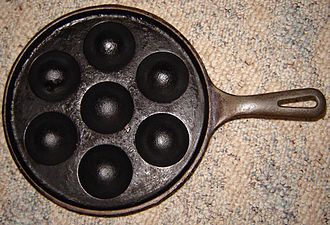
My first taste of Æbleskiver came when I was little, in the Central California village of Solvang.  Solvang is like, well, a kid’s “Little Denmark” – a town small enough to walk around, with an overabundance of shops selling toys, candy, and ice cream.  Several windmills spin slowly above Solvang’s high-pitched shingle rooftops.  A church sits prominently on the edge of town.  A small park serves as the town square, complete with a bandstand-sized gazebo.  All that’s missing is some water-filled canals and cobble-stoned streets.  But meanwhile, there’s plenty of Æbleskiver.  Some restaurants even bake them out on the sidewalk, rotating those little dream puffs to perfection in their unique iron skillets.

If you credit the Danes with the invention of ball-shaped food, the rest of the world takes a distant second with its imitations.  China makes a spherical egg-based fruit-filled waffle called Gai Daan Jai.  Japan makes a variety of savory ball-sized snacks called Takoyaki. (Savory? Yuck.)  And America makes doughnut holes called Munchkins.

As if Æbleskiver isn’t cool enough as a food, it’s also a cool word with a unique spelling (note the “letter” Æ).  Perhaps Starbucks will start carrying it, along with the egg bites.  I’d buy both and a coffee for a complete breakfast.

Finally, if Æbleskiver has you wondering what other delights Denmark has to offer, consider ÆblekageÆblekage is “apple charlotte” – stewed sweetened apples layered with butter-roasted bread crumbs and crushed makroner (an almond-flavored meringue), topped with whipped cream and red currant jelly.  Oh my; sounds like dream stuff.

Æblekage

Some content sourced from Wikipedia, “the free encyclopedia”.

Save the Bowl

Back in the 1980’s, Hollywood produced an awful movie called “The Stuff”.  The story began with a couple of miners discovering a pasty-white goo pouring forth from the earth.  Giving it a taste, they realized it was not only edible, but the more you ate the more you seemed to want.  So, they package the goo, brand it “The Stuff”, and begin selling cartons to the masses.  Turns out – besides tasting good – “The Stuff” melts your brain, turns you into a zombie, and leaves you with nothing but an insatiable appetite for more.  That’s the entire comedy-horror plot, save for an FBI agent and a teen trying desperately to rescue the planet.  “The Stuff” was like a light/airy “Invasion of the Body Snatchers”: no taste and little substance.

Even a “distasteful” movie can be a prophecy, however.  Maybe you’re craving “The Stuff” after reading that paragraph.  Guess what?  It just may exist, disguised as the pint-sized “ice cream” products from Halo Top, Arctic Zero, Enlightened, and others.  All available this very minute at your local grocery store!  What are you waiting for?

Halo Top (HT) is – in one aspect – the dream dessert.  Halo Top is a full pint of ice cream (per the label – four servings), engineered to be consumed straight from the container in one sitting, but with none of the guilt/gluttony associated with full-fat competitors.  HT can’t hide its pride – the biggest lettering on the container is the calories (just 280 for the whole pint; 25% of Ben & Jerry’s), while elsewhere the packaging promotes immediate and total consumption with slogans like “save the bowl” and “stop when you hit the bottom”.

On the other hand, Halo Top is not dream-tasty.  Some describe HT as “shaved ice” while others say it leaves a chalky aftertaste (hello, stevia).  The chocolate-chip cookie dough has very little “dough”, and the cookies-and-cream has no cookies.  Every review I found recommends time at room temperature to achieve a more ice-cream-like consistency.  On a recent visit to the grocery store, I “hefted” one of these pints.  It was hard as a rock, yet somehow so light/airy it felt like a little helium balloon, ready to ascend from my grasp.

Here’s the real wonder to me: none of the above gotchas stop consumers from filling their baskets with Halo Top pints.  Last year’s sales were over $350 million, a 500% increase from the previous year.  In the same time, “regular” ice cream sales increased less than 10%.  As one consumer declares, it’s a brave new world of ice cream – quantity over quality.

What I find most disturbing about Halo Top and its peers is the manufacturer’s intent.  They’re effectively encouraging you to clean your plate by design.  Four servings make more sense than one because you should eat the whole pint.  Whether you’ve already quenched your appetite is irrelevant; it’s about getting to the bottom of the container.  Arctic Zero claims “…our love of ice cream runs deep, like eat-the-entire-pint-deep.”  Enlightened even offers how-often guidelines.  In their website FAQ’s, we’re told ice cream is not just for dessert: “Not at all! Low in calories, fat, and sugar, and packed with protein and fiber, Enlightened Ice Cream is truly good for you. It can be enjoyed at breakfast, lunch, and dinner… or anytime in between!”

Let’s translate the “more is better” concept to the movie theater.  If we drop the guilt factor from junk-food concessions, we could sell popcorn in containers the size of trash cans.  Soda could be hosed to each theater seat for hours of non-stop slurping (restroom logistics aside).  String licorice could be coiled on floor-mounted reels.  M&M’s could be the size of hamburgers.

We’ve just about come full-circle here.  If all of us binge on Halo Top, honing our full-container consumption habits for breakfast lunch, dinner, “and anytime in between”, haven’t we created a modern-day version of “The Stuff”?  All that’s missing is the magic ingredient in Starbucks and Chinese food that triggers “I want more”.  As for me, I’ve never tried any of the products I’ve talked about today, nor do I intend to.  I’d rather not become a zombie.

Some content sourced from the Wall Street Journal article Can’t Stop, Won’t Stop…“.