Busy Buzzwords

Our local news wraps its nightly broadcast by pushing little surveys you can take online. Earlier this week was, “Should the U.S. Senate vote to increase stimulus checks to $2,000?” (88% said yes). The night before, “What was your favorite holiday food this year?” (pie narrowly edged ham). What I find laughable is the participation rate – maybe 25 responses on average – yet the results are announced the following night like headline news.  25 is a minuscule sampling for a basis, like surveying a few of your neighbors and calling it good.  Yet other companies take the exact same approach.  Example: Merriam-Webster just announced its 2020 “Word of the Year”.

Merriam-Webster’s fitting “Word of the Year”

You’ll find almost 200,000 words in the English language (with more added every year).  Should pandemic take the trophy for 2020?  Well, yes, it’s hard to argue with Merriam on that one.  Not only did the COVID-19 pandemic dominate headlines and conversations, the word created the single largest spike in dictionary traffic.  On March 11th, when the World Health Organization declared COVID-19 a pandemic, the lookup of pandemic increased over 100,000% over 2019.  I can’t convert 100,000% to a quantity but I know it’s a big number.

Merriam isn’t content with just “word of the year”, however.  They also list the top ten words according to increased dictionary traffic over the previous year.  Accordingly, 2020 self-branded with coronavirus, quarantine, and asymptomatic.  I wouldn’t think any of these words – pandemic included – induces peace of mind, but in dire situations our brains have a relentless need to know more.

With the mental fatigue brought on by too much COVID talk, perhaps you’ll find Merriam’s other top-ten words more refreshing.  Antebellum made the list because the long-popular country music trio Lady Antebellum changed its name to “Lady A”; also because the movie “Antebellum” was released in September.  Mamba was a top-ten for the passing of basketball legend Kobe Bryant, his nickname in reference to his killer play.  Kraken is the newest franchise in the National Hockey League, the mascot a mythological Scandinavian sea monster.

Seattle-ites will learn to chant, “GO KRAKEN!”

But none of these are my favorite.  How about #7, schadenfreudeSHAH-dun-froy-duh means “enjoyment obtained from the troubles of others”.  In March, schadenfreude pointed to the college admissions scandal, particularly the outing of the guilty A-list celebrities.  Schadenfreude also colored the daily coverage of President Trump by the so-called “fake news media”.
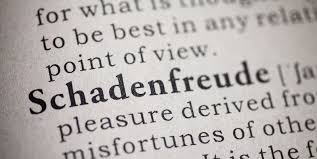
For the record, schadenfreude is German (of course it is) so let’s give it bonus points for sneaking onto a top-ten list of English words.

You may not agree with Merriam-Webster but at least its choices are based on real data – lookups that imply support from the masses.  Other organizations are much vaguer with their selection criteria.  Consider Time Magazine’s “Person of the Year”.  Time’s stated criteria is, “for better or for worse… has done the most to influence the events of the year.”  By that definition it should come as no surprise to see Adolf Hitler selected in 1938, Martin Luther King, Jr. in 1963, and Mark Zuckerberg in 2010.  However, you’ll also find almost every U.S. President on the list, as if simply inhabiting the Oval Office makes you more influential than all other persons.  President-elect Joe Biden and Vice President-elect Kamala Harris are 2020’s “Person of the Year”.  Uh, shouldn’t we at least get them inaugurated before evaluating influence?

Deserving of more “Timely” recognition…

[Note: Time’s “Person of the Year” recognition owes a debt to aviator Charles Lindbergh, who completed the first solo transatlantic flight in May of 1927.  The magazine overlooked Lindbergh’s accomplishment by never featuring him on its cover.  To make up for it, Lindbergh became Time’s inaugural “Person of the Year”.  Makes you wonder if someone else was more deserving in 1927, doesn’t it?]

One more “of-the-year” example for you.  Pantone, the “color company” best known for its Pantone Matching System (or PMS, a rather unfortunate acronym), chooses a color of the year to put the last twelve months in review.  For 2020?  Like Time Magazine, Pantone broke its own rules and went with two choices: Ultimate Gray, which suggests solid shadows cast on a wall; and Illuminating, a lemony shade hinting at “the light at the end of the tunnel”.  Illuminating might be a little premature for 2020.  Let’s go glass-half-full and call it next year’s color instead.

Is this light “Illuminating” to you?

If Merriam-Webster could choose its busy buzzwords in hindsight, 2020’s winner might not be pandemic but rather, malarkeyMalarkey came in at #11 in the top ten (come again?) because it’s a favorite of President-elect Biden.  Rather than saying, “C’mon man, you’re making that up.” (okay, he says that too) Biden prefers, “Give me a break; that’s a bunch of malarkey”.

“Malarkey” my words; you’re gonna hear the Biden favorite a lot over the next four years.

Some content sourced from The Cut article, “Pantone’s Color of the Year is ‘The Yellow Wallpaper’”, Merriam-Webster.com, and Wikipedia, “the free encyclopedia”.

Mixed Messages

My dad called the other day for a chat, but not before letting me know my answering machine was full. Since he couldn’t leave a message he just called over and over ’til I finally picked up. But here’s the thing: I don’t have any messages on my answering machine.  It’s not full at all.  So after the call I said to my wife, “Dad’s almost 92. I’ll forgive him a little confusion now and then. Probably mixed me up with one of my brothers.”

I still have one of these

Do you still have a landline in your house, the one with a bulky handset and built-in answering machine?  If you do, it’s tethered to the wall with wires, which then connect to a march of telephone poles outside (more wires), which eventually route your call to wherever it needs to go.  Imagine – in a world of wireless – a phone call with a physical connection from one end all the way to the other.  It’s positively antique.

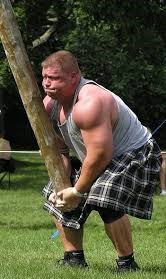
[Random thought: once the world is fully wireless what’ll we do with all those telephone poles.  Caber toss, anyone?]

Go ahead and mock my out-land-ish outdated phone – at least I don’t have a party line.  Back in the day, if you lived in the sticks you shared a single physical line with your neighbors.  You were a “party” of subscribers who often found themselves talking over each other (“crosstalk”) or connected to the wrong party at the other end.  Party lines it is said, were the birthplace of gossip.

The reason I stubbornly cling to my landline is probably not the same as yours.  I keep my landline exclusively for those calls with my dad (er, and to divert telemarketers from my smartphone).  My dad can’t hear very well so anything wireless is a challenge, especially when you get the occasional syncing issue in the conversation.  On a landline Dad hears LOUD and CLEAR… even if he doesn’t always acknowledge what I say.  Are his calls worth the monthly subscription fee?  He’s 92!  You bet they are.

Now let me ask you this.  How often do you call your own phone number?  Why would you?  Pick up the phone and you get dial tone – all good.  Set the answering machine to “on” so people can leave messages – even better.  Except when they can’t.  Let’s suppose – “hypothetically” – your phone company redirects your phone number to a random voicemail box.  And that mailbox is already full.  How would you know?  Only if you called your own phone number, right?  Or, only if the one person who calls you (“hypothetically” your dad) insists he can’t leave a message.

Damn.  Dad was right after all.

Here’s the best part.  I can’t even call my phone company to fix the problem.  Why?  Because I “bundled”.  You know, where you combine TV, Internet, wireless, landline, and whatever else you have so they’re all billed and serviced through a single provider? Mis-take. Try calling your satellite TV provider to ask about landline phone service.  After you explain what a landline IS, the young person at the far end transfers you to a “specialist” (someone much older who actually understands landlines).  That person acts as intermediary between you and the phone company.  There’s a lot of, “Can I put you on hold for a sec?” and, “You still there? and, “Hold tight, we’re still working on it” and even the occasional, “You did say this was a landline, right?  Y’know, you really should get rid of your landline…”.

Long story short, it took me the better part of a week but now my dad can leave messages on my answering machine again.  He also says I should listen to my father more often.  (For younger readers, this is an excellent example of “eating crow”.  Look it up.)

Electric Light Orchestra (ELO) – the English band of the ’70’s who somehow fused pop, rock, and classical – had their biggest U.S. hit with Telephone Line.  Its final verse begins, “Okay… so no one’s answering.  Well can’t you just let it ring a little longer, longer, longer?”  No ELO, I can’t let it ring a little longer – the phone company rerouted my number to a full voicemail box.

But hey, thanks for calling.

The Original “Black Friday”

The first two weeks of November were jammed with “un-often” events this year.  For starters the bright light of Halloween’s blue moon spilled into the wee hours of November 1st.  During those same wee hours most of us lost Daylight Savings Time.  The very next day (Monday) marked the official arrival of Hurricane Eta to our shores. The day after that we voted in a presidential election. A week later we staged the Masters golf tournament (it’s supposed to be in April, people).  Then we had another hurricane (Iota), the first time we’ve had two in November.  Finally, we spiked positive COVID-19 tests in record numbers after months of declines.

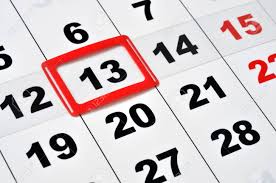
That’s a pile of rarities in a short amount of time.  So why not add one more to the heap?  Friday the 13th.  I missed it completely.  Maybe you missed it too (and you’d be forgiven with all those other distractions).  Last Friday – the 13th – came and went without an ounce of bad luck to blog about.  Ironically, the only story I can share brought good luck.  I placed a carry-out dinner order last Thursday night and the restaurant gave me someone else’s food.  When I went back for the right order they told me to keep both.  As a result my Friday the 13th dinner was unexpectedly “on the house”.

Are you superstitious?  I’m not – not in the least.  I have no problems with sidewalk cracks, leaning ladders, or black cats. I don’t lose sleep anticipating the third occurrence of a bad thing.  I gladly pick up a penny (it’s free money after all) but with no expectations of luck.  I’ve broken mirrors (deliberately, in remodel projects) and wishbones (on a whim, in turkeys).  I’ve even knocked on lots of wood (mostly doors) but hey, my life goes on as usual.

Leonardo da Vinci’s masterpiece

As for Friday the 13th’s “un-luck”, its long-ago origins are suspiciously weak.  The most common comes from the story of Jesus in the Bible: thirteen individuals at the Last Supper (Thursday) followed by Jesus’ foretold crucifixion the following day.  Other theories point to fighting gods in mythology and fighting knights in the Middle Ages.  None of these carry water in my book.  Seriously, how did misfortune come to be associated with the collision of a particular day and date?

I read up on calendar averages, thinking the 13th falling on a Friday was as uncommon as a blue moon.  Maybe the 13th favors the other days of the week instead?  Nope, try the reverse.  Over a significant number of years the 13th falls on Friday more than Saturday, Sunday, or any other day of the week.

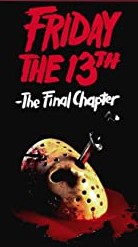
To add a helping of confusion, look no further than Spain or Greece.  These countries have an irrational fear of Tuesday the 13th.  Italy?  Friday the 17th.  Imagine watching America’s famous horror movie franchise in any of these places and wondering, “so… why do they call it ‘Friday the 13th'”?

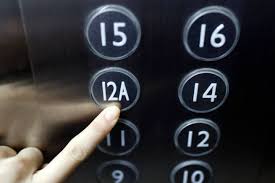
No matter my efforts to undermine this superstition, the effects are real.  Over 17 million Americans admit to a dread of Friday the 13th.  Some avoid airplane travel and others won’t even get out of bed.  Buildings remove the thirteenth floor from the stack (which is a lot of demolition for a superstition, isn’t it?)  Elevators conspicuously delete the “13” button.  Numbered seats in stadiums go 10, 11, 12… 14, 15, 16.

For some of you, Black Friday means bargains.  For others, Black Friday means “13”. If nothing else, I’ll give you a couple of words to describe the circumstance of the latter’s irrational fear.  If you’re afraid of the number 13 you have triskaidekaphobia.  If you’re afraid of just Friday the 13th you have paraskevidekatriaphobia.  (Me, I only have acrophobia.  At least your phobias sound more sophisticated.)

Fact check.  This post was published close to the midpoint between Black Friday (the 13th) and Black Friday (the retail binge).  Okay-y-y-y.  This post also contains exactly 666 words.  WHOO boy.

Let me repeat… I am NOT superstitious.

Some content sourced from Wikipedia, “the free encyclopedia”.

Joe Whoops-a-Lazy

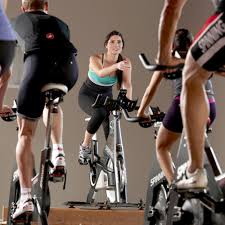
Cycle class at the gym (also called “spin”) goes very well as long as you’re careful with your setup before starting the wheels a-turnin’. Adjust the seat and handlebars until you’re “one with the cycle”. Remove the “cages” from the pedals if you wear cycle shoes. Secure your water bottle in the holder with the top open. Place your towel within easy swabbing distance. And bring an extra mask to replace the one you destroy when you rip it away from your face gasping for air.

I’ve been committed to weekly cycle for a long time now so my setup routine is darned near perfect. As it was this morning.  Everything in its place – time to get after it, Dave.  But then the classroom door flew open and in strode Joe Whoops-a-Lazy. And curse you Murphy’s law, Joe chose the cycle right next to mine.

You know Joe. He’s the boisterous bruiser who announces his presence just by lumbering across the room. He’s big and he’s bald, with too many tattoos and not enough clothing. He breathes in and out like a bull pre-stampede, even when all he’s doing is setting up his bike. He gives the rest of us a beady-eyed sneer to size up his competition (as if you can somehow be “competitive” on a stationary bike.)

Poor Joe. He’s not just Joe, he’s Joe Whoops-a-Lazy. Every time the cycle instructor gives a shout-out to see if we’re all still alive and kicking, Joe yells, “WHOOOOP!!!” or “AW YEAH!!!” or “LET’S DO THIS!!!”. To Joe, it’s an hour-long party on wheels!  Joe wants the rest of us to know he’s really into cycle. Personally I think he’s just really into our cycle instructor.

Here’s where it all goes wrong, Joe. If you gave it a millisecond of thought you’d realize none of the rest of us are going “WHOOOOP!!!” or “AW YEAH!!!” We don’t utter a word when the instructor shouts out her lusty, “How ya’ doin’ out there?”. Why? Because we… can’t… talk. We can’t even form a coherent thought.  For God’s sake, we can barely breathe.  We’re all about the non-verbals in those oxygen-deprived moments.  Head nodding.  Thumbs-up.  Not whooping it up like a cheerleader at a football game.

If Joe were giving cycle class his all, his last name might be Whoops-Amazing instead of Whoops-a-Lazy. Instead, he’s all about looking good and flirting with the instructor (as if a “WHOOOOP” melts her in her cycle shoes). Sorry Joe, if you have enough breath to cheerlead, you’re leaving something on the table.  In other words, you’re kinda lazy.

Here’s another betrayal of Joe’s he-man persona. While the rest of us push up an imaginary hill, our cycles cranked to all kinds of resistance, JW is standing on his pedals a head higher than the entire class. Joe thinks cycling as he stands makes him look uber-strong.  Er, he got that one backward. Anyone who cycles even a little knows you work harder in the seat than standing on the pedals.

Maybe you’ll be seated next to Joe Whoops-a-Lazy the next time you ride a rollercoaster. Joe’s the one with his hands held high in the sky as the coaster ascends the first incline, whooping and hollering before the death drops even begin. He’s more like Joe Whoops-a-Crazy, cackling down the hills and around the curves as his straining seat belt threatens ejection.

I’m fine with Rollercoaster Joe. I’m also fine with Sports Bar Joe, yelling at the game on the big-screen TV.  But I’m not fine with Golf Fan Joe going, “IN THE HOLE!!!” after a Tiger Woods putt.  And I’m not fine with Cycle Class Joe and his big ol’ “WHOOOOP!!!”.  Take that swagger back to the weight room, big guy.

Halloween’s Element of Surprise

Same ol’, same ol’… sigh…

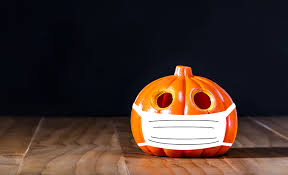
Our grocer dedicates an entire aisle to Halloween this time of year.  It’s a pile-on of kid costumes, yard decor, plastic jack-o’-lanterns, and party supplies.  You’ll also find massive bags of assorted small candies, enough to load up your front door bowl with a single pour.  These treats are individually wrapped and brand-familiar to carefully conform to the holiday’s “safe standards”.  In other words, there’s no element of surprise in all that sugar.

When was the last time you were treated to a little something you didn’t expect?  Here’s a good example.  My wife and I traveled to Texas last weekend to visit our son.  As we settled into the hotel room we noticed a tray on the table with two bottles of water and a couple of wrapped candies.  Not so unusual.  But then we read the little card next to the tray.  Not only was the water free of charge (hotels typically stick it to you with bottled water) but the candies were handmade salted caramels from a local culinary kitchen.  Suddenly I’m thinking, “What a nice hotel!”

Perhaps you know a few other hotels with the same gesture, as Doubletree does with its chocolate-chip cookies (see Calories of Contentment for more on that).  But unlike our Texas hotel, Doubletree always goes with the chocolate-chip cookies.  Stay there enough and you come to expect them.  No surprise.

That, in a nutshell, is what’s wrong with Halloween today.  You still get the occasional trick (TP in the trees?  Shaving cream in the pumpkins?) but the “or-treat” routine has been reduced to just that – routine.  Think about a child’s anticipation for the big night.  Hours spent making sure their costume stands out in a crowd.  Miles spent covering sidewalks and front walks.  Fingers spent on doorbells and knockers, all so they can get, what… another fun-size Hershey bar?  Where-oh-where is the element of surprise?

Mom’s Halloween treats

Back in the “ol’ days” (because I’m feeling old today) a lot of front-door Halloween treats were homemade.  People handed out family-recipe popcorn balls and caramel apples.  My mother made the frosted ginger pumpkin cookies you see here.  A guy down the street dressed as Dracula and manned a little round grill in his driveway, handing out barbecued hot dog bites on toothpicks.  You never knew what you’d walk away with until you made it to the next house.

A mini pumpkin has zero HTV

Creative treats only boosted the night’s excitement back then.  I remember catching up with friends in the darkened streets to compare the collective efforts in our bags.  More importantly, the wide variety of treats upped the ante on what one candy-ranking opinion piece referred to as “HTV” or Halloween Trade Value.  After all, the most important event of the night was the post trick-or-treat trade, right?  You’d spill the contents of your pillowcase into a big pile on the floor and the back-n-forth would begin.  “I’ll give you three rolls of Smarties and a Baby Ruth for your Charleston Chew”.  Yes, friends, those were the days.

Everything changed when Halloween lost its young-and-innocent status.  Parents inspected treat bags to filter out anything remotely suspicious.  Homemade items only made it as far as the next-door neighbor’s kids or backyard Halloween parties.  Suddenly a treat didn’t pass muster if it wasn’t recognizable and wrapped.  The creative license of trick-or-treating has expired.

But hold on now.  What about the other 364 days of the year?  Can’t the element of surprise show up on one or more of those?  Can’t we still be caught off guard… in a good way?

Here’s an attempt.  At least two companies offer monthly treats by subscription and you have no idea what’s coming.  SnackCrate describes its product as “a world of snack surprises – monthly”.  TryTreats advertises “each month’s box will feature snacks from a different country in the world.  The country you’ll receive is a secret until you receive the box!”  Kind of a spin on my ol’-days Halloween nights, don’t you think?

Speaking of treats I think the dog got wind of this topic.  The other night I prepped his dinner with the usual two cups of kibble topped with a few bits of lunch meat.  He ate the bits but left the kibble.  He’s never done that before.  Maybe he’s bored with it?  I need to shake things up.  Throw in a few doggie treats.  Add the ol’ Halloween element of surprise and get his tail wagging again.

Standing on Tacos

Red’s Giant Hamburg – Springfield, MO – may be America’s first drive-thru restaurant. Red’s opened in 1947 from a converted gas station, closed in 1984, then opened again last year. In the United States it’s not really “fast food” without the drive-thru, is it?  McDonald’s certainly agrees, as does Burger King.  But Taco Bell, they think outside the tortilla.  Just last year the Bell opened a taco-themed hotel and resort in Palm Springs, CA.

A taco-themed hotel and resort – really, you ask?  Yes but more on that in a minute.  It helps to cover some of Taco Bell’s earlier adventures first.  Founder Glen Bell started his restaurant in the 1960s as the copycat of a local Los Angeles walk-up taco stand.  The concept of “American-Mexican fast food” quickly franchised to 100 locations in less than five years.  Today you’ll count 7,000+ Taco Bell locations in two dozen countries.  Two billion customers frequented the Bell in 2019.

I’ve always admired Taco Bell… er, from afar.  I can’t tell you the last time I navigated TB’s drive-thru (probably my kids’ high school days).  Don’t get me wrong, I love Mexican food.  But eating at Taco Bell is like supplanting an Italian artisan pizza with a Little Caesars.  In other words, I prefer my Mexican at authentic Mexican restaurants.

But there’s no denying Taco Bell’s success.  They chose six or seven essential ingredients and spun an entire low-cost menu out of them.  Take the $1.49 soft taco.  Four components: seasoned beef, lettuce, and cheese, inside a soft tortilla.  Add sour cream, tomatoes, or other options, but you’ll pay $0.40 or more for each.  The only freebies are the hot sauce packets at the pick-up window.

From the Taco Bell soft taco evolved an entire zoo of animales.  You have the Taco Supreme, Chalupa Supreme, Cheesy Gordita Crunch, and (for the really adventurous) the Nachos Cheese Doritos Locos Taco Supreme.  From the Taco Bell burrito you get the Burrito Supreme, Grilled Cheese Burrito, Beefy 5-Layer Burrito, Quesarito, and Crunchwrap Supreme.  Again, all of these wild animales come from pretty much the same small set of ingredients.

Taco Bell’s successful run endures at a time when foodies lean more towards farm-to-table organic.  So why does it still work?  Marketing.  Taco Bell’s all about creative thinking.  Some examples:

  1. Taco Bell branded their hot sauce, taco shells, chips, and shredded cheese, and you can find them on your supermarket shelves.  No drive-thru necessary.
  2. TB teamed up with several pro sports franchises to offer free food based on individual performances (i.e. steal a base, score so many points, score so many runs = free tacos).
  3. In 2001, when the Mir Space Station re-entered the earth’s atmosphere, Taco Bell floated a giant target in the Pacific Ocean and promised a free taco to every American if a bit of the space station (designed to break up) hit the target.  (No such luck.)
  4. In 2013, Taco Bell designed a waffle taco, filled it with scrambled eggs and sausage, added a side of syrup, and called it breakfast.  The waffle taco is no longer on the menu but breakfast still is (if you consider a Hash Brown Toasted Burrito “breakfast”).
  5. In 2016, Taco Bell test-marketed a Cheetos Burrito.  That’s all you really need to know, right?
  6. In 2017, Taco Bell partnered with Lyft to offer “Taco Mode”.  Rides from 9pm-2am included a stop at Taco Bell.

Which brings us to the Taco Bell hotel.  In the summer of 2019, TB converted an existing Palm Springs resort into a live-in advertisement, “the biggest expression of the Taco Bell lifestyle to date”, according to its Chief Global Brand Officer. 

Not only did they slap the TB brand all over the resort, but they also offered the full Taco Bell menu, poolside cocktails “infused with a Taco Bell twist”, a “not-to-miss gift shop” (including a Forever 21 fashion line of Taco Bell apparel), and a salon where nail art and hairstyles were decidedly “Bell”.  The resort was a pop-up, only intended to operate for a few days, but reservations sold out within two minutes of being offered.

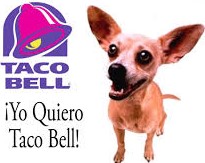
“Gidget the Chihuahua”

Taco Bell has one more menu item I didn’t mention above: the Spicy Potato Soft Taco.  Er, had.  The Bell discontinued it but not before Bryant Hoban (of O’Fallon, MO – not far from Red’s Giant Hamburg) purchased and froze three of them.  A few weeks later Hoban sold the “mint condition soft tacos” through Facebook.  For $70.  Each.  With that kind of endorsement, it’s safe to say the Bell will be ringing for many years to come.

Some content sourced from Wikipedia, “the free encyclopedia”, and the Fox News article, “Taco Bell is opening a taco-themed hotel and resort”.

The Ghost of Saint Francis

“Saint Francis” (Digital Art by Randy Wollenmann)

I’ve long been a fan of the Google Calendar app, even after switching my mobile from Android to Apple. Google Calendar allows the option to add “Christian Holidays” so I promptly checked the box. We’re talking Christmas and Easter of course, but how about the Feast Day of Saint Francis (last Sunday), Saint David (3/1), and Saint Patrick (3/17)? Saint Patrick sure, but why also Francis and David? There are hundreds of saints yet Google chose just three. My curiosity was piqued.

So begins my beyond-the-grave story, perfect with Halloween on the horizon. Google’s choice of saint days got me wondering if there’s a spectral connection between me (David) and Francis. So I dove into the details. Now all I can say is, be careful what you wonder about.

Basilica of St. Francis, Assisi, Italy

The quick history of Francis. He’s the patron saint of animals. He was an Italian living in the 1200s from the central hill town of Assisi. Francis grew up wealthy but abandoned his riches to serve the Church and the poor. But it’s the animals that make him so popular among today’s saints. He (supposedly) communicated with wolves. He often preached to flocks of birds. He built the very first Christmas crèche, including live animals alongside the manger.

Now then, my Francis ghost story. Let’s cover this spookiness from present to past. I’ve discovered a pattern of events that has me convinced Saint Francis is trying to reach out. As a matter of fact, he’s been in touch every ten years back to when I was a baby. If you agree you can see why I’m expecting another “call” in 2023.

  • 2013: I’ve told you Francis is the patron saint of animals but guess what? He’s also the patron saint of avoiding fires. In June 2013, my family and I evacuated our Colorado house for a week (horses and dogs in tow) to escape one of the worst fires in our state’s history. When we returned, our house was not only intact but had no smoke damage. Meanwhile, over 500 properties within a five-mile radius were completely destroyed.

  • (Also in) 2013: Cardinal Jorge Mario Bergoglio of Argentina was elected Pope. He promptly changed his name to Francis. There have been 266 Popes in history, but Cardinal Bergoglio is the very first to select the name “Francis”.

  • 2003: The Front Range of the Colorado Rockies experienced one of the worst blizzards in our state’s history. In a matter of hours a single storm dropped over thirty inches of snow, with drifts of five feet or more. My family and I were snow-locked in our house for over a week. 100,000 residents lost power while 4,000 travelers were stuck at the international airport in Denver. Saint Francis is also the patron saint of the environment. Was he making his presence felt with unprecedented weather?
    Assisi’s sister city

  • 1993: My family and I moved from San Francisco to Colorado. San Francisco (named for Francis) is the sister city of his birth town of Assisi. But here’s where I really paused. Francis is also the patron saint of… Colorado. And how many other U.S. states chose Francis as their patron saint? Zero.

  • 1983: I’m in my junior year in college, studying abroad in Italy. The patron saint of Italy is… Francis, of course. I also traveled to Assisi while I was there, including a visit to the church where Francis is buried. This is the only time I’ve ever been to Italy.

  • 1973: Acclaimed biographer Ira Peck writes, The Life and Words of St. Francis of Assisi. It’s a short read, with easy language intended for middle-schoolers. Where was I in 1973? Starting my first year of middle school.

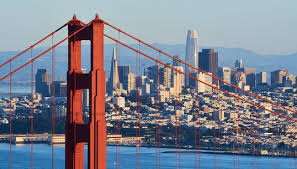
  • 1963: On March 21st, the Alcatraz Federal Penitentiary closed for good after thirty years. Alcatraz is the famous island prison in the San Francisco Bay. What does Alcatraz have to do with my ghost?  Back in 1202, a young Francis was thrown in prison for a year, captured while serving a military effort. His spiritual conversion from wealthy patron to humble priest, it is said, took place during this time in prison.

Our Saint Francis statue

And there you have it. Every ten years – starting the year after I was born – Saint Francis seems to have reached out to me. Oh, one more thing.  My wife and I have a statue of Saint Francis in our garden. “Of course you do”, says Francis.  He’s been standing quietly there for years, facing the house, just keeping his eye on us.

Francis will reach out to me again in 2023, I’m sure of it now. He’ll find another way to make his presence felt. When I read up on him I noted he’s also the patron saint against dying alone and the patron saint of needleworkers. Against dying alone? Am I destined to perish alongside several others in 2023? That’s not very nice of you, Francis.  I’d better take up knitting.

Some content sourced from Wikipedia, “the free encyclopedia”.

Brand Spankin’

Years before Haagen-Dazs, Klondike, and Dove Bars competed for your freezer space, you had a revolutionary creation known as the Eskimo Pie.  Foil-covered, with a thin coat of chocolate magically adhered to a small bar of ice cream, the Eskimo Pie was the first of its kind: a two-desserts-in-one sensation brought to market almost a hundred years ago.  The version I remember (from the 1960s) was a hockey puck – a little larger, a little flatter – with mint ice cream in the middle.  Today, the (Dreyer’s) Eskimo Pie looks no different than any other ice cream bar.  Someday soon it won’t even be called an “Eskimo Pie”.

You know what I’m talking about, of course.  Eskimo Pie lands on the list of brand names considered negative racial stereotypes.  Before you know it, Eskimo Pie will be rebranded into something more socially acceptable.  News to me, “Eskimo” is considered derogatory by the Inuit and Yupik people of Alaska.  An “Inuit Pie” doesn’t sound quite as tasty but maybe Dreyer’s should adopt the name anyway.  At least they could retain the cute little fur-lined character they already have on the box.

America: land of stereotypes

I get it; I really do.  As much as the Caucasian and the male in me make it virtually impossible to stand in another’s shoes, I still empathize.  Brands get spanked because their names, images, or associations are knowingly insensitive – even harmful – to groups of people.  That needs to change, even if it means renaming a product that’s been around a century or more.

My mother may have been a woman ahead of her time.  When I consider the brands I was raised with, I remember Minute Rice (not Uncle Ben’s), Log Cabin Syrup (not Aunt Jemima or Mrs. Butterworth’s), and Challenge Butter (not Land O’Lakes, whose logo centered around the image of a Native American woman).  Nothing controversial about my childhood brands (thanks Mom!)  The only character who might’ve caused a stir was the leprechaun on the Lucky Charms box, but I don’t think the Irish made a fuss about him (yet).

While you’re wondering about the new names for Aunt Jemima and Uncle Ben (the latter announced just yesterday as Ben’s Original), broaden your perspective a little as these other products/people/places step up to the home plate of scrutiny:

  • Dixie (i.e. Cups, Beer, Chicks).  “Dixie” originated in (black) minstrel shows and denotes the former Confederate States of the Southern U.S.  Either association doesn’t bode well for this Americana word.
  • Mutual of Omaha.  Nothing wrong with the name, but the logo is effectively a Native American in full headdress.  What say a cornucopia instead (get it?)
  • Nestle Candies.  Overseas brands include “Red Skins”, “Chicos”, and “Beso de Negra” (Kiss of the Black Woman).  Maybe just drop these products entirely for now.
  • Squaw Valley Alpine Meadows.  Whoops.  At least they can just go with “Alpine Meadows”.
  • Disney’s “Splash Mountain”.  To me it’s just a theme-park water flume ride with hollowed-out logs, but others see the connection to Disney’s 1946 stereotypic animation “Song of the South”.  Look for less controversial ties to “The Princess and the Frog” soon.
  • L’Oréal.  Products claiming to make the skin “fair”, “light”, and towards “whitening” are going to need different words.  Way different words.

Then you have businesses like ManpowerGroup Global, Five Guys Burgers and Fries, and Two Men and a Truck.  There’s just no winning with these (unless you label 50% of the company/restaurants/ fleet as the female equivalent?)

I found it funny the (former) Washington Redskins couldn’t come up with a socially acceptable team name in time for the 2020 NFL season, so they’re simply known as “Washington Football Team” today.  That’s so generic I picture every player on the roster identical: same height, same weight, same hair color, same number on the jersey.  With that in mind, here’s some advice for the Edmonton Eskimos of the Canadian Football League.  Come up with a new name pronto.  Not the “Edmonton Inuits” or “Edmonton Yupiks”, neither of which roll off the tongue.  Just something, else you’ll be known as “Edmonton American Football Team”.  Uh, come again?

Some content sourced from the 6/19/2020 USA Today article, “Are the Washington Redskins Next?…”, the ONGIG article, “20+ Top Brands Changing Their Name to Avoid Racial Bias”, and Wikipedia, “the free encyclopedia”.

Calories of Contentment

The other night – too late for a grocery store run but with few options in the pantry – my wife and I split a box of Kraft Mac & Cheese for dinner. No spicing things up, no healthy side of vegetables to lessen the guilt – just a heaping bowl of the little pasta elbows with powdered cheese. MAN did that taste good. I promptly considered a Hostess Ding Dong for dessert but caught myself just in time. Whoa, boy. Who says there’s no traveling during the pandemic?  I’ve made the journey to the land of comfort foods!

A little context before we explore the calories of contentment.  After the kids moved out of the house several years ago, our diet moved decidedly to the more healthy.  We upped our fruit and vegetable count.  We focused on meals with whole foods and fewer ingredients.  We started shopping in boutique grocery stores, discovering foods and brands we never knew existed.  Dairy and starchy carbs took the back shelf to pure proteins and Mother Nature’s bounty.

Somewhere in the middle of all of this good intention, a box of Kellogg’s Pretzel Cinnamon-Sugar Pop-Tarts dropped casually into my grocery basket.  I’d heard they were pretty good and I’d never tried them before, so… why not?  Then the kids came to town for a long weekend, so we just had to load up on old family favorites like Cap’n Crunch, Good Humor Creamsicles, and Red Baron frozen pizzas.

But here’s the thing.  Our kids eat so responsibly these days, sugary cereals and snack foods no longer appeal to them.  They make flourless banana pancakes and organic food “bowls”.  They nosh on healthy proteins and Boba teas.  They spend most of their time in the kitchen instead of the drive-thru.  Those comfort foods we purchased got no love, so naturally we purchased a couple more (the Kraft Mac & Cheese and Hostess Ding Dongs).  Heck, we even embellished those choices with a countertop bowl of Brach’s caramel “Royals”, and a huge container of Peanut M&M’s in a nearby cupboard.  There’s now a junk-food roadblock in front of every attempt to eat healthy.

What is going on here?  I blame the coronavirus.  Most of our processed-food pals moved into our pantry in the last six months.  All of them were impulse buys (or “moments of weakness”, or whatever else you want to call them).  No surprise though; we’re contributing to a nationwide, if not worldwide trend during this pandemic.  The world’s biggest packaged-foods manufacturers reported sales growth of 4.3% in the first three months of the year (vs. forecasts of 3%).  Canned soup purchases rose 37%, canned meat 60%, and frozen pizza 51%.  Hot Pockets and SpaghettiOs flew off the shelves.

Is one of these YOUR comfort food?

In all seriousness, a turn to comfort foods is a sign of something more complicated below the surface of our psyches.  I wish I could credit nostalgia: the sentimentality for past happier times and places, or emotional eating: the propensity to consume comfort foods in response to positive/negative stimuli.  Instead, I think we’re dealing with declinism – the belief our society is heading towards a prolonged downturn or deterioration.  We’ve been here before America, as in the Depression of the 1930s, the spread of Communism in the 1950s, or the rise of Japan’s economic powerhouse in the 1970s.  In each instance our country soldiered on better than before, but that’s not to say the short-term endurance is any fun.  And that, boys and girls, is why comfort foods maintain a “healthy” presence in grocery stores and in your pantry.

Hilton Hotels rivaled the pandemic headlines when they revealed their Doubletree chocolate-chip cookie recipe to the world last April.  Talk about your classic comfort food.  Doubletree cookies have nestled on hotel pillows since the mid-1980s; a whopping 25,000,000 in less than forty years.  “We know this is an anxious time for everyone”, was Hilton’s excuse for sharing their secret.  I baked a batch as soon as I came across the headline and now I can’t seem to stop.  A heaping bag of Doubletrees now sits in our refrigerator more often than it does not.  I could probably recite the recipe from memory, and I dream about them in my sleep.  Hilton’s got me hooked.

I still haven’t tried those Pretzel Cinnamon-Sugar Pop-Tarts, the preservative-filled pastries responsible for this whole mess.  All are still paired neatly in their foil packets, sitting quietly on the shelf.  The box may even be getting a little dusty.  I figure my willpower remains intact if I leave the tarts alone until their expiration date.  Er, wait – now that I think about it – Kellogg’s Pop-Tarts never expire.  Dang it; that’s a little depressing.  I’d better have a Ding Dong to cheer myself up.

Some content sourced from the 4/24/2020 Wall Street Journal article, “Comfort Foods Make a Comeback in the Coronavirus Age”, and Wikipedia, “the free encyclopedia”.

Matt Match

It happened again this week, as it seems to every couple of months.  I was lying face-up in the chair, with the dentist putting finishing touches on a crown, when she says out of nowhere, “So… celebrity trivia question. Which Hollywood actor do people say you most resemble?” To which I quickly responded – from years of practice – “Matt Damon“.


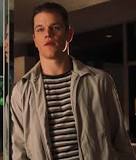
That’s me on the left and Matt on the right.  The likeness has never been my own opinion, but rather a conditioned response from so many people making the comparison.  If I really concentrate, focusing on certain facial features, I suppose I can acknowledge some resemblance.  But it’s a stretch at best, so it fascinates me I get this comment over and over again.  In yesterday’s instance, my dentist said it was most obvious when seeing my face in profile.  She must check out a lot of photos of Matt Damon.

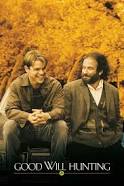
Damon has made quite a name for himself on the silver screen.  Alongside Ben Affleck, he burst onto the scene in 1997 with his Academy-award winning screenplay Good Will Hunting.  His resume has been a fairly unbroken string of box-office successes since, including Saving Private Ryan, Ocean’s Eleven, the (four) Jason Bourne movies, The Martian, and most recently, Ford vs. Ferrari.  It’s fair to say Damon leans towards scripts with lots of action, with the occasional foray into comedy and drama.

With something of a physical likeness, I thought I should explore a little further under Damon’s skin (so to speak), to see if he and I have anything in common besides looks.  He’s eight years younger than I am.  He was born in Boston while I was born in Los Angeles.  His parents divorced when he was three while my parents remain married to this day.  He has one brother while I have four.  On the other hand, we’re both married and we both have daughters.  We’re identical in height at 5′-10″ (!!!)  And most significant to the topic at hand, we’re both products of a parent of English descent and another of Swedish.

Portman/Knightley

So Damon is (apparently) my biologically unrelated look-alike (aka doppelganger).  All of us have one or more out there in the world; mine just happens to be a “name”.  My dad was often associated with the late actor George Kennedy.  My mom – Nancy Reagan.  Hollywood itself has plenty of pairs, including Dax Shepherd/Zach Braff, Zooey Deschanel/Katy Perry, and IMHO the most twin-like of them all: Natalie Portman/Keira Knightley.  As for Matt Damon?  His doppelganger is not yours truly, at least not in his own social circles.  Maybe Mark Wahlberg.

Linus Caldwell

Let’s visit Damon’s movie characters for a second.  I identify with one in particular.  No, not the brilliant-but-shy, quick-talking Will from Good Will Hunting, with his rough edges, street smarts, and Boston accent.  Neither Jason Bourne, with his lightning-fast fighting skills and penchant for cross-continent espionage.  Not even Private Ryan, because I can’t claim to have worn the uniform nor lived in wartime. Ah, but then we have Ocean’s Eleven’s Linus Caldwell.  Linus is the hesitant participant in the heist.  He’s not keen to lead, but he likes being part of the team.  He’s on the quieter side, aims to please, takes a risk or two for the sake of respect, and comes across as Mr. Nice Guy.  He also sports the casual polo/khaki look, with the occasional zip-up jacket.  Yep, Linus could be my doppelganger as well.

Matt (not me)

You’ll find a lot of photos of Matt Damon on the web.  You’ll also find some personal quotes.  Here’s one of my favorites: “It’s just better to be yourself than to try to be some version of what you think the other person wants.”  As much as Damon’s an actor by trade, I’ve seen enough of his roles to believe his true persona often reflects in his characters.  He seems like a decent guy and he’s done very well for himself.  He has a solid marriage and three wonderful daughters.  He’s atypically modest and straight-shooting for a Hollywood headliner.  So if people want to “doppelgang” me with someone like that, who am I to care if I actually look like the guy?

Some content sourced from IMDb, “the world’s most popular and authoritative source for movie, TV, and celebrity content”.