The Euphoria of Joe

Today I’m perched at one of my favorite Colorado coffeehouses, sipping the local version of a cafe latte.  The air is rich with the bitter aroma from the nearby roaster.  I’m surrounded by chatty patrons, each with their own coffee-based delight-in-a-cup.  If I had a handful of the crunchy chocolate-covered espresso beans they sell, I could say coffee’s hitting all five of my senses today (instead, I have a delicious apple fritter).  These days, coffee is as infused into American culture as baseball and Apple (pie).  And how far we’ve come from the cups of Joe former generations would brew with store-bought cans of Folgers.

How far have we come (besides the requisite latte foam-art)?  Consider this: my coffeehouse does not allow to-go orders.  You read that right: if you get your coffee here you’re drinking in-house.  According to the resident “roastmaster”, paper cups alter the flavor of the coffee and thus they won’t sell it to-go.  Hard for me to swallow (the cup thing, not the coffee), as my palate has never been very discerning.  Yet here I am, paying top dollar to drink real-cup coffee “in the house”.

It wasn’t always this way.  Not so long ago all you had on the menu was a “cup of coffee”.  Take it black or take it with sugar/cream, but that’s where your options ended.  And the reference to “Joe”?  That comes from a 1914 ban of alcohol on U.S. Navy ships by then Secretary of the Navy Josephus “Joe” Daniels.  The strongest alternative to a “real” drink on-board was black coffee.

Today’s kids get their first taste of coffee at Starbucks.  My own first taste took place in Italy, during the college year I lived there in the 1980’s.  Italians take their coffee very seriously.  Walk into an Italiano café, belly up to the bar, and order an espresso shot and sweet roll.  That’s your standard-brand Italian breakfast, and you take it standing up.  You’re in, you’re out, and you’re on your way again in less than a minute, sufficiently caffeinated.  Not many are baptized on straight espresso, but that was my experience.
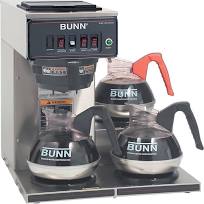
My coffee journey continued after college, but it was quite a stumble.  I graduated from Italian espresso and regressed to the standard-brand Bunn coffeemakers of corporate America.  Starbucks and its kin would not arrive for another 5-10 years.  Office coffee was a mindless, characterless, tasteless experience.  A Styrofoam cup of black nothingness, with a few unbrewed grounds thrown in for texture.  It was like descending from the Golden Age of the Roman Empire to the Dark Ages.

Thankfully, my coffee habits persisted until coffeehouses became an American staple in the late 1980’s.  The houses themselves still aren’t the vision of Starbucks’ Howard Schultz: “comfortable, social gathering places away from home and work”, but at least we’re getting past the Frappuccino-this and macchiato-that, evolving back to straight coffee.

My one dedicated-cash phone app is for coffee.  I literally wake up and smell the coffee thanks to my Keurig; then structure my waking hours with the possibility of a drive-through cup of Joe later on.  To get really serious I could spend $200 on a Ninja’s home coffee bar, which claims to be a coffee system (“Variety of brew types and sizes!” “Built-in frother!” “Tons of delicious coffee recipes!)  Their tagline: “See what all the coffee buzz is about”.

Coffee buzz is no joke, as patrons of America’s 33,000 coffee shops will tell you.  The euphoria we desire – the blissful effects drawn from caffeine – actually has a name: “margaha”.  For that reason, whether your preference is a nitrogen-infused cold brew, a coconut-milk mocha Macchiato, or a take-it-straight cup of Joe, it’s safe to say coffee is here to stay.
Manipulation Games

In April of last year Starbucks modified its customer loyalty program, linking reward “stars” to dollars spent instead of store visits. Where previously you nabbed a free coffee for twelve trips to the cash register, you now need a total purchase value exceeding $63 .  According to CNN, “…customers were furious with the new program.”  Maybe so but those customers didn’t stay away either.  Starbucks’ 2016 gross sales were $21.3B, up 10% from its previous fiscal year.

Once upon a time I resisted customer rewards programs but over the years I’ve made peace with them.  I keep a couple dozen loyalty cards in the car or on my phone, ready to play whenever I visit this store or that restaurant.  I still control where, what, and how much I purchase.  Since I don’t keep a close eye on my rewards, I’m pleasantly surprised whenever I qualify for a freebie or a discount.

But here’s what I don’t like about rewards programs.  They’re designed to manipulate your spending habits.  That’s where Starbucks – like so many other merchants – gets a “fail” on my customer satisfaction test.  In addition to their stars program Starbucks sends emails every other day (which I unsubscribe from but always seem to return).  Those emails encourage me to purchase in certain ways or quantities or timeframes with the allure of “bonus” stars.  It’s a ruse; plain and simple and obvious.  No amount of “free” will ever tempt me to buy three breakfast sandwiches in five days.  Or three Frappuccino’s in three days.  (I don’ t even buy one breakfast sandwich or one Frappuccino.  Just coffee.)

Starbucks may annoy me with their sales tactics but I still buy their products.  The same cannot be said for credit card companies.  The newest Visa and MasterCard programs include sophisticated reward programs where spending is literally the only path out of debt.  Take Chase Bank’s Sapphire Reserve Visa card.  As trendy as this elegantly thin metal card appears to be, it’s utterly manipulative.  For starters, just holding the card in your hand sets you back $450 a year.  Then you’re encouraged to spend $4,000 in the first three months to qualify for 100,000 reward points (recently sliced to 50,000).  You’re also tempted by an instant $300 travel credit – which can only be used through Chase’s partners – as well as credits towards Global Entry, TSA Pre, and airline lounge fees.

No matter how you justify the rewards of Chase Sapphire Reserve you’re still spend-spend-a-spending to recoup the costs.  Consider Sapphire points are valued at 2.1 cents each.  The best-case scenario therefore – spending on travel or dining – still needs to add up to $15,000 before you’ve paid off the $450 annual fee.  Too rich for me.

Las Vegas is getting in on the rewards game too.  Sin City’s legendary “free drink” is about to enter the history books.  Slot machines now include small colored lights, easy to spot by the passing cocktail waitress.  If you’re “red” she’ll walk right past you without so much as a smile.  If you’re “green” you’ve fed your machine enough to earn a “free” drink.  The same goes for casino parking lots; spend enough inside the building and you’ll earn a voucher for outside.  Is it any wonder gambling is no longer the biggest source of revenue in Las Vegas (in favor of hotel, restaurant, and bar purchases)?

Despite these trends, I’ll keep playing the rewards game and very occasionally cashing in on anything “free”.  But I’ll also be wary of the subtle manipulations.  Just yesterday I received my umpteenth Southwest Airlines’ Visa card offer.  All I must do is spend $2,000 in three months for 50,000 points and no annual fee.  That application goes straight to the shredder every time.  My one and only Visa card with its no-frills-no-cost rewards program suits me just fine.


Can We Talk?

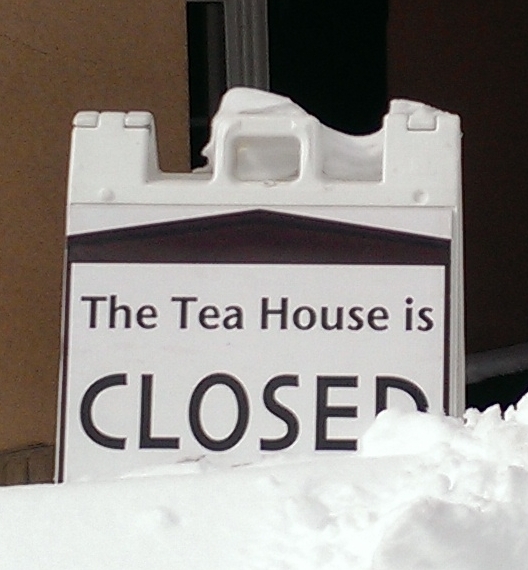
We lost a good friend last month.  Wisdom Tea House, one of our local cafes, closed its doors for good after eight years of business (and a little snow).  And that’s just sad.

29 - requiescence 2 (1)

Why am I sad?  Let’s start with a quick tour of the house itself.  You walk in the front door to the roomy foyer, commanded by a large hutch with dozens of tea cups – choose your own – and a welcoming kitchen where you place your order. If the scrumptious lunch items don’t tempt you, the fresh-baked goods on display certainly will.  Then choose from any room in the house and pull up a chair. Perhaps the living room with the small fireplace. Or one of the upstairs sitting rooms with their small couches and comfy chairs. Your tea and cakes will be delivered no matter where you sit.  This could just as easily be your grandmother’s house.

29 - requiescence 2 (2)

Here’s what I’ll really miss about Wisdom.  You won’t see people talking on their cell phones or working away on their laptops.  You won’t plop down next to a large, loud group of people gathering after work for a drink.  Wisdom’s music is quiet and instrumental.  The tea and coffee are served in their simplest forms (no Oprah Cinnamon Chai Tea Latte here).  In sum, they created a gathering place for requiescence – a bit of rest to escape the bustle of the world beyond the windows.

As I reminisce on Wisdom, I’m sitting at Starbucks.  I typically appreciate the convenience of the drive-thru, but today I’m on the inside, observing Starbuck’s brand of “gathering place”.  Open floor plan.  Hard surfaces.  Rock music.  A few high tables for two and one large low table for many.  Stools at a counter facing the windows with no view to speak of.  The handful of patrons I observe are to themselves, engrossed in all forms of personal electronics.  The few engaged in conversation raise their voices above the music and the baristas just to be heard.  It’s all just so “un-Wisdom”.  But that’s Starbucks – and it works.  It’s grab-n-go coffee, especially with that drive-thru lane (churning out cars so much faster than people passing through the front door).  Having your coffee inside a Starbucks almost feels wrong.

A few years ago my wife and I visited Ireland for the first time..  If you’re ever in Dublin, find your way along the cobblestones to Wicklow Street (just off the wonderful Grafton Street shops), and stop into a little cafe called Gibson’s.  Gibson’s is akin to Wisdom Tea House.  Order at the counter (the pear tarts are a must) and choose from one of the dozen small tables just beyond.  Take in the gentle ambiance and soft decor, and breathe deep.  The Irish come to Gibson’s to meet and to chat; to catch a break from the fervor that is downtown Dublin.  We stopped in several times during our trip and it was always the same: happy patrons engaged in quiet conversation with – at least for the moment – no cares in the world.  I can still picture one particularly well-dressed gentleman a few tables over from ours, sitting alone with his coffee and reading a book.  The very picture of requiescence.

Perhaps you have a Wisdom Tea House in your town.  A place the locals seek out to unplug, and to spend a quiet moment or two with each other.  If you are so fortunate, be regular patrons and keep your little gathering place in business.  Without Wisdom, our little town has precious few places to rest.  We might as well just head home instead.