It’s All in the Cards

Back in the Boy Scouts, my troop-mates and I memorized statements designed to make us better young men. The Boy Scout motto was, “Be Prepared”. The Scout slogan: “Do a Good Turn Daily” (help others). The Scout oath – several sentences stated with a raised right hand (fingers forming the Scout sign) – included obedience to the twelve points of the Scout law. Recently I’ve been thinking about Point #2 of the Scout law, Loyalty; showing care for family, friends, and country.  But what about care for merchants?

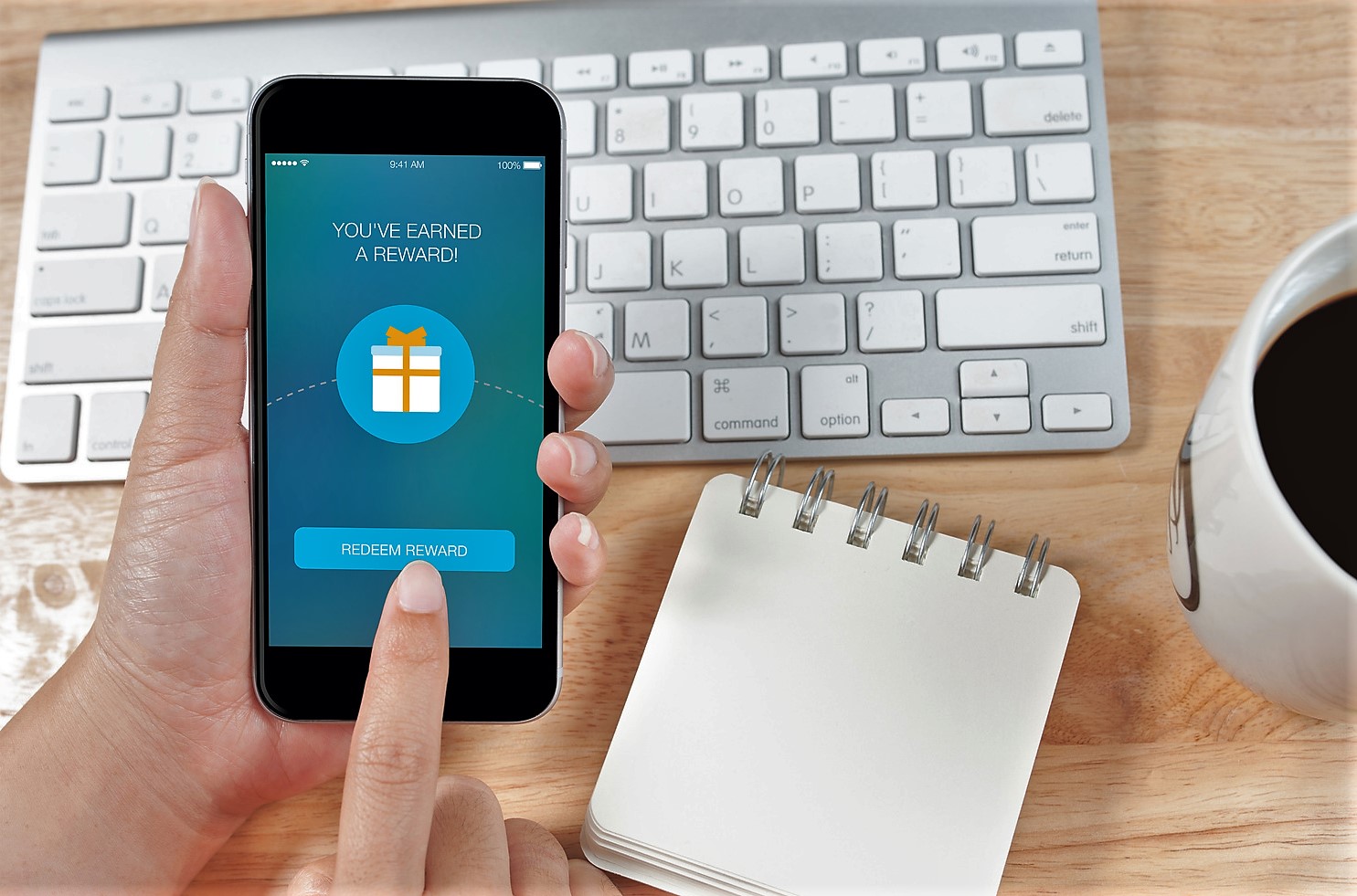
Customer loyalty programs – those structured marketing ploys designed to tempt continued shopping at particular businesses – are standard retail procedure these days.  The use of plastic and punch cards, account numbers, or scanned apps is as common as pulling out your Visa.  I get suspicious when a merchant doesn’t have a loyalty program.  It’s all about the points, and the allure of discounts or freebies through accumulated spending.

American Airlines, credited with starting the first full-scale customer loyalty program in modern times (1981), had no idea its “frequent fliers” would become the trendsetters for countless programs to follow.  But the drive for customer loyalty started way before AA.  Anyone who remembers pasting S&H Green Stamps into collection books, clipping Betty Crocker coupons straight from the product box, fishing prizes from Cracker Jack caramel corn, or joining the Columbia House Record Club (“8 CD’s for a penny!”) has dipped their toe into the customer loyalty pool before.

I took a quick inventory of my own customer loyalty and the numbers surprised me.  I carry eight cards in my car.  I have another eleven apps on my phone and another ten on-line accounts.  That’s 29 unique programs, and over 30 if I include the couple of credit cards where my swipes eventually equal cash back.  For someone who rarely shops on impulse, that’s more attention to spending than I’d care to admit.
If I did a little spring cleaning, I’d likely reduce my loyalty programs by one-third.  Many sit gathering dust because I haven’t used the merchant or service in years.  Others accumulate points at a snail’s pace.  Fill my inbox with special sales alerts or saturate my voice mails with pleas to “buy now!”; it won’t matter.  I purchase on my own terms.

Here are two recent loyalty experiences; the reasons I chose this topic today.  Last September we took a weekend trip to Aspen, settling for a Westin hotel in nearby Snowmass (Aspen is over-the-top expensive to us commoners).  When I went to Westin’s website for the booking, I discovered their loyalty program (Starwood) was merging with Marriott Rewards (now Marriott Bonvoy).  Hallelujah – my Aspen getaway gets me points! But not so fast.  Logging into Marriott Rewards, the home page alerted me to the fact the program merge was still in progress, and a Westin stay might not result in Marriott points.  Long story short, I called the hotel, spoke to the front desk, and had them book the reservation for me instead.  Yep, you can still do it the old-fashioned way.  And you still get points.

My other recent loyalty experience involved Nicholas Mosse Pottery (Kilkenny, Ireland).  Mosse makes beautiful handmade plates and bowls and the like, and we’ve been collecting a few pieces at a time since visiting Ireland a few years ago.  Points for me (ha) for joining the Mosse loyalty program from the get-go.  Just this week they alerted me me to my quietly-amassed rewards.  I then purchased a $70 plate for virtually nothing.

My Mosse experience is the perfect example of my casual approach to customer loyalty.  I don’t keep track of points until they equate to something significant.  Sure, I favor certain products and services, but I’d still favor Marriott or Starbucks or Costco without their loyalty programs.  For someone who tracks every penny, there’s something very satisfying in the surprise of unexpected discounts.  That’s how it works best for me.

Here’s my advice.  Don’t let customer loyalty programs drive your spending habits.  If you do, the merchant “wins”, because you’re likely spending more along the way than whatever discount or freebie you end up getting.  Loyalty = showing care; yes, but with retail that should only mean preferring one store over another.  Despite what they’d have you believe, it’s not all in the cards.

Some content sourced from Wikipedia, “the free encyclopedia”, and from the Wall Street Journal article, “Inside the Marriott-Starwood Loyalty Program Turbulence”.

A Distant Third (cont.)

Last Tuesday in cycle class, pedaling through the five-minute recovery after an hour of torture, our instructor asked if we’d like a Christmas carol or two from her playlist.  The one rider with enough oxygen lashed out vehemently, “NO!  It’s too early!”  Well how about that; score a point for Thanksgiving.  The sun set on Halloween two weeks ago and mighty Christmas is already trying to muscle its way to the forefront.  But Thanksgiving has a thing or two to say first.  If you please, keep the sugar plums out of my turkey and stuffing.

In last week’s post, I compared popular aspects of Halloween, Thanksgiving, and Christmas (i.e. history, music, food).  The final tally: Christmas the clear winner – no surprise – with Halloween solidly in second.  But lest we relegate Thanksgiving to the bronze medal year after year, my blog-intent is to reinvigorate America’s late-November holiday, and remind readers why Turkey Day stands on its own merits.

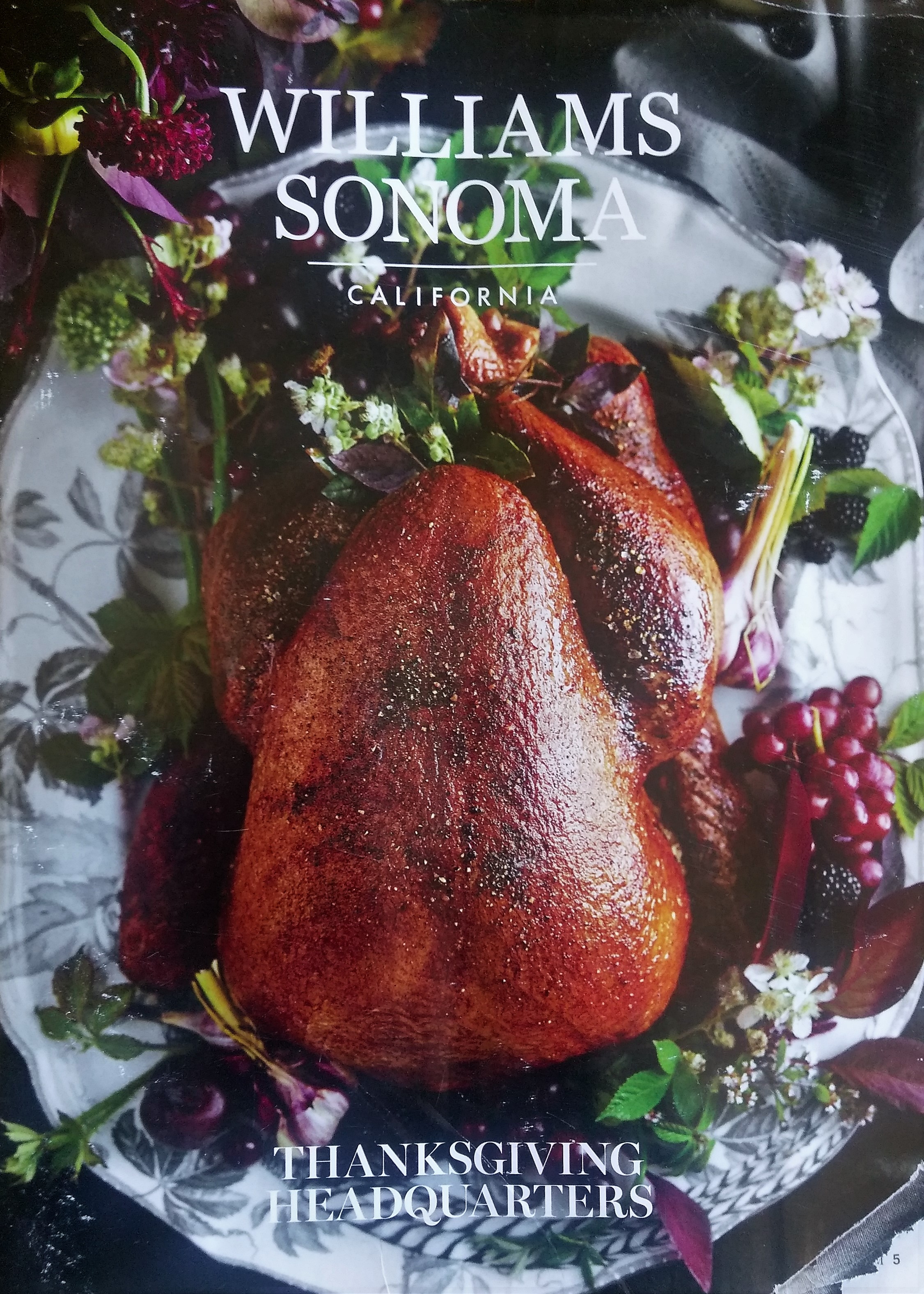
On that note, we’re starting November with promise.  My wife is getting endless mailbox catalogs, and I was delighted to find Williams-Sonoma’s “Thanksgiving Headquarters” edition: 180 pages of food, linens, kitchenware, and decor specifically designed for the holidays.  They even photo-profiled a barn-based “Friendsgiving” celebration in upstate New York.  Granted, the Thanksgiving section of the catalog ended on p.67, meaning the remaining 100 pages were all about Christmas.  No matter – 67 pages of Thanksgiving is impressive.  Way to go, Williams-Sonoma.

Starbucks also made a statement – albeit more feeble – putting their unique spin on Thanksgiving.  Right now, you can drive-thru and order a Turkey & Stuffing Panini (with cranberries and gravy!), perfectly nicknamed “a handheld turkey dinner”.  Then pair your panini with a Chestnut Praline Latte (“flavors of caramelized chestnuts and spices, topped with whipped cream and spiced praline crumbs”).  That combo speaks more to November than December in my book.  Not bad, Starbucks.

Retail aside, Thanksgiving plays out as more of an extended weekend than a single day.  Consider the before/after events.  Wednesday (“Thanksgiving Eve”) is routinely labeled “the single busiest travel day of the year”.  Well guess what?  It’s not.  Thanksgiving Day is the busiest travel day of the year, considering 90% of us drive our cars to the family gathering that morning.  Thanksgiving Wednesday (and Thanksgiving Sunday) only seem busiest because the chaos at the airports gets so much attention.

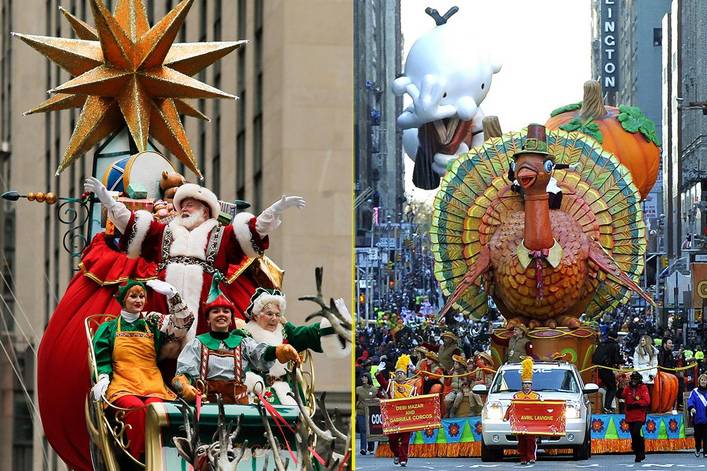
Now, on Turkey Day itself, besides the meal and the backyard football, we begin with the “Macy’s Thanksgiving Day Parade”.  My family always seems to miss the broadcast because we’re so busy in the kitchen.  Macy’s is three hours of marching bands, dancing Rockettes, Broadway singers, flying character balloons, and – as far as I can tell – one nod to Thanksgiving (the massive turkey in the photo above).  But hang on ’til the very end of the broadcast, because… here comes Santa Claus, here comes Santa Claus, wrapping up the parade the same way he’s done every year since 1924.  It’s like the Williams-Sonoma catalog – Thanksgiving on the outside but more “holiday season” in disguise.

Thanksgiving Friday is “Black”, of course – the so-called beginning of the Christmas shopping season.  We Americans spend over $50 billion that day (putting retailers “back in the black” with profits – hence the name).  It’s safe to say this bonanza of spending isn’t going away anytime soon.  By its very nature, Black Friday extinguishes Thanksgiving – almost before the pumpkin pie is served.  Black Friday sales begin as early as 5pm on Thursday evening (making the name obsolete, don’t you think?)  And if Thanksgiving isn’t early enough for you, some stores begin sales a week before Black Friday, with the teaser, “avoid the chaos of Black Friday – shop now!”  Uh, what’s the real meaning of Christmas again?

So there you have it – Christmas putting the squeeze on Thanksgiving like the Grinch on Whoville. Santa concludes the Macy’s parade at 12:00pm ET.  Christmas shopping begins five hours later.  In between, throw a meal on the table, mumble a blessing, and don’t forget to say thanks.  If we’re not careful, Thanksgiving Day will be reduced to Thanksgiving Hour.  It’s a phenomenon known as “holiday compression depression” (okay, I just made that up), but hey; it’s happened before.  In 1971, George and Abe got their standalone birthday celebrations mashed into a single holiday.  Even they feel Thanksgiving’s pain.

Tipsy-Turvy

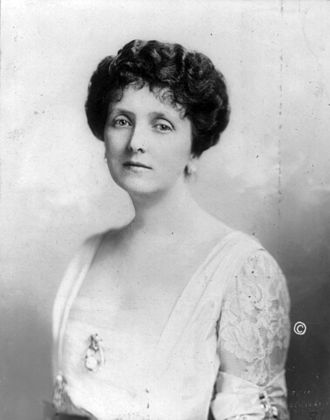
Emily Post’s Etiquette is surely an authority on its topic, considering the book was first published in 1922 and is now into its nineteenth edition. I would’ve enjoyed meeting Ms. Post, as Etiquette remains “the most trusted resource for navigating life’s every situation”. The advice never veers from its original premise, simply adapting to times as they change.  Of course, it’s all about manners – good ones at that. And were Emily Post alive today, she’d have us flip to Chapter 13, for a review of a practice of growing concern (and confusion).  Chapter 13 talks about tipping.


I’ve written about tipping before.  Three years ago (!) I told the story of my family’s visit to New York City, and the cabbie who crammed the six of us into one vehicle, then demanded a bigger tip than I gave, as a reward for saving the cost of a second cab.  I disagreed with him, because I believed – still do – a tip reflects the service itself (which was marginal).  More importantly, the recipient should never expect the tip, let alone argue over the amount.

Square’s POS

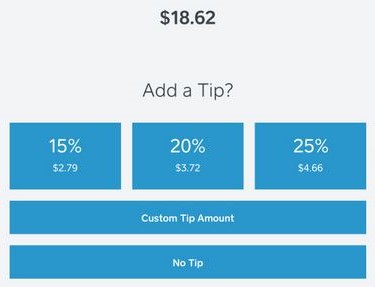
So-o-o, why is tipping such a hot topic now?  Because restaurants and coffee shops are moving to point-of-sale (POS) technology at the counter, allowing the customer to complete the transaction through an iPad, no cash required.  POS software (like Square) includes a tipping screen, offering suggested percentages/amounts, or no tip at all.  It’s a change to the social dynamic.  Before POS, you could discreetly add (or not add) a tip to your receipt before signing, or perhaps throw a few coins into the jar.  With POS, the tipping decision is forced on you at the front of the line (hurry up!).  And don’t be surprised if the person behind you sneaks a peak while you choose your tip.

My issue is not with the POS technology itself.  I like the security of completing a transaction (i.e. the credit card never leaves the hand), and I don’t mind navigating a couple of iPad screens to do it.  What I do mind is “tipping manipulation” as I’m standing at the counter.  The suggested amounts are the first thing you see, and beckon in LARGE FONTS.  To leave a smaller amount requires additional screens.  The “No Tip” option sits at the bottom like an afterthought.  Behavioral science says you’ll almost always choose from the top row, whether the service deserves it or not.

POS software gives the merchant the option to remove the tipping screen altogether, but I’m not suggesting they go back to a jar of coins.  Instead, before the tipping screen, why not insert a common courtesy (channeling Emily Post here): a screen simply asking, “Would you like to leave a tip?”

If your habit is to always (or never) leave a tip, consider the variables behind the curtains.  Some businesses adjust employee pay down if the position receives tips.  Other businesses pool tips, then divide the pot between all service positions (did you really intend to tip the dishwasher)?  The American Restaurant Association claims some states allow service businesses to pay less than minimum wage, because tips are legally considered wages.  Finally, minimum wage varies by state, so a nice tip in one state might be an insult in another.  Yet you, the tipper, have no idea if one or more of the above applies as you’re about to pay.  Messy, no?

Timeout for a favorite tipping story.  After years of one-on-one sessions, my personal trainer decided to resign my athletic club and pursue another career.  Knowing she was leaving, I asked if I could leave a tip with my final payment.  She declined, saying club policy did not allow tips.  However, she said, I could give her a positive review through the club’s on-line survey, and then she would likely receive a bonus in her paycheck.  Money and acknowledgement by her manager?  I completed the survey.

Someone once said, “Tips are like hugs, without the awkward body contact.”  I like that, except we’re starting to get awkward again.  POS screens allow for invasion of personal space, bringing tipping into the open.  Maybe Square should take a “tip” from Starbucks.  Use the Starbucks app to pay with your phone at the counter, and the tipping comes later, in the privacy of your own whatever.  You’re given several hours to consider if and how much you should tip.  I think Etiquette Chap. 13 would agree with that approach.

I’ll continue to be a savvy tipper, no matter what I’m faced with.  If I use a POS iPad, I’ll go with a “Custom Tip Amount” if I need to.  If I sign a credit-card slip, I’ll always tip on the pre-tax amount and I’ll never blindly choose 15%.  If it’s cash in hand, I’m at the mercy of the denominations I have in my pocket.  And in every case, I’ll ask myself the same question Emily Post would pose: “Did I receive notably good service?”

Some content sourced from Wikipedia, “the free encyclopedia”,  from the Wall Street Journal article, “You Want 20% for Handing Me a Muffin?”, and from the USA Today article, “How Much to Tip…?”

Loose Lips Sink Sips

Twenty years from now, my granddaughter will wander into my home office as a young adult, just for a look around.  She won’t find much of interest on the desk or the cabinets (if we still need desks or cabinets twenty years from now), so she’ll direct her attention to the things on my shelves.  Besides photos and books, she’ll find mementos from times and places past: greeting cards, concert programs, sports tickets, autographed items, and so on.  She’ll also find items no longer necessary in her world, like a newspaper (from the day I was born), a paperweight (will anything be on paper anymore?), and a few music CD’s I can’t seem to part with.  To this last group of items, perhaps I should add a drinking straw.

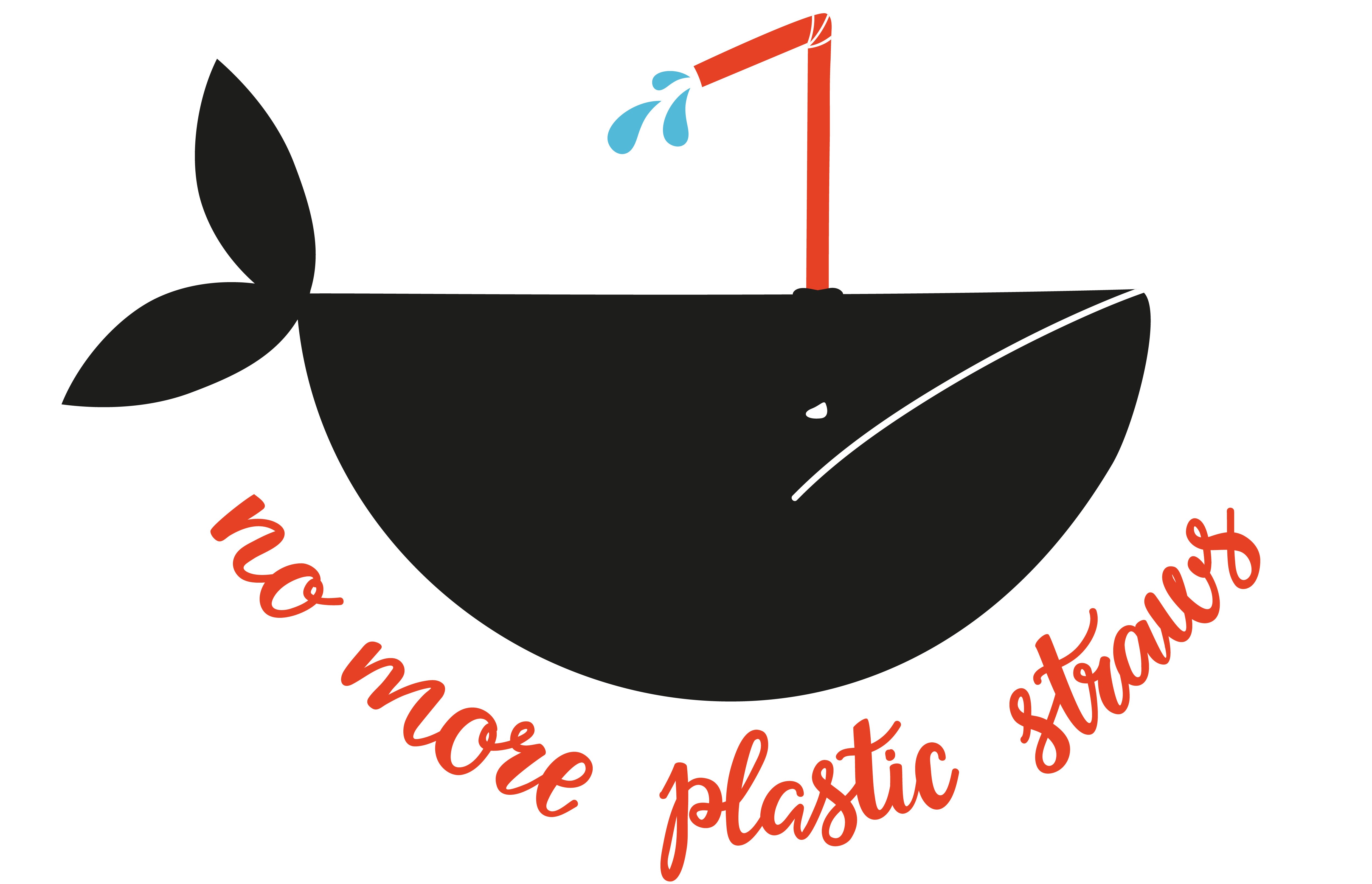
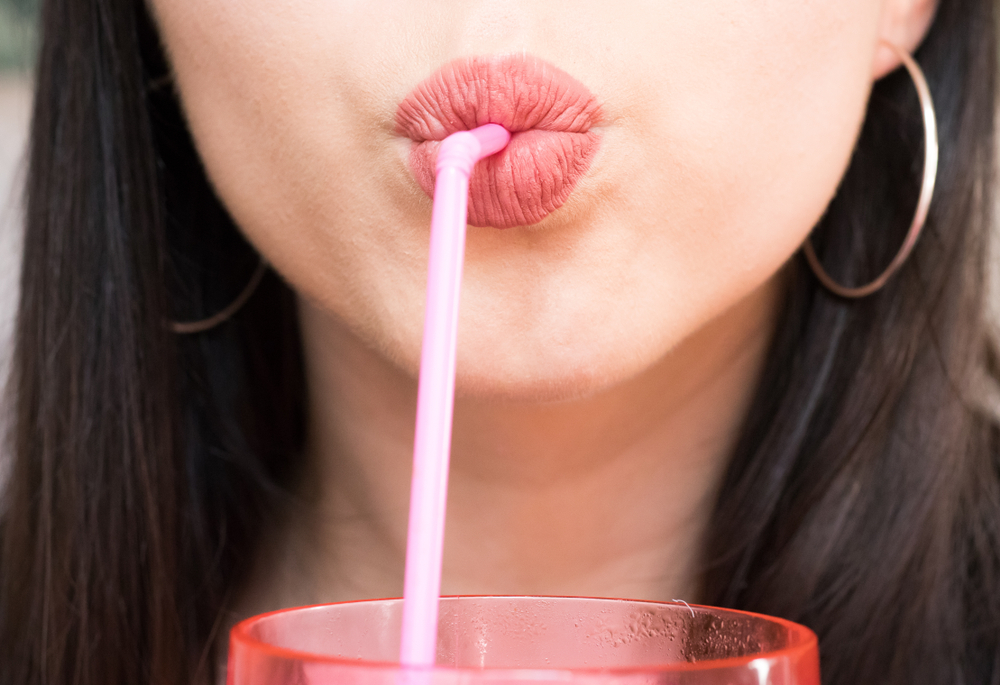
“Grandpa?”, she’ll say when she spies it, “What’s the narrow little tube with the colored stripes?”  “Oh”, I’ll smile and say, “That’s a straw. People used them back in the old days to suck drinks out of their glasses.”  She’ll ponder that for a bit and then ask, “Why wouldn’t they just drink straight from the glass like we do today?” Good question, granddaughter.  Then I’d pull up a chair, and explain the tragic tale of the drinking straw – the humble roots as a durable replacement for rye grass; the evolution into kid-friendly varieties like bendy, Crazy, candy, and spoon-ended (for slush drinks); the proliferation into seemingly-essential varieties like miniature (cocktails), “extend-o” (juice boxes), extra-wide (bubble-tea), and trendy doubles-as-a-stirrer (Starbucks).  Finally, I’d talk about the straw’s fade into obsolescence – the promoted shame over “one-time-use” products, the YouTube-sensationalized horrors of polypropylene impacts to the environment, and the headlines and bans and laws which would ultimately exterminate the little suckers.

Perhaps my granddaughter would pose another question: “Why the fuss over a little piece of plastic, when so much else in the world deserved equal-if-not-more attention?”  Exactly.  I asked myself the same question when I sat down to write this piece.

No matter where you stand on the drinking straw debate, it’s a great example of the power of social media to elevate a topic to a level of importance beyond what it might deserve.  According to those in the know, straws account for a tiny portion of the plastic waste in landfills and oceans.  But they have our attention, don’t they?  As Plastic Pollution Coalition CEO Dianna Cohen puts it, “We look at straws as one of the gateway issues to help people start thinking about the global plastic pollution problem.”  “Gateway issue” – I like that.  The straw is simply the catalyst, easing people into an awareness of a much more significant problem.

As for the demise of drinking straws, we’ve moved from opinion to discussion to debate, and finally to laws and bans to discourage their use, yet we’ve hardly reached a resolution.  An effective replacement for the plastic straw simply doesn’t exist.  Paper straws durable enough to last the life of the drink don’t decompose much faster than plastic.  Paper straws cost five times as much, so the restaurant industry will have to swallow hard.  Reusable straws have their merits (ex. metal, glass), but unless restaurants budget them to the bottom line, we’re facing a massive change in behavior.  You’re already leaving the house with your car keys and your phone, but hey, don’t forget that reusable straw.

More likely, straws will simply disappear altogether.  As we speak, we’re in that awkward middle-ground where straws are still an option in restaurants, but more and more establishments (and entire states) mandate the customer must ask for one. From there, you can make the easy leap to guilt-by-association – as in, sure you can have a straw, but do you really want to be seen using one?  The only resolution in my mind is to do without, like we do hot coffee, beer, and wine.  Time to drink everything straight from the glass.

Some content sourced from Wikipedia, “the free encyclopedia”, and articles from Business Insider, Eater, and Sprudge.

Kindling the Fire

Last Sunday, in the midst of a sleep-in/no-alarm kind of vacation, my dad dragged my wife and I to early church. That meant falling out of bed by 7 and leaving the house by 8:15. Not my idea of a relaxed schedule, to be sure. On the drive to church and all through the service, I found myself in a fog and close to nodding off (the meh sermon didn’t help). Even at brunch afterwards – stoked with a double-dose of mimosas – I couldn’t seem to shake the cobwebs. It wasn’t until much later in the day I realized something significant went missing from my daily routine. I hadn’t had my morning coffee.

Morning coffee is more a habit than an addiction for me.  Or so I thought.  It wasn’t so long ago I occasionally substituted juice or water, and the day proceeded as normal.  Sunday’s drowsiness made me pause.  Maybe the impact of caffeine is more significant as you age.  Maybe drinking a hundred cups (or more) in a hundred days creates a dependency.  As they say, caffeine is “the world’s most widely consumed psychoactive drug”.

While I debate the impact of no caffeine today, I can absolutely attest to the impact of lots of caffeine, with two examples of inconvenience.  For me, caffeine sends a loud-and-clear, pulsing, Times-Square-sized announcement to my bladder saying, “IT’S TIME TO PEE.”  Not in fifteen minutes.  Not in fifteen seconds.  Now; as in – get up and go NOW.  I better have my path to the bathroom mapped out, and that door better be open.  It’s like clockwork biology, forty-five minutes after that first coffee sip.  Remarkably, the experts still question whether caffeine is a diuretic AND they wonder whether the amount of liquid expelled is equivalent to the amount consumed.  I emphatically answer “yes” and “MORE”.  With all the expelling, it’s a wonder my body doesn’t dry out and disintegrate.  No matter; it’s a small price to pay for my daily drug.

Here’s the second impact of caffeine.  Beware the cup of coffee (or any choice from Starbucks) after three in the afternoon.  Let that late-day caffeine hit take hold and you’re in for a long night.  I can very dependably fall asleep within five minutes of hitting the pillow except when my coffee intake is late-day (and on that note, why is upscale after-dinner restaurant coffee so good?).  I toss and turn like laundry in the wash cycle, staring at the ceiling and ruing my beverage mistake.  Then I stare at the bedside clock.  What a pretty clock it is.  Such colorful numbers.  It’s fun to watch the numbers change every minute.  Every hour.

Let’s review.  Assuming I plan my bathroom trips and lay off the coffee by mid-day, I can safely embrace my caffeine habit.  And if “habit” concerns me at all – its synonyms include “addiction” after all – here’s some good news.  Four cups a day is ideal for heart health, according to recent research by the Germans (my new favorite people).  Not up to four cups, but exactly four cups, netting you about 300 mg of caffeine.  Four cups is also the equivalent of a Starbucks “Venti” (the Nitro cold brew somehow packs in 469 mg of caffeine) but I steer clear of the big cups.  Wouldn’t want to get “addicted”.

We’ve only been talking about coffee here, but thankfully caffeine is found in only a handful of other foods and drinks.  What starts as a naturally-occurring compound in plants finds its way to teas, cocoa, cola soft drinks, energy drinks, and over-the-counter meds (i.e. cough syrup).  The only one I touch is cocoa (my chocolate habit justifies its own blog post).  So, unless I exceed my daily two-square ration of a Lindt 70% Cocoa Excellence Bar, my caffeine intake is all about coffee.

If you count milligrams the way you count calories, know that 300 of caffeine is the threshold to avoid anxiety and panic attacks.  A warning sign might as well pop up after 300 saying, “STOP!  Proceed with caution”.  It’s like there’s this sweet spot with coffee – an oasis between falling asleep in church and earning the jitters – that kindles my fire.  Gives me justification to start every day with a cup of coffee.  Or four.

Which Came First?

When my son wrapped up his undergraduate college years, he gradually reduced the stock in his refrigerator to just about nothing.  Living on a shoestring budget, he wasn’t about to purchase food he didn’t need after graduation.  I’ll never forget the phone call one of those last couple of nights.  He told us – rather proudly – he’d made a meal with two eggs… and a can of processed chicken.  A “chicken scramble” if you will.  To which I replied, “ick“.  If we’d been on FaceTime he’d have seen my face turn a lovely shade of green.

Some foods were just not intended to be consumed in the same bite.  I can’t think of a better example than chicken and eggs.  All chickens hatch from eggs and all chicken eggs are laid by chickens, so why on earth would we eat them together?  Can we skip the biology class and agree – at least by one definition – chickens and eggs are essentially the same “thing”?  And really; how often have you found them side-by-side on your breakfast plate?  Hopefully never.

The memory of my son’s kitchen creation locked itself away in my brain until recently, when Starbucks decided to meddle with their sous vide egg bites menu.  Not content to offer just “Egg White & Pepper” and “Bacon & Gruyere”, Starbucks now offers “Chicken Chorizo Tortilla”, described as “perfectly cooked, cage-free sous vide egg bites, including chicken chorizo, and…” and… and… and I stopped reading right there.  I couldn’t get past eggs and chicken in the same offering, gag reflex included.  I’m not sure I’ll order any egg bites anymore.

To lend credence to my chicken-OR – not chicken-AND – claim, I turned to one of the experts in the field: fast-food icon Chick-Fil-A.  CFA offers an extensive breakfast menu (Starbucks does not) so I figured, a restaurant built entirely on chicken would never offer eggs mixed up with chicken.  Wrong-o.  To my disbelief (and horror), two entrees loom large on CFA’s breakfast menu where you can get plenty of both.  Choose from the Egg White Grill: a breakfast portion of grilled chicken stacked with freshly cooked egg whites on an English muffin; or the Chicken, Egg, and Cheese bagel: a boneless breast of chicken along with a folded egg and American cheese.  Seriously, who buys this stuff?

I’m not sure who said it, but some would assert “the chicken is merely the egg’s way of reproducing itself”. (The same applies to the caterpillar’s “use” of the butterfly.)  I like that, evil as it sounds.  Kind of devalues the chicken, but also kind of proclaims: the egg came first.  And what about that quandary, “which came first”?  There’s not much to discuss if you really think about it.  Make the simple choice – science or religion.  Science votes for the egg, laid by something that wasn’t quite a chicken (but evolved into one once the egg hatched).  Religion votes for the chicken, created by a higher power in those first six days.

Maybe chicken + eggs is the greatest thing never eaten and I just don’t know what I’m missing.  I suppose I could ease into the idea one entree at a time.  Start with corned-beef hash… with fried eggs.  Move to full-on steak… and eggs.  Swallow hard over chicken… and waffles (eggs in the batter).  Then, at long last, order that new sous vide egg bite from Starbucks.  Yeah right, that’ll happen… as soon as we all agree on “which came first”.

Creatures of Habit

WHAT IF Starbucks decided to close its stores for a whole day? Imagine, you’re driving to work with early-morning brain fog, you pass by the most convenient Starbucks, and from the street you see a big “CLOSED” sign behind the glass.  Not to be denied, you head for the drive-thru, but your access is blocked by green cones (everything matches at Starbucks).  You’re still in denial, so you pull into a parking space, get out of the car, and peer through the darkened windows. Horrors. Your 7×24 caffeine-addiction fixer-upper (well, almost 7×24, but who craves coffee at 3am?) has taken the day off.  Are you getting a case of the jitters just reading this paragraph? Is this a Catch-22, because you can’t think up another coffee option until you’ve actually had your morning coffee?

We had a little “sip” of this scenario earlier this week, didn’t we?  For reasons that were relevant-today gone-tomorrow (maybe), Starbucks took the high road and delivered several hours of anti-bias training to its employees, closing 8,000 locations in the process.  For one interminably-long afternoon and evening on Tuesday, you had to search a lot harder to find your grande no-whip Caramel Macchiato.  When Starbucks’ announcement lit up the front-page headlines last week, my first thought wasn’t, “the lines are about to get longer at the bathrooms” (though admittedly, it’s a legitimate concern since I’m a man of frequent visits), nor was my first thought, “we’re about to see a lot of, uh, interesting people at Starbucks now” (because we already do, don’t we?)  Rather, my thought was, “how the heck are we gonna cope with several hours of no-Starbucks, when 100 million patrons – you read that right – frequent their stores every week?”

In a related headline, an economist claimed this one-time Starbucks shutdown would cost the company $12 million and be a boon for “coffee competitors” like McDonald’s and Dunkin’ Donuts.  Laughable.  I know those restaurants have their fair share of coffee allegiance these days – if you consider “fair share” less than 1%.  No, the world didn’t rotate off its axis on Tuesday, but I also won’t promise patrons didn’t line up at the Starbucks drive-thru hours before the open on Wednesday morning.  Our Starbucks habit was ingrained at an early age, well before the competition stepped up.  Howard Schultz is a genius.

More likely, the impact of Tuesday’s shutdown is what I refer to as the “Chick-fil-A effect”.  If you’re a fan of CFA, you’ve known from the get-go their stores close on Sundays.  It’s a simple building block of the founder’s philosophy: CFA employees should spend their Sundays resting and at worship, with family and friends.  Now, you might pass Chick-fil-A on a Sunday and think, “Closed.  What a nice gesture – more companies should do that.” But I’m pretty sure you’re actually thinking, “Damn – I was really craving a #1 meal, hold the pickle, w/ lemonade”.  And that thought will stay with you until Monday. And Tuesday, And Wednesday, or whatever day you next pass by Chick-fil-A.  Maybe their alt-slogan should be, “Closure Makes the Heart Grow Fonder” or something like that.  It’s as much a business strategy as a thoughtful benefit for CFA employees.  On that note – trust me – Starbucks will make up Tuesday’s lost business by the time I hit the “publish” button on this post.

Nothing Bundt Cakes (“Home of the Most Delicious Bundt Cakes Ever!”) is kinda sorta the same animal as Chick-fil-A.  For reasons suspiciously vague, NBC allows its franchisees the option to close on Sundays.  Google your NBC’s hours before you head over for a white chocolate raspberry bundt or a lemon bundtlet.  The next time you find their doors unexpectedly locked, I predict your dreams will be relentlessly invaded by dozens of little flying bundtinis – at least until you satisfy your craving with a purchase.  Don’t say I didn’t warn you.

Here’s the irony about today’s musing: I’m typing my post from a Starbucks.  I’m sitting quietly at a table, enjoying a grande cold brew with a touch of cream.  The baristas are unusually perky (surely a side effect of their recent training).  The restaurant feels quiet and “inclusive”.  In other words, I didn’t cry over spilt coffee on Tuesday. Instead, I just proved my theory.  a) Tuesday afternoon I couldn’t go to Starbucks.  b) I wasn’t even planning to go.  c) The store closures were in the headlines, which inserted “caffeine denial” into my brain.  d) Here I am, just two days later, getting my Starbucks on again.

Touché, Mr. Schultz.

Dream Puffs

Last year, Starbucks surpassed Subway as America’s #2 restaurant, measured by gross sales (McDonald’s is still top dog).  I don’t consider Starbucks a place to “dine”, so second-place is impressive.  Then again, Starbucks’ bakery case has matured since its initial offerings.  There are temptations-a-plenty now, en route to the barista.  The traditional breakfast items share space with yogurt parfaits, fruit-and-cheese boxes, “fold-over” sandwiches, and entree-size salads.  But it’s the smaller offerings I want to talk about today.  Look closely through the glass – you’ll see sous vide egg bites and Bantam’s bite-sized bagels.  Those little guys could be the future of fast food.

egg bites

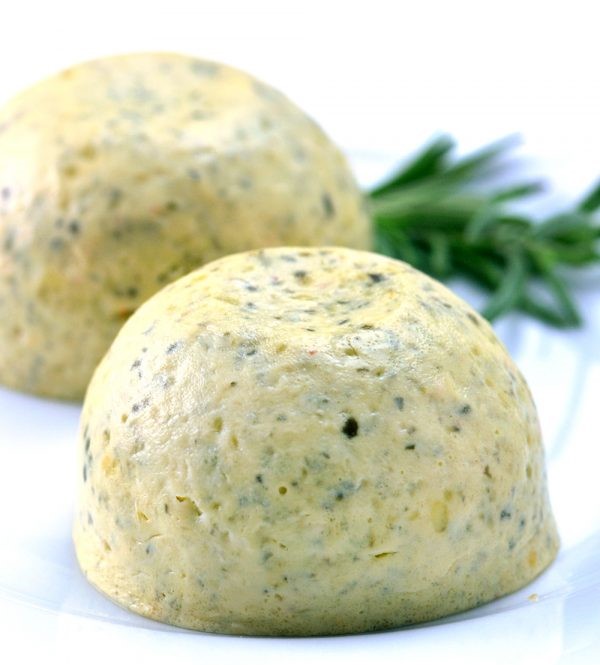
I haven’t tried the mini bagels, but Starbucks wins me over with its egg bites.  The first time I gave them a whirl, my wife and I were in the middle of Lent, trying to find alternatives to the foods we gave up.  Egg bites to the rescue.  The sous vide prep means cooked in water, with nothing but a bit of spinach, red pepper, and cheese mixed in for flavor.  Simply elegant (elegantly simple?), and the light, fluffy texture makes them as delicious as they are convenient.

Three Little Griddles
Æbleskiver

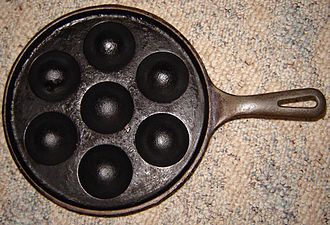
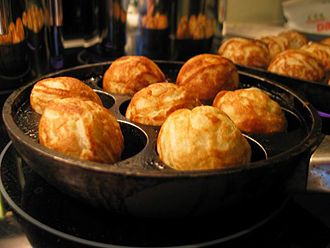
Now let’s talk about real breakfast foods.  Last weekend, my wife and I went to a nearby restaurant called Three Little Griddles.  Much to my delight, Griddles had Æbleskiver on the menu.  If you’re Danish, you already know what I’m talking about.  Æbleskiver is heaven-sent breakfast: puffy little balls of pancake with a sweet surprise in the middle, finished off with a delicate dusting of powdered sugar and a side of raspberry jam.  Æbleskiver is Danish for “apple slices”, but you’re more likely to bite into a strawberry or a fruit-compote filling instead.  Three Little Griddles also offers Æbleskiver with an egg/bacon filling, coated with a maple-syrup glaze and powdered sugar.  A complete breakfast!

NOT Æbleskiver

If you haven’t heard of Æbleskiver and the first thing you thought of was “doughnut hole”, shame on you.  Doughnut holes don’t even qualify as poor man’s Æbleskiver.  Doughnut holes are a clever product designed to get you to buy more when it appears you’re buying less (think “fun-size” candy bars).  I have two issues with doughnut holes.  One, they’re not actually the “hole” of a solid doughnut, but prepared and baked separately instead.  Two, they’re not shaped like a doughnut hole should be (picture it – something more like the hub of a wheel).  They should be called doughnut balls.  But enough of this talk; I’m wasting words.  Let’s keep the focus on Æbleskiver.

My first taste of Æbleskiver came when I was little, in the Central California village of Solvang.  Solvang is like, well, a kid’s “Little Denmark” – a town small enough to walk around, with an overabundance of shops selling toys, candy, and ice cream.  Several windmills spin slowly above Solvang’s high-pitched shingle rooftops.  A church sits prominently on the edge of town.  A small park serves as the town square, complete with a bandstand-sized gazebo.  All that’s missing is some water-filled canals and cobble-stoned streets.  But meanwhile, there’s plenty of Æbleskiver.  Some restaurants even bake them out on the sidewalk, rotating those little dream puffs to perfection in their unique iron skillets.

If you credit the Danes with the invention of ball-shaped food, the rest of the world takes a distant second with its imitations.  China makes a spherical egg-based fruit-filled waffle called Gai Daan Jai.  Japan makes a variety of savory ball-sized snacks called Takoyaki. (Savory? Yuck.)  And America makes doughnut holes called Munchkins.

As if Æbleskiver isn’t cool enough as a food, it’s also a cool word with a unique spelling (note the “letter” Æ).  Perhaps Starbucks will start carrying it, along with the egg bites.  I’d buy both and a coffee for a complete breakfast.

Finally, if Æbleskiver has you wondering what other delights Denmark has to offer, consider ÆblekageÆblekage is “apple charlotte” – stewed sweetened apples layered with butter-roasted bread crumbs and crushed makroner (an almond-flavored meringue), topped with whipped cream and red currant jelly.  Oh my; sounds like dream stuff.

Æblekage

Some content sourced from Wikipedia, “the free encyclopedia”.

Crafts of the Hand

Several months ago, my wife and I went to dinner at one of our favorite Mexican restaurants – a place we frequent every few weeks.  As we pondered margarita options, we asked the waiter for an order of table-side guacamole, a delicious specialty and a great way to kick off the meal.  Much to our disappointment, our waiter informed us we could no longer get guac table-side; rather, it would come already prepared and straight from the kitchen.  Sigh.  Add another item to the demise of handmade food and beverages.  Rekindle the pour-over argument.

What’s the “pour-over argument”?  It’s perhaps the most contemporary example of the struggle between handicraft and automation.  At your local coffee bar, most drinks are poured-over, meaning individually-prepared using a single paper filter, adding the coffee grounds and finishing with a slow pour of the water.  If your coffee arrives with foam-art, consider it a pour-over.  The argument asks whether it’s worth the wait for an individually-prepared coffee, when a large-batch machine can produce the same result in a fraction of the time.  One estimate claims large-batch can produce 100 coffees in an hour, while a barista creates less than ten.

I’m not here to defend the pour-over, but simply to discuss it.  In fact, my first thought when I heard “pour-over” is what you see in the photo above.  Admittedly, I love the speed and consistency of Keurig’s K-Cup’s, and I’m an unashamed frequent-flier at Starbucks.  But that’s not to say there’s not a chair at the table of life for pour-over’s.  Even if the quality of handmade can’t be distinguished from large-batch (taste test, anyone?), what about the calm of watching “drink-art” creation, and the opportunity to socialize with the barista?  Perhaps it’s the fringe-benefits making pour-over’s the healthier option.

Table-side guac is just one example of “pour-over’s” threatened by today’s demand for speed and efficiency.  If I ask you to think of a product previously handmade but now produced by automation, I’m sure you can name several.  Milkshakes. Beer. Even pizza, which can now be prepared start-to-finish by a robotic chef.  But the flip-side of robots is advertisement focused on food-prep the old-fashioned way.  “Handmade” milkshakes.  “Craft” beers.  “Fresh-squeezed” lemonade.  And pour-over coffee.

Business’s bottom line loves the idea of automation.  Labor is typically your most expensive line-item, so who would argue with removing it?  Well, maybe those willing to pay for the experience.  At your finer restaurants, you can still find table-side salads (Caesar), entrees (Chateaubriand or Steak Tartare), and flaming desserts (Baked Alaska, Bananas Foster, Cherries Jubilee).  At Sunday brunches you can still enjoy made-to-order omelettes and waffles.  With those examples, I’d argue you’re not just paying for the food.  You’re also paying for a slow-down moment: a chance to enjoy a chef-artisan do his/her thing while engaging in a little conversation. As a recent Wall Street Journal article puts it, “[pour-over]… is more about delivering peace in a fast-paced time”.

Here’s my plea.  The next time you’re having something prepared in front of you – whether a simple burrito at Chipotle or an elegant Steak Diane adjacent to your white-clothed table, put away the phone, take a deep breath, and just enjoy the moment.  Have a chat with whomever is preparing your meal.  It’s an experience worth poring over.

Sweet Charity

Several times during the recent year-end holidays, I passed through the drive-thru at Starbucks, and as I paid, I asked the cashier to include the purchases of the car behind me. I’ve been participating in this Starbucks-wide trend for several Christmases now, and it brings me an inexplicable feeling of goodwill and satisfaction.  The goal of the effort is anonymity. Or to put it more comprehensively, blind faith.

Blind faith is defined as “belief without true understanding, perception, or discrimination”.  That’s powerful.  “Faith” is a spectrum that starts with basic trust and ends with the highest forms of religion.  But add on “blind” and it elevates the meaning.

Buying a free cup of coffee at Starbucks is the easiest form of blind faith, like handing over a dollar to a beggar.  No judgment as to “what happens next” allowed.  But the intention behind an act of blind faith is worth a bit of exploring here.  Dissecting my Starbucks gesture, I note the key components.  First, I don’t waffle over the amount of the purchase I’m covering.  That’s the blind faith in choosing to pay in the first place – it shouldn’t matter how much.  One time I looked in the rear-view mirror and saw a car with four passengers.  Their bill was well over $20.  But my decision had been made before the car even pulled up behind me, so the point was to stick with it.  Another time my recipient was a well-dressed woman wearing sunglasses and driving a recent-model BMW.  Again, no judgment.  Pay for her coffee and move on.

The second component concerns my “getaway”.  As I’m waiting for my own purchases I’m considering my escape route – the path that gets me away from Starbucks as quickly as possible, with enough turns and traffic lights to deter my beneficiary.  My goal is to remain anonymous, and unless the person behind me memorizes my license plates (or something else unique about my vehicle), I’ve achieved a moment of goodwill and will never see them again.  Frankly, it would spoil the whole effort if the car pulled up next to me at a nearby red light.  They might offer their gratitude, or they might offer to pay me back.  They might even be annoyed, as if I had no business intruding on their “personal life”.  I’d rather not know.  I prefer to lean on blind faith that I brought an unexpected smile, or delivered a tiny give-me-a-break in an otherwise trying day.  Maybe they’ll even “pay it forward”, as a string of 374 consecutive cars did at a Starbucks in Florida back in 2014.

Come to think of it, there’s a third component in the Great Coffee Giveaway.  Never expect the gesture in return.  In the countless times I’ve driven through Starbucks during the holidays, I’ve never thought to myself, “I hope the car in front of me picks up the tab”.  If I knew this was happening, I might just order a half-dozen breakfast sandwiches and several cake-pops to go with my Flat White.  Just kidding, of course.  I hope the thought never crosses my mind.

This week and last – no surprise here – I’ve read dozens of blogs about resolutions for the New Year.  Allow me to contribute my one-and-only.  I’m going to lean on blind faith in the coming year, whenever I have the chance to give someone a break.  Remember the rules: 1) No conditions on the amount (read: cost) of the help.  2) Keep it anonymous, as a) recognition defeats the spirit, and b) giving simply for the sake of giving might inspire “pay it forward”.  3) Don’t expect a similar gesture in return.  That’s not to say you won’t be pleasantly surprised when someone buys your Starbucks coffee one of these days.  You’ll just know there were no hidden agendas.