Cold Brew

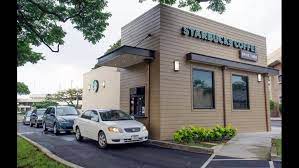
Seemingly overnight, a new drive-thru named 7 Brew showed up next door to our local supermarket.  A quick glance as I drove by suggested their slogan: “Come for the coffee, come again for the people” is on the mark, with more employees dancing around the drive-thru lanes than making drinks in the petite building itself.  7 Brew advertises an “experience” as much as it does a menu of coffee and energy drinks.  It’s just the latest concept to steal market share from Starbucks.
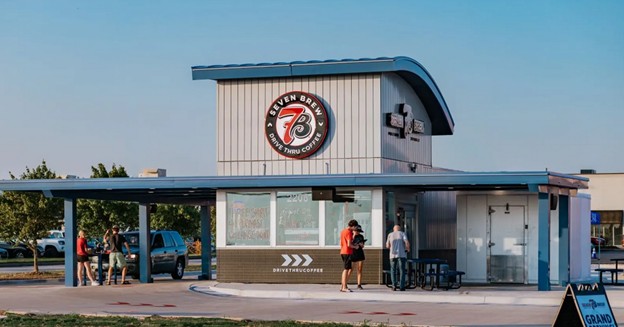
7 Brew

Did you know today is “Red Cup Day” at Starbucks?  Red Cup Day is the coffeemaker’s nod to the beginning of the holiday season.  Buy a Starbucks “holiday” drink and you’ll also receive a festive reusable cup – more distinctive than the usual white ones.  The red cups suggest Christmas comes early this year, and encourage the purchase of peppermint mochas, eggnnog lattes, and iced gingerbread chais.  Somewhere in all that there might even be coffee.
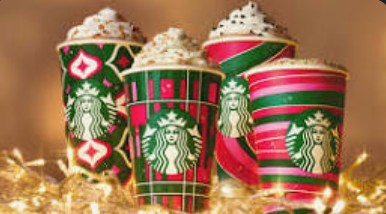
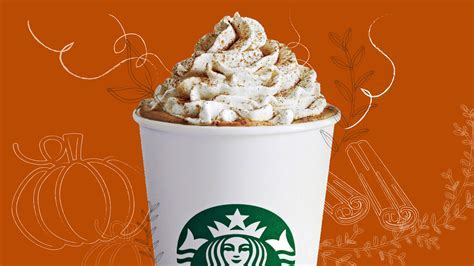
I admit, the Starbucks Chestnut Praline Latte really is Christmas in a cup.  The drink tastes of the same spices you’ll use with Grandma’s cookie recipes this season.  And on a recent trip through Chicago O’Hare, my wife and I caved to a couple of Starbucks’ ever-popular Pumpkin Spice Lattes.  But here’s my point.  Starbucks is no longer my go-to for coffee drinks.  It never was my go-to either, but there were plenty of morning commutes when I couldn’t pass up a Flat White and a couple of egg bites.  Now I drive by without pause, the same way I’ve done so with McDonald’s for decades.  It begs the question: has Starbucks become passé?

There are signs suggesting we’ve already put Starbucks in the rear-view mirror, even if 38,000 locations still dot the globe.  Like 7 Brew, Starbucks has always tried to deliver an experience as much a drink.  Come on in.  Hang out for awhile.  Even if you don’t, peruse all the “merch” while you’re standing in line.  Chances are pretty good you’ll spend more on logo items and baked goods than coffee.

This year, Starbucks features a 20-oz. “Bearista” cup.  It’s a refillable glass ontainer with a straw and it’s being marketed as a collectible.  You’ll find these bears at your nearest Starbucks for $29.95.  Or maybe you won’t, because they seem to be disappearing as fast as they’re put on the shelves.  If you’re a little desperate, find one on eBay for $500 or more (coffee not included).

To me that’s a good way to describe Starbucks these days… a little desperate.  They’re closing stores without drive-thru lanes, which suggests they’re trying to reduce the money they spend on leases.  They’re laying off retail and non-retail employees, the typical corporate strategy to try to do more with less.  And they’re coming up with bear-shaped cups the size of a Starbucks “Venti”, so you’ll purchase their largest coffee when you wouldn’t have done so with a regular cup.
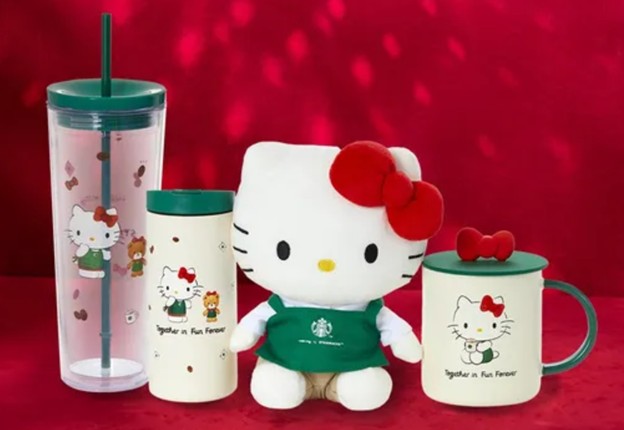
If you think the “bearista” is cute – and would pay $29.95 for it – how about “Hello Kitty” products?  Coming soon, you can buy a “plush” wearing a Starbucks green apron, and any one of five Hello Kitty containers, from water bottles to ceramic mugs.  Each of these runs you $30 or more (again, without the coffee).  Cats and coffee?  It’s a desperate strange marketing strategy, perhaps aimed at a generation of consumer that seeks something more trendy than coffee in a red cup.

This year, the Pumpkin Spice Latte showed up on the Starbucks menu on August 26th; hardly what I’d call “fall”.  Their Christmas-y drinks debut today, fully two weeks before Thanksgiving.  That’s stretching the seasons a little.  But let’s say I still splurge for a Grande Flat White, a couple of Egg Bites, and a slice of Iced Lemon Loaf.  I’ll pay $20 before I even consider the purchase of a “bearista” or a kitty.  It may be time to move on from the red cups.  Maybe I’ll give 7 Brew a try instead.  $7 gets you their smallest size… even pricier than Starbucks.  No guarantee you’ll find any coffee in that cup either.

(Coming next week: more updates on the LEGO Trevi Fountain!)
It’s Thanksgiving Season (#2)

So here we are, nine days into the Thanksgiving season already.  Didn’t the time positively fly  (even with the extra hour last Sunday)?  Have you already booked your travel to visit loved ones later in the month? Have you already made pumpkin pie (because you can never have enough pumpkin pie, so why wait until Thanksgiving Day)?  Whatever you’ve done for the past nine days, I’ve already hinted at the three “F’s” of Thanksgiving: food, family, and friends.  Now let’s add a fourth.

Not football.  Not fun runs.  The most important Thanksgiving “F” is full; as in “full of thanks”.  You are thankful this season, aren’t you?  If you joined my bandwagon from last week’s post, you already have nine reasons (or nine people) to be thankful for.  Keep that list going until the big day, band-wagoner.

Now that you know the four (not three) “F’s” of Thanksgiving, let’s visit five facts you probably don’t know about the holiday.  Here’s a morsel for your taste buds: the very first Thanksgiving feast probably included lobster, deer, swans, and seals.  PETA and I struggle with those last two, but the list stands to reason because we’re talking pilgrims and Indians on the coast of Massachusetts, four hundred years ago, making merry for three straight days.  Those flavorful “entrees” were abundant back then, with nary a turkey to be found.

Too cute to eat!

Remember last week’s mention of Abraham Lincoln making Thanksgiving a holiday?  That was in 1863, declared as every last Thursday in November.  Seventy-odd years later, Franklin D. Roosevelt moved Thanksgiving Day one week earlier to extend the shopping season during the Great Depression.  But some states pushed back on Roosevelt’s pushback so in the 1940s you had several years with multiple Thanksgiving Days (more turkey for everyone – hooray!)  Eventually the compromise was made as we know it today: one Thanksgiving Day, the fourth Thursday of every November.

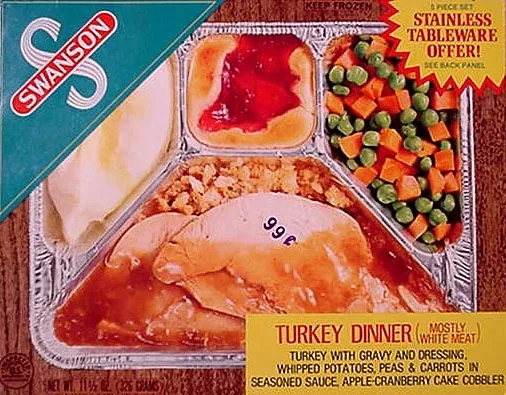
My wife and I love dinner in front of the TV, don’t you?  But have you actually eaten a TV dinner?  You know, the frozen full meal in a box, with the tiny portions of generic food in the partitioned aluminum-foil tray?  Well, you can thank Thanksgiving for TV dinners.  Swanson overestimated the demand for turkey one year, and in a totally give-that-person-a-raise move, converted 260 tons of leftover turkey into 5,000 hand-packed dinners, complete with dressing, gravy, peas, and sweet potatoes, at a mere $0.98 a pop.  A year later they’d sold ten million of them.  Voila – the birth of the TV dinner.

Trivia question: What teams always play football on Thanksgiving Day?  Trivia answer: the Dallas Cowboys and the Detroit Lions.  Better trivia question: What teams first played football on Thanksgiving Day? Answer: Yale and Princeton way-y-y-y back in 1876.  I didn’t even know football was a sport in 1876.  As for games played on Thanksgiving Day, I would’ve guessed they started like, a hundred years after that.

If your Aunt Betty spends a little too much time at the holiday punch bowl and thinks it’s funny to start gobble-gobble-gobbling at your kids, you might want to remind her females don’t gobble.  Er, female turkeys that is. The signature Thanksgiving sound is reserved for the males of the species.  Female turkeys have been known to purr and cackle instead.  This is good information for your Aunt Betty (the purr , not the cackle).

Pay it “backward”

Okay, enough what-you-didn’t-know fun for today.  Let’s wrap with another nod to being thank-full (or, if you will, having “gra-attitude”).  I love this time of year because Starbucks gives away free coffee.  Okay, so they’re not really giving away free coffee.  Instead, drive-thru patrons continue the seasonal tradition of paying for the car behind them (and driving off quickly so as to remain anonymous).  I go to Starbucks more often just to participate (as payer, not payee).  So, for whatever you are grateful for, share that happy feeling with the people behind you in line.  Not a patron of Starbucks?  Doesn’t matter; any drive-thru will do.  So c’mon, get grateful already!

Some content sourced from the October 2023 Town & Country Magazine article, “14 Surprising Facts You Never Knew About Thanksgiving”, and Wikipedia, “the free encyclopedia”.

Selfish Shopping

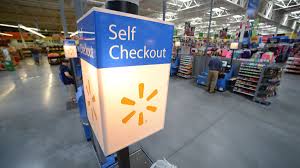
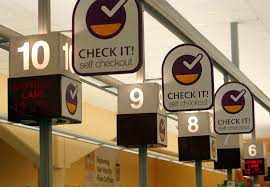
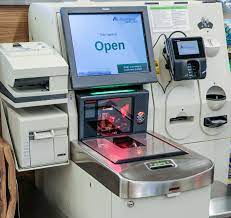
The hustle and bustle of the holiday season is on full display this week.  We’ve reached the critical timeframe – ten days out – where packages must be sent if they’re getting to destinations by Christmas.  We’re making lists, not just for Santa but also for last-minute purchases.  Now here’s the good news, weary shopper: no matter where you’re spending your holiday dollars, self-checkout is often an option.

If you’re like me, you beeline to self-checkout when you’re done shopping.  You still have “the control”, as people like to say (who also prefer to drive instead of fly).  With self-checkout you believe you can scan and bag faster than those who are paid to do so.  Maybe, but consider the decisions you have to make in the process::

  1. When do you choose self-checkout?  Most of the time, (especially if the checker-bagger lines are long) but what if you have a lot of items?  Self-checkout is awkward with a full shopping basket (ignore the stares).  One time my wife and I snagged side-by-side registers, put the cart between them, and scanned away.  Against the rules, you say?  What rules? 🙂
  2. Where do you stand in line?  This is touchy territory, shopper.  If you face the typical arrangement where one set of registers sits opposite the other, with enough open space in between, you can get separate lines for each set… which gets ugly when a person assumes he/she is entitled to the next available register on either side.  Prepare for battle.
  3. Which register do you choose?  Murphy’s Law of Self-Checkout: One of the registers doesn’t work.  You just assumed it was available because you couldn’t see the “out of order” screen until you were right in front of it.  Now you have to turn around and reclaim your place in line.  Again, ignore the stares.
  4. When do you alert the self-checkout human assistant (oxymoron?)  How many times have you gotten ahead of the system only to hear, “unexpected item in bagging area” or “please wait for assistance”?  Here’s a tip: don’t wait for assistance.  Most of the time the register is trying to catch up and just needs a little more time.  Congrats, you’re faster than a computer.

Hard to believe, but retail self-checkout just celebrated forty years.  We shoppers been doing what one writer describes as “quasi-paid unforced labor under surveillance” since the 1980s.  I remember how I wasn’t thrilled about the concept when it debuted.  Back then I thought, “Why do I have to do the checking out when someone else is paid to do it for me?”

I was even more annoyed when the airlines put up their “selfish” kiosks and dared travelers to check themselves in and print their own boarding passes.  How quickly we adapt.  Today I’ll choose self-checkout any time I’m given the option (even though surveys say 67% have a bad experience).  In fact, we’ve been conditioned to self-checking out ever since the debut of the bank ATM in the late 60s.  DIY checkout will only get more prevalent as companies reduce labor costs.  One of these days I can picture a self-checkout Starbucks, with a fully mechanical barista standing by to whip up your skinny latte.  Don’t bet against it.

Reasons we choose self-checkout (web.mit.edu)

Self-checkout is about to enter a new arena: clothing stores.  But what about those security devices attached to the sleeves or pant legs?  And how will they know if we slip an extra pair of shoes into the box? The bigger concern, however, may be image.  How will Saks or Bloomingdales look with a bank of self-checkout registers next to their fancy cosmetic counters?  Not the pretty picture of luxury shopping we’ve come to expect.

Image doesn’t matter to me so much, but my time does.  If self-checkout returns a few minutes to my day, I say sign me up.  But somewhere we’ve got to draw the line, people.  At the rate we’re going, human interaction will soon be the exception, not the rule.  It’s also not the direction a world in need of more face time should be heading.

With that, I put down the keyboard for the remainder of 2022.  Remember, the holidays are anything but “selfish”, and everything about face time.  Merry Christmas!

Some content sourced from the CNN Business article, “Self-checkout annoys some customers…”

P.S. I Love You

When it comes to snack foods, I’m not a fan of variations on a theme. Kellogg’s Pop-Tarts debuted in the 1960s with just four flavors: strawberry, blueberry, apple, and brown sugar cinnamon. Today you choose from more than twenty Tarts, including “Hot Fudge Sundae”. The original Triscuit cracker was a baked whole wheat square with a little salt. Today you’ll find a dozen Triscuit flavors on the shelf, including “Fire Roasted Tomato & Olive Oil”. Then we have the Oreo cookie. The original, of course, was two chocolate wafers sandwiching just the right amount of vanilla cream filling. Now Oreo flavors are too numerous to count.  But there’s one you can be sure is a whopping success: pumpkin spice.

 Welcome to mid-September, Americans, and the beginning of our pumpkin spice delirium.  For the next two months you can expect an endless parade of “P.S.” product advertisements.  My wife & I, we’ve already caved to the obsession.  We have a package of “Pumpkin Spice Snaps” sitting on the counter.  We have two leftover pieces of this year’s first homemade pumpkin pie sitting in our frig.  And it’s only a matter of time before my car veers off the road and right through a Starbucks drive-thru for one of their classic P.S. lattes.  (I’ll take a grande, if you please).

My daughter just reminded me Starbucks also brings back their pumpkin cream cold brew this time of year.  That’s a good one too but let’s be real: none of Starbucks’ P.S. offerings should be considered “coffee”.  We buy them for the spice and the sweet, not for the taste of the beans underneath.

Lest you think Starbucks gets the credit for our pumpkin spice mania, the record must be set straight.  McCormick and Company, they of the little red-capped spice bottles, debuted their “Pumpkin Pie Spice” in 1934.  At least three of the following are in the bottle: cinnamon, ginger, allspice, cloves, and nutmeg.  Do I have this spice blend?  Yes.  Do I use it?  Heck, no.  My wife’s family recipe for pumpkin pie contains a different proportion of the individual spices than McCormick’s, which may be the secret to its delectable flavor.  Plus, pumpkin pie is easy enough to make without having the spices combined for you. Dump the ingredients into a bowl and mix well. Pour into a pie shell.  Bake. My kind of dessert.

Starbucks can’t even take the credit for the first P.S. latte.  That accolade goes to Mexico’s Candle Company in 1995.  The Starbucks version debuted eight years later.  But you could argue Starbucks kicked off the forever-trend where we infuse P.S. into everything imaginable, including the good (Krispy Kreme doughnuts, Cheerios, candles) and the ridiculous  (lip balm, deodorant, beer).  As of 2016, “pumpkin spice consumables” accounted for an annual market of over $500M. Yep, we’re hooked.

The “Pumpkin Spice Flavored Creme Oreo” is not even an Oreo, at least not in my pantry.  Nabisco attached the word “Oreo” but c’mon, let’s just admit it’s a seasonal wolf in sandwich cookie clothing.  “Golden” Oreo cookies… with “festive pumpkin spice flavored cream” (and is it cream or creme?)  Nope, the only Oreos in my book are black and white, though I will allow shelf space for the “Double Stuf” variety.

I’m not sure why this topic caught my eye because I haven’t had an Oreo in years.  The last time I did I realized the taste was different from the Oreo of my youth.  The cookies are not as soft, and there’s less cream filling in between (which is like messing with the ratio of chocolate and peanut butter in a Reese’s, a sin for all mankind).  Like the misfortune of many other snack foods though, size and ingredients change for the sake of profit.  And new varieties pop up to keep consumers buying.  At least we’re not talking about the Lady Gaga Oreo.  You’ll need your sunglasses for that one.

Now you’ll excuse me as I head off to a doctor’s appointment.  My drive will take me past several Starbucks, which means I could be caving to my first P.S. latte of the season.  Not that I’m worried about missing out.  As soon as the P.S. season is over I can look forward to Starbucks’ Chestnut Praline latte all the way through New Year’s Day.  Now we’re talking!

Some content sourced from the CNN Business article, “Oreo is bringing back this flavor after a 5-year hiatus:, and Wikipedia, “the free encyclopedia”.

Adding Fire to the Fuel

When I step up to the counter at Starbucks for my favorites (hot: Grande Flat White, cold: Grande Cold Brew w/ a splash of cream), I find it interesting how accepting I am of the high price of my purchase. By nature I’m a penny-pincher, monitoring the family budget with a fully-focused microscope. But the scan-and-go Starbucks app makes it easy to overlook the five dollars for a single cup of coffee. On the other hand, a gallon of gasoline for the same price is literally headline news.

I don’t wonder if you’re just like me at the gas station these days because you are. When you pull up to the pump you try to ignore the unbelievable digits on the station sign and on the pump itself.  The tank in your vehicle is probably closer to “E” than usual (though my wife still refuses to go below the quarter mark).  You may even shop around now before choosing your station.  Finally, the price of your favorite octane has you considering a cheaper option, even though none of them are really “cheap”.  Just like the Starbucks menu, purchasing gas is no longer the mindless decision it used to be.

$5.00/gallon. Ten days ago the U.S. hit that preposterous average for the first time in its history.  Just two months ago the average was $4.00; two years before that, less than $2.00.  Forecasters say we’ll see a nationwide average of $6.00 before the end of the summer.  No wonder our fiery conversations are all about fuel these days.

When my car’s “low fuel” light pops on (with an annoying “DING!”) I know it’s going to take eighteen gallons to get the needle pointing back to “F”.  That’s $90 in June 2022 math.  When a stop at the gas station sets you back almost $100, you start to think about what else you could buy with the money.  Four or five dinners out.  Ten months of Netflix.  Twenty Starbucks Flat Whites.

If it’s any consolation, at least we’re talking about self-service gasoline here.  Some of you are too young to remember when a “gas station” was a “service station”.  Prior to 1980, it was all about full service.  I can still hear the ding-ding as the wheels of my parents’ car passed over black hoses, triggering the bell to let the attendant know they needed a fill-‘er-up.  Then he (yes “he” because I never remember a “she” working at service stations back then) would run over to the pump, ask what octane and how many gallons, and start the filling.  He’d also ask you to “pop the hood” so he could have a quick look at the oil, washer fluid, and engine.  Finally, he’d give your front windshield a wash, take payment (in cash, of course), and off you’d go.  For all that service, you simply rolled down the driver’s-side window and paid the man.

Full-service is still a thing of course but it’s a lot harder to find these days.  Unless you live in Oregon or New Jersey.  In those states, self-service is rarely an option.  Attendants are still the norm.  It sounds like an alternate reality for 2022 (or the scene from Back to the Future below) but two out of the fifty states stubbornly refuse to allow self-service.  They stand by the well-worn concerns: fire hazards, difficulties for the elderly or disabled, and loss of station attendant jobs.  They also charge a few pennies more per gallon because they can’t make a profit the way they used to – by offering services beyond the gas itself.  For the most part, those under-the-hood services moved to car dealerships a long time ago.

Just this week our politicians proposed a three-month “holiday” on gas taxes (and taxes on gasoline should be the subject of its own blog post).  The holiday won’t happen, though.  Our politicians won’t allow the sacrifices made by not collecting those taxes.  Or activists will wonder if gas companies will maintain the high prices and generate additional profit.  And if gas is on its way to $6/gallon anyway, it’s kind of like adding a new lane to the highway, where by the time it’s finished the traffic has increased too much to notice any difference.

Not speaking for other countries but Americans won’t be driving less in the next several months.  The travel forecast calls for more vehicle miles than even in the summers before COVID.  Our lack of efficient mass transit and our woes at the airport (can you say, “canceled flight”?) will, uh, drive us to drive.  In other words, we’ll pay $5, $6, maybe even $7 before we’ll pull back on our stubborn habits.  Just like I will, admittedly, at Starbucks.

Some content sourced from the CNN Business article, “Why New Jersey and Oregon still don’t let you pump your own gas”, and Wikipedia, “the free encyclopedia”.

It’s Been a Silent Night

When singer Amy Grant released “Tennessee Christmas” in 2016 it’d been years since she recorded a holiday collection. In fact, her platinum-level “A Christmas Album” arrived way back in 1983; her triple-platinum “Home for Christmas” in 1992. “Tennessee Christmas” didn’t achieve platinum, gold, or anything else for that matter.  As my brother said at the time, “She never should’ve done it.” He’s right. Amy should’ve released just “I Need a Silent Night” and called it good.

Amy Grant can still pen lyrics (even if her voice isn’t as strong as it used to be).  “I Need a Silent Night” asks us to find the true meaning of Christmas in the midst of the inevitable commercial distractions.  Instead of “December traffic” and “Christmas rush” and “Shopping and buying and standing forever in line”, Amy asks:

I need a silent night, a holy night
To hear an angel voice through the chaos and the noise
I need a midnight clear, a little peace right here
To end this crazy day with a silent night

As if we’ve been granted Amy’s wish (ha), this season has been remarkably placid.  The message of Advent is always “prepare” and that’s what we’re doing.  It’s just – unlike most years – we’re not using words like “rush” and “chaos”.  We’re experiencing more of a “silent night” instead.

Our Christmas prep never begins until after Thanksgiving (I stand on holiday principles here) but by the following Saturday I was eagerly unpacking the decorations and streaming holiday tunes.  More importantly, I also found myself saying “yes” to just about every reason for the season:

  • Since we can’t have in-person services our church offered Advent wreaths to build and display in whatever room you “go to church” in at home.  We asked for a wreath as soon as they were available.
  • A family involved in our local 4-H advertised festive bags of scented pine cones as a fundraiser for their activities.  We bought two bags and they delivered them straight to our door.  There’s nothing that says “Christmas” like the tiny voice of a five-year-old saying, “Thank you, Mr. Wilson!”
  • Our church set up a virtual giving tree where you can pick presents from a list, buy them, and return them to the church for distribution to needy families.  I bought six.
  • We’ve been baking up a kitchen storm so we decided to put together plates of cookies for our neighbors and deliver them.  Front doors were opened cautiously, to which we said, “Well, this may be the only chance we get to see you face-to-face this year.  Merry Christmas!”
  • We’ll be having drive-in Christmas Eve services this year so our church put out a big bin of ornaments, asking us to decorate them and put them on trees surrounding the parking lot.  I grabbed several.
  • Starbucks moves to Christmas drinks and goodies shortly after Halloween.  There’s this unspoken opportunity to “pay it backwards” by taking care of the car behind you in the drive-thru, and then speeding off to remain anonymous.  I’ve been doing this for weeks.
  • Colorado Springs advertises a Christmas For Kids effort where you’re assigned a needy child’s Christmas list.  You buy the gifts, wrap them up, and pass them on to case workers who make sure the kids get them in time for Christmas.  I sponsored two.

Most of these Christmastime gestures (and why should they only happen at Christmas, right?) would not find room in our “normal years”.  We’d be rushing about trying to find one last gift, throwing up Christmas lights and decorations, and hastily preparing our cards to put in the mail.  We’d be wrapping presents ’til well past midnight on Christmas Eve.  Yet this year we’re completely organized and ready, including all those meaningful extras I mentioned above.

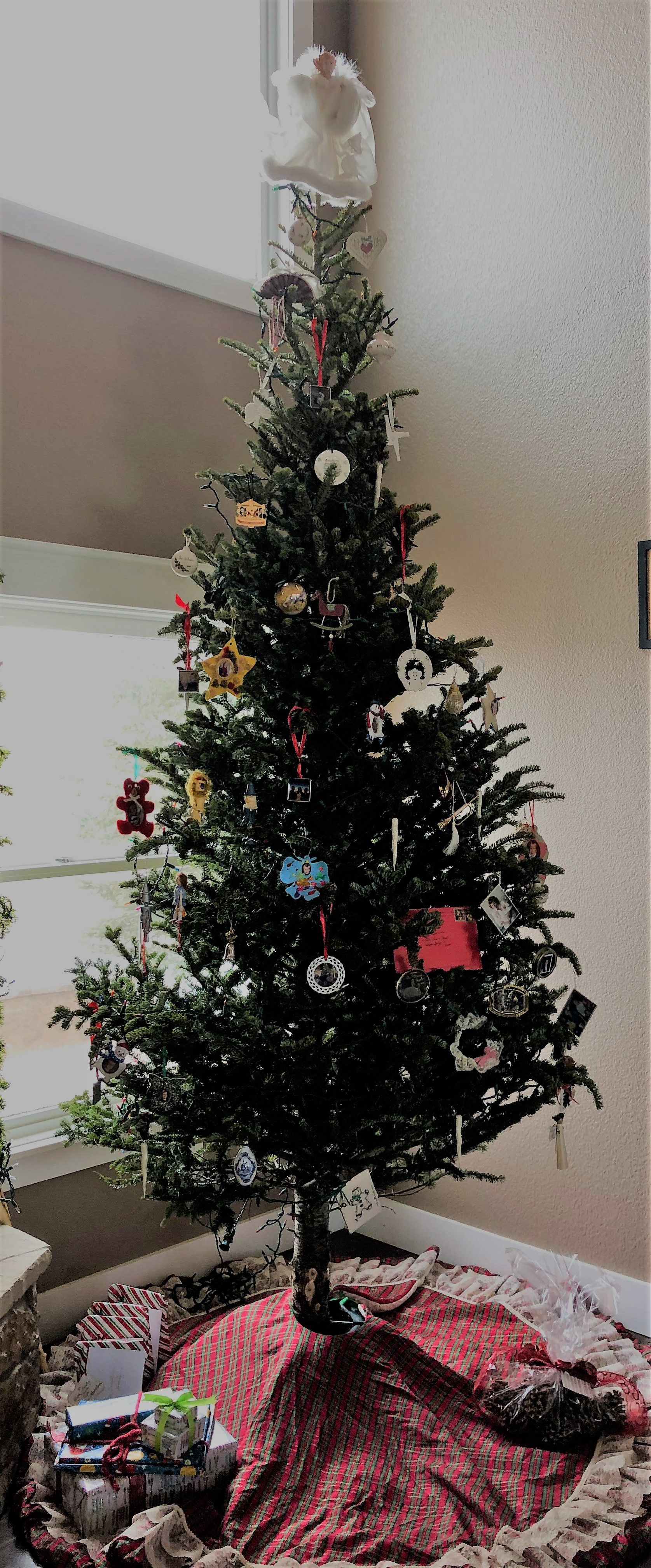
Let me “wrap” (ha) with one more holiday task we completed earlier than usual: decorating our tree.  Christmas trees must’ve been in high demand (or short supply) this year because our local lot only had one left in the 10′-12′ range we prefer.  It’s tall and thin (kind of like you see in Whoville in the original “Grinch” movie).  It’s so tall our angel at the top seems poised in the heavens, which is wonderfully appropriate this year.  She was the only decor on the tree all of last Sunday before we added everything else the following night.  So now our tree boasts the usual organized chaos of lights and ornaments.  But it’s only the angel I see.  She’s watching over us and giving us exactly what we need this year: a silent night, a holy night.

This post is in memory of Marion.

Creamer Schemers

A couple weeks ago, my Nespresso coffee maker sprung a leak. As it brewed a cup, it also “espressed” a small river of coffee from the base of the unit. An online chat with the good people at Nespresso determined, a) the maker really was broken, b) the one-year warranty covered the repair (whoo-hoo!), and c) the fix would take up to ten business days. Well beans; ten business days meant regressing a full two weeks on drip coffee instead.  Hold the phone; did I just label myself a coffee snob?

Nespresso

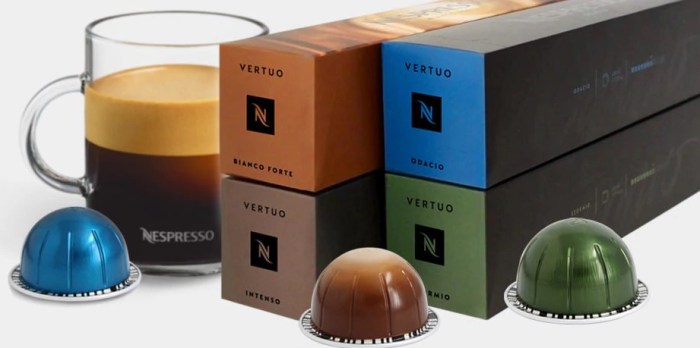
Nespresso – for those of you not familiar – is one of the many capsule coffee systems on the market today. Unlike the Keurig K-Cup, “Nestle-Espresso” capsules spin as the water passes through the grounds (7,000 RPMs – vroom vroom!), adding a light-colored frothy cap of “crema” on top. The crema enhances the aroma, but more importantly delivers the mouth-feel of a latte, as if you stirred something in from the dairy family. But call me fooled; Nespresso’s nothing more than coffee in the cup.

Bunn’s coffee-monster

Coffee snob? Parvenu, perhaps. It wasn’t that long ago I contentedly drank “joe” from one of those big metal Bunn machines, flavor-boosting my Styrofoam cup contents with a sugar cube and powdered Coffee-mate. Then, I spent a year in Rome and my world was forever coffee-rocked. I returned to the States armed with words like cappuccino and espresso and caffe latte. But America didn’t even know the word Starbucks yet. A “coffee shop” was still a greasy spoon diner; forgettable joe in a forgettable cup.

Mind you, not having Starbucks didn’t mean I was gonna crawl back to the Bunn, especially after a year of Italy’s la dolce vita (look it up). Eventually I dropped hard-earned cash on one of those early model home coffee/espresso/steamed milk contraptions – a machine requiring twenty minutes, twenty steps, and a phone-book-sized operations manual to produce a small cappuccino. The birth of the American barista did not start at Starbucks, my friends. It started in the frustration of orchestrating an overly complicated home-brew system in search of pseudo-Italian-style coffee.

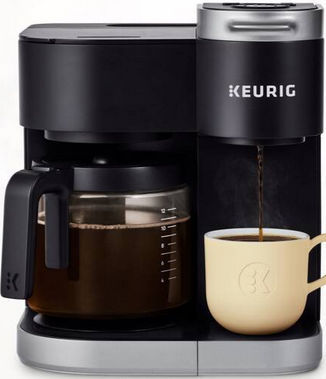
Sometime after Starbucks opened its first doors (but before Nespresso), Keurig developed the K-Cup. The Keurig coffeemaker felt like a huge step up from standard drip (and ushered in the concept of single-serve coffee at home). Keurig opened a seemingly new world of coffee to me – exotic names like Green Mountain or Paul Newman’s or Donut Shop – but let’s be honest. Keurig was basically glorified drip, and I still wasn’t taking my coffee straight, like I did in Italy. And that’s where Nespresso shines. If the K-Cup is a step up from drip, Nespresso is the entire staircase.

Ironically, the same company producing Nespresso markets a line of oil-based creamers sugary enough to make your coffee taste like Easter in a cup. Nestle already offered creamer flavors like Peppermint Mocha or Italian Sweet Creme or Toasted Marshmallow, before recently adding Cinnamon Toast Crunch and Funfetti. Not to be outdone, International Delight augmented its own coffee creamer line – REESE’S Peanut Butter Cup, Cinnabon, and OREO Cookie Flavored, with – no joke – a PEEPS flavor. Better check for bunnies before you take a sip.

For the record (if the Pulptastic website is to be believed), I’m not even close to being a coffee snob. I can choose from any of their twelve defining characteristics and come up short. I don’t read about coffee. I don’t speak the lingo (“Robusta?” “Arabica?”). I don’t know what “cupping” is. I do enjoy a Starbucks coffee every now and then. Finally, I’m half-tempted to check out the PEEPS creamer (maybe I won’t even need the coffee in my cup). See the Pulptastic list for yourself. Maybe you’re the coffee snob instead of me.

I’m still waiting (im)patiently for my repaired Nespresso coffeemaker to come back. I’m barely surviving on my backup K-Cups. But I’m no coffee snob. And I was just kidding about wanting to try PEEPS in a bottle. On the contrary, those creamer schemers can keep their product far, far away from my Nespresso.

Some content sourced from the 2/3/2020 Wall Street Journal article, “Rich Sales Boost Coffee Creamers”.

Coffee Breakers

Every now and then I take this blogging habit out onto the road, so to speak.  Instead of typing paragraphs from the home office, I’ll liberate my laptop from its cables, hop in the car, and head over to the local coffee house.  Working in a caffeinated environment – especially one buzzing with grouplets of chatty patrons – brings out the creative juices in me (if not the ability to concentrate).  Lately however, I’ve decided my little laptop show pales in comparison to some of the real road warriors out there.  Apparently, I need to show up with more toys in hand.  It’s time to go “Venti” instead of “Tall” and become one of the true coffee-breakers.

Perhaps you’re familiar with the patron I’m talking about here.  Coffee-breakers recreate their home office (or “office office”) on a table in the middle of Starbucks.  They consume more than their fair share of coffee house real estate (but not their fair share of coffee relative to their extended stay).  They arrange face-to-face meetings with colleagues, and interviews with prospective employees.  They hold Bluetooth conversations as they stare at nothing in particular.  Or FaceTime conversations as they have one-on-one’s with their phones.

I’ve come across several breakers in my coffee house stays.  They demonstrate distinct behaviors to separate themselves from those of us who simply want laptop time with our lattes.  First, breakers set up their workspaces, with enough time and attention to detail to announce, “Notice me!”  Then they go to the counter to place their coffee orders, deliberately leaving their setups unattended (as if to say, “This space is reserved!”).  Finally, they begin their “work”, which doesn’t really seem like work.  I can’t help thinking coffee-breakers are more often show than substance.

A few weeks ago at the local Starbucks, I left my laptop and Flat White to take a quick phone call outside the store doors (the polite thing to do).  When I returned, I found I’d been joined by a coffee-breaker.  She was carefully positioning two Bluetooth speakers on the table in front of her; then fiddling with her phone and a few other components from her oversized backpack.  As soon as her speakers gushed music (clashing with the Starbucks music playing overhead), she put in her AirPods and simultaneously took a phone call.  She operated as if she was in her own little world (i.e. I didn’t exist).  Therein lies another distinct coffee-breaker behavior: virtual walls.

On another visit, I was party to a conversation between a commercial real estate broker and a prospective tenant.  He sat his client (deliberately) adjacent to the counter queue, which (conveniently) put him in the center of the store.  The broker was hawking lease space in the adjacent soon-to-be-opened retail center.  No wonder he raised his voice as he spoke.  This coffee-breaker’s sales pitch was as much for me and my fellow patrons as for the captive soul sitting right in front of him.

The Wall Street Journal (WSJ) recently published a dozen rules for coffee-breakers; rules that should be laminated to every Starbucks building in the land.  Examples: Work only where and when you’re wanted (i.e. ask first).  Buy first, sit second.  Buy more than one small black coffee during the day.  Don’t take work calls – ever.  And so on.  Perhaps more enlightening was the reader comments in response to the rules.  I perused four pages’ worth (30+ comments) and not one came to the defense of coffee-breakers.  In fact, several comments added more rules to the list.

To my earlier comment about going “Venti”, I talk – of course – tongue-in-cheek.  A little attention is a good thing, but my hope is most of us would not deliberately choose to be a coffee-breaker (else this is the end of Western civilization as we know it).  Nope, I think I’ll take my road show to the library instead.

Some content sourced from the 8/27/19 Wall Street Journal article, “How to Act Like a Human When Working From a Coffee Shop”.

Ahoy, Matey!

At the Jolly Roger Restaurant in the small Southern California town of Oceanside, you can order an Avocado Blast as a starter (tempura-battered avo stuffed with shrimp and tuna), Orange Coconut Salmon as an entree (panko-crusted with a sweet ginger glaze), and fruit-topped New York Cheesecake as a dessert, all while watching live entertainment on Friday and Saturday nights. The “JR” may be a little fancy for your tastes but let me tell you; it’s a LOT fancy for mine. That’s because the only version of the Jolly Roger I ever knew was my favorite boyhood burger joint.  As pirates like to say, “Aarrr…

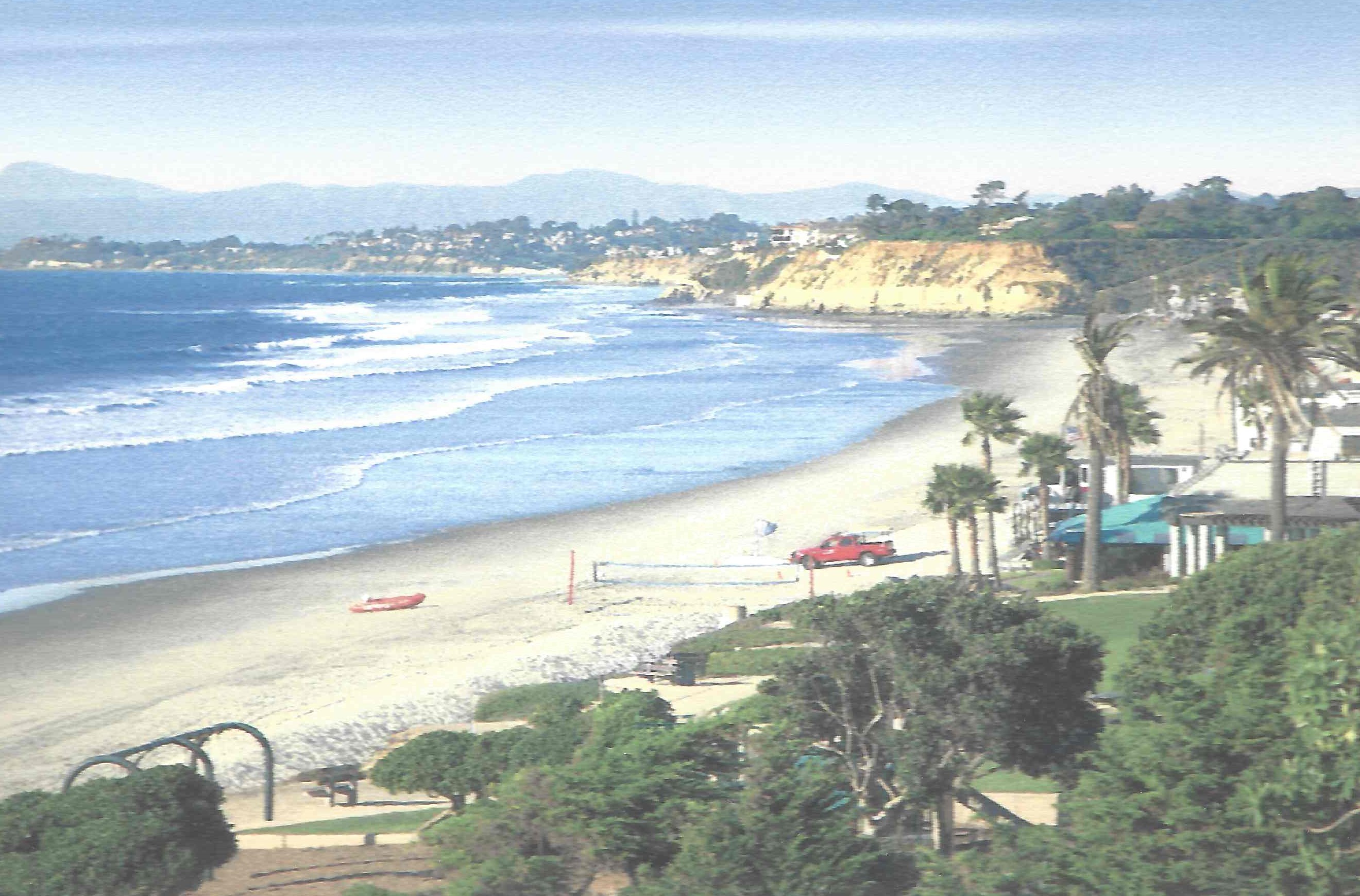
Why blog about a long-ago restaurant?  Because I’ve just returned from several days of vacation in Del Mar (just a few miles south of Oceanside), where my family and I spent my childhood summers.  Del Mar is renowned for its county fair and thoroughbred racetrack (“Where the Turf Meets the Surf”), but for me it was – and still is – a nirvana of sun, sand, and surf; chock-full of happy, carefree memories.  Including the Jolly Roger.

Del Mar beach

The beauty of Del Mar back in the day, besides its seaside location, was the sheer simplicity of the place.  The town was the perfect setup for a kid.  You could walk or bike from the residential areas to the shops in minutes.  You could spend pocket money on Slurpees and pinball at the 7-11.  You could meet/greet frequent passenger trains at Del Mar’s tiny station (while those same trains flattened pennies on the rails).  You could also sneak into the racetrack, collecting discarded betting tickets in hopes of finding an overlooked winner.  And if you were lucky, you had dinner at the Jolly Roger.

Del Mar train crossing

The Jolly Roger got its start as an ice cream parlor in 1945, adjacent to the lake in Big Bear, CA.  But the lake promptly went dry, which led to a lack of landlubbers walking through the doors.  The parlor then relocated to Newport Beach (where the ocean never goes dry).  Patrons soon asked for more than ice cream, so the JR evolved into a coffee shop; then into a chain of restaurants.  At its peak, the JR had forty locations, each adorned with the trademark black flag with skull and crossbones.  But as one article cruelly described its demise in 1985, “…the Jolly Roger pirate has ‘walked the plank’, and the restaurant chain has been consigned to Davey Jones’ locker.”  As far as I know, Oceanside is now the only remaining restaurant.

There’s more to my JR memories than those couple of seaside locations.  The JR also had a restaurant in the heart of Los Angeles, in a shopping center my dad developed back in the 1960’s.  The center is still there but alas, not the JR (now a Mexican restaurant).  No matter; the memories remain.  I never complained when my dad wanted to stop by his center on weekends.  That usually meant a family dinner at the JR, and a lot of yo-ho-ho-ing around the table.

Jolly Roger menu – original cover page

Sadly, the Jolly Roger location where my family and I shared many a dinner – next door to Del Mar in Solana Beach – is also gone (converted into a Starbucks – shiver me timbers!)  And the Oceanside restaurant has evolved into something a whole lot fancier.  No matter again.  My JR will always exist.  I picture the restaurant where the waiters dressed like pirates, the kid’s menus looked like a pirate, and the best options for dinner were burgers & fries, grilled cheese, and milkshakes.  The JR also had quite the dessert menu, including full-boat chocolate sundaes and coconut-cream pie.

Dead men tell no tales, but I sure do.  Thanks for the memories, JR!

Poultry Par Excellence

Among its endless and varied topics, Wikipedia includes a list of “notable chicken restaurants” (just about all of them U.S.-based). In the fast-food subcategory alone, you find over 75 fowl food-stops. I recognized about one in ten as I scanned the list, including Bojangles’, Bush’s, Church’s, El Pollo Loco, KFC, Popeye’s, Raising Cane’s, Wild Wings, and Zaxby’s. That’s a lot of drive-thru chicken. Yet put ’em all in the back seat, because I side with those clever Holstein dairy cows, begging me to “Eat Mor Chikin”.  And I do eat more – at Chick-fil-A.

As the kids morphed from teenagers to adults, fast food pretty much disappeared from our eating-out options.  Starbucks aside (because coffee is the elixir of life), we stopped navigating the circuitous drive-thru’s of McDonald’s and the like.  Our palates demanded better and healthier.  More appealing sit-down options beckoned on every street corner.  But Chick-fil-A stubbornly persisted in the mix, as if waving a banner with the words, “Exception To The Rule”.

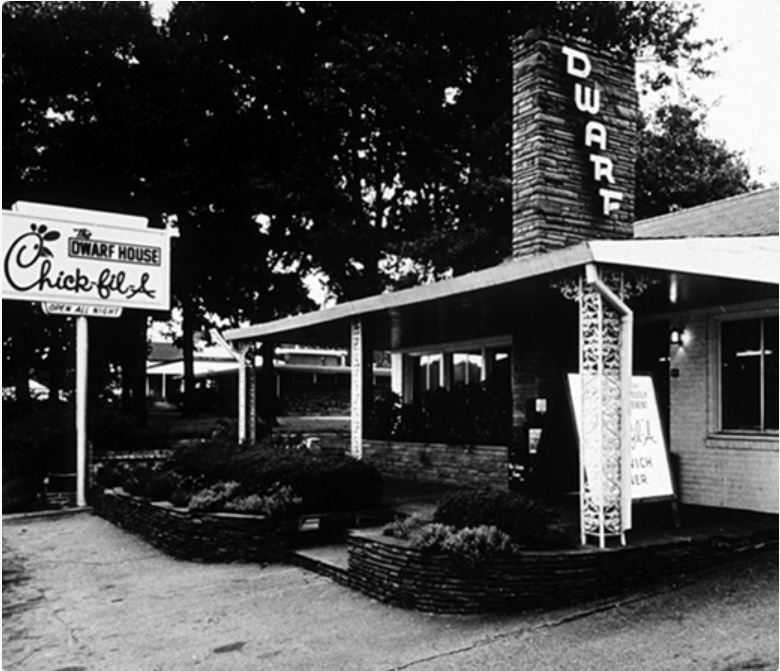
Dwarf House – Hapeville, GA

No matter how you label it, there’s a lot to like about Chick-fil-A.  For one, it’s the great American success story.  Its origins trace back to founder S. Truett Cathy, and a 1960’s-era restaurant near Atlanta called Dwarf House.  Its popularity swelled through twenty years of growth in shopping mall food courts. Its first free-standing restaurant opened in 1986.  Today, you’ll find more than 2,400 Chick-fil-A’s scattered across the continent, including a prominent three-story location in mid-town Manhattan, and several in Toronto, Canada.

It’s all about the food, of course.  Chick-fil-A’s most-ordered entree – the classic chicken sandwich (breaded, with pickles and a butter-toasted bun) – is a recipe unchanged since its inception fifty years ago.  The signature waffle fries accompanying the entrees are the most popular item on the entire menu.  And Chick-fil-A’s lemonade and milkshakes have a devoted following all by themselves.  Some patrons cruise the drive-thru for nothing but the drinks.

The Chick-fil-A’ “classic”

There’s more to like about Chick-fil-A.  Their brand of customer service is exceptional.  Chick-fil-A is the only restaurant I know where you’ll hear the words “my pleasure” in exchange for your “thank you”.  Between your order, payment, and the window itself, you’ll probably get “my pleasure'” three times in a single drive-thru.  That kind of courtesy never gets old.

American Customer Satisfaction Index (ACSI)

How about the numbers?  Chick-fil-A is the third-biggest U.S. restaurant chain ranked by sales (behind only Starbucks and McDonald’s).  Their sales have quintupled in the last ten years, to over $10.2 billion.  Chick-fil-A’s market share among fast-food chicken restaurants hovers around 33%.  Their nearest competitor – KFC – is a distant 15.3%.

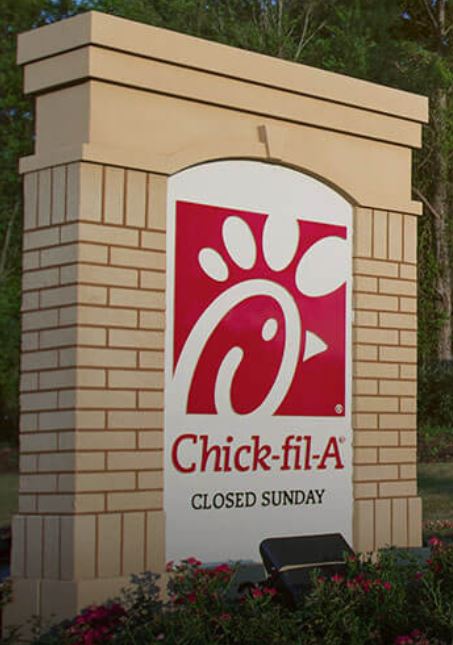
Here’s one more reason to love Chick-fil-A: they’re closed on Sundays (as well as Thanksgiving and Christmas).  In the company’s own words, “Our decision to close on Sunday was our way of honoring God and of directing our attention to things that mattered more than our business.”  No matter the faith angle, you have to respect a restaurant giving its entire workforce the day off once a week.  Not to mention, a closed Chick-fil-A just makes the heart grow fonder.

A recent Wall Street Journal (WSJ) profile on Chick-fil-A shows they don’t mess with success.  McDonald’s regularly tests its patrons with trendy offerings (“Bacon Smokehouse Burger”).  Burger King reinvents itself with its upcoming “Impossible” (veggie) Whopper.  Meanwhile, Chick-fil-A maintains a little-changed menu of what’s been selling for decades: responsibly sourced, domestically produced, no-filler-no-preservative chicken.

At the conclusion of the WSJ article, I found one hundred reader comments about Chick-fil-A.  I scanned half of them, and every last one was positive.  That’s a first for me.  In today’s cynical world, 100% positive feedback may be the most telling statistic of all.

Final factoid.  For all my allegiance to Chick-fil-A, I must admit I didn’t know the origin of the name – until now.  Go figure, it’s just a mash-up of “chicken fillet”.  And the “-A”?  “Grade A”, a subtle nod to the quality of the Chick-fil-A product.  No wonder those cows push you to lay off beef.  They’re offering chicken par excellence instead.

Some content sourced from the official website of Chick-fil-A.