Following the Leader

Technology birthed the self-guided tour. More and more often, an admission ticket to sights worth seeing grants you a pair of headphones and a wearable device instead of a name-tagged human to show-and-tell you the way.  Self-guided touring allows for a more convenient and less distracted experience.  But it also removes the storyteller, and that, my friends, makes all the difference between a memorable tour and a forgettable one.

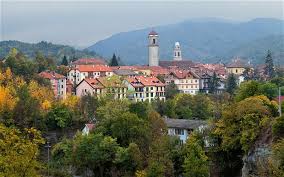
Budapest, Hungary

Viking River Cruises, one of which we completed on the Danube River in early June (see Going With the Flow), provide a plethora of tour guide experiences.  On any given day of the cruise, you disembark to one or two “land-based” locales, in the (sometimes) capable hands of a personal tour guide.  Viking contracts with local agencies to provide these guides for small groups of its travelers.  For example, having a Hungarian show you the sights of downtown Budapest is so much more satisfying than hearing someone drone on about it on a headset.  Sharing a beer with a German on a tasting tour is almost like being invited into his house.

Nuremberg, Germany

If I ask you to share one of your own memories involving a tour guide, you’ll probably recall a particularly good one.  Maybe you’ll even remember a bad one.  Regardless, your stories would support my theory: a top-notch guide can make the what or the where of the tour almost irrelevant.  The guide himself or herself can make the difference between a memorable experience and a forgettable one.

Consider, I still remember a tour of a southern plantation with my family from almost fifty years ago.  Why?  Because the tour guide presented herself in a way that made me think we were being welcomed into her own house.  She also had this soft, syrupy unforgettable Southern accent that had me hanging on her every word.  Do I remember anything about the plantation?  No, but I sure remember the tour guide.

Szentendre, Hungary

So it was on the Viking cruise.  We had good guides and we had outstanding ones.  The very best of the dozen or so – ironically – was a young woman working on contract with Viking for the first time, as a stand-in for our scheduled guide in Munich.  She was, in every respect, delightful.  She started our tour with a greeting and a smile, then a little conversation and questions to break the ice.  As she led us from one sight to another, she spoke with an energy and pride in her city that can only be described as vivacious.  By the end of the tour, as the saying goes, she had us feeding out of her hand.  I was so enthralled I forgot to take a picture of her.

But we also had a lesser guide a few days earlier in Vienna, who I’d describe as a speed-walking encyclopedia.  He led us on a many-thousand-steps rush through the sights, filling our heads with facts and figure as he went, in a pretty thick Austrian accent.  He never smiled and I don’t think we ever stopped walking.  Can’t remember much about that tour (or him for that matter) because it was a rush-rush blurry overload of the senses.  I need to go back to Vienna again someday so I can (literally) stop and smell their famous roses.
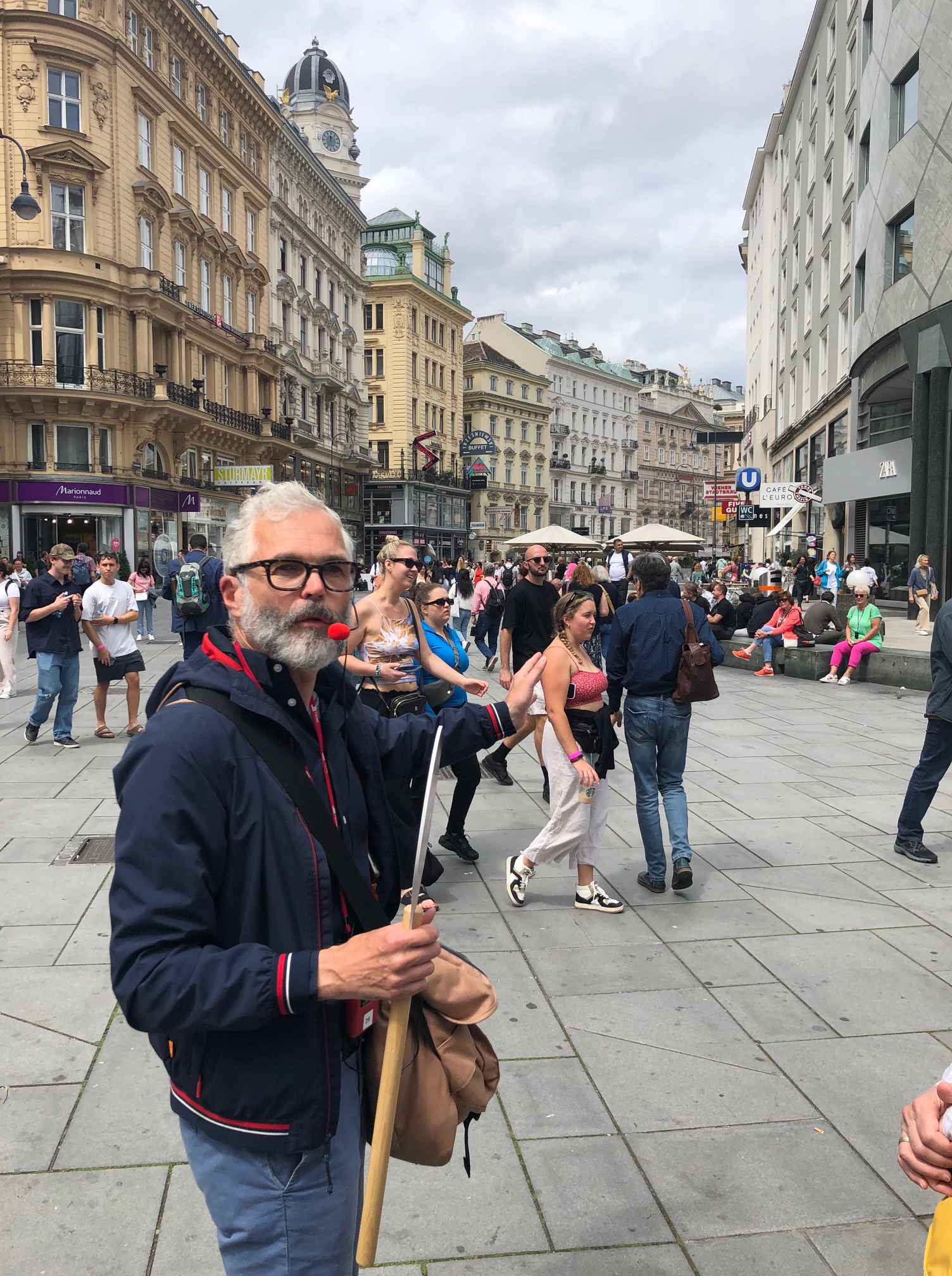
Vienna, Austra

Courtesy of Viking and those many tours near the Danube, I present to you, therefore, the attributes of the consummate tour guide:

  1. A local, familiar with the city or sight at hand through regular exposure.
  2. A personality; warm, friendly, energetic, and engaging.
  3. An overflowing font of knowledge on his/her subject, able to answer just about any question thrown their way.
  4. A storyteller, able to weave anecdotes at will into the facts and figures to keep it interesting.
  5. In tune with his/her audience, making adjustments to the tour as necessary (ex. “Am I going too fast for you?”)

If you take enough sightseeing tours, you’ll know whether your guide is missing one or more of the above within the first five minutes.  You’ll also know whether the next hour or two will fly by or drag on for all eternity.  If your guide checks all five boxes, consider yourself lucky.  Most of us aren’t cut out for the job (myself included), whether we like to think we are or not.  It takes a special set of skills to be the leader everybody wants to follow.

Do-Re-Mi… Oh My!

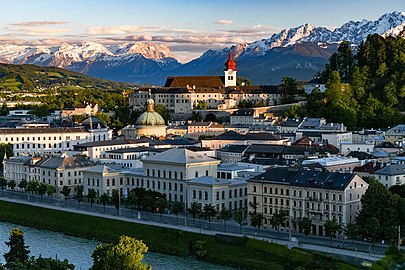
Salzburg, Austria, a day-trip destination from our recent Viking River Cruise, is a popular draw for tourists.  On most days you’ll find more internationals roaming Salzburg’s Old Town than you’ll find Austrians themselves.  The compact city is famous for its historic buildings: churches, palaces, and fortresses dating back 1,000 years or more.  Mozart was born here.  But try as they might, Austrians will never be able to separate Salzburg from what attracts many to its streets: The Sound of Music.

I can think of only one movie we forced our kids to sit down and watch while they still lived under our roof.  Close to Christmas one year (an arbitrary connection because of the lyrics of “My Favorite Things”), the five of us spent three hours together in front of our not-so-big-screen TV watching the somewhat true story of the von Trapp family.  I’ve lost track of the number of times I’ve followed Maria, the Captain, and those seven engaging children as they outwit the Nazis.

For all of the movies I’ve watched in my life (and I’ve watched quite a few), The Sound of Music stands alone.  I’d describe it as a jewel you display in an elegant glass box on the shelf, taken down every once in a while to appreciate up close. The Sound of Music is a feel-good story – if not accurate – produced in 1965 at the end of the Hollywood’s Golden Age.  It remains the most successful movie musical of all time (adjusted for inflation), but I question whether today’s movie-goers would appreciate it as much as I do.

Salzburg, Austria

Most tours of Salzburg include references to buildings and locations included in The Sound of Music.  Our own tour – cut well short because of the flooding of the Danube – was a brisk walk around the Old Town, with only an occasional mention of the movie.  What surprised me was not how little of The Sound of Music was actually filmed in Salzburg (most was done on sound stages back in the States) but rather the Austrians’ utter disdain for the movie.

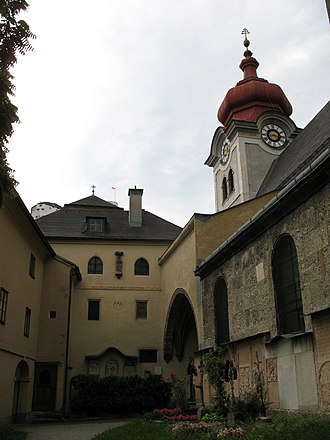
Salzburg’s Nonnberg Abbey

Consider, when it was first released The Sound of Music was only twenty years removed from the end of WWII.  The Nazi overtones of the film didn’t sit well with citizens of Austria and Germany.  Reviews (and box-office receipts) were not favorable in either country.  Coupled with the liberties the producers took with the story, you can see why Salzburg residents don’t exactly “Climb Ev’ry Mountain” to claim the movie as their own.

You’ll find endless trivia about The Sound of Music at IMDB.com and elsewhere.  Most facts are meant to point out discrepancies between the film and the actual story.  Here are fifteen of “My Favorite Things”:

1) Julie Andrews was cast as Maria, of course, but only because Audrey Hepburn declined the part.  Hepburn also denied Andrews the opportunity to play Eliza Doolittle in the movie version of My Fair Lady.  Each played the opposite role in the original stage adaptations on Broadway.

2) Andrews kept getting knocked off her feet in the famous opening scene where she sings and spins in an Alpine meadow.  She couldn’t keep her balance because the hovering helicopter used to film the scene generated too much wind.

Not as easy as it looks!

3) Andrews’ hair was meant to be worn longer but a bad color job forced the pixie cut, which Andrews kept for most of her acting career

4) Christopher Plummer was not a fan of The Sound of Music.  He reluctantly agreed to the part of Captain von Trapp and regretted every moment on set, especially those with the children.  He described working with Julie Andrews as “being hit over the head with a big Valentine’s Day card, every day”.  He nicknamed the movie The Sound of Mucus.  Much later he acknowledged the film’s worldwide success, as well as the Oscar-nominated talent of Andrews.

5) Plummer regularly drowned his acting sorrows in Salzburg bars and restaurants.  As a result his outfits needed to be resized towards the end of filming to accommodate his added weight.

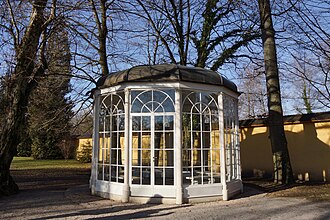
The gazebo (moved from its original location). The interior scenes were filmed In a much larger stage set reproduction.

6) The von Trapp children are Rupert, Agathe, Maria, Werner, Hedwig, Johanna, and Martina… not Liesl, Friedrich, Louisa, Kurt, Brigitta, Marta, and Gretl.  Also, none of the nine leads are Austrian (which certainly didn’t help the appeal of a film based in Salzburg).

7) Auditions for the parts of the von Trapp children included the four eldest Osmond brothers (not Donny), Kurt Russell, and Richard Dreyfuss.

8) Kym Karath, who played Gretl, the youngest of the von Trapp children, created her fair share of challenges.  She had a cold during much of the filming.  She almost drowned in the scene where the boat overturns in the lake because she didn’t know how to swim.  And she ate enough sweets on set to where her weight was too much for Christopher Plummer.  As a result, in the final scene walking over the Alps, Plummer is carrying a stand-in actress instead of Karath.

9) Nicholas Hammond, who played Friedrich, was not a natural blonde so his hair was bleached for the movie.  The coloring process caused some of his hair to fall out, which is why you see him wearing a “Tyrolean Traditional Alpine” hat when he’s seen singing “Do-Re-Mi”.

10) The day after the real von Trapp family left Austria (by train to Italy and then to the U.S., not on foot over the Alps to Switzerland), the Germans shut down all of Austria’s borders.

Salzburg’s Schloss Leopoldskron, where lakefront and garden scenes were filmed

11) The real Maria von Trapp is on screen at the beginning of the movie.

12) The real Maria also claims, if you can blieve it, her own personality was livelier than Andrews’ on-screen version.

13) The real Maria taught Julie Andrews how to yodel.  Watch the lesson here.

14) The film’s production demanded 4,500 extras, including those in the sold-out theater for the music festival.  The audience sings “Edelweiss” as if they know the song, but only because they spent time beforehand learning the words.

15) Despite the aforementioned Austrian disdain, The Sound of Music is played nonstop on the televisions of most Salzburg hotels.

Maybe all of this trivia changes your opinion of The Sound of Music.  Not mine.  There are countless reasons this film includes the tagline, “The Happiest Sound In All The World”.  The Sound of Music will always be that jewel in a glass box, waiting patiently to be enjoyed once more.  Suffice it to say, I’ll never say “So Long, Farewell” to the adventures of the von Trapp family.

Some content sourced from the Internet Movie Database (IMDb), and Wikipedia, “the free encyclopedia”.

Go(ing) With the Flow

In the camping days of my youth, I’d get a kick out of dropping little sticks into the water and watching them float lazily downstream.  I’d imagine them as little boats, navigating uncharted waters on their way to some exotic destination.  I’d see how far those sticks could go, sometimes removing obstructions to create clear channels.  Perhaps it’s no surprise then, all these years later, I’m drawn to the adventure of Viking River Cruises.

Maybe you’ve seen their commercials.  Viking River Cruises advertise by showing you one of their elegant white ships cruising slowly down a pristine river, with dramatic terrain sloping up and away from the shorelines.  Viking “longships” are low, flat, and narrow; a  wholly refined version of my stick in the stream.  Take your pick: the Nile in Egypt, the Rhine in Germany, or the Mississippi in America, to name a few.  Viking has you covered when it comes to cruising the world’s rivers.
My wife and I just completed our second Viking cruise (well, “completed” doesn’t really cut it but I’ll get to that in a moment).  Our first, in 2019, down the Rhine River from the Netherlands through Germany to Switzerland, was so satisfying we were ready to sign up for another as soon as we were done.  Then the world went a little off the rails so we had to wait until the waters calmed again, so to speak.  A week ago then, we returned from Viking’s Danube River cruise; Hungary through Austria to Germany.

There are at least two reasons why Viking River Cruises don’t appeal to those who seek a vacation on the water.  First, you’ll find little more to do on the ship besides eat and sleep.  Yes, you’ll find live music in the lounge and an occasional cooking demonstration by the head chef, but for the most part a Viking ship is a floating hotel.  Second, the daily excursions off the boat are fast-paced guided looks at whatever is worth seeing, with only a little free time at the end for shopping and such.  Best to bring a comfortable pair of walking shoes to keep up.

Those same reasons are why Viking cruises do appeal to us.  We’ve been on one of those floating-city ocean cruises before (Carnivalick), and everything from the buffet to the entertainment felt cheap and mass-produced.  A Viking river ship caters to only two hundred passengers, in rooms as nice as most anywhere we’ve stayed on shore.  As for the excursions, the tour guides are carefully chosen for their knowledge and personalities, adding so much more to the tour than if you were to go it alone.  Yes, you’re only getting a “taste” of each locale, but this means you see a lot in eight days of cruising, leaving you to choose if and where you might come back to for more in-depth looks.

Eight days is plenty of time to be on the river (at least in our book) but Viking offers several options twice as long, including a fifteen-day Grand European Tour covering the Rhine and the Danube.  You can also add “land-based” days to either end of a cruise, exploring the cities from where you embark and disembark.  Finally, Viking tailors its menus (and I do mean menus, not buffets) to the cuisine of the region you travel through.  From our experience, the food is excellent.

Passau, Germany (one of our destinations)

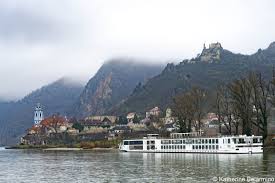
If this sounds like a ringing endorsement for a Viking River Cruise, let me silence that bell for just a moment.  Perhaps the only thing Viking can’t control is the water itself.  Unbeknownst to most Americans, the Danube River flooded its banks earlier this month, forcing the powers that be (and who exactly are those powers?) to “close” the river.  Residents in destinations downriver found themselves wading through four feet of water.  River ships couldn’t fit under low-flying bridges, let alone dock at the shores.  As a result, our cruise came to a premature halt in Vienna, Austria, with the remaining itinerary carried out with busses and hotels.

I’ll take the next several posts to dive deeper into our “Romantic Danube” Viking cruise.  We missed out on the time we expected on the river, but the destinations were no less impressive.  Budapest is a heck of an interesting city.  Gottweig Abbey (outside the Austrian town of Krems) is keeping apricots relevant.  So stick with me the next few weeks and you’ll find out more about what the Danube has to offer.  After all, river cruising is a whole lot more adventurous than floating a stick down a stream.

O’ Come Let Us Adorn

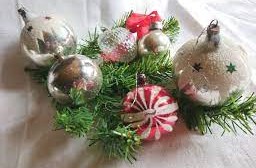
There’s an older fellow in Egypt who wakes up every morning, throws on a flannel shirt and well-worn pants, and goes to his workshop behind the corrugated roll-up door of a small, industrial warehouse. Using ancient tools and techniques, he churns out hundreds of colorful, ornate, square cement tiles. He’s a true artisan, our tilemaker, carrying on his craft from many generations before him.  His product endures amid countless mass-produced ceramic and porcelain alternatives. Perhaps our tilemaker would feel more at home in Lauscha, Germany.  Lauscha is home to dozens of glassblowers, who still create colorful, ornate, Christmas ornaments by hand.

Lauscha “baubles”

Every December about this time, my wife & I bring home our Christmas tree (real, not artificial – see Is It Live or Is It Memorex? for that debate).  We take our tree through the same steps from start to adorned.  First, fresh-cut the trunk, set the tree into the stand, and fill with warm water (and one baby aspirin!).  Next, let gravity bring the branches down for a few days.  Then, bring out the ladder, top the tree with the angel, and string the lights generously down all sides.  Finally, adorn with ornaments.  Our collection is larger than the real estate of any Christmas tree we buy, so there’s always debate on which ornaments make the tree and which are re-relegated to the closet for another year of waiting.  In the end, we stand back and admire a pleasing mix of homemade, school-made, photo-framed, and collectibles.

You can never have enough ornaments, and the glassblowers in Lauscha would agree.  The process they use to create the simplest of glass balls is already beyond my artistic abilities.  For one, you must work fast because the molten glass cools in a hurry.  For two, you must have steady hands as you add color and detail.  Have a look at the following short video and you’ll learn a thing or two you never knew about making Christmas ornaments.  My favorite part of the process? “Silvering”.  Who knew the mirror-like aspect of a Christmas ball is painted on the inside of the glass?

Germans (and more people than I’d probably guess) refer to Christmas ornaments as baubles, which is ironic because Americans define a bauble as a “showy cheap trinket”.  Nothing produced in Lauscha, Germany is a showy cheap trinket.  Then again, Americans figured out how to mass-produce Christmas ornaments and the result is a generic, sometimes-plastic alternative to the real thing.  “Bauble” indeed.

The very first Christmas ornaments were anything but glass-blown baubles.  You had fruit, candy canes, pastries, strings of popcorn, and whatever else you could find around the house.  The Lauscha baubles then came along in the mid-1600s.  Short of the post-WWII years (when the German government used the glass factories for more important products) they’ve been making them ever since.

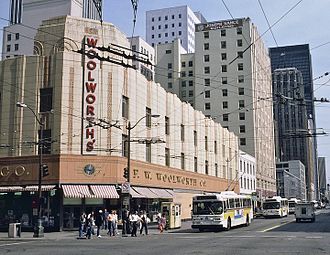
Credit Woolworth’s once-popular department stores for the proliferation of Christmas ornaments in America.  In the late 1800s, Woolworth’s started carrying the Lauscha baubles.  Soon after, they stocked mass-produced American-made versions, taking tree-decorating to a whole new level.  By the mid-20th-century, Woolworth’s was banking $25 million on Christmas decoration sales alone.

Hallmark “Keepsake Ornament”

Hallmark jumped on the bauble bandwagon in the 1970s.  Clever folks, those people at Hallmark.  Their original ornament collection was made available only for the current year, followed by a new collection the following year, and so on.  Today, Hallmark Keepsake Ornaments are so popular you have to join a club (just $49.95!) if you want to own their newest limited-edition ornaments.

As much as I’d like to add a Lauscha bauble or two to my tree, I prefer the more personal ornaments we hang instead.  A dozen or more of them were designed around primary-school photos of our kids (“art projects”, they called them).  Souvenir ornaments from favorite trips we’ve taken over the years.  Several more with imprinted dates, to remind us of special occasions like weddings, births, or passings.

Five years ago, I wrote my one and only work of fiction on this blog, a post about a Christmas ornament.  It seems fitting to include a link to The Best Branch on the Tree, assuming you haven’t followed me that long.  Because, you know, ornaments – er, baubles – have feelings too.

Some content sourced from Wikipedia, “the free encyclopedia”.

Tale of the Little-Dog

When my son and his wife visited with their daughters last week, the consensus for dinner was hamburgers and hot dogs on the grill.  These choices were noteworthy in that I honestly can’t remember the last time I ate a hot dog.  Sweet Italian sausage?  A couple of times a month cut up into a stir-fry of vegetables.  Beer brats?  Also delicious, hot off the grill with a little mustard.  But a hot dog is child’s play by comparison.  Or should I say, a “dachshund sausage”?

It’s true.  The Germans, who by all accounts can take credit for the invention of the hot dog (five hundred years ago!) nicknamed their frankfurters “dachshunds” – or “little-dog” sausages because, well, they looked exactly like the dog breed.  The only history Americans claim is the re-nickname “hot dog”.  Even the hot dog bun – which really took hold at the Chicago World’s Fair in 1893 – points back to the Germans, who always ate their sausages with bread.

Are hot dogs a staple in your diet, or like me are they simply a distant memory?  If they weren’t hot off the grill in the backyard or at a summer picnic, perhaps you had one at a baseball game (but not so much football or basketball, go figure).  You’ve probably also seen hot dogs on the midway at carnivals and county fairs.  Wherever you get your franks today, they’re just not as likely to come from established restaurants.

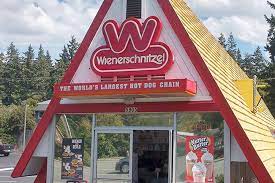
In the 1970s, America seemed to have hot dog stands on every corner.  The most popular of these was the distinctive drive-thru Der Wienerschnitzel’s, but you also had – at least from my California-based memory – Pup ‘N’ Taco, Ben Franks, Tail o’ the Pup, and the walk-up Hot Dog on-a-Stick booths you’d find at amusement parks.  Today’s retail hot dog is at a Sonic Drive-In or the food court at Costco.  If you live anywhere near New York’s Coney Island, you can also include “Nathan’s Famous”, or at least the annual hot dog eating contest of the same name.

A hot dog may be “a cooked sausage eaten in a long, soft piece of bread”, but its secondary meanings are less definitive.  “Hot Dog!” is something you used to say when you were VERY happy about something else (“used to”, meaning sixty or seventy years ago).  A “hot dog” is also a person “who makes fast, skillful movements in skiing, snowboarding, or surfing to make people notice them”.  That last definition still stands.

Speaking of “used to say”, we also used to sing about hot dogs, didn’t we?  Oscar Mayer’s jingle convinced us we should BE hot dogs (so everyone would be in love with us).  But the better song came from Armour, which asked us what kind of kids eat Armour hot dogs?  Per the lyrics, “…fat kids, skinny kids, kids that climb on rocks… tough kids, sissy kids, even kids with chicken pox…”  Today’s version of the Armour jingle would probably be censored just for using the word “kids”.

“I wish I had a million dollars. HOT DOG!” (Courtesy of Paramount Pictures and “It’s A Wonderful Life”)

Hot dogs will always be a childhood memory more than a dietary preference in my book.  My mother, raising five hungry boys, developed several dinner recipes when time and ingredients were in short supply.  These included canned baked beans and weenies (two ingredients = dinner!), and a truly odd creation from the Betty Crocker cookbook made up of hot dogs, mashed potatoes, and cheese (three ingredients!).  Whether it tasted good or not – I honestly can’t remember – dogs, mash, and cheese conveniently covered the protein, carb, and fat categories, all in one broiler-blasted casserole.

The Oscar Mayer “Wienermobile”

My most vivid childhood hot dog memories are not the dinners mentioned above.  Instead, I can’t forget snacking on raw hot dogs from the refrigerator (which sounds awful now, but hey, I was a kid).  My mother was faithful to the Oscar Mayer brand so I ate a lot of their hot dogs raw.   Speaking of Oscar Mayer, here’s the better memory.  They built a motorized advertisement which to this day may be the coolest vehicle on wheels.  The “Wienermobile” cruised the streets of Los Angeles, stopping every now and then in a parking lot so you could view it up close.  The driver handed out tiny plastic replicas of the vehicle, appropriately labeled “Weenie Whistles”.

(Courtesy of Walt Disney Pictures and “The Santa Clause”)

Let me conclude with a solved hot dog mystery.  Your grocery store sells most brands in packages of ten.  They also sell hot dog buns but in packages of eight.  Why?  Because hot dogs weigh about 1.6 ounces, which makes a package of ten a convenient sale of exactly one pound of meat.  On the other hand, hot dog buns are baked in trays of four, which work best with conveyor belts and processing.  An odd number of buns – trays of five – is a model of inefficiency.  So until one or the other manufacturer changes their standard, you’ll always have leftovers for snacks.  Or better yet, for your dog.

The hot dogs I served my granddaughters last week were comically advertised as healthy: no fillers, no preservatives, and so on.  They weren’t very good.  Maybe the worst part of a hot dog is what makes it taste so good?  Or maybe hot dogs have simply lost their appeal to me?  No, wait, that can’t be true.  Anything my granddaughters ask me to eat has instant appeal.

Guess I haven’t eaten my last little-dog sausage just yet.

Some content sourced from the National Hot Dog and Sausage Council (NHDSC) website, and Wikipedia, “the free encyclopedia”.

Trilling on the Trail

An old friend stopped by to visit the other day. He appeared at my front door without warning, taking me back almost fifty years to the moment we first met. He is still quite the singer. His stride is supremely confident. Most annoyingly, he finds unqualified joy in every blasted thing he sees and hears. My friend is, after all, The Happy Wanderer.

http://www.youtube.com/watch?v=5GgJHe0bC34

If you’ve encountered The Happy Wanderer at some time in your life, you know exactly who I’m talking about.  He is Mr. “Val-deri, Val-dera”.  Those words alone should revive the sing-song tune fried into most brains since childhood.  “The Happy Wanderer” could’ve been quarantined within Germany were it not for its award-winning performance by the Oberkirchen Children’s Choir (and subsequent radio broadcast by the BBC), in 1953.  Then, Mr. Wanderer went worldwide-viral and there was no turning back ever.

Oberkirchen coat of arms

According to his lyrics, The Happy Wanderer (we’ll just call him “Hap”) takes hikes into the mountains and alongside streams, his hat on his head; his knapsack on his back.  Hap points out blackbirds and skylarks along the way, and his journey brings him unbridled giddy happiness and laughter (as in, “Val-deri, Val-der-ha-ha-ha-ha-ha…”).  Our boy smiles the entire time and boldly invites YOU to join in the singing.  In his final verse, Hap wants to wander (and sing) until the day he dies.  That’s a little extreme for a children’s song, don’t you think?

Speaking of childhood, Hap and I first met way back then.  He entered the “UK Singles Chart” on January 22, 1954, eight-years-to-the-day before I was born.  Eight years after I was born, I henpecked Hap’s tune as I learned to play the piano.  “Chopsticks”, “Twinkle Twinkle Little Star”, and “The Happy Wanderer” were almost assuredly the first three pieces I ever memorized.

Hap wandered into my life again in the Boy Scouts.  I recall a lot of singing on weekend hikes (not sure why – who’d be happy backpacking forty pounds towards some distant campsite?)  Besides “John Jacob Jingleheimer Schmidt” and “The Ants Go Marching…”, we Scouts unabashedly sang “The Happy Wanderer” through mountains and alongside streams.  Hap’s tune even made the official list of “Scout songs” (see here.)

I thought I was done with Hap years ago (it took me decades to forget his slaphappy song), but recently he resurfaced.  First, on a cruise down Germany’s Rhine River, at an outdoor dinner in the little town of Rüdesheim.  I was volunteered by my fellow travelers to play with the band.  I manned a big oom-pah-pah drum while another poor soul clanged the cymbals.  A band member played the clarinet.  And our one and only performance – naturally – was “The Happy Wanderer”.  To add shame to the silliness, we marched between the tables as we played.  I did my best to look “happy”.

Hap’s other revelation may be a little more prolonged.  On the same Rhine River cruise, in Bavaria, my wife and I bought a handmade cuckoo clock.  The clock was shipped and arrived in the States two weeks ago.  Imagine my delight when I wound the clock and the cuckoo bird busted through his little door, the dancers twirled, and the tiny music box played “Edelweiss”.  The “sound of music” every hour on the hour!  Er, every other hour on the hour.  Turns out our cuckoo clock has two songs.  Hello, Happy Wanderer.  If I choose to, I hear his gleeful melody twelve times a day.  Or, If I choose to, I can flip a switch and I don’t hear anything at all.  I expect I’ll be flipping the switch any day now.

If you’d like to add to my hap-aberration, go to 1-800-FLOWERS and have a hardenbergia violacea delivered to my door.  HV is a species of flowering plant from the pea family.  Some call it a lilac vine.  Others give it nicknames like “false sarsasparilla” or “purple coral”.  It’s also lovingly referred to as “The Happy Wanderer”.

Heaven help me.

Some content sourced from Wikipedia, “the free encyclopedia”.

Deutschland-ish Improvements

My wife and I are slowly remodeling our house, a room at a time. First, we took a big plunge and overhauled the kitchen. Then we gutted the master bath. Now we’re thinking about a large deck with indoor/outdoor spaces. But that was before a recent trip to Germany, where we cruised a good stretch of the Rhine. Suddenly “remodeling” takes on a whole new meaning.

Our cruise down the Rhine started in Amsterdam.  Bad idea.  Amsterdam is loaded with the prettiest little canals and bridges outside of Venice.  As we were floating up and down the “city streets” we thought, “let’s put a canal bridge on our property!”  But a canal bridge requires a canal, else you get London Bridge in the middle of the Arizona desert.  So first we’ll be building a canal.

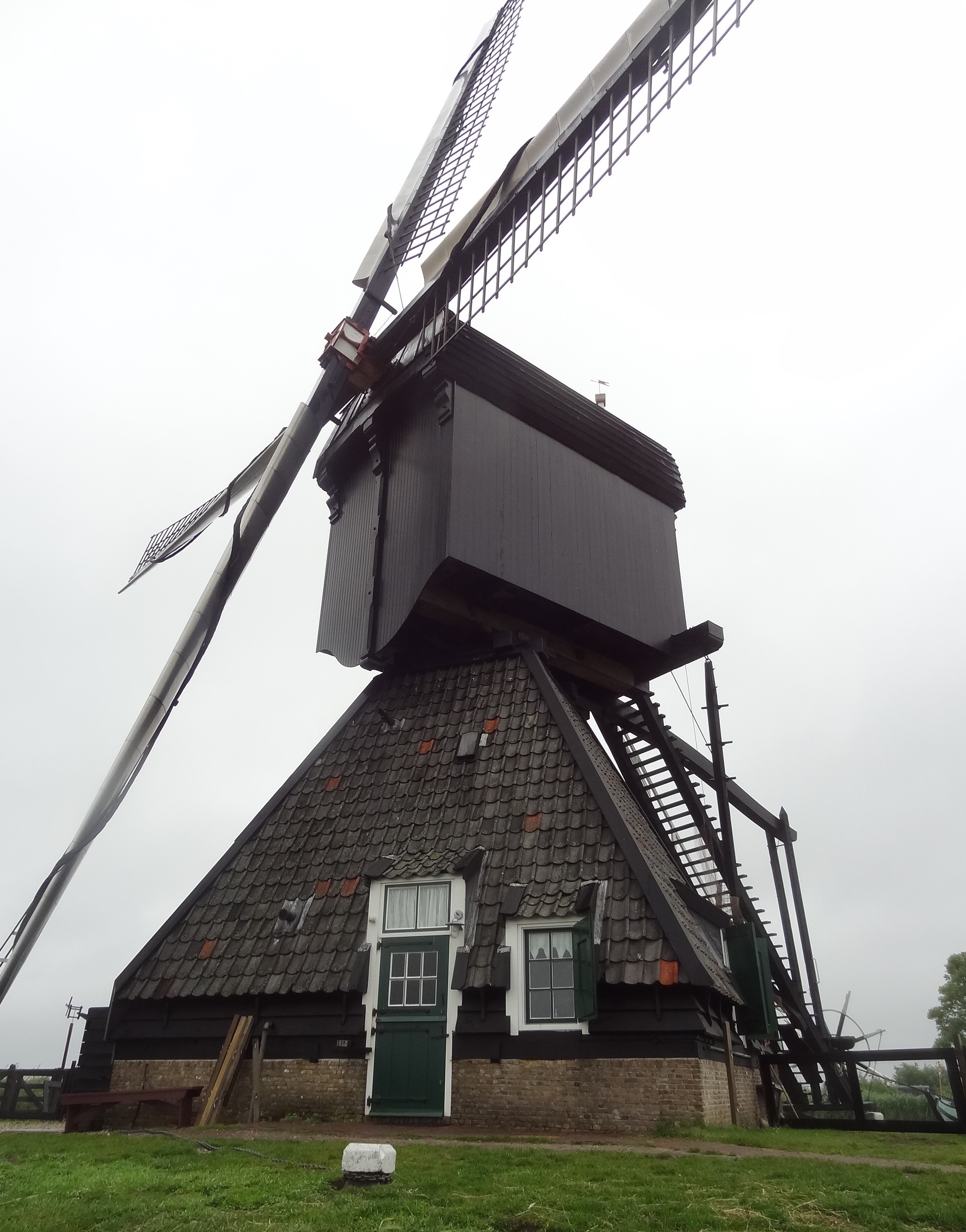
Our next stop on the Rhine kept us in the Netherlands.  We landed briefly in Kinderdjjk, not even a map dot if it wasn’t for some of the most beautiful windmills in the world.  Kinderdijk’s windmills not only pump water; they’re houses.  We must add a windmill to our remodel list!  It would make a unique guest house, and instead of pumping water from our well we’ll just windmill it up to the house from the canal.  You know, the canal we just installed so we could put in a canal bridge.

Once our river boat hit Germany, I knew our remodel was entering uncharted territory.  In Cologne, we walked through one of the most spectacular cathedrals in the world (seven centuries to complete!)  In every Rhine river town we passed there was another cathedral (more likely a church, but over there they all look like cathedrals).  Am I saying I need a cathedral on my property?  Of course not; the neighbors would consider that a little pompous.  But a chapel would be nice.  Something to accommodate a steeple and bell tower as elegant as the ones you find in Germany.  Wouldn’t it be great – calling the family in at dinnertime?  BONG-BONG-BONG!!!

Here’s the other problem with Germany.  Castles.  Big ones.  Little ones.  Intact ones and crumbling ones.  Wherever you look in the Rhine region, you see postcard-perfect towns with castles at their highest points.  I mean, who wouldn’t want a castle on their property, right?  The problem is, here in the flatlands east of the Colorado Rockies, a castle would look, well, compromised.  You’ve got to have your castle sitting higher than everything else (otherwise, how would you lord over your domain?).  Not to mention, castles take centuries to build.  I’d like to be alive when my remodel list is finished.

(Side note: my wife showed a disturbing interest in the castle torture chambers and all their nasty devices.  Either this is lingering effects of watching “50 Shades of Grey” too many times, or I’m in deep trouble.  I’ll have to keep a closer eye on her).

Castles just reminded me about one more thing in Amsterdam.  They love their cobbled streets.  Sometimes they’re perfectly uniform and flat; other times they’re ankle-busters if you’re not careful.  Either way there’s no avoiding the cobbles.  So now my driveway needs a remodel too.  I watched an Amsterdam-ian working to replace the cobbles on one of the bridges (yes, they cobble those too).  It looked like backbreaking work, one heavy stone at a time.  But if I’m going to have all my other Rhine region elements, an asphalt driveway just won’t cut it.

In the southwest of Germany, just before the Rhine flows into Switzerland, you make a stop in Bavaria: land of dense fir trees, Black Forest cake, and cuckoo clocks.  You’d swear you walked into a fairy tale, with Snow White (or Hansel & Gretel, or a hobbit) emerging from the nearest Tudor-style cottage with a smile and some gingerbread.  Fortunately, nothing in Bavaria made it to the remodel list.  I suppose we could plant a forest of firs, but that’s just tempting a large-scale fire and we’ve already had enough of those in Colorado.

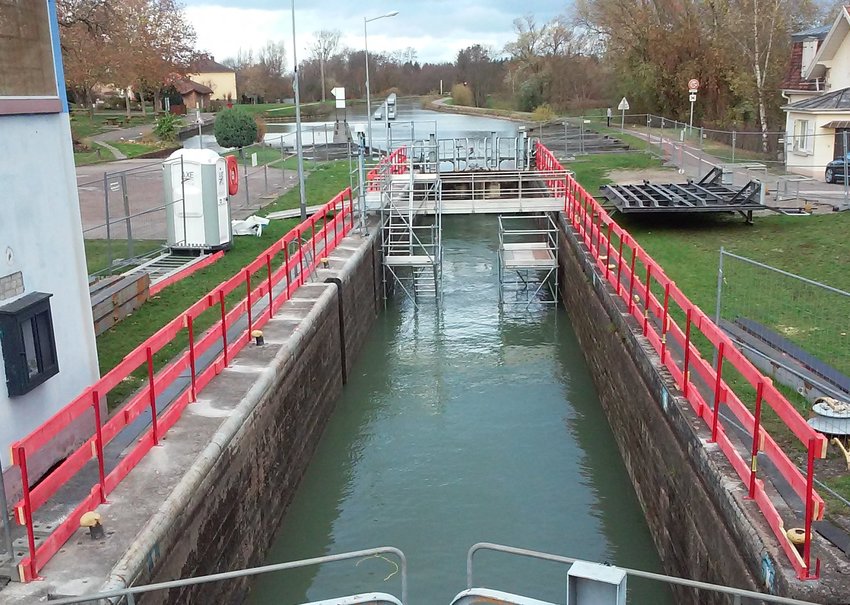
Also just before Switzerland, the Rhine passes through several locks; those mechanical wonders raising vessels from the lower river on one side to the higher river on the other.  There’s nothing like watching a lock do its thing while you’re in the lock.  Just when I thought I was done with my remodel list, here come the locks.  What a great way to secure my property!  Raise the driveway higher than the street; then force my visitors to enter through a lock!  On second thought, that’s too much work.  I’ll add another castle element instead – a drawbridge over the canal I installed way back in the second paragraph.

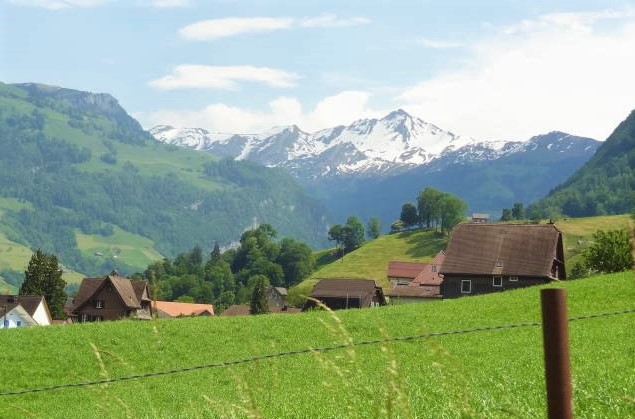
If you think my remodel is brazen (i.e. “Dave, do the deck and call it good”), just you wait.  My list is not quite complete.  Our cruise ended in Switzerland.  OMG.  I repeat, OMG.  How the heck am I going to remodel our property into Little Switzerland?  There’s nothing I wouldn’t tap from this Alpine dreamland: the dairy farms (which means a whole herd of dairy cows), the cheese and chocolate, and some of the prettiest, cleanest lakes in the world.  I’d even recruit a few of the Swiss themselves (as if they’d rather live in Colorado).  Of course, the real problem with recreating Switzerland is those dang gorgeous Alps – snowy caps, grassy meadows, cog railways and all.  Building Alps on my property would require ten billion delivery trucks of dirt and I just can’t afford that.  I’ll settle for gazing at the distant Colorado Rockies instead.

Come to think of it, gazing at the Colorado Rockies requires a deck.  That I can manage.  Let’s put my Deutschland delusion to the side and just start with a deck, shall we?

Almond Joy

Think about the last time you invited friends to your place, for dinner or some other get-together. Did they bring a little something – a gesture of their gratitude – or did they show up empty-handed?  The gesture, whether a bottle of wine or baked goods, is especially thoughtful because it was never really expected, right?  You invited your guests after all, presumably with no strings attached.

When my wife and I hosted friends from Germany a few months ago, they arrived with a plethora of German candies (an embarrassing amount, really). From their suitcases emerged boxes of chocolates and all kinds of licorice. There were German cookies and tempting little cakes. Finally, they placed a curious-looking black round metal tin on the counter.  The label proclaimed, “Mann Des Jahres”, or “Man of the Year” (???)  The tin looked more like an award than candy.  Later, I discovered it was filled with marzipan.

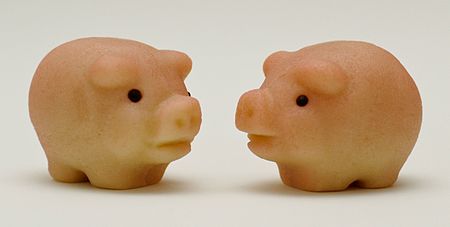
Marzipan translates to “March bread” by some and “a seated king” by others, but to me it is quite literally almond joy.  Sweetened with sugar or honey, marzipan derives its distinctive flavor from the paste, meal, or oil extract of almonds.  Marzipan is more popular in Europe than in the United States.  It is typically shaped into edible fruits, vegetables, or little animals – popular around Christmas and Easter.  Marzipan is also used in thin sheets as glazing for cakes.  The marzipan from my German friends was one big delightful chocolate-covered disc of almond cake.  In hindsight, I wish they’d brought a dozen “Man of the Year’s” and left everything else at home.

Marzipan was not my first introduction to the joy of almonds.  I fell for them back when chocolate bars like Almond Joy and Mounds were kings of the candy aisle (no Kit-Kat or Twix in my day).  Almond Joy was confection perfection: chocolate and coconut topped with whole almonds.  Then I discovered chocolate-covered almonds and realized I didn’t need the coconut.  Then I learned to appreciate almonds all by themselves – roasted and seasoned with sea salt – and realized I didn’t need the chocolate covering.  Today, I keep a bag of Marcona almonds in my car, to fend off less-healthy temptations.

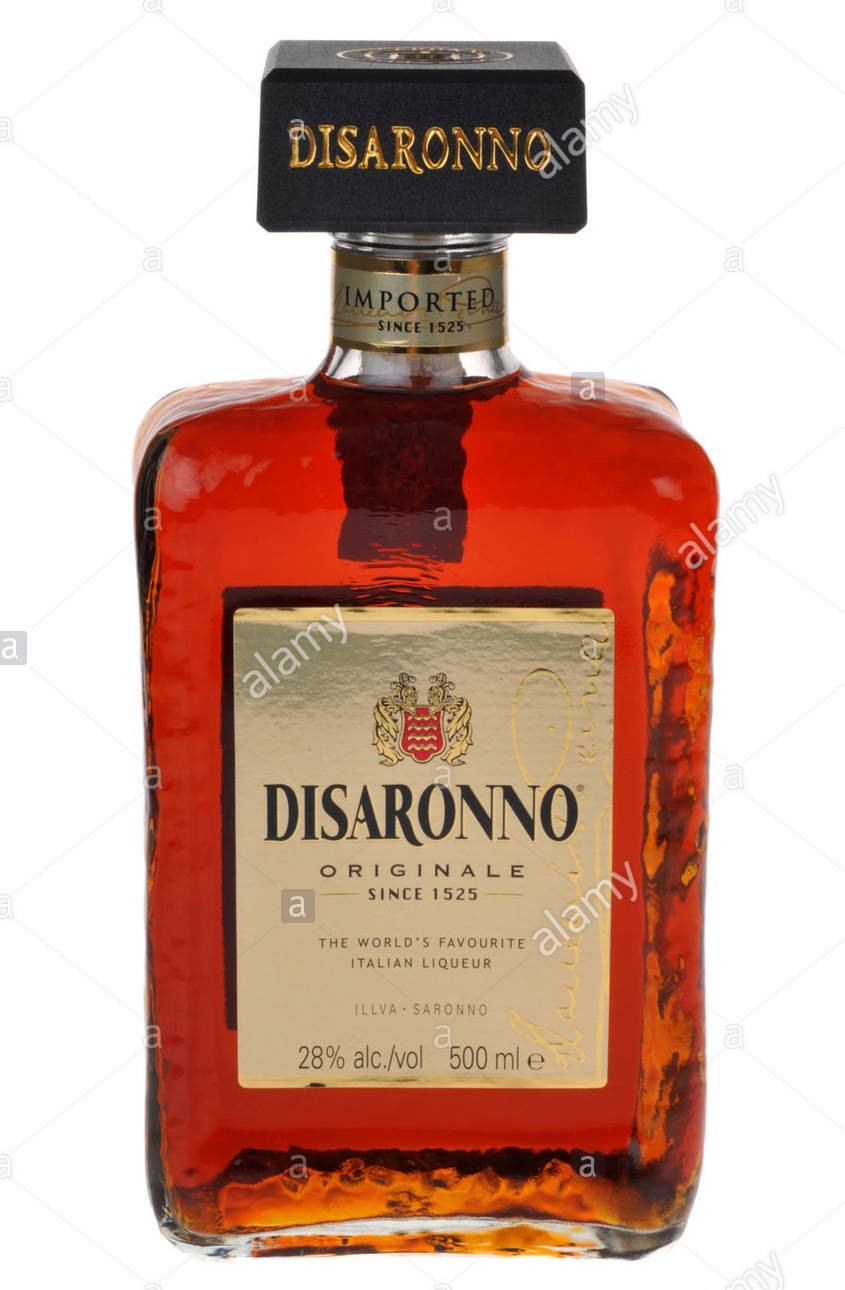
No discussion of almonds would be complete without a glass of amaretto.  In my junior year of college, studying abroad in Rome and not quite of drinking age, I was introduced to copious amounts of table wine, but also to Amaretto Disaronno, the elegant liquor from the northern part of Italy. The (supposed) origin of Disaronno is as colorful as the drink itself:

In 1525, a Saronno church commissioned artist Bernardino Luini, one of Leonardo da Vinci’s pupils, to paint its sanctuary with frescoes.  As the church was dedicated to the Virgin Mary, Luini needed to depict the Madonna, but was in need of a model.  He found his inspiration in a young widowed innkeeper, who became his model (and lover).  Out of gratitude and affection, the woman wished to give him a gift.  Her simple means did not permit much, so she steeped apricot kernels in brandy and presented the resulting concoction to a touched Luini. (from “A Brief History of Amaretto” – Shaw Media)

Saronno, Italy

Apricots still play a role in the making of amaretto, but its distinctive flavor comes from bitter almonds (amaretto translates to “bitter”).  Yet it’s still syrupy sweet – too sweet for me to drink straight.  Like most I “sour” mine with a shot or two of lemon juice.

Now that I think about it, we have almonds everywhere in our house.  Almond milk in the refrigerator.  Almond flour in the pantry.  Almond extract in the spice drawer.  Almond butter for our protein shakes and slivered almonds for our salads.  Amaretto in the liquor cabinet.

Still not enough.  I need to go find me some more marzipan.

Some content sourced from Wikipedia, “the free encyclopedia”.

Kindling the Fire

Last Sunday, in the midst of a sleep-in/no-alarm kind of vacation, my dad dragged my wife and I to early church. That meant falling out of bed by 7 and leaving the house by 8:15. Not my idea of a relaxed schedule, to be sure. On the drive to church and all through the service, I found myself in a fog and close to nodding off (the meh sermon didn’t help). Even at brunch afterwards – stoked with a double-dose of mimosas – I couldn’t seem to shake the cobwebs. It wasn’t until much later in the day I realized something significant went missing from my daily routine. I hadn’t had my morning coffee.

Morning coffee is more a habit than an addiction for me.  Or so I thought.  It wasn’t so long ago I occasionally substituted juice or water, and the day proceeded as normal.  Sunday’s drowsiness made me pause.  Maybe the impact of caffeine is more significant as you age.  Maybe drinking a hundred cups (or more) in a hundred days creates a dependency.  As they say, caffeine is “the world’s most widely consumed psychoactive drug”.

While I debate the impact of no caffeine today, I can absolutely attest to the impact of lots of caffeine, with two examples of inconvenience.  For me, caffeine sends a loud-and-clear, pulsing, Times-Square-sized announcement to my bladder saying, “IT’S TIME TO PEE.”  Not in fifteen minutes.  Not in fifteen seconds.  Now; as in – get up and go NOW.  I better have my path to the bathroom mapped out, and that door better be open.  It’s like clockwork biology, forty-five minutes after that first coffee sip.  Remarkably, the experts still question whether caffeine is a diuretic AND they wonder whether the amount of liquid expelled is equivalent to the amount consumed.  I emphatically answer “yes” and “MORE”.  With all the expelling, it’s a wonder my body doesn’t dry out and disintegrate.  No matter; it’s a small price to pay for my daily drug.

Here’s the second impact of caffeine.  Beware the cup of coffee (or any choice from Starbucks) after three in the afternoon.  Let that late-day caffeine hit take hold and you’re in for a long night.  I can very dependably fall asleep within five minutes of hitting the pillow except when my coffee intake is late-day (and on that note, why is upscale after-dinner restaurant coffee so good?).  I toss and turn like laundry in the wash cycle, staring at the ceiling and ruing my beverage mistake.  Then I stare at the bedside clock.  What a pretty clock it is.  Such colorful numbers.  It’s fun to watch the numbers change every minute.  Every hour.

Let’s review.  Assuming I plan my bathroom trips and lay off the coffee by mid-day, I can safely embrace my caffeine habit.  And if “habit” concerns me at all – its synonyms include “addiction” after all – here’s some good news.  Four cups a day is ideal for heart health, according to recent research by the Germans (my new favorite people).  Not up to four cups, but exactly four cups, netting you about 300 mg of caffeine.  Four cups is also the equivalent of a Starbucks “Venti” (the Nitro cold brew somehow packs in 469 mg of caffeine) but I steer clear of the big cups.  Wouldn’t want to get “addicted”.

We’ve only been talking about coffee here, but thankfully caffeine is found in only a handful of other foods and drinks.  What starts as a naturally-occurring compound in plants finds its way to teas, cocoa, cola soft drinks, energy drinks, and over-the-counter meds (i.e. cough syrup).  The only one I touch is cocoa (my chocolate habit justifies its own blog post).  So, unless I exceed my daily two-square ration of a Lindt 70% Cocoa Excellence Bar, my caffeine intake is all about coffee.

If you count milligrams the way you count calories, know that 300 of caffeine is the threshold to avoid anxiety and panic attacks.  A warning sign might as well pop up after 300 saying, “STOP!  Proceed with caution”.  It’s like there’s this sweet spot with coffee – an oasis between falling asleep in church and earning the jitters – that kindles my fire.  Gives me justification to start every day with a cup of coffee.  Or four.

Land of Flying Cars

My wife and I live in a rural area of Colorado known as the Black Forest.  The high density of Ponderosa Pines in our small geography gives us our name.  Remarkably, there’s only one other notable place on the planet named “Black Forest”: the region near Bavaria in southwest Germany.  As it turns out, I have personal ties to both places, though I’ve never been to the south of Germany.  Follow along as I connect the Forests.

Fill in the blank, “Best Childhood Movie: ________”.  Most of you would respond with an offering from Disney.  Including “Snow White…”, “Mary Poppins”, and “The Little Mermaid”, you’ve already covered sixty years of film-making, with countless other Disney classics in between.  I don’t think I missed a single Disney growing up in the sixties and seventies, yet – go figure – my favorite childhood movie doesn’t come from the Mouse.  It doesn’t even come from my home country.  My childhood choice?  The UK’s “Chitty Chitty Bang Bang”, based on the 1964 novel by Ian Fleming.

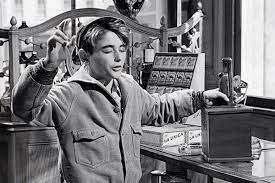
“Chitty Chitty Bang Bang” – the captivating musical about the inventor and his kids who lived in a windmill cottage; about those wonderful-though-not-always-perfect inventions (my favorite: the eggs-toast-sausage breakfast machine); about the candy-maker and the toy-maker and the captivating castle world of Vulgaria; and most importantly about the magical flying motorcar itself – created figments of my imagination like no other movie.  The lyrics to the title song (“…Bang Bang Chitty Chitty Bang Bang, our fine four-fendered friend…”) were burned into my brain.  Someday I vowed to visit the lands of Caractacus Potts and Baron Bomburst.


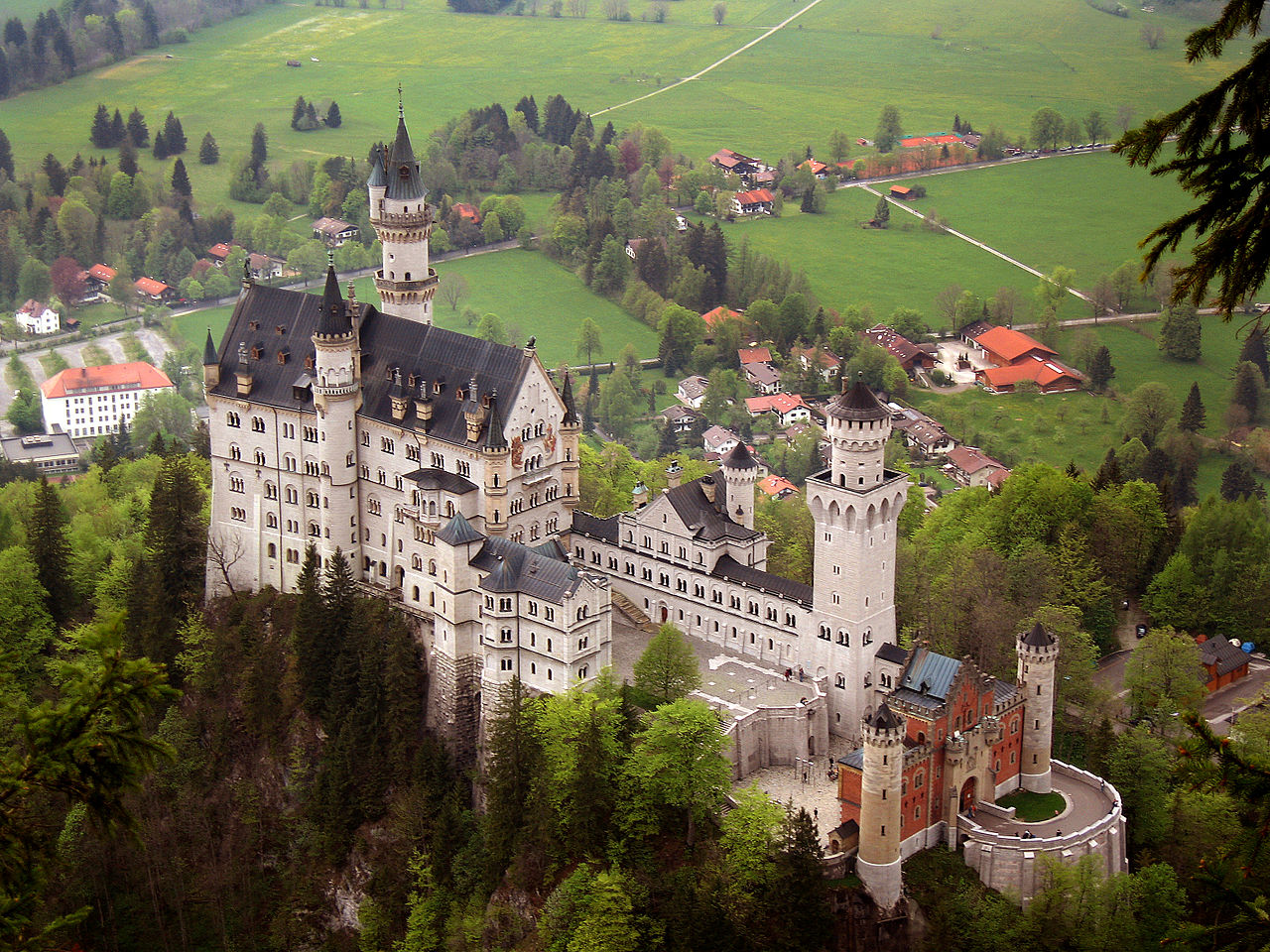
As it turns out, the Potts’ windmill cottage really does exist (and not on a movie set) – as the “Cobstone Windmill” in Buckinghamshire, England. The mansion where “Truly Scrumptious” lived is in the same area of the country.  And the Scrumptious Sweets Company was a working factory in Middlesex (today a steam-engine museum).  But it was the castle and village in Vulgaria I really wanted to see.  Not long after seeing the movie of course, I learned “Vulgaria” was a fictitious country.  Baron Bomburst didn’t actually lord over the land, nor did he ever keep all those children as slaves beneath his castle. But the castle and the village are based on actual places.  The village is Rothenburg ob der Tauber in Bavaria.  The castle is Castle Neuschwanstein, also in Bavaria.  And how ironic; both locations were inspirations for Disney as well: Rothenburg for the village in “Pinocchio”, and Neuschwanstein for the Cinderella castles in the theme parks.

To bring my journey full-circle, Rothenburg, Castle Neuschwanstein, and Bavaria sit in southwest Germany, adjacent to… the Black Forest.  Germany’s version of the Forest is a mountainous land of picturesque villages, castles, vineyards and spas.  This is the region that brought the world Black Forest Ham and “truly scrumptious” Black Forest Cake.  This is the land of glass-making and cuckoo clocks.  From the photos above, it looks every bit as charming as “Vulgaria”.


Colorado’s Black Forest barely amounts to a dot on Google Maps.  Within our pines, the “town” is a hodge-podge of nondescript businesses clustered around a couple of traffic signals, with nothing more alluring than a Subway, a post office, and a couple of coffee shops.  The terrain is fairly flat, with no windmill cottages or mountaintop castles or cuckoo clocks.  But it’s a great place to live, with its own unique charm.  And every now and then, when I’m deep in the pines, I’ll start humming that forever-familiar Chitty-Chitty tune, as I gaze up to the skies in search of a flying motorcar.