Changing Planes

My wife & I are boarding more flights than usual as we anticipate our upcoming relocation to South Carolina. “More than usual” deserves context I suppose, since so many of us skipped airports altogether the last couple of years. Flying is different now – some ways better, others not so much (and unquestionably more expensive). Regardless, I was happy to learn our favorite choice of airline before AND after the emergence of COVID just earned the label “world’s best” for 2021. Care to guess which one?

I already gave you the subtlest of hints in my blog title.  With mathematics at least, the world’s best airline is also known as “an incremental change in a variable”, which makes its logo – the triangle – a fitting symbol.  Its slogan is the uber-confident “world’s most trusted airline” but I prefer one of its older ones:

Maybe Delta Air Lines is your airline of choice too.  If not, you’re wondering where your favorite ranks among the world’s best.  I’ve never heard of Cirium (have you?) but the data-mining company spends its days converting 300 terabytes of aviation performance metrics into annual best-in-class rankings. (300 TB meant nothing to me until I crunched a few numbers.  A ten-page Word doc is about 2 MB  By my calcs Cirium is sorting through five million pages of data.  I’d say their rankings are legit, wouldn’t you?)

Let’s end the suspense.  Here are the top ten airlines measured by “operational performance”, for 2021:

  1. Delta (“Platinum Award” winner)
  2. Alaska
  3. American
  4. United
  5. Spirit
  6. Frontier
  7. Southwest
  8. JetBlue
  9. Air Canada
  10. Allegiant

Delta should put a lot of stock in this win, and not just because 9 of its 10 aircraft arrived on time in 2021 (10% better than second-place Alaska).  It’s more about the impact of the passenger experience to the result.  Is the boarding process efficient?  Is the flight crew rested and available?  Is the aircraft properly maintained? How is baggage handled? How are unruly passengers dealt with (a more recent trend)?  Every one of these details number-crunches to a measure of on-time arrivals.  And no one does it better than Delta.

I may be biased but my own experiences seem to back up the numbers.  My wife & I have flown Delta several times since 2019 (including a trip to Europe) and every one of those journeys met or surpassed our expectations.  I’m not saying Delta goes over the top to gain customer loyalty (though a warm chocolate-chip cookie would help).  They simply do what I expect.  Arrive on time and make the journey as pleasant and efficient as possible.  Is that too much to ask?

Sadly, my affection for Delta is bolstered by my dissatisfaction with its competitors. I’m surprised to see American and United make the top five.  My family and I have had several lousy experiences with American, including delayed or canceled flights and could-care-less customer service agents.  Meanwhile, United may know how to arrive on time, but their coach seats should be labeled “cattle class” (not unlike Spirit and Frontier).  Drop down the tray table and open your laptop.  I challenge you to type comfortably.

Southwest could’ve been higher in Cirium’s rankings but I’m sure their logistical issues last year contributed to the number.  Scores of their canceled flights were attributed to “weather challenges” during an unprecedented upheaval in the workforce.  I’ll forgive the bald-faced excuse.  When Southwest is running on “all engines” their brand of customer service is second to none – which keeps me coming back for more.

From my days in corporate America, I remember an equilateral triangle as the symbol of a successful company, giving balance to customers, employees, and shareholders.  Looks a lot like the Delta logo, doesn’t it?  More than just a nod to the Greek letter (Delta) or a throwback to its origins in the Mississippi (“Delta”, that is).  Even the dictionary definition of delta belongs in the conversation. Positive change befits operational excellence.

If my wife & I were relocating to Salt Lake City or Atlanta (or one of Delta’s other hubs), we’d be changing planes and flying more often with the “triangle”. Just this week my wife enjoyed another Delta flight she described as “perfect except for a few inconsiderate passengers” (which seems to be the norm these days). Delta celebrates one hundred years of passenger flights in 2029 so it’s safe to say they’re guided by experience.  The Cirium ranking is just a numbers-crunching confirmation of what I already know.  Delta is ready when I am.  Or, to put it mathematically, Δ = (S)atisfaction + (L)oyalty.

Some content sourced from the CNN Travel article, “The world’s best-performing airline has been revealed”, and Wikipedia, “the free encyclopedia”.

——————–

Lego Grand Piano – Update #18

(Read about how this project got started in Let’s Make Music!)

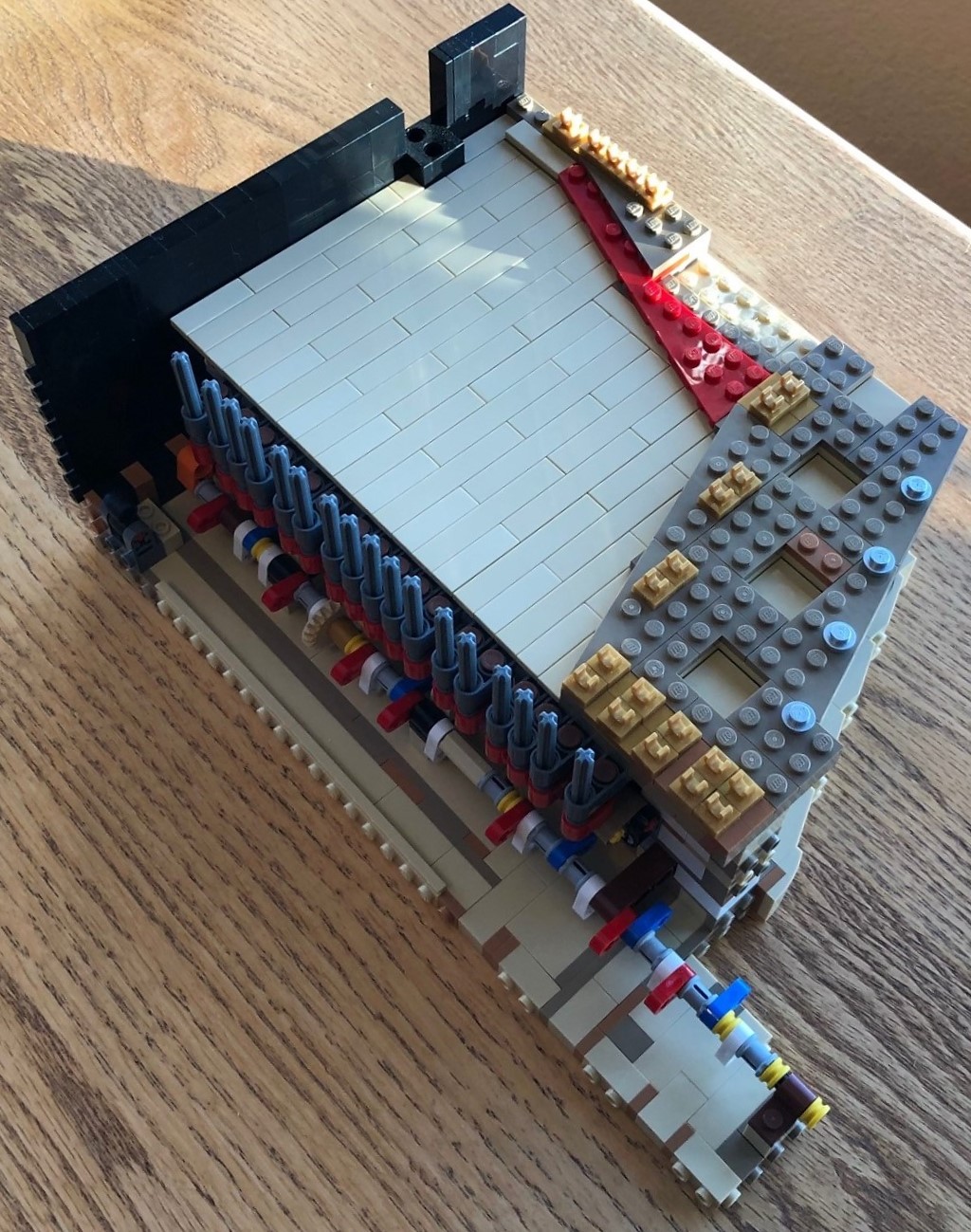
Today’s section of the symphony could’ve, maybe should’ve used a stand-in pianist.  Bag #18 – of 21 bags of pieces – assembled a little more than half of the piano’s top lid.  I show the structure on its side in the first photo because that’s how I built it, from the ground, er… desk up.  I imagined myself as a tiny mason, building a wall brick-by-little-brick, working right-to-left, then over to the right again.  You – my faithful reader – could’ve handled this part of the construction easily.  In Lego terms, it’s a wall made with various lengths of rectangle pieces.  That’s it.

Not a wall, but part of the hinging piano lid.

Know what I love about this adventure? (which is rapidly coming to a close!) You don’t always see what’s coming.  I knew I was building the top lid, but it was hard to see how it fit the piano until I set it on its side when I was done (second photo).  More to my point, I have three bags of pieces remaining.  One is the remainder of the piano lid.  One is the free-standing bench for the pianist.  Which leaves… you see? I still have no idea what’s coming.

Running Build Time: 13.0 hours.  Musical accompaniment: Berlioz’s Symphonie fantastique. Leftover pieces: None!

The top lid rests in its future location.

Conductor’s Note: The story behind Louis-Hector Berlioz’s Symphonie fantastique is more interesting than the piece itself (seriously).  At the somewhat tender age of 24, Berlioz fell in love with an Irish Shakespearean actress, who kept him at bay until she finally agreed to be his –  seven years later. Maybe the length of Berlioz’s pursuit extinguished the flame because the romance didn’t last.  But Berlioz wasn’t left empty-handed.  He composed the Symphonie fantastique to depict the idealized version of his Irish lover. I just didn’t find his music fantastique.

Emerald Greens

In the final lines of our national anthem, Americans sing, “O’er the land of the free, and the home of the brave”.  Those labels are a little dicey today.  Are we really free?  Are we really brave?  It’s a debate best left to more intellectual bloggers. I’m simply looking for less controversial words to describe the United States.  Take Ireland, for example.  The little republic is nicknamed “The Emerald Isle”.  Of this, there can be no doubt.  Before your flight even touches down, the window seat view is nothing but endless rolling green hills.  And not just any green.

See what I did there?  Inside of a single paragraph I distanced myself from heavy topics like freedom and bravery, and now I’m focused on the color green.  Bravo, Dave! Now then, let’s continue.

“The Emerald Isle”

Emeralds have always been my favorite of the precious gems.  In the jewelry shop it’s hard to ignore diamonds (because they’re everywhere), yet somewhere in the glass cases you’ll find the more colorful stones. Blood-red rubies. Royal blue sapphires. Modest little garnets (my birthstone).  And green, green emeralds.  I’m drawn to emeralds because green is my favorite color.  On that note, do you realize your favorite color never changes?  Nobody says, “Well, I used to like purple but now my favorite color is orange”.  You can move to another country, switch up your career, or overhaul your wardrobe, but your favorite color is a constant.

I digress (sorry). I have emeralds on the brain for good reason.  My wife & I just celebrated thirty-five years of marriage (thank you very much), and she hinted emeralds might be a nice gift.  So I paid a visit to my jeweler.  I told her I was looking for something understated, maybe earrings and a necklace.  She showed me a pretty set, where I thought my only decision was the shape of the stones (Round? Square? Pear?).  But then she threw me a curve when she said, “Would you prefer natural or lab-created?” Huh? Why would I buy my wife anything other than the real thing?

“Natural”
“Lab-created”

Here’s the rub of the green.  Lab-created gems are the real thing.  They’re “chemically, physically, and optically identical to their natural counterparts.” So why choose one over the other?  Cost. Lab-created gems can be significantly less expensive, especially as the number of carats grows.  In other words, easy choice, right?  Wrong.  The lab-created gems – at least in my jewelry shop – were small enough to be the same price as the naturals.  Instead, my decision came down to color.

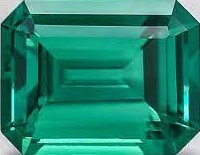
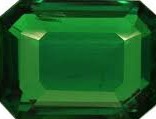
Was I tempted by the blue-green clarity of the lab-created?  Absolutely.  Did I choose them?  Absolutely not.  I kept coming back to the emeralds in my brain.  Call it natural green, kelly green, or Irish green, but I prefer the green on the left.  And I think my wife did too.

Liz is wearing $6.5M worth of emeralds and diamonds

I’d like to share some trivia on today’s topic but – warning – it’s a little pedestrian.  Emeralds are one of the twelve birthstones (conveniently, the month of May).  Emeralds come from the mineral Beryl (as do aquamarines).  Their rarity makes them “precious”, alongside diamonds, rubies, and sapphires.  They’re delicate, susceptible to chipping.  Finally, emeralds are considered, among other things, a symbol of rebirth.

A section of the Florida Panhandle is called the Emerald Coast for the area’s clear, green water.  The Wizard of Oz lived in the Emerald City for reasons only Oz fanatics can explain.  And little Ireland, deservedly, earns its nickname for those rolling green hills, as well as Irish jewelry, made primarily from green gems (if not all emeralds).

Florida’s Emerald Coast

I saved one more fact for last, mostly to make points with my wife.  After I bought her the earrings and necklace, I said to my jeweler, “By the way, it’s silver for the 25th anniversary and gold for the 50th, but what about the 35th?” She replied, “Emerald” (even though several Google searches suggest jade).  Whoa. I didn’t plan on that coincidence but I’ll certainly take the credit.  After all, my wife is one-quarter Irish. My daughter’s name is Kelly. And my favorite color is green. How could it be anything but emeralds?

Some content sourced from Wikipedia, “the free encyclopedia”.

——————–

Lego Grand Piano – Update #17

(Read about how this project got started in Let’s Make Music!)

Today’s build demanded more of an overhead view so you can see the difference between last week and this week. Bag #17 – of 21 bags of pieces – earned me the row of seventeen black caps you see in the second photo (on top of the piano wires), as well as the wide stand for sheet music, just behind the keyboard cover.

Last week

The piano is a remarkable instrument.  When you press down on a key, you’re actually pushing a “hammer” up against the underside of a piano wire, creating a musical sound (or “note”).  When you release the key, a black “damper” (one of the seventeen I just built) drops down on the top of the wire, silencing the sound.  Add in the functions of the three pedals at the base and you should consider the piano a musical mechanical marvel.

Running Build Time: 12.5 hours.  Musical accompaniment: Rimsky-Korsakov’s Flight of the Bumblebee. Leftover pieces: 2

This week

Conductor’s Note: The Bumblebee is a brief orchestral interlude of an opera, composed well over a hundred years ago. Nikolai Rimsky-Korsakov’s furious little piece, when played on the violin, really does sound like a buzzing bee.  It’s only 84 seconds in length, but you find yourself catching your breath after you’ve heard it.  It’s even more remarkable when played on the piano, the fingers almost a blur.  Have a listen to the audio file here. I’m sure you’ll recognize the tune from some of today’s movies and cartoons.

Hold (the) Music!

This morning as I brushed my teeth, I could hear soft music while my wife surfed on her iPad nearby. It was a catchy keyboard instrumental, the kind of tune to put a bounce in your step. Not twenty seconds later however, there was a bit of silence followed by the same melody all over again. By the time I flossed I’d heard this “song” five or six times through and it was getting annoy-oy-oy-ing.  Then it hit me.  My wife was on her iPad – yes – but she was also on hold.

Elevator Music. Lift Music. Piped Music. Muzak. Call it what you want, but my unofficial survey says hold music is not the satisfying little concert it was designed to be.  How many times have you heard, “Thank you for your patience… one of our representatives will be with you shortly…” followed by the same cloying music over and over and OVER again?  You pull out your teeth (I mean, your hair) because “the representative” will NEVER be with you (let alone “shortly”).  More to today’s point, the persistent music-on-hold (MOH) doesn’t lighten your mood, and, it’s an insult to technology.

MOH had the best of intentions when it debuted in 1962.  Like many products MOH was invented by accident, when the phone lines of a small factory accidentally picked up the music of the radio station next door.  MOH appealed to businesses because customers stayed on the line longer if offered music over nothing at all.  Hold music also found an audience in places where people tended to gather, like elevators, waiting rooms at doctors’ offices, and airport boarding lounges.  You should agree; music beats silence any day (in other words, something is better than nothing).  It’s just, the “something” should be a whole lot easier on the ears.

I have a personal connection with hold music.  Years ago, it was a part of my responsibilities as the switch programmer for a long-distance phone company.  If you call customer service today – any customer service – oftentimes “events” happen before you’re connected to a real person.  How many times does the phone ring before someone (or something) answers?  Are you offered a menu of choices to route your call to a specific department?  Would you prefer a callback instead of waiting on hold?  A behind-the-curtain person programs these little events and that person was me.  I also chose when to offer you hold music.

Mercifully, my long-distance company subscribed to a professional hold music product, which meant calls to our customer service were offered pleasant, non-repeating tunes.  You might have to wait fifteen or twenty minutes but at least you wouldn’t get a mindless tune, slowly eating away at your brain cells.  Unfortunately, my company was the exception.  Professional hold music isn’t cheap (thanks to copyright law) and most companies don’t care enough about their customers to pony up.  So, you get “catchy” keyboard instrumentals instead.  Even worse, you get the endless loop of tape-recorded music (a tape recording!), including the hiss and pop of too many plays.  Like I said, an insult to today’s technology.

You might disagree about the loss of brain cells. “Not ME, Dave; I don’t get hold music stuck in my head“.  Okay, but listen to the following YouTube audio and then reconsider.  This ditty may be the most famous music-on-hold specimen of them all; the so-called “Opus Number One”, composed by Tim Carleton and Darrick Deel and incorporated into every single Cisco phone system.

The days of hold music are numbered (and thank heavens they are) because the days of live customer service are numbered too.  Today’s customer service has you self-diagnosing through torturous “interactive voice response” (IVR) menus or by scrolling online through endless lists of FAQ’s.  But MOH still has its place at other tables.  The sophisticated InBody body composition scale at my fitness club offers MOH while you stand there getting your vitals measured.  Our Samsung washer and dryer play the same happy [irritating] little tune after every load is done.  And elevators aren’t going anywhere (except up and down).  You’ll still hear plenty of Muzak on elevators.  At least today’s smartphones help riders escape their awkward proximity to strangers.

The next time my wife is subjected to hold music, I may have to move to another room to brush my teeth.  Then again, maybe it’s not so bad.  You can now buy toothbrushes with built-in hold music while you brush (lasting exactly two minutes). This would be detrimental to my dental hygiene. I might tear my teeth out before I even get to the flossing.

Some content sourced from Wikipedia, “the free encyclopedia”.

——————–

Lego Grand Piano – Update #15

(Read about how this project got started in Let’s Make Music!)

At long last, our piano has a keyboard! Bag #15 – of 21 bags of pieces – added the final key to the right side of the board for a “grand” total of twenty-five.  Then the whole assembly slid into the piano frame smoothly, as if closing the drawer to your bedroom dresser. The piece of the black frame running the length of the board just below the keys secures everything into place.

As a part-time perfectionist, I’m a little bothered by the fact the piano keys don’t rest at a uniform height across the board.  You can see one to the far left sitting a little higher than his neighbors while one to the far right sits a little lower.  Removing the keyboard at this stage in the performance is easy, so I might see if I can level things out.  Or, I’ll just make peace with being a little “off-key”.  Maybe.

Running Build Time: 11.6 hours.  Musical accompaniment: Ives’ The Unanswered Question. Leftover pieces: 1 tiny green square.

Conductor’s Note: Charles Ives’ The Unanswered Question is one of the most creative classical pieces you’ll ever hear.  It’s a “dialogue” between a trumpet and four flutes.  The trumpet asks the question, “What is the meaning of life?“, and the flutes try in vain to answer, a total of six times.  The flutes get more and more frustrated (and the music more disjointed) every time the trumpet repeats the question.  The Unanswered Question concludes with the trumpet asking its question one last time.  Now that you know the story, listen to the short piece through the following video.  It’s only six minutes.  The Unanswered Question was the perfect choice for today’s topic.  After all, how many times do you call customer service only to come away with… an unanswered question?

Look What the Catfish Dragged In

When I consider my options at a seafood restaurant, I go for halibut or sea bass. Both are offered wild-caught (a healthier approach than farmed). Both have a distinctive flavor and pair well with a variety of sauces. But once in a great while I come across catfish on the menu.  I confess to never having tried it. The jury’s still out on whether catfish is a good choice vs. utterly lacking in flavor. Probably depends on the prep. All I know is, a catfish is a bottom feeder. If it’s anything like con man Ali Ayad, it really is lacking in flavor.

Bottom-feeder

In the world of tech, catfishing is a disturbing practice.  The “fisher” creates a false online persona (photo, bio, accounts), then trolls social media looking to establish relationships, usually for financial gain.  The victim is lulled into a false sense of security through casual texting and email conversations, until he or she unwittingly hands over the money or even worse, gives access to personal information.  Favorite catfishing targets: senior citizens and those looking for love.

Manti Te’o, aka “prey”

A well-known example of catfishing involved former American football player Manti Te’o (a graduate of my alma mater, I’m embarrassed to say).  Te’o developed an online relationship with a woman at Stanford University just as his name was starting to make headlines as a Heisman Trophy candidate.  Te’o pulled heartstrings when he revealed to the sports media his girlfriend had leukemia.  It took a full-blown investigation to determine not only the false persona of Teo’s girlfriend but also the con behind it: a childhood friend of Te’o’s who was in love with him.  The resulting embarrassment undoubtedly affected his future NFL prospects.

Ali Ayad is our latest example of catfishing and his story is a whole lot more disturbing than Manti Te’o’s.  Ayad started digital design company Madbird in 2020, from nothing but clicks on the keyboard.  He invented a corporate website and claimed a random London street address as his office.  He created a fake co-founder, stole photos of real people to build the rest of his executive staff, and developed a resume of high-profile clients he never worked for (complete with testimonials).  Then he went in search of real people around the globe to put in the long hours to get Madbird off the ground.

It almost worked.  Ayad hired fifty employees in a matter of months, convincing each to walk away from real jobs to work from home on commission, with the promise of a fixed salary after six months.  One employee pitched the company to over 10,000 contacts, becoming Madbird’s “Employee of the Month”.  Others in other countries uprooted their lives, anticipating Madbird as their ticket to eventual relocation to the UK.  No client deals were ever closed and no commissions were ever paid.

The catfish himself

Then Ayad made a misstep.  He hired Gemma Brett, a designer from West London.  Two weeks into her employment Brett innocently mapped the commute to Madbird’s offices.  The street address turned out to be a building of residential flats.  Suspicious, Brett engaged another employee to dig further into the company, and Madbird’s inauthenticity started to reveal itself.  The BBC got wind of the story and conducted a thorough investigation, which you can read about here.  The extent of Ayad’s charade will have you shaking your head.  If nothing else, watch the on-street interview towards the end of the article where reporter Catrin Nye catches Ayad off-guard.  Even in this confrontation Ayad believes he’s done nothing wrong.

Ayad reminds me of Rumplestiltskin spinning gold from straw; he’s just a lot more attractive and charismatic than the old buzzard from the Grimm fairy tale.  Ayad’s also tech-savvy enough to convince perfectly intelligent people to go for his gold, which leaves me with two questions.  Why did Ayad go to such lengths to start a company whose foundation was destined to crumble?  And what are the consequences of his actions?

Nature’s catfish are typically harmless but there’s also a particularly nasty one, nicknamed the striped eel for its markings and shape.  This catfish has hidden poisonous stingers in its fins.  Handle with care; in rare cases, people have died from its venom.  Maybe our man Ali Ayad is not just catfishing; he’s a bona fide striped eel.  A bottom-feeder, still lurking, ready to poison his next victim.  Watch out.

Some content sourced from the UK Insight article, “Jobfished: the con that tricked dozens into working for a fake design agency”, and Wikipedia, “the free encyclopedia”.

——————–

Lego Grand Piano – Update #6

(Read about how this project got started in Let’s Make Music!)

I worked outside of the box this week – literally. Bag #6 – of 21 bags of pieces – assembled into a portion of the piano I can’t attach to the section I’ve built so far.  Its width suggests it’s part of the front of the instrument (just behind the keyboard) and it has a few moving parts, but darned if I can figure out how it’s going to connect.

Despite the furious background rush of a Prokofiev piano concerto, I completed this section with calm and confidence in just forty minutes.  Either I’m getting better at this or the bags of pieces are shrinking.

Detail of the mechanics

Running Build Time: 5.6 hours.  Musical accompaniment: Prokofiev’s Piano Concerto No. 3 in C Major. Leftover pieces: Zero (again!)

Conductor’s Note: The Prokofiev Concerto and Beethoven’s “Emperor” Concerto No. 5 (accompanying the Bag #2 assembly) were both included in the soundtrack of “The Competition”, a 1980 film starring a young Richard Dreyfuss and even younger Amy Irving.  If you’re a fan of classical piano, it’s a must-see.

The Time of My Life

Yesterday I was sitting at my desk thinking, “Hey Dave, time’s a-ticking. Gotta come up with a topic for tomorrow’s post”. I stared at the clock, considering a few interesting ideas. The slender second-hand edged ever closer to the next minute, to the next hour, time literally passing before my eyes. Suddenly it hit me. My topic. Time.  More to the point, clocks.  To which I lob an interesting question your way: analog or digital?

The Seth Thomas “Promise”

My house is full of inanimate objects screaming for attention. When I’m lost in thought and staring into space, a certain something in the room starts to say, “Pick me! PICK ME!” in a desperate attempt to become a blog post. Today my desk clock actually pulled it off. I was dead set on a couple other topics until my clock somehow ticked its way to the top of the list.  Perhaps today’s title should’ve been, “A Moment in Time”.

We’re not talking about just any desk clock, mind you. The little guy you see here (all of 2.5″ wide by 3″ high) is a Seth Thomas “Travel Carriage Alarm Clock”, a quartz analog model made by the hundreds of thousands in China. You can find one online for $14.99, the affordability belying its simple elegance. I chose this clock as a gift from Hewlett-Packard (HP) on the fifth anniversary of my employment back in 2002.

I had better choices than an analog clock, but the Seth Thomas somehow captivated me. Even twenty years ago when I got it, a desk clock waxed nostalgic, especially with arrow-capped hands and Roman numerals. The “Promise” model also makes a pleasing little tick-tock-tick-tock sound as the second-hand sweeps the minutes away.

German AND Swiss-made…

If my four-year-old granddaughter were reading this post she’d ask her dad what analog means.  Let’s face it; my granddaughter’s growing up in a wholly digital world.  Her watch, her smartphone, her computer, and the clocks she displays in her future house will exhibit squarish lifeless numerals instead of graceful minute and hour hands.  She’ll “tell time” the way McDonald’s cashiers push the hamburger key instead of entering the amount.  No interpretation required.

I took a stroll around my house and counted three analog clocks, each with sentimental value.  Besides my Seth Thomas, we have an intricate cuckoo clock we purchased in Germany (with the mechanics made in Switzerland), and a horse-head clock we’ve had forever (which no longer works but still graces our bedroom wall).  Our digital timepieces are many more in number yet I still prefer the soothing tick-tick of analog hands, as well as the lazy swing of the cuckoo clock pendulum.

When I was a kid, I grew up in the presence of a formal grandfather clock, standing guard in the curve of our entryway staircase.  I can still hear its chimes, with a higher pitch than you’d expect from its heavy-framed stature.  My bedroom was close enough to hear the bells of the hour in the middle of the night, a gentle reminder it was time to get some sleep.  Whenever I wind our cuckoo clock today, I remember my dad doing the same thing with the grandfather all those years ago.

Since we’re talking about analog, I owe my wristwatches a few words.  I have eight of them and most stopped ticking a long time ago.  Two are also from HP anniversaries (What the heck, were timepieces my only choices?) but three others have more significance.  One carries the logo of my father’s seafood restaurant.  I still have the Snoopy watch I believe was my very first timepiece (my granddaughter wouldn’t know Snoopy either, sigh).  I also have my first “big-boy” watch; a gold Pulsar with matching hands on a cream-colored face.  Yes, I may be wearing a sleek digital Fitbit as I type but I always wear one of my analog watches on special occasions.  At least, one that still works.

[Author’s Note: I’m a little unnerved to see each of my wristwatches in the above photos is stopped at the exact… same… time. I didn’t do this! Why would I do this? Either someone’s been playing in my watch drawer or my house is haunted. Maybe both.]

Prague’s Astronomical Clock

I can’t decide if my granddaughter will miss out with the lack of analog in her life.  She’ll take trips where she’ll see quaint clocks high up in the steeples of New England churches.  She’ll take a hop-on-hop-off double-decker bus through London, passing under the shadow of Big Ben.  She may even make it to the Old Town Square in Prague to see the famous Astronomical Clock, still operating since 1410.  But will she know how to tell the time?  Time will tell (ha).  More likely, her grandfather will teach her how.

Some content sourced from Wikipedia, “the free encyclopedia”.

——————–

Lego Grand Piano – Update #5

Last week

I describe this week’s movement as “allegretto”, or “light and cheerful” (read about my hesitant warm-up in Let’s Make Music!).  I completed the build of Bag #5 – of 21 bags of pieces – in a cool 46 minutes.  Maybe I’m finding the rhythm of this piece, though I did have a tense moment where two critical blocks were installed the wrong way and I had to disassemble several steps to get them right.  Whew – that was close!

Dare I say, we’re starting to see hints of the finished product.  Those four circles in the “this week” photo are part of what you’ll see when the piano lid is open.  All those little yellow “grabbers” will cradle the piano strings.  To the rear, we’re seeing some of the graceful curves of the instrument’s black body.

This week

Simple math tells us we’re approaching 25% completion of the build.  To put it another way, our concerto is about to wrap up the first of its four movements.

Running Build Time: 5.0 hours.  Musical accompaniment: Mussorgsky’s Pictures at an Exhibition. Leftover pieces: ZERO! (Holy cow – how did that happen?)

Conductor’s Note: I’m about 700 pieces into the build and this instrument is getting heavy.  Now I understand why you need special movers to relocate a piano.

Triple Booked

The Oxford University Press, a publisher for more than 700 years, churns out 6,000 physical titles a year despite today’s electronic alternatives. Oxford focuses on educational materials, including dozens of dictionaries. At one time the Press had the exclusive right to print the King James Version of the Bible. I know Oxford for one other reason, however: their 21-volume illustrated collection of the works of Charles Dickens.


I’ll bet you have a collection of something yourself, where the number of items in the lot goes beyond pure necessity. We have more Christmas ornaments than any reasonably-sized tree can hold. We have more mugs than we’ll ever use for coffee or tea. My brother seems to collect cars (or maybe he really does drive them all). Whatever feeds our need to collect also fuels our stubbornness to ever let these items go.

Such is the case with my Dickens collection. When I was in my twenties I got a mailer from Oxford Press advertising “a Dickens book a month”.  Must’ve been inexpensive back then, and somehow the collection spoke to me even though I’d never read a lick of Dickens.  Maybe I envisioned my future dwelling with shelves of classic literature (never happened). Several decades after I purchased the last Dickens I still haven’t read a page, but the books sure look nice all standing in a row.  I’ll never get rid of them.

This talk of Dickens and collecting is just a preface to my real topic today.  I’d like you to meet PixxiBook.  Maybe you don’t collect books (outside of those you purchase on your e-reader) but ask yourself: what if you could have your blog posts pressed into books worthy of your coffee table?  That’s what PixxiBook does, and they do it well.

PixxiBook is one of those I-wish-I’d-thought-of-it businesses.  The husband and wife behind the scenes did what most startups do: create a business based on a personal need.  “Tim and Sabrina” wanted to convert their travel blog into a book but realized the process takes more time and effort than most people are willing to invest.  So they designed a computer program to do the work instead.  Then they partnered with a printing press, aligned with WordPress and a few other blogging hosts, and a business was born.

I’m not sure whether Tim or Sabrina gets the credit, but here’s the marketing genius of Pixxibook (and the point where you’ll stop reading this post).  You can create your PixxiBooks from your blog now… and instantly preview the finished product.  No charge.  Just go to Pixxibook’s website, enter your blog’s URL, and watch the computer program crunch through your posts to create your books.  If you like what you see, you can purchase the real thing.  When my wife ordered my PixxiBooks as a 60th birthday present, they were printed and shipped so quickly I’d only written two new posts by the time I got them.  Seven years of weekly posts published in three elegant volumes.  Life In A Word is now a “triple-booked” anthology.

I wrote this one three years ago.

Earlier I mentioned your coffee table, and how PixxiBook is worthy of its surface.  Not quite true.  Some of you – especially you non-bloggers – are thinking, “Nobody’s gonna leaf through old blog posts, Dave”.  Hey, I agree with you.  Blog posts are read and digested, and then we move on to other things.  So why pay for books?

Go back to my Dickens’ collection for the answer.  Those Oxford Press gems are mine.  Not my wife’s, not my dog’s, not someone’s who we invite over for a dinner party.  Mine.  I can admire them from across the room, leaf through one every now and then, or maybe finally start to read Oliver Twist.  Doesn’t really matter what I do with them.  Just like my PixxiBooks.  They’re a nice collectible and worthy of my shelf space.  I’m never getting rid of them.

——————–

Lego Grand Piano – Update #4

Today’s portion of the concert was legato or “smooth” (read about my hesitant warm-up in Let’s Make Music!), though I won’t go so far as to say “effortless”.  The only real drama with Bag #4 – of 21 bags of pieces – was the one little piece that skitted off my desk and tried to escape the room.  Caught the little bugger before he got too far.

All Bag #4 pieces assemble to a single structure: the light-colored “deck” you see here with the red pieces towards the top and the grey pieces to the right.  Those little yellow grabbers will eventually secure the piano strings.

The second photo is a good look at the piano “mechanics”.  This view would be as if you were sitting at the bench looking directly at the keys.

Running Build Time: 4.2 hours.  Musical accompaniment: Vivaldi’s The Four Seasons. Leftover pieces: 3

Conductor’s Notes: Mr. Instruction Manual included a couple extra pages today; pictures to show me how to “turn on” the piano by pushing a button on the battery pack.  Once I did, the battery pack started flashing.  Had to disconnect a cable to make it quit.  Wish I knew what that was all about.  Patience, maestro, patience.

Just Off the Podium

This time of year I find myself doing a little cyber “spring cleaning”. I know, it’s not spring yet and I could simply busy an alcohol wipe on the keyboard or fog the monitor with Windex, but I’m talking about electronic purging here: files, emails, photos, and the like.  I even reset passwords.  When I’m done giving the Delete button a workout I pick up my laptop and hope for something more light-as-a-feather.  Nope, but at least my digital house is in order for another year.  Just like my blog.

The Winter Olympics start tomorrow, did’ja know? (You didn’t? Shame on you! Pay more attention!)  With the fifteen-hour time difference to Colorado I’ll be lucky to catch ten percent of the action, but I still seek out the good stuff.  Downhill skiing and figure skating are my favorites.  So much skill and grace there, with the occasional feel-good story thrown in for the heartstrings.  But skill and grace only matter if they amount to medals, right? We hang our hats on gold or silver triumphs, even bronze. As for the poor lass or lad in fourth place? Hardly a mention. Fourth place is swept harshly into the performance dustpan, to be dumped on a heap of lesser statistics seldom referenced again. Fourth place can be a mere hundredth of something from the medals podium. Inches. Seconds. Points.

“fodder”

Fourth place at the Olympics is an apt way to describe a lot of topics I consider for my weekly blog posts.  You see, part of my writing madness method is to cull interesting bits from my daily newsfeed; fodder for future posts.  I store these bits in an electronic folder and then pull back the curtain when I need a topic.  But not just any topic, loyal readers.  Heavens no, my topics don’t make the medal stand unless they successfully sift through five filters:

  1. Is the topic substantial enough for an entire post?
  2. Is the topic somewhat off the beaten path of “breaking news”?
  3. Is the topic worth a little more research (or as I like to call it, “continuing education”)?
  4. Is the topic an easy target for grins and giggles?
  5. Can I weave a personal memory or two into the topic’s fabric?

Take away just one filter and the topic isn’t a winner.  No medal… er, post for you, little news story.  Instead, the topic sits idle in the folder gathering cyber-dust until I decide it’s never going to make the cut.  Then I “Delete”.  Before I do this time, however, I thought you’d enjoy a smattering of the near misses; the fourth-place finishes if you will.  Here are ten interesting-but-not-quite-good-enough topics sitting just off the podium:

  • Asparagus.  A recipe for the healthy, non-cruciferous vegetable was published smack dab in the middle of an official Belgian law database, side-by-side with national legislation and royal decrees.  Food for thought?
  • Mercury (the planet).  A European-Japanese space probe passed within 124 miles of the Mercury’s 800°F surface on its seven-year mission, collecting images and sending them back to Earth.  Now that’s what I call “hot shots”.
  • Qantas.  Last May the airline offered a “flight to nowhere” for travel-starved Australians wanting a better view of the late-month supermoon.  Tickets ran upwards of $1,000 USD and sold out immediately.  Travel-starved indeed.
  • Cannabis.  If you live in Ontario, Canada, Uber Eats will be happy to deliver an order of recreational cannabis to your front door.  I’m sure this new service makes the country’s rampant illegal pot producers very happy.
  • Robots.  The world’s first living robots (or “xenobots”), each less than a millimeter wide, can now reproduce.  They could already move about, work together, and self-heal before this more disturbing evolution.  In a word, YIKES!
  • Style.  Billionaire heiress Ivy Getty got married last November at San Francisco’s City Hall in a wedding dress covered with mirror shards.  She referred to her dress as “… just like everything I could’ve dreamed of and more.” Really?  I don’t think I want to meet Ivy Getty.
  • Taco Bell.  The Bell now offers a monthly taco subscription for those who join their rewards program.  $10 gets you a free taco every day of the month.  The Bell saw a 20% increase in rewards program membership when they began offering the subscription.  Confirmed: we Americans are hopelessly addicted to fast food.
  • Bees.  May 20th is World Bee Day.  You can find a lot of interesting trivia about bees on the Web.  They communicate by dancing.  They use tools.  They get mad if they haven’t eaten in a while.  The more you learn about bees, the more you realize they’ll probably take over the world one day.
  • Contact Lenses.  A company has designed the first “smart” contact lens, capable of delivering real-time information to the eye.  The lens connects to your smartphone and generates an image similar to what you’d see on your screen.  So the next time you see someone with “eyes glazed over”, don’t be so sure they’re falling asleep.
  • Millennium Tower – A 58-story building in downtown San Francisco has been leaning to the northwest at a rate of 3 inches per year, for a total of 24 inches so far.  If I were one of the owners of the building’s 419 luxury apartments I wouldn’t be sleeping so well.  I say get ahold of engineers in Pisa, Italy.  Their world-famous leaning tower is predicted to remain standing for another 200 years.

Maybe one of these topics grabs your attention and you want to learn more.  Go for it.  In fact, write a blog post about it.  I’ll read your version of the story and maybe say, “Crud; missed a good one there.”  But probably not, because I didn’t consider the topic podium-worthy.  Now if you’ll excuse me, I’m off to watch the Olympics (fifteen hours after the fact).  I don’t want to miss those medal ceremonies.

——————–

Lego Grand Piano – Update #3

Today’s portion of the concert was difficult (read about my hesitant warm-up in Let’s Make Music!).  Bag #3 – of 21 bags of pieces – was smaller than the first two so I figured this step would go quickly.  Wrong.  Bag #3 contained tiny, tiny pieces and I don’t have nimble, nimble fingers!

The picture here is the “before Bag #3” while the picture below is the “after”. Notice the difference? There’s now a series of posts running upper left to lower right like a fence.  I can make the posts move up and down with my finger.  Inner workings of the piano keys!

Running Build Time: 3.3 hours.  Musical accompaniment: Mozart’s Clarinet Concerto in A. Leftover pieces: 2

Conductor’s Notes: I’m starting to get comfortable with leftover pieces.  I’ve ended up with a few after each bag so far.  Doesn’t mean I don’t go back and check my work to be sure I didn’t overlook a step.  Also, I couldn’t find a piece today.  I thought Lego forgot to put it in the box.  Took me three scourings of my Bag #3 pile of pieces (and a little sweat) before I realized it was sitting there right in front of me.  Utterly unnerving.

A Tale of Unwell Words

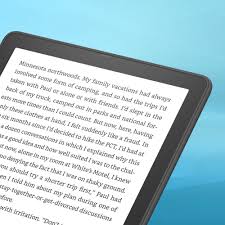
The symptoms started ten days ago. I was lying in bed, beginning Chapter 42 of Ruta Sepetys’ captivating WWII novel Between Shades of Gray when suddenly, a lower-case “a” popped out through my e-reader’s glass and just sat there on the surface. I casually brushed it away. Not two pages later, an entire “the” surfaced and slid sickeningly down the screen. I flicked that away too. But then a whole sentence coughed up and I knew I couldn’t ignore it any longer. A terrible thought entered my mind. Crud, my Kindle has COVID.

It’s not like my e-reader hasn’t been sick before.  One time it suffered a full reboot during the tense climax of Paula Hawkins’ The Girl on the Train.  Another time it simply powered down amid the juicy bits of an Alessandra Torre novel (which turned out to be a warning to me to stop wasting time on trashy novels).  But this recent bout had the makings of something more serious.  My Kindle has always been perfectly healthy.  I don’t even put a cover on it.  As for spitting up words and sentences?  Never.

Just to be safe, I got out of bed and quarantined my reader to the bathroom, closing the door softly behind me.  I didn’t want any of the real books on my bedroom shelves to get infected.  Early the next morning, I went to open the door to check on my little e-guy.  Only I couldn’t because the door wouldn’t budge.  I leaned in with a shoulder and it finally gave in, just enough so I could slip through.  Imagine my disgust when I saw the mess before me.  My e-reader barfed up at least four dozen books, piled all over the floor.  The poor thing’s screen looked paler than a Brightness of 2 and was uncomfortably warm to the touch.  The only image it could display was an Amazon Smile (encouraging, until I realized I was looking at it upside down).

It was time for professional help.  I threw on my clothes, tucked my e-reader-patient into the leftover cover of a previous model, and headed to the car.  But where to go?  Of course!  A brick-and-mortar Amazon Bookstore!  As soon as I walked through the door, an eager young lady (right-side-up Amazon smile on her nametag) came forward to assist.  I choked back tears as I explained the misery of the night before.  She opened my Kindle’s cover gently, took a knowing peek at the dimming screen, and said, “Okay, let me just confirm your extended warranty.”  I told her she wouldn’t find one, to which her whole demeanor changed.  Suddenly she didn’t want to help me at all, and backed away slowly.  I felt so… so… uninsured.  Last resort, she pointed me to a nearby display of gleaming new Kindles and said, “You’d be better off junking yours and buying a new one.”

I got out of there as fast as I could.  I mean, what sort of cruel, heartless person works at Amazon?  Junk mine and buy a new one?  Sorry, but all I could picture was my little e-reader flung carelessly into their alley dumpster; bookworms crawling all over it.  It felt like a scene from a modern-day Fahrenheit 451.

Without insurance, my only other option was the free-clinic library down the street.  A librarian is more of a specialist than an Amazon Bookstore employee anyway.  But the regulations on the library’s front door made me pause.  Yes, I keep my Kindle socially distanced from real books.  Yes, my Kindle wears a mask outside of the house (even if it’s an older cover).  But was my e-reader vaccinated?  Heck if I knew. I couldn’t tell you the last time it went through a software update. So I could see how this was going to go down already.  The librarian would check Settings and inform me my Kindle was several versions behind on its operating system. There’d be nothing she could do for me.  Dejected, I drove back to my house.

It’s been a few days now and my Kindle is still listless (er, book-less) but at least it seems more chipper after a dose of power.  It’s keeping down a few partial reads I’ve uploaded through “try a free sample”, as well as a Clippings doc in its library.  But don’t assume we’re out of the woods just yet.  I’m not ready to purchase any new books after that nightmare in the bathroom. I also neglected to mention my Kindle threw up its dictionary the night after I went to Amazon.  Talk about a loss for words.  I mean, dictionaries are bigger than almost any book, and a rich indulgence besides.  There’s nothing left in your stomach after you’ve lost your dictionary.

I’m gonna go glass-half-full here and say my little e-guy’s gonna be okay.  He’s up to a Brightness of 4 today.  He’s holding a fairly focused, slightly bold version of the Palatino font.  He retained my Ruta Sepetys novel and I’ve read some chapters without further hurled words.  I even cleaned up the mess of “read” books he left behind in the bathroom.  So learn from my experience, will you? Use an e-reader cover. Get a fresh software update. Keep the power boosted.  And for gosh sakes; keep a reasonable distance from the hardcovers and paperbacks.  E-readers are more susceptible to the bad stuff than you think.

Note: This is a work of fiction, pure and simple. Find nothing between the lines.

Lego Grand Piano – Update #1

The concert has begun! (my hesitant warm-up was captured in the post Let’s Make Music!)  Bag #1 – of 21 bags of pieces – assembles to this rather odd shape.  Imagine the keyboard running down the left side of the light-colored section, top left to bottom right. 

There were a couple of tense moments when I couldn’t find the right pieces because I’d already assembled them in the wrong places. Unassemble. Redo. All good.

Running build time: 60 minutes.  Musical accompaniment: Dvorak’s New World Symphony.  Leftover pieces: 1

Fantastic Plastic

On Christmas Day, any parent of small children will stifle a yawn, having built bicycles, dollhouses, and train sets the night before. After all, Santa doesn’t deliver unassembled toys. But hang in there a few years, Mom & Dad, because the building shifts from the giver to the receiver. Older kids want to create. In my generation it was Hot Wheels, Erector Sets, and Lincoln Logs. And one other toy surpassed all others for its ease of use and versatility. Lego.

This piano even plays!

My Christmas gift from my wife this year was a grand piano. Can you top that? Okay, so it wasn’t the kind worth five figures or special movers to get it across the threshold.  My piano measures a mere 12″ x 14″ and comes from the Lego “Ideas” collection.  When it’s finished it will have been built from 3,662 individual pieces.  I can’t wait to get started.

A grand piano made of Legos means the simple interlocking blocks I had as a kid have come a long, long way.  Lego Ideas sets are “products inspired by and voted for by Lego fans”.  The collection includes a typewriter, a ship in a bottle, the house from the Home Alone movies, and the apartment from the Seinfeld sitcom.  Every Ideas product involves thousands of Lego pieces to assemble.  Every Ideas product was also completely sold out for Christmas on the Lego website.

Fifty years ago, Lego was blessedly innocent.  All you had were small bricks in primary colors and if you were lucky, a paper set of instructions to create a simple house or a vehicle.  Otherwise, you just built whatever your imagination could come up with.  When my own kids were kids, Lego moved to product-specific sets like a T. Rex from Jurassic World or an X-wing Starfighter from Star Wars.  Sure, they looked cool when they were built, but I was always skeptical because the sets removed creativity from the experience.  You’d just follow the step-by-steps in the little booklet and voila – a T. Rex.  But call me a hypocrite because this sixty-year-old can’t wait to build his step-by-thousand-steps Lego Grand Piano.

Lego has an interesting history – too many chapters to cover here.  The numbers tell the story in a nutshell.  The Denmark-based company is considered the largest toy company in the world.  Their bricks have inspired movies, video games, building competitions, and eight amusement parks.  Their factories have been churning out little plastic pieces for almost 75 years.  And at last count, that pile of pieces surpassed 600 billion (or 75 Legos for every man, woman, and child on earth).

I didn’t expect to be a Lego fan as an adult but then came the Architecture series in 2008, cool buildings like the Taj Mahal, Eiffel Tower, and Empire State Building.  I just had to have one, so last Christmas my wife gifted me the 1,032-piece United States Capitol Building.  I didn’t clock how long it took to complete but I must’ve looked awfully confident in the assembly because now I’m staring down the more daunting Grand Piano.  Maybe my wife wants me locked down in my home office for the next several months?

To underscore the popularity of Lego these days, the Architecture series alone includes 50 buildings and cityscapes, with more coming out each year (the Taj Mahal was released just last summer).  These sets run anywhere from $50 to $250, with the discontinued ones setting you back three times as much.  Sure, I’d love a Lego version of Frank Lloyd Wright’s “Fallingwater” house, but I’m not going to pay $800 to a collector just to have one.

Lego “Church of Christ”

No discussion of Lego would be complete without a nod to custom creations.  Our local Scheels department store has a larger-than-life Denver Broncos football player made of Legos, posing front and center in the toy department.  The Church of Christ creation in the photo here didn’t forget seating for an 80-member choir (below the big yellow crosses).  And the biggest custom creation of them all?  A full-scale Lego replica of the previously-mentioned X-wing Starfighter, first displayed outdoors in New York’s Times Square.  Try to picture 5.3 million Lego pieces and 23 tons of “toy” in the shape of a fighter jet.  Or just check out the photos here.

Now that I’m done writing it’s time to break open the first bag of pieces to begin my Lego Grand Piano (and time for you to watch the ingenious stop-motion video below).  I’ll use the stopwatch on my iPhone to capture the hours I consume to complete it.  Er, days? Weeks?  I mean, Rome wasn’t built in a day.  Neither is a grand piano.  You might want to check in with me next summer to make sure I haven’t gone bats.

Some content sourced from Wikipedia, “the free encyclopedia” and the Lego.com website.

As the Wind Blows

Pagosa Springs, a small town in Colorado’s San Juan Mountains, lies 7,100′ above sea level. It is locally known for its therapeutic hot springs. Pagosa also boasts a 35-year business called Rocky Mountain Balloon Adventures, which takes you an additional 3,000′ above sea level for “360° views of the beautiful valley [of Pagosa] below”. Maybe you’ll climb aboard their basket and go for a float someday.  If you do, my apologies for not joining you.  I’d rather spend my time in the terra firma of Pagosa’s hot springs than the “terror for-sure-a” of a balloon ride above.

Getting high, above Pagosa Springs

Logic says my fear of heights denies me the thrill of soaring up, up, and away.  Not true.  It’s more about the “gone with the wind” part (sorry for that, Scarlett).  Once the balloon reaches cruising altitude, the pilot extinguishes the fire and Mother Nature silently takes over.  Then your high-rise ride gets a little dicey unpredictable.  It’s the whole not-knowing-where-you’re-gonna-end-up moment that gets me.

Possible outcomes as follows.  You descend gracefully into a farmer’s field with the “chase vehicle” just minutes away.  You zip hundreds of feet up and then hundreds more down, depending on which fickle air stream you encounter.  Or, you float all the way to nearby New Mexico on the strong winds we have here in Colorado.  All while literally hanging by threads.

Albuquerque’s big balloon bash

Speaking of New Mexico, it wouldn’t be the worst destination for one of Pagosa’s rogue hot air balloons.  After all, the International Balloon Fiesta – the largest gathering of balloonists in the country – takes place every October in Albuquerque.  At least you’d have professionals on the ground eager to reel you in.  Also in Pagosa’s favor: small town = few power lines.  Hot air ballooning and power lines do not mix.  See here for what happens when they do (coincidentally, just weeks ago in Albuquerque).

Despite the occasional crash landing, ballooning fatalities are rare.  In fact, hot air ballooning has been designated “safest air sport in aviation” according to years of statistics, and a Swiss aeronautics organization whose name I can’t pronounce.  So maybe it’s not so bad if you never have a neatly paved runway to greet your touchdown.  Heck, Pagosa locals love it when a hot air balloon ends up in their backyard.  They come running out of their houses to greet you with coffee and cinnamon rolls.  Breakfast?  Hmmm.  Maybe I can do this ballooning thing after all.

I may not be a balloon flyboy but that doesn’t mean I’d rain on a parade of those big colorful inflatables.  After all, hot air balloons first appeared to me in favorite childhood stories, like L. Frank Baum’s The Wonderful Wizard of Oz, William Pène du Bois’s The Twenty-One Balloons, or Albert Lamorisse’s priceless (and wordless) The Red Balloon.  They show up as flying animals every Thanksgiving Day at the Macy’s parade in New York City.  As well, right here in my hometown we have an impressive showing of hot-air balloons every Labor Day weekend, including a “balloon glow” in the evenings.  Now that I think about it, there’s probably more ballooning going on in this part of the country than anywhere else.

Colorado Springs’ beautiful balloon glow

It’s not as if hot air ballooning is some new-fangled sport (hoverboarding, anyone?)  The first untethered hot-air balloon flight took place back in the eighteenth century.  Hundreds of commercial operators offer hot-air balloon rides in the United States, and hundreds more are private owners.  Add a little perspective and 3000′ above Pagosa Springs is nothing.  The world record for the flight height of a hot-air balloon is 64,980′ (like a Mt. Everest on top of a Mt. Everest).

Up, up, and seriously away

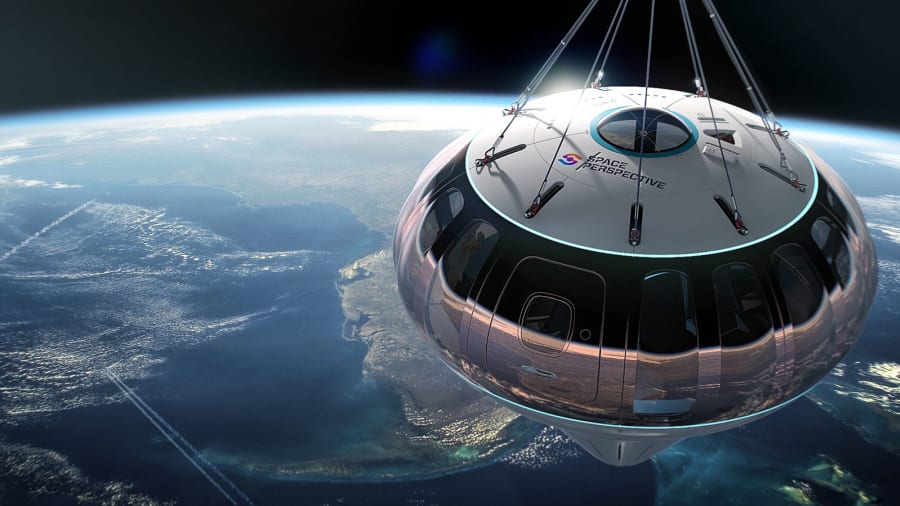
Strict definitions aside, the altitude record for hot air ballooning is about to topple, in a big way.  A company called Space Perspective is now taking reservations for its giant hot air balloon, launching in early 2024.  You, seven other passengers, and your pilot astronaut will take a six-hour ride in a pressurized capsule under a giant balloon… to the edge of the Earth’s atmosphere.  A seat on “Spaceship Neptune” costs $125,000.  Operators are standing by to take your payment…. for 2025, that is.  The 300 seats offered in 2024 are long gone.

Maybe 3000′ above Pagosa Springs doesn’t sound so bad after all.

Some content sourced from the CNN Travel article, “On sale: $125,000 balloon trips to the edge of space”, and Wikipedia, “the free encyclopedia”.