Eggs-asperating Prep

Every now and then I get a hankering to bake something, which nine of ten times means chocolate-chip cookies. That tenth time I’ll venture into breads or cakes but they’re usually too time-consuming for my “taste”. Thus I’ll buy a perfectly prepared croissant before I ever labor to make one on my own. Maybe the same should be said for so-called perfectly prepared eggs.

Eggs-spensive!

We’re all talking about eggs these days, the same way we talked about gas during the “Energy Crisis” of the late 1970s. Eggs are scarce and evermore expensive, which translates to being more choosy about how we use them at home. I like eggs for breakfast every other day and I’m not likely to change that habit on account of rising prices. My dog may have to forego the occasional scrambled egg on top of his kibble, but until I pay as much for a dozen eggs as I do to fill my gas tank, I’ll still be buying them.

I prefer mine soft-boiled

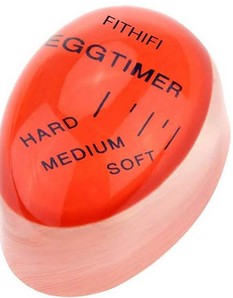
What I won’t be doing is cooking my eggs any differently than I did last week or last month, even if scientists now claim the “perfect method” (their words) to do so.  I prefer my eggs soft-boiled, which means a pot, some water, a $2.99 submersible egg timer from Wal*Mart, and less than ten minutes of prep after the water is boiled.  It’s a quick, mindless process I can pull off even before my morning coffee.

Would you prefer a more time-consuming method instead, with only slightly better results?  Okay.  Take two pots of water and heat one to boiling (212 F for us Americans, 100 C for most of the rest of you) and the other pot to “lukewarm” (86 F, 30 C).  Drop your eggs into the boiling water for two minutes, then transfer them to the lukewarm water for two minutes.  Repeat seven more times.  That’s right, seven more times.  On your calculator as well as mine, that’s 32 minutes until breakfast is ready, and you’re too busy to do other stuff while you’re waiting.

If I dedicate 32 minutes to egg-making, I’m expecting something much more grand and decadent.  An omelette at the least.  A scramble with a load of cut-up veggies.  “Benedict”, including the hollandaise sauce.  Heck, I’d even don my French chef’s hat and try sous vide eggs, which are…. oh, never mind – those take an hour or more.

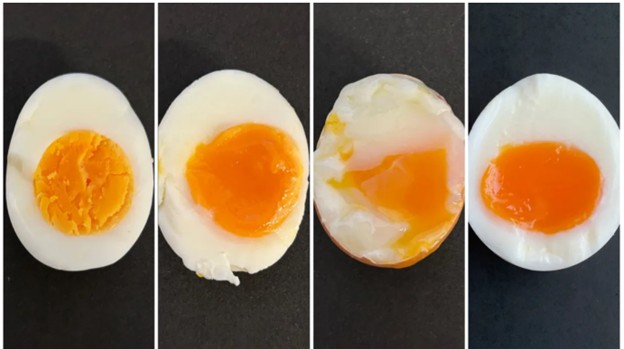
The second is soft-boiled; the fourth is supposedly “perfect”

The thought of “perfect” eggs in 32 minutes instead of soft-boiled in less than 10 is exasperating.  If I wanted to go all science on you, I’d explain why 32-minute eggs allow the albumen and yolk to cook perfectly together, even though each has a different composition.  I’d also explain why this method retains the maximum nutritional benefit of eating eggs (protein and so on).  But c’mon, do you really care about those details when you’re just looking for grub to get your day started?  Heck, the prep of my 10-minute eggs even allows me to feed the dog and clean up last night’s dishes while I wait.

The “perfect eggs” news article is interesting enough but I had to laugh when the writer inserted the standard “… be forewarned that consuming raw or undercooked eggs may increase your risk of foodborn illness”…”  Wait, I thought these eggs were perfectly cooked.  Now you’re hinting the process may cause food poisoning?  Sorry Mr. Scientist, I’ll stick to my $2.99 Wal*Mart egg timer method instead.


LEGO Notre-Dame de Paris – Update #7

(Read about the start of this “church service” in Highest Chair)

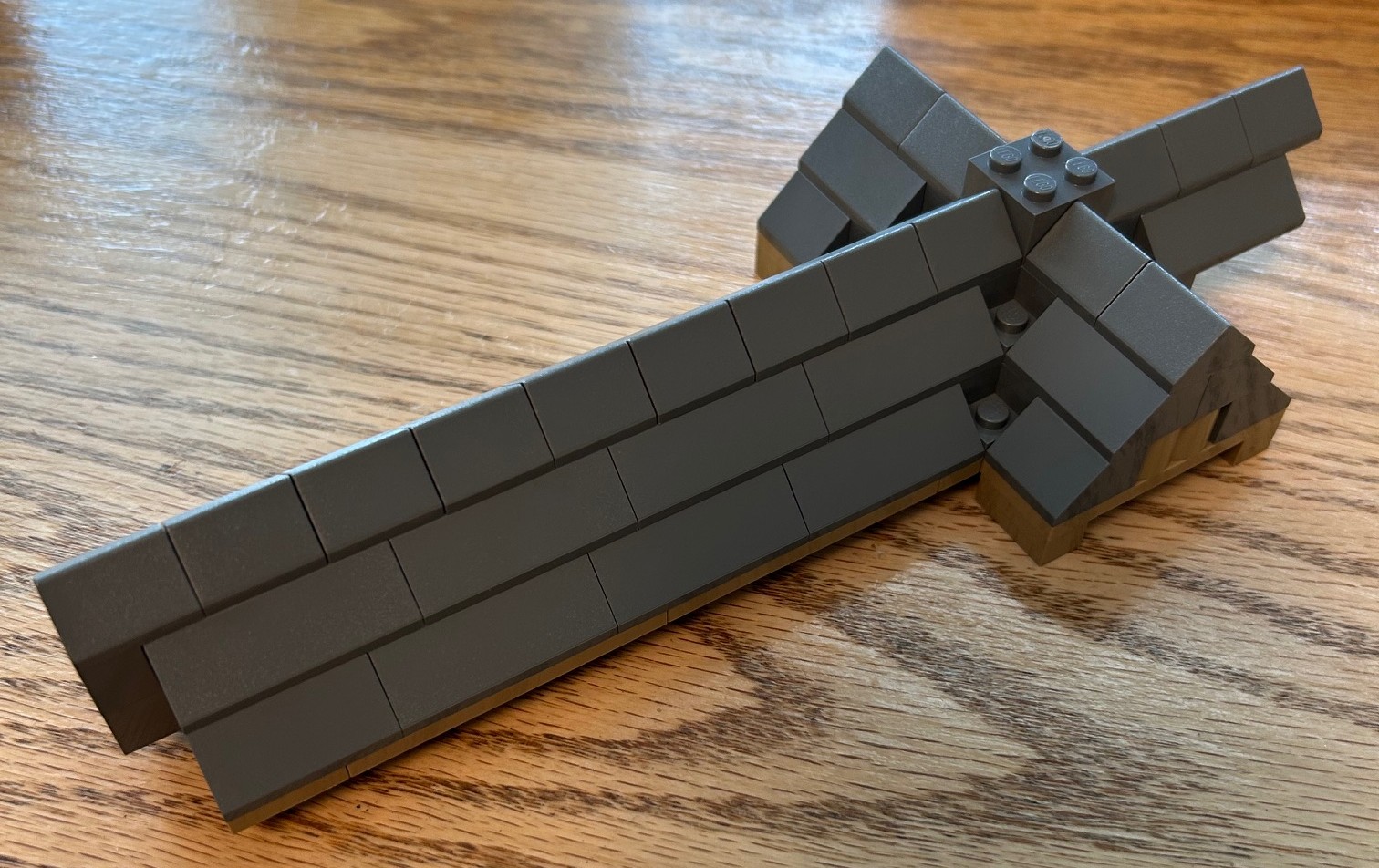
Maybe LEGO’s engineers got impatient with the construction of the east-end chancel of Notre-Dame de Paris, because Bags 10 and 11… of 34 bags of pieces, laid out the rest of the foundation of the entire cathedral.  Indeed, when we finished today’s rather brisk build (24 minutes!) we put down enough marble to allow the capacity 1,500 parishioners to “take a pew”.

24 minutes was barely a French coffee break back in the day when Notre-Dame was actually built.  In fact, we’re now twenty years into the construction: AD 1182.  With the chancel complete enough to host church services, we’ll spend the next twenty years (or rather, the builders did) rising the transcept (the “cross” bar, remember?) and first bays of the nave (the cross “long” bar).

Speaking of “bars”, note that I added LEGO’s signature “title bar” to the near edge of the model today (photo below).  LEGO wants you to know what cathedral you’re looking at, even though I’m teaching you enough detail so you won’t need a title bar.  But don’t be fooled; you won’t find a title bar in the foundation of the real Notre-Dame de Paris.

Today’s build was quick but not without the usual antics.  Once again I installed a piece incorrectly – a tiny bit of marble.  Once again I reached for the LEGO lever but it couldn’t lever out this kind of piece.  So I resorted to my paper clip “crowbar” instead and ZING!!! – the piece went flying across the room and ricocheted (another word with French roots – nice, no?) off the wall.  Good thing I managed to find it or several of Notre-Dame’s parishioners would trip on their way out.

Running build time: 5 hrs. 56 min.

Total leftover pieces: 24

Some content sourced from the CNN Science article, “Scientists developed a new method for the perfect boiled egg…”.

Mind Your Mannerisms!

My late father had a habit I always admired. He’d send personal notes of thanks to those he felt deserved his gratitude. His notes were not smartphone texts, emails, or Word documents. They were handwritten sentiments on heavy card stock, his name elegantly embossed across the top. Why did these notes capture my admiration? Because I’ve forgotten how to write them myself.  Or more to the point, I’ve forgotten how to write.

America’s Common Core Standards – the guidelines by which most states create curriculums for school grades 1-12 – no longer include cursive writing.  Students still learn to write block letters, but the flowing, looping mannerism of cursive has pretty much been left behind.  Instead, typing is more Common Core, and probably taught in a grade much sooner than my own middle school years.  Frankly, the only remaining argument in favor of cursive writing might be for the signature of one’s name.

Autopen

Even handwritten signatures have fallen by the wayside.  Ever heard of an Autopen?  It’s a mechanical hand, designed to hold a pen and duplicate one’s signature over and over.  The Autopen is popular with politicians who want their handwritten signature on countless memos and letters, but without the added task of actually signing them.

I have a sort of Autopen myself but it’s more of a stamp.  I sent my handwritten signature to a company and a few weeks later I received a stamp in return.  When used with just the right amount of pressure it’s the spittin’ image of the one I’d sign with my own hand.  It’s something of a writing “crutch”.

The hard truth is, over the years my cursive has devolved from “Dave, you have beautiful handwriting” to “Uh, what is that supposed to say?”  I can’t even read my own writing anymore.  To add to this misery my hands shake a little, which means my formerly elegant loops and curls are now jiggly, scribbly lines.  Filling out the tip, the total, and the signature on a restaurant receipt is now a legitimate challenge in legibility.

It didn’t occur to me until recently that my illegible handwriting is simply the product of no longer writing by hand.  I’ve always believed this degradation was the result of aging fingers, hands, and the associated muscles required for cursive writing.  To a certain extent this is true.  But more importantly, my writing muscles just don’t remember what to do anymore.

Beginning of the end of cursive

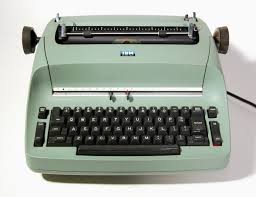
The first day I walked into typing class was likely the first day my cursive writing went downhill.  The manual typewriter, followed by the electric typewriter, followed years later by the computer keyboard ensured I could create quick and perfectly legible documents in myriad fonts.  Cursive writers average only 13 words a minute.  Typists?  40, 60, sometimes as many as 80 words a minute.

But the pursuit of writing efficiency comes at a somewhat alarming cost.  You lose the connection between mind and matter.  Cursive writing is slow-w-w, which translates to more focus on what you are writing about as you form the letters.  Typing feels more like a sprint to the finish, to get your thoughts through the keyboard as quickly as possible.  Think of cursive as “in your own words”, while typing is “verbatim”.

Here’s an interesting experiment for you bloggers to consider.  Write your next post in cursive before you take to the keyboard.  See if your “voice” doesn’t sound a little more thoughtful than the one from the keyboard.  Now here’s an experiment for me.  What if I were to spend ten minutes a day trying to restore my handwriting?  Would it eventually be described as “beautiful” once again?

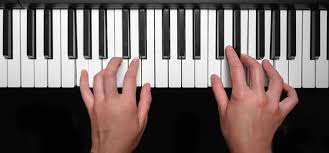
Side note: I’ve somehow retained the dexterity of playing the piano, even though I don’t sit down to the keyboard very often.  I’ve noticed my fingers hover over the piano the same way they do over the computer keyboard.  Maybe this is muscle memory at work, no matter what the fingers are doing?

Someday it wouldn’t surprise me to see a famous quote, penned in beautiful flowing cursive, framed and displayed as artwork in a museum.  The piece would bring us back to simpler days, back to the times when a physical hand put deep thoughts on physical paper.  Of course, the question then would be, will anybody still be able to read cursive?


LEGO Notre-Dame de Paris – Update #3

(Read about the start of this “church service” in Highest Chair)

Click the photo for a more detailed view

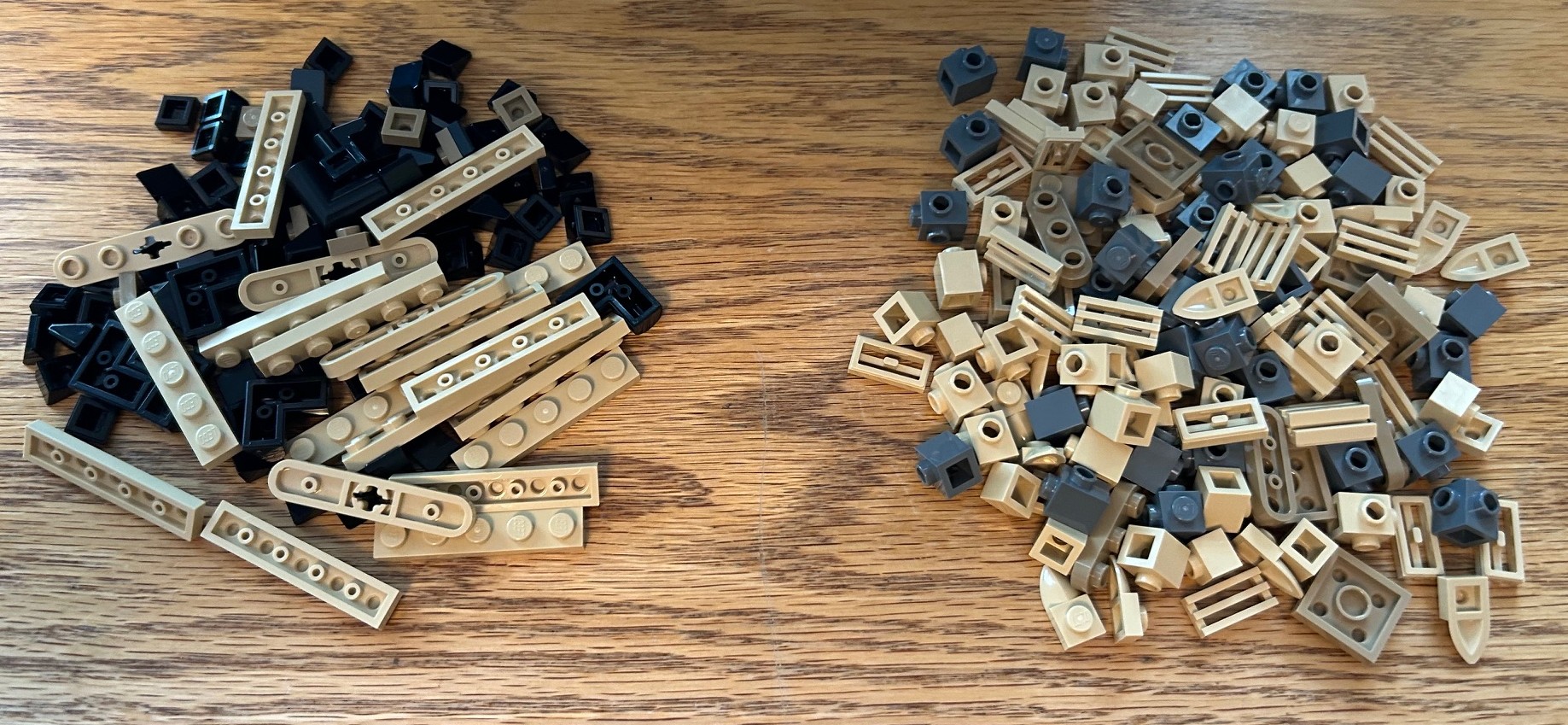
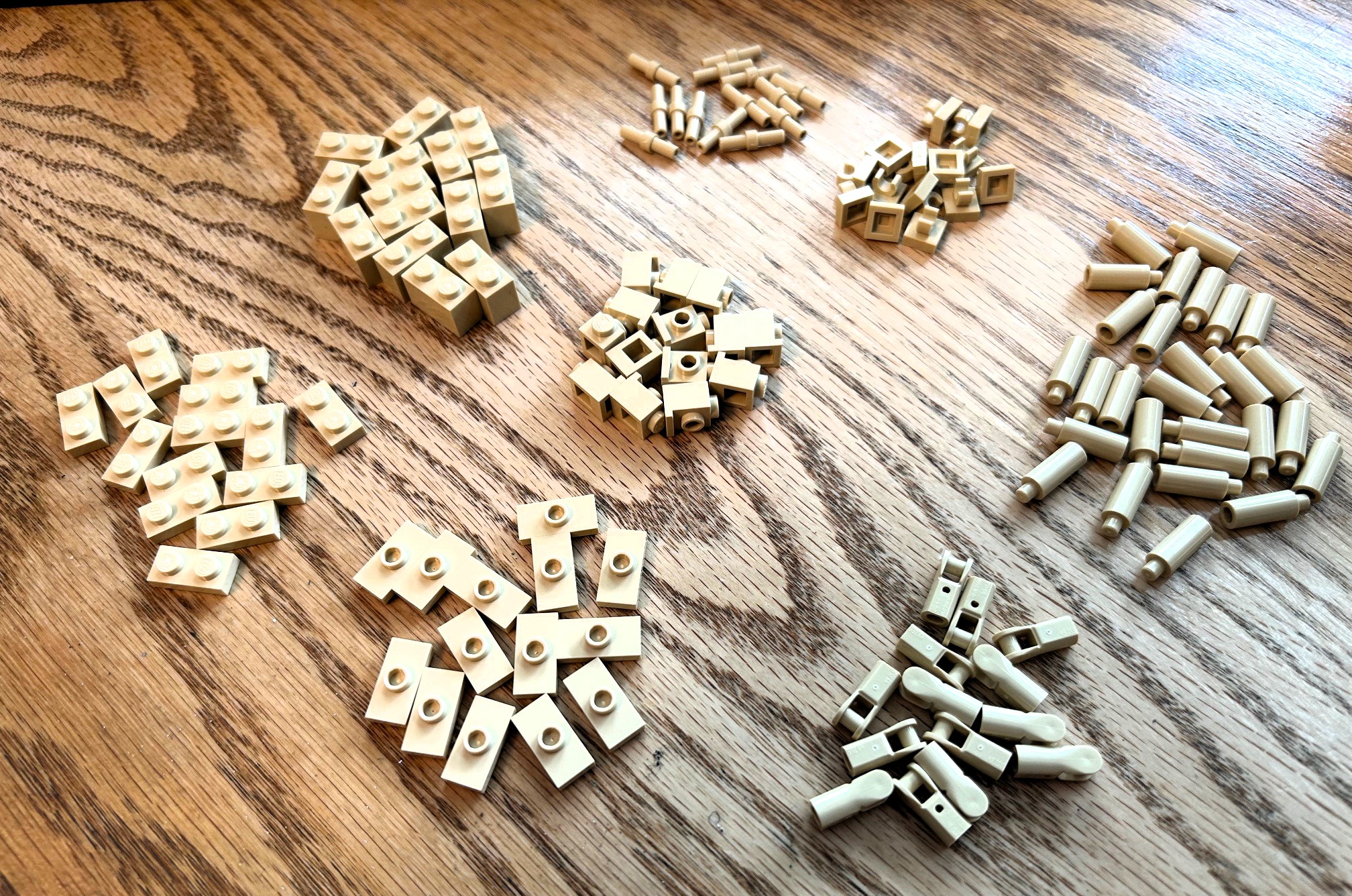
There were moments in the build today where I would’ve preferred to be laboring on the real cathedral.  Bags 4, 5, and 6 – of 34 bags of pieces – were loaded with some of the tiniest pieces I’ve ever seen in a LEGO set.  As I spilled out one of the bags a determined little square tile dashed away to the deep, dark recesses underneath my desk.  If it weren’t for my phone’s flashlight I might never have rescued him.

The east end of the sanctuary (and altar beyond)

We built a lot of round, structural columns today.  I’ve never seen a step in a LEGO instruction manual asking for 48 identical pieces, but there I was, stacking them in my hand as I counted, “33, 34, 35…”.  Those 48 pieces assembled to the 24 columns you kind-of sort-of see here.

The altar from above (before this is all covered up!)

We also reinforced, filled in, and rose to new heights the curving east end of the cathedral.  This assembly brought new levels of frustration, in that the installation of some pieces caused others to promptly dislodge.  Indeed, at one point a very tiny piece skittered onto the floor of the cathedral (hidden within those 24 columns) and the only way to get him out was to rock the whole assembly back and forth in my hands the way you would a marble maze.

I spy an upside-down LEGO logo 😦

I need to do a better job of taking photos as I build, because the fruits of my labor are already being covered up by the higher structure of the cathedral.  Maybe it was no different with the artisans of the real Notre-Dame de Paris, who crafted in very small spaces knowing almost no one would ever see the detail of their work.  At least I have a camera.  Back then they’d have to make a painting of what they created just to show off their accomplishments!

Running build time: 2 hrs. 50 min.

Total leftover pieces: 11 (!)

Some content sourced from The Guardian article, “Signature moves: are we losing the ability to write by hand?”

Minuscule Marvels

For Christmas this year I’m putting a small ornament into my wife’s stocking. It’s a miniature of… well… let’s just leave it at “a miniature” in case she reads this post. But I know she’ll love this ornament and promptly hang it on our tree for the remainder of the season. Why will she love it? Because it’ll spark fond, romantic memories. But she’ll also love this ornament because she can’t help loving something that’s a little, well, little.

Ornaments are little

One of my bucket list items – still to be fulfilled – is a trip to the south of France for a taste of those wonderful wines created from Burgundy or Bordeaux grapes.  Maybe you hope to make the same trip some day so I’ll let you in on a little secret.  If your trip only allows a visit to Paris, you can still visit a vineyard… right in the middle of the city.  Most people visit the neighborhood of Montmartre to see the Sacre Coeur cathedral but most don’t know about the tiny vineyard just steps away.  Clos Montmarte produces wine on a single acre, from 2,000 vines forging a connection to the long-ago rural times of the region.  Compare an acre to the wineries in Bordeaux, with vines covering an average of fifty times that much property.

Harvesting the grapes at little Clos Montmartre

Clos Montmarte wines probably aren’t award-winning.  Who knows if I’d even care for the taste of their reds or rosés.  But does it really matter?  I love the thought of a teeny-tiny field of grapes right in the middle of Paris.  I love how the grapes are harvested by locals and transported to the cellars of the nearby Town Hall to be pressed and turned into wine.  The whole operation is appealing to me because it’s quaint and because it’s small.

This affection for itty-bitty things must hearken back to our childhoods.  Who among us didn’t spend countless hours of playtime with (take your pick) little dolls, little cars, little houses, or scaled-down trains?  When we played at the beach we built little castles.  When we played in creeks we made little boats out of sticks or leaves and watched them flow with the water.  Tea parties meant tiny cups and plates on tiny tables.

My granddaughter’s little favorites

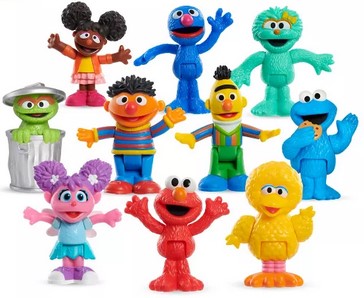
In today’s world the toys might be different but the attraction to small things remains.  It fascinates me to watch my (little) granddaughter choose her favorite toy from among dozens: a set of ten two-inch high Sesame Street characters.  She stands them up all over the house.  She hides them and then finds them.  She always seems to have one or two in her hands.  Even though my granddaughter doesn’t speak in complete sentences yet, she probably has complete thoughts as she considers tiny Big Bird.  You are a lot smaller than me and that’s why I like you so much.

Wee little cube

If you include Japanese toymaker MegaHouse in this year’s Christmas purchases, maybe you’ll go for their world’s smallest operational Rubik’s cube.  You can’t get one until next April, but picture this: the minuscule marvel is one 1,000th of the size of the original.  Pull out your metric measure to confirm it; a single face of the wee cube measures only 5mm from side to side.  Best throw a pair of tweezers into the Christmas stocking along with the cube.  There’s no way you’ll be able to rotate the Rubik’s colors with fingers alone.

Would I want the world’s smallest operational Rubik’s cube, you ask?  Heck yeah!  Consider, the faces of a traditional Rubik’s cube contain a 9×9 grid.  Then someone went and created a miniature Rubik’s cube with 2×2 grids.  I thought, how very cute.  I just had to have one so my original would have a little buddy.  My cubes are hanging out together on my home office shelf as we speak.  And they’re asking for an even littler buddy for Christmas.

Rubik’s “Mini”

So let’s summarize the pint-sized products we’ve covered today.  I already have the ornament for my wife in-hand (soon to be in-stocking).  I won’t put a bow on a bottle of Montmartre wine this year because I want the chance to see the tiny Paris winery for myself first.  And you probably thought I sprung for one of MegaHouse’s pee-wee Rubik’s cubes (and a pair of tweezers). Sadly, no.  I don’t have the $5,300 it costs to buy one (minuscule marvels aren’t cheap!) Thankfully, my wife will be happy with an adorable little ornament for $15 instead.

Some content sourced from the CNN Travel article, “The secret vineyard in the middle of Paris…”, and the CNN Style article, “This is the world’s smallest Rubik’s cube…”

Overblown Air

When you travel to Colorado, you should pack a few things you might not think to bring. A reusable water bottle will be your constant companion since it’s high and dry in the Centennial State. Lip balm will be your pocket pal. Your wardrobe should be designed in layers since Colorado’s weather is so unpredictable. And finally, for the lack of air in the Rockies, don’t forget to bring a can or two of oxygen.

Canned oxygen?  For the longest time I thought this was the biggest scam on earth.  There was a time you could find “oxygen bars” at Colorado ski resorts – high altitude establishments where you’d pull up a stool and choose from a menu of “airs” to augment your oxygen intake.  Watching those suckers – heh – with their mouths attached to transparent hoses had me picturing a guy on the other side of the wall furiously working the plungers of bicycle pumps.  But forget oxygen bars.  Now you can take a hit from your very own can instead.

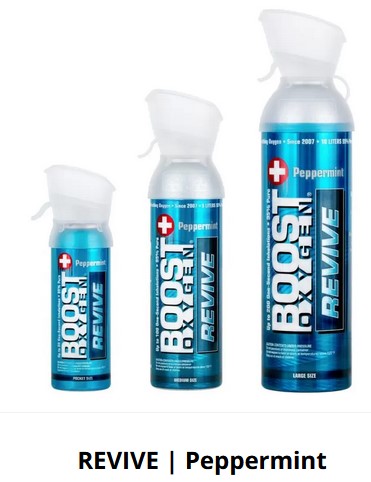
Boost , a popular brand of canned oxygen, has been around for a while since its humble beginnings through Shark Tank.  In Colorado you’ll find Boost products in every market, drug store, gas station, and airport concession.  Boost is  advertised as “95% Pure Supplemental Oxygen in lightweight, portable, and affordable canisters for health, recovery, natural energy, and athletic performance”.  That’s an impressive string of words to describe nothing but canned air.

First-timers will react to Boost with a well-defined smirk.  Gag gift for the relatives back home?  Stocking-stuffer?  After all, you’re paying $10 for a can of… well, nothing.  Yes, Boost comes in flavored varieties like lavender or eucalyptus menthol but in the end, it’s just air.  And watching someone take a hit of Boost is just like the goofball in your kitchen who tips the can of whipped cream directly into his mouth.  Even the sound of escaping compressed air is the same.  Just no whipped cream.

Naturally this is the point where I admit I’m a canned-air convert.  Never thought I’d see the day I’d actually need a “boost”.  But last January as I was moving belongings out of our Colorado house, I came to a breathtaking realization: I was no longer acclimated to the thin air of the Rocky Mountains.  Climbing a set of stairs had me huffing and puffing.  Lifting a box made my heart go pitter-patter.  For some reason I’d thought to add a can of Boost into my suitcase, so what do you know?  Compressed air to the rescue.  Every now and then I’d blast the can into my mouth and darned if it didn’t clear my head and help me breathe.  I was no whipped-cream junkie but rather a bold astronaut, seeking the occasional hiss of his supplemental oxygen.

For all its success, the legitimacy of a product like Boost is sullied by similar products having no health benefits whatsoever.  On your next trip to Italy, head up to Lake Como in the far north for a look at the pristine waters and nearby snow-covered Alps.  While you’re there you can purchase a can of “Lake Como Air” for $11.  Lake Como Air claims no value other than “something original, provocative, and fun”, or “… a tangible memory you carry in your heart”.  Really?  I have lots of tangible memories from Italy and they didn’t cost me a dime.

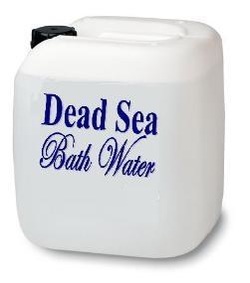
On your next trip to Israel (which best not be anytime soon), head over to the Dead Sea for a look at the biggest, saltiest resource of natural minerals in the world.  You can float in the Dead Sea without even treading water.  And no surprise, you can “purchase” the Dead Sea in small containers.  The so-called manufacturer claims its consumption “contributes measurably to feeling better and to looking wonderful and healthy”.  Huh.  Not sure about you but I like to think I feel better and look healthy just by drinking from the tap at my kitchen sink.

The list goes on and on.  Holy dirt from New Mexico.  Healing waters from right here in western South Carolina.  Rocks from outer space.  I mean, seriously, when are we going to stop paying for natural elements we can help ourselves to just by stepping outside our front doors?  Yeah, probably never.  That train left the station for good the day someone decided to bottle water.  Now we have canned air as well… and it’s a good thing.  Turns out, I’ll never take another trip to Colorado without a little Boost in my suitcase.

Some content sourced from the CNN Travel article, “Cans of ‘fresh air’ from Lake Como on sale to tourists in Italy”.

Parts Party

I’ve always been fascinated – mesmerized even – by the mechanics of assembly line manufacturing. A product takes form from a single part, then moves down the line to where another part is added. Then another part, another, and another, until at long last the completed product presents itself at the very end for packaging. Assembly lines are becoming more and more automated, which begs the question: When will humans be removed from the process altogether?

“The Rouge”

On a recent trip to Detroit with my brothers, we were lucky enough to snag tickets to a tour of the Ford River Rouge Complex, where the F-150 truck (gas engine) is mass-produced. Ford has over 65 manufacturing plants worldwide but I think “The Rouge” is the only one you can tour. And boy is it worth it. You walk away with a lot more admiration for a fully-built F-150 than when you first set foot in the building.

The tour begins on the bridge at the lower left

Ford doesn’t allow you to take photos inside The Rouge (and they keep a close eye on visitors) else I’d include a few here. The tour starts with a couple of promotional videos in comfortable theaters, followed by an elevator trip to the top of the visitors center for a look down at the vast campus. Then things get serious. You put away your phones, listen to the rules and regulations about behaving inside the factory, and off you go.

Ford F-150

Here are the eye-popping numbers. The F-150 travels the length of a four-mile assembly line as it grows from parts to finished product. That line includes over two hundred stops to add parts (which aren’t really stops because the truck is always being pulled along). A fully-functioning F-150 rolls off The Rouge assembly line every 52 seconds, which translates to a remarkable 650 new vehicles per ten-hour working shift. And finally, the whole process is far from automated. 6,000 workers assemble the vehicles, each a specialist in the given part, calibration, or inspection the truck demands.

Of course, an F-150 has far more than two hundred parts. Some of those assembly line stops are for the installation of major components. The entire dashboard, for example, or most of the engine are installed in a single stop. But you also have workers who do nothing more than take a rubber mallet and pound on rear taillight covers. Think about it.  Can you imagine hammering on taillight covers 650 times a day?  It’s mindless, it’s repetitive, and you have to wonder about the toll it takes on the human body.

Cereal-making “back in the day”

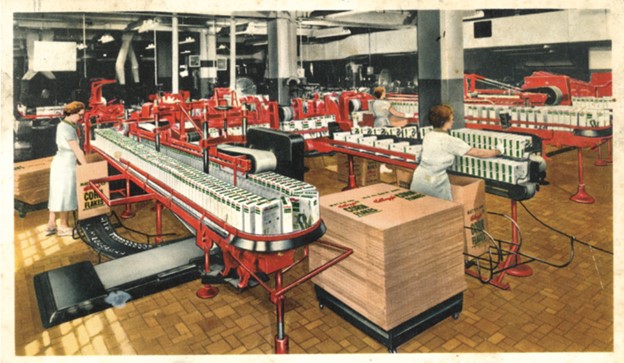
Assembly line work can be more fun and less repetitive than building cars.  My family and I visited the Kellogg’s (cereal) factory in Battle Creek, Michigan in the early 1970s.  The smell of cooked corn flakes might’ve turned a kid’s nose but the tour was the next best thing to Willy Wonka’s.  You’d don a Kellogg’s paper hat and read the colorful brochure story about how “this little kernel went to Kellogg’s… first it was milled… then it was flavored…”.  Then you’d walk the assembly line of breakfast cereal, from cooking all the way to box filling.  The best part was at the very end, where you’d get free samples of all your Kellogg’s favorites, and postcards so you could brag about the place to your friends.  Alas, like many manufacturing facilities, safety and espionage concerns brought an end to the Kellogg’s tours in the mid-1980s.

At least I could watch assembly lines on TV after that.  How It’s Made was my kind of show.  The Canadian documentary spent years creating virtual factory tours so viewers could see the ins and outs of manufacturing processes.  In a single episode you’d watch the dizzying mechanics behind the creation of everything from candies to clothing to cars.  How It’s Made kind of gave you access where access wasn’t allowed.

Speaking of no access, the electric-engine version of the Ford F-150 – the “Lightning” – is produced in a plant where no tours are permitted (back to the espionage thing).  Instead, you watch a short video of the process after you’ve completed The Rouge tour.  How are the two F-150 assembly lines different?  Several thousand humans.  The Lightning production is almost entirely automated, with robotic machines hovering over the vehicles as they come together.  Our tour guide said the assembly line is eerily quiet, since a robot doesn’t require a banging mallet to add on a taillight cover.

For all my fascination with assembly lines and automation, I wonder whether “loss of humanity” is really the way to go.  All those jobs at The Rouge would disappear.  Machines would be one step closer to taking over the world.  Suddenly “handmade” sounds better than ever.

Some content sourced from the Michigan Blue article, “Visiting the Kellogg’s Factory”, and Wikipedia, “the free encyclopedia”.


Hack Attack

Imagine a plain brown box showing up at your front door with no indication of who or where it came from. The box is topped by a small white envelope with a card inside. In elegant script the card reads: Scan the QR code to see who sent you this gift! So you scan it. Congratulations – you’ve just given scammers access to everything on your smartphone.

I wish this story was a work of fiction but some day soon it could be coming to a doorstep near you. The gift box scam worked on my son’s friend and frankly I can’t say that it wouldn’t have worked on me. If someone sent you a gift and they wanted it to be a surprise, would the situation look much different than what I just described? Would you scan the QR code?

Do not scan!

I can’t explain how the simple scan of a QR code translates to the hack of a smartphone, but technology far outpaces my understanding of its capabilities these days. My first reaction to this story was to check my phone apps to make sure any “data-sensitive” ones were password-protected. My next reaction was to wonder if I could ever trust a QR code again.

Here’s a second bit on hacking, also passed along by my son. He said scammers now prey on public parking lots. Many of these lots use pay-by-app technology and the app can be downloaded onsite by scanning a QR code. Scammers simply place their own sticker over the one you’re supposed to scan and presto! – you’ve unknowingly given some level of data access to thieves. It reminds me of gas station scams where the pump credit card reader is retrofitted with a device capable of collecting your card’s data.

By comparison email and text scams now seem pedestrian, but boy-howdy they keep trying don’t they?  I got one just last week claiming I have a “USPS parcel being cleared, but the parcel is temporarily detained due to an invalid zip code”… and I’m supposed to click on a link so I can correct the zip code.  These phishing messages are so common they’ve become easy to spot, whether from the broken English or from the bizarre originating email address.  Phishing reminds me of those long-ago Nigerian princes who sought our help in exchange for “large sums of money”.

At least I’m not a head-over-heels fan of Brad Pitt.  Last month two women were scammed out of hundreds of thousands of dollars by five people in Spain, posing collectively as the actor in an online conversation.  The fraudsters were arrested, but you have to wonder about the naivety of people these days.  Do you really believe Brad Pitt would contact you to invest in one or two of his projects?  More importantly, would you invest this kind of money with anyone without meeting them in person first?

All of this hack-yacking brings to mind the 1970s counterculture bestseller Steal This Book.  From the title you’d expect to read about tricks of the hacking trade but it was a different topic entirely.  Steal This Book gave step-by-step instructions on how the average American could get free services and products courtesy of the federal government’s welfare programs.  The book was intended as a sort of protest against the powers-that-be, written by a well-known activist of the time.

[Side note: Steal This Book also explained how to create (underground) radio broadcasting and printing presses, start (non-violent) demonstrations, and make bombs with household materials.  You can still buy the book but I’m guessing the section on bombs has been removed.  And don’t ask me how many copies of the book were actually stolen.]

Not a good investment

The FBI’s website lists eighteen categories of common frauds and scams.  The examples I shared above fall under just one of these categories: “skimming”.  Some of the other categories are even more disheartening, like “holiday”, “elder”, or “romance”.  Collectively it’s a sad statement about the world we have to deal with.  So be skeptical, I tell you.  That unexpected gift at your front door is probably not a gift at all.  That QR code may create a connection you don’t want.  And “Brad Pitt”?  He has no interest in doing business with you.  He only wants your money.

Some content sourced from Wikipedia, “the free encyclopedia”.

Dental Essential

When I filled a prescription at my supermarket’s pharmacy recently, the line of customers snaked down an aisle of toiletries. I surfed on my phone for a few minutes as I waited but eventually took note of the products on display around me. To the right, endless shampoos, conditioners, sprays, and other hair care items. To the left, nothing but rows and rows of toothpaste.

If you’re a Millennial or older, I’ll bet you’ve brushed a time or two with Crest or Colgate.  Both products have dominated the toothpaste market since their humble beginnings in the 1950s.  I was raised on Crest and saw no reason to change brands as a young adult.  But these days, like most anything I put into my mouth I’m a little more selective.

The shelves of toothpaste in my supermarket caught my attention for two reasons.  First, the options from a single manufacturer these days are daunting.  Crest may have only eight product lines (like “Gum Health” or “Kids”) but that translates to a total of fifty-seven unique tubes of paste.  Wow.  So you’re telling me you’d know which one would be perfect for you?

My second observation: there are surprisingly few players in the game for a product each of us uses at least twice a day.  Crest and Colgate dominate the shelf space; I’d put the number at 85%.  The other 15% – at least in my supermarket – goes to products from Sensodyne and Arm & Hammer.  Sensodyne targets those of you with sensitive teeth.  Arm & Hammer promotes, naturally, the perceived benefits of baking soda.

The truth is, there are dozens of toothpastes besides Crest and Colgate.  Just think of it like a chessboard: you have the two kings and then you have the rest of the pieces.  Those pieces include a few that make me nostalgic.  For a short time I had a “brush” with Pepsodent; its unique taste flavored with sassafras.  My dentist’s recommendations during my cavity-prone years included Mentadent and Aim (neither of which took hold).  And honorable mention goes to Pearl Drops, which I never tried but was the first product to add sex appeal to brushing your teeth.

I don’t know anyone who uses Pepsodent or Pearl Drops anymore, but I also think Crest and Colgate are finally getting serious challengers.  Today’s generation (and those behind it) is more enlightened.  In fact, my own choice for my toothbrush – Earthpaste – has to be purchased at a specialty store or online.

I’ve talked about Earthpaste before, in Polishing the Pearls. That post was more about the ingredients in toothpaste than the products themselves.  But ingredients certainly matter.  Crest contains between fifteen and twenty (and some are better left in a science lab).  Earthpaste contains just five, including bentonite clay, salt, and essential oils.  I have no problem putting any of those in my mouth, including the “dirt” of bentonite clay.

The truth is, if you can stand the bitter taste you can just brush with baking soda.  It’s a short list of ingredient that actually benefit your dental hygiene.  And for me, the habits I’ve locked in besides brushing far outweigh the importance of which toothpaste I choose.  Daily flossing (at night).  Oral rinses.  Toothpicks for my close-together teeth.  Recent trips to the dentist would suggest I’ve got a good regimen going.

As for you Gen X, Y, Z and especially Alpha members, there’s a palpable point to this post.  99% of humans will continue to brush with toothpaste.  Crest and Colgate still dominate the market seventy-odd years after their debuts (at least in America).  It seems to me there’s room for another low-ingredient high-health product like Earthpaste.  I’d fire up that home chemistry lab before someone else beats you to it.  There’s potential prodigious profit in the production of paste!

Some content sourced from Wikipedia, “the free encyclopedia”.
It’s (Not) Just a House

Let’s agree to disagree today (one of my favorite catchphrases). You see things one way while I see them another. Perspective, angle, viewpoint – choose your word – we all come to our conclusions on different roads. Which is ironic, because four of us came to Frank Lloyd Wright’s Fallingwater on the same road three weeks ago.

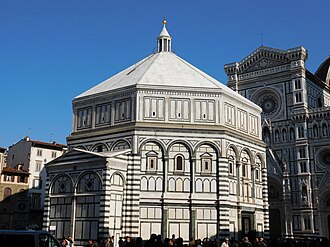
I blogged about Fallingwater in Perfect Harmony a couple of years ago.  The post was meant to be a primer on what makes the house an iconic work of American architecture.  At the time I was also building LEGO’s version, which is as close as I thought I’d ever get to the real thing.  Today I can say I’ve checked an up close and personal visit off my bucket list.

Fair warning: there’s no convenient route to travel to Fallingwater, which shouldn’t surprise you about a house hidden in the forest.  You’ll drive ninety minutes southeast of Pittsburgh on two-lane roads, some in desperate need of repair. And watch carefully for the driveway entry; it kind of pops up out of nowhere.

You won’t get to see Fallingwater without booking a reservation beforehand.  Despite my dismay in last week’s post about required reservations in Rome they make a ton of sense with Fallingwater.  It’s a small house after all, so it’d be overwhelming if visitors just showed up and walked in.  We took the final tour on a Saturday and our guide said 600 others had already been through the house earlier in the day.

Fallingwater’s Visitors Center

Thanks to the resources of the Frank Lloyd Wright Conservancy (which is still buying up property around Fallingwater), the experience begins before you ever see the house itself.  The driveway wanders past a guard house to a modest parking lot.  From there you walk to a beautiful Visitors Center nestled in the trees.  A central outdoor seating area is surrounded by a small museum of Wright’s work, a cafe, and a gift shop that offers much more than shirts and postcards.  Frankly, the Visitors Center is a nice little work of architecture all by itself.

The walk to the house begins down a kind of woodsy nature trail, so you can see the rocks, trees, and other materials used to construct Fallingwater in their native forms.  What impressed me most about the tour is how you never see the house until you’re practically at its front door, making for a dramatic reveal.  Your walk descends through the canyon of Bear Run (the river over which Fallingwater is perched) until the house’s signature cantilevered forms emerge from the dense forest.

As I described it in Perfect Harmony, Fallingwater looks like it was “constructed entirely offsite and dropped gently within the forest by pushing aside a few tree branches”.  After seeing the house in person, I wouldn’t change a word of that statement.  The design is a marvel, not only in how the indoor/outdoor spaces integrate with their natural surroundings, but also in how it was built as if floating over the waterfall below.

Enough with the fawning over Fallingwater, am I right?  After the four of us took the tour we had a chance to process what we’d seen, and my wife’s and brother’s reactions were clear: it’s just a house.  It’s not even a nice house, with its low ceilings, dark spaces, and anything-but-cozy use of rock, concrete, and glass.  Fallingwater is hard to get to, and it’s in the middle of nowhere.  And with its hundredth birthday not far off, everything about the house has a decidedly dated feel.

I did my best to explain why I love Fallingwater.  My sister-in-law, who appreciates everything about the arts, understood the significance of the house.  She “got” what Frank Lloyd Wright was conveying in the design, and allowed the sacrifice of comfortable living for the sake of the indoor-outdoor interplay.  She probably took in the house the way she would a painting at the Louvre.  My wife and my brother, not so much.  For them the ninety minute tour was probably sixty minutes too long.

Fallingwater promotes the thought: “one person’s junk is another’s treasure”.  My treasure is architecture (so much so I studied it in college).  Yours is probably something entirely different.  It fascinates me how my brother spent years and years of research, consulting, and money to restore a 1960s vintage Ferrari in his back garage.  To me, cars get you from Point A to Point B; a mere convenience.  My brother could spend hours explaining why his Ferrari goes worlds beyond that statement.

Still lingering on my bucket list is a visit to Paris, where among the city’s many wonders stands the Eiffel Tower.  I want to see this engineering/architectural masterpiece from far and near, and of course, ascend it’s many levels to fully experience the structure itself.  For now however, I’ll have to settle for building LEGO’s version.  As with Fallingwater, we can all agree to disagree. The Eiffel is (not) just a tower.

Some content sourced from Wikipedia, “the free encyclopedia”.

For Whom the Road Tolls

Because we raised our kids in Colorado, vacations to visit our extended families were often by airplane, since my relatives were in California and my wife’s were in Florida. It was the rare trip where we could see any of them by taking the car. So when my wife and I drove from South Carolina to Pennsylvania recently to visit my brother and his wife, we were reminded of what makes travel by car different than by plane. Toll roads, for instance.

Take your pick of payment

I have memories of toll roads my kids will never have. They’re old enough to remember passing through the booths and handing coins or bills to the collector. But they won’t remember the unmanned alternative, which was to toss exact change into a big plastic basket, listen to the coins process through the mechanics below, and hope/pray the gate to the toll road would raise. That automated approach seems almost quaint compared to today’s electronic alternatives.

I say alternatives (plural) because yes, that’s what we have with today’s toll roads. It confounds me. Why in heaven’s name haven’t we developed a painless, seamless, and most importantly, nationally coordinated approach to toll road payments? To some extent (nineteen states) we have a solution – E-ZPass, which by subscription and sticker allows convenient passage.  But even E-ZPass is not a perfect system.

Not so E-Z

For the rest of the country’s tolls – and for most of our round-trip drive between South Carolina and Pennsylvania – we have the clunky alternative. You pass through a now-unmanned (“un-personned?”) toll booth, where a camera grabs your license plate with a noticeable flash. Then, somewhere down the road (ha) a paper bill arrives in your mailbox. By my count I have four or five of these bills coming my way. It’s been ten days since we’ve returned home and I have yet to receive even one.

The cookie recipe is still on the back of the package

[Trivia detour:  Nestlé’s famous Toll House chocolate chip cookies aren’t named after toll booths but rather for an inn in Massachusetts where baker Ruth Wakefield came up with the recipe.  Wakefield and Nestlé struck a deal in the 1940s: her recipe printed on their bags in exchange for a lifetime supply of chocolate.  How very “Willy Wonka”, eh?]

Here is my unequivocally efficient approach to paying tolls across our many-highway’d nation. When you first get a driver’s license, you also sign up for a bank account-linked program which allows seamless paying of ALL tolls across the land – roads, bridges, tunnels, whatever – through a single readable sticker on your windshield. If you somehow don’t pay the tolls because of say, “insufficient funds”? Well sorry, your driver’s license doesn’t get renewed until you settle up at the DMV.

A $3 toll gets you through Baltimore’s Harbor Tunnel

My system is so logical it’s probably the reason I’ve never been pegged for a government job. In Colorado and elsewhere they almost have it right with the E-ZPass system – a sticker linked to a bank account. The problem is, they hold a minimum balance in a middleman (middle person?) account to guarantee payment of tolls.  I object, your honor. Why should Colorado have forty-odd dollars of my hard-earned money at all times when they can just settle up unpaid tolls whenever I renew my license?

Warning: cash-cow crossing

Then again, I have a beef with the tolls themselves, and that is, they pay for far more than the maintenance of the roads. You can’t tell me $10 per vehicle per crossing of the Golden Gate Bridge (GGB) is needed just to maintain the bridge. Here’s the jaw-dropping math for you.  112,000 cars cross the GGB every day.  That’s over forty million cars per year.  That puts the annual toll-taking at over four hundred million dollars.  $400M for bridge maintenance?  Sorry, fair traveler, you’re voluntarily lining the coffers of California (and San Francisco) every time you cross. “If I’m elected” (as we’ll hear countless times in the next two months), I’ll limit toll-taking to whatever it costs to maintain the bridge, road, or tunnel.  Not a dollar more.

On our return trip from Pennsylvania, I was amused to pass through one toll both with an actual human toll-taker. Those cordial people are still out there, collecting cash one car at a time. The woman in our instance happily returned us $19.25 on a $20.00 bill (and who’s happy to do that anymore?).

Time to bake cookies!

I was also amused… no, “gratified” is the better word; to pull into the parking lot of a South Carolina “rest area” shortly before we got home, for the use of a perfectly safe, clean, toll-free restroom on a toll-free highway. Maybe rest areas and their restrooms are the reason tolls cost more than the maintenance of the roads? Probably not. That would equate to a logical explanation for a government expenditure, which is an oxymoron.

Some content sourced from Wikipedia, “the free encyclopedia”.

Following the Leader

Technology birthed the self-guided tour. More and more often, an admission ticket to sights worth seeing grants you a pair of headphones and a wearable device instead of a name-tagged human to show-and-tell you the way.  Self-guided touring allows for a more convenient and less distracted experience.  But it also removes the storyteller, and that, my friends, makes all the difference between a memorable tour and a forgettable one.

Budapest, Hungary

Viking River Cruises, one of which we completed on the Danube River in early June (see Going With the Flow), provide a plethora of tour guide experiences.  On any given day of the cruise, you disembark to one or two “land-based” locales, in the (sometimes) capable hands of a personal tour guide.  Viking contracts with local agencies to provide these guides for small groups of its travelers.  For example, having a Hungarian show you the sights of downtown Budapest is so much more satisfying than hearing someone drone on about it on a headset.  Sharing a beer with a German on a tasting tour is almost like being invited into his house.

Nuremberg, Germany

If I ask you to share one of your own memories involving a tour guide, you’ll probably recall a particularly good one.  Maybe you’ll even remember a bad one.  Regardless, your stories would support my theory: a top-notch guide can make the what or the where of the tour almost irrelevant.  The guide himself or herself can make the difference between a memorable experience and a forgettable one.

Consider, I still remember a tour of a southern plantation with my family from almost fifty years ago.  Why?  Because the tour guide presented herself in a way that made me think we were being welcomed into her own house.  She also had this soft, syrupy unforgettable Southern accent that had me hanging on her every word.  Do I remember anything about the plantation?  No, but I sure remember the tour guide.

Szentendre, Hungary

So it was on the Viking cruise.  We had good guides and we had outstanding ones.  The very best of the dozen or so – ironically – was a young woman working on contract with Viking for the first time, as a stand-in for our scheduled guide in Munich.  She was, in every respect, delightful.  She started our tour with a greeting and a smile, then a little conversation and questions to break the ice.  As she led us from one sight to another, she spoke with an energy and pride in her city that can only be described as vivacious.  By the end of the tour, as the saying goes, she had us feeding out of her hand.  I was so enthralled I forgot to take a picture of her.

But we also had a lesser guide a few days earlier in Vienna, who I’d describe as a speed-walking encyclopedia.  He led us on a many-thousand-steps rush through the sights, filling our heads with facts and figure as he went, in a pretty thick Austrian accent.  He never smiled and I don’t think we ever stopped walking.  Can’t remember much about that tour (or him for that matter) because it was a rush-rush blurry overload of the senses.  I need to go back to Vienna again someday so I can (literally) stop and smell their famous roses.

Vienna, Austra

Courtesy of Viking and those many tours near the Danube, I present to you, therefore, the attributes of the consummate tour guide:

  1. A local, familiar with the city or sight at hand through regular exposure.
  2. A personality; warm, friendly, energetic, and engaging.
  3. An overflowing font of knowledge on his/her subject, able to answer just about any question thrown their way.
  4. A storyteller, able to weave anecdotes at will into the facts and figures to keep it interesting.
  5. In tune with his/her audience, making adjustments to the tour as necessary (ex. “Am I going too fast for you?”)

If you take enough sightseeing tours, you’ll know whether your guide is missing one or more of the above within the first five minutes.  You’ll also know whether the next hour or two will fly by or drag on for all eternity.  If your guide checks all five boxes, consider yourself lucky.  Most of us aren’t cut out for the job (myself included), whether we like to think we are or not.  It takes a special set of skills to be the leader everybody wants to follow.