Delicious Clicks

When my wife and I completed a partial remodel of our house last year, we replaced the rather ordinary-looking front door with a solid-core faux mahogany beauty, highlighted with a stylish centered rain glass cutout.  This single architectural element transformed our entry into a much more inviting space.  But after many months of opening our new door, I’ve come to realize it’s not just the look I enjoy so much.  It’s the sound.  A door of this caliber comes with a well-machined, weighty set of hinges and lockset.  Close the door and you’ll hear the latch and catch nestle comfortably and perfectly together.  It’s one of the most pleasing sounds I’ve ever heard.  I call it a delicious click.

Our newish front door

Delicious clicks.  Maybe you already know what I’m talking about.  You hear a rich, deep sound and you immediately think “high quality” or “high dollar” or just “n-i-c-e…”.  You hear this kind of a click in someone’s house and you think, “whoa, these people have it made”.  If you haven’t experienced this brand of audible, here’s an idea.  Your local bank may have a walk-in safe, one of those with the big spinner handle front and center on the door.  Maybe you can hang around until the time they secure the safe.  They’ll push that massive steel door closed on silent hinges.  They’ll spin the handle until it catches, and then secure the deadbolt with a secondary lever.

That’s when you’ll hear it.  A delicious click.

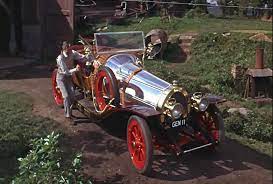
I’d love to trademark my little sound phrase but I must give credit where credit is due, so I summon James Bond.  Rather, James Bond’s creator, the author Ian Fleming.  After From Russia With Love, Goldfinger, and all of the other Bond adventures, Fleming wrote a wonderful, timeless children’s story called Chitty Chitty Bang Bang (1964).  For those not familiar (and shame on you), Chitty is about a nutty inventor living in a windmill with his family, the nearby candy company whose owner’s daughter is “Truly Scrumptious“, a mysterious castle in a land called Vulgaria, and the magical flying car that brings it all together.

Note the license plate

Perfect for this post, “chitty chitty bang bang” is also the sound of the flying car’s engine when it’s in gear.  There’s a moment in the movie where you hear the four-part tempo and you think, “perfect words to describe it!”  But more to my point today, it’s the car’s doors that are even more pleasing.  Even without a copy of the book in my hands, I still remember the author’s description as Chitty’s doors came to a close.  Delicious clicks.

Mercedes just came out with its “largest and most luxurious” electric car, the EQS.  It’s the battery-powered equivalent of the popular S-class sedan.  It has an aerodynamically sloping hood to make speeds above 100 mph (!) smoother.  The EQS can travel 480 miles on a single charge.  And the purchase will set you back over $100K.

Ferrari’s 296 GTB

Ferrari just came out with a new “supercar” with 818 horsepower and a V6 engine.  The “296 GTB” is also a plug-in hybrid.  It’s not Ferrari’s fastest car but it sure looks like fun to drive.  If you have the means, the 296 GTB will set you back the equivalent of three Mercedes EQS’s.

I can’t afford either of these cars; not even close.  But I can guarantee one thing.  Whether you go with the Mercedes or the Ferrari, your money will get you meticulously crafted doors on your car.  With delicious clicks.

Only $900 on Amazon!

Recently one of my liquid soap bottles was down to its last few drops.  When I pressed down for more the nozzle made a horrible, empty, nasally kind of plea for more soap.  What an awful sound.  Not exactly “toot sweet”.

On that note, I think I’ll close my front door again.

Some content sourced from IMDb.com.

Maker’s Marks

In the 1993 thriller Cliffhanger, the opening scene is truly disturbing. Having summited a mountaintop for a little adventure, young climbers suspend a cable across a deep chasm to a nearby peak, then cross the open space one by one in zip-line fashion. One climber, terrified to cross the void, gets caught in the middle of the fraying cable, holding on by her fingers for dear life. Despite Sylvester Stallone’s valiant efforts, she shockingly loses her grip, plunging untold feet into the abyss. I remember envisioning myself as her and thinking, “I’m going to die”.

Almost sixty years into life as I know it, I have three unforgettable, take-it-to-the-grave moments where I thought, “I’m going to die”.  One of them happened two nights ago.

Returning from a Rockies baseball game in downtown Denver, I drove myself and a friend through a long stretch of interstate road construction.  We chatted about nothing and everything as we eyed the late-night traffic around us.  I’ve driven this stretch countless times, so much so my brain moves to a certain degree of autopilot.  However, I was not prepared for one unexpected moment.  As we ascended a rise in the divided two-lane highway, the lane to our right began to disappear without warning.  Orange cones cut across its width too quickly, with no signage or blinking lights to grab our attention.

All would’ve been fine were it not for the well-lit semi-trailer truck already occupying the disappearing lane.  He was just enough ahead of me he wasn’t going to back off.  I don’t think he could even see my car was occupying the lane into which he was about to merge.  Instinctively, I pressed the brake pedal, but not before realizing how much of his trailer was still trailing my car.  How the back of his trailer didn’t merge directly with the hood of my car is beyond me.  As he swung over into my lane there couldn’t have been two inches between his bumper and mine.

This miracle of a no-accident is an example of a “shoulda died” moment.  The semi was at least four times the length of my car (and three times as high).  It’s safe to say he and his truck would’ve survived the collision (me, not so much).  It’s also safe to say providence of a higher being was present at that very moment.

The two other “shoulda” moments in my life are etched into my brain as clear as crystal.  When I was a kid, I once hit a tennis ball over my neighbor’s fence and into their backyard.  It was easy enough to sneak through their side gate and down the side of their house.  Then I ran into their tall grass to the approximate location of the ball.  Just short of it, I leaped instinctively over a fully coiled rattlesnake, ready to strike.  No question, the most terrifying moment of my young life.  I remember yelling and screaming until our neighbor came out and killed the snake.  “Shoulda died?”  Maybe not, but tell that to a ten-year-old who was sure he’d be bitten by a poisonous snake.  To this day I’m convinced there was an angel nearby telling me to “JUMP!” at just the right moment.

My one other “shoulda” happened in my twenties.  Driving back to my college after a road trip, I fell asleep at the wheel in the early-morning hours of an almost deserted divided highway.  My car drove itself into the road’s grass median at 60 mph, where I awoke to the horrifying realization I was completely out of control.  Struggling to get the car in hand, I swerved this way and that until finally crossing three lanes of oncoming traffic, plunging into a ditch, completely rolling the car, and finally skidding to a stop, adding the flourish of a 180° spin.  How was the hospital?  Never saw it.  I walked away from my totaled car with just cuts and bruises, in an understandable state of shock.  Why wasn’t I hit by oncoming traffic?  Why didn’t I perish in the remains of my car?  Another dose of providence, I think.

We all have one or two of these “shoulda” moments in our lives.  They leave an indelible stamp on our memory as if to say, “Nope, not done with this life just yet.”  Now let’s add “coulda” and “woulda” moments.

“Coulda died” moments are all over the map:

I coulda died if I didn’t catch my balance on the edge of that cliff.

I coulda died if I hadn’t been strong enough to swim out of that riptide.

I coulda died if I rode my bicycle on that busy highway.

And so on.

Woulda died” moments are even worse because you know the life-or-death consequences beforehand.  “Woulda’s” are typically fraught with ignorance.  Choosing to drag race down a busy city street.  Choosing to scale the steep roof of your house in shorts and sandals.  Choosing to act on your road rage.  Have I done any of these “woulda’s” myself?  No. I choose to live instead.

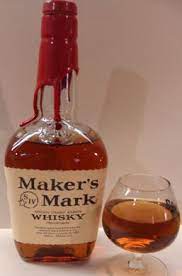
Maker’s Mark is a small-batch bourbon whiskey produced in Loretto, Kentucky by the company Beam Suntory. Maker’s marks, by my definition, are those “shoulda” moments where we emerge on the other side, a sweating bundle of nerves, thankful to be alive.

That semi and I had a “shoulda” moment the other night, but divine providence chose to play a part.

Thanks be to God.

Polishing the Pearls

Twice a day, my toothpaste tube and I do battle.  When I take the tube out of the medicine cabinet and realize there’s only a little bit left, I can see it smirking as if to say, “You’re not getting any more out of ME!”  Yeah, right.  I just flatten it from one end to the other (I recommend a hairbrush here), forcing every last bit of paste to gather at the top, ready to launch.  Then I take off the cap and squeeze like crazy.  It’s a good workout for the hands, and a mindless challenge to extend the life of your toothpaste.

Speaking of toothpaste – yep, that’s my topic today – here’s a really good trivia question.  In the Roald Dahl classic, “Charlie and the Chocolate Factory”, what did Charlie’s dad do for a living?  He screwed the caps onto toothpaste tubes… before machines were invented to do the job for him.  (He also died before the first paragraph and was never part of the story, so it’s a little weird I remember that bit.  But I digress.)

Quick, name the first ingredient you think of in toothpaste.  Flouride?  Not a bad guess, but did you know fluoride makes up only a tenth of a percent of toothpaste?  That’s like a pinprick on the tip of your finger.  Flouride is potent, my friends.  Good for healthy enamel but only in itty-bitty doses.  Keep those chemicals close, but not too close.

Was your first ingredient surfactants?  A surfactant is basically a “foaming agent”, which helps distribute the paste around the inside of your mouth, which translates to better cleaning.  Surfactants remind me of those animated scrubbing bubbles you’d see in TV commercials, whirling around the bathtub surface.  You also find them in shampoos and conditioners.  Without surfactants, most of the hairs on your head would get clean and conditioned, but others would be left high and dry.

“Minty fresh!”

How about flavorants – you know, peppermint, spearmint, wintergreen, or cinnamon?  If flavorants were the first ingredient you thought about with toothpaste, go directly to Jail (i.e. do not pass GO, do not collect $200).  Flavorants do zilch for your teeth.  They just make brushing a more pleasant experience and fool you into thinking you have a fresher mouth when you’re done.  You might as well chew gum.  The sugarless kind, that is.

Okay, let’s cut to the chase.  The primary ingredient in toothpaste is abrasives (and if this was your answer, you win a free dental drill).  Abrasives make up 50% of what’s inside the toothpaste tube.  They’re “designed to help remove plaque” (remember that phrase).  Think of abrasive-laden toothpaste as liquid sandpaper.  Abrasives are the reason you don’t want to swallow toothpaste.  And don’t brush too hard either.  With enough pressure, these bad boys would be happy to remove your enamel.

Toothpaste also has grit

I could list even more toothpaste ingredients (ex. antibacterial agents, whiteners, re-mineralizers), but let’s just agree: there’s a big, diverse party going on inside the tube.  Now for the bad news.  Toothpaste has no significant impact on the reduction of plaque – so says certain clinical studies. That’s why abrasives are described as “designed to help remove”.  That’s a sneaky way of saying they just keep things in check until your next appointment with the dentist.  Sorry (Charlie), no amount of brushing can replace those nasty power tools your hygienist has so much fun using.

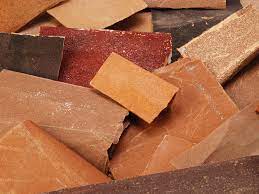
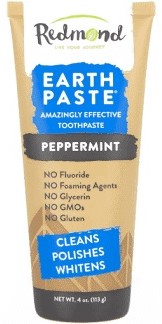
For all my talk about toothpaste ingredients, the brand I use has very few.  Earthpaste (“Amazingly Effective!”) has no fluoride, no foaming agents, and almost no flavor.  In fact, Earthpaste has only four ingredients – water, clay, salt, and essential oils.  It’s like brushing with mud.  Wait, it IS brushing with mud!  Just as effective, without the chemicals (subtle plug).  You’ll find it on Amazon.

So all this talk about toothpaste may be important, but so is getting every last bit out of the tube.  And there may finally be a solution to that battle.  The very smart peeps at Massachusetts Institute of Technology (MIT) have developed an edible product called LiquiGlide.  It’s invisible (which okay, is a little disturbing), and it’s designed to coat the inside of a container so the contents will completely empty with just gravitational pull.  Can you imagine?  No more flattening, squeezing, or hand workouts.  Just upend the tube and 100% of the product comes pouring out.  Get-your-money’s-worth people like me silently rejoice.

LiquiGlide’s proof is in the pudding, er – ketchup.  No more smacking or shaking the bottle.  No more “An-ti-ci-pay-yay-tion” (for those of you who remember the 1970s Heinz jingle).  Our future ketchup bottles and toothpaste tubes will be transparent – and empty – by the time they head to the recycling bin.

Unfortunately, I’d have to give up my Earthpaste and move to Europe if I want to experience the benefits of LiquiGlide.  (The company has no immediate plans to sell its products in North America).  That’s not gonna happen, so until further notice you’ll find me in the bathroom, doing battle with my toothpaste tube.  It’s not so much about getting my teeth clean.  It’s about getting my money’s worth.

Some content sourced from the CNN.com article, “How MIT could help you pour ketchup”, the CNN.com article, “Colgate’s new toothpaste tube…”, and Wikipedia, “the free encyclopedia”.

Tale of the Little-Dog

When my son and his wife visited with their daughters last week, the consensus for dinner was hamburgers and hot dogs on the grill.  These choices were noteworthy in that I honestly can’t remember the last time I ate a hot dog.  Sweet Italian sausage?  A couple of times a month cut up into a stir-fry of vegetables.  Beer brats?  Also delicious, hot off the grill with a little mustard.  But a hot dog is child’s play by comparison.  Or should I say, a “dachshund sausage”?

It’s true.  The Germans, who by all accounts can take credit for the invention of the hot dog (five hundred years ago!) nicknamed their frankfurters “dachshunds” – or “little-dog” sausages because, well, they looked exactly like the dog breed.  The only history Americans claim is the re-nickname “hot dog”.  Even the hot dog bun – which really took hold at the Chicago World’s Fair in 1893 – points back to the Germans, who always ate their sausages with bread.

Are hot dogs a staple in your diet, or like me are they simply a distant memory?  If they weren’t hot off the grill in the backyard or at a summer picnic, perhaps you had one at a baseball game (but not so much football or basketball, go figure).  You’ve probably also seen hot dogs on the midway at carnivals and county fairs.  Wherever you get your franks today, they’re just not as likely to come from established restaurants.

In the 1970s, America seemed to have hot dog stands on every corner.  The most popular of these was the distinctive drive-thru Der Wienerschnitzel’s, but you also had – at least from my California-based memory – Pup ‘N’ Taco, Ben Franks, Tail o’ the Pup, and the walk-up Hot Dog on-a-Stick booths you’d find at amusement parks.  Today’s retail hot dog is at a Sonic Drive-In or the food court at Costco.  If you live anywhere near New York’s Coney Island, you can also include “Nathan’s Famous”, or at least the annual hot dog eating contest of the same name.

A hot dog may be “a cooked sausage eaten in a long, soft piece of bread”, but its secondary meanings are less definitive.  “Hot Dog!” is something you used to say when you were VERY happy about something else (“used to”, meaning sixty or seventy years ago).  A “hot dog” is also a person “who makes fast, skillful movements in skiing, snowboarding, or surfing to make people notice them”.  That last definition still stands.

Speaking of “used to say”, we also used to sing about hot dogs, didn’t we?  Oscar Mayer’s jingle convinced us we should BE hot dogs (so everyone would be in love with us).  But the better song came from Armour, which asked us what kind of kids eat Armour hot dogs?  Per the lyrics, “…fat kids, skinny kids, kids that climb on rocks… tough kids, sissy kids, even kids with chicken pox…”  Today’s version of the Armour jingle would probably be censored just for using the word “kids”.

“I wish I had a million dollars. HOT DOG!” (Courtesy of Paramount Pictures and “It’s A Wonderful Life”)

Hot dogs will always be a childhood memory more than a dietary preference in my book.  My mother, raising five hungry boys, developed several dinner recipes when time and ingredients were in short supply.  These included canned baked beans and weenies (two ingredients = dinner!), and a truly odd creation from the Betty Crocker cookbook made up of hot dogs, mashed potatoes, and cheese (three ingredients!).  Whether it tasted good or not – I honestly can’t remember – dogs, mash, and cheese conveniently covered the protein, carb, and fat categories, all in one broiler-blasted casserole.

The Oscar Mayer “Wienermobile”

My most vivid childhood hot dog memories are not the dinners mentioned above.  Instead, I can’t forget snacking on raw hot dogs from the refrigerator (which sounds awful now, but hey, I was a kid).  My mother was faithful to the Oscar Mayer brand so I ate a lot of their hot dogs raw.   Speaking of Oscar Mayer, here’s the better memory.  They built a motorized advertisement which to this day may be the coolest vehicle on wheels.  The “Wienermobile” cruised the streets of Los Angeles, stopping every now and then in a parking lot so you could view it up close.  The driver handed out tiny plastic replicas of the vehicle, appropriately labeled “Weenie Whistles”.

(Courtesy of Walt Disney Pictures and “The Santa Clause”)

Let me conclude with a solved hot dog mystery.  Your grocery store sells most brands in packages of ten.  They also sell hot dog buns but in packages of eight.  Why?  Because hot dogs weigh about 1.6 ounces, which makes a package of ten a convenient sale of exactly one pound of meat.  On the other hand, hot dog buns are baked in trays of four, which work best with conveyor belts and processing.  An odd number of buns – trays of five – is a model of inefficiency.  So until one or the other manufacturer changes their standard, you’ll always have leftovers for snacks.  Or better yet, for your dog.

The hot dogs I served my granddaughters last week were comically advertised as healthy: no fillers, no preservatives, and so on.  They weren’t very good.  Maybe the worst part of a hot dog is what makes it taste so good?  Or maybe hot dogs have simply lost their appeal to me?  No, wait, that can’t be true.  Anything my granddaughters ask me to eat has instant appeal.

Guess I haven’t eaten my last little-dog sausage just yet.

Some content sourced from the National Hot Dog and Sausage Council (NHDSC) website, and Wikipedia, “the free encyclopedia”.

Springtime Rings

My daughter drops little hints on our phone calls recently, teasers to suggest her boyfriend will soon pop the proverbial question. If he does propose, her left hand will be adorned with an engagement ring and she’ll become – literally – a marked woman. She might as well sport a little neon sign on her ring finger blinking, T-A-K-E-N.

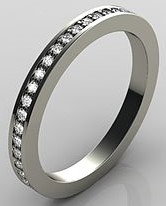
While my daughter gets excited about her potential Ring by Spring (Hallmark Channel movie, March 2014), I glance down now at the gold band I’ve been wearing for the last thirty-four years.  My wife and I decided a plain ring wasn’t enough of a statement for wedded bliss so we chose one with seven inset diamonds across the top.  Now that I think about it, those seven gems might as well broadcast M-A-R-R-I-E-D.

My ring

Over the years, I’ve grown fond of the string of bling inside my ring.  It’s a unique setting and the diamonds draw compliments.  But credit to my wife, there’s purpose behind the glitter.  She gives me her coy smile and declares, “When you’re walking down the street by yourself, the woman with her eye on you a block away will easily know you’re married”.  A block away?  That’s pushing it, but my diamond shine certainly does seem to advertise M-I-N-E.

Speaking of the opposite sex, Irwin Shaw, a playwright and author from the early 1900’s, wrote a short story that seems appropriate here.  It’s called The Girls in Their Summer Dresses.  Shaw puts us on the streets of New York City on a beautiful day, where a married couple is going for a walk.  The husband keeps getting distracted by every pretty girl passing by and his wife calls him out on it.  Their conversation over drinks after – and his closing thought – make for an interesting perspective on marriage.  You can read The Girls in Their Summer Dresses here.

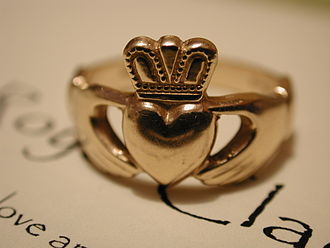
Claddagh ring

I can’t talk about my daughter’s forthcoming engagement ring and my own circle of gold without including a ring of my wife’s.  No, not her wedding band (though it’s a beaut’) but rather a Claddagh ring she’ll receive from Ireland in the next few days.  As we learned when we visited the Emerald Isle (and also from the Hallmark Channel – As Luck Would Have It, April 2021), the Claddagh ring includes symbols of love (heart), friendship (clasped hands), and loyalty (crown).  Wear the ring facing one way to show you’re single and looking for love.  Wear the ring the way my wife will, to show you’re already “captured”.

“Eternity” ring

So there’s one more ring for love out there in jewelry shops (and it’s not a “promise ring”, which doesn’t count for much of anything).  Ever heard of an eternity ring?  It’s a band of precious metal with little gems all the way around the circle, to symbolize “never-ending love”.  Talk about a bauble.  Women describe it as “cumbersome”, and rumor has De Beers came up with the concept to justify a large purchase agreement with Russia for small diamonds.  My wife will never get an eternity ring from me.  Our vows included a nod to her wedding ring as “a forever sign of my love and fidelity”.  See?  I’ve got “never-ending” covered already.

My newsfeed included a recent wedding proposal in Atlanta, where the groom-to-be took his bride-to-be on a helicopter tour of the city, then promptly dropped to one knee on top of the skyscraper they landed on.  When he popped the question he opened a box of five engagement rings.  Seriously?  I hope the guy my daughter will marry is way more decisive than that.  Commit to just O-N-E, son, kind of like you did when you chose my daughter.

Some content sourced from the CNN.com article, “Man tops off helicopter proposal with five engagement rings”, and Wikipedia, “the free encyclopedia”.

Her Majesty’s Persistent Presence

America is a vast melting pot, her contents stirred for generations in a dogged effort to blend peoples and cultures into a cohesive whole. It’s the classic chemistry experiment, where the glass beaker is filled with all manner of substances and then shaken, only to watch the inevitable separation back to individual weights and colors.  The shake-up brings moments of drama though; the storm before the calm if you will.  It’s also an apt description of the British Monarchy.

Despite my best efforts to filter my newsfeed, I still got the announcement about Oprah Winfrey’s televised interview with Prince Harry and Meghan Markle last week.  I don’t know much about either former royal (or Oprah, for that matter) so I dismissed the headline and moved on.  But I was alerted to the interview again the following day.  And again the next day.  Finally, in a move that can only be described as can’t-help-myself, I got out of my chair, grabbed the remote, and programmed the DVR to record.  Something deep-rooted was telling me Sunday night’s interview was must-watch TV.

No it wasn’t.  The questions and answers were predictable.  The topics just begged for a response from Buckingham Palace (mission accomplished).  After two hours of back-and-forth (and too much time in a chicken coop) my take on this couple hadn’t changed.  Meghan shouldn’t have dabbled in the royals in the first place.  Meghan eventually orchestrated her way out of the palace (and the country).  Harry followed.  Now they’re barely surviving… in an 18,000 square foot house in Montecito, California worth $14 million.  Oprah is their neighbor.

Waste of two hours?  There’s no denying it.  Still, I chose to watch.

Americans don’t have royals, but we have a lot of movies about royals.

Why do I care about Harry and Meghan?  I don’t, yet somehow I do.  Maybe I should blame The Crown, the excellent Netflix series about the British monarchy.  By total coincidence, my wife and I started watching Season Four this week, which is all about Harry’s mother Diana.  Then my newsfeed tells me the Duke of Edinburgh (Prince Philip) suffered a heart condition last week, rough enough to land him in the hospital.  Add to that regular photos of Queen Elizabeth looking ever-regal at the ripe old age of 94 and the royals are all over the place.  They make themselves kind of hard to ignore.

The Queen (will live forever)

The episodes of The Crown are a revelation, especially for those of us in “New England”.  Each show kind of ungilds the lily of America’s perception of British royalty.  There’s more drama, politics, and in-fighting than we Yanks would’ve ever believed of fair princes and princesses.  Yet through it all stands the queen – at the epicenter of the shaken beaker – somehow maintaining poise and presence.  All of the events in The Crown take place within Elizabeth’s lifetime, yet it feels like we’re going several generations back. 

Despite The Crown and my newfound respect for Elizabeth, there’s no question it was the late Diana, Princess of Wales who first piqued my interest in the British royals.  Who could blame me, right?  Lady Di was beautiful and supremely innocent, a veritable Disney princess in the flesh.  She was born just a few months before I was.  Her wedding to Prince Charles in 1981 – the grandest of ceremonies watched by hundreds of millions of people across the world – was the stuff of fairy tales (Charles himself, not so much).  Diana embodied all that was good and somehow magical about life as a royal.

Lady Di belongs in this club

But then we have Diana’s shocking death not sixteen years after her marriage.  Talk about shaking the beaker.  My wife and I were at a party in California at the time and returned to our hotel late, staying up hours past midnight to watch the funeral on television.  Like the Oprah interview this week, I can’t explain why I gave up half a night’s sleep to watch.  I just felt compelled to.

Thanks to The Crown, the royals aren’t looking quite as regal as they used to.  Diana effectively sacrificed her life to be a royal.  The agendas of Elizabeth and her several prime ministers were in constant conflict.  Season Four has a poignant episode where Elizabeth arranges an individual lunch with each of her four children.  She needs a valet to prepare a brief of information on each child so she can have meaningful discussions with them.  Elizabeth may be “Queen Mother” but the title rates a distant second to “Queen”.

(photo courtesy of Fox News)

Harry and Meghan seem determined to move on from the monarchy.  They’ll never achieve “normal”, and whether their marriage is the real deal is TBD, but good on them for making a show of it.  Me, I’m moving on too.  The next season of The Crown isn’t until next year so it looks like I finally get a break from the royals.  Er, unless William and Kate are up to anything interesting.  Are they up to anything interesting?  Hm.  I’d better go check.

Some content sourced from Wikipedia, “the free encyclopedia”.
Fine Print

I’ll never forget the first time I saw the movie, Jurassic Park. I’d read the Michael Crichton novel so I already knew the story, but I still couldn’t wrap my mind around that first dino scene, where a brachiosaurus casually munches on the uppermost leaves of a forty-foot tree.  The gigantic creature was so lifelike I thought, “Where’d Steven Spielberg get a dinosaur?” In my defense, computer-generated imagery (CGI) was brand-spankin’ new back then.  A ferocious T-Rex looking and moving like the real thing was still jaw-dropping in the 1990s. And I’m having the same reaction to the stuff rolling off 3D printers right now.

A “printed” toy tugboat

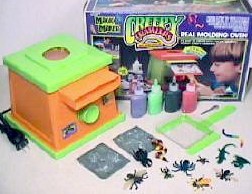
If you’re like me you haven’t paid much attention to 3D printing.  You see some of the items a 3D printer can generate and they seem like child’s play.  In fact, 3D printing reminds me of a 1970s toy called “Creepy Crawlers”.  You had these tubes of colored goop you squeezed into metal molds, and then the molds went into an electric oven.  The goop would grow from flat to 3D with heat, and suddenly the oven was spilling out all kinds of bugs and spiders you could drop on your friends.  (There was also consumable goop called “Incredible Edibles”; products to compete with whatever the girls were making in their Easy-Bake ovens).

But I digress.  Here’s my 3D printing naivete in a nutshell: I still think my 2D printer is the more impressive technology, cranking out high-resolution photos and perfectly addressed envelopes.  I mean, whatever would I need a third dimension for?

Yep, I am seriously naive about 3D printing.  The scope of this topic is mind-boggling if you really take the time to understand its potential. Here’s a good example.  Picture a printer as big as your living room.  Picture a printer cartridge of concrete instead of ink.  Now watch the printer build your living room, one horizontal layer at a time.  The printer can also build the rest of your house.  Just add plumbing and electric when it’s done.

“Printed” storage crates

Without getting too far into the weeds, let’s define 3D printing for what it really is: additive manufacturing (AM).  Here’s an easy way to picture the AM process.  When you build a log cabin you lay out the entire foundation of logs for the house – with breaks for the doors – before you add the next layer of logs.  You work your way up a layer of logs at a time, keeping those breaks for the doors, adding breaks for windows, pipes, and such, completing the structure with a sloping roof on top.  Perhaps you add a fireplace in the process; again, layering bricks on top of bricks until you’ve reached the top of the chimney.

That’s pretty much how a 3D printer works.  It “pictures” an object in horizontal layers and “prints” it from the ground up.  3D printing has been around longer than you think.  3D printers were developed as early as the 1970s (preceding your inkjet 2D printer!).  The early versions just had to be manually programmed.  Once we attached a computer and software, 3D printing really came into its own.

Watch the following video of a 3D printer confidently layering a basket weave – it’s mesmerizing:

https://upload.wikimedia.org/wikipedia/commons/transcoded/5/5d/Hyperboloid_Print.ogv/Hyperboloid_Print.ogv.360p.vp9.webm

The products speak for themselves, of course.  A shortlist of the more cutting-edge printed creations gives you an idea of where our world is heading:

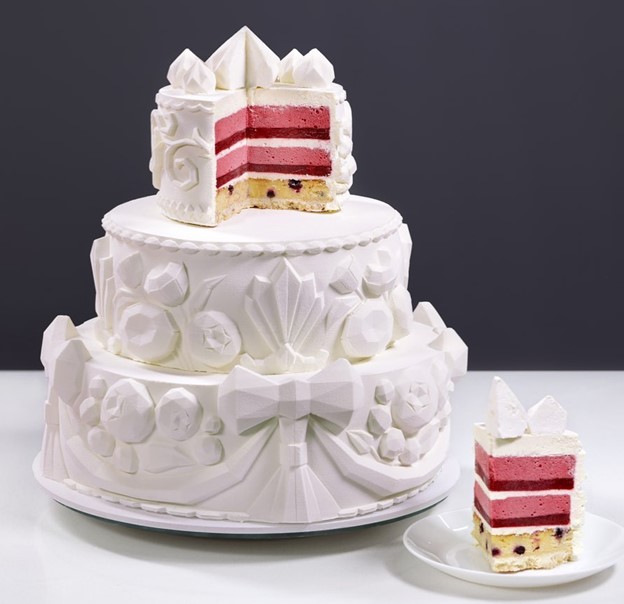
  • Cakes and pastries – The “ink” is baked goods in one nozzle and frosting in another.  Design it on your computer screen and then “print”.  It’s like the Easy-Bake Oven on steroids.  Only you don’t need the oven.
    3D-printed confectionery from Ukrainian chef/architect Dinara Kasko
  • Bones – No, not some plastic or other polymer designed to replicate bones, actual bones.  It’s called bioprinting – the fabrication of natural tissue using cells and other building blocks, and it’s coming soon to a clinic near you.  Don’t worry how long a broken bone will take to heal; just replace it!
  • Buildings – Forget about building that log cabin one layer at a time.  Your 3D printer will do the whole job for you (and it’ll still look like a log cabin).  Your printer can also build sturdier houses out of concrete.  This one’s on the market in Riverhead, New York, for $300K.
  • Vehicles – 3D printers have already created boats, kayaks, and most of the makeup of cars and trucks.  Long ago I was impressed with the robotics of the Ford Motor Company, employed on a long assembly line to build cars one part at a time.  A 3D printer can essentially do the same job standing still, no assembly line required.
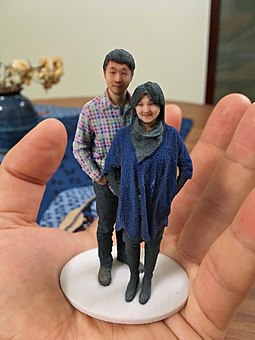
  • You – I could speculate on the potential for a full bioprint but let’s avoid that scary future for now and just say, a 3D printer can create a figurine to look exactly like you.  Think of it as printing a 3-D photograph.

If your mind is not blown by what you’ve just read, consider this: 3D is already passe.  That’s right, we’ve already moved on to 4D printing.  4D – at least with printing – refers to materials that can change shape with time, temperature, or some other type of stimulation.  A good example would be a printed window shade, sitting tight and virtually unnoticed at the top of the window in daylight but expanding to full cover as darkness falls.

Don’t know about you but this level of technology makes my head hurt.  When I’m done with this post I’m gonna push “print” and generate a nice 2D copy for my files.  Oh, and maybe watch Jurassic Park again.

Some content sourced from the 7/24/2020 Forbes article, “What Can 3D Printing Be Used For?”, and Wikipedia, “the free encyclopedia”.

Is It Live or Is It Memorex?

It’s the wood chipper for you, buddy.

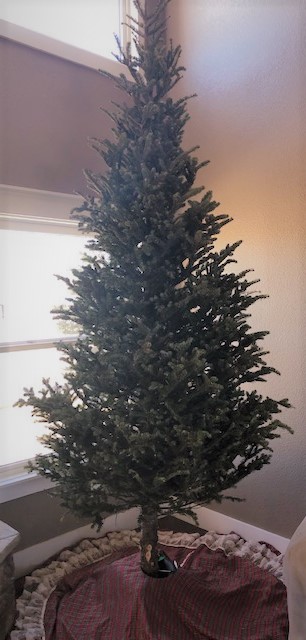
New Year’s Day has come and gone (and a warm welcome to you, 2021), which means it’s time my wife and I take down the Christmas tree. For some, taking down the tree means disconnecting the branches from the trunk, the trunk from the base, and packing the whole thing into a cardboard box to be used again next year. For us, taking down the tree means lifting it off the stand, hauling it outside to the truck, driving it over to the drop-off lot, and donating $5 to fund the recycling. Yes, this year – as with all of my years – the Christmas tree is real, not artificial.

I’m not here today to debate real vs. artificial Christmas trees.  They both have pros and cons and your choice rests on where you live, your budget, and assorted other reasons.  For me, a real tree is simply a tradition I refuse to give up.  Picking out a tree with my family was a big deal when I was young.  There was something magical about living in sunny Los Angeles and watching dozens of pine-scented snow-dusted trees being unloaded from Canadian railcars.  Never mind we paid a little extra to have our tree “flocked” (adding a touch of spray-painted artificial snow).  It was still a real tree.

Memorex: Sound that “blows you away”.

Real vs. artificial goes way beyond Christmas trees.  When I consider one next to the other, I always think of Memorex.  In the 1970s and ’80s the Memorex Corporation produced audio cassettes, the precursor to the compact disc.  In their TV commercials Memorex included singer Ella Fitzgerald belting out a note powerful enough to shatter a wine glass.  Then they’d play a recording of Ella’s performance and the wine glass would still shatter, begging the question, “Is it live, or is it Memorex?”

Real vs. artificial also recalls Milli Vanilli, the R&B duo from the late ’80’s.  Milli Vanilli made it big with the album “Girl You Know It’s True”, then won the Grammy Award for Best New Artist.  But years later the world would find out Milli Vanilli never sang anything.  Instead they lip-synced their way to fame; their albums the voices of studio performers.  Milli Vanilli returned the Best New Artist Grammy shortly after that.

Let’s visit real vs. artificial a little closer to home; say, the kitchen.  As much as my wife and I seek whole, organic, locally produced foods, we can’t help including a few outliers.  I just went through our pantry and came up with a few good examples:

  1. Aunt Jemima syrup.  This pancake topper – destined for rebranding in the name of racial equality – is nothing but high fructose corn syrup, water, and a whole lot of chemicals.  The “Natural Butter Flavor” variety blatantly advertises “contains no butter”.  You’ll find all the pure maple syrup you want in Vermont but you won’t find a drop in a bottle of Aunt Jemima.
  2. Kellogg’s Pop-Tarts.  A long time ago Pop-Tarts contained real ingredients (else my mother wouldn’t have put ’em on the pantry shelf as kid snacks).  Today’s Pop-Tarts are enriched flour and a bunch of scary-sounding ingredients developed in a lab.  It takes half the height of the box to list everything that goes into a Pop-Tart.
  3. Kraft Mac & Cheese.  Make a bowl of pasta, top it with melted cheddar, and Voila! you have macaroni & cheese in two ingredients.  Kraft Mac & Cheese needs twenty-one to accomplish the same dish.  But man, don’t it taste great?
  4. Ritz Crackers.  More enriched flour plus lab ingredients.  (Maybe every food can be made from enriched flour?)  The Ritz Crackers box includes a warning, “Contains wheat, soy”.  Ha, if only that was all it contained.
  5. “Real” Bacon Bits.  My mother-in-law left this bottle of horror behind when she brought a salad for Christmas dinner.  But guess what?  It really is made of bacon (okay, and chemicals).  I must’ve been thinking of other brands, where the bits are actually “flavored textured soy flour”.  Oh ick.

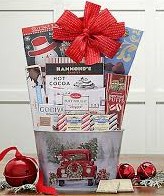
Back to our real Christmas tree.  After the gifts were passed around and opened, we discovered one more, looking a little embarrassed behind the branches.  It was a brightly colored basket, the kind all dressed up with a cute wooden box and Christmas bow, overflowing with food items and protected in plastic wrap.

But here’s the rub.  We opened the basket and found a whole lot of nothing.  Generic cookies, coffee, candy, and a couple of cheap Christmas mugs, arranged carefully so as to suggest the basket contained much more.  To add insult to injury, none of the food items were name-brand (except for a handful of Lindor truffles).  The cookies and candy were made with a ton of artificial ingredients.  The coffee was so generically packaged it had me wondering if it was even coffee.  The whole basket made me think “Memorex”.

This is where I jump to a discussion about artificial intelligence, but your real brain needs a rest so that’s a topic for another day.  Meanwhile, my wife and I will keep heading out every Christmas to tree lots (or the woods) to find the perfect one.  “Artificial” may sneak into other parts of our lives now and again but at Christmas, we’ll always be keeping it real.

Some content sourced from Wikipedia, “the free encyclopedia”.

The Original “Black Friday”

The first two weeks of November were jammed with “un-often” events this year.  For starters the bright light of Halloween’s blue moon spilled into the wee hours of November 1st.  During those same wee hours most of us lost Daylight Savings Time.  The very next day (Monday) marked the official arrival of Hurricane Eta to our shores. The day after that we voted in a presidential election. A week later we staged the Masters golf tournament (it’s supposed to be in April, people).  Then we had another hurricane (Iota), the first time we’ve had two in November.  Finally, we spiked positive COVID-19 tests in record numbers after months of declines.

That’s a pile of rarities in a short amount of time.  So why not add one more to the heap?  Friday the 13th.  I missed it completely.  Maybe you missed it too (and you’d be forgiven with all those other distractions).  Last Friday – the 13th – came and went without an ounce of bad luck to blog about.  Ironically, the only story I can share brought good luck.  I placed a carry-out dinner order last Thursday night and the restaurant gave me someone else’s food.  When I went back for the right order they told me to keep both.  As a result my Friday the 13th dinner was unexpectedly “on the house”.

Are you superstitious?  I’m not – not in the least.  I have no problems with sidewalk cracks, leaning ladders, or black cats. I don’t lose sleep anticipating the third occurrence of a bad thing.  I gladly pick up a penny (it’s free money after all) but with no expectations of luck.  I’ve broken mirrors (deliberately, in remodel projects) and wishbones (on a whim, in turkeys).  I’ve even knocked on lots of wood (mostly doors) but hey, my life goes on as usual.

Leonardo da Vinci’s masterpiece

As for Friday the 13th’s “un-luck”, its long-ago origins are suspiciously weak.  The most common comes from the story of Jesus in the Bible: thirteen individuals at the Last Supper (Thursday) followed by Jesus’ foretold crucifixion the following day.  Other theories point to fighting gods in mythology and fighting knights in the Middle Ages.  None of these carry water in my book.  Seriously, how did misfortune come to be associated with the collision of a particular day and date?

I read up on calendar averages, thinking the 13th falling on a Friday was as uncommon as a blue moon.  Maybe the 13th favors the other days of the week instead?  Nope, try the reverse.  Over a significant number of years the 13th falls on Friday more than Saturday, Sunday, or any other day of the week.

To add a helping of confusion, look no further than Spain or Greece.  These countries have an irrational fear of Tuesday the 13th.  Italy?  Friday the 17th.  Imagine watching America’s famous horror movie franchise in any of these places and wondering, “so… why do they call it ‘Friday the 13th'”?

No matter my efforts to undermine this superstition, the effects are real.  Over 17 million Americans admit to a dread of Friday the 13th.  Some avoid airplane travel and others won’t even get out of bed.  Buildings remove the thirteenth floor from the stack (which is a lot of demolition for a superstition, isn’t it?)  Elevators conspicuously delete the “13” button.  Numbered seats in stadiums go 10, 11, 12… 14, 15, 16.

For some of you, Black Friday means bargains.  For others, Black Friday means “13”. If nothing else, I’ll give you a couple of words to describe the circumstance of the latter’s irrational fear.  If you’re afraid of the number 13 you have triskaidekaphobia.  If you’re afraid of just Friday the 13th you have paraskevidekatriaphobia.  (Me, I only have acrophobia.  At least your phobias sound more sophisticated.)

Fact check.  This post was published close to the midpoint between Black Friday (the 13th) and Black Friday (the retail binge).  Okay-y-y-y.  This post also contains exactly 666 words.  WHOO boy.

Let me repeat… I am NOT superstitious.

Some content sourced from Wikipedia, “the free encyclopedia”.

Flying Furballs

As I glance out the windows of my home office I’m struck by the calm of a late fall afternoon; the cloudless blue sky with just a whisper of wind through the trees.  I don’t see any aircraft heading to or from the local military bases, nor the white vapor trails they often leave behind.  No flocks of birds heading in perfect formation south for the winter.  No falling leaves spinning to the ground.  Heck, I don’t even see a flying squirrel!

Maybe you caught the story earlier this week.  Seven people locked up in a Florida prison are charged with spearheading a “flying squirrel ring”.  They trapped thousands of the little guys in the wild, laundered them through a dealer (what sort of person deals in flying squirrels?), who distributed them to several buyers.  The buyers then drove to airports around the U.S., where the winged creatures were loaded onto airplanes headed to far eastern countries.  Who knew: there’s a market for flying squirrels as exotic pets?  Asians pay top dollar for them.

Is it just me or is there something a little redundant about shipping a flying squirrel on an airplane?

Also, what kind of a weirdo goes to the trouble to capture, launder, distribute, sell, drive, and transport thousands of flying squirrels halfway around the world?  If you’re going to do something illegal why not deal drugs?  Does a flying squirrel sell for that much?

Here’s another thing I can’t figure.  What do you call a litter of flying squirrels… a “squadron”?

You must admit, flying squirrels probably make the top-ten list of God’s coolest creatures.  The Northern species is small enough to fit in the palm of your hand.  They have big doe eyes to help them see in the dark (picture a Disney character).  They forage for fruit, seeds, tree sap, and the occasional bird egg.  They’ve been buzzing the planet for millions of years now – almost prehistoric.

But let’s talk about those “wings”.  Flying squirrels have what’s called a patagium: a furry, parachute-like membrane stretching from tiny wrist to tiny ankle.  When the membrane’s stretched taut they can glide from tree to tree, using their tail for stability.  They can even steer their body like an airplane, using limbs and tail.  How far can a flying squirrel fly, you ask?  How about 300 feet?  Yep, put one of these babies on top of an American football goalpost and he can soar all the way through the other end zone.  “Touchdown”!

“Boo!”

Okay BUT… flying squirrels lost some of their coolness when I discovered this picture.  OMG, that’s just wicked scary.  Can you imagine camping under the stars relaxed in your sleeping bag and you wake up to the rapid descent of that?  I’d NEVER be the same.  And here’s another Halloween-ish detail: flying squirrels glow.  Their underbody fluoresces pink under UV light.  Why?  No idea, but that just makes them creepier.

Maybe I don’t want a flying furball for a pet after all.

I suppose I’d take flying squirrels over some of the other flying organisms out there.  You know about flying fish.  You may even know about flying frogs.  But did you know about the flying squid in our oceans?  Seriously, they can jettison out of the water by expelling water from their “funnel” and travel up to 160 feet.  They can even keep that water blast going in the air for extra distance.  And there you have it: the world’s only jet-propelled aerial locomotion animal.

This is wrong on so many levels…

Now let’s get to the stuff of real nightmares.  How about flying snakes?  Five species in Southeast Asia and India can glide like the squirrels.  They contort their long bodies to be concave (like an upside-down taco shell), which allows them to buoy on a cushion of air.  Not to be outdone by the squirrels, flying snakes can also cover the length of a football field.  They even make mid-air 90-degree turns.  I didn’t have plans to visit Southeast Asia or India anytime soon but now I’m never going.  No way.

Finally, we have the undisputed king of flying nightmares: balloon spiders.  These ungodly insects spin a silky globe along with a sturdy dragline and go for a ride wherever the wind may take them.  If I was talking about one flying spider I might deal with it but these guys travel in packs.  Large packs.  Can you imagine?  An endless assault of mini paratroopers on a mini Normandy, only you are Normandy.  “Incoming!”

“I’ll get you, my pretty…”

You can fill your skies with whatever you want but I’ll pass on flying squids, snakes, and spiders.  I’ll even pass on the Northern squirrel (they only live 5-6 years and have no interest in bonding with humans)  Oh, and for those of you with flying monkeys on the brain, those would’ve been on the cool list if I hadn’t watched Dorothy and her friends at such a young and impressionable age.  Still gets me.

Nope, I choose late fall cloudless blue skies with just a whisper of wind.  No squirrels anywhere in sight.

Some content sourced from the 10/20/2020 CNN article, “Florida officials say several people charged in flying squirrel trafficking operation”, and Wikipedia, “the free encyclopedia”.