Conifer Confetti

When you move to a new city and state, you deal with the expected and the unexpected. The expected includes boxes that don’t unpack themselves (but what a great invention, right?), over-the-fence greetings with neighbors (categorized as “nice”, “cranky”, and “utterly weird”), and enough wrong turns on roads where you finally pull over and mutter, “Where the heck am I?” Unexpected includes the drip of a leaky pipe ($$$, sigh), chew-crazy squirrels in the backyard (anything plastic is fair game), and, oh yes… pine cones. Lots and lots of pine cones.

Five acres may seem like a lot to some of you readers but to us it’s downsizing from our ranch in Colorado.  You’d think a property a sixth the size of the former would suggest lower maintenance.  After last Sunday I’m not so sure.  My wife came in from the barn the day before and said, rather gently, “We should probably pick up the pine cones in the back pasture before they get out of control.”  Simple enough.  After we fed and watered the horses, we went out to the field with the muck rakes and began picking.  A muck rake can hold ten pine cones.  Around the first tree I figured I picked up fifteen rakes’ worth.  Again, simple enough… except we have at least twenty pine trees.  Do the math.  Our pickup amounted to a motherlode of pine cones, somewhere between two and three thousand.

Back in Colorado we had, like, one pine tree on our property (a magical one actually, which I wrote about in My Dandy-Lion Pine Tree).  After last weekend I’m thinking I should’ve amended our purchase agreement on the new place to say, “Remove nineteen of twenty pine trees”.

I need the “giant” version of this

What does Dave do with all of his pine cones?  Nothing, for now.  The most efficient system of gathering is to throw them against the base of the trees and then haul them away to the “yard waste” dump.  But in the three hours we collected cones, I had plenty of time to think about better ways to do it.  The neighbors suggested a “pasture vacuum”, which is like one of those big spinning brushes you see in the car wash, dragged behind the tractor.  Others suggested a big bonfire, pretty much the last thing a person from Colorado wants to see in their backyard.

My new pet

Here’s thinking outside of the box: I could get a pet Parasaurolophus, the dinosaur with a distinctive crested head.  The Para has thousands of teeth perfectly suited for their favorite meal: pine cones.  But I’d need a time machine so I can bring one back from sixty million years ago.  Looks like it’s still me and the muck rake for now.

Conifer cones”, which include pine cones, play a vital role in the evolution of the trees.  Between all those little wooden scales are the seeds, first pollinated and later released.  It’s a sophisticated process which you can read a lot more about here.  In its simplest terms you have the smaller, meeker “males”, who release pollen for the “females” to catch.  Then the females release the seeds, even after they lay in my pastures by the thousands, seemingly dead.

“He” (lower) doesn’t even look like a pine cone

There was a moment in all that raking where I followed a squirrel as he bounded across the grass and onto the trunk of one of the trees.  Up, up, up he went until he disappeared into the umbrella of the branches above.  And that’s where, to my horror, I noticed how many thousands of pine cones sat poised above me. Maybe millions… almost all of them female.  It’s like having the world’s biggest sorority row above my backyard, and every house is about to disgorge its girls for a giant party on the ground.  Maybe I should hire Sticky Vikki & The Pine Cones for the music.

“Widowmaker” cone

I know, I know, it could be worse.  I could live in Maine, where there are so many pine trees the state flower is the pine cone (and a pine cone is not even a flower).  Or I could have Coulter pine trees, with cones so big they’re nicknamed “widowmakers”.  Seriously, these ladies are massive – you don’t want one falling on your head. Speaking of falling, the mere sound of a plummeting cone is unnerving enough.  It’s like a warplane flying overhead and releasing a bomb, only the bomb whistles straight to the ground without detonating. “THUNK”.

I’d have a massive herd of these Scandinavian toys

We shared the story of our pine cone bounty with my brother-in-law, who promptly encouraged us to do something creative with them.  Make wreaths for the holidays.  Turn them into coffee and jam like they do in Eastern Europe.  Sell them as the fertility charm they’re supposed to be.  Nah, I don’t have time for all that.  We’re expecting extra wind in the next few days courtesy of Hurricane Ian.  I have another three thousand pine cones to pick up.

Some content sourced from the HuffPost blog, “Thirteen Things You Never Knew About Pine Cones…”, and Wikipedia, “the free encyclopedia”.

P.S. I Love You

When it comes to snack foods, I’m not a fan of variations on a theme. Kellogg’s Pop-Tarts debuted in the 1960s with just four flavors: strawberry, blueberry, apple, and brown sugar cinnamon. Today you choose from more than twenty Tarts, including “Hot Fudge Sundae”. The original Triscuit cracker was a baked whole wheat square with a little salt. Today you’ll find a dozen Triscuit flavors on the shelf, including “Fire Roasted Tomato & Olive Oil”. Then we have the Oreo cookie. The original, of course, was two chocolate wafers sandwiching just the right amount of vanilla cream filling. Now Oreo flavors are too numerous to count.  But there’s one you can be sure is a whopping success: pumpkin spice.

 Welcome to mid-September, Americans, and the beginning of our pumpkin spice delirium.  For the next two months you can expect an endless parade of “P.S.” product advertisements.  My wife & I, we’ve already caved to the obsession.  We have a package of “Pumpkin Spice Snaps” sitting on the counter.  We have two leftover pieces of this year’s first homemade pumpkin pie sitting in our frig.  And it’s only a matter of time before my car veers off the road and right through a Starbucks drive-thru for one of their classic P.S. lattes.  (I’ll take a grande, if you please).

My daughter just reminded me Starbucks also brings back their pumpkin cream cold brew this time of year.  That’s a good one too but let’s be real: none of Starbucks’ P.S. offerings should be considered “coffee”.  We buy them for the spice and the sweet, not for the taste of the beans underneath.

Lest you think Starbucks gets the credit for our pumpkin spice mania, the record must be set straight.  McCormick and Company, they of the little red-capped spice bottles, debuted their “Pumpkin Pie Spice” in 1934.  At least three of the following are in the bottle: cinnamon, ginger, allspice, cloves, and nutmeg.  Do I have this spice blend?  Yes.  Do I use it?  Heck, no.  My wife’s family recipe for pumpkin pie contains a different proportion of the individual spices than McCormick’s, which may be the secret to its delectable flavor.  Plus, pumpkin pie is easy enough to make without having the spices combined for you. Dump the ingredients into a bowl and mix well. Pour into a pie shell.  Bake. My kind of dessert.

Starbucks can’t even take the credit for the first P.S. latte.  That accolade goes to Mexico’s Candle Company in 1995.  The Starbucks version debuted eight years later.  But you could argue Starbucks kicked off the forever-trend where we infuse P.S. into everything imaginable, including the good (Krispy Kreme doughnuts, Cheerios, candles) and the ridiculous  (lip balm, deodorant, beer).  As of 2016, “pumpkin spice consumables” accounted for an annual market of over $500M. Yep, we’re hooked.

The “Pumpkin Spice Flavored Creme Oreo” is not even an Oreo, at least not in my pantry.  Nabisco attached the word “Oreo” but c’mon, let’s just admit it’s a seasonal wolf in sandwich cookie clothing.  “Golden” Oreo cookies… with “festive pumpkin spice flavored cream” (and is it cream or creme?)  Nope, the only Oreos in my book are black and white, though I will allow shelf space for the “Double Stuf” variety.

I’m not sure why this topic caught my eye because I haven’t had an Oreo in years.  The last time I did I realized the taste was different from the Oreo of my youth.  The cookies are not as soft, and there’s less cream filling in between (which is like messing with the ratio of chocolate and peanut butter in a Reese’s, a sin for all mankind).  Like the misfortune of many other snack foods though, size and ingredients change for the sake of profit.  And new varieties pop up to keep consumers buying.  At least we’re not talking about the Lady Gaga Oreo.  You’ll need your sunglasses for that one.

Now you’ll excuse me as I head off to a doctor’s appointment.  My drive will take me past several Starbucks, which means I could be caving to my first P.S. latte of the season.  Not that I’m worried about missing out.  As soon as the P.S. season is over I can look forward to Starbucks’ Chestnut Praline latte all the way through New Year’s Day.  Now we’re talking!

Some content sourced from the CNN Business article, “Oreo is bringing back this flavor after a 5-year hiatus:, and Wikipedia, “the free encyclopedia”.
Credit Guards (or AT&T pt. 2)

When my “favorite” service provider AT&T (tongue-clearly-in-cheek) challenged my creditworthiness last month amidst an adventurous request for internet service, I was forced to bow down before the Big Three. No, not Ford, Chrysler, Dodge – I don’t drive any of ’em. And not CBS, NBC, ABC either – I can now stream their programming (since I finally have internet). Rather, today’s big three are Equifax, Experian, TransUnion – those behind-the-curtains guards who man the credit rating tollbooths as sternly as passport checkers from former Eastern Bloc countries.

Credit guard companies are more difficult to deal with than credit card companies.  The moment I entered college, offers for credit came pouring into my mailbox.  I could qualify for ridiculous amounts on little plastic cards, even though I was a penniless freshman with little reportable income.  But they want you hooked on credit at an early age so you’ll pay back a lifetime of fees in interest.  Yet now, with decades of credit history under my belt (all of it positive, I say with muted pride), dealing with the credit guards is infinitely more challenging.  It’s like walking up to Fort Knox and asking for a bar of gold.

If you don’t check (or even know) your credit score, you may not be familiar with the Big Three.  They’re like triplets hired to do the same job: “consumer credit reporting agencies… collecting and aggregating information… on consumers and businesses worldwide”.  Equifax tracks 800 million consumers.  Experian tracks a billion.  In other words, the next time you use your credit card, you can bet the Guards will be watching.

The Guards help themselves to your transaction, blend it with the others you’ve racked up recently, look at how well you manage your total credit and debt, and come up with a score.  If you and your wallet behave, you get a number in the neighborhood of 700; if not, you’re closer to 500 (sounds like a college entrance exam, no?) 1.2% of Americans maintain an absolutely perfect credit score, though darned if I know how they do it.  Maybe they pay for everything in cash.

Consumer credit reporting agencies are b-o-r-i-n-g (I’m surprised you’ve made it this far) so I’m not fired up to write about them today.  Instead, let me tell you a story – humor at my expense, really – where the Guards were peripherally involved… and I was fired up.

When I was battling working with AT&T on my request for internet last month, the customer service rep stole took a full hour of my valuable time to botch set up the account, even though I already had another account with AT&T for wireless service.  He asked a million questions (including the oft-scripted “how’s the weather where you are today?”).  A marathon later – because I could’ve run one by this point – he said it was time to check my credit.  Here’s where I should’ve thought to hang up because AT&T owns decades of credit history on me (thanks to the Guards).  If AT&T couldn’t tap into my score already then maybe I shouldn’t be doing business with them.  But I really wanted internet so I surrendered cooperated like a good little lamb, supplying my name, rank, and social security number.  And this is where everything went horribly wrong.

“I’m sorry sir, but your credit is blocked.”

Blocked?  What the *$%^#! HECK does that mean?  When I asked him to please explain, my smooth operator countered by saying, “Let me run the check again.  Repeat <your> social security number”… which I did, only to hear the word “blocked” again.  When the third time wasn’t the charm he made a rather stupid bold announcement:

“I’m sorry sir, but you must have an invalid social security number.”

Invalid social?  So you’re saying the nine-digit number I memorized when I was like, oh, an infant; the one I’ve spoken or written millions of times in my life, the one I’ve been trying to protect from identity thieves since I was born, is “invalid”?  What kind of incompetent fool professional was I dealing with here?

More like “think twice”

Again I should’ve slammed the phone down hung up, but silly me, I surrendered more minutes of time to understand my “two options for service when I have blocked credit”.  One, I could set up the account in my wife’s name. Involve an innocent bystander in this circus request and risk divorce?  No way.  Two, I could pay AT&T a $250 retainer fee to offset my newfound credit liability. Okay, NOW I’m insulted.  When I declined both options, my customer service imposter temporary friend apologized, bid me good day, and hung up without another word.  Seriously, he hung up on me (without so much as a sales pitch for DirecTV). I suppose you could call it a fitting conclusion to a totally worthless call.

My story does have a happy ending.  Several days later I mustered the courage to call (A)nguish, (T)orment, & (T)orture again.  Maybe the more you call them the better the service because the next rep let me know my credit was frozen (not “blocked”).  Ah, now we’re getting somewhere!  Frozen credit, for those of you in the not-know, is initiated by the consumer (me).  A credit freeze is put in place to counter identity theft.  I totally forgot I’d done that, like, last century, but thanks to a smidge of online access (the Guards are more hospitable these days) I was able to drop the freeze with just a few keystrokes. Bingo. Credit check passed. Internet service permitted.

The inspiration for this post was a recent headline about Equifax.  The Guard issued millions of incorrect credit scores last spring, which meant consumers were either denied loans when they shouldn’t have been or charged higher-than-deserved interest rates.  One ambitious soul is leading a class action lawsuit to reclaim the interest she never should’ve have paid.  As for me, I choose not to deal with the Guards any more than I have to.  After all, I get enough credit check grief from AT&T.

Some content sourced from Wikipedia, “the free encyclopedia”.

Lost in a Dense Fog

When I first learned to play the piano, it was a challenge to master the weight of the keys. Weighted keys allow the piano’s sound to be louder or softer depending on how hard you press them down. Since fingers vary in size and shape it takes practice before the index and ring fingers (for example) generate the same volume on the keyboard. In hindsight, if I’d chosen the theremin over the piano I could’ve developed the technique much faster because this instrument makes its music without weighted keys. In fact, the theremin makes music without any touch at all.

I should’ve posted about the theremin closer to Halloween because it produces one of the eeriest sounds you’ll ever hear.  Click the red preview button on this list of Theramin Sound Effects and tell me if you disagree. Doesn’t your mind conjure up a ghostly apparition floating in the darkness of a haunted house?  The theremin provides the perfect soundtrack for all things scary. New York Times critic Harold C. Schonberg once described the theremin’s wail as “a cello lost in a dense fog, crying because it does not know how to get home.”  I like that (and it’s much classier than “pig squeal”).

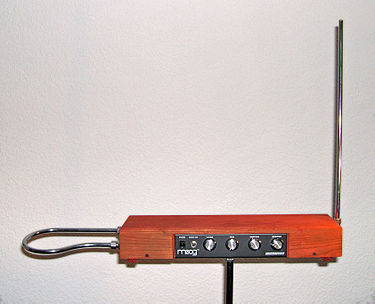
How the theremin creates its unique sound involves too much science to keep your attention today (and more words than I want to type).  Suffice it to say, the instrument has two antennae; a looped one to control volume and an upright one to delineate pitch.  The player’s darting hand/finger movements – touching nothing but the air in between – create its spooky music. 

Now watch the following performance.  Seeing the theremin played is almost as jaw-dropping as listening to it.

I find the theremin to be a fish out of water next to traditional orchestra instruments, yet there are several other weirdos out there.  The bassoon features a tiny mouthpiece attached to a massive piece of black pipe and requires a deliberate overbite to create its nasal tones.  The glockenspiel (which gets points for a fancy name) is really nothing more than a metal xylophone.  The tam-tam is a giant gong, lucky to be struck more than once in a performance.  And the hand saw doubles as a musical instrument when you warp and release the blade (and sounds pretty darned close to the theremin).  But each of these outliers requires physical touch to make their sounds.  The theremin sings with mere jabs of the air.

[Author’s aside:  Every time I write theremin my brain wants to override with Theraflu, the over-the-counter cold and flu medicine (“Discover the Powerful Relief!”)  You don’t find many thera- words in the English language – therapy being the only other one I can come up with.  I’m happy to announce I need neither Theraflu nor therapy at the moment.]

The theremin was invented in the 1920s by Russian physicist Leon Theremin (whose life story involved a lot more than science).  RCA picked up the commercial production rights but the musical instrument never really developed a following.  Instead, its soprano voice showed up randomly in music and movies.  If you recall the Beach Boys’ hit, “Good Vibrations” you should also recall the theramin solo at the end of the song.  You’ll also hear its moan in the opening bars of Fleetwood Mac’s “Little Lies”.  But the theramin seems a more logical fit in the soundtracks of horror and science fiction movies like The Spiral Staircase, The Day the Earth Stood Still, The Thing from Another World, and more recently, Monster House.

My favorite account of the theremin (and with this I close) is a collection of melodies recorded and blasted into outer space back in 2001.  The effort was an attempt to communicate with other worlds, including Gershwin’s Summertime and Vivaldi’s The Four Seasons.  The name of this collection? First Theremin Concert for Extraterrestrials.  Seriously?  We chose the theremin?  Wouldn’t these classics have sounded a whole lot smarter on the instruments they were originally written for?  No wonder the (more intelligent) races out there haven’t stopped by our little planet to say hello.

Some content sourced from Wikipedia, “the free encyclopedia”.

Oh, For Heaven’s Sake!

A “utility” is defined as a public service, “… a system to provide water or electricity… a cell tower network, or the like”. On dictionary.com, utility is also labeled as an “elementary level” word, meaning a grade school child should be able to understand its meaning. Ah, now we’re getting somewhere, because elementary is the perfect way to describe the customer service I’ve received while setting up the utilities in my new house.

Power. Water. Gas. Internet.  I’d call these utilities the four cornerstones of a functioning modern house, wouldn’t you?  Without them you’re just looking at your walls (if you can see them in the dark) wishing you could take a hot shower and check your email.  So why is it so difficult to get the utilities going again when you move, especially when they’re already up and running in the first place?

Power was almost an open and shut-it-off case for me.  I called the supplier to transfer the electricity into my name, which seemed a straightforward process until they sent their technician to the house.  Here we have the classic case of the right hand not talking to the left.  The technician proceeded to turn the power off.  How my neighbor – the former owner – had the presence of mind to stop him in his tracks is beyond me (I owe her something from my kitchen now).  She saved me a week or two of “the lights are off and somebody’s home”.

Water comes from a well where I live.  The best example of good customer service may be no customer service because if you have a well, you don’t have to call anyone at all.  Assuming your well pump is working (and you have power) you simply turn the lever and out comes the water.  But then you realize the water is cold, which is why you need…

Gas – or propane in my case – requires a call to customer service because they won’t let it flow without a safety inspection of the system.  I get it (now) since I have a 500-gallon tank under my house.  This is good news and bad news.  The good news: I’m “energy independent” of a piped network, so as long as my tank has propane I have heat (and a stove to cook on, and a fireplace to enjoy).  The bad news: I get charged for the 500 gallons in one shot instead of paying by the month.  Whoa.  My household budget went off the rails with that bill.  And just how big is a 500-gallon tank of propane anyway?  I’m not sure I want to know.

Is my propane tank the size of a giant peach?

If not for internet, I’d say I’d fared pretty well with setting up my utilities but bless their hearts AT&T makes a big-screen adventure out of the simplest request.  Your phone call takes you to a menu of prompts, then to another menu, then to another menu, until the recorded voice seems to capitulate by finally transferring you to someone who can actually talk (but not think).  The someone who comes on the line is clearly not from your neighborhood (or even your country).  The someone says, “Yes, hello, and how is your day today, Mr. David?”  Mr. David?  No one calls me that ever.  The someone then follows a scripted line of conversation by launching into a series of sales pitches to try to get you to bundle with a bunch of stuff you don’t need.  The someone sighs when you repeatedly decline, and finally says something like, “I’ll now be transferring you to another representative who can help you with that”.

I have to pause, no, stop my AT&T rant for three reasons now.  One, my frustrations will continue for twice as many words as I have space for today.  Two, it’ll drive me to drink just revisiting the experience.  Three, if AT&T reads this post they may be tempted to turn off my internet.  Very long story short, I lost track of the number of someones I talked to, failed AT&T’s screening process three times because of poor credit history (wrong), an incorrect social security number (wrong again), and a street address where AT&T doesn’t provide service (is three times the charm?)

Go figure, the only way I finally succeeded with my internet setup was to request the service through AT&T’s website.  The tech showed up as scheduled, set up the service, and now I’m able to type my blog posts again.  Small miracles.

Because of the newish ways we now communicate with one another (most of them electronic) getting good help or prompt help or even the right help is more of a challenge than ever.  When I share these adventures with family or friends I always hear my late mother remarking, “Oh, for heaven’s sake”.  Maybe she would’ve been better saying, “Heaven help us”, because customer service for utilities down here on earth just isn’t cutting it.

Local Fare for the Win

When you pick up and move to a new town 1,500 miles from where you used to live, “getting the house in order” is a little overwhelming. Thirty years in the same spot creates a lot of favorite “thises” and preferred “thats”. So whenever my wife & I step away from the endless unpacking, we’re trying out supermarkets, large-animal vets (for the horses), and restaurants, to figure out which ones best replace those we chose time and time again in Colorado. And here’s what we’ve quickly discovered about life in the South (of the U.S.): good Mexican food is a tough ask.

Pizza as it should be

Let’s take a bit of a detour. (Don’t worry; we’ll be back on the main highway before you know it.)  In a surprisingly candid post from fellow blogger Brilliant Viewpoint, her recent trip to Rome and Florence determined pizza – at least the classic Italian version of the pie – is not what it used to be.  The writer suggested the crusts are like cardboard, the mozzarella chunky and unappetizing, and the pizza itself a little soggy.  Having spent a college year in Italy (when I survived on pizza and not much else), I found her conclusions shocking.  Maybe this is why Domino’s – they of the generic-but-convenient home-delivered product in America – decided to give Italy a try?  It’s true.  In 2015, a Dominos franchise opened several stores across Italia to capture the then non-existent delivery market.  It almost worked.

No matter what the state of Italian pizza these days, Domino’s Pizza stores in this of all countries lands on my “you’ve got to be kidding me” list (alongside Starbucks coffee).  Put yourselves in their shoes to understand the absurdity of it all.  You’re an Italian.  Pizza was invented in your country, which has thousands more years of history than America.  You can choose from any pizzeria on any block of any street in your town and the homemade product will be excellent.  Yet you’re going to call Domino’s to order a mass-produced American knock-off instead?  At least Baskin-Robbins was sensible enough to stay away instead of going head-to-head with gelato.

You shouldn’t be surprised to learn – after a seven-year run – Domino’s Italian franchisee filed for bankruptcy in April.  “Of course“, you say. “Their product just couldn’t compete.”  Well, that’s not quite the story.  It was more about pizza delivery itself.  Remarkably, Italy had very little delivery before the pandemic.  You wanted a pie back then, you went out into the streets and got it.  But just like American restaurants, Italian pizzerias did whatever it took to survive the pandemic years, and that meant delivery to front doors.  Domino’s thought they had the market cornered before they ever entered it.  Next thing they knew, everyone else was doing the same thing.

No matter the reason, I’m happy to say arrivederci to Domino’s Pizza in Italy.  Franchise food doesn’t feel right in a country with so much history and wonderful local food.  Shortly after my college year in the 1980s, I learned a McDonald’s restaurant somehow landed a lease at the base of Rome’s famous Spanish Steps.  That’s like painting a mustache on the Mona Lisa.  America has much to offer the world, but fast food is not our proudest accomplishment.  I’m not even sure it’s an accomplishment.

Let’s get back to the main highway now.  Up top we were talking about Mexican food… er, the lack of it, in the American South.  It’s true, if our new little town is any indication.  Yes, we have several options to beat a sit-down at Taco Bell, but they’re only a whisper better.  Everything looks and tastes so generic.  What should be salsa roja inside of enchiladas tastes more like pizza sauce.  What should be a margarita with the sublime afterbite of tequila tastes like syrupy lemonade.  The chips might as well be Doritos.  Yet you look around and the restaurant is packed.  These people don’t know what they’re missing, but they seem happy enough.  As a result, just like Dominos, I don’t expect a Mexican restaurant from outside of the region to waltz into town and do well.

My theory on good Mexican food goes like this: the further west and south you go the better it gets.  Colorado and Tex-Mex trump anything east of the Mississippi.  Arizona and Southern California fare trump Colorado and Texas.  In other words, my favorite Mexican place in my new hometown is destined to be close to my front door. In fact, it’s inside my front door.  It’s my kitchen.  Time to start making my own margaritas and enchiladas. 

Some content sourced from the CNN Business article, “Domino’s tried to sell pizza to Italians…”, and the Brilliant Viewpoint blog.

Clash of the Titanium

The Mohs Scale (which you have no reason to be familiar with) is a 10-point scale used to measure the hardness of natural substances. For example, silver and gold can be shaped into jewelry with the easy tapping of a hammer, so they only rate a 2.5 on the Mohs. On the other hand, diamonds are so hard they’re used to make drill bits and saw blades. The Mohs Scale rates a diamond a 10 out of 10. And then there’s titanium, which rates a 6. Not diamond-hard but still pretty hard, right? So what in God’s name is titanium doing in a bag of Skittles candies?

You know it’s a slow week of headlines when an article on Skittles earns a spot in my newsfeed.  As if we don’t have enough high-profile lawsuits floating around (ex. Johnson & Johnson’s baby powder, Monsanto’s “Roundup”, Cleveland Brown QB Deshaun Watson’s, uh, “indiscretions”), we’re now dragging the “taste the rainbow” candies into court.  Why?  Because Skittles contain titanium (dioxide) and that means the colorful little guys could be toxic if ingested. Oh.

So this suit may not be so frivolous after all…

The “substance” of the Skittles lawsuit

And yet, if scientists are to be believed, we could be talking much ado about nothing.  Titanium dioxide (TiO2) can be toxic above a certain amount (operative words: can be).  The amount you’ll find in Skittles is below this amount.  But the consumer who filed the lawsuit uses the European Union (EU) as his “Exhibit A”, saying they’ve banned titanium dioxide as a food additive altogether.  He is correct, except the EU banned TiO2 as a measure of caution, not as a statement of “toxic or not toxic”.  Safe to say the ingredients in your Skittles won’t be changing anytime soon, and you can give in to the occasional sugar rush without worry.

I haven’t had a bag of Skittles in a long time.  My last taste was probably from the leftovers of the bowl of candy we handed out many, many Halloweens ago.  It never occurred to me to wonder how they make Skittles so brightly colored.  Yep, titanium oxide.  Without it they’d be slightly duller, like M&M’s.  Subconsciously you might not find them as appealing.

“Red” had a ten-year absence

Speaking of M&M’s, TiO2 has a parallel with a substance called “Red Dye No. 2” (RD2).  In the 1970s the Soviets (as the Russians were called back then) created a mass conniption fit when they claimed the RD2 caused cancer, which was a common food additive back then.  M&M’s was forced to remove their red-colored candy, even though it contained no RD2.  The claim was never proven but it took another decade before the public conscience allowed red M&M’s to be added back to the bag.  If this lawsuit gets enough press we may see the same impact to Skittles.  Duller colors, at least until people make peace with TiO2 again.

To be clear, I can take or leave Skittles these days.  Unnatural-looking, chewy candies are an obsession from my childhood, far removed from my relatively healthy diet today.  But there was a time, no doubt when I seemed intent on spending more time in the dentist’s chair.  Skittles didn’t hit America’s supermarket shelves until 1979 but by then I was already into several of their colorful counterparts, like Starburst, Jujyfruits, Now and Later, Mike and Ike, and Jujubes (the ultimate stick-to-your-teeth candy).  Oh, and anything with the word “licorice” in it.

“Skittles”

Skittles may revive my childhood memories, but not just because of the candy.  “Skittles” was also a clever wooden game (way before anything electronic), where you’d pull the string on a top and send it spinning down a board, knocking down pins for points.  Imagine, young people, a game where not only are no electronics involved, but no hands either.  You’d just pull the rip cord on the top, then sit back and watch.  Yep, kids actually had an attention span back then.

The other day in the supermarket checkout line, I made an uncharacteristic impulse purchase of a box of Good & Plenty.  The little pink and white candies are essentially black licorice with a candy coating and they’ve been on the shelves almost a hundred years longer than Skittles.  I’m surprised Good & Plenty hasn’t faced a lawsuit of its own.  The candies are the same size and shape as your standard prescription drug – bright little pills.  Then again, they’re not as bright as Skittles.  Yes, they may be junk food but at least they don’t contain any of the “nasty” TiO2.

Some content sourced from the Scientific American article, “Are Skittles Toxic from Titanium Dioxide?”, and Wikipedia, “the free encyclopedia”.

Child’s Play

When I dove into piano lessons at the tender age of six, I learned the piano is “foundational”; a good place to start if your future destination is another musical instrument. The piano teaches concepts like keys, chords, and “Do Re Mi” in a straightforward way. My son learned about foundational instruments when he started the sax – it’s best to spend time on the clarinet first (the fingering is easier). But today I want to talk about real foundational instruments; the ones I dabbled in even before the piano. I can think of at least six (and one honorable mention).

My granddaughters – ages 2 and 4 – already attend weekly music classes (which brings me no small amount of joy).  They’re learning to sing and play simple rhythm instruments like drums and tambourines.  So I shouldn’t have been surprised this past weekend when the older one pulled out a kazoo and began “playing” for me.  Not a formal song or even a melody; just a handful of notes from what is technically a wind instrument.

Let’s call the kazoo Child’s Play (CP) #1.  The kazoo starts my list of six because it’s undoubtedly the easiest to play.  You simply hum into the mouthpiece and the kazoo takes care of the rest.  The kazoo’s buzzing sound is utterly annoying and after a few seconds you wish it would just stop (unless your granddaughter’s playing, of course).  The kazoo rides a fine line of the definition of a musical instrument.  To be honest, I’d rather just hear a person hum.

CP #2 – Triangle.  The triangle has often been described as “having no musical function and requiring no skill to play”.  A brutal (and fair) description to be sure, but consider this: the triangle is the only instrument on this list to earn a spot in a formal orchestra.  You’ll find the little guy in the orchestra’s percussion section (alongside the drums and other rhythm instruments).  The triangle also outclasses the kazoo since it’s cast from fancy metals (ex. beryllium copper, brass, bronze).

CP #3 – Xylophone.  The xylophone tops the triangle because it’s a percussion instrument that can also carry a tune.  There’s nothing more inviting to a small child than a set of colorful bars you can whack with mallets, and they make music!  Sure, you can hum “Twinkle Twinkle, Little Star” on the kazoo but it’s much more fun banging it out on the xylophone.  The xylophone gave birth to the vibraphone (an electronic version) and the marimba (a wooden version), both of which generate rich, warm, beautiful-sounding notes.

CP #4 – Recorder.  The recorder ranks a close second to the kazoo on the annoyance meter.  A child can pick up this woodwind instrument (the cheap plastic kind, not the fancy wooden one), blow into it, and instantly produce a note.  The same child then realizes he can change the note by covering/uncovering the recorder’s holes.  Now he can produce many notes.  And what’s wrong with many notes?  It just sounds like so much wailing.  Watch the video (if you can stand it) and tell me if you don’t agree.

CP #5 – Harmonica. The harmonica, another wind instrument, is also known as the “French Harp” or “mouth organ” (I prefer the former) and it comes in all shapes and sizes.  A child will find his first harmonica in the same section of the toy store as the kazoos and recorders – where you find anything made of cheap, colored plastic for less than a dollar.  Here’s what a child learns about the harmonica very quickly: he can fake it.  If you hum into the harmonica instead of just blowing, you’ll create a pretty good imitation of what it’s supposed to sound like.  You won’t fool anyone who really knows the harmonica but as a kid (that would be me), you thought it was pretty cool to whip out your harmonica and pretend you could play it.

CP #6 – Autoharp.  The autoharp made its first appearance at my elementary school choir classes.  It was the coolest instrument I’d ever seen.  It’s like playing the guitar (pick and all), only you press down bars to create the chords instead of using your fingers.  One kid would be chosen from the choir to strum the autoharp while the rest sang.  Playing the autoharp wasn’t cool, but being chosen to play it?  That was pretty special.

CP Honorable Mention – Hand Flute.  The hand flute is a fancy name for whistling through two fingers or through the hands.  I can’t remember when I learned to whistle (with just the lips) but I was certainly inspired by my dad, who gave the family a distinctive two-note greeting every time he walked through the door after work.  But I never learned to whistle through my hands.  The hand flute not only sounds cool (a lower note than a mouth whistle, like the cry of a nightingale) but it looks like you have a built-in musical instrument when you “play”.

Wrapping up this topic suggests I pick a favorite instrument from the list above, but the choice is impossible.  Each one is bonded to special memories from a long time ago.  If I had more space here I’d add others to the list (like the tricky piano horn).  Instead, let’s just agree the foundation of my piano play is a team of smaller, less-appreciated musical instruments.  Child’s play?  Hardly.

Some content sourced from Wikipedia, “the free encyclopedia”.

Floral Fire

Billboard ranks “Firework” as Katy Perry’s best-selling single, with millions of downloads since its 2010 release. The self-empowerment tune “skyrocketed” to #1 on Billboard’s Top 100 at the time and ranked in the top five on twenty other charts worldwide. “Firework” also “sparked” an award-winning music video, and Katy has since performed the anthem live at two presidential inaugurations and during the halftime show of the Super Bowl.  Searching Wikipedia for “firework”, therefore, it comes as no surprise to be asked, “Do you mean the song or the low-explosive pyrotechnic device?” Today, I choose the latter.

For the first time in countless July 4th celebrations I can’t speak to having seen a single overhead firework display this year. No giant “willows” with their graceful descending trails of sparks; no “peonies” where those same trails radiate in straight lines from the center; and no “horsetails” (my favorite) where each trail bursts a second time, followed by a crackling, glittering shower of fire.  Also, no “grand finale” where it looks like the entire sky is splitting open to some fiery furnace beyond.

“Chrysanthemums”

From the vantage point of our house, we used to count on the fireworks show from the nearby U.S. Air Force Academy. That show has been canceled for the last ten years because of budget cutbacks.  We also used to bring blankets to the shore of a nearby lake, where we were treated to a “small-town” fireworks display funded by donations from the public.  Today, that display has been swallowed up by a bigger all-day “Festival on the Fourth”, where you pay for parking and walk a mile or two just to secure a spot on the lake several hours ahead of the fireworks.  Even so, we thought we’d see bits and bursts from one of the other nine shows scattered around nearby Colorado Springs.  Nope, not so much as a snap, crackle, or pop.

Palmer Lake, CO 2022 fireworks display (photo courtesy of local resident Bartley Willson)

Fireworks are nostalgic for me, with two distinct memories from childhood.  The first, in the 1970s, brings me back to the beach of the Pacific Ocean in Los Angeles.  Back then the only commercial displays seemed to be over the ocean.  My parents would grab a bucket of Kentucky Fried Chicken and several blankets, and the whole family would find a place on the beach where for several hours, we’d eat and play as twilight became dark, in anticipation of the late, late fireworks show from the end of the nearby pier.

The second memory, a decade later, also brings me to the Pacific Ocean but to a beach further south near San Diego, where we’d shoot off our own fireworks (from the “Safe and Sane” boxed collections my dad brought home every year), followed by an overhead display from the nearby county fair.  Every childhood July 4th was the same: food, fun, and fireworks; lots and lots of fireworks.

“Waterfall”

In 1976 – America’s bicentennial year – the firework display in New York City included an unforgettable “waterfall” effect off one of the bridges.  This year, that same July 4th display (sponsored by Macy’s) ballooned to a two-hour televised extravaganza with over 2,000 blasts and effects per minute.  I’d say Macy’s department stores and their profit margins are doing just fine, wouldn’t you?

I shouldn’t be surprised to learn fireworks were invented by the Chinese (well over a thousand years ago) but here’s a less-obvious bit of floral fire trivia: Disney is the largest consumer of fireworks in the world.  It used to be – back when their single amusement park was California’s “Disneyland” – you’d only catch a Disney firework show on summer evenings (directly above Cinderella’s castle), and only if you stayed until just before the park closed.  Today you’ll find displays at any one of the twelve Disney parks, in any month of the year.  For the record, only the U.S. Department of Defense purchases more explosive devices than Disney.

There’s more firework trivia, of course.  The very first iterations were empty bamboo shoots, creating a mild popping sound when ignited because of natural air pockets.  Seeking more pyrotechnics, the Chinese added explosive chemicals to the shoots to create firecrackers”.  Eventually they figured out how to launch and propel their creations, and the overhead fireworks display was born, in an impressive rainbow of chemical colors. But take note; you won’t see a blue firework very often.  Blue requires an infusion of copper at just the right temperature, and the “cool” color tends to get lost next to the “hotter” reds and yellows.

“Catherine wheels”

I’m still puzzled why I didn’t hear so much as a “BOOM! BOOM! BOOM” aftershock (to quote Katy Perry) of a firework display this year.  Maybe most of my fellow Coloradoans kept the bursts and blasts to the ground instead, from what they purchased at the local firework stand. Those of you living in New Jersey, Massachusetts, or Delaware can’t relate because consumer fireworks are illegal in your states.  Not so much as a sparkler in your hand. (Which may be a good thing since sparklers can heat up to 2000 ºF)  So you probably did what I did this year – simply watch a recap of the Washington D.C. grand finale on your smartphone.  It was the only floral fire I could find.

Some content sourced from the BuzzFeed article, “17 Things You Probably Never Knew About Fireworks”, the Macy’s Fourth of July Fireworks website, and Wikipedia, “the free encyclopedia”.

Many Happy Returns

Unlike 2021, the due date for U.S. tax returns was back to mid-April this year.  Most of us sweated under the ticking clock as we combed through statements and receipts in search of last-minute tax breaks. I have this recurring pipe dream where the IRS tells me to just keep what I owe (followed by the dream of how I would spend the money). Sadly, I’m a taxpayer who rarely sees a refund, and keeping what I owe certainly won’t happen. On the other hand, retailers could soon be asking me to keep what I want to return.  Now there’s something to ponder.

Picture this.  You place an Amazon order for a brand new Playstation 5.  You plunk down the $500 it costs and a few days later your purchase shows up on your doorstep.  But while you were waiting for your gaming console the IRS sent you a reminder about the balance due on your 2021 taxes. Whoops. You owe that $500 to the federal government, young taxpayer.  Hello, buyer’s remorse.  Full of regret, you contact Amazon to arrange the return, and their carefully worded response goes like this:

Dear Amazon Prime Member.  Thank you for your inquiry into the return of your Playstation 5 gaming console.  After reviewing our current stock we have determined it is not necessary for you to return this product.  Accordingly, nothing further is required at this time.  You can expect a full refund applied to the credit card used to make this purchase.  Thank you for shopping with Amazon.

Wait… keep the product AND get a refund, you say? Crazy, I know. Or maybe not, at least if you shop at Target or Wal*Mart.  Both retailers are considering this no-return approach with clothes, garden furniture, and “bulky” kids’ toys among other products they currently overstock.  It’s the result of consecutive worldwide events.  First, the pandemic, which allowed consumers to build up their savings accounts while mostly staying at home.  Second, record-setting inflation, which dragged a knife through what was supposed to be a post-pandemic spending frenzy.  Retailers stocked up early in anticipation of the purchase party, but then the lights and music were abruptly cut off.  The result: overstocked with a capital “O”.

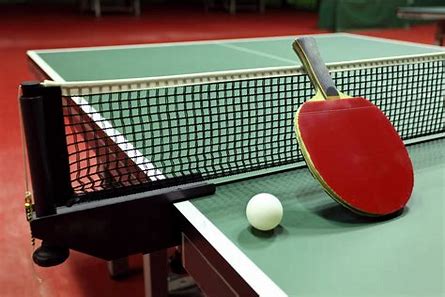
This version of keep-the-product-keep-the-cash kinda-sorta happened to me years ago.  My sister-in-law ordered a ping-pong table for her family and when it came, they discovered a bit of damage in one corner.  So she contacted the company, who told her, “Keep it.  We’ll just send you another one.”  Thus, in a moment labeled “Christmas not on Christmas”, my family got a free ping-pong table (Thanks, Sis!) Sure, the bounce of the ball was a little off on that one corner, but my kids didn’t care.  Besides, before I knew it they were old enough (or not) to drink and pretty much destroyed the table when they shifted to beer pong.

But I digress. With a ping-pong table I’m almost sure the cost of shipping back to the manufacturer was more than the profit after fixing and reselling it.  So my sister-in-law got two tables for the price of one.  Hey, what if she’d bought ten ping-pong tables and all of them were defective?  She’d go up and down her street handing out free tables.  She’d gain a bunch of new best friends and her neighborhood would hold massive ping-pong tournaments.  All for the cost of one table.

The problem at Target and Wal*Mart is more than just the cost of returns and overstocked items.  It’s also, they can’t charge the same price they charged you.  For one, the item may be offered at a discounted price by the time you return it.  For two, certain items have to be classified as “used” and can’t be offered at full price after the first purchase, or even offered at all.

“Un-resellable”

Which brings me to orange juice.  Orange juice, you ask?  Yep.  Try to return a jug of juice to the market some time.  We bought five jugs a couple of months ago for our daughter’s bridal shower, assuming the mimosas would flow like Niagara Falls. Wrong. Only a few of the guests opted for the bubbly since the shower was mid-day.  So I called my local market to confirm the return of four unopened jugs of juice, and was horrified to hear, “Sure, you can return them for a full refund.  But we’ll just throw out the juice.” Throw out the juice?  Yes, it’s the world we live in these days.  Many food items cannot be resold for fear of tainting.  So I’m drinking a lot of orange juice right now.

Let’s wrap this public service announcement with a caveat.  One of these days you’ll be pleasantly surprised when you end up with a purchased product AND a full refund.  Lucky you – it’s “Christmas not on Christmas”!  If it’s through Amazon, however, be wary of the following purchases: hazardous materials, gift cards, jewelry, groceries, and live insects (uh, live insects?) None of those can ever be returned, nor will you get your money back.  In other words, the sea monkeys you adopted in a moment of nostalgia (remember those, Boomers?) should be considered bought and paid for.  No refunds.

Some content sourced from the CNN Business article, “Just keep your returns…”, and the Clark.com article, “12 Items That Can’t Be Returned to Amazon”.