Child’s Play

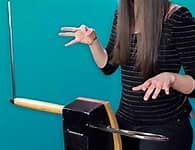
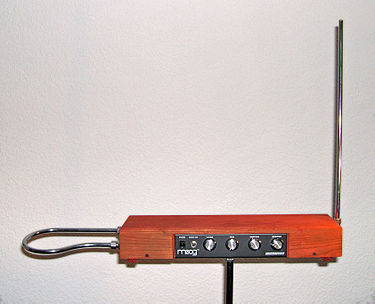
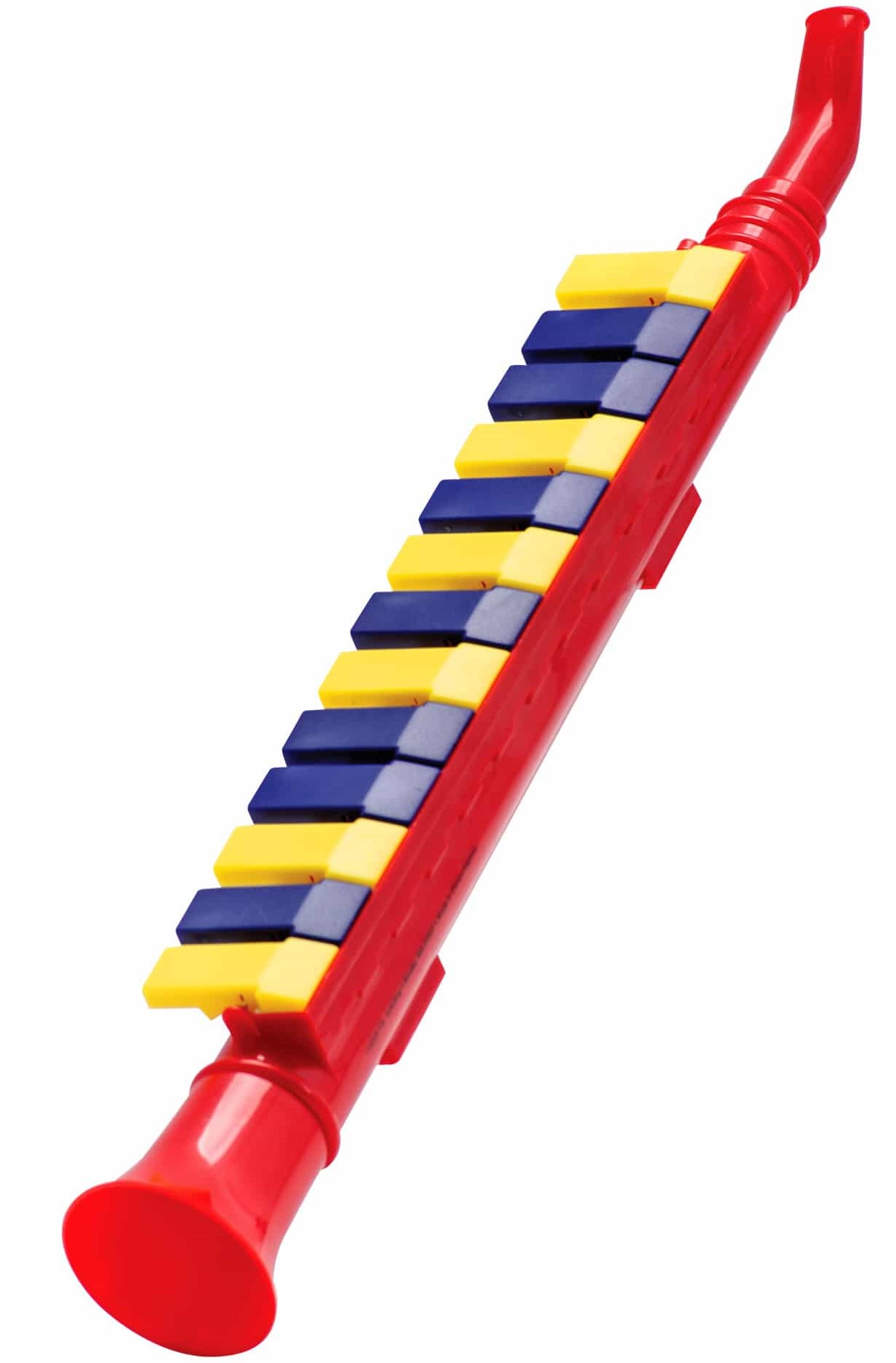
When I dove into piano lessons at the tender age of six, I learned the piano is “foundational”; a good place to start if your future destination is another musical instrument. The piano teaches concepts like keys, chords, and “Do Re Mi” in a straightforward way. My son learned about foundational instruments when he started the sax – it’s best to spend time on the clarinet first (the fingering is easier). But today I want to talk about real foundational instruments; the ones I dabbled in even before the piano. I can think of at least six (and one honorable mention).

My granddaughters – ages 2 and 4 – already attend weekly music classes (which brings me no small amount of joy).  They’re learning to sing and play simple rhythm instruments like drums and tambourines.  So I shouldn’t have been surprised this past weekend when the older one pulled out a kazoo and began “playing” for me.  Not a formal song or even a melody; just a handful of notes from what is technically a wind instrument.

Let’s call the kazoo Child’s Play (CP) #1.  The kazoo starts my list of six because it’s undoubtedly the easiest to play.  You simply hum into the mouthpiece and the kazoo takes care of the rest.  The kazoo’s buzzing sound is utterly annoying and after a few seconds you wish it would just stop (unless your granddaughter’s playing, of course).  The kazoo rides a fine line of the definition of a musical instrument.  To be honest, I’d rather just hear a person hum.

CP #2 – Triangle.  The triangle has often been described as “having no musical function and requiring no skill to play”.  A brutal (and fair) description to be sure, but consider this: the triangle is the only instrument on this list to earn a spot in a formal orchestra.  You’ll find the little guy in the orchestra’s percussion section (alongside the drums and other rhythm instruments).  The triangle also outclasses the kazoo since it’s cast from fancy metals (ex. beryllium copper, brass, bronze).

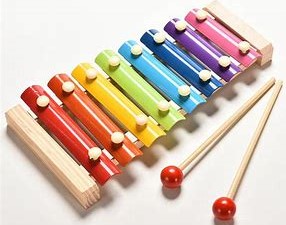
CP #3 – Xylophone.  The xylophone tops the triangle because it’s a percussion instrument that can also carry a tune.  There’s nothing more inviting to a small child than a set of colorful bars you can whack with mallets, and they make music!  Sure, you can hum “Twinkle Twinkle, Little Star” on the kazoo but it’s much more fun banging it out on the xylophone.  The xylophone gave birth to the vibraphone (an electronic version) and the marimba (a wooden version), both of which generate rich, warm, beautiful-sounding notes.

CP #4 – Recorder.  The recorder ranks a close second to the kazoo on the annoyance meter.  A child can pick up this woodwind instrument (the cheap plastic kind, not the fancy wooden one), blow into it, and instantly produce a note.  The same child then realizes he can change the note by covering/uncovering the recorder’s holes.  Now he can produce many notes.  And what’s wrong with many notes?  It just sounds like so much wailing.  Watch the video (if you can stand it) and tell me if you don’t agree.

CP #5 – Harmonica. The harmonica, another wind instrument, is also known as the “French Harp” or “mouth organ” (I prefer the former) and it comes in all shapes and sizes.  A child will find his first harmonica in the same section of the toy store as the kazoos and recorders – where you find anything made of cheap, colored plastic for less than a dollar.  Here’s what a child learns about the harmonica very quickly: he can fake it.  If you hum into the harmonica instead of just blowing, you’ll create a pretty good imitation of what it’s supposed to sound like.  You won’t fool anyone who really knows the harmonica but as a kid (that would be me), you thought it was pretty cool to whip out your harmonica and pretend you could play it.

CP #6 – Autoharp.  The autoharp made its first appearance at my elementary school choir classes.  It was the coolest instrument I’d ever seen.  It’s like playing the guitar (pick and all), only you press down bars to create the chords instead of using your fingers.  One kid would be chosen from the choir to strum the autoharp while the rest sang.  Playing the autoharp wasn’t cool, but being chosen to play it?  That was pretty special.

CP Honorable Mention – Hand Flute.  The hand flute is a fancy name for whistling through two fingers or through the hands.  I can’t remember when I learned to whistle (with just the lips) but I was certainly inspired by my dad, who gave the family a distinctive two-note greeting every time he walked through the door after work.  But I never learned to whistle through my hands.  The hand flute not only sounds cool (a lower note than a mouth whistle, like the cry of a nightingale) but it looks like you have a built-in musical instrument when you “play”.

Wrapping up this topic suggests I pick a favorite instrument from the list above, but the choice is impossible.  Each one is bonded to special memories from a long time ago.  If I had more space here I’d add others to the list (like the tricky piano horn).  Instead, let’s just agree the foundation of my piano play is a team of smaller, less-appreciated musical instruments.  Child’s play?  Hardly.

Some content sourced from Wikipedia, “the free encyclopedia”.

Floral Fire

Billboard ranks “Firework” as Katy Perry’s best-selling single, with millions of downloads since its 2010 release. The self-empowerment tune “skyrocketed” to #1 on Billboard’s Top 100 at the time and ranked in the top five on twenty other charts worldwide. “Firework” also “sparked” an award-winning music video, and Katy has since performed the anthem live at two presidential inaugurations and during the halftime show of the Super Bowl.  Searching Wikipedia for “firework”, therefore, it comes as no surprise to be asked, “Do you mean the song or the low-explosive pyrotechnic device?” Today, I choose the latter.

For the first time in countless July 4th celebrations I can’t speak to having seen a single overhead firework display this year. No giant “willows” with their graceful descending trails of sparks; no “peonies” where those same trails radiate in straight lines from the center; and no “horsetails” (my favorite) where each trail bursts a second time, followed by a crackling, glittering shower of fire.  Also, no “grand finale” where it looks like the entire sky is splitting open to some fiery furnace beyond.

“Chrysanthemums”

From the vantage point of our house, we used to count on the fireworks show from the nearby U.S. Air Force Academy. That show has been canceled for the last ten years because of budget cutbacks.  We also used to bring blankets to the shore of a nearby lake, where we were treated to a “small-town” fireworks display funded by donations from the public.  Today, that display has been swallowed up by a bigger all-day “Festival on the Fourth”, where you pay for parking and walk a mile or two just to secure a spot on the lake several hours ahead of the fireworks.  Even so, we thought we’d see bits and bursts from one of the other nine shows scattered around nearby Colorado Springs.  Nope, not so much as a snap, crackle, or pop.

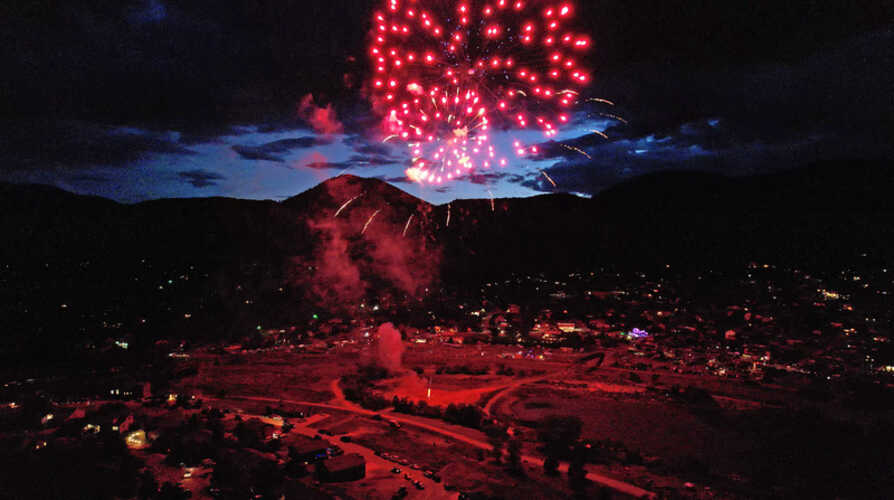
Palmer Lake, CO 2022 fireworks display (photo courtesy of local resident Bartley Willson)

Fireworks are nostalgic for me, with two distinct memories from childhood.  The first, in the 1970s, brings me back to the beach of the Pacific Ocean in Los Angeles.  Back then the only commercial displays seemed to be over the ocean.  My parents would grab a bucket of Kentucky Fried Chicken and several blankets, and the whole family would find a place on the beach where for several hours, we’d eat and play as twilight became dark, in anticipation of the late, late fireworks show from the end of the nearby pier.

The second memory, a decade later, also brings me to the Pacific Ocean but to a beach further south near San Diego, where we’d shoot off our own fireworks (from the “Safe and Sane” boxed collections my dad brought home every year), followed by an overhead display from the nearby county fair.  Every childhood July 4th was the same: food, fun, and fireworks; lots and lots of fireworks.

“Waterfall”

In 1976 – America’s bicentennial year – the firework display in New York City included an unforgettable “waterfall” effect off one of the bridges.  This year, that same July 4th display (sponsored by Macy’s) ballooned to a two-hour televised extravaganza with over 2,000 blasts and effects per minute.  I’d say Macy’s department stores and their profit margins are doing just fine, wouldn’t you?

I shouldn’t be surprised to learn fireworks were invented by the Chinese (well over a thousand years ago) but here’s a less-obvious bit of floral fire trivia: Disney is the largest consumer of fireworks in the world.  It used to be – back when their single amusement park was California’s “Disneyland” – you’d only catch a Disney firework show on summer evenings (directly above Cinderella’s castle), and only if you stayed until just before the park closed.  Today you’ll find displays at any one of the twelve Disney parks, in any month of the year.  For the record, only the U.S. Department of Defense purchases more explosive devices than Disney.

There’s more firework trivia, of course.  The very first iterations were empty bamboo shoots, creating a mild popping sound when ignited because of natural air pockets.  Seeking more pyrotechnics, the Chinese added explosive chemicals to the shoots to create firecrackers”.  Eventually they figured out how to launch and propel their creations, and the overhead fireworks display was born, in an impressive rainbow of chemical colors. But take note; you won’t see a blue firework very often.  Blue requires an infusion of copper at just the right temperature, and the “cool” color tends to get lost next to the “hotter” reds and yellows.

“Catherine wheels”

I’m still puzzled why I didn’t hear so much as a “BOOM! BOOM! BOOM” aftershock (to quote Katy Perry) of a firework display this year.  Maybe most of my fellow Coloradoans kept the bursts and blasts to the ground instead, from what they purchased at the local firework stand. Those of you living in New Jersey, Massachusetts, or Delaware can’t relate because consumer fireworks are illegal in your states.  Not so much as a sparkler in your hand. (Which may be a good thing since sparklers can heat up to 2000 ºF)  So you probably did what I did this year – simply watch a recap of the Washington D.C. grand finale on your smartphone.  It was the only floral fire I could find.

Some content sourced from the BuzzFeed article, “17 Things You Probably Never Knew About Fireworks”, the Macy’s Fourth of July Fireworks website, and Wikipedia, “the free encyclopedia”.

Many Happy Returns

Unlike 2021, the due date for U.S. tax returns was back to mid-April this year.  Most of us sweated under the ticking clock as we combed through statements and receipts in search of last-minute tax breaks. I have this recurring pipe dream where the IRS tells me to just keep what I owe (followed by the dream of how I would spend the money). Sadly, I’m a taxpayer who rarely sees a refund, and keeping what I owe certainly won’t happen. On the other hand, retailers could soon be asking me to keep what I want to return.  Now there’s something to ponder.

Picture this.  You place an Amazon order for a brand new Playstation 5.  You plunk down the $500 it costs and a few days later your purchase shows up on your doorstep.  But while you were waiting for your gaming console the IRS sent you a reminder about the balance due on your 2021 taxes. Whoops. You owe that $500 to the federal government, young taxpayer.  Hello, buyer’s remorse.  Full of regret, you contact Amazon to arrange the return, and their carefully worded response goes like this:

Dear Amazon Prime Member.  Thank you for your inquiry into the return of your Playstation 5 gaming console.  After reviewing our current stock we have determined it is not necessary for you to return this product.  Accordingly, nothing further is required at this time.  You can expect a full refund applied to the credit card used to make this purchase.  Thank you for shopping with Amazon.

Wait… keep the product AND get a refund, you say? Crazy, I know. Or maybe not, at least if you shop at Target or Wal*Mart.  Both retailers are considering this no-return approach with clothes, garden furniture, and “bulky” kids’ toys among other products they currently overstock.  It’s the result of consecutive worldwide events.  First, the pandemic, which allowed consumers to build up their savings accounts while mostly staying at home.  Second, record-setting inflation, which dragged a knife through what was supposed to be a post-pandemic spending frenzy.  Retailers stocked up early in anticipation of the purchase party, but then the lights and music were abruptly cut off.  The result: overstocked with a capital “O”.

This version of keep-the-product-keep-the-cash kinda-sorta happened to me years ago.  My sister-in-law ordered a ping-pong table for her family and when it came, they discovered a bit of damage in one corner.  So she contacted the company, who told her, “Keep it.  We’ll just send you another one.”  Thus, in a moment labeled “Christmas not on Christmas”, my family got a free ping-pong table (Thanks, Sis!) Sure, the bounce of the ball was a little off on that one corner, but my kids didn’t care.  Besides, before I knew it they were old enough (or not) to drink and pretty much destroyed the table when they shifted to beer pong.

But I digress. With a ping-pong table I’m almost sure the cost of shipping back to the manufacturer was more than the profit after fixing and reselling it.  So my sister-in-law got two tables for the price of one.  Hey, what if she’d bought ten ping-pong tables and all of them were defective?  She’d go up and down her street handing out free tables.  She’d gain a bunch of new best friends and her neighborhood would hold massive ping-pong tournaments.  All for the cost of one table.

The problem at Target and Wal*Mart is more than just the cost of returns and overstocked items.  It’s also, they can’t charge the same price they charged you.  For one, the item may be offered at a discounted price by the time you return it.  For two, certain items have to be classified as “used” and can’t be offered at full price after the first purchase, or even offered at all.

“Un-resellable”

Which brings me to orange juice.  Orange juice, you ask?  Yep.  Try to return a jug of juice to the market some time.  We bought five jugs a couple of months ago for our daughter’s bridal shower, assuming the mimosas would flow like Niagara Falls. Wrong. Only a few of the guests opted for the bubbly since the shower was mid-day.  So I called my local market to confirm the return of four unopened jugs of juice, and was horrified to hear, “Sure, you can return them for a full refund.  But we’ll just throw out the juice.” Throw out the juice?  Yes, it’s the world we live in these days.  Many food items cannot be resold for fear of tainting.  So I’m drinking a lot of orange juice right now.

Let’s wrap this public service announcement with a caveat.  One of these days you’ll be pleasantly surprised when you end up with a purchased product AND a full refund.  Lucky you – it’s “Christmas not on Christmas”!  If it’s through Amazon, however, be wary of the following purchases: hazardous materials, gift cards, jewelry, groceries, and live insects (uh, live insects?) None of those can ever be returned, nor will you get your money back.  In other words, the sea monkeys you adopted in a moment of nostalgia (remember those, Boomers?) should be considered bought and paid for.  No refunds.

Some content sourced from the CNN Business article, “Just keep your returns…”, and the Clark.com article, “12 Items That Can’t Be Returned to Amazon”.

Adding Fire to the Fuel

When I step up to the counter at Starbucks for my favorites (hot: Grande Flat White, cold: Grande Cold Brew w/ a splash of cream), I find it interesting how accepting I am of the high price of my purchase. By nature I’m a penny-pincher, monitoring the family budget with a fully-focused microscope. But the scan-and-go Starbucks app makes it easy to overlook the five dollars for a single cup of coffee. On the other hand, a gallon of gasoline for the same price is literally headline news.

I don’t wonder if you’re just like me at the gas station these days because you are. When you pull up to the pump you try to ignore the unbelievable digits on the station sign and on the pump itself.  The tank in your vehicle is probably closer to “E” than usual (though my wife still refuses to go below the quarter mark).  You may even shop around now before choosing your station.  Finally, the price of your favorite octane has you considering a cheaper option, even though none of them are really “cheap”.  Just like the Starbucks menu, purchasing gas is no longer the mindless decision it used to be.

$5.00/gallon. Ten days ago the U.S. hit that preposterous average for the first time in its history.  Just two months ago the average was $4.00; two years before that, less than $2.00.  Forecasters say we’ll see a nationwide average of $6.00 before the end of the summer.  No wonder our fiery conversations are all about fuel these days.

When my car’s “low fuel” light pops on (with an annoying “DING!”) I know it’s going to take eighteen gallons to get the needle pointing back to “F”.  That’s $90 in June 2022 math.  When a stop at the gas station sets you back almost $100, you start to think about what else you could buy with the money.  Four or five dinners out.  Ten months of Netflix.  Twenty Starbucks Flat Whites.

If it’s any consolation, at least we’re talking about self-service gasoline here.  Some of you are too young to remember when a “gas station” was a “service station”.  Prior to 1980, it was all about full service.  I can still hear the ding-ding as the wheels of my parents’ car passed over black hoses, triggering the bell to let the attendant know they needed a fill-‘er-up.  Then he (yes “he” because I never remember a “she” working at service stations back then) would run over to the pump, ask what octane and how many gallons, and start the filling.  He’d also ask you to “pop the hood” so he could have a quick look at the oil, washer fluid, and engine.  Finally, he’d give your front windshield a wash, take payment (in cash, of course), and off you’d go.  For all that service, you simply rolled down the driver’s-side window and paid the man.

Full-service is still a thing of course but it’s a lot harder to find these days.  Unless you live in Oregon or New Jersey.  In those states, self-service is rarely an option.  Attendants are still the norm.  It sounds like an alternate reality for 2022 (or the scene from Back to the Future below) but two out of the fifty states stubbornly refuse to allow self-service.  They stand by the well-worn concerns: fire hazards, difficulties for the elderly or disabled, and loss of station attendant jobs.  They also charge a few pennies more per gallon because they can’t make a profit the way they used to – by offering services beyond the gas itself.  For the most part, those under-the-hood services moved to car dealerships a long time ago.

Just this week our politicians proposed a three-month “holiday” on gas taxes (and taxes on gasoline should be the subject of its own blog post).  The holiday won’t happen, though.  Our politicians won’t allow the sacrifices made by not collecting those taxes.  Or activists will wonder if gas companies will maintain the high prices and generate additional profit.  And if gas is on its way to $6/gallon anyway, it’s kind of like adding a new lane to the highway, where by the time it’s finished the traffic has increased too much to notice any difference.

Not speaking for other countries but Americans won’t be driving less in the next several months.  The travel forecast calls for more vehicle miles than even in the summers before COVID.  Our lack of efficient mass transit and our woes at the airport (can you say, “canceled flight”?) will, uh, drive us to drive.  In other words, we’ll pay $5, $6, maybe even $7 before we’ll pull back on our stubborn habits.  Just like I will, admittedly, at Starbucks.

Some content sourced from the CNN Business article, “Why New Jersey and Oregon still don’t let you pump your own gas”, and Wikipedia, “the free encyclopedia”.

Finishing on a Low Note

I usually associate “finishing” with sporting events. Think about the finish line of a car race, the eighteenth hole of a golf tournament, or the ticking seconds of the clock as a football game runs out of time. In these scenarios, the finish can be a tense, hold-your-breath moment, triggering a burst of euphoria if your favorite takes the win. So it comes as a bit of a surprise to reflect on the completion of my Lego Grand Piano. Tense? Hardly. Held my breath? Not at all. Euphoria? Anything but. No, this finish feels a little forlorn.

Three thousand, six hundred, and sixty-two tiny pieces ago, I began the assembly of Lego’s Grand Piano, just about the closest gift to “perfect” my wife has ever given me.  Piano is inextricably connected with my childhood – hours upon hours of practice and playing and determined progress at a tender age, eventually succumbing to other temptations of time.  Piano introduced me to commitment, skill, and patience, even frustration and disappointment.  My parent’s big, black grand sat patiently in our living room, beckoning me to play every time I passed by.  The instrument was always perfectly tuned and sparklingly clean, thanks to my mother’s weekly persistence with a dust cloth.  I can still hear her sweeping the eighty-eight keys from one end to the other – a delightfully musical moment.

Korg’s “Sampling Grand” keyboard

Believe it or not, the Lego Grand Piano is the second gift of a piano from my wife.  On our wedding day in 1987, she presented me with Korg’s “Sampling Grand”, an electronic keyboard with weighted keys and surprisingly realistic sound, much less expensive than the real thing.  Thirty-five years later, the Korg still plays like a champ and still earns a spot in our living room. (Unlike the Lego version, the Korg was already assembled when I got it.)

The start-to-finish journey of my Lego Grand Piano has been a more enjoyable ride than I expected.  When I opened the box last Christmas, I remember my jaw dropping a little, not only because I never saw the gift coming but because of the sheer complexity of the project staring up at me from the box  That’s a complicated-looking instrument, I thought.  That’s a ton of pieces, I also thought.

The unopened Lego box sat on my home office desk for a couple of weeks, looking elegant without even being touched.  My curiosity eventually got the better of me and I finally had a look inside.  Talk about intimidating.  A 500-page instruction manual awaited, along with forty-odd individual bags of pieces.  Even though this was a twenty-one-step journey, some steps involved “sub-bags” of tiny, tiny pieces, grouped separately so as not to escape!  Was I really brave enough to dive into this mess?

Contents of the box

The first chapter – shared with you readers on January 6th of this year (a date we Americans wish to forget) – spoke to my hesitation when I wrote an entire post about building the piano without actually building anything.  I just poked around the box and marveled at the contents and felt pretty good about even opening up the box.  But I did get started seven days later, and the subsequent journey was wholly satisfying and something of a weekly escape.

Leftovers

At first, I made several mistakes as the piano began to take shape.  Since the pieces are small it’s easy to place them backward, or even mistake one for another.  I also fretted when extra pieces remained after a given section of the build. (For the record, there were 38 extra pieces when all was said and done.  I can fit all of them into the palm of my hand.)  There were at least two instances where I had to disassemble several pieces to get back to the point where I’d done something wrong.  Those moments were utterly unnerving and confidence-shattering (take your pick).

[Author’s Note: After weeks and weeks of building the Lego Grand Piano, it only now occurs to me I’m describing one type of keyboard while typing on another. Don’t you just love the coincidence?]

So let’s finish this post by revisiting “finishing”.  What should be a moment of triumph feels a tad sad instead.  After the first few weeks, the build of the Lego Grand Piano became a weekly treat, accompanied by some of my favorite classical music.  Many stages were mini-surprises, not knowing what section I was building until the last piece was in place.  And of course, sharing the progress with all of you was also fun.  One reader admitted she would first scroll to the bottom of a post before reading my weekly topic.  She couldn’t wait to find out how the piano was coming along.

So, here we are now, finally done.  Next week’s post will feel a little empty without a reference to the Lego Grand Piano.  By total coincidence, my daughter got married this past weekend, also the end of a journey (months of planning and all).  My son just turned 30 yesterday, the finish line of his 20’s.  And soon, my wife and I will point our cars east for our move to South Carolina, the finish of our days in Colorado.  To be finished is to be sad?  You bet it is.

I’ll dive into another Lego build one of these days, I promise.  Maybe I’ll even take you along for the ride again.  In the meantime, I’ll flip the hidden switch and play the piano every now and then.  I’ll also find an acrylic box in which I can display this magnificent project.  After all, with my mother’s good habits in mind, I don’t want it gathering dust.

——————–

Lego Grand Piano – Update #21

(Read about how this project got started in Let’s Make Music!)

The finále of the Lego Grand Piano assembly, as expected, was the build of the pianist’s bench and the placement of the sheet music onto the stand.  Bag #21 – of 21 bags of pieces – was bigger than I expected.  I mean, a bench is a seat with four legs, right?  Not according to Lego.  This bench raises and lowers with the little dials you see on the sides, to accommodate the height of our fictitious pianist.


Let’s give credit where credit is due.  The Lego Grand Piano was designed by the guy you see below, Donny Chen, a 33-year-old piano teacher and tuner from Guangzhou, China.  No surprise, Donny’s passions are the piano and Lego.  He’s a lot smarter than I am, evidenced by this quote: “I’ve always seen toys as something to be imagined, not just played with”.  Me, I just played with toys.

[Pianist’s Note: The Lego Grand Piano DOES play, I know it does.  I just have to figure out two things.  One, how did I manage to disconnect the cable to the sound box buried deep within the piano frame?  Two, how the heck am I going to get it reconnected?  That’ll take more time than I have today and is part of why I “finished on a low note”.  But I’ll share a concert with you when you least expect it – I promise. “Stay tuned”.]

Donny Chen

Running Build Time: 14.0 hours.  Musical accompaniment: Jarratt and Reedman’s Hooked on Classics. Leftover pieces: 1

Conductor’s Note: Apologies to the purists but I just couldn’t resist this somewhat tongue-in-cheek accompaniment to the final chapter of the Lego Grand Piano.  Hooked on Classics is a top-ten Billboard Hot 100 hit from 1981, a mashed-up perversion of bits of the world’s most recognized classical pieces… overlaid on a drum track.  It was recorded by Louis Clark and the Royal Philharmonic Orchestra and bred several spin-offs (ex. Hooked on RomanceHooked on Classics came along just as I was wrapping up my childhood piano “career”.  I much prefer the originals of the several classical pieces in Hooked but maybe this peppy number is your cup of tea.  Have a listen:

Some content sourced from Wikipedia, “the free encyclopedia”.

Curtains for Calls

Denver’s getting a new area code next month!

No, I’m not short on blog topics – stay with me here.

“983” will be added to 303 and 720 because Denver’s rapid growth means they’re running out of new phone numbers. But it’s not our state’s fifth area code itself that has my attention (by comparison, California blows us away with 36). It’s the 25 years “983” is expected to last before Colorado needs a sixth area code. Seriously? Will we even have phones in 25 years?

“719” reaches my corner of Colorado

“Area code” feels like an old-fashioned term. I associate area codes with the physical act of “dialing” (also an old-fashioned term). Sure, we need area codes to establish new numbers the first time we get smartphones (as preschoolers?) but then they become more labels than three-digit numbers, don’t they?  Think about it.  If you need to call someone these days, forget about their area code because you already have it in their profile.  You either tell your phone to call the person or you pull them up in “Contacts” and simply touch the number on the screen.  In other words, your phone dials the area code but you do not. Not anymore.

How to call someone in D.C.

Before smartphones, area codes had more prestige.  They were required to make “long-distance” phone calls, which meant you had to dial an extra three digits.  Outside of toll-free numbers, area codes conjured up exotic destinations, as if dialing halfway around the world instead of somewhere else in your state.  Area codes made you feel like you were calling someone important.  Today, they’re just labels.

If I really wanted to date myself, I could be talking about telephone exchange numbers instead of area codes.  KLondike, WRigley, and TEmpleton all referred to the central offices of telephone exchanges, with every phone number in an exchange starting with the first two letters of the central office.  PEnnsylvania 6-5000 was a memorable example because it connected you with the famous Hotel Pennsylvania in New York City, and Glenn Miller made the number into a popular swing jazz tune in the 1940s.  I wasn’t around in the 1940s (or even the 1950s), so enough with this topic.

Let’s flush “dialing” out of conversations about phones, shall we? Nobody “dials” anymore.  Dialing (for you preschoolers) hearkens back to a time when phones were phones.  You picked up the corded “handset” from the “cradle” on the “base”, nestled it against your jaw so the “receiver” lined up with the ear and the “microphone” with the mouth, toggled the “switchhook” for “dial tone”, and placed a call by spinning the rotary dial once for each digit in the phone number (got all that, kids?)  The dial would rotate back to its original position after each digit so you could dial the next one.  The whole process took 30-45 seconds, followed by a long pause, and then the “ringer” sounded on the receiving phone.  With that in mind, do you take the ease of your smartphone touchscreen for granted?  Of course you do.

[Author’s Note: The mechanics of rotary phones (base, dial, ringer, handset) made them HEAVY.  You can find movies from the 1940s or 1950s where a character uses a rotary phone as a weapon simply by clocking someone over the head with it.]

Dialing eventually gave way to “touch-tones” (thanks to the invention of the transistor).  The rotary dial was replaced with a grid of plastic pushbuttons, one for each digit.  Yes, we still “dialed” area codes but with buttons instead.  The buttons then migrated from the phone base to the handset.  The handset then went cordless.  Finally, the base disappeared altogether, and voila! – you had the first “mobile” phone.

Area codes make me nostalgic because I associate them with actual phone calls, one voice talking to another.  Today we’d sooner text than talk.  Delivered mail to your box on the street isn’t long for this world.  One of these days it’ll be curtains for phone calls as well.  Which re-begs the question about Denver’s latest area code.  Do we really need bright and shiny-new “983”?

The Jetsons don’t know “phones”

Phone calls of the future may simply be mind games where we’re able to “ring” each other brain-to-brain. A little far-fetched, you say?  Probably, and the idea of thought control makes me squeamish anyway.  Call it old-fashioned, but I hope we’re still talking about area codes in 25 years after all.

Some content sourced from Wikipedia, “the free encyclopedia”.

——————–

Lego Grand Piano – Update #19

(Read about how this project got started in Let’s Make Music!)

Today’s section of the symphony was short and entirely predictable.  Bag #19 – of 21 bags of pieces – assembled the rest of the piano’s top lid, shown completed in the photos below.  I simply picked up where I left off from last week’s Bag #18, continuing to build up the “wall” of the lid until it was complete.  It’s a repetitive process using pieces of similar sizes and shapes.  Now, all we are left with – my patient audience members – is the support structure of the piano lid (so it can be raised to its very elegant angle when open), and the free-standing pianist’s bench.

  Today’s build took less than twenty minutes. (I could’ve built Bag #20 as well, but why change my weekly pace this late in the game?)  As I was finishing the piano lid it occurred to me using Mr. Instruction Manual is a lot like using sheet music.  You shift your eyes between the manual and the piano itself constantly as you work, step-by-step-by-step.  Just as you would when playing the piano from a sheet of music.

Running Build Time: 13.3 hours.  Musical accompaniment: Brahams’ Violin Concerto in D. Leftover pieces: None again!

Conductor’s Note: Johannes Brahms had to be included in the list of musical accompaniments for my Lego Grand Piano build because, well, he’s one of the “bigs” in classical music. His Violin Concerto in D Major sits on Germany’s Mount Rushmore of violin concertos, beside Beethoven’s, Mendelssohn’s, and Max Bruch’s.  You, however, know Brahms best for his beloved lullaby “Cradle Song”, which starts “Lullaby, and goodnight, with roses bedight…”

Happy Holiday

If you subscribe to Disneyland’s claim of “the happiest place on earth”, you’re really talking about the several happiest places on earth.  Besides the original parks in California and Florida you now have more exotic locales like Tokyo, Shanghai, and Paris – a total of twelve Disney theme parks across the globe.  Now throw in Hawaii’s Aulani (Disney) Resort & Spa for a baker’s dozen.  But do a search on “the happiest place on earth” and nothing remotely close to the lands of Disney comes up.  Instead, you get the land of the Finns.

Maybe you haven’t heard of the World Happiness Report? I have. I first blogged about it five years ago in my post, Happy Days Aren’t Here Again.  Back then I wasn’t lamenting the fact the UN established a rather desperate-sounding holiday (“International Day of Happiness” – March 20th).  Rather, I was un-happy the United States ranked #14 in the holiday’s companion report.  Thirteen countries, including #1 Norway, were happier places on earth.  To make matters worse, the U.S. had been slipping in the happiness rankings since the first report in 2013.  This year?  The Americans dropped again, to #16.

The Northern Lights make me happy

An objective report on happiness sounds a little ridiculous but when one country (Finland) ranks “happiest” five years running, you sit up and wonder what you’re missing with Laplander life. Consider the variables in the happiness report calculation:

  1. Healthy life expectancy
  2. GDP (goods and services) per capita
  3. Social support in times of trouble
  4. Low corruption
  5. High social trust
  6. Generosity to the community
  7. Freedom to make key life decisions
Cold = contentment?

Maybe you assume Finland’s proximity to Ukraine (and Russia) puts it in a nonpareil position to earn high marks for say, “social support” and “generosity to the community”.  But this year’s rankings were determined before Russia’s invasion.  Finland was already socially supportive and generous (and apparently “happy”).  So, does Finland come to mind when you consider the list above?  It doesn’t for me, but I will say this. The Finns enjoy day-to-day living. On a Baltic Sea cruise a few years ago we spent several hours in the capitol city of Helsinki, where we had the chance to observe the locals.  What were they doing? Sunning themselves in the parks on an unusually warm day. Shopping in open-air markets.  Children walking home from school unattended.  Peace and quiet wherever you looked.  Happiness.

Eight of the ten “happiest” are on this map

Let’s visit some of the other happier-than-America countries.  There must be something good in Baltic Sea water because Norway, Sweden, and Denmark also make the top ten.  Iceland skates in at #3, which almost makes for a clean (and happy) sweep of the Nordic countries.  Switzerland (#4) and New Zealand (#10) are also “happiest”, and I can think of several reasons to spend time in both places.

As the song goes, “don’t worry, be happy”, but I confess I’m a little concerned about happiness here in America.  We need to step up our feel-good game from more than just Disney theme parks.  Maybe post those seven criteria on our refrigerators as regular reminders. Or, spend more time in saunas like the Finns do.  Otherwise, it may be time to pick up and move further north.  After all, happiness beckons.

Some content sourced from the CNN Travel article, “The World’s Happiest Countries for 2022, and Wikipedia, “the free encyclopedia”.

——————–

Lego Grand Piano – Update #16

(Read about how this project got started in Let’s Make Music!)

Every piano keyboard demands a cover to keep it clean. Bag #16 – of 21 bags of pieces – was entirely dedicated to the protection of the keys.  As the photos show, the keyboard cover hinges gracefully up and down, blending seamlessly with the rest of the black piano frame.

A word about leftover pieces (another 3 this week).  I need to be more thankful they’re “leftover” and not “missing”.  I swear I was shorted an important piece this time around (and maybe I really did swear).  But as usual, there it was in plain view in my pile of pieces.  I’m grateful to the human or the machine making sure every last piece was included in my Lego Grand Piano box.

Running Build Time: 12.0 hours.  Musical accompaniment: Tchaikovsky’s 1812 Overture. Leftover pieces: 3

Conductor’s Note: Peter (or Pyotr, if you prefer) Tchaikovsky’s 1812 Overture was an interesting choice for this week’s build, because I completed the keyboard cover before 8:30am.  If you know the Overture, you know it’s fortíssimo, like an alarm clock firing on all cylinders.  It’s a blast better meant for an Independence Day fireworks celebration (and some orchestras add a real cannon for the finale). The Overture is also brisk; a mere sixteen minutes from start to finish.  I wasn’t that quick with the keyboard cover build, but I did wrap it up in less than a half-hour.

Hold (the) Music!

This morning as I brushed my teeth, I could hear soft music while my wife surfed on her iPad nearby. It was a catchy keyboard instrumental, the kind of tune to put a bounce in your step. Not twenty seconds later however, there was a bit of silence followed by the same melody all over again. By the time I flossed I’d heard this “song” five or six times through and it was getting annoy-oy-oy-ing.  Then it hit me.  My wife was on her iPad – yes – but she was also on hold.

Elevator Music. Lift Music. Piped Music. Muzak. Call it what you want, but my unofficial survey says hold music is not the satisfying little concert it was designed to be.  How many times have you heard, “Thank you for your patience… one of our representatives will be with you shortly…” followed by the same cloying music over and over and OVER again?  You pull out your teeth (I mean, your hair) because “the representative” will NEVER be with you (let alone “shortly”).  More to today’s point, the persistent music-on-hold (MOH) doesn’t lighten your mood, and, it’s an insult to technology.

MOH had the best of intentions when it debuted in 1962.  Like many products MOH was invented by accident, when the phone lines of a small factory accidentally picked up the music of the radio station next door.  MOH appealed to businesses because customers stayed on the line longer if offered music over nothing at all.  Hold music also found an audience in places where people tended to gather, like elevators, waiting rooms at doctors’ offices, and airport boarding lounges.  You should agree; music beats silence any day (in other words, something is better than nothing).  It’s just, the “something” should be a whole lot easier on the ears.

I have a personal connection with hold music.  Years ago, it was a part of my responsibilities as the switch programmer for a long-distance phone company.  If you call customer service today – any customer service – oftentimes “events” happen before you’re connected to a real person.  How many times does the phone ring before someone (or something) answers?  Are you offered a menu of choices to route your call to a specific department?  Would you prefer a callback instead of waiting on hold?  A behind-the-curtain person programs these little events and that person was me.  I also chose when to offer you hold music.

Mercifully, my long-distance company subscribed to a professional hold music product, which meant calls to our customer service were offered pleasant, non-repeating tunes.  You might have to wait fifteen or twenty minutes but at least you wouldn’t get a mindless tune, slowly eating away at your brain cells.  Unfortunately, my company was the exception.  Professional hold music isn’t cheap (thanks to copyright law) and most companies don’t care enough about their customers to pony up.  So, you get “catchy” keyboard instrumentals instead.  Even worse, you get the endless loop of tape-recorded music (a tape recording!), including the hiss and pop of too many plays.  Like I said, an insult to today’s technology.

You might disagree about the loss of brain cells. “Not ME, Dave; I don’t get hold music stuck in my head“.  Okay, but listen to the following YouTube audio and then reconsider.  This ditty may be the most famous music-on-hold specimen of them all; the so-called “Opus Number One”, composed by Tim Carleton and Darrick Deel and incorporated into every single Cisco phone system.

The days of hold music are numbered (and thank heavens they are) because the days of live customer service are numbered too.  Today’s customer service has you self-diagnosing through torturous “interactive voice response” (IVR) menus or by scrolling online through endless lists of FAQ’s.  But MOH still has its place at other tables.  The sophisticated InBody body composition scale at my fitness club offers MOH while you stand there getting your vitals measured.  Our Samsung washer and dryer play the same happy [irritating] little tune after every load is done.  And elevators aren’t going anywhere (except up and down).  You’ll still hear plenty of Muzak on elevators.  At least today’s smartphones help riders escape their awkward proximity to strangers.

The next time my wife is subjected to hold music, I may have to move to another room to brush my teeth.  Then again, maybe it’s not so bad.  You can now buy toothbrushes with built-in hold music while you brush (lasting exactly two minutes). This would be detrimental to my dental hygiene. I might tear my teeth out before I even get to the flossing.

Some content sourced from Wikipedia, “the free encyclopedia”.

——————–

Lego Grand Piano – Update #15

(Read about how this project got started in Let’s Make Music!)

At long last, our piano has a keyboard! Bag #15 – of 21 bags of pieces – added the final key to the right side of the board for a “grand” total of twenty-five.  Then the whole assembly slid into the piano frame smoothly, as if closing the drawer to your bedroom dresser. The piece of the black frame running the length of the board just below the keys secures everything into place.

As a part-time perfectionist, I’m a little bothered by the fact the piano keys don’t rest at a uniform height across the board.  You can see one to the far left sitting a little higher than his neighbors while one to the far right sits a little lower.  Removing the keyboard at this stage in the performance is easy, so I might see if I can level things out.  Or, I’ll just make peace with being a little “off-key”.  Maybe.

Running Build Time: 11.6 hours.  Musical accompaniment: Ives’ The Unanswered Question. Leftover pieces: 1 tiny green square.

Conductor’s Note: Charles Ives’ The Unanswered Question is one of the most creative classical pieces you’ll ever hear.  It’s a “dialogue” between a trumpet and four flutes.  The trumpet asks the question, “What is the meaning of life?“, and the flutes try in vain to answer, a total of six times.  The flutes get more and more frustrated (and the music more disjointed) every time the trumpet repeats the question.  The Unanswered Question concludes with the trumpet asking its question one last time.  Now that you know the story, listen to the short piece through the following video.  It’s only six minutes.  The Unanswered Question was the perfect choice for today’s topic.  After all, how many times do you call customer service only to come away with… an unanswered question?

Blues Choose

When our daughter gets married this June, she’ll include the tradition of “something old, something new, something borrowed, something blue”; all items meant to bring good luck.  “Old” is a ring from her grandmother; “New” a necklace.  “Borrowed” is still to be determined while “Blue” is the garter her husband-to-be tosses at the reception.  Now, if the “blue choose” were mine to make, I’d go with a handful of juicy berries instead.

This week I learned a few things about blueberries, my favorite fruit in any orchard, grove, or patch on earth.  Just outside the tiny town of Whiting, Maine (pop. 482) you’ll find Josh Pond, a farm known for its “organic hand-raked wild” blueberries.  Josh Pond is harvesting into its fourth generation and its 150 acres include a herd of Oberhasli goats and a giant field of strawberries.  In other words, shop on the JP website and you’ll find a variety of cheeses, jams, and jellies alongside the blues.

You already know a thing or two about organic produce but perhaps you’ve never heard the term “hand-raked”.  Check out the following video (which beats any description in words).  It’s a soothing process to watch and a bountiful harvesting technique.  Josh Pond can hand-rake up to 2,000 pounds of blueberries a day.  They’re then quick-frozen, packed into 5-pound boxes, and shipped directly to you…at $100 USD a pop.  Do the math.  Josh Pond grosses $40,000/day on its blueberries alone.

$20 for a pound of blueberries is way steep for my purchasing power.  I’m reluctant to pay half as much, and even then I drop them sparingly into my yogurt/granola breakfast.  But I may be stingier than I think.  JP customer Chelsea Balboni gushes in her online review, “My wild organic blueberry subscription has changed my life.  Every month a 5-pound case is overnighted to me…”  Every month?  Who spends $1,200/year on blueberries (besides Ms. Balboni)?  For the record, I’m not knocking Josh Pond.  If you want the best blues North America has to offer, JP is your go-to.  Just be ready to pay.

Maybe I still spend more on blueberries than you do, but I find it interesting my blues choose – when it comes to food in general – is very limited.  Quick – name a blue food (besides Josh Pond blueberries).  All I could come up with was Blue Curacao, which isn’t food so much as a liqueur served as a cordial or in tropical drinks.  Blue Curacao, ironically, comes from the dried peel of bitter orange and is then dyed blue. (Why blue? No idea, but we’re getting off-topic here).

A consult of a blue food list comes up with just a few worthy entries.  Blue crab.  Blue corn (tortillas).  Blue (or bleu) cheese.  And Brilliant blue FCF, a synthetic “safe and non-toxic” dye for ice cream, cotton candy, medications, and cosmetics.  I half-expected to find Kellogg’s Pop-Tarts on the list but then I remembered: the wholly chemical toaster pastries contain no blueberries whatsoever. (Okay, maybe a dried trace of them, way-y-y-y down on the ingredients list.)

Hello, Violet!

No post on blueberries would be complete without a mention of Violet Beauregarde.  Violet who?  C’mon now, channel your inner Charlie and the Chocolate Factory.  Violet was the obnoxious, gum-loving rich kid who sampled a chew of Willy Wonka’s four-course dinner gum, including the blueberry pie dessert that “wasn’t quite perfected yet”.  In a wonderful scene (from the classic 1971 version), Violet turns deep blue as she chews, and inflates into a giant blueberry.  The last we see of Violet, the Oompa-Loompas are rolling her away to the juice press to be squeezed back to normal size again.

Hello, Sal!

All of this blues talk reminds me I need to read my granddaughters Blueberries For Sal, one of my favorite childhood stories.  Also, I’ll probably cave to one of the giant blueberry muffins my wife brought home from Costco the other day.  As for the tempting bounty from Josh Pond?  Ah, if only I could purchase just a handful for my daughter on her wedding day.  Instead, I’ll leave those hand-raked beauties to blues-choosers with a little more discretionary income. 

Some content sourced from the Josh Pond website, the Prepared Cooks article, “18 Foods that are Blue”, and Wikipedia, “the free encyclopedia”.

——————–

Lego Grand Piano – Update #14

(Read about how this project got started in Let’s Make Music!)

You’ve seen this before, as we cruise past the 2/3 DOWN, 1/3 TO GO road sign.  Bag #14 – of 21 bags of pieces – added another seven keys to the board for a total of twenty-four.  There’s a lone key remaining to the far right; then the whole assembly goes into the body of the piano (and heaven help me on that maneuver).

Piano keys are getting repetitive so let’s talk about Sergei Rachmaninoff.  His name is intimidating but his music has an interesting connection with pop.  If you remember Eric Carmen, you already know a little Rachmaninoff.  All By Myself is based on Sergei’s Piano Concerto No. 2Never Gonna Fall in Love Again is based on Sergei’s Symphony No. 2.  Both Carmen songs were huge hits but they’re also depressing.  Did Eric seek comfort in classical music when his personal relationships weren’t going his way?  Maybe, but it wasn’t without expense.  The Rachmaninoff estate brought “copyright” to Carmen’s attention, and promptly helped themselves to 12% of the royalties on both songs. 

Running Build Time: 11.0 hours.  Musical accompaniment: Rachmaninoff’s Piano Concerto No. 2 in C minor, Symphony No. 2 in E minor, and Rhapsody on a Theme of Paganini. Leftover pieces: 6.

Conductor’s Note: Forget Eric Carmen.  Rachmaninoff’s Rhapsody… is one of the most moving classical compositions you’ll ever hear.  The piece starts ever so simply on the piano, then brings in the orchestra to dramatic, sweeping interpretations.  My wife isn’t a classical music fan yet she loves Rachmaninoff’s Rhapsody… especially since it’s the theme of the romantic time-travel movie Somewhere in Time.  Have a listen here.

A Month of Sundaes

I seem to have an affection for the hyphen. The humble horizontal line appears regularly in my posts. The “dash” is more formal than the “dot-dot-dot” yet more relaxed than the semi-colon – perfect for blog pauses, don’t you agree? My hyphen habit may be the result of formative moments in my life, like Hanna-Barbera cartoons (hello, Yogi Bear) and Hewlett-Packard, where I worked most of my professional career. But if I had to pick just one – or should I say, thirty-one, I’d go with my favorite hyphen of them all.  Baskin-Robbins.

The next time I write a post, remind me to have something to eat before I sit down to the keyboard.  My last four entries cover graham crackers, doughnuts, waffles, and now ice cream.  Might be my anticipation of Easter Sunday (when my Lenten sweets sacrifice comes to an end).  Bring on the jellybeans, Peter Rabbit!  But today is about ice cream – and not just any.  It’s about the one you grew up with; the one you still identify with.  For me, it’ll always be Baskin-Robbins.

“B-R”, as they’re now called, has a quaint beginning worth a few sentences here.  Burt Baskin and Irv Robbins got into the ice cream business independent of each other.  Then Burt married Irv’s sister.  The now brothers-in-law decided to combine “Burton’s Ice Cream Shop” (10 flavors) with Irv’s “Snowbird Ice Cream” (21 flavors), and there you have it – the birth of “31 Flavors”.  B-R was a single shop back in 1948; today, how about 8,000 parlors in 50 countries?  Their new slogan – Seize the yay – has more to do with “celebrating small, joyous moments” than ice cream.  Even the rebranded logo removes the nostalgia of the B-R I grew up with (though the embedded “31” is clever).  But I get it – B-R needs to appeal to younger generations as well.

Dad’s favorite

Baskin-Robbins is inextricably tied to my childhood memories.  Our local B-R was one door over from my mother’s hair salon.  It was also right down the street from our church.  So ice cream for me was often the reward of patience with Mom or simply going to church with Dad, who often couldn’t resist a stop at B-R on the way home.  You could always find a container of B-R Rocky Road in Dad’s freezer, all the way up to the last day of his life.  He was fond of saying while he enjoyed a bowlful, “Nothing beats Baskin-Robbins’ Rocky Road.” (I beg to differ with B-R’s Peanut Butter ‘n’ Chocolate, but hey, we all have our favorites).

A lot of my posts mention ice cream yet I’ve only mentioned Baskin-Robbins once in all my blogging (in The Sweets Life three years ago).  Kind of a crime there because B-R deserves a post of its own, as does your favorite ice cream parlor.  Wikipedia has an article called List of Ice Cream Parlor Chains (of course they do).  Your favorite is on that list.  I may be partial to B-R but I’m familiar with several others, including Braum’s in Oklahoma and Texas, Carvel to the Northeast, Farrell’s to the West, and Lappert’s in Hawaii.

Of course, with Baskin-Robbins I’m talking “ice-cream-parlor ice cream”.  Back at home, you won’t find any B-R in our freezer because Häagen-Dazs (ice cream) and Talenti (gelato) earn the shelf space instead.  H-D goes a whole lot higher on the butterfat scale so naturally it tastes better.  H-D even has a hyphen!  And Talenti, well, it’s gelato.  Need I say more?

If you live in a bigger city than me, you have better ice cream options than Baskin-Robbins.  Big cities have wonderful local places (follow Lyssy in the City for some of the best in New York).  But do they have hyphens?  Mine does (as does this post – 48 if I counted correctly).  Yes, B-R may be updating its brand, but I’ll always insert the rainbow-sprinkle “dash” between the initials, returning me to those ice-cream parlor memories of old.

Some content sourced from the CNN Business article, “This 77-year-old ice cream chain is getting a makeover”, and Wikipedia, “the free encyclopedia”.

——————–

Lego Grand Piano – Update #13

(Read about how this project got started in Let’s Make Music!)

We passed the ten-hour mark with the build today, which amounts to a very long piano concerto. (Good thing you’re not being asked to sit and watch, eh?) Bag #13 – of 21 bags of pieces – added another five keys to the board for a total of fifteen.  Eight more next week will complete the entire set.  Maybe we’ll be installing them into the piano as well!

Here’s a stop-sign warning if you take on a project like this.  Pieces can easily be installed backwards.  For all my “practice” building keys these past few weeks, I got a few tiny pieces reversed today and had to disassemble to make things right.  Mr. Instruction Manual includes warning-like diagrams to make sure you don’t do this. In other words, the piano student must pay attention at all times!

Running Build Time: 10.2 hours.  Musical accompaniment: Strauss’s The Blue Danube waltz. Leftover pieces: 3

Conductor’s Note: The Blue Danube is familiar from the very first bars (especially if you saw 2001: A Space Odyssey and remember the scene with the rotating space station).  Strauss was fond of waltzes and this one is his most famous.  With its repeating theme, I thought The Blue Danube would be appropriate this time around since I’ve been building key after key after key.