For Heaven’s Snakes!

On a recent jog along the dusty unpaved roads of my neighborhood, I heard – and then saw – a couple of energetic dogs intent on chasing me down. They leaped off the front porch of a nearby house, tore across the wide-open acreage adjacent to the street, and came to a halt just inside what must have been an invisible fence. Barking and jumping, they made it clear I was intruding on their space. Not that I really noticed. I was scanning the road and the shoulder where I was running instead, looking for snakes.

82-indigenous-2

Perhaps you’re wondering why I’m on the lookout for snakes in the dead of winter, when wildlife should be hibernating.  Or maybe you’re wondering why I’m even running in an area where I might step on one.  Truth be told, it’s highly unlikely I’d come across a snake in my neighborhood, even in the middle of a hot summer running deep into the weeds.  Colorado has plenty of the slithery ones, but they prefer the rocky habitat of the foothills to the west (up against the Rocky Mountains).  Yet I still look for them out of a long-enforced habit.

Does my snake-dislike qualify as a phobia?  Probably.  It was my earliest face-to-face with a rattler that turned me to the dark side.  Summertime, backyard of our house – living in the close confines of a narrow canyon – and I whacked a tennis ball into the neighbor’s yard.  Didn’t mean to do that and needed the ball back.  Nobody was home next door but a side gate meant I could sneak around unnoticed.  As I moved beyond the house and into an unkempt grassy area, I spied the tennis ball and made a beeline for it.  What I didn’t see was the five-foot snake nestled in my path, coiled and ready to strike.  Peripheral vision or his rattle made me leap and hurdle at the last second.  I landed on the other side of him and kept running.  Someone came to my aid and the rattler was caught soon after, but the damage to my psyche was done.  Snakes = not good.

There are four species of poisonous snakes indigenous to the United States: copperhead, coral, cottonmouth, and rattlesnakes (of which there are several sub-species).  I’ve had the “pleasure” of encountering two of these four up close and personal.  In California I came across several more rattlesnakes after my tennis ball adventure, including those big, nasty diamondbacks on desert hikes with the Boy Scouts.  Then, years later, while visiting my wife’s family in North Carolina, I played a round of golf and discovered copperheads are fond of the short grass out there.  I approached my ball on one of the fairways and just about left my shoes when a long, black snake sprinted across my field of vision.  One of the locals I was playing with just laughed and said, “copperheads; get used to ’em kid!”  Whether that was sage advice or mind games, golf in North Carolina lost all appeal.

Snakes have been in their share of films.  I’ve never seen snakes on a plane and I never saw Snakes on a Plane so I’m still okay to fly.  A friend dragged me to Anaconda, which killed any interest in seeing the Amazon.  And in Raiders of the Lost Ark of course, Harrison Ford is asked “Indie, why does the floor move?”  The following scene with all those snakes is a close-up I wish they’d left on the editing room floor.

82-indigenous-2

Some say you’ve got to get your nightmares out in the open to get past them.  Maybe I’m doing that by writing about them.  Doesn’t mean I won’t keep looking for slithery ones when I run.

Have You Lost Your Marbles?

Nestled quietly amid the several headlines for the Presidential Inauguration and the Women’s March on Washington last week, the Associated Press (AP) reported an incident of marble madness near Indianapolis: “… a truck carrying 38,000 pounds of marbles lost its trailer… the marbles were on the shoulder and in the median… there were no injuries, but a lane of traffic in that area was affected by the cleanup during much of the day.”

I was lucky to catch the marbles story on my news feed.  It rolled in and rolled out (ha) in the space of about twenty minutes, making way for the more important headlines of the day.  A spill of 38,000 pounds of marbles!  That’s a whole lot of little glass orbs, people. Your average marble weighs 0.16 ounce (proving once again you can find anything on the Web), so with sixteen ounces to the pound you have a nice “round” estimate of 3,800,000 marbles commanding chaos on that Indiana highway.

79-convex-1As short as the AP article was (you’re reading just about all of it in the quotes above), I love the handful of details. One, the marbles were “on the shoulder and in the median”. In other words, they cleaned up themselves by rolling both directions off the convex surface of the asphalt. Two, “there were no injuries”. My first thought was the image of windmilling arms and dancing feet caused by a pail of marbles thrown in front of someone (I guess cars don’t react the same way). Finally, we have “… the cleanup during much of the day.” How the heck do you clean up 3.8 million marbles? My first choice would be a gigantic ride-on monster vac, preferably something designed by Dr. Seuss.

79-convex-2This story resonates with me because I had a childhood obsession with marbles – and marble games.  In the 1960’s the toy company Ideal came out with “Mousetrap”, one of the first mass-produced three-dimensional games.  Mousetrap was a fascinating contraption which – when completed – moved marbles and other game pieces in a start-to-finish process attempting to trap another player’s mouse.  When I first saw Mousetrap in action I became an instant marble enthusiast.

Mousetrap surely inspired the Matchbox game “Cascade” (which I was lucky enough to own).  Cascade consisted of three small trampolines arranged in a row between a tower and a scoring tray.  The tower included a clever “marble elevator” – a corkscrew raising the marbles to the top – only to dump them down a chute where they would bounce one-two-three on the trampolines and land in the scoring tray.  I’m not sure where in this endless loop you have a “game” but Cascade was sure fun to watch (see video here).  A more advanced version of Cascade came out the same year in Ideal’s “Bing-Bang-Boing”.

79-convex-3Countless marble contraptions have been designed since the games of my youth (the Web is full of fun videos), and let’s not forget Nintendo’s famous video game “Marble Madness”.  But as an adult I prefer the more elegant applications like Chinese checkers and marble solitaire (above photo), and the wooden box mazes I write about in Back in the Sandbox.

79-convex-2In the spirit of storm-chasers, I’d love to race down the highway to watch the next truck to lose its marbles somewhere in this country.  But maybe I’ll just stick to the marbles I own myself.  After all, what’s the saying?  A marble in the hand is worth 3.8 million on the road?  Or something like that.

Horsing Around

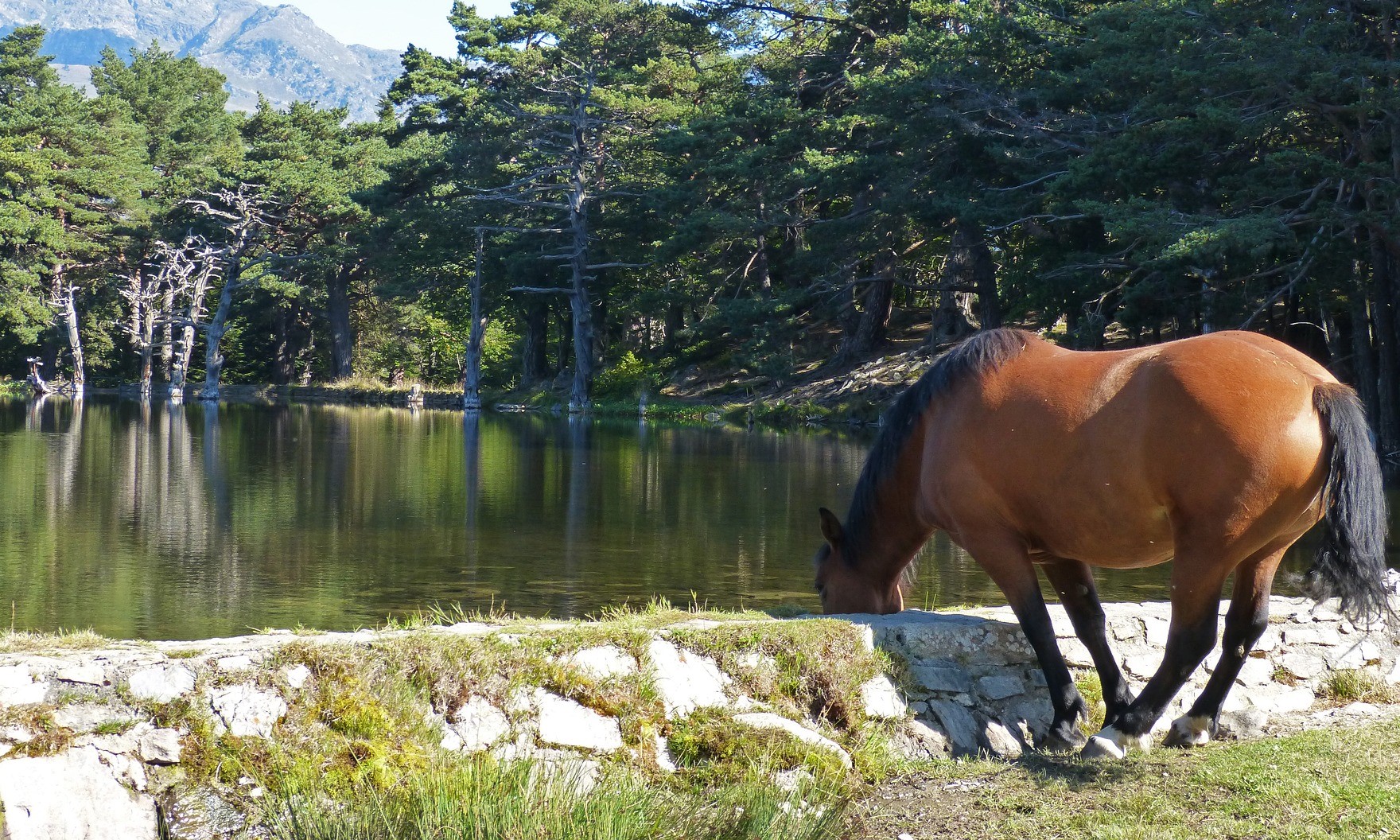
My wife runs an equestrian facility on our property – boarding, training, therapy and recreational riding for those who enjoy horses.  It’s a lot of activity and it’s a whole lot of work to maintain.  When our barn help doesn’t show up, that’s where I come in.  I don’t ride but I can do the work.  I suppose you could say I’m a horse of a different color.  My wife and I knock out the myriad chores in about four hours (morning and evening combined), and I get a kick (hoof?) out of all of the terms and phrases that are uniquely “equine”.  Consider the five essential aspects of daily horse care:

78-myriad-1

Grain – Are you “feeling your oats” today?  That’s a reference to horses (of course!) and the boost of energy derived from their daily dose of grain.  “Grain” means a lot more than “oats” these days.  Grain is a general barn term to include the endless supplements for the specific needs of a horse (i.e. fiber boost, joint care, digest assist, immune system boost, metabolic stimulation).  Solid, liquid or “mash” (something in between the first two), grain is measured in bins, sacks, and baggies; scoops, cans, and cups, and even tiny bits like pinches, eye-droppers, and capfuls.  When all is measured and done – voila! – your horse has a complete pan to feast on.  So remember – grain is not just grain.  That’s putting the cart before the horse.

78-myriad-2

Grass – Have you ever been the recipient of a “haymaker”?  That’s a powerful, forceful punch (which means someone must’ve been really mad at you).  But a haymaker is also a machine that dries grass, thus creating “hay”.  And horses need a lot of hay.  You could start with a handful but your horse will probably demand a flake or a cube, and if he’s really hungry he will devour an entire bale.  But I’m talking the 50 lb. bale you see stacked in the fields.  If you want to seriously hay your horses (and take a two-week vacation), opt for large bales – round or square – which can weigh up to a ton.  Your horse will think he’s found an all-you-can-eat-buffet.

78-myriad-5

Water – You can lead a horse to water but you can’t make him drink.  When a horse does drink however, he’ll take in a gallon or more at a time; a glassful simply won’t do.  Watering horses requires everything from a hose to a pan to a pail to a bucket to a tank to a trough.  If you want to get really crazy you can even install a cistern (or a water tower) and then you never have to worry where your water’s coming from (even if your well dries up).  Finally, don’t forget the fishnet to keep the water clean.  Horses muck it up while they’re munching on hay.

78-myriad-3

Cleaning – Speaking of mucking it up, are you a “muckety-muck”?  I hope not because that means you’re an arrogant, self-important person.  But come join me in barn chores and I’ll show you all the “muck” you could ever want.  A horse processes grain, hay, and water into a mountain of manure, and unfortunately for me a horse does his business wherever he pleases.  That means a lot of cleaning.  You’re going to need a muck rake for starters (and a hoe if it’s cold enough outside because then manure sticks to the ground).  You’re also going to need a muck cart – the wheels underneath the muck tub where you’ll deposit all of that manure.  Lastly your manure needs a final destination.  That would either be a manure pile (which is eventually removed by a manure hauler), or your pastures themselves, by means of a manure spreader.  Not to beat a dead horse, but your goal is to get all those “apples” as far away from the barn as possible.

78-myriad-6

Enclosures – If it came straight from the horse’s mouth, y0ur equine would demand to be put out on pasture and never ever brought in.  That’s because he wants to graze all day and night, which is almost never a good idea.  So a horse “comes in”, which means he retires to a pen or a stall.  If he’s really lucky, his stall has a run, and sometimes he can hang with other horses in a paddock before he’s moved back to pasture.  If he wants a place to go when he needs some alone time or gets tired of the rain he goes into a loafing shed.  And when he’s actually ridden he goes to an indoor or outdoor arena, or perhaps for a trail ride (which is sometimes just called “down the road”).

78-myriad-4

There’s a lot more equine-speak where that came from but it’s time I got off my high horse.  If you’re in the market for a horse I hope everything I’ve talked about here is enlightening.  To me it’s just horse sense.

Back in the Sandbox

76-zen-1       76-zen-2

Draw a line in the sand.

Therein lies the allure of the most unique Christmas gift I received this year.  The before/after photos above depict a modern-age spin on a Zen garden, only the “gardening” is done automatically; almost magically.  Place the ball where you feel the magnetic pull, spin a couple of dials underneath, and sit back and watch.  The ball is pulled invisibly around the sand, creating beautiful designs like the one in the second photo.  My “Sandscript” (which can be found here if you want one of your own) reminds me of “Spirograph”, the geometric drawing toy I had as a kid.  But my Zen garden is so much more than cool drawings.  It’s about finding calm within the daily chaos, or perhaps just a different way of looking at things.

Here’s what’s really Zen about my Sandscript.  First, you determine when the drawing is done by turning off the dials – the ball doesn’t just come to a stop on its own.  Second, the line drawings are random, and rarely symmetrical.  That’s my own brand of Zen right there.  I like things a little too neat and organized, so anything never really finished or never really perfect is my kind of therapy.

I always thought Zen gardens – one of countless cultural contributions from the Chinese and Japanese – were a little out there.  Authentic Zen gardens are the size of basketball courts and have you shuffling around the gravel and rocks, raking and rearranging as you seek your higher self.  Several years ago we bought my mother-in-law a tabletop Zen garden and I found myself drawn to the “gardening”, not really understanding why.  There is an undeniable calming effect when you draw lines in the sand.

The same can be said for mazes.  I loved mazes as a kid, especially the books you could draw in or the tabletop box where you turn the dials and tilt the maze to get the ball from start to finish.  Mazes are purported to have the same calming affect as Zen gardens.  I always thought mazes were limited to the hedge or cornfield variety but there are all sorts, including a chain of amusement parks throughout America.  We have a maze right here in our neighborhood, fashioned from painted lines on the asphalt surface of a cul-de-sac.  I’ve walked a few mazes in my lifetime but I’m still in search of the Zen in the experience.  I think I’m too preoccupied with finding my way out to discover any calming effect.

Zen is a great word, by the way.  There’s something about the sound of the “Z”.  Zen.  Or maybe I just like words starting with “Z” because they’re not used all that often.  Quick, name ten words off the top of your head starting with “Z”.  I gave myself sixty seconds and could only come up with seven.

If you don’t think Zen goes hand-in-hand with American culture, check out the following photo from a visit to a local retailer:

76-zen-3

My posts on Life In A Word will continue to run the gamut of topics, including personal experiences and humor for added zest (ha).  As you read you may find unexpected comfort in my words.  That’s not by chance – it’s probably just me playing with my Zen sandbox before I sat down to the keyboard.

De-lightful December

The Broadmoor Hotel, the five-star luxury resort here in Colorado Springs, boasts a Christmas season display including over a million twinkly white lights. The weekend after Thanksgiving crowds gather on the grounds to witness the illumination, which starts with a countdown and ends with the flip of a big switch.  Instantly the Broadmoor is delivered into the Christmas season. It’s a spectacular sight and a tradition that’s been carried on for thirty years.  I can’t imagine how long it takes to put it all together.

74-luminous-1

Christmas lights are one of my favorite expressions of the season. I marvel at the time and energy some of my neighbors invest to produce a display that – like the one above – can probably be seen from the space shuttle.  Surely you have a similar house where you live (or a hotel) where the lights and the decorating borders on the ridiculous.  Or maybe you just tune in to “The Great Christmas Light Fight” (Mondays on ABC), where “decorating to the extreme” can win you a cash prize and the coveted Light Fight trophy.

We have a house in our neighborhood covered in nothing but purple lights.  It’s actually quite appealing but I question the choice of color.  Most people still use strands of multi-colored lights of course – more LED than incandescent these days.  Sometimes you see animals or trains or colorful scenes.  Those always remind me of Lite-Brite, a toy I had as a kid.  Lite-Brite was a simple light box fronted by color-by-letter templates.  You plugged colored plastic pegs into the template and when you were done, you turned off the lights and switched on the box to display a glowing, colorful picture.  My more artistic friends would forego the templates and make their own creations in the dark.

I see Christmas lights everywhere this time of year; not just on houses.  Traffic signals blink red and green.  Ditto airport runway demarcations.  And how about those overhead lights your drive-thru bank uses to indicate which lanes are open or closed?

It shouldn’t surprise you to learn the first Christmas “lights” were candles, glued with melted wax to tree branches in the wealthier homes of late-nineteenth-century Germany.  Electric strands came along several years later (Great Britain claims their invention); originally referred to as “fairy lights”.  Finally, several cities – San Diego, New York City, and Appleton, Wisconsin among them – claim to have originated the outdoor Christmas light display, which only seem to get bigger and more elaborate by the year.

Perhaps you’re like my family.  Other than the tree itself we’re lucky if we string one hundred (let alone one million) lights on the outside of our house.  I like to decorate a tree or two in the yard instead, but the house itself stands in the shadows.  Perhaps it’s because I fell off a ladder one year reaching across the top of the garages. Perhaps it’s because I prefer the look of the “candle in the window” (so much easier to put up!)

74-luminous-2

Less is more in my opinion.  One of my favorite decorated houses in our neighborhood combines a simple outline of white lights on the house with a few colored trees in the yard.  That works for me.  Even a single white light will do as long as it’s bright enough.  So goes the Methodist hymn There’s A Song In The Air: “Ay! the star rains its fire while the beautiful sing…”  Referring of course, to the star of Bethlehem.  The one true and luminous Christmas light.

Sundance Man

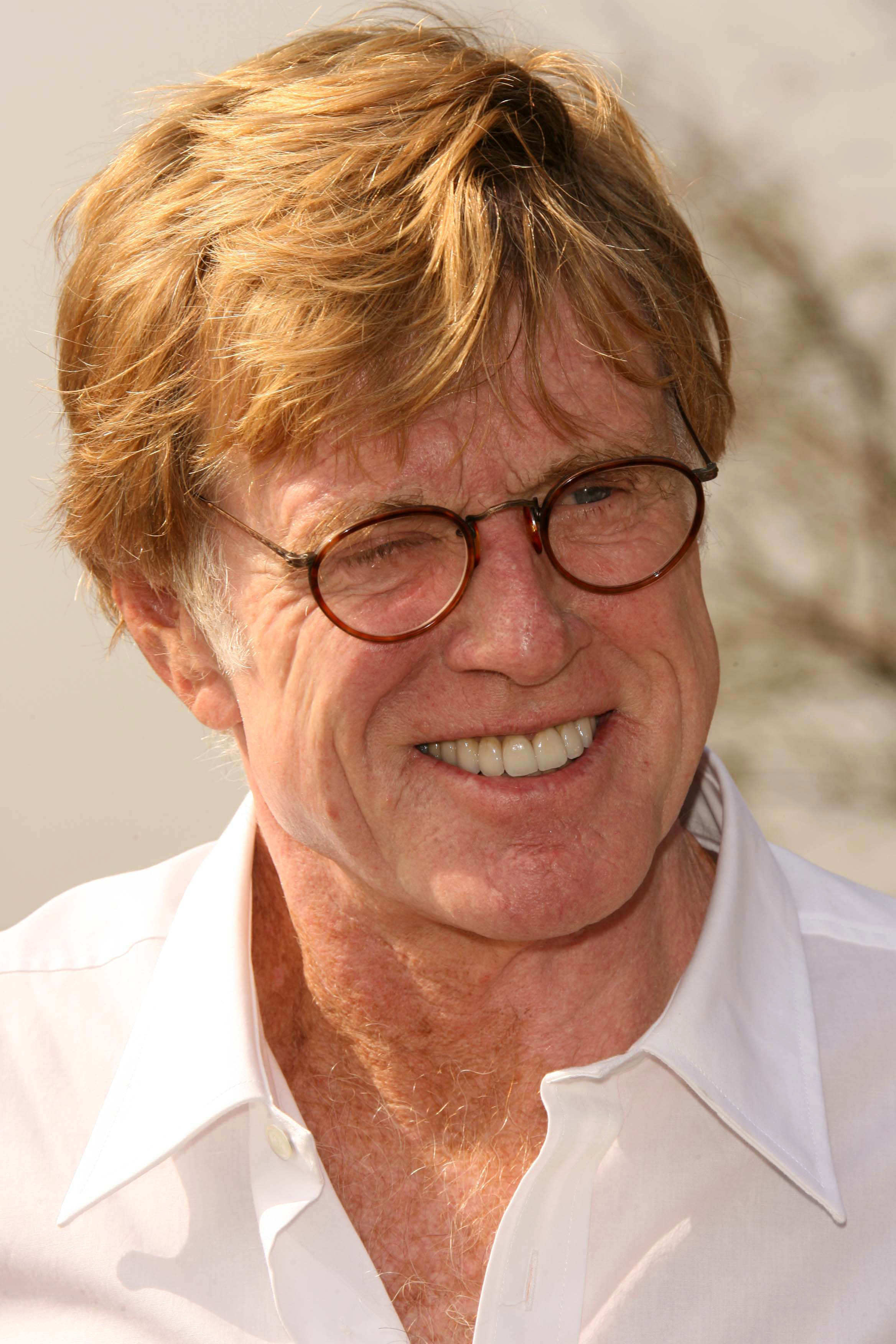
Two weeks ago we had a little excitement on the west side of town.  A street and two houses were borrowed for a Netflix production called Our Souls At Night.  For ten days cast and crew were hard at work while a few locals kept watch from lawn chairs across the street.  Maybe I too would have grabbed a lawn chair if I’d known the film’s stars were Robert Redford and Jane Fonda.

72-sardonic

I claim to be a Jane Fonda fan but really only for a handful of films; all between 1979 and 1981.  In those years you had The China Syndrome, The Electric Horseman, On Golden Pond, and 9 to 5.  On the other hand Robert Redford won me over for virtually every film he has acted in, produced, or directed.  I would be hard-pressed to come up with a Redford movie I didn’t care for (and he’s made well over a hundred of them).

Robert Redford has worked with many of Hollywood’s greats.  He made several films with Paul Newman for instance, including Butch Cassidy and the Sundance Kid, the earliest of Redford’s performances I can remember.  When I consider how many Redford movies I’ve seen since his turn as the Sundance Kid, it’s remarkable I somehow missed The Sting – also with Newman and considered one of Redford’s best.  Perhaps The Sting should be my “homework” for writing this blog.

Redford acted with Barbara Streisand in The Way We Were, with Dustin Hoffman in All The President’s Men, with Meryl Streep in Out of Africa, and with Brad Pitt in Spy Game.  His leading ladies included Glenn Close in The Natural, Demi Moore in Indecent Proposal, Kristin Scott Thomas in The Horse Whisperer, Debra Winger in Legal Eagles, and Fonda in several other movies (including Barefoot in the Park, one of Redford’s first films).

Remarkably, three of my favorite Redford films are ones where he’s behind the camera instead of in front of it.  in 1980 Redford directed Ordinary People, which won him the Oscar for Best Director (as well as Best Picture).  In 1992 Redford directed A River Runs Through It and also narrated a good portion of the film.  And in 2000 Redford produced The Legend of Bagger Vance, which proves that golf occasionally does make for good entertainment.

Redford is described as an “intelligent, reliable, sometimes sardonic good guy”.  Nice to know he can laugh at himself.  I also find it interesting he grew up in Van Nuys, CA (15 miles from my childhood home) and attended the University of Colorado (90 miles from my current home).  Redford now lives near Park City, Utah, on several hundred acres he calls Sundance Ranch (home of the film festival by the same name).  Redford once said, “I often feel I’ll just opt out of this rat race and buy another hunk of Utah”.  I can relate to that.

Last week Robert Redford was awarded the Presidential Medal of Freedom, the nation’s highest civilian award.  When asked to describe his body of work Redford said, “storytellers broaden our minds: engage, provoke, inspire, and ultimately, connect us.”  Redford will soon be done with acting, but thankfully he will continue to direct.  With that in mind I eagerly anticipate Our Souls At Night, and any other stories the man has yet to tell.

Some content sourced from Wikipedia, “the free encyclopedia” and IMDb.com


Patriot Games

Tomorrow a chessboard will be auctioned off in New York City, with an opening bid somewhere north of $75,000.  For that kind of money you’d picture a one-of-a-kind treasure beautifully crafted from the finest materials; perhaps inlaid with gold.  The chess pieces themselves would be intricately carved ivories or bronzes.  On the contrary, the auction block chessboard looks like most others: alternating light and dark wood squares with nondescript wooden pieces.  Not much to look at – unless you know its epic history.

70-allegory-1

In 1972, in what was later dubbed “Match of the Century”, American Bobby Fischer and Russian Boris Spassky met in Reykjavik, Iceland to play a total of twenty-one games of chess over a three month period.  The match recognized history’s eleventh World Chess Champion, with Fischer emerging as the eventual winner.  With the title Fischer claimed a purse that in today’s dollars would be almost $1.5 million.  The chessboard in tomorrow’s auction was used in Fischer/Spassky games 7 through 21, replacing a stone board used for the earlier games.

The significance of the Fischer/Spassky match goes entirely beyond the crowning of another World Chess Champion.  In the 1970’s the United States and its NATO allies, and Russia (then the Communist-ruled U.S.S.R) and its Eastern Bloc allies, were in the throes of a “Cold War” that defined the post-World War II tension between dominant world powers.  The sociopolitical cultures of these “western” and “eastern” countries could not have been more different.  Thus the chess match was seen as an allegory; especially with Fischer – the first American to ever compete for the title, taking on Spassky – the current World Chess Champion and one of five consecutive Soviets to hold the trophy dating back to the 1940’s.  It was as if a feisty newcomer was speaking loudly for the first time.  As former world champion Garry Kasparov described the outcome, “… the lone American genius challenges the Soviet chess machine and defeats it.”

The Fischer/Spassky competition attracted more worldwide attention than any chess match before or since.  All twenty-one games were televised (though the third game had to be illustrated with move-by-move graphics since Fischer insisted on temporarily moving away from the cameras).  In the years following the match, “Bobby Fischer Teaches Chess” became the best selling chess book ever published.  The opening scene of the James Bond film “From Russia With Love” depicted a chess match with moves patterned after Spassky’s .  Chess became supremely popular among American kids (maybe because Fischer was already playing in national championships at the age of fourteen).

70-allegory-2

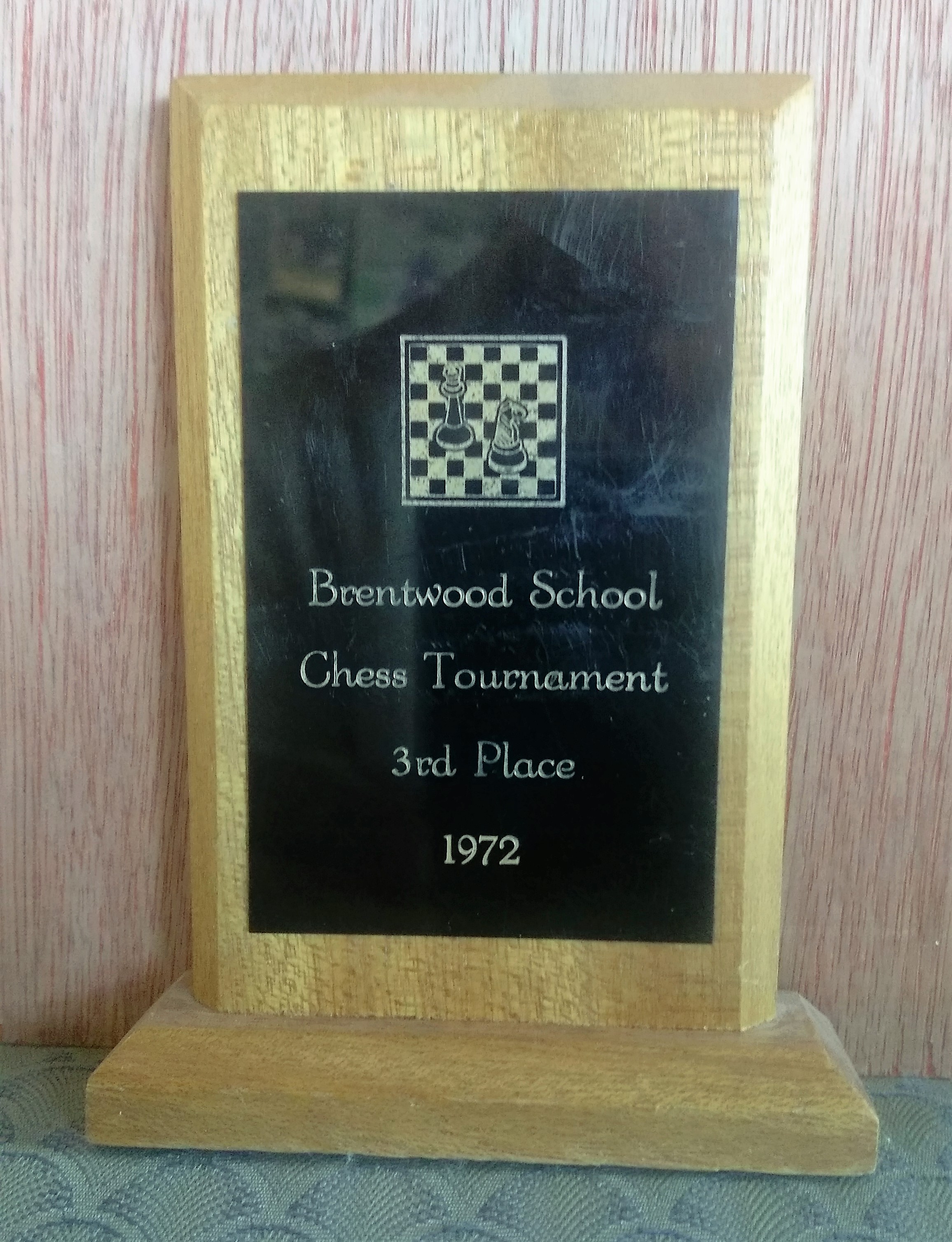
I have a personal connection with the Fischer/Spassky match, as shown in the photo above.  I learned chess at an early age thanks to the determination of my grandfather.  He insisted on a game every time we were together, and most times he beat me.  Today I have one of his chess sets as a precious keepsake.  But my grandfather also urged me to participate in a school-wide chess tournament, and the trophy you see was the result.  From then on my grandfather teased me by saying he wouldn’t play anymore unless it was for the trophy.

Notice the date of the school tournament; inside the same year as the Fischer/Spassky match.  By wonderful coincidence I was competing at a time when chess was most prominent on the world stage.

My chess game never really matured from those grade school years – and Fischer and Spassky likewise descended into relative obscurity – but a marked impression was made by watching their 1972 match on television.  Now whenever I see a chessboard I’m reminded the game is not just kings and queens surrounded by their armies.  The successful bidder at tomorrow’s auction will hold an emblem of history – from a time when the world’s chess pieces were as divided as never before.

Some content sourced from Wikipedia, “the free encyclopedia”.

Let’s Do the Time Warp Again

Here we go again, time-travelers. This Sunday at 2:00am a good portion of the world will effortlessly move backwards one hour as we roll off of Daylight Savings Time (DST). It’ll be dark outside earlier (no more “summer nights”) and it’ll still be dark when most people wake up. Slam the door on summer – our days will feel shorter for the next eighteen weeks.

68-mnemonic-1

The rules of DST have changed over time (ha), at least here in the United States.  The concept itself was borrowed from the Germans as a way of conserving fuel, and began in 1918; the same time the U.S. adopted “standard time zones” (Pacific, Mountain, etc.).  At first it was a federal mandate in conjunction with wartime activities.  Several years later DST was abandoned entirely.  Then it was turned over to the individual states to adopt (or not).  Finally, DST was given formal guidelines in 1966 as part of the Uniform Time Act.

DST still feels like an experiment with no satisfactory results.  In 1974-1975 the U.S. tried DST for an entire year, but went back to the on-off approach when concerns were raised about kids heading off to school in the dark.  In 1986 DST was extended from the half-and-half calendar to include the entire month of April.  In 2005 DST was extended again to the first Sunday in November -to accommodate trick-or-treating on Halloween.  That last modification was only eleven years ago, for a concept that has been around for a century.  Any bets the rules of DST will change again?

Arizona (outside of their Navajo lands) and Hawaii may have the last laugh.  Both states leave their clocks untouched while the rest of us move backward and forward year after year after year.

Whether or not DST continues, this much is true.  On Sunday I will be resetting two alarm clocks (my wife’s actually auto-adjusts but doesn’t understand post-2005 DST), three wall clocks, three temperature gauges, two thermostats, two car clocks, and several appliances and watches.  Any of these products could be designed to auto-adjust (like phones and computers) but maybe their creators don’t trust the DST rules won’t change yet again?

A word of advice about Sunday’s change.  Proceed with caution when you head out on Monday.  Not only will it be darker, but your body clock – which can’t be adjusted with a button – will be slightly out of kilter.  Strange things happen the day after clocks adjust, including more accidents between cars and people (if certain Department of Transportation reports are to be believed).

68-mnemonic-2

Last thought.  Today’s word is mnemonic, which refers to any means of making the retention of information in the brain easier.  MNEMONIC is also an acronym for “Memory Needs Every Method Of Nurturing Its Capacity” (I like that).  That brings to mind a couple other mnemonics.  The Great Lakes can be remembered with HOMES (Huron, Ontario, Michigan, Erie, and Superior).  The bass clef in music (the notes A,C,E,G) can be remembered with “all cars eat gas”.  And of course, DST has its own mnemonic to determine which way the clocks adjust.  Remember: “Spring forward, Fall back!”

Some content sourced from Wikipedia, “the free encyclopedia”.


Sphere Elegance

I love full moons.  They look a little too perfect to be one of nature’s essential elements and too large for the vast universe that surrounds them.  Yet there they are, perched silently above the horizon every month or so, beckoning to be plucked out of the night sky.

62-astronomic-1

We had a full moon last Friday and the next will be in mid-October.  But September’s stands alone, as it is rises closest on the calendar to the “Autumnal Equinox”.  It signals the end of the longer summer days, earning the nickname “Harvest Moon”.

The Autumnal Equinox (AE) takes place on September 22nd.  In fact, I timed the publishing of this post to the exact minute of the AE: 8:21am MDT.  The AE is the instance the earth’s axis is exactly perpendicular to its rotational axis around the sun.  When the axis is straight up and down you have equal amounts of “day” and “night” in that twenty-four hours.  That’s a pretty cool slice of astronomy.

As long as we’re in the classroom, the AE also signals the transition from summer to fall in this part of the world.  Yet anywhere in the earth’s Southern Hemisphere the AE signals the transition from winter to spring.  That fact brings a moment of confusion when you consider the Summer Olympics were just hosted in Brazil, doesn’t it?  At least they had a full moon last Friday, same as everywhere else.

Growing up in a narrow winding canyon, a full moon was a rare sight.  Back then I should’ve thought to wake up in the middle of the night, stand out on the lawn, and stare straight up into the sky to see one.  Maybe I saw a few fulls when I was camping in the Boy Scouts.  Or maybe I just remember them from several of the animated Peanuts specials.  (Charles Schultz was a fan of full moons.  Just watch “It’s the Great Pumpkin, Charlie Brown” next month on TV; or “Snoopy, Come Home” on NetFlix).

62-astronomic-2

As much as I enjoyed our Harvest Moon, it turns out I have an even bigger lunar event around the corner.  On November 14th we get a “Super Full Moon”.  A Super is the one full moon each year where the orbit of the moon is closest to the center of the earth.  So the Harvest may be big but the Super should be astronomic!

No discussion of full moons would be complete without a nod to the “Blue Moon”.  They say, “once in a blue moon”, and that means not very often.  A Blue is a second instance of a full moon in a calendar month.  There were no Blue Moons in 2016 (except the several I purchased for my own consumption of course).

62-astronomic-3

Thankfully I no longer live in a narrow winding canyon but instead in wide open spaces.  No fulls can slip by me anymore.  And I assure you, on that Tuesday in November the week before Thanksgiving, I’ll be hanging out in my family room window at dusk gazing east into the sky.  My Super will be on the rise.

Note: Portions of this post are credited to the research found at timeanddate.com.

Benevolence at the Ballpark

A man losing his wallet is akin to a woman having her purse stolen, even though a wallet is typically so much smaller.  The same level of angst and helplessness ensues when you realize this most personal of belongings is gone.  I should know, since I lost my wallet last Sunday at a baseball game in Denver.  But it was returned to me sooner than I expected, and that simple act of charity will leave an imprint far deeper than the carelessness of my actions.

59 - angst 1

Ironically, I made a deliberate effort to protect my wallet from the game-day crowds.  I put my cell phone in the same front pocket, making my wallet more difficult to “lift”.  It would take some real effort to bring one or the other item out into the open.

But that’s exactly what I did.  Unbeknownst to me, when I took out my phone after the game my wallet was pulled along with it, dropping unnoticed onto the gravel of the parking lot.  And off we sped for home, none the wiser.  Three or four blocks later that moment of angst kicked in when my hand grazed my now empty front pocket.  A frantic glance around the driver’s seat revealed the obvious: my wallet was really, truly gone.  Even though we were back to the parking lot minutes later (where we wondered whether this was a “loss” or a “lift”), our search through the gravel was fruitless.

Now I’d like you to meet Karen, my new friend. Karen lives here in Colorado Springs, maybe on the south side of town. She enjoys going to baseball games on Sunday afternoons. That’s all I know about her (and may ever know), but let’s add one more thing. Like the fellow from the Bible parable, Karen is a good Samaritan.

59 - angst 2

My wallet showed up in my mailbox last Thursday – intact and virtually untouched – wrapped in the note you see above.  What struck me immediately about Karen’s actions was the following: 1) she spent $2.50 or more for the envelope and postage; 2) she apologized for not getting my wallet back to me sooner; and 3) she chose to remain anonymous.  There was no return address on the envelope and the USPS tracking number protected Karen’s contact information.  In this day and age I am somewhat in awe of her decent, anonymous gesture.  My wallet may have fallen to the parking lot but it also fell into the right hands.

The same day my wallet showed up in my mailbox our local newspaper reported a nearby incident involving a stolen wallet from an unlocked car.  The thief is still at-large, and he/she attempted a purchase with one of the credit cards immediately after the steal.  I can’t help but think this is more than just a coincidence of events.

So thank you Karen – whoever and wherever you are.  I may not be able to repay your actions but I can certainly follow your lead.  After all, the world needs more good Samaritans like you.