A Distant Third (cont.)

Last Tuesday in cycle class, pedaling through the five-minute recovery after an hour of torture, our instructor asked if we’d like a Christmas carol or two from her playlist.  The one rider with enough oxygen lashed out vehemently, “NO!  It’s too early!”  Well how about that; score a point for Thanksgiving.  The sun set on Halloween two weeks ago and mighty Christmas is already trying to muscle its way to the forefront.  But Thanksgiving has a thing or two to say first.  If you please, keep the sugar plums out of my turkey and stuffing.

In last week’s post, I compared popular aspects of Halloween, Thanksgiving, and Christmas (i.e. history, music, food).  The final tally: Christmas the clear winner – no surprise – with Halloween solidly in second.  But lest we relegate Thanksgiving to the bronze medal year after year, my blog-intent is to reinvigorate America’s late-November holiday, and remind readers why Turkey Day stands on its own merits.
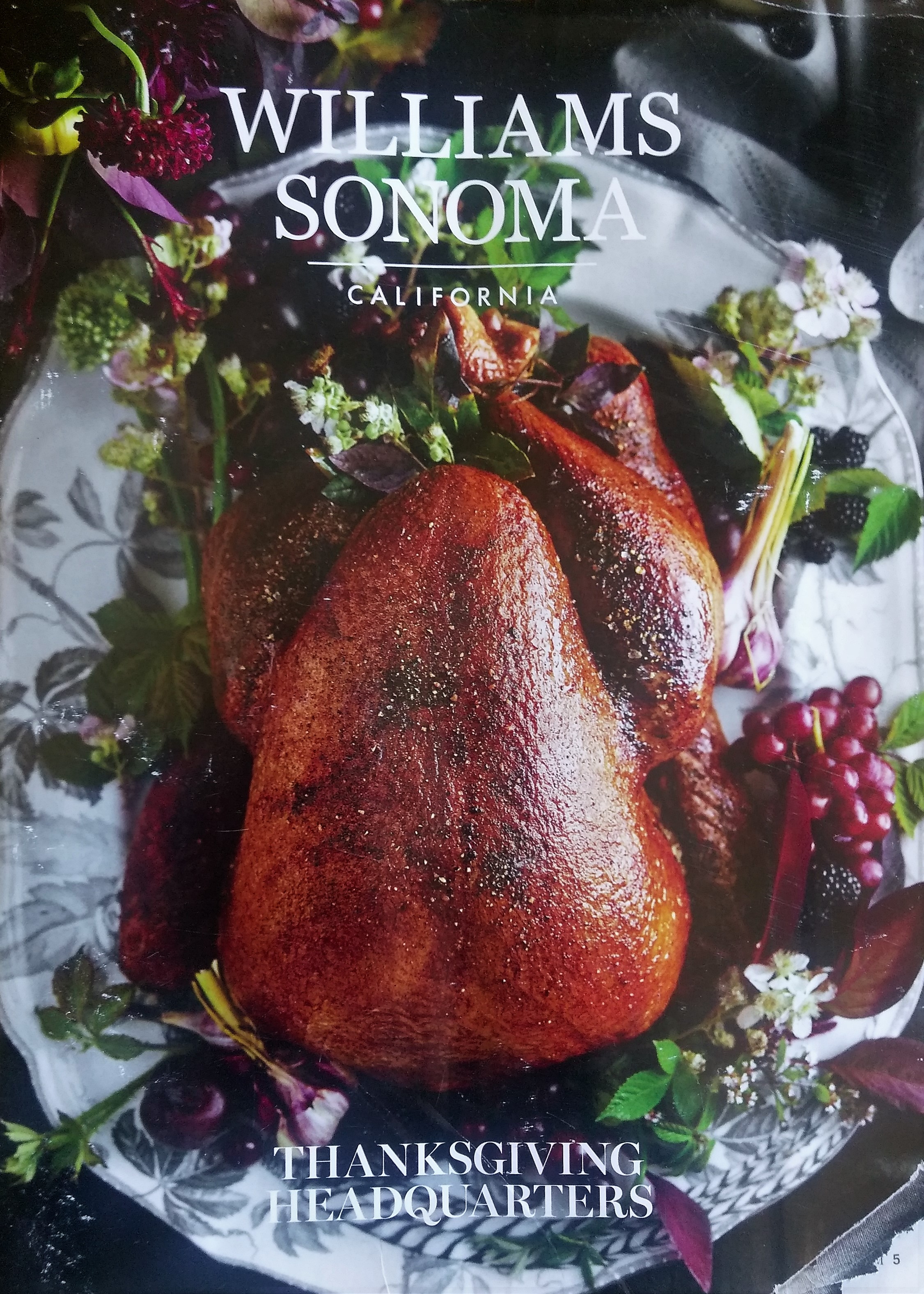
On that note, we’re starting November with promise.  My wife is getting endless mailbox catalogs, and I was delighted to find Williams-Sonoma’s “Thanksgiving Headquarters” edition: 180 pages of food, linens, kitchenware, and decor specifically designed for the holidays.  They even photo-profiled a barn-based “Friendsgiving” celebration in upstate New York.  Granted, the Thanksgiving section of the catalog ended on p.67, meaning the remaining 100 pages were all about Christmas.  No matter – 67 pages of Thanksgiving is impressive.  Way to go, Williams-Sonoma.

Starbucks also made a statement – albeit more feeble – putting their unique spin on Thanksgiving.  Right now, you can drive-thru and order a Turkey & Stuffing Panini (with cranberries and gravy!), perfectly nicknamed “a handheld turkey dinner”.  Then pair your panini with a Chestnut Praline Latte (“flavors of caramelized chestnuts and spices, topped with whipped cream and spiced praline crumbs”).  That combo speaks more to November than December in my book.  Not bad, Starbucks.

Retail aside, Thanksgiving plays out as more of an extended weekend than a single day.  Consider the before/after events.  Wednesday (“Thanksgiving Eve”) is routinely labeled “the single busiest travel day of the year”.  Well guess what?  It’s not.  Thanksgiving Day is the busiest travel day of the year, considering 90% of us drive our cars to the family gathering that morning.  Thanksgiving Wednesday (and Thanksgiving Sunday) only seem busiest because the chaos at the airports gets so much attention.
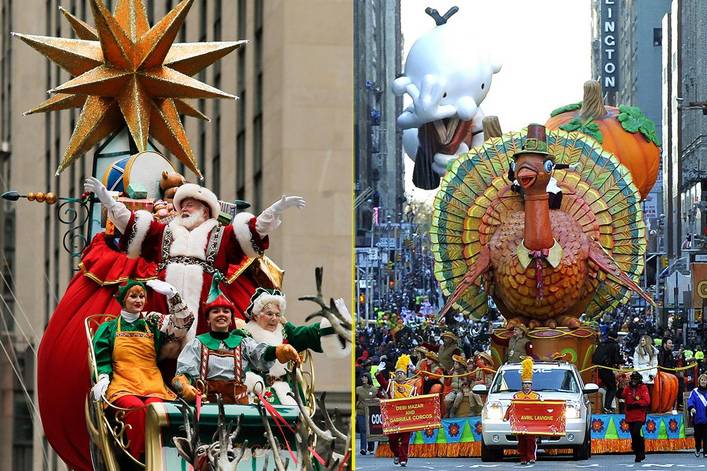
Now, on Turkey Day itself, besides the meal and the backyard football, we begin with the “Macy’s Thanksgiving Day Parade”.  My family always seems to miss the broadcast because we’re so busy in the kitchen.  Macy’s is three hours of marching bands, dancing Rockettes, Broadway singers, flying character balloons, and – as far as I can tell – one nod to Thanksgiving (the massive turkey in the photo above).  But hang on ’til the very end of the broadcast, because… here comes Santa Claus, here comes Santa Claus, wrapping up the parade the same way he’s done every year since 1924.  It’s like the Williams-Sonoma catalog – Thanksgiving on the outside but more “holiday season” in disguise.

Thanksgiving Friday is “Black”, of course – the so-called beginning of the Christmas shopping season.  We Americans spend over $50 billion that day (putting retailers “back in the black” with profits – hence the name).  It’s safe to say this bonanza of spending isn’t going away anytime soon.  By its very nature, Black Friday extinguishes Thanksgiving – almost before the pumpkin pie is served.  Black Friday sales begin as early as 5pm on Thursday evening (making the name obsolete, don’t you think?)  And if Thanksgiving isn’t early enough for you, some stores begin sales a week before Black Friday, with the teaser, “avoid the chaos of Black Friday – shop now!”  Uh, what’s the real meaning of Christmas again?

So there you have it – Christmas putting the squeeze on Thanksgiving like the Grinch on Whoville. Santa concludes the Macy’s parade at 12:00pm ET.  Christmas shopping begins five hours later.  In between, throw a meal on the table, mumble a blessing, and don’t forget to say thanks.  If we’re not careful, Thanksgiving Day will be reduced to Thanksgiving Hour.  It’s a phenomenon known as “holiday compression depression” (okay, I just made that up), but hey; it’s happened before.  In 1971, George and Abe got their standalone birthday celebrations mashed into a single holiday.  Even they feel Thanksgiving’s pain.

A Distant Third

America’s Election Day finds us one week post-Halloween, fifty days pre-Christmas, and still adjusting to that pesky hour gained from the loss of Daylight Savings Time (got all that?) Fittingly, I’m working through a small pile of candy corn and M&M’s while placing a couple of online orders for holiday gifts. And that, my friends, is the perfect lead-in to today’s topic. With Halloween fading fast as the sun, and Christmas approaching like Starbucks’ holiday cups (just when did those show up already?), where in God’s name is the love of Thanksgiving?

Of course, Thanksgiving gets steamrolled every year between the other two loudmouths – just seems the real estate on either side is getting bigger. Our neighborhood’s professional haunted houses, pumpkin patches, and corn mazes opened gates in early September. Then Christmas’ onslaught of decor, music, and retail made its entrance the moment front-porch lights switched off on trick-or-treating. In short, Holiday 1 and Holiday 3 officially overlapped each other, suffocating Holiday 2 onto life support. It’s the classic case of middle-child syndrome – “exclusion caused by the more specific attention to the others”. Poor Thanksgiving.

To be fair, ranking the standard aspects of holidays puts Thanksgiving in third place in just about every category.  Let’s review a few:

ORIGIN: Halloween dates to 2,000 years ago; the ancient Celtic festival of Samhain (in present-day Ireland), when people lit bonfires and wore costumes to ward off ghosts. That’s pretty cool.  Thanksgiving dates a mere 400 years, mimicking the harvest meal shared by the Wampanoag Indians and English Pilgrims. Christmas – at least to us Christians – dates over 2,000 years ago to the birth of Christ. Measured by the calendar then, Christmas (C) takes first place, Halloween (H) second, and Thanksgiving (T) a distant third.

CELEBRATION: Halloween used to be just children’s trick-or-treating. Now we’ve evolved to a month of the aforementioned haunted houses, pumpkin patches, and corn mazes; then costume contests, themed drinks, and increased cover charges at the bars; and a plethora of scary movies at the theater. Thanksgiving?  One day preparing one meal to be consumed in (more or less) one hour.  Christmas has its December 25th, but it also has a season’s worth of caroling, parties, movies, concerts, parades, church services, craft shows, decorations, temporary ice-skating rinks, and on and on and on.  Again – First Place: C, Second: H, (Distant) Third: T.

MUSIC: Halloween: “Werewolves of London”, “The Time Warp”, “The Monster Mash”, “Ghostbusters”, “Thriller”. Christmas: You-pick-’em – a dozen of your favorites (from hundreds if not thousands of carols). Thanksgiving: Not one.  Not one single, solitary tune comes to mind. First Place: C, Second: H, Late-to-the-party: T.

COLORS: Halloween: Red, Orange, Yellow (and every shade in between). Thanksgiving: brown. Christmas: Red, Green, White. Let’s call it a first-place tie between C and H.  In third place (and looking awfully uncolorful): T.

APPAREL – Let’s give this category about five seconds. Halloween is all about apparel, so anything goes and everything works. Christmas allows for – at least once in the season – your Sunday best, or getting all dolled up for some special occasion. Thanksgiving? All I come up with is stretch pants to ease the digestion of the meal.  First place: H, Second place: C, Absent-From-The-Podium: T.

FOOD – Halloween brings forth every imaginable candy, with a side of bobbed apples and witch’s brew. Christmas explodes with candy canes, decorated cookies, the Grinch’s roast beast, and those wretched fruit cakes. But here comes Thanksgiving for the kill – turkey, stuffing, potatoes, cranberries, dinner rolls, salads, vegetables, two-maybe-three kinds of pie, and whatever else you can cram onto the table. Assuming this carb-crazy feast is your cup of tea, Thanksgiving wins in a runaway. First place: T, Second place: C, Third Place (+ Sugar Coma): H.

Let’s tally the results.  In five of six categories, Thanksgiving gets the beat-down from Halloween and Christmas.  The mega-holidays appear to be reducing Turkey Day to a trifle.  But lest you think it’s a dying bird, I’m here to convince you Thanksgiving isn’t down for the count.  Stay tuned: there’s more to discuss about the little holiday that could.

Candy-Crunching the Numbers

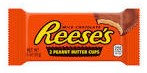
If you sift through your kids’ trick-or-treat bags today, you may be in for a surprise. When it comes to Halloween candy, we Americans are a fickle bunch. “Best” and “Worst” lists kick into high gear this time of year – with fierce debate – and the results are likely reflected in what gets handed out at the front door. Would you agree – Reese’s Peanut Butter Cups are hands-down America’s most popular Halloween candy?  By the same analytics, would you agree Circus Peanuts are the worst?  Do you even know what Circus Peanuts are?

CandyStore.com recently assembled the candy list of lists – the current bests and worsts. Check out the details in their blog post here (and buy some candy while you’re at it).  CandyStore combed the Web for best/worst candy lists from a dozen publications, then mixed in the opinions of 40,000 of their own shoppers. How they sifted all that data into a single list is a worthy advertisement for Excel.  Here are the results:

BEST Halloween Candy
10. Hershey Bars
9. Skittles
8. Sour Patch Kids
7. Butterfinger
6. Nerds
5. M&M’s
4. Kit-Kat
3. Twix
2. Snickers
1. Reese’s Peanut Butter Cups

WORST Halloween Candy
10. Mary Jane
9. Good & Plenty
8. Licorice
7. Smarties
6. Tootsie Rolls
5. Peanut Butter Kisses
4. NECCO Wafers
3. Wax Coke Bottles
2. Candy Corn
1. Circus Peanuts

Some comments (er, opinions) about the BEST list.  I can’t argue with Reese’s in the #1 spot, since I adore peanut-butter-and-chocolate, and a Reese’s cup is a convenient size somewhere between “full-size” and “fun-size” for the trick-or-treat bag.  Reese’s also happen to have an orange wrapper, so no adjustment needed for Halloween. The top five on the BEST list are solid choices, though I wonder where Snickers has the edge over Milky Way, Mars, or Almond Joy.  Three of the remaining five reflect candies joining the party well after I was a kid.  To this day, I’ve never had a “Sour Patch Kid”.

The WORST list is a little more interesting.  I’m surprised some of these earned a spot (even on a “worst” list), considering they were popular way back in the 1960’s.  But Smarties, Wax Coke Bottles, and Candy Corn bring a smile to my face, as each of them screams “Halloween” to me.  They seem to appear in October, then disappear for the next eleven months.  Wax Coke Bottles were the thought-we-were-cool 2-in-1 candy.  Bite off the bottle top for the drink, then put the wax in your mouth for a chewing-gum sensation.  In hindsight, ewwwww.

Candy corn, no surprise, is a polarizing confection.  You either love the little kernels or you simply can’t stand them.  They’re essentially corn syrup + sugar doused with a little food coloring.  Jelly Bean Candy Company has been making candy corn for over a century and sells hundreds of thousands of pounds of kernels each year, most in October.  Yet candy corn almost snagged the top spot on the WORST list.  Go figure.

On the other hand, Circus Peanuts deserve the WORST trophy.  I’m old enough to remember enjoying a real bag of peanuts at the circus, so why go and “candi-fy” my memory?  CP’s are peanut-shaped orange marshmallows (orange I suppose, because brown would not be an appetizing look for marshmallows).  Remarkably, CP’s have been around as long as candy corn, and you can still find them on your supermarket shelves.  Careful – some of those bags may have been manufactured in the late 1800’s.

Here’s another angle on the BEST list.  CandyStore took their analysis one step further and figured out, based on purchases August through October, which candy is most popular by state.  The methodology is not quite as scientific but the results are amusing.  You’ll find most of the BEST list represented, but you’ll also find a few head-scratchers.  Kentucky’s “favorite candy” is Swedish Fish.  Montana and Oklahoma prefer Double Bubble Gum.  West Virginians prefer Blow Pops.  As for my own state of Colorado?  Twix.  I can live with that.

CandyStore may take pride in its BEST/WORST lists, but let’s all just agree to disagree, shall we?  IMHO, licorice (of any kind) belongs nowhere near a WORST list – and that includes Good & Plenty, while 3 Musketeers is embarrassingly absent from the BEST list.  Not a fan of chocolate-covered, fluffy, whipped nougat?  Pick one up sometime and reconsider.  3 Musketeers almost feels lighter-than-air, a clever ruse to offset the guilt as I add one to my shopping cart.

Some content sourced from the Wall Street Journal article,”Americans are Divided – About Candy Corn”.

Almond Joy

Think about the last time you invited friends to your place, for dinner or some other get-together. Did they bring a little something – a gesture of their gratitude – or did they show up empty-handed?  The gesture, whether a bottle of wine or baked goods, is especially thoughtful because it was never really expected, right?  You invited your guests after all, presumably with no strings attached.

When my wife and I hosted friends from Germany a few months ago, they arrived with a plethora of German candies (an embarrassing amount, really). From their suitcases emerged boxes of chocolates and all kinds of licorice. There were German cookies and tempting little cakes. Finally, they placed a curious-looking black round metal tin on the counter.  The label proclaimed, “Mann Des Jahres”, or “Man of the Year” (???)  The tin looked more like an award than candy.  Later, I discovered it was filled with marzipan.

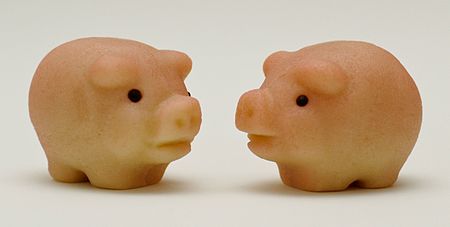
Marzipan translates to “March bread” by some and “a seated king” by others, but to me it is quite literally almond joy.  Sweetened with sugar or honey, marzipan derives its distinctive flavor from the paste, meal, or oil extract of almonds.  Marzipan is more popular in Europe than in the United States.  It is typically shaped into edible fruits, vegetables, or little animals – popular around Christmas and Easter.  Marzipan is also used in thin sheets as glazing for cakes.  The marzipan from my German friends was one big delightful chocolate-covered disc of almond cake.  In hindsight, I wish they’d brought a dozen “Man of the Year’s” and left everything else at home.

Marzipan was not my first introduction to the joy of almonds.  I fell for them back when chocolate bars like Almond Joy and Mounds were kings of the candy aisle (no Kit-Kat or Twix in my day).  Almond Joy was confection perfection: chocolate and coconut topped with whole almonds.  Then I discovered chocolate-covered almonds and realized I didn’t need the coconut.  Then I learned to appreciate almonds all by themselves – roasted and seasoned with sea salt – and realized I didn’t need the chocolate covering.  Today, I keep a bag of Marcona almonds in my car, to fend off less-healthy temptations.

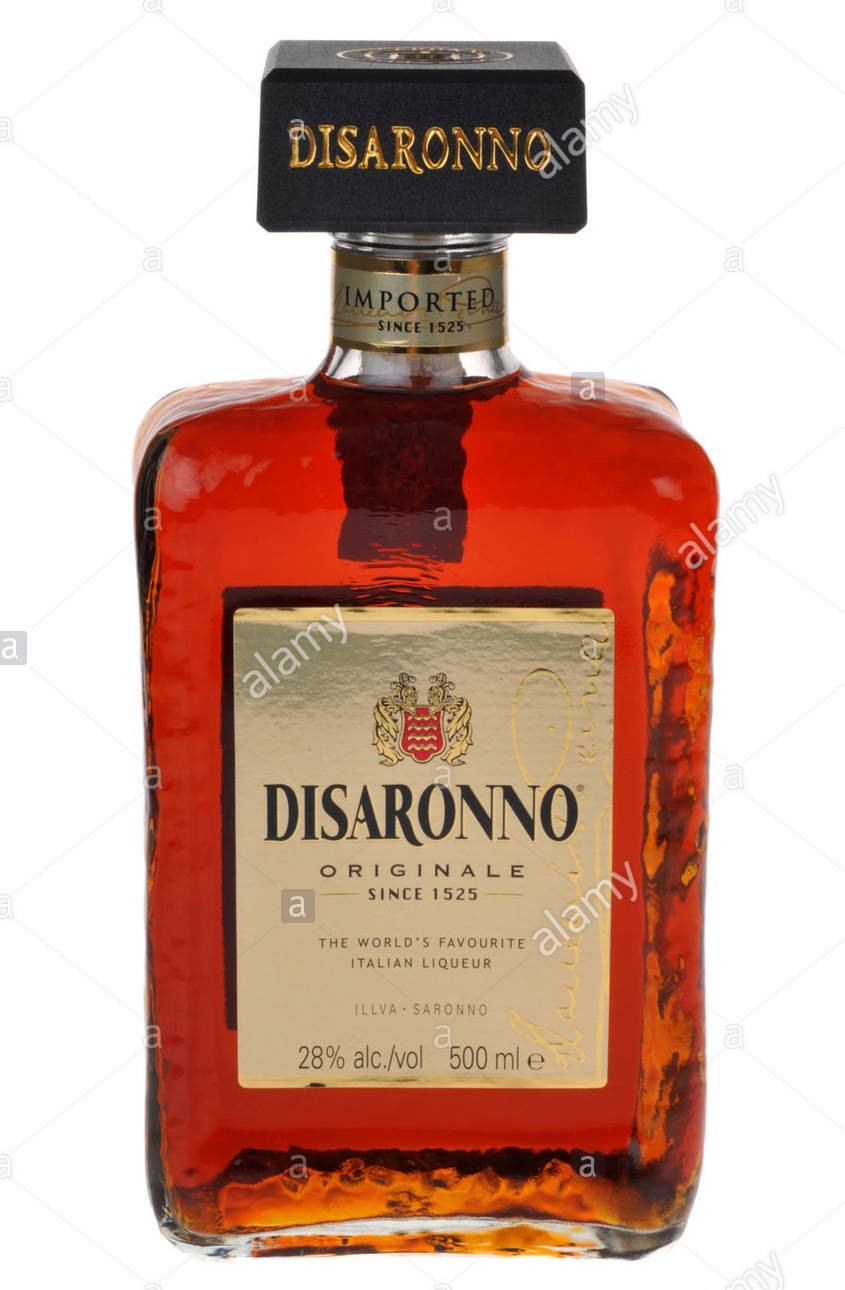
No discussion of almonds would be complete without a glass of amaretto.  In my junior year of college, studying abroad in Rome and not quite of drinking age, I was introduced to copious amounts of table wine, but also to Amaretto Disaronno, the elegant liquor from the northern part of Italy. The (supposed) origin of Disaronno is as colorful as the drink itself:

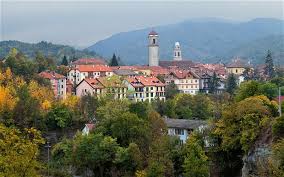
In 1525, a Saronno church commissioned artist Bernardino Luini, one of Leonardo da Vinci’s pupils, to paint its sanctuary with frescoes.  As the church was dedicated to the Virgin Mary, Luini needed to depict the Madonna, but was in need of a model.  He found his inspiration in a young widowed innkeeper, who became his model (and lover).  Out of gratitude and affection, the woman wished to give him a gift.  Her simple means did not permit much, so she steeped apricot kernels in brandy and presented the resulting concoction to a touched Luini. (from “A Brief History of Amaretto” – Shaw Media)

Saronno, Italy

Apricots still play a role in the making of amaretto, but its distinctive flavor comes from bitter almonds (amaretto translates to “bitter”).  Yet it’s still syrupy sweet – too sweet for me to drink straight.  Like most I “sour” mine with a shot or two of lemon juice.

Now that I think about it, we have almonds everywhere in our house.  Almond milk in the refrigerator.  Almond flour in the pantry.  Almond extract in the spice drawer.  Almond butter for our protein shakes and slivered almonds for our salads.  Amaretto in the liquor cabinet.

Still not enough.  I need to go find me some more marzipan.

Some content sourced from Wikipedia, “the free encyclopedia”.

R-E-S-P-E-C-T

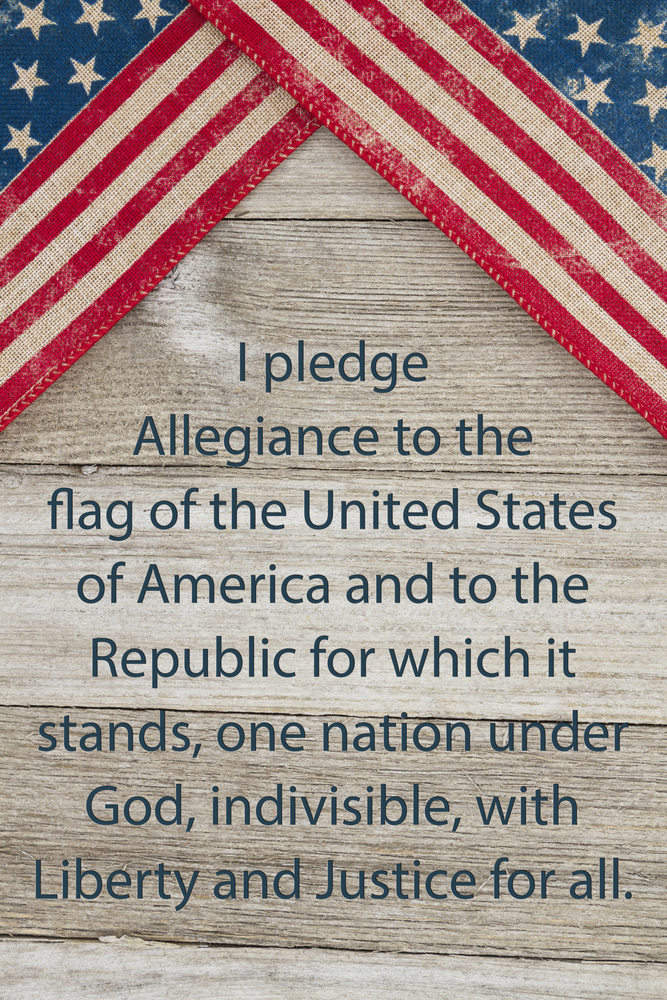
Thanks to another pro football season, America’s allegiance to its flag is once again called into question. My wife and I chatted with our German exchange student recently, asking whether her own country found patriotism so controversial. To this she said, “You Americans are considered very patriotic people. We Germans not so much; perhaps, because of Hitler in our past”. I was a little taken back by that comment. Americans can point to shameful events in our colorful – albeit brief – history, and yet; we still sing the anthem and stand for the flag. Well, most of us.

This week in Colorado, primary and secondary schools begin another year of formal education. The setting is not so different from schools I attended. The classrooms are laid out the same (technology aside). The cafeterias offer up borderline-edible food. And the students – every weekday morning – stand, face the flag, place their right hands over their hearts, and recite the Pledge of Allegiance.  Forty-six of America’s fifty states mandate the practice.  Congress opens its sessions with the Pledge, as do countless other government and private meetings across the land.  Another day begins in America.


The Pledge has a rich history for a phrase spoken (or sometimes sung) in less than fifteen seconds.  It was based on Captain George T. Balch’s Civil War-era pledge: We give our heads and hearts to God and our country; one country, one language, one flag!  The version we use today – reworded by Baptist minister Francis Bellamy, was first published in the children’s magazine The Youth’s Companion in 1892 (albeit with simpler wording).  The Pledge was also first used in public schools on October 12th of that year, coincident with the opening of the Chicago World’s Fair.  The Pledge was designed to generate patriotism in young people, at a time when this kind of energy was on the decline.  Sounds like something we need just as much today.

The original version of the Pledge stated: “...allegiance to my Flag and the Republic for which it stands… ” The change in 1923 to today’s version: “… allegiance to the flag, of the United States of America, and the Republic for which it stands…”, was a nod to America’s immigrants, so as not to deny loyalty to birth countries.  Finally, the phrase “under God” was added in the 1950’s, and formally adopted on Flag Day (June 14th) of 1954.  It was also at this time students began the everyday reciting of, as President Eisenhower referred to it, “…a dedication of our nation and our people to the Almighty.”

Along with saying the Pledge and standing for the flag, America’s students “place their right hands over their hearts”.  This gesture also has a history.  In lieu of a military salute (reserved for those in the Armed Forces), students originally stretched out their right hands towards the flag, palms down, ending the Pledge with palms up.  But the practice was associated with the Nazi salute and quickly abandoned, in favor of the hand-over-heart (or cap over left shoulder) we use today.

To no one’s surprise, America’s Pledge of Allegiance (almost unique among countries) is not without controversy.  Since 1940, there have been at least a dozen high-profile legal challenges.  A few target the practice itself, claiming a violation of the First Amendment.  But most target the use of the words “under God”, in conflict with the First Amendment’s Establishment Clause (freedom of religion).  None of these suits succeeded, with the typical defense, “…the [Pledge’s] words represent a patriotic (not religious) exercise…”, and [to atheists], “…participation in the pledge is voluntary.”

Three years ago, in the most recent defense of the Pledge, New Jersey Judge David F. Bauman declared, “As a matter of historical tradition, the words under God can no more be expunged from the national consciousness than the words In God We Trust from every coin in the land, than the words so help me God from every presidential oath since 1789, or from the prayer that has opened every congressional session of legislative business since 1787.”  Amen to that, David.

Aretha Franklin – America’s indisputable “Queen of Soul” – died last week after a long struggle with pancreatic cancer.  Aretha’s most famous lyric was undoubtedly, “…all I’m askin’ is for a little respect…”.  No coincidence; America’s flag makes the same request.  The Pledge is a voluntary act – sure – but who’s going to argue with, “…liberty and justice for all”?

Some content sourced from Wikipedia, “the free encyclopedia”, and from Erik Larson’s novel, “The Devil in the White City”.

Disc Chalky

Woodstock Candy (“Let Sweet Flashbacks Sprinkle Down”) assembles collections of vintage candy and sells them on Amazon.  The “nostalgic retro mixes” tailor to the buyer’s age, as in “30th Birthday Box” or “65th Birthday Box”.  For those in my decade, Woodstock tosses in classics like Chuckles, Red Hots, Sugar Daddy’s and Smarties. Also, a few Pixy Stix, a Candy Necklace, and a long strip of those colorful Candy Buttons. Finally, buried quietly in the back of the box: one small roll of Necco wafers.

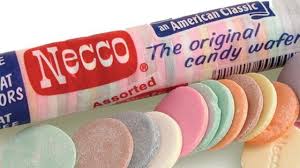
Four months ago, the Wall Street Journal alerted those of us with nostalgic sweet teeth of the fate of Necco wafers.  More correctly, NECCO – the New England Confectionery Company – would shutter if it didn’t secure a buyer.  Apparently, no one came to the candy counter, because the factory closed its doors late last month.  The consumer reaction was immediate – on the order of the Hostess Twinkies frenzy.  Rolls of Necco wafers flew off the shelves.  Frantic calls to candy stores demanded entire boxes be placed on hold.  One Necco devotee offered his 2003 Honda Accord in exchange for the company’s remaining product.  You might call it “disc(o) fever”.

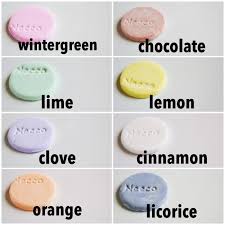
The Necco wafer/disc is an underappreciated candy of years gone by, though admittedly my affection for the confection is not what it used to be.  Necco’s are packaged in rolls of about thirty, in an assortment of eight flavors, including clove.  Clove.  Even the flavors sound dated.  A Necco wafer looks and tastes like a disc of chalk (drywall?), with a hint of flavoring to make it seem like food.  Eat a dozen wafers and your hands and clothes are covered with edible dust.  Eat a dozen more and the flavors all start to taste the same.  What used to be a satisfying crunch now feels like a threat to my dental work.

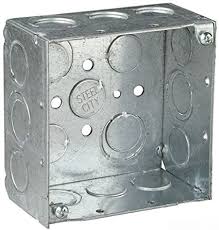
Why was I drawn to Necco wafers, when my back-in-the-day 7-Eleven store included an entire aisle of more appealing candy?  Maybe I just like little discs.  My father used to drive my brothers and I to some of his building sites, and I quickly discovered the concrete littered with dozens of metal coins.  These were “slugs” – today called KO’s or “knockouts”; the quarter-sized remains of partially-stamped openings in electrical junction boxes.  I collected hundreds of them – God knows why (but I was a kid, so I didn’t need a reason).

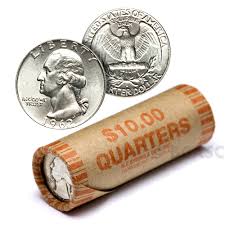
I also collected coins – more specifically quarters, because quarters were big money in my day, and translated into just about everything in that 7-Eleven aisle.  Quarters could also be stacked into paper wrappers; perhaps my precursor to a roll of Necco wafers.

At the same time in life, I had what was probably the coolest toy around.  It was called a “Rapid-Fire Tracer Gun” (if you were really cool you had the Star Trek version).  The Tracer fired little round plastic discs, spinning them out of the barrel so fast they hurt when they hit skin.  They even made a Tracer Rifle for more accurate shots.  The Tracer had a spring-driven magazine, so you could queue up a whole pile of plastic discs.  Or Necco wafers.

Necco wafers aren’t nearly as appealing as some of the stories behind them.  A hundred years ago Necco’s were carried by Arctic explorers and handed out to Eskimo children.  Their “suspiciously long” shelf life (Necco’s are sugar, corn syrup, and not much else) allowed them to be stored for months; then consumed by Union soldiers during America’s Civil War.  And therein lies the significance of the NECCO factory closing: the wafers have been around since 1847.

If I still don’t have your attention, consider this: NECCO also manufactures Sweethearts, the heart-shaped romantic-message-stamped equivalent of the Necco wafer, distributed by the billions on Valentine’s Day.  Think about that: no more candy hearts bearing “Kiss Me” or “Love You” or “Be Mine”.  Instead, just inedible greeting cards and meh grocery-store chocolates.  But don’t despair – I think the factory closing is just a hiatus.  The Hostess Twinkie came back and so will the Necco wafer.  It’s already underway, so join the movement: #SaveNecco.

Good Times and Laughter Too

My wife and I will attend two weddings this summer; one for friends and one for family.  This week I noticed one of the brides-to-be on Facebook, requesting “songs you want to hear/dance-to at the reception”.  Clever girl, making sure her guests have a say in the music.  My guess is – whether requested or not – the deejay will find room for Kool & The Gang’s enduring party anthem, “Celebration”.  It’s as timeless now as it was when we first heard it in 1980.  And ce–lah–brate-ing good times is as timeless at weddings as it is for the passing of a loved one.

Plucked from another section of the significant-life-events portfolio, my wife and I attended a Celebration of Life this past weekend, for my uncle (my dad’s twin brother).  I label two aspects of my uncle’s passing as “merciful”: 1) He was weakened by a heart condition over the last three years of his life; and 2) One or two of his family members were not available for an immediate memorial.  Because of the first aspect, the extended family had plenty of time to make peace with my uncle’s eventual passing.  Because of the second aspect, what may have been a funeral became a celebration of life instead.

No need to vote on this topic.  Whenever circumstances permit, choose Celebration of Life over Funeral.  Funerals lean to the shock and mourning of a life lost – somber affairs are they.  Celebrations of Life revel in the happy memories of one life, and the joy brought to countless others.  Such was the case with my uncle.  His celebration included a church service, hymns, and a homily (given by the “celebrant”, of course), but what moved me to my core – and what I couldn’t get enough of – were the stories shared by my cousins (my uncle’s children) and my father (his brother).  Those memories included things I never knew about my uncle, such as his talent as a cartoonist and his childlike demeanor with his grandchildren.  I’m even more inspired by the man than I already was.

My uncle’s celebration moved on from the church to a beautiful setting by the San Francisco Bay, where drinks, lunch, photos and memories were shared for several hours.  It was as much a family reunion as a celebration, and my uncle wouldn’t have had it any other way.  Before he passed, he let it be known we should make merry instead of mourn.  And so, …There was a party goin’ on right there; a celebration to last throughout the years.

Whether we celebrate births or birthdays, weddings or wedding anniversaries, Sunday Mass or Christ-mas, we get a healthy dose of festive occasions in our lifetimes.  Perhaps that’s why we’ve come up with so many words to describe them.  Merriam-Webster published one such list here, including Bash (America’s melding of “bang” and “smash”, somehow maturing into “party”); Blast (surely inspired by loud musical instruments and champagne bottles); Rave (actually inspired by a Middle-Ages term for “acts of madness”); Blowout (once defined as a “one-off indulgence”; somehow morphed into “major festive occasion”), and finally my favorite – Wingding (once “feigned seizures”, now “wild partying”).

But enough digression.  Well, almost enough.  My nod to all things “celebration” wouldn’t be complete without a mention of the town in Florida by the same name.  Developed by Disney as a utopian master-planned unincorporated community “created from scratch”, and “a town worthy of its brand and legacy”, Celebration was/is Disney’s nod to New Urbanism: development based on the small towns of early America, with compact downtowns, “walkable” streets, diverse housing stock, and plentiful public spaces. Celebration doesn’t even consider itself a town, preferring instead the label of community, as in “strong spirit, and desire for friendship with neighbors”.  Sounds like a festive gathering to me!

There will be many more celebrations of life before the one that has my own name on it.  I’m okay with that.  Celebrations of life are a unique blend of revel and revere, partying and paying respects – the dual reasons we raise our glasses to someone’s name.  Just be sure it’s a party.  As Kool & The Gang puts it: We’re gonna have a good time tonight… Let’s celebrate… It’s all right.

Personal Space

We’re in the midst of Holy Week (for us Christians), which for some means spending more than the usual amount of time in church. Starting with this past Sunday, most Christian denominations conduct a total of five church services unique to this week: Palm Sunday, Maundy Thursday, Good Friday, Holy Saturday, and Easter Sunday. Our Methodist church here in Colorado devotes an hour to each of these services (short by Catholic standards); some during the day, others at night. No matter how you slice it, Holy Week means a lot of time in the sanctuary.

The church sanctuary wasn’t always a welcoming place.  Growing up in Los Angeles, my family and I belonged to a formal Methodist church, with a sanctuary I can only describe as intimidating (at least from a kid’s point of view).  You entered the building from the back, where the doorway greeters beckoned you to a narrow narthex.  So far, so good.  But the imposing sanctuary lay just beyond, through a wall of soundproof windows and closed doors, with stern-faced ushers protecting its every entrance.  The pews were hardwood and upright with thin cushions, thirty deep on either side of the main aisle, marching in perfect unison towards the steps of an even-more-intimidating white marble altar.  The booming organ drowned out any conversation (which was always at a whisper anyway), and the soaring structure of the ceiling made a kid wonder when it would all come a tumblin’ down like Jericho’s walls.

The congregation of worshipers was a lot of “old folks”; the kind of people who thought kids belonged in “Sunday School” instead of the sanctuary (that is, neither seen nor heard).  Hence as teenagers, my friends and I sat up in the balcony (at the back of the space, kind of like the last seat on the bus).  You couldn’t always hear the pastor, but at least we didn’t feel the eyes of the disapproving adults down below watching our every move.  From our vantage point they were just a bunch of suits and dresses, topped by a whole lot of gray hair.

“Sanctuary” took on new meanings as I grew older.  The San Diego Wild Animal Park (now the “Safari Park”) opened its gates in the 1970’s and put a completely new spin on the concept of a zoo.  Animals lived in wide open spaces instead of enclosures; broad, beautiful environments designed to mimic their natural habitats.  Instead of pressing noses against cages or glass, visitors saw the animals from a distance, confined to the seats of a quiet tram circling the park.  If I ever come back as a member of an endangered species (like the northern white rhino I mentioned last week), put me in the San Diego Safari Park.  That’s what I call an animal sanctuary.

Also in the ’70’s, Hollywood produced “Logan’s Run”.  The movie depicted a utopian society of the future, offering a wealth of pleasures and resources and good living… at least until you turn thirty.  At thirty you reported to the “Carousel”, where you were assured a place in “Sanctuary” – the supposedly better hereafter.  Logan and his friends decide to find Sanctuary before they turn thirty, and that’s where the curtain of the ugly truth is drawn back.  I can still hear Logan fighting the controlling supercomputer as he moans “THERE IS NO SANCTUARY!”  Logan’s world was seductive for sure, but it was the mystery of sanctuary that had me watching to the end.

Recently, sanctuary has taken on more puzzling associations.  In the 1980’s, American thrash metal produced the band Sanctuary (but nothing in my research explains the name).  Sanctuary Clothing is a line described as “…capturing the Los Angeles lifestyle… vintage styling with a handcrafted focus on detail…”  Again, nothing about the name.  The SyFy Channel’s Sanctuary ran for four seasons and explored gene therapy and cloning, and the “strange and sometimes terrifying beings” that emerged within the human population.  Finally, today’s sanctuary cities appear to be anything but, as the political feud between the Fed and the state overshadows any sense of actual security.

My definition of sanctuary will always be that primary space for worship in a church; or to put it in broader terms, “a place of refuge or safety”.  Whether that’s somewhere inside, worshiping in the pews as I’ll do tonight; or somewhere outside; say, walking on a quiet path in the forest, it’s more about a feeling than a location.  Sanctuary is all about personal space.

Sweet Charity

Several times during the recent year-end holidays, I passed through the drive-thru at Starbucks, and as I paid, I asked the cashier to include the purchases of the car behind me. I’ve been participating in this Starbucks-wide trend for several Christmases now, and it brings me an inexplicable feeling of goodwill and satisfaction.  The goal of the effort is anonymity. Or to put it more comprehensively, blind faith.

Blind faith is defined as “belief without true understanding, perception, or discrimination”.  That’s powerful.  “Faith” is a spectrum that starts with basic trust and ends with the highest forms of religion.  But add on “blind” and it elevates the meaning.

Buying a free cup of coffee at Starbucks is the easiest form of blind faith, like handing over a dollar to a beggar.  No judgment as to “what happens next” allowed.  But the intention behind an act of blind faith is worth a bit of exploring here.  Dissecting my Starbucks gesture, I note the key components.  First, I don’t waffle over the amount of the purchase I’m covering.  That’s the blind faith in choosing to pay in the first place – it shouldn’t matter how much.  One time I looked in the rear-view mirror and saw a car with four passengers.  Their bill was well over $20.  But my decision had been made before the car even pulled up behind me, so the point was to stick with it.  Another time my recipient was a well-dressed woman wearing sunglasses and driving a recent-model BMW.  Again, no judgment.  Pay for her coffee and move on.

The second component concerns my “getaway”.  As I’m waiting for my own purchases I’m considering my escape route – the path that gets me away from Starbucks as quickly as possible, with enough turns and traffic lights to deter my beneficiary.  My goal is to remain anonymous, and unless the person behind me memorizes my license plates (or something else unique about my vehicle), I’ve achieved a moment of goodwill and will never see them again.  Frankly, it would spoil the whole effort if the car pulled up next to me at a nearby red light.  They might offer their gratitude, or they might offer to pay me back.  They might even be annoyed, as if I had no business intruding on their “personal life”.  I’d rather not know.  I prefer to lean on blind faith that I brought an unexpected smile, or delivered a tiny give-me-a-break in an otherwise trying day.  Maybe they’ll even “pay it forward”, as a string of 374 consecutive cars did at a Starbucks in Florida back in 2014.

Come to think of it, there’s a third component in the Great Coffee Giveaway.  Never expect the gesture in return.  In the countless times I’ve driven through Starbucks during the holidays, I’ve never thought to myself, “I hope the car in front of me picks up the tab”.  If I knew this was happening, I might just order a half-dozen breakfast sandwiches and several cake-pops to go with my Flat White.  Just kidding, of course.  I hope the thought never crosses my mind.

This week and last – no surprise here – I’ve read dozens of blogs about resolutions for the New Year.  Allow me to contribute my one-and-only.  I’m going to lean on blind faith in the coming year, whenever I have the chance to give someone a break.  Remember the rules: 1) No conditions on the amount (read: cost) of the help.  2) Keep it anonymous, as a) recognition defeats the spirit, and b) giving simply for the sake of giving might inspire “pay it forward”.  3) Don’t expect a similar gesture in return.  That’s not to say you won’t be pleasantly surprised when someone buys your Starbucks coffee one of these days.  You’ll just know there were no hidden agendas.


Your True Love’s a Nut Job

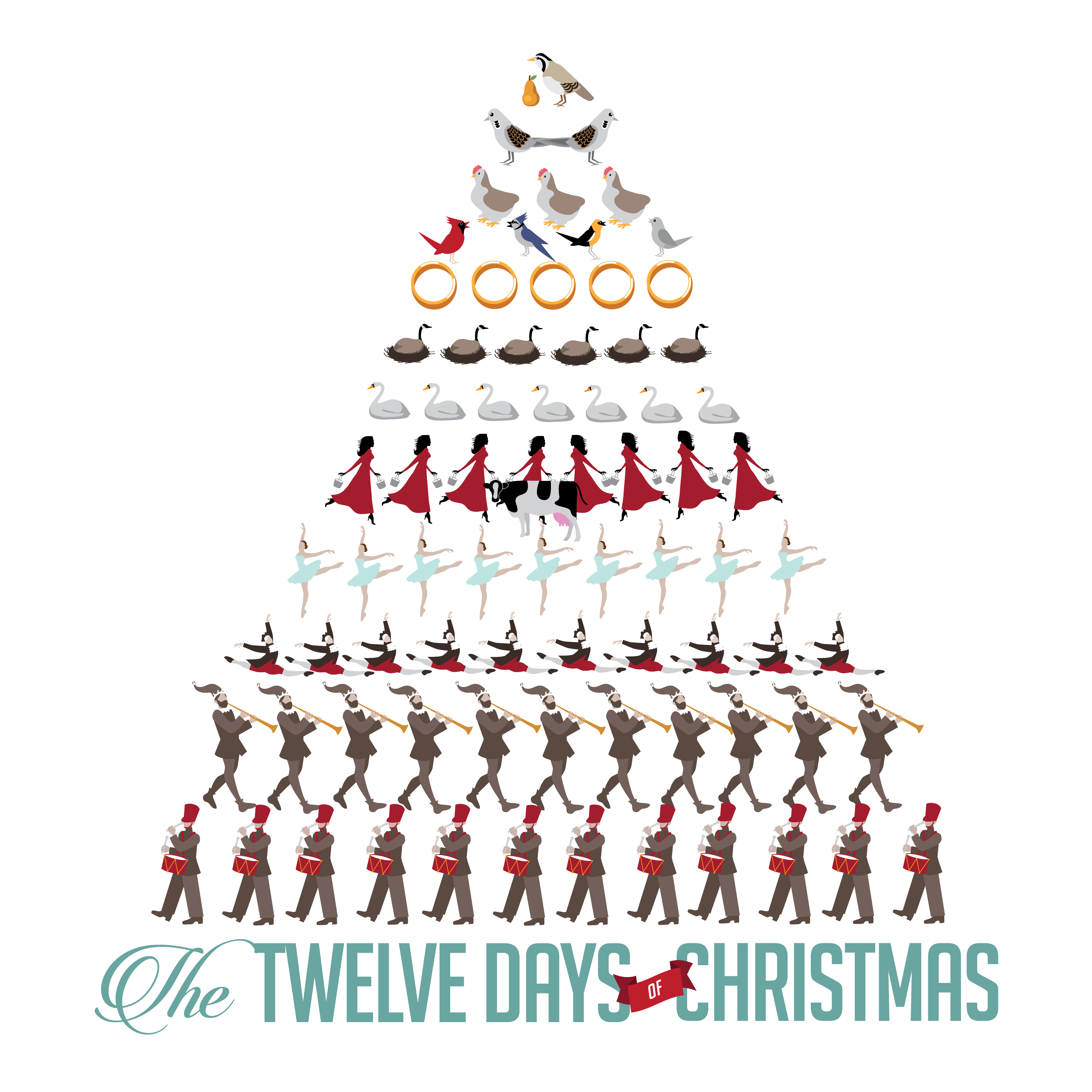
Each Christmas season (which translates to every waking moment from Thanksgiving to the New Year), I’m fascinated we still sing “The Twelve Days of Christmas”. I feel like a character in the Dickens world of Scrooge and Tiny Tim as I labor through the verses (ditto “Here We Come A-wassailing”).  I should sing with an English accent.  More to the point, I question the TDoC lyrics.  What other context do we have for turtle doves and calling birds?  What’s with the gold rings?  Don’t we owe it to ourselves to understand more about a carol we’ve been singing for over two hundred years?

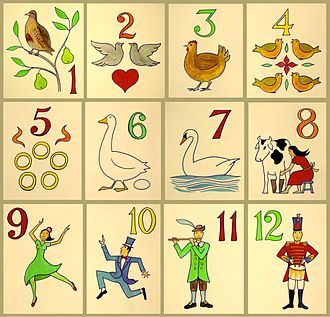
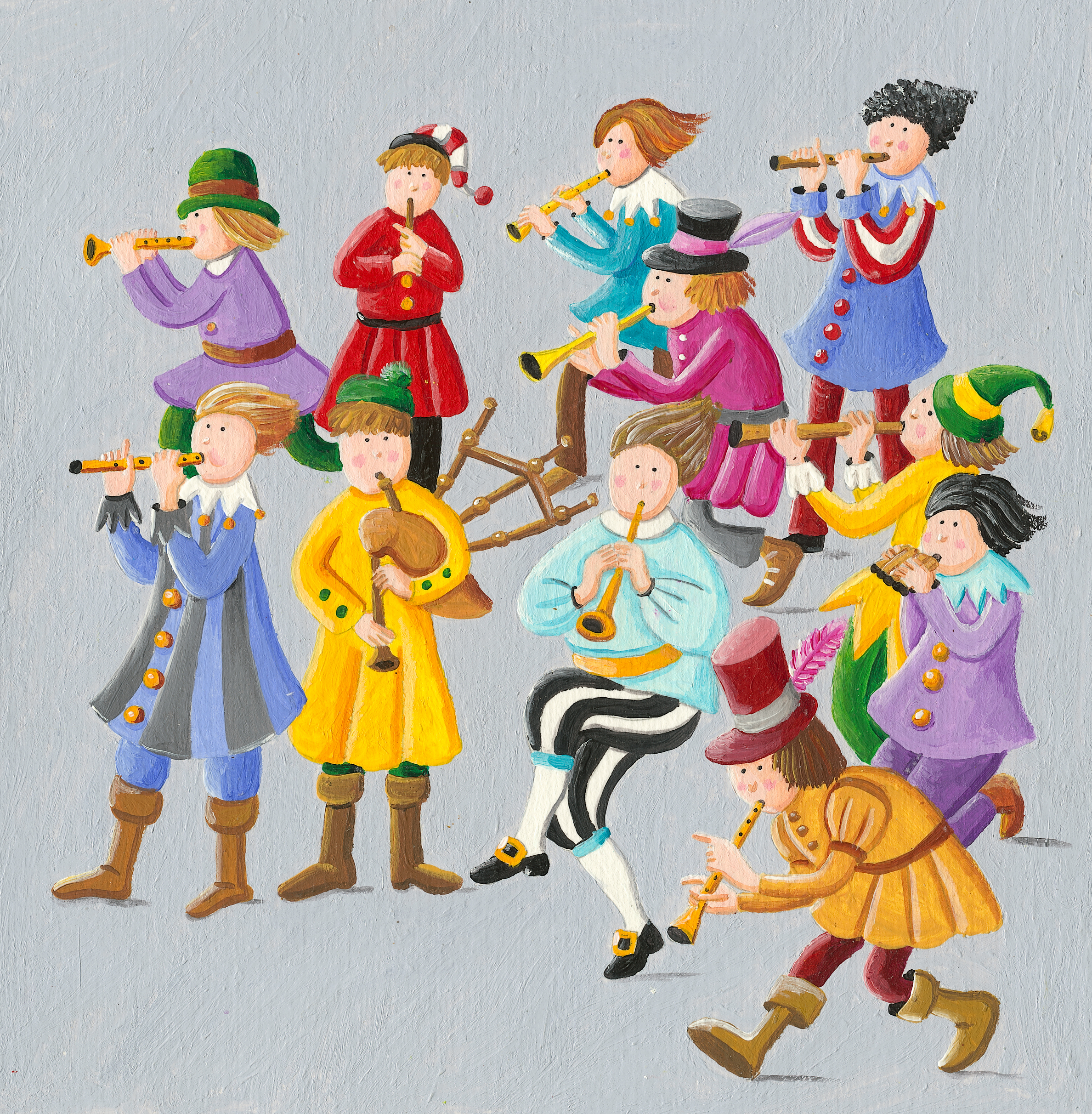
Depending on the source, “The Twelve Days of Christmas” was either a) written as a children’s book – which eventually morphed into a song, or b) “code” for memorizing elements of Christian religion at a time when faith could not be openly practiced.  I prefer the latter.  For example, the two turtle doves represent the New and Old Testaments of the Bible, while the four calling birds represent the gospels of Matthew, Mark, Luke, and John.  The six geese represent the days of creation (“and on the seventh day He rested”), while the eleven pipers represent the faithful disciples of Jesus Christ.  “My True Love” is Jesus himself.  Clever, no? (see here for the full “code”).

Wikipedia claims “the exact origin and meaning of the Twelve Days song are unknown…” so perhaps we should just leave it buried in the past.  But I can’t do that.  TDoC is so much more fun if you take the literal approach to the words.

The title is innocent enough.  “The Twelve Days of Christmas” equals Christmastide, a season of the liturgical calendar in most churches.  Christmastide begins on December 25th and lasts until January 5th (the day before the season of Epiphany).  Twelve days.  That’s even more celebrating than Hanukkah.  Fine with me – our family likes to drag out Christmas as long as possible.

Beyond the title however, “The Twelve Days of Christmas” descends into total chaos.  Consider the structure of the carol.  TDoC is a “cumulative” song, which means you add the previous verse to the one you’re singing – just like all those animals in “Old MacDonald Had a Farm”.  By the twelfth verse you’re singing about everything, and you’re totally exhausted.  Some people solve the length by having a different voice for each gift.  That’s great for the partridge in a pear tree singer, but kind of sucks for the drummers drumming singer (who only gets one chance to shine).  Make sure you have a solid voice for the partridge in a pear tree.

Speaking of the gifts, let’s do some analysis.  Other than the rings, your true love has an obsession with birds.  He or she is gifting you an aviary on six of the first seven days.  Doves, hens, swans, and more.  Not only that, you’re getting pear trees and God knows how many eggs from those a-laying geese. (Note: pears and eggs make great Christmas gifts).

The final five days, your true love gifts you a bunch of workers and merrymakers for the estate you apparently have.  You’ll gain a herd of cows (what else are those maids a-milking?) and you’ll have a some dancers and a band making quite the ruckus on your front lawn.  The neighbors may complain.  C’mon, you say: how much noise can eleven pipers make?  Eleven?  So you forgot about the aggregate of a “cumulative” song, did you?  Your true love actually gave you twenty-two pipers by the time January 5th arrives… and twelve drummers, thirty-six dancers and thirty guys who like to jump.  And don’t look now, but your twelve pear trees are swarming with 184 birds.  Maybe you don’t have any pears after all.

Sorry, but if this is your true love’s idea of Christmas giving, he or she is a nut job (or at least an animal hoarder).  Here’s my advice: run.  Take your forty gold rings and date one of those lords or ladies instead.