Sweet Charity

Several times during the recent year-end holidays, I passed through the drive-thru at Starbucks, and as I paid, I asked the cashier to include the purchases of the car behind me. I’ve been participating in this Starbucks-wide trend for several Christmases now, and it brings me an inexplicable feeling of goodwill and satisfaction.  The goal of the effort is anonymity. Or to put it more comprehensively, blind faith.

Blind faith is defined as “belief without true understanding, perception, or discrimination”.  That’s powerful.  “Faith” is a spectrum that starts with basic trust and ends with the highest forms of religion.  But add on “blind” and it elevates the meaning.

Buying a free cup of coffee at Starbucks is the easiest form of blind faith, like handing over a dollar to a beggar.  No judgment as to “what happens next” allowed.  But the intention behind an act of blind faith is worth a bit of exploring here.  Dissecting my Starbucks gesture, I note the key components.  First, I don’t waffle over the amount of the purchase I’m covering.  That’s the blind faith in choosing to pay in the first place – it shouldn’t matter how much.  One time I looked in the rear-view mirror and saw a car with four passengers.  Their bill was well over $20.  But my decision had been made before the car even pulled up behind me, so the point was to stick with it.  Another time my recipient was a well-dressed woman wearing sunglasses and driving a recent-model BMW.  Again, no judgment.  Pay for her coffee and move on.
The second component concerns my “getaway”.  As I’m waiting for my own purchases I’m considering my escape route – the path that gets me away from Starbucks as quickly as possible, with enough turns and traffic lights to deter my beneficiary.  My goal is to remain anonymous, and unless the person behind me memorizes my license plates (or something else unique about my vehicle), I’ve achieved a moment of goodwill and will never see them again.  Frankly, it would spoil the whole effort if the car pulled up next to me at a nearby red light.  They might offer their gratitude, or they might offer to pay me back.  They might even be annoyed, as if I had no business intruding on their “personal life”.  I’d rather not know.  I prefer to lean on blind faith that I brought an unexpected smile, or delivered a tiny give-me-a-break in an otherwise trying day.  Maybe they’ll even “pay it forward”, as a string of 374 consecutive cars did at a Starbucks in Florida back in 2014.

Come to think of it, there’s a third component in the Great Coffee Giveaway.  Never expect the gesture in return.  In the countless times I’ve driven through Starbucks during the holidays, I’ve never thought to myself, “I hope the car in front of me picks up the tab”.  If I knew this was happening, I might just order a half-dozen breakfast sandwiches and several cake-pops to go with my Flat White.  Just kidding, of course.  I hope the thought never crosses my mind.

This week and last – no surprise here – I’ve read dozens of blogs about resolutions for the New Year.  Allow me to contribute my one-and-only.  I’m going to lean on blind faith in the coming year, whenever I have the chance to give someone a break.  Remember the rules: 1) No conditions on the amount (read: cost) of the help.  2) Keep it anonymous, as a) recognition defeats the spirit, and b) giving simply for the sake of giving might inspire “pay it forward”.  3) Don’t expect a similar gesture in return.  That’s not to say you won’t be pleasantly surprised when someone buys your Starbucks coffee one of these days.  You’ll just know there were no hidden agendas.
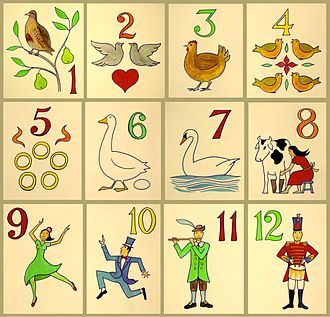
 

Your True Love’s a Nut Job

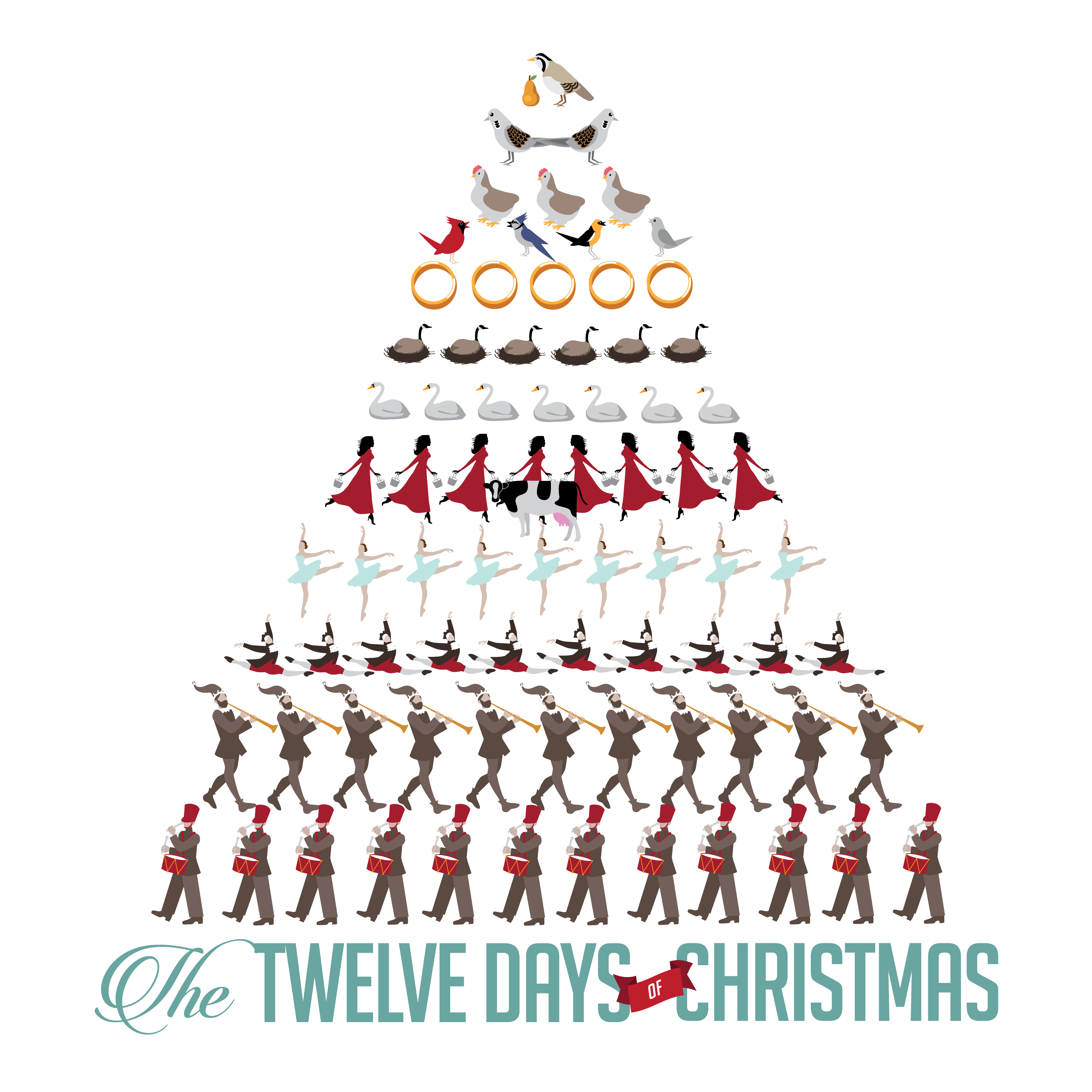
Each Christmas season (which translates to every waking moment from Thanksgiving to the New Year), I’m fascinated we still sing “The Twelve Days of Christmas”. I feel like a character in the Dickens world of Scrooge and Tiny Tim as I labor through the verses (ditto “Here We Come A-wassailing”).  I should sing with an English accent.  More to the point, I question the TDoC lyrics.  What other context do we have for turtle doves and calling birds?  What’s with the gold rings?  Don’t we owe it to ourselves to understand more about a carol we’ve been singing for over two hundred years?

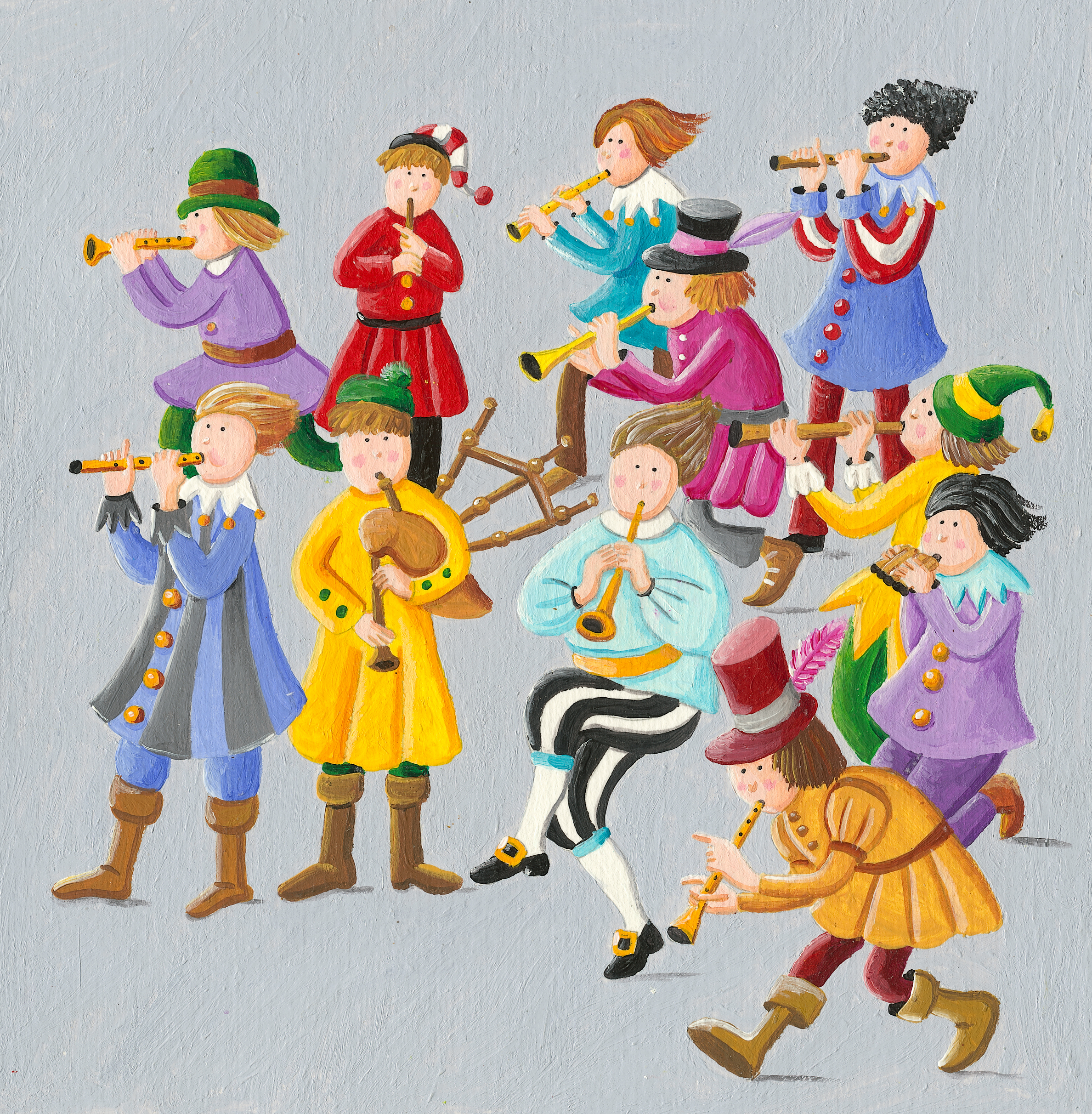
Depending on the source, “The Twelve Days of Christmas” was either a) written as a children’s book – which eventually morphed into a song, or b) “code” for memorizing elements of Christian religion at a time when faith could not be openly practiced.  I prefer the latter.  For example, the two turtle doves represent the New and Old Testaments of the Bible, while the four calling birds represent the gospels of Matthew, Mark, Luke, and John.  The six geese represent the days of creation (“and on the seventh day He rested”), while the eleven pipers represent the faithful disciples of Jesus Christ.  “My True Love” is Jesus himself.  Clever, no? (see here for the full “code”).

Wikipedia claims “the exact origin and meaning of the Twelve Days song are unknown…” so perhaps we should just leave it buried in the past.  But I can’t do that.  TDoC is so much more fun if you take the literal approach to the words.

The title is innocent enough.  “The Twelve Days of Christmas” equals Christmastide, a season of the liturgical calendar in most churches.  Christmastide begins on December 25th and lasts until January 5th (the day before the season of Epiphany).  Twelve days.  That’s even more celebrating than Hanukkah.  Fine with me – our family likes to drag out Christmas as long as possible.

Beyond the title however, “The Twelve Days of Christmas” descends into total chaos.  Consider the structure of the carol.  TDoC is a “cumulative” song, which means you add the previous verse to the one you’re singing – just like all those animals in “Old MacDonald Had a Farm”.  By the twelfth verse you’re singing about everything, and you’re totally exhausted.  Some people solve the length by having a different voice for each gift.  That’s great for the partridge in a pear tree singer, but kind of sucks for the drummers drumming singer (who only gets one chance to shine).  Make sure you have a solid voice for the partridge in a pear tree.

Speaking of the gifts, let’s do some analysis.  Other than the rings, your true love has an obsession with birds.  He or she is gifting you an aviary on six of the first seven days.  Doves, hens, swans, and more.  Not only that, you’re getting pear trees and God knows how many eggs from those a-laying geese. (Note: pears and eggs make great Christmas gifts).

The final five days, your true love gifts you a bunch of workers and merrymakers for the estate you apparently have.  You’ll gain a herd of cows (what else are those maids a-milking?) and you’ll have a some dancers and a band making quite the ruckus on your front lawn.  The neighbors may complain.  C’mon, you say: how much noise can eleven pipers make?  Eleven?  So you forgot about the aggregate of a “cumulative” song, did you?  Your true love actually gave you twenty-two pipers by the time January 5th arrives… and twelve drummers, thirty-six dancers and thirty guys who like to jump.  And don’t look now, but your twelve pear trees are swarming with 184 birds.  Maybe you don’t have any pears after all.

Sorry, but if this is your true love’s idea of Christmas giving, he or she is a nut job (or at least an animal hoarder).  Here’s my advice: run.  Take your forty gold rings and date one of those lords or ladies instead.

Out of Sight

Jake Olson is a student at the University of Southern California. He’s a backup long snapper for the celebrated Trojan football team, and aspires to play golf on the PGA Tour after college. John Bramblitt is a budding artist whose work sells in more than twenty countries. He paints primarily by touch, claiming “different colors have different textures”. Christine Ha is an award-winning chef who never had a minute of formal training, yet developed a popular cooking blog and won the 2012 edition of the television show MasterChef.  Why mention these three achievers in the same paragraph?

They are all legally blind.

Two weeks ago – unbeknownst to just about all of America – we “celebrated” White Cane Safety Day (WCSD).  A national observance since 1963, WCSD was established by the National Federation of the Blind to remind the public about the significance of the white cane.  In 1930, blind people were given the freedom to lawfully move about the U.S. on their own, provided they used the white cane to navigate their way.  The implication is prior to 1930, blind people were either confined to their homes or could not move about without the assistance of another person.  My parents explained the meaning of the white cane the first time I saw a blind person on the street, but it never occurred to me the cane signifies a legal status.

Seeing may be believing (as the saying goes), but blindness takes belief to an entirely different level.  The people I mentioned above are just a few of the countless examples of accomplishments in all walks of life, minus the sense of sight.  Surely you can name a blind person without resorting to Google. Ray Charles. Helen Keller. Andrea Bocelli. Stevie Wonder. Aldous Huxley.  And those are just the famous ones.

Speaking of the famous, I recall – somewhere in the piles of books I read as a teenager – the fictionalized biography of Louis Braille.  Just as Irving Stone did for Michelangelo in “The Agony and the Ecstasy”, the author added fiction to fact to bring the story of the famous French educator/inventor to life.  Braille’s blindness occurred in his youth: the infamous accident with the awl in his father’s workshop (surely inspiring the plea of parents, “Don’t play with that!  You’ll put your eye out!”)  Remarkably, at only fifteen years of age and already blind, Braille took the very same awl and developed a method of reading/writing for his counterparts virtually unchanged to this day.  It reminds me of Beethoven, who lost his hearing in his early twenties yet somehow composed some of the world’s most famous symphonies and piano concertos.  Belief at an entirely different level.

Convenient to my topic, a new movie debuts in theaters this week called “All I See Is You”.  Starring Blake Lively and Jason Clarke, the story concerns a marriage where a blind spouse depends on her partner to see and feel the world around her.  Dependent, that is, until a corneal transplant allows the woman to regain her sight.  As you might expect, bringing vision to the blind is not all it’s touted to be.  A similar story was told in 1999’s “At First Sight” with Val Kilmer and Mira Sorvino.

Christopher Downey is an architect who, shortly after training in the profession, lost his eyesight to a tumor wrapped around his optic nerve.  No problem, apparently.  Downey now produces drawings from a tactile printer – raised lines akin to Braille’s raised lettering system.  As if you needed another example of belief.

I used to yearn for “as far as the eye can see”, considering the eye doctor routinely issues me a prescription far less than 20/20.  Thanks to these inspirational people however, it’s fair to say my vision is actually limited by my sight.

Carefree Highways

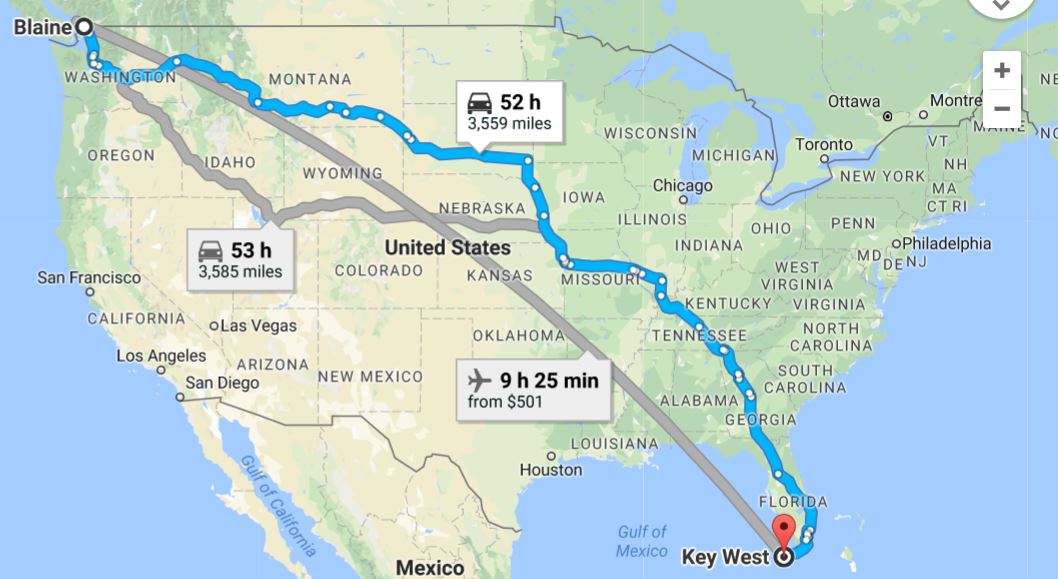
Here’s a connect-the-dots challenge, tapping what’s left of your road-trip driving fever from Labor Day weekend. Pull up Google Maps, pick two towns on opposite edges of the continental United States, and see if you can discover the longest driving trip. The only rules: you must start and end with U.S. cities, and your answer must be the blue line (not the grey line alternatives).

My first guess on Google Maps (above) is effectively the longest drive between the borders of Mexico and Canada.  San Ysidro in California wouldn’t exist if not for the busy border crossing just to the south.  Van Buren in Maine wouldn’t exist if not for a small group of Nova Scotia citizens exiled from Canada in 1785.  As you can see, my southwest to northeast traverse gets me 3,291 miles of driving and takes more than two days (including a wealth of bathroom stops).  In the process, I pass through ten U.S. states and three Canadian provinces.  Label this trip a long-distance segue from “Ole!” to “Eh?”

My second guess chooses a sun-starved soul north of Seattle, seeking some beach time in the Florida Keys (though someone named Irma would object right about now).  Our friend finishes his oyster stew in tiny Blaine, WA; points his car to the southeast, and arrives in Key West, FL two-and-a-half days later, just in time for a twilight margarita with Jimmy Buffett.  His drive also passes through ten states (like my first guess) but lasts 3,559 miles.  If our friend finished in Miami he’d drive the same distance as my first guess, but Highway 1 – further south through the Florida Keys – buys him a 160-mile tiebreaker.

A recent Wall Street Journal article asserts we Americans are endlessly romanced by the allure of the open road (a “four-wheeled traipse” if you will), and the Labor Day holiday conveniently marks the end of the summer travel season.  Thus, you get a lot of drivers on the first weekend in September – 600,000 in Colorado alone, or 11% of the state’s population.  That translates to over 3.5 million road-trippers across the entire United States.  Traffic jam, anyone?


In the prehistoric times of street-corner pay phones and folding road maps (read: 1970’s), the American Automobile Association (AAA) offered a service called “Triptik”.  Go to an AAA office, tell ’em where you want to go, and they’d hand you a step-by-step book of maps “prepared expressly for you”.  My parents gave me a Triptik – and all the station wagon gas I needed – as a high-school graduation present.  My buddy and I created a Western States round-trip starting in Los Angeles, driving as far north as Montana, as far east as South Dakota, and returning through the Southwestern states.  Our aim was to hit as many national parks as possible.  We spent a few nights in motels (on our own dime), but most nights in sleeping bags in the back of the station wagon.  No agenda, no worries – just a couple of teenagers making a ton of memories on the open road.

On the topic of road trips, I owe a nod to America’s beloved “Main Street” – U.S. Route 66.  Though nowhere close to the longest road trip in the U.S., Route 66 is certainly the most renowned.  Built in 1926, the “Mother Road” ran from Chicago to the Pacific Ocean west of Los Angeles – fully 2,448 miles.  Early 1900’s migration to the Western U.S. owes some of its success to 66, and all those road-trippers “got their kicks” at the hundreds of restaurants and motels born along the highway.  It wasn’t until 1985 – sixty years later – the last remnants of Route 66 were replaced by newer segments of the U.S. Interstate Highway System.

Now then; time to solve the Google Maps challenge (with a twist).  The winner of the point-to-point American road trip is some nearby version of my second guess above: Washington to Florida.  However, for my money I’d much prefer the drive from Oregon to Massachusetts (above).  The twist?  You can do it all on one ridiculously long highway!  U.S. Route 20 – “The Big Daddy” – starts in little Newport, Oregon (pop. 10,000) and ends in Boston (pop. 673,000).  You’ll cover 12 states and 3,154 miles before you hit the checkered flag.  It’ll take you almost two days without stopping, but please stop.  Along the way you’ll find the Idaho Potato Museum, Yellowstone National Park, “Carhenge” (a Stonehenge homage made entirely of autos!), Iowa’s Field of Dreams, Hall of Fame’s for RV’s/motor-homes, rock & roll, and baseball; and most importantly, the Jell-O Gallery Museum, your one-stop-shop + tribute to the jiggly dessert.  C’mon, how you gonna top that road trip (with a dollop of whipped cream?)

Some content sourced from Wikipedia, “the free encyclopedia”.

Any Way You Slice It

Labor Day is right around the corner, but I call your attention to a couple of tastier holidays this time of year. Last Thursday was Peach Pie Day and a month henceforth will be Strawberry Cream Pie Day.  October will usher in Pumpkin Pie Day, as well as Boston Cream Pie Day.  In November, we’ll celebrate Bavarian Cream Pie Day.  Next May we’ll celebrate Apple Pie Day (and that one should be designated an American holiday).

These pie-eyed celebration days come and go with little more than crumbs for fanfare, but any attention to pie is a good thing in my book.  Whether sweet or savory, fruit or cream, single or double-crust, bite-size (“cutie pies”?) or multiple-serving-size; you can never have too many fingers in pie.

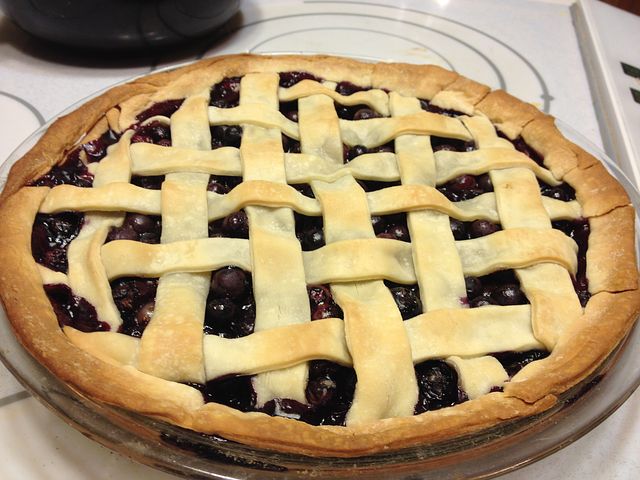
Pie is literally a part of my DNA.  My grandmother used to make delicious Cornish pasties, those hearty beef stew pocket-pies favored by generations of coal miners, each containing an entire meal within their flaky golden-brown crust.  My mother raised my brothers and I on the fruit pies her own mother taught her to make.  My favorites were cherry, peach, and mince; piping hot and a la mode (or in the case of mince, “a la hard sauce”).  I can still picture my mother adorning her creations with strips of dough – elegant top-crust latticework too pretty to consume.  She made it look easy as pie.

They say the signature of a great pie is its crust – ironic because history says pie crust was never meant to be eaten.  With the advent of flour in ancient Roman times, pie crust served a practical purpose: to contain and preserve the food within, especially for a soldier or sailor or some other kind of several-days traveler.  It wasn’t until bakers turned their attention to the crust when “real pie” was born.  Can you imagine the first time someone tasted a savory buttery crust, melded with hot fruit filling, cooled by the freshness of vanilla ice cream?  The whole is clearly greater than the sum of its parts.

   Royer’s Round Top Cafe, Texas

Any Texans reading this post will likely direct me to the Hill Country in the southeast, to little Marble Falls or tiny Round Top.  Both towns boast of serving “the best pies in the Lone Star State”, be that the Blue Bonnet Cafe in the former or Royer’s Cafe in the latter.  Blue Bonnet has a “Pie Happy Hour” and a regionally-renowned German Chocolate Pie.  (My favorite cake as a pie?  Sounds like a slice of heaven.)  Royer’s has something called a “Texas Trash Pie” (pretzels, graham crackers and coconut) and I can get one with a few clicks of my mouse.  Don’t tempt me.

No nod to pie would be complete without saluting Hostess Fruit Pies and Kellogg’s Pop Tarts – staples of the American childhood.  Hostess enticed you with those colorful wrappers and the promise of “real fruit filling” (though my favorite was actually the chocolate).  No matter the flavor, you consumed a brick’s worth of glazed sugar, chewy crust, and gooey fruit filling.  It’s a wonder we didn’t sink to the bottom of our swimming pools and bathtubs.


Kellogg’s Pop Tarts were svelte by comparison; a deck of large playing cards.  My mother favored the non-frosted fruit variety to keep our pantry “healthy”, but she snuck the brown-sugar cinnamon tarts into the basket too.  I ate hundreds of those.  Someone needs to invent a brown-sugar cinnamon pie.

Any Hollywood-types reading this post would remind me the ultimate pie movie is “Waitress” (now a Broadway musical), or “Michael”, where in one glorious scene Andie McDowell surveys a table’s worth of pie and gleefully sings, “Pie, pie, me-oh-my, I love pie!”

Thanks to a new local restaurant, I don’t have to travel to Texas to find amazing pie.  3.14 Sweet & Savory Pi Bar is as inclusive as it sounds.  Choose from a dozen or more “Pot Pi’s” for your entree (my favorite is the Irish-stew-inspired “Guinness Sakes”); then sprint to dessert by choosing from over twenty temptations (hello “Blueberry Fields Forever” Pi).

For the record, cake gets its share of celebrations as well.  Last Wednesday was “Sponge Cake Day” and November 26th is “National Cake Day”.  For me, those days will come and go like any other.  Those who celebrate cake should eat some humble pie and admit which dessert deserves the higher praise.  But hey, no time to debate; a chicken pot pie is in the oven and calling my name.

Patriot State

Back when my wife and I lived on the West Coast, we had a neighbor who planted a “victory garden” in their front yard.  The houses on our block were small and close together, so the postage-stamp spaces in front allowed for modest landscaping at best.  There we were, nineteen neatly-mowed little lawns and one wildly out-of-control victory garden.  One of these things was not like the others.

Thankfully, victory gardens carry more significance than the presence of hippies next-door (who knows what was in that garden).  Victory gardens were originally planted during World War I to reduce pressure on the public food supply.  The gardens were also considered a morale booster for citizens supporting the war effort back home.  In that context, it’s nice to see an occasional victory garden around my neighborhood today.

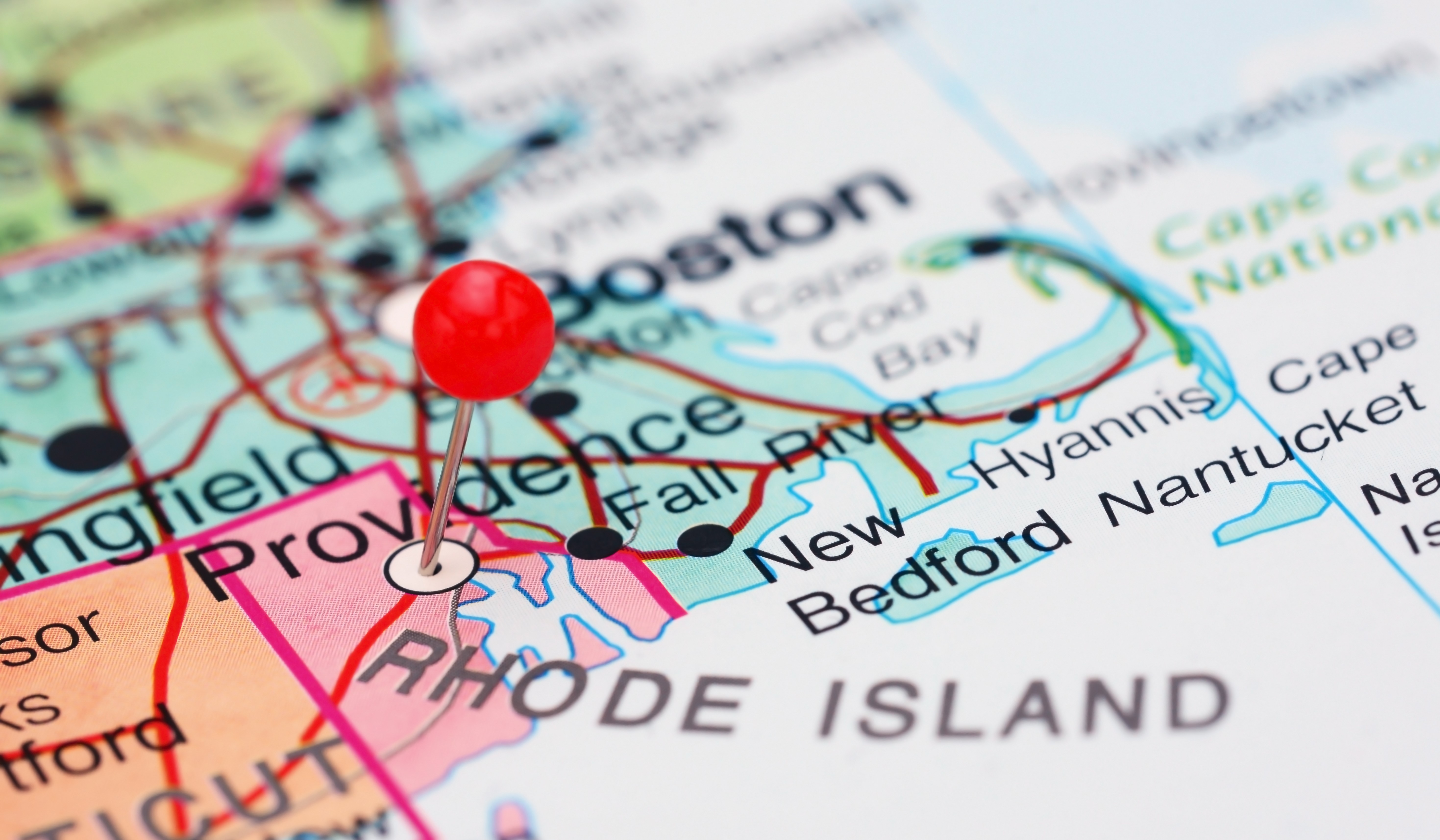
Three days ago – the second Monday in August – the United States celebrated Victory Day, commemorating Japan’s surrender to the Allies at the end of World War II.  On second thought I shouldn’t say “United States”, because forty-nine of fifty states ignore V-Day altogether.  The only state still recognizing Victory Day?  Small but steadfast Rhode Island.  Since 1975, when Arkansas dropped its “World War II Memorial Day”, Rhode Island stands alone.

“The Ocean State” has good reason to continue its jubilant celebrations.  92,000 of its residents served in WWII alone (more than 1 in 10), and almost 2,200 were killed.  Rhode Island is the smallest U.S. state in size and the eighth-least populated, yet the proportion of participants in “The Good War” was far higher than most other states.  Perhaps that’s because Rhode Island hosted several armed encampments.  Perhaps that’s because of patriotism born from the first of the thirteen colonies to declare independence.

Victory Day was originally labelled V-J Day or “Victory over Japan Day”.  President Truman declared the holiday shortly after the atomic bombs dropped in Hiroshima and Nagasaki.  The original V-J Day was September 2nd, 1945 (marking the formal end date of WWII), but revised to August 14th to recognize the actual day of Japanese surrender.  V-J Day came shortly after V-E Day (“Victory in Europe” Day), signifying Nazi Germany’s formal surrender to the Allies the previous May.

Victory Day became infinitely more famous when Life Magazine published Albert Eisenstaedt’s photo of an anonymous sailor and nurse celebrating the moment of Japanese surrender in downtown New York City.  Today a massive statue of the “Unconditional Surrender” (more affectionately referred to as the “Kissing Sailor”) can be seen in San Diego’s downtown waterfront, adjacent to the USS Midway aircraft carrier.

Thirty-six countries besides the United States celebrate some form or another of a Victory Day.  Why not our other forty-nine states?  Are we (as in the recent events in Charlottesville) determined to erase the nice/not-so-nice history defining the freedoms Americans enjoy today?  Victory Day recognizes the triumph of good over evil, not the Confederate brand of freedom.  Note a critical detail as well: Japan struck first, in its late-1941 assault on Hawaii’s Pearl Harbor.  America was not the aggressor.

Maybe someday I’ll get to Rhode Island so I can a) witness the celebration of Victory Day, and b) thank the residents for keeping a most important moment in U.S. history alive.  In the meantime I’ll count on George Bailey every Christmas to remind me, immortalized in the movie “It’s A Wonderful Life”.  George was deaf in one ear so he couldn’t serve in WWII alongside his brother Harry.  Instead he stayed on the home front, running “paper drives… scrap drives… rubber drives.”  And, “… like everybody else on V-E Day, he wept and prayed… on V-J Day, he wept and prayed.”

Some content sourced from Wikipedia, “the free encyclopedia”.

Color of Courage

I am a civilian living in a “military town”, considering the number of Army and Air Force bases in and around Colorado Springs.  The contemporary Air Force Academy campus (USAFA) to the west is the dead giveaway, but the Army’s Fort Carson to the south is larger in terms of acreage and personnel.  Fort Carson is also the largest employer of any kind in this part of the state.  Then there’s Peterson Air Force Base to the east (co-located with our municipal airport), Schriever Air Force Base to the slightly-further east, and Cheyenne Mountain Air Force Station hiding in the foothills to the west (which may or may not have missiles pointed towards North Korea).

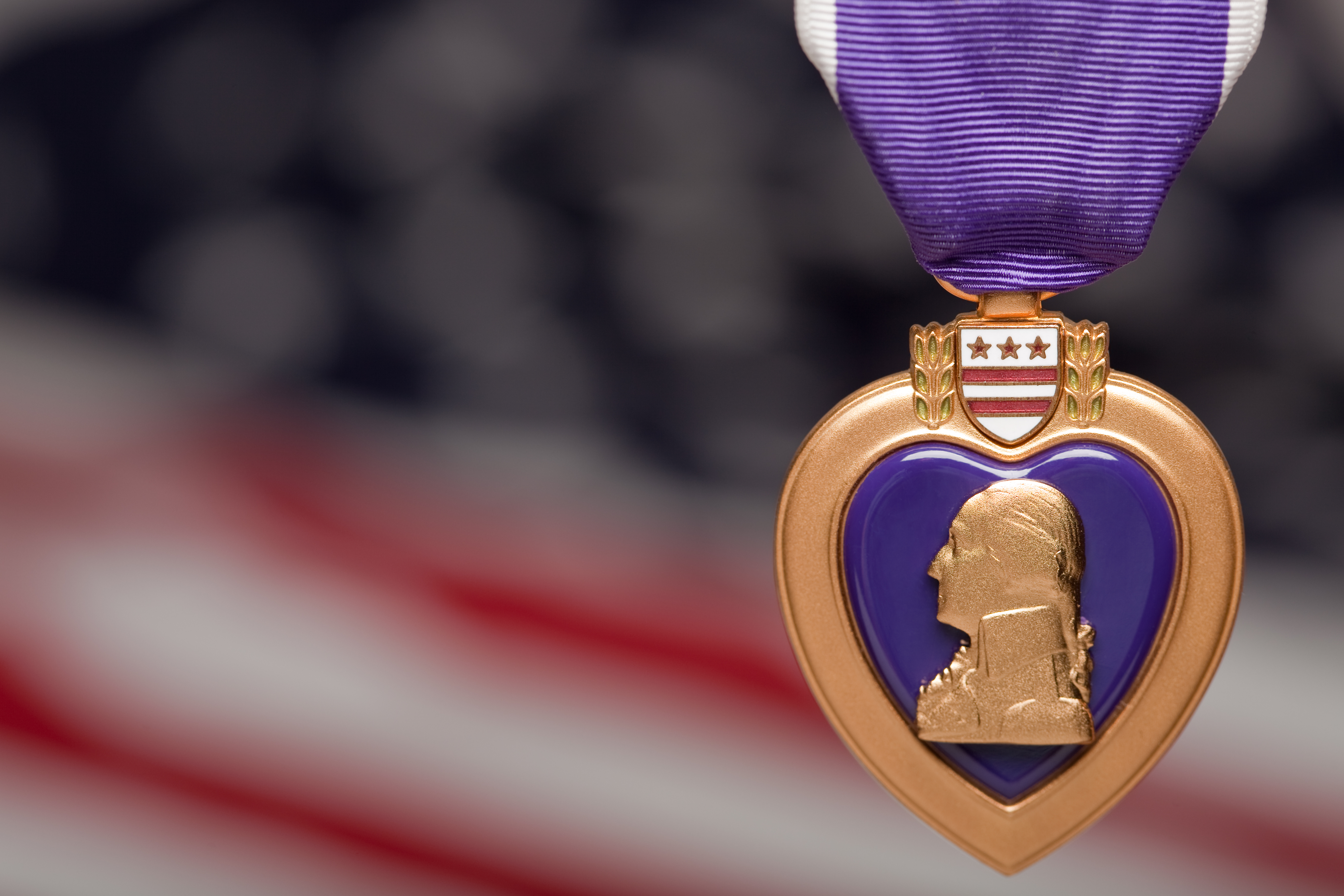
All this presence-of-the-defense in Colorado Springs prompts the question whenever I purchase: “military or civilian?”.  You get a deserved discount if you are the former.  I am the latter so I pay full price.  Safe to say I will also never be awarded the Purple Heart.

This past Monday (August 7th) was “Purple Heart Day” – on the list of U.S. Holidays and Observances – honoring the date the award was created in 1782.  The Purple Heart was not given between 1783 and 1931 – the span of time between the Revolutionary War and World War I – so it has “only” been awarded a total of 86 years since the days of George Washington.  That still amounts to countless acts of valor (over 1.8 million by some estimates).

I have the utmost respect for the men and women in uniform, so I am awed by those who receive the Purple Heart.  “Those” includes my father-in-law, who served and was injured in the Korean War back in the early 1950’s.  “Those” include various notables, including Kurt Vonnegut, Pat Tillman, Rod Serling, and Norman Schwarzkopf.  “Those” include Curry T. Haynes, who died less than a month ago.  Haynes served in the Army in the Vietnam War and received a total of ten Purple Hearts for the injuries he suffered.  That’s more decorations than any other recipient.

Ponder for a moment: Over a million Purple Hearts were awarded during WWI alone.  Another 350,000 were awarded during the Vietnam War.  All in defense of freedom.

Because decorations were not always documented (Purple Hearts were often awarded on the spot; even attached to the hospital beds of recipients), there is no accurate total.  Instead, the Military Order of the Purple Heart commemorated a network of roads, highways, and bridges in the states of Purple Heart recipients.  Whenever you see a sign like the one above, be reminded of the high (and frequent) price paid for your freedom.

Between 1942 and 1997, civilians serving in the armed forces were eligible to receive the Purple Heart.  Nine firefighters in the Honolulu Fire Department were decorated during the attack on Pearl Harbor.  After 1997, Congress passed legislation limiting awards to men and women in uniform.  Civilians now receive the Defense of Freedom Medal for similar sacrifices.

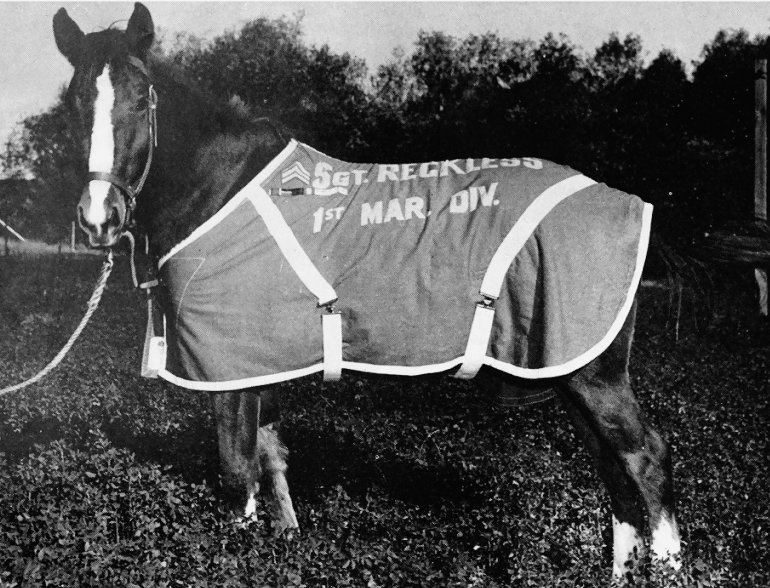
    Sergeant Reckless photo – by Andrew Geer

Animals are also eligible for the Purple Heart.  The most impressive: the decorated war horse Reckless, a thoroughbred mix rescued from the race track and trained by members of the Marine Corps.  Reckless served in the Korean War, frequently carrying supplies and ammunition to the front line.  Remarkably, Reckless memorized her routes so she could deliver unattended.  During one battle, she made 51 trips in a single day between supply depot and front line.  Reckless was wounded twice and thus received two Purple Hearts.  She was promoted to the rank of sergeant shortly after the war ended.  A plaque and photo of Reckless can be seen at the Marine Corp base Camp Pendleton in California.

As I began with, I’m a civilian living in a military town.  I am surrounded by my Colorado peers who serve or have served in the armed forces.  I may not be one of them, but at least I can tip my hat on the streets, especially to those who wear the Purple Heart.

Some content sourced from Wikipedia, “the free encyclopedia”.

Banner Birthday

I unfurled my American flag off the back deck of our house yesterday. It’s a prominent location for the Stars & Stripes, where people passing by on the adjacent street can’t miss it. Then again, we live in a quiet neighborhood so I’d be surprised if many took notice. I’d be even more surprised if they knew why I was flying the flag.  Perhaps you missed it too.  Yesterday was Flag Day.

To be brutally honest, I’m not sure why America has a Flag Day.  Oh sure, the history books tell us Flag Day commemorates the adoption of the U.S. flag, way back on June 14, 1777.  One could argue there’s no amount of honor and celebration large enough for our country’s heritage and freedom.  But Independence Day gets a whole lot more attention than Flag Day.  Ditto Memorial Day and Veterans Day.  At least those days are true “holidays” in the United States.

Flag Day was established in 1916, so what-do-ya-know that makes this year’s celebration the 100th anniversary.  I didn’t see any parades or fireworks to commemorate the centennial, did you?  Then again, I don’t think America fully embraces Flag Day.  If we adopted our flag in 1777, why did we need another 140 years to give it a “day”?  Flag Day isn’t even an official holiday in this country.  The President has the discretion to decide if it should be celebrated in a given year.  On that note, I don’t recall a proclamation from President Trump so maybe I should’ve kept my flag in the closet.

There’s further confusion about Flag Day.  Congress didn’t put the commemoration into “law” until 1949, thirty-three years after Woodrow Wilson established the day.  No states acknowledged Flag Day before 1937, when Pennsylvania became the first.  Other states – notably New York – decided it made better sense to put Flag Day on a weekend, as in the second weekend in June.  We can’t even agree on the date.

There’s history about Flag Day that precedes President Wilson, but it’s spotty.  The earliest reference is 1861, when a citizen of Hartford, CT suggested the idea and the city put together a celebration.  That didn’t take.  I885, Bernard Cigrand of Waubeka, WI began a prolonged push for a U.S. Flag Day.  After one local observance, he traveled around the country “promoting patriotism, respect for the flag, and the need for the annual observance”.  Thanks to Cigrand, Wilson established Flag Day thirty years later.  Cigrand is thus earned the title, “Father of Flag Day”.

Despite the facts, Flag Day still has me scratching my head.  The “National Flag Day Foundation” celebrates – like New York – on the second Sunday in June, yet the Star-Spangled Banner Flag House in Baltimore and the Betsy Ross House in Philadelphia prefer June 14th (lending credence to “National Flag Week”).  Parades and festivities take place around the country, but the discretion seems to be with the states as much as the President.  Here in Colorado Springs, home of the Air Force Academy and several other military bases, Flag Day came and went without so much as a whisper.

Fifty other countries have a Flag Day so there is some legitimacy to the concept.  But in many cases, those countries celebrate their independence as well.  That makes a lot more sense to me.  The flag is a connotation for liberty, so why not go with one holiday instead of two?

I admire the homes with the permanent flagpoles in the front yard, their owners pridefully raising the Stars & Stripes day in and day out.  But Flag Day must be “just another day” to these people.  Fittingly, americanflags.com describes Flag Day as “consistently overlooked yet universally beloved”.  I’d agree with the first part of that statement.

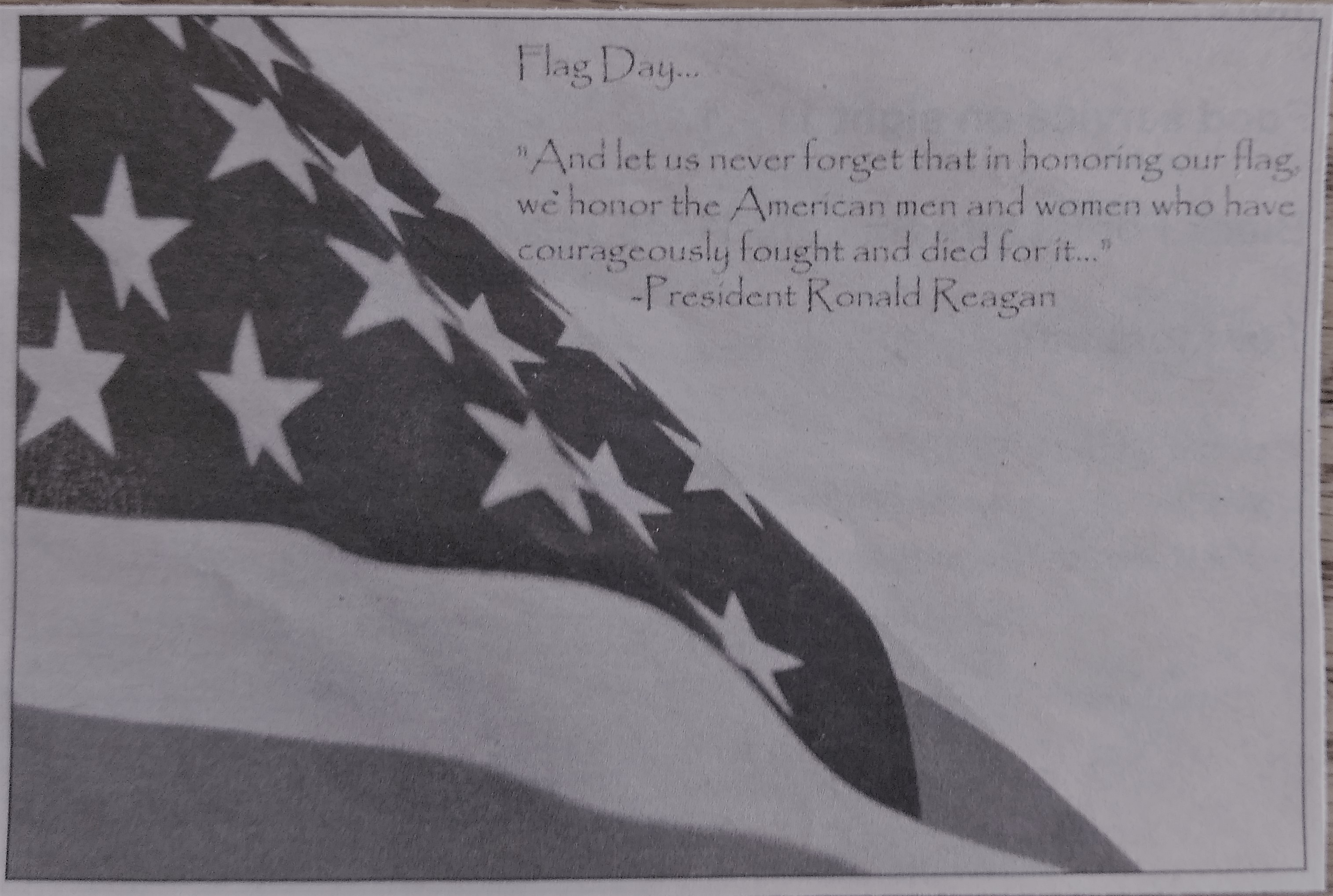
With all due respect, I’ll continue to unfurl the Stars & Stripes on Flag Day, no matter how many people notice.  If for no other reason, to echo the words of one of our most revered presidents:

Some content sourced from Wikipedia, “the free encyclopedia”.


Down Goes The Flag

Lately it seems the American flag is more often at half-staff than not. When the flag is at full-staff I get lost in the surrounding scenery, with just a passing glance at the Stars & Stripes. But at half-staff the flag is an effigy of its prouder self.  It might as well be illuminated with several of those Hollywood-style searchlights, as if to say, “something’s wrong with this picture.”

There is something wrong with this picture: I don’t immediately know the reason the flag goes to half-staff. There’s no accompanying billboard to tell me who or what we’re commemorating with this gesture. In fact, it wasn’t until I wrote this piece that I navigated to halfstaff.org (of course there’s a website), where you can learn why and when the red, white, and blue becomes more than just the unfurled symbol of America’s freedom.

Let’s get two misconceptions out of the way. One, the flag is not considered “half-mast” but rather “half-staff”. If the flag is “half-mast” you’re probably rocking and rolling on a ship at sea instead of standing on dry land (but the significance remains the same – respect, mourning, distress, or a salute).  Two, the flag is not “raised to half-staff”.  First it is raised to full-staff, paused, and then lowered to half-staff for the rest of the day. But unless you’re there at sunrise you’ll probably miss that little detail.

“Half-staff” dates to the century before America’s founding fathers.  Today the President issues the request through executive order, and all government facilities (including schools and military bases) are expected to comply.  Typically, we’re commemorating the death of a prominent government official, whether on the day of passing or the day of remembrance.  And speaking of passing, the gesture of lowering the flag is said to make room for an “invisible flag of death” flying above.  I kind of like that.

As if to play copycat, state, city, and other flags and pennants are expected to follow suit whenever the American flag goes half-mast.  But state flags can go half-mast by their own right.  Here in Colorado our state flag has been lowered more than twenty times in the past five years.  Just yesterday our governor ordered half-mast, to honor the passing of Ray Kogovsek, a former Colorado lawmaker and U.S. Congressman.

The American flag is also flown at half-mast to acknowledge days or events in U.S. history.  Thus, you can expect the raise-then-lower on Memorial Day, Pearl Harbor Remembrance Day (12/7), and what is now called Patriot Day (9/11).  Also since 2001, the flag is flown at half-mast in conjunction with the annual National Fallen Firefighters Memorial Service.

Several similar gestures to half-staff – especially since the advent of social media – have emerged to enlighten us to those who suffer.  Think about all those “Awareness Ribbons” (or bracelets), displayed on clothing and cars.  Their meaning is linked to their color, as in the following examples: Blue – Drunk-driving intolerance; Pink – Breast Cancer awareness; Rainbow – Gay Pride and support of the LGBT community; White – Victims of terrorism or violence against women; Yellow – Support of U.S. troops (among a dozen other designations), but generally a symbol of hope.

Recently I’ve noticed houses in our neighborhoods with a single green light brightly illuminated next to the front door at night.  As I discovered here, I’m seeing the “Greenlight A Vet” program, meant to “show America’s veterans the appreciation they deserve when, back home and out of uniform, they’re more camouflaged than ever.”  You can even purchase and/or register your green light on the website as a show of solidarity.  9.3 million people have done just that.  Four are right here in my zip code.

The green lights do catch my attention.  As a civilian I don’t think our veterans get nearly the appreciation or respect they deserve, so “bravo” to the program.  But the American flag doesn’t get the appreciation or respect it deserves either (a topic for another post).  Thankfully, it’s hard to ignore the right-but-somehow-wrong image of the Stars and Stripes at “half-staff”.

Happy Days Aren’t Here Again

Last week included a holiday and you probably didn’t know it. On March 20th the world celebrated “International Day of Happiness” for the fifth consecutive year. The United Nations adopted a resolution in 2012 to establish the holiday, seeking “a more holistic approach to development” and recognizing “the pursuit of happiness is a fundamental human goal”.  Ladies and gentlemen, the UN is trying to bring more joy to the world.


I’ll admit, the first time I read about a holiday for happy I had to wonder what really goes on behind closed doors.  Maybe the UN reps spend their days on Facebook liking/loving posts like the rest of us.  Maybe they’re happy and they know it and clapping their hands.  Maybe they ask each other “aren’t you glad you use Dial and don’t you wish everyone did?” Then 0ne day someone decided a celebration of all that happiness was in order.

On the other hand, maybe the UN’s daily agenda is so depressing someone insisted 1 out of every 365 days should be set aside just to feel better. A don’t-worry-be-happy moment.


To go together with March 20th, the UN also publishes the “World Happiness Report” (WHR), an annual measure of happy in each of 155 countries.  The recipe: the combined measures of income, healthy life expectancy, having someone to count on in times of trouble, generosity, freedom and trust (trust defined as absence of corruption in business and government).  The WHR then crunches the numbers and tells you how close you are to the happiest place on earth.

Again I had to ask myself – is the UN for real?  I mean, I’m usually as merry as the day is long, and I assumed the same was true of my fellow Americans.  “Not so fast”, says the WHR.

The 2017 top ten: 1) Norway, 2) Denmark, 3) Iceland, 4) Switzerland, 5) Finland, 6) Netherlands, 7) Canada, 8) New Zealand, 9) Australia, 10) Sweden.

Look at that list again.  See any patterns?  Five of the ten are the Nordic countries.  Another two are in close proximity.  Another two are side-by-side way down in the Southern Hemisphere.  And finally you have Canada (which feels like a party-crasher).  But the ingredients don’t lie – everything’s coming up roses in all ten.   The Nords, the Swiss, the Dutch, the Canucks, the Kiwis, and the Aussies are walking on sunshine.

If the happiness formula is to believed, Norway has it all figured out.  Consider the following excerpt from the WHR Executive Summary (p. 1): Norway moves to the top of the ranking despite weaker oil prices.  It is sometimes said that Norway achieves and maintains its high happiness not because of its oil wealth, but in spite of it.  By choosing to produce its oil slowly, and investing the proceeds for the future rather than spending them in the present, Norway has insulated itself from the boom and bust cycle of many other resource-rich economies.  To do this successfully requires high levels of mutual trust, shared purpose, generosity, and good governance, all factors that help to keep Norway and other top countries where they are in the happiness rankings.

And how about the Americans?  We come in at #14.  That’s happy-happy-joy-joy compared to most others, but consider this: we’ve never hit the top ten and we’ve been dropping since the first year the WHR was published.  The U.S. gets high marks for income and life expectancy but falls short in the other four categories.  To add an exclamation point: this year’s WHR includes a chapter by Jeffrey D. Sachs titled “Restoring American Happiness”.  As Sachs puts it:

The predominant political discourse in the United States is aimed at raising economic growth, with the goal of restoring the American Dream and the happiness that is supposed to accompany it. But the data show conclusively that this is the wrong approach. The United States can and should raise happiness by addressing America’s multi-faceted social crisis— rising inequality, corruption, isolation, and distrust—rather than focusing exclusively or even mainly on economic growth, especially since the concrete proposals along these lines would exacerbate rather than ameliorate the deepening social crisis. (WHR, p. 179)

Take note, Washington D.C.

The World Happiness Report is a 5MB, 188 pg. report available here, if you want all the details on where everything’s coming up roses (or not so much).  For me, the message was clear enough from the top ten.  If Americans want to live happily ever after, we need to study our neighbors to the north (as do our counterparts in Europe) or delve deeper into life “down under”.  Extreme temperatures be damned, all of these people are as happy as clams (at high water) and whistling while they work.

Cheer up, Yanks; it’s not the end of the world (as perhaps it is in #155 Central African Republic).  At least the U.S. claims a spot in the top ten percent of the WHR.  That’s happy landings on my runway.