Not So Fast, Mr. March!

In 2010, New York City premiered a wee little romantic comedy called Leap Year. The movie starred Amy Adams and Matthew Goode, and spun a creative love story around a Leap Day tradition of marriage proposals. In Ireland (and Britain), the tradition held if a woman proposed to a man on February 29th, the man must accept her offer or face significant penalty. Leap Year begins in Boston with the intent of ending in a Dublin marriage proposal, but the coastal Irish town of Dingle (and Matthew Goode) gets in the way. That’s where the real story begins.

If you haven’t seen Leap Year, you’ll have to search elsewhere for the complete plot summary. Just avoid the movie reviews. Leap Year earned a not-even-modest 23% approval rating on Rotten Tomatoes, and a not-even-one-third 33 out of 100 on Metacritic. My favorite assessment comes from reviewer Nathan Rabin, who concluded, “The film functions as the cinematic equivalent of a (McDonald’s) Shamrock Shake: sickeningly, artificially sweet, formulaic, and about as authentically Gaelic as an Irish Spring commercial”.

Yeah, I get it. Mr. Rabin refers to the several “overly-Irish” details in Leap Year, which seek to pay homage to the country’s culture but instead come off as cliched (with a capital C). But do viewers really care? Leap Year‘s underlying story is fun, and even if rom-com isn’t your bowl of Irish Stew, at least you have Amy Adams and Matthew Goode. I repeat, Amy Adams and Matthew Goode, two of the most appealing actors in the movie industry today.

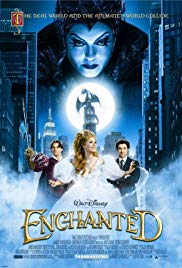
I’ve been hooked on the lovely Ms. Adams ever since she took her Oscar-nominated spin as Giselle in Enchanted (2007). It doesn’t hurt she grew up just a few minutes north of where I live here in Colorado. My wife’s been hooked on Matthew Goode ever since he stole scenes from Mandy Moore in Chasing Liberty (2004). It doesn’t hurt he added a passable Irish accent in Leap Year. Both actors have been nominated for awards in far better films, but put them on the big screen together and a little chemistry goes a long way.

Speaking of leap year, my preference for order and logic takes a serious hit whenever the short month of February rolls around. A month of twenty-eight days when the other eleven have thirty or thirty-one? Why not just reduce two or three other months from thirty-one to thirty days and make February “full”? The only credible historical explanation I can find is this: Caesar Augustus stole a few days from February to make his month (August) as long as Caesar Julius’ (July).  We future generations are left to deal with the anomaly. Gee, thanks Gus.

In a rather odd example of redemption, February gets extra attention by boasting an extra day every four years. We need the quadrennial Leap Day to put the calendar, the seasons, and the universe back into sync. Not so fast, Mr. March. And yet, pity the poor souls born on Leap Day. Must’ve been pretty traumatic as a kid, trying to understand why your special day doesn’t show up on the calendar like the other kids. Or consider a “leaper’s” 21st year (or whatever year one earns drinking privileges). How do you convince the barkeep you’ve reached your drinking birthday in a year without a February 29th?
Perhaps you’ll “celebrate” Leap Year 2020 by seeing the movie of the same name. We’ll watch Leap Year for the zillionth time. My wife will remind me Matthew Goode’s character and her own Irish Draught horse share the same name (Declan). I’ll remind her several Leap Year scenes take place in Connemara and County Wicklow, two of our favorite places in Ireland.

Matthew Goode recently admitted, “I just know there are a lot of people who say (Leap Year) was the worst film of 2020″. But Goode also admitted to signing on so he could work closer to home and to see his girlfriend and newborn daughter more often. Doesn’t that make the (English)man even more likable?  Maybe.  At least Amy’s doing a sequel to Enchanted.

(Author’s Note: Just noticed this is my 229th post on Life In A Word. 229 as in 2-29 as in February 29th as in Leap Day. WHOA.)

Some content sourced from Wikipedia, “the free encyclopedia”, and the 2/28/2020 Wall Street Journal article, “Leap-Year Babies Fight a Lonely, Quadrennial Fight for Recognition”.

Creamer Schemers

A couple weeks ago, my Nespresso coffee maker sprung a leak. As it brewed a cup, it also “espressed” a small river of coffee from the base of the unit. An online chat with the good people at Nespresso determined, a) the maker really was broken, b) the one-year warranty covered the repair (whoo-hoo!), and c) the fix would take up to ten business days. Well beans; ten business days meant regressing a full two weeks on drip coffee instead.  Hold the phone; did I just label myself a coffee snob?

Nespresso

Nespresso – for those of you not familiar – is one of the many capsule coffee systems on the market today. Unlike the Keurig K-Cup, “Nestle-Espresso” capsules spin as the water passes through the grounds (7,000 RPMs – vroom vroom!), adding a light-colored frothy cap of “crema” on top. The crema enhances the aroma, but more importantly delivers the mouth-feel of a latte, as if you stirred something in from the dairy family. But call me fooled; Nespresso’s nothing more than coffee in the cup.

Bunn’s coffee-monster

Coffee snob? Parvenu, perhaps. It wasn’t that long ago I contentedly drank “joe” from one of those big metal Bunn machines, flavor-boosting my Styrofoam cup contents with a sugar cube and powdered Coffee-mate. Then, I spent a year in Rome and my world was forever coffee-rocked. I returned to the States armed with words like cappuccino and espresso and caffe latte. But America didn’t even know the word Starbucks yet. A “coffee shop” was still a greasy spoon diner; forgettable joe in a forgettable cup.

Mind you, not having Starbucks didn’t mean I was gonna crawl back to the Bunn, especially after a year of Italy’s la dolce vita (look it up). Eventually I dropped hard-earned cash on one of those early model home coffee/espresso/steamed milk contraptions – a machine requiring twenty minutes, twenty steps, and a phone-book-sized operations manual to produce a small cappuccino. The birth of the American barista did not start at Starbucks, my friends. It started in the frustration of orchestrating an overly complicated home-brew system in search of pseudo-Italian-style coffee.

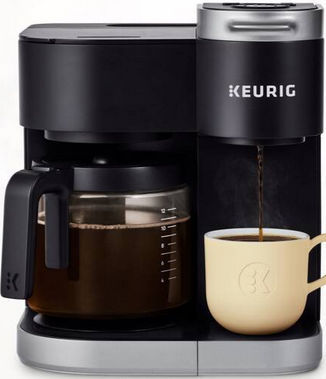
Sometime after Starbucks opened its first doors (but before Nespresso), Keurig developed the K-Cup. The Keurig coffeemaker felt like a huge step up from standard drip (and ushered in the concept of single-serve coffee at home). Keurig opened a seemingly new world of coffee to me – exotic names like Green Mountain or Paul Newman’s or Donut Shop – but let’s be honest. Keurig was basically glorified drip, and I still wasn’t taking my coffee straight, like I did in Italy. And that’s where Nespresso shines. If the K-Cup is a step up from drip, Nespresso is the entire staircase.

Ironically, the same company producing Nespresso markets a line of oil-based creamers sugary enough to make your coffee taste like Easter in a cup. Nestle already offered creamer flavors like Peppermint Mocha or Italian Sweet Creme or Toasted Marshmallow, before recently adding Cinnamon Toast Crunch and Funfetti. Not to be outdone, International Delight augmented its own coffee creamer line – REESE’S Peanut Butter Cup, Cinnabon, and OREO Cookie Flavored, with – no joke – a PEEPS flavor. Better check for bunnies before you take a sip.

For the record (if the Pulptastic website is to be believed), I’m not even close to being a coffee snob. I can choose from any of their twelve defining characteristics and come up short. I don’t read about coffee. I don’t speak the lingo (“Robusta?” “Arabica?”). I don’t know what “cupping” is. I do enjoy a Starbucks coffee every now and then. Finally, I’m half-tempted to check out the PEEPS creamer (maybe I won’t even need the coffee in my cup). See the Pulptastic list for yourself. Maybe you’re the coffee snob instead of me.

I’m still waiting (im)patiently for my repaired Nespresso coffeemaker to come back. I’m barely surviving on my backup K-Cups. But I’m no coffee snob. And I was just kidding about wanting to try PEEPS in a bottle. On the contrary, those creamer schemers can keep their product far, far away from my Nespresso.

Some content sourced from the 2/3/2020 Wall Street Journal article, “Rich Sales Boost Coffee Creamers”.

Ribbons and Bows

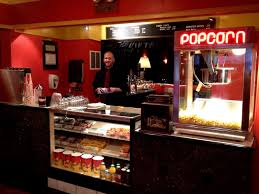
My wife and I went to the movies the day after Christmas. The theater lobby looked a little forlorn after the holiday rush. There weren’t many patrons besides the two of us. The employees wandered here and there without seemingly much to do. The concessions were woefully under-stocked. In fact, as we stood at the counter, we realized there were no nachos, no hot dogs, and not a single bottle of water to be found. Did all those “Star Wars” groupies buy up everything before us?  Did a link go missing in the supply chain? Can we blame the aliens?  Ah, but popcorn.  At least they had popcorn.

I can’t see a movie without cradling a big ol’ tub of theater popcorn.  Don’t ask me what chains the two together, but popcorn and movies are a heaven-on-earth marriage.  It’s like that Kacey Musgraves Christmas song about a ribbon without a bow.  The movie might be Oscar-worthy but there’s a big something missing without popcorn.  The next time you watch “Field of Dreams”, consider the ball field is surrounded by acres and acres of corn.  As if you need a metaphor.

Popcorn wasn’t always an option at the movies.  In the early 1900’s, the theater-going experience was different.  The auditoriums were much smaller.  The carpets and seats were lush and expensive.  The patrons tended towards upper-crust.  And the movies themselves… had no sound.  Any one of those reasons made popcorn a poor concession choice.  Theaters didn’t want kernels ground into their pricey floor coverings.  Patrons didn’t want a snack associated with the lower-class circuses and sporting events of the time.  Most importantly, no one wanted to hear crunching and munching while trying to read the subtitles of a silent movie.

The Great Depression – and “talkies” – ushered in the union of popcorn and movies.  A broader cross-section of patrons sought the theater for an inexpensive distraction to the hard times.  Popcorn was easy to mass-produce, and the smell and pop created an effective lure for the concession stand.  Crunching and munching was no longer a concern up against soundtracks.  And popcorn was affordable, even to those who could barely scrape together enough for the movie itself.

Do you prefer “mushroom” or “butterfly”?

There’s a little science behind popcorn to get it from husk to Hollywood.  Growers developed the appealing “butterfly bud”, with several “ears” to trap the butter and salt.  Growers also worked to shape popcorn to take up as much room in the bag as possible (less air), giving a more satisfying feel to the overall weight.  They coined terms like “expansion rate” and “mouth feel” and “finger control” – anything to make you buy more of the fluffy stuff.

All this talk of popcorn reminds me of a children’s book about a farmer who grew acres and acres of corn.  He’d store his corn in giant metal silos next to his field.  One summer day, the silos got so hot the corn inside started to pop.  The farmer heard the sound and climbed on the roof of one of the silos to see what was going on.  Suddenly the silo burst open, and the roof started rising above all that popcorn.  Up, up, up went the farmer.  When the popping finally stopped, the farmer was high up in the sky with no way to get down.  His neighbors came from miles around to try to help him.  The fire department’s ladders weren’t long enough.  The town had no helicopter.  Finally, the people talked it over and realized all they had to do was start eating the popcorn straight from the silo.  Down, down, down came the farmer until he was safe.

As much as I love popcorn, I only seem to eat it at the movies.  When my son was in college, he admitted to going to the theater, buying popcorn at the concession stand, and… leaving the building.  Who does that?  Then again, there’s nothing wrong with the idea (high price aside).  It’s like having turkey when it’s not Thanksgiving.  Or dessert before dinner.  Seems a little off, but really, why not?

As for me, I’ll continue to enjoy my popcorn with my movie.  I’ll pay the ridiculous price for the shrinking bag, and still eat too much.  The only problem with this scenario?  Finding decent movies anymore.  They seem to be fewer and further, at least on the big screen.  Thank goodness for Netflix and my air popper.

Some content sourced from the Wall Street Journal article, “How AMC Gets Its Popcorn From Stalk to ‘Star Wars'”, and from the Smithsonian Magazine article, “Why Do We Eat Popcorn at the Movies?”

The Twenty-four Days of Christmas

The Christmas season seems to begin a little earlier each year. Stores decorate and start their sales around Halloween. Lights go up on houses well before Thanksgiving, while Christmas cards show up in mailboxes by Black Friday.  The longer the season though, the more abrupt the conclusion. Be honest; who among us sings Christmas carols (or watches Hallmark movies) on December 26th?  Not many.  We worry and scurry for weeks about a single day – then suddenly it’s over.  Here’s a better approach.  Let’s focus instead on the one, true Christmas season preceding the day. Let’s focus on Advent.

For most Christians, Advent refers to the twenty-four days before Christmas (not to be confused with the song-famous Twelve Days, which come after Christmas).  Advent begins four Sundays before December 25th.  The word literally means “coming”, as in the (first coming) birth of Jesus at Christmas, and the (second coming) reappearance of Jesus at the end of time.  If you’re looking for the season’s theme song, go with “O Come, O Come Emmanuel”.  It’s the one, true Advent carol.

Once upon a time Advent included fasting, penance, and daily prayer, but today the season seems to be nothing more than a countdown.  Even in Sunday church services, the four candles of the Advent wreath are lit as the four Sundays pass by – a weekly countdown to the Christmas candle in the center. Here’s a more efficient idea.  Let’s add another ball in Times Square; one that takes twenty-four days to drop instead of sixty seconds.  Might save a lot of wreaths and calendars.

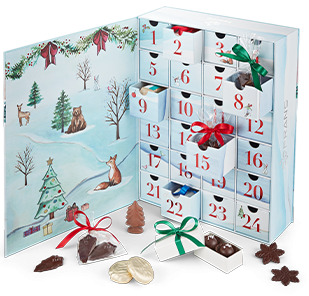
Speaking of calendars, maybe a countdown is enough to signify a season.  Advent calendars are all the rage these days.  I had one when I was a kid; the flat, cardboard kind with twenty-four numbered doors of varying shapes and sizes.  Oddly, the doors were never arranged numerically, as if the calendar was made more appealing by having to search for a given day.  Not so oddly, each door fronted a bit of chocolate.  As if waiting twenty-four days for Christmas wasn’t hard enough, Advent calendars forced a kid to wait twenty-four hours to “open” each piece of chocolate.  A test of patience.


If cardboard and chocolate don’t catch your attention, perhaps you’d prefer a more elaborate version of an Advent calendar.  Consider Fran’s Chocolates of Seattle (above left), which produces its annual calendar fronted by an original watercolor.  Add in twenty-four delectable chocolates in twenty-four drawers, and this calendar sets you back $175.  Or how about Liberty London’s “Beauty Advent Calendar” (above right), which includes twenty-four wellness products – many of them full-size – like probiotic deodorant, essential oil candles, and skin bronzer?  This one sets you back $275, with the price justification you can re-gift whatever items are not to your taste.

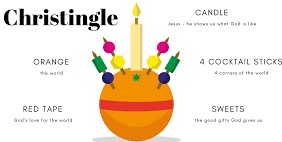
Lest you think a fancy (or not) calendar is the only way to acknowledge Advent, I can’t close without mentioning the Christingle.  I don’t remember creating one of these as a kid.  A Christingle is made up of an orange, a candle, a bit of red ribbon, and four sets of dried fruits or sweets, skewered on cocktail sticks.  It’s a strange-looking assembly, but the Christingle gets an “A” for symbolism.  The orange represents the world.  The candle represents Jesus as the light of the world.  The red ribbon represents God’s love (or Jesus’ blood).  The fruits/sweets represent the gifts God gives us, and the cocktails sticks represent the four corners of the globe.  Lots going on in one sort-of-neat package.

Austria may lay claim to the biggest Advent calendar in the world!

If you’re reading this post before December 1st, you have the entire twenty-four days of Advent ahead of you.  Twenty-four days to slow down and appreciate the meaning of day twenty-five.  Sounds more like a season than a single day, doesn’t it?  Mark your calendar then.  Advent is here.

Some content sourced from Wikipedia, “the free encyclopedia”.

The Senior Years

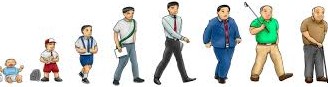
A human life has several stages, but exactly how many stages will probably cost you a Google search. Would you believe nine? Pregnancy, infancy, “the toddler years”, childhood, puberty, “the adolescent years”, adulthood, middle age, and “the senior years”. That’s a lot of stages (and I suddenly feel tired).  According to my age – 57 – I’ve battled Father Time through the first seven on the list and hover somewhere between the last two. And therein lies today’s question: What the heck defines “the senior years”?

In case I forget – as seniors are wont to do – allow me to wish you a very happy “Senior Citizens Day”!  No joke (and no Hallmark card – I checked), August 21st is the calendar date set aside “to increase awareness about the issues that face older adults”.  Well now, doesn’t that just call for a celebration?  No, it doesn’t.  In fact, my fingers feel a little more arthritic just typing about it.

Admittedly, I’ve been a senior before, back in a couple of those earlier life stages.  I was a senior in high school.  I was a senior in college.  In the Boy Scouts, I was a senior patrol leader.  If I’d thought to name one of my sons after myself, I could’ve been “Dave Sr.”.  Now however, wrestling with the idea of advanced middle age, I’m forced to confront the one, true definition of “senior”.  The word in that sense (especially senior citizen) – is a little daunting.  I prefer “older” or “more experienced”.  You know, the softer side of Sears.

Reagan

Blame former U.S. President Ronald Reagan if you’re looking for a scapegoat.  After all, he’s the one who – while in office – declared August 21st to be “National Senior Citizens Day” in America.  Reagan signed said proclamation in 1988 at the ripe (older) age of 77.  By all definitions, that made Reagan a senior citizen himself.  Isn’t that kind of like throwing yourself a party?

Speaking of definitions, for all my searches I can’t thumb a tack into the specific age one enters life’s final stage.  Consider the following takes on “senior citizen”:

  1. A polite expression for an old person.
  2. An older person, usually over the age of 60 or 65, esp. one who is no longer employed.
  3. The age at which one qualifies for certain government-sponsored benefits (i.e. Social Security, Medicare).
  4. The United Nations has agreed that 65+ may be usually denoted as “old age”.
  5. Being a senior citizen may be based on your age, but it is not a specific age (say what?)

The definitions get even vaguer, but you see the pattern.  No one – not the United Nations nor Merriam-Webster – wants to tag “senior citizen” with a specific age.  Well, I do.  I want my bedside clock to turn to midnight on the designated date, and instead of beeping the alarm it squawks, “Senior Citizen! Senior Citizen!”  I suppose, if someone held my aging feet to the fire and said, “Choose!”, I’d go with Definitions #2 and #4.  At least then I’m backing up my truck to “middle age”.

Perhaps your definition of senior citizen is more towards retail; as in, the age you start qualifying for discounts, freebies and such.  Sorry old man (old woman?), you’re just complicating the matter (and seniors don’t do “complicated”).  The shopping website DealNews just updated their article, “The 123 Best Senior Discounts to Use in 2019”.  That’s a lot of “bests”, DealNews.  But there’s even more homework for those nearsighted eyes.  You must also know which discount kicks in at what age.  Senior discounts ≠ senior citizen unless you need the following thirteen-year time frame to get used to the idea:

  • Hardee’s – age 52 (that’s me!)
  • McDonald’s – 55 (that’s me again!  But only for coffee and I don’t do McDonald’s coffee).
  • Applebee’s – 60 (may require “Golden Apple Card”.  Oooooooo)
  • Fazoli’s – 62 (and you get the “Club 62” discount menu.  Okay, that sounds cooler than a “Golden Apple Card”)
  • Taco Bell – 65 (plus free drink – ¡Olé!)
  • Wendy’s – “age and offer vary depending on restaurant location” (c’mon, Wendy’s!)

Atta boy, Norm!

Poets and playwrights try to soften the blow of “the senior years” with their eloquent quotes.  The Englishman Robert Browning said, “Grow old along with me!  The best is yet to be.”  The American Ralph Waldo Emerson said, “As we grow old… the beauty steals inward.”  Nice tries, noble poets, but I’ll go with positive thinker Norman Vincent Peale instead.  Norm simply said, “Live your life and forget your age”.  Take that, senior years!

The Fourth on the Fence

America’s Independence Day celebrations go full-on patriotic today, including a plethora of centuries-old traditions. Barbecues and fireworks. Downtown parades with marching bands. Baseball, apple pie, and ice cream. Flags, and countless costumes of red, white, and blue. Another round of Nathan’s Famous Hot Dog Eating Contest. These are the images consistent with America’s 243rd birthday party. But tennis shoes and tanks? Nope; not what I had in mind.

Photo by Nike

I’m referring to recent headlines, of course.  Nike – in an obvious nod to Independence Day – produced a limited-edition running shoe with the “Betsy Ross” on the heels (the version of the American Flag with a circle of thirteen stars on the field of blue).  The shoe would’ve made it to hundreds of feet were it not for concerns voiced by activist (and Nike spokesperson) Colin Kaepernick.  In response, Nike immediately recalled the shoe.  In response to that, the state of Arizona withdrew financial incentives for the construction of Nike’s latest manufacturing plant.  In response to that, the state of New Mexico created a political fence at the NM/AZ border, inviting Nike to “come on over”.  “Betsy Ross” instantly became a hot topic on Twitter.

Photo by Andrew Harnik – AP

As for the tanks, President Trump requested “reinforcements” for the “Salute to America” parade and flyover in Washington D.C.  In a nod to the U.S. Armed Forces, parade-goers will enjoy a convoy of loud-and-proud servicemen and women and their vehicles.  I can’t think of anything more patriotic: a fortified Independence Day parade in our nation’s capital hosted by the leader of the free world.  But like the Betsy Ross shoes, we have controversy.  D.C. locals are worried about tank-track damage to city streets and bridges.  More predictably, the progressive left sees President Trump’s actions (and Salute speech) as an inappropriate opportunity for political gain.  In response to that, there will be protestors and flag-burners galore.

My Independence Day childhood memories have nothing to do with flag-burning, let alone tennis shoes and tanks.  Our family would trek to the beach in Southern California full of pride and patriotism.  We’d spread blankets on the sand at dusk alongside thousands of others, with a couple of buckets of Kentucky Fried Chicken for dinner.  My brothers and I would run around in circles with sparklers.  When it got dark enough we’d enjoy the fireworks erupting from a nearby pier.

As a teenage boy – and budding pyrotechnic – Independence Day was all about the fireworks.  My dad would purchase a large “Red Devil” assortment and we’d set them off on the beach.  My favorites included “black snakes”, “ground-spinners”, and “fountains”. (Alas, I never experienced the machine-gunner thrill of hoisting a Roman Candle.)

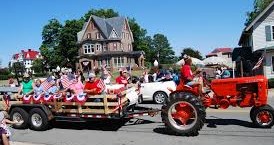
When my own children were young, I delighted in our local (and thoroughly hokey) Independence Day parade.  Our supermarket participated with a group of dancing, shopping-cart-wielding cashiers.  Our dentist shamelessly advertised on a float with a giant toothbrush. But our son carried the flag as a Boy Scout and our daughter rode her pony as part of an equestrian team.  Later in the evening we’d gather at the shore of the nearby lake to watch the fireworks display, fully funded by donations to the local fire department.  Small-town America at its best.

Like any other living, breathing American, I have my opinions on the tennis shoes and tanks.  I don’t think Nike intended to dredge up Revolutionary War-era civil liberties simply by displaying the Betsy Ross on its products.  I don’t think President Trump did anything more than exercise the privilege of the office by serving as host of our nation’s capital’s celebration.  In both cases, I think digging for dirt below the surface only makes things dirtier.  I’d wear the shoes or attend the Washington D.C. bash without an iota of self-consciousness.  I’d simply be an American celebrating our Independence Day.

Nike defended its shoe recall by claiming it’s “proud of its American heritage”, but worried the Betsy Ross would “unintentionally offend and detract from the nation’s patriotic holiday”.  President Trump’s advocates said he’s “… not afraid to buck convention and put his own twist on these types of events”.  How about we get off the fence, take a step back, and remember what we’re celebrating?  America’s birthday deserves more than focus on yesterday’s regrettable events or today’s relentless politics.  Perhaps – just for a day – we could be the “United States” of America once again.

American Hollow-Day

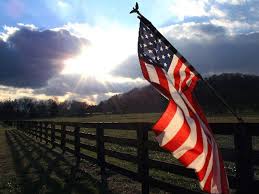
Last Friday was a hugely important day in America! It was so hugely important I couldn’t sleep the night before! I got up twice hoping it was already morning. I stared at the numbers on the bedside clock, willing them to go faster. Finally, when dawn’s early light beckoned, I leaped out of bed like a child on Christmas, dashed down the hall, and stepped into the laundry room. I was brimming with anticipation!  And there, standing patiently in the corner, tightly furled since last Independence Day: our American flag.  Quick as a mouse, I ran her out to the front deck and hoisted her in the most prominent place I could find. Then I took a few steps back and placed my hand over my heart.  To no one in particular I exclaimed, “Happy Flag Day!”

Poor Flag Day – she’s an underappreciated holiday.  She comes and goes with no more fanfare than pre-printed words on the June 14 square of a wall calendar.  She doesn’t even rate a Hallmark card.  She yearns to be a real holiday like those ten federal ones.   She wants to believe the events of my first paragraph actually happened.  But let’s get real.  In our house, the only excitement last Friday was knowing the weekend was at hand.  I slept without interruption the night before.  I didn’t get up at dawn.  And our flag remained furled in the corner of the laundry room, knowing its only chance to see the light of day would be July 4th.

Which is all to say, I’m missing the point of Flag Day, at least in this country.  Wikipedia devotes two tiny paragraphs to its Flag Day article, beginning with the words, “A flag day is a flag-related holiday…” (promising start, no?)  But at least they go on to say, “…a day designated for flying a certain flag…”, and, “…a day set aside to celebrate a nation’s adoption of its flag.”  Here in America, we do neither on June 14th.

Apologies to Troy, NY (whose Flag Day parades draws 50,000+ spectators) and Waubeka, WI (which claims to be the founding city of Flag Day and also has a parade).  The residents of those towns surely had a “banner celebration” last Friday.  The employees of the Betsy Ross House in Philadelphia probably took the day off as well.  But for the rest of us, it was just another June 14th, conspicuously calendared halfway between big-boy holidays “Memorial” and “Independence”.

Don’t get me wrong – I think America’s flag is supremely appreciated.  She flies above any government facility, sports stadium, or other big-time gathering in our country, and she always gets the highest position on the pole (except you, Texas).  She shows up on a billion first-class postage stamps.  She’s decorates the top of Mt. Everest and the moon.  And on Independence Day, she’ll be raised more times than any other day.  Which makes Flag Day seem, well, redundant, doesn’t it?


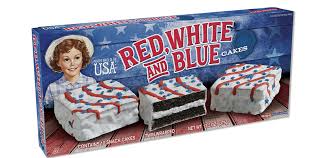
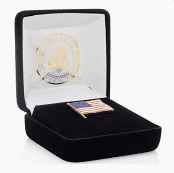
If we’re to truly embrace this overlooked holiday in America, I suggest the following from now on: 1) Your June 14th breakfast must contain some combination of red, white, and blue foods (i.e. cherries, blueberries, Pop-Tarts in a pinch).  2) Your June 14th outfit must contain the colors of the American flag (or at least one of those classy little lapel pins).  3) Unfurl and raise the flag at your house or place of business – and won’t it be cool to add “unfurl” to your vocabulary for a day?  4) Hail a cab or a friend, so you can say you “flagged them down”.  Actually, disregard that last one.

I’ll grant one exception to my efforts to boost the significance of Flag Day.  If you happen to live on a flag lot, you don’t have to do anything at all.  You’re celebrating by default!  But you might consider coloring your property appropriately.  Wouldn’t that cause a stir in the plane flying overhead?

Look forward, not back.  Independence Day is only two weeks from today.  Dust off your flag after all.

Boston Long

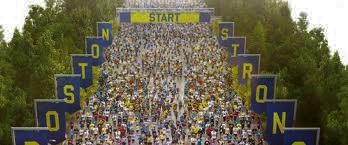
Durgin-Park, the venerable restaurant inside of Boston’s Faneuil Hall, recently closed its doors after almost two hundred years of operation. You read that right; D-P opened for business a few decades after the Revolutionary War, but served its last patron this year, citing “an inability to turn a profit”. For America at least, that’s some serious history. For Beantown on the other hand, that’s par for the course. After all, this week the Boston Marathon completed its 123rd consecutive running.

I am in awe of runners who qualify for – let alone run – the Boston Marathon.  It’s daunting enough to compete for 26.2 miles, but you can’t join the “fun” in Boston unless you complete a qualifying marathon in under 3 hours (men, ages 18-34), or 3.5 hours (women).  Consider, 3 hours is an average pace of 7 min./mile.  To appreciate that, go to the gym, crank up the treadmill to eight or nine miles/hour, and see how long you can maintain it.  Now imagine running that fast for three hours straight, up and down the city streets of Boston.  It’s superhuman.

The Boston is the world’s oldest annual marathon.  Simply achieving the age-specific qualification time is the goal of most elite long-distance runners.  But if that’s all you know about New England’s most-spectated event, you’re missing out on some fascinating race-related trivia.  Here’s a sampling:

  1. The Boston is run every “Patriots’ Day” (the third Monday in April), a holiday to commemorate the start of the American Revolutionary War.  Effectively, the marathon is a nod to freedom.
  2. The Boston was first run in 1897, one hundred years after the first Olympic marathon in Athens, Greece.  That marathon, as most know, was inspired by the fabled run of the Greek soldier Phillipides from Marathon to Athens, announcing a battle victory over the Persians.  Effectively, Phillipides’ run was also a nod to freedom.
  3. The Boston Red Sox play every Patriots’ Day in Fenway Park.  The game finishes in time for the fans to walk a mile east along the Charles River, arriving in Copley Square as the marathon runners are crossing the finish line.
  4. Until 1986, the men’s and women’s winners received a wreath of olive branches and a trophy; no cash prize.  Today?  First place: $150k, Second: $75k, Third: $40k, and Fourth: $25k.  Might want to dust off the running shoes and start training.
  5. Check out Derek Murphy’s “marathon investigation” blog here.  Derrick started his sleuthing five years ago and outed over 250 cheaters, including several who faked their race qualification times in order to run.  Too bad Derrick wasn’t around for the 1980 race, when Rosie Ruiz pulled off the marathon’s most famous heist (see her story here).
  6. In the 2011 race, Geoffrey Mutai of Kenya effectively broke the world marathon record (even though it wasn’t deemed official), finishing in 2:03:03.  Try that pace on a treadmill.  Set the speed at twelve miles/hour and… well… let it spin from a safe distance and just watch.
  7. The Boston draws an average of 30,000 participants each year, cheered on by 500,000 spectators.  The participants are divided into men’s and women’s categories of “elite runners” (i.e. pros), the remaining qualified runners (waves of 10,000), wheelchair-bound, and hand-cyclists.  The Boston even accommodates blind runners.
  8. The Boston is famous for Heartbreak Hill; the incline located a few miles from the finish where runners tend to hit an endurance “wall”.  Why the name? In the 1936 race, Johnny Kelley caught up with rival Tarzan Brown on that hill, giving him a pat on the back as he passed by.  Bad move.  Brown took the gesture as a challenge, found another gear, and went on to win the race.  Brown effectively “broke Kelly’s heart” and the hill gained a name forever.
  9. Halfway through the Boston, the lively women from nearby Wellesley College form a long “Scream Tunnel”, yelling and blowing kisses as the runners pass by.  These ladies are so loud, you’ll know the Scream Tunnel is coming a mile before you get there.
  10. And finally… the Boston Marathon is not really run in Boston; not until the final couple of miles.  Before that, you’re touring twenty-four miles of eight neighboring towns instead.

Remarkably, this year’s Boston Marathon included four finishers in the top hundred from right here in Colorado Springs.  The next day, my cycle instructor casually mentioned she’d run the race before.  Ditto my former boss at Hewlett-Packard.  And my sister-in-law has a good chance of qualifying in the next couple of years.  Superhumans.  As for me?  I do like to run, but I’d be happy enough just to spectate beside those hundreds of thousands of “Boston Strong”.  I’m just sorry I can’t have dinner at Durgin-Park afterwards.

Some content sourced from Wikipedia, “the free encyclopedia”; and the Mental Floss article, “11 Fast Facts About the Boston Marathon”.

Lovely Are Thy Branches

Christmas prep – at our house – starts the weekend after Thanksgiving and goes all the way thru December 24th.  I like to think it’s deliberate – taking a month or more to drag out the “getting ready”.  Some years we’re rushed but the house always seems to get decorated, the cookies baked, the presents wrapped, the cards sent, and the food shopped.  There’s always a dinner reservation on Christmas Eve; always room in the pews at the late, late church service.  But what if – some year – we dispensed with all of that prep?  December 25th would still come, of course.  But it wouldn’t be Christmas, unless we had a tree.

I can’t think of a single Christmas in my fifty-plus years when we haven’t had a fully-decorated tree.  Whether the lights or the ornaments or the angel on top, the tree to me is the ultimate expression of the holiday season.  Christmas trees have been standing since the 1500’s (proved by a sculpted image at an estate in France).  In the late 1700’s, Christmas trees hopped the pond to America.

My affection for decorated trees dates to my early childhood in Los Angeles.  Late on a mid-December day, my mother would pack my brothers and I into the station wagon, drive downtown, and meet up with my father after work.  Near his office, hundreds of Christmas trees were being unloaded from boxcars in the train yard; some of them still fresh with snow.  You may prefer the convenience of your neighborhood tree lot, but sorry; nothing beats the childhood nostalgia of picking a tree straight from a boxcar.

Flocked tree

Since we never had snow in Los Angeles, we often had our Christmas tree “flocked” before taking it home.  Flocking means placing a tree on a spinning stand and covering it with a product I can only describe as spray Styrofoam.  As tacky as that sounds, the result is remarkably “snow-like”.  Flocking even comes in colors (but I never understood why anyone would want pink or green snow).

As for tree ornaments, they’ve been around since Christmas trees themselves.  What were once apples, candy canes, and pastries (elegantly simple, if you ask me) have now evolved into everything imaginable.  On my childhood tree, I only remember those delicate, shiny, colored balls and bells; the ones which shattered on the slightest impact.  We also had tinsel; endless garlands of thin strips of colored foil, and tinsel is a great word, don’t you think?

Christmas lights became a staple of tree decor in 1882, when an Edison Electric VP first added them to his family tree.  The lights on my childhood tree – the multi-colored “C9” incandescent standard of the time – were connected to an illuminated star at the very top.  A few strands contained transparent-colored “blinkies”.  In hindsight, blinky lights sound as tacky as flocking but somehow, they worked alongside everything else on the tree.

Here’s a little Christmas tree trivia for you.  The carol, O’ Christmas Tree, is sometimes sung in German, starting with “O’ Tannenbaum, O’ Tannenbaum…”.  Guess what?  You’re actually singing, “O’ Fir Tree, O’ Fir Tree…”.  If you’re looking for the correct translation, go with, “O’ Weihnachtsbaum…” instead.

Christmon tree

One more bit of trivia.  If you find a tree decorated with nothing but white and gold Christian symbols, you’re looking at a Christmon tree.  Blend the sounds and meanings of “Christ” and “monogram” and you come up with the portmanteau “Christmon”.  Sounds (and looks) beautiful to me.

I don’t think I’ll ever have to worry about finding a Christmas tree.  Over 35 million are produced in the U.S. each year; another 60 million in Europe.  The average cost of a live-cut Christmas tree last year was $73, and that includes a lot of really tall ones.  Someday, I won’t be able to erect a nine or ten-foot tree in my living room anymore.  No worries; I’ll just go with a table-top instead (a “Charlie Brown”, if you will).  Her branches will be just as lovely.

Some content sourced from Wikipedia, “the free encyclopedia”.

Dusting Off Dumbo

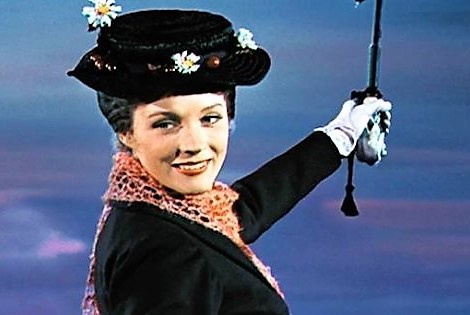
In March, Disney will release a remake of the children’s classic “Dumbo”, almost eighty years after the original. An intriguing story (Tim Burton directs), and the wonders of computer animation suggest the new version will be pretty good; standing on its own the way Jim Carrey managed with his version of the Grinch. “Mary Poppins” also Returns next week after a fifty-year absence. Emily Blunt looks supercalifragilistic in the previews, but with all due respect, there’s only one Mary Poppins and her name is Julie Andrews (there is also only one Maria Von Trapp and her name is also Julie Andrews).

Movie remakes are blog-worthy, but that’s not my mission today.  I’m here to talk about Dumbo.  Even though his modern-day movie doesn’t come out for a few more months, you’ll find him at any one of the six Disney parks.  He’ll fly you in dizzy circles with his big ears and colorful cap; as happy an elephant as he’s ever been.  But on closer inspection, you may find your Dumbo needs a little dusting off.  That grey may be his (plastic) skin perhaps, but – brace yourself – it may also be the scattered remains of deceased Disney devotees. Apparently some souls choose to be interred in an urn known as The Happiest Place On Earth.

Okay, I know some of you were anticipating a jolly-holiday post this time of year, with visions of chestnuts roasting on an open fire (“pop! pop! pop!”) or a “Baby It’s Cold Outside” fire (romantic embers) but sorry; today we’re talking about a cremation fire.  Doesn’t the topic make you just a little curious?  Did you know for instance, we humans spread our ashes (or I should say, have our ashes spread) at sea, in woodland groves, into volcanoes, over sports stadiums and on golf courses, and yes – all over the Disney parks, but “at sea” is the only legal option on the list?  Or, did you know, if you spread an entire urn’s worth, you’re talking about five pounds of ashes?  Not exactly a spoonful of sugar, Mary.

I never knew Disney had this sort of problem in its parks (although at The Happiest Places On Earth, there are no “problems”).  Scattered ashes are reported at least once a month.  Disney handles these incidents the way they do other “real-world” stuff: with complete discretion.  First, an employee notices said “pixie dust” (maybe with help from Tinker Bell?).  Then a “HEPA” text – high-efficiency particulate air – is sent to maintenance, because that’s the kind of vacuum you’re gonna need.  Then the ride or area of the park is closed off and the deceased is sucked up “spit-spot”.  You can almost see the maintenance guy whistling while he works.

HEPA vac

Scattering ashes (other than at-sea) is a misdemeanor, but in true Disney fashion no charges are pressed if you’re caught.  Instead, your mouse ears are removed and you’re escorted out the nearest gates, back to the real world.  Any patrons inconvenienced by your actions get reimbursed with a Fast Pass or a store voucher.  Having said that, plan on a few extra minutes getting screened at the entry gates.  Besides knives, bombs, and alcohol, they’re looking for urns.  Or, in the backpacks of the more determined: plastic pill bottles and makeup compacts.

Disney’s Dumbo ride is a common place to scatter ashes (specifically, the moat under the flying elephants), as is Cinderella’s Castle (flowerbeds) and It’s A Small World (anywhere near the delirious singing dolls) but where do most scatterings take place?  Why, the Haunted Mansion of course.  It’s the only truly morbid location at Disney.  As your “ghost host” says over and over, “we have 999 happy haunts here, but there’s room for 1,000 – any volunteers?”  I guess some people take their ghost host seriously.

On a related topic, several years ago Disney sold personalized hexagonal pavers at its Florida park.  You could put anything you wanted on the tiles, except the words “In Memory Of…” Why?  Disney didn’t want people to have death on their minds at The Happiest Place On Earth.  As Mary Poppins would say, they’re just trying to be practically perfect in every way.  But clearly, some people have death on their minds anyway.  Or at least, ashes in their backpacks.

Some content sourced from the Wall Street Journal article, “Disney World’s Big Secret…”.