Cim-ple Memories

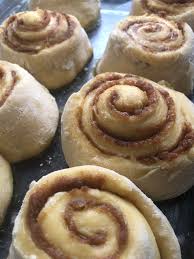
My weekday breakfasts are routine.  Besides a cup of coffee I’ll have yogurt and fruit one day, eggs the next.  That’s about it, alternating between one or the other.  Something about this relatively healthy repeat comforts me.  On the weekends, however, we fancy it up.  Maybe homemade waffles or pancakes.  An omelet with whatever leftovers we can find in the frig.  Or even breakfast out, where someone else does the cooking.  And very occasionally, especially on Sundays, I’ll step back to my childhood and bake the earliest breakfast I can remember – homemade cinnamon rolls.

Last week, my son texted to let me know he was making breakfast with his young daughters.  The three of them were putting together eggs, fruit, and rolls to start their Saturday right.  The rolls – the Pillsbury variety where you whack the tube on the counter and separate the rolls onto a cookie sheet – are topped with a distinctive orange icing my son remembers from many of his childhood breakfasts.  Now he’s carrying on the tradition in his own kitchen, which warms my heart.  But I also realized it’s time he joined the succession of family members who still bake our trademark cinnamon rolls.

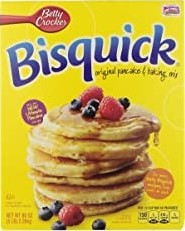
If you’re hoping I’ll include a recipe at some point in this post – something with secret ingredients to make our cinnamon rolls the best ever – you’re about to be disappointed.  These rolls are as simple as it gets.  Begin with… Bisquick.  Maybe you’re not familiar with this breakfast-in-a-box product from General Mills but it’s still on the shelf.  You just add milk to the mix and voila, you’re making anything from pancakes to biscuits.

Our cinnamon rolls use the Bisquick biscuit recipe with the dough pressed out flat, adding sugar and spice, and then rolled up to be cut and baked in the oven.  The process is designed to crank out the rolls in hurry, as for a family of seven on the clock before Sunday church.

Now here’s where I pay homage to my father.  He steps into the story because he was the one who made the cinnamon rolls, almost every Sunday without fail.  I’d shuffle into the kitchen bleary-eyed from the night before and there’d be my bathrobed, unshaven father, preparing what we affectionately called the “cims”.  As soon as he rolled out the dough, a kid could help the rest of the way.  Sprinkle brown sugar from one end to the other.  Add raisins here and there.  Dust with cinnamon for a final flourish.  Roll up the dough from one side of the board to the other and cut into segments.

Some of my brothers didn’t like raisins so Dad upped his baking game a bit by leaving them out of some of the rolls.  Eventually he even made “jelly rolls”, substituting the sugar and spices with one of our favorite flavors from Smucker’s or Knott’s.

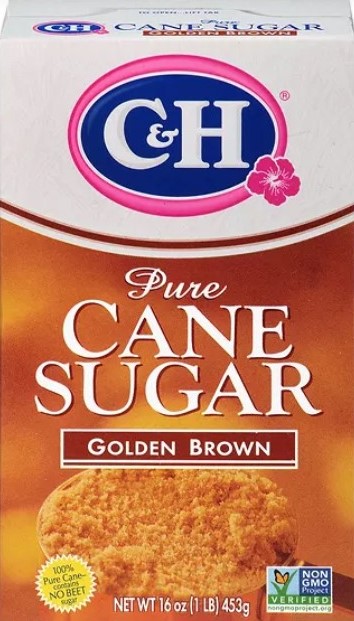
Speaking of ingredients, our cinnamon rolls were brand dependent.  Besides the essential Bisquick, the brown sugar came from C&H, the raisins from Sun-Maid, and the milk and butter from a local dairy called “Edgemar Farms“.  Funny how those come back to me like yesterday, yet I never thought much about the names until now.  “Bisquick” is literally “biscuit” + “quick”.  C&H is the “California and Hawaiian Sugar Company”, their product refined from sugar cane (instead of beets).  Their jingle still dances around in my head (“C&H… pure cane sugar… from Hawaii… growing in the sun…”)

The updated “Maid”

Sun-Maid put the spin on “Made”, of course, but I never “made” the connection between the name and the woman in the logo until now.  They’ve updated her image several times over the years the way KFC and Wendy’s updated theirs.

Here’s the real point of this post.  My dad and the family cinnamon roll recipe are forever inseparable.  Even though his sons (and their children, I hope) carry on the tradition, it’ll always be Dad and the rolls.  One is not a memory without the other.  I realize – all these years later – Dad made the rolls to give Mom a break from the countless meals she made the rest of the week.  Honestly, the only memories I have of Dad in the kitchen are mixing drinks, tending to the barbecue, or making the “cims”.

Soon after my son texted, I sent him the cinnamon roll recipe.  I hope he “cim-ply” abides as part of his Sunday morning routine.  I hope he refers to the leftover dough bits as “collywobbles” the way my dad did and his dad did before him.  I hope his daughters mispronounce “cinnamon” as “cimmanin” the way I used to (which maybe inspired the nickname “cims”).  But most importantly, I hope he remembers his Grandpa every time he rolls out the dough, preparing breakfast for the family just to give Grandma a break.

Some content sourced from Wikipedia, “the free encyclopedia”.

Conifer Confetti

When you move to a new city and state, you deal with the expected and the unexpected. The expected includes boxes that don’t unpack themselves (but what a great invention, right?), over-the-fence greetings with neighbors (categorized as “nice”, “cranky”, and “utterly weird”), and enough wrong turns on roads where you finally pull over and mutter, “Where the heck am I?” Unexpected includes the drip of a leaky pipe ($$$, sigh), chew-crazy squirrels in the backyard (anything plastic is fair game), and, oh yes… pine cones. Lots and lots of pine cones.

Five acres may seem like a lot to some of you readers but to us it’s downsizing from our ranch in Colorado.  You’d think a property a sixth the size of the former would suggest lower maintenance.  After last Sunday I’m not so sure.  My wife came in from the barn the day before and said, rather gently, “We should probably pick up the pine cones in the back pasture before they get out of control.”  Simple enough.  After we fed and watered the horses, we went out to the field with the muck rakes and began picking.  A muck rake can hold ten pine cones.  Around the first tree I figured I picked up fifteen rakes’ worth.  Again, simple enough… except we have at least twenty pine trees.  Do the math.  Our pickup amounted to a motherlode of pine cones, somewhere between two and three thousand.

Back in Colorado we had, like, one pine tree on our property (a magical one actually, which I wrote about in My Dandy-Lion Pine Tree).  After last weekend I’m thinking I should’ve amended our purchase agreement on the new place to say, “Remove nineteen of twenty pine trees”.

I need the “giant” version of this

What does Dave do with all of his pine cones?  Nothing, for now.  The most efficient system of gathering is to throw them against the base of the trees and then haul them away to the “yard waste” dump.  But in the three hours we collected cones, I had plenty of time to think about better ways to do it.  The neighbors suggested a “pasture vacuum”, which is like one of those big spinning brushes you see in the car wash, dragged behind the tractor.  Others suggested a big bonfire, pretty much the last thing a person from Colorado wants to see in their backyard.

My new pet

Here’s thinking outside of the box: I could get a pet Parasaurolophus, the dinosaur with a distinctive crested head.  The Para has thousands of teeth perfectly suited for their favorite meal: pine cones.  But I’d need a time machine so I can bring one back from sixty million years ago.  Looks like it’s still me and the muck rake for now.

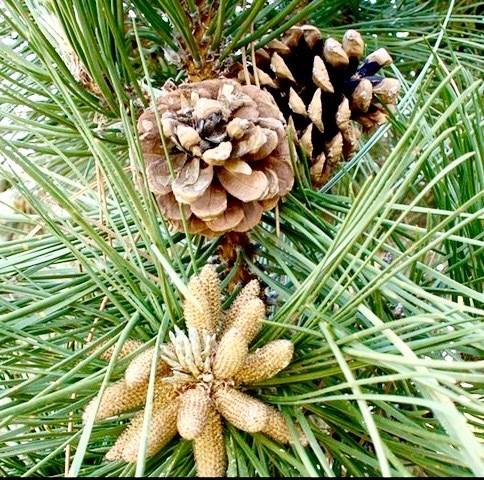
Conifer cones”, which include pine cones, play a vital role in the evolution of the trees.  Between all those little wooden scales are the seeds, first pollinated and later released.  It’s a sophisticated process which you can read a lot more about here.  In its simplest terms you have the smaller, meeker “males”, who release pollen for the “females” to catch.  Then the females release the seeds, even after they lay in my pastures by the thousands, seemingly dead.

“He” (lower) doesn’t even look like a pine cone

There was a moment in all that raking where I followed a squirrel as he bounded across the grass and onto the trunk of one of the trees.  Up, up, up he went until he disappeared into the umbrella of the branches above.  And that’s where, to my horror, I noticed how many thousands of pine cones sat poised above me. Maybe millions… almost all of them female.  It’s like having the world’s biggest sorority row above my backyard, and every house is about to disgorge its girls for a giant party on the ground.  Maybe I should hire Sticky Vikki & The Pine Cones for the music.

“Widowmaker” cone

I know, I know, it could be worse.  I could live in Maine, where there are so many pine trees the state flower is the pine cone (and a pine cone is not even a flower).  Or I could have Coulter pine trees, with cones so big they’re nicknamed “widowmakers”.  Seriously, these ladies are massive – you don’t want one falling on your head. Speaking of falling, the mere sound of a plummeting cone is unnerving enough.  It’s like a warplane flying overhead and releasing a bomb, only the bomb whistles straight to the ground without detonating. “THUNK”.

I’d have a massive herd of these Scandinavian toys

We shared the story of our pine cone bounty with my brother-in-law, who promptly encouraged us to do something creative with them.  Make wreaths for the holidays.  Turn them into coffee and jam like they do in Eastern Europe.  Sell them as the fertility charm they’re supposed to be.  Nah, I don’t have time for all that.  We’re expecting extra wind in the next few days courtesy of Hurricane Ian.  I have another three thousand pine cones to pick up.

Some content sourced from the HuffPost blog, “Thirteen Things You Never Knew About Pine Cones…”, and Wikipedia, “the free encyclopedia”.

Blue-Blood Spuds

As I was digging into dinner last night, I surveyed the contents of my plate and decided the food was looking rather pedestrian. Yes, I’d topped the roast pork with a tasty sour cream and onion sauce. I added lemon zest and shredded cheese to the broccoli. But the potatoes were run-of-the-mill, simply diced and baked with nothing but salt and pepper. I could’ve done more there; a lot more. Starting with potatoes from La Bonnotte.  It’s just, I don’t want to spend $300 for a pound of them.

$300 for potatoes – yikes.  It sounds ridiculous unless you’re British royalty or the finest restaurants in Europe.  A couple of medium-sized Russets – the ones we bake – weigh a pound, but the Bonnotte potato is more like the small red ones you cut up and season. 10-12 Bonnottes in a pound; so like, $30 each.  That’s a pricey bite (and not exactly “small potatoes”).  But if you’re willing, you can purchase your share of this delicacy; that is if you’re quick.  They’re only on the market ten days a year.

What makes the Bonnotte the aristocrat of spuds?  Here’s the meat and potatoes of it:

  1. La Bonnotte potatoes are found on a small island off the Atlantic coast of France, and nowhere else.  It’s as if they’re grown in some fortified castle, surrounded by a wide moat.
  2. The potato field is limited to fifty square meters, so they’re not even using the entire island.  You could walk the perimeter of the entire crop in about five minutes.
  3. Even though the island soil is ideal for growing La Bonnottes, the “secret sauce” is nearby seaweed and algae, mixed into the dirt by hand.  This is perhaps the first time I’ve heard of a good use for seaweed.
  4. Every Bonnotte is harvested by hand, then treated, cleaned, and sold by a small cooperative of local farmers.  Talk about an exclusive club.
  5. As I said, the harvest is only available for purchase ten days a year.  Mark your calendars for May 1-10, 2023.
The island of Noirmoutier-en-l’ile has a church, a chateau, and very expensive potatoes.

Here’s my favorite reason to buy this hot potato (and for heaven’s sake, don’t drop one): you don’t peel them.  You shouldn’t peel them.  Their unique flavor – tastes of lemon, earth, “the sea”, and chestnut – is most concentrated in the skin.  You eat them just the way they come out of the ground.

Luxuo is an online news portal whose mission is “to uncover the values which permeate the fiber of the world’s most recognizable luxury brands” (Got all that?) The Luxuo website has a dropdown menu for timepieces, yachting, motoring, properties…. and now you’ll find potatoes, because La Bonnottes (you don’t even call them “potatoes” at this price) are the most expensive potatoes in the world.  By some measures they’re one of the most expensive foods in the world.  Saffron, macadamia nuts, Beluga caviar, and white truffles are the top four, followed by La Bonnottes.  Blue-blood spuds indeed.

[Author’s Note: I just had to know why we refer to things as “blue blood”.  The term originated in Spain.  It was used to differentiate between people with light skin from those with darker complexions. The veins of southern Europeans appeared bluer due to their pale and translucent skin. Wealthy landowners or their descendents were part of an upper class in Spain, and somewhere along the line the veins were associated with wealth.  Not a look I prefer, but the money is tempting.]

Couch potato fare

After the La Bonnotte harvest and sell, a small number of the potatoes are reserved for a local festival, where they’re served plain, just as you see them in the entertaining video below (because no other ingredient deserves to share the pan).  Who can blame the farmers for throwing a party?  They’ve convinced the world to purchase potatoes for $300/pound yet again, just as they’ve done for decades before.

Some content sourced from Wikipedia, “the free encyclopedia”.

P.S. I Love You

When it comes to snack foods, I’m not a fan of variations on a theme. Kellogg’s Pop-Tarts debuted in the 1960s with just four flavors: strawberry, blueberry, apple, and brown sugar cinnamon. Today you choose from more than twenty Tarts, including “Hot Fudge Sundae”. The original Triscuit cracker was a baked whole wheat square with a little salt. Today you’ll find a dozen Triscuit flavors on the shelf, including “Fire Roasted Tomato & Olive Oil”. Then we have the Oreo cookie. The original, of course, was two chocolate wafers sandwiching just the right amount of vanilla cream filling. Now Oreo flavors are too numerous to count.  But there’s one you can be sure is a whopping success: pumpkin spice.

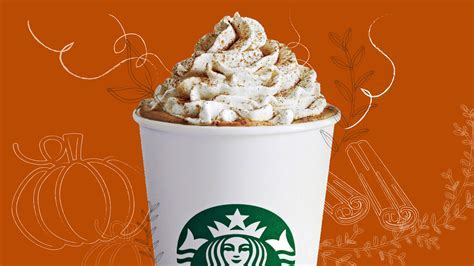
 Welcome to mid-September, Americans, and the beginning of our pumpkin spice delirium.  For the next two months you can expect an endless parade of “P.S.” product advertisements.  My wife & I, we’ve already caved to the obsession.  We have a package of “Pumpkin Spice Snaps” sitting on the counter.  We have two leftover pieces of this year’s first homemade pumpkin pie sitting in our frig.  And it’s only a matter of time before my car veers off the road and right through a Starbucks drive-thru for one of their classic P.S. lattes.  (I’ll take a grande, if you please).

My daughter just reminded me Starbucks also brings back their pumpkin cream cold brew this time of year.  That’s a good one too but let’s be real: none of Starbucks’ P.S. offerings should be considered “coffee”.  We buy them for the spice and the sweet, not for the taste of the beans underneath.

Lest you think Starbucks gets the credit for our pumpkin spice mania, the record must be set straight.  McCormick and Company, they of the little red-capped spice bottles, debuted their “Pumpkin Pie Spice” in 1934.  At least three of the following are in the bottle: cinnamon, ginger, allspice, cloves, and nutmeg.  Do I have this spice blend?  Yes.  Do I use it?  Heck, no.  My wife’s family recipe for pumpkin pie contains a different proportion of the individual spices than McCormick’s, which may be the secret to its delectable flavor.  Plus, pumpkin pie is easy enough to make without having the spices combined for you. Dump the ingredients into a bowl and mix well. Pour into a pie shell.  Bake. My kind of dessert.

Starbucks can’t even take the credit for the first P.S. latte.  That accolade goes to Mexico’s Candle Company in 1995.  The Starbucks version debuted eight years later.  But you could argue Starbucks kicked off the forever-trend where we infuse P.S. into everything imaginable, including the good (Krispy Kreme doughnuts, Cheerios, candles) and the ridiculous  (lip balm, deodorant, beer).  As of 2016, “pumpkin spice consumables” accounted for an annual market of over $500M. Yep, we’re hooked.

The “Pumpkin Spice Flavored Creme Oreo” is not even an Oreo, at least not in my pantry.  Nabisco attached the word “Oreo” but c’mon, let’s just admit it’s a seasonal wolf in sandwich cookie clothing.  “Golden” Oreo cookies… with “festive pumpkin spice flavored cream” (and is it cream or creme?)  Nope, the only Oreos in my book are black and white, though I will allow shelf space for the “Double Stuf” variety.

I’m not sure why this topic caught my eye because I haven’t had an Oreo in years.  The last time I did I realized the taste was different from the Oreo of my youth.  The cookies are not as soft, and there’s less cream filling in between (which is like messing with the ratio of chocolate and peanut butter in a Reese’s, a sin for all mankind).  Like the misfortune of many other snack foods though, size and ingredients change for the sake of profit.  And new varieties pop up to keep consumers buying.  At least we’re not talking about the Lady Gaga Oreo.  You’ll need your sunglasses for that one.

Now you’ll excuse me as I head off to a doctor’s appointment.  My drive will take me past several Starbucks, which means I could be caving to my first P.S. latte of the season.  Not that I’m worried about missing out.  As soon as the P.S. season is over I can look forward to Starbucks’ Chestnut Praline latte all the way through New Year’s Day.  Now we’re talking!

Some content sourced from the CNN Business article, “Oreo is bringing back this flavor after a 5-year hiatus:, and Wikipedia, “the free encyclopedia”.
Local Fare for the Win

When you pick up and move to a new town 1,500 miles from where you used to live, “getting the house in order” is a little overwhelming. Thirty years in the same spot creates a lot of favorite “thises” and preferred “thats”. So whenever my wife & I step away from the endless unpacking, we’re trying out supermarkets, large-animal vets (for the horses), and restaurants, to figure out which ones best replace those we chose time and time again in Colorado. And here’s what we’ve quickly discovered about life in the South (of the U.S.): good Mexican food is a tough ask.

Pizza as it should be

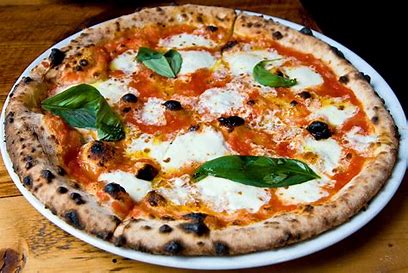
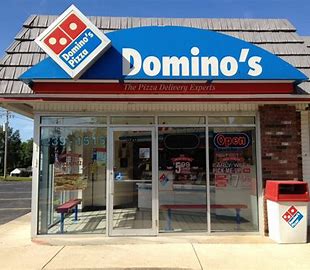
Let’s take a bit of a detour. (Don’t worry; we’ll be back on the main highway before you know it.)  In a surprisingly candid post from fellow blogger Brilliant Viewpoint, her recent trip to Rome and Florence determined pizza – at least the classic Italian version of the pie – is not what it used to be.  The writer suggested the crusts are like cardboard, the mozzarella chunky and unappetizing, and the pizza itself a little soggy.  Having spent a college year in Italy (when I survived on pizza and not much else), I found her conclusions shocking.  Maybe this is why Domino’s – they of the generic-but-convenient home-delivered product in America – decided to give Italy a try?  It’s true.  In 2015, a Dominos franchise opened several stores across Italia to capture the then non-existent delivery market.  It almost worked.

No matter what the state of Italian pizza these days, Domino’s Pizza stores in this of all countries lands on my “you’ve got to be kidding me” list (alongside Starbucks coffee).  Put yourselves in their shoes to understand the absurdity of it all.  You’re an Italian.  Pizza was invented in your country, which has thousands more years of history than America.  You can choose from any pizzeria on any block of any street in your town and the homemade product will be excellent.  Yet you’re going to call Domino’s to order a mass-produced American knock-off instead?  At least Baskin-Robbins was sensible enough to stay away instead of going head-to-head with gelato.

You shouldn’t be surprised to learn – after a seven-year run – Domino’s Italian franchisee filed for bankruptcy in April.  “Of course“, you say. “Their product just couldn’t compete.”  Well, that’s not quite the story.  It was more about pizza delivery itself.  Remarkably, Italy had very little delivery before the pandemic.  You wanted a pie back then, you went out into the streets and got it.  But just like American restaurants, Italian pizzerias did whatever it took to survive the pandemic years, and that meant delivery to front doors.  Domino’s thought they had the market cornered before they ever entered it.  Next thing they knew, everyone else was doing the same thing.

No matter the reason, I’m happy to say arrivederci to Domino’s Pizza in Italy.  Franchise food doesn’t feel right in a country with so much history and wonderful local food.  Shortly after my college year in the 1980s, I learned a McDonald’s restaurant somehow landed a lease at the base of Rome’s famous Spanish Steps.  That’s like painting a mustache on the Mona Lisa.  America has much to offer the world, but fast food is not our proudest accomplishment.  I’m not even sure it’s an accomplishment.

Let’s get back to the main highway now.  Up top we were talking about Mexican food… er, the lack of it, in the American South.  It’s true, if our new little town is any indication.  Yes, we have several options to beat a sit-down at Taco Bell, but they’re only a whisper better.  Everything looks and tastes so generic.  What should be salsa roja inside of enchiladas tastes more like pizza sauce.  What should be a margarita with the sublime afterbite of tequila tastes like syrupy lemonade.  The chips might as well be Doritos.  Yet you look around and the restaurant is packed.  These people don’t know what they’re missing, but they seem happy enough.  As a result, just like Dominos, I don’t expect a Mexican restaurant from outside of the region to waltz into town and do well.

My theory on good Mexican food goes like this: the further west and south you go the better it gets.  Colorado and Tex-Mex trump anything east of the Mississippi.  Arizona and Southern California fare trump Colorado and Texas.  In other words, my favorite Mexican place in my new hometown is destined to be close to my front door. In fact, it’s inside my front door.  It’s my kitchen.  Time to start making my own margaritas and enchiladas. 

Some content sourced from the CNN Business article, “Domino’s tried to sell pizza to Italians…”, and the Brilliant Viewpoint blog.

Clash of the Titanium

The Mohs Scale (which you have no reason to be familiar with) is a 10-point scale used to measure the hardness of natural substances. For example, silver and gold can be shaped into jewelry with the easy tapping of a hammer, so they only rate a 2.5 on the Mohs. On the other hand, diamonds are so hard they’re used to make drill bits and saw blades. The Mohs Scale rates a diamond a 10 out of 10. And then there’s titanium, which rates a 6. Not diamond-hard but still pretty hard, right? So what in God’s name is titanium doing in a bag of Skittles candies?

You know it’s a slow week of headlines when an article on Skittles earns a spot in my newsfeed.  As if we don’t have enough high-profile lawsuits floating around (ex. Johnson & Johnson’s baby powder, Monsanto’s “Roundup”, Cleveland Brown QB Deshaun Watson’s, uh, “indiscretions”), we’re now dragging the “taste the rainbow” candies into court.  Why?  Because Skittles contain titanium (dioxide) and that means the colorful little guys could be toxic if ingested. Oh.

So this suit may not be so frivolous after all…

The “substance” of the Skittles lawsuit

And yet, if scientists are to be believed, we could be talking much ado about nothing.  Titanium dioxide (TiO2) can be toxic above a certain amount (operative words: can be).  The amount you’ll find in Skittles is below this amount.  But the consumer who filed the lawsuit uses the European Union (EU) as his “Exhibit A”, saying they’ve banned titanium dioxide as a food additive altogether.  He is correct, except the EU banned TiO2 as a measure of caution, not as a statement of “toxic or not toxic”.  Safe to say the ingredients in your Skittles won’t be changing anytime soon, and you can give in to the occasional sugar rush without worry.

I haven’t had a bag of Skittles in a long time.  My last taste was probably from the leftovers of the bowl of candy we handed out many, many Halloweens ago.  It never occurred to me to wonder how they make Skittles so brightly colored.  Yep, titanium oxide.  Without it they’d be slightly duller, like M&M’s.  Subconsciously you might not find them as appealing.

“Red” had a ten-year absence

Speaking of M&M’s, TiO2 has a parallel with a substance called “Red Dye No. 2” (RD2).  In the 1970s the Soviets (as the Russians were called back then) created a mass conniption fit when they claimed the RD2 caused cancer, which was a common food additive back then.  M&M’s was forced to remove their red-colored candy, even though it contained no RD2.  The claim was never proven but it took another decade before the public conscience allowed red M&M’s to be added back to the bag.  If this lawsuit gets enough press we may see the same impact to Skittles.  Duller colors, at least until people make peace with TiO2 again.

To be clear, I can take or leave Skittles these days.  Unnatural-looking, chewy candies are an obsession from my childhood, far removed from my relatively healthy diet today.  But there was a time, no doubt when I seemed intent on spending more time in the dentist’s chair.  Skittles didn’t hit America’s supermarket shelves until 1979 but by then I was already into several of their colorful counterparts, like Starburst, Jujyfruits, Now and Later, Mike and Ike, and Jujubes (the ultimate stick-to-your-teeth candy).  Oh, and anything with the word “licorice” in it.

“Skittles”

Skittles may revive my childhood memories, but not just because of the candy.  “Skittles” was also a clever wooden game (way before anything electronic), where you’d pull the string on a top and send it spinning down a board, knocking down pins for points.  Imagine, young people, a game where not only are no electronics involved, but no hands either.  You’d just pull the rip cord on the top, then sit back and watch.  Yep, kids actually had an attention span back then.

The other day in the supermarket checkout line, I made an uncharacteristic impulse purchase of a box of Good & Plenty.  The little pink and white candies are essentially black licorice with a candy coating and they’ve been on the shelves almost a hundred years longer than Skittles.  I’m surprised Good & Plenty hasn’t faced a lawsuit of its own.  The candies are the same size and shape as your standard prescription drug – bright little pills.  Then again, they’re not as bright as Skittles.  Yes, they may be junk food but at least they don’t contain any of the “nasty” TiO2.

Some content sourced from the Scientific American article, “Are Skittles Toxic from Titanium Dioxide?”, and Wikipedia, “the free encyclopedia”.

Food-and-Drink – Eternally Linked

In the proverbial question of the chicken or the egg, the operative word is or. One came first or the other came first – not both. Same with the game of chess; you choose to be the black or the white, not every piece on the board.  And the song you selected this morning to begin your morning commute? It was one of your favorites, not two (unless you found a mashup). So it boggles my find to discover, at Costco of all places, you can have a hot dog and a soda… just not or. It’s food and drink – or it’s nothing at all.

It’s been a while since I’ve shopped at Costco, so last Sunday’s visit felt like more than just a battle for space in the aisles.  Featured items seemed new and interesting and the free samples beckoned more than usual.  My wife and I go to Costco for paper goods, produce, wine, and not much else, so we made it to check-out sooner than most, but there was still a pretty good line of people.  While we waited, I realized Costco is savvy with its store layout.  Approaching the cashier, you face… the food court.  On this day, the court was b-u-s-y, with just about every seat taken.

I never ever patronize the food court at Costco (I like to think I lean healthier) but something triggered my brain this time around.  Just after July 4th a local radio host commented how “Costco hot dogs are the best, and believe me, I know hot dogs.”  Suddenly a Costco hot dog sounded pretty good!  So I asked my wife to stay in line while I pursued our spur-of-the-moment lunch.  A lot of people were standing by the counters (looking nothing like a line) and I realized they were already waiting for orders.  You see, at Costco you self-order on a computer screen – just touch the picture of the food or drink you want and insert a credit card.

Pepperoni pizza.  Hot turkey and provolone sandwich. “Chicken bake”.  Caesar salad.  Hot dog and a soda.  Ice cream.  Those are pretty much your choices at Costco.  The menu isn’t big and it’s certainly not your dietician’s recommendation, but it’s what the average Costco patron wants.  Just not this patron.  Not quite.

“Inseparable”

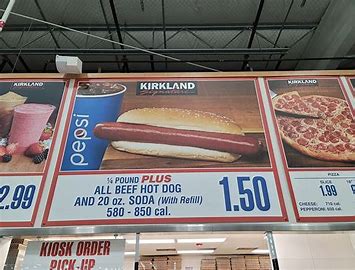
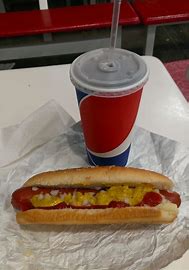
You Costco regulars already know this.  A hot dog and a 20 oz. soda at the food court is only $1.50.  Always has been and purportedly always will be.  But here’s the rub.  The computer screen doesn’t offer a picture of a hot dog.  You’ll only find a hot dog with a soda.  But there’s also a soda without a hot dog.  In what world of logic does this make sense?  I want a hot dog, Costco sells hot dogs, but I can only have one if I buy a 20 oz. soda as well.  But I don’t want a soda…

This quickly became a matter of principle (as you might expect).  I mean, $1.50 is reasonable for a hot dog so why not just go for the combo and throw away the empty soda cup, right?  Yeah, I wish it were that easy for me.  I challenged a couple of Costco employees about it back in the checkout line, and both said, “That’s the way it’s always been. It’s a nod to tradition. They’ll never change the price and they’ll never unlink the hot dog and the soda”.  When I pointed out that, hey, you could buy a soda on its own (but not a hot dog on its own), that made them pause.  A little.

Scold me now, please.  There’s a war going on in Eastern Europe.  Food and gas prices are through the roof.  The U.S. is experiencing one of its hottest summers in decades with states forced into rolling blackouts.  Meanwhile, I’m pitching fits because I can’t buy a hot dog all by itself at Costco.

Fittingly, you get the last laugh.  My wife and I pulled out of the Costco parking lot and still had a taste for a hot dog, and the only place we could think of was a little sports bar in my mother-in-law’s neighborhood.  So we go there and I order a hot dog with fries while my wife opts for the bratwurst with Tater Tots. (and yes, for those of you keeping score I could’ve ordered this hot dog all by itself).  Then the cashier rings up the order and says, “That’ll be $30.00” (not $1,50, not $3.00 – thirty bucks).  And how was my hot dog?  Delicious, actually. I’d have the same thing again nex time.  I just need to stop thinking about how I could’ve had twenty Costco hot dogs (and a bunch of empty soda cups) for the same price.

Many Happy Returns

Unlike 2021, the due date for U.S. tax returns was back to mid-April this year.  Most of us sweated under the ticking clock as we combed through statements and receipts in search of last-minute tax breaks. I have this recurring pipe dream where the IRS tells me to just keep what I owe (followed by the dream of how I would spend the money). Sadly, I’m a taxpayer who rarely sees a refund, and keeping what I owe certainly won’t happen. On the other hand, retailers could soon be asking me to keep what I want to return.  Now there’s something to ponder.

Picture this.  You place an Amazon order for a brand new Playstation 5.  You plunk down the $500 it costs and a few days later your purchase shows up on your doorstep.  But while you were waiting for your gaming console the IRS sent you a reminder about the balance due on your 2021 taxes. Whoops. You owe that $500 to the federal government, young taxpayer.  Hello, buyer’s remorse.  Full of regret, you contact Amazon to arrange the return, and their carefully worded response goes like this:

Dear Amazon Prime Member.  Thank you for your inquiry into the return of your Playstation 5 gaming console.  After reviewing our current stock we have determined it is not necessary for you to return this product.  Accordingly, nothing further is required at this time.  You can expect a full refund applied to the credit card used to make this purchase.  Thank you for shopping with Amazon.

Wait… keep the product AND get a refund, you say? Crazy, I know. Or maybe not, at least if you shop at Target or Wal*Mart.  Both retailers are considering this no-return approach with clothes, garden furniture, and “bulky” kids’ toys among other products they currently overstock.  It’s the result of consecutive worldwide events.  First, the pandemic, which allowed consumers to build up their savings accounts while mostly staying at home.  Second, record-setting inflation, which dragged a knife through what was supposed to be a post-pandemic spending frenzy.  Retailers stocked up early in anticipation of the purchase party, but then the lights and music were abruptly cut off.  The result: overstocked with a capital “O”.

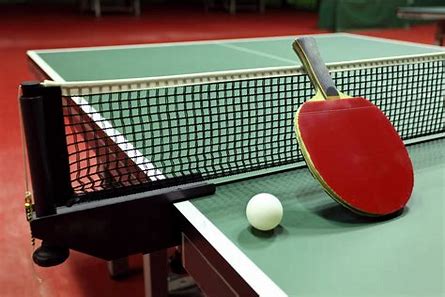
This version of keep-the-product-keep-the-cash kinda-sorta happened to me years ago.  My sister-in-law ordered a ping-pong table for her family and when it came, they discovered a bit of damage in one corner.  So she contacted the company, who told her, “Keep it.  We’ll just send you another one.”  Thus, in a moment labeled “Christmas not on Christmas”, my family got a free ping-pong table (Thanks, Sis!) Sure, the bounce of the ball was a little off on that one corner, but my kids didn’t care.  Besides, before I knew it they were old enough (or not) to drink and pretty much destroyed the table when they shifted to beer pong.

But I digress. With a ping-pong table I’m almost sure the cost of shipping back to the manufacturer was more than the profit after fixing and reselling it.  So my sister-in-law got two tables for the price of one.  Hey, what if she’d bought ten ping-pong tables and all of them were defective?  She’d go up and down her street handing out free tables.  She’d gain a bunch of new best friends and her neighborhood would hold massive ping-pong tournaments.  All for the cost of one table.

The problem at Target and Wal*Mart is more than just the cost of returns and overstocked items.  It’s also, they can’t charge the same price they charged you.  For one, the item may be offered at a discounted price by the time you return it.  For two, certain items have to be classified as “used” and can’t be offered at full price after the first purchase, or even offered at all.

“Un-resellable”

Which brings me to orange juice.  Orange juice, you ask?  Yep.  Try to return a jug of juice to the market some time.  We bought five jugs a couple of months ago for our daughter’s bridal shower, assuming the mimosas would flow like Niagara Falls. Wrong. Only a few of the guests opted for the bubbly since the shower was mid-day.  So I called my local market to confirm the return of four unopened jugs of juice, and was horrified to hear, “Sure, you can return them for a full refund.  But we’ll just throw out the juice.” Throw out the juice?  Yes, it’s the world we live in these days.  Many food items cannot be resold for fear of tainting.  So I’m drinking a lot of orange juice right now.

Let’s wrap this public service announcement with a caveat.  One of these days you’ll be pleasantly surprised when you end up with a purchased product AND a full refund.  Lucky you – it’s “Christmas not on Christmas”!  If it’s through Amazon, however, be wary of the following purchases: hazardous materials, gift cards, jewelry, groceries, and live insects (uh, live insects?) None of those can ever be returned, nor will you get your money back.  In other words, the sea monkeys you adopted in a moment of nostalgia (remember those, Boomers?) should be considered bought and paid for.  No refunds.

Some content sourced from the CNN Business article, “Just keep your returns…”, and the Clark.com article, “12 Items That Can’t Be Returned to Amazon”.

Blues Choose

When our daughter gets married this June, she’ll include the tradition of “something old, something new, something borrowed, something blue”; all items meant to bring good luck.  “Old” is a ring from her grandmother; “New” a necklace.  “Borrowed” is still to be determined while “Blue” is the garter her husband-to-be tosses at the reception.  Now, if the “blue choose” were mine to make, I’d go with a handful of juicy berries instead.

This week I learned a few things about blueberries, my favorite fruit in any orchard, grove, or patch on earth.  Just outside the tiny town of Whiting, Maine (pop. 482) you’ll find Josh Pond, a farm known for its “organic hand-raked wild” blueberries.  Josh Pond is harvesting into its fourth generation and its 150 acres include a herd of Oberhasli goats and a giant field of strawberries.  In other words, shop on the JP website and you’ll find a variety of cheeses, jams, and jellies alongside the blues.

You already know a thing or two about organic produce but perhaps you’ve never heard the term “hand-raked”.  Check out the following video (which beats any description in words).  It’s a soothing process to watch and a bountiful harvesting technique.  Josh Pond can hand-rake up to 2,000 pounds of blueberries a day.  They’re then quick-frozen, packed into 5-pound boxes, and shipped directly to you…at $100 USD a pop.  Do the math.  Josh Pond grosses $40,000/day on its blueberries alone.

$20 for a pound of blueberries is way steep for my purchasing power.  I’m reluctant to pay half as much, and even then I drop them sparingly into my yogurt/granola breakfast.  But I may be stingier than I think.  JP customer Chelsea Balboni gushes in her online review, “My wild organic blueberry subscription has changed my life.  Every month a 5-pound case is overnighted to me…”  Every month?  Who spends $1,200/year on blueberries (besides Ms. Balboni)?  For the record, I’m not knocking Josh Pond.  If you want the best blues North America has to offer, JP is your go-to.  Just be ready to pay.

Maybe I still spend more on blueberries than you do, but I find it interesting my blues choose – when it comes to food in general – is very limited.  Quick – name a blue food (besides Josh Pond blueberries).  All I could come up with was Blue Curacao, which isn’t food so much as a liqueur served as a cordial or in tropical drinks.  Blue Curacao, ironically, comes from the dried peel of bitter orange and is then dyed blue. (Why blue? No idea, but we’re getting off-topic here).

A consult of a blue food list comes up with just a few worthy entries.  Blue crab.  Blue corn (tortillas).  Blue (or bleu) cheese.  And Brilliant blue FCF, a synthetic “safe and non-toxic” dye for ice cream, cotton candy, medications, and cosmetics.  I half-expected to find Kellogg’s Pop-Tarts on the list but then I remembered: the wholly chemical toaster pastries contain no blueberries whatsoever. (Okay, maybe a dried trace of them, way-y-y-y down on the ingredients list.)

Hello, Violet!

No post on blueberries would be complete without a mention of Violet Beauregarde.  Violet who?  C’mon now, channel your inner Charlie and the Chocolate Factory.  Violet was the obnoxious, gum-loving rich kid who sampled a chew of Willy Wonka’s four-course dinner gum, including the blueberry pie dessert that “wasn’t quite perfected yet”.  In a wonderful scene (from the classic 1971 version), Violet turns deep blue as she chews, and inflates into a giant blueberry.  The last we see of Violet, the Oompa-Loompas are rolling her away to the juice press to be squeezed back to normal size again.

Hello, Sal!

All of this blues talk reminds me I need to read my granddaughters Blueberries For Sal, one of my favorite childhood stories.  Also, I’ll probably cave to one of the giant blueberry muffins my wife brought home from Costco the other day.  As for the tempting bounty from Josh Pond?  Ah, if only I could purchase just a handful for my daughter on her wedding day.  Instead, I’ll leave those hand-raked beauties to blues-choosers with a little more discretionary income. 

Some content sourced from the Josh Pond website, the Prepared Cooks article, “18 Foods that are Blue”, and Wikipedia, “the free encyclopedia”.

——————–

Lego Grand Piano – Update #14

(Read about how this project got started in Let’s Make Music!)

You’ve seen this before, as we cruise past the 2/3 DOWN, 1/3 TO GO road sign.  Bag #14 – of 21 bags of pieces – added another seven keys to the board for a total of twenty-four.  There’s a lone key remaining to the far right; then the whole assembly goes into the body of the piano (and heaven help me on that maneuver).

Piano keys are getting repetitive so let’s talk about Sergei Rachmaninoff.  His name is intimidating but his music has an interesting connection with pop.  If you remember Eric Carmen, you already know a little Rachmaninoff.  All By Myself is based on Sergei’s Piano Concerto No. 2Never Gonna Fall in Love Again is based on Sergei’s Symphony No. 2.  Both Carmen songs were huge hits but they’re also depressing.  Did Eric seek comfort in classical music when his personal relationships weren’t going his way?  Maybe, but it wasn’t without expense.  The Rachmaninoff estate brought “copyright” to Carmen’s attention, and promptly helped themselves to 12% of the royalties on both songs. 

Running Build Time: 11.0 hours.  Musical accompaniment: Rachmaninoff’s Piano Concerto No. 2 in C minor, Symphony No. 2 in E minor, and Rhapsody on a Theme of Paganini. Leftover pieces: 6.

Conductor’s Note: Forget Eric Carmen.  Rachmaninoff’s Rhapsody… is one of the most moving classical compositions you’ll ever hear.  The piece starts ever so simply on the piano, then brings in the orchestra to dramatic, sweeping interpretations.  My wife isn’t a classical music fan yet she loves Rachmaninoff’s Rhapsody… especially since it’s the theme of the romantic time-travel movie Somewhere in Time.  Have a listen here.

A Month of Sundaes

I seem to have an affection for the hyphen. The humble horizontal line appears regularly in my posts. The “dash” is more formal than the “dot-dot-dot” yet more relaxed than the semi-colon – perfect for blog pauses, don’t you agree? My hyphen habit may be the result of formative moments in my life, like Hanna-Barbera cartoons (hello, Yogi Bear) and Hewlett-Packard, where I worked most of my professional career. But if I had to pick just one – or should I say, thirty-one, I’d go with my favorite hyphen of them all.  Baskin-Robbins.

The next time I write a post, remind me to have something to eat before I sit down to the keyboard.  My last four entries cover graham crackers, doughnuts, waffles, and now ice cream.  Might be my anticipation of Easter Sunday (when my Lenten sweets sacrifice comes to an end).  Bring on the jellybeans, Peter Rabbit!  But today is about ice cream – and not just any.  It’s about the one you grew up with; the one you still identify with.  For me, it’ll always be Baskin-Robbins.

“B-R”, as they’re now called, has a quaint beginning worth a few sentences here.  Burt Baskin and Irv Robbins got into the ice cream business independent of each other.  Then Burt married Irv’s sister.  The now brothers-in-law decided to combine “Burton’s Ice Cream Shop” (10 flavors) with Irv’s “Snowbird Ice Cream” (21 flavors), and there you have it – the birth of “31 Flavors”.  B-R was a single shop back in 1948; today, how about 8,000 parlors in 50 countries?  Their new slogan – Seize the yay – has more to do with “celebrating small, joyous moments” than ice cream.  Even the rebranded logo removes the nostalgia of the B-R I grew up with (though the embedded “31” is clever).  But I get it – B-R needs to appeal to younger generations as well.

Dad’s favorite

Baskin-Robbins is inextricably tied to my childhood memories.  Our local B-R was one door over from my mother’s hair salon.  It was also right down the street from our church.  So ice cream for me was often the reward of patience with Mom or simply going to church with Dad, who often couldn’t resist a stop at B-R on the way home.  You could always find a container of B-R Rocky Road in Dad’s freezer, all the way up to the last day of his life.  He was fond of saying while he enjoyed a bowlful, “Nothing beats Baskin-Robbins’ Rocky Road.” (I beg to differ with B-R’s Peanut Butter ‘n’ Chocolate, but hey, we all have our favorites).

A lot of my posts mention ice cream yet I’ve only mentioned Baskin-Robbins once in all my blogging (in The Sweets Life three years ago).  Kind of a crime there because B-R deserves a post of its own, as does your favorite ice cream parlor.  Wikipedia has an article called List of Ice Cream Parlor Chains (of course they do).  Your favorite is on that list.  I may be partial to B-R but I’m familiar with several others, including Braum’s in Oklahoma and Texas, Carvel to the Northeast, Farrell’s to the West, and Lappert’s in Hawaii.

Of course, with Baskin-Robbins I’m talking “ice-cream-parlor ice cream”.  Back at home, you won’t find any B-R in our freezer because Häagen-Dazs (ice cream) and Talenti (gelato) earn the shelf space instead.  H-D goes a whole lot higher on the butterfat scale so naturally it tastes better.  H-D even has a hyphen!  And Talenti, well, it’s gelato.  Need I say more?

If you live in a bigger city than me, you have better ice cream options than Baskin-Robbins.  Big cities have wonderful local places (follow Lyssy in the City for some of the best in New York).  But do they have hyphens?  Mine does (as does this post – 48 if I counted correctly).  Yes, B-R may be updating its brand, but I’ll always insert the rainbow-sprinkle “dash” between the initials, returning me to those ice-cream parlor memories of old.

Some content sourced from the CNN Business article, “This 77-year-old ice cream chain is getting a makeover”, and Wikipedia, “the free encyclopedia”.

——————–

Lego Grand Piano – Update #13

(Read about how this project got started in Let’s Make Music!)

We passed the ten-hour mark with the build today, which amounts to a very long piano concerto. (Good thing you’re not being asked to sit and watch, eh?) Bag #13 – of 21 bags of pieces – added another five keys to the board for a total of fifteen.  Eight more next week will complete the entire set.  Maybe we’ll be installing them into the piano as well!
Here’s a stop-sign warning if you take on a project like this.  Pieces can easily be installed backwards.  For all my “practice” building keys these past few weeks, I got a few tiny pieces reversed today and had to disassemble to make things right.  Mr. Instruction Manual includes warning-like diagrams to make sure you don’t do this. In other words, the piano student must pay attention at all times!

Running Build Time: 10.2 hours.  Musical accompaniment: Strauss’s The Blue Danube waltz. Leftover pieces: 3

Conductor’s Note: The Blue Danube is familiar from the very first bars (especially if you saw 2001: A Space Odyssey and remember the scene with the rotating space station).  Strauss was fond of waltzes and this one is his most famous.  With its repeating theme, I thought The Blue Danube would be appropriate this time around since I’ve been building key after key after key.