Sweet Charity

Several times during the recent year-end holidays, I passed through the drive-thru at Starbucks, and as I paid, I asked the cashier to include the purchases of the car behind me. I’ve been participating in this Starbucks-wide trend for several Christmases now, and it brings me an inexplicable feeling of goodwill and satisfaction.  The goal of the effort is anonymity. Or to put it more comprehensively, blind faith.

Blind faith is defined as “belief without true understanding, perception, or discrimination”.  That’s powerful.  “Faith” is a spectrum that starts with basic trust and ends with the highest forms of religion.  But add on “blind” and it elevates the meaning.

Buying a free cup of coffee at Starbucks is the easiest form of blind faith, like handing over a dollar to a beggar.  No judgment as to “what happens next” allowed.  But the intention behind an act of blind faith is worth a bit of exploring here.  Dissecting my Starbucks gesture, I note the key components.  First, I don’t waffle over the amount of the purchase I’m covering.  That’s the blind faith in choosing to pay in the first place – it shouldn’t matter how much.  One time I looked in the rear-view mirror and saw a car with four passengers.  Their bill was well over $20.  But my decision had been made before the car even pulled up behind me, so the point was to stick with it.  Another time my recipient was a well-dressed woman wearing sunglasses and driving a recent-model BMW.  Again, no judgment.  Pay for her coffee and move on.

The second component concerns my “getaway”.  As I’m waiting for my own purchases I’m considering my escape route – the path that gets me away from Starbucks as quickly as possible, with enough turns and traffic lights to deter my beneficiary.  My goal is to remain anonymous, and unless the person behind me memorizes my license plates (or something else unique about my vehicle), I’ve achieved a moment of goodwill and will never see them again.  Frankly, it would spoil the whole effort if the car pulled up next to me at a nearby red light.  They might offer their gratitude, or they might offer to pay me back.  They might even be annoyed, as if I had no business intruding on their “personal life”.  I’d rather not know.  I prefer to lean on blind faith that I brought an unexpected smile, or delivered a tiny give-me-a-break in an otherwise trying day.  Maybe they’ll even “pay it forward”, as a string of 374 consecutive cars did at a Starbucks in Florida back in 2014.

Come to think of it, there’s a third component in the Great Coffee Giveaway.  Never expect the gesture in return.  In the countless times I’ve driven through Starbucks during the holidays, I’ve never thought to myself, “I hope the car in front of me picks up the tab”.  If I knew this was happening, I might just order a half-dozen breakfast sandwiches and several cake-pops to go with my Flat White.  Just kidding, of course.  I hope the thought never crosses my mind.

This week and last – no surprise here – I’ve read dozens of blogs about resolutions for the New Year.  Allow me to contribute my one-and-only.  I’m going to lean on blind faith in the coming year, whenever I have the chance to give someone a break.  Remember the rules: 1) No conditions on the amount (read: cost) of the help.  2) Keep it anonymous, as a) recognition defeats the spirit, and b) giving simply for the sake of giving might inspire “pay it forward”.  3) Don’t expect a similar gesture in return.  That’s not to say you won’t be pleasantly surprised when someone buys your Starbucks coffee one of these days.  You’ll just know there were no hidden agendas.


Your True Love’s a Nut Job

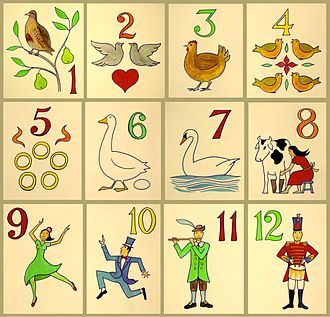
Each Christmas season (which translates to every waking moment from Thanksgiving to the New Year), I’m fascinated we still sing “The Twelve Days of Christmas”. I feel like a character in the Dickens world of Scrooge and Tiny Tim as I labor through the verses (ditto “Here We Come A-wassailing”).  I should sing with an English accent.  More to the point, I question the TDoC lyrics.  What other context do we have for turtle doves and calling birds?  What’s with the gold rings?  Don’t we owe it to ourselves to understand more about a carol we’ve been singing for over two hundred years?

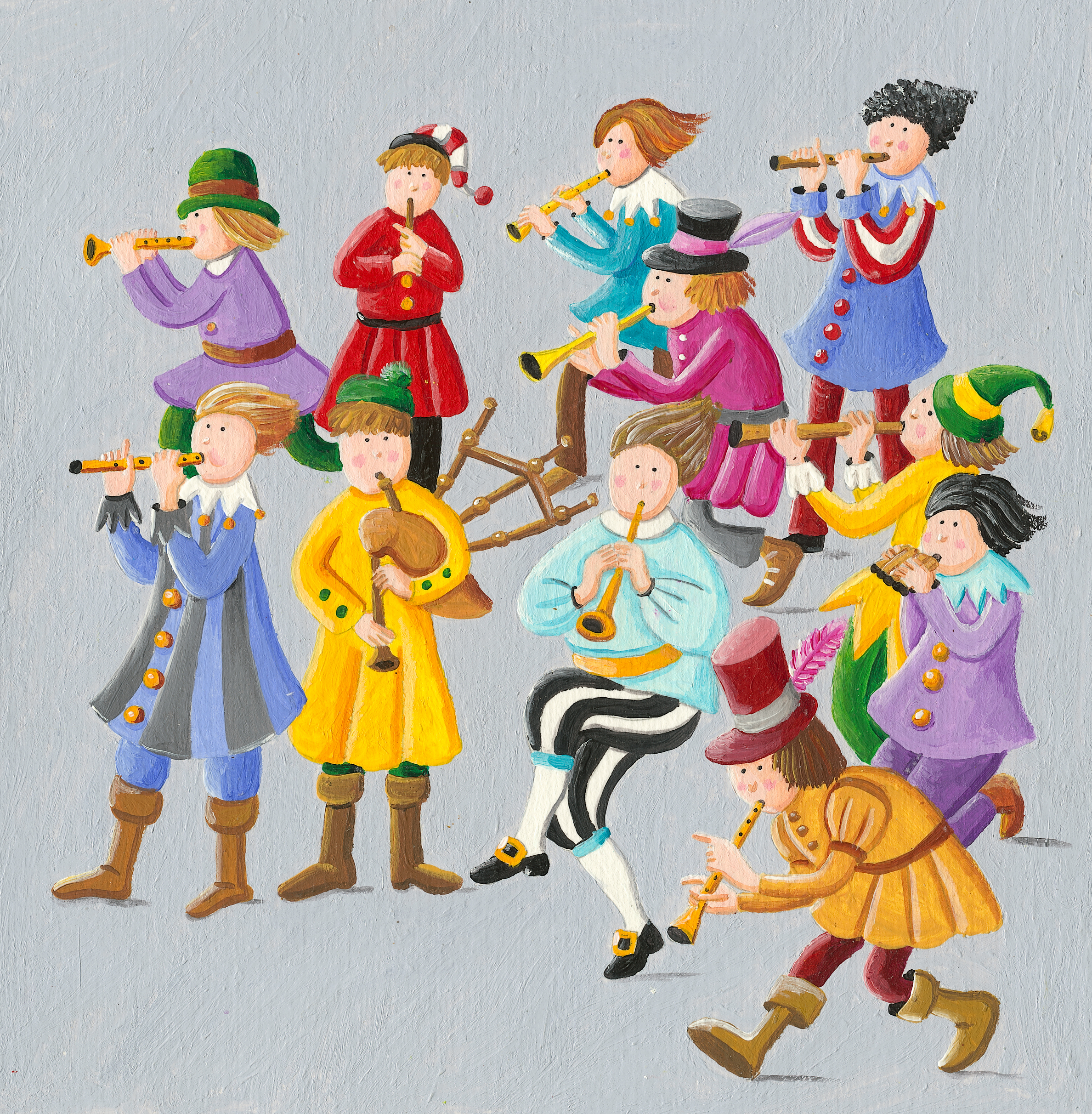
Depending on the source, “The Twelve Days of Christmas” was either a) written as a children’s book – which eventually morphed into a song, or b) “code” for memorizing elements of Christian religion at a time when faith could not be openly practiced.  I prefer the latter.  For example, the two turtle doves represent the New and Old Testaments of the Bible, while the four calling birds represent the gospels of Matthew, Mark, Luke, and John.  The six geese represent the days of creation (“and on the seventh day He rested”), while the eleven pipers represent the faithful disciples of Jesus Christ.  “My True Love” is Jesus himself.  Clever, no? (see here for the full “code”).

Wikipedia claims “the exact origin and meaning of the Twelve Days song are unknown…” so perhaps we should just leave it buried in the past.  But I can’t do that.  TDoC is so much more fun if you take the literal approach to the words.

The title is innocent enough.  “The Twelve Days of Christmas” equals Christmastide, a season of the liturgical calendar in most churches.  Christmastide begins on December 25th and lasts until January 5th (the day before the season of Epiphany).  Twelve days.  That’s even more celebrating than Hanukkah.  Fine with me – our family likes to drag out Christmas as long as possible.

Beyond the title however, “The Twelve Days of Christmas” descends into total chaos.  Consider the structure of the carol.  TDoC is a “cumulative” song, which means you add the previous verse to the one you’re singing – just like all those animals in “Old MacDonald Had a Farm”.  By the twelfth verse you’re singing about everything, and you’re totally exhausted.  Some people solve the length by having a different voice for each gift.  That’s great for the partridge in a pear tree singer, but kind of sucks for the drummers drumming singer (who only gets one chance to shine).  Make sure you have a solid voice for the partridge in a pear tree.

Speaking of the gifts, let’s do some analysis.  Other than the rings, your true love has an obsession with birds.  He or she is gifting you an aviary on six of the first seven days.  Doves, hens, swans, and more.  Not only that, you’re getting pear trees and God knows how many eggs from those a-laying geese. (Note: pears and eggs make great Christmas gifts).

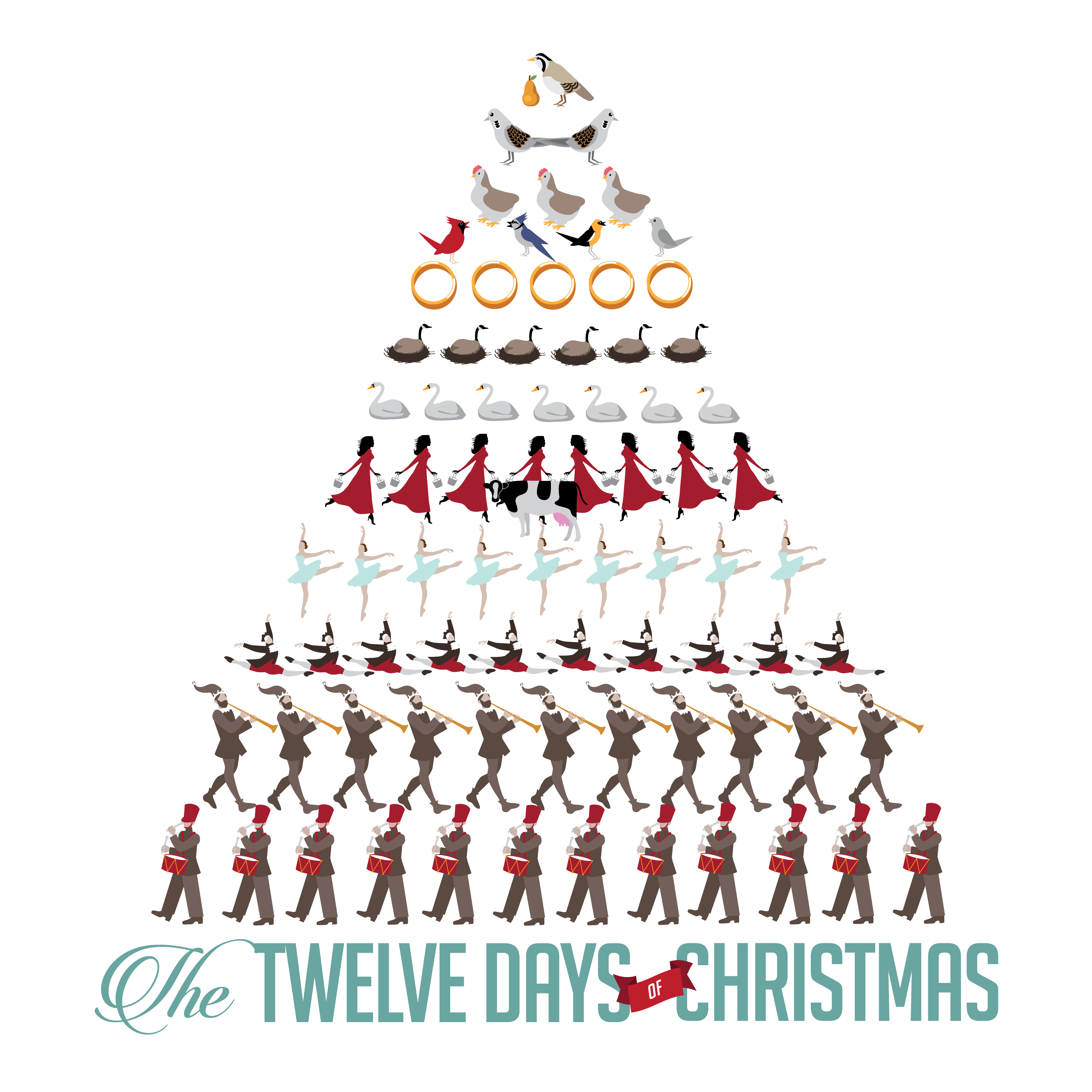
The final five days, your true love gifts you a bunch of workers and merrymakers for the estate you apparently have.  You’ll gain a herd of cows (what else are those maids a-milking?) and you’ll have a some dancers and a band making quite the ruckus on your front lawn.  The neighbors may complain.  C’mon, you say: how much noise can eleven pipers make?  Eleven?  So you forgot about the aggregate of a “cumulative” song, did you?  Your true love actually gave you twenty-two pipers by the time January 5th arrives… and twelve drummers, thirty-six dancers and thirty guys who like to jump.  And don’t look now, but your twelve pear trees are swarming with 184 birds.  Maybe you don’t have any pears after all.

Sorry, but if this is your true love’s idea of Christmas giving, he or she is a nut job (or at least an animal hoarder).  Here’s my advice: run.  Take your forty gold rings and date one of those lords or ladies instead.

Getting My Juice GONE (p.2)

“Survivor” is reality TV’s longest-running program. “Survivor” is also my new middle name after a vicious three-day juice cleanse last weekend. For my pre-cleanse (sane) state of mind, refer to last week’s Getting My Juice On. For my current (questionable) state of mind, proceed with caution. The words that follow may be the equivalent of the movie scene you wish you never saw; the one still burned into your brain.

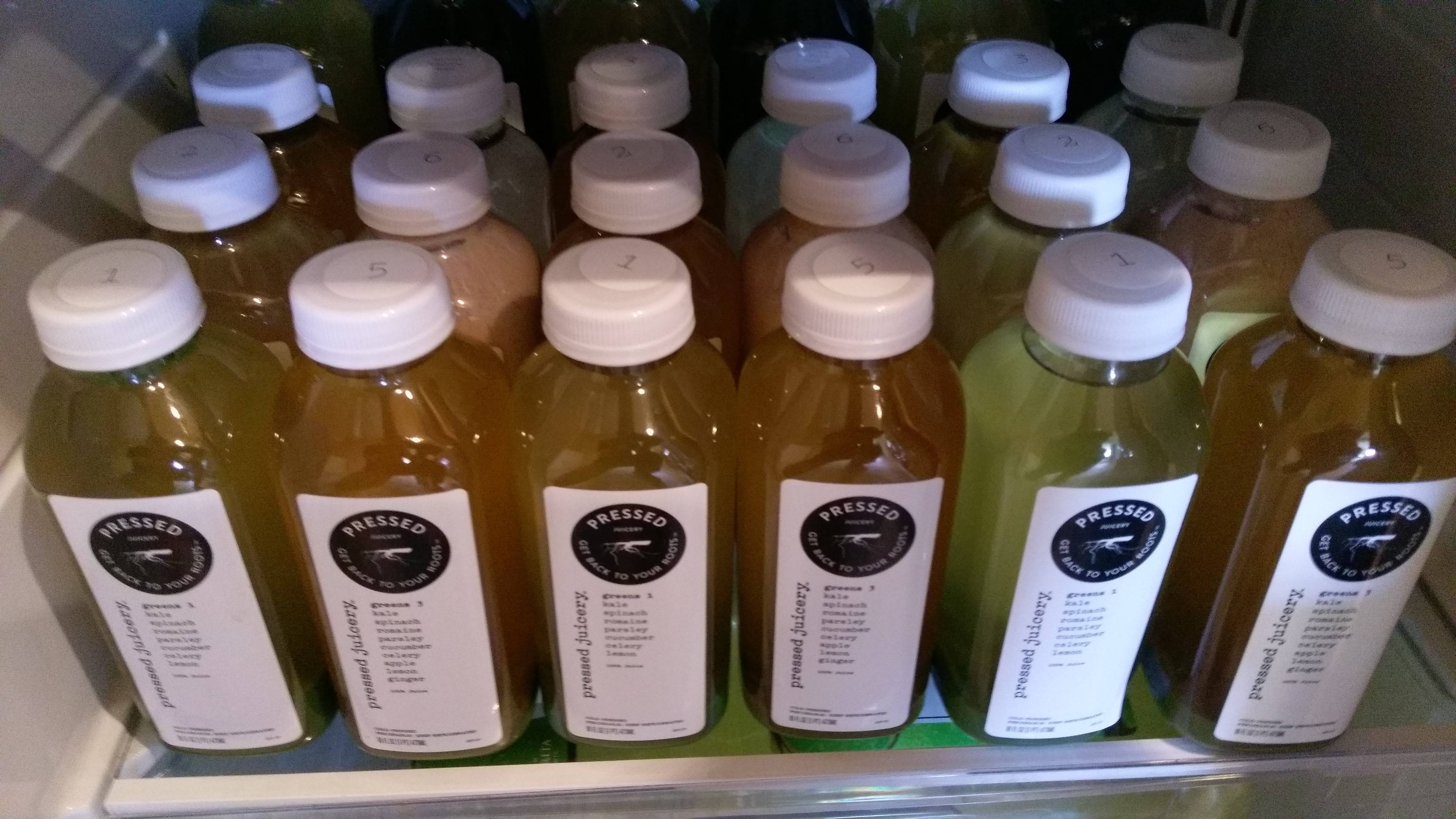
The quick recap: my daughter recently coerced my wife and I into trying Pressed Juicery, a hard-core player in the world of retail cold-pressed juice products. PJ offers gentle confections like coconut water with cinnamon, but for the truly gullible (me), they suggest a “cleanse”, where you down 336 ounces of liquid in three days (assuming you include the recommended twenty-four glasses of water). In those torturous seventy-two hours you get nothing else on the menu – no snacks, no bars; no solid food whatsoever. It’s just bottle after bottle of sickly-green liquefied vegetables (with an occasional fruit thrown in, which might as well be a lamb tossed into a pride of lions).

Considering I knew everything in the above paragraph before I took the first sip labels me as some kind of (raving lunatic)? But add my daughter to the equation and my voice goes rogue with, “sounds great, honey!”. Thus last Friday morning at zero-eight-thirty, I took my first sip of the PJ Kool-Aid. Let’s set the table with the scrumptious ingredients. Kale. Cucumber. Romaine. Spinach. Parsley. Lemon. I’d list the rest but I’m about to toss my cookies just thinking about them again (and believe me I’ve had a few cookies since that last fluid ounce).

In the beginning (this is a tale of biblical proportions), I assumed remarkable confidence staring down Cleanse Bottle #1. I consumed its contents in two or three gulps. Not so bad, I thought. Utterly vegetable with a sickly fungal aftertaste, but nothing a glass of water wouldn’t kill. But two hours later (which is a short 120 minutes on a juice cleanse), Bottle #2 came a-calling. This time I’m not so fast. It takes me a good half-hour to drain the contents. Now I’ve got thirty-two ounces of liquified vegetables in my system, which PJ claims is eight pounds of the real produce. That’s rough(age) on a body, and the body doth protest. After Bottle #3 the burps started. After Bottle #4 I enjoyed the occasional dry heave. By Bottle #5 I was asking for Mommy so I could tell her I didn’t want to do this anymore.

Unbeknownst to me (remember, I am gullible), I had created the perfect storm of stomach acids and vegetable puree deep down in my digestive system. Perhaps that’s why Bottle #6 is all almond milk and vanilla. It’s like dumping two cups of Pepto-Bismol over the whole mess (“Coats!” “Soothes!”). Okay fine, but try sleeping on that stomach. Your dreams are technicolor and downright scary.

Somewhere during Day 2, I looked in the mirror and saw a cucumber with a tomato head and broccoli-stalk arms. I stifled a scream. I put my hands on my hips and tried a “Ho-Ho-Ho” to see if I should audition for those Jolly Green Giant commercials. But there’s no time for auditions when a bottle beckons every two hours. Furthermore, deep into a juice cleanse you stop stop tasting the vegetables. That is, even when you’re not drinking, you’re tasting the green. Every gulp of air is tainted with chlorophyll. No breath mint is strong enough to conquer the stench. It’s like somebody threw your backyard garden into a giant blender, then filled your swimming pool with the resulting green muck, then threw YOU into the deep end. You’re six feet under in vegetable quicksand.

Enough of the madness – let’s cut to the merciful end of my story. Somehow I burped and lurched Day 3 away.  On Day 4, the clouds cleared, the sun rose, and I awoke to the promise of solid food. Bless my soul – a full-course breakfast awaited me. No longer would I spend as much time in the bathroom as I would in the free world. Life was good again. Or so I thought. As PJ smartly warns you, one cannot just return to normal eating/drinking immediately after a juice cleanse. One must slowly reintroduce the finer things in life. Choose carefully. Chew slowly. Limit thy portions. Rome was not built in a day.

Would I recommend a juice cleanse? No. (unless you’re gullible – then you don’t have a prayer anyway). Do I feel healthier after my three days in the garden? No, but I feel different, as if a vegetable alien is growing inside my stomach and may someday rip its way out.  Do I have any advice after the fact?  Yes. Damn, I could’ve had a V-8!

Getting My Juice ON (p.1)

My daughter has a knack for making me do things I wouldn’t choose to do myself. Perhaps it’s because she was unexpected at birth (I came from a family of five boys and already had two sons of my own). Perhaps because as a kid, she could scrunch up her face and use her best sweet-little-girl voice whenever she wanted something. Maybe it really began by relenting to little Girl Scouts and their boxes of cookies at my front door.  Whatever the reason, my daughter still finds a way, even as an adult in her mid-twenties.  And that is why I’m commencing a three-day juice cleanse tomorrow morning.

Cleanse. The word scares me a little. I think of those whirly scrubbing-bubble characters on TV, dashing around the bathtub disinfecting away soap scum.  Or I think about SOS pads and their steel-wool grittiness.  Is this simply a short-term liquid diet, or am I on the verge of a full-on purge?

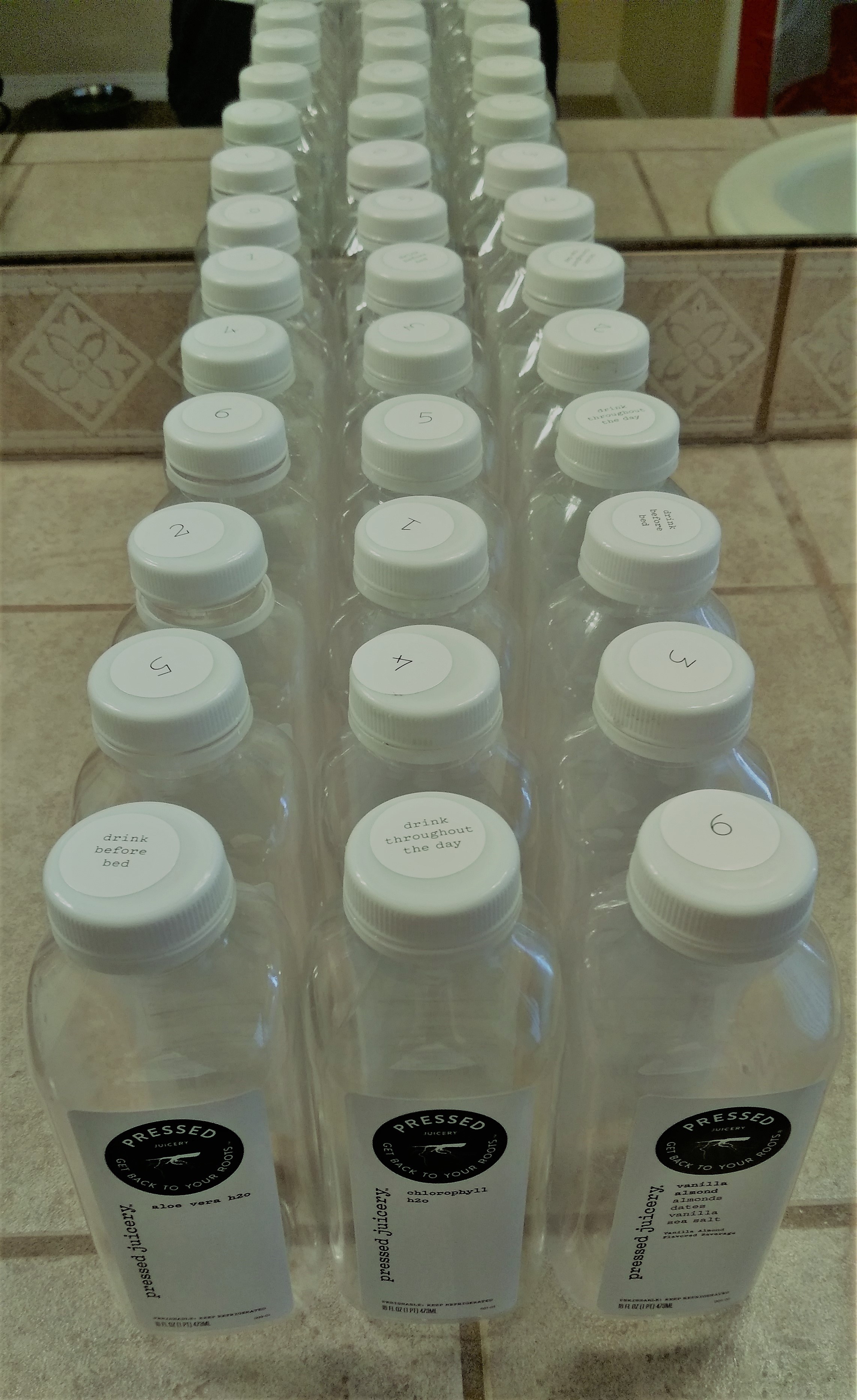
My box-o-cleanse arrived last night; a liquid-brick wrapped carefully inside a foil space blanket. I opened the container to find twenty-four intimidating 16 oz. bottles staring up at me. I swear they were grinning. They looked like they couldn’t wait to get out of their box, sprout their scouring brushes, and commence the cleaning. Each bottle contains a different colored concoction, labeled rather impersonally.  Greens 3.  Roots 1.  Citrus 2.  I’ll drink one of these little guys every two hours in the waking hours of the next three days, chasing their green goop with a similarly-sized bottle of “Chlorophyll” water or “Aloe-Vera” water. Chlorophyll? Aloe Vera?  I feel like a plant already.

I can’t claim to be surprised by the contents of my box-o-cleanse. Just last week I visited one of the labs – er, retail outlets – for a sample of these products. Pressed Juicery, with locations close to the coasts and Hawaii, sells cold-pressed, 100% fruit & vegetable concoctions; all ingredients non-GMO. I tried one of their delicious coconut-cinnamon drinks… and that was my mistake. P.J. lures you in with mild, decent-tasting options like coconut and cinnamon. Then they gently suggest you consider a cleanse.  My daughter wanted to try one, and I was only too happy to foot the bill (these drinks ain’t cheap).  I figured Colorado was a safe distance from the cleansing craze, so my only involvement would be with my wallet. Wrong-o. P.J. is happy to overnight their products to just about anywhere.  Thus my twenty-four cleanse bottles mock at me today, anticipating tomorrow’s cleaning kick-off.

If I stepped back and gave Pressed Juicery a hard look, I might have used my better judgement, turned, and fled.  The retail outlets abound with stark-white surfaces and plate glass.  The employees dress in uniforms intimidating enough to double as lab coats.  The products emerge from a dark, back wall refrigerator, pre-assembled and ready to consume.  For some reason “drinking the Kool-Aid” just came to mind.  Gulp.

P.J. describes their juice cleanses with a selection of unnerving words. Reboot. Fresh Start. Body Do-Over. Cue a bout of mild nausea. Am I going to be more intimidated by a) the taste of “four pounds of fresh produce in every juice” or b) what those four pounds will do to my insides? Will my body a) turn green and sprout shirt-ripping muscles like “The Incredible Hulk”, or b) reduce to a puddle (think “Wicked Witch of the West”) through non-stop visits to the toilet?

My daughter is already halfway through her own three-day P.J. cleanse.  She claims she’s never hungry, feels really healthy, and only misses “the act of chewing”.  But she also admits to gagging trying to get a bottle of “Roots 2” down (she recommends shot-glassfuls).

If I’m still around next week, you can count on a post-cleanse blog report.  If I’m not, Lord help me for never saying no to my daughter’s ideas.

The Euphoria of Joe

Today I’m perched at one of my favorite Colorado coffeehouses, sipping the local version of a cafe latte.  The air is rich with the bitter aroma from the nearby roaster.  I’m surrounded by chatty patrons, each with their own coffee-based delight-in-a-cup.  If I had a handful of the crunchy chocolate-covered espresso beans they sell, I could say coffee’s hitting all five of my senses today (instead, I have a delicious apple fritter).  These days, coffee is as infused into American culture as baseball and Apple (pie).  And how far we’ve come from the cups of Joe former generations would brew with store-bought cans of Folgers.

How far have we come (besides the requisite latte foam-art)?  Consider this: my coffeehouse does not allow to-go orders.  You read that right: if you get your coffee here you’re drinking in-house.  According to the resident “roastmaster”, paper cups alter the flavor of the coffee and thus they won’t sell it to-go.  Hard for me to swallow (the cup thing, not the coffee), as my palate has never been very discerning.  Yet here I am, paying top dollar to drink real-cup coffee “in the house”.

It wasn’t always this way.  Not so long ago all you had on the menu was a “cup of coffee”.  Take it black or take it with sugar/cream, but that’s where your options ended.  And the reference to “Joe”?  That comes from a 1914 ban of alcohol on U.S. Navy ships by then Secretary of the Navy Josephus “Joe” Daniels.  The strongest alternative to a “real” drink on-board was black coffee.

Today’s kids get their first taste of coffee at Starbucks.  My own first taste took place in Italy, during the college year I lived there in the 1980’s.  Italians take their coffee very seriously.  Walk into an Italiano café, belly up to the bar, and order an espresso shot and sweet roll.  That’s your standard-brand Italian breakfast, and you take it standing up.  You’re in, you’re out, and you’re on your way again in less than a minute, sufficiently caffeinated.  Not many are baptized on straight espresso, but that was my experience.

My coffee journey continued after college, but it was quite a stumble.  I graduated from Italian espresso and regressed to the standard-brand Bunn coffeemakers of corporate America.  Starbucks and its kin would not arrive for another 5-10 years.  Office coffee was a mindless, characterless, tasteless experience.  A Styrofoam cup of black nothingness, with a few unbrewed grounds thrown in for texture.  It was like descending from the Golden Age of the Roman Empire to the Dark Ages.

Thankfully, my coffee habits persisted until coffeehouses became an American staple in the late 1980’s.  The houses themselves still aren’t the vision of Starbucks’ Howard Schultz: “comfortable, social gathering places away from home and work”, but at least we’re getting past the Frappuccino-this and macchiato-that, evolving back to straight coffee.

My one dedicated-cash phone app is for coffee.  I literally wake up and smell the coffee thanks to my Keurig; then structure my waking hours with the possibility of a drive-through cup of Joe later on.  To get really serious I could spend $200 on a Ninja’s home coffee bar, which claims to be a coffee system (“Variety of brew types and sizes!” “Built-in frother!” “Tons of delicious coffee recipes!)  Their tagline: “See what all the coffee buzz is about”.

Coffee buzz is no joke, as patrons of America’s 33,000 coffee shops will tell you.  The euphoria we desire – the blissful effects drawn from caffeine – actually has a name: “margaha”.  For that reason, whether your preference is a nitrogen-infused cold brew, a coconut-milk mocha Macchiato, or a take-it-straight cup of Joe, it’s safe to say coffee is here to stay.

Any Way You Slice It

Labor Day is right around the corner, but I call your attention to a couple of tastier holidays this time of year. Last Thursday was Peach Pie Day and a month henceforth will be Strawberry Cream Pie Day.  October will usher in Pumpkin Pie Day, as well as Boston Cream Pie Day.  In November, we’ll celebrate Bavarian Cream Pie Day.  Next May we’ll celebrate Apple Pie Day (and that one should be designated an American holiday).

These pie-eyed celebration days come and go with little more than crumbs for fanfare, but any attention to pie is a good thing in my book.  Whether sweet or savory, fruit or cream, single or double-crust, bite-size (“cutie pies”?) or multiple-serving-size; you can never have too many fingers in pie.

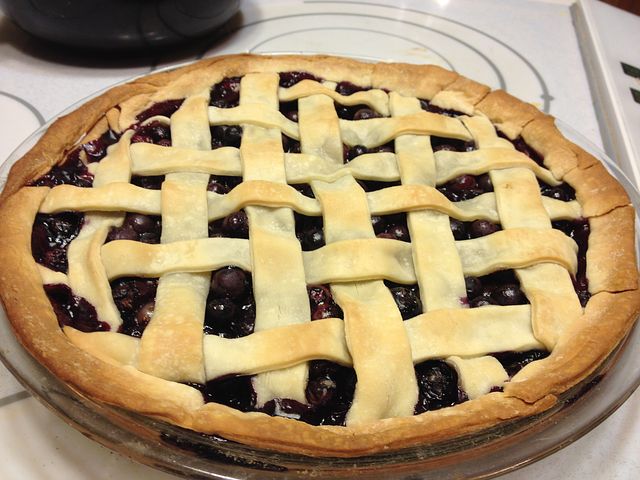
Pie is literally a part of my DNA.  My grandmother used to make delicious Cornish pasties, those hearty beef stew pocket-pies favored by generations of coal miners, each containing an entire meal within their flaky golden-brown crust.  My mother raised my brothers and I on the fruit pies her own mother taught her to make.  My favorites were cherry, peach, and mince; piping hot and a la mode (or in the case of mince, “a la hard sauce”).  I can still picture my mother adorning her creations with strips of dough – elegant top-crust latticework too pretty to consume.  She made it look easy as pie.

They say the signature of a great pie is its crust – ironic because history says pie crust was never meant to be eaten.  With the advent of flour in ancient Roman times, pie crust served a practical purpose: to contain and preserve the food within, especially for a soldier or sailor or some other kind of several-days traveler.  It wasn’t until bakers turned their attention to the crust when “real pie” was born.  Can you imagine the first time someone tasted a savory buttery crust, melded with hot fruit filling, cooled by the freshness of vanilla ice cream?  The whole is clearly greater than the sum of its parts.

   Royer’s Round Top Cafe, Texas

Any Texans reading this post will likely direct me to the Hill Country in the southeast, to little Marble Falls or tiny Round Top.  Both towns boast of serving “the best pies in the Lone Star State”, be that the Blue Bonnet Cafe in the former or Royer’s Cafe in the latter.  Blue Bonnet has a “Pie Happy Hour” and a regionally-renowned German Chocolate Pie.  (My favorite cake as a pie?  Sounds like a slice of heaven.)  Royer’s has something called a “Texas Trash Pie” (pretzels, graham crackers and coconut) and I can get one with a few clicks of my mouse.  Don’t tempt me.

No nod to pie would be complete without saluting Hostess Fruit Pies and Kellogg’s Pop Tarts – staples of the American childhood.  Hostess enticed you with those colorful wrappers and the promise of “real fruit filling” (though my favorite was actually the chocolate).  No matter the flavor, you consumed a brick’s worth of glazed sugar, chewy crust, and gooey fruit filling.  It’s a wonder we didn’t sink to the bottom of our swimming pools and bathtubs.


Kellogg’s Pop Tarts were svelte by comparison; a deck of large playing cards.  My mother favored the non-frosted fruit variety to keep our pantry “healthy”, but she snuck the brown-sugar cinnamon tarts into the basket too.  I ate hundreds of those.  Someone needs to invent a brown-sugar cinnamon pie.

Any Hollywood-types reading this post would remind me the ultimate pie movie is “Waitress” (now a Broadway musical), or “Michael”, where in one glorious scene Andie McDowell surveys a table’s worth of pie and gleefully sings, “Pie, pie, me-oh-my, I love pie!”

Thanks to a new local restaurant, I don’t have to travel to Texas to find amazing pie.  3.14 Sweet & Savory Pi Bar is as inclusive as it sounds.  Choose from a dozen or more “Pot Pi’s” for your entree (my favorite is the Irish-stew-inspired “Guinness Sakes”); then sprint to dessert by choosing from over twenty temptations (hello “Blueberry Fields Forever” Pi).

For the record, cake gets its share of celebrations as well.  Last Wednesday was “Sponge Cake Day” and November 26th is “National Cake Day”.  For me, those days will come and go like any other.  Those who celebrate cake should eat some humble pie and admit which dessert deserves the higher praise.  But hey, no time to debate; a chicken pot pie is in the oven and calling my name.

Midwest Cookie Madness

I wonder how many modern-day brides still wear “something old, something new, something borrowed, something blue” on their wedding day.  This time-honored gesture of good luck includes a nod to 1) continuity, 2) optimism for the future, 3) borrowed happiness, and 4) purity, love, and fidelity.  But some brides would rather not mess with the dress, understandably distracted by other wedding-day traditions.  Like 18,000 homemade cookies.

Thirty-one years ago, after my wife and I exchanged our rings, we sliced into an impressive three-tiered wedding cake at the reception; miniature bride and groom perched on the smallest layer at the top.  Per tradition we took that smallest layer home, stored in our freezer and shared on our one-year anniversary: a toast to continued good luck and prosperity.  Had we been raised in Ohio or Pennsylvania however; our guests might’ve been drawn to the cookie table instead.  So says a recent article in the Wall Street Journal.

Thousands of cookies at a wedding reception?  Sounds to me like the latest quirk of the my-wedding-is-more-memorable-than-yours game (besting cupcake towers and chocolate fountains).  On the contrary, cookie tables are almost as traditional as wedding cake, dating back several generations.  They are the reception obsession of some Italians, Catholics, Greeks, and Scandinavians.

Cookie tables are traditional in Ohio and Pennsylvania as well, and these communities take their baking seriously.  There’s even a Facebook page to exchange recipes, ideas and guidelines (see here).  Cookie tables may soon become a wedding reception norm from coast to coast.

Here’s a “taste” of cookie table guidelines.  Every item must be homemade by family members; or if purchased, only specially-ordered from your neighborhood bakery.  Cherished recipes (i.e. “lady locks” and “buckeyes”) must carry over from generation to generation, no matter how time-intensive the preparation.  Cookies must be as fresh as possible, leading to a flurry of baking in several houses days before the wedding (and lack of freezer space in those houses).  Even the layout of the table itself has rules; considering the number of cookie varieties and which varieties deserve prominent placement.  Finally, the table “reveal” must be decided: 1) Already on display as guests arrive?  2) Revealed by the bride and groom with a dramatic pull of a curtain?  3) Self-serve, or closely guarded by tuxedo-ed cookie stewards?

Cookie tables have one advertised – if not followed – rule-of-thumb.  The ratio of cookies to guests should be around 12:1. That number allows a guest to sample several cookies at the reception, and take several more home for later.  If I apply the 12:1 ratio to the 18,000-cookie wedding (a real-life example), there should have been 1,500 guests.  In fact, there were only 360.  According to the mother of the groom, “…my goal was to have a spectacular cookie table…”  I’m sure the guests thought it was spectacular, helping themselves to an average of 50 cookies each.

Competition plays a role with cookie tables, with the goal of “mine is better than yours”.  One example boasted of “…tens of thousands of cookies, filling nine banquet tables… six people worked for two days on the display”.  Another boasted of “reserved varieties, prepared especially for (and only for) family members of the bride and groom”.  Even the take-home boxes get a personal touch.  With all this attention to cookies, wedding cake – or any other dessert for that matter –  stands in the shadows (like the bride and groom themselves?)

When my son or daughter gets married, perhaps my family will extend the tradition to Colorado and prepare a cookie table.  With my baking skills, I’ll commit to an impressive 3:1 ratio, five different varieties (provided I’m allowed to use store-bought refrigerator dough), and guests will delight in a consistency I can only describe as week-old-but-slightly-burnt.  I guarantee it’ll be memorable.

Sugar Cured

Coke. Zero. Sugar. Three little words; one new drink. In a nod to those who eschew sugar (and detest calories), Coca-Cola proudly offers its latest beverage. Coke was the original, of course. Coke Zero was the low-cal offering for men (Diet Coke was perceived as a “women’s” drink). And now the soda junkie may opt for Coke Zero Sugar, with the claim of original taste but no calories and no sugar.  For my money, let’s hope the sugared varieties still have a shelf life.  Otherwise my cure for headaches just went out the window.

Coke cures headaches?  Well, why not?  Those of us who experience the recurrent forehead fevers will jump on just about any bandwagon to chase away the relentless pain, and a Coke seems relatively harmless compared to the more potent options out there.  But truth be told, a can of Coke is only half the solution.  Chase the Real Thing with a Snickers bar and you have the coup de grace of headache cures. The combined overdose of caffeine, sugar, salt, and protein packs a punch more powerful than half a bottle of Excedrin tablets.

When I was a kid, headaches were my constant companion.  I could sense the pain unfolding well before it up and knocked on my forehead door.  In full bloom, my headaches could only be cured by retreating to a dark, quiet room and sleeping them off.  But try falling asleep when someone’s rapping a hammer against your brain.  The mental/physical anguish of the battle surely coined the phrase “toss-and-turn”.

My mother and my doctor (seemingly one and the same) drew frustratingly repetitive conclusions.  My headaches were not strong enough or persistent enough to prescribe migraine medication.  My headaches were likely brought on by “not enough of this or “too much of that.  Not enough sleep or not enough water.  Too much sun or too much sugar.  Too much sugar?  And now I’m promoting a headache cure with sugar as an essential ingredient?  Sorry Mom – it works.

At one point in my life my headaches were so bad I believed I could generate one by merely thinking about them.  My mother used to say, “don’t get too excited; you might get a headache”.  Ironically, her good intentions were dashed by the very mention of what she was trying to get me to avoid.  But the conjuring really did happen – on more than one occasion.  Think about a headache = get a headache.

Headaches are attributed – at least in part – to dilated blood vessels.  (Dilated blood vessels are attributed to way too many conditions to list here.)  The brain’s response to dilation is to summon a pain companion; a vehicle to announce, “something’s wrong”.  You see, for all its intelligence the brain lacks its own pain receptors, so it seeks another part of the body to act as its surrogate.  Enter: the headache.  Fascinating perhaps, but no fun for the recipient.  There were times I would’ve traded all of my worldly possessions (which admittedly didn’t amount to much) in exchange for the removal of headache pain.  On that note, I don’t want to even think about how a migraine headache feels (after all, I might get one).

Forty-five million Americans suffer from some form of headaches.  Thankfully, I’m no longer a member of that vast club.  Whether from corrective eye surgery I had as a teenager or better control of the “not enough of” or “too much of”, the pots-and-pans forehead pain endured as a kid simply doesn’t visit anymore.  I’m very thankful for that.  I’d like to think I’ve done my time with those miserable toss-and-turn episodes.  But as a former Boy Scout, I know it’s wise to be prepared.  If my brain gets into a “for old time’s sake” mood, I’ll have a can of Coke and a Snickers bar at the ready.

Blame it on the Dutch

Last Saturday, after the umpteenth edition of dinner-and-a-movie with my wife (or in this case, movie-and-a-dinner), we arrived back home to a phone message from the restaurant, saying I’d left my credit card behind. I never make that mistake. Let me rephrase – since my wife reads this blog – I almost never make that mistake.  Credit the restaurant for taking our phone number when we arrived, “just in case we need to contact you later”.  Credit the very nice bottle of wine – empty by the end of the meal – for contributing to my forgetfulness (though not to my driving).

Hey, at least I paid the bill before I left my card behind.  Because that’s what I do when it comes to nights out with my wife.  The gentleman pays.

“The gentlemen pays” is up for judgment in the new world order.  “Paying etiquette” – especially on first dates – has become a lot more complicated with modern social conventions (i.e. dating apps).  As if first dates aren’t stressful enough already.

Whether the guy invites the girl out for a drink, or the guy invites the girl out for dinner, or even the girl invites the guy out for dinner, you’d be inclined to say he/she who does the inviting picks up the bill, right?  I know I would, but it’s not that simple.

“A drink” (as in, the result of a swipe on the Tinder app) implies a quick meet-up, where one or both parties dance around the potential for a longer-term relationship.  If this really is the agenda (and nothing else), I’d argue both parties split the bill.  Could get awkward.

“A dinner” (as in, the result of a well-designed profile on the eHarmony app) implies a more serious stab at a relationship.  In this case I’d argue the “inviter” pays the bill, not the “invitee”.  Unless you’re in New York or San Francisco.  Social convention in those cities leans towards both parties splitting the bill, since restaurant tabs flirt with the $200 mark. Not exactly disposable income for most young people.  Could get awkward.

In “the girl invites the guy” (as in, the Bumble app, where only she can “make the first move”), I’d argue the girl pays.  But what if the girl is “traditional”, and holds out on paying just to see if he’s a “gentleman”?  Again, could get awkward.

If “who pays?” hasn’t been decided beforehand, the mind games really kick in with gestures to pay the bill, otherwise known as “the reach”.  Some women do “the reach” to appear a team player (when in fact they have no intention of paying the bill).   Some men interpret the woman’s reach as her wish to pay; in return, somehow “looking good by not falling into stereotypes”.  Other men pounce on the woman’s reach as the perfect opportunity to suggest half and half.

Half and half is also known as “going Dutch”; a phrase with take-your-pick origins.  The most common origin ties back to the 17th century Anglo-Dutch wars (also coining the phrases “Dutch treat” and “Dutch courage”).  The more fitting origin however, comes from “Dutch door”; the farmhouse invention of two equal halves.  A Dutch door is sometimes referred to as a “split door”.  “Fits the bill”, wouldn’t you say?

Going Dutch is not as safe as it sounds.  One time my wife and I met a couple in downtown Chicago, for a pricey meal atop the John Hancock tower.  As we waited in the bar for our table, the husband knocked back several expensive drinks, followed by several more at dinner.  Imagine my shock when the dinner bill was merged with the bar bill.  The husband casually said, “let’s just split this, shall we?”

My daughter is a twenty-something, brand new to the dating scene in Los Angeles.  As far as she’s concerned, forget everything I’ve discussed in the paragraphs above.  She has one and only one rule: the gentleman always pays.  Frankly, that’s just fine with me.

Little Jack Horner

Behold the Thanksgiving feast. Turkey and stuffing – a meal unto itself. String beans with mushrooms, dripping in butter. Crescent rolls (because you can never have enough carbs at Thanksgiving). Every side dish imaginable, or at least enough to fill up the empty spaces on the table. And then there’s dessert. Homemade cookies and cakes. Pies galore – pumpkin, apple, and cherry. And way over in the corner – completely overlooked like a little kid begging for attention – mince pie.

71-exorbitance

I love mince pie. It’s an exorbitance of flavors, provided you like the ingredients of course: raisins, dried apples, and molasses, blended with generous helpings of cinnamon, cloves, and nutmeg; topped off with two or three shots of brandy. For the spices alone – which were said to represent the gifts brought to Jesus by the three kings – mince pie is sometimes referred to as Christmas Pie.  But early Americans didn’t celebrate Christmas, so mince pie made it to the Thanksgiving table instead.

Mince pie has a colorful history. The Brits get credit for the pie itself, but the Middle East gets credit for the fruits and spices, discovered by European crusaders on their travels and returned to their various homelands. Mince pie was originally a dinner pie – meat included – with the spices added to hide the sometimes “off” taste of meat without refrigeration. Over time the meat was left out entirely so only the fruit and spices remained. The pie literally morphed from savory to sweet (and from “mincemeat” to just “mince”).  At one time mince pie was banned from dinner tables, frowned on as a religious symbol by Puritan authorities.  I’m glad I don’t live in a time of Puritan authorities.

If you’re looking to salvage a few calories as you roam the Thanksgiving buffet, don’t go anywhere near mince pie.  Were you to consume the whole pie you’d be talking 3,600 calories, and that doesn’t even include the essential topper of brandied cream (“hard sauce”).  Were you to only eat the filling you’d still take in almost 400 grams of carbohydrate and 250 grams of sugar.  But you’d take in no fat and almost no protein.  It’s like consuming a concrete block.  If someone threw you in the East River after a generous helping of mince pie you’d sink to the bottom in nothing flat.

More trivia about mince pie:

  1. An eating competition was held in 2006 where the winning contestant ate 46 mince pies (not 46 whole pies but rather the smaller tarts you see in the photo above).
  2. Mince pies were originally coffin-shaped (not round), but they just called them “rectangular” because coffins hadn’t been invented yet.
  3. Early versions of mince pie contained a total of thirteen ingredients – symbols of Christ and his disciples.  Another reason those pesky Puritans considered the pie “forbidden fruit”.

Making mince pie is quite the chore.  Take a pie shell, dump in a jar of mince filling, top with another pie shell, and bake at 425 degrees for thirty minutes.  To be honest, the hardest part of making mince pie is finding the jar of mince.  Your local supermarket may carry it but they usually hide it deep in the lowest shelves of the baking aisle (are they embarrassed to carry it?)  One time I found a jar that looked dusty and dated, as if it had been back there since the last Thanksgiving.  Another time the checker humiliated me by saying, “No one ever buys this stuff.  Why would anyone ever buy this stuff.”  Well, I buy this stuff, pal.  Because I like mince pie.

Mother Goose rhymed: Little Jack Horner, Sat in the corner, Eating a Christmas pie.  That’s me.  I’m Jack on Thanksgiving.  And I’m sweet on mince pie.