Window Addressing

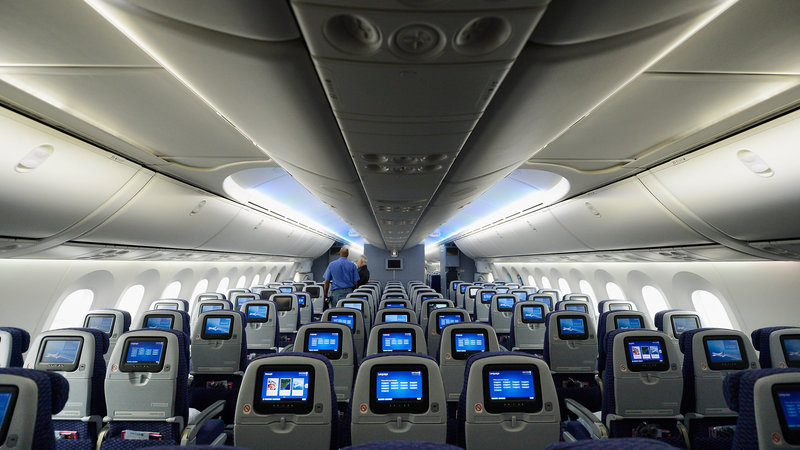
My wife and I just returned from a trip to Boston. On the flight home, we took our seats as usual: she at the window and me in the middle. It was a peaceful journey, save for the rather chatty woman across the aisle. But then, as we began our descent into Denver, behold an uncomfortable moment. A glare of sunlight through my wife’s window struck Chatty Woman in the eyes, who immediately turned and snapped, “CLOSE THAT WINDOW!” I just smiled from the middle seat and assured her the glare would move on momentarily (which it did). Chatty Woman gave me a stare and a huff, and turned away. Gee, nice to meet you too.

I’ve touched on the dynamics – er, politics – of airplane passenger seats before, in Flight of the Humble Bee (a taste of first-class), and Center Peace (life in the middle seat), but I always thought window-seat dwellers were far enough to the left or right to escape judgment. No longer. In fact, more than ever the spotlight shifts to them.

Let’s review the powers held by the different seats on the plane. The aisle seat, some would argue, commands the most power because a) the occupant controls the freedom of all others on his/her side of the row, b) the occupant has the easiest access to everyone else and everything else on the plane, and c) the occupant can lean or leg into the aisle as he/she pleases (a power move in itself, albeit a weak one).

This image has an empty alt attribute; its file name is 211-photophobic-6.jpg

The middle seat [or in larger planes, middle seats. To you, the occupant of the middle seat in a row of 5+, you have my utmost sympathy] has powers inversely proportional to the aisle and window seat occupants. That is, the more empathetic your seatmates with your middle-seatedness, the more likely you’ll get perks (i.e. the use of both armrests, requests to the flight attendants, the window shade setting to your preference).

Speaking of the shade, that my friends, is the power-play of the window seat. Whether the shade is up, down, or somewhere in the middle is entirely up to the occupant (or occasionally directed by the flight attendants). Once upon a time the window shade was a minor prop; only down when the shared overhead movie screens (or sleeping passengers) demanded dark. Today? Every mobile phone, tablet, reading device, laptop, and in-seat movie screen is photophobic. Light sensitivity abounds.

Here’s the change in dynamic you’re not aware of. The passenger in the window seat is not the person he/she once was. Before, people chose the window seat to enjoy the high-skies views, or more importantly, to keep their geographic bearings or avoid the claustrophobia of a closed-up cabin. Today, people choose the window seat to control the shade, for optimal lighting of all those handheld devices.

To further complicate the matter we have the Boeing 787 airplane, which replaced the window shade with electrified gel sandwiched between panes of glass. The gel darkens or lightens depending on the amount of applied current. Cool tech, but also a compromise of power for the window seat occupant. The flight attendants (as they deem necessary), can darken all of the windows during sleeping hours or movie time or even hot days. Might want to check the type of aircraft before you board your next flight.

This image has an empty alt attribute; its file name is 211-photophobic-1.jpg

I suspect if “CLOSE THAT WINDOW!” persists, the airlines might jump at another opportunity for profit. Someday you’ll find yourself choosing a seat in the “light” or “dark” section of the plane, with a fee placed on one or both types of seats. Not a fan. Then again, if the airlines would sequester crying babies, cell-phone talkers and other audibles into a soundproofed section, I’ll be the first one on-board.

Some content sourced from the 9/18/19 Wall Street Journal article, “The Showdown at the Window Seat”.

Past Cards

Restaurants tend to leave advertising freebies at the host stand or on your table to remember them by. After paying the bill, you might grab a logo’d toothpick or a couple of plastic-wrapped mints on the way out the door. The fancier establishments offer books of matches (as if smoking remains the chic habit it once was). But every now and then I come across my favorite restaurant takeaway: the plain and simple postcard.

I’m almost afraid to ask a young person what he/she thinks of a postcard.  They’d turn it over and over in their hands and wonder what purpose is served by a laminated photo on card-stock paper (“Just show me the photo on your phone!“)  Then they’d flip the card to the back and realize it has something to do with snail mail (“Just send me a text!“)  Finally, they’d wonder why anyone would go to the trouble of pen/paper just to let another someone know where they were having dinner (“Just add your location on Facebook!“)

Remove smartphone technology and postcards suddenly seem relevant again.  Take a break from the dinner conversation, scribble a few sentences, add a mailing address, affix a stamp, and voila!  A thoughtful bit of correspondence in mere minutes – the precursor to the Post-It Note.  If you’re lucky, the restaurant pays the postage and mails the card.  If you’re even luckier, your recipient still checks their physical mailbox.

A 1908 postcard… of a Chicago postcard factory!

Postcards have more history than a modest rectangle of heavy paper would suggest.  The very first postcard was sent in 1840, in London. (Someone who believed “very first” paid $40,000 for it in 2002.)  In the later 1840’s, postcards began circulating in the United States, as printed advertising.  Soon after, postcards became the Mini Cooper of personal correspondence; a quick letter sans envelope, but without images (because your personal note went on the front of the card back then).  By the 1870’s, manufacturers were producing “picture postcards”, with the divided back you see today.

Risqué front image (at least for 1890) from the popular “seaside postcards” of the United Kingdom

The advent of the picture postcard led to a little controversy in certain parts of the globe.  Images sent from one country were not always deemed “proper” in another (i.e. sexual references in popular UK “seaside postcards”, or images of full or partial nudity from classical statuary or paintings).  Accordingly, some countries refused to handle picture postcards.  Those same images are clearly conservative by today’s standards.

Like baseball cards, postcards have become a collector’s item.  The value of a given card is associated with the image on the front.  Online resources include collector websites and clubs, catalogs, and trading platforms.  When I was a kid in the 1970’s, I collected postcards – one summer – to document the stopping points on a month-long trip my family took to the American states in the northeast.  Pretty sure none of my cards held value, but I still wish I kept them.

My “Northeast States” collection c. 1975

[Trivia pause: collecting postcards makes me a deltiologist.  Aren’t you impressed?]

Postcards have their own terminology, as if to elevate their status among mailed items.  A large letter postcard shows the name of a place in big letters (instead of a picture).  An early postcard is any card issued before the era of divided backs.  An installment card is one of a set, forming a single picture when placed in a grid.  Postcardese is the short-sentence, abbreviated writing style of postcards.  Finally, midget postcards – noticeably smaller than the standard 6″ x 4.5″ version – were issued as souvenirs and bound in sets.  (If you look at my collection photo you’ll see several midgets).

“Large Letter” postcard c. 1940s

The next time you come across a postcard, give the little guy a (first-class) ounce of respect.  He’s been around a long time, and the post office – depending on country – may still send him for less than the cost of an enveloped letter.  Remember, the postcard was the original format of brief long-distance correspondence.  Think about that the next time you text.

Some content sourced from Wikipedia, “the free encyclopedia”.

Coffee Breakers

Every now and then I take this blogging habit out onto the road, so to speak.  Instead of typing paragraphs from the home office, I’ll liberate my laptop from its cables, hop in the car, and head over to the local coffee house.  Working in a caffeinated environment – especially one buzzing with grouplets of chatty patrons – brings out the creative juices in me (if not the ability to concentrate).  Lately however, I’ve decided my little laptop show pales in comparison to some of the real road warriors out there.  Apparently, I need to show up with more toys in hand.  It’s time to go “Venti” instead of “Tall” and become one of the true coffee-breakers.

Perhaps you’re familiar with the patron I’m talking about here.  Coffee-breakers recreate their home office (or “office office”) on a table in the middle of Starbucks.  They consume more than their fair share of coffee house real estate (but not their fair share of coffee relative to their extended stay).  They arrange face-to-face meetings with colleagues, and interviews with prospective employees.  They hold Bluetooth conversations as they stare at nothing in particular.  Or FaceTime conversations as they have one-on-one’s with their phones.

I’ve come across several breakers in my coffee house stays.  They demonstrate distinct behaviors to separate themselves from those of us who simply want laptop time with our lattes.  First, breakers set up their workspaces, with enough time and attention to detail to announce, “Notice me!”  Then they go to the counter to place their coffee orders, deliberately leaving their setups unattended (as if to say, “This space is reserved!”).  Finally, they begin their “work”, which doesn’t really seem like work.  I can’t help thinking coffee-breakers are more often show than substance.

A few weeks ago at the local Starbucks, I left my laptop and Flat White to take a quick phone call outside the store doors (the polite thing to do).  When I returned, I found I’d been joined by a coffee-breaker.  She was carefully positioning two Bluetooth speakers on the table in front of her; then fiddling with her phone and a few other components from her oversized backpack.  As soon as her speakers gushed music (clashing with the Starbucks music playing overhead), she put in her AirPods and simultaneously took a phone call.  She operated as if she was in her own little world (i.e. I didn’t exist).  Therein lies another distinct coffee-breaker behavior: virtual walls.

On another visit, I was party to a conversation between a commercial real estate broker and a prospective tenant.  He sat his client (deliberately) adjacent to the counter queue, which (conveniently) put him in the center of the store.  The broker was hawking lease space in the adjacent soon-to-be-opened retail center.  No wonder he raised his voice as he spoke.  This coffee-breaker’s sales pitch was as much for me and my fellow patrons as for the captive soul sitting right in front of him.

The Wall Street Journal (WSJ) recently published a dozen rules for coffee-breakers; rules that should be laminated to every Starbucks building in the land.  Examples: Work only where and when you’re wanted (i.e. ask first).  Buy first, sit second.  Buy more than one small black coffee during the day.  Don’t take work calls – ever.  And so on.  Perhaps more enlightening was the reader comments in response to the rules.  I perused four pages’ worth (30+ comments) and not one came to the defense of coffee-breakers.  In fact, several comments added more rules to the list.

To my earlier comment about going “Venti”, I talk – of course – tongue-in-cheek.  A little attention is a good thing, but my hope is most of us would not deliberately choose to be a coffee-breaker (else this is the end of Western civilization as we know it).  Nope, I think I’ll take my road show to the library instead.

Some content sourced from the 8/27/19 Wall Street Journal article, “How to Act Like a Human When Working From a Coffee Shop”.

Vowing To Be Different

When my son and his wife were married five years ago, there was a moment in the planning stages where I realized their wedding day would be anything but “traditional”. Credit their beautiful outdoor venue (no church), the “mixed-up” wedding party (ladies aside the groom; men aside the bride), their Keds canvas sneakers (no formal shoes beneath the tuxes and dresses) or the trays of truffles after dinner (no wedding cake) – they found dozens of details to make their day unique and memorable. But given the most recent wedding trends, perhaps my son and his wife were more old-school than I thought.

Hindsight being what it is, my own wedding to my wife thirty-two years ago now seems downright formulaic.  We were married in a church, accompanied by an organist and harpist.  We exchanged rings and vows before a priest.  We lit a “unity candle” at the altar.  Our reception was in a hotel ballroom, with an open bar and live band.  Dinner was served, wedding cake was cut, and the only time the dancing stopped was to toss the bouquet and garter.  Our one and only off-script detail? We included a contemporary John Denver song in the ceremony (much to our priest’s dismay).  Otherwise ours was a carbon copy of just about every other wedding of the 1980’s.

I’m sure you have examples of just what makes weddings different these days.  Let me guess.  They’re no longer just outdoors; they’re now in backyards or in barns or at faraway “destinations”.  The ceremony is facilitated by an officiant (“basic online ordination package” – $29.99!)  The bride grooves down the aisle to something more like Metallica than Mendelssohn.  The vows – far removed from the dusty “to have and to hold” – could double as songs or poems.  The receptions take place in twinkly-lit tents.  The food is more likely “finger” than “buffet”.  The wedding cake has been replaced by a cupcake tower.

“Non-traditional” should be a non-surprise when it comes to modern-day weddings.  After all, the average age of today’s marrying couples is 29, which typically follows years of living together or even a purchased home.  Four of five couples who marry are millennials, and millennials are all about personalization.  Thus, 44% write their own vows, and only one in four have their ceremony in a religious institution.

Fido bears the rings?

Let’s dig deeper, shall we?  If you’re not convinced the traditional wedding has gone completely off the altar, check out the Chapel of the Flowers website (“Voted Best Wedding Chapel in Las Vegas!”), particularly their article, “New Wedding Traditions to Trade In for the Classics”.  Perhaps you and your future spouse will consider the following from their list of suggestions (not that I would):

  1. Rings – Skip the jewelry store and head for the tattoo parlor.  Your wedding band tat will never fall off and the ink will remain… “until death do you part”!  For that matter, your tattooist might also be an officiant, so you can have the whole shebang right there in the parlor.  I’m sure the biker dude in the next chair will be happy to witness the signing of your marriage certificate.
  2. Wedding Dress – Skip the white in favor of pastel hues or bright, tropical colors.  After all, the “innocence, purity, and light” of white may not be – ahem – the appropriate statement.
  3. Pocket the Phones – As in, ask guests to refrain from taking their own photos.  Really?  Is the Force with you or something?  Unless you hand out physical restraints as your guests walk through the doors, those phones will keep on a-clickin’.  Moving on…
  4. Smaller Wedding Parties – 1-3 family/friends at most.  This suggestion is either overlooked, ignored, or most likely mocked.  If anything, wedding parties seem to be getting bigger these days.  Moving on again…
  5. Gifts – Out with the wedding registry and in with “donations to a good cause”.  Say what?  I get that modern-day couples live together and already have most everything they need, but what about cash?  Clearly, money dances have fallen by the wayside.  Donations to good causes works for funerals but not for weddings.  Hard pass.
  6. Delayed Honeymoons – Don’t delay… I repeat, don’t delay.  I know several couples who never had a honeymoon because, well, “more important” things got in the way (i.e. real life).  I also know a couple who divorced before they even made it to their honeymoon.  Don’t delay.  Have some fun while you’re still carefree and unconditionally happy.

No matter how you feel about “new traditions” at weddings these days, there’s an underlying positive to be gleanedAt least we still have weddings.  The vows may raise your eyebrows.  The food and festivities may not be your particular glass of champagne.  But those details don’t really matter, do they?  At the end of the day, you still have two “I do’s” and one “I now pronounce you…”, sealed with a kiss.  You still have a marriage.

Some content sourced from the Wall Street Journal article, “They Solemnly Swear Their Wedding Will Ditch Tradition”. (8/6/19)

The Senior Years

A human life has several stages, but exactly how many stages will probably cost you a Google search. Would you believe nine? Pregnancy, infancy, “the toddler years”, childhood, puberty, “the adolescent years”, adulthood, middle age, and “the senior years”. That’s a lot of stages (and I suddenly feel tired).  According to my age – 57 – I’ve battled Father Time through the first seven on the list and hover somewhere between the last two. And therein lies today’s question: What the heck defines “the senior years”?

In case I forget – as seniors are wont to do – allow me to wish you a very happy “Senior Citizens Day”!  No joke (and no Hallmark card – I checked), August 21st is the calendar date set aside “to increase awareness about the issues that face older adults”.  Well now, doesn’t that just call for a celebration?  No, it doesn’t.  In fact, my fingers feel a little more arthritic just typing about it.

Admittedly, I’ve been a senior before, back in a couple of those earlier life stages.  I was a senior in high school.  I was a senior in college.  In the Boy Scouts, I was a senior patrol leader.  If I’d thought to name one of my sons after myself, I could’ve been “Dave Sr.”.  Now however, wrestling with the idea of advanced middle age, I’m forced to confront the one, true definition of “senior”.  The word in that sense (especially senior citizen) – is a little daunting.  I prefer “older” or “more experienced”.  You know, the softer side of Sears.

Reagan

Blame former U.S. President Ronald Reagan if you’re looking for a scapegoat.  After all, he’s the one who – while in office – declared August 21st to be “National Senior Citizens Day” in America.  Reagan signed said proclamation in 1988 at the ripe (older) age of 77.  By all definitions, that made Reagan a senior citizen himself.  Isn’t that kind of like throwing yourself a party?

Speaking of definitions, for all my searches I can’t thumb a tack into the specific age one enters life’s final stage.  Consider the following takes on “senior citizen”:

  1. A polite expression for an old person.
  2. An older person, usually over the age of 60 or 65, esp. one who is no longer employed.
  3. The age at which one qualifies for certain government-sponsored benefits (i.e. Social Security, Medicare).
  4. The United Nations has agreed that 65+ may be usually denoted as “old age”.
  5. Being a senior citizen may be based on your age, but it is not a specific age (say what?)

The definitions get even vaguer, but you see the pattern.  No one – not the United Nations nor Merriam-Webster – wants to tag “senior citizen” with a specific age.  Well, I do.  I want my bedside clock to turn to midnight on the designated date, and instead of beeping the alarm it squawks, “Senior Citizen! Senior Citizen!”  I suppose, if someone held my aging feet to the fire and said, “Choose!”, I’d go with Definitions #2 and #4.  At least then I’m backing up my truck to “middle age”.

Perhaps your definition of senior citizen is more towards retail; as in, the age you start qualifying for discounts, freebies and such.  Sorry old man (old woman?), you’re just complicating the matter (and seniors don’t do “complicated”).  The shopping website DealNews just updated their article, “The 123 Best Senior Discounts to Use in 2019”.  That’s a lot of “bests”, DealNews.  But there’s even more homework for those nearsighted eyes.  You must also know which discount kicks in at what age.  Senior discounts ≠ senior citizen unless you need the following thirteen-year time frame to get used to the idea:

  • Hardee’s – age 52 (that’s me!)
  • McDonald’s – 55 (that’s me again!  But only for coffee and I don’t do McDonald’s coffee).
  • Applebee’s – 60 (may require “Golden Apple Card”.  Oooooooo)
  • Fazoli’s – 62 (and you get the “Club 62” discount menu.  Okay, that sounds cooler than a “Golden Apple Card”)
  • Taco Bell – 65 (plus free drink – ¡Olé!)
  • Wendy’s – “age and offer vary depending on restaurant location” (c’mon, Wendy’s!)

Atta boy, Norm!

Poets and playwrights try to soften the blow of “the senior years” with their eloquent quotes.  The Englishman Robert Browning said, “Grow old along with me!  The best is yet to be.”  The American Ralph Waldo Emerson said, “As we grow old… the beauty steals inward.”  Nice tries, noble poets, but I’ll go with positive thinker Norman Vincent Peale instead.  Norm simply said, “Live your life and forget your age”.  Take that, senior years!

Comfort Food For Thought

If you read my post last week, you know I was a little distressed over the recent shootings in my country.  Blogging was intended to bring me a comfort in troubled times.  In hindsight, maybe I was overthinking the situation.  Maybe all I needed was comfort food.  Enter Chick-fil-A.  The popular fast-food chicken restaurant may never be forgiven for removing their awesome coleslaw from the “Sides” menu a few years back, but just this week they brought a new guest to the party.  Hello, macaroni and cheese.

Amanda Norris is Chick-fil-A’s executive director of menu and packaging.  She’s now my new best friend.  A chicken sandwich and waffle fries, with a second side of mac & cheese?  Heaven in a to-go bag, my friends.  As Amanda puts it, “Mac & cheese is the quintessential comfort food… the perfect pairing… but it’s also great on its own as a snack”.  In other words, I’ve just been given permission to drive-thru Chick-fil-A and order only mac & cheese.  I’m a kid again!

Chick-fil-A’s mac & cheese

Chick-fil-A’s mac & cheese is made with a special blend of cheddar, Parmesan, and Romano, and baked fresh every day. Uh, push the pause button here.  Three cheeses sounds a little fancy for the mac & cheese I had in mind.  If the restaurant really wanted to arrow the bullseye, they should’ve done a deal with Kraft Foods and offered the mac & cheese.  You know the one – the proud little blue-and-gold box of the “cheesiest”, with the pile of pasta curls and pouch of powdered who-knows-what?  There’s simply no equal.

Kraft introduced its “Macaroni & Cheese Dinner” in 1937 with the slogan, “Make a meal for four in nine minutes”.  Back then – the Depression years – you could buy two boxes of Kraft for a single food-rationing stamp (Make a meal for eight…!)  Fast-forward to the 1980’s, when my wife and I were managing our shoestring food budget.  At least we knew we could buy Kraft mac & cheese.  Three boxes for a dollar!

Three-cheese blend aside, I agree with Chick-fil-A.  Mac & cheese is the quintessential comfort food.  Comfort food is defined as “… providing a nostalgic or sentimental value to someone”, and “…tends to be high in calories, high in carbs, and easy to prepare”.  Well hey, you might as well just say, “Kraft Macaroni & Cheese Dinner”!  Sure, you could turn to other comfort foods on Wikipedia’s short-list, like chicken soup, chocolate-chip cookies or grilled cheese (Tater Tots and sugary breakfast cereals didn’t make the list – for shame!), but take my money – and give me comfort – Kraft mac & cheese earns the top spot.  Just ask any Canadian; it’s the most-purchased grocery item in the country.

Recently, mac & cheese sits side-by-side with Brussels sprouts as a trendy restaurant offering, even in the fancy places.  The problem is in the spin – all those added ingredients for a supposedly better taste.  Lobster mac & cheese.  Mac & cheese pizza (topped with shredded Colby-Jack).  Mac & cheese pie (with a bready crust).  Even Kraft messed with the Original (“Star Wars-shaped” pasta?  Come on!).  Admittedly, their “Shells & Cheese Dinner” with the Velveeta cheese sauce is a pretty good option.  But it’s not the Original.

Comfort foods are further defined as “… food associated with the security of childhood. They are believed to be a great coping mechanism for rapidly soothing negative feelings.”  There it is, and that’s what I need right now.  The couple of Kraft boxes in my pantry are calling me home.

Some content sourced from Wikipedia, “the free encyclopedia”, and the foxnews.com article, “Chick-fil-A’s Mac and Cheese Hits Menus Nationwide”.

Mass Distraction

Hundreds (if not thousands) of bloggers commented on last weekend’s tragic events in El Paso and Dayton. A search of either city on the WordPress website produces an endless list of posts. As it should be. Some of us process by writing; others by reading. Within these countless perspectives are paragraphs to help us cope, reflect, heal, and begin to move on. Not that we should move on; not at all. Like 9/11, the loss of life is meaningless if it doesn’t lead to a modicum of positive change.

Politicians will debate this issue relentlessly; their credibility questionable in concert with partisan agendas and unrealistic campaign promises. The media will focus on band-aid suggestions which appear to address the issue but don’t land anywhere close to its foundations. Regardless, if all this attention – misguided as it may be – leads to constructive conversation and heightened awareness, we’re taking a step in the right direction. The capacity for mass murder is far more complicated than we want to admit.

I tried several times this week to blog as normal. I found the usual du jour topics worth delving into. Yet every time I started typing I was distracted, for at least a couple of reasons. One, any topic besides this one would be utterly trivial by comparison. Two, any topic besides this one suggests my head – and my heart – are not where they should be.

Do I know anyone in El Paso? No, I don’t, nor in Dayton. Doesn’t matter. I still grieve for the victims and their families. After all, these are fellow countrymen and women. These are people I believe share similar values and a love of country, regardless of race, political persuasion, and all the other so-called differentiators. These are people I’d be delighted to run into if I were halfway around the world. They are far from strangers.

American flags fly at half-staff this week, as if our country needs a reminder of a horrific behavior already ingrained in our culture for decades. My own reminder is my inability to adequately express my myriad feelings today. Perhaps the writings of my fellow bloggers will bring me solace.

Speaking of other writers, my thanks to Feeding On Folly, who re-posted Mitch Teemley’s “The 32 Second Killing Spree” (read it here). Mitch’s post narrows the issue to the specifics we need to consider and the questions we must answer. Here’s one answer. Good and evil will always coexist, but we have to find a way to tip the scales a little more towards the good. If only for them.

I’ll be back next week, less troubled and a little more hopeful. At least, that’s the plan.

Trilling on the Trail

An old friend stopped by to visit the other day. He appeared at my front door without warning, taking me back almost fifty years to the moment we first met. He is still quite the singer. His stride is supremely confident. Most annoyingly, he finds unqualified joy in every blasted thing he sees and hears. My friend is, after all, The Happy Wanderer.

If you’ve encountered The Happy Wanderer at some time in your life, you know exactly who I’m talking about.  He is Mr. “Val-deri, Val-dera”.  Those words alone should revive the sing-song tune fried into most brains since childhood.  “The Happy Wanderer” could’ve been quarantined within Germany were it not for its award-winning performance by the Oberkirchen Children’s Choir (and subsequent radio broadcast by the BBC), in 1953.  Then, Mr. Wanderer went worldwide-viral and there was no turning back ever.

Oberkirchen coat of arms

According to his lyrics, The Happy Wanderer (we’ll just call him “Hap”) takes hikes into the mountains and alongside streams, his hat on his head; his knapsack on his back.  Hap points out blackbirds and skylarks along the way, and his journey brings him unbridled giddy happiness and laughter (as in, “Val-deri, Val-der-ha-ha-ha-ha-ha…”).  Our boy smiles the entire time and boldly invites YOU to join in the singing.  In his final verse, Hap wants to wander (and sing) until the day he dies.  That’s a little extreme for a children’s song, don’t you think?

Speaking of childhood, Hap and I first met way back then.  He entered the “UK Singles Chart” on January 22, 1954, eight-years-to-the-day before I was born.  Eight years after I was born, I henpecked Hap’s tune as I learned to play the piano.  “Chopsticks”, “Twinkle Twinkle Little Star”, and “The Happy Wanderer” were almost assuredly the first three pieces I ever memorized.

Hap wandered into my life again in the Boy Scouts.  I recall a lot of singing on weekend hikes (not sure why – who’d be happy backpacking forty pounds towards some distant campsite?)  Besides “John Jacob Jingleheimer Schmidt” and “The Ants Go Marching…”, we Scouts unabashedly sang “The Happy Wanderer” through mountains and alongside streams.  Hap’s tune even made the official list of “Scout songs” (see here.)

I thought I was done with Hap years ago (it took me decades to forget his slaphappy song), but recently he resurfaced.  First, on a cruise down Germany’s Rhine River, at an outdoor dinner in the little town of Rüdesheim.  I was volunteered by my fellow travelers to play with the band.  I manned a big oom-pah-pah drum while another poor soul clanged the cymbals.  A band member played the clarinet.  And our one and only performance – naturally – was “The Happy Wanderer”.  To add shame to the silliness, we marched between the tables as we played.  I did my best to look “happy”.

Hap’s other revelation may be a little more prolonged.  On the same Rhine River cruise, in Bavaria, my wife and I bought a handmade cuckoo clock.  The clock was shipped and arrived in the States two weeks ago.  Imagine my delight when I wound the clock and the cuckoo bird busted through his little door, the dancers twirled, and the tiny music box played “Edelweiss”.  The “sound of music” every hour on the hour!  Er, every other hour on the hour.  Turns out our cuckoo clock has two songs.  Hello, Happy Wanderer.  If I choose to, I hear his gleeful melody twelve times a day.  Or, If I choose to, I can flip a switch and I don’t hear anything at all.  I expect I’ll be flipping the switch any day now.

If you’d like to add to my hap-aberration, go to 1-800-FLOWERS and have a hardenbergia violacea delivered to my door.  HV is a species of flowering plant from the pea family.  Some call it a lilac vine.  Others give it nicknames like “false sarsasparilla” or “purple coral”.  It’s also lovingly referred to as “The Happy Wanderer”.

Heaven help me.

Some content sourced from Wikipedia, “the free encyclopedia”.
Slush Fun

In the last few years, it seems every other corner in Colorado Springs sprouts a newly built “Kum & Go” gas station. Kum & Go’s bright red-and-white oval signs beckon consumers to plentiful pumps and come-hither convenience stores. Kum & Gos are clean and spacious, with competitive fuel prices. Started in Iowa by Krause Gentle Co. (hence the “K” and “G” in the name), Kum & Go operates 400 stores across 11 Midwestern states; rapidly adding more. They’re even gobbling up unwanted locations of my favorite childhood hangout: 7-Eleven.

7-Eleven, of course, is the remarkably resilient convenience store of the baby-boomer generation and before. 400 stores is a drop-in-the-bucket to 7-Eleven. Worldwide you’ll find almost 70,000. It’s safe to say 9 of 10 Americans – at some time in their lives – pass under the bright green, red, and orange of a 7-Eleven sign.

7-Eleven roots to 1927, when “Tote’m” Stores launched in central Texas (yes; a totem pole in front of every one). In the post-WWII era, Tote’m rebranded as “7-Eleven” to acknowledge an unprecedented window of operation – earlier in the morning and later at night than most others. Today of course, coupled with gas stations, 7-Elevens keep those doors open round the clock.

Last Thursday – and every year on “7/11” – 7-Eleven offered a free small Slurpee to all who passed through its doors. (I like number-calendar play, don’t you? “Pi Day” = 3.14, “Fry Day” – National French Fry Day = 7/13, and “Star Wars Day” = May the Fourth.) Best Slurpee trivia: its genesis was at Dairy Queen, where a franchisee put Cokes in the freezer and stumbled upon a soda slush he labeled the “ICEE”. 7-Eleven bought the license, changed the name, and the rest is history. Still one of the bestselling drinks anywhere.
This week, I find myself vacationing in the small coastal town where I spent many a childhood afternoon heading to 7-Eleven. I missed out on last week’s free Slurpee, but I went to one of their stores the day after just to have a look. I can’t tell you the last time I’d been in a 7-Eleven but know this: they haven’t changed much in fifty years. You’ll still find an entire aisle of candy. Hot dogs still rotate on heated rollers behind glass, ready for purchase. Doughnuts age in a plastic bakery case. The Slurpee machines grind away towards the back, beckoning with their cups and colors.

I’ll give you five reasons why 7-Eleven was the ideal destination for a tweenager of my day. First, 7-Elevens were located close enough to residential neighborhoods to get there on foot or by bike. Second, 7-Elevens were small; therefore, not intimidating. (A kid-sized grocery store, if you will.) Third, 7-Elevens parked a couple of pinball machines in the corner of the store (I can still hear the “knock” sound when you’d win a free game). Fourth, 7-Elevens had an entire aisle of “coin candy” (dozens of options for your hard-earned penny, nickel, dime, or quarter). Finally, 7-Elevens had Slurpees – the coolest kid drink around.

When I visited 7-Eleven last week, I bought a Slurpee for old time’s sake. Guess what? They’re exactly the same – that slushy mix of syrup, CO2, and water. You still choose from several sizes of paper/plastic cups (although now you can “Big Gulp” if you must have 32 oz.). The drink still rotates and mixes behind that round glass window; a tempting peek at the flavors before you commit. The straws still have that open spoon on the ends. And a Coke Slurpee is still the fan-favorite (I’d choose Cherry were it not for the stained lips). Frankly, the only difference between today’s Slurpee and the one in the 1970’s: you can buy a refillable cup for discounts on future purchases.

Kum & Go also offers a refillable cup – the $50 “gold” for unlimited coffee and soda for a year. But that’s hardly kid stuff nor kid prices. I only go to K & G for the gas anyway. But take my advice and stop into a 7-Eleven again. Buy a small Coke Slurpee (and a hot dog – they’re actually pretty good). The pinball machines are history, and the candy costs a lot more than a penny. Otherwise it’s like a step back in time.
Some content sourced from Wikipedia, “the free encyclopedia”, and the CNN.com article, “It’s 7-Eleven Day…”