Strange Bedfellows

Welcome to Masters Week, sports fans! Even if you don’t know the first thing about professional golf, you’ve probably heard of The Masters.  The tournament begins again this Thursday (for the eighty-sixth time) at Augusta National Golf Club in Georgia. If you have nothing better to do this weekend, you can watch a dozen mind-numbing hours of the television coverage. While you’re at it you’ll discover the Masters traditions, like the champion’s green jacket, the clubhouse top-story “Crow’s Nest” (where the amateur golfers reside), the famous pimento cheese sandwiches, and of course, Waffle House. Wait, Waffle House?

Question: When do waffles and golf belong in the same sentence?  Answer: When it’s April at The Masters. Why?  Because alongside the golf hats, shirts, and commemorative this-and-that for purchase at the souvenir shop, you can buy a limited-edition pair of Adidas golf shoes for your long walk along the course.  The shoes will set you back $200 – a little pricier than most – but hey, they’re limited-edition.  You’ll be among the select few advertising Waffle House on their heels.

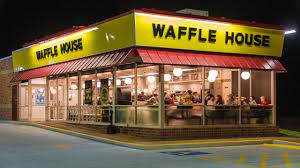
Before you think waffles and golf shoes are the most random “pairing” (ha) in the history of merchandising, remember; The Masters is in Georgia.  So is Waffle House.  Their headquarters is right down the road in Atlanta and they have over 400 restaurants across the Peach State (way more than any other state).  In other words, a pair of Waffle House Adidas at The Masters may earn as many thumbs-up as strange looks.

Speaking of strange, Adidas took the breakfast look of its limited-edition shoe to an extreme.  Besides the rear-facing logo, a square-after-square print runs along the side, in a muted tone meant to represent waffles and syrup.  Adidas calls it “batter-like colorway” (a phrase you’ll never hear again, ever).  Including syrup in the design and labeling it “batter-like” might be how Adidas keeps distance (and lawsuits) from competitor Nike, which famously created its first shoe using a waffle iron. Whatever. Shoes and waffles still make strange bedfellows.  I mean, look at the marketing photos spaced throughout this post.  Clever yes, but isn’t your first thought, “Get your dirty sneakers off my dining table!
[Props to Adidas, if you have buyer’s remorse with your breakfast kicks, at least you also get a shoebox looking exactly like a teeny, tiny Waffle House.]

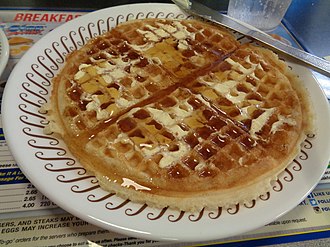
I’m not on my soapbox to knock Waffle House; quite the opposite.  Any restaurant keeping the doors open sixty years after the very first plate deserves my respect.  So does a restaurant where waffles are the main event because I love waffles.  If they’re on the menu, I’ll order waffles whether at Waffle House, Belgian-style, or made-to-order at the finest champagne brunch.  I’ve even been known to eat an Eggo or two.  Ideally, top your grids with strawberries and Chantilly cream, with syrup on the side for dipping.  Heaven on earth.

I’ve only been to Waffle House twice in my life.  Was it a memorable experience?  NO.  Both times I perched on a backless stool at the counter.  Both times I sat next to characters I’d never, ever choose to dine with.  Finally, the Waffle House kitchen is right there in the wide-open so you can watch your breakfast being prepared.  Wouldn’t say it was the most sanitary process I ever saw.

Waffle House does have its charms, however.  The original menu had just sixteen items; today, well over a hundred.  Each location is open all-day-all-night, which has some customers believing Waffle House doors don’t lock.  Each location also has a jukebox, including favorites from the “Waffle Records” label (Ex. They’re Cooking Up My Order by Alfreda Gerald, released in 2006).  Finally, two percent of all restaurant eggs in America are cracked at Waffle House.  Two percent is rarely a big number but in this case, it’s got a lot of zeroes.

Waffle House did make a famous mistake once.  In the 1960s, the chain was approached by one S. Truett Cathy, looking for an outlet for his proprietary chicken sandwich.  The sandwich was added to the menu for a short time, but sales were so strong Waffle House worried its waffles would lose the spotlight.  So Cathy moved on, and of course, Chick-fil-A soon became an even more popular place to eat.

Note the Waffle House shoebox

To be fair, the Adidas shoe isn’t the first time waffles and golf crossed paths. In 1996, Kevin Costner starred as a down-on-his-luck golfer in Tin Cup, which included a memorable scene at a Waffle House just before the U.S. Open.  Somehow this worked better than waffle-golf shoes.

According to its website, Waffle House has 10 locations in my home state of Colorado versus 439 locations in Georgia.  Do the math.  If a hundred Georgians order two waffles a day in each of those restaurants, Waffle House is cooking up over 600,000 Peach State waffles every week. WHOA. Now there’s my excuse to go to The Masters!

Some content sourced from the ESPN.com article, “Waffle House and Adidas team up for waffle-themed golf shoes”, and Wikipedia, “the free encyclopedia”.

——————–

Lego Grand Piano – Update #12

(Read about how this project got started in Let’s Make Music!)

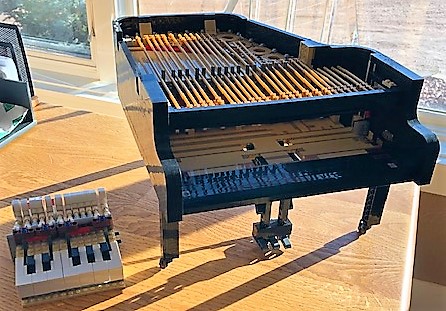
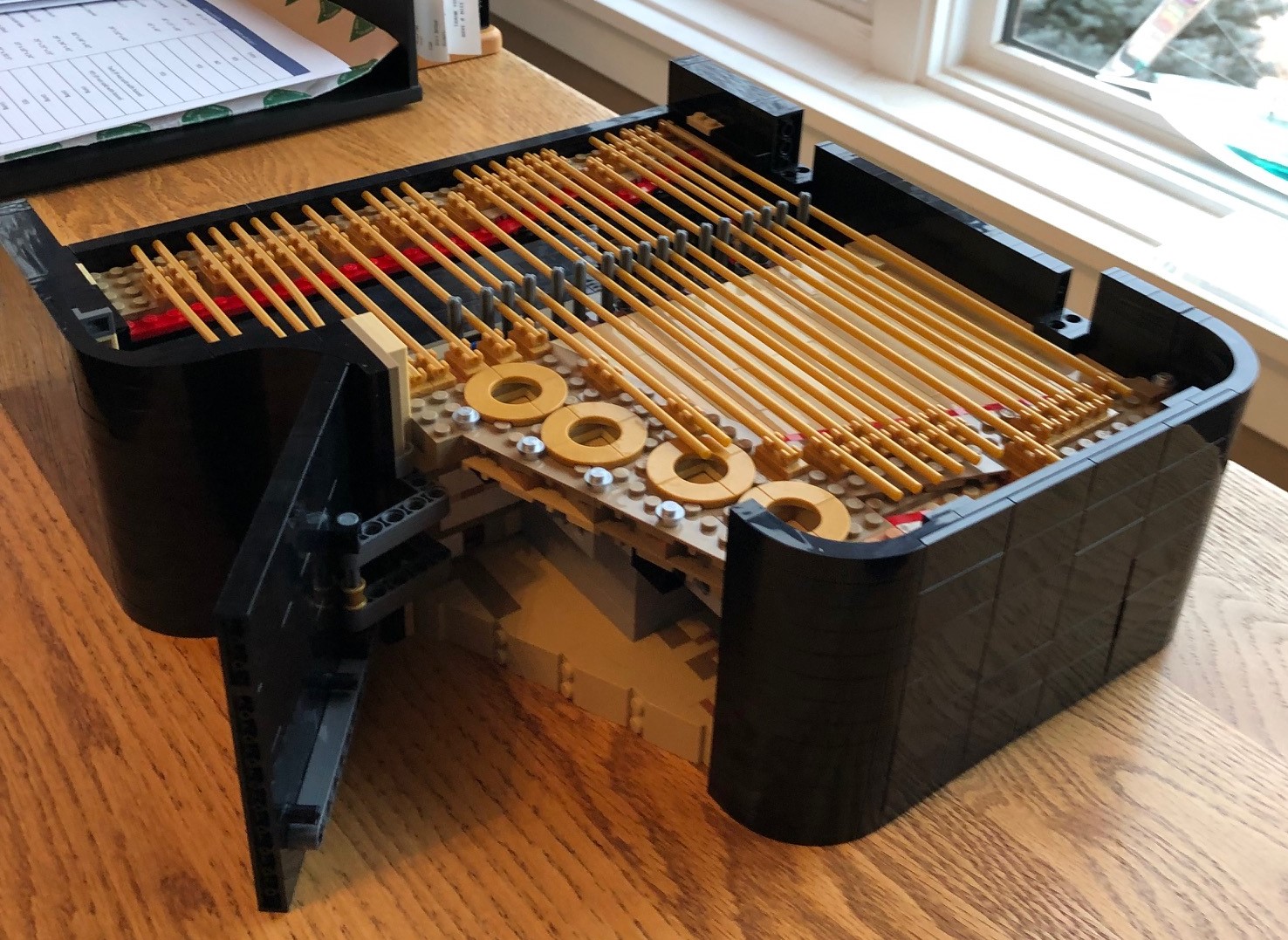
We’ll be “playing” the keyboard for the next few weeks. Bag #12 – of 21 bags of pieces – added another seven keys to the five I constructed last week, which puts us not quite halfway across the board.  I’m showing the complicated mechanical action in the photo because once the keys are installed it’ll be hard to see.  Notice how pressing the piano key down makes the rounded counterweight to the left go up.  The weight strikes the piano string above it (once inside the piano), and Voila! Music.

When you work on one of these Lego projects for almost ten hours you notice things. Little things. Today I realized, for the first time ever, Lego imprints its logo on every one of the thousands of raised “bumps” on its pieces (like the beige bumps just to the left of the black piano keys here).  A perfectionist would have all of those logos facing the same direction. Nope, not gonna happen; we’re on a one-way street here.

Running Build Time: 9.6 hours.  Musical accompaniment: Handel’s Water Music. Leftover pieces: 3

Conductor’s Note: Water Music is a collection of short pieces for a large orchestra.  Because Handel wrote the set of suites for King George I for a concert on the River Thames, Water Music is often performed outdoors.  Next to his choral work Messiah (“HA…lle-LU-jah!”), Water Music is Handel’s best-known composition.

This is Dough-NUTS!

Earlier this week, Krispy Kreme held the grand opening of its newest store just a few miles from my house. You’d have thought the first customers through the doors won the state lottery. I’ve never seen such an amped-up bunch of doughnut-lovers, at least the ones who stepped up to the television cameras. Even the news anchors caught the fever, practically giddy with their coverage, which in turn had me thinking, “Hello? Isn’t there anything more important going on in Colorado Springs?” Welcome to America, where the opening of a fast-food restaurant makes headline news.

Full disclosure: I’ve had a Krispy Kreme doughnut and they’re positively scrumptious.  Put a box of the original glazed in front of me and I’ll polish off at least half of ’em.  But that was years ago, back when Krispy Kreme was new and novel.  Today?  I take ’em or leave ’em, and apparently I leave ’em because I can’t tell you the last time I ate any brand of doughnut.  Regardless, doughnuts aren’t really my topic today; doughnut customers are.  Specifically, the ones who would get up at oh-dark-hundred just to say they’re among the first through Krispy Kreme’s doors on opening day.

Why?

Maybe these nuts for doughnuts are the same people who purchase tickets to the opening of a feature film; the ones who wait hours in line, watch the sold-out midnight show, then fall into bed bleary-eyed at 3am.  I want to get down on my knees and plead with them, “Hey you, the movie will be shown a hundred more times and will be just as good as the first showing”.  Why give up a good night’s sleep to say you saw it first?  Krispy Kreme will sell their doughnuts for years and they’ll taste just as good next year (and the year after that) as they do on “Grand Opening Day”.  Why the rush?

Here’s something else I don’t understand.  This same fast-food frenzy applied to Chick-fil-A, In-N-Out Burger, and two weeks ago, Whataburger when they opened their first stores in town.  The local news gave us updates for months until their “big days”, then cars backed up by the dozens through the drive-thru, then all you’d hear from neighbors was, “Did you hear what just opened?” like it was the juiciest bit of gossip ever. I can think of a dozen local, family-owned restaurants opening in the past several years, and not one of them earned the same hype as these national-chain fast-food commoners.  It’s like we Americans are addicted to fast food.  Which of course, we are.

Why again?

If I’d kept the local news on all day Tuesday, I would’ve seen the same on-the-spot reporter at Krispy Kreme, giving updates every two or three hours on the progress of the grand opening.  Instead, I just pulled up the news channel website and watched her short videos, one after the other after the other.  This reporter was at Krispy Kreme the entire day (that’s 5:30am-10:00pm for those who are counting).  She managed to look as fresh and bubbly with the first interview as with the last.  Probably hyped up on doughnut sugar.

At least she was getting paid.  Those first customers chose to be there voluntarily, which leads me to this question: what does the rest of your day feel like when you’ve been up since 3:00am?  One customer thought to pack pillows and blankets into her car for her three (pajama-clad) kids, so they could sleep while her husband waited in a line so long, the camera couldn’t find the end of it.  Another customer looked and talked like he’d just received his U.S. citizenship from a very faraway land, espousing the merits of the Krispy Kreme over the lesser doughnuts of his homeland.  A third customer, several dozen-doughnut boxes stacked carefully in her hands, boasted how popular she was going to be when she showed up at work (and between you and me, she looked like she’d had plenty of Krispy Kremes already).

Here’s my favorite part of this “news story”.  This isn’t the first Krispy Kreme to open in Colorado Springs.  Years ago, when KK doughnuts were a new rage, Colorado Springs got its first store.  A few years later it closed.  After that, you could only get pre-boxed Krispy Kremes at a few convenience stores around town.  After that you couldn’t get them at all.  Then several years pass.  Now we’re doing it all over again, with the same amount of hype.  To which I conclude: What does it say about your city when headline news that doesn’t deserve to be headline news becomes headline news all over again?

Now there’s a sentence I never thought I’d write.

Some content sourced from the Krispy Kreme website.

——————–

Lego Grand Piano – Update #11

(Read about how this project got started in Let’s Make Music!)

Today’s build stepped away from the body of the piano (again). Bag #11 – of 21 bags of pieces – started out as a bit of a mystery.  If I’d looked closer at Mr. Instruction Manual, I’d have known what was coming.  At some point in the thirty-five-minute assembly it became obvious.  Keys, Francis Scott.  Piano keys.

I put the Bag #11 keys side-by-side with the piano in the second photo so you can get a sense of scale.  They’re kind of a “module”, which should insert comfortably into the front of the piano later.  My next several builds may be more of the same.  Remarkably, the keys are weighted just like a real piano.  Press one down and the red-tipped weight way at the other end brings it back up.  Think see-saw.  Lest this photo has you thinking “easy build”, Bag #11 contained well over 200 pieces.

Running Build Time: 8.7 hours.  Musical accompaniment: Ravel’s Boléro (twice through). Leftover pieces: 2

Conductor’s Note: Boléro is one of my favorite classical pieces and Ravel’s most famous work.  Listeners either love it or hate it.  It’s a fifteen-minute variation on two themes, with the orchestra building slowly to its crash-bang finale.  The repeating themes are so simple I could probably play them with just the few piano keys I built today.  Ravel composed Boléro as a ballet (it does sound like a dance or a march) and predicted most orchestras would refuse to play it.  He was wrong.  Boléro also gained considerable notoriety as the theme music for the 1970s movie 10, starring Bo Derek and Dudley Moore.

Some content sourced from Wikipedia, “the free encyclopedia”.

In-Spired Music

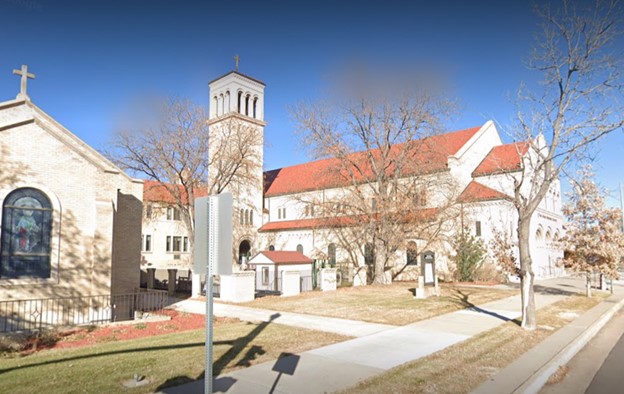
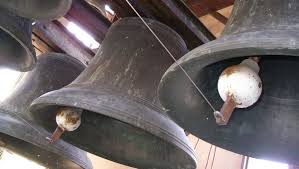
Last Friday, I walked out of the downtown salon where I get my monthly haircut to the makings of a beautiful late winter afternoon. A few cars motored by on the street, yet nobody blared the horn or blasted the radio. Pedestrians kept their conversations to a low tone.  Songbirds made melody, willing the next season to an early debut.  Above all (literally), the nearby Methodist church bells rang out the hour of the day from the steeple, followed by a cheerful rendition of… “The First Noel”?

Found the culprit on Google Street View!

Last time I checked Christmas was well over two months ago.  Decorations are boxed and returned to the closet, lights are taken down, and Starbucks no longer offers my seasonal favorite Chestnut Praline Latte.  Yet here I was, a block from a downtown church in March, with happy steeple bells daring me to burst into Christmas song. 

Talk about a case of bats in the belfry.  You think I’d pause for such a strange moment.  Instead, I simply took in this carol of the bells with a smile, got behind the wheel, and went on my “merry” way.

So it is with church bells, especially the ones in steeples big enough to broadcast their melodies for miles around.  I find church bells comforting, so much so they can play anything they choose and I’ll be happy to listen.  Even a tune that sounds so three-months-ago.

The church I grew up in, on the far west side of Los Angeles, had a tall steeple with bells.  If you pulled up to the parking lot within ten minutes of the start of the service, the bells were making music.  More importantly, they were telling you (as they’ve done for centuries in older churches) it’s time to get yourself inside for worship, buddy.  I didn’t watch every episode of Little House on the Prarie but I watched enough to remember the steeple bells summoning the people of the small town to church.  Believe me, you didn’t want to be the last parishioner in Walnut Grove to pass through the sanctuary doors, earning a steely-eyed stare-down from Rev. Alden.

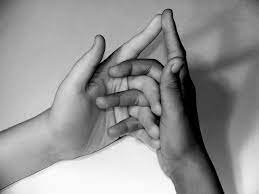
Here’s another memory from childhood church.  In “Sunday School” they taught us how to lace our fingers together, tips pointing down, palms face-to-face below, and thumbs side-by-side in front.

Church! Steeple! Doors! PEOPLE!

[Go ahead, I’ll wait while you make your little “church”.]

Then you’d look at your hands and say, “Here’s the church…” (now raise your two index fingers into a point), “Here’s the steeple…”, (now separate your thumbs a bit), “Open the doors…”, (now flip your hands over and wiggle your fingertips), “… and see all the people!”  That little ditty was clever enough to recollect all these years later, the moment I heard “The First Noel” from the downtown steeple.

At least in America, the appeal – ha – of steeple bells is probably because you don’t hear them all that often (unless your neighbor is a church).  Most modern churches can only afford the structure of the steeple, not the complicated mechanism of the bells within.  Just like train crossings, today’s “bells” are often an electronic equivalent, and so realistic you can’t tell the difference.  But you can with steeples.  If the church was built in the last fifty years, the steeple bells probably don’t ring true (ha again).

Charleston, South Carolina is known as the Holy City because you’ll find over four hundred churches in its rather compact downtown streets.  You can’t look in any direction in Charleston without seeing a steeple, and many of them are hundreds of years old.  That means bells; hundreds and hundreds of bells.  Take a walk in Charleston on a Sunday morning and you’ll be “treated” to the overlapping competition of steeple bells.  They’re summoning you to church, of course (but which one, exactly?)

The Sound of Music has a brief but charming steeple scene in the movie, just before or after Maria weds Captain von Trapp at Mondsee Abbey.  The camera points to the very top of a steeple, where the abbey bells are visible just below the cupola.  In the era of the story, steeple bells were rung by hand.  In this scene, the “ringer-boy” is shown holding on for dear life as he clings to a rope, the weight of the bell dragging him up and down like a pogo stick.  The moment always makes me laugh.

One of these days you’ll be walking down the streets of your own town and church bells will ring.  Stop for a second and give them a listen.  You’ll probably hear a melodic hymn.  You might even be gifted with an “unseasonal” Christmas carol.  Doesn’t really matter.  Those big, happy bells make beautiful music no matter the tune.

——————–

Lego Grand Piano – Update #9

(Read about how this project got started in Let’s Make Music!)

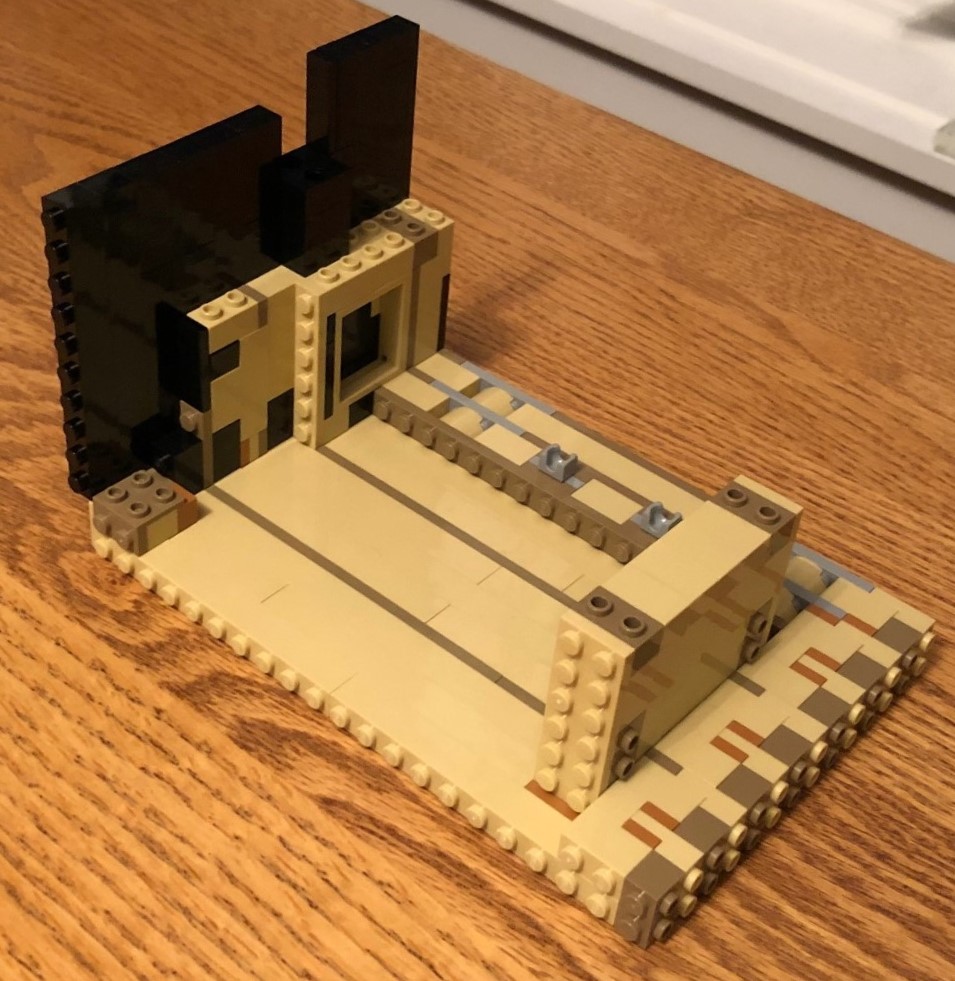
We are closing in the piano’s insides now, as you can see by the almost complete black frame in both photos. Bag #9 – of 21 bags of pieces – contained a good chunk of the frame curves, including the graceful “S” you can see just beyond the right side of the (future) keyboard.

Mendelssohn’s Piano Concerto No. 1 was just about the perfect length for today’s build, with a couple of hold-your-breath moments where pieces from previous builds snapped off and skittered away. They’re back where they belong now,

Running Build Time: 7.5 hours.  Musical accompaniment: Mendelssohn’s Piano Concerto No. 1 in G-Minor. Leftover pieces: 2 (tiny unnecessary extras for the frame).

Conductor’s Note: We have a hinged trap door built into the frame now, for access to the battery pack and on/off switch.  When it’s closed, the frame is seamless and you’d never know the door was there.  They have clever people at Lego.

I Just Turned 59.99589!

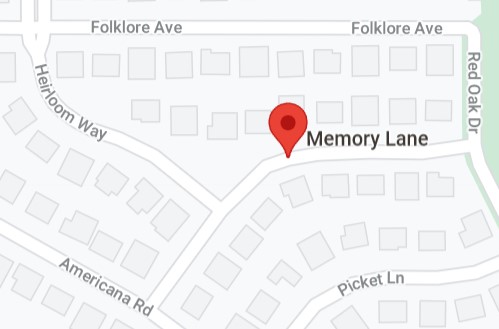
It may interest you to know there are real Memory Lanes in the bedroom communities of every American state. Look them up on Google Maps (I stopped searching after finding dozens.) Must be fun to be one of those residents and see the look on someone’s face when you give them your address.  No, I don’t know anyone who lives on Memory Lane, but me, I kind of do; one with no stripes or sidewalks. Mine is paved with sixty years of material, some of it worth a visit; other items best left alone.  All of this “Dave” stuff is somewhere between my ears and today it’s time for a big – okay, little – reveal.

59.99589.  If you’re reading this post the day it was published, I’ve just revealed my age to ridiculous exactness.  The 0.99589 amounts to 363 out of the past 365 days.  You could say I’m still in my late fifties (very late, Dave), but more accurately you’ll say I’m either sixty on the dot or a mere forty-eight hours removed from it.  Do I feel old now?  Of course not!  Er, until I calculate my age in months.  I’ve spent 720 of those bad boys.  For Pete’s sake, what have I been doing all my life?

Well, let me answer that question.  In fact, let’s make it a game because then you get to play too.  Think about the last sixty years (or in your case, however many decades you’ve been around).  Now let’s create a list – off the top of our graying heads – of up to ten significant world events in the timeframe of our years.  No, no, no; not the events you learned in the history books, but the ones with lasting, maybe even personal impact.  Here are mine, in no particular order:

  1. 9/11 (2001)
  2. COVID-19 (2020-???)
  3. San Francisco Bay Area earthquake (1989)
  4. Space Shuttle Challenger (1986)
  5. America’s war in Afghanistan (2001-2021)
  6. Apollo rockets (1961-1972)
  7. Colorado’s Black Forest wildfire (2013)

I don’t have enough time to explain my choices (after all, I only have forty-eight hours until I”m a “sexy-genarian”) but trust me; these seven came to mind in a heartbeat.  Now arrange them in chronological order to paint an interesting picture.  My childhood was inspired by Apollo rocket launches (courtesy of black-and-white TV’s); my young adult years by two disasters – the Challenger explosion and the devastating earthquake in the San Francisco Bay Area; and my adult years by big-bad-ticket items like terrorism, war, wildfire, and a global pandemic.  Sadly, not one of these events makes anyone’s “good list” (am I a product of headline news or what?). But that’s not to say my sixty years have been altogether bad.  Quite the contrary.

Now, here’s where the game gets more interesting.  Make a similar list as above, but include up to ten significant events of a personal nature.  These are the formative moments, where you’re not the same person after they happened as you were before.  Leave off relationships (including marriage) and having kids, because most of us have or will have those in common.  Let’s see now.  My eyes are closed, I’m in a thoughtful trance, and I’m typing, all at the same time (a man of many talents, no?) Okay, pencils down.  Here’s my “formative” list, also in no particular order:

  1. Corrective eye surgery (1977)
  2. I-survived-but-the-car-didn’t rollover (1984)
  3. Immersive year of studies in Rome, Italy (1982-83)
  4. Traded California’s coast for Colorado’s Rockies (1993)
  5. First job <McDonald’s> (1975)
  6. All things Boy Scouts (1973-1978)
  7. Architecture career ends, tech career begins (1993)
  8. All things basketball (1974-1979)

Again, I’d love to wax on about my choices but I’d turn 61 before I’d be done typing.  Instead, sort my formatives from earliest to most recent.  Notice anything?  All happened between the ages of 10 and 30.  My “clay was molded’ in a mere one-third of my lifetime.  Not really true, of course.  Ages 1-10 – none of us remember much of those.  But now I hear you saying, “So Dave, what have you been doing for the last thirty years?”  Well, you know the answer already  The same thing as most every other red-blooded American male.  Raising a family.  Making a living.  Loving my wife.  Loving my life.

I predict my sixties will be my greatest decade; just you wait and see.  I’ll witness another significant world event or two (maybe even a “good one”!)  I’ll break my thirty-year run of nothing and come up with at least one more formative experience.  I’ll write another 520 blog posts (and you’ll block a chunk of your calendar to read them).  But let’s be real; this is just musings about my sixties.  I’m only in my fifties. My account still shows a credit of forty-eight hours.

——————–

Lego Grand Piano – Update #2

The concert is underway! (read about my hesitant warm-up in the post Let’s Make Music!).  Bag #2 – of 21 bags of pieces – started out innocently enough, with big pieces and easy assembly.  My maestro-confidence overfloweth.

Suddenly things got v-e-r-y complicated in Mr. Instruction Manual.  Tiny, tiny pieces!  Mechanical components!  Cables!  Batteries!  Here’s last week’s build, and then below, this week’s additions for comparison.  Enlarge the second photo for a better look at the colorful, scary-looking “spindle”, running top left to bottom right.  I have no idea what it’s for but it connects to the gray/white motor (at least I think it’s a motor) just behind it. I count forty-five little Legos on the spindle, each required to be positioned exactly as you see them.  Almost walked off the stage when I was done with that step.

Running build time: 2.5 hours.  Musical accompaniment: Beethoven’s Piano Concerto No. 5 “Emperor” (three times through!)  Leftover pieces: 5 (Conductor’s note: Last week I only had 1 leftover piece.  5 = concern.  I need to double-check this week’s work before moving forward.  Safe to say you can’t go back and “repair” after the fact).

O’ Come Let Us Adorn

There’s an older fellow in Egypt who wakes up every morning, throws on a flannel shirt and well-worn pants, and goes to his workshop behind the corrugated roll-up door of a small, industrial warehouse. Using ancient tools and techniques, he churns out hundreds of colorful, ornate, square cement tiles. He’s a true artisan, our tilemaker, carrying on his craft from many generations before him.  His product endures amid countless mass-produced ceramic and porcelain alternatives. Perhaps our tilemaker would feel more at home in Lauscha, Germany.  Lauscha is home to dozens of glassblowers, who still create colorful, ornate, Christmas ornaments by hand.

Lauscha “baubles”

Every December about this time, my wife & I bring home our Christmas tree (real, not artificial – see Is It Live or Is It Memorex? for that debate).  We take our tree through the same steps from start to adorned.  First, fresh-cut the trunk, set the tree into the stand, and fill with warm water (and one baby aspirin!).  Next, let gravity bring the branches down for a few days.  Then, bring out the ladder, top the tree with the angel, and string the lights generously down all sides.  Finally, adorn with ornaments.  Our collection is larger than the real estate of any Christmas tree we buy, so there’s always debate on which ornaments make the tree and which are re-relegated to the closet for another year of waiting.  In the end, we stand back and admire a pleasing mix of homemade, school-made, photo-framed, and collectibles.

You can never have enough ornaments, and the glassblowers in Lauscha would agree.  The process they use to create the simplest of glass balls is already beyond my artistic abilities.  For one, you must work fast because the molten glass cools in a hurry.  For two, you must have steady hands as you add color and detail.  Have a look at the following short video and you’ll learn a thing or two you never knew about making Christmas ornaments.  My favorite part of the process? “Silvering”.  Who knew the mirror-like aspect of a Christmas ball is painted on the inside of the glass?

Germans (and more people than I’d probably guess) refer to Christmas ornaments as baubles, which is ironic because Americans define a bauble as a “showy cheap trinket”.  Nothing produced in Lauscha, Germany is a showy cheap trinket.  Then again, Americans figured out how to mass-produce Christmas ornaments and the result is a generic, sometimes-plastic alternative to the real thing.  “Bauble” indeed.

The very first Christmas ornaments were anything but glass-blown baubles.  You had fruit, candy canes, pastries, strings of popcorn, and whatever else you could find around the house.  The Lauscha baubles then came along in the mid-1600s.  Short of the post-WWII years (when the German government used the glass factories for more important products) they’ve been making them ever since.

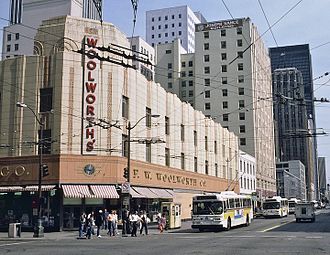
Credit Woolworth’s once-popular department stores for the proliferation of Christmas ornaments in America.  In the late 1800s, Woolworth’s started carrying the Lauscha baubles.  Soon after, they stocked mass-produced American-made versions, taking tree-decorating to a whole new level.  By the mid-20th-century, Woolworth’s was banking $25 million on Christmas decoration sales alone.

Hallmark “Keepsake Ornament”

Hallmark jumped on the bauble bandwagon in the 1970s.  Clever folks, those people at Hallmark.  Their original ornament collection was made available only for the current year, followed by a new collection the following year, and so on.  Today, Hallmark Keepsake Ornaments are so popular you have to join a club (just $49.95!) if you want to own their newest limited-edition ornaments.

As much as I’d like to add a Lauscha bauble or two to my tree, I prefer the more personal ornaments we hang instead.  A dozen or more of them were designed around primary-school photos of our kids (“art projects”, they called them).  Souvenir ornaments from favorite trips we’ve taken over the years.  Several more with imprinted dates, to remind us of special occasions like weddings, births, or passings.

Five years ago, I wrote my one and only work of fiction on this blog, a post about a Christmas ornament.  It seems fitting to include a link to The Best Branch on the Tree, assuming you haven’t followed me that long.  Because, you know, ornaments – er, baubles – have feelings too.

Some content sourced from Wikipedia, “the free encyclopedia”.

Third-Wheel Meal

In last week’s ’tis the Seasonings post, I wondered why “ginger” and “red hair” were synonymous. Paula from Monday Morning Rail replied with the answer which probably trumps all others (thanks, Paula!).  Ginger Grant, the glam character from the sixties sitcom Gilligan’s Island had a healthy head of red hair.  Sometime after the sixties a “ginger” became a person with red hair.  I’m satisfied, so let’s move to a question more appropriate for this week.  Why is (America’s) Thanksgiving celebrated on a Thursday?

Yes, it’s time for my annual Thanksgiving rant.  Rather, my everything-steps-all-over-Thanksgiving rant.  It’s not really an annual rant but perhaps it should be.  Three years ago I had so much to vent about Thanksgiving’s due, it took me two blog posts to let off the steam (see A Distant Third).  This year I realized, zero progress has been made since then.  In fact, the situation is snowballing.  Thanksgiving is finding less and less air as it gasps between the behemoths known as Halloween and Christmas.

Poor choice of word, “snowballing”.  It’ll make readers think about Christmas and I need you to stay focused.  My campaign is to keep each of the year-end holidays corralled into its respective month.  In other words, November equals Thanksgiving. (Repeat ten times, please).  Turkeys and pumpkin pie, not Santas and plum pudding.

There, I said it.  Apologies to those of you who’ve already shopped and wrapped presents.  Apologies to the rest of you who’ve already decorated your houses.  I’m just trying to give Thanksgiving its rightful place among the “big three” instead of its laggard position as “third wheel”.

You can name a dozen things associated with Halloween, and two dozen more with Christmas.  But with Thanksgiving?  Three (at least here in America).  We have the meal itself, the parades, and football.  That’s pretty much it.

Let’s dig a little deeper into the American Thanksgiving trifecta.  The meal is hanging in there despite efforts to make it healthier.  Turkey, stuffing, and pumpkin pie are still Thanksgiving staples (while “tofurky” is not).  I sometimes wonder why I don’t enjoy these foods on other days of the year as well.  Also, more people make the Thanksgiving meal at home than order online or go to a restaurant. (Do I have the data to back this up?  No, I do not.)  But I must acknowledge Friendsgiving, which has become common enough to remove the quotation marks.  Not only is Friendsgiving celebrated on any day but Thursday, the table spread can be decidedly different. Watch out.  There may come a November when – GASP! – more people celebrate the “friends” version than the “family”.

Parades remain more about Thanksgiving than the other two holidays.  You’ll find the Macy’s Thanksgiving Day Parade on television this week and at the same time, Chicago, New Orleans, Philadelphia, and Plymouth, MA host large-scale parades.  But here’s my Davey-downer factoid.  The Macy’s Parade may be the world’s largest (as well as the second-oldest in America) but it’s also an imposter.  It began as the “Macy’s Christmas Parade” in 1924, designed to launch a longer retail season at the end of the year.  So you see, the name may have changed but the parade is still decidedly “holly-jolly”.

Football brings out the smirk in sports fans again this Thanksgiving.  As they have every year since 1934 (save the WWII years) the NFL’s Detroit Lions will be playing on Thanksgiving Day.  As they have been every year (seemingly), the Detroit Lions are a truly awful football team.  In the last twenty years the Lions have amassed exactly four winning seasons.  This year?  The Lions are the only team in the NFL without a win.  The Lions are so bad in fact, the NFL has added two other games to your Thanksgiving Day lineup so you have options.

We’re almost done here, but don’t panic; I haven’t forgotten the original question.  Why is Thanksgiving celebrated on a Thursday?  Here’s the easy answer.  President Lincoln made it so back in 1863, as the final Thursday in November.  President Roosevelt also made it so back in 1941, more specifically the fourth Thursday in November.  Yeah, but… why a Thursday?

Here’s the real answer (or at least my answer).  Thanksgiving is on a Thursday.  Thursday is named for the Norse God Thor.  Thor is the God of Thunder.  See the pattern?  Thanksgiving-Thursday-Thor-Thunder.  It’s the whole “Th” thing.  Thanksgiving doesn’t really fit on a Friday (but maybe Friendsgiving does).  Besides, by Friday we’ve forgotten all about turkey and stuffing as we turn to computers and shopping malls.

Now then, banish all that “Th” nonsense from memory.  The real intent here is to give Thanksgiving its proper time and space mid-holiday season.  Let’s move Turkey Day from “third wheel” to “equal wheel” by finding more Thanksgiving stakes to claim in the month of November.  Maybe we should all dress up as pilgrims.  Maybe we should also have our kids “trade” instead of “trick-or-treat”.

With that, I wish you a Happy Thanksgiving.  And next week, I might even wish you a Merry Christmas.  You know, in December.

Some content sourced from Wikipedia, “the free encyclopedia”.

Scour Power Bars

I like to calculate trivial quantities for my own entertainment. For instance, in the timeframe of my years in grade school, my mother made me over 2,000 sack lunches (thanks, Mom!)  Or how about, in the sixteen years my wife & I have lived at our current address, I’ve driven up and down our street over 12,000 times. Trivial or not, these numbers lend perspective to things we don’t think a lot about.  Like soap.  And my soap number is +650.  That is, the number of bars I’ve consumed over the years in a daily effort to keep clean.

Seriously, when was the last time you gave a bar of soap more than a passing glance?  The poor little 3″ x 2″ x 1″ pastel-colored brick spends its month-long life sitting somewhere in your shower or bath, 23.75 out of 24 hours a day.  In those remaining fifteen minutes (probably less) he gets his one moment of adventure, traveling all over your body while he works to return you to fresh ‘n’ clean.  But with each passing day, Mr. Soap gets smaller and smaller until the dreaded moment of deliberation.  Is his remaining sliver too little for effective scour power?  You’d never know it with all the water, but maybe Mr. Soap sweats as he shrinks, anticipating the moment he gets demoted from the shower to the trash bin.

In the spirit of don’t try this at home (because it’s already been determined), a bar of soap really does last about a month, assuming a daily shower.  And that’s me.  I take a morning shower every day whether I need it or not.  Even if there’s nothing to “get ready” for I still want to face my day like there is.  So, Mr. Soap matters to me. You can understand why I’m getting into a bit of a lather on this topic.

In the chemistry lab, soap equals a surfactant derived from the chemical compound of a fatty acid.  In the supermarket, soap is simply a waxy, floral-smelling substance you purchase in solid or liquid form.  Behold some of the more common brands in America (as advertised online by Wal*Mart):

  • Caress
  • Coast
  • Degree
  • Dial
  • Dove
  • Irish Spring
  • Ivory
  • Jergens
  • Lever
  • Olay
  • Safeguard
  • Yardley
  • Zest

Admit it, as unimportant as soap may be to you, there’s a favorite brand out there, probably from the list above.  Mine is a little more exotic.  I go with Dr. Bronner’s All-One Hemp Lavender Pure-Castile (and how’s that for a mouthful of soap?)  Dr. Bronner’s is harder to find and more expensive than the commoners above, but I sure like it.  Maybe it’s the hemp; you know, maybe I’m getting a little “high ‘n’ clean”?  You could claim I’m “soap-stoned” when I shower.

My wife & I stream most of our entertainment these days so we miss a lot of commercials.  But ads for soap – at least those of several decades ago – took scrubbing bubbles to ridiculous claims.  Coast convinced you its product would “awaken your senses” and “bring you back to life” in the mere minutes of a shower.   Irish Spring advertised itself as “springtime in a bar” as a towel-clad Irishman cut into the soap with a knife he just happened to be carrying, uh… where, exactly?  And Zest had you thinking “you’re not fully clean until you’re Zest-fully clean”.  As if Zest was somehow noticeably better than other options.

Even though my Dr. Bronner’s might label me a soap snob, I want to give a shoutout to Ivory.  The simple white bars claim to be 99.44% pure soap.  The other 0.56% includes the sharp tang of fresh ginger root, a smell I will always associate with my grandparent’s house.  I can’t come up with another smell so “cleanly” connected to my distant past, so Ivory gets my nod of gratitude.

Some of you reading this far dismiss the entire topic since your preference is liquid soap.  I say, good on you!  Liquid soap has all of the cleansing benefits of bar soap and is typically a better moisturizer for the skin.  Liquid soap is also less likely to gather germs than Mr. Soap since he sits fully exposed in the shower all day every day.  But bar soap contains fewer ingredients and more natural ingredients than liquid – better for you and for the environment.  As they say, tom-ay-to, tom-ah-to. 

This opera of soap is just about done, but not before I leave you with one final trivial number: 4,800.  That’s how many years soap’s been a thing, invented by those brilliant but ancient Egyptians.  Think about it the next time you unearth a mummy.  You’ll never know who’s under the wrappings, but at least you can be pretty sure he or she was left fresh ‘n’ clean.

Some content sourced from the RompaGroup article, “17 facts about soap, the most popular hygiene product in the world”, the Healthy Group article, “Is Liquid Soap Better than Bar Soap?”, and Wikipedia, “the free encyclopedia”.

Once-A-Year Cake-and-Cheer

I caught a radio show last week where a caller mentioned her birthday fell on December 25th. She lamented how, as a kid, she received presents for Christmas and others for her birthday, not knowing which were meant for which. Without missing a beat the radio host goes, “Hey! At least you get to share your birthday with Jesus! I have to share mine with Madonna!”

I decided to play the game myself (and you can too, at the Famous Birthdays website).  Type your special day into the box at the top of the screen and up pop all these, uh, interesting people you share something of a kinship with.  You’ll see names, ages, and occupations under big, colorful photos.  People the website deems famous.  But don’t get too excited now.  I had to scroll through seventeen before I recognized anyone.  Maybe that’s because their occupations are Rapper, YouTube Star, and TikTok Star?  For Pete’s sake, can’t they have real jobs?

Mercifully, I find “real” birthday buddies among the self-proclaimed famous.  Steve Perry – lead singer for the band Journey – shares my birthday, born eleven years before I was.  So does Sam Cooke, whose soulful voice captured hearts in the 1960s.  But one birthday buddy stands gracefully above the rest.  Diane Lane, exactly three years my younger, is one of my favorite actresses.  When Diane turned 14 in 1979, she debuted as the adorable lead in the France/Italy adventure A Little Romance.  I’ve been smitten ever since.

Ms. Lane

Birthdays represent a variety of celebrations as we pass through life, don’t they?  As babies, our parents celebrate for us since we have no clue what the fuss is all about.  As young children, the celebrations become the most colorful: parties with friends of the same age and activities from amusement parks to backyard bouncy houses.  As young adults, birthdays tend to be celebrated at restaurants and bars, with plenty of alcohol flowing.  In the decades following we seem to favor SURPRISE! parties.

Now, as my sixtieth birthday looms like the next interstate exit, I’m all about more subdued celebrations.  A quiet dinner out with my wife.  A trio of phone calls from my kids.  A single piece of birthday cake instead of something big enough to hold five dozen candles.  Wouldn’t want the day to pass without acknowledgment but the simpler the gesture the better.

Speaking of birthday cake, it’s perhaps the single tie that binds as we celebrate our years young and old.  I picture a baby’s birthday cake as small and round, with a big #1 candle on top.  Cover your kid in plastic and put the cake close enough so he or she can dig in with both hands.  We have these priceless and messy pictures for each one of our kids.

Young children have the most adventurous cakes.  I picture a blank rectangle just waiting to be populated with frosting, decorations, and little toys, like an artist’s canvas.  Dump trucks working on a cake-top construction site.  Animals living in a cake-top jungle.  Ballerinas dancing across a cake-top stage.  The possibilities are endless.

After childhood, cake designs evolve to the age itself.  Whether big wax numbers or individual candles, the focus of the cake becomes the number.  After enough of those years, we try to be more subtle (ex. spell out the age with candles) so we don’t set the house on fire.  Later in life, we save the biggest celebrations (and cakes) for the round numbers because ages 80, 90, and 100 are achievements in themselves, aren’t they?

There’s evidence to suggest birthdays and cakes have been a combo as far back as ancient Roman times but for me, birthday cake is simply a nod to happy childhood memories.  Birthday-cake-flavored ice cream, cookies, and even protein bars are all the rage for this reason.  We just want to be kids again, breathlessly anticipating the celebration of our special day.

Some content sourced from IMDb, the Internet Movie Database, and Wikipedia, “the free encyclopedia”.

Sweet Nothing

Cleveland, Ohio sits proudly on the south shore of Lake Erie but has long been considered one of the least desirable locales in America. Shuttered steel mills, miserable weather, and a floundering economy don’t paint a pretty picture. But Cleveland does have an upside. It hosts the iconic Rock and Roll Hall of Fame. Hundreds of thousands flock to its international film festival. And the Cleveland Browns – long the doormat of professional football – just completed their first winning season in over a decade.  Alas, music, movies, and sports don’t erase mistakes… not when a city lays claim to a “holiday” called Sweetest Day.

Tape a big round target to my computer monitor and hand me a bazooka, because I’m about to blow the Sweetest Day bullseye into bits you’ll need a microscope to see.  The redeeming qualities of this celebration amount to little more than sweet nothings. I mean, how bad is it when your holiday is not only labeled a “Hallmark”, but popular opinion says it’s the worst of that lot?

A Hallmark Holiday.  By definition it’s a celebration with no more substance than a push to buy a greeting card.  Boss’s Day (Oct. 16th).  Administrative Professionals’ Day (April 27th).  Teacher Appreciation Day (May 3rd).  There’s even Clergy Appreciation Day (Oct. 10th).  Sweetest Day lands at the very bottom of this feathery-light pile.  Please, can we just leave it buried there?

“Hallmark Holiday”

It wasn’t always this way with Sweetest Day.  Wait… YES IT WAS.  Did you know we celebrated the 100th anniversary of the original Sweetest Day last Saturday?  But I’m getting ahead of myself.  The better question I should ask: Do you even know why we celebrate Sweetest Day?

No, I don’t celebrate Sweetest Day, but many of you in the “Great Lakes Region” do (eight midwestern U.S. states plus the Canadian province of Ontario).  For the rest of us, here’s the debatably sincere back story.  In 1921, twelve Cleveland candy company executives pooled their surplus product and gave away 20,000 boxes of candy “to newsboys, orphans, old folks, and the poor”, and literally manufactured a holiday in the process.  In the hundred years since, Sweetest Day has morphed from free candy for strangers to “… a day to share romantic deeds or expressions and acts of charity or kindness.”  With all due respect Cleveland, why do we need a “holiday” for romance or charity?

This is all your fault, Cleveland

When I first learned about Sweetest Day all I could come up with was Valentine’s Day 2.0.  I mean, how convenient, right?  We have the big day of romance in February so why not a little one (a really little one) in October?  Defenders of Sweetest Day say the two celebrations aren’t anything alike.  I agree.  Valentine’s Day was a Christian feast day designated over 2,500 years ago and celebrated throughout the world today.  Sweetest Day was a gimmick designed to sell candy (and cards) exactly 100 years ago and celebrated throughout… the Great Lakes Region.

Several failed attempts were made over the years to solidify Sweetest Day on the October calendar.  In 1922 the name was changed to “Candy Day” to see if it would generate more buzz (nope).  In 1927 they tried to make it Sweetest Week (nope again).  And in 1937, to make it more nationally accepted, they tried to advertise Sweetest Day on par with Mother’s, Father’s, and Valentine’s Day (this effort sponsored by, drum roll please… the National Confectioner’s Association).

None of this spinning of wheels stood in Hallmark’s way.  The greeting card company produces over 150 designs for Sweetest Day.  American Greetings joined the card party to make another 180.  Can you blame them when so many Great Lakes Region people are willing to buy?

All of my bazooka-blasting brings me to a fitting conclusion concerning Wikipedia (where I often find reference material).  Every Wikipedia article gets a rating of “quality” and another of “importance”, using a scale not so different from the one you had in grade school.  Wikipedia’s article on Sweetest Day – published seventeen years ago – gets a quality rating of, uh… has not yet received, and an importance rating of, uh… has not yet received.  In other words, nobody at Wikipedia cares enough to even rate the article.

Here’s an idea.  How about we just delete the Wikipedia article? (as one employee proposed two years after it was published).  For that matter, how about we just delete Sweetest Day?  I have my bazooka at the ready.

Some content sourced from Wikipedia, “the free encyclopedia”.

Sour Grapes

I’m not a fan of French wines. Er, let me rephrase – I don’t appreciate French wines. My palate for bottles of the red and the white has traveled as far as Napa (Chardonnay and Cabernet) and California’s Central Coast (red blends) but nowhere further unless I count the occasional bottle of Chianti from a college year in Italy. I can’t even name a French wine, other than a sparkler like Dom Pérignon. But maybe it’s time for a change, my friends. I’ve taken a sudden interest in a new Viognier… you know, the wine from the vineyards of Grey Poupon?

But does it “pass muster”?

You read that right.  Grey Poupon, the maker of Dijon mustard, wants to be a maker of fine wine as well.  Described as “bright hints of spice and pronounced citrus” and “floral characteristics”, a bottle of Grey Poupon white “pairs ideally with charcuterie boards and sandwiches”.  Of course it does, because there’s an infusion of crushed mustard seeds in every glass.

Mustard-flavored wine.  Sounds like sour grapes, doesn’t it?  Mustard wine sounds as appealing as the scoop of Goat Cheese Beet Swirl ice cream I can get right up the road in Denver.  And if you think the name on the Grey Poupon bottle sounds fancy – La Moutarde Vin – think again.  Translation: mustard wine.

I don’t expect to stock my wine cellar with bottles of La Moutarde Vin (once I have a wine cellar, that is) but I do stock my frig with mustard.  Despite endless baloney-and-mustard-on-white sandwiches in my grade school days, I bounced back as an adult and reembraced mustard.  The yellowest of condiments is delicious in potato salad.  It’s ideal on bratwurst or a hot dog.  And mustard wins out over mayonnaise any day on a ham-and-cheese.

For all the attention ketchup gets (for some reason Batman and Robin come to mind here), mustard has been around longer and comes in more varieties.  In typical fashion, Americans first flocked to its most basic version, “yellow mustard”, before maturing to the spicy brown varieties of Europe.  Mustard was created in Dijon (France) in the 1800s.  Anyone who knows the taste of Dijon knows it’s a wholly different animal than the yellow.  Why so different?  Dijon mustard is made with white wine.  And there’s the role reversal in a nutshell.  Now we have white wine made with Dijon mustard.

[Trivia break: A popular brand of mustard in America is French’s.  Where in France did it come from?  No, no, no, back up the truck.  It’s just yellow mustard.  It has nothing to do with France. But it has everything to do with the guy who invented it: Robert Timothy French.]

We Americans adore mustard so much we built a shrine in its honor.  The National Mustard Museum in Middleton, WI proudly boasts the world’s largest collection of mustards and mustard memorabilia.  I have no plans to visit, but I do wonder if they’ve added a bottle of La Moutarde Vin to their display.

As long as I’m grappling with American vs. Dijon or mild vs. spicy, let’s address another challenge with mustard.  It’s a branded color, as in mustard yellow.  Sure, I get it – the yellow evokes the bright blooms of mustard plants.  You’ll even find mustard yellow in a box of Crayola crayons.  But what if you’re a kid in France?  How does a French mom explain to her kid why his mustard yellow crayon looks like bright sunshine instead of Grey Poupon?

Grey Poupon’s La Moutarde Vin is a limited-edition product, sort of a “cheers” to the wine used in the mustard.  At $30 a bottle, it’s reaching the high end of what I typically spend on wine.  But with every bottle you also get a free jar of Grey Poupon.  Okay, so maybe I have a taste for mustard wine after all.

Some content sourced from the CNN Business article, “Grey Poupon wine now exists”, and Wikipedia, “the free encyclopedia”.