I Just Turned 59.99589!

It may interest you to know there are real Memory Lanes in the bedroom communities of every American state. Look them up on Google Maps (I stopped searching after finding dozens.) Must be fun to be one of those residents and see the look on someone’s face when you give them your address.  No, I don’t know anyone who lives on Memory Lane, but me, I kind of do; one with no stripes or sidewalks. Mine is paved with sixty years of material, some of it worth a visit; other items best left alone.  All of this “Dave” stuff is somewhere between my ears and today it’s time for a big – okay, little – reveal.

59.99589.  If you’re reading this post the day it was published, I’ve just revealed my age to ridiculous exactness.  The 0.99589 amounts to 363 out of the past 365 days.  You could say I’m still in my late fifties (very late, Dave), but more accurately you’ll say I’m either sixty on the dot or a mere forty-eight hours removed from it.  Do I feel old now?  Of course not!  Er, until I calculate my age in months.  I’ve spent 720 of those bad boys.  For Pete’s sake, what have I been doing all my life?

Well, let me answer that question.  In fact, let’s make it a game because then you get to play too.  Think about the last sixty years (or in your case, however many decades you’ve been around).  Now let’s create a list – off the top of our graying heads – of up to ten significant world events in the timeframe of our years.  No, no, no; not the events you learned in the history books, but the ones with lasting, maybe even personal impact.  Here are mine, in no particular order:

  1. 9/11 (2001)
  2. COVID-19 (2020-???)
  3. San Francisco Bay Area earthquake (1989)
  4. Space Shuttle Challenger (1986)
  5. America’s war in Afghanistan (2001-2021)
  6. Apollo rockets (1961-1972)
  7. Colorado’s Black Forest wildfire (2013)

I don’t have enough time to explain my choices (after all, I only have forty-eight hours until I”m a “sexy-genarian”) but trust me; these seven came to mind in a heartbeat.  Now arrange them in chronological order to paint an interesting picture.  My childhood was inspired by Apollo rocket launches (courtesy of black-and-white TV’s); my young adult years by two disasters – the Challenger explosion and the devastating earthquake in the San Francisco Bay Area; and my adult years by big-bad-ticket items like terrorism, war, wildfire, and a global pandemic.  Sadly, not one of these events makes anyone’s “good list” (am I a product of headline news or what?). But that’s not to say my sixty years have been altogether bad.  Quite the contrary.

Now, here’s where the game gets more interesting.  Make a similar list as above, but include up to ten significant events of a personal nature.  These are the formative moments, where you’re not the same person after they happened as you were before.  Leave off relationships (including marriage) and having kids, because most of us have or will have those in common.  Let’s see now.  My eyes are closed, I’m in a thoughtful trance, and I’m typing, all at the same time (a man of many talents, no?) Okay, pencils down.  Here’s my “formative” list, also in no particular order:

  1. Corrective eye surgery (1977)
  2. I-survived-but-the-car-didn’t rollover (1984)
  3. Immersive year of studies in Rome, Italy (1982-83)
  4. Traded California’s coast for Colorado’s Rockies (1993)
  5. First job <McDonald’s> (1975)
  6. All things Boy Scouts (1973-1978)
  7. Architecture career ends, tech career begins (1993)
  8. All things basketball (1974-1979)

Again, I’d love to wax on about my choices but I’d turn 61 before I’d be done typing.  Instead, sort my formatives from earliest to most recent.  Notice anything?  All happened between the ages of 10 and 30.  My “clay was molded’ in a mere one-third of my lifetime.  Not really true, of course.  Ages 1-10 – none of us remember much of those.  But now I hear you saying, “So Dave, what have you been doing for the last thirty years?”  Well, you know the answer already  The same thing as most every other red-blooded American male.  Raising a family.  Making a living.  Loving my wife.  Loving my life.

I predict my sixties will be my greatest decade; just you wait and see.  I’ll witness another significant world event or two (maybe even a “good one”!)  I’ll break my thirty-year run of nothing and come up with at least one more formative experience.  I’ll write another 520 blog posts (and you’ll block a chunk of your calendar to read them).  But let’s be real; this is just musings about my sixties.  I’m only in my fifties. My account still shows a credit of forty-eight hours.

——————–

Lego Grand Piano – Update #2

The concert is underway! (read about my hesitant warm-up in the post Let’s Make Music!).  Bag #2 – of 21 bags of pieces – started out innocently enough, with big pieces and easy assembly.  My maestro-confidence overfloweth.

Suddenly things got v-e-r-y complicated in Mr. Instruction Manual.  Tiny, tiny pieces!  Mechanical components!  Cables!  Batteries!  Here’s last week’s build, and then below, this week’s additions for comparison.  Enlarge the second photo for a better look at the colorful, scary-looking “spindle”, running top left to bottom right.  I have no idea what it’s for but it connects to the gray/white motor (at least I think it’s a motor) just behind it. I count forty-five little Legos on the spindle, each required to be positioned exactly as you see them.  Almost walked off the stage when I was done with that step.

Running build time: 2.5 hours.  Musical accompaniment: Beethoven’s Piano Concerto No. 5 “Emperor” (three times through!)  Leftover pieces: 5 (Conductor’s note: Last week I only had 1 leftover piece.  5 = concern.  I need to double-check this week’s work before moving forward.  Safe to say you can’t go back and “repair” after the fact).

O’ Come Let Us Adorn

There’s an older fellow in Egypt who wakes up every morning, throws on a flannel shirt and well-worn pants, and goes to his workshop behind the corrugated roll-up door of a small, industrial warehouse. Using ancient tools and techniques, he churns out hundreds of colorful, ornate, square cement tiles. He’s a true artisan, our tilemaker, carrying on his craft from many generations before him.  His product endures amid countless mass-produced ceramic and porcelain alternatives. Perhaps our tilemaker would feel more at home in Lauscha, Germany.  Lauscha is home to dozens of glassblowers, who still create colorful, ornate, Christmas ornaments by hand.

Lauscha “baubles”

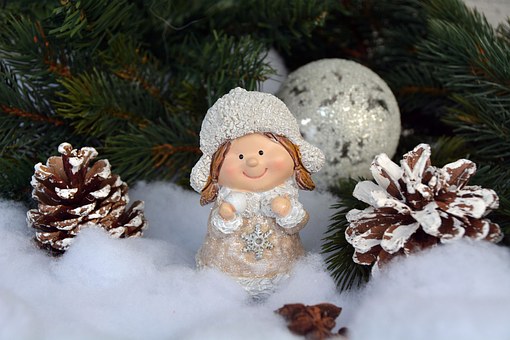
Every December about this time, my wife & I bring home our Christmas tree (real, not artificial – see Is It Live or Is It Memorex? for that debate).  We take our tree through the same steps from start to adorned.  First, fresh-cut the trunk, set the tree into the stand, and fill with warm water (and one baby aspirin!).  Next, let gravity bring the branches down for a few days.  Then, bring out the ladder, top the tree with the angel, and string the lights generously down all sides.  Finally, adorn with ornaments.  Our collection is larger than the real estate of any Christmas tree we buy, so there’s always debate on which ornaments make the tree and which are re-relegated to the closet for another year of waiting.  In the end, we stand back and admire a pleasing mix of homemade, school-made, photo-framed, and collectibles.

You can never have enough ornaments, and the glassblowers in Lauscha would agree.  The process they use to create the simplest of glass balls is already beyond my artistic abilities.  For one, you must work fast because the molten glass cools in a hurry.  For two, you must have steady hands as you add color and detail.  Have a look at the following short video and you’ll learn a thing or two you never knew about making Christmas ornaments.  My favorite part of the process? “Silvering”.  Who knew the mirror-like aspect of a Christmas ball is painted on the inside of the glass?

Germans (and more people than I’d probably guess) refer to Christmas ornaments as baubles, which is ironic because Americans define a bauble as a “showy cheap trinket”.  Nothing produced in Lauscha, Germany is a showy cheap trinket.  Then again, Americans figured out how to mass-produce Christmas ornaments and the result is a generic, sometimes-plastic alternative to the real thing.  “Bauble” indeed.

The very first Christmas ornaments were anything but glass-blown baubles.  You had fruit, candy canes, pastries, strings of popcorn, and whatever else you could find around the house.  The Lauscha baubles then came along in the mid-1600s.  Short of the post-WWII years (when the German government used the glass factories for more important products) they’ve been making them ever since.

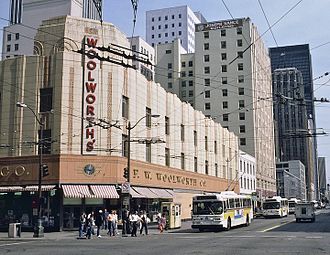
Credit Woolworth’s once-popular department stores for the proliferation of Christmas ornaments in America.  In the late 1800s, Woolworth’s started carrying the Lauscha baubles.  Soon after, they stocked mass-produced American-made versions, taking tree-decorating to a whole new level.  By the mid-20th-century, Woolworth’s was banking $25 million on Christmas decoration sales alone.

Hallmark “Keepsake Ornament”

Hallmark jumped on the bauble bandwagon in the 1970s.  Clever folks, those people at Hallmark.  Their original ornament collection was made available only for the current year, followed by a new collection the following year, and so on.  Today, Hallmark Keepsake Ornaments are so popular you have to join a club (just $49.95!) if you want to own their newest limited-edition ornaments.

As much as I’d like to add a Lauscha bauble or two to my tree, I prefer the more personal ornaments we hang instead.  A dozen or more of them were designed around primary-school photos of our kids (“art projects”, they called them).  Souvenir ornaments from favorite trips we’ve taken over the years.  Several more with imprinted dates, to remind us of special occasions like weddings, births, or passings.

Five years ago, I wrote my one and only work of fiction on this blog, a post about a Christmas ornament.  It seems fitting to include a link to The Best Branch on the Tree, assuming you haven’t followed me that long.  Because, you know, ornaments – er, baubles – have feelings too.

Some content sourced from Wikipedia, “the free encyclopedia”.

Third-Wheel Meal

In last week’s ’tis the Seasonings post, I wondered why “ginger” and “red hair” were synonymous. Paula from Monday Morning Rail replied with the answer which probably trumps all others (thanks, Paula!).  Ginger Grant, the glam character from the sixties sitcom Gilligan’s Island had a healthy head of red hair.  Sometime after the sixties a “ginger” became a person with red hair.  I’m satisfied, so let’s move to a question more appropriate for this week.  Why is (America’s) Thanksgiving celebrated on a Thursday?

Yes, it’s time for my annual Thanksgiving rant.  Rather, my everything-steps-all-over-Thanksgiving rant.  It’s not really an annual rant but perhaps it should be.  Three years ago I had so much to vent about Thanksgiving’s due, it took me two blog posts to let off the steam (see A Distant Third).  This year I realized, zero progress has been made since then.  In fact, the situation is snowballing.  Thanksgiving is finding less and less air as it gasps between the behemoths known as Halloween and Christmas.

Poor choice of word, “snowballing”.  It’ll make readers think about Christmas and I need you to stay focused.  My campaign is to keep each of the year-end holidays corralled into its respective month.  In other words, November equals Thanksgiving. (Repeat ten times, please).  Turkeys and pumpkin pie, not Santas and plum pudding.

There, I said it.  Apologies to those of you who’ve already shopped and wrapped presents.  Apologies to the rest of you who’ve already decorated your houses.  I’m just trying to give Thanksgiving its rightful place among the “big three” instead of its laggard position as “third wheel”.

You can name a dozen things associated with Halloween, and two dozen more with Christmas.  But with Thanksgiving?  Three (at least here in America).  We have the meal itself, the parades, and football.  That’s pretty much it.

Let’s dig a little deeper into the American Thanksgiving trifecta.  The meal is hanging in there despite efforts to make it healthier.  Turkey, stuffing, and pumpkin pie are still Thanksgiving staples (while “tofurky” is not).  I sometimes wonder why I don’t enjoy these foods on other days of the year as well.  Also, more people make the Thanksgiving meal at home than order online or go to a restaurant. (Do I have the data to back this up?  No, I do not.)  But I must acknowledge Friendsgiving, which has become common enough to remove the quotation marks.  Not only is Friendsgiving celebrated on any day but Thursday, the table spread can be decidedly different. Watch out.  There may come a November when – GASP! – more people celebrate the “friends” version than the “family”.

Parades remain more about Thanksgiving than the other two holidays.  You’ll find the Macy’s Thanksgiving Day Parade on television this week and at the same time, Chicago, New Orleans, Philadelphia, and Plymouth, MA host large-scale parades.  But here’s my Davey-downer factoid.  The Macy’s Parade may be the world’s largest (as well as the second-oldest in America) but it’s also an imposter.  It began as the “Macy’s Christmas Parade” in 1924, designed to launch a longer retail season at the end of the year.  So you see, the name may have changed but the parade is still decidedly “holly-jolly”.

Football brings out the smirk in sports fans again this Thanksgiving.  As they have every year since 1934 (save the WWII years) the NFL’s Detroit Lions will be playing on Thanksgiving Day.  As they have been every year (seemingly), the Detroit Lions are a truly awful football team.  In the last twenty years the Lions have amassed exactly four winning seasons.  This year?  The Lions are the only team in the NFL without a win.  The Lions are so bad in fact, the NFL has added two other games to your Thanksgiving Day lineup so you have options.

We’re almost done here, but don’t panic; I haven’t forgotten the original question.  Why is Thanksgiving celebrated on a Thursday?  Here’s the easy answer.  President Lincoln made it so back in 1863, as the final Thursday in November.  President Roosevelt also made it so back in 1941, more specifically the fourth Thursday in November.  Yeah, but… why a Thursday?

Here’s the real answer (or at least my answer).  Thanksgiving is on a Thursday.  Thursday is named for the Norse God Thor.  Thor is the God of Thunder.  See the pattern?  Thanksgiving-Thursday-Thor-Thunder.  It’s the whole “Th” thing.  Thanksgiving doesn’t really fit on a Friday (but maybe Friendsgiving does).  Besides, by Friday we’ve forgotten all about turkey and stuffing as we turn to computers and shopping malls.

Now then, banish all that “Th” nonsense from memory.  The real intent here is to give Thanksgiving its proper time and space mid-holiday season.  Let’s move Turkey Day from “third wheel” to “equal wheel” by finding more Thanksgiving stakes to claim in the month of November.  Maybe we should all dress up as pilgrims.  Maybe we should also have our kids “trade” instead of “trick-or-treat”.

With that, I wish you a Happy Thanksgiving.  And next week, I might even wish you a Merry Christmas.  You know, in December.

Some content sourced from Wikipedia, “the free encyclopedia”.

Scour Power Bars

I like to calculate trivial quantities for my own entertainment. For instance, in the timeframe of my years in grade school, my mother made me over 2,000 sack lunches (thanks, Mom!)  Or how about, in the sixteen years my wife & I have lived at our current address, I’ve driven up and down our street over 12,000 times. Trivial or not, these numbers lend perspective to things we don’t think a lot about.  Like soap.  And my soap number is +650.  That is, the number of bars I’ve consumed over the years in a daily effort to keep clean.

Seriously, when was the last time you gave a bar of soap more than a passing glance?  The poor little 3″ x 2″ x 1″ pastel-colored brick spends its month-long life sitting somewhere in your shower or bath, 23.75 out of 24 hours a day.  In those remaining fifteen minutes (probably less) he gets his one moment of adventure, traveling all over your body while he works to return you to fresh ‘n’ clean.  But with each passing day, Mr. Soap gets smaller and smaller until the dreaded moment of deliberation.  Is his remaining sliver too little for effective scour power?  You’d never know it with all the water, but maybe Mr. Soap sweats as he shrinks, anticipating the moment he gets demoted from the shower to the trash bin.

In the spirit of don’t try this at home (because it’s already been determined), a bar of soap really does last about a month, assuming a daily shower.  And that’s me.  I take a morning shower every day whether I need it or not.  Even if there’s nothing to “get ready” for I still want to face my day like there is.  So, Mr. Soap matters to me. You can understand why I’m getting into a bit of a lather on this topic.

In the chemistry lab, soap equals a surfactant derived from the chemical compound of a fatty acid.  In the supermarket, soap is simply a waxy, floral-smelling substance you purchase in solid or liquid form.  Behold some of the more common brands in America (as advertised online by Wal*Mart):

  • Caress
  • Coast
  • Degree
  • Dial
  • Dove
  • Irish Spring
  • Ivory
  • Jergens
  • Lever
  • Olay
  • Safeguard
  • Yardley
  • Zest

Admit it, as unimportant as soap may be to you, there’s a favorite brand out there, probably from the list above.  Mine is a little more exotic.  I go with Dr. Bronner’s All-One Hemp Lavender Pure-Castile (and how’s that for a mouthful of soap?)  Dr. Bronner’s is harder to find and more expensive than the commoners above, but I sure like it.  Maybe it’s the hemp; you know, maybe I’m getting a little “high ‘n’ clean”?  You could claim I’m “soap-stoned” when I shower.

My wife & I stream most of our entertainment these days so we miss a lot of commercials.  But ads for soap – at least those of several decades ago – took scrubbing bubbles to ridiculous claims.  Coast convinced you its product would “awaken your senses” and “bring you back to life” in the mere minutes of a shower.   Irish Spring advertised itself as “springtime in a bar” as a towel-clad Irishman cut into the soap with a knife he just happened to be carrying, uh… where, exactly?  And Zest had you thinking “you’re not fully clean until you’re Zest-fully clean”.  As if Zest was somehow noticeably better than other options.

Even though my Dr. Bronner’s might label me a soap snob, I want to give a shoutout to Ivory.  The simple white bars claim to be 99.44% pure soap.  The other 0.56% includes the sharp tang of fresh ginger root, a smell I will always associate with my grandparent’s house.  I can’t come up with another smell so “cleanly” connected to my distant past, so Ivory gets my nod of gratitude.

Some of you reading this far dismiss the entire topic since your preference is liquid soap.  I say, good on you!  Liquid soap has all of the cleansing benefits of bar soap and is typically a better moisturizer for the skin.  Liquid soap is also less likely to gather germs than Mr. Soap since he sits fully exposed in the shower all day every day.  But bar soap contains fewer ingredients and more natural ingredients than liquid – better for you and for the environment.  As they say, tom-ay-to, tom-ah-to. 

This opera of soap is just about done, but not before I leave you with one final trivial number: 4,800.  That’s how many years soap’s been a thing, invented by those brilliant but ancient Egyptians.  Think about it the next time you unearth a mummy.  You’ll never know who’s under the wrappings, but at least you can be pretty sure he or she was left fresh ‘n’ clean.

Some content sourced from the RompaGroup article, “17 facts about soap, the most popular hygiene product in the world”, the Healthy Group article, “Is Liquid Soap Better than Bar Soap?”, and Wikipedia, “the free encyclopedia”.

Once-A-Year Cake-and-Cheer

I caught a radio show last week where a caller mentioned her birthday fell on December 25th. She lamented how, as a kid, she received presents for Christmas and others for her birthday, not knowing which were meant for which. Without missing a beat the radio host goes, “Hey! At least you get to share your birthday with Jesus! I have to share mine with Madonna!”

I decided to play the game myself (and you can too, at the Famous Birthdays website).  Type your special day into the box at the top of the screen and up pop all these, uh, interesting people you share something of a kinship with.  You’ll see names, ages, and occupations under big, colorful photos.  People the website deems famous.  But don’t get too excited now.  I had to scroll through seventeen before I recognized anyone.  Maybe that’s because their occupations are Rapper, YouTube Star, and TikTok Star?  For Pete’s sake, can’t they have real jobs?

Mercifully, I find “real” birthday buddies among the self-proclaimed famous.  Steve Perry – lead singer for the band Journey – shares my birthday, born eleven years before I was.  So does Sam Cooke, whose soulful voice captured hearts in the 1960s.  But one birthday buddy stands gracefully above the rest.  Diane Lane, exactly three years my younger, is one of my favorite actresses.  When Diane turned 14 in 1979, she debuted as the adorable lead in the France/Italy adventure A Little Romance.  I’ve been smitten ever since.

Ms. Lane

Birthdays represent a variety of celebrations as we pass through life, don’t they?  As babies, our parents celebrate for us since we have no clue what the fuss is all about.  As young children, the celebrations become the most colorful: parties with friends of the same age and activities from amusement parks to backyard bouncy houses.  As young adults, birthdays tend to be celebrated at restaurants and bars, with plenty of alcohol flowing.  In the decades following we seem to favor SURPRISE! parties.

Now, as my sixtieth birthday looms like the next interstate exit, I’m all about more subdued celebrations.  A quiet dinner out with my wife.  A trio of phone calls from my kids.  A single piece of birthday cake instead of something big enough to hold five dozen candles.  Wouldn’t want the day to pass without acknowledgment but the simpler the gesture the better.

Speaking of birthday cake, it’s perhaps the single tie that binds as we celebrate our years young and old.  I picture a baby’s birthday cake as small and round, with a big #1 candle on top.  Cover your kid in plastic and put the cake close enough so he or she can dig in with both hands.  We have these priceless and messy pictures for each one of our kids.

Young children have the most adventurous cakes.  I picture a blank rectangle just waiting to be populated with frosting, decorations, and little toys, like an artist’s canvas.  Dump trucks working on a cake-top construction site.  Animals living in a cake-top jungle.  Ballerinas dancing across a cake-top stage.  The possibilities are endless.

After childhood, cake designs evolve to the age itself.  Whether big wax numbers or individual candles, the focus of the cake becomes the number.  After enough of those years, we try to be more subtle (ex. spell out the age with candles) so we don’t set the house on fire.  Later in life, we save the biggest celebrations (and cakes) for the round numbers because ages 80, 90, and 100 are achievements in themselves, aren’t they?

There’s evidence to suggest birthdays and cakes have been a combo as far back as ancient Roman times but for me, birthday cake is simply a nod to happy childhood memories.  Birthday-cake-flavored ice cream, cookies, and even protein bars are all the rage for this reason.  We just want to be kids again, breathlessly anticipating the celebration of our special day.

Some content sourced from IMDb, the Internet Movie Database, and Wikipedia, “the free encyclopedia”.

Sweet Nothing

Cleveland, Ohio sits proudly on the south shore of Lake Erie but has long been considered one of the least desirable locales in America. Shuttered steel mills, miserable weather, and a floundering economy don’t paint a pretty picture. But Cleveland does have an upside. It hosts the iconic Rock and Roll Hall of Fame. Hundreds of thousands flock to its international film festival. And the Cleveland Browns – long the doormat of professional football – just completed their first winning season in over a decade.  Alas, music, movies, and sports don’t erase mistakes… not when a city lays claim to a “holiday” called Sweetest Day.

Tape a big round target to my computer monitor and hand me a bazooka, because I’m about to blow the Sweetest Day bullseye into bits you’ll need a microscope to see.  The redeeming qualities of this celebration amount to little more than sweet nothings. I mean, how bad is it when your holiday is not only labeled a “Hallmark”, but popular opinion says it’s the worst of that lot?

A Hallmark Holiday.  By definition it’s a celebration with no more substance than a push to buy a greeting card.  Boss’s Day (Oct. 16th).  Administrative Professionals’ Day (April 27th).  Teacher Appreciation Day (May 3rd).  There’s even Clergy Appreciation Day (Oct. 10th).  Sweetest Day lands at the very bottom of this feathery-light pile.  Please, can we just leave it buried there?

“Hallmark Holiday”

It wasn’t always this way with Sweetest Day.  Wait… YES IT WAS.  Did you know we celebrated the 100th anniversary of the original Sweetest Day last Saturday?  But I’m getting ahead of myself.  The better question I should ask: Do you even know why we celebrate Sweetest Day?

No, I don’t celebrate Sweetest Day, but many of you in the “Great Lakes Region” do (eight midwestern U.S. states plus the Canadian province of Ontario).  For the rest of us, here’s the debatably sincere back story.  In 1921, twelve Cleveland candy company executives pooled their surplus product and gave away 20,000 boxes of candy “to newsboys, orphans, old folks, and the poor”, and literally manufactured a holiday in the process.  In the hundred years since, Sweetest Day has morphed from free candy for strangers to “… a day to share romantic deeds or expressions and acts of charity or kindness.”  With all due respect Cleveland, why do we need a “holiday” for romance or charity?

This is all your fault, Cleveland

When I first learned about Sweetest Day all I could come up with was Valentine’s Day 2.0.  I mean, how convenient, right?  We have the big day of romance in February so why not a little one (a really little one) in October?  Defenders of Sweetest Day say the two celebrations aren’t anything alike.  I agree.  Valentine’s Day was a Christian feast day designated over 2,500 years ago and celebrated throughout the world today.  Sweetest Day was a gimmick designed to sell candy (and cards) exactly 100 years ago and celebrated throughout… the Great Lakes Region.

Several failed attempts were made over the years to solidify Sweetest Day on the October calendar.  In 1922 the name was changed to “Candy Day” to see if it would generate more buzz (nope).  In 1927 they tried to make it Sweetest Week (nope again).  And in 1937, to make it more nationally accepted, they tried to advertise Sweetest Day on par with Mother’s, Father’s, and Valentine’s Day (this effort sponsored by, drum roll please… the National Confectioner’s Association).

None of this spinning of wheels stood in Hallmark’s way.  The greeting card company produces over 150 designs for Sweetest Day.  American Greetings joined the card party to make another 180.  Can you blame them when so many Great Lakes Region people are willing to buy?

All of my bazooka-blasting brings me to a fitting conclusion concerning Wikipedia (where I often find reference material).  Every Wikipedia article gets a rating of “quality” and another of “importance”, using a scale not so different from the one you had in grade school.  Wikipedia’s article on Sweetest Day – published seventeen years ago – gets a quality rating of, uh… has not yet received, and an importance rating of, uh… has not yet received.  In other words, nobody at Wikipedia cares enough to even rate the article.

Here’s an idea.  How about we just delete the Wikipedia article? (as one employee proposed two years after it was published).  For that matter, how about we just delete Sweetest Day?  I have my bazooka at the ready.

Some content sourced from Wikipedia, “the free encyclopedia”.

Sour Grapes

I’m not a fan of French wines. Er, let me rephrase – I don’t appreciate French wines. My palate for bottles of the red and the white has traveled as far as Napa (Chardonnay and Cabernet) and California’s Central Coast (red blends) but nowhere further unless I count the occasional bottle of Chianti from a college year in Italy. I can’t even name a French wine, other than a sparkler like Dom Pérignon. But maybe it’s time for a change, my friends. I’ve taken a sudden interest in a new Viognier… you know, the wine from the vineyards of Grey Poupon?

But does it “pass muster”?

You read that right.  Grey Poupon, the maker of Dijon mustard, wants to be a maker of fine wine as well.  Described as “bright hints of spice and pronounced citrus” and “floral characteristics”, a bottle of Grey Poupon white “pairs ideally with charcuterie boards and sandwiches”.  Of course it does, because there’s an infusion of crushed mustard seeds in every glass.

Mustard-flavored wine.  Sounds like sour grapes, doesn’t it?  Mustard wine sounds as appealing as the scoop of Goat Cheese Beet Swirl ice cream I can get right up the road in Denver.  And if you think the name on the Grey Poupon bottle sounds fancy – La Moutarde Vin – think again.  Translation: mustard wine.

I don’t expect to stock my wine cellar with bottles of La Moutarde Vin (once I have a wine cellar, that is) but I do stock my frig with mustard.  Despite endless baloney-and-mustard-on-white sandwiches in my grade school days, I bounced back as an adult and reembraced mustard.  The yellowest of condiments is delicious in potato salad.  It’s ideal on bratwurst or a hot dog.  And mustard wins out over mayonnaise any day on a ham-and-cheese.

For all the attention ketchup gets (for some reason Batman and Robin come to mind here), mustard has been around longer and comes in more varieties.  In typical fashion, Americans first flocked to its most basic version, “yellow mustard”, before maturing to the spicy brown varieties of Europe.  Mustard was created in Dijon (France) in the 1800s.  Anyone who knows the taste of Dijon knows it’s a wholly different animal than the yellow.  Why so different?  Dijon mustard is made with white wine.  And there’s the role reversal in a nutshell.  Now we have white wine made with Dijon mustard.

[Trivia break: A popular brand of mustard in America is French’s.  Where in France did it come from?  No, no, no, back up the truck.  It’s just yellow mustard.  It has nothing to do with France. But it has everything to do with the guy who invented it: Robert Timothy French.]

We Americans adore mustard so much we built a shrine in its honor.  The National Mustard Museum in Middleton, WI proudly boasts the world’s largest collection of mustards and mustard memorabilia.  I have no plans to visit, but I do wonder if they’ve added a bottle of La Moutarde Vin to their display.

As long as I’m grappling with American vs. Dijon or mild vs. spicy, let’s address another challenge with mustard.  It’s a branded color, as in mustard yellow.  Sure, I get it – the yellow evokes the bright blooms of mustard plants.  You’ll even find mustard yellow in a box of Crayola crayons.  But what if you’re a kid in France?  How does a French mom explain to her kid why his mustard yellow crayon looks like bright sunshine instead of Grey Poupon?

Grey Poupon’s La Moutarde Vin is a limited-edition product, sort of a “cheers” to the wine used in the mustard.  At $30 a bottle, it’s reaching the high end of what I typically spend on wine.  But with every bottle you also get a free jar of Grey Poupon.  Okay, so maybe I have a taste for mustard wine after all.

Some content sourced from the CNN Business article, “Grey Poupon wine now exists”, and Wikipedia, “the free encyclopedia”.

Do YOU Know the Muffin Man?

I have a hodgepodge of baked goods on the kitchen counter right now. A loaf of sourdough sliced and ready for sandwiches. Brioche buns to cradle the bratwurst I barbecued over the weekend. Angel food cake for dessert topped with berries and whipped cream. And tortillas (which, okay, are “fried goods”) by the bagful. But we’re not done here. There’s one more option, one where my starchy carb willpower goes flying out the window. English muffins.

Who among us doesn’t love a warm, toasty English muffin?  The little round breakfast breads give us so many reasons to choose them.  They’re delicious, whether with butter, jam, or as an ingredient in Eggs Benedict.  They’re satisfyingly circular.  They’re usually fork-split so they break apart easy for the toaster.  You feel like you get two-for-one instead of a single piece of boring toast.  And as if to boast of their popularity, McDonald’s bakes millions of them into their Egg McMuffins.

Here’s another appeal of English muffins.  They have all those nooks and crannies to secure the melted butter.  You’re familiar with the term “nooks and crannies” (I know you are).  It’s the primary descriptor in Thomas’ English Muffins advertisements.  But you probably don’t know the backstory.  Thomas – as in Samuel Bath Thomas – created the “American” English muffin in 1880, after moving to the United States from England.  He brought with him a griddle-baking process for the muffins, which results in the signature crunchy outside and soft inside.  140 years later, I’m hard-pressed to come up with another manufacturer of English Muffins.  Okay, maybe Bays.  That’s it.

Ironically, English muffins are a more popular breakfast item in North America, Australia, and New Zealand than in England.  But you can’t just call them “muffins”, at least not in America.  Muffins (coming from the German muffen for “little cake”) refer to blueberry or corn or some other muffin with a more specific taste than the sourdough of English.  Not sure about you, but my consumption of English muffins to blueberry or corn is probably 100:1.

Eggs Benedict

You think you “know the muffin man”, but I’ll bet you’re just singing the children’s song (and you’re welcome for getting it stuck in your head).  There really were muffin men, you see, way back in the mid-1800’s.  They’d walk the streets selling their fresh-baked muffins, ringing bells like an ice cream truck.  In Britain there used to be so many muffin men ring-ring-a-ringing, Parliament passed a law to ban the bells.  But people still bought their fresh-baked muffins (at least until houses started getting this new invention called a “stove”).

When Mr. Thomas first sold his muffins in America he called them toaster crumpets, described as a “more elegant alternative to toast” to appeal to finer hotels.  Over time he changed the description to “English muffins” to better serve the masses.  The company bearing his name has been making them ever since, and the griddle-baking approach is the secret to all those nooks and crannies.

Crumpets, aka “English muffin imposters”

While we’re on the subject, let’s settle the debate on crumpets (and scones, for that matter) vs. English muffins.  Crumpets look like English muffins.  They’re about the same size.  But that’s where the similarities end.  Crumpets are only cooked on one side.  They have a milder taste.  And there’s a good explanation for the popularity of English muffins over crumpets in America.  Muffins go better with coffee, which Americans drink a lot more of than tea.  Can’t tell you when I’ve ever seen someone having a crumpet with their coffee.

“The Muffin Man” song includes the lyric, “… who lives on Drury Lane?”  Turns out, Drury Lane is a real street; a thoroughfare bordering Covent Garden in London.  But I prefer to think the Muffin Man lives right here on my street.  The Muffin Man is me, because not a week goes by where I don’t include the English rounds in my breakfast.

Some content sourced from Wikipedia, “the free encyclopedia”.

Five High

Last Thursday, my brothers and I took an overnight train from Northern California to Northern Oregon as part of an every-other-year reunion. The trip, which would take eleven hours if you drove from San Jose to Portland instead, took twice that long on the Amtrak Coast Starlight. But the meals come with the ride and everyone gets a bed and a hot shower, so it’s a cozy way to watch the world go by. In hindsight, for all the time sitting and staring out the window, we could’ve been stacking M&M’s. Just five of the colorful candies one atop the other would’ve landed my brothers and me in the Guinness Book of World Records.

Sounds easy, doesn’t it?  Buy a bag of plain M&M’s (you’ll have zero chance with the peanut variety), count out five, and let the stacking commence.  You’ll get to a tower of two quickly.  You’ll get three one atop the other with time and patience.  But that’s the proverbial end of the line, my friends.  You won’t make it to four.  If you did, you’d join the two co-holders of the former world record.  Last January, Will Cutbill, a twenty-something British engineer, pushed the record to a stack of five.

The “original” M&M’s

The history of M&M’s suggests it’s only appropriate a Brit broke the stacking record.  M&M’s were copied (and somehow uniquely patented) from British-made Smarties, the first candy where a hard-shelled coating protected the chocolate inside from melting.  Here’s another interesting M&M’s factoid.  The first “M” is for Forrest Mars, Sr., the founder of the Mars candy company.  The second “M”?  Bruce Murrie, the son of the president of Hershey’s Chocolate.  No, the companies didn’t join forces to create M&M’s.  During the wartime years of the 1940’s Hershey had a monopoly on rationed chocolate so Mars was forced to use them as their supplier.  Today, M&M’s have evolved to a “fully Mars” product.

It’s safe to say Will Cutbill wouldn’t have broken the M&M’s stacking record without the pandemic.  He was in the middle of the UK’s third lockdown earlier this year when he pondered a lifelong dream of getting into the Guinness book.  He also had a bag of M&M’s in his hand at the time.  Practice led to more practice, and as you’ll see in the video here, the record-breaking moment came as a happy, unexpected surprise.

Marawa Ibrahim – Most hula hoops spun simultaneously

Maybe you’re thinking what I’m thinking.  Why can’t one of us become a world record holder as well?  As I type, I’m munching on Triscuit wheat crackers.  I just built a stack of five on my desk.  What if I went to the store and bought several more boxes, then stacked all those crackers to the ceiling of my double-height living room?  Wouldn’t I and my Triscuits join the Guinness book as well?

Eliud Kipchoge – Fastest marathon

Not so fast, record-setting wannabes.  As you should expect, Guinness has a tried-and-true process, not only to establish world records but to decide if they’re worth pursuing.  You must submit a formal application (even if attempting to break an existing world record).  Your attempt must be deemed ethical (ex. no killing of animals).  Your attempt mustn’t be harmful to the participant (ex. excessive consumption of alcohol).  Your record must be deemed environmentally friendly.  Finally, Guinness must approve the process by which your record will be adjudicated (which in Cutbill’s case included a video instead of an in-person judge). Oh, and unless you’re willing to contribute several thousand dollars to speed things up, plan on a year or more to complete the process.

Mya-Rose Craig – Most northerly climate protest

Now you know why the Guinness book hasn’t grown to a ridiculous number of pages and entries.  The content is regularly reviewed against cultural, societal, and environmental standards.  Records even slightly in question are removed.  For example, Guinness used to list the “largest fish on record” of a given species.  Then people started overfeeding fish just to break the record.  Guinness realized this kind of manipulation was not only cruel but potentially a source of litigation, so they removed the entries.

This quick dive into the pool of Guinness World Records has me thinking my brothers and I made the right choice in not challenging the M&M’s stacking record.  We’d be better off drinking a Guinness than breaking one of their world records (yes, the beer and the book come from the same family).  Besides, how would we stack five M&M’s on a rocking, rolling passenger train anyway?  Nope, not interested in breaking world records today.  But if you don’t mind, I’ll get back to stacking my Triscuits now.

Some content sourced from CNN Business video, “Good luck breaking this deceptively tough world record”, the Guinness World Records website, and Wikipedia, “the free encyclopedia”.

Shelf Life

The rural neighborhood I live in hosts a Nextdoor electronic newsletter, allowing residents to post online for all sorts of reasons. (Loose animals are a frequent topic.) Today, however, one thoughtful neighbor said to look beyond first responders and hospital staff for a moment and acknowledge other workers deserving of the spotlight: grocery store employees. Talk about people we take for granted. After all, they’re keeping an eye on 20,000 different products on the shelves of the average U.S. supermarket.

I had to double-check that number to believe what I was reading.  Nielsen, the research and ratings firm not only confirmed the number but said U.S. grocery stores experienced a 4.5% decline in 2020 (so more like 18,000 products).  Shouldn’t surprise us, especially with global supply chain interruptions.  And it’s easy to remember the most popular products missing in action.  Bath tissue, cleaning wipes, and canned soup, for example.  Others however, you probably didn’t notice.  Bumble Bee, the tuna maker, reduced its product count from 300 to 225.  Progresso Soup (a personal favorite), dropped its canned choices from 90 to 50.

Now, guess what?  Bumble Bee is not only back to its 300 products but adding new ones regularly.  Progresso is back to its ninety soups and doing the same thing.  So much for the “death of variety”, huh?  And speaking of variety, did I say ninety soups from a single manufacturer?  I’d be lucky if I could name twenty-five (“tomato”, “chicken noodle”, “clam chowder”, uh, uh…)  No wonder soup gets so much real estate on supermarket shelves.

J.M. Smucker is taking a similar tack.  They make a dozen varieties of peanut butter and two dozen more of jelly but last year you had to go without “Simply Jif”, “Reduced Fat”, and “Omega 3” versions of both.  Today, not only are their PB&J’s back but Smucker has introduced “Jif Natural Squeeze” and a smaller snack version of their popular “Uncrustables” frozen sandwiches.  It’s as if the pandemic was a small speed bump en route to ever-increasing variety.

Post Grape-Nuts cereal (which earned solo attention from me in “Ever Eat a Pine Tree?“) disappeared entirely in 2020.  For a while there you couldn’t find any version of the tooth-shattering cereal on the shelves.  But now the gravel is back, and Post is making a bold move to “apologize” for last year’s inconvenience.  If you paid $10 or more for a box of Grape-Nuts from November 2020 to March 2021, Post will issue a partial refund for the “unreasonable” portion of the cost.  You need your receipt, of course.  Clever marketing there.  How many people keep their grocery store receipts from six months ago?

Speaking of bold moves, here’s one I think we should sustain; a sort of pandemic silver lining.  At many hotels “housekeeping” has been reduced to the time between stays instead of every day.  My wife and I recently spent four nights in a Marriott hotel and at no time did housekeeping enter our room.  Instead, we gathered up dirty towels and exchanged for new ones at the front desk.  We emptied our own trash.  We made the mini soap/shampoo/conditioner bottles last.  It was hardly an inconvenience.  It was also nice to know our room was undisturbed the entire time.

Similarly, dropping grocery store product totals from 20,000 to 18,000 was subtly a good thing.  We were forced to simplify our pantries and go more back-to-basics.  We cooked more.  We ate more whole foods (instead of fast foods).  Let’s hope those habits remain, even while consumer goods manufacturers crank out ever-more variety.

There’s a newish bad habit driving grocery store shelf life however; one bound to stay a while.  The percentage of snack/junk foods you’ll find is higher than pre-pandemic days.  Why?  Because working from home drives the demand.  Accordingly, you’ll find 10.9% more salty snacks on the shelves, 11.5% more energy drinks (including PepsiCo’s caffeine-laden Mountain Dew Rise), and 14.8% more pastry items.  And (most disturbingly), you’ll find 79.2% more pre-mixed cocktails.  Whoa now.  Somebody might want to post on Nextdoor for the invention of a web-based sobriety test.  They’ll make a fortune.

Some content sourced from the CNN Business article, “These foods disappeared from grocery stores last year…”, the CNN Business article, “The Grape-Nuts shortage is over…”, and Wikipedia, “the free encyclopedia”.