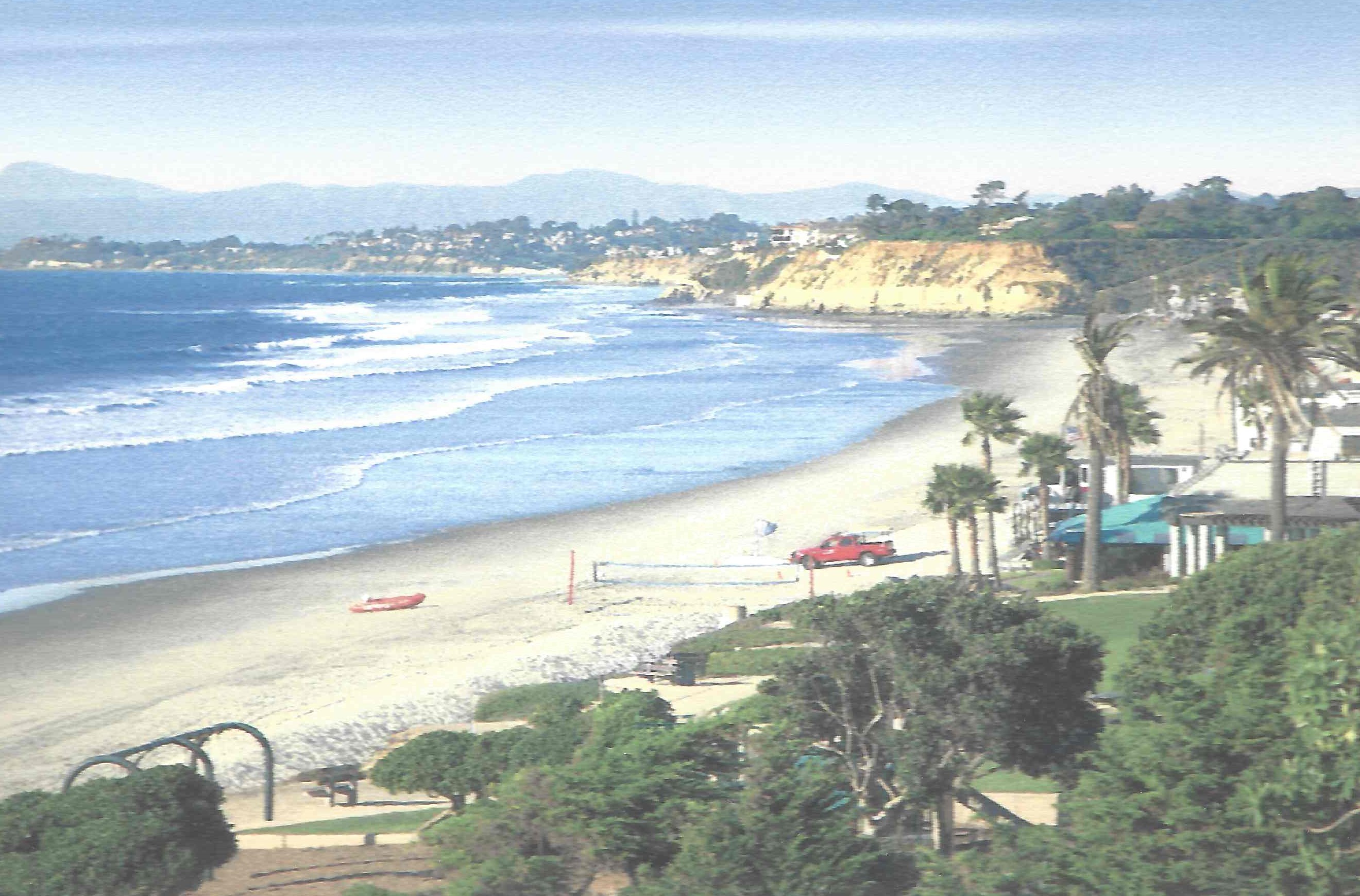
Living On The Edge

The state line between South Carolina (SC) and Georgia (GA) follows the twists and turns of the Savannah River. You know you’re heading into one state or the other whenever you cross the water. Driving from our part of South Carolina into nearby Augusta, GA is interesting. The interstate loops Augusta by starting in SC, touches a bit of GA, goes back to SC for a few miles, then continues into GA again as it follows the river. It’s an example of my life on the edge.

In California, W means “water”

Growing up on the coast of California, it never occurred to me the geography of my younger days was limited to only three of the four cardinal directions.  If I headed north I’d leave the urban stretches of Los Angeles for the more rural towns of the the central coast.  Head south and I’d parallel the beaches all the way to San Diego.  The only thing east of the city seemed to be the endless Mojave Desert.  As for the last of the four directions?  Not an option, at least not without a boat, plane, or a whole lot of swimming.  Horace Greeley would’ve never told me to “Go West, young man”.
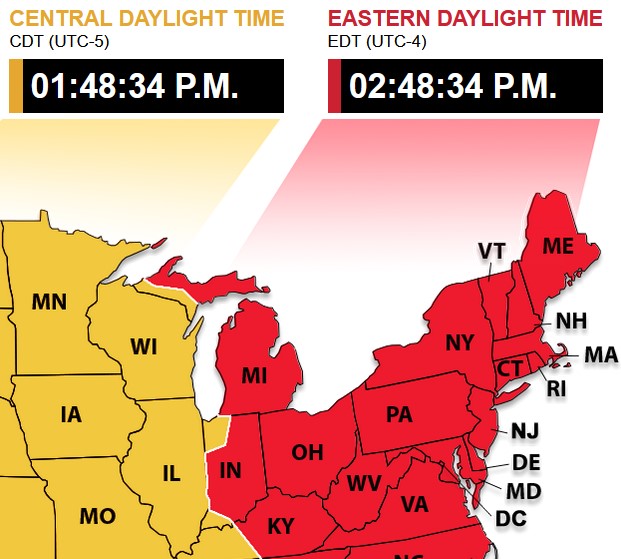
South Bend sits where the yellow and red come together at the very top of Indiana.

In my college years in South Bend, IN, I was a fifteen-minute drive from the line where the Central and Eastern time zones meet.  Back then you didn’t touch your clock for Daylight Savings, so half the year you were the same time as Detroit while the other half you were Chicago.  It was confusing, but not as confusing as someone who lived on one side of the line and worked on the other.  Imagine leaving the house at 8:00am, driving an hour, and arriving at the office at… 8:00am?  It’s a neat trick, pulled off by a lot of those who live on the edge of a time zone.

Raising our kids in Colorado Springs, we always knew which direction we were heading because the line of the Rocky Mountains lay immediately to the west.  Those peaks rose up like the Great Wall of China, just daring you to push through.  Sure, we drove the interstates into the Rockies for skiing, hiking, and such, but day-to-day we were down at the base, literally living on the edge.  Like California, we had one less cardinal direction at our disposal.

Grays Peak, on Colorado’s Continental Divide

The Rockies conceal another important edge, known as the Continental Divide.  The Divide is elevated terrain separating neighboring drainage basins.  Plain English?  The north-south line from which water flows either west to the Pacific Ocean or east to the Atlantic.  I always wanted to stop somewhere flat on the Divide and pour out a bottle of water.  Let’s see if it really flows both ways from the line, right?  It’s an experiment that to this day remains unconducted.
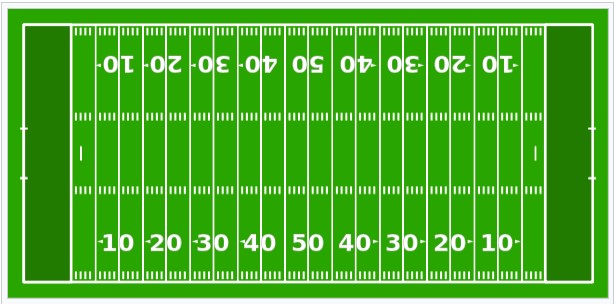
Football is a game of lines and edges

Football, one of my favorite spectator sports, is all about lines and edges.  One team faces the other, on an imaginary line defined by where the referee places the ball.  Cross that line before the ball is snapped and you’ll be flagged with a penalty.  Advance the ball ten yards past that line – to another imaginary line – and your team is awarded more play.  The sidelines of the field might as well drop off to a bottomless void.  Catching a pass outside of that edge is not allowed.  Running the ball outside of that edge brings the game to a halt.  But catching or running across the lines at end of the field?  That rewards you with a score.

$50 gets you a spot on “The Edge” sky deck

For all this living and playing on thresholds, maybe I should visit one of New York City’s newest high-rise attractions.  One hundred floors above the sidewalk, The Edge is billed as “the highest outdoor sky deck in the Western Hemisphere”.  Jutting out from its host building, The Edge allows unparalleled views of the city below, because the surrounding walls are solid glass, as is a portion of the deck floor itself (yikes!) If Spider-Man is your thing, you can go even higher by scaling the outside of the remaining floors of the skyscraper.  I have to say, this sort of thing draws a “fine line” between entertainment and, well, insanity.

I won’t be going to The Edge… ever.  I’m not good with heights, so anything above a pedestrian Ferris Wheel just isn’t my cup of tea.  Nope, leave me behind, comfortably grounded, where crossing the Savannah River from one state to another is plenty adventurous.  That’s my definition of life on the edge.

Some content sourced from Wikipedia, “the free encyclopedia”.
Seaweed Sarge

With the U.S. Memorial Day holiday in the rear view mirror, the 2023 summer season is officially upon us. According to surveys from American Express Travel, sun-and-fun seekers prefer New York City, Las Vegas, and Los Angeles this year. Las Vegas raises an eyebrow (after all, summer in Sin City is broiler-setting hot) but notice something else: Florida didn’t make the top three. Maybe – no, probably – it’s because Seaweed Sarge is already wreaking havoc on the Sunshine State’s beaches.

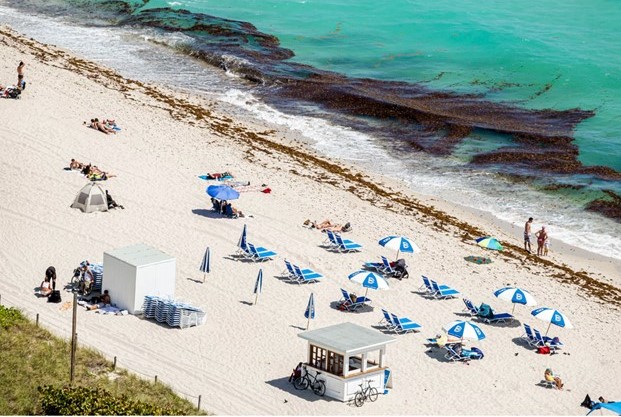
Miami Beach

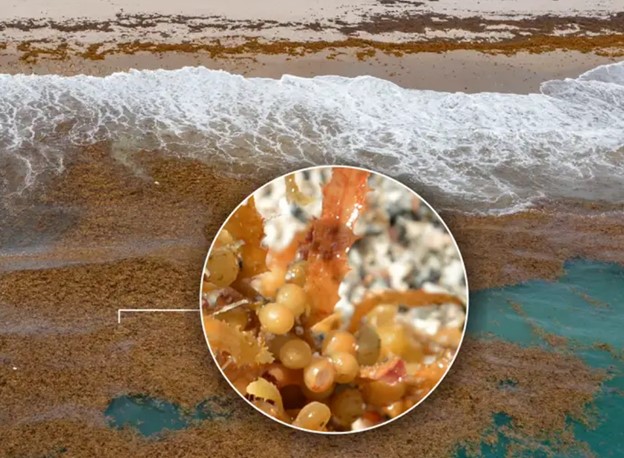
If you don’t know Seaweed Sarge, it’s because 1) you deliberately avoid the news these days – an increasingly popular trend – or 2) like me, you need a more creative label for sargassum, because it’s a weird name for the seaweed intent on taking over the world.  Sarge is a little intimidating, if only for his size.  Picture him as a belt of algae 5,000 miles long (I can’t picture anything 5,000 miles long, can you?)  Now consider: Sarge will double in size by July, the peak of his “bloom season”.

Sargassum

Sargassum is a particularly annoying form of seaweed.  It’s rootless, which means it can reproduce while simply floating around on the ocean’s surface.  Its rapid growth is bolstered by nutrients leached into rivers and oceans from land-based agriculture.  Once it makes shore sargassum rots immediately, releasing irritating hydrogen sulfide and the stench of rotten eggs.  And trying to remove countless tons of seaweed begs the question: where the heck do you put it all?

Florida’s gonna have to figure out the answer to that last question, and fast.  Sarge is already littering beaches from Ft. Lauderdale to Key West and we’re just getting started.  Come July and August it’ll be virtually impossible to walk along the shoreline.

Ft. Lauderdale

My own visits to the beach have been blissfully Sarge-free.  Most of my sun-and-fun takes place in San Diego, far from Sarge’s primary Atlantic Ocean residence.  The only real nuisances on San Diego beaches are the occasional jellyfish or stingray, and a once-in-a-blue-moon shark sighting (which stirs up more anxiety than actual sightings).  Admittedly, Sarge washes ashore in San Diego as well, but mostly just here and there as a remnant of off-shore harvesting.  Seaweed does have its upsides, in foods, medicines, and fertilizers.

Ironically, I have fond memories of Sarge as a kid.  He’s built with giant flappy leaves reminiscent of a mermaid’s fishtail.  He’s got countless air sacs to keep him afloat, which make a popping sound as satisfying as squeezing bubble wrap.  If I’d thought to take pictures back in the day, I could show you Sarge as an adornment to many a childhood sand castle.

It’s time for robots

An army of beach tractors could work all summer in South Florida and barely make a dent in Sarge.  The seasonal maintenance of the single half-mile beach in Key West alone is in the millions of dollars.  But a better solution may be in play.  A prototype robot has been designed to do battle at sea.  “AlgaRay” cruises slowly through the water, hooking tons of Sarge’s strands in a single pass.  Once at capacity, AlgaRay drags Sarge underwater to a depth where all of those air sacs explode.  No longer buoyant, Sarge sinks to the ocean floor; a “watery grave” if you will.  AlgaRay has been likened to a weed-eating Pac-Man or a vacuuming Roomba.  Either image works for me.

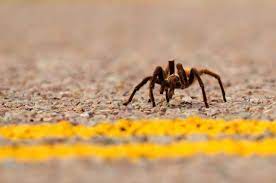
Let’s have one more look at those tourist surveys.  One in ten say they’d cancel or reschedule a trip to Florida if they knew Sarge was coming ashore.  Maybe that explains why landlocked Las Vegas ranked #2 on this summer’s most popular U.S. destinations.  Not that Vegas doesn’t have its own threats.  Three years ago a swarm of locusts descended on the Strip, blotting out casino windows and streetlights.  An annual migration of tarantulas passes by in the surrounding desert.  So take your pick: hordes of flying/crawling bugs or a giant mass of inanimate algae.  Maybe Sarge isn’t so bad after all.

Some content sourced from the NPR.org article, “Giant blobs of seaweed are hitting Florida…”

Games of the Travel Gods

Blondie is the trend-setting American rock band from the 1970’s. A blondie is also a rich vanilla dessert bar. But just for today, Blondie is the newspaper comic strip that, remarkably, still runs after 92 years. Blondie is the female lead and Dagwood is her food-loving husband. Which brings me to today’s topic. A Dagwood is a tall, multi-layered sandwich… the perfect image for my travel nightmare from last Friday.

It all started with a bridge.  Make that seventeen bridges.  As my wife and I were motoring mid-morning towards the Charlotte airport, en route to my niece’s wedding in Los Angeles, the Maps app colored the interstate yellow here and there.  No big deal; traffic slowed, then quickly started up again.  All of a sudden, middle of nowhere, we came to a complete stop.  Five minutes passed without movement.  Ten.  When I finally looked down at the Map app twenty minuets later, our section of the interstate was colored black.  Wait, black?  Never seen that color before.

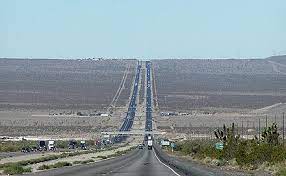
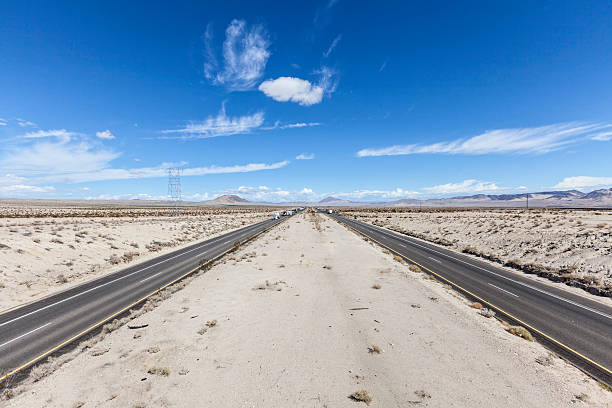
My car is somewhere beyond the vanishing point

For future reference, Map app black means “not an option” (or better still, “you’re dead”).  Five miles of the upcoming interstate were closed off for nine days to repair all those bridges.  We didn’t “eye-spy” so much as a detour sign before we joined the monstrous backup.  When cars began leaking into the grass median and making U-turns, I sensed the presence of the travel gods, selecting a dawdling pawn for their vicious game.

Heading back the way we came, the first detour we encountered was the same idea as a hundred other drivers.  The off-ramp was backed up forever.  Instead, we continued miles further, finally exiting onto a two-lane highway to what can only be described as a drive through the backwoods of the back country of America’s uh… backside.  Tight little curvy roads sprouting driveways to nowhere, bars with bars on the windows, churches with desperate Easter pleas like “It’s not about the Bunny, it’s about the Lamb”, and one-stop-sign towns you really don’t want to stop in.  Eventually we emerged unscathed (physically, not mentally), flung back to a point on the interstate that wasn’t colored Map app black.

The travel clock ticks faster now.  When the travel gods remind you bags must be checked forty-five minutes before departure, beads of sweat start to pop.  The Dagwood sandwich gains another layer.

Our daughter (who I now refer to as “GPS Goddess”) expertly phone-guided us all the way into the Charlotte Airport hourly parking garage ($24 USD/day), where she offered a not-so-confident “you’ll make it” before hanging up.  And so we dashed, from one end of the garage to the other, down the elevator, across the lanes of buses and taxis, through the under-construction section of the terminal sidewalk, finally bursting through the sliding doors to the American Airlines self check-in kiosks to declare our victory.  Which was premature.

Just like the black of the Map app, I’ve never seen a self check-in kiosk dispense a piece of paper saying “See Counter Agent”.  Uh-oh.  Sure enough, we missed the deadline to check luggage.  Our bags were also too big to gate check or they would’ve pushed us through.  I thought we were done.

But at the ticket counter, I deflected phrases like “You can’t travel without your luggage, sir” or “We’re not finding any other flight options, sir” with “I have faith in you, American Airlines!” and “You can do this!”, and darned it they didn’t find an itinerary to get this “sir” (and his “ma’am”) to Los Angeles.  Through Boston.  Uh, sorry miss, isn’t Boston taking us in the wrong direction?  She told me not to argue.  Add another layer to the sandwich.

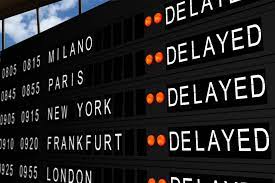
Cut to the Charlotte boarding gate.  Flight to Boston delayed.  Then again.  Then again.  In a phrase that sounds comical (just not at the time), the gate agent calmly informed passengers “the control tower can’t seem to locate our flight crew”.  But then they did, then we boarded, and suddenly we’re flying to Boston… knowing we have, oh, ten minutes to catch our connection once we land.

For the record, you can make a connecting flight in Boston in ten minutes.  You need five of those minutes to let the achingly slow passengers in front of you deplane.  You need the other five minutes to hustle down the concourse (ignoring the bathrooms that beckon for good reason), cursing the loudspeaker blasting your name with “Flight XXX to Los Angeles, this is your final call.  We’re about to close the doors”.

Which is exactly what the gate agents did, right behind us as we sprinted down the jetway, but not before shouting, “Don’t worry, your baggage has a much better chance of making the connection than you do!”  [Wrong.  Turns out only one of our bags made the flight.  The other would arrive (mercifully) the next morning, just in time to change into wrinkled formalwear before the wedding.]

Hoping I looked more like the guy on the left

On the Boston-Los Angeles flight, sitting in the very last row (where you meet/greet every single passenger headed to the bathroom) I let out a slow breath and assessed the good and bad of our whirlwind journey.  The good: we’d make the wedding after facing a dozen trip-blocks.  The bad: the Boston-LA flight ended up having to go wide-right over Canada to avoid some nasty weather in the Midwest.  Add an hour to an already long, seriously turbulent flight.  We could’ve headed the other direction and made it to Ireland in less time.

In total, the travel gods played their game for twenty-one hours, leaving us bleary-eyed by the time we walked into the wedding venue the next afternoon.  (Hey, at least they got married.  After all, the wedding was on April Fools’ Day.  A no-show at the altar would’ve been just another layer on the sandwich.)

Here’s a little Blondie trivia.  Dagwood was the heir to the Bumstead locomotive fortune, but when he married Blondie the deal was off.  I didn’t know that.  I only knew about his namesake – the tall, multi-layered sandwich.  Otherwise I might’ve thought to take the train to Los Angeles instead.

Some content sourced from Wikipedia, “the free encyclopedia”.
Arid (and) Extra Dry

Most of us reacted to eighteen months in the unwelcome company of COVID-19 the same. We reflected on our time with Mr. Virus and wondered, “What would we have done more of?” More get-togethers? More travel? More dinners out?  Yes, yes, and yes.  But instead, we hunkered down and waited for things to get better. Our routines became more… routine.  Everything faded to black and white.  Clocks came to a standstill. It’s the same feeling I had, coincidentally, enduring a drive from Colorado to California earlier this month.

My advice: choose “East” while you still can

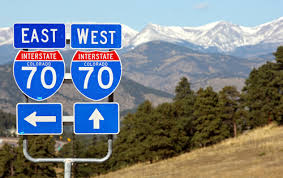
Maybe you’ve made the trek: Denver to San Diego via Interstate 70 and then Interstate 15.  Sounds so clean and easy, doesn’t it?  Two highways.  Plenty of lanes.  Rocky Mountains on one end and Pacific Ocean on the other.  Yeah, well, it’s all the mind-numbing in-between stuff that makes you want to burst through your sunroof and flag down a helicopter heading west.  There’s a whole lot of nothing in the desert.

The problem with this drive (which was not a flight because my wife & I wanted to bring our bikes) is the beautiful part comes first.  From Denver, it’s four hours of majestic snow-capped mountains, rushing rivers, red rock canyons, and breathless (literally) summits as you cruise on over to Grand Junction.  There’s good reason America the Beautiful was penned in the Rockies.

Cruise control suggested here

But don’t get comfortable.  Once you reach Grand Junction (which isn’t so grand), beauty takes a big break.  Pretend you’re a marble inside a rolled-up blanket.  Then someone flips that blanket out and off you go, rolling across the flattest, most desolate desert floor you’ve ever seen.  The mountains reduce to buttes reduce to sand dunes reduce to nothing.  The highway morphs from all sorts of curvy to ruler-straight. Your cell phone signal goes MIA.  You suddenly feel parched.  And you wonder, why-oh-why does the dusty sign say “Welcome to Utah” when there’s nothing welcoming about it at all?

So it goes in middle-eastern Utah.  Every exit is anonymously labeled “Ranch Road” (and why would you want to exit anyway?)  The highway signs counting down the mileage to Interstate 15 march endlessly.  When you finally do arrive at I-15 (your single steering wheel turn the entire journey), you bring out the balloons and the confetti and do a happy dance.  YOU MADE IT ACROSS THE MOON!  Well, sort of.  Now you’re just in central Utah.

I-15 wanders south a couple hours to St. George.  It’s probably a perfectly nice place to live, but St. George reminds me of the Middle East.  Squarish stucco/stone buildings, mostly white.  Not many people on the streets.  The temperatures quietly ascended to triple digits when you weren’t looking.  You realize you’re starting to sunburn through the car windows.

Proceed with caution (and water)

But then you make it to Arizona (briefly).  The landscape changes, suddenly and dramatically, as if Arizona declares, “Take that, Utah!  We’re a much prettier state!”  You descend through curve after highway curve of a twisting, narrow canyon, rich with layers of red rock. It’s the entrance to the promised land!  Alas, Arizona then gives way to Nevada, and here my friends, are the proverbial gates of Hell.  Welcome to the arid, endless, scrub-oak-laden vastness of the Mojave Desert, where everything is decidedly dead except for a brief glittery oasis known as Las Vegas.  The Mojave looks like it wants to swallow you whole and spit you out (except spit requires water so you’d probably just be gone forever).

Hang on to those dashboard gauges for dear life, friends, because it’s a full four hours in the Mojave broiler before your car gasps past the “Welcome to California” sign.  In those hours you’ll call your kids (one last time?), declare your final wishes, and wonder why you didn’t visit your parents more often.  Anything you see in motion off the highway is probably a mirage.  If you do make it to California, you’ll pull over and kiss the ground sand before wondering, “Hey, how come California looks exactly like Nevada?  Then Google Maps smirks the bad news.  You’re nowhere near the end of the Mojave Desert.

Baker. Barstow. Victorville. Hesperia.  You’ll pass through each of these towns and wonder, a) Why does anybody live here? and b) Is this the land that time forgot?  But finally, mercifully, you’ll descend the mighty Cajon Pass (the outside temperature descending alongside you), burst forth onto the freeway spaghetti of the LA Basin, and declare, “Los Angeles.  Thank the Good Lord.  I must be close now”.

You’re never alone on the Cajon

Except you’re not.  The Basin is dozens of cities, hundreds of miles, and millions of cars collectively called “Los Angeles”.  Hunker down, good buddy.  The Pacific is still hours away.

Here’s the short of it.  My wife & I made it to San Diego.  The car didn’t die in the middle of the Mojave.  Neither did we (though I left a piece of my soul behind).  We even rode the bikes a few times.  But I can’t account for those nineteen hours behind the wheel.  It’s like Monday morning became Tuesday night in a single blink.  Just like 2019 became 2021 without much in between.

What goes down must come back up.  The time has come to do the death drive in reverse.  Ugh.  Maybe we’ll leave the bikes in San Diego and catch a flight instead.

Standing on Tacos

Red’s Giant Hamburg – Springfield, MO – may be America’s first drive-thru restaurant. Red’s opened in 1947 from a converted gas station, closed in 1984, then opened again last year. In the United States it’s not really “fast food” without the drive-thru, is it?  McDonald’s certainly agrees, as does Burger King.  But Taco Bell, they think outside the tortilla.  Just last year the Bell opened a taco-themed hotel and resort in Palm Springs, CA.

A taco-themed hotel and resort – really, you ask?  Yes but more on that in a minute.  It helps to cover some of Taco Bell’s earlier adventures first.  Founder Glen Bell started his restaurant in the 1960s as the copycat of a local Los Angeles walk-up taco stand.  The concept of “American-Mexican fast food” quickly franchised to 100 locations in less than five years.  Today you’ll count 7,000+ Taco Bell locations in two dozen countries.  Two billion customers frequented the Bell in 2019.

I’ve always admired Taco Bell… er, from afar.  I can’t tell you the last time I navigated TB’s drive-thru (probably my kids’ high school days).  Don’t get me wrong, I love Mexican food.  But eating at Taco Bell is like supplanting an Italian artisan pizza with a Little Caesars.  In other words, I prefer my Mexican at authentic Mexican restaurants.

But there’s no denying Taco Bell’s success.  They chose six or seven essential ingredients and spun an entire low-cost menu out of them.  Take the $1.49 soft taco.  Four components: seasoned beef, lettuce, and cheese, inside a soft tortilla.  Add sour cream, tomatoes, or other options, but you’ll pay $0.40 or more for each.  The only freebies are the hot sauce packets at the pick-up window.

From the Taco Bell soft taco evolved an entire zoo of animales.  You have the Taco Supreme, Chalupa Supreme, Cheesy Gordita Crunch, and (for the really adventurous) the Nachos Cheese Doritos Locos Taco Supreme.  From the Taco Bell burrito you get the Burrito Supreme, Grilled Cheese Burrito, Beefy 5-Layer Burrito, Quesarito, and Crunchwrap Supreme.  Again, all of these wild animales come from pretty much the same small set of ingredients.

Taco Bell’s successful run endures at a time when foodies lean more towards farm-to-table organic.  So why does it still work?  Marketing.  Taco Bell’s all about creative thinking.  Some examples:

  1. Taco Bell branded their hot sauce, taco shells, chips, and shredded cheese, and you can find them on your supermarket shelves.  No drive-thru necessary.
  2. TB teamed up with several pro sports franchises to offer free food based on individual performances (i.e. steal a base, score so many points, score so many runs = free tacos).
  3. In 2001, when the Mir Space Station re-entered the earth’s atmosphere, Taco Bell floated a giant target in the Pacific Ocean and promised a free taco to every American if a bit of the space station (designed to break up) hit the target.  (No such luck.)
  4. In 2013, Taco Bell designed a waffle taco, filled it with scrambled eggs and sausage, added a side of syrup, and called it breakfast.  The waffle taco is no longer on the menu but breakfast still is (if you consider a Hash Brown Toasted Burrito “breakfast”).
  5. In 2016, Taco Bell test-marketed a Cheetos Burrito.  That’s all you really need to know, right?
  6. In 2017, Taco Bell partnered with Lyft to offer “Taco Mode”.  Rides from 9pm-2am included a stop at Taco Bell.

Which brings us to the Taco Bell hotel.  In the summer of 2019, TB converted an existing Palm Springs resort into a live-in advertisement, “the biggest expression of the Taco Bell lifestyle to date”, according to its Chief Global Brand Officer. 

Not only did they slap the TB brand all over the resort, but they also offered the full Taco Bell menu, poolside cocktails “infused with a Taco Bell twist”, a “not-to-miss gift shop” (including a Forever 21 fashion line of Taco Bell apparel), and a salon where nail art and hairstyles were decidedly “Bell”.  The resort was a pop-up, only intended to operate for a few days, but reservations sold out within two minutes of being offered.

“Gidget the Chihuahua”

Taco Bell has one more menu item I didn’t mention above: the Spicy Potato Soft Taco.  Er, had.  The Bell discontinued it but not before Bryant Hoban (of O’Fallon, MO – not far from Red’s Giant Hamburg) purchased and froze three of them.  A few weeks later Hoban sold the “mint condition soft tacos” through Facebook.  For $70.  Each.  With that kind of endorsement, it’s safe to say the Bell will be ringing for many years to come.

Some content sourced from Wikipedia, “the free encyclopedia”, and the Fox News article, “Taco Bell is opening a taco-themed hotel and resort”.

Climb Ev’ry Mountain

St. Brigid’s Cathedral dominates the quaint urban landscape of Kildare Town in central Ireland. The centuries-old stone church beckons the short walk up the hill from the village square, for a tour around Brigid’s domain. And while you’re on the grounds, you’ll be tempted to climb the adjacent tower for a bird’s eye view of the surrounding county. I assure you; the vistas are breathtaking.

A bird’s eye view from my own locale would be just as breathtaking right about now.  In the last ten days, I’ve ventured beyond my driveway once, for a mundane grocery shop at the local market.  For all I know, nearby Colorado Springs has been erased from the map.  For all I know, all my neighbors in the surrounding county traveled to a tropical island where they’re making merry, while I’m left to keep an eye on things back here at home.  Who nominated me for that job?

Proceed with caution!
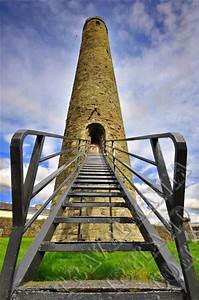
The tower “stairs”

No kidding, the view from the tower at St. Brigid’s is spectacular.  Not only do you see all of Kildare Town below, but you’ll be mesmerized by the lush green acreage of the adjacent Irish National Stud (and its countless roaming thoroughbred horses).  When my wife and I visited several years ago, targeting Kildare Town to see the cathedral of her namesake saint, I figured light a few candles and say a few prayers; not climb a ten-story tower.  I have a mild fear of heights so you can imagine my trepidation.  And here’s the kicker: there’s no code-sanctioned, easy-to-navigate stairwell within the tower.  Instead, you hand over a couple of Euros for the privilege of climbing a dozen ladders to the top.  I almost called it quits after the first few rungs.

My longing to “rise above it all” today is not just inspired by the pandemic, nor even my acrophobia-be-damned adventure up the tower at St. Brigid’s.  I also think about nearby Pikes Peak, the highest of the Rocky Mountains in this part of Colorado.  “America’s Mountain” tops out at 14,115 feet, and I’ve hiked to the summit several times (the trail begins at 6,000 feet).  You begin the journey on a series of easy switch-backing trails, which then give way to a remarkably gentle incline through a forest of Ponderosa pines.  For several miles under the treetops, you have no orientation to suggest you’re even climbing a majestic mountain.  But once you hit the tree line, everything upwards is a moonscape: rocks and dirt and scrub brush all the way up to the summit.  The view is stunning; as if you’re looking down from space.  You can see clear to Wyoming to the north and Kansas to the east.

Pikes Peak, through Garden of the Gods

I could use a mountain (or a ladder-filled tower) on my property right about now, just to connect with the world around me.  Oh sure, rural living means the stay-at-home rules are a minor inconvenience, but it’d sure be nice to confirm someone else is out there.  The local news shows human interest stories every night on TV, but c’mon, how many of us trust the media these days?

Here’s my very favorite climb-ev’ry-mountain memory.  I grew up in a narrow canyon on the outskirts of Los Angeles; so narrow in fact, some stretches could only accommodate a single row of houses on one side of a winding two-lane road.  Biking with the cars was taking your life in your own hands, as was scaling the canyon trails into the domains of rattlesnakes and other wildlife.

Lucky for me, a steeply rising network of paved residential streets branched off the canyon floor less than a mile south of our house.  On foot, those streets became a kid’s adventure up and out of the isolation.  I’d stock a daypack with cheese sandwiches, Pop-Tarts, and anything else I could pilfer from the pantry.  Some days I’d go it alone; others I’d drag my brother with me.  Up, up, up we’d climb, rising breathless until we could peer almost straight back down to the canyon floor below.  The final stretch of the topmost street – with houses perched precariously along on its edges – afforded a view of Los Angeles and the nearby Pacific Ocean like none I’ve seen to this day.  There I’d sit, munching snacks, wondering what all I was missing down there in the big city.

Today it’s the same feeling, only different.  What am I missing out there in the big city?  Is Wyoming still to the north and Kansas to the east?  Are cadets still at the Air Force Academy, anticipating this weekend’s socially-distanced graduation ceremony?  Have the majestic red rocks of Garden of the Gods finally crumbled?  Truthfully, I can’t answer any of these questions, not while I’m stay-at-home.  But at least I can see the summit of Pikes Peak from here.  At least I’m confident St. Brigid’s Cathedral still stands in Kildare Town (Notre Dame in Paris, maybe not so much).  And at least I can revisit fond memories, the kind I never thought I’d yearn for again.  On that note, think I’ll make a cheese sandwich.

Ahoy, Matey!

At the Jolly Roger Restaurant in the small Southern California town of Oceanside, you can order an Avocado Blast as a starter (tempura-battered avo stuffed with shrimp and tuna), Orange Coconut Salmon as an entree (panko-crusted with a sweet ginger glaze), and fruit-topped New York Cheesecake as a dessert, all while watching live entertainment on Friday and Saturday nights. The “JR” may be a little fancy for your tastes but let me tell you; it’s a LOT fancy for mine. That’s because the only version of the Jolly Roger I ever knew was my favorite boyhood burger joint.  As pirates like to say, “Aarrr…

Why blog about a long-ago restaurant?  Because I’ve just returned from several days of vacation in Del Mar (just a few miles south of Oceanside), where my family and I spent my childhood summers.  Del Mar is renowned for its county fair and thoroughbred racetrack (“Where the Turf Meets the Surf”), but for me it was – and still is – a nirvana of sun, sand, and surf; chock-full of happy, carefree memories.  Including the Jolly Roger.

Del Mar beach

The beauty of Del Mar back in the day, besides its seaside location, was the sheer simplicity of the place.  The town was the perfect setup for a kid.  You could walk or bike from the residential areas to the shops in minutes.  You could spend pocket money on Slurpees and pinball at the 7-11.  You could meet/greet frequent passenger trains at Del Mar’s tiny station (while those same trains flattened pennies on the rails).  You could also sneak into the racetrack, collecting discarded betting tickets in hopes of finding an overlooked winner.  And if you were lucky, you had dinner at the Jolly Roger.

Del Mar train crossing

The Jolly Roger got its start as an ice cream parlor in 1945, adjacent to the lake in Big Bear, CA.  But the lake promptly went dry, which led to a lack of landlubbers walking through the doors.  The parlor then relocated to Newport Beach (where the ocean never goes dry).  Patrons soon asked for more than ice cream, so the JR evolved into a coffee shop; then into a chain of restaurants.  At its peak, the JR had forty locations, each adorned with the trademark black flag with skull and crossbones.  But as one article cruelly described its demise in 1985, “…the Jolly Roger pirate has ‘walked the plank’, and the restaurant chain has been consigned to Davey Jones’ locker.”  As far as I know, Oceanside is now the only remaining restaurant.

There’s more to my JR memories than those couple of seaside locations.  The JR also had a restaurant in the heart of Los Angeles, in a shopping center my dad developed back in the 1960’s.  The center is still there but alas, not the JR (now a Mexican restaurant).  No matter; the memories remain.  I never complained when my dad wanted to stop by his center on weekends.  That usually meant a family dinner at the JR, and a lot of yo-ho-ho-ing around the table.

Jolly Roger menu – original cover page

Sadly, the Jolly Roger location where my family and I shared many a dinner – next door to Del Mar in Solana Beach – is also gone (converted into a Starbucks – shiver me timbers!)  And the Oceanside restaurant has evolved into something a whole lot fancier.  No matter again.  My JR will always exist.  I picture the restaurant where the waiters dressed like pirates, the kid’s menus looked like a pirate, and the best options for dinner were burgers & fries, grilled cheese, and milkshakes.  The JR also had quite the dessert menu, including full-boat chocolate sundaes and coconut-cream pie.

Dead men tell no tales, but I sure do.  Thanks for the memories, JR!

Tryst With a Twist

I’m leaving my wife for another woman. There, I said it.

I never thought it would come to this; I really didn’t. My wife and I have been together for thirty-one bliss-filled years – as smooth and as satisfying a marriage as one could hope for. And yet, tomorrow afternoon, I’ll catch a ride to the airport, kiss my beloved goodbye, and board a one-way flight to Las Vegas. All my worldly possessions stay behind, save for the overnight bag in my hand and the wad of cash in my pocket. When I get there, I’ll dress up, head over to one of the finer restaurants on the Strip and reunite with a woman over thirty years my junior. We’ll smile at each other and raise our glasses in anticipation. A new adventure will commence.

Now then, let’s shed a little more light on my tryst, shall we? Yes, I’m leaving my wife (but only for a day and half). Yes, I’m going to Sin City on a one-way ticket (but then I’ll turn around and drive back home the next day). And yes, I’m meeting up with a woman thirty years my junior. She also just happens to be my daughter.

Here’s the detail. After a year of living and working in Los Angeles, our youngest has decided to return to Colorado to give Denver a try (the “new adventure” I refer to above). The drive between those cities – if you’ve ever done it – is Las Vegas and a whole lot of nothing else. Imagine a twenty-hour jaunt in a lunar rover on the moon, only somewhere along the way you get thirty minutes in Disneyland. That’s LA to Denver: no people (at least, no sane ones) and a whole lot of cactus, dotted with a single oasis of slot machines and casino-hotels. Come to think of it, I’d wager big money the moon is more interesting than LA-Denver, especially the never-ending portion of the drive known as southern Utah.

Anyhoo, (to use a word from my daughter’s unique vocabulary), I’m sharing the Vegas-to-Denver drive with her – responsible father that I am – fully fourteen of the twenty hours it takes from Los Angeles. Somehow the idea of my daughter and her cat all alone in the desert doesn’t sit well with me.

The more I ponder this little adventure, the more I wonder if I shouldn’t be worried more about my time in Vegas. Think about it. I’ll show up at the hotel, and the front desk will undoubtedly eye my much-younger companion from head-to-toe. “Oh!”, I’ll say with a sheepish grin, “she’s my daughter.” Yeah, right pal, your ‘daughter’. When I arrive at the restaurant for dinner, the maitre d’ will say, “Sir, if you and your – uh – ‘niece’ will follow me, I’ll show you to your table.” Or let’s say I get my daughter to blow on the crap table dice for luck. Stink eyes all the way around. Hey big spender; who’s your prom date?

This is a no-win situation. Short of a blood test and a doctor’s proclamation, “Holy cow, they’re actually related!”, I’m destined to a jackpot’s worth of dirty-old-man looks in the next few days. At least I won’t be mistaken for a gigolo.

What happens in Vegas, stays in Vegas. Sorry, I beg to differ. I’ll be pleased as punch to share the intimate details of my time with my “other woman” in Sin City. Heck, maybe I’ll even make it my next blog post. We checked into the hotel. We went to dinner. Dropped a few quarters into the slots. Went to bed early so we’d be rested up for the long drive head. Riveting reading, huh?

Space Invader

Last week my family and I were on the road, heading west to Los Angeles. One morning we stopped for breakfast just short of the California state line. As I was paying and the cashier handed back my receipt, I asked her, “so… how’s your day going today?” She gave me a wary smile and replied “f-i-n-e…”. Then she looked at me a little more carefully and asked back (with no small amount of curiosity), “where you from, anyway?” And that’s when it hit me – I had invaded her personal space. At least, the big-city version of personal space.

46 - insular

Take a step back and assess the town you live in.  You’ll quickly decide whether you live in the “small” or the “big” variety. I’m not talking about physical size (though size does matter – ha). No, I’m talking about the chemistry of the place, and how you interact with the people around you.

I live in a rural area, and the surrounding towns are not much bigger than “one-street”. And here’s what I observe. People wave to each other from their cars or when walking on the road. People take face-to-face moments – however small – to have conversation. People gather at the local establishments to catch up with each other. The “hometown” parades and festivals and meals still draw decent crowds.

The big city – for all its energy and activities and diversity – is much more insular at the individual level. Its residents seek the comfort of their personal space, whether that is defined as neighborhood or house or even electronic device (personal space guaranteed by headphones and music). Indeed, retreat to personal space in the big city is a survival tactic – a stab at decompression and calm after the hectic hours on the sidewalk or in the car or office.

Be careful if you assume I favor small-town over big-city – far from it. I simply observe the outward differences as well as the inward coping mechanisms. In small towns we tend to have only one of everything (i.e. Mexican restaurant, Starbucks, dry cleaner). In big cities the choices are so vast that choosing Chipotle over the several local options feels like selling yourself short. As my big-city brother so succinctly puts it: small-town means opening the newspaper to see what there is to do, while big-city means deciding what you want to do; then opening the newspaper to see where it’s happening.

Small-town interactions fill the void of perhaps too much time in isolation. Big-city personal spaces ease the stress of perhaps too much time in the crowds. Hence it’s interesting to flip the dynamic every now and then, as I did with my breakfast cashier. She was comfortable in her personal space until I invaded with my casual question. And maybe just for a moment, she let down her distrust guard and realized I was simply interested in how her day was going.