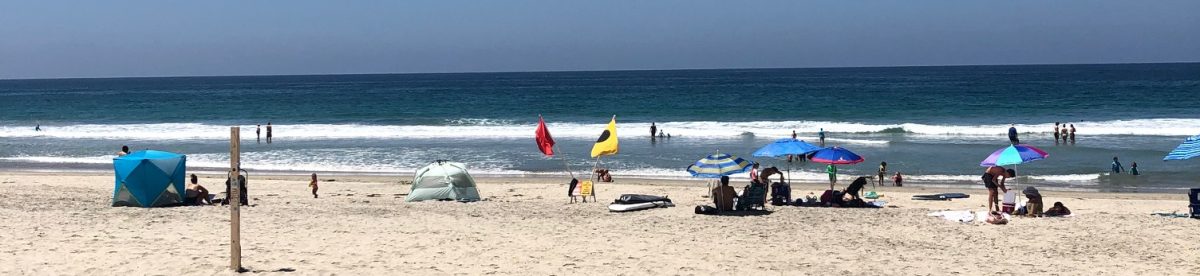
On a trip to Philadelphia last weekend to visit family, I was reminded the city is well known for its cheesesteaks (among other things). You’ll find several restaurants claiming to offer “the best” in the downtown area. But my niece – a resident of the city for ten years now – was careful to point out which establishments cater to tourists versus those preferred by the locals. It’s advice someone like me wouldn’t know off the top of my head. At least I knew to call the sandwich a “Philly” instead of a “Philadelphia”.
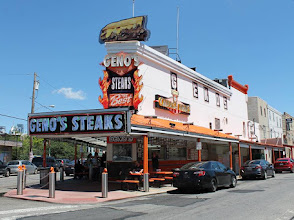 Sure, no matter where you live it’s referred to as a “Philly Cheesesteak”. But what about the city itself? Calling Philadelphia “Philly” is a privilege reserved for its residents… or so I thought until I asked my niece. “Oh, heck no“, she said. “It doesn’t matter whether you’re a local or not – you always call it ‘Philly’. Call it ‘Philadelphia’ and it’s pretty obvious you’re not from around here.”
Huh. And here I thought city nicknames were reserved for those who actually lived there. Maybe this is Philly’s way of sharing “brotherly love” beyond its downtown streets.
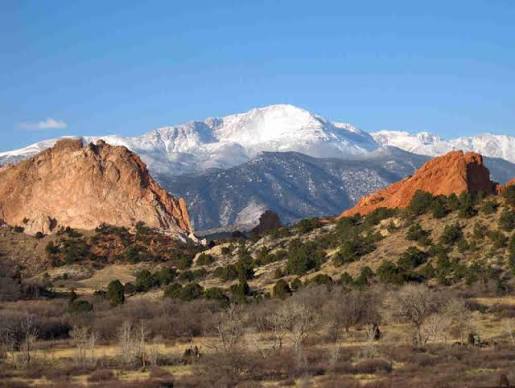
I find it interesting how locals come up with jargon for the places in which they live. It’s a semi-secret language that can only be learned by spending enough time there. When we lived in Colorado Springs the city was never referred to by its full name, but instead by just “The Springs”. (A visitor might wonder why you weren’t referring to adjacent Manitou Springs instead.) Pikes Peak, the mountain forming the majestic backdrop of The Springs, was always just “The Peak”. Garden of the Gods and its famous sandstone rock formations was always just “The Garden”. And so on.
 Maybe all of this name-shortening is a nod to the more relaxed world we live in today. Corporations could be said to use jargon as well. Remember when it was “Federal Express” instead of “FedEx”? “McDonald’s” instead of “Mickey-D’s?” Kentucky Fried Chicken instead of “KFC”? Even “Subway” was once known as “Pete’s Super Submarines”. Credit American Express – they might’ve been the original shortener of names. “Amex” has been used since the company’s founding in 1850.
Cities may have their nicknames but I also think I’ve heard a few imposters. Seriously, does anyone refer to San Francisco as “Frisco” when the more common option seems to be “San Fran”? Chicago will always be “The Windy City” to me; not “Chi-Town”. Dallas is too short a word to mess with so you’ll only get “Big D” from the locals on occasion. And more recently I’ve heard “Cali” and “So-Cal” out west but I couldn’t tell you if that’s what the locals go with.
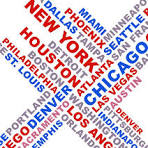 Washington D.C. is “D.C.” whether you live there or not. St. Petersburg just sounds better as “St. Pete”. Oklahoma City is “OKC” just like New York City is “NYC”. I never grew up in Los Angeles but I did grow up in LA… maybe like you grew up in KC, Indy, or Cincy. Where does all of this jargon end? Right here… right now… at the end of this blog post where, now that I think about it, you’re welcome to call me “Dave” instead of “David”.
———————————————————–

LEGO Neuschwanstein Castle – Update #9 (read about the start of this project in Fit for a (Fairy Tale) King
Do you recall how we added the “Palas” (living quarters) to the castle the last time around? Apparently King Ludwig needed two of these structures. Bags 17 and 18 (of 23 bags of pieces) finished off one Palas and began another – the latter building at the far west end of the castle complex. All of a sudden we’re entering the home stretch of this entire project. Next week’s LEGOs will complete the castle itself, while the following week’s will give it a final flourish of landscape elements.
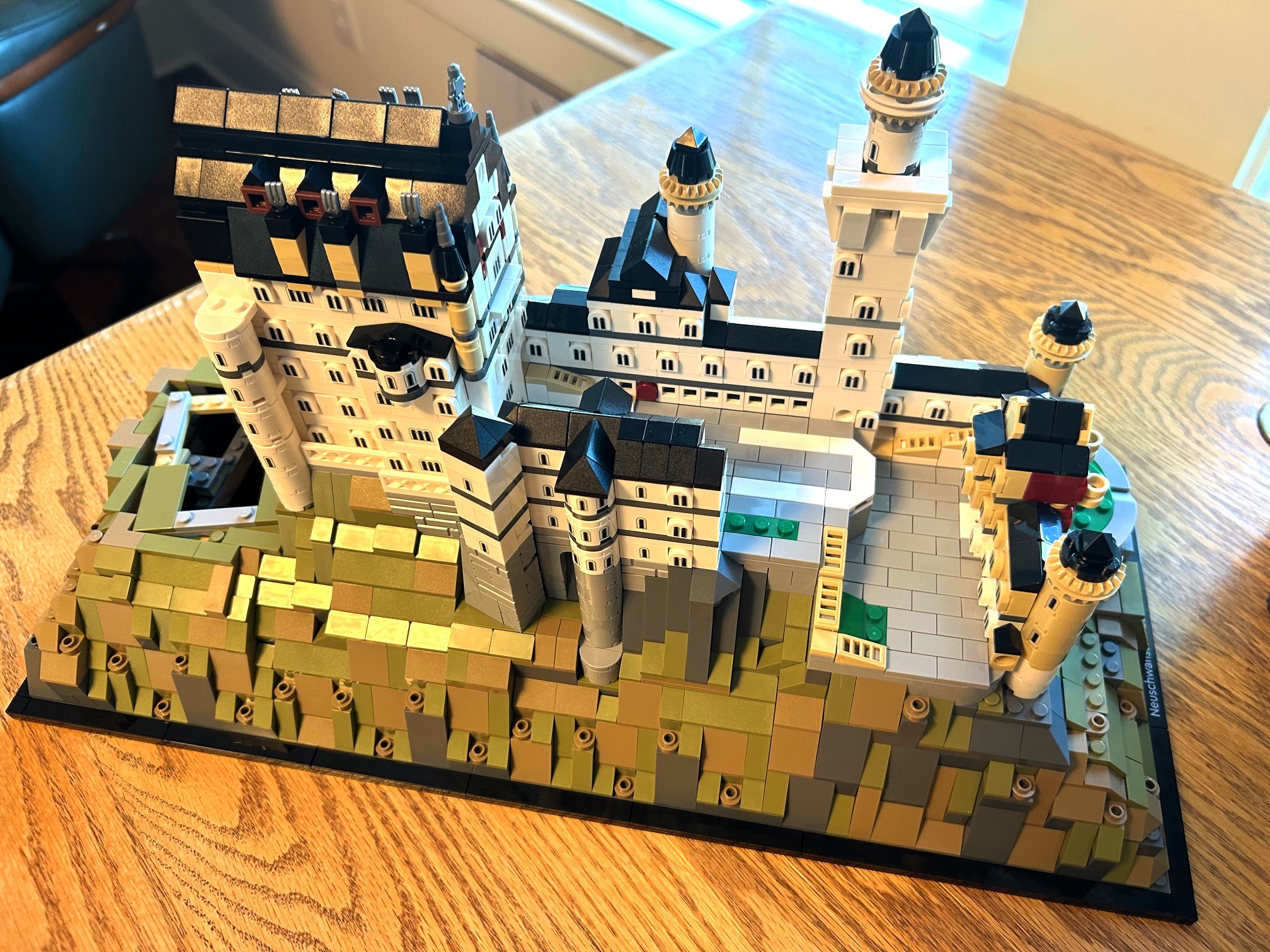
As you can see above, Palas #1 has been completed and installed. For the record, “completed” was much easier than “installed”. When you build an element like the Palas separately from the overall model, it’s a delicate process to bring the two together. You have to position the structure just right before you snap it down in amongst the rest of the castle. Easy to illustrate in the instruction manual; not-so-easy to do in reality. My first attempt was a mini-disaster, loosening several pieces from the castle base. My second attempt – mercifully – came together with a satisfying series of LEGO clicks.
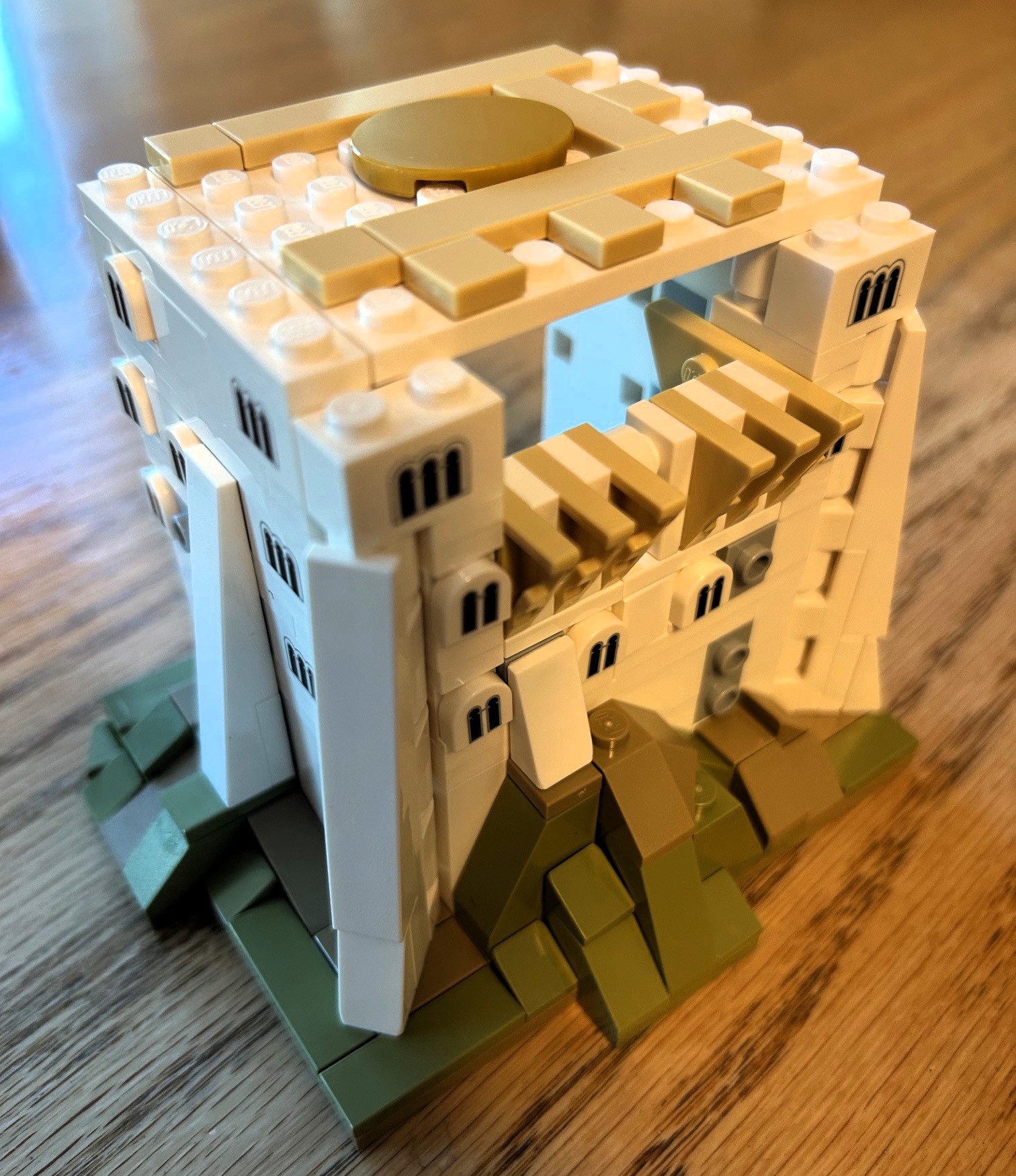
Here’s a look at the “Western Palas”, still under construction and destined for the askew foundation you see on the far left of the larger model. Palas #2 includes a two-story balcony for views of the surrounding Alps (the big opening on the top floors of the structure), and a whole lot of living space underneath that was never ever completed. The Western allocates two floors to a “grand throne room”, also never completed. I find it sad, for all of the details of this wondrous castle, Ludwig never sat on his throne, let alone in a throne room from which he would’ve/should’ve performed his royal duties.
Running build time: 9:32
Total leftover pieces: 59 (!)
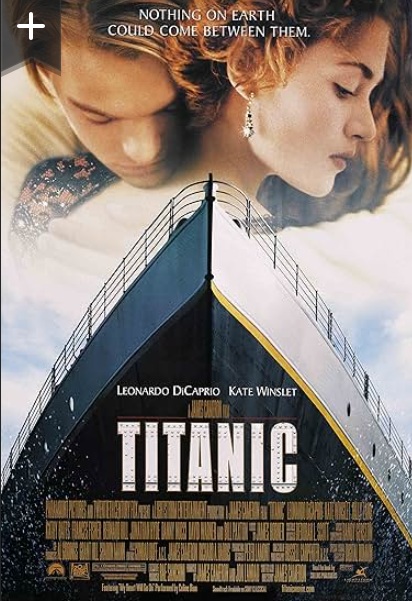 Accompanying movie soundtrack: Titanic (1997). It wasn’t my plan to go with the epic of the sinking ship, not today nor in any chapter of this build. But the music from Field of Dreams – a favorite movie of mine – just didn’t deliver the goods. Like Chariots of Fire, all you get with Field of Dreams is its theme song followed by random bits of music. Don’t save it to your listening library. But its composer James Horner scored Titanic as well, and for this one the Academy Award was well deserved. Subtract Céline Dion’s “My Heart Will Go On” – the song just overlaps the ending credits. The real magic of this soundtrack is in the haunting instrumentals and wordless vocals. The theme song starts with the wailing tin whistle and morphs into the utterly lonely vocals, brought to you by the incomparable voice of Norwegian soprano Sissel. It echoes the despair and futility of it all – literally – which is exactly what Horner intended. Listen to it here.
Some content sourced from Wikipedia, “the free encyclopedia”.